Fire of Love is not just a documentary. It’s a love story.
Love Notes is a feature where a writer talks about why they love a movie, how it makes them feel or how it changed their life.
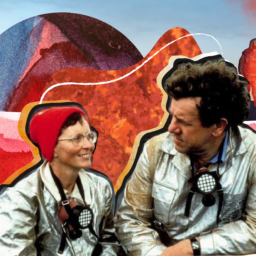
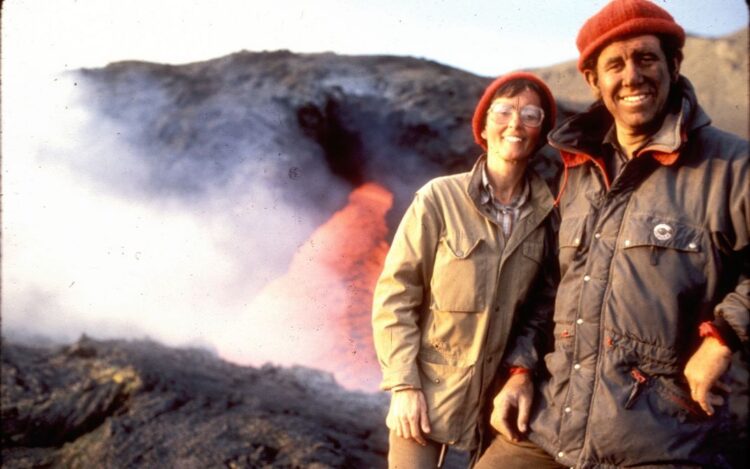
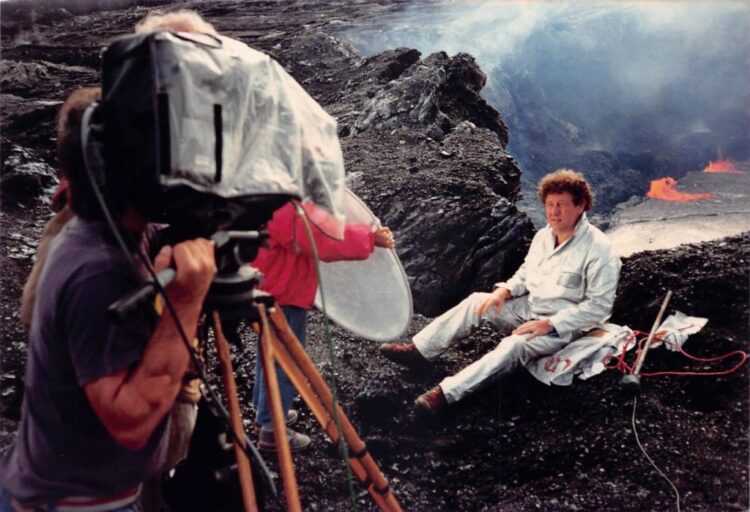
Fire of Love is less a love story between Katia and Maurice Krafft—which is, yes, very much the primary theme of Sara Dosa’s 2022 documentary that chronicles their lives as intrepid adventurers and daredevil volcanologists—and no, the love story isn’t with the volcanoes they research, though they definitely do love them. Their obsession consumes their entire lives—both figuratively and literally—as (spoiler) their lives reach their end at the site of a volcanic eruption.
ADVERTISEMENT
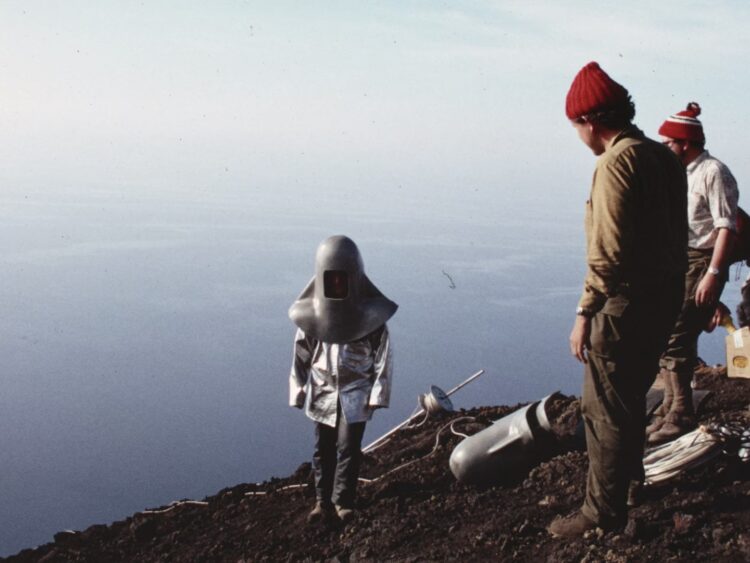
There’s a moment in the film, mostly composed of illustrations and the Kraffts’ own archival footage, that shows Katia and Maurice’s perfectly chosen red beanies adorning their sunburnt faces as they trek up the side of an active volcano, and I realized—this is a love story to us. They aren’t just volcanologists; they’re artists, perfectly aware of their image in spite of their insane human feats in the pursuit of scientific research. To be a scientist and an artist doesn’t necessarily have to be mutually exclusive—if anything, I think their mission was intricately aligned with what they wanted to express: a sheer love for this planet that most of us struggle to understand, and many have a hard time simply appreciating.
They dedicated their lives to getting as close as humanly possible to an unexplainable force, in an effort to capture its beauty and terror—for us, for you and me—so we begin to love this planet again, or for the first time. So we go beyond our comfort zones and explore a little further each day. So we push the boundaries of what we know about our beautiful world so that we can conserve it, learn from it, and care for it in our role as guardians.
With every perfectly composed shot in this documentary, underscored by Miranda July’s poetic narration, you feel the care they had for their field and for each other—using photos and film as a way to capture the magnificent things they experienced with the rest of the world. They shared a love of storytelling and a love of our shared humanity in the face of something beyond comprehension.
ADVERTISEMENT
“Look at how small we humans are against this volcanic force. The only thing that will remain of our passage is that we can write, tell stories, and film,” Maurice says toward the end of the film, and he’s right. This footage is what remains of their life’s work and passion.
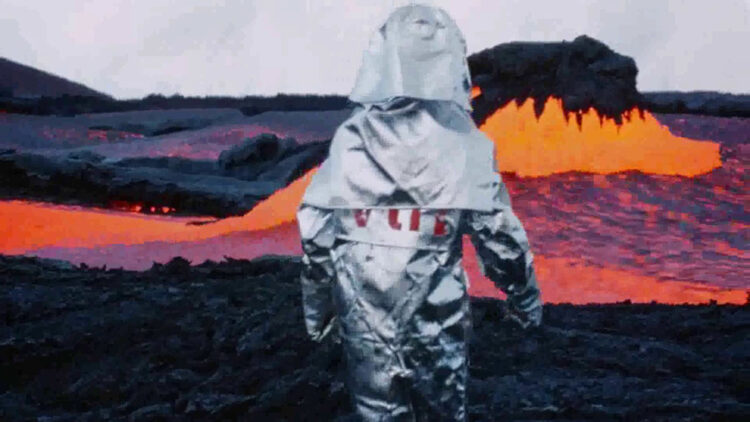
With every breathtaking, impossible shot—as the vibrant reds and oranges of the magma bleed through the frame, or the gray smoke distorts and envelops the landscape—there is love: in the supernatural scenes they are witnessing, in the sheer effort and bravery it took to document it all, in the companionship Katia and Maurice shared, side by side as they stood at the edge of the abyss. And then there is love for us—the unknown viewers and curious humans they hoped to connect with, to share the thing they loved more than anything else. Like a volcano erupts and changes everything in its wake, there is love in all that they created and all that they left behind.
This week, we analyze romantic drama Past Lives and discuss how it explores race, the immigrant experience and challenges the concept of a soulmate
Hey! We’re Karl and Ana. Best friends, writers and movie obsessives that love to analyze (overanalyze?) movies. In Movie Therapy, we take a movie that we love and explore its story and themes to understand what it means to us (and maybe you). This week we analyze Past Lives. Spoilers are abound so proceed with caution.
For the best experience, we recommend you read on desktop. This conversation has been edited and condensed.
Karl Delossantos Hello! 👋 Welcome to the first edition of Movie Therapy, a series where my co-movie over-analyzer Ana Toro and I discuss a movie to understand what it means to us (and maybe you). Today, we’re analyzing the meaning behind Celine Song’s Oscar-nominated drama Past Lives. Shameless plug: you can read my review here.
Hello, Ana! Ready to overthink?
Ana Toro Yes! Our specialty!
Karl I want to start this discussion at the very end of the movie. We watch Nora (Greta Lee) and Hae Sung’s (Teo Yoo) emotional goodbye. As she walks back towards her home and husband Arthur (John Magaro) in the East Village (in my home neighborhood!) Nora begins to cry. How do you interpret that moment?
Ana I think she’s mourning the past – what could have been. In that moment she witnesses a chapter closing. And though it’s the rational thing to want closure, it tends to bring an unexpected amount of pain.
Karl It’s interesting because it feels like she spends a lot of the movie only looking forward. Even when she does look back in the second act when they reconnect over Skype she quickly realizes that it’s something that’s “holding her back” even if it’s not necessarily the case. But I think because she never allowed herself to confront where she’s come from, she’s never had to close the chapter… until that scene.
But at the same time, she’s where she’s always wanted to be. And if you ask me, where she belongs. Something we might disagree about.
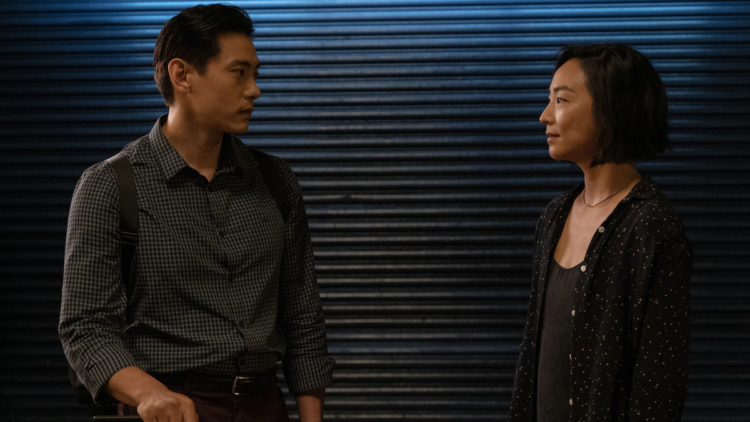
Teo Yoo and Greta Lee in Past Lives. Courtesy of A24.
Ana Haha yes! I mean, the brilliance of this movie is that it is so subtle and nuanced that it really does reflect back at you whatever your current beliefs, or point of views are. When I watched it the first time with you, I was very much in a place in my life where I was looking back to the past, and towards someone from the past specifically. I’m pretty nostalgic by nature, so this wasn’t out of character for me, and I definitely sympathized the most with Hae Sung’s character… to the point where you’ll remember that I was pretty accusatory towards Arthur’s character, believing him to not be right for Nora, and insisting that she should look towards the past to move forward, and be the version of herself that she had left behind.
Karl Projecting, essentially.
ADVERTISEMENT
Ana Exactly. When I watched it a second time I was definitely in a more calm place in my life, having had a bit more closure and feeling a lot more present in my day to day life. So of course, I was more neutral while watching the narrative play out, and I realized that the end wasn’t a tragedy, but rather something beautiful, an acceptance of the past and the present. Nora’s outburst was a catharsis, not necessarily something bad, or more meaningful than it was.
Karl Yeah when we first watched it we were the closest we’ve ever been to arguing in our friendship over whether Hae Sung or Arthur was her soulmate. And perhaps the answer is that soulmates don’t actually exist. At least in the very black-and-white sense that most people think about them.
“Which is interesting because the movie constantly brings up the concept of soulmates, and it’s a recurring motif / theme of the movie so it’s almost like a red herring.“
Ana Which is interesting because the movie constantly brings up the concept of soulmates, and it’s a recurring motif (if not the outright theme!) of the movie. It keeps the viewer guessing as to who she’s going to choose – who is the actual soulmate. For such a quiet movie this is the biggest source of tension that drives the film forward. It almost feels like holding your breath, until the very end when they say goodbye.
Karl Yeah. I mean, the movie is structured like a romance. The direct comparison a lot of people have been making is to the Before trilogy. A series of movies that we love. And in a lot of ways, they are similar in that they talk about the seeming randomness of romance that is actually clouded in fate.
ADVERTISEMENT
Ana It’s like the Before trilogy but happening all at once!
Karl 💯
This might be the time to note too that the writer-director Celine Song based the character of Nora in some part on herself and is currently married to the equivalent of Arthur. Her husband Justin Kuritzkes is a white writer that she lives with in New York. And ironically wrote Challengerswhich is another movie about a love triangle. Maybe they’re dropping hints.
Ana That absolutely changed everything for me. I almost couldn’t believe that in some ways we were given the answer to such an open ended mystery in Past Lives. To me it means that she chooses Arthur in the end! Because he represented her present, and her future. How did you feel when you found that out? Did it change the movie at all for you, or am I reading too much into fiction and its likeness to reality?
Karl I think you can’t not think it’s connected in some way. But unlike you I was always on the side that Arthur is who she should be with. Right now, at least. I think hearing that just affirmed that for me. I went through a pretty big breakup a few years ago and since then I’ve felt very much how Nora felt. Looking forward. Working on my career. Moving myself up and out of my current circumstances.
But I did have times where I thought, “what is this all for?”
Ana I think that’s the thing that we’re meant to be feeling at the end of the movie though – we aren’t ever going to be sure if something is the right choice or not. There are ways to justify any decision or relationship – Arthur and Nora could have in-yun, but so could Hae Sung and Nora. This concept is even poked at by Hae Sung and Arthur during their conversation at the bar: maybe they’re the ones that have the multiple layers of in-yun! There’s truly no way to know, so we just have to accept whatever choice is made.
Karl It makes me wonder whether Past Lives is almost an exercise to assuage the uncertainty of whether you made the right decision.
Ana That makes me wonder a lot about her intentions for making this film, and how much of it she admits to being autobiographical. It’s a beautiful film regardless, but I think it does bring up questions as to how much art resembles life, and if the film’s narrative should stand alone regardless of what she has revealed during the press circuit.
“Nora and Hae Sung are in many ways in opposition to each other. He stayed in Korea, she moved to Canada and then New York. He followed his head to a technical career. She followed her heart to the arts. He’s living in the culture he grew up in and she’s grounding herself in a new one.“
ADVERTISEMENT
Karl As a viewer the first time without that background I think we still picked up what Song was struggling with. Nora and Hae Sung are in many ways in opposition to each other. He stayed in Korea, she moved to Canada and then New York. He followed his head to a technical career. She followed her heart to the arts. He’s living in the culture he grew up in and she’s grounding herself in a new one.
Which is funny when we learn that Arthur is learning Korean to understand her better. Oddly, I think I also related to Arthur, as well.
Ana I know I’m being superficial and too focused on aesthetics and a simplistic romantic worldview, but I just have to say: it is so unfair that Greta Lee and Teo Yoo are the most beautiful people in the world, with chemistry in this movie that is off the charts, inhabiting a film that comes across as aesthetic visual ASMR, and we don’t actually get to see them profess their love to each other. It’s inevitable to root for the beautiful couple with perfect bone structure, that are also childhood sweethearts, separated by fate. But I guess that’s the expectation we’re meant to be pushing up against.
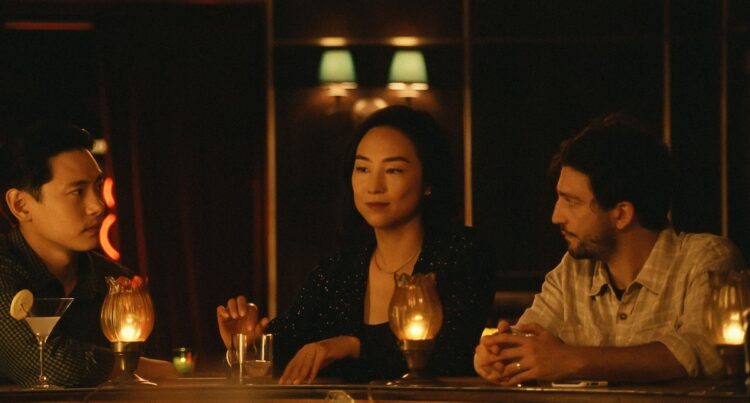
Teo Yoo, Greta Lee and John Magaro in Past Lives. Courtesy of A24.
Karl The bone structure!! Cut from marble both of them.
Ana No like, they were made to be on camera.
Karl But I think this was an intentional decision. We get all these very superficial indications that Arthur is just some average white guy. The book he authored in the movie is called “Boner” for God’s sake!
ADVERTISEMENT
Ana WITH A JEFF KOONS BALLOON SCULPTURE ON THE COVER. Nothing screams out more “mediocre white man” that fumbled his way to the top more than that. I’m sorry, I’ll relax, but my art history minor clocked that immediately and I am of the belief that every single choice in a film is intentional. So why add that? This would be my question to Celine Song if I were to ever attend a Q&A with her.
Karl #Arthur4Lyfe <3
Ana Rethinking our friendship as we speak. I’d leave the conversation if I wasn’t digitally chained to this chat.
Karl I just knew this would end in an argument. But then we see his relationship with Nora and I think there’s a real love there. That scene in the bedroom before they’re about to go to sleep is oddly the centerpiece of the movie.
Ana Karl. No it is not. It is a movie full of beautiful set pieces, and him trying to say fried chicken in Korean is not the one.
“They never express their full feelings. Which is, as an Asian-American, a very real thing. Whereas Arthur is so willing to vocalize the way he feels in that moment. And he delivers for me the most potent line of the movie: ‘You make my life so much bigger. I’m just wondering if I do the same.’”
ADVERTISEMENT
Karl I think I find that scene so refreshing because Hae Sung and Nora often talk around each other. They never express their full feelings. Which is, as an Asian-American, a very real thing. Whereas Arthur is so willing to vocalize the way he feels in that moment. And he delivers for me the most potent line of the movie: “You make my life so much bigger. I’m just wondering if I do the same.”
For Nora, Arthur does make her life bigger. For Hae Sung, Nora makes his life bigger. But I’m not sure he does the inverse. And that’s why Past Lives feels as much about the transient experience (I’m intentionally not saying immigrant here) as it is this specific romance.
Arthur even calls out in a different story he’d be the villain. Though, you certainly think he is. But he’s not. He’s the third protagonist, if anything.
Ana I’m curious as to why you won’t say immigrant! To me this movie really does encapsulate the immigrant experience. Immigrating is all about that central theme, captured by that same line you just mentioned: what makes your world bigger? Does staying in Korea make your world bigger, or smaller? If you feel like you’ve outgrown a place, and like you can grow so much more outside of it, that’s why you immigrate. So you don’t live an entire life unsatisfied, feeling stuck, and wondering “what if”. Just like you would with a past lover – places can encapsulate the same feeling of lost potential, and wanting more. Nora’s parents, even though her dad was successful filmmaker, knew they could have bigger lives for themselves and their daughters abroad, and so they did.
Hae Sung goes to China for the same reason, it’ll expand his work opportunities. After visiting New York, temporarily making his world that much bigger — literally, does he then seek job options abroad? Maybe! Maybe that’s his smile at the end of the movie — he sees a bigger world for himself thanks to Nora. Maybe not a life with her, but his own future, which he can now literally visualize since Nora paved the way, but he’s also free to pursue, without any attachments (at least romantic) in Korea, or New York.
Karl While I do think it definitely touches on the immigrant experiences and uses it to explore about the sensation you’re describing it feels like with a lot the movie it paints in broader strokes as to allow as many people as possible to relate to it. So what you were about outgrowing a place. That doesn’t necessarily have to tie to leaving your specific country. I left New Jersey to move to New York City and that small of a move still felt like my world was expanding. But I think it could be as simple as just leaving the path that is predestined for you. Hae Sung follows the very pragmatic Korean expectation of living with your parents until you’re married, going to school so you can find a stable job. Even going to China was in service of that mission. But that isn’t specifically the immigrant experience, which is why I used the word transient. Maybe transplant might even be more appropriate.
I think if Past Lives was about the immigrant experience then that first section when they were kids wouldn’t have jumped to 12 years later right when she was about to start her life in Canada.
Ana Fair! Totally understand what you mean, and agree that transplant is a better word. Though in an interview with Deadline, Celine Song does say that while the movie is objectively true to her immigrant experience, she does want people to relate to her story even if their experience is moving from St. Louis to L.A., for example. But this is getting into the weeds of how we define immigrants and transplants.
Karl To wrap this up, because this chat is now over 2000 words, I have one last question: which character (or combination of) do you relate to most and why?
I’ll start with my favorite character… Arthur. Muahaha 😈.
Ana Is he really your favorite?
Karl I love them all for different reasons. I think part of it is my affinity for John Magaro who I’ve loved since First Cow. A movie you have to watch since I know your affinity for cows. And I think he has the dialogue that felt most potent to me in a lot of cases.
I guess I feel like I’m a mix of all three of them in a way. I have the good boy aversion to risk like Hae Sung, the headstrong ambition of Nora and the insecurities of Arthur. And perhaps I’ve felt more Arthur recently than Hae Sung or Nora.
ADVERTISEMENT
Ana I agree, I mean I think the beauty of this movie is that it is up to interpretation, and you could see yourself as any of them depending on your current circumstance, or play out a different reality where you, as Nora, does get into the car with Hae Sung at the end. In my first watch with you, pining for an ex-love, I was fully in Hae Sung’s shoes, living in the past, remembering everything and not moving forward. Now I feel a bit more self-assured about the present and my future, like Nora. But through this conversation I’ve actually had a pretty potent realization —
Karl Ahhh a movie therapy breakthrough!
“The reason I was so put off by Nora and Arthur’s relationship (and why I reactively took Hae Sung’s side at first) was that it reminded me of my own relationships and the insecurities I’ve had in them…”
Ana The reason I was so put off by Nora and Arthur’s relationship (and why I reactively took Hae Sung’s side at first) was that it reminded me of my own relationships and the insecurities I’ve had in them, especially regarding having a white partner as a Colombian that I was afraid would never understand my native language, or my immigrant experience.
Karl Yeah I completely get where you’re coming from. It’s something you become so aware of too as you get older and our understanding of race evolves.
Ana In my early twenties and the immaturity that comes with that time of my life, I definitely felt misunderstood and didn’t have the tools or mental stability to have those conversations about my culture, without feeling…
Karl Without feeling immediately defensive about your feelings.
Ana Exactly! It’s a shame, because I do think that relationship could have had a future if we had met later on in life, when I had actually come to terms with my own immigrant experience and that it doesn’t mean I had to explicitly date someone that came from where I came from — they simply had to love me in spite of our differences, and make a true, honest effort, like Arthur does with Nora.
Seung Min Yim and Seung Ah Moon in Past Lives. Courtesy of A24.
Karl And granted we went to a predominantly white college, which I think made all those differences all the more obvious. Same with how Nora found herself in a place so different and foreign from what she knew.
I also had a white boyfriend around that time.
Ana Oh, I remember!
Karl Haha it was a time!! But something he did that I appreciated was take the time to understand where I was coming from in our relationship. We had a lot of conversations about how we could come off as an interracial Asian/White couple. Like cue the colonizer jokes (often from me…). And it angered him that we would be seen that way but I think he eventually understood is that’s a fact of my life. And that understanding was enough. He didn’t have to solve it. But just know about it.
Maybe that’s why I appreciated Nora and Arthur’s relationship. Particularly the discussion they have mid-way through the movie. All Arthur wanted to do is understand where she comes from — even if she was resistant to look back at her own life.
ADVERTISEMENT
Ana That’s lovely! Yeah I definitely was so insecure during that time, that I became a victim and my own worst enemy when it came to having those conversations. But you live and you learn. Which is funny, this is that same relationship I was wondering about right as we watched Past Lives together, and I was thinking, what if things had been different? What if it all took place now?
I remember that day so distinctly: we were having a reflective day, one of those very beautiful fall days where the city and the light is perfect, and it’s unseasonably warm, but you can still pull off a nice fall outfit. The first of our college friend group turned 30 that day, and we met up with her at a cafe. And I remember thinking that we all felt content about where we were in life at that moment. Naturally, that day fell apart in spectacular fashion for me, but we met up again at the end of it.
Karl And while we were walking I think I remember saying we should watch Past Lives because (1) it’s the kind of movie we love. Melancholic. Introspective. Poetic. And (2) it’s so meditative and poetic that I figured it’d calm you down.
Ana It both calmed me down and sent me spiraling, thank you.
Karl The Karl special.
Ana So we were primed to think about our past, present, and futures that day, and me particularly, to imagine a different reality of a life that could have been. It was the perfect film to watch and it highlighted exactly where I was in that moment in my life.
Karl And it helped us both look at our lives at that moment as this long journey. We both separately post-pandemic went on these journeys that took us away from our comfort zones. The movie looks back and explores the many decisions we make to get to a certain point. But it also emphasizes that it is a necessary exercise to move forward and understand you are in the right place. To bring it back to the movie, Nora and Hae Sung on the street with Arthur waiting for her at their apartment was the right place.
And perhaps that place for us was on my couch in the East Village eating a sweet treat watching a movie.
Ana And that place is also here right now with you. I feel like we unearthed some pretty vital and new realizations despite having talked about this movie non stop since we first watched it, and you talking around the plot for months while I gathered up the will to watch it with you. This has been surprisingly cathartic, but I guess that was the point! Thank you, as always, for these conversations. ❤️
Italian summers, forbidden love and longing. Here is a playlist inspired by the 2017 romance Call Me By Your Name.
Welcome to Re-Play, a column where one of our writers curates a playlist based on a movie, TV show, experience or any part of life.Find the playlist for you here.
The first time I watched Call Me By Your Name was in the middle of a tough breakup during a harsh winter in New York City, all of which I immediately forgot about the moment that the dreamy opening credits rolled. It wasn’t until I stepped out of the theater, that it hit me that I wasn’t actually living in an Italian summer – I was in the middle of Manhattan, and it was still February, but I was a little less alone in my heartbreak, and feeling some semblance of hope again. If anything, I felt so raw and underwent such a catharsis while watching the film, that it took me a few seconds longer to adapt to my actual surroundings. I was amazed that a director could capture not just a place’s heat and lush environment, but also the feelings of love and loss in their tenderness, fragility, excitement, and fear. For a while, despite the stubborn chill surrounding me, I couldn’t get what I had just seen and felt out of my head, and I wanted to preserve that feeling in whatever way I could. So, as I tend to do, I created a playlist.
The music in Call Me By Your Name is just as important as its visual choices, making it a film that pulses and moves forward with its soundtrack, whether it’s the hazy intensity of a Talking Heads needle drop or quieter motifs from the score during intimate moments. In almost every other scene, Elio is seen listening to, playing, or transcribing music, not to mention the various references to music videos of the time, concerts, dance breaks, and posters from contemporary bands lining Elio’s (and Oliver’s) bedroom. Director Luca Guadagnino said that he wanted the film to be enveloped in a narrator’s voice, for which he chose Sufjan Stevens, whose original songs in each of the movie’s three acts help provide musical cues to amplify the story.
If the music in the movie’s soundtrack acts as a narrator, for this playlist, I chose songs that could also narrate the film through their lyrics. I set out to tell a similar story in 49 minutes and capture the youth, the longing, and the nostalgia of the 80s, just as Luca Guadagnino achieved for me in the middle of a Manhattan winter.
I also wanted to tell a story of heartbreak, with the first half of the playlist full of bright summer yearning, which later cascades into songs I associate with breakups, though hopefully by it’s end conveys that same bittersweet grief and gratitude that the final scene of the movie does for me. After all, this movie, like life, is about highs and lows, beginnings and endings, and finding the courage to want to experience the full spectrum of life and love.
And I don’t want to let a moment pass Running circles in my mind, circles in my mind “Call you later”, Something that you forget
Waiting on the dial tone Maybe I’ll just let it go Here I am, been waiting on you far too long
With its jangly guitars and twinkling pop melodies, this song is a fun and hopeful start to the story. However, the lyrics point to issues under the surface of an obsessive summer romance: “I don’t want to let a moment pass, running circles in my mind.” Ultimately, there are miscommunications and hints at an unrequited romance: “waiting on a dial tone, wanting to call it quits.”
Upon rewatches, I sympathize more with Marcia’s character. I like to think this is sung from her perspective, since she is by Elio’s side before Oliver comes to visit that summer — she even watches Oliver’s entrance with Elio in the movie’s first scenes. Her character loved and waited for Elio for “far too long,” expecting something of him that he couldn’t ultimately give her.
ADVERTISEMENT
“Forget It” – Blood Orange
I feel unique Not yet complete
And your steaming eyes fall on me Poor me Poor you Poor us A fuss, a fight So I sat outside, outside
If the last song was Marcia’s point of view, then here is Elio’s perspective of their fling. This song is about lust and a couple in discord: a confused narrator insists that he isn’t his partner’s savior. This differs from what Marcia wants to hear as she’s caught up in a situation she wants more from. The truth is that Elio’s attentions are diverted elsewhere with the introduction of Oliver, and he’s not the one for her.
“W Longing” – Porches
I get high Alone tonight And I ask myself If you could be mine
I hold my breath, motionless My lungs pink with black air
This song begins Elio and Oliver’s romance, from the initial tension and discord to the nerves sparked by a crush nearby. This song concerns pools, getting high, dancing, wondering, and longing.
The song’s lyrics also mirror the question at the crux of Elio and Oliver’s affair, which they’re both asking to be confirmed to each other: “Tell me what you wanna hear, I want you to hear it”
“Peach Pit” – Peach Pit
Lift back and see the darkness hid Swallowed up and angled in Looking back at sweetness dim
Ripe June had leaf and shady friend The cool air is gone again
It’s been a long season through All this rotting fruit with you
Of course, I had to include a song titled “Peach Pit.” It’s good that it works as perfectly as it does, narratively and sonically. This is a moody, sweet song sung in soft refrains describing a nostalgia for summer love and the deeper feelings and foreboding of an inevitable ending. Nostalgia always colors everything sweeter, but the time of peaches hanging on branches is gone, and all that’s left is summer fruit on the ground; everything that ripens must eventually fall, signaling that even summer romances that seem to last forever must end.
ADVERTISEMENT
“Olive Boy“ – Reptaliens
We don’t have to know Anyone at all Anyone at all Draw the blinds back slow Sun fades in our room Two begin to bloom
This song – another dreamy bedroom pop project – asks if the relationship being formed between two lovers is reciprocal and affirms that nothing else matters as long as they have each other. There’s a daydreaminess to the lyrics that set the scene in a bedroom, blinds being drawn back so the night can last longer, and they can shut out the world’s reality for a while longer.
And a little nod to the movie’s title in the chorus: “Is that cool with you? That I wanna call your name?”
“Cool with You” – Her’s
Feeling sick Sinking ship The sun goes through your window It shatters on your pillow
Mustard skin Olive man Who are you when you’re at home Are you the same when you’re alone
Hopefully, these songs all have a clear sonic connection so far: they’re synthpop, analog, retro, and reminiscent of the 80s, with soft, lovelorn vocals. All of these could soundtrack an alternate version of the movie or be the background music choice for a Gen-Z-esque fan cam. This song is another bedroom pop project, whose grainy, retro style creates a hazy drug-infused scene about a boy who cries and feels sick as he wakes up – similar to Elio, high off of new experiences but feeling lovesick with the amount of new emotions he’s trying to make sense of.
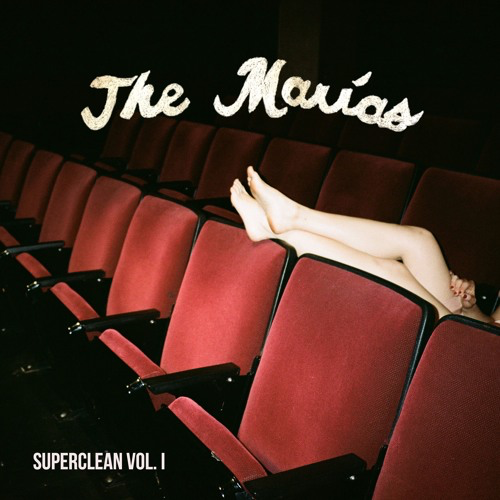
“I Don’t Know You” – The Marías
There’s a weight in my bed Where you laid and you said “I don’t know you”
If we tried to retrace Would it show on my face? And remind you I don’t mind you
This is a nostalgic and sultry song about a couple’s experience filled with uncertainty and wonder whether the other person truly knows the singer. Despite being together, there are still some doubts and tension between them and a question about whether the other person is just as invested:
“I’m hardly unsatisfied, You’re not heels over head, But darling, There’s a weight in my bed”
Similarly, Elio and Oliver are finally together, but Elio still doubts whether Oliver is just as compromised in the relationship as he is.
“I Love You So” – The Walters
You’re everything I want, but I can’t deal with all your lovers You’re saying I’m the one, but it’s your actions that speak louder
Giving me love when you are down and need another I’ve gotta get away and let you go, I’ve gotta get over
I love you so (ooh-oh)
This song is about gathering the courage to let someone go after discovering that the other person has a life and lovers beyond their relationship. It’s about a shattering loss and heartbreak but still loving someone so much and searching for the determination to move on from them:
“I’m gonna pack my things and leave you behind
This feeling’s old, and I know that I’ve made up my mind.”
I see this song from Oliver’s point of view. He realizes that he must leave Elio at the end of the summer, and nothing can change his mind.
ADVERTISEMENT
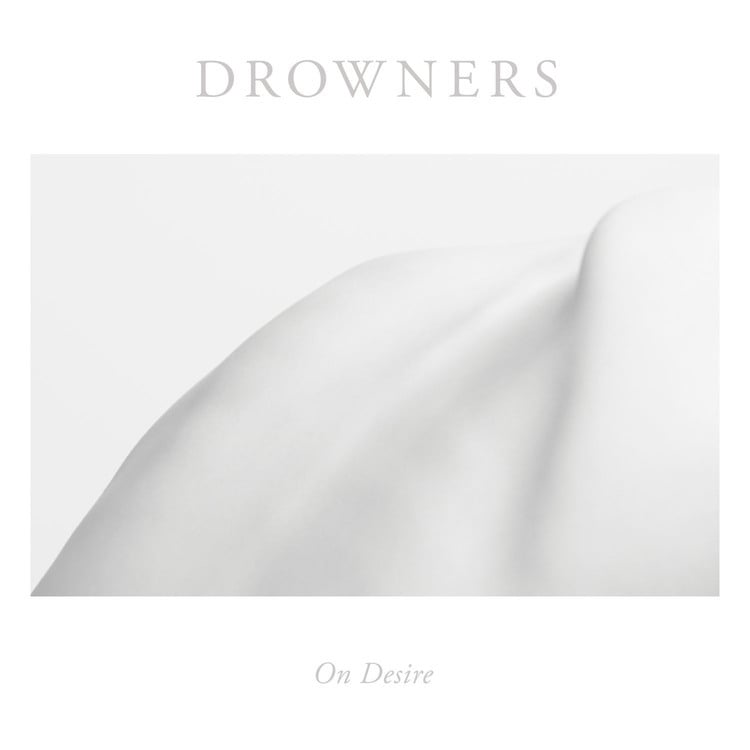
“Trust the Tension” – Drowners
A bookshelf organized just by the color of the spines Has enough time quite elapsed for me to call you mine?
Well now you know That I’ll learn to trust the tension And I’ll learn to let things go But if you plan on leaving Please just fucking go
I find that this song can fit Elio’s point of view of the coming end of the relationship: he hopes that if Oliver plans on leaving, he should go and not drag things out. Here he battles all the stages of letting off the relationship: wondering if enough time has passed to call Oliver his, then realizing that he needs to learn to let go, and then more confident: “Yeah, if you plan on leaving, Please just fucking go”
“Heart Swells/Pacific Daylight Time” – Los Campesinos
I don’t want to sound trite but you were perfect The way you look could seriously make nature dysmorphic I wish that you would kiss me ’til the point of paralysis The way I flail my arms in front of you, it just embarrasses I’ll never turn my body clock back And think about the things I’m glad I left out Some things are best left unsaid
To me, this song parallels the movie’s climax: the heartbreak. Saying goodbye at the train station, the tension building, the train and Oliver departing, everything falling apart. Then follows a tenderness, a yearning for the love and the memory of the relationship, and everything left unsaid.
This moody song with stilted vocals has always felt emotionally packed to me. It also has a particular build: it starts slowly, and all the instrumentation comes together simultaneously.
There is an initial chaotic feedback of electric guitars (which foreshadows the climax of the song later on), followed by an acoustic guitar that softly marks the rhythm. Horns then appear in the background, and with the addition of a distorted electric guitar, and a twinkling piano, it all soon fades into a wall of noise as the fuzzy vocals start in the first part of the song (Heart Swells). The lyrics here describe happy memories within a relationship, as then builds to the conclusion of a breakup, knowing they’ll never be the same after that experience: “Sleep well, I feel you’ve ruined me forever”
The instruments hit their final, discordant note, and the song shifts to Part 2 (Pacific Daylight Time), a sunny and bright instrumental with a loud, steady drum that marks the rhythm this time. More precise, more conventional vocals now express longing and desire for that person, but a decisiveness about how they’ll never regret that time together, despite everything left unsaid: “I’ll never turn my body clock back, And think about the things I’m glad I left out”
The song stops abruptly after more feedback, static, and disconnected vocals. Everything ended before its time, but it was beautiful, and even if the memory gets distorted, it’s all okay for now.
ADVERTISEMENT
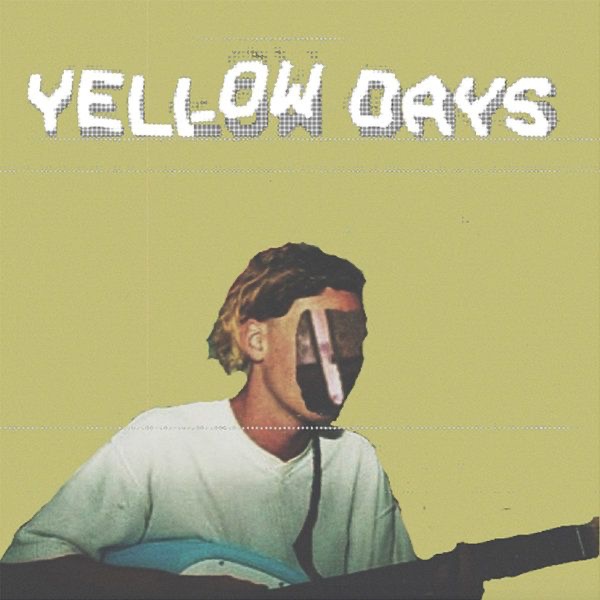
“I’ve Been Thinking Too Hard” – Yellow Days
I, I don’t know what’s right anymore The sea flooded and the rain poured I’m conditioned to survive Just I need to be alive I’ve got intuition on my side Just to ease that paranoid mind I’ve cried tears ocean-wide Just to ease that pain inside
Here’s when we reach my favorite part of a movie full of favorite moments: Elio’s dad’s speech.
The song features an intro and outro by Alan Watts that asks the listener to find the ever-elusive peace in a man’s soul. His reassuring voice takes me straight to the scene where Elio’s dad helps him navigate his immense grief at the loss of Oliver and insists that this pain is Something to hold dear because it signifies a great love. This song is a break from the rest of the playlist – an outside perspective, an authoritative but empathetic voice breaking through the emotions and innermost dialogue of the narrative.
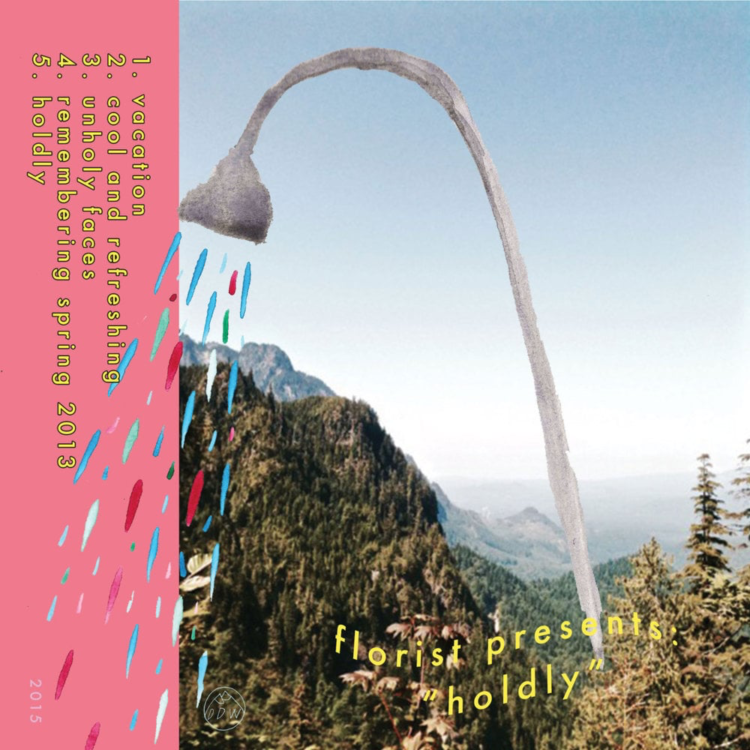
“Vacation“ – Florist
But at least I know that the world is spinning when we’re tangled in the bedsheets And at least I know that my mom is breathing when we talk on the phone And at least I know that my house won’t burn down Down to the ground Or maybe it will
This song is a soft and sweet epilogue to this playlist and matches the epilogue that we’re given in the movie. Its lyrics reflect on an idyllic past: simple pleasures, bike rides, Christmas lights, and the small delights of a family vacation, which the singer is still determining if she can enjoy the same way anymore.
The song describes childhood and the loss of innocence as they head into adulthood. Despite the initial nostalgia, the song is ultimately realistic, with the singer believing that anything could happen, both good and bad, and that she can still view things with hope, as she did once as a child while accepting that things don’t last forever.
Similarly, at the movie’s end, Elio is seemingly content but still carries grief about the past, which he remembers after his phone call with Oliver. But he finds the peace that comes with catharsis and accepts the ending of something beautiful that wasn’t meant to last.
Aftersun follows the childhood memory of a girl on vacation with her father to the Turkish coast. But where there’s sun there is also shadow.
Aftersun is one of the greatest depictions of depression and grief captured on film as it meditates on childhood, parenthood, and memory. Beautifully wrought with cinematography and score that play like a memory on loop. As the movie comes to its stunningly satisfying and emotional conclusion—perhaps one of the greatest final moments of a movie I’ve seen in some time—we’re taught that opening that box might be a means to an end. A means to heal the burn that memories can leave.
Do you know that lethargic feeling after sitting in the sun on a hot summer day? Or the melancholic daze that follows you home after a perfect vacation? Do you get blotches in your vision after looking into a bright light or staring up at the sun? All those sensations perfectly described Charlotte Wells’ debut feature Aftersun, which feels like the perfect term to encapsulate each of those feelings. And that is what the whole movie is: a feeling. For its largely plotless 96-minute runtime nothing really happens in front of you. But rest assured, there’s plenty happening in the shadows of the sunny father-daughter beach holiday at the center of the movie.
💌 Get weekly streaming movie recommendations in your inbox
Wells presents Aftersun as a childhood memory flashing into the mind of a girl 20 years later—when she’s the same age as her father at the time. But as with any memory, things look different in retrospect.
In the early 90s, young father Calum (Normal People’s Paul Mescal) brings his 11-year-old daughter Sophie (played as a child by Francesca Corio, a real festival breakout) on a sleepy summer vacation on the Turkish coast. Gregory Oke’s dreamy cinematography simultaneously underlines the sunny haziness of a beachy summer and the soft edges of memory. In between days lounging at the pool, trips to the resort’s restaurant, and interactions with the other guests, we see interstitial clips from home video of the trip filmed by either Sophie or Calum. It’s in those clips—and interruptions often taking place at night while Sophie is asleep—that we sense there’s more meaning and heaviness in this vacation for Calum.
Those feelings only come in waves though. We never see Calum being less than a devoted (and goofy) father to Sophie, almost a complete juxtaposition to the view we have of the usual young parent—sometimes he’s even mistaken for her brother. Sophie, as a child, sees him as nothing less than an invincible infallible hero—how many of us see our parents. Her childlike wonder extends to the world around her as she becomes enamored with a group of older kids—a bit of a nod to the typical coming-of-age story, of which Aftersun is decidedly not. However, that wonder also leads to conflict when Sophie’s frank questions lead to revealing that not all is great and perfect in the background of Calum’s life. At the moment, she thinks nothing of them. However, when adult Sophie looks back at the same clips we’re watching, they play very differently. Like videos taken before a coming disaster.
Memories always have their blind spots. You remember the bright moments while blocking out the darker ones. It’s not until you look back and unpack them as an adult that you see their profundity.
31-year-old Sophie (Celia Rowlson-Hall), who we cut to for short moments throughout the movie, is the same age as her father when they went on that vacation. As she remembers the bright spots—the late night karaoke, her first kiss, her dad clumsily juggling bread rolls at dinner—the darker ones slip in as well. Or, at the very least, she fills them in—her dad crying in the middle of the night, his quiet swaying while smoking a cigarette on the balcony, his muffled contentious phone calls back home. However, the movie never lingers on those moments—like adult Sophie is trying to keep them out of her perfect vision of that summer vacation. The same way that we exclude the awkward pauses at an otherwise lovely dinner or the arguments heard through walls late at night after you went to bed in our memories. You keep the good and avoid the bad until you can no longer stand the weight of the past.
It’s difficult to describe Aftersun because nothing and everything is happening at the same time. Though what’s happening on screen may seem mundane, it’s drenched in subtext. For those that aren’t looking in the right places, the movie might be tedious to get through.
ADVERTISEMENT
Aftersun is about many things, but at its core it’s about the blindspots of our memories and traumas—and how we fill them in to make them whole again.
Our parents try to create the best childhood for us. Short of that, they at least try to create the best version of those memories for you, whether intentionally or unintentionally. It’s why nostalgia exists and why some memories float to the surface while others burrow themselves deep into our psyches. Charlotte Wells uses Aftersun to show us what it’s like to unlock that box that we all keep away in a hidden dark corner of our minds. What it’s like to admit that our perfect childhood memories are just afterimages of the brightest moments. As the movie comes to its stunningly satisfying and emotional conclusion fittingly underscored by Queen’s “Under Pressure”—perhaps one of the greatest final moments of a movie I’ve seen in some time—we’re taught that opening that box might be a means to an end. A means to heal the burn that memories can leave.
Three Black women navigate the horrors — both real and supernatural — of working and attending a predominently white institution in Master
Master is playing at the 2022 Sundance Film Festival. It will be released on Prime Video in March.
The most horrifying scene in Master, the feature debut of director Mariama Diallo, takes place at a house party. There’s nothing quite supernatural about it, despite the core of the movie involving a legend centering on ghosts and witches. In the party scene, freshman Jasmine Moore (Zoe Renee) is having the time of her life as the song playing switches to Sheck Wes’ “Mo Bamba.” Around her, white faces illuminated in red begin to crowd around her and scream the lyrics without regard: “I be ballin’ like my n— Mo.” Except they don’t censor themselves. Diallo directs the scene with intense precision. The swirling camera blurs the faces around Jasmine until they look inhuman. It’s claustrophobic.
That’s the overwhelming feeling throughout Master: an atmospheric sense of creeping dread that points to the supernatural haunts on the campus of Ancaster College. At the same time, the film works just as much to translate the very real feeling of three Black women as they navigate attending and working at a predominately white institution. Combining elements of Italian Giallo films — specifically Suspiria — and social horrors like His House, Diallo creates a type of haunted house movie that keeps you at arm’s length — until it doesn’t.
ADVERTISEMENT
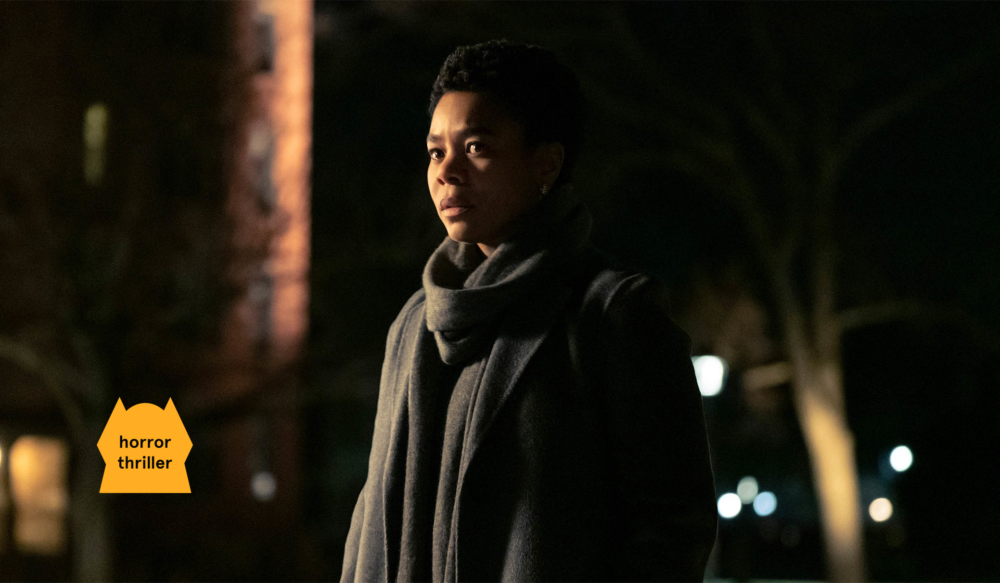
Along with Jasmine, the movie follows the newly appointed House “Master,” or dean of students, Gail Bishop (Regina Hall) as she navigates the waters of leadership as the first Black person appointed to the role. Both women face microaggressions, and macroaggressions, in their day-to-day life. Jasmine, one of the few black students at the school, is asked to have her bag searched after it sets off an anti-shoplifting alarm. Gail, in a meeting with college leadership, is asked if she could be objective in determining whether Professor Liv Beckman (Amber Gray), a Black professor, should get tenure.
Ancaster — a fictional college substitute for any Northeast liberal arts school — has its own share of mythology and lore, not uncommon for institutions of its kind. For Ancaster, it’s the story of Margaret Millett, a woman accused of being a witch and who was killed near school grounds. Legend has it that since then, the school has been cursed and she returns at night to claim the souls of students. Learning about this tale sets Jasmine on edge from the start, and it isn’t helped by the fact that a student killed herself in the very room she lives in.
Diallo, taking a page from the shadowy film noir stylings of Giallo films, constructs the movie and school like a maze where the walls slowly close in on the characters. Jasmine, for reasons not entirely her own, never quite finds her footing, socially or academically. Gail, on the other hand, finds her path by potentially compromising her own identity. The dueling storylines have their strengths and keep the plot moving, though sometimes the lack of focus removes some of the effectiveness of the horror and story.
ADVERTISEMENT
Despite its assured direction, Master is not a perfect film. It falls into some of the trappings of a first-time director — showing instead of telling, uneven pacing and plotting — but manages to keep audiences engaged with horror imagery that sticks well past the end of the movie. And as well rendered as the supernatural sequences are — Jasmine’s nightmare encounters are sufficiently creepy — a scene with a seven-person panel consisting of five white men and women, an Asian man, and a Black woman, determining the worth of a Black professor, is just as unsettling.
Gail, who is a face of resilience and determination throughout the movie, tells a defeated Jasmine, “it’s not a ghost, it’s not a witch, it’s America.” Diallo likens the very real experience of Black women in spaces built by and for white people to the oppressive weight of an urban legend like the one of the witch at Ancaster. These are the shadows you can’t shake, the itches you can’t scratch. These are the memories and ghosts that are always there and always weighing you down. The movie doesn’t give many solutions to this condition but instead offers the solution by portraying the problem for what it is: true horror.
When You Finish Saving the World follows a mother and son pair who are, in their own ways, finding ways to leave their mark on the world
When You Finish Saving the Worldis playing at the 2022 Sundance Film Festival.
When You Finish Saving the World comes close to finding its footing in the final twenty minutes, which is typically when a movie reveals its design to deliver a message or lesson. Actor-turned-director Jesse Eisenberg would have succeeded in that emotional gut-punch had the prior 70 minutes been more nuanced in its skewering of white upper middle-class suburban progressives. Instead, we’re hit over the head with obvious artifacts and dialogue to hammer in the point to oblivion. They drive a smart car! They listen to classical music! They think white people shouldn’t play the blues!
However, that is what makes it the perfect movie for Sundance. Audiences are typically more-forgiving and gravitate towards movies that have a message with a capital M. It’s no wonder the fest has become a bastion for actors to test their aptitude as writers and directors for the first time. First-time directors already have the tendency to over-direct and write. Actors who assume the director’s chair seem to make that mistake even more. It doesn’t help that Eisenberg also wrote the original story — released as an audiobook — and adapted it. Without someone to filter through all of the layers of this work, the movie becomes overwhelmed by its own sensibilities.
ADVERTISEMENT
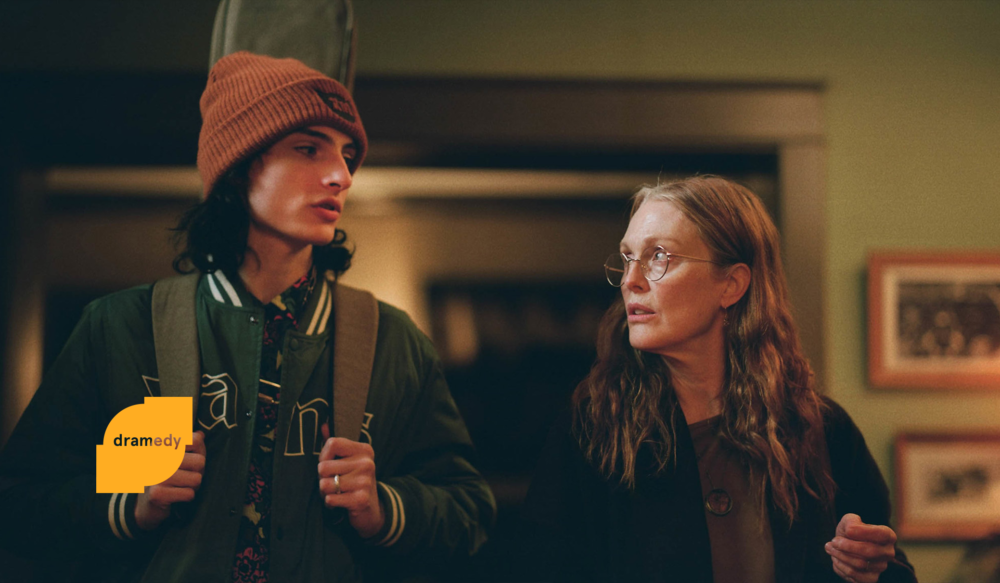
Had When You Finish Saving the World either leaned more into its satire or had taken a more nuanced approach it might have succeeded– and there are flashes of success in both arenas. Evelyn (Julianne Moore) somberly assures Kyle (Billy Bryk), the son of a woman staying at the domestic abuse shelter she runs, that he’s not going to become his father. Hilariously, he responds, “why would I become him? I’m not worried about that.”
Evelyn’s son Ziggy (Finn Wolfhard), on the other hand, tries to connect with his politically engaged crush Lila (Alisha Boe) by touting his international online presence. “I have 20 thousand followers and I think what they like about me are my passion and charisma,” he says, making a point to single out one of his Chinese viewers.
Evelyn and Ziggy are both passionate about what they do, but also fundamentally misunderstand each other’s motivations — and their own. In theory, the movie’s central struggle is this mother-son dynamic and their inability to find value in the other’s mission. Evelyn is by the book, so much so that she sometimes comes off as disconnected. Ziggy is a free spirit and his songs, that exude mid-2000s garage emo pop-punk self-important sincerity, communicate a similar disconnect from reality.
ADVERTISEMENT
However, their screen time together is so limited that we’re unable to explore their connection to the depths we need to be interested as an audience. Their own storylines — Evelyn trying to “save” one of her charges and Ziggy trying to become “political” — feel so disparate that the movie becomes less than the sum of its parts.
Eisenberg’s heart is in the right place. The movie has its moments where it feels like the biting indictment of the white savior narrative almost takes full form, but when it’s as shallow as its two leads it becomes the exact thing it’s trying to lambast. The movie is for people that have the resources to help and the desire to help, but lack the emotional stakes and inherent empathy it takes to be an actual ally. It’s like a person saying they’re an empath and asking a crying person if they’re sad. The idea is there. It’s a minor, but well-intentioned vision, and unfortunately, too singular of a viewpoint to be effective in its primary message – that of saving the world.