Matthew Huff

  • In ‘All Quiet on the Western Front’ war has never looked worse and never looked better | TIFF review

    In ‘All Quiet on the Western Front’ war has never looked worse and never looked better | TIFF review

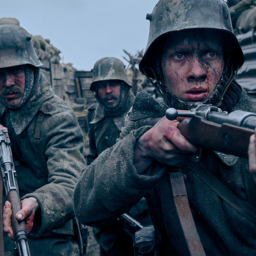
    All Quiet on the Western Front, the second adaptation of the novel of the same name, follows a group of young soldiers that learn the hard way that war is hell

    All Quiet on the Western Front will be released on Netflix on October 28th.

    For whatever reason (schadenfreude? To stare the harshest reality straight in the eye? A fascination with large machines?), for as long as humans have been making movies, they have been making them about war. The first ever Best Picture winner at the Oscars was Wings, a 1928 silent war film about a pair of fighter pilots. The highest-grossing film ever (adjusted for inflation) is Gone with the Wind, set against the backdrop of the Civil War. And Oscar history is littered with wartime films from classics like World War II-set Casablanca and The Bridge on the River Kwai (focused on a British POW camp) to more recent entries like Holocaust tragedy Schindler’s List and Iraq War-set The Hurt Locker. But one story has been a staple in the war film canon since the very beginning: the 1930 Best Picture winner All Quiet on the Western Front


    ADVERTISEMENT


    The film is based on the German novel by Erich Maria Remarque, which follows a young, naive soldier named Paul through events of the First World War. Remarque’s novel, inspired by his experience fighting in the trenches, paints a horrifying, monotonous, and ultimately pointless picture of war. Paul is dispatched to complete various futile tasks on the front, watching his comrades die agonizing deaths with little rhyme or reason. As opposed to the prevalent view of war at the time—honorable, glorifying, heroic—the novel took a definitive anti-war stance. It enraged many readers (especially in Germany where the book was banned during the Nazi era) while delivering harsh truths to a population fueled by propaganda, and with relatively few ways to understand what war actually looked like.

    Now post-Vietnam War, post-Cold War, and post-Iraq War, the anti-war sentiments of All Quiet seem commonplace and even quaint.

    The fact that you were probably assigned the book in a high school English class and that the original film is in black-and-white contribute to the misconception that this is a run-of-the-mill war epic. At the time of the film’s release, however, merely two year’s after the book’s publication in German, and one-year post-English translation (nearly a decade before World War II), All Quiet was revolutionary. 

    Nearly a century after the American film, a German remake, which debuted at the Toronto International Film Festival, feels as timely as ever. In a period of growing nationalism and increased violence, the message of war’s futility and human toll feels like a necessary reminder. Like the novel and the 1930 film, this new adaptation from German director Edward Berger, isn’t terribly concerned with a streamlined plot (because war itself rarely has one). Rather it’s more of a mish-mash of grizzly, muddy, bloody moments covered in rats, in piss, in shrapnel, in severed limbs, and in the ever-present toxic masculinity. 


    ADVERTISEMENT


    While the new film strays from the book in many regards (especially in its eleventh-hour battle sequence), it does stay true to the novel in premise and theme.

    A group of impetuous young German schoolboys, led by Paul (newcomer Felix Kammerer) enlist in giddy excitement, trotting off to certain death while singing upbeat tunes and daydreaming about the glory, wealth, and women who will await their return. A masterful opening sequence that follows the garments of previous German casualties, their uniforms stripped from mangled bodies, stitched up, scrubbed, and handed to the euphoric new recruits, shalacks the film with ominous foreboding from its first scene. The crew is then whittled away one by one in a series of battles, wartime mishaps, and body horrors, cementing for viewers that there is no glory in war. 

    While there may be no glory in war, there is most certainly glory in war movies. Berger’s vision, expertly shot by cinematographer James Friend, is as breathtakingly gorgeous as it is brutal. The haunting, misty vistas (set against an eerie piano score from Volker Bertelmann) are Nat Geo in spooky season. Even as the runtime approaches the 2.5-hour mark, Berger is concocting new ways to artfully depict how goddamn horrible war is. Scenes of tank warfare, of hand-to-hand combat in a bomb crater, and of flamethrower deaths will be branded into my mind for eternity. The film, distributed by Netflix, looks EXPENSIVE, and the practical effects go a long way, much as they did with almost Best Picture winner 1917. However, unlike Sam Mendes’s one-shot masterpiece or Mel Gibson’s Hacksaw Ridge, which presents war as at least somewhat heroic, All Quiet’s beauty is 100% in service of showing how disgusting war is. 


    ADVERTISEMENT


    The 2022 German submission for the Academy Awards, All Quiet is almost guaranteed an Oscar nomination in the Best International Feature category. And as we’ve seen with Drive My Car, Flee, Another Round, Cold War, Roma, and of course Parasite, the increasingly international Academy is not afraid to nominate non-US films in other categories. Cinematography, Score, Sound, Film Editing, Makeup (those yellow teeth!), and even Picture seem within reach, especially since this year seems without an international juggernaut frontrunner to this point. It should be mentioned that Daniel Brühl appears here in a supporting role (as he seems contractually obligated to appear in any movie involving Nazis) relegated to a series of non-battle scenes that add more bleakness to the story. 

    Despite premiering late in the TIFF lineup and being over two hours long, I was engrossed the entire time in this beautiful horror.

    With a Netflix debut at the end of October, All Quiet on the Western Front has the potential for plenty of eyeballs as awards season heats up. It’s one of the most artfully rendered and least “oorah”-shouting war films in recent history—I’m looking at you, Top Gun: Maverick. And while the Germans may have suffered a painful loss in World War I, they have a cinematic triumph here.


    Hey! I’m Matt. You can find me on Twitter here. I’m also a staff writer at Buzzfeed.


    ADVERTISEMENT

  • ‘Empire of Light’ is more than a movie about movies | TIFF movie review

    ‘Empire of Light’ is more than a movie about movies | TIFF movie review

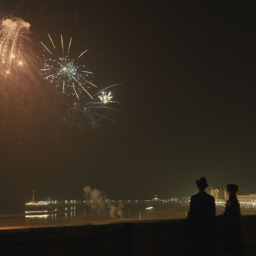
    Set on the moody southern coast of England in the 1980s, Empire of Light follows a lonely movie theater worker who finds herself in a whirlwind romance.

    There is something otherworldly about sitting in a movie theater. The artistry. The magic. That indescribable feeling we get when the lights begin to dim, and we go somewhere we’ve never been before. We’re not just entertained, but somehow reborn together. Those dazzling images on a huge silver screen. The sound that we can feel. Somehow, heartbreak feels good in a place like this (and I believe I’m the first person to ever describe the theater this way). Sam Mendes’s ninth feature film Empire of Light, which debuted at Telluride before crossing the border to the Toronto International Film Festival, bottles up this sentiment expressed so eloquently by Nicole Kidman in her AMC ads.

    Mendes—best known for American Beauty, Skyfall, and 1917—solutes cinema as he follows a group of employees working at a movie theater on the southern coast of 1980s Britain. At the center is  Hilary Small (Olivia Colman) a middle-aged concessions counter worker who struggles to find happiness selling popcorn, sweeping out theaters, and regularly jerking off her boss (Colin Firth). As the film progresses we learn that Hilary has previously suffered under bouts of depression and mania. Nevertheless, she returns to her job at the Empire, no matter how mundane, as the one constant in her life. 


    ADVERTISEMENT


    Eventually, however, Hilary’s existence—and the entire atmosphere of the Empire—are brightened by the arrival of a new ticket-taker called Stephen, played by the charming Michael Ward (who you may recognize from Steve McQueen’s Lovers Rock). Stephen is brimming with joie de vivre, and the entire staff is instantly smitten. He strikes up an unlikely friendship/romance with Hilary, he gets chummy with punk-rocker-turned-candy-girl Janine (Hannah Onslow), and even manages to endear himself to the curmudgeonly projectionist Norman (Toby Jones, who is as brilliant as always).

    Hilary and Stephen are two lonely misunderstood souls.

    She because of her age and mental health issues and he as a black man living in a predominately white community. They begin to fall in love, sneaking away to the abandoned second floor of the theater to hook up during shifts. While on the surface this romance may seem unlikely (and some have called it out as unrealistic), anyone who has ever felt adrift and isolated can relate to the yearning for connection and the unexpected places we often find it. 

    As the film swirls into its second act, their idyllic relationship is confronted by outside forces. Hilary’s mental health, the racial tensions of the UK and the rise of the skinhead movement, and confrontations with other employees of the theater all drag the pair back to a harsher reality than exists in their private alcoves. In a Lost in Translation sort of way, however, Empire of Light celebrates their starcrossed romance and the different kinds of relationships that we find comfort in. 


    ADVERTISEMENT


    In the least shocking news to come out of the fall festivals, Olivia Colman is breathtaking as Hilary, delivering a performance that probes new directions for her.

    Come Oscar nomination morning, she will undoubtedly be looking at her fourth nomination in five years. Michael Ward, while given a role that’s not quite as showy, exudes confidence and charm. You can so easily see why Hilary instantly falls for him, and he is every bit as deserving of an Oscar nomination—although his may be an uphill battle this season. 

    Mendes, who proved in 1917 that he knows how to harness the full breadth of the filmmaking craft to create a singular world, has done so again. Cinematographer Roger Deakins showcases his abilities as he breathtakingly captures the rundown Empire Theater. And theater itself, with its dilapidated second floor, is a triumph of set design. All those elements are elevated by Trent Reznor and Atticus Ross’s melancholic score. I’ve been constantly refreshing Spotify since the movie’s TIFF premiere in hopes that the piece played over Hilary’s euphoric movie-watching experience in the film’s final act has been released. 


    ADVERTISEMENT


    Some have called out the screenplay as the singular weak spot in this barrage of masterclass craftsmanship, but I’d argue that the loose threads contribute to the melancholy vignette quality of the film.

    This is not an overly finessed studio film, but one that does make some surprising and uncomfortable moves—and the conclusion is more satisfying for it. While it is certainly a “filmmaker loves films” movie that will appeal to the Academy, I do not think it is as pandering or commercial as the likes of Belfast, King Richard, or CODA. It’s a story of loneliness and the places we go (the beach, the cinema, romance, friendship) to find solace. 

    Perhaps as someone with a degree in English (I was salivating at theseveral full poem readings in the film) and a cinephile, I am an impartial judge. But I found Empire of Light to be extremely poignant—and was lowkey weeping for the last thirty minutes. It was my favorite film of the festival. As a little closeted gay boy growing up in an extremely conservative environment, I have vivid memories of going to see The Curious Case of Benjamin Button alone in theaters to find succor, and Empire of Light taps into that exact feeling. Nowhere has heartbreak ever felt better.


    Hey! I’m Matt. You can find me on Twitter here. I’m also a staff writer at Buzzfeed.


    ADVERTISEMENT


  • Jane Fonda and Lily Tomlin kill in ‘Moving On’ | TIFF movie review

    Jane Fonda and Lily Tomlin kill in ‘Moving On’ | TIFF movie review

    Jane Fonda and Lily Tomlin play a pair of old friends in Moving On preparing to murder their third best friend’s husband following her death. It’s a comedy, by the way.

    If there was ever a duo readymade to murder a sexist, egotistical, lying, hypocritical bigot, it would be Lily Tomlin and Jane Fonda. (If I had to add a third to the mix, it would be Dolly Parton, but I digress.) The 9 to 5 co-stars—who have been friends for decades, helmed Netflix’s Emmy-nominated sitcom Grace and Frankie, and faced off against Megyn Kelly regarding plastic surgery—are back together on the big screen in Moving On. The comedy, which premiered at the 2022 Toronto International Film Festival last week, reunites director Paul Weitz with Tomlin, who received a Golden Globe nom for Grandma

    The movie follows Claire (Fonda) and Evvie (Tomlin), two parts of a trio of estranged college besties who reunite at the funeral of their third BFF, Joyce. Of course things immediately take a turn for the worse when Claire informs Joyce’s grieving husband Howard (Malcolm McDowell) that she has come to do more than mourn–she has come to murder him (DUN DUN DUN). When Evvie arrives (stumbling onto the stage from behind a curtain halfway through the eulogy), she agrees to assist Claire on her homicidal mission.


    ADVERTISEMENT


    From the initial premise (“two old brawds try to whack their bestie’s evil hubby”), a whole slew of Grace and Frankie-esque hijinks follow.

    They try to buy a gun. When that doesn’t work, they try to nab one from a semi-senile resident in Evvie’s assisted living facility. Claire accosts Howard about the reasons she has for murdering him. Evvie interrupts the wake to unveil a few secrets about Joyce’s life that the family has tried to forget. And with every tender moment, such as Claire reconnecting with her ex-husband Ralph (Richard Roundtree), there are ridiculous ones like Evvie, whose driver’s license has been revoked, causing mass havoc via automobile to Los Angelinos. 

    If you are thinking to yourself, “Well that just sounds like the movie version of Grace and Frankie” you would not be wrong. But tell me, who among us doesn’t want a 90-minute, large-screen version of that show? This is sort of like the Downton Abbey movie if they just changed the names of Lady Mary and the Dowager Countess to Lady Claudette and her grandmother Maude—charming, delightful, and a lovely way to spend the afternoon.


    ADVERTISEMENT


    While often light and frother, about halfway through the film reveals the pair’s motive for murder spins atop a much deeper and more serious issue.

    And while the duo still spend time bribing people with bacon and shouting at homophobic strangers, both Tomlin and Fonda are given the room to stretch their dramatic acting chops. With one Tony, two Oscars, and eight Emmys between them, Fonda and Tomlin can certainly deliver in a drama just as well as a comedy, and the balance here in Paul Weitz’s script is calibrated perfectly. 

    Ultimately Moving On is a tale of the friendship and nostalgia shared between two women whose memories of youth are too strong for time (and evil men) to keep them apart. While tragedies in their personal lives may have driven a wedge between them, the weight of their experiences in college and those formative post-grad years where we stumble about the real world like clutzy baby deer, cannot be dismissed.


    ADVERTISEMENT


    Tomlin and Fonda, who are 83 and 84 respectively, are certainly not as spry as they once were, and there is a certain melancholy attached to watching two formidable actors move more slowly and handle objects with less precision than they once did. And while the characters are embracing who they once were, they are also grappling with the fact that they are losing skills (driving, playing the violin) that they once took for granted. As a viewer, you can’t help but preemptively mourn the days when these two beacons are gone. Luckily they have left behind a treasure trove of—dare I use the word—content for us to savor. 

    Moving On is not groundbreaking cinema, but it doesn’t need to be. Honestly, it’s the better for it.

    Moving On feels like reconnecting with old friends to reminisce about your best, funniest memories. It’s spending 90 minutes with two living legends who can deliver quippy one-liners and dramatic monologues with ease. There’s no better way to enjoy an afternoon than at the theater with these two, and I can’t wait to do it again. 

    Moving On premiered at the 2022 Toronto International Film Festival. It is currently seeking distribution.


    Hey! I’m Matt. You can find me on Twitter here. I’m also a staff writer at Buzzfeed.


    ADVERTISEMENT