Karl Delossantos

  • ‘Black Bear’ is Aubrey Plaza’s best performance to date | movie review

    ‘Black Bear’ is Aubrey Plaza’s best performance to date | movie review


    ADVERTISEMENT


    A young couple’s relationship is thrown into turmoil when an enigmatic filmmaker moves in with them to try and complete her latest film in Black Bear.


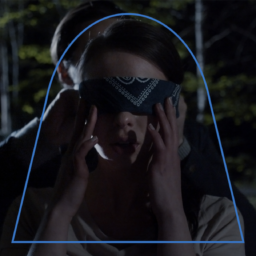
    With its sharp script, interesting structure, and a watershed performance by Aubrey Plaza, Black Bear is a deliciously entertaining and satirical quasi-thriller romp about what it is to be a creative.

    Black Bear is streaming on Paramount+. You can subscribe here.

    Black Bear, which premiered in the NEXT section of the 2020 Sundance Film Festival, invokes feelings of a cross between a relationship drama like Before Midnight and a meta satire like One Cut of the Dead. And if that combination sounds crazy, it kind of is. Black Bear could have easily felt like a party trick of a film where a mid-movie shift changes everything you know about the film. Still, it manages to be more than a clever gimmick. 

    While Lawrence Michael Levine’s careful direction and sharp screenplay help, it is Aubrey Plaza’s dynamite performance as protagonist Allison that does a lot of the work to pull the movie off. Allison at first comes off like an alternate version of Plaza herself. She is a writer, director, and actress who escapes to the mountain home of a friend of a friend to get over a bout of writer’s block—and she maintains the same dry deadpan wit that is patently Plaza. 


    ADVERTISEMENT


    💌 Sign up for our weekly email newsletter with movie recommendations available to stream.


    ADVERTISEMENT


    The homeowners who are hosting Allison, Gabe (Christopher Abbott—also in Possessor at the festival) and Blair (Enemy’s Sarah Gadon), are a long-term couple—important to note that they’re not married—who are expecting a child. They’ve been offering their isolated lake home to creatives hoping to help inspire them, as they are with Allison, a filmmaker trying to complete writing her latest film.

    From the start, it’s clear that there is some simmering tension between the trio. Blair and Gabe seem to constantly contradict each other and take subtle jabs that they know sting. At the same time, it’s clear that Gabe is attracted to Allison, which Blair picks up on. It leaves her in the odd position of hosting Allison while trying to steer her boyfriend in the right direction. 

    The tension that Levine derives is palpable, though something seems off. Things seem maybe a touch too perfect. Or maybe too dramatic? Perhaps it’s that the dialogue is hyper stylized? Or maybe too natural. Eventually the movie answers at least part of the question of what’s going on, but I will spare you the detail because the reveal is all a part of the trick that makes the movie work. 


    ADVERTISEMENT


    Black Bear is about everything and nothing. Not that it doesn’t have a clear purpose, but because of its experimental structure its allegiances are unclear. There are threads for and against the creative process, relationships, and gender dynamics that could have all easily become overwrought. But because of the way the movie twists to a sharp, satirical tone that is at times uproariously funny you’re never left too deep in dramatic waters. Until the climax. 

    The only proper way to end this review is with a full paragraph of praise for Aubrey Plaza’s performance which I’ll begin with ARE YOU F#CKING KIDDING ME!? Plaza’s performance is mind-blowing in its complexity. Allison herself is a character that code switches depending on who she’s talking to, but at the same time seems susceptible to manipulation. Or is she? Her thoughts are opaque and oh so transparent at the same time to the point that you can at times see her thinking through how she should come off at any given moment. But when that scene happens, and you’ll know it when you see it, you know exactly what she’s thinking. Give her the damn Oscar. 


    ADVERTISEMENT


    More movies, less problems


    Hey! I’m Karl. You can find me on Twitter and Letterboxd. I’m also a Tomatometer-approved critic.

    💌 Sign up for our weekly email newsletter with movie recommendations available to stream.


    ADVERTISEMENT


    💌 Sign up for our weekly email newsletter with movie recommendations available to stream.


    ADVERTISEMENT

  • ‘Happiest Season’ makes the yuletide gay | movie review

    ‘Happiest Season’ makes the yuletide gay | movie review


    ADVERTISEMENT


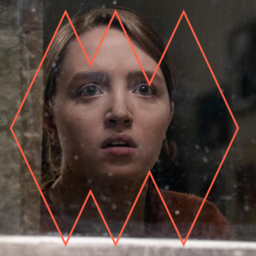
    Happiest Season follows a lesbian couple who go home for the holidays for the first time. One problem: Harper’s family doesn’t know she’s gay and that Abby is her girlfriend. Hijinks ensue.

    Happiest Season is filled with hilarious misunderstandings, more than one coming out pun, and a running joke about dead fish. However, at its core, it’s a character-driven dramedy that’s so rooted in the queer experience that, to be frank, is going to be a bit divisive. Whether you’re satisfied by the end, I’m not sure, it’s up to you. But the journey there is a jolly holiday treat.


    ▶︎ Streaming on Hulu

    The holiday romantic comedy is as much a staple of the season as a dysfunctional family argument at the Christmas dinner. Oh wait. Either way, there’s often a formula to our holiday entertainment. However, Happiest Season—now streaming on Hulu—looks to break the mold by focusing on a lesbian couple played by Kristen Stewart and Mackenzie Davis. And while the story does hit some of the same familiar beats, it’s a largely subversive take that’s rooted in the queer experience. Still, there’s something for every member of the family to enjoy. 

    Abby (Stewart) and Harper (Davis) are a long term couple living together happily in Pittsburgh—they’re so happy in fact that Abby is ready to pop the question much to her best friend John’s (Schitt’s Creek’s Dan Levy) chagrin. After talking about Abby’s dislike for the holiday since her parents died—take a drink for the holiday movie drinking game—Harper makes the spontaneous decision to invite her to her conservative small town for her family’s annual Christmas party. However, on the way Harper reveals that she lied to Abby about coming out to her family and asks her to pretend to instead be her roommate until she can tell her family she is gay after the holiday. 


    ADVERTISEMENT


    💌 Sign up for our weekly email newsletter with movie recommendations available to stream.


    ADVERTISEMENT


    From there, Happiest Season has all the hijinks you’d expect as the pair arrive having set the ruse. Immediately it’s clear the Harper’s mother Tippy (Mary Steenburgen) has taken Abby’s status as an orphan a little too to heart as she looks down at her with sadness. Her father Ted (Victor Garber), on the other hand, is too focused on his campaign for mayor to pay too much attention to her. And of course, there are the kooky siblings Jane (Mary Holland), an awkward and nerdy holiday lover, and Sloane (Alison Brie), a perfectionist in constant competition with Harper. 

    Every member of the cast is superb in creating little ticks and moments with their characters, especially Holland whose performance as Jane very nearly steals the film. After a series of misunderstandings, more than one pun about being in a closet, and a subplot about dead fish, Happiest Season heads for more dramatic territory as the strain of hiding her identity weighs on Abby and strains her relationship with Harper. It doesn’t help either that Harper seems to be slipping into her at home “straight” persona a little too well and her high school friend Riley (Aubrey Plaza) hits it off with Abby. 


    ADVERTISEMENT


    Therein lies the problem with Happiest Season. The very act of hiding oneself until you’re comfortable is completely valid—something I did too for some time. However, the movie is a little too heavy-handed with Harper’s betrayal of Abby to the point that it’s hard to root for the couple. However, Dan Levy’s gorgeously delivered third act monologue about the very personal journey about coming out infuses some understanding that saves the ending a bit—still it will be quite divisive. 

    Happiest Season has its problems but at the core, it is the exact kind of delightfully entertaining holiday rom-com that we’re looking for. There are moments that had me laughing, crying, and screaming with delight. And, of course, there’s the lesson. “I’m gay.” Why are those two words so difficult for so many of us queer people to say? Happiest Season aims to find an answer to that question while simultaneously delivering an entertaining holiday comedy filled with the nutty characters we all love—and love to hate.


    ADVERTISEMENT


    More movies, less problems


    Hey! I’m Karl. You can find me on Twitter and Letterboxd. I’m also a Tomatometer-approved critic.

    💌 Sign up for our weekly email newsletter with movie recommendations available to stream.


    ADVERTISEMENT

    💌 Sign up for our weekly email newsletter with movie recommendations available to stream.


    ADVERTISEMENT


  • ‘Run’ starts with a sprint but ends in a walk | movie review

    ‘Run’ starts with a sprint but ends in a walk | movie review


    ADVERTISEMENT


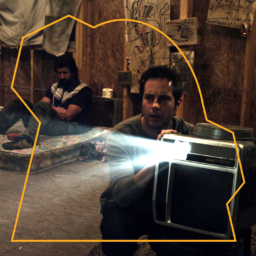
    A resourceful teen who is wheelchair-bound begins to suspect that her mother is hiding a deeply-buried secret from her in Run, streaming on Hulu

    A couple of heart-pounding sequences of suspense and two terrific lead performances by Sarah Paulson and Kiera Allen are enough to keep Run moving, but its predictable twists end up kneecapping the film before it ever gets momentum.

    ▶︎ Streaming on Hulu

    Director Aneesh Chaganty made a huge splash with his debut feature film Searching—featured on our list of the decade’s best thrillers—a techno-thriller starring John Cho, that took an innovative approach to a classic mystery thriller setup—a missing daughter and her father who will stop at nothing to find her. And though the story was certainly well-trodden territory, Chaganty’s decision to present the film entirely on a laptop screen added an engrossing 21st Century twist to the narrative. His sophomore feature Run on the other hand is as typical as they come. 

    It probably doesn’t help that it comes directly on the heels of Hulu’s highly successful true-crime miniseries The Act, which tells the chilling story of Gypsy Rose Blanchard and the murder of her mother, who entrapped Gypsy by fabricating multiple illnesses and disabilities. Of course, Run takes a more melodramatic approach with even more audacious twists and turns—as if that was even possible—as teenager Chloe (Kiera Allen) begins to suspect that her mother Diane (Sarah Paulson) may be experiencing more than just anxiety over the prospect of her going off to college. 


    ADVERTISEMENT


    The story of Run is so simple that I’m resistant to even expose more of it other than the fact that there are a couple more twists and turns than you might think. Still, the incredibly directed sequences of Hitchcockian suspense, terrific lead performances by Paulson and Allen—who is a real-life wheelchair user, and heart-pounding score aren’t enough to overcome the fact that I could call almost every single plot beat before it happened. 

    What Run does prove is that Chaganty is a terrific director—listen to him break down one of the best scenes of the movie and you’ll understand why. However, I’d be interested in seeing him tackle someone else’s script or perhaps an adaptation. Though the movie starts off at a sprint by the end it feels like you’re running a marathon to get through it.


    ADVERTISEMENT


    More movies, less problems


    Hey! I’m Karl. You can find me on Twitter and Letterboxd. I’m also a Tomatometer-approved critic.

    💌 Sign up for our weekly email newsletter with movie recommendations available to stream.


    ADVERTISEMENT


    💌 Sign up for our weekly email newsletter with movie recommendations available to stream.


    ADVERTISEMENT



    ADVERTISEMENT


  • ‘Resolution’ is a meta-horror sci-fi worth your time | movie review

    ‘Resolution’ is a meta-horror sci-fi worth your time | movie review

    Resolution follows a man’s attempt to force his friend into sobriety and while his attempt is good intentioned something sinister is happening at the same time

    Resolution is a creepy, atmospheric, and wholly satisfying meta-horror that served as a perfect introduction to Aaron Moorhead and Justin Benson’s specific brand of high concept, lo-fi science fiction.

    ▶︎ Streaming on Prime Video. Available to buy or rent on Apple TV, Amazon, and YouTube.

    Indie filmmakers Aaron Moorhead and Justin Benson have a singular ability to take a high concept science fiction story and bring it to life with an endearing lo-fi charm. And though I’ve loved their creature feature romance Spring and time travel mystery The Endless, I’ve actually never seen their debut feature.

    Resolution, which had its world premiere at the 2012 Tribeca Film Festival, is the only one of the duo’s films that could be firmly planted in the horror genre, though like all their work, it is a work of genre-bending. 


    ADVERTISEMENT


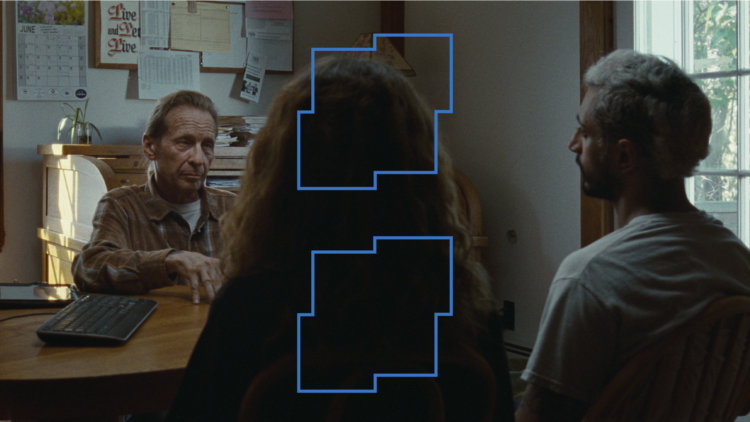
    Resolution follows Michael (Peter Cilella), a graphic designer who is lured from the city to a remote rural area on the edge of an Indian reservation where his high school best friend Chris (Vinny Curran), a drug addict on a full bender, has holed up in a seemingly abandoned shack. Determined to help him, Michael plans to restrain Chris for a week and force him to sober up—granted he did give Chris the option of just going to rehab.

    However, things start to take a turn for the creepy when Michael realizes that the video and map that he was sent to help him track down Chris weren’t sent from Chris at all—and the videos keep coming portraying insidious and sinister “stories” that make Michael think they’re a part of something’s deranged game.


    ADVERTISEMENT


    The mystery unfolds at a slow but steady pace as a dread-filled atmosphere drives the suspense. However, like all of Moorhead and Benson’s films, Resolution isn’t quick to answer any of your questions—and it’s better because of it.

    Underneath it all, there is a surprisingly engrossing story of the relationship between the two men—one seen as a “fuck up” and the other as having it all. Still, what makes the film great is its meta-commentary on the genre itself. And though it’s never as subversive or goes as full tilt into satire as its genre companion The Cabin in the Woods, Resolution is a wholly satisfying—and uber-unnerving exercise in sci-fi horror.


    ADVERTISEMENT


    More movies, less problems


    Hey! I’m Karl. You can find me on Twitter and Letterboxd. I’m also a Tomatometer-approved critic.

    💌 Sign up for our weekly email newsletter with movie recommendations available to stream.


    ADVERTISEMENT

    💌 Sign up for our weekly email newsletter with movie recommendations available to stream.


    ADVERTISEMENT


  • ‘Sound of Metal’ gives Riz Ahmed his Oscar role | movie review

    ‘Sound of Metal’ gives Riz Ahmed his Oscar role | movie review

    In Sound of Metal, a drummer for a heavy metal band is forced to confront a very different future when he suddenly loses his hearing

    Sound of Metal is one of the best portrayals of deafness in film using smart sound design and a stellar performance by Riz Ahmed to communicate the experience. And while it loses steam as it makes its way to the finale the core message is powerful and poignant.

    There is a scene about halfway through Darius Marder‘s Sound of Metal, which is being released on Amazon Prime Video on December 4th, where Joe (Paul Raci) gives Ruben Stone (Riz Ahmed) the assignment of sitting in a room with a cup of coffee and a notepad and do nothing. He tells him if he gets the urge to do something to write in the notepad. For most people, it sounds like an easy task, but have you ever done it?

    That is the most impactful scene in Sound of Metal because it, like many other of the film’s decisions, helps put you in the mind space of Ruben, a drummer and recovering addict who suddenly loses almost all of his hearing, by turning it into something you can relate to. When you’re uncomfortable with yourself, the silence—whether literal or figurative—when you’re not accomplishing something is deafening.

    And for Ruben, whose band consists of himself and his girlfriend Lou (Thoroughbreds’ Olivia Cooke), standing still feels like death.


    ADVERTISEMENT


    That’s apparent in his go-getter attitude when it comes to their music as they shuffle from gig to gig with their unique experimental rock sound that he hopes drives them to be something one day. Instead, he’s faced with the choice to lose it all when he all of a sudden loses most of his hearing. As the doctor puts it, what is gone will never come back, so his job now is to retain what is left—that is to say, no loud noises—which makes his decision to play a show that night confounding.

    However, when he breaks down and Lou realizes what is happening she makes the tough decision to part ways. She goes home to France and he goes into a community for the deaf where his sponsor sets him up with a narcotics anonymous group. There, he comes to terms with his disability and learns how those around him also cope.

    Sound of Metal‘s greatest strength is its ability to immerse you Ruben’s world. Through visual cues and smart sound design where we shift in and out of Ruben’s ability of hearing, we feel what he’s feeling. Both the silence and the moments of magic created by this deaf community. In these communities—many of the film’s actors are actually deaf including Lauren Ridloff‘s Diane, a teacher—being deaf is seen as a blessing and that Marder’s direction coupled with Ahmed’s engrossing performance communicate that.

    Paul Raci, Olivia Cooke, and Riz Ahmed in Sound of Metal. Courtesy of Amazon Studios.

    ADVERTISEMENT


    The central conflict of the film is Ruben’s decision of whether or not to get an incredibly expensive surgery to regain his hearing—in actuality, the procedure tricks the brain into thinking its hearing resulting in something like… well, the sound of metal. On one hand he’s seeing the beauty of his new condition, on the other, so much of his life has been driven by pushing forward with his music, with his relationship, and with his recovery. Without the distraction of those things, he and Lou are afraid he’d relapse.

    Eventually, Marder, who penned the screenplay along with his brother Abraham Marder, writes himself into a corner which makes the third act feel like a break in the momentum. Nevertheless, the message never strays: accepting yourself is finding the ability to sit still and be okay with that. Which is why the film’s perfect final shot, a combination of the film’s greatest assets—the sound design and Ahmed’s performance, sticks with you.


    ADVERTISEMENT


    More movies, less problems


    Hey! I’m Karl. You can find me on Twitter and Letterboxd. I’m also a Tomatometer-approved critic.

    💌 Sign up for our weekly email newsletter with movie recommendations available to stream.


    ADVERTISEMENT


    💌 Sign up for our weekly email newsletter with movie recommendations available to stream.


    ADVERTISEMENT

  • ‘First Cow’ is a nice movie about nice friends | movie review

    ‘First Cow’ is a nice movie about nice friends | movie review

    First Cow tells the story of an unlikely friendship, their improbable business idea, and the cow that is the lynchpin behind both

    Like all of director Kelly Reichardt’s films, First Cow is a warm blanket of a story where the stakes are never overstated, the characters are grounded to Earth, and the filmmaking leaves you to be immersed in its simple joys.

    Director Kelly Reichardt has said that her movies are “just glimpses of people passing through.” And as oblivious directors often are about their filmography—I’m looking at you Nicolas Winding Refn—Reichardt hits the nail right on the head. Whenever I watch one of her films, I know I’m going to feel comforted in one way or another. The stories she tells invoke the feeling of talking to a stranger who has a great story to tell that they heard from someone else who in turn heard it from another person—and First Cow is no exception.

    At the start, we see an unnamed woman (a cameo by Green Room‘s and Arrested Development‘s Alia Shawkat) who is walking her dog along a river. The adorable pup who would have been the star of the film if not for the eponymous cow uncovers a skull that is revealed to be a full skeleton—two, in fact, laying side by side. And though we never see the woman again, we could imagine that the story that follows is one that she slowly uncovers through research and pure curiosity and maybe begins to tell it at dinners. About the time she found two skeletons buried in the ground by a river.


    ADVERTISEMENT


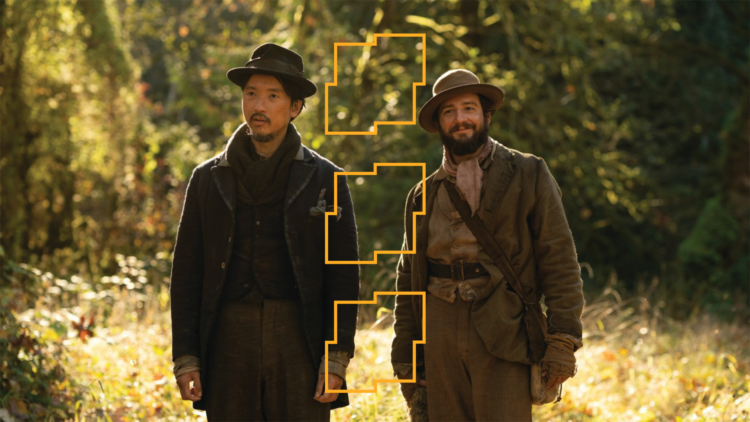
    We cut to the Oregon territory in the 1820s and meet Cookie Figowitz (John Magaro), a quiet chef traveling with a group of loud and aggressive fur trappers across the wilderness. While scavenging for food for the group, he stumbles upon a naked man cowering in the bushes. And despite his compromised position, he speaks deliberately and with control as if this is exactly where he’s meant to be. The man, King-Lu (Orion Lee), a Chinese immigrant, tells Cookie that he killed a man and is now on the run from a group of Russians—though it doesn’t quite explain his state of undress.

    Though Cookie doesn’t say much, you can tell through his big eyes and gentle movements that he has a pure heart that drives him to give King-Lu food and shelter for the night. The next day King-Lu is gone, though Cookie glimpses him making his escape across a river later. Of course, as every good story goes, the pair sees each other again later with Cookie, now free of his commitments to the fur trappers, and King-Lu established with a small shack on the outskirts of a settlement.

    The men bond over a warm fire and alcohol as they talk of their pasts and their ambitions. Reichardt has a unique ability to make you feel immersed in her worlds—the sounds of wood are chopped or a broom against a dirt floor pull you straight into the simplicity of the time. And the conversation is just one of those that warms you to the core—just two men from completely different backgrounds talking about their shared American dream.

    But what if it wasn’t a dream?


    ADVERTISEMENT


    A24's First Cow
    Orion Lee as King-Lu and John Magaro as Cookie Figowitz in First Cow. Courtesy of A24.

    Cookie talks about one day opening a bakery having studied under an English chef in Boston. King-Lu, the ever businessman, suggests they actually do it. Of course, there’s one problem. There’s no milk to put into the baked goods. Advantageously, Chief Factor (Toby Jones) has recently imported the first milk cow into the territory giving Cookie and King-Lu the chance to actually start their business by sneaking onto Factor’s property at night to milk the cow and sell the biscuits they make in the day. Of course, they’re an instant hit.

    And truly, there’s not much more to the plot. Eventually, a wrench is thrown into their plan and they find themselves between a rock and a hard place, but Reichardt never overstates the stakes. Oddly, the resulting kerfuffle is almost comical in a way. However, the focus never strays from the film’s main focus: this unlikely central friendship.

    In the time of the pandemic, civic unrest, and perhaps the worst year of many of our lives, First Cow reminds us of the simple joys of life—interesting conversation, a warm shelter, good food. It’s nothing more than that. It is a nice movie about nice friends and their nice business involving a nice cow. Yet, it feels consequential. Like everything I needed and wanted out a movie at this very moment.

    First Cow is available to buy or rent on Prime Video.


    ADVERTISEMENT


    More movies, less problems


    Hey! I’m Karl. You can find me on Twitter and Letterboxd. I’m also a Tomatometer-approved critic.

    💌 Sign up for our weekly email newsletter with movie recommendations available to stream.


    ADVERTISEMENT


    💌 Sign up for our weekly email newsletter with movie recommendations available to stream.


    ADVERTISEMENT


  • ‘Rebecca’ trades haunts for style | movie review

    ‘Rebecca’ trades haunts for style | movie review

    Netflix’s Rebecca, which follows in the footsteps of Hitchcock’s 1940 classic, follows a young woman who walks in the shadow of her new husband’s late wife

    Rebecca is gloriously filmed and impeccably designed, but beneath all of the polish of its grand mansion setting is an empty house filled with nothing but empty rooms and empty thrills.

    English author Dame Daphne du Maurier’s novel Rebecca, which was later adapted by Alfred Hitchcock in 1940, is a ghost story. However, in Netflix’s remake, helmed by British master of folk horror Ben Wheatley, the ghosts that haunt Manderley, the sprawling mansion where the movie takes place, are largely missing.

    I’ll be honest, a travesty has taken place. I have never seen Hitchcock’s 1940 film. I know, I know! But it isn’t available anywhere to watch really. However, that gives the opportunity to review this film through the lens of a first-time viewer, which let’s be honestly is the experience of most of the viewers who will be catching the film on Netflix.


    ADVERTISEMENT


    The setup is quite simple actually, enigmatic wealthy businessman Maxim de Winter (a perfectly cast Armie Hammer) is vacationing in Monte Carlo where he meets the unnamed companion of Mrs. Van Hopper (Ann Dowd). The companion, a naïve 20-something played by Lily James, is of course taken with de Winter and the interest is mutual. Through two weeks of courtship, the pair decide to marry and have the young woman move to his mansion in Cornwall, the beautiful estate Manderley.

    However, throughout their courtship, it is apparent that his late wife Rebecca weighs heavily on his mind. The same can be said when the newlywed Mrs. de Winter arrives at the estate where everyone, and especially housekeeper Mrs. Danvers (Kristin Scott Thomas), still reminisce about the time when Rebecca was the lady of the house.

    At its core, the mystery and story of Rebecca, where the new Mrs. de Winter is haunted by the expectations and possibly the actual ghost of Rebecca, is intriguing. The character study of an obsessed young woman eager to please her husband by remaking herself in the image of his seemingly perfect first wife is incredible to unpack. However, director Ben Wheatley seems to be missing something—the ghosts.

    James’ portrayal of an impressionable, young woman on the edge of madness as the suffocating presence of her new husband’s late wife takes control is interesting. But without the underlying feeling of dread—which peeks its head out occasionally, but is often quickly replaced with melodrama—it feels more conventional than it should be.

    That’s also due to the lack of underlying themes.


    ADVERTISEMENT


    More movies, less problems


    Hey! I’m Karl. You can find me on Twitter and Letterboxd. I’m also a Tomatometer-approved critic.

    💌 Sign up for our weekly email newsletter with movie recommendations available to stream.


    ADVERTISEMENT

    💌 Sign up for our weekly email newsletter with movie recommendations available to stream.


    ADVERTISEMENT

  • 10 Great Romantic Comedies to Fall in Love With

    10 Great Romantic Comedies to Fall in Love With

    Romantic comedies are like the cinematic equivalent of comfort food—easy to watch, heartwarming, and a slice of happiness. Here are some great ones.

    Romantic comedies are like snuggling up in a warm cardigan on a crisp autumn day. Or like that first bite of your mom’s cooking when you come home from the holidays. They also have corny analogies involving cardigans and mom’s cooking, but that’s what I love about them. Movies, at their purest form, are not meant to emulate human emotions but amplify them. We all, at some point, yearn for and feel love. Romantic comedies simply take that feeling and create the idealized version of it, which is why they’re so comforting to watch.

    Here are just a few of our favorites.

    Moonstruck (1987)

    Great Romantic Comedies: Moonstruck
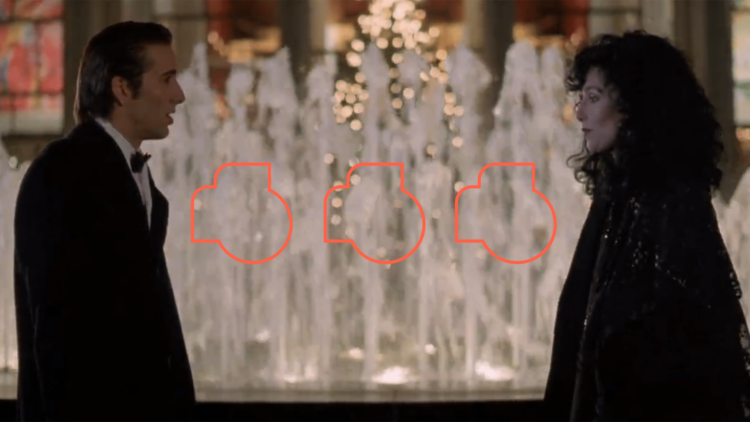
    Nicolas Cage and Cher in Moonstruck. Courtesy of Metro-Goldwyn-Mayer.

    Moonstruck is one of those movies you watch and say, “they don’t make them like that anymore.” From the opening credits set to “That’s Amore” to the perfectly executed conclusion there’s a feeling of warmth and romance that is underscored by the hilarious tongue-in-cheek tone. It’s one of the greatest romantic comedies and movies of all time.

    However, it’s more than just a few laughs and iconic line readings. The screenplay’s tight structure is hard to not get swept up in and Cher’s magnetic performance tinged with her glowing movie star power makes it clear why she won an Oscar for the role — not to mention Nicolas Cage’s perfectly chaotic energy. Despite the joy it exudes, there’s also a melancholic but uplifting undercurrent about romance that might just make you believe in love again.

    Moonstruck is streaming on Prime Video via Showtime


    ADVERTISEMENT


    Beginners (2010)

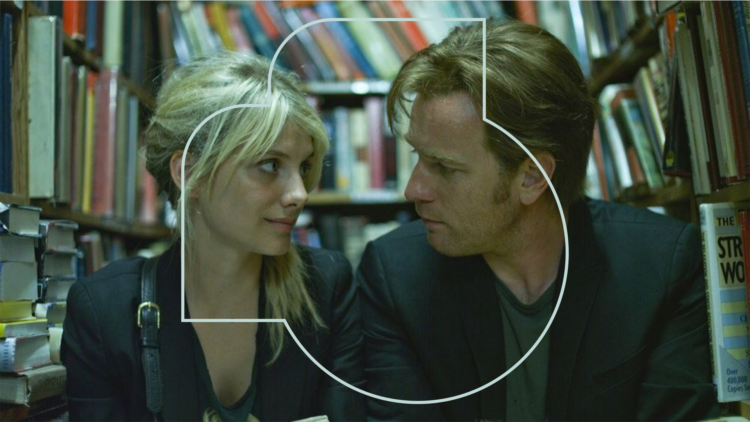
    Mélanie Laurent and Ewan McGregor in Beginners. Courtesy of Focus Features.

    I almost hate myself for saying this but Beginners isn’t a love story it’s a story about love. It’s about the love we give away and take—and it’s about the love we didn’t give away and didn’t take. Like many of Mike Mills’ films, Beginners plays like a memory and meditation more than a narrative. In it, we learn that love can come at any time and that optimism ultimately is the way to live your life.

    Beginners is streaming on HBO Max

    The Big Sick (2017)

    Great Romantic Comedies: The Big Sick
    Kumail Nanjiani and Zoe Kazan in The Big Sick. Courtesy of Amazon Studios.

    Love always comes with baggage. However, it’s the way we deal with that baggage that often determines the fate of relationships. But what if you couldn’t confront that baggage head-on and instead had to deal with it through your romantic interest’s parents? That’s how The Big Sick — and its clever script filled with witty one-liners — subverts the expectations of a romantic comedy.

    When the movie’s story takes its turn, Showalter masterfully guides the tone towards dramedy that is sentimental, but never overwrought. As Kumail and Emily’s parents circle each other like cowboys preparing for a shootout, there are moments of understanding and education and growth just like a traditional rom-com. It’s filled with so much empathy and character moments that have so much meaning, but always find a way to end on a joke. For that, it’s a true delight.

    The Big Sick is streaming on Prime Video


    ADVERTISEMENT


    Plus One (2019)

    Great Romantic Comedies: Plus One
    Jack Quaid and Maya Erskine in Plus One. Courtesy of RLJE Films.

    The rom-com works best when it’s character-driven and has a fresh perspective, both of which Plus One has. However, it also helps that the movie is so incredibly funny and filled with sharp one-liners delivered with precision by Maya Erskine and Jack Quaid. But it’s Erskine who really steals the show with one great sarcastic quip after another.

    “I cried… but I cry every day, so it doesn’t mean anything”

    — Me (but also Erskine in the movie)

    It’s not perfect. The story drags in the third act and it falls into some genre cliches. But, for the most part, Plus One is a hilarious and, dare I say, relatable take on the classic romantic comedy formula with enough gags to keep you hooked.

    Plus One is streaming on Hulu

    The Half of It (2020)

    Glen Powell and Zoey Deutch in Set it Up. Courtesy of Netflix.

    I think anyone that lived through the 80s, 90s and early aughts has a soft spot for that perfect romantic comedy. The kind that has perfect one-liners that you can work into everyday life and characters who live lives that you could only aspire to in unrealistically large apartments and scenes that make your heart flutter at the thought of them happening in real life.

    Set it Up mines those tropes and makes me feel nostalgic for those breezy rom-coms. And while it hits a lot of those familiar plot beats, the movie surpasses other contemporary rom-coms because director Claire Scanlon and the charming leads have a great sense of comedic timing and the propensity for subtle, but effective physical comedy. It’s one of those movies that you’ll want to come back to over and over again.

    Set it Up is streaming on Netflix


    ADVERTISEMENT


    Set it Up (2018)

    Great Romantic Comedies: Set it Up
    Glen Powell and Zoey Deutch in Set it Up. Courtesy of Netflix.

    I think anyone that lived through the 80s, 90s and early aughts has a soft spot for that perfect romantic comedy. The kind that has perfect one-liners that you can work into everyday life and characters who live lives that you could only aspire to in unrealistically large apartments and scenes that make your heart flutter at the thought of them happening in real life.

    Set it Up mines those tropes and makes me feel nostalgic for those breezy rom-coms. And while it hits a lot of those familiar plot beats, the movie surpasses other contemporary rom-coms because director Claire Scanlon and the charming leads have a great sense of comedic timing and the propensity for subtle, but effective physical comedy. It’s one of those movies that you’ll want to come back to over and over again.

    Set it Up is streaming on Netflix


    ADVERTISEMENT


    More movies, less problems


    Hey! I’m Karl. You can find me on Twitter and Letterboxd. I’m also a Tomatometer-approved critic.

    💌 Sign up for our weekly email newsletter with movie recommendations available to stream.


    ADVERTISEMENT


    💌 Sign up for our weekly email newsletter with movie recommendations available to stream.


    ADVERTISEMENT


  • ‘The Trial of the Chicago 7’ shows Sorkin’s weaknesses | movie review

    ‘The Trial of the Chicago 7’ shows Sorkin’s weaknesses | movie review

    The Trial of the Chicago 7 tells the very true and very relevant story of seven protesters on trial for inciting a riot during the 1968 Democratic National Convention

    Despite it’s stacked cast, relevant topics, and high-production value, The Trial of the Chicago 7 is too interested in portraying the facts and not enough in portraying the real-life characters at its center.

    Look at the greatest films Aaron Sorkin has penned. I’m thinking of David Fincher’s The Social Network or Bennett Miller’s highly underrated Moneyball. He structures his screenplay—often non-linear or playing with pace—and writes his dialogue—meant to be delivered in a quick quippy rhythm—with the cinematic expression in mind. You can tell he’s asking himself how this is going to translate to the screen. He’s not looking to emulate reality, even though many of his works are based on true events. Instead, he focuses on telling the story in the most engaging way possible. But what makes those two films great is how their respective director’s balancing of Sorkin’s tricks.

    However, what’s clear from Sorkin’s first two directorial efforts, Molly’s Game and now Netflix’s newest film The Trial of the Chicago 7, is that as a director his interest is enhancing those storytelling choices rather than balancing them. I say that because it’s those choices in the screenplay, more than any other of the films he’s penned, that bog down The Trial of the Chicago 7—a look at the Chicago riots during the 1968 Democratic National Convention and the ensuing riots.

    The film is told in fits and starts cutting between the trial and the actual events of the riots in question. The prosecution, led by Richard Schultz (Joseph Gordon-Levitt in his most subdued role in recent years), is contesting that the seven men—a group of mostly unconnected activists against the Vietnam War—went to Chicago with intention of inciting a riot. The defense, led by William Kunstler (Mark Rylance) and Leonard Weinglass (Ben Shenkman), attest that it was the cops that instigated the violence. On the periphery, the leader of the Black Panther Party Bobby Seale (Yahya Abdul-Mateen II) has been roped into the trial as a way of connecting the seven men to the group. 

    Sorkin is quite clinical in his narrative. He embellishes as much as he has to, but not more than he’s done in the past in service of the story he’s trying to tell. In this case, he’s clearly tapping into the very relevant story of the failure of our justice system, especially in cases of protest in support of civil rights and equality. Though this was filmed before the murder of George Floyd and the ensuing protests, the movie is only made more relevant by it. And for a time that gives the movie a rhythm that is hard not to get swept up in. However, the momentum quickly gives way to monotony. 

    The Trial of the Chicago 7
    Yahya Abdul-Mateen II, Ben Shenkman, Mark Rylance, Eddie Redmayne, and Alex Sharp in The Trial of the Chicago 7. Courtesy of Netflix.

    That’s largely because we’re not entirely focused on a single character—or even any character really. Of the seven, we spend the most time with Tom Tom Hayden (Eddie Redmayne) for a reason that becomes clear towards the film’s conclusion. However, his motivations and feeling are left opaque as a way to lend impact to the end of his arc. But in return all we feel is a disconnect. Secondarily, we get to know Abbie Hoffman (Sasha Baron Cohen) and Jerry Rubin (Jeremy Strong), two hippies who are a strong juxtaposition to Tom’s more straight-laced activist, and their reasons for protesting a bit more. If any of the cast were to be up for Oscar consideration it ought to be Baron Cohen whose comedic schtick is underlined by the complex and contradictory thoughts that Abbie feels in relation to the movement. 

    But because we’re so focused on the proceedings of the trial rather than the character impact, the real focus is on Rylance’s Kunstler, whose passions and frustrations are most front and center—especially his confrontations with the judge of the case Judge Julius Hoffman (Frank Langella), who is clearly biased against the seven. That focus does give us several Oscar-baity moments with Abdul-Mateen’s Bobby who is clearly being used as a pawn by the prosecution and the target of discrimination by Judge Hoffman. However, that story, at times more compelling than the main one we’re following, is on the periphery. 

    The final 30 minutes of the film, which is filled with the dramatics that is to be expected of a courtroom drama, give a lot of what I was craving throughout the whole film: humanity. What directors like David Fincher and Bennett Miller do with Sorkin’s material that he doesn’t do himself is infuse it with humanity. Sorkin writes characters and he directs them as such. In two pivotal scenes we see Tom prepare for testimony and Abbie take the stand. There we are treated to the character study that The Trial of the Chicago 7 should have been. I could have read the facts of the case on Wikipedia, what I’m interested in is the politics, the emotions, and the characters. As great as Sorkin can be, he can also be his own worst enemy. 

    Hi, I’m Karl ? Follow me on Twitter and Letterboxd! I’m also a Tomatometer-approved critic on Rotten Tomatoes ?

    💌 Sign up for our weekly email newsletter with movie recommendations available to stream.


    ADVERTISEMENT

  • ‘Synchronic’ is what I love about science fiction | movie review

    ‘Synchronic’ is what I love about science fiction | movie review

    After discovering a drug sends you back in time, a paramedic uses it to help his best friend find his daughter in Synchronic

    Synchronic has a fun enough concept to keep you hooked, but Aaron Moorhead and Justin Benson—along with a stellar performance by Anthony Mackie—add in their effortlessly charming direction to make it the exact kind of science fiction romp that I crave even if it doesn’t quite stick the landing.

    Aaron Moorhead and Justin Benson are perhaps one of the most underrated indie filmmaking duos working today. Their specific brand of high-concept but endearingly down-to-earth science fiction storytelling has brought us great films like The Endless, Resolution and Spring. However, so much of what makes them successful is their low-fi approach to sci-fi. Partially from choice, but mostly because of their budgetary constraints. It forces them to be more clever with their directorial choices and storytelling.

    However, with Synchronic, their biggest step forward into the mainstream, they have the resources to go all the way with their concept of a drug that makes its user travel through time—complete with high production values and two A-list stars above the title. And in some ways, it removes the charm that has made them so successful up to this point. However, in others, it removes the restrictions that would have prevented them from going full tilt otherwise. The results are decisively mixed.


    ADVERTISEMENT


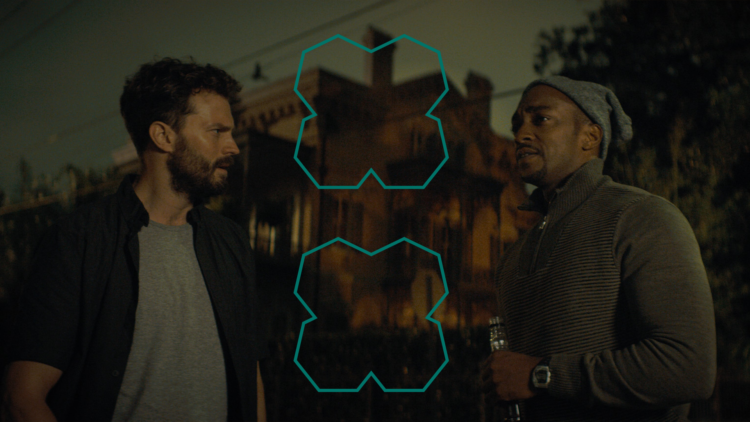
    The first thirty minutes of the film, though, represent the best of the duo. We’re immediately dropped into a mystery where two paramedics, Steve (Anthony Mackie) and Dennis (Jamie Dornan), begin to encounter increasingly odd calls. In one, a man was impaled by a sword that looks to be from the 1600s. In another, a woman was bitten by a snake that hasn’t been seen in the area for a decades—maybe more. The only thing they have in common is in both cases the victims were high on a drug called “Synchronic.”

    The story, moving swiftly between scenes showing the drug’s unique effects—the duo also edited the film, quickly sets up that Steve and Dennis have been friends for since high school and know more about each other than anyone else. They’re so close, in fact, that when Steve finds out he has a brain tumor that will likely kill him with in months, his first reaction is to figure out how to tell his family—in this case, Dennis.

    Synchronic movie
    Jamie Dornan and Anthony Mackie in Synchronic. Courtesy of Well Go USA Entertainment.

    Though gorgeously atmospheric through Moorhead’s moody cinematography and Jimmy LaValle’s synth-heavy score, almost verging on horror, Synchronic maintains an immensely watchable tone. Moorhead and Benson’s signature dark humor is embedded just beneath the surface and Mackie handles it with ease. His emotional turmoil from his diagnosis coupled with his newfound interest in the source of “synchronic” is a masterclass in showing instead telling.

    The duo’s entanglement with the drug gets even more complicated when Dennis’ teenage daughter Brianna (Ally Ioannides) goes missing after taking “synchronic.” With nothing to lose, Steve buys all the remaining supplies of the drug and learns from the creator that it shifts time for the user, but only with specific parameters. The rest of the movie is structured as a series of experiments where Steve attempts to understand how it works in the hopes that he can use it to save Brianna from whatever time she has become stuck in.


    ADVERTISEMENT


    Steve’s exploits with “synchronic,” that are presented as a series of taped experiments, are exactly what I love about science fiction. What Moorhead and Benson excel at is taking a concept—one that we may have thought of ourselves—and exploring it, not as a high-concept, but instead as a simple romp based on “what-ifs.” And the world that they build in Synchronic is ripe for multiple fun excursions.

    Unfortunately, the movie never takes it as far as you want it. It comes close. Steve’s brush with the indigenous people of the New Orleans swamps or the early 20th century when people probably weren’t as keen on a Black man appearing out of nowhere in their yard are interesting applications of the possibilities. But when the story looks to wrap up, it retracts and becomes small again. I almost wish 30 minutes was added on to the running time just so we could watch Steve play in the possibilities.

    The final act is really where Synchronic falters. It hits the correct beats, but doesn’t add enough tension or suspense—something that Moorehead and Benson excel at in the first third. However, their careful character mapping and emotional arcs payoff—again thanks to Mackie’s awards-worthy performance. Even so, Synchronic is the exact kind of science fiction I love—eerie, entertaining, complex but full of humanity.


    ADVERTISEMENT


    More movies, less problems


    Hey! I’m Karl. You can find me on Twitter and Letterboxd. I’m also a Tomatometer-approved critic.

    💌 Sign up for our weekly email newsletter with movie recommendations available to stream.


    ADVERTISEMENT


    💌 Sign up for our weekly email newsletter with movie recommendations available to stream.


    ADVERTISEMENT

  • ‘Lapsis’ satirizes the gig economy | Nightstream Film Fest

    ‘Lapsis’ satirizes the gig economy | Nightstream Film Fest

    Desperate for money to help his ailing brother, a man takes a new job in a strange near-future version of the gig economy in Lapsis

    Noah Hutton‘s strong direction and the world he builds that explores the new gig economy that has taken ahold of our everyday lives are interesting enough for Lapsis to overcome its uneven narrative.

    Lapsis will be released by Film Movement in November 2020.

    Lapsis—playing at the Nightstream Film Festival this week—and its satire of the gig economy that has taken ahold of our everyday lives is perhaps a bit too on the nose. However, director and screenwriter Noah Hutton‘s world-building makes the exploration of his “parallel near-present” endlessly engrossing.

    Set in a world where the gig economy is also thriving, Lapsis follows perennial hustler Joe (Dean Imperial)—aptly named because he’s the epitome of an average Joe—whose less than legal methods of making money are just barely supporting the expensive treatments needed for his brother Jamie who suffers from the fictional chronic fatigue illness “omnia.”


    ADVERTISEMENT


    Around him, the world is changing and becoming more reliant on an opaque universal technology called quantam that connects and powers all devices—whether this is a play on 5G is unclear. However, the technology is reliant on a complex network of cables that connect various quantam boxes. And as advanced as the technology is, it needs humans to physically lay cable above ground to connect the boxes, which is what sprout an entirely new gig economy.

    Lapsis movie
    The poster for Noah Hutton’s Lapsis. Courtesy of the Nightstream Film Festival.

    CBLR is one of the monopolistic ride-sharing-like companies that provide “cablers” the ability to pick up routes, upgrade their equipment, and get paid for making connections between quantum boxes. In an effort to pay for a new treatment for his brother, Joe signs up for the service through questionable channels since the procurement of a “medallion” is difficult to come by.

    The “medallion” he receives once belonged to “Lapsis Beeftech,” a name that strikes strained reactions from the more experienced cablers that he encounters on his first route. Joe is clearly out of his league. With shoddy equipment, an electronic voice telling him when he’s authorize to take a break, and automated cable-laying machines that threaten to take over you route if you don’t work fast enough, it’s not the easiest way to make a buck. But you can make a lot of them if you play things right.

    Lapsis, which comes on the heels of movies like Sorry to Bother You, takes aim at the downfalls of capitalism. And while its takedown could sometimes feel overwrought—especially in the awkwardly paced second half—the movie forces us to take a look at the marginalized people all around us that are so essential to making our everyday lives function—and all of their mistreatment at the hands of massive corporations.


    ADVERTISEMENT


    The movie’s plot doesn’t kick until about halfway through when Joe meets a fellow cabler named Anna (Madeline Wise) who clues him into the drawbacks of the gig—you have to work towards impossibly high goals to make money, then you have to spend that money on your own equipment to meet those impossibly high goals. She also hints to some mystery around the automated cable-laying robots and Joe’s “Lapsis Beeftech” screen name that is meant to give the movie some structure.

    Instead, the second half is disappointingly tame based on the more than adept tension building up until that point. Still, Hutton’s world-building is reason enough to dive into Lapsis‘ interpretation of the world around us. If anything, it’ll give you pause the next time you get a food delivery or hop into an Uber.


    ADVERTISEMENT


    More movies, less problems


    Hey! I’m Karl. You can find me on Twitter and Letterboxd. I’m also a Tomatometer-approved critic.

    💌 Sign up for our weekly email newsletter with movie recommendations available to stream.


    ADVERTISEMENT


    💌 Sign up for our weekly email newsletter with movie recommendations available to stream.


    ADVERTISEMENT

  • ‘An Unquiet Grave’ is quietly frightening | Nightstream Film Fest

    ‘An Unquiet Grave’ is quietly frightening | Nightstream Film Fest

    A man attempts to bring his wife back from the dead with the help of his sister-in-law in An Unquiet Grave

    Chloé Zhao makes Nomadland‘s melancholic but hopeful story of nomads traversing the American West a stunningly complex character study of life on the margins of society.


    A movie that feels like a campfire ghost story is oddly comforting. It’s the type of story that isn’t too complex but is told with a vigor that makes it so engrossing. Such is the case with Terence Krey’s new horror An Unquiet Grave, which premiered at the Nightstream Film Festival this weekend.

    An Unquiet Grave Poster
    The poster for An Unquiet Grave. Courtesy of Nightstream Film Festival.

    Following just two characters, An Unquiet Grave tells the story of Jamie (Jacob A. Ware) a widower who lost his wife Julie a year ago in a car accident as he recruits his sister-in-law Ava (co-writer Christine Nyland), Julie’s twin, to bring her back to life through unexplained magic. And the beauty of the film is that is truly all there is to it. Krey and Nyland’s screenplay is lean but doesn’t skimp on a deeper character introspection.

    As the movie progresses and we understand the true motivations behind Jamie’s desperate attempt to bring his wife back, we explore a moral quandary: to what lengths will we go to save the one’s we love.

    An Unquiet Grave explores the psychology behind Jamie’s answer to that question and presents it as a creeping, slow burn horror that never quite connects to its terror potential but nonetheless finds a dread-filled atmosphere that feels like a cool night around a campfire.

    ? For more movie recommendations, sign up for our newsletter!

    Hi, I’m Karl ? Follow me on Twitter and Letterboxd! I’m also a Tomatometer-approved critic on Rotten Tomatoes ?

    💌 Sign up for our weekly email newsletter with movie recommendations available to stream.


    ADVERTISEMENT


  • ‘Anything For Jackson’ is a reverse exorcism gone wrong | Nightstream Film Fest

    ‘Anything For Jackson’ is a reverse exorcism gone wrong | Nightstream Film Fest

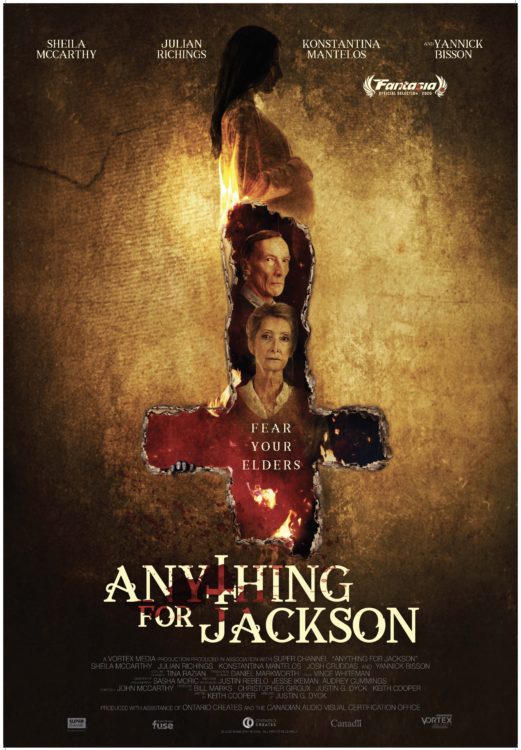
    In Anything for Jackson, a couple of elderly Satanists try to bring their grandson back from the dead and instead unleash horrifying spirits into their home

    Quick cut: Anything for Jackson doesn’t take its premise of Satanists performing a reverse exorcism as far as it could go, however its complex protagonists make it a devilish delight of a film.

    If I told you that Justin G Dyck, the director of Hallmark films such as Christmas Wedding Planner, Christmas with a View, and, my personal favorite, A Puppy for Christmas, would go on to make Anything for Jackson, a horror black comedy about satanists performing a reverse exorcism to bring their dead grandson back to life, well, I’d probably think you were possessed. However, Dyck did exactly that and the results are as far from Hallmark Christmas movie as you could get.

    Anything for Jackson, a Canadian production that screened at the Nightstream Film Fest this week, opens with an elderly couple, Audrey (Sheila McCarthy) and Henry Walsh (Julian Richings) as they go about their morning routine. And all signs point to the couple being benign, gentle people. However, that is quickly dispelled when the pair rush out of their home and return restraining a pregnant woman who Audrey knocks out with a candlestick.

    Anything for Jackson Nightstream
    The post for Anything for Jackson. Courtesy of Vortex Words Pictures.

    We later learn this woman’s name is Becker (Konstantina Mantelos), a patient of Henry’s, who the Walshs hope could help them bring back their deceased grandson Jackson—as Audrey reveals charmingly with a grandmother’s glow in a rehearsed speech that she wrote. You see, the Walshs are Satanists and have found an ancient book with a supposed ritual that would allow them to put Jackson’s soul into Becker’s unborn child.

    Dyck portrays the couple as endearing and loving, a complete juxtaposition to the horrifying ritual they carry out and the demons they invoke. Still, in someway you root for them as much as you root for Becker. Anything for Jackson‘s greatest strength is it doesn’t let any of its characters fall into stereotypes. There’s complexity there. The Walsh’s motivations are driven by something human, even if what they’re doing is inhuman.

    Dyck’s direction is polished, but it works for the pitch black comedic tone that he derives from the story. And while the horror doesn’t quite hit the way that you wish it did—though the creature design is admirable—the compelling story and well-carved out characters are more than enough reason to admire it.

    ? For more movie recommendations, sign up for our newsletter!

    Hi, I’m Karl ? Follow me on Twitter and Letterboxd! I’m also a Tomatometer-approved critic on Rotten Tomatoes ?

    💌 Sign up for our weekly email newsletter with movie recommendations available to stream.


    ADVERTISEMENT


  • ‘It Cuts Deep’ explores surface level relationships | Nightstream Film Fest

    ‘It Cuts Deep’ explores surface level relationships | Nightstream Film Fest

    It Cuts Deep, a horror-comedy premiering at Nightstream Film Fest, follows a couple as insecurities and emotional baggage complicate their already strained relationship

    It Cuts Deep almost loses its way as it explores a couple on the brink of collapse, however, it’s finale—though predictable—is exactly what you’re looking for.

    Nicholas Payne Santos’ It Cuts Deep, which is premiered at the Nightstream Film Festival this week, is a mumblecore relationship horror-comedy that’s success wildly hinges on your ability to empathize with the main couple, both Sam (Charles Gould) and Ashley (Quinn Jackson), and your willingness to wade through the movie’s murkiness to cut through to a delightfully familiar but satisfying ending.

    The movie, which is built on several awkward but all too real conversations that many couples are familiar with, follows the main couple as they go to Sam’s childhood home to spend Christmas. As he’s returning to the town it’s clear that something there still haunts him and paranoia begins to set in. That doesn’t phase Ashley who’s bent on having a discussion about the future of their relationship.


    ADVERTISEMENT


    As the movie unravels we begin to understand the motivations of both of them, the insecurities driving them further apart and balancing that with the need to be close. All of that is complicated by Sam’s former best friend Nolan (John Anderson) who stirs the pot with his knowledge of Sam’s past.

    At just 77 minutes, It Cuts Deep is nowhere near too long. However, I wish the balance of its time spent on misleading us was spent on the fallout of the movie’s predictable but nevertheless fun twist that allows Jackson to do some truly remarkable work. At times she evokes Marilyn Burns’ in The Texas Chainsaw Massacre, which again disappoints me that we didn’t get to see more of that part of the story play out.

    Still, as a naughty little cut of mumblecore horror, It Cuts Deep hits a lot of the right notes—a lot of them familiar, not all of them perfect, but on a cold fall night, it’s somewhat of a breezy comfort to watch.


    ADVERTISEMENT


    More movies, less problems


    Hey! I’m Karl. You can find me on Twitter and Letterboxd. I’m also a Tomatometer-approved critic.

    💌 Sign up for our weekly email newsletter with movie recommendations available to stream.


    ADVERTISEMENT

    💌 Sign up for our weekly email newsletter with movie recommendations available to stream.


    ADVERTISEMENT


  • ‘Possessor’ puts gore to good use | movie review

    ‘Possessor’ puts gore to good use | movie review

    Possessor tells the gruesome story of an assassin who is able to take control of a subjects body to carry out her hits

    Possessor may be diabolically gruesome to the point of excess, however, it uses the gut-wrenching feelings it derives to great use in a story that is more than… skin deep.

    One could try and sum up Brandon Cronenberg’s Possessor — which premiered at the Sundance Film Festival earlier this year — as an arthouse techno body horror version of Christopher Nolan’s Inception. Though, that still doesn’t even begin to describe the diabolically visceral experience of watching the film.

    Laced with some of the most horrific gore I’ve seen in a film in, well, ever, Possessor is a lot more than the bloody exploitation of its surface. Like his father, filmmaker legend David Cronenberg (The Fly, Videodrome), the younger Cronenberg uses the disturbing imagery to explore something more. Something deeply human—how our identity alternatively works for and against us.

    In the prologue, we follow a woman we come to know as Holly (Gabrielle Graham). As she stares in the mirror, she plunges a needle attached to a device into her head. As she turns a dial, her emotions change from happy and laughing to crying to nothing. Later, she walks into a crowded restaurant, grabs a knife, and violently murders a man before her. She takes a gun that she brought and goes to turn it on herself. However a force prevents her from pulling the trigger. Instead, as the cops arrive, she turns the gun on them and is shot multiple times until she’s dead.


    ADVERTISEMENT


    Chloé Zhao makes Nomadland‘s melancholic but hopeful story of nomads traversing the American West a stunningly complex character study of life on the margins of society.


    Later we’ll learn that Holly wasn’t actually controlling her own body—it makes Graham’s short performance all the more impressive—and instead it was Tasya Vos (Andrea Riseborough), a sort of assassin who uses brain-implant technology to inhabit a subjects body and use them to carry out hits for clients without anyone suspecting a thing.

    Such is the case with her next job which involves inhabiting the body of Colin Tate (Christopher Abbott), to murder his girlfriend Ava (Tuppence Middleton) and her father John (Sean Bean), a billionaire and CEO of a large corporation, so that his stepson could take control of the business. Using Colin’s drug use and insecure masculinity as a cover for the crime.

    Refreshingly, Possessor avoids much of the heavy exposition that a movie with as high a concept usually is bogged down by. Instead, Cronenberg only gives us enough information to understand while focusing more on story and character, which is wise considering there is so much to unpack.


    ADVERTISEMENT


    While we watch Tasya in Colin’s body go about setting up the crime, there is the subtext of her slow loss of grip on reality. Earlier we watch her go to visit her husband and son, however before going in she prepares rehearses what to say. Not because she’s nervous, but seemingly because she forgot how to be a person. Taking someone’s identity and committing increasing vile and gruesome murders will do that to a person.

    Usually, that’d be an asset to someone with Tasya’s choice of career, however instead of helping her, it’s giving Colin an opening to take control back of his body. And that’s where Possessor becomes truly great. With sometimes stomach-churning gore, Cronenberg portrays the psychic warfare between Tasya and Colin as a neon-drenched assault on the senses that is as engrossing as it is disturbing to watch.

    While Cronenberg doesn’t take full advantage of everything the world he’s concocted has to offer, he instead relied on its simplicity to dive into its complexities. Supported by understated but emotive cinematography by and Karim Hussain and engrossing score by Jim Williams, Possessor is nothing short of a test of will, but a test that is rewarding in the end. Because amid the carnage is something beautifully human.

    Possessor will be available on VOD next month.


    ADVERTISEMENT


    More movies, less problems


    Hey! I’m Karl. You can find me on Twitter and Letterboxd. I’m also a Tomatometer-approved critic.

    💌 Sign up for our weekly email newsletter with movie recommendations available to stream.


    ADVERTISEMENT


    💌 Sign up for our weekly email newsletter with movie recommendations available to stream.


    ADVERTISEMENT


    ADVERTISEMENT