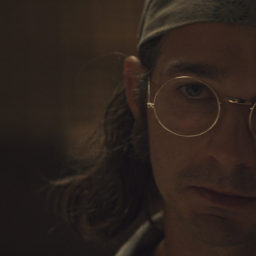
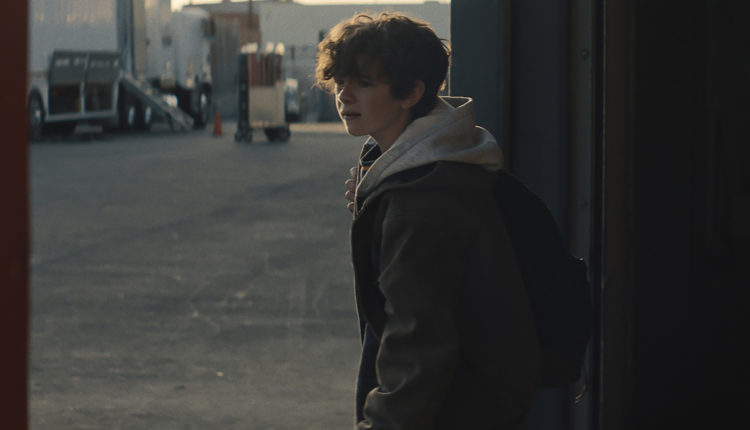
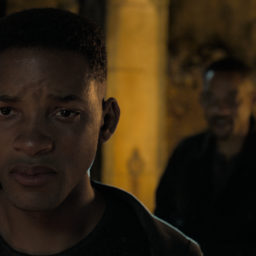
A tribe of cats gathers to decide who among them deserves to ascend to the Heaviside Layer and come back to a new life in this adaptation of Andrew Lloyd Webber’s musical
Quick review: At best, Cats is an interesting exercise in the boundaries of filmmaking. At the worst, which it treads closer to, it’s a disturbing, confusing, and misguided acid trip of a musical.
It’s truly confounding that a major Hollywood studio financed a movie adaptation of the stage musical Cats. Yes, it’s considered a classic. However, it received mixed reviews at best and since then its legacy has been questionable at best. I mean, other than “Memory” can you name another song? But what makes it truly baffling is that there’s not an obvious way to adapt it other than putting people in catsuits. But where there’s a will, there’s a way, I guess?
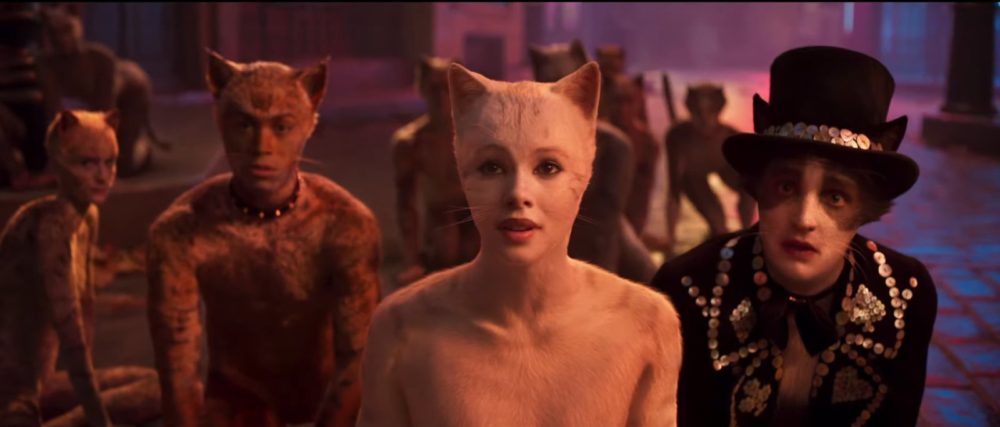
I’ll cut to the chase. Cats is more horrifying than you’d ever imagined. The highly publicized and poured over trailer doesn’t even do justice to just how off-putting the CGI — digital fur technology if you will — is to watch. It’s truly in the deepest trench of the uncanny valley. The biggest issue is that the very realistic fur clashes with the humanoid bodies, movements, and faces of the cast of cats. In some places, it works. Mr. Mistoffelees (Laurie Davidson giving one of the best performances in the film), the magic cat, comes off a little better as the cat features obscure his face at least a little. It can’t be said for the rest.
The reason I want to start my review here is that it overshadows anything good that you could derive from the movie. The musical numbers are audaciously staged and fascinating to watch. The visuals are like a trip on acid. And the cast, for all the wonkiness with the conceptualization of the cats, are going for it in every scene. However, it’s almost impossible to get past just how ridiculous everyone looks. Frankly, it’s distracting.
💌 Sign up for our weekly email newsletter with movie recommendations available to stream.
ADVERTISEMENT
It also doesn’t help that the movie doesn’t really have a plot — though, that’s carried over from the musical. Over the course of the film, we’re introduced to various cats through elaborate musical numbers that we through the eyes of Victoria (Francesca Hayward), a recently abandoned cat. We meet Munkustrap (Robbie Fairchild), the leader of the tribe, who explains that every year they gather for the Jellicle Ball where Old Deuteronomy (a wild-looking Judi Dench) chooses one cat to ascend to the Heaviside Layer.
Over the course of the night, we meet the overweight cat Bustopher Jones (James Corden), showcat Rum Tum Tugger (Jason Derulo), lazy housecat Jennyanydots (Rebel Wilson), Gus the Theatre Cat (Ian McKellan), and Grizabella (Jennifer Hudson), an old and mangy cat that was once known to be the most glamorous.
In the wings is Macavity (Idris Elba), a cat with mystical powers who is so bent on being the Jellicle choice that he’s systematically taking out his competition with the help of Bombalurina (Taylor Swift) — who performs the entertaining and truly mind-boggling number “Macavity: The Mystery Cat,” which finds her drugging the other cats with catnip. You can’t make this stuff up.
Drawing inspiration from musicals is a good trend, in my opinion. Creating a successful movie musical is difficult but having strong source material is a start. The fact of the matter is that Cats doesn’t have good source material to begin with.
All this being said, the whole movie is incredibly brave. I can say without a doubt that I have never seen anything quite like it. It’s overwhelming, confusing, and inarguably bad. But was I entertained? I sure was. I could not take my eyes off the screen. I’m going to take everyone I know to see it just so we can talk about which cat should be the Jellicle cat. I’m obsessed with the fact that it exists. A cult classic in the making.
Bombshell tells the story of how the women of Fox News banded together to take down one of the most powerful predators in media
Quick review:Bombshell has a terrific performance by Charlize Theron as Megyn Kelly and an interesting story worth telling. However, the muddled tone, hollow characters, and awkward pacing make it a forgettable watch.
There’s been a trend in the film industry of tackling serious topics and difficult people — that’s being kind — with a heavy dose of comedy and satire. In particular, Adam McKay seems to have cracked the code with the 2008 financial crisis movie The Big Short — which is good — and the Dick Cheney biopic Vice — which is bad. Then there was Craig Gillespie’s Tonya Harding biopic I, Tonya. Other than a shared style, these three movies had tremendous Oscar success. Keep that in mind when watching Bombshell — a new movie by Jay Roach following the demise of Fox News CEO Roger Ailes at the hands of several women at the network.
Truthfully, it feels like Bombshell is the worst version of this kind of movie because it feels like the story doesn’t justify the style — characters talking to the camera, punchy graphics popping up on the screen. Though, maybe it does. The Big Short’s Oscar-winning screenwriter Charles Randolph penned the script, so maybe it’s Roach that went wrong with the equation. The uneven tone shows just how much control someone like McKay had over his movies.
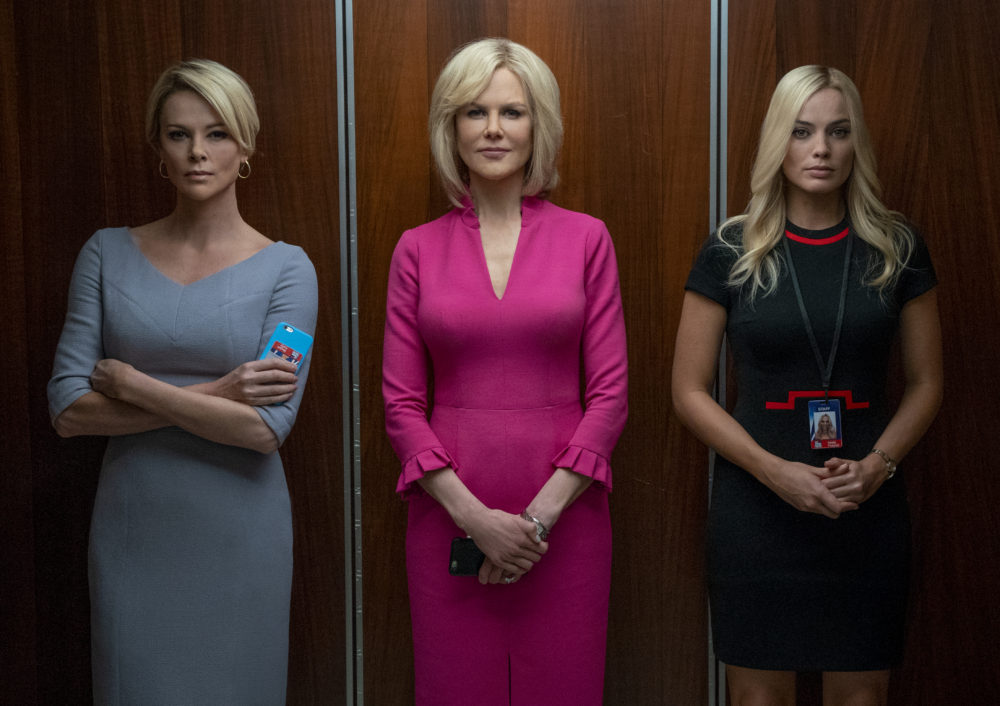
We follow three women working at Fox News. An eerily transformed Charlize Theron as Megyn Kelly, Nicole Kidman as Gretchen Carlson, and Margot Robbie as the fictional Kayla Pospisil — an upstart keen on greatness at the network. The movie starts with a promising look into the fallout following the first Republican Primary Debate in 2016 where she confronted Donald Trump about his long history of harassment of women and misogyny.
💌 Sign up for our weekly email newsletter with movie recommendations available to stream.
ADVERTISEMENT
After the brush-up, she gives us a to the camera tour of the Fox News offices where we learn about the setup of the organization. Ailes and the VPs that serve him are on the second floor while the owners of the network, the Murdochs, are on the eighth. While she’s dealing with harassment from angry Trump voters, the media, and even people within the network, Carlson is preparing for war.
After showing her lawyers a reel of misogynistic comments and moments on-air — she assures them that worse happened behind-the-scenes — she gets ready to be fired and subsequently sue Roger Ailes for sexual harassment. Meanwhile, Kayla, who was recently promoted to working on The O’Reilly Factor, maneuvers her way into meeting Ailes to be considered for on-air work explaining that Fox News is like a religion to her conservative family. However, during an uncomfortable meeting with Ailes, he asks her to slowly lift her dress as he “assesses” whether she’s fit to be in front of the camera.
Theron is pure electricity as Megyn Kelly — and it’s not just the makeup job like some recent Oscar winner. While the physical transformation helps, it’s the physicality that she imbues her with that makes it remarkable. There are subtle ways she captures Kelly — the way she carries herself, the cadence and deliberateness when she talks, her almost slow-motion movements. Without that central performance, the movie would fall apart.
The other woman are solid too. Kidman is a seasoned pro and does the best that she could with Carlson. However, the character is shamefully underwritten, which is a key problem with the movie. Because we split our time between Kelly, Carlson, and Kayla, we never get time to understand them outside of this particular situation. They’re reduced to vessels rather than actual people — maybe it’s because the actual people aren’t that great either. As for Robbie, she does great work, but her character feels like a construction for the story.
That shouldn’t detract from the message. It seems to have been made with good intentions. Powerful men can be stopped when we support victims and when victims support each other. However, I don’t think Roach was equipped to tell that story. Rather than one about the victims, he focused on the intrigue. Instead of coalescing around Carlson’s crusade and the other woman around her, he’s more interested in Kelly’s journey to speaking out, as well. The issue there is that that journey isn’t entirely compelling either.
There are more layers to Bombshell than I am equipped to go into. So, I’ll leave you with this. More than being bad, it’s forgettable. Other than the scenes where Theron is giving room to flex her characterization, the rest of the movie feels is awkwardly paced, unevenly toned, and, to be frank, a slog. For a movie called Bombshell, it really has no impact. The news might even be more interesting.
See all my Oscar predictions here. Full analysis of this category below ?
After a tumultuous festival season, the Oscar race has finally coalesced around a few contenders. Remember, anywhere between five and ten movies could be nominated — a nominee needs to be listed at number one on at least 5% of the ballots — which means we have to look at movies with broad support. Here are the likely nominees:
THREE SLOTS are going to be taken up by the frontrunners: Martin Scorsese’s The Irishman, Noah Baumbach’s Marriage Story, and Quentin Tarantino’s Once Upon a Time… in Hollywood. Of all the contenders, they are the safest for nominations.
TWO SLOTS are reserved for the dark horse contenders: Taika Waititi’s Jojo Rabbitand Bong Joon-ho’s Parasite. The former won the coveted Toronto International Film Festival People’s Choice Award and the latter is the most critically acclaimed movie of the year and won the Palme d’Or at Cannes.
ONE SLOT is taken up by the Oscar-bait movie: Sam Mendes’ World War I thriller 1917. What can I say? The Academy can’t resist a war movie.
Since the rule change, we haven’t gotten less than or more than nine nominees. That means there are two or three slots left. Here’s who’s on the bubble:
The most likely contender to take up a slot is Todd Phillips’ Joker. Joaquin Phoenix is the frontrunner for Best Actor and the movie landed surprise Best Picture and Director nominations at the Globes.
The next—and probably last—slot is a toss-up between Greta Gerwig’s Little Women and Jay Roach’s Bombshell. The latter shockingly led the SAG nominations (if you exclude the Stunt category) while the former has floundered in the precursors. However, Little Women is better reviewed and Gerwig is coming off a triple nomination for 2017’s Lady Bird. It’ll likely break in her favor.
If there’s another slot, it will be James Mangold’s Ford v Ferrari and Lulu Wang’s The Farewell.
💌 Sign up for our weekly email newsletter with movie recommendations available to stream.
ADVERTISEMENT
There’s still plenty of room for a surprise:
The Two Popes nabbed surprise Best Motion Picture — Drama nomination at the Globes.
Knives Out was nominated for three Golden Globes and is a massive box office hit.
Black Christmas follows a group of sorority girls who come under attack just before winter break — they fight back.
Two-sentence review:Black Christmas has the subtlety of a fat man in a red suit with a beard slipping down your chimney. However, the well-directed horror sequences and spirit of the original in its DNA keep the slay bells ringing.
The 1974 Black Christmas, which director Sophia Takal’s film of the same name is based on, is one of my favorite movies of all time regardless of genre. Whether that helped me temper expectations or simply set some that are unattainable I don’t know. But to my merriment, Black Christmas is completely solid as far as remakes go.
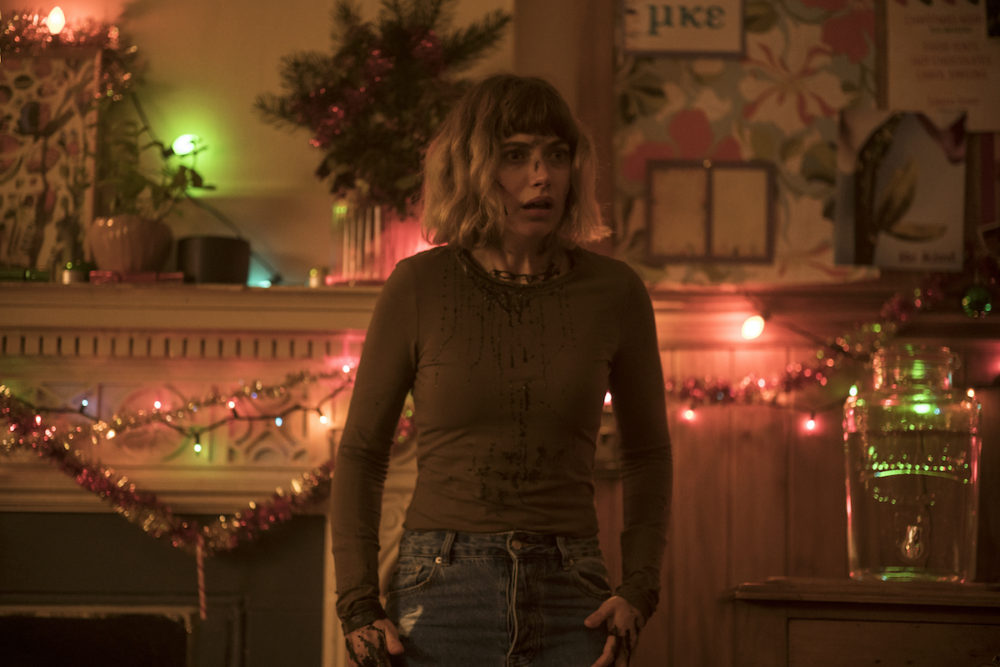
Moving the setting into modern day, the movie follows the last few sisters of a sorority at Hawthorne College who are left on the quiet campus before winter break. They’re “orphans” as one of the sisters jokes. At the start, we meet our protagonists as they’re preparing for a talent show at one of the college’s frats. It’s particularly painful for Riley (Imogen Poots) to attend as she was assaulted by a former member — of course, he got off without repercussion.
However, the girls — excuse me, women — have a trick up their sleeve. I won’t spoil the surprise.
💌 Sign up for our weekly email newsletter with movie recommendations available to stream.
ADVERTISEMENT
Later, the girls start receiving threatening texts — updating from the lewd phone calls in the original — that refer to some forthcoming punishment. In the meantime, sorority sisters are going missing and the campus police aren’t exactly quick to help out. So it’s up to Riley and her sisters Kris (Aleyse Shannon), Marty (Lily Donoghue), and Jesse (Brittany O’Grady) to figure it out.
It’s refreshing that this reboot, versus the truly dreadful 2006 attempt, is that it at least tries to maintain the spirit of the original, even if it moves away from the somber tone and atmospheric scares. Stylistically it even treads cinematically close to 70s horror with glorious medium and wide shots even in intimate moments — like we’re intruding.
Narratively, though, it diverts heavily — for better and worse. I wish we spent more time on the home invasion aspect as we do in the original. Takal knows how to direct a horror sequence. The framing and blocking of each scene builds maximum tension, so I wish we had more time to explore her talents. It’s really what holds the film together even when the screenplay goes off the rails.
The original is a feminist classic that rails against the fragility of masculinity and supports a woman’s right to choose. This version similarly sets its sights on masculinity — not all men, so calm down boys — but gets heavy-handed in its delivery. Lines like “I like beer” and “bow down, bitch” land with a thud and the antagonists are the kinds of sneering devils that you just roll your eyes at. I appreciate the sentiment nonetheless. It’s helped strongly by the fact that the movie almost preempts the criticism it’s bound to receive by saying that it knows it’s going to receive it. See? The fragility of masculinity.
Some other structural, character, and plot issues hold it back from being truly great, but to say it’s not enjoyable is just misrepresenting it. It’s a blast of a slasher with a message you can get behind.
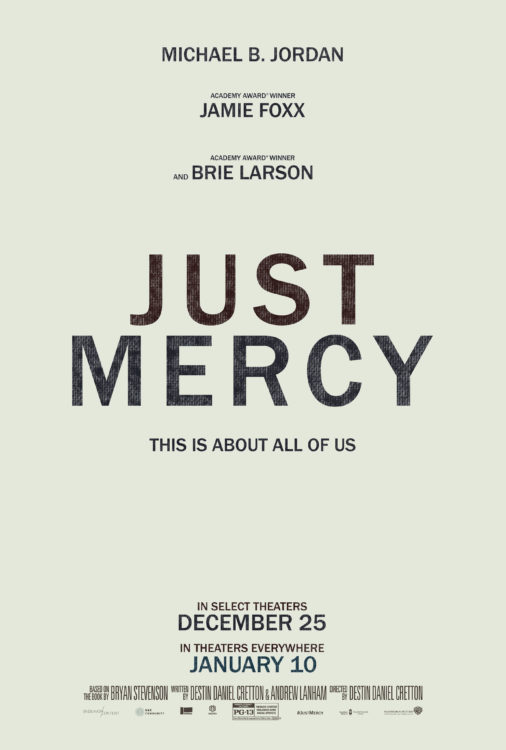
Just Mercy follows the true story of a civil rights attorney as he tries to prove the innocence of a man on death row
One-sentence review:Just Mercy may hit a lot of the familiar beats of a based on a true story legal drama, but the performances by Michael B. Jordan, Jamie Foxx, and Rob Morgan more than make up for its flaws.
As far as based on a true story legal dramas go, Just Mercy is on the better side. To be frank, there’s often a limitation to the quality of these kinds of movies because they’re made to be accessible by a wide audience — usually by credence from the studio. And while it doesn’t really break out of the mold, the two performances at the center of the film, by Michael B. Jordan and Jamie Foxx, are enough to power through any of the typical moments.
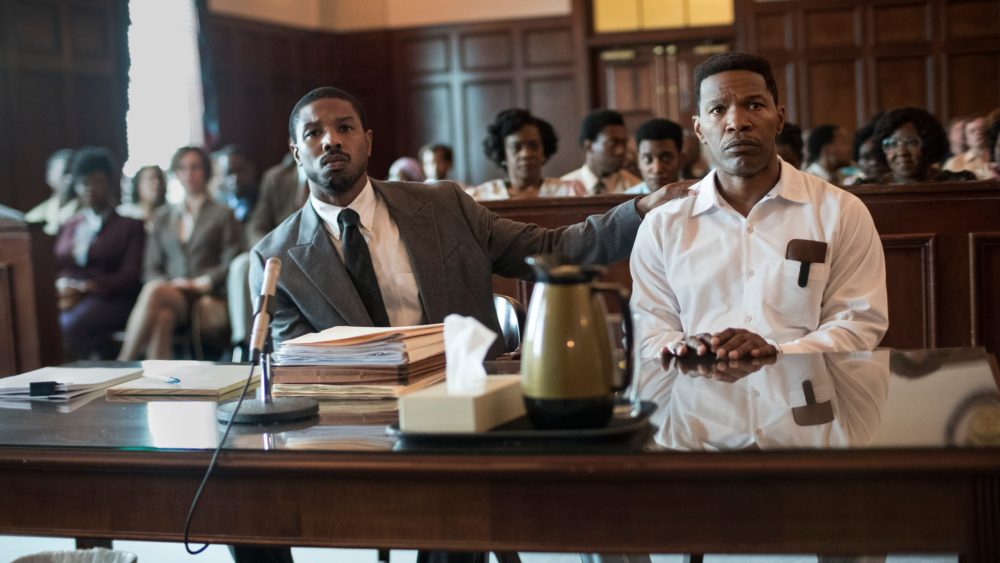
Adapted from his autobiography, Just Mercy follows attorney Bryan Stevenson (Jordan) who, fresh out of Havard Law School, chooses to go to rural Alabama to set up a non-profit focused on freeing wrongly convicted death row inmates. There, he’s joined by Eva Ansley (Brie Larson), a local advocate who helps him set up his operation that is of course met by local resistance.
He takes up the cases of several inmates including Herbert Richardson (Rob Morgan) and, in particular, Walter McMillian (Jamie Foxx).
McMillian was accused of murdering an 18-year-old local girl despite having a tight alibi and a case against him that was built on the flimsy testimony of a witness — of course, he was white. Like any movie telling this similar story, Stevenson suffers many setbacks — and a few wins — along the way that director Destin Daniel Cretton portrays without patina. His main struggle is to have the court even rehear the case, a process that’s blocked more than once by our bigotted villains — the town’s district attorney (Rafe Spall) and sheriff. Their moments are maybe too on the nose — as is a scene where Stevenson is extraneously pulled over in the middle of the night. That doesn’t make them any less effective. It works to communicate the story but is frustratingly by the numbers.
💌 Sign up for our weekly email newsletter with movie recommendations available to stream.
ADVERTISEMENT
However, there’s a moment midway through the movie where we focus in Herbert as his execution is brought forward. The movie slows its pace of hitting various plot points and spends time contemplating what it must be like to know you’re being put to death. I’d be lying if I said I didn’t tear up during the well-directed sequence that Rob Morgan gives a devastating performance in. I wish there were more moments like it.
Jordan’s performance as Stevenson and Foxx’s as McMillian are so human and empathetic of their characters that they just might be two of the best of the year. The screenplay, by Cretton and Andrew Lanham, gives them ample room to explore not only the personal journey but to talk about it in the context of our society and how the death penalty, but design, is flawed and rooted in racist institutions. It’s that exploration that elevates Just Mercy even slightly above its genre counterparts.
I can’t underplay just how good the performances in the film are and how integral they are to its success. It’s a reminder that Foxx, who has down fewer dramas in recent years, is a terrific screen presence and Jordan, who was egregiously snubbed for Black Panther at the Oscars last year, is a bonafide Hollywood leading man who can easily hold the frame.
The movie, out of Christmas Day, is not an easy sit like other movies that sanitize stories about race. In particular, I’m thinking about Green Book. Just Mercy mercifully lacks a white savior narrative and also doesn’t deny that the issues still exist today and that Bryan Stevenson is still fighting for those on death row. Like Dark Waters, the quality of the film shouldn’t matter, even if it’s completely solid. This is a story well-told and a story worth hearing.
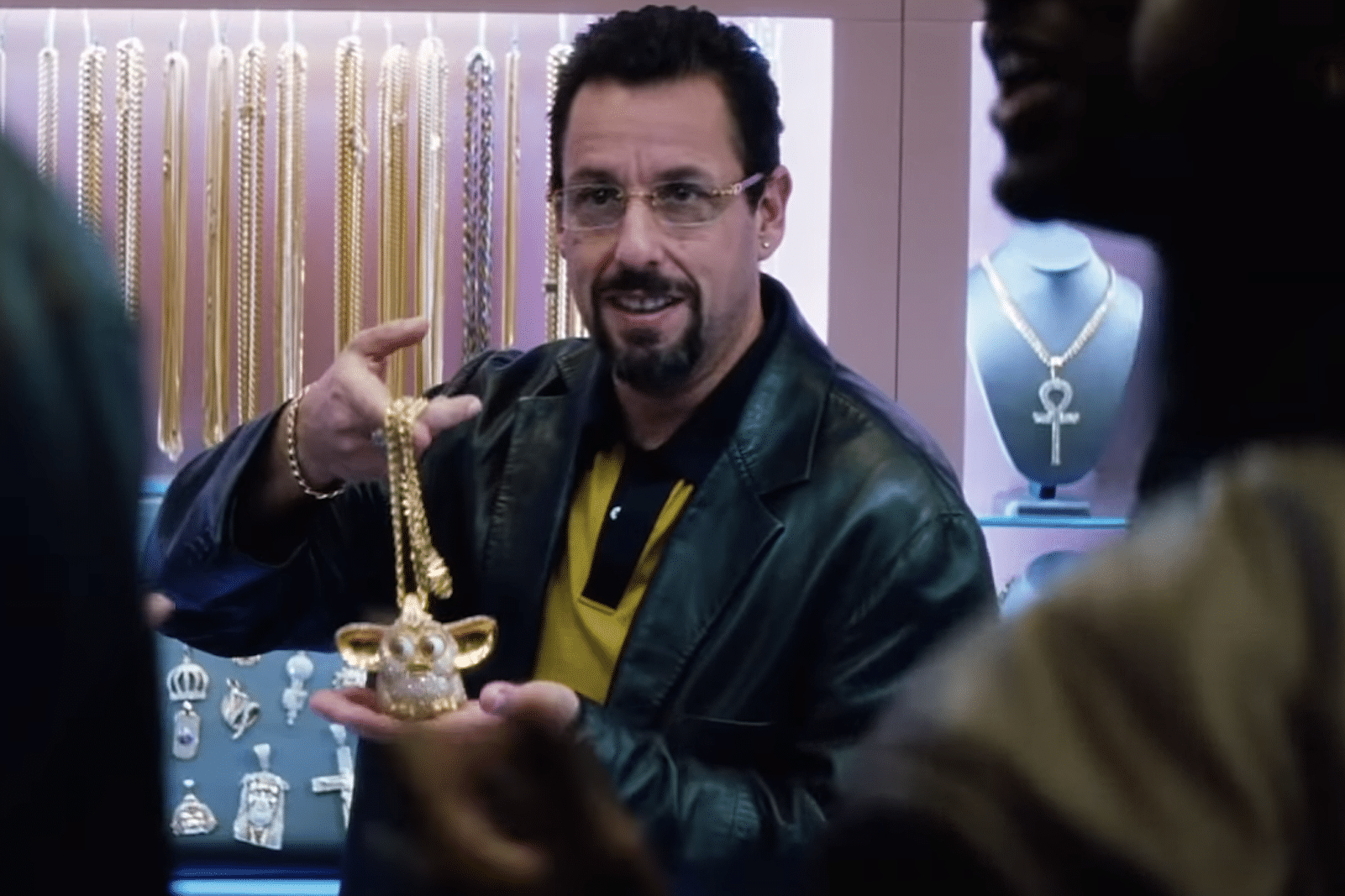
Adam Sandler goes dramatic as a diamond dealer hustling his way out of trouble in Uncut Gems
One-sentence review:Uncut Gems is a non-stop, heart-pounding adreneline rush of a crime movie — sometimes to a fault — with a career-best performance by Adam Sandler.
Josh and Benny Safdie — better known as the Safdie Brothers — have a penchant for movies that leave you little time to breathe. With Good Time, their best film and Robert Pattinson’s best performance to date, they created a bank heist that set off a chain of events that tumble into a cycle of close calls and cons all taking place in one night. It’s almost as if the Safdie’s created the narrative with the direction that anything that can go wrong will go wrong. Thankfully, they centered that movie on a character that thrives on situations that need to be navigated. It’s the reason it works so well.
Similarly, they center their latest movie, Uncut Gems — which was the secret screening at this year’s New York Film Festival — on Adam Sandler’s singular Howard Ratner, a diamond-dealer with a heavy propensity to gamble. He’s the perfect character to study in the situation they put him in. Like Good Time, they pick a single direction for the narrative: Howard always makes the wrong decision.
A lot of that is due to his deep addiction to gambling, which has driven him into a deeper and deeper hole of debt, which he fills with more debt. He has a seemingly endless barrage of mobsters and bookies knocking on his door — including his brother-in-law (Eric Bogosian). So, when he gets the opportunity to use New York Knicks player Kevin Garnett’s championship ring as collateral for a loan, he takes it. You see, Garnett has become transfixed by a rare opal stone that Howard has recently acquired — he’s planning on selling it through an auction — and asks to take it as a good luck charm for a forthcoming game.
💌 Sign up for our weekly email newsletter with movie recommendations available to stream.
ADVERTISEMENT
However, when Garnett doesn’t return the gem, Howard must find a way to: get the gem back in time for the auction, get Garnett’s ring back, and find a way to pay his bookies all the while dodging debt collectors, dealing with his wife Dinah (the always fabulous Idina Menzel), and keeping his mistress Julia (Julia Fox giving a star is born performance) happy.
Uncut Gems traverses more time and a more complicated story than Good Time but maintains the same anxiety-inducing momentum. There’s not as much of a plot as there is a cyclical series of events, which makes it even more uncomfortable to watch — maybe even frustrating. Like Pattinson, Sandler plays Howard as a man you can almost root for. You admire his sheer will and motivation. But then he always ends up doing something that makes you shake your head.
It’s impressive just how much the Safdies are able to make you squirm without making you run out of the theater. The entire movie is a train wreck. Just one you can’t take your eyes off of. That’s a compliment. An apt description could be organized chaos.
As much as it seems like the movie is going off the rails, it’s clear that the Safdies are always in control. The frenetic editing, cosmic score by Daniel Lopatin, and truly remarkable sleazy performance by Sandler are designed to make you feel uneasy — it’s challenging to get through. However, its true brilliance lies in Howard’s characterization. He isn’t a sketch of a person. His actions have consequences. Not just on the events of the film, but the people around them. As much chaotic energy the Safdies often put into their films, they still take care to root it in something real and human. The action aside, that’s what makes Uncut Gems truly unnerving.
Portrait of a Lady on Fire is a quiet period drama that follows an artist as she attempts to paint her enigmatic subject in secret
Quick review: Quiet yet filled with intensity, Portrait of a Lady on Fire nails the physicality and emotions associated with mutual unspoken attraction — the glances, the awkwardness, the frustrations. It’s a slow burn — pun intended — as it builds the relationship between the protagonists, but the pay off is absolutely worth the wait.
★★★★★
There’s nothing like a film from an auteur that speaks to their own experiences. And while director Céline Sciamma‘s Portrait of a Lady on Fire is set in the late 18th century, it feels so modern in its approach and themes as she explores what’s familiar to her as a queer woman. She’s not tapping into specific experiences, but a feeling.
A young painter Marianne (Noémie Merlant) is taken aback when one of her students discovers one of her paintings called “Portrait of a Lady on Fire.” We focus on the painting. It’s dark with almost no detail distinguishable except for a woman turned away from us with her dress on fire at the hem. Then we smash cut to Marianne on a rickety boat crossing a crystal blue sea to a manor on an isolated island where she was summoned by a countess (Valeria Golino) to paint a portrait of her daughter, Héloïse (Adèle Haenel).
What the Countess didn’t reveal before her arrival is that Héloïse doesn’t know that Marianne is here to paint her portrait. Instead, she believes that she’s a companion hired to keep her company — and keep watch of her. You see, Héloïse is betrothed to her late sister’s ex-fiance. As the manor’s young maid Sophie explains, Héloïse’s sister is believed to have committed suicide by throwing herself off a cliff. Now, Héloïse refuses to pose for her wedding portrait as a sort of protest to the marriage.
What’s so interesting about Portrait of a Lady on Fire is that usually at this point of the plot synopsis I’d say, “and you know where the story goes from there.” And while it generally sticks to what you’d expect, the way it gets there is unlike any other auteur and pure Sciamma.
Chloé Zhao makesNomadland‘s melancholic but hopeful story of nomads traversing the American West a stunningly complex character study of life on the margins of society.
💌 Sign up for our weekly email newsletter with movie recommendations available to stream.
ADVERTISEMENT
The movie isn’t a grand romance of two women born in the wrong time and place finding each other. Instead, it’s about two women discovering and understanding each other. With that deep understanding comes desire. And the way Sciamma portrays that desire is with so much smoldering intimacy that it’s almost impossible to resist.
Instead of relying on words like Call Me by Your Name, Sciamma’s film is minimal in dialogue but ripe with physicality. The way that Marianne and Héloïse look at each other is as important as when they don’t look at each other. In particular, the way Marianne observes Héloïse for her painting is interesting because you can watch the gaze shift from one of artist looking at her subject to something more. It’s remarkable just how much she can communicate.
There’s no better example of this than the stunning final shot that lingers for longer than is comfortable and packs so much impact that it leaves you stunned when the movie cuts to black. As unassuming as it is, Portrait of a Lady on Fire is filled with those breathtaking moments that just remind you of the power of a clear vision.
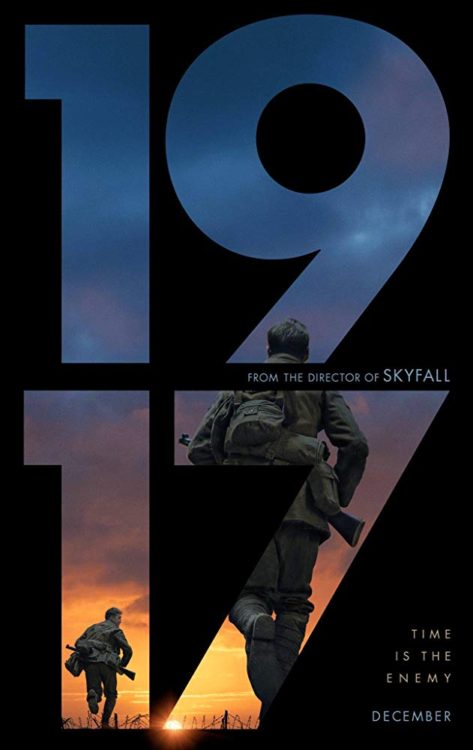
Presented in one unbroken shot, 1917 follows two young soldiers as they embark on an impossible mission to warn a battalion of an impending ambush.
One-sentence review:1917 is not only a technical feat, it’s also an anxiety-inducing war thriller that manages to differentiate itself from anything that’s come before it.
There’s a scene in 1917 where Lance Corporal Scofield (George MacKay giving an Oscar-worth performance), after encountering yet another brush with death, sinks to his knees and cries. I wanted to do the same thing multiple times while watching this movie. The greatest war movies should make it feel like you just went through battle — 1917 makes you feel like you went through an entire tour.
Set during the height of the First World War, 1917 follows two young British soldiers — Schofield and Blake (Dean-Charles Chapman) — who are sent on a seemingly impossible mission to cross enemy territory and deliver a warning of an impending ambush in the coming day. To add to the stakes, Blake’s older brother is part of the battalion in danger.
A lot of the buzz around 1917 comes from the decision to present it as one continuous shot — like Best Picture winner Birdman. Other recent Oscar movies have presented long takes like La La Landand Gravity, which is probably the more apt comparison to this movie. Without any cuts, there isn’t anything to break the tension. It almost has more in common with a horror movie than it does a war movie. It’s overwhelming.
And while it can sometimes come off as a gimmick, 1917 is largely successful in the same way that Children of Men’s long takes are successful. Director Sam Mendes — who co-wrote the script with Krysty Wilson-Cairns — uses the technique to build suspense and anchor you in the moment with the characters. There’s rarely a shot, if any, where you’re not looking at a character or seeing something from their perspective.
It’s especially effective as Blake and Scofield navigate the endless trenches — both on their side and the Germans. As their environment changes, from the trenches to the open countryside to a deserted village, so do the challenges involved in capturing the action. The sheer impressiveness of the feat is enough to keep you engaged. The production design by Dennis Gassner is almost unbelievable as we trek through what feels like miles of endless war zone.
Natural comparisons will be made to Christopher Nolan’s Dunkirk. And while they are similar in that they are action-forward war movies, 1917 isn’t as interested in the story as it is the human condition. What does it feel like to feel untethered from the world? From who you are? From time? There are small moments that point to this. In one, a character, after narrowly escaping death in a mine shaft, pulls a tin out of his pocket, looks at it for a moment, and then puts it back. Eventually we’ll see what’s in the tin, but what’s more important is the character trying to ground himself in something “real.”
Mendes plays with time in subtle ways that are as beautiful as they are disorienting — that’s where 1917 really soars. It’s almost reminiscent of French impressionistic films. Coupled with legend Roger Deakins’ dreamy cinematography — he’s on track to win his second Oscar — and Thomas Newman’s emotional orchestral score, Mendes has created the technical achievement of the year.
As I was thinking about how to wrap up this review, one question kept gnawing at me: why does 1917 matter? We’ve seen endless carbon copies of this same story, so why pay attention to this one? Yes, it’s a technical achievement and that should be reason enough. However, I think it’s truly a gamechanger. It proves that there isn’t one way to tell a story and that the boundaries of filmmaking are yet to be met.
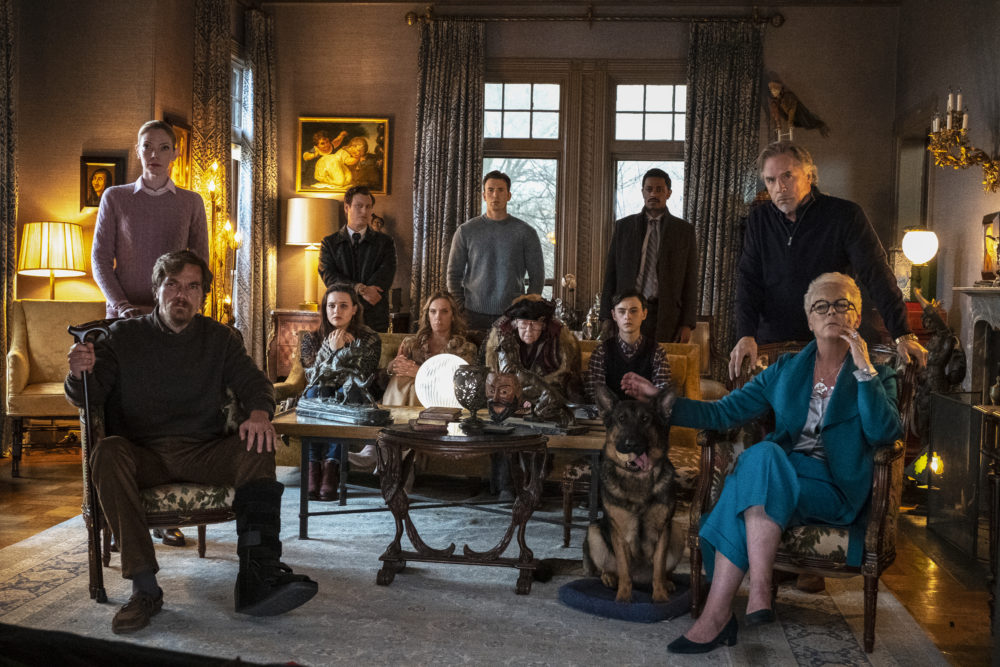
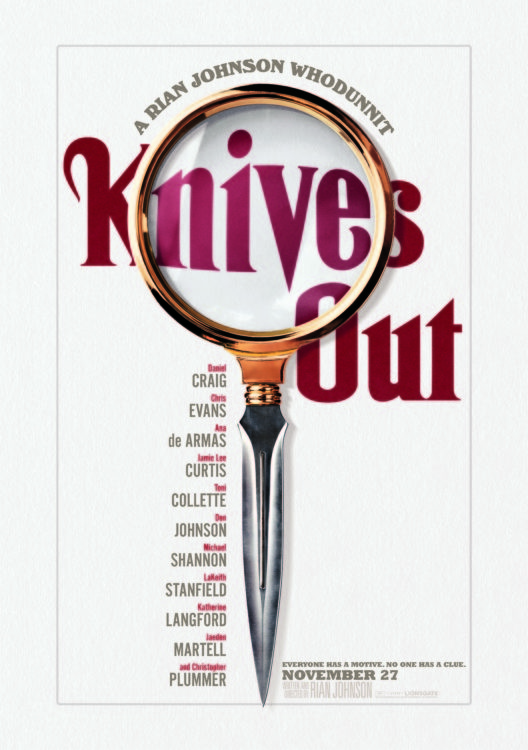
On his 80th birthday, Harlan Thrombey is found dead and sets off a classic whodunit where all the suspects have their knives out for each other
One-sentence review:Knives Out creates one of the great movie families with the ridiculous Thrombeys and puts them in a murder mystery that’s as compelling as it is relevant.
The cast: Ana de Armas, Daniel Craig, Chris Evans, Jamie Lee Curtis, Michael Shannon, Don Johnson, Toni Collette, Lakeith Stanfield, Katherine Langford, Jaeden Martell, Christopher Plummer
Though Ready or Notis a horror, Knives Out is a whodunit mystery, and Parasiteis… well, Parasite, they all center on a character (or characters) spending time around people in another class. In Knives Out, that character is Marta (Blade Runner 2049’s breakout Ana De Armas) and the people of another class is the Thrombey Family. And while the movie is packaged as a neat, tidy, and ridiculous sendup of the classic murder mystery, director and writer Rian Johnson has a lot more on his mind and the movie is all the better for it.
However, Johnson isn’t opaque about his point-of-view, the fun of the movie is that you know exactly what he’s talking about. You see, the Thrombeys are the kind of rich people that think they’re entitled to being rich. Something the recently passed patriarch and famed crime novelist Harlan Thrombey (Christopher Plummer) is keenly aware of. During the reading of his will you can tell what each character wants — his publishing business, the house, his money. However, Harlan’s untimely demise — which is initially ruled a suicide — means there’s more in the way of the Thrombeys and their money.
Knives Out poster. Credit: Lionsgate.
That’s because someone hired famed private investigator Benoit Blanc (Daniel Craig), a heavily southern Hercule Poirot-type that Harlan’s grandson Ransom (Chris Evans) refers to as “CSI: KFC,” to investigate whether Harlan’s death was truly a suicide. The suspects are largely his family. There’s his son Walt (Michael Shannon), who is bent on getting control of the publishing business so he can sell film rights to Netflix. Then there’s his daughter and Ransom’s mother Linda (Jamie Lee Curtis), a “self-made” business woman who just needed $1 million of daddy’s money to get her business off the ground — her husband Richard (Don Johnson) is being towed along. And best of all, there’s Joni (Toni Collette), a Gwyneth Paltrow-inspired lifecycle blogger who runs a website called Flam.
Each of them — and the people connected to them — has a reason for wanting Harlan dead. And at the center of it all is Marta. Blanc takes a shining to her because she has a very unique “superpower.” She cannot help but throw up violently when she tells a lie. He sees that as an asset. But like everyone in this movie, she has something to hide.
Leave it to Johnson, who managed to piece together one of the most compelling Star Wars movies with The Last Jedi, to construct a nearly perfect murder mystery. Despite the many twists and turns, all the pieces to solve the mystery are always there. He doesn’t insert any out of nowhere surprises. You can truly solve the puzzle. That doesn’t stop him from presenting it in an interesting way.
The first act is largely comprised of interviews with each family member who gives their account of the night in question — Harlan’s 80th birthday party. However, each of them twists the facts to make themselves look innocent. Hilariously, all their terrible sides are uncovered. In one of my favorite small details, each family member says a different country the Marta immigrated from despite them constantly saying she’s “part of the family.” In another, Richard praises Marta for immigrating “correctly.” As integrated she is into their lives, she’s still a class visitor.
It’s those small microaggressions that elevate Knives Out past its premise. Not that its premise isn’t already great. Like Get Out, Johnson is careful to make the movie work as a genre pic as well as a social commentary. It’s just what gives it that extra push past being crowd-pleasing popcorn fare. Admittedly, it’s great crowd-pleasing popcorn fare.
The mystery, the characters, and the humor are all spot on. Craig is a standout as is Evans, who plays Ransom as the typical New Englander heir who probably just bought a boat. Then there’s Collette who nails it with the line, “I read a Tweet about a New Yorker article about you,” referencing Blanc. If anything, I wish we spent more time with the Thrombeys. Though, Craig, de Armas, plus Lakeith Stanfield and Noah Segan as a pair of not-so-helpful detectives are certainly fun to watch.
As I’m thinking back to watching the movie there isn’t a singular moment that stands out — perhaps the stellar final shot. But I think that’s a testament to the sheer consistency of it all. The movie is built around character and story instead of just finding the next gag. It’s so refreshing and so effective. It’s easily one of the best times I had in a theater this year.
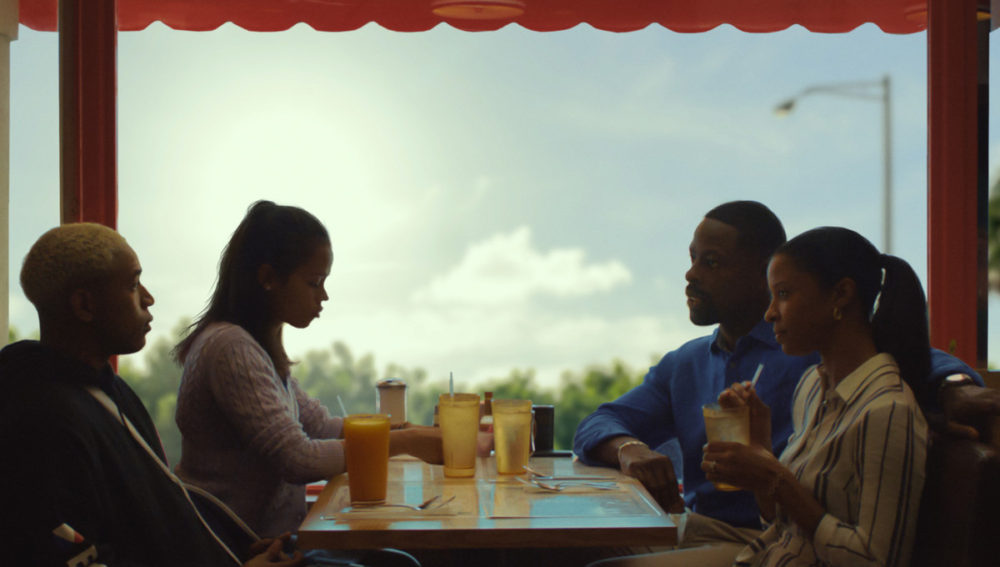
The cast: Taylor Russell, Kelvin Harrison Jr., Sterling K. Brown, Renée Elise Goldsberry, Lucas Hedges, Alexa Demie, Neal Huff
Considering the number of needle drops and montages set to rap and R&B songs in new drama Waves — including songs by Frank Ocean, Alabama Shakes, Animal Collective, and Radiohead — you could almost classify it as a musical. And when the movie imbues the fluidity and momentum of a musical, it really soars. Take the disorienting opening scene where we meet high school senior Tyler (Kelvin Harrison Jr. — who is Oscar-worthy as he was with Luceearlier this year) as he goes through his daily routine — school, wrestling practice, time with his girlfriend Alexis (Alexa Demie). The camera whips and tracks through his life as we rapidly cut between scenes. It’s like the opening number of a broadway musical that’s meant to get you on its wavelength. It succeeds.
That energy is kept up throughout the movie as we watch Tyler interact with his hard and demanding father Ronald (a terrific Sterling K. Brown), who pushes his son to be better in every aspect of his life, often to a toxic level. It’s not without reason. As Ronald says in one scene, as black men they have to be 10x better to get anywhere in life — and still it doesn’t seem to be enough. Without realizing it, though, the pressure he’s putting on Tyler is manifesting itself in dangerous ways. It’s something Ronald’s wife and Tyler’s stepmom Catherine (Renée Elise Goldsberry doing great work) is acutely aware of. Off in the periphery is the youngest of the family, Emily (Taylor Russell is a breakout). We’ll come back to her.
Kelvin Harrison Jr. and Alexa Demie in Waves. Credit A24.
The first half of the movie is spent with Tyler. We watch as the pressure to do better and be better gets to him. He begins taking prescription painkillers to ease the pain of an injured shoulder — his doctor tells him to stop physical activity, but Tyler ignores him. He begins to party and drink excessively. At one point, Emily finds him on the bathroom floor incoherent and crying. She comforts him in that moment.
Then something happens. Something stunning. Something that you shouldn’t know about until you watch the movie. It changes our perspective of the film — literally and figuratively — and sends us off on a tailspin with no end in sight. However, there is an ending and Waves nails it.
Shultz, who has done great work in his career between psychological family drama Krishaand post-apocalyptic thriller It Comes at Night, is so assured of his style. With Waves, he takes it to the next level. There’s rarely a moment to rest, which makes it a nearly unbearable viewing experience in the best way. Each scene and shot feels so intentional — like they’re musical numbers. But really what makes this melodrama work is the assuredness of the narrative.
Each character, including Emily’s love interest Luke (Lucas Hedges), has their baggage. You can see the things that shaped them in life. The wounds that made them who they are — whether it plays out in the movie or happened years before it’s set. What Waves presupposes is that we’re all broken people, but not unfixable. The first half of the movie is dedicated to the events and traumas in life that tear us down and make the cracks in our psyche larger. The second half is dedicated to how we can heal them. It’s the Kramer vs. Kramer or Ordinary People of our day. Along with Marriage Story, also released this year, it’s taking a look at our own psyche.
Unlike any of those movies, Waves is extremely experimental in its form. It feels like Moonlight— another drama set in South Florida — in that it uses cinematic language to communicate human emotion. Shultz achieves feelings of fear, sadness, suspense, hope, heartbreak, and more without much dialogue. Sometimes it’s a look or touch between characters or a camera movement. The most inventive times it’s a piece of sound design where the movie plays with what we can and can’t hear — sound designer Johnnie Burn is deserving of an Oscar. It’s a movie that shows more than it tells.
There is a lull midway through that prevents it from being a real masterpiece — trust me, it comes close in the first half. However, it pulls it together for an ending that feels so satisfying and healing. In addition to the themes of toxic masculinity, race, and gender, what makes Waves so modern is that it understands our societal moment. At one point a preacher says in his sermon that everyone today is focusing on what makes them hate other people. Waves is a plea for kindness and compassion. It may not be the answer to all our problem, but it’s a start.
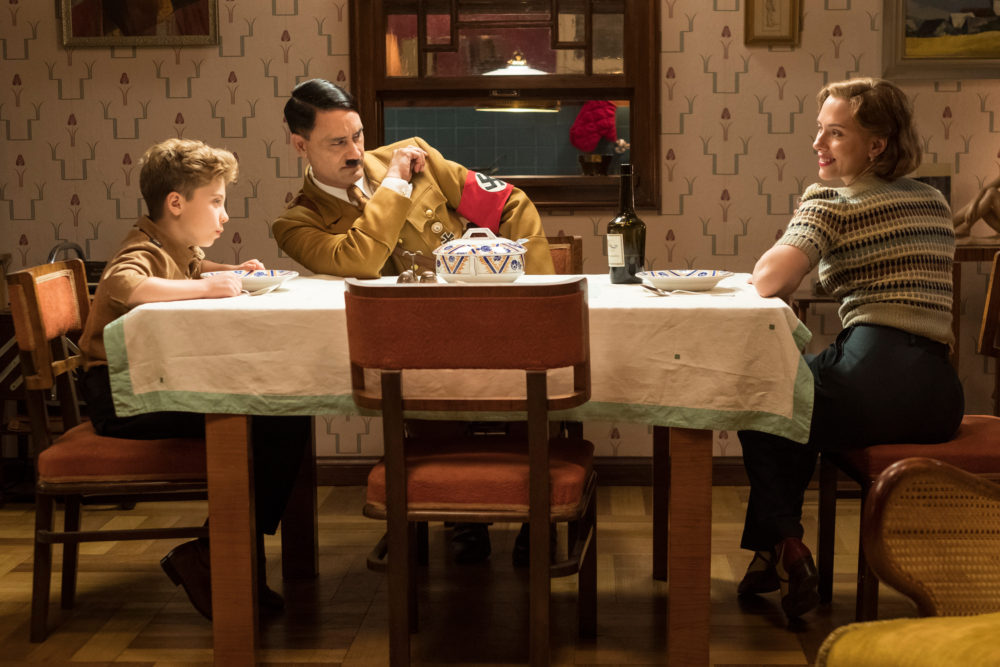
Jojo Rabbit follows a misguided Nazi youth whose imaginary friend is a buffoonish version of Hitler. It’s a comedy.
One-sentence review:Jojo Rabbit lacks a real hop in its step to be truly great, but director Taika Waititi’s comedic sensibilities are enough to make it an enjoyable crowdpleaser.
The cast: Roman Griffin Davis, Thomasin McKenzie, Taika Waititi, Rebel Wilson, Stephen Merchant, Alfie Allen, Sam Rockwell, Scarlett Johansson
Where to watch Jojo Rabbit: In theaters now.
Taika Waititi has built his career on being silly. I mean, his breakout movie was a mockumentary about mild-mannered New Zealand vampires and his fire big Hollywood blockbuster reimagined Thor as a hilarious slapstick comedy. Jojo Rabbit is his first “blank check” movie — a term used for directors that earned the right to minimal studio input on projects — which would make you think that he’d push the boundaries as far as they could go. In actuality, he stays within his borders.
Jojo Rabbit follows Johannes “Jojo” Betzler (Roman Griffin Davis gives a massively charming performance), a ten-year-old boy living in Nazi Germany at the tail end of World War II. Like many boys his age, he’s completely bought into the Nazi propaganda and national pride. His imaginary friend is even a larger-than-life version of Hitler (Taika Waititi) who he often talks to and gets misguided encouragement from.
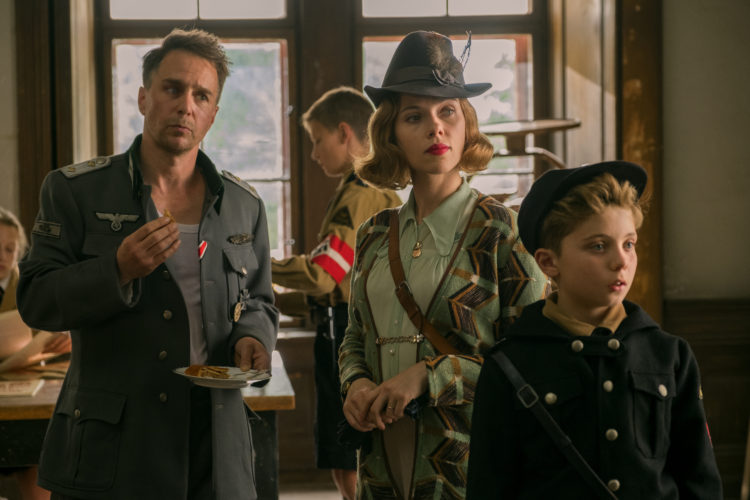
He gets sent to a Hitler Youth training camp led by Captain Klensendorf (Sam Rockwell), who was demoted “since Operation Screw-Up, where [he] lost a perfectly good eye in a totally preventable enemy attack.” Joining him is the equally misguided Fraulein Rahm (Rebel Wilson) and Finkel (Alfie Allen). However, after a totally preventable accident involving a hand grenade, Jojo is sent home to his loving mother Rosie (Scarlett Johansson) who seems to be harboring a secret.
That secret comes in the form of Elsa (Thomasin McKenzie, who broke out in last year’s Leave No Trace), a Jewish girl Rosie is hiding in the walls of the home who Jojo soon discovers. From there, he must decide whether to turn her in or go on protecting her, which goes against everything he’s learned about being a Nazi.
Like all of his films — Hunt for the Wilderpeople, in particular — Waititi mixes real character development and emotional beats with gut-busting deadpan humor and slapstick sensibilities. Here, he hones in on the ridiculousness of anti-Semitism and the perils of blind patriotism. And while it’s an admirable subject, something about it lacks real bite to be truly effective.
Much of the movie is spent between Jojo and Elsa negotiating their various positions. Hilariously, Elsa seemingly always has the upper hand. The real issue with the plot, though, is that Jojo’s trajectory is obvious and Waititi doesn’t really pull any punches we didn’t see coming: being a Nazi is bad and blind patriotism is foolish. He could have made up for the simplicity of the message by filling out the running time spending time with the many hilarious side characters — Stephen Merchant has a too short role as a Gestapo agent and Archie Yates steals nearly every scene he’s in as Jojo’s best friend.
To compare the movie to Green Book, which oversimplifies race relations in the Jim Crow-era South, is probably overstepping, but it does describe the problem with Jojo Rabbit. Thankfully, Waititi isn’t feigning and self-importance like Green Book. He knows he’s making a simplistic crowdpleaser, even if it isn’t as satisfying one would hope. It’s a crowdpleaser nonetheless.
Shia LaBeouf plays his own abusive father in Honey Boy, which is a semi-autobiographical film about his time as a child actor and in rehab
One-sentence review:Honey Boy sees Shia LeBeouf grappling with his past in a highly personal and emotionally devastating drama.
Details: ? Alma Har’el // ⏳ 93 minutes // ? 2019
The cast: Shia LeBeouf, Lucas Hedges, Noah Jupe, FKA Twigs
Where to watch Honey Boy: In theaters November 8th.
Anyone who’s done therapy knows that it’s an often frustrating and confusing process that is without a doubt the most rewarding thing you could do for yourself. And that’s what’s fascinating about Honey Boy. Shia Lebouf wrote the movie as a semi-autobiographical telling of his life as a child actor and his very high-profile struggles with addiction a decade later. However, the movie isn’t really a narrative. Like therapy, the screenplay is more of an exploration. LeBeouf is using the movie to understand what he went through. He even plays his own father in the film.
Honey Boy deals with LeBeouf’s past in two different times
Honey Boy is split into two timelines: 1995 and 2005. In 2005, we meet Otis Lort (Lucas Hedges) as he’s filming a scene that looks like it was pulled straight out of a Michael Bay movie — you know which one. Then in a breezy montage, we see all the things he did to land himself in rehab. There, his therapist (Laura San Giacomo) asks him to recall his relationship with his father, which she uncovers caused Otis to have PTSD. In real life, the incident that landed him in rehab happened in 2017, which is also where he wrote the screenplay for the film.
Noah Jupe stars in Honey Boy. Courtesy of Amazon Studios.
In 1995, he’s filming a scene for an unspecified children’s TV show — you know which one. His father James (a nearly unrecognizable LeBeouf) — a former rodeo clown — is his paid chaperone who he also lives with at a seedy motel crawling with unsavory characters. There we explore their often turbulent relationship. James himself is plagued by PTSD from serving in the army and is a recovering alcoholic who is acutely aware that without his son, he’d been in even worse shape. At one point, the two argue about how it must feel for him to work for his son. Otis shoots back, “if I didn’t pay you, you wouldn’t be here.”
The flashback scenes are so interesting because they’re presented in the way that someone would approach trauma in therapy. Each scene is so clear, but also inconsistent and sometimes erratic. It feels like we go over the same argument multiple times, which is a frustrating experience at first. But when you take into account that those scenes are the older Otis processing what happened to him, then it makes complete sense. After all, James was verbally and physically abusive towards him. He was terrified and confused, so the memories are probably blurred.
LeBeouf gives the best performance of his career and deserves to be in the Oscar conversation
It also helps that LeBeouf gives a powerhouse performance — a classic Best Supporting Actor turn — that is as complex as the thoughts and feelings he must have been working through. James isn’t completely vilified. However, he isn’t completely redeemed either. Otis doesn’t make it out unscathed either. The movie isn’t interested in justifying his behavior more than it is in explaining it.
Admittedly, though, as good as Hedges is, the 2005 scenes don’t work nearly as well as the flashbacks. Director Alma Har’el — she’s directed documentaries in the past, but Honey Boy is her first narrative feature — has a clear vision for the scenes surrounding the young Otis. Like her documentary work, the scenes are impressionistic and ethereal — the score is twinkling and the cinematography warm or neon splashed. It’s fitting then that singer-songwriter FKA Twigs plays a large role as a resident of the motel who befriends Otis.
The movie ends up being a little more than the sum of its parts. The lack of a plot is both refreshing and frustrating. At some points, I wished something more substantial would happen — maybe nothing did in real-life. However, that doesn’t take away from the fact that this is highly personal meditation on one’s life. One that you can feel the catharsis of. By the end, you can feel LeBeouf exhaling and accepting his past for what it is. It’s chilling to see.
Parasite follows a poor but clever family’s attempt to climb up the social ladder by cozying up to a wealthy family.
One-sentence review:Parasite is unlike any movie that’s existed — at the same time funny, terrifying, thrilling, and relevant — and one of the best movies of the year.
The cast: Song Kang-ho, Lee Sun-kyun, Cho Yeo-jeong, Choi Woo-shik, Park So-dam
Where to watch Parasite: In theaters now.
It’s taken me a while to really crack how to talk about Parasite. There’s so much to unpack and so much I loved that it seemed nearly impossible to do without having a drawn-out, rambling mess. But then, director Bong Joon-ho did the work for me.
“I tried to express a sentiment specific to Korean culture, all the responses from different audiences were pretty much the same. Essentially we all live in the same country… called capitalism.”
I think what’s so interesting about that quote is that he explains that he didn’t intend to make a social satire that could be universally related to. He’s as surprised by the response to the movie as anyone else. Yet, Parasite feels like a movie that’s made for the masses. Still, at its core, it’s a bizarre, pitch-black arthouse comedy set in South Korea. Which is exactly why it’s one of the best movies of the year.
A plot better shrouded in mystery
I’m going to be careful in describing the plot to Parasite because part of the effectiveness is the surprise. Either way, you should go in mostly blind. Calling it one of the best movies of the year should be reason enough to see it. If you still need to be convinced, you’ve been warned.
Parasite revolves around two families. The Kim family, father Ki-taek (the great Song Kang-ho), mother Chung-sook (Jang Hye-jin), and kids Ki-woo (Choi Woo-shik) and Ki-jeong (Park So-dam), is just barely scraping by by folding pizza boxes for the local pizza joint and leeching off the WiFi of a nearby coffee shop.
The Kim Family (Woo-sik Choi, Kang-ho Song, Hye-jin Jang, So-dam Park) in Parasite. Courtesy of NEON CJ Entertainment.
So, when the particularly clever Ki-woo gets the chance to tutor Da-hye (Jung Ji-so), the daughter of wealthy tech exec Dong-ik and his high-strung wife Yeon-gyo (Cho Yeo-jeong), he hatches up a way to get his entire family in on his good fortune by lying and conniving their way into various roles working for the family.
The situation requires much grifting and maneuvering, which of course leads to some hilarious slapstick moments and incredible acts of criminal malice. But things take a turn. That turn is when Parasite goes from a crowd-pleasing criminal romp to a deeper take on the very fabric of our society. It’s a wonder that Joon-ho was able to craft something so complex, rich with meaning, and filled with wonderfully off-kilter characters and performances, while still being entertaining, thrilling, and, at parts, terrifying.
Constructing his greatest movie yet
Unlike his last two movies — Snowpiercerand Okja — Parasite very much takes place in our world. Perhaps a slightly heightened version of it, but ours nonetheless. Mixing that with his usual dark humor and oddly specific characters make for an experience like no other. It allows him to zig when we expect him to zag. Knowing each character’s true feelings and intentions is impossible, and that’s where he wants us.
Instead, he builds in clues everywhere else. In the dialogue, the production design (all the sets were built for the film), and the carefully crafted shots. Like all the best directors, no scene or camera movement or line is wasted. Everything matters. And that is the sign of a masterpiece.
Parasite is so indescribable that I’m having a tough time… well, describing it. Particularly what makes it a near-perfect film. But I always come back to that quote from Director Bong and how this is a universal story. The final sequence is a universal feeling. As wild as the ride is, it’s comforting knowing that in some way we’re all on the same page.
Will Smith plays an assassin whose retirement is put on hold when the government sends his clone to take him out in Gemini Man
One-sentence review:Gemini Man applies new filmmaking technology to action well, but a thin and boring story makes it not worth the price of admission.
Details: ? Ang Lee // ?? U.S. // ⏳ 117 minutes
The cast: Will Smith, Mary Elizabeth Winstead, Benedict Wong, Clive Owen
Where to watch Gemini Man: Now playing in theaters.
In recent years, Ang Lee has become obsessed with testing the limits of filmmaking technology. In particular, he’s been playing with 3D — Gemini Man and his two movies before it were all shot specifically for 3D — and high frame rates. Most movies are shot and shown in 24 frames per second, which delivers the cinematic quality we’re used to — everything doesn’t quite look real. That’s because you perceive the world without gaps in your vision. When something is filmed, you’re literally missed parts of the image.
However, Gemini Man was filmed in 120 fps. Most theaters don’t even have the ability to project movies in that format. I was fortunate (or unfortunate, depending how you look at it) was able to see the movie the way it was intended — 4K, 120 fps, and in 3D. Without it, though, I don’t know if I could even recommend seeing it in theaters.
An action-thriller we’ve seen before
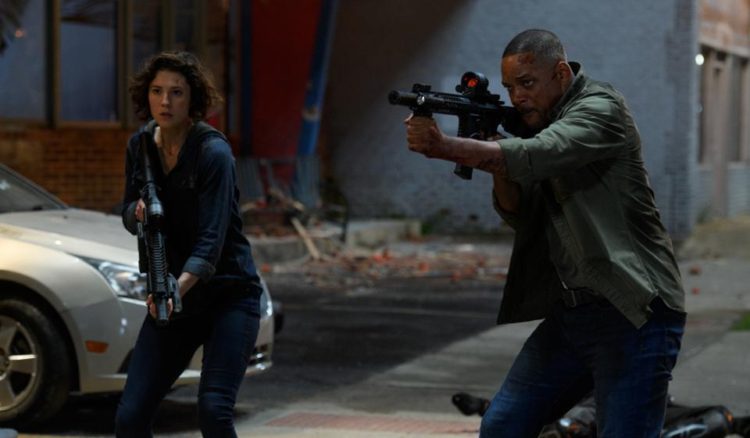
Mary Elizabeth Winstead and Will Smith in Gemini Man. Credit: Paramount Pictures.
The plot and story of Gemini Man are familiar that you can call every single beat before it happens. Not only that, but it feels like Lee isn’t interested in the story at all, only the tech that could be used to bring it to life. Ironically, it makes it all lifeless.
Henry Brogan (Will Smith) is not only an assassin, he is the assassin. He’s largely regarded as the best there ever was. However, he knows he’s not at the top of his game anymore. As he says in his opening kill, the smallest mistake could be the difference between killing his target and killing an innocent. That’s why he’s ready for retirement. However, Clay Varris (Clive Owen), head of the mysterious GEMINI project, isn’t so fast to let him go.
Brogan soon finds himself on the run with fellow agent Dani (Mary Elizabeth Winstead) and his friend and colleague Baron (Benedict Wong) as they uncover the secret of GEMINI. That secret is that 20 years ago, they made a clone of Henry who was raised by Clay to be the perfect assassin — and clearly the reason Lee was interested in the project.
Will Smith vs. Will Smith
Smith also plays Junior using the same de-aging technology that was used on Robert De Niro and Joe Pesci in The Irishman. Here, Smith looks a little too smooth and a little too perfect for the effect to truly have a… well, effect. When both characters are on the screen, there is more impact. Deep in the tunnels of Budapest, the two have a brutal hand-to-hand brawl that is quite stunning to watch. Too bad the story is so thin that it feels more indulgent than anything else.
Truthfully, the high frame rate and 3D worked well to enhance the action. Without it, it would have felt so plain. It’s immersive cinema. Lee is on to something. The problem is that the time in between the action scenes is so boring that no amount of Will Smith on Will Smith action is enough to make up for it.
It’s a shame because the trio central trio — Smith, Winstead, and Wong — are all so charismatic and entertaining to watch on screen. However, they can’t save the corny dialogue and plot pulled straight out of a 90s spy thriller. The ending is so preposterous that my mouth was actually agape in the theater. It’s a movie that I think actually could have benefited from being longer.
Ang Lee is so good at characters interacting. I mean, his greatest movies are essentially conversation-based — Sense and Sensibility, The Ice Storm, Brokeback Mountain. He was so interested in the human condition. Now, he’s more interested in the marvel of it all. Here’s to hoping he finds a way to balance the two.
I just went through a breakup. A five-year relationship that seemed to be endless gone in a single night. There’s so much sadness and anger and denial and grief. However, the overwhelming feeling is confusion. It’s not hyperbolic to say it feels like you’re going to die. Perhaps that is hyperbolic. At the very least, there’s a constant sense of dread. You ask yourself so many questions. Am I making the right decision for me? How about for him? Should I have fought harder? Is he going to be alright? Those are the things that are the hardest to process. I bring this up to give you context for why watching writer-director Noah Baumbach‘s latest film Marriage Story, which premiered at the 57th New York Film Festival, a wrenching and difficult but ultimately cathartic experience.
The thesis of Marriage Story is delivered via two numbers from Stephen Sondheim’s classic musical Company. The first features Nicole (Scarlett Johansson) — along with her mother Sandra (Julie Hagerty) and sister Cassie (Merritt Weaver) — singing “You Could Drive a Person Crazy.” In the song, the three women that the perpetual bachelor main character Robert is seeing sing in an Andrews sisters-style number about his inability to commit.
The second is Sandra’s ex-husband Charlie (Adam Driver) singing finale number “Being Alive” in the middle of a bar surrounded by the theater company he founded with Sandra. The song sees Robert finally accepting the notion of love and commitment. In particular, the challenges that come along with the vulnerability that a relationship requires. The song is a moment of acceptance in both Marriage Story and the musical. In the musical, it’s about being able to accept love and all the things that make it complicated. In Marriage Story, the songis about the acceptance that sometimes love isn’t enough.
ADVERTISEMENT
New York vs. Los Angeles: A battle of desires
The movie begins with Charlie confessing about what he loves about Nicole. A montage of the couple’s life in happier times with their son Henry (Azhy Robertson) plays beneath the voiceover. Then, the movie switches to Nicole’s perspective as she talks about what she loves about Charlie. In so many ways, what they admire about each other are in opposition as is often the case with couples. That’s why they work. Baumbach gives us a chance to explore deep care the couple has — perhaps had — for each other. They’ll question it throughout, but we know it’s there.
There are these moments where they will be speaking in their Brooklyn apartment like things are normal, then one of them walks away and immediately begins crying. It’s the death of the normalcy that’s the hardest. However, things are changing for the pair. Nicole is heading to Los Angeles to star in a TV pilot while Charlie is hard at work on his latest play with the theater company. They decide that Henry will temporarily stay with Nicole in LA while she’s filming and Charlie will fly back and forth.
Laura Dern and Scarlett Johanson in Marriage Story. Credit: Netflix.
Nicole took the pilot because she wanted to do something truly for herself for once. The two met in their 20s. Young, free, artistic, and ready to take on the world. She had a promising career in film as hinted by with a clip from her breakout role in the teen romance “All Over the Girl,” but after falling for Charlie she flew across the country to be at the center of his theater company. She always had yearnings of returning to LA and even discussed it with Charlie, which he’d placate her with “one day” and “in the future.”
However, Charlie has never been able to see past his own grand vision for life. “We’re a New York family,” as he often said during the divorce proceedings when they really get rough. However, their son Henry says he likes LA and Nicole’s TV pilot looks like it might be going to series — still, what he thinks is right for the family is for them all to be in New York. It perpetuates the reason Nicole wanted to split up in the first place — this is Charlie’s life, she’s just living in it.
ADVERTISEMENT
Divorces have to get ugly before they get better
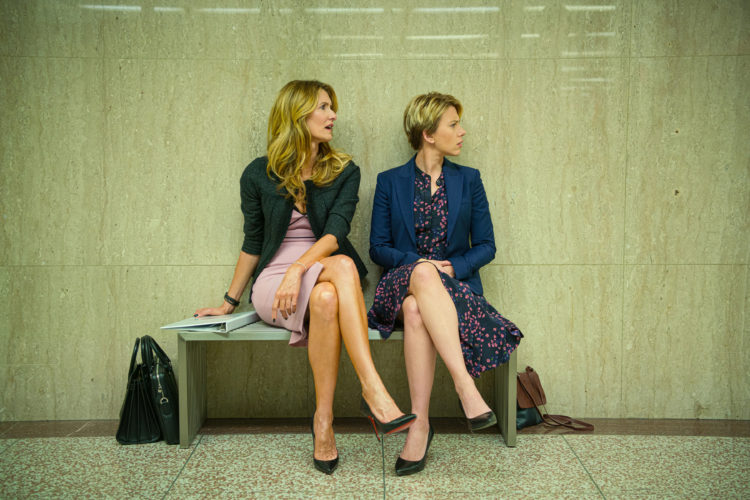
After it becomes clear that Charlie won’t accept the family moving across the country, Nicole hires celebrity divorce lawyer Nora Fanshaw (Laura Dern) to represent her. Dern is an absolute knockout in the role of a woman whose understanding of relationships and the male psyche would better suit her as a therapist. However, her veracity also makes her the perfect lawyer. She explains to Nicole that hiring her isn’t a shot across the bow, but a claiming of her wants and desires as her own.
Charlie is shocked by the decision as he’s hilariously served papers in a standout scene by Nicole’s sister Cassie. He sees it as a shot across the bow. He even says it feels like the divorce is happening to him — another sign that he just doesn’t get it.
From here, the movie devolves into a series of messy arguments and tactics in an attempt to get each side what they want. And at every turn, it feels like Charlie is losing — he can’t use a specific lawyer because Nicole already consulted with them, he needs to establish residence in LA to be close to his son but needs to maintain one in New York to prove they’re a “New York family.”
This is a movie about the process of divorce and how messy it is — morally and legally. At one point, Dern’s Nora and Charlie’s lawyer Jay (Ray Liotta) go up against each other in court by twisting things Nicole and Charlie have said about each other in increasing preposterous ways to smear the other’s reputation. It highlights the need for a divorce to be messy to actually work. In the case of Charlie and Nicole, it’s a wakeup call.
It’s a man’s world
Charlie is obsessed with saying what he thinks is right for other people. I mean, he’s a director after all — that just bleeds into his own life too. Despite all indications pointing to LA being the right place for their son to grow up — hilariously, characters always remark at how much space there is in LA — Charlie is insistent that they need to be in New York because he wants to be in New York. He just disguises it as what he thinks is best for them.
Scarlett Johanson, Azhy Robertson, and Adam Driver in Marriage Story. Credit: Netflix.
As Nora delivers in a fiery monologue, we live in a society where women are meant to bend their desires to men and whatever they deem comfortable. Even Nicole’s mom seemingly sides with Charlie because of her old-fashioned view of things. For once, Nicole is doing something for herself, and in Charlie’s view that makes her the bad guy. In our view too. The movie is largely told from Charlie’s perspective, so our sympathies automatically lie with him. Then, Baumbach pulls the rug out from under us and reminds us that we’re so immeshed in these societal expectations that we don’t even realize why we’re thinking in that way.
ADVERTISEMENT
The only way to get over sadness is to go through it
However, it’s called Marriage Story for a reason. Except, instead of the making of a marriage, it’s the breaking of one. Like I said at the beginning, as messy as the actual logistics of it are, it’s the emotional gymnastics that we have to do to get through it that’s that hardest.
I’ve been trying so hard to convince myself that I’m going to be alright in my breakup — and that he would be alright. And we both will be, but not right away. Maybe it will take weeks, months, or even years to get over it. To get over the emotional ties that we have to each other. There hasn’t been a day that I’ve woken up feeling utterly alone and just crave the normalcy we once had. But that’d be unfair.
Like Nicole and Charlie, we met each other at a specific time in life. One where we were still forming who we are. The sad fact of the matter is that it changes with time. Your wants and desires clear up, your lifestyle comes into focus, and that causes rifts. There are some that you should bend for and some you shouldn’t. It’s so hard to be honest about them, but in the long run you’re only causing more hurt if you continue to ignore them.
Nicole realizes that. Society taught her to not want, but she slowly realizes that she’s allowed to. Charlie doesn’t realize that. His nature tells him he’s doing the right thing for his family. Those final two songs from Company tell us exactly where they are in emotional maturity. Nicole is past acceptance and Charlie is just getting there. He gets there when he is finally able to be sad and angry about what’s going on. Because the only way to get over it is to go through it.
Marriage Story brings us through it, unveils truths about ourselves and society, and does it in a funny and entertaining way. It’s a nearly impossible feat to make a 136-minutes movie about a divorce entertaining, but it is. The process is inherently silly and the things we do make no sense. The way people around us react doesn’t help, but it just exposes truths about life — it’s consistently inconsistent. As messy and devastating as the process of breaking up is, it makes you feel alive. Maybe it’s a good thing in the long run.