Karl Delossantos

  • ‘Spider-Man: Into the Spider-Verse’ review — One of the best superhero movie in years

    ‘Spider-Man: Into the Spider-Verse’ review — One of the best superhero movie in years

    Spider-Man: Into the Spider-Verse is a bright and bold loving critique of the superhero genre and a much needed hard reset.

    30-second review: Spider-Man: Into the Spider-Verse is so keenly aware of what it wants to be even though what it wants to be has never existed before. It’s a bright and bold loving critique of the superhero genre and a much needed hard reset. It doesn’t shy away from the usual tropes, but it tackles them in a way that is innovative, visually jaw-dropping, and laced with real emotion. With great power comes great responsibility, and the responsibility was in the right hands with Into the Spider-Verse.

    Where to watch Spider-Man: Into the Spider-Verse: Available to stream on Netflix. You can also buy or rent it on Prime Video.

    With great power comes… oh, you get it. Full review below ?


    Spider-Man: Into the Spider-Verse leans into the ridiculousness of superhero movies but respects how empowering they can be. In an odd way, Into the Spider-Verse feels akin to The Cabin in the Woods. The 2012 horror film directed by Drew Goddard was a loving hate letter to the genre in played in. Into the Spider-Verse seems to be interested in the same thing. 

    It’s a meta-commentary on the oversaturation of superhero origin stories told over and over again—each hitting the same beats as the last. Hilariously, the movie begins with an origin story montage that pokes fun of previous movie incarnations of the superhero. Specifically, the Sam Raimi trilogy—even the infamous Spider-Man 3 street walk-dance.

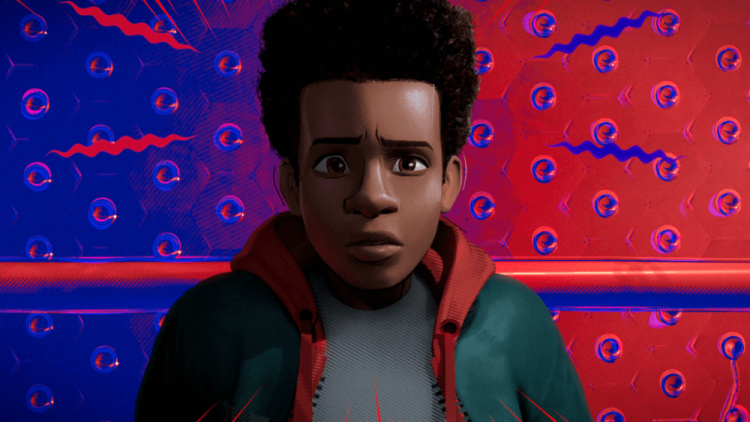
    In Into the Spider-Verse, we watch the origin story of 13-year-old Miles Morales (Shameik Moore), a half-black/half Puerto Rican teen who is unexpectedly thrust into the position of Spider-Man.

    However, this is not your typical origin story. Yes, we hit the familiar beats of the Spider-Man story we all know—bit by a radioactive spider, unexpectedly discovers powers and doesn’t know how to control them—but there’s the added layer of Miles existing in a world where Spider-Man (Chris Pine) is already a fixture.

    So, when that Spider-Man is taken down by baddie Kingpin (Liev Schreiber), Miles is inspired to take over. At first, he’s overwhelmed by his powers and the responsibility. However, he’s not alone.

    Fisk’s evil plan is to open up a multiverse underneath Brooklyn for reasons I will keep unspoiled. However, in doing so, a Spider-Man from another dimension is brought into Miles’. This Spider-Man goes by the name Peter B. Parker (Jake Johnson). In his world, he’s been Spider-Man for a lot longer than the one in Miles’ world and has become jaded—and overweight—by the job.
    Spider-Man: Into the Spider-Verse
    Shameik Moore voices Miles Morales in Spider-Man: Into the Spider-Verse.

    The movie is upbeat, colorful, and hyper-stylized in a way that comic fans will appreciate. Into the Spider-Verse is, perhaps, the best film interpretation of a comic book’s sensibility—it includes on-screen sound effects and the classic comic book text box without feeling gimmicky.

    The filmmakers even went as far as slowing down the frame rate to 12 frames per second—the standard is 24—to make the action look like a moving image. This is best used in a hilarious action scene where Peter B. Parker and Miles first meet.

    As they bounce through the streets of Brooklyn—hilariously attached by their own webs—chased by the police, there is a keen cartoon sensibility to the comedy and comic book veneer to the way the action is rendered. That carries throughout the movie and delivers some of the best action and comedic set pieces of the year. 

    At first, Peter B. Parker, who feels inferior compared his dimensional counterpart, is hesitant to take Miles under his wing. But when he finds out that Miles holds the key to getting him back home he finally accepts. 

    Now that the pair teamed up, they begin to form a mentor/mentee relationship that drives part of the emotional crux of the movie. The other emotional crux is Miles’ relationship with his police officer father Jefferson (Brian Tyree Henry) and with his Uncle Aaron (Moonlight‘s Mahershala Ali)—Miles often feels overwhelmed by his parents’ high expectations of him and goes to his uncle for a reprieve. 

    After a hilarious visit Aunt May (Lily Tomlin)—a badass assistant to this universes Spider-Man—Miles and Peter B. Parker realize that the multiverse has brought in even more Spider-People.

    Spider-Man: Into the Spider-Verse
    Hailee Steinfeld voices Gwen Stacey in Spider-Man: Into the Spider-Verse.

    There’s the dark and gritty—to hilarious levels—film-noir Spider-Man (a terrific Nicolas Cage) who is rendered in high contrast black and white and talks in exactly how you’d expect a noir detective to speak. There’s the anime rendered Penni Parker (Kimiko Glenn) who fights with a spider-like robot she controls with her mind. And there’s Spider-Woman who turns out to be Gwen Stacey (Hailee Steinfeld), a young and energetic Spider-Person.

    Together they work to take down Kingpin and return each Spider-Person to their own universe. Of course, there’s a time crunch. If they aren’t returned soon, their cells will degenerate. Along the way, they battle Kingpin’s goons in fan-service references, callbacks, and homages.

    And what is so refreshing—especially with the MCU being the template for most superhero movies—is that there are real stakes and danger in the action. I found myself tensing at the light and funny action because it feels often like any character could be hurt or killed.

    All the elements I’ve mentioned above make Into the Spider-Verse the boldest superhero movie in years and most innovative animated movies ever made. It’s so keenly aware of what it wants to be even though what it wants to be has never been done before. 

    Audiences have become desensitized by the at least three MCU movies, a cadre of DC movies, and a Sony Marvel movie coming out each year. Into the Spider-Verse is a refreshing reset to the genre. In a world where we know superheroes can do anything—with the help of CGI—how do you keep things interesting? Into the Spider-Verse solves this by playing with—and criticizing—the formula.

    It’s bold, funny, sentimental, and one of the best movies of the year.


    ADVERTISEMENT


    More movies, less problems


    Hey! I’m Karl. You can find me on Twitter and Letterboxd. I’m also a Tomatometer-approved critic.

    💌 Sign up for our weekly email newsletter with movie recommendations available to stream.


    ADVERTISEMENT

  • 2019 Oscar Predictions: Best Supporting Actress

    2019 Oscar Predictions: Best Supporting Actress

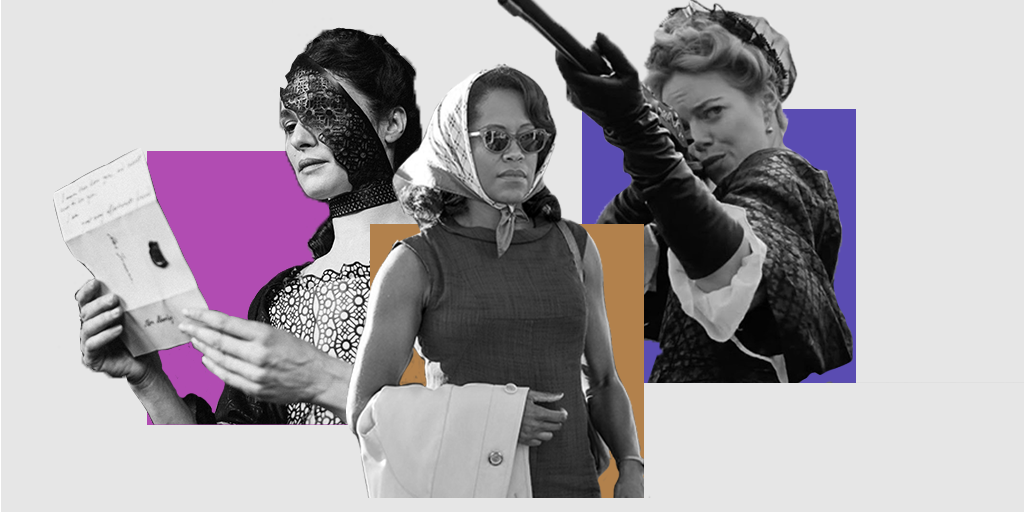
    Best Supporting Actress has a frontrunner in Regina King, but there’s a good chance she is upset by Rachel Weisz or even Marina de Tavira.

    Best Supporting Actress is possibly the trickiest category to predict at the Oscars this year.

    Here are my current rankings:

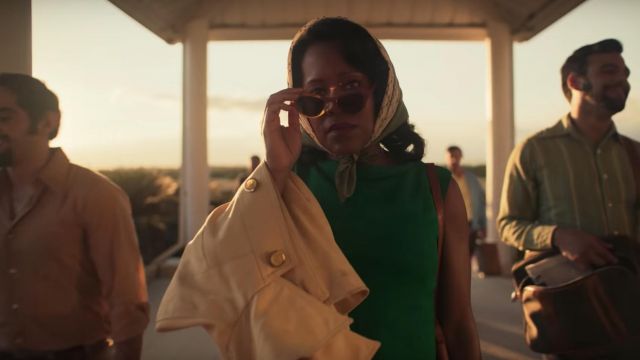
    1. Regina King (If Beale Street Could Talk) — Golden Globe, Critics Choice
    2. Amy Adams (Vice)
    3. Rachel Weisz (The Favourite)
    4. Marina de Tavira (Roma)
    5. Emma Stone (The Favourite)

    Check out all our 2019 Oscar Predictions: Best Picture | Best Actor | Best ActressBest Supporting Actor | Best Supporting Actress

    Despite winning nearly every critics’ group prize — including the OFCS, the group I’m a part of — Regina King isn’t the surefire frontrunner she should be for her warm and emotional performance in If Beale Street Could Talk.

    That’s because she missed a nomination at the BAFTAs and the Screen Actors Guild Awards. For context, that last winner of Best Supporting Actress that didn’t at least get a nomination at the SAG Awards was 2000 when Marcia Gay Harden won the Oscar for Pollack.

    You have to go back to 2007 for the last time the winner of this category didn’t also win the Oscar — that year, Ruby Dee won the SAG for American Gangster and Tilda Swinton won the Oscar for Michael Clayton.

    King has to worry about that first statistic more than the second since this year’s winner of the SAG Award was Emily Blunt for A Quiet Place, who wasn’t even nominated at the Oscars.

    best supporting actress
    Regina King is the frontrunner for Best Supporting Actress for IF BEALE STREET COULD TALK

    The fact that one of her fellow Oscar nominees didn’t win will help her. Especially, Amy Adams for her performance as Lynne Cheney in Vice and Rachel Weiss for her performance in The Favourite — both of whom are her biggest competition.

    Adams, with her six nominations, could become the living actor with the most Oscar nominations without a win if Glenn Close finally wins on her seventh nomination in Best Actress, as expected. Her overdue narrative can push her to a win. The problem, though, is that her performance isn’t nearly as well received as her other nominations and ultimately takes a backseat to Christian Bale’s transformative performance as Dick Cheney.

    Who might really be the favorite is Rachel Weisz. This year has eerily followed the 2015 Best Supporting Actor race where Sylvester Stallone was the frontrunner — winning the Golden Globe and being snubbed by SAG (which is won by non-Oscar nominee Idris Elba) and BAFTA just like King — to lose the Oscar to the BAFTA winner, Mark Rylance.

    Whoever wins the BAFTA could be the actual frontrunner for Best Supporting Actress. However, watchout for an outside chance that Marina de Tavira turns her surprise nomination into a surprise win if Roma ends up sweeping on Oscar Sunday.

  • How Cher won an Oscar for ‘Moonstruck’ in 1988 [VIDEO]

    How Cher won an Oscar for ‘Moonstruck’ in 1988 [VIDEO]

    Cher pulled off an Oscar win for Best Actress over Glenn Close in 1988 for Moonstruck. This video explains how it happened.

    Thirty years before Lady Gaga became an Oscar frontrunner for A Star is Born, Cher took home the Oscar for Best Actress for her performance in 1987 romantic comedy Moonstruck

    But how did a musician turned actress take home Oscar gold for her film debut? Well, this video by Be Kind Rewind answers that question. 

    Cher was up against a murderer’s row of veteran actresses including Oscar favorite Meryl Streep for Ironweed, Sally Kirkland for Anna, Holly Hunter for Broadcast News, and most famously, Glenn Close for Fatal Attraction.

    Close was on her fourth nomination and highly favored to win—she’d go on to be nominated twice more without any wins (though that might change this year). However, a mix of “publicity, name recognition, and an actor’s relationship to the Academy” ended up swaying the race in her favor. 

    This race is particularly important considering Lady Gaga, another pop star turned actress, is in contention for her performance in A Star is Born. Can she pull it off like Cher did in 1988? Watch the video above and then head over to our predictions for Best Actress!

  • ‘Cold War’ review — A love story without any heart

    ‘Cold War’ review — A love story without any heart

    Cold War is stunningly crafted black-and-white love story set in postwar Poland that lacks the emotional substance to make it truly great.

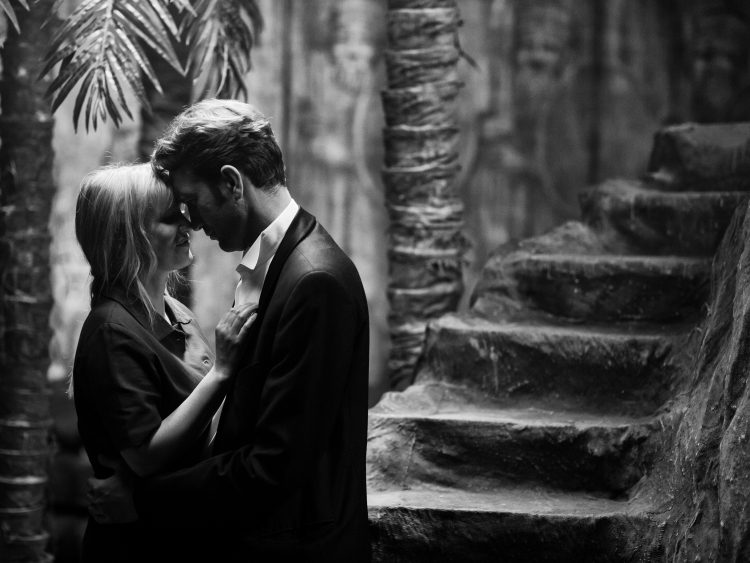
    In Cold War, the war isn’t the only thing that’s cold. The film follows a two-decade-long romance between Wiktor (Tomasz Kot)—the music director of a folk music academy tasked with capturing the culture of the rural citizens of Communist-era post-war Poland by forming a dancing chorus of desperate rural kids to tour around the country—and a member of that chorus named Zula (Joanna Kulig).

    However, director Paweł Pawlikowski—he won Poland the Oscar for Best Foreign Language Film for his film Ida—doesn’t seem as interested in the emotions behind the romance as he is the aesthetics around it. The romance feels cold while the gorgeous crisp black and white cinematography makes the film feel alive. 

    It’s no wonder, though, why Pawilkowski makes the film breezy as it skips from plot point to plot point. The story is based off his parent’s real-life romance—the protagonists are named after his parents—that unfolded around the Berlin Wall. 

    Cold War
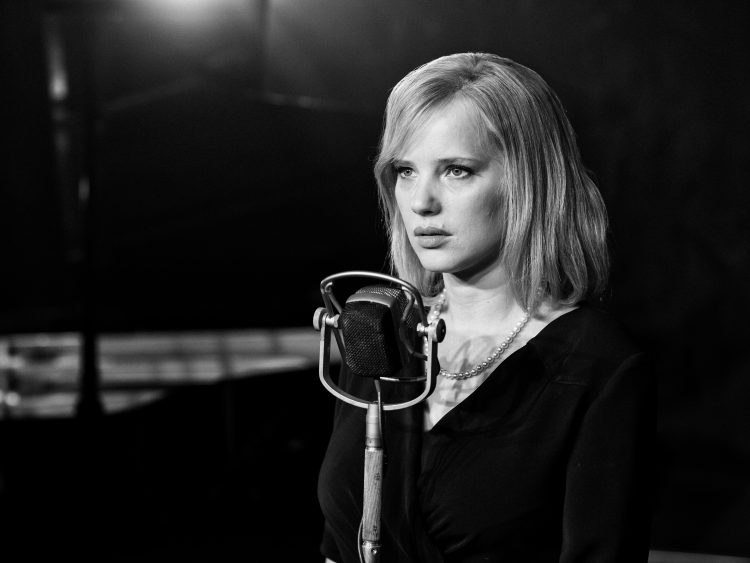
    Joanna Kulig in Cold War. Image courtesy of Amazon Studios.

    The movie often feels like someone telling a story. But not a skilled storyteller like Rose in Titanic as she meticulously breaks down every feeling and every sense and emotion that came with her experience. No, Cold War feels as clinical as a story can come. It feels like a series of connected plot points that never bring the characters into focus enough for you to detect any emotions off of them.

    I don’t think the movie actually wants to endear you to its characters. If it does, it is doing a terrible job as you learn nothing about either protagonist—not their motivations or their backgrounds or their vices or their desires. Instead, its approach to the story is communicating a sensation of fate and attraction. It doesn’t busy itself with the mechanics of love. Just the feeling.

    In that aspect, Pawilkowski and his Ida cinematographer Łukasz Żal succeed. The movie’s intimate 4:3 aspect ratio coupled with the sharp hyperrealistic black and white cinematography gives off a nostalgic feeling. And the jarring transitions from one scene to another—often skipping years—add a layer of regret and melancholy to the film.

    If anything, Cold War works better as a mood piece than it does as a story. 

    Cold War
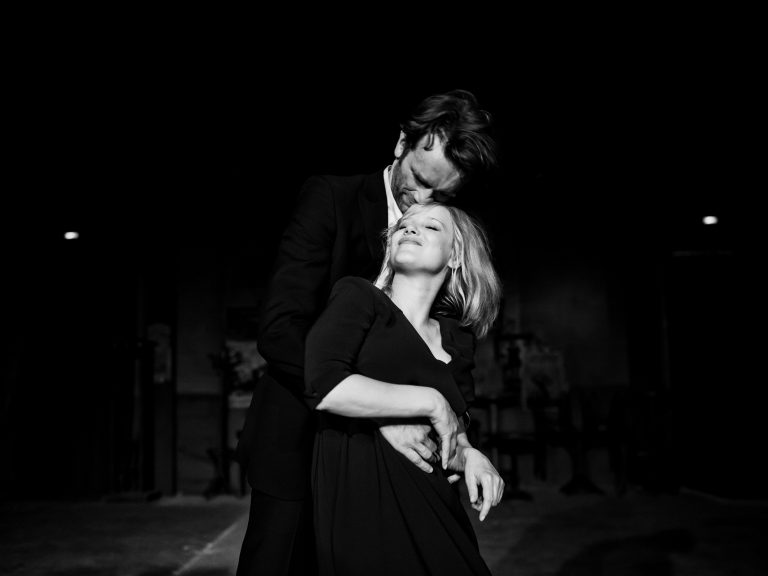
    Joanna Kulig and Tomasz Kot in Cold War. Image courtesy of Amazon Studios.

    Wiktor and Zula bounce from city to city over the years rekindling their love tryst. What ends up connecting them is music. You watch the landscape of music around them change over the years—from folk to jazz to rock n’ roll. That’s the one constant in their turbulent relationship.

    Then, the movie comes to an abrupt stop. As cold as the relationship at its center. Are the characters different people from when we first met them? There’s no way to tell considering we know nothing about them. However, the sentiment of the ending is there. At least that you can derive.

    There’s value in a film like Cold War. However, it’s a film I respect more than I actually enjoyed. The craft—from the cinematography and score to the sound mixing and production design—is impeccable. Some of the best of the year. Yet I found little to latch onto.

    Cold War will be in theaters on December 21st.

    Karl’s rating:

  • ‘Suspiria’ (2018) review — Upsetting, diabolical, and better than the original

    ‘Suspiria’ (2018) review — Upsetting, diabolical, and better than the original

    Suspiria, a remake of the 1977 classic, gets an upgrade in plot and horror.

    30-second review: Suspiria doesn’t feel at all tamped down by the 1977 original Dario Argento film. If anything, it feels more like it is inspired by it rather than remaking it. However, that’s what director Luca Guadagnino—his last film was the Oscar-winning Call Me By Your Name—intended when tackling the project.

    And while his last film was a quiet tender romance, Suspiria is anything but. It’s dark, tense, and oozes of evil. It replaces the neon-splashed open halls of Argento’s film with dark shadowy corridors that feel like they’re constantly closing in.

    Where the original had a paper-thin plot that nearly derails the whole movie, the updated version uses the same premise, but does away with having the mystery of the dance as the main plot driver and replaces it with something more story-focused. 

    Where to watch Suspiria: Streaming on Prime Video.

    Full review below ?

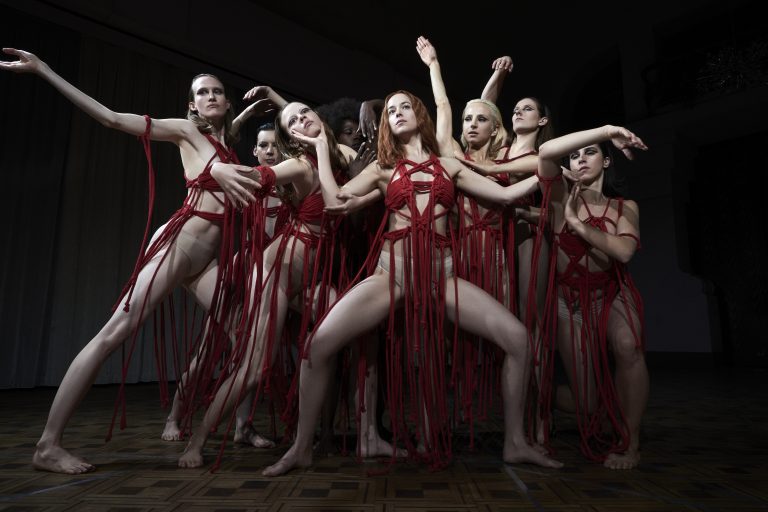
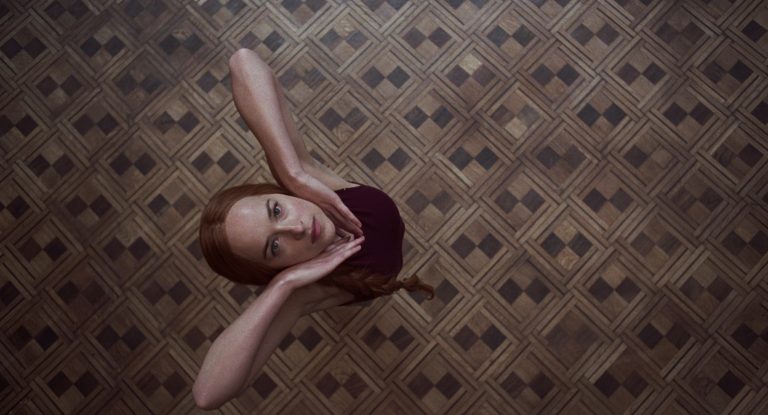
    However, we still begin with Susie Bannion (Dakota Johnson hot off her performance in Bad Times at the El Royale), a somewhat naive American girl chasing her childhood dream of being a dancer with a prestigious German dance academy. Unbeknownst to Susie, though, the entire staff of women is actually a coven of witches—don’t worry, this version of the film establishes this almost immediately.

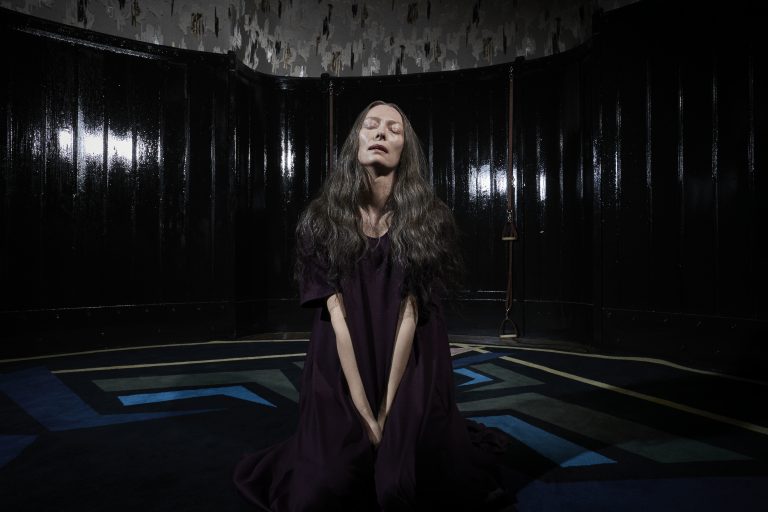
    Susie quickly catches the eye of lead choreographer Madame Blanc (Tilda Swinton) who is taken with her natural talent and seems to have insidious intentions for the young pupil. When Patricia (Chloë Grace Moretz), the lead of the piece the company is working on, goes missing—assumed to have joined a guerrilla group during the “German Autumn” rebellion—Susie volunteers to fill the role.

    Suspiria
    Mia Goth as Sara and Dakota Johnson as Susie star in Suspiria

    Another student and friend of Patricia, Olga (Elena Fokina), is horrified that none of the women who run the dance academy or students seem to think there’s more to Patricia’s disappearance and lashes out at Blanc before storming out. However, before she is able to leave the building, she suddenly finds herself trapped in a room completely covered by mirrors.

    Before giving her the part—one that Susie knows well from watching the company perform in New York—Madame Blanc wants to see her perform it without music. What follows is one of the most disturbing horror setpieces I’ve seen in years—save for a couple in this year’s Hereditary—as Olga still trapped in the mirrored room is contorted and torn apart from the inside out with every move that Susie takes until she is twisted and crunched together into a mess of limbs.

    It’s upsetting, sadistic, but oddly beautiful.

    All the while, Patricia’s psychotherapist Dr. Josef Klemperer (also Tilda Swinton in terrific old-age makeup) is investigating what really happened to Patricia, whose rantings in her journal show that she knew about the coven and a powerful trio of witches called The Three Mothers whom the coven worship.

    Like any good horror movie, Guadagnino uses sound, frenetic editing, and his Call Me By Your Name collaborator Sayombhu Mukdeeprom’s atmospheric cinematography to create tension.

    Dakota Johnson stars as Susie in Suspiria. Image Courtesy of Amazon Studios.

    As the company’s performance quickly approaches, Susie’s friend and fellow dancer Sara begins to have suspicions similar to Patricia and eventually connects with Dr. Klemperer to help validate them.

    Sara becomes a much-needed center to the story since Susie becomes consumed by the performance and work and ultimately disconnected from the story, similarly to the original. If there’s any pinpoint-able problem with Suspiria it’s that there’s not really an emotional protagonist and Swinton, as talented as she is, has trouble translating emotion as Dr. Klemperer—she’s fantastic as Madame Blanc.

    David Kajganich’s screenplay has to be given credit for at least adding some texture to most of the characters and story and adding some much-needed background before the story, but the lack of focus on a particular story strain becomes a detriment. 

    However, when you see the ending—and I highly recommend you watch the movie unspoiled for this very reason—it all ties together and the movie becomes better because of it. Like all the horror in the movie, it’s creepy and unsettling but realized with a flair that only an auteur like Guadagnino could pull off. 

    Suspiria‘s horror set-pieces are reason enough to tackle the over-stuffed runtime and it ultimately is better—and more diabolical—than the original.

  • ‘Beautiful Boy’ review — Timothée Chalamet shines in this faulty addiction drama

    ‘Beautiful Boy’ review — Timothée Chalamet shines in this faulty addiction drama

    Beautiful Boy has a story worth telling, but the way it’s told doesn’t do justice to its subjects as it avoids the real pain of addiction.

    30-second review: Beautiful Boy has an incredible true story worth telling at its center, but the way director Felix Van Groeningen presents that story zaps any impact that it could have by opting for style over substance. It’s a classic case of telling instead of showing. The movie tells us that addiction takes a toll on both the addict and their loved ones and that it’s a cycle, but it doesn’t show us that. Instead, it focuses on fleeting emotional moments.

    Timothée Chalamet is terrific as Nic, the drug-addict son at the center of the story. The movie works best when it focuses in on him and his journey. But, the movie regularly flinches before it gets to the hard truths. That’s the biggest disservice it does to the story.

    Where to watch Beautiful Boy: Streaming on Prime Video.

    From its opening moments, it’s clear that Beautiful Boy is going to be one of those tearjerker overwrought emotional dramas. Whether it’s a successful one could take time to parse out—yes, there are successful ones. However, it’s apparent from the cold open, frequent time jumping, and aggressive music cues that Beautiful Boy is going to be a trying experience.

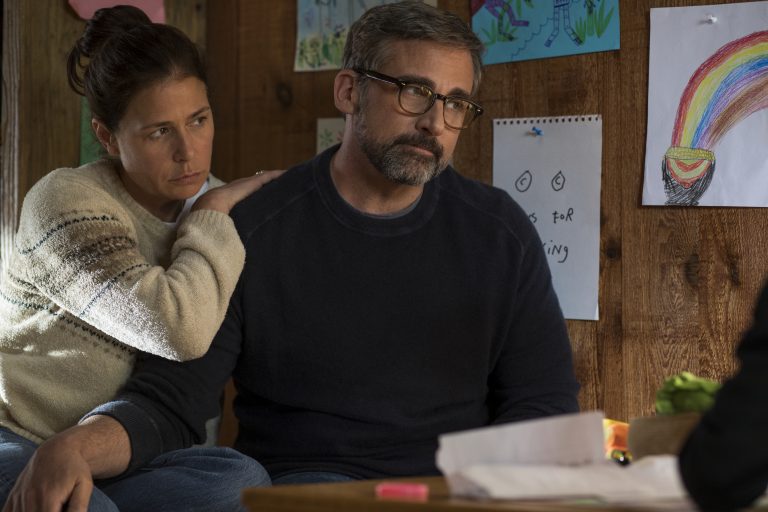
    That’s not to say the true story of father and son pair David (Steve Carell) and Nic Sheff (Timothée Chalamet) working through the latter’s addiction isn’t worth telling. However, director Felix Van Groeningen‘s interpretation of the material strips out the actual emotion from the story and replaces it with something that feels artificial and cold. Emotional moments are often dictated in the movie, not earned.

    The issue is that it seems the entire movie is made up of “emotional moments” as Nic bounces from rehab to hospitals to the streets as David seems to be chasing him around trying to force him to get better, something that just pushes Nic further away from his grasp. Along the way, Nic’s stepmother Karen (Maura Tierney) and mother Vicki (Amy Ryan) are also there to support both men in the journey, but this is truly a father and son story. 

    💌 Sign up for our weekly email newsletter with movie recommendations available to stream.


    ADVERTISEMENT

    Beautiful boy
    Maura Tierney as Karen Barbour and Steve Carell as David Scheff star in BEAUTIFUL BOY

    Beautiful Boy has its moments and Groeningen deserves credit for those. A highlight comes nearly midway through the movie when David waits for Nic at a diner to confront him after his latest relapse. It’s a gorgeous dance between two great actors, particularly Chalamet whose balance of desperation from the high and frustration with his enabling father feels realistic and spot-on.

    In another moment, after Nic and his addict girlfriend Lauren (Kaitlyn Dever) break into David and Karen’s home to get money to support their habit. However, David and Karen return home and catch them as they drive off. Karen hops in the family’s minivan and gives pursuit. As she drives, though, Karen is quickly flooded with emotion at the lost “beautiful boy” she’s chasing. Tierney is great here. But moments like these are sparse in the movie.

    When Groeningen allows the actors to take the material and the characters and run with it with their incredible instincts Beautiful Boy works. However, he’s often too heavy-handed.

    The same goes for the erratic editing style which distracts from the narrative. There’s an argument to say that it helps communicate the feeling of addiction both on the person and their family. Particularly the repetitiveness of addiction—addiction, sobriety, relapse, addiction, sobriety, relapse. But the style also brings out another feeling: avoidance. 

    Beautiful Boy
    Timothée Chalamet as Nic Sheff and Steve Carell as David Scheff star in BEAUTIFUL BOY

    It feels like the characters and the story are an arm’s length away. The majority of the movie is told in breezy music montages—the number of needle drops is confounding—that doesn’t give you a chance to actually get to know the characters and make grasping the narrative even harder.

    Beautiful Boy has a great story and tackles a part of addiction that movies often miss—how the people we love do more harm than good when they’re trying to help. There’s been some criticism around the portrayal of meth addiction here, specifically, that I don’t have the insight into, but that being said Chalamet does great work. Carell, on the other hand, feels miscast.

    Addiction dramas need to be unflinching and Groeningen, to be frank, flinches. The movie looks beautiful, but addiction isn’t beautiful. It was almost as if he was afraid of the truth of it all. I’d love to have seen this story tackled by another director. 

    Beautiful Boy is now streaming on Prime Video.


    ADVERTISEMENT


    More movies, less problems


    Hey! I’m Karl. You can find me on Twitter and Letterboxd. I’m also a Tomatometer-approved critic.

    💌 Sign up for our weekly email newsletter with movie recommendations available to stream.


    ADVERTISEMENT


    💌 Sign up for our weekly email newsletter with movie recommendations available to stream.


    ADVERTISEMENT


  • ‘Bird Box’ review — Netflix’s uneven but entertaining post-apocalyptic thriller

    ‘Bird Box’ review — Netflix’s uneven but entertaining post-apocalyptic thriller

    Bird Box doesn’t bring anything new to the post-apocalyptic thriller genre despite a strong third act and solid performances.

    Bird Box certainly has the pedigree of a great movie behind it. The Netflix-produced movie is directed by the Emmy-winning director of The Night Manager Susanne Bier—she pulled off an upset against The People v. O.J. Simpson—written by the Oscar-nominated screenwriter of Arrival Eric Heisserer, and based off Josh Malerman’s novel of the same name, which is one of the best novels of the decade. 

    However, all the talent doesn’t necessarily translate onto the screen. Bird Box tells the story of the end of the world that is eerily similar to A Quiet Place, which premiered earlier this year. A phenomenon of people killing themselves after seeing some mysterious creatures is spreading across the globe. Unlike A Quiet Place, Bird Box—to its detriment—shows us the end of the world. 

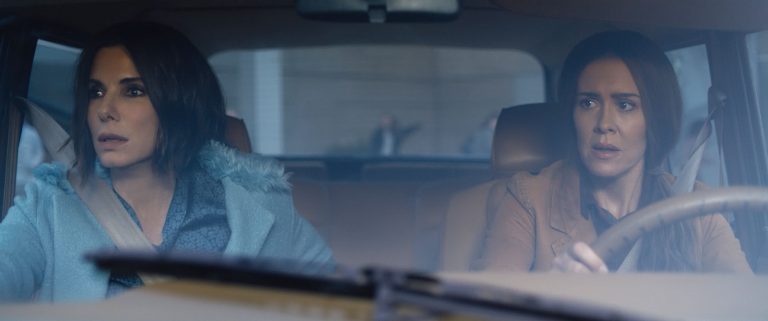
    Reluctant expecting mother Malorie (Sandra Bullock) is taken to a prenatal checkup at a hospital by her plucky and excited sister Jessica (Sarah Paulson). As the sister’s make their way to the hospital, news about an odd phenomenon happening in Europe and Asia dominate the TV and radio. Something is making people commit suicide in droves and it just arrived on Malorie and Jessica’s doorstep.

    There’s a fantastic action sequence in the underrated World War Z where Brad Pitt and his family must escape Philadelphia while a wave of newly zombified corpses floods the streets. Bird Box goes for the same effect here to less successful results. Bier does a great job of adding tension to set pieces, however, some of the choices she makes take away from that tension.

    Sandra Bullock and Sarah Paulson in Bird Box. Courtesy of Netflix.

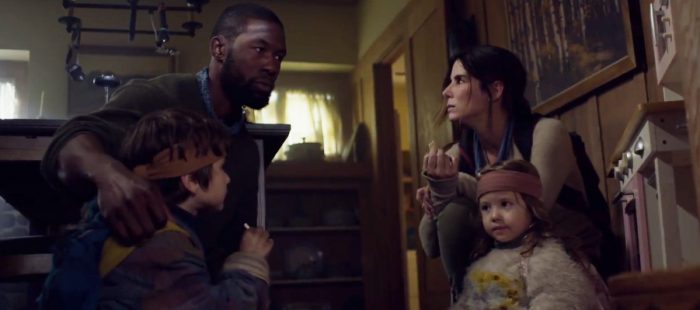
    As they’re trying to escape the chaos unfolding, Jessica sees whatever creature is causing the phenomenon and crashes the car. Malorie is able to escape to a nearby house with the help of Iraq war vet Tom (Moonlight‘s Trevante Rhodes) where she finds a group of people trying to process what just happened.

    In the house, we find conspiracy theorist grocery store employee Charlie (Lil Rey Howery of Get Out fame), an older woman named Sheryl (Jacki Weaver), and the bothersome alcoholic Douglas (John Malkovich). Those character descriptions I gave are all we ever know about these and the other characters in the house including some that we know even less about—Greg (B.D. Wong), Felix (Colson Baker aka Machine Gun Kelly), Lucy (Rosa Salazar).

    The group falls into a routine with Tom taking a leadership role and Douglas continuing to antagonize the group. Eventually, a soft-spoken pregnant young woman named Olympia (Danielle Macdonald—a standout) comes to the door in one of the more memorable sequences in the film. Her character is one of the few that is given some depth and often drives emotion into the story. 

    The house is fortified by covering the windows with newspapers and no one goes outside without a blindfold. Desperate for food, the group leaves the safety of the house in a completely blacked out car to venture to a grocery store. As they make their way, the sounds of the crumbled society echo around them—the issue here is that Bier shows us what is happening outside the car leaving little intrigue.

    For the first two-thirds of the film, the screenplay often falls into cliches of the apocalypse genre—, particularly in the often messy dialogue. What made the novel and A Quiet Place is the scarcity of details and genre. Bird Box, on the other hand, goes too far into the weeds to explain characters and the situation they’re in. Yet somehow, we come away knowing less than we did before.

    Bird Box
    Trevante Rhodes and Sandra Bullock in Bird Box. Courtesy of Netflix.

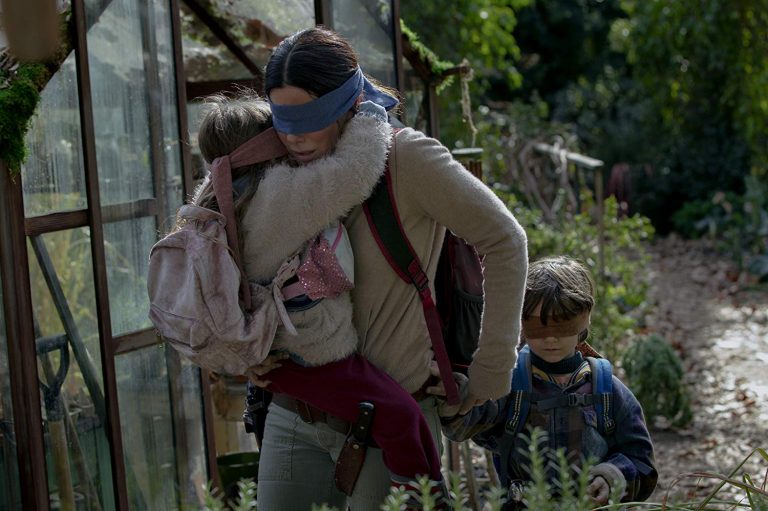
    However, parts of the movie do work. Sprinkled throughout the film are flashforwards to a time further into the crisis in scenes that feel like they’re pulled from A Quiet Place. Malorie along with two young children named simply Girl (Vivien Lyra Blair) and Boy (Julian Edwards) take a boat down a river to some mythic sanctuary where they hope to be safe from the creatures. 

    Here, Bier and Heisserer take a simplistic approach. There’s little to see and little dialogue. These scenes are easily the best and most tense, so when the film completely reverts to these flashforwards for the third act it takes off. There’s something heightened and terrifying about not being able to see and Bird Box translates that feeling onto the screen as Malorie and kids encounter dangers down the river. If anything, the third act redeems the movie as a whole.

    The premise of Bird Box is so promising and its source material is some of the best horror fiction ever written. However, it often feels like both Bier and Heisserer don’t trust the audience enough to deliver a stripped-down story. Maybe that’s because Netflix was looking for a mainstream blockbuster type, which they certainly got—this movie is going to be a crowdpleaser, most likely. 

    The third act is where thematically the film comes together as Malorie struggles with motherhood in the face of a hopeless world. Bullock is solid as always in these scenes, but Rhodes is the steady hand here that elevates the material and delivers the thesis of the movie. It makes me wish this is what Bird Box was the entire time, but that would just be A Quiet Place wouldn’t it?

    Bird Box will be available to stream on Netflix on December 25th. You can get the book here.

    Karl’s rating:

  • ‘Mary Queen of Scots’ review — Saoirse Ronan and Margot Robbie are dueling queens

    ‘Mary Queen of Scots’ review — Saoirse Ronan and Margot Robbie are dueling queens

    Mary Queen of Scots is a solid well-made historical drama with powerhouse performances by Saoirse Ronan and Margot Robbie

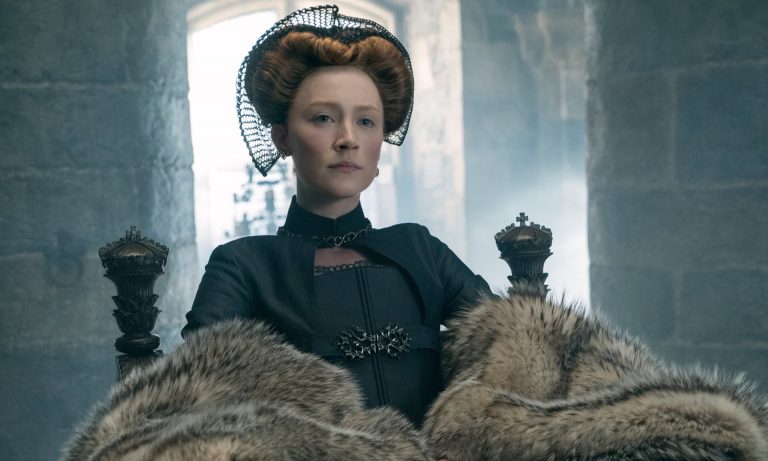
    Mary Queen of Scots is an exemplary example of how a historical drama can feel modern and have modern themes without sacrificing the story its based on. Saoirse Ronan—following up her career-high performance in Lady Bird—is a powerhouse as the titular famed young queen with high ambitions.

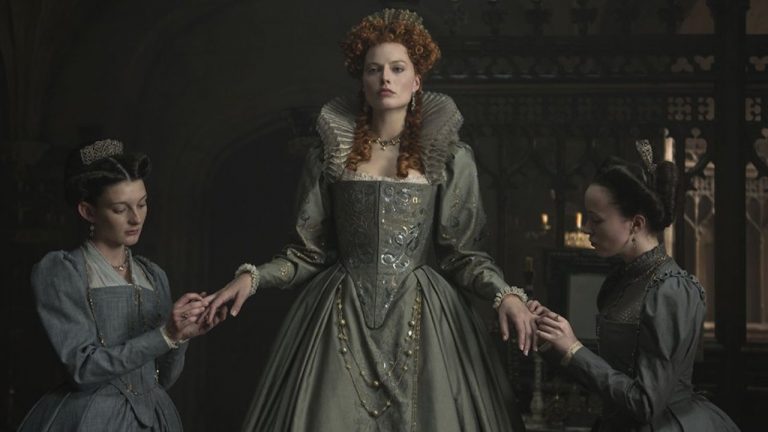
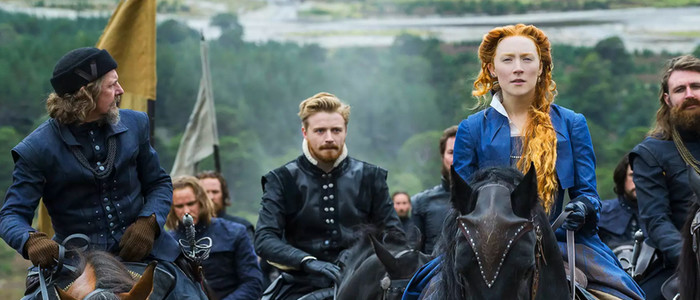
    So much of the power of the film comes from the performances, specifically Ronan and Margot Robbie, who plays Mary’s rival Queen Elizabeth of England, and Jack Lowden—most recently seen in the underrated Calibre or 2017’s Dunkirk—who is a revelation as Mary’s second husband Lord Darnley.

    When Mary Queen of Scots focuses on the interactions between these players it soars. It’s no wonder considering the film’s director Josie Rourke has a decade and a half of experience directing stage plays, which is what the movie often feels like—a stage play.

    It’s also apparent in the striking staging of many of the scenes. The film’s opening introduction to the two queens at the center of the film is so powerful. As Mary—introduced as she’s being walked to her execution—and Elizabeth appear on screen, we watch them walk from behind through a sea of men separating as they pass. It’s marvelous.

    Mary Queen of Scots
    Margot Robbie in Mary Queen of Scots. Courtesy of Focus Features.

    The film begins with Mary returning to Scotland after her husband King Francis II of France dies leaving her widowed. With a claim to both the thrones of Scotland and England, she quickly begins maneuvers to strengthen her position in Scotland and secure her place as the successor to Queen Elizabeth.

    Mary has the council of her illegitimate half-brother James, Earl of Moray (James McArdle) and the Earl of Bothwell (Martin Compston) guiding her through the politics, however, Mary clearly wants to be the one making the decisions. A main theme through the film is the two queens struggling to get men to look past their gender and allow them to rule as if they were kings. Queen Elizabeth even says at one point, “I choose to be a man.”

    As the political intrigue continues, Queen Elizabeth—represented by her ambassador played by Adrian Lester and counseled by her lover Robert Dudley (Joe Alwyn)—slowly begins to become jealous of Mary’s youth, beauty, intelligence, and ability to produce an heir.

    The slow descent that Queen Elizabeth experience is incredibly captured by Robbie who is especially convincing as someone who is developing an inferiority complex to a seemingly invincible rival. On the other hand, Ronan’s steely confidence as Mary—her motivation is sometimes terrifying—is juxtaposed with moments where she is losing a handle of it all, particularly when Lord Darnley comes into the picture.

    The political intrigue is what makes the movie enjoyable to watch like an episode of Game of Thrones. Though, since it has less than two hours to tell an epic of a story House of Cards creator Beau Willimon‘s screenplay sometimes feels overstuffed. It also doesn’t give room for the audience to discover the character’s motivations or inner workings. Rather it dictates them.

    Mary Queen of Scots
    Jack Lowden and Saoirse Ronan in Mary Queen of Scots. Courtesy of Focus Features.

    Still, there are some stunning sequences that are captivating to watch thanks to Rourke’s strong direction and John Mathieson’s naturally lit cinematography. A battle sequence midway through the film—we watch as Mary on a cliff high above her rivals looks down knowing the physically and metaphorically has the higher ground—is chilling as is Mary’s execution scene—spoiler alert for history.

    Though Mary Queen of Scots is obviously a historical drama it feels updated. Many of the characters and background actors are actors of color and one character is even updated to being a queer character—Mary’s confidant David Rizzio (Ismael Cruz Córdova). It proves that there is no excuse to not have diversity in a film.

    Oddly though, Mary Queen of Scots feels less than the sum of its parts. There are rousing scenes mostly thanks to Rourke’s direction and Ronan and Robbie’s powerhouse performances—Lowden, Alwyn, and Lester deserve some credit on this front, as well. And the costume design by Oscar-winner Alexandra Byrne deserves to be in the Oscar conversation. However, the movie sometimes feels cold and disconnected.

    Still, its feminist themes around women trying to succeed in a world stacked against them and dominated by men is particularly poignant and one of its successes. Mary Queen of Scots may not be perfect, but it has so many elements that make it a solid historical drama. The meeting scene between Mary and Elizabeth is worth the price of admission alone.

    Mary Queen of Scots will be released in theaters on December 12th.

    Karl’s rating:


  • ‘Science Fair’ review — A moving and funny doc about the love of science

    ‘Science Fair’ review — A moving and funny doc about the love of science

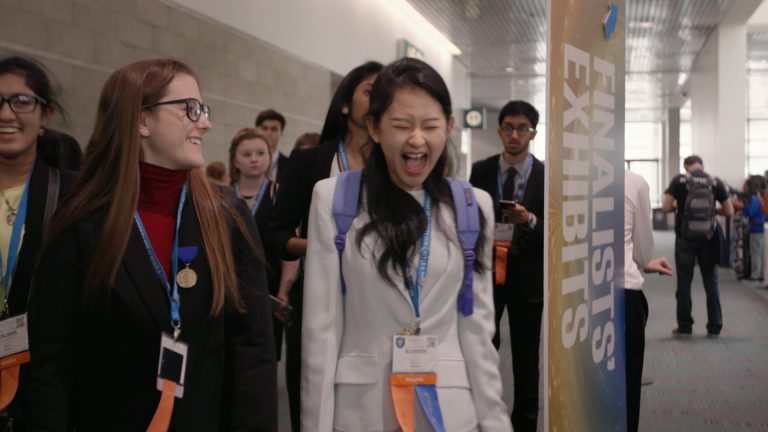
    Science Fair documents the profound and entertaining journey of nine students competing against 1,700 of the world’s brightest young minds

    This is not your typical science fair. Directors Cristina Costantini and Darren Foster’s film about the classic school tradition have young high school students with foam poster board talking about their projects. But instead of papier-mâché volcano’s and powering a light bulb from a potato, these kids are solving real-world problems like curing Zika and preventing cancer—not an exaggeration.

    “Every year my nerve level goes up a little bit. I think when I was younger I didn’t realize the stakes were as high as they are,” one student says during a regional science fair to qualify for the International Science and Engineering Fair (ISEF)—the world’s most prestigious science fair.

    Mind you, the student that said this is no older than 16-years-old. This is how seriously these students—and the nine subjects of the film—take science fairs. And the movie often covers it to comical effect. Science Fair feels like a teen dramedy in the highest praise possible. It’s an incredibly charismatic documentary. 

    However, Science Fair isn’t really about science fairs. It’s about the participants, their circumstances, where they grew up, and how that shapes their motivations. Eventually, after meeting each subject and learning about their journey to get to ISEF, it becomes apparent that this film is more than its surface charms.

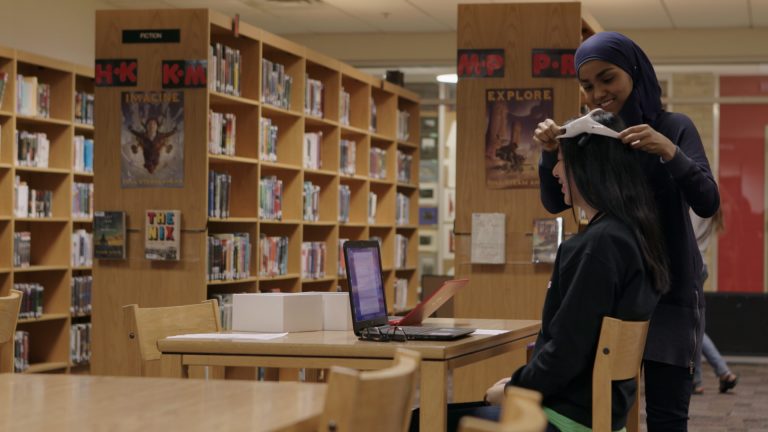
    Kashfia Rahman fitting the brain sensors on test subject in the school library in Science Fair.
    Kashfia Rahman fitting the brain sensors on test subject in the school library in Science Fair.

    The film in Kentucky at a school where students focusing on STEM are treated like football stars and the science fair is their championship game. As we follow the students—mainy the team of Ryan Folz, Harsha Paladugu, and Abraham Riedel-Mishaan, who are creating a stethoscope that can detect heart arrhythmia—there are shots of the affluent suburban neighborhoods that they live in. Large houses and kids with their own cars.

    Then, we cut to a very different place—Brookings, South Dakota. Here, sports are the main focus despite the football team going 0-9 last season. Still, 16-year-old junior Kashfia Rahman persists in her effort to pursue STEM. 

    However, Kashfia’s journey also touches on another theme that Science Fair tackles. She talks about living as a Muslim girl who wears a hijab in a red state small town in the United States.

    She talks about how she feels out of place in a Walmart having to “not look scary” to passersby—it’s heartbreaking. At one point the filmmaker’s go around to other students asking them if they know Kashfia and most of them say no while one says, “we have one of those people here?” Whether he’s referring to her being a successful science champion or her religion isn’t specified.

    While everything about the actual journey to ISEF is charming and often funny, the main through-line across all the subjects of Science Fair is that they all are from underrepresented groups in STEM, many them without the resources to help them pursue their passions.

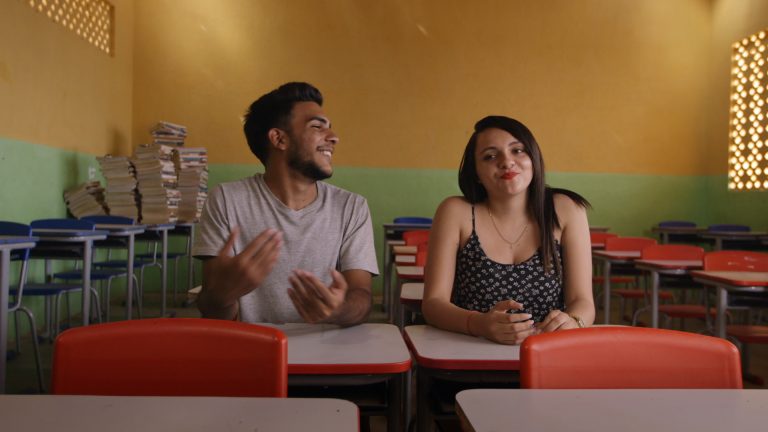
    Myllena Braz De Silva and Gabriel De Moura Martins in Science Fair
    Myllena Braz De Silva and Gabriel De Moura Martins in Science Fair.

    From Shenandoah Junction, West Virginia to Lorch, Germany to Iracema, Brazil, each student has a story and a struggle. At one point, Myllena Braz De Silva‘s—a finalist from Brazil—mother says emotionally, “she really has to get out of here to grow.”

    The balance that Science Fair strikes between its subjects is what makes it so successful. It drives a lot of its messages without directly addressing them. The film uses the juxtaposition between each student to make its commentary, which allows it to be entertaining and crowd-pleasing but profound.

    Science Fair has so much to say without making it feel like its preaching. Jericho, New York science teacher Dr. Serena McCalla, the daughter of Jamaican immigrants, talks about how so many American advances in STEM have come from people who are not natural born citizens. 

    Still, those people aren’t getting the attention they deserve, which is what Science Fair sets out to change through its young subjects. It’s entertaining, funny, and uplifting to watch each young scientist, engineer, and mathematician speak with so much confidence about their passions. Science Fair is so of our time without having to say it. It’s one of the best documentaries of the year.  

    Science Fair is available to buy or rent on Amazon

    Karl’s rating:

  • Every ‘The Haunting of Hill House’ Episode, ranked

    Every ‘The Haunting of Hill House’ Episode, ranked

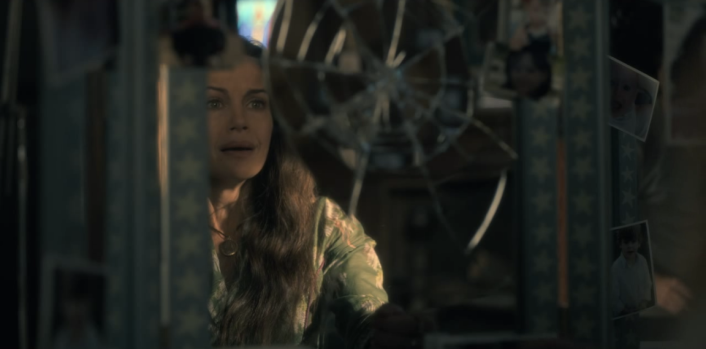
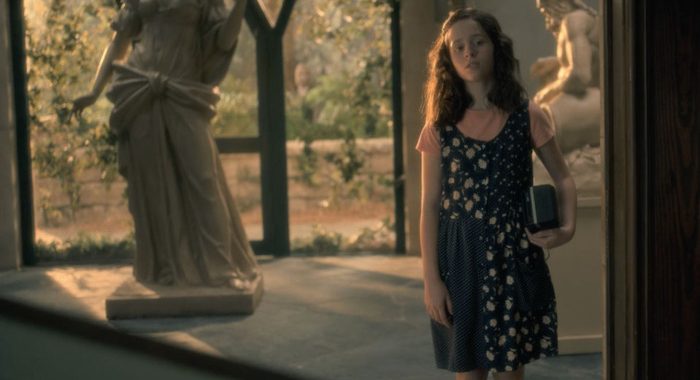
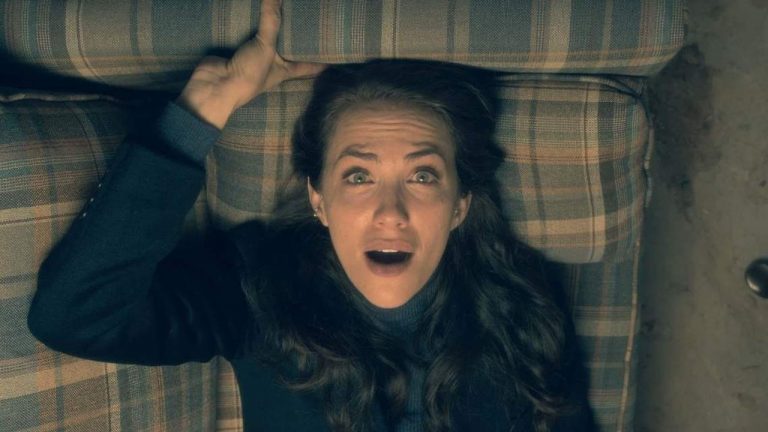
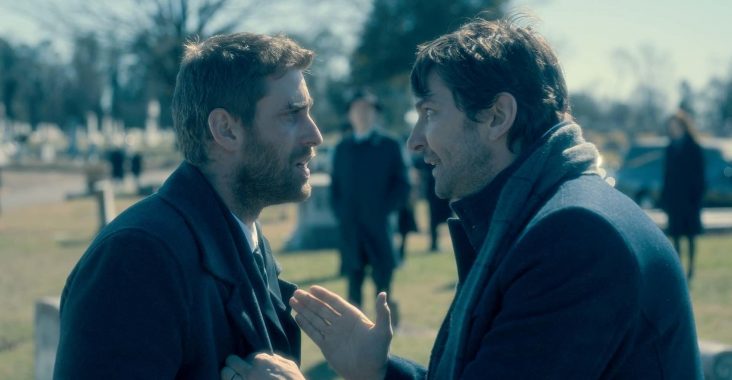
    The Haunting of Hill House is a near-perfect miniseries. Here’s how we would rank each episode of the first season. 

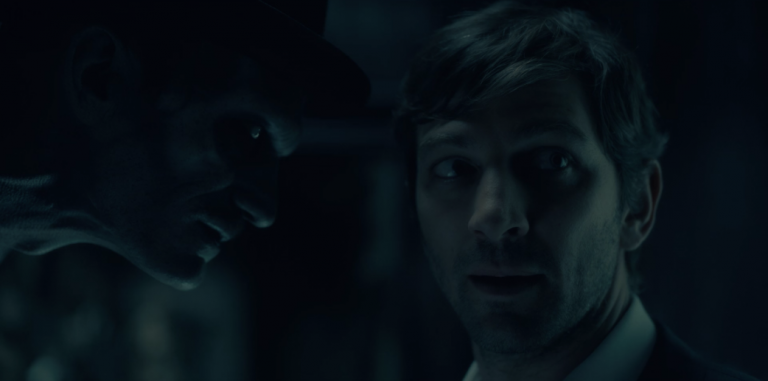
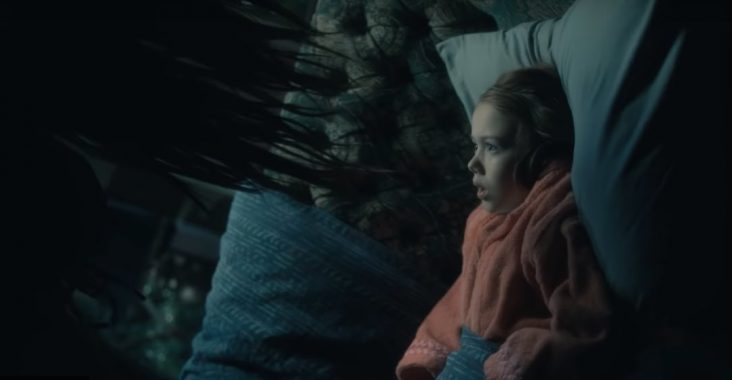
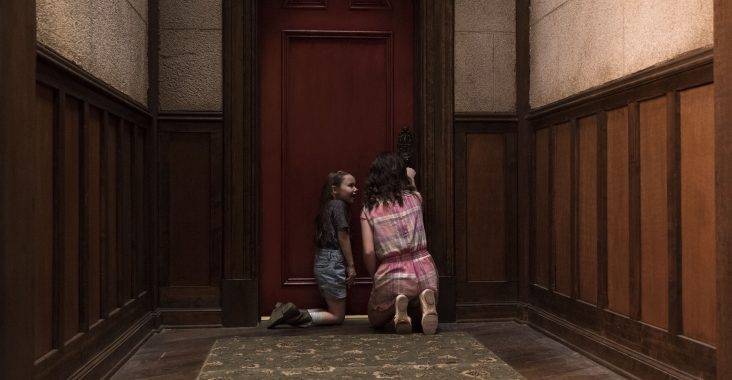
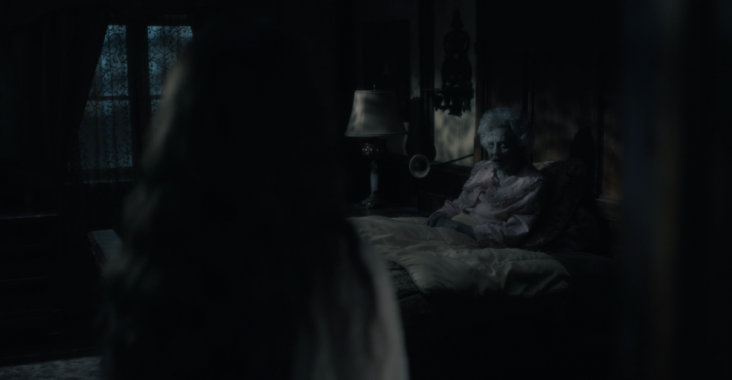
    The Haunting of Hill House is yet another triumph in horror for director Mike Flanagan who in recent years has delivered movies like supernatural horror Oculus, home invasion thriller Hush, and the second movie in the Ouija franchise. 

    With the series, he delves into the lives of the Craine family, who in the 90s lived in the infamous Hill House, which was haunted and eventually claimed the life of their mother. 

    As they navigate the trauma of their childhood, another trauma comes forcing them to come to terms with exactly what happened in the house. Every episode feels like a short film that balances horror and a family drama perfectly.

    The Haunting of Hill House takes full advantage of its miniseries form. It has a solid driving plot that is well-paced throughout the series, but it uses the extra time it has over the episodes to dig deep into its themes and characters without feeling like it’s dragging. It truly blurs the line between movie and series. Here’s how we would rank each episode of the first season:

    “The Twin Thing” (Episode 4)

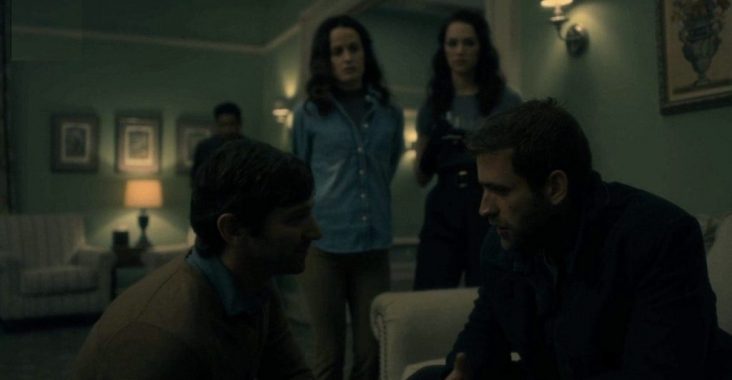
    the twin thing the haunting of hill house

    For the first five episodes of The Haunting of Hill House, each of the five Craine siblings has an episode dedicated to their storyline. With Luke’s, more than any other, it feels disconnected from the main storyline. His drug addiction feels litigated within the first three episode and while there are some important plot points, thematically and tonally it feels a bit off from the rest of the series to that point. 


    ADVERTISEMENT


    “Witness Marks” (Episode 8)

    witness marks the haunting of hill house

    After the powerhouse sixth episode and profoundly sad seventh episode—we’ll mention both later on—”Witness Marks” feels like a step back. It feels like an episode that is meant to connect act two of the season to the final act, which makes it less exciting than other episodes. It still deals with some interesting character dynamics and has the best scare of the entire season, but it lacks the emotional strength and oppressive atmosphere of the other episodes.

    “Open Casket” (Episode 2)

    open casket the haunting of hill house

    When kids are exposed to death at a young age there’s a struggle to help them process and understand it. The Haunting of Hill House portrays that struggle to process it beautifully with “Open Casket.” It also begins to work through the show’s theme of grief. However, it doesn’t delve into the theme as profoundly as other episodes, which is what prevents it from being truly great.


    ADVERTISEMENT


    “Touch” (Episode 3)

    Of the episodes that focus on one of the Craine kids, “Touch” has the most successful B-plot as Theo deals with a case as a child psychologist. Both that plot and the main plot add a layer of how kids compartmentalize trauma as a theme, which elevates the entire episode as a whole. Plus, it successfully continues to explore the theme grief that the first few episodes touch on. 

    “Eulogy” (Episode 7)

    eulogy the haunting of hill house

    “Eulogy” probably has the least horror of all the episodes of The Haunting at Hill House. And that’s because the plot lends to that lack of horror. The episode is an opportunity for Hugh to get some much-needed redemption as his character is framed as the villain for much of the first few episodes. And the form that the series brings that about it beautiful and heartbreaking. Plus, Mr. Dudley’s monologue is a high point for the series as a whole.  

    💌 Sign up for our weekly email newsletter with movie recommendations available to stream.


    ADVERTISEMENT


    “Silence Lay Steadily” (Episode 10)

    The season finale of The Haunting at Hill House is an encapsulation of everything that is good about the series. “Silence Lay Steadily” has effective tension-based horror, strong character interactions and growth, and a deep exploration of its themes of grief, parenting, and trauma. It is a satisfying finale that I wish had more of an epilogue, but overall its a great wrap-up to a great series. 

    “The Bent-Neck Lady” (Episode 5)

    the bent-neck lady the haunting of hill house

    What makes The Haunting of Hill House so successful is its balance of horror with a family drama, specifically about grief. And that’s what makes episode five of the season one of the best. Not only does it propel the main narrative forward and offer genuinely chilling scares. It delves deeper into the theme of grief and adds a layer of dealing with mental illness and how family can offer a safe space from the real-life horror of it. 


    ADVERTISEMENT


    “Steven Sees A Ghost” (Episode 1)

    steven sees a ghost the haunting of hill house

    The first episode of The Haunting of Hill House sets up the tone and mood for the entire series without feeling like it’s bogged down by exposition. The family dynamics, both past and present, are outlined clearly and the central mystery of it all is setup. Plus, the horror in it is atmospheric and tense and genuinely terrifying. It’s a well-balanced and nearly flawless pilot.

    “Screaming Meemies” (Episode 9)

    screaming meemies the haunting of hill house

    Olivia is at the center of the mystery of The Haunting of Hill House and in “Screaming Meemies” we finally get to see the events of the house from her perspective. It’s exciting to finally learn exactly what happened “that night,” but the heartbreaking truth of it (and Carla Gugino’s Emmy-worthy performance) make this episode more than just horror. It shows the disintegration of a strong woman and how her husband failed her. 

    “Two Storms” (Episode 6)

    two storms the haunting of hill house

    “Two Storms” is not only the best episode of The Haunting of Hill House, it may be one of the best episodes for drama ever made. Told in what is essentially four single takes spanning both the past and the present. It’s a technical marvel and the staging is impressive, but what makes this episode so successful is that it is so rooted in its characters and allows them to just litigate the past.

    The episode doesn’t further the plot, but it furthers the characters and becomes a turning point for the season. Not to mention the pure tension from both the horror and family drama that makes it impossible to turn from the screen. “Two Storms” is where The Haunting of Hill House goes from good to great. 


    How would you rank the episodes of The Haunting of Hill House? What was your favorite moment of the season?


    ADVERTISEMENT


    More movies, less problems


    Hey! I’m Karl. You can find me on Twitter and Letterboxd. I’m also a Tomatometer-approved critic.

    💌 Sign up for our weekly email newsletter with movie recommendations available to stream.


    ADVERTISEMENT


    💌 Sign up for our weekly email newsletter with movie recommendations available to stream.


    ADVERTISEMENT


  • ‘Free Solo’ review — Rock climbing and relationships without a rope

    ‘Free Solo’ review — Rock climbing and relationships without a rope

    Free Solo follows climber Alex Honnold as he prepares mentally and physically to climb a 3,000-foot rock wall… without a rope.

    Free Solo is about obsession. The subject at the center of the film, Alex Honnold, is obsessed with free soloing, a sport where a climber traverses a mountain without any ropes or harnesses. Just their hands and feet on tiny divets and grooves in the rock prevent them from falling to their death.

    When Alex speaks about free soloing he talks about it being scary. However, I don’t think he refers to fear the same way that normal people do. In a bit of a humorous segment, he goes to a doctor who gives him an MRI that reveals that his amygdala needs extreme circumstances to register fear.

    That part of his character, coupled with his obsession and inability to process emotion, make Free Solo a riveting character study. Husband and wife team Elizabeth Chai Vasarhelyi and Jimmy Chin, who are friends of Alex, capture his mental journey as much as his physical one as he prepares for his hardest—and most dangerous—free soloing project yet.

    Alex is bent on conquering El Capitan, a 3,000-foot tall granite rock wall in Yosemite National Park. Through interviews with the film crew chronicling his journey, a history lesson in the dangers of soloing, and a storyline following Alex’s new relationship with Sanni McCandless—she met Alex at one of his book signings—we see exactly how his mind works and how his choice of career affects the people around him.

    Free Solo
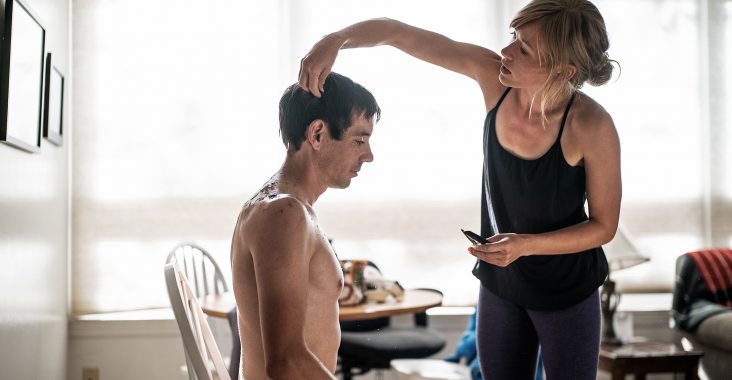
    Alex Honnold and Sanni McCandless in Free Solo.

    Free Solo didn’t have as much impact on me initially. For a movie about someone who is embarking on what most of us would define as a suicide mission, there wasn’t as much tension as I thought there would be. It’s difficult to translate danger when you know the outcome, but I was hoping that there would be more stakes.

    But in the coming days, I found myself thinking about the movie. Not about the rock climbing—though all those scenes are shot with vertigo-inducing wide shots and impressive close-ups of every precariously small foothold and grip. Instead, I found myself thinking about Alex—his motivations, the inner-workings of his mind, and his relationship with Sanni.

    Free Solo is a character study through and through. We get to know Alex and why he’s comfortable taking the risk of dying doing what he loves over a girl that he may or may not love—his feelings toward Sanni are an enigma throughout the film.

    Does he love her? Does he even understand love? Why does she stay in a relationship where she isn’t a factor in decisions that involve whether he lives or dies? That is the driving conflict behind Free Solo even more than whether or not he’ll conquer El Capitan.

    Free Solo
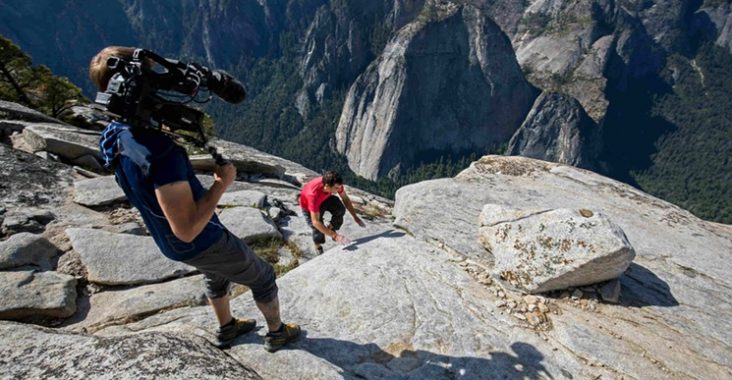
    Alex Honnold in Free Solo.

    What also adds to that accomplishment is that Free Solo contests its existence as a film. The filmmakers creating the project struggle with the possibility that they could be capturing the demise of their friend. Even Alex struggles with the reason he’s having a film crew following him.

    Still, what you come to Free Solo for is the rock climbing. And rock climbing there is. The film ends with an incredibly captured climbing sequence that is rooted in character. Before that, in another sequence, Alex explains in detail what makes soloing El Capitan so difficult and runs through with technical precision exactly what you have to do at each section, put bluntly, to not die.

    For Alex, soloing just makes sense. If anything, it confuses him why there aren’t more people tempting fate. He says at one point that you can die any day, so why not do something like soloing. From Sanni’s perspective, it’s because you should maximize your lifespan to spend it with people that you love. At the end of the movie, we don’t know if Alex understands that. We can only hope.

    Free Solo is available to buy or rent on Amazon

    Karl’s rating:

  • ‘Wildlife’ review — Paul Dano’s directoral debut is a career high for Carey Mulligan

    ‘Wildlife’ review — Paul Dano’s directoral debut is a career high for Carey Mulligan

    Paul Dano’s directorial debut Wildlife is a quiet but powerful tale of self-destruction with a masterful performance by Carey Mulligan.

    Wildlife has all the workings of a classic kitchen sink drama. However, instead of the poor industrial towns of England, actor Paul Dano’s directorial debut moves the setting to 1960s Montana and follows a working-class family as they struggle through economic hardships.

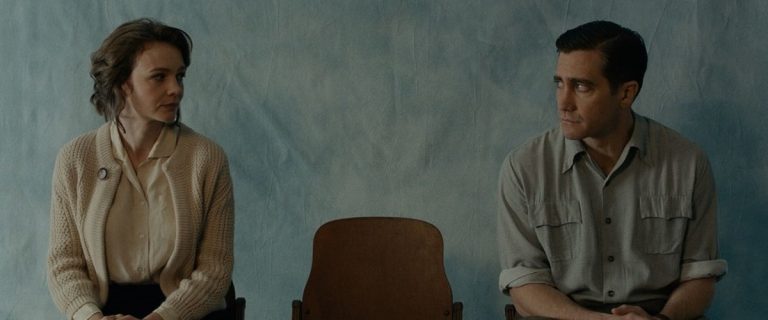
    However, Wildlife subverts the expectation of having a disenfranchised “angry young man” at the center of it. There is a man that fits that description in the story. Jake Gyllenhaal plays the patriarch of the family Jerry Brinson, a greenkeeper at a local country club who is fired because, according to him, he is “just too well liked.”

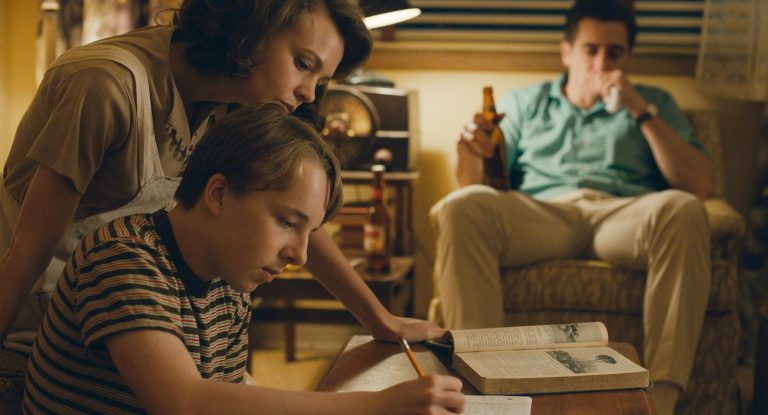
    But he isn’t the center of the story. That would be his wife Jeanette (Carey Mulligan), a classic 60s housewife who is denied her full potential because that’s not what is in society’s expectations of her, and their 14-year-old son Joe (Ed Oxenbould), who serves as our point-of-view for the film.

    After losing his job, Jerry’s pride is clearly wounded. He came to Montana looking for quick success, but his dreams are quickly dashed away. That’s mostly because he thinks he is entitled to his dreams. “I thought it was that easy,” he says. 

    Instead of demeaning himself by taking his old job back after they offer it to him, or any job in the town for that matter, he takes a job battling wildfires that are threatening the Canadian border. It’s dangerous and low-paying work, much to Jeanette’s dismay, but he’d rather face that than his failure. 

    wildlife
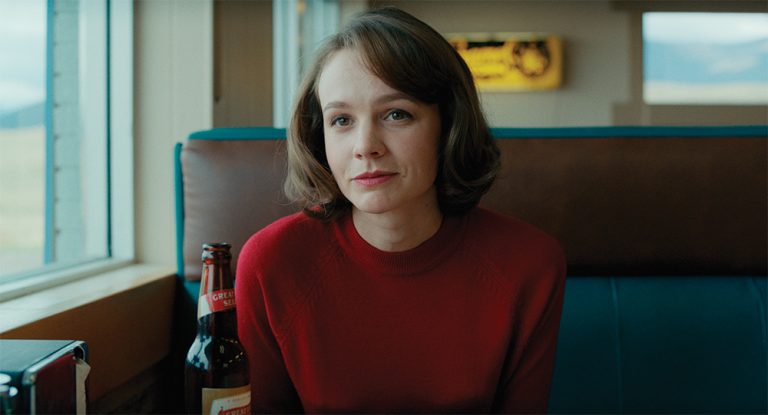
    Carey Mulligan appears in Wildlife by Paul Dano, an official selection of the U.S. Dramatic Competition at the 2018 Sundance Film Festival. Courtesy of Sundance Institute.

    From there, we watch as Jeanette struggles through life horrified that her husband chose to nurse his pride rather than support his family. But this isn’t a story about a woman sulking and yearning after her brave husband away protecting them from the fires.

    No, the screenplay, written by Dano and actress-writer Zoe Kazan (from last year’s The Big Sick), paint Jeanette as a real and complex woman who is abandoned by her husband without discussion or conversation. All the while, Joe is in the periphery absorbing what is happening—he’s not always understanding it, but always seeing it. 

    The screenplay is quite a marvel and Dano, adept in his direction, knows how to extract the meaning out of every beat and line. Even the most unassuming lines have an impact. One of my favorites come after Jeanette goes to the local YMCA looking for a job, but being turned away after the secretary job she was applying for was no longer available. She briefly walks out of frame away from the woman working at the front desk, then comes back and says, “do you have any work for a man?” 

    As one of my favorite movies of the year Annihilation puts forward, one destroys themselves so that they can become something new. Jeanette wears new clothes, drinks more heavily, and begins cozying herself up to a wealthy man named Warren (Bill Camp) all in front of her son. 

    wildlife
    Carey Mulligan, Ed Oxenbould, and Jake Gyllenhaal in Paul Dano’s directorial debut Wildlife.

    In the eyes of another director or writing pair, Jeanette might have been the villain. But in Wildlife, she isn’t necessarily the hero. She’s just a human dealing with life. That’s a lesson that Joe quickly has to learn as both of his parents deal with their troubles in drastic ways. 

    Oxenbould has to tackle the challenging job of being an observer to the action without reacting to it in any over-the-top way and succeeds. Gyllenhaal does great work with what he has, as well—he’s not in the film as much as you’d expect.

    However, this is Mulligan’s film. She tackles the web of emotions that Jeanette has to navigate with empathy and makes you understand her even when what she does doesn’t make sense. It’s an impressive triumph of a performance.

    There are a few films that are made by their final shot and Wildlife is one of them. It’s no wonder that it is splashed on every poster for the film. And it emphasizes what makes the movie great. Dano relishes in the silences as much as he does in the dialogue. They both hold equal power.

    In the final seconds after the last line of dialogue and we’re just looking at the characters, you can trace how that self-destruction has changed each of them, for better or worse.

    Wildlife is playing in theaters in limited release.

    Karl’s rating:

  • 2019 Oscar Predictions: Best Supporting Actor

    2019 Oscar Predictions: Best Supporting Actor

    Best Supporting Actor at the 2019 Oscars is stacked with industry veterans and newcomers looking for their shot at Oscar glory.

    Best Supporting Actor seems to be the most locked acting categories as Mahershala Ali has swept every televised acting prize including the Golden Globe, Screen Actors Guild, and Critics Choice. However, I think there is room for an upset.

    Here are my current rankings:

    1. Mahershala Ali, Green Book
    2. Richard E. Grant, Can You Ever Forgive Me?
    3. Sam Elliott, A Star is Born
    4. Adam Driver, BlacKkKlansman
    5. Sam Rockwell, Vice

    Check out all our 2019 Oscar Predictions: Best Picture | Best Actor | Best ActressBest Supporting Actor | Best Supporting Actress

    Even though Green Book has been marred by controversy, the one person involved with the film that seems to have gotten out unscathed is Ali. After waltzing through the precursors, he is the clear favorite to win even though he won just two years ago for Moonlight in this category. Plus, it’s a place where voters who liked Green Book can honor it without any of the people involved in the controversies.

    However, I think Ali winning so recently is going to hurt his chances more than people think. Whether people   don’t vote for him because of it or they vote for someone else thinking he has this on lock, there might be a block of voters who go elsewhere.

    Best Supporting Actor
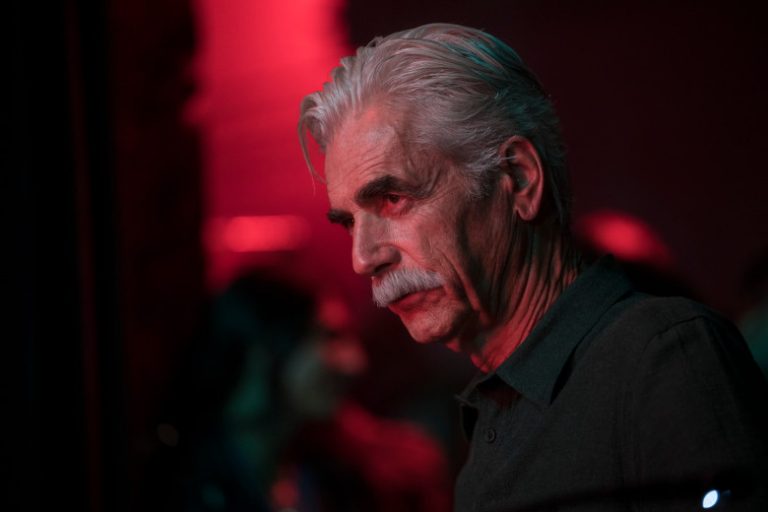
    Legendary veteran actor Sam Elliott got his first acting nomination in Best Supporting Actor for A Star is Born.

    The smart money would be on Sam Elliott for his small, but impactful performance in A Star is Born. After snubs in Best Director and Best Film Editing, the film has been on the ropes for its Best Picture chances — it could go home with just one award for Best Original Song. Voters looking for an above-the-line place to honor could easily go to Elliott. He’s an industry legend on his first nomination and a win could be seen as a lifetime achievement award.

    Sam Rockwell’s performance as George W. Bush is an impressive imitation in Viceand Adam Driver is BlacKkKlansman’s sole acting nomination. However, my money for an upset is on Richard E. Grant for Can You Every Forgive Me?.

    He swept the critics awards and has launched a homegrown social media campaign that will charm the socks off just about anyone. Although his movie only received two other nominations — Best Actress for Melissa McCarthy and Best Adapted Screenplay — I could see there being passionate support for his performance.

    He has the same industry veteran narrative as Elliott and has a good chance at upsetting Ali at the BAFTAs. If he does, the Oscar could be next.

  • ‘Shoplifters’ review — Touching, funny, and hopeful family drama

    ‘Shoplifters’ review — Touching, funny, and hopeful family drama

    Shoplifters is heartbreaking but often funny and hopeful look at a family of thieves relying on each other to make it day to day.

    Shoplifters is one of those rare movies that you cherish what you don’t know about the characters. Not because what’s beneath the surface will change your opinion of them. It’s because you know when that truth comes out that everything will change and you’d much rather spend more time with them in blissful ignorance.

    That’s what is incredible about the Palme d’Or-winning drama by the renowned Japanese director Hirokazu Kore-eda. We know that there are things that the characters do that we should disavow, but Kore-eda achieves the same effect that Wes Anderson’s The Royal Tenenbaums does. For all the bad the characters do, we can’t help but want to hang out with them for all the good we see in them. 

    In the film, we follow a mismatched familial unit living in a small house in the middle of Tokyo that could barely fit one person, let alone six. There are husband and wife Osamu (Lily Franky) and Nobuyo (standout Sakura Ando), both part-time workers at low wage jobs that force them to rely on their elderly grandmother Hatsue’s (Kirin Kiki is fantastic) monthly pension to live. 

    That’s also the reason that Osamu along with his son Shoto (Kairi Jō) bond by shoplifting. The film even opens with them orchestrating a well-choreographed slick robbery of a grocery store without anyone in the store being the wiser. 

    However, everyone in the family is guilty of some less-than-legal methods for making money. Nobuyo snatches trinkets—a gold tie pin, for example—forgotten in clothes that run through the laundromat she works at. Hatsue has an affinity for pachinko slot machines, even though she doesn’t always use her own money to play. Aki (Mayu Matsuoka), a teen just barely old enough for college works in a porn cafe of sorts where she masturbates for anonymous patrons hidden behind a two-way mirror. 

    It’s not surprising considering their current financial position that the family isn’t happy when Osamu brings home a five-year-old girl names Yuri (Miyu Sasaki) he found alone in the cold. He says he’s only going to take her in for a few days, but when they find signs of abuse, they know they can’t let her go home and informally adopt her. 

    Shoplifters
    The cast of Shoplifters.

    The first half of the movie plays out like a toned-down episode of Shameless. Though some of their methods for surviving or reprehensible, it’s so satisfying to watch this odd family unit interact in often funny, but also sweet exchanges. At one point, as Hatsue lovingly rubs ointment over one of Yuri’s many scars, Nobuyo tells her that even though you still see the scar the pain is gone. 

    Balancing what could have easily been too far into slapstick or overly sentimental, Kore-eda allows the love between the family members to shine at the center of Shoplifters. Though the first half can feel like it’s meandering, it’s all in service of setting up the family unit as a believable one so that when the plot hits do come they land with more impact—and that they do. 

    Eventually, after nearly two weeks, Yuri’s parents report her missing, which only strengthens the family’s urge to protect her—they cut her hair and buy her a new wardrobe to hide her from the police and media. And they fall into a routine. Shoto begins teaching Yuri, who they rename Lin, his shoplifting techniques, Osamu and Nobuyo rekindle their romance, and Aki meets an intriguing client. 

    All the moments that make this film great are quiet but so powerful. You realize that these are all people marginalized and discarded in some way that have come together to build each other back up again. However, what makes Shoplifters one of the best films of the year is the emotional fallout from the high of the first half. Like all good things, the happiness and joy must come to an end. 

    Throughout the movie, truths about the characters are unpacked until we have to re-contextualize everything we know about them and their relationships. But instead of making it a bombastic conclusion—it certainly edges on that—Shoplifters turns to its characters for the emotional wrap-up. 

    The members of the family are flung away from each other, but we’re reminded of what connected them in the first place—love. It’s not always spoken, but it’s always shown. In one of the most striking scenes in the movie—and maybe of the year—Osamu chases after a bus that Shoto is on. Shoto doesn’t turn to look at him until he’s out of view and then mouths the word “dad.” Shoplifters doesn’t need more than that to make its point and make you sob. It’s funny and emotional, uplifting and heartbreaking, it’s one of the best movies of the year. 

    Shoplifters is in theaters nationwide on November 23rd.

    Karl’s rating:

  • ‘Welcome Home’ review — This erotic thriller is unsatisfying

    ‘Welcome Home’ review — This erotic thriller is unsatisfying

    Welcome Home is nothing more than a kitschy thriller that makes for a perfect popcorn-fueled late-night hate-watch.

    Welcome Home is fun enough to watch, but for all the wrong reasons. The level of the melodrama in this erotic thriller makes it objectively bad, but it edges on so bad it’s good mostly thanks to the odd directing choices — the constant use of violins screeching when something dramatic happens. Sudden hazy flashbacks are stitched into moments of contemplation. Sweeping shots of the Italian countryside with no discernable reason, not even as an establishing shot. There are a lot of showers and a lot of arguments and a lot of crying. Yes, it’s as bad as you imagine.

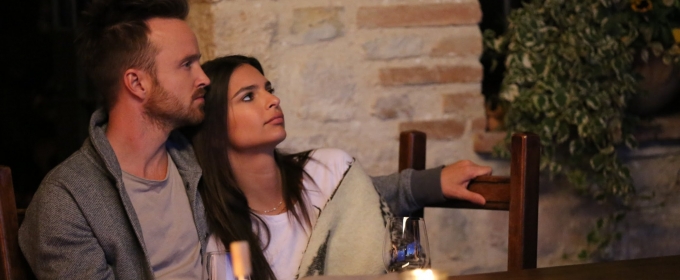
    Welcome Home follows an American couple, Bryan (Aaron Paul) and Cassie (Emily Ratajowski), as they escape to the Italian countryside in an attempt to repair their ailing relationship:

    “This is broken.”

    “No, this broke when you let another guy’s dick inside of you.”

    That is an actual exchange in this movie. Of course, not everything in this retreat goes right. While on a run, Cassie is haunted by very sudden and dramatically lit images of her infidelity, which causes her to dramatically trip on a log. Injured and far from the beautiful Italian home they rented off the website “Welcome Home,” Cassie is helped by a mysterious stranger named Frederico (Riccardo Scamarcio of John Wick: Chapter Two fame) who drives her back home.

    Welcome Home
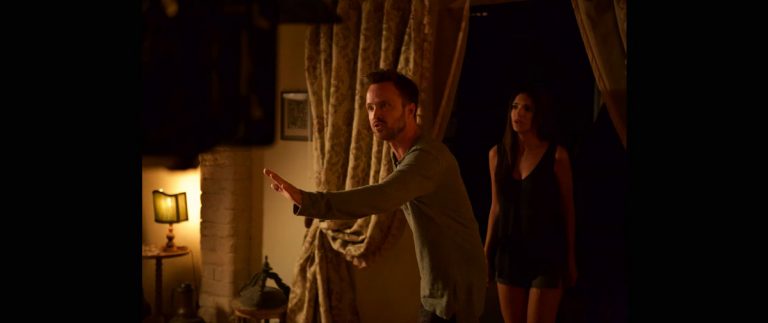
    Aaron Paul and Emily Ratajkowski in Welcome Home.

    Bryan is instantly suspicious of him, especially considering the reason that the couple is in Italy in the first place. However, Cassie is welcoming to the warmness of the stranger. Of course, Frederico’s intentions aren’t exactly neighborly. It’s quickly revealed that he has cameras set up all throughout the house and has been watching the couple’s every move. Slowly, he manipulates them through various malicious (and sexy) tactics that make the movie feel like a slightly elevated Lifetime movie.

    It all comes to a head when Frederico’s intentions become clear, which culminates in a predictable but somewhat entertaining and hilarious ending that involves sex tapes, dramatic moaning, and a fire stoker. I’ll leave it to you to guess where each comes into play.

    The movie is surprisingly well-stitched together. The plot moves well across its breezy 97-minute running time. The real problem is the content. It feels like a thriller pulled straight out of the 2000s when the genre devolved from its golden age with entries like Basic Instinct, Fatal Attraction, and Double Jeopardy. Unlike any of those movies, it’s hard to find any real tension in Welcome Home. It’s a plot we’ve seen before told in an overly self-important way.  

    Welcome Home benefits from having some star power in its lead roles, but its thin script, overzealous direction, and empty plot leave it as nothing more than a kitschy thriller that makes for a perfect popcorn-fueled late-night hate-watch.

    Welcome Home is in theaters and on demand on November 16th.