
Karl Delossantos

  • ‘The Guilty’ review — A kidnapping unfolds in real time in Demark’s Oscar entry

    ‘The Guilty’ review — A kidnapping unfolds in real time in Demark’s Oscar entry

    The Guilty is a somewhat predictable, but taut single-location thriller of a kidnapping case unfolding in real time.

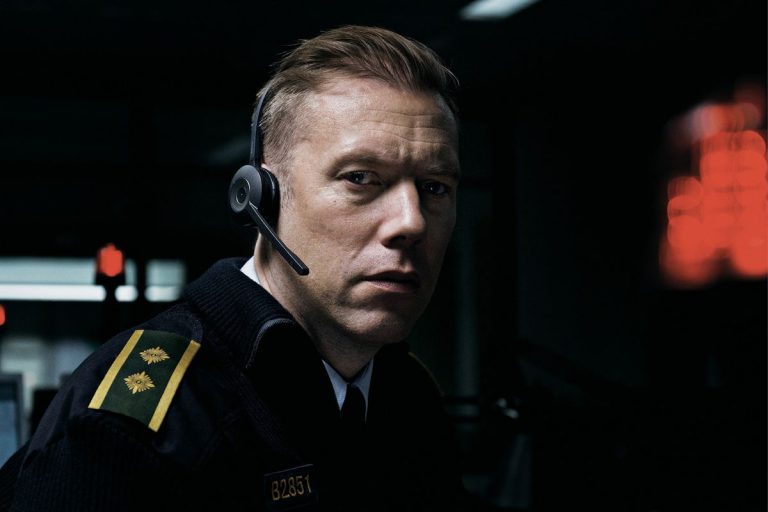
    The Guilty, Denmark’s entry for Best Foreign Language Film at the Oscars, is a taut thriller that plays out like an episode of Law & Order: SVU. Told in real time, the film follows Asger (Jakob Cedergren), a police officer demoted to 911 dispatcher while he awaits trial, as he tries to save a kidnapped woman named Iben. The film never leaves Asger’s face as he makes various calls—to other police officer’s, the victim’s family members, his partner—in an attempt to track down and save Iben. The entire story, which is at points predictable, unfolds completely over the phone. We never see any characters involved except for Asger. However, first-time director Gustav Möller is able to overcome the cookie cutter plot to reveal some hard truths about law enforcement. 

    What The Guilty presupposes is that the police are flawed, make mistakes, and, at their worst, do more harm than good—even when they have the best intentions, which is not a guarantee. While Asger begins as an officer with some clear baggage—it’s easy to see that he is resentful that he has to work as a dispatcher—he is slowly transformed through the 88-minutes that we follow him. 

    The end of his shift is filled with the standard—muggings, tripped out teens—until he receives a call from a woman named Iben (voiced by Jessica Dinnage). She speaks to Asger as though she’s talking to her child. He quickly deduces that she has been taken by someone and is trying to seek out help, but can’t since he’s right next to her while she’s on the phone. Asger’s instincts automatically kick in as he guides her through getting more information without tipping off her kidnapper. 
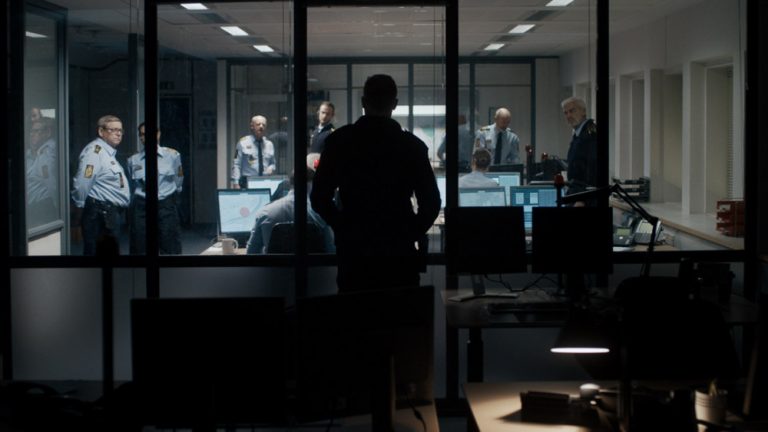
    The Guilty
    Courtesy of Sundance Institute

    Soon, she is disconnected, and he must piece together who she is, where she’s being taken, and who has taken her. However, his colleagues—other dispatchers and patrol units—aren’t as interested. At one point, when he calls to have units look out for the suspect’s van another dispatcher responds, “but why?” In another scene, he asks his former partner to go to a suspects house and look for something that could give them a hint to where the suspect is taking Iben, to which his partner rebukes, “she will be dead by the time I’m done.”

    It’s that resistance that Asger faces while he tries to save Iben. The general lack of care in the police department. However, he has a selfish reason for wanting to be more involved at the beginning of the mystery—he misses being a cop. However, instead of doing the groundwork himself, he has to do it over the phone and rely on other people to do it for him. By only hearing the action going on the tension is ratcheted up. In painfully long takes we wait for some piece of information or the fate of someone to be revealed. It’s that kind of tension that keeps the movie compelling, even when you can call the story’s shots. 

    Single-location movies are hard to pull off, but when they’re done well—Karyn Kusama’s The Invitation, for example—they can be really effective. The Guilty has its moments, particularly during Asger’s calls with Iben and her kids, who eventually fold into the story. However, the handling of its themes, particularly of morality, is sloppy and introduced too late into the story to make any real impact in the end. However, even if the plot is something we’ve seen in countless police procedurals, The Guilty has some really interesting choices that make it a solid debut for Möller. 

    The Guilty is available to buy or rent on Amazon

    Karl’s rating:

  • ‘Widows’ review — Viola Davis leads the best movie ensemble of the year

    ‘Widows’ review — Viola Davis leads the best movie ensemble of the year

    Widows is successfully a thrilling heist movie, emotional character study, and dissection of our current social climate.

    Widows is based on the 1983 British television show of the same name, but you wouldn’t know that watching Oscar-winning director Steve McQueen’s adaptation from a screenplay written by Gone Girl scribe Gillian Flynn. The film, which changes the location from London to Chicago, is distinctly American.

    The themes ranging from corruption to police shootings to race to the wealth gap are covered with poignancy and impact. However, like all of McQueen’s films, including the Oscar-winning 12 Years a SlaveWidows is also a character study. It’s all packaged up neatly in a twisting heist thriller that makes it one of the most compelling, and best, films of the year.

    Widows begins with Veronica (Viola Davis fresh off her Oscar win for Fences) and Harry Rawlings (Liam Neeson) waking up in their sun-drenched Chicago high-rise apartment. Smash cut to four masked men stumbling into a van. One of them is injured and one of them is revealed to be Harry. After a brilliantly captured car chase, the men are brought down in a hail of bullets before their van ultimately explodes.

    However, Veronica doesn’t have much time to grieve as Jamal Manning (Brian Tyree Henry), a crime boss turned alderman-candidate, with his brother Jatemme (Oscar-nominee Daniel Kaluuya of Get Out fame), who acts as his muscle, come to Veronica demanding the $2 million that her husband stole from them.

    Henry and Kaluuya both give menacing performances. Henry is a sneering devil who is calm and composed until he’s not. Kaluuya is similarly, and eerily, quiet, but is unpredictable in his explosive actions, like in Get Out so much of his performance happens just in his face.

    Veronica, who is eventually led to her late husband’s journal by their driver Bash (Garret Dillahunt), recruits the other widows of Harry’s deceased crew to help her finish the job he outlined in his journal to clear his debts and start a new life for herself.

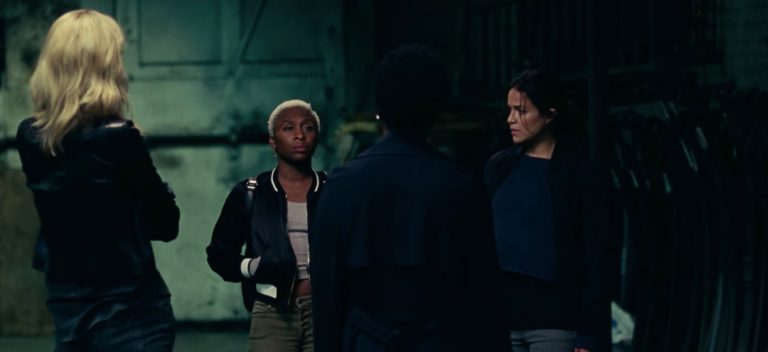
    The other widows, Alice (Elizabeth Debicki) and Linda (Michelle Rodriguez), also have reasons to pull off the heist. Linda lost her store after her husband’s passing and is having trouble supporting her kids with her mother-in-law breathing down her neck. Alice, also looking for money, turns to escorting at her mother’s (Jacki Weaver in a great one-scene performance) suggestion and is eager to get out of it.

    Widows
    Elizabeth Debici, Cynthia Erivo, and Michelle Rodriguez in Widows.

    However, their planning and execution of the heist is not the center of the story. It’s thrilling and suspenseful, especially when Hans Zimmer’s beaming score is supporting it, but it’s not the main propulsion of the story. Instead, it’s the widows themselves that are the narrative and emotional drive as we watch them navigate life after losing their husbands and finding strength in a society that undercuts them as women.

    All the while, in the background, a story of political intrigue plays out as the contentious election between Manning and Jack Mulligan (Colin Farrell) the son of the current alderman of the 18th Ward (Robert Duvall). There, we also confront McQueen’s interest in adapting this story specifically in Chicago and at this time in our political history. 

    The main theme of Widows can be boiled down to dichotomies in our increasingly polarized country. Those lines, drawn across race, wealth, and gender, are captured visually through Sean Bobbitt’s stunning cinematography.

    There are physical separations between each side. In one of the best scenes of the movie, and perhaps of the year, Mulligan, leaving a campaign event, climbs into his limo. However, the camera doesn’t follow him in. Instead, it’s fixed on the hood of the car showing us the neighborhood turn from abandoned lots and distressed storefronts to tree-lined suburban streets with ivy-covered mansions within minutes. It emphasizes the modern-day segregation in Chicago.

    The balancing act McQueen pulls off with the film is impressive. It succeeds on every field it’s playing in. However, if there’s anything takes Widows from good to great, it’s the performances. Every single actor has their moment. Kaluuya and Henry are worthy villains. Cynthia Erivo, who plays a single mother who helps the widows, turns in more great work after nearly stealing Bad Times in the El Royale last month. Carrie Coon and Garret Dillahunt do great work in small roles. Duvall and Farrell make a great onscreen father and son team.

    But the real success her comes from the performances of Michelle Rodriguez, Viola Davis—giving another powerhouse performance—, and particularly, Elizabeth Debicki, whose heartbreaking, funny, and charismatic performance as Alice ranks as one of the best of the year.

    At one point, a cop says, “he should burn in hell, but hey, Chicago will do.” In Widows, Chicago stands in as a microcosm of the United States. Racial tensions are the highest they’ve been in decades, police shootings are on the rise, the wealth gap is turning into a chasm, and women have to fight against a system that oppresses them every day.

    Flynn’s smart screenplay and McQueen’s always stylish and steady direction guide the film through those nuances and the result is nothing short of extraordinary. Widows boast the best cast of the year and is sure to be that rare film that bridges the gap between arthouse and mainstream.

    Widows is in theaters now.

    Karl’s rating:

  • ‘The Cakemaker’ review — Israel’s Oscar entry is a sweet drama

    ‘The Cakemaker’ review — Israel’s Oscar entry is a sweet drama

    The Cakemaker, Israel’s 2019 Oscar entry, is a quiet and sweet drama with a great lead performance by Tim Kalkhof.

    The Cakemaker is about a relationship, but not a romantic one as the setup suggests. Instead, it’s a quiet and sensitively told story about grief and how different people process it. However, there’s so much more to it. The story covers everything from the complexity of faith and religion to the struggle with identity in relation to sexuality. However, it doesn’t throw those themes in your face. It doesn’t say as much as it shows.

    Thomas (Tim Kalkhof) is a German pastry chef living in Berlin. In the opening minutes of the film, a handsome new customer arrives. He learns his name is Oren (Roy Miller) and that he is on a business trip from Israel and that his new project for his company will bring him to the city once a month. The film doesn’t waste any time before showing the two beginning a relationship that goes as far as setting up a home for the couple when Oren visits. The complication is that Oren has a wife and son back in Israel.

    We skip ahead some time and the two men have fallen into a routine: Oren comes to Berlin for work, the two live together during his stay, at the end of Oren’s trip Thomas gives him a box of cookies for his wife, and the pair say goodbye for a month. However, little do they know, one of those goodbyes are for good as Thomas finds out after visiting Oren’s office that he was killed in a car crash in Israel.

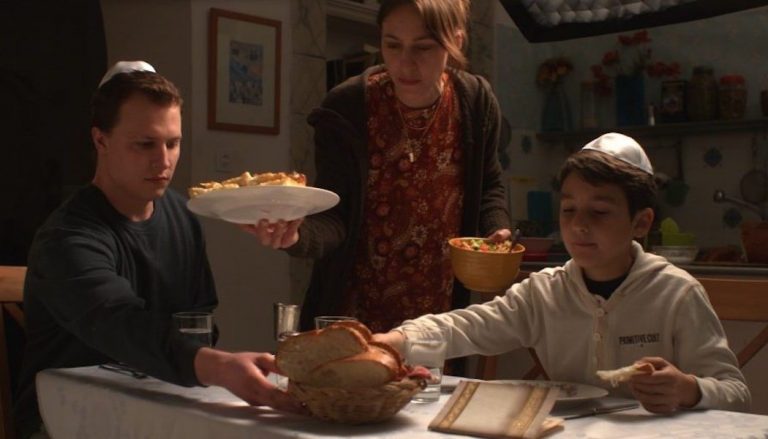
    This isn’t a spoiler. In fact, all I described happens in the opening ten minutes of the film. After Oren’s death, we switch to his wife Anat’s (Sarah Adler) perspective. When we meet her she is trying to adjust to life without her husband. She has to balance taking care of her son Itai (Tamir Ben-Yehuda), running her newly-opened cafe, and dealing with her brother Moti (Zohar Strauss), who is deeply strict in their Jewish faith. However, help soon arrives in the form of a mysterious German man looking for work. It’s Thomas who has traced Oren’s footsteps back to Israel.

    The Cakemaker
    Tim Kalkhof, Sarah Adler, and Tamir Ben-Yehuda in The Cakemaker, Israel’s 2019 Oscar entry.

    Anat, eager for the help, hires Thomas to clean dishes and run errands. Little does she know that he is her husband’s lover. The two begin to build a relationship as Anat learns that Thomas is a baker and she begins selling his baked goods in the shop, much to Moti’s dismay—even Thomas using the oven isn’t kosher. Still, she continues to work with Thomas, which risks her finding out about his true identity, even though Oren’s mother Hanna (Sandra Sade) might know more than she lets on.

    Like Moonlight a couple years ago, The Cakemaker uses the act of cooking for someone as a way to communicate care and love for someone. Director and screenwriter Ofir Raul Graizer also uses it as a point of contention—to emphasize the cultural divide that Hanna has to navigate with her brother regarding religion. At one point, frustrated with Moti’s effort to keep her restaurant (and son) kosher, she says, “I’m not religious and I don’t want to be religious.”

    The Cakemaker is a quiet story. The characters don’t say much. Their thoughts are internalized and it takes a talented director and actors to communicate that. And Graizer has that talent, as does the entire cast, especially Kalkhof. Thomas doesn’t say much, but he holds all of his thoughts and emotions on his face. In one scene, something is revealed to him and the wave of emotions that go through his face are stunning. Without a single tear shed or smile he tells us the complexity of what he is feeling in the moment. It’s reminiscent of the famous train scene in Unfaithful that landed Diane Lane an Oscar nomination. Kalkhof is just as worthy here.

    There’s a warmth to the movie that could be attributed to its longing piano score by Dominique Charpentier or the soft and functional cinematography by Omri Aloni. However, at the center of it all is Graizer’s empathetic direction and the human performances by the entire cast—there’s not a weak performance in the bunch. There is one plot point that I won’t spoil here that pulled away some of the magic of the film, but there’s no denying that The Cakemaker is something special. It’s comforting like a sweet dessert.

    The Cakemaker is available on Blu-Ray on Amazon

    Karl’s rating:

  • ‘Bodied’ review — Woke culture put on blast through battle rap

    ‘Bodied’ review — Woke culture put on blast through battle rap

    Bodied is a sharp and hilarious satire that tackles the complexities of woke culture by exploring the world of battle rap.

    bod·ied

    /ˈbädēd/

    verb

          1. to destroy or kill

    Used in a sentence: “The movie Bodied bodied toxic liberalism, performative progressiveness, and woke culture.”

    Music video director Joseph Kahn’s third feature pulls no punches as it tackles the very sensitive topics of white liberalism, cultural appropriation, and how free should free speech be before it becomes destructive. It follows in the footsteps of other films that satirize our current social and political climate, mostly from the black perspective. From Jordan Peele’s horror-comedy Get Out to Spike Lee’s 60s biopic BlacKkKlansman to Boots Riley’s nightmarish comedy Sorry to Bother You, film has become the outlet for the culture wars our country is experiencing.

    However, instead of a house in Upstate New York or an alternative reality of Oakland, Bodied battles with these ideas in the world of underground rap battles. These battles are violent. One character compares them to a physical altercation—some of them escalate to that point—as opponents attempt to destroy each other by hurling insults at each other that range from comments on their race and appearance to straight personal attacks. However, they’re all done in sharp and poetic bars that would rank with any other serious writers. It’s part of the reason that graduate student Adam (Calum Worthy) made them the subject of his thesis.

    Adam, a nerdy white guy from Brooklyn, and his progressive liberal vegan girlfriend Maya (Rory Uphold) attend a battle at the beginning of the film between X-Tract and Behn Grym (Jackie Long). While Adam is enraptured by the wordplay and impressive setups and punchlines, Maya is offended by the supposed homophobia and misogyny in the lyrics. However, Adam is quick to point out that it is all performative. If there is any theme that the movie sees through among the many things on its mind—perhaps too many things—it is its indictment of the performative aspect of woke culture and political correctness. Maya, a caricature of the progressive white Brooklyn hipster, doesn’t quite get it.

    When Bodied plays in the field of how political correctness could be regressive—at one point a character literally yells, “get woke, cocksucker”—it is electric, compelling, and frankly, chillingly realistic. Even though its portrayal of Maya and her “woke” friends is sometimes over-the-top, you can’t help but think that Kahn has a point.

    After that opening battle, Adam approaches Behn to praise his performance. As the two discuss his thesis and specifically the use of the n-word, which Behn assumes Adam just wants a pass to use, a young white rapper approaches Behn in the parking lot and challenges him to a battle. Instead, Behn lets Adam take it and he bodies his opponent. Worthy’s switch from the awkward Mark Zuckerberg-esque academic to aggressive insult-hurling battle rapper is a delight to watch on screen. He convincingly takes on the persona of a battle rapper to the point that it looks like another force is taking over his body.

    Bodied
    The cast of Joseph Kahn’s rap battle satire Bodied.

    In the movie, Behn takes notice and takes Adam under his wing as his protege. Of course, Maya is not happy about it. The exploration of battle rap takes us from venue to venue as Adam meets new rappers that eventually become a unit that become the center of our story including Prospekt (Jonathan “Dumbfoundead” Park), an Asian rapper that goes up against Adam early in the film (Adam’s bar “Just ‘cuz you look like Kim Jong-il doesn’t make you ill, son,” should win the movie a Pulitzer”) and Devine Write (Shoniqua Shandai), one of the only female battle rappers we see in the film—both actors are standouts in their roles.

    As Adam navigates the worlds of “woke” academia and battle rap, he is met with resistance on both sides to his rise as a battle rapper bringing up the question of whether he is appropriating culture. It’s an intriguing exploration until the movie chooses its side. The fact that Eminem is a producer should tell you which it is. The more interesting subject the movie interrogates is the performative aspects of political correctness. As I said before, Maya and her friends are indicted with being ultimately racist. The movie hints at their underlying privilege and how their outward facing progressiveness is just masking their internal prejudices.

    But that’s the easy target. Adam is far more complex of a character than his college friends. His admiration of battle rap stems from the rappers’ ability to stitch together bars that are not only clever and are structurally complex, but that they target their opponents with precision. Ahead of his first battle with Prospekt, Adam does extensive research to construct bars. However, the movie eventually turns its sights on battle rap intself and litigates the consequences of something that is all about tearing someone apart using increasingly offensive language.

    Joseph Kahn’s kinetic style which includes on-screen effects like muzzle flashes and lyrics flying through the air is engaging, perhaps used too much, but something that gives Bodied some identity. The narrative and themes get muddled towards the end—though an interlude with Debra Wilson as the dean of Adam’s university is a high point—and not every point its trying to make lands, but the battle sequences are energetic thanks to the performances by the entire cast of battle rappers—a special shoutout has to go to Long’s performance here as he balances his rapper and at-home persona. Bodied has a lot on its mind. So much that it doesn’t always know how to balance it, but watching it try to is entertaining and eye-opening. 

    Bodied is in theaters on November 2nd and will be available on YouTube Premium on November 28th.

    Karl’s rating:
  • ‘Bohemian Rhapsody’ review — Rami Malek is electric as Freddie Mercury

    ‘Bohemian Rhapsody’ review — Rami Malek is electric as Freddie Mercury

    Bohemian Rhapsody doesn’t do much to break the mold of the typical biopic, but it boasts a breathtaking performance from Rami Malek as Freddie Mercury.

    Bohemian Rhapsody isn’t about the creation of Freddie Mercury. Yes, the movie starts with Mercury as a baggage handler before joining a band that would ultimately become Queen. However, the movie still doesn’t tell us where that famous—and infamous—persona came from. That’s because Freddie Mercury was never created. He just existed. Though the film tries to explore Mercury’s struggle with his identity by introducing us to his family and their own struggle to connect with Freddie, any introspection is ultimately put aside in favor of hitting various plot points. 

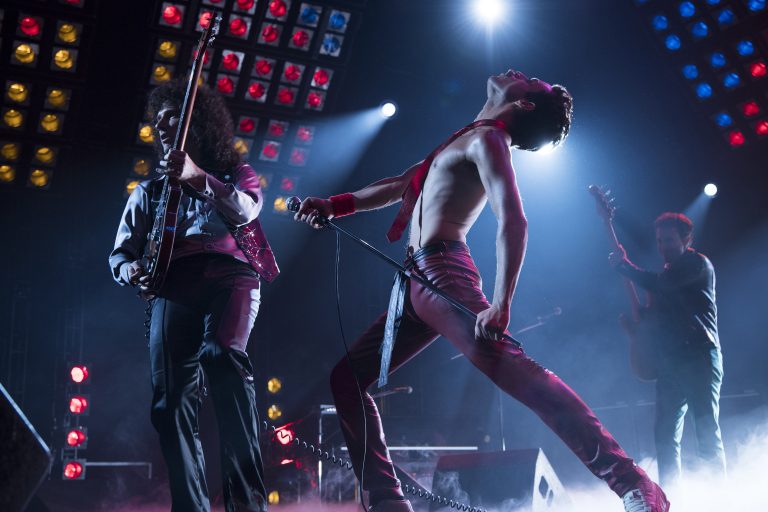
    Even then, those plot points like the creation of the eponymous “Bohemian Rhapsody” and the band’s famous Live Aid performance in 1985 are captured with uproarious energy and performed impeccably by Rami Malek whose portrayal of the rocker is breathtaking. In particular, Malek captures the physicality of Mercury in performance with precision and commands the frame—it’s useful considering he’s in every shot. However, this isn’t just the story of Mercury, it also concerns the people around him during his meteoric rise.

    In particular, the film tracks his relationship and marriage to Mary Austin (Lucy Boynton). Through her, we investigate Freddie’s loneliness and sexuality. In one scene he comes out to her as bisexual, to which she responds that he is just gay—it feels a bit like bi erasure, especially since his true sexuality was never known. However, their scenes always felt the most genuine. Against the glitzy energetic patina of the Queen scenes, these “domestic” scenes feel a lot more genuine, albeit still an arm’s length away like most biopics. 

    Bohemian Rhapsody
    L-R: Gwilym Lee (Brian May), Rami Malek (Freddie Mercury), and Joe Mazzello (John Deacon) star in Twentieth Century Fox’s BOHEMIAN RHAPSODY. Photo Credit: Courtesy Twentieth Century Fox.

    The other person that Freddie has much one on one time is his personal manager and lover Paul Prenter (Allen Leech). Contrary to early reports, Freddie’s sexuality is a main throughline in the film and drives his internal struggle about identity. Leech does well with what he is given—he’s a talented actor best known for his role in Downton Abbey—but the character’s arc feels choppy and again feels like it’s more beholden to the plot than any character development. 

    What would have been more interesting—and something we get a small taste of—is the dynamic between the members of the band—Brian May (Gwilym Lee), Roger Taylor (Ben Hardy), and John Deacon (Joseph Mazello). Like most “getting the band together” movies, of which Bohemian Rhapsody certainly pulls from, there is that moment where the band breaks up or has a falling out. Of course, in this story, it’s based off a real moment. However, the change from friends trying to make it in the industry to an egotistical frontman versus his bandmates is sudden and pulls out the emotional weight behind the finale.

    I don’t want to sound overly negative. Bohemian Rhapsody is well-crafted and exhilarating at times. It doesn’t do much to break the mold of a typical biopic, but thanks to Malek’s performance and the fact that Freddie Mercury is a fascinating subject for a film, it is at least entertaining to watch. The story of Mercury and Queen feels like the stuff of legend. Bohemian Rhapsody does a little to humanize it. But what it also does is remind us how larger-than-life Queen really was. Every time we get to another “how the song was made” scene—there are more than a few—it’s a reminder of another hit that is still in the cultural zeitgeist. For that, Bohemian Rhapsody is worth a watch. 

    Bohemian Rhapsody will be released in theaters on November 2nd, 2018. 

    Karl’s rating:
  • ‘Halloween’ (2018) review — Michael Myers is back after 40 years

    ‘Halloween’ (2018) review — Michael Myers is back after 40 years

    Halloween (2018) is a product of the original film it’s following up and the long-changed slasher genre that it spawned.

    Where to watch Halloween (2018): Streaming on HBO platforms. Available to buy or rent on Prime Video.

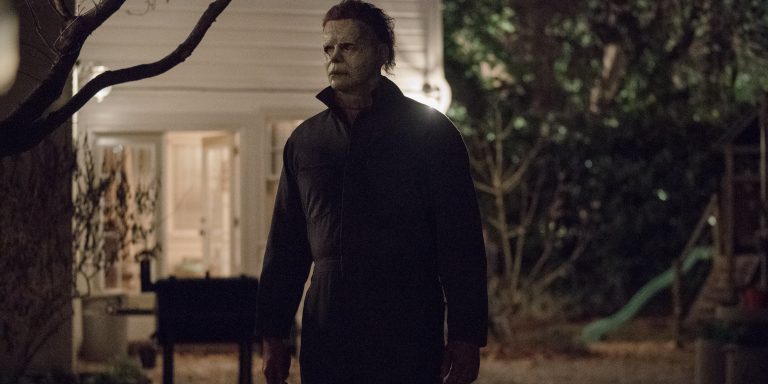
    Halloween (2018) is the eleventh entry in the long-running franchise that stemmed from John Carpenter’s 1978 film of the same name. However, this iteration ignores all of the other sequels to the film including the ones that had the mythology that ultimate final girl Laurie Strode (Jamie Lee Curtis) is The Shape’s (aka Michael Meyers) sister. However, since breaking ground for the horror genre four decades ago, the slasher subgenre has changed as well—most of that is due to the original Halloween. And those changes show in this version. 

    However, to truly talk about the merits of David Gordon Green’s Halloween, we have to talk about what made Carpenter’s original such a classic. Dr. Sam Loomis—Donald Pleasance played the iconic character in five of the franchise’s installments—always referred to Michael Myers as “the evil.” And that’s what Michael was in that film. He was a mythical force of pure evil. That’s the most terrifying thing about him. He doesn’t have motivations or emotions or attachments. He simply kills. However, he doesn’t actually kill that many people in the film—just five. And the first main character isn’t killed until 54 minutes into the movie. The real horror came from the dread leading up to those murders.

    The same cannot be said for the 2018 sequel. Both Carpenter and Green are great visual storytellers. Green displayed that stunningly in his 2017 film Stronger. While there is artfulness in the construction of the kills on screen just like the original, this film is truly the product of years and years of blood and guts infecting our slashers. Truly, Halloween (2018) is tamer than the slashers of the 2000s, but it feels out of place in a story that is more profound than most of those movies. 

    Halloween
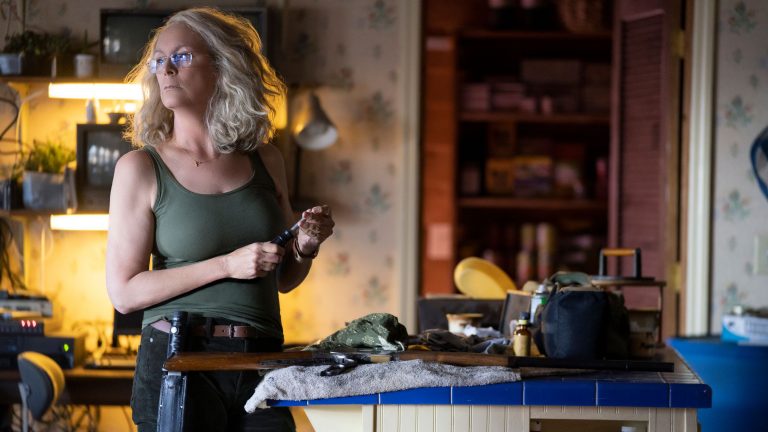
    Jamie Lee Curtis in David Gordon Green’s Halloween (2018). Credit: Blumhouse.

    Forty years after Michael Myers’ return to Haddonfield, he is confined to a mental institution not talking or interacting with anyone. Conversely, his would-be victim Laurie Strode is confined to her home—fortified might be a better word—with guns, steel doors, and other equipment in preparation for Michael’s return. Her daughter Karen (Judy Greer), a psychiatrist, is concerned with her mother’s mental state and has distanced herself from her. This film deals with Laurie’s trauma following the events of the original. She is broken and paranoid but motivated to take back the life that Michael took away from her. She’s no longer the plucky high-schooler who’s worried that she forgot her chemistry book. She’s a warrior. 

    Eventually, as fate has it, the bus transporting Michael to a new facility crashes and he escapes bringing terror back to Haddonfield. However, his spree includes characters that are clearly there to up the body count, even if their kills are interestingly staged and captures. Still, it feels like it’s done to excess. Michael’s rampage leads him to Laurie’s well-fortified home where she, her daughter, and granddaughter Allyson (Andi Matichak), who Michael has also been stalking, are hiding out. The final 20 minutes are staggering as the three women and Michael play a game of cat and mouse. Thematically, it ties in well to Laurie’s empowerment over the man who assaulted her and brought her so much pain. It would be more profound if the film didn’t try so hard to make you understand that theme. 

    Jamie Lee Curtis likened the storyline to the Me Too movement. At one point, a character even says “time’s up,” the name of the fund run by Hollywood actresses to help pay the legal fees of victims of sexual assault. This incarnation of Halloween isn’t about victims. It’s about victims winning back their peace of mind. The final 20 minutes, packed with glorious uses of light and shadow that harken back to the original, do well to tie that theme together. If only the rest of the movie did. The excess of gore and violence, the unnecessary side characters, and the needlessly twisting plot prevent it from reaching it’s full potential. If anything, fans of the original will find solace in the many callbacks and especially John Carpenter’s synth-infused score that rivals his original. 

  • ‘First Man’ review — Claire Foy steals this Neil Armstrong biopic

    ‘First Man’ review — Claire Foy steals this Neil Armstrong biopic

    First Man is a de-glamourized version of Neil Armstrong’s reluctant journey to becoming the first man on the moon.

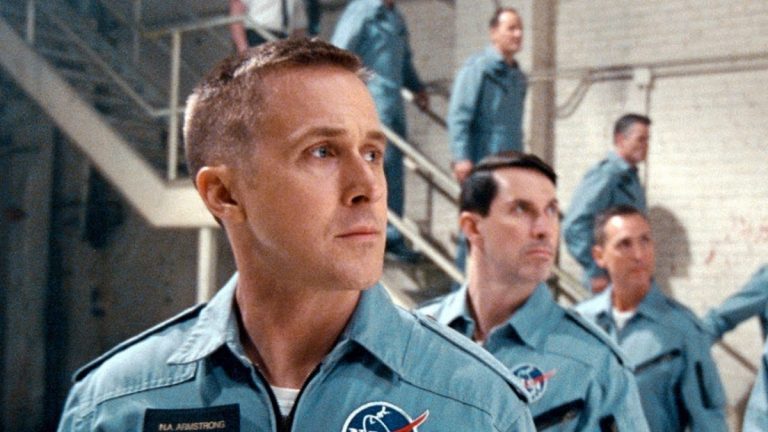
    What’s remarkable about Neil Armstrong (Ryan Gosling) is how unremarkable he is. He’s quiet. Almost shy. Sometimes he’ll crack a joke or offer a closed mouth smile, but he internalizes most of his emotions. There are a few moments where we see them break through. Early on he breaks into tears over the death of his daughter. Later, his anger shows for a flash after he finds out some of his friends were killed in a shuttle accident. Gosling does incredibly well portraying Armstrong’s steely resolve in the wake of such adversity in First Man. But the movie is careful not to sanctify him. Armstrong was a normal man doing an extraordinary thing. But he himself didn’t think it that extraordinary. He was truly a reluctant American hero, as he’s often billed. 

    First Man is a change of pace for Oscar-winning director Damien Chazelle. After directing and writing three musicals—Guy and Madeline on a Park Bench and the Oscar-winning Whiplash and La La Land—he tackles this biopic from a script by Josh Singer, the Oscar-winning screenwriter of Spotlight and The Post, with a lot more restraint than his other projects. Though he is known for impressive Steadicam shots, kinetic editing, and hyperrealism in his films, First Man almost does the exact opposite. Much of the movie is shot handheld, which comes specifically in handy during the breathtaking flight sequences. Aided by the superb sound mixing and Chazelle’s knack for visual storytelling, the sequences feel dangerous and nightmarish. It truly makes you think who in their right mind would try to go to space. 

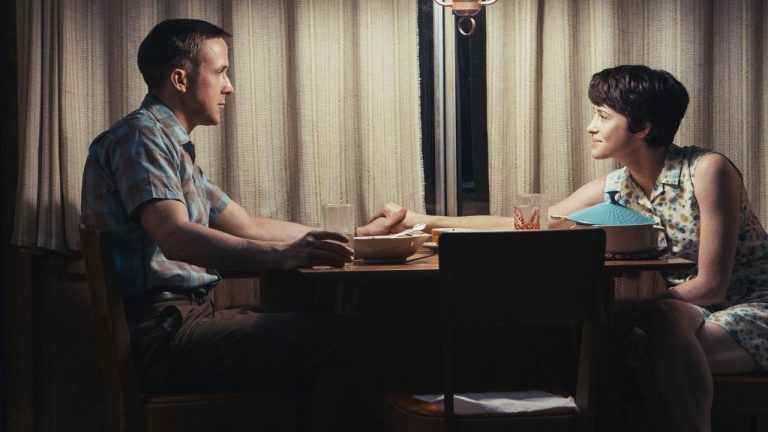
    It’s something that Janet (Claire Foy), Armstrong’s wife, struggles with and ultimately understands. She knows why he’s obsessed with space and getting there, even if it’s heartbreaking for her. Foy owns this movie. So many biopics about famous men always have the doting wife archetype that often is relegated to sitting in the background and worrying about her husband. In First Man, Foy doesn’t just support him. She challenges him. She makes him take responsibility for his obsession with space. In the best scene of the movie—surely to be her Oscar scene—she confronts him for not explaining to their sons that he might not return from the trip. It’s fiery, focused, and, most importantly, realistic.

    First Man
    Ryan Gosling and Claire Foy in Damien Chazelle’s First Man

    Unlike Hidden Figures in 2016, which portrayed the women of color behind another NASA accomplishment—it was nominated against Chazelle’s La La Land that year—First Man isn’t a Hollywood-ized version of the story. That’s not to say that makes Hidden Figures a lesser movie—I quite liked it. But in Hidden Figures, you want to see Taraji P. Henson be the hero and succeed and beat racism. First Man almost does the opposite and tries to portray Neil Armstrong the way that many people have described him. That stripped down version doesn’t make him the most compelling protagonist, but it matches the gritty realism of the rest of the film. 

    That realism is what makes every flight sequence phenomenal to witness. It’s no wonder that Chazelle loves portraying obsessed men because he is clearly obsessed with the details. He pays attention to everything. From the smallest bolt holding a ship together to the tempo of Justin Hurwitz’s fabulous score. It’s all to communicate that space—and space travel, specifically—is terrifying and insane. The reason Foy is so successful in this film is that she is the audience surrogate. She questions why anyone would be crazy enough to attempt what Armstrong and the rest of NASA are attempting. That is until the moon landing sequence. 

    The vastness and nothingness of space swallow up Armstrong and Buzz Aldrin (Corey Stoll) as they finally make their approach on the surface of the moon. Linus Sandgren’s cinematography brilliantly uses the negative space of, well, space, to emphasize the emptiness of it all while Hurwitz’s score makes us feel the intensity and danger of the task. However, when the sequence comes to a head in its climactic moment, it’s not about winning the space race—the flag planting being omitted was a point of controversy for some reason—or patriotism. It’s about Neil’s grieving process. That sequence and the film’s final moments alone are worth the price of admission.

    First Man is now playing in wide release.

    Karl’s rating:

  • ‘Bad Times at the El Royale’ review — A nostalgic 60s neo-noir

    ‘Bad Times at the El Royale’ review — A nostalgic 60s neo-noir

    Bad Times at the El Royale is a thrilling, character-driven neo-noir homage that will keep you guessing from beginning to end. 

    Don’t let the flashy trailers, catchy title, or A-list stars fool you. Bad Times at the El Royale is not your typical popcorn thriller. Written and directed by Drew Goddard, who had a lot to live up to after his masterpiece debut film The Cabin in the WoodsBad Times unquestionably lives up to its pulpy title and delivers a twisting mystery with a cast of characters whose intentions are always in question.

    However, Bad Times is not a straight-forward entry in the neo-noir genre. It’s not surprising considering Cabin is a loving deconstruction of the horror genre that presupposes — correctly — that both the machine putting out horror movies and the fans that flock to them are off on the wrong track. 

    With Bad Times at the El Royalehe emulates the pulpy neo-noir genre that has found new life through Quentin Tarantino’s carefully crafted homages. The movie is complete with title cards introducing each section — each character’s section is defined by their assigned room. Unlike Tarantino, Goddard is more interested in the themes of the genre. Good and evil, right and wrong, alienation and paranoia. He explores those themes by directly tying them to the time period: 1969.

    The El Royale hotel is split right down the middle. Half is in California and half is in Nevada. As the first two guests in our cast of characters arrive, the bright colors and whimsical 60s design of the hotel set us firmly in the time period. However, it’s not indicative of the rest of the movie.

    For almost the whole running time—the movie is set over one night—the hotel is shrouded in darkness and pummeled by a storm that seems to react to the bad times happening in the hotel. And yes, they’re as bad as you imagine. 

    You see, though the guests consist of hopeful lounge singer Darlene Sweet (Cynthia Erivo) and old grizzled priest Daniel Flynn (Jeff Bridges), not everyone has good intentions. The movie is patient. It doesn’t tip its hand too soon. It’s a reason it’s so mesmerizing.

    The slow and methodical cold open where we watch a mystery man (Nick Offerman) arrive in a hotel room and take it apart to hide a bag with unknown contents is captivating even if the camera doesn’t move and nothing really happens. Even the next scene where we watch each guest arrive plays out slowly but with an underlying tension that doesn’t give any hints as to where the story is going. 

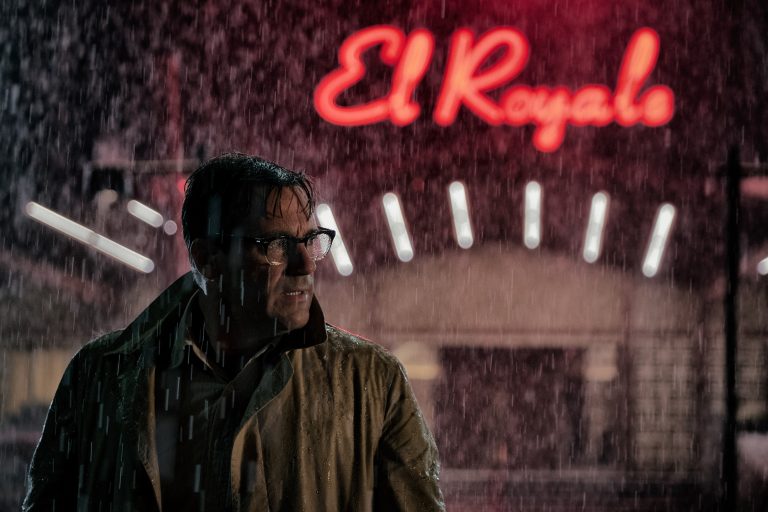
    Bad Times at the El Royale
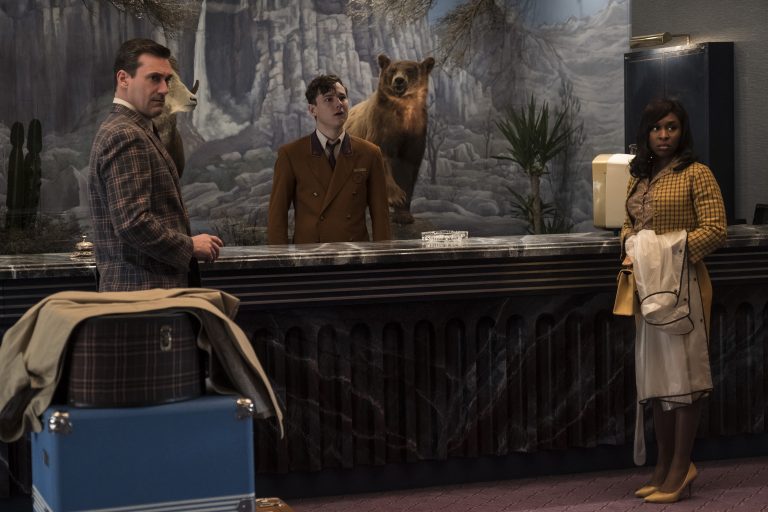
    Jon Hamm stars in Twentieth Century Fox’s BAD TIMES AT THE EL ROYAL. Photo Credit: Kimberley French.

    From there, the movie plays out like an Agatha Christie crime novel mixed with a Hitchcockian thriller with an added dose of Tarantino-esque style. Pieced together with clips from different characters perspectives — often covering the same event — and flashes to their pasts and what led them to the El Royale, the movie doesn’t necessarily have a linear narrative. However, all plotlines lead to one fateful event. 

    The amiable southern vacuum salesman Seymour Sullivan (Jon Hamm) sulks around the hotel before coming across a corridor with two-way mirrors that look into each room — we’ll revisit this place a few times — he watches as each guest does increasingly strange things.

    The nervous, but eager to please concierge/waiter/housekeeper Miles Miller (Lewis Pullman) is struggling with things he’s done in his past that he assures to Father Flynn only get worse. Even more mysterious, and more sinister, is Emily Simmerspring (Dakota Johnson), who has an unusual cargo with her. 

    Eventually, the ghosts that haunt each of the characters begin to intertwine as characters are unmasked to deadly results. Just as the El Royale straddles two states, the characters straddle moments in their lives. It’s a purgatory that each person will leave — alive or dead — as a good or bad person even if the line between the two isn’t as clear as you’d think. And it’s deliciously fun to watch where each guest ends up. 

    Bad Times at the El Royale will be polarizing to mainstream audiences. I’m surprised it’s a wide release at all. At 140 minutes, it could feel like a bloated meandering thriller that takes too long to get to the point. In reality, it’s a slow-burn character drama that puts these seven characters to the test. I know, I only mentioned five. I’ll leave the rest to surprise. What I will say is one of them is an amiable cult leader played by Chris Hemsworth. I’ll let you imagine how he fits in.

    However, if you take a chance and give yourself over to the movie, it’s an extremely fun and surprisingly emotional ride. That’s thanks to the ensemble, which is easily the best this year. In particular, the most junior members of the cast, at least on film, Cynthia Erivo and Lewis Pullman, give the two best performances.

    Erivo belts out songs that often play under scenes to great effect. But she tinges every one of them with a hint of sadness and regret. On the other hand, Pullman’s physicality and delivery reveal a person that is struggling with who they are in a way that you genuinely ache for him. That’s what caught me off guard watching the movie.

    In the end, as each character makes their exit, I was saddened saying goodbye to each of them. All their quirks and flaws. Their bad times at the El Royale were great times to watch in my book. 

    Where to stream Bad Times at the El Royale: Available to rent or buy on Prime Video.

  • ‘A Star is Born’ review — A rousing musical romance

    ‘A Star is Born’ review — A rousing musical romance

    A Star is Born is an electrifying directorial debut by Bradley Cooper even if it’s somewhat flawed in its execution.

    A Star is Born, Bradley Cooper‘s directorial debut, is the third remake of the 1937 film of the same name—versions were made in 1954 and 1976 with Judy Garland and Barbara Streisand, respectively. And it’s easy to see why it’s been adapted so many times. The story is truly timeless. However, for this version, Cooper updated the story to mostly success to comment on the modern era of stardom. And as a director, he is assured in style and commands the film visually, even when the story gets away from him. 

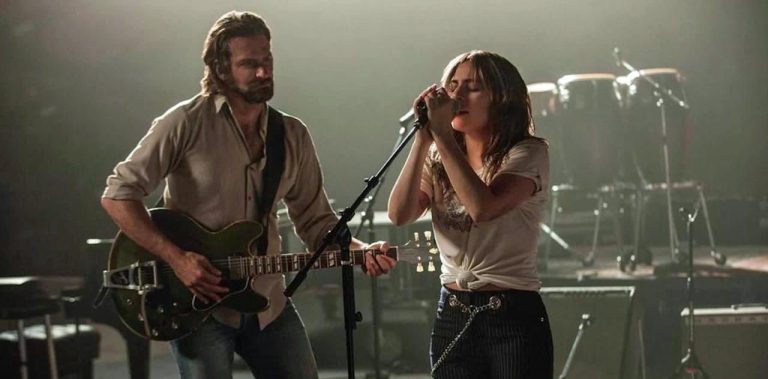
    A Star is Born opens with a first act that is nothing less than electrifying. We begin with rock n’ roll country star Jackson Maine (Cooper) as he plays in front of an eager crowd—the concert scenes were filmed in front of an actual audience at Coachella—riffing on his guitar with ease. Then we cut to Ally (Lady Gaga), a waitress by day and performer at a drag bar by night—the queens (including Shangela and Willem Belli) were so impressed with her voice they allowed her to be a part of their show. Stripped down and de-glammed, Gaga maintains her pop star glow while hiding it under self-doubt. She’s quite good. 

    Eventually, she meets Jackson, hunting for a drink after his gig, in a classic meet cute. The chemistry between the pair is incredible. One of the great assets of having an actor turned director is the ability to understand how to get great performances out of their actors. Cooper does it throughout. Over one boozy and raucous night the pair essentially fall in love. The energy is kinetic. It’s perfectly paced switching effortlessly between high-energy and comedic scenes to softer introspective ones. A standout scene is one that takes place in front of a grocery store as Ally performs one of her songs for Jackson. 

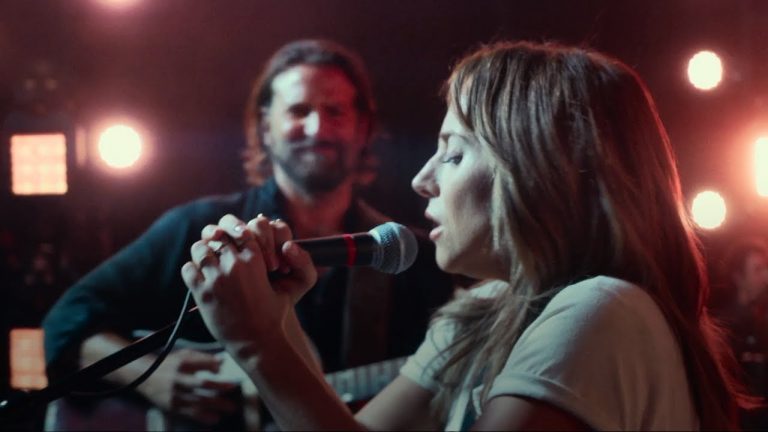
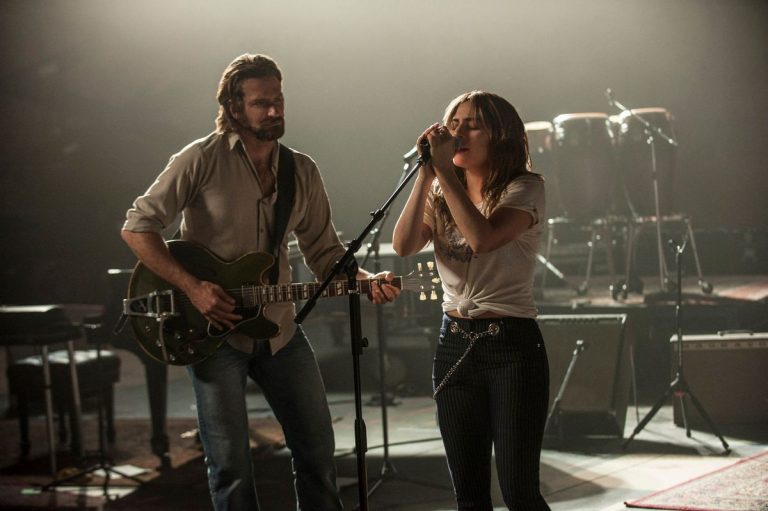
    Soon after their night together, Jackson summons Ally to one of his concerts and perform the duet “Shallow” on stage. It’s a charged scene that’s stunning to watch and makes the case for Lady Gaga in the role. She’s magnetic and emotes best through song—she’s more rocky with dialogue. Still, it’s a great film debut performance that is certain to earn her some Oscar attention

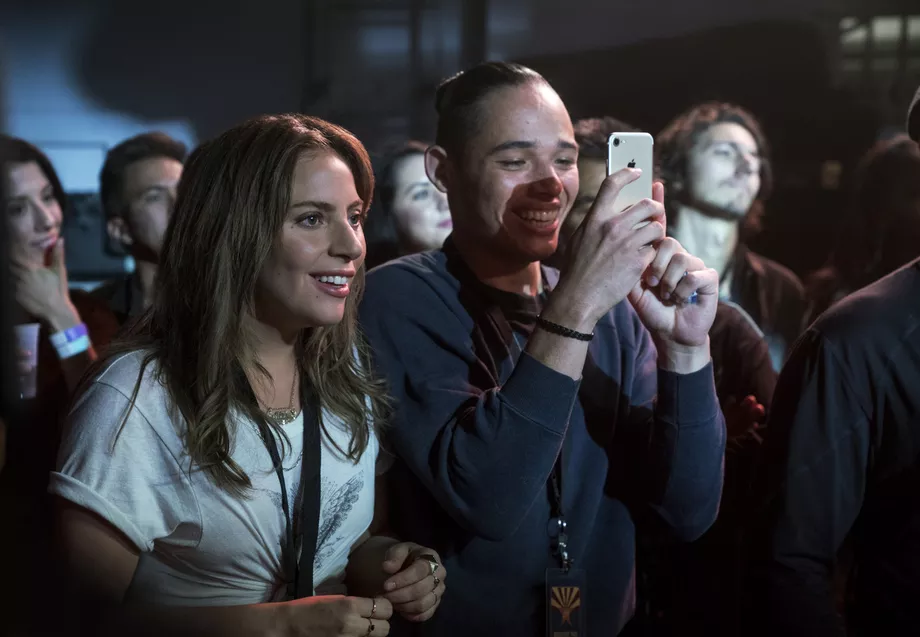
    A Star is Born
    Lady Gaga and Anthony Ramos in A Star Is Born.
     Clay Enos / Warner Bros.

    From there, the pair hops from place to place performing more and more songs and falling deeper and deeper in love. Soon, Rez (Rafi Gavron), a music producer takes notice of Ally and offers to help make her a star—and that he does. Soon she’s on the rise recording a full album—closer to Gaga’s mainstream pop that the country rock that we’ve heard in the movie so far—performing on SNL, and even being nominated for Grammys. All the while, Jackson’s star begins to fade as he slips deeper and deeper into drug and alcohol addiction. 

    Cooper has never turned in a more nuanced and emotionally grounded performance than this. Jackson’s deterioration is heartbreaking. However, the film itself doesn’t do the storyline justice. The pacing, which was such a strong suit during the first act, becomes the film’s enemy in its middle section. It feels as if there was a longer version of the movie that was hacked up to fit into an already robust 137 minute running time. The result is a film that starts and stops too much to connect with. However, digressions with Jackson’s brother Bobby (Sam Elliott) and friend Noodles (Dave Chappelle) are welcome digressions. 

    Thankfully, the final act finds its way back to the electrifying roots of the beginning and allows Cooper to turn in some of the best scenes his career. And stylistically he captures the wrought moments of Jackson’s addiction and recovery in increasingly interesting and cinematic ways. It all culminates in a final scene and shot that makes a great case for Lady Gaga as a movie star (and eventual Oscar nominee) as she performs the showstopping 11 o’clock number “I’ll Never Love Again”.

    A Star is Born is best when it forgets what it’s trying to be about and is just about the relationship at its core. Nothing more. When it occupies that space—like in front of the grocery store, on stage, at the piano, in a bar—the movie soars. Cooper and Gaga make a stunning onscreen pair and the ensemble, particularly Anthony Ramos and Andrew Dice Clay as Ally’s friend and father respectively, really shine. Cooper seems to be following in the footsteps of fellow actor turned director Clint Eastwood—he’s worked with him on American Sniper and The Mule—and his talents as a director seem similar. Though it’s flawed, A Star is Born is still an exciting directorial debut for Cooper who is assured a long and healthy career in Hollywood. 

    A Star is Born is now playing in wide release.

    ★★★½ out of five

  • ‘Heavy Trip’ review — Ridiculous and lively heavy metal comedy

    ‘Heavy Trip’ review — Ridiculous and lively heavy metal comedy

    Heavy Trip is a joyous and affectionate love letter to the outcast that is almost impossible to resist. 

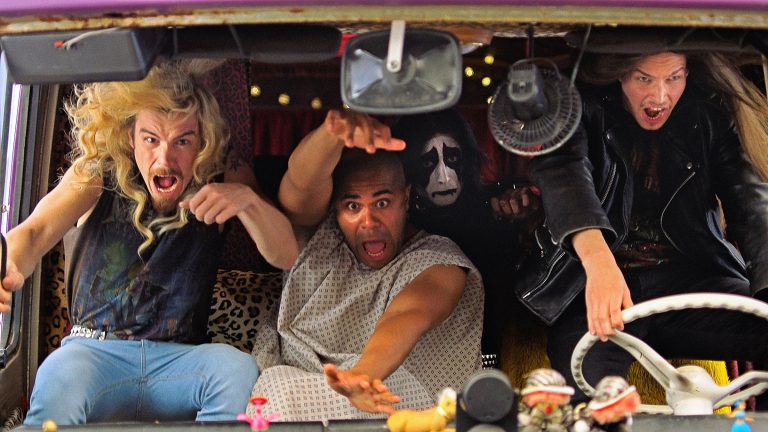
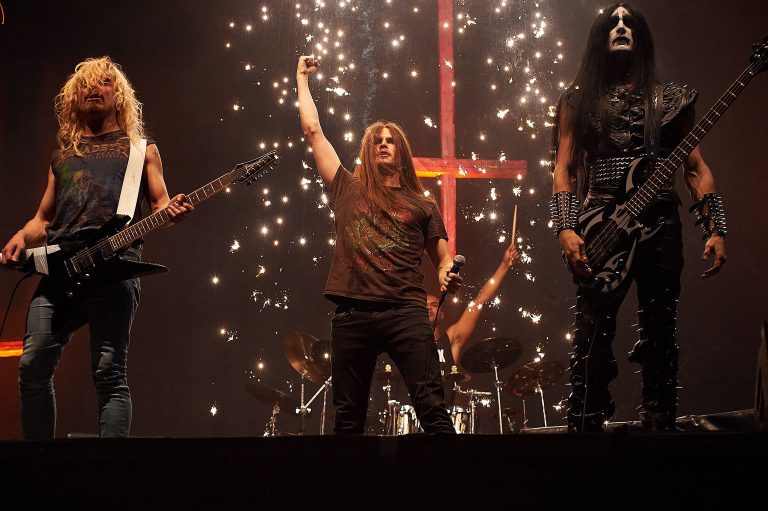
    Heavy Trip—also known as A Band Called Impaled Rektum—is billed as a heavy metal comedy. And it completely is. Told with the same off-beat humor as Taika Waititi’s best—Hunt for the WilderpeopleThor: RagnarokHeavy Trip follows wannabe Finnish heavy metal band Impaled Rektum as they finally, after 12 years of practicing in the basement of a reindeer slaughterhouse (so metal) could be performing their first gig. The catch is that the gig is all the way at a heavy metal festival in Norway—and may or may not exist.

    Lead singer Turo (Johannes Holopainen) tries his best along with his bandmates to realize their dream to be a “symphonic, post-apocalyptic, reindeer-grinding, Christ-abusing, extreme war pagan, Fennoscandic metal” band, as bassist Pasi (standout Max Ovaska) often puts it. The movie is a parody of metal culture through and through, but directors Juuso Laatio and Jukka Vidgren—the first feature for both—aren’t laughing at the metalheads, they’re laughing with them and admiring them.

    Not only that, the members of Impaled Rektum are the true heroes of the story. Drummer Jynkky (Antti Heikkinen)—the heart of the group—is so optimistic in their pursuit of success that it’s hard not to root for them through all their antics. Of course, not everyone wants to see the band succeed. The citizens of the band’s rural town aren’t keen on the group’s fabulous long hair, leather jackets, and propensity towards music that sounds like a reindeer carcass stabbed with a knife run through a meat processor—and that’s exactly how guitarist Lotvonen (Samuli Jaskio) accidentally discovers the band’s sound. 

    Heavy Trip
    Samuli Jaskio, Johannes Holopainen, and Max Ovaska in HEAVY TRIP. Courtesy of Music Box Films.

    Eventually, after an unfortunate incident involving the promoter for a huge metal festival in Norway and a vat of reindeer blood—yeah, this movie is metal—the band starts to find some confidence. Especially the shy Turo who finally musters up the courage to ask out his crush Miia (Minka Kuustonen) despite her police captain father’s protests. Naturally, he’s the band’s number one enemy.

    Heavy Trip isn’t something we haven’t seen before. We follow a group of outcast dorks on a mission to become something more. It’s a story we’ve seen time and time again. That’s what the movie is for much of its first third. For its last third, it turns into a road trip movie (and chase) with one of the funniest scenes I’ve seen this year involving the Norwegian border patrol and a bachelor party with a questionable theme. The second third has some structural issues that prevent it from reaching the height of its beginning and end, but Heavy Trip is a joyous and affectionate love letter to the outcast that is almost impossible to resist.

    It’s a blast watching Impaled Rektum find themselves through increasingly ridiculous—and increasingly metal—hijinks like exhuming a body, helping a mental patient escape, and even commandeering a group of Vikings. The quirky slapstick humor works perfectly with the group’s metal aesthetics and the entire cast is completely tuned into the movie’s off-beat wavelength. Not everyone will be able to find the rhythm that Heavy Trip is drumming, but once you do it’s futile not to drum along.

    Heavy Trip is available to rent or buy on Amazon!

    Karl’s rating:

  • ‘You Were Never Really Here’ review — A crime thriller masterpiece

    ‘You Were Never Really Here’ review — A crime thriller masterpiece

    You Were Never Really Here is a hypnotic and thrilling crime drama that doesn’t let you go until the credits begin to roll. 

    A third of the way through the breezy 90-minute running time of You Were Never Really Here, essentially director Lynne Ramsey’s arthouse version of Taken, Joe (Joaquin Phoenix) lays down next to a hitman he has just shot. As “I’ve Never Been To Me” plays in the background, the two men lay side by side. The hitman extends his hand to Joe and they lay on the floor singing along.

    It’s an odd moment of humanity in a movie filled with inhuman behavior and something you’d never see in another crime thriller. Ramsey, who broke out in 2011 with We Need to Talk About Kevin, isn’t interested in the violence aspect of the story, though there is plenty of it. Instead, she focuses on the characters and specifically Joe’s internalized struggle with his past. 

    The plot is quite simple, unlike movies with similar premises. Joe is a hired gun who tracks down kidnapped children. His handler John McCleary (John Doman) delivers him a new job to track down the kidnapped daughter (Ekaterina Samsonov) of a New York State Senator.

    However, the job quickly spirals out of control. That’s really all there is to it. But Ramsey doesn’t let a single minute go wasted. It’s tense from beginning to end, save for a few tender scenes with Joe’s mother (a great Judith Roberts).

    You Were Never Really Here
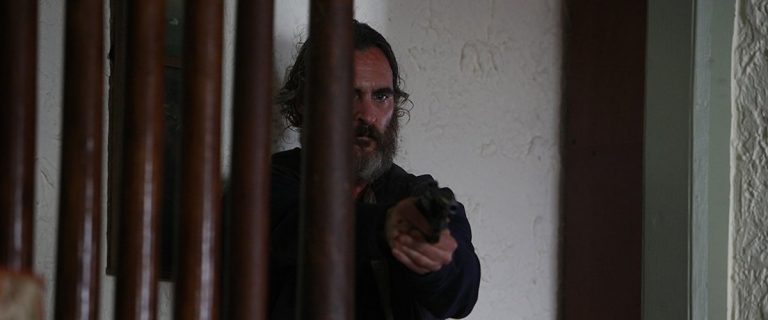
    Joaquin Phoenix plays Joe, a hired gun, in Lynne Ramsey’s You Were Never Really Here.

    There are a lot of scenes of violence, but Ramsey doesn’t glorify it. In one of the most stunning sequences, Ramsey tracks Joe through a house via surveillance cameras after he takes down guard after guard. It’s brutal, but not over-the-top as the camera gives us a detached view from it.

    As we cycle through various views from the cameras, we hear the croon of “I Wouldn’t Dream of It” through the halls. The sound design is impeccable with both diegetic and non-diegetic sounds. Much of what we see is internalized within Joe, but at moments the line is blurred.

    Phoenix has never been better. Joe is haunted by the moments in his past that we only see in brief flashes—him as a child hiding in the closet, his mother cowering under a table. The violence of his past invades the violence that he is committing in the present. However, the violence of his present is justified. At least, that’s how he gets through it. Without much goading, we are instantly endeared to Joe and his struggles despite his haggard appearance and hulking form.

    You Were Never Really Here doesn’t write a new song, but Lynne Ramsey performs it beautifully. Jonny Greenwood, after composing one of the best scores of the century for Phantom Thread, goes for a more fragmented approach here to great effect.

    It’s an art piece through and through, but also riveting and thrilling throughout. The second it ended I wanted to start watching it again and dissect every movement, every beat, and every sound. You will be mesmerized by it.

    You Were Never Really Here is now streaming on Prime Video. It is also rent and buy on Amazon.

  • 2019 Oscar Predictions: Best Picture

    2019 Oscar Predictions: Best Picture

    Best Picture this year is as unpredictable as ever with four frontrunners and the possibility of a barrier-breaking superhero movie winning.

    Best Picture is an odd category at the 2019 Oscars. What is making this year more unpredictable is almost the opposite of last year. Instead of there being multiple films with valid chances of winning, this year it’s hard to find a movie that doesn’t have something working against it. 

    Even though we’re less than a month away from the Oscars, Best Picture is still an undecided category — it’s easily the wild card of the night. While there are three clear top contenders, you can make an argument for any of the eight nominees.

    The BAFTA Awards might shed some light on what film is the frontrunner, but based on the other precursors, they might just confuse us even more.

    Here are my current rankings:

    1. Roma — Critics Choice, DGA
    2. BlacKkKlansman
    3. Green Book — Globe, PGA
    4. Black Panther — SAG
    5. The Favourite
    6. A Star is Born
    7. Vice
    8. Bohemian Rhapsody — Globe

    Check out all our 2019 Oscar Predictions: Best Picture | Best Actor | Best ActressBest Supporting Actor | Best Supporting Actress

    It’s rare for a movie to win without at least a nomination in one of these three categories — Film Editing, Directing, and at least one acting category. Only three movies this year got all three — BlacKkKlansman, The Favourite, and Vice. If you throw in the SAG Award Best Ensemble stat — only twice has a movie won without a nomination there — then you narrow down to just BlacKkKlansman.

    A Star is Born Best Picture
    Despite being snubbed for Best Director, Bradley Cooper hopes to win Best Picture for A STAR IS BORN

    It would make sense as a winner. Spike Lee — despite being the legend that he is — has never won a competitive Oscar — he’s won a lifetime achievement award. It’s also a social issues movie that tends to do well at the Oscars — and unlike its competitors, it’s an uncontroversial one. Most importantly, BlacKkKlansman hit every precursor award it’s needed.

    However, it needs to log a precursor win — WGA is its last shot.

    Even though Roma surprisingly missed a Film Editing nod, it is BlacKkKlansman’s biggest competition. Not only did it run the gamut of critics awards, but director Alfonso Cuarón has also swept the director awards and it stunned with a surprise Best Supporting Actress nomination for Marina de Tavira.

    Contrary to popular belief, I think Roma is going to do better on the preferential ballot — I explain how Best Picture voting works here — than people think. First of all, the people that love the movie LOVE the movie. Second, I think people that didn’t connect with it still respect the craft, which will land it a lot of 3rd, 4th, and 5th place votes. Its biggest baggage is that it’s a Netflix movie. If it wins, it would be the first movie released on a streaming platform to ever win Best Picture.

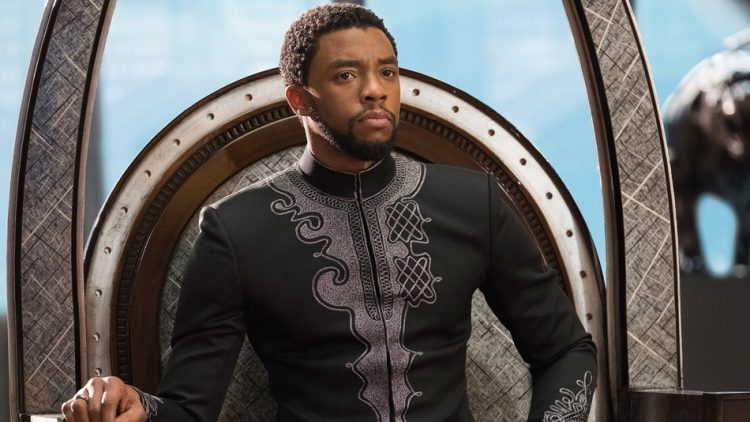
    Best Picture Black Panther
    BLACK PANTHER could become the first superhero movie to win Best Picture at the Oscars.

    Green Book and Black Panther round out the competitors with the best shot to win. Green Book swept the Golden Globes and shockingly won the Producers Guild of America Award for Best Picture. This is notable because it’s the only precursor to also use a preferential ballot. But producers only make up a small part of the Academy and it’s been marred by tons of controversy. Still, it’s the type of light social justice movie that the Oscars tend to go for — think Crash or Driving Miss Daisy.

    If Black Panther wins, it’ll break a lot of records. The first superhero movie to win Best Picture, one of the few movies to win without a Film Editing or Director nod, one of the few movies to not be nominated by the DGA to win. The list goes on and on. But I think it has a strong shot at doing well on the preferential ballot. I think the industry admires the movie and it has a strong underdog narrative. It could upset.

  • 2019 Oscar Predictions: Best Actress

    2019 Oscar Predictions: Best Actress

    Best Actress is one of the most competitive categories at the 2019 Oscars as Glenn Close hopes to finally seal the deal.

    Best Actress, unlike its Best Actor counterpart, is a little bit more clear in terms of who the top contenders are. And many of them follow Oscar history — young ingenues, overlooked veterans. However, it’s a long list of contenders. Here are our predictions for Best Actress at the 2019 Oscars.

    Current Rankings

    Glenn Close
    The Wife

    Olivia Coleman
    The Favourite

    Lady Gaga
    A Star is Born

    Melissa McCarthy
    Can You Ever Forgive Me?

    Yalitza Aparicio
    Roma

    Check out all our 2019 Oscar Predictions: Best Picture | Best Actor | Best ActressBest Supporting Actor | Best Supporting Actress

    The Frontrunners

    Glenn Close, The Wife

    On her 7th career nomination, Glenn Close should FINALLY win her much deserved Oscar for The Wife. The overdue veteran narrative is always a strong one and Close is the epitome of one. The one knock against her is that her film The Wife is not widely seen. Still, her narrative should be strong enough for a win.

    Olivia Coleman, The Favourite

    Playing a queen often wins you an Oscar — Helen Mirren won for The Queen and Judi Dench won for Shakespeare in Love. However, Olivia Coleman’s performance as Queen Anne in Yorgos Lanthimos’ wonderfully weird The Favourite is not your typical performance.

    However, after winning the Globe and giving an endearing speech her stock has certainly risen. If it wasn’t for Close, she’d be the clear… favorite.

    A Star is Born Best Actress
    Lady Gaga could receive her first Oscar nomination in Best Actress for A Star is Born.

    Lady Gaga, A Star is Born

    Although Cher and Barbara Streisand both won Oscars after successful careers as musicians — this video explains how Cher pulled off her win for Moonstruck — Lady Gaga has an uphill climb for her performance in A Star is Born.

    After shockingly losing the Golden Globe to Glenn Close (see above), it’s clear that she’s not going to be as much of a force as we thought. Maybe her public persona as a pop star is hurting her. Either way, she’s definitely winning an Oscar this year for co-writing “Shallow”.

    Dark Horse

    Yalitza Aparicio, Roma

    Alfonso Cuarón’s magnum opus Roma — in a career full of them including my personal favorite Children of Men — is going to be one of the rare foreign language films to break through in major categories. Despite that, the film’s lead Yalitza Aparicio is going to have a harder time making it into the category.

    Foreign language performances rarely make it into the acting categories. And to make it even harder, she doesn’t speak English, which will make connecting with voters difficult — even though it really shouldn’t. That being said, she’s the heart of the film and could be swept along if the movie does well in nominations.

    Long Shot

    Melissa McCarthy, Can You Ever Forgive Me?

    Can You Ever Forgive Me? might have fallen out of the conversation for Best Picture, but one consistent throughout the season has been Melissa McCarthy in the lead role as Lee Israel.

    It’s certainly a change up from her typical comedic performance, which might be to her advantage. However, because of the film’s waning buzz and the fact that her co-star Richard E. Grant has been singled out for praise, she’s on the bubble.

  • ‘The House with a Clock in Its Walls’ review — A bizarre and scary family movie

    ‘The House with a Clock in Its Walls’ review — A bizarre and scary family movie

    The House with a Clock in Its Walls is too deeply weird to not at least admire the effort.

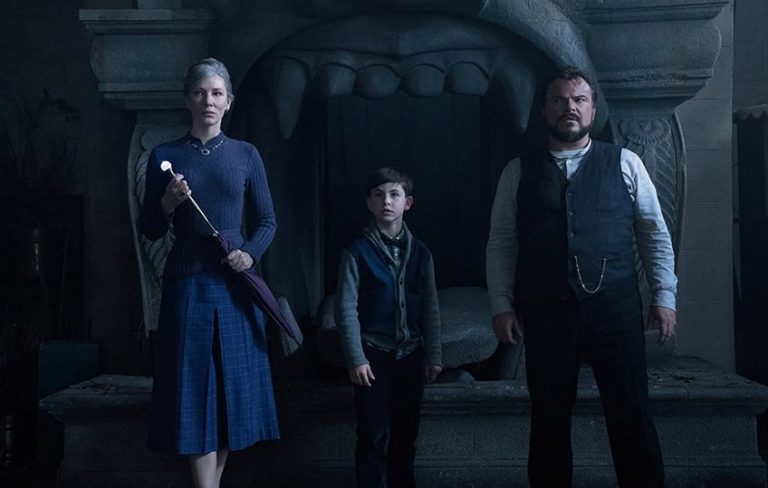
    Director Eli Roth is best known for his violent and gory action and horror movies like Cabin Fever, Death Wish, and the Hostel series. So it was surprising to see him tackle the a family-friendly PG movie based on the John Bellairs novel The House with a Clock in Its Walls. And his foray into this dark young adult fantasy is given some serious power with Cate Blanchett and Jack Black playing a witch and warlock trying to fight back an evil that has the potential to doom the world. However, the movie doesn’t match the amount of effort they are both—in particular, Blanchett—are putting in. 

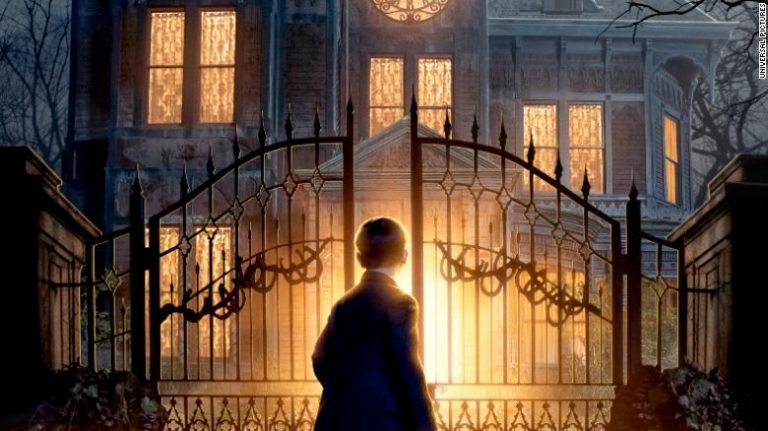
    That’s not for lack of trying. Roth makes interesting choices, especially for a supposedly family-friendly movie. Truly, The House with a Clock in Its Walls is too deeply weird to not at least admire the effort that went into making it. However, it feels like Roth is constantly fighting the urge to make the movie scarier and more intense than its PG rating allows. Still, though, the movie is told from the perspective of a wonderfully quirky kid, Lewis Barnavelt (Owen Vaccaro), a 10-year-old orphan who goes to live with his Uncle Johnathan (Black) in an old creepy house in the fictional town of New Zebedee, Michigan in 1955.

    During his first few nights in the dark maze of a house, Lewis meets Florence Zimmerman (Blanchett), Jonathan’s purple-clad and fabulously dressed neighbor, and encounters some oddities while exploring—a stain glass window that changes, suit of armor that moves, a living chair that acts like a dog. However, the oddest thing about the house is that within the walls comes the foreboding ticking of a clock left by the previous tenant and Jonathan’s friend Isaac Izard (Kyle McLaughlin) and his wife Selena (Renee Elise Goldsberry). The purpose of the clock is a mystery until the true nature is uncovered and terrifying events unfold within the house. 

    Blanchett, Black, and Vaccaro make an interesting trio to follow and root for. The actors do most of the heavy lifting where the movie falters, especially as it becomes more repetitive with whimsical magic as Lewis studies magic under his uncle and nightmarish imagery—at least for the young audience. The conception and design of the world are great. Particularly the costuming and production design. Though it’d be great to venture further than the house and Lewis’ school. Kids seeing the movie are sure to be entranced—and scared—by the imagery. However, there is less for the adults to latch on to.

    The pacing becomes an issue during the middle portion, which feels like it drags. There is some reprieve, though, when the movie focuses more on the trio’s relationship as a family unit of “black swans” as Jonathan puts it at one point. Blanchett does a lot to elevate her character’s storyline with much-needed subtlety. However, those moments are fleeting and instead, we get progressively weirder and creepier scenes as the mysterious clock in the walls winds down. And when Roth lets loose and makes a dark fantasy rather than a kids movie, it works well. In one scene, Blanchett head-butts a demonic jack o’lantern that spews adhesive pumpkin guts. Yes, it’s as trippy as it sounds. 

    It’s that pure unadulterated weirdness that makes The House with a Clock in Its Walls interesting to watch. Tonally, that’s what the movie needed to commit to. At one point, Florence even says about Lewis, “wow, he is weird.” And yes, Lewis is a properly weird goggles-wearing protagonist. That should have leaked more into the rest of the movie. And more demonic jack o’lanterns too.

    The House with a Clock in its Walls is available to rent or buy on Amazon!

    Karl’s rating:
  • 2019 Oscar Predictions: Best Actor
    2019 Oscar Predictions: Best Actor

    Best Actor is a three-way race between Bradley Cooper, Rami Malek, and Christian Bale at the 2019 Oscars.

    Best Actor still doesn’t have a clear single frontrunner. Critics season was ruled by Ethan Hawke for First Reformed, but he missed nominations at the Golden Globes and the SAG Awards, which doesn’t bode well for his campaign. At the top of the list are three actors with very legitimate shots to win. Here are the contenders:

    Check out all our 2019 Oscar Predictions: Best Picture | Best Actor | Best ActressBest Supporting Actor | Best Supporting Actress

    The Frontrunners

    Rami Malek, Bohemian Rhapsody

    Rami Malek’s performance as Freddie Mercury in Bohemian Rhapsody has been almost universally praised despite the film’s mostly negative reviews and the controversy around its director. However, Bohemian Rhapsody is clearly loved by the industry than critics.

    Rami Malek managed to win the Golden Globe over Bradley Cooper — who was in contention for A Star is Born — despite a very close race. However, I’m not sure the Oscar voting body will embrace his performance the same way.

    Bradley Cooper, A Star is Born

    The Oscars love to nominate Bradley Cooper — he was nominated three years in a row for Silver Linings Playbook, American Hustle, and American Sniper. However, he’s yet to win. I think that’s going to help him a lot. Especially with Malek going in as a first-time nominee and his other competitor Christian Bale (Vice) already a winner.

    The other thing that will help him is the general love for A Star is Born. As the director, screenwriter, and producer, they’ll want to give him some love. And it feels like they might do it in Best Actor.

    Best Actor
    Rami Malek’s electric performance in Bohemian Rhapsody could land him his first Oscar nomination in Best Actor.

    Christian Bale, Vice

    On paper, Christian Bale’s performance as Dick Cheney in Vice is one that wins Best Actor. It’s a transformative performance of a real-life figure — in the usual fashion, Bale put on extra weight for the role — which has won everyone from Matthew McConaughey (Dallas Buyers Club) to last year’s winner Gary Oldman (Darkest Hour) the Oscar.

    However, unlike those two actors, Bale is playing a villain and an incredibly unlikeable figure. Granted, the Adam McKay film tries to portray Cheney in a negative light. There’s also the issue of Bale being a relatively recent winner and lacking the narrative for a second win.

    On the Bubble

    Viggo Mortensen, Green Book

    Viggo Mortensen would have had the perfect overlooked veteran narrative — like Glenn Close in Best Actress — to win him the Oscar for Green Book. However, there are two things preventing him. First, the movie is divisive, particularly about his character. Second, Mortensen has made some… controversial comments.

    The movie’s popularity and industry goodwill will push him to a nomination, but a win is off the table.

    John David Washington, BlacKkKlansman

    BlacKkKlansman has been one of the few consistencies throughout awards season, so it’s only right that its lead actor is nominated. I was skeptical of John David Washington’s — son of Denzel — chances despite his Golden Globe nomination — there are effectively 10 slots at the Globes. Then he got a SAG nomination. I think that sealed it for him.

    Ethan Hawke, First Reformed

    Ethan Hawke essentially ruled the critics’ awards for his performance in First Reformed. However, his snub at the Globes and SAG along with the movie’s lack of buzz — even a screenplay nomination seems out of reach — are going to make it hard for him to get a nomination.

    That being said, there’s still a chance. The Academy might like the movie more than the guilds and Globes and A24 has proven itself an award juggernaut.

    Other Contenders

    Ryan Gosling, First Man

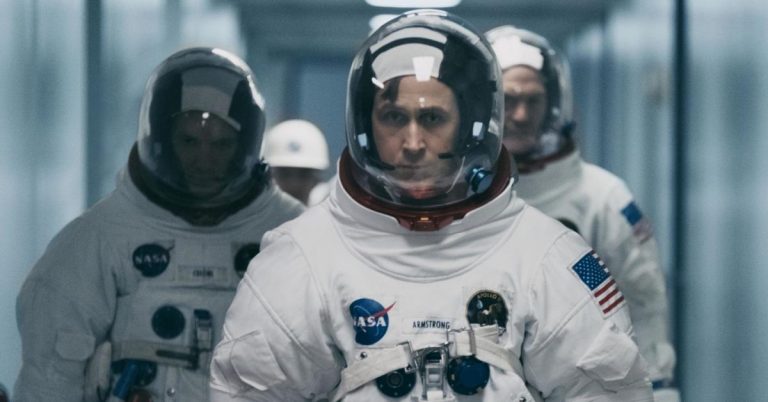
    First Man has pretty much fallen out of the awards conversation — except for Claire Foy in Best Supporting Actress. However, Ryan Gosling still has an inkling of a shot for his portrayal of Neil Armstrong.

    Though it’s a quiet performance — the Academy tends to like his louder performances like Half Nelson and La La Land — it’s certainly impactful. If First Man has a resurgence he can slip in.

    First Man
    Ryan Gosling could receive his third Best Actor nomination for First Man

    Willem Dafoe, At Eternity’s Gate

    Willem Dafoe got thisclose to winning his first Oscar for The Florida Project but ultimately lost to Sam Rockwell for Three Billboards Outside Ebbing, Missouri. And while on paper his performance as Vincent Van Gogh seems like an Oscar-friendly role, the movie is definitely artsier than your typical biopic.

    Robert Redford, The Old Man & the Gun

    Allegedly, The Old Man & the Gun is screen legend Robert Redford’s final film performance. We’ll see if that holds. However, that could push him to a farewell nomination.

    Long Shots

    Joaquin Phoenix, You Were Never Really Here

    John Cho, Searching

    John C. Reilly, The Sisters Brothers

    Lucas Hedges, Boy Erased