Karl Delossantos

  • Kong: Skull Island review — Too much Kong, not enough Skull Island

    Kong: Skull Island review — Too much Kong, not enough Skull Island

    Kong: Skull Island doesn’t live up to 2014’s Godzilla or the 2005 version King Kong, but the central action set piece is reason enough to see it.

    You know your movie has a problem when the most emotional image in your movie is of John C. Reilly holding a hot dog and beer watching the Cubs. However, the problems in Kong: Skull Island run deeper than that. The second movie in the Legendary MonsterVerse, yet another franchise that we didn’t know and probably don’t need, was preceded by Gareth Edwards’ 2014 film Godzilla. After being plucked from indie obscurity and trusted with a decades-old franchise, Edwards created a shockingly entertaining and well-crafted action piece with the film. The same thing happened with Kong director Jordan Vogt-Roberts, best known for The Kings of Summer, to lesser success. But that’s just the gamble you take with an untested director. Though I don’t think he’s going to be given a Star Wars movie the same way Edwards was, he certainly earns his stripes as an action director.


    Following Peter Jackson’s epic and often emotional 2005 film King Kong was always going to be a hard task for whatever director took it on. Instead of taking place in 1933, Kong: Skull Island begins in the 70s  at the tail end of the Vietnam war, which heavily influences the style of the movie. Bill Randa (John Goodman) and Houston Brooks (Corey Hawkins) charter a government expedition to explore the never visited Skull Island. The first 20 minutes of the movie are dedicated to assembling the team, which is a quick and surprisingly entertaining process. They hire former British Special Air Service Captain James Conrad (Tom Hiddleston) to guide the expedition. They are also escorted by a helicopter squadron, just about to go home from Vietnam, led by Lieutenant Preston Packard (Samuel L. Jackson). When they arrive on the island, they drop seismic charges under the guise
    of studying the geological structure of the island. Instead, they flush out a 100-foot tall gorilla. After Kong takes out all the helicopters, in an amazingly shot and directed sequence that certainly homages Apocolypse Now, the survivors must make their way to the extraction point on the north side of the island within three days while trying to survive the creatures living there.

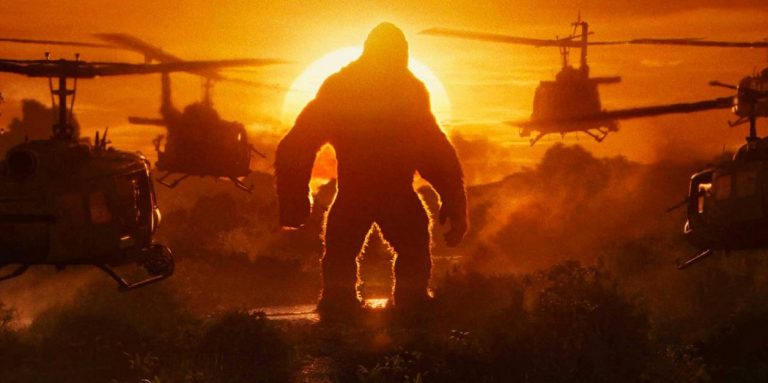
    The plot is tight and efficient, which is a change from the slower paced 2005 version. But where Godzilla withheld the title monster for as long as possible, Kong: Skull Island reveals its hand almost immediately by giving us a glimpse of the mythic beast. While that scene is exciting and beautifully realized — the highly publicized shot of the helicopters approaching Kong against a blazing sun is breathtaking onscreen — it gives you an instant high that is matched by the rest of the movie. All the action scenes following it feel dull in comparison. It’s a huge issue considering there’s not much outside of them that the film has to offer. Story wise, the movie integrates well into the universe — there are references to Monarch and stay for the post-credits scene — but it feels like a franchise starter instead of its own movie.


    Not only is the plot subpar, the characters feel like they’re made to die and the ones that have some purpose are so dull that you wouldn’t even care if they were gone. Mason Weaver (Brie Larson), a photojournalist looking to uncover a government conspiracy, is the closest we get to a charismatic character — she’s meant to step into the Naomi Watts character from the 2005 film — but we care about her because the film tells us to care about her. We get good performances from Samuel L. Jackson, Corey Hawkins, and John Goodman, but they aren’t given enough material to make a strong impression. The one character with an arc is Hank Marlow (John C. Reilly), a World War II fighter pilot who crash landed on the island 28 years before the expedition arrived. And while he gets some great laughs, it amounts to not much else.

    I enjoyed Kong: Skull Island enough to recommend it to B-movie lovers. If you were one of the people who felt jilted by the lack of Godzilla in Godzilla, then this movie is going to satisfy your tastes. If anything, that first action set pieces and the truly fantastic visual effects and cinematography are enough to recommend. But on the giant monster movie scale, it ranks above the 1998 Godzilla and below the 2005 King Kong, 2014 Godzilla, and even Pacific Rim. 
    ★★½ out of 5


    Kong: Skull Island is available on Digital HD on Amazon!

  • ‘Coherence’ Movie Review — Get ready to get your mind blown

    ‘Coherence’ Movie Review — Get ready to get your mind blown

    Coherence is a twisting, thrilling, low budget sci-fi that shows that sometimes less is more when it comes to the genre.

    As CGI and technology get more advanced, the stories and twists and turns of sci-fi movies get more epic in scope and complicated in plot. However, once in a while a movie comes along that proves less is more. Take Upstream Color or Ex Machina. They are small movies with big ideas. And while Coherence doesn’t quite reach the heights of either of those movies, it gets close. Just like the comet that sets off this entire mess. But before we get to that, we are introduced to eight friends having a dinner party.


    Now, the last time I watched a movie about friends having a dinner party, it didn’t end well. But what made that movie — Karyn Kusama’s The Invitation — so great is that it held its cards close to its chest for as long as possible. Delving deeply into the plot will be a disservice to you. So, I’m going to tread lightly and warn you that no matter what, don’t watch the trailer. The main topic of conversation at this dinner party — hosted at Lee (Lorene Scafaria) and Mike’s (Nicholas Brendon) house — is a comet that is due to pass over the earth that very night. Em (Emily Baldoni) educates the group about the Tunguska Event — an actual occurrence — and various other comets that caused odd events in history. It sets an eerie tone in the evening. It doesn’t stop Em from feeling awkwardness over the presence of Laurie (Lauren Maher), a woman her boyfriend Kevin (Maury Sterling) dated or Beth (Elizabeth Gracen) from complaining about the negative feng shui of the space. However, when the lights go out and cell phones stop working, so do all rules of what they once knew to be true.

    While the entire neighborhood is shrouded in darkness, they notice that a few blocks down a single house still has electricity. Hugh (Hugo Armstrong) and Amir (Alex Manugian) volunteer to go to the house and see if they have a landline they can use. When they return, a little shaken up, they have a box with photos of all the guests at the dinner with a random number written on the back and a ping pong paddle. Even more mysterious, the numbers are written in Em’s handwriting.

    Made for just $50,000 dollars and shot in five night, Coherence is pretty much the exact opposite of any sci-fi blockbuster nowadays. Taking place over one night and in one house, it uses characters and big concepts to drive the story. And like any movie where seemingly impossible things happen to normal people, a huge part of the story is spent trying to grasp what is happening and let go of their former reality. What makes Coherence shine is the way the character interact with the situation they’re in. How would you react if everything you’ve ever known turns out to be a lie? Moviegoers not as open to the mind-twisting movies will latch on to this. For genre lovers, Coherence is a puzzle to solve that lays out clues not dissimilarly from Shane Caruth’s Primer. It’s almost as if it begs to be watched again and again to see what you missed along the way.


    A frequent comparison has been made to The Twilight Zone episode “The Monsters Are Due on Maple Street.” If you haven’t watched this episode, stop and watch it. It’s probably one of the most iconic episodes of the series and, to be frank, is just great television. What makes the episode so great is that it’s relatively simple in plot compared to much of the series. The lights go out on a street in Anywhere, USA and causes confusion, panic, and suspicion among the neighbors. However, in the end, it’s a social experiment. How do we react when something unexplained and extraordinary happens? Who do we trust? Who do we become? That’s what Coherence is concerned with. It’s one of the few human sci-fi movies.

    In all, Coherence tells a story we’ve seen before, but it’s told in a way that makes you think and feel. That’s rare when it comes to sci-fi. Few movies in the genre lately have been able to do that. Despite minimal effects and taking place over a single night in a single setting, the movie is incredibly entertaining from beginning to end. And while the improvised dialogue hurts the movie as does one-dimensional characters — save for Nicholas Brendon’s Mike — the concept and plot are able to make up for it.

    Karl’s rating:

    Coherence is available to rent or buy on Amazon!

  • ‘Get Out’ review — Social issues meet horror with Jordan Peele’s debut

    ‘Get Out’ review — Social issues meet horror with Jordan Peele’s debut

    Get Out is easily one of the most original horror movies — or just movie for that matter — in years by one of the most exciting filmmakers of our generation.

    Take the setup Guess Who’s Coming to Dinner, the world of Stepford Wives, and the exploration of the black experience in I Am Not Your Negro and you have a movie that is certainly not as successful as Jordan Peele’s near-perfect directorial debut, Get Out. While the movie has elements of others that came before it, the horror-thriller is completely unique in the way it carries them out. It mixes old-fashioned scares and genuinely hilarious comedy with a specific perspective that makes it one of the most original movies in years.

    The cold opening of the movie, which features a young black man (LaKeith Stanfield) walking alone down a deserted suburban street, shows off Peele’s aptitude for thriller directing. His uninterrupted shot down the shady street is joined by some truly hilarious comedic timing and a creeping sense of dread that culminates to a worthy opening jolt. And while the scene certainly makes you laugh, it also sets the unsettling atmosphere that never truly lifts from the film — save for a hilarious ten or so minutes where we follow Lil Rey Howrey‘s Rod.

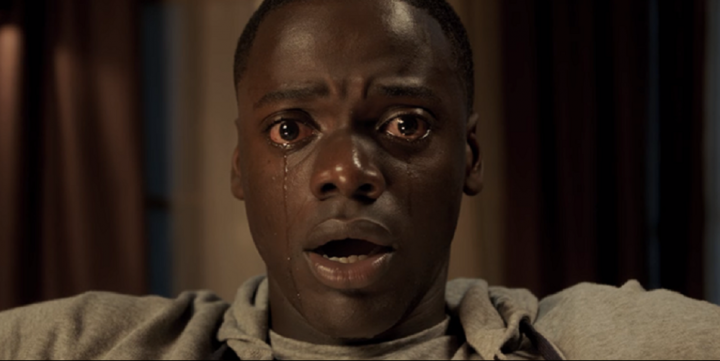
    Get Out sets up very much like Guess Who’s Coming to Dinner with Chris (Daniel Kaluuya) getting ready to meet his girlfriend Rose’s (Allison Williams) parents for the first time. “Do they know I’m black?” Chris asks Rose just before they leave, to which she jokingly responds, “Mom and Dad, my black boyfriend will be coming up this weekend. I just don’t want you to be shocked that he’s a black man.” She has a point and he takes it. However, it seems that his worries were justified when they finally meet her parents Dean (Bradley Whitford) and Missy Armitage (Catherine Keener).

    This is where Get Out gets really interesting, but not in the way you think. Peele perfectly replicates this seemingly post-racial America that so many people think exists. However, comments like “I would have voted for Obama a third time if I could have” and “Do you play golf? I know Tiger!” suggest otherwise. Up until about a third of the way through the movie, the main focus of the film is the increasing tension in the house due to Rose’s parents’ odd behavior around Chris.

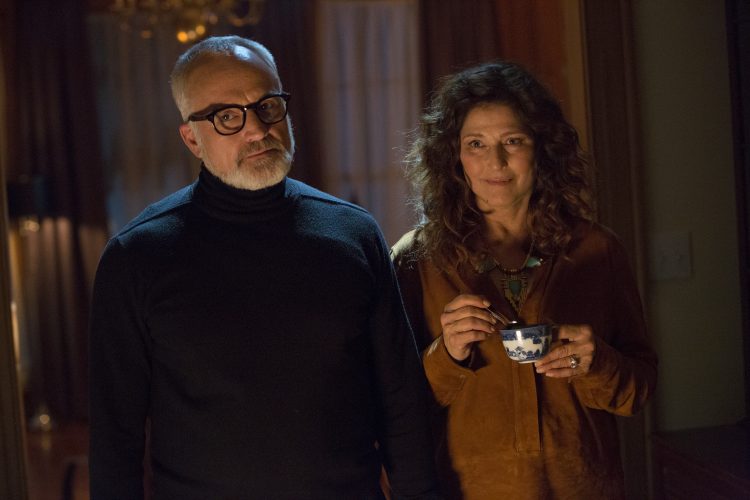
    Bradley Whitford and Catherine Keener in Get Out

    Peele is incredibly patient and doesn’t tip his hand until the last minute possible. Until then, he imbues us with some genuinely chilling moments including an incredible sequence involving Missy hypnotizing Chris using a tea cup. It literally sent chills down my spine. There aren’t any other bit horror set pieces, but the tension in the movie is almost unbearable at some points, as is the yearning for answers.

    Unlike Karyn Kusama’s The Invitation, there’s almost no question that something is amiss in this household, whether it be with Rose’s family or the Georgina (Betty Gabriel) and Walter (Marcus Gabriel), the family’s staff.Although Peele doesn’t blow his big reveal until late into the movie, that doesn’t stop him from dropping hints along the way. In fact, the attention to detail is remarkable. Even details outside of the plot make a huge impression.

    Although Peele doesn’t blow his big reveal until late into the movie, that doesn’t stop him from dropping hints along the way. In fact, the attention to detail is remarkable. Even details outside of the plot make a huge impression. Early in the movie as Chris and Rose are driving up to the house, they hit a deer. Chris goes into the woods when he hears the animal crying. And as he’s looking at it, there’s a look of familiarity and sympathy. This is because Chris knows what it’s like to be the prey.

    That theme continues throughout the movie. Another detail is in the costuming. When the entire neighborhood goes to the Armitage’s house for an annual party, there is a small detail separating Chris from everyone else. While he wears blue, everyone else wears some form of red. It’s that attention to even the smallest facets of the film — the set, small lines of dialogue, clothing, cereal — that make it such a fun puzzle for the audience to solve. It begs to be watched over and over to dissect it.

    However, there’s one piece of the film that is almost as pivotal to its success as any other: the humor. Obviously, with Jordan Peele directing a script that he wrote you expect it to be funny. And it is. Every joke lands squarely every time. What’s more impressive, though, is that he earns those laughs. Don’t be fooled. This is not a horror comedy. The first goal of those movies is to make you laugh. The comedy comes from the natural awkwardness of the situation. It comes from the characters — Lil Rey Howrey is particularly strong. Most importantly, it comes from the fact that these interactions, as exaggerated as they may be, are unfortunately true.

    Get Out is easily one of the most original horror movies — or just movie for that matter — in years. It perfectly homages classic horror movies while feeling contemporary in its themes. However, it’s also one of the most entertaining movie experiences I’ve ever had. Both times I watched it, the crowd was laughing, screaming, and cheering the entire time. That’s rare to get an entire group of different people eating out of the palm of your hand or the clink of your teacup.

    Get Out is available on Amazon!

    Karl’s rating:

  • John Wick Movie Review — The action movie and hero that saves a genre

    John Wick Movie Review — The action movie and hero that saves a genre

    Told with utter efficiency and blessed with incredible fight sequences, this darkly funny action flick will have you saying the name John Wick for years to come.

    John McClane, Jason Bourne, and now, John Wick. Once and a while an action movie comes along and breathes new life into the genre. John Wick couldn’t come at a better time to save us from the assault of movies that attempted to be the next Taken. Instead, we’re treated to a movie that combines the suave filmmaking of Skyfall, the sly visual humor of Die Hard, with truly singular action sequences. John Wick may be one of the best action movies of the decade that will be attempted to be replicated over and over again to middling success. However, we’ll always remember the rip-roaring original as a pinnacle of the action genre.

    The movie begins with the death of John Wick’s (Keanu Reeves) wife to a terminal illness. Though devastated by her loss, he finds solace in her parting gift to him: a puppy named Daisy. After a run-in with a group of young Russian — wannabe — mobsters, led by Iosef Tarasov (Game of Thrones‘ Alfie Allen). Iosef approaches Wick at a gas station and offers to buy his beloved ’69 Boss Mustang. After refusing, Iosef — best described as a spoiled brat — breaks into Wick’s house, beats him, steals his car, and *trigger warning* sends that adorable little puppy to the farm. Needless to say, Wick doesn’t take this well. You see, John Wick is not just a retired assassin. He is THE retired assassin. “Well, John wasn’t exactly the Boogeyman. He was the one you sent to kill the fucking Boogeyman,” as Iosef’s Dad Viggo (Michael Nyquist), the head of the Russian mob, says.

    💌 Sign up for our weekly email newsletter with movie recommendations available to stream.


    ADVERTISEMENT


    Instead of falling into turmoil, John sets off on a warpath to do one thing — kill Iosef. Of course, he has to get through countless henchman, Viggo, and a kickass assassin named Ms. Perkins (Adrienne Palicki). This gives us a sleek, turbo-boosted 90-minutes of pure action that can be summed up with one word: awesome.

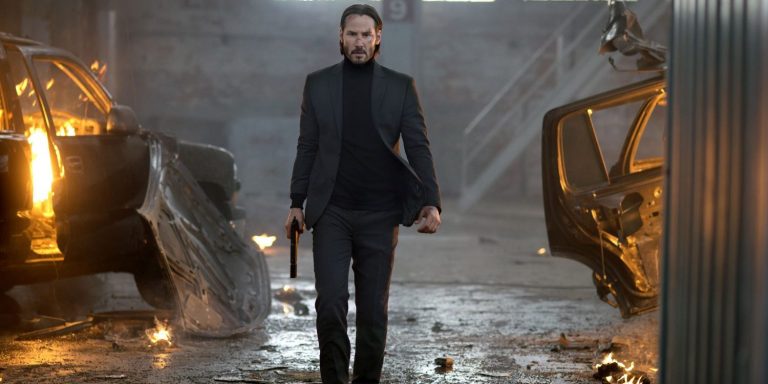
    Director Chad Stahelski — a former stuntman — directs and captures action in a way that few directors are able to. Unlike the shaky cams and quick cuts that made the Taken movies nearly unbearable, Stahelski makes the action linear and films it with a steady eye that lets you appreciate every move and shot. However, it’s the fight choreography that will make John Wick join the pantheon of action movies. Not only is the martial arts riveting, it has a rhythm to it that makes them so beautiful to watch no matter how brutal they get. Wick doesn’t waste a single bullet, do a move that’s unnecessary, or exert any more effort than he needs. His movements feel like he is an assissin as much as Reeves’ performance does. It also applies the Bond formula of visual comedy by adding touches that are effectively punchlines within the fight scenes.

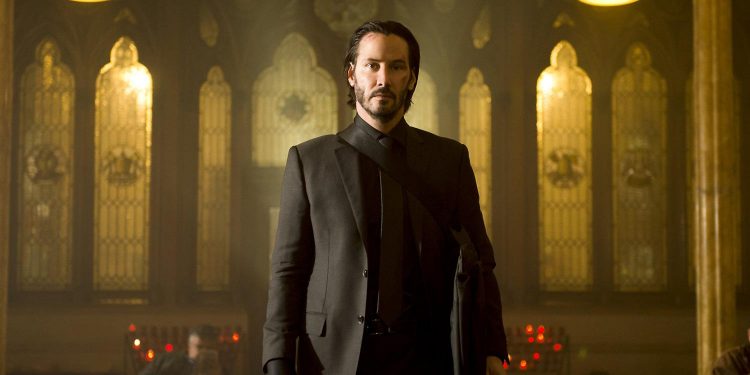
    Keanu Reeves in John Wick

    The fluidity continues into the screenplay, which builds the world and characters with streamlined efficiency. Without a single exposition all line, the entire world of this criminal underbelly of New York — complete with assassins, Russian mobsters, and a contract killer hotel — is constructed. When we first meet Viggo, he is informed that his son stole from John Wick. His response is a simple: “Oh.” It’s that expositional efficiency that makes this movie such an effective action movie. With that simple “oh,” we know everything we need to know about John Wick.

    More than that, the world that John Wick inhabits is more interesting than any action movie with terrorist groups or secret government agencies. Without directly addressing it, you are dropped into a world of interconnected hitmen — and women — who are part of an exclusive and elegant club called the Continental, which owns hotels and bars which these people can frequent without fear of being offed by a fellow guest. The detail — code names, symbols, people — is exquisite and a master show of world-building. No exposition. No lower thirds. The screenwriter and director trust that the audience can figure out this universe. That’s something so rare in action and incredibly appreciated.

  • Godzilla (2014) Movie Review — A darker, visually stunning version of the classic monster flick

    Godzilla (2014) Movie Review — A darker, visually stunning version of the classic monster flick

    Gareth Edwards’ 2014 Godzilla is a darker, visually stunning version of the classic movie monster despite its issues

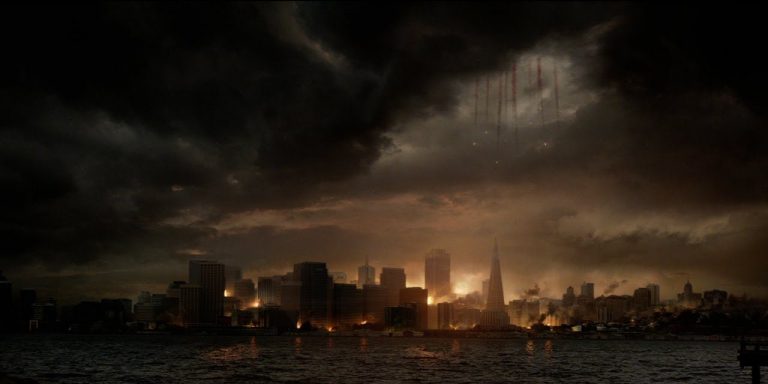
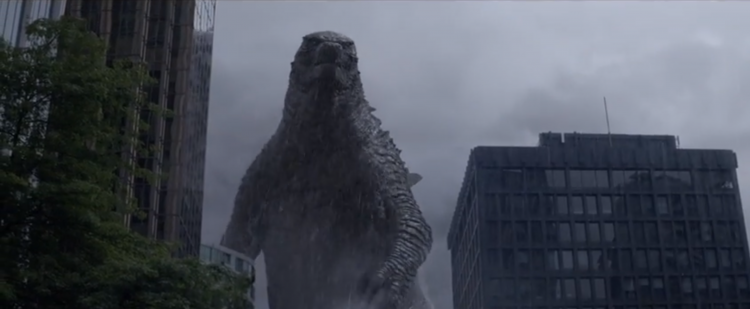
    With Kong: Skull Island out today, we thought it was the perfect opportunity to go back and review the first movie in the Legendary MonsterVerse, Gareth Edwards’ GodzillaNow, hopes weren’t exactly high following the trainwreck that was the 1998 film. However, with Edwards in the director’s chair, a little hope was restored. His first film, Monsters, showed a lot of restraint as the main characters navigated a post-apocalyptic world riddled with giant octopi — it’s much better than it sounds. However, when he does get to those action set pieces, he directs them gracefully and with sweeping camerawork. It was a refreshing break from the chaos we usually see in this genre. I’m looking at you Cloverfield. The world may be in chaos, but that doesn’t mean the filmmaking needs to be. While his work in Godzilla isn’t exactly as inspiring, it still cements itself as a solid summer blockbuster — perhaps one of the better ones — despite its clear flaws.

    The Godzilla universe is rooted in camp. From the iconic rubber suits from the 1954 version to Roland Emmerich’s 1998 film with its  — well, I’m not completely sure how to describe it. However, Edwards infuses this take with a darker tone that surprisingly suits it despite the fact that it’s about a 350-foot reptile. Unlike previous Godzilla movies, the 2014 version is actually concerned with plot and its lore, not just the action sequences. This time, Bryan Cranston plays Joe Brody, the lead engineer of a Japanese nuclear plant until it went into meltdown due to mysterious seismic activity. Years later, he gets arrested trying to return to the site to retrieve files to help him figure out what caused the meltdown. His son Ford (Aaron Taylor-Johnson), an explosive disposal officer for the Navy, goes to Japan to bail him out. Eventually, his father convinces him to help him break back into the quarantine zone. They are soon captured and brought to a secret facility where Project Monarch, led by Dr. Ishiro Serizawa (Ken Watanabe) and Dr. Vivienne Graham (Sally Hawkins), are analyzing a mysterious structure at the site of the nuclear plant. After several power failures, a giant moth-like creature dubbed MUTO — Massive Unidentified Terrestrial Organism — is released and is making its way to San Francisco. As he joins the military task force that is looking to stop the monster, Ford learns that in 1954 several nuclear bomb tests being conducted were actually an attempt to kill Godzilla or at least contain him. However, he has awakened with the release of the MUTO. As Dr. Serizawa says, “let them fight.” And fight they do.


    Gareth Edwards' Godzilla

    Unlike earlier Kaiju films, including 2013’s Pacific RimGodzilla revels in the moments between the all-out carnage of the monster-versus-monster battles that defines it. However, that is the reason the bloodthirsty monster movie fanboys detest this movie. They are the people who waged the question, “is there enough Godzilla in Godzilla?” Well, in my opinion, there is just enough. The battle sequences are fantastic and thriller and enough to save the desire for monster awesomeness that some will crave. But then there are moments of pure visual genius that outshine them. Specifically, there’s the highly publicized paratrooper sequence where flares create an incredible effect against the smokey backdrop of a destroyed San Francisco. Then, there’s a moment where we watch on with bated breath as a monster passes beneath a railroad bridge where some of our characters are hiding. There’s some incredible cinema tucked away in there.

    Screenwriter Max Borenstein makes it a point to humanize the movie by using characters that aren’t defined by the usual genre rules. However, as impressive as the cast is, the movie makes little use of them. The wonderful Oscar winner Juliette Binoche gets strong material that amounts to less than three minutes while Cranston barely gets to flesh out his character. Oscar nominees Sally Hawkins and Ken Watanabe are simply there to react to what’s happening while Elizabeth Olsen‘s role as Elle Brody becomes a plot device. Unfortunately, the only actor who gets any material to work with is Aaron Taylor-Johnson whose performance comes off as stiff and emotionless. There are cute attempts to make us care about the characters that simply fall flat and often push the film into cliche territory. Considering the movie is as well-constructed as it is, it’s easy to let that go and allow its visual brilliance to make up for it. In particular, the monster’s first clash in Honolulu and their final, epic showdown in San Francisco are among the best scenes in a monster movie in years.

    It’s clear that Edwards felt the pressure of the studio system in this movie. It often lets tip when a shot or line was put in because the studio thought it would make it more marketable — he certainly figured out how to balance the two with Rogue One. Like that movie, Godzilla is visually dazzling enough to remind you why Legendary chose Edwards to revive the franchise. While it has its problems — the most severe of which is Aaron Taylor-Johnson’s performance — you can forgive it because, well, it’s Godzilla fighting another giant monster. What more can you ask for?

    7.5/10

    Godzilla (2014) is available on DVD, Blu-Ray, and digital rental on Amazon!

  • Lorde Album Review — Pure Heroine is a sensational debut album

    Lorde Album Review — Pure Heroine is a sensational debut album

    Pure Heroine is an achievement in production and songwriting. Lorde proves herself to be one of our generations voices with one of the greatest debuts of the decade.

    Based on festival scheduling this year, it looks like we will finally be getting that long-awaited second Lorde album. Ever since her debut Pure Heroine dropped, people have been enraptured in the mystery that is Lorde. The first time I heard her was off her The Love Club EP. The second I got to the end of “Bravado” I knew that she was going to do great things. Still, I didn’t anticipate the level of success she reached. Even more, I didn’t anticipate how incredible of an album she was able to debut with.


    The first thing you notice when you listen through Pure Heroine is the truly phenomenal production. Similar to the xx’s debut album, the minimalist approach to the instrumentation is what makes it shine. However, they infuse the album with strong percussion — most notably in “Royals” and “Team” — that brings the songs up and makes them danceable.

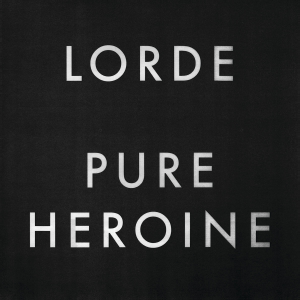
    Lorde's Pure HeroineHowever, what makes Pure Heroine a truly great album is Lorde’s ability to grasp youthful ignorance in her lyrics, then completely question it. There are endless gems of lyrics throughout this album. In “Still Sane” the lyrics “only bad people live to see their likeness set in stone/what does that make me.” It’s the maturity in songwriting that propels the album. Even the beginning of the album, in which she uses simple but effective imagery to portray her point, is complex.

    Very few albums demand to be listened to in order from front to back. Pure Heroine is certainly one of those albums. The album tracks her maturation from ignorant teen to her sudden adulthood in just ten lean songs. “Royals” revels in her youth in a synth pop earworm, while “Still Sane” has her coming to terms with her new status. “400 Lux” is about her aimless life in the suburbs while “Glory and Gore” talks about her motivation and fight as she finds success. She begins with matter-of-fact lyrics and ends with hopeful and powerful ones.

    “A World Alone” brings together all the elements that make the album so powerful and effective. With minimalist instrumentation — the verses simply use a bassline to hold it down — and metaphoric lyrics, the song has an ethereal quality. But when you’re hit with the danceable and catchy melodies of the chorus, the song comes to life. However, when you listen closely, its message and lyrics are an anthem for millennials.


    Pure Heroine is simply an achievement in music. It’s both singular and nostalgic in its sound. Lorde is one of the most innovative and talented songwriters of our time. I can talk about production and songwriting all I want, but there’s one piece of genius that will leave you high at the end of the album. Listen closely to the first and last lyrics. It’s a simple, but genius piece of writing that makes Pure Heroine one of the most satisfying albums and best debuts of all time.

    9.5/10

    Pure Heroine is available on vinyl and digital download on Amazon!

  • Closet Monster Movie Review — An electric journey of self-discovery

    Closet Monster Movie Review — An electric journey of self-discovery

    Closet Monster is a unique take on the LGBT coming-of-age genre with a stellar performance by Connor Jessup

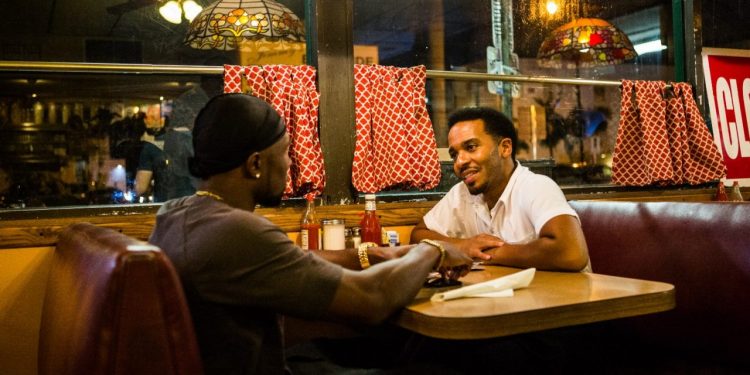
    The exploration of sexuality is a sub-genre that has emerged from under the glut of young adult coming-of-age stories. From Dee Rees’ confident debut Pariah or Barry Jenkins’ masterpiece Moonlight, the movies that encompass these themes are heartbreaking, but important in portraying stories that so often feel identical. While Stephen Dunn’s Closet Monster doesn’t quite touch the artistic heights set by those two films, his singular style and focused storytelling make it a strong entry into the canon of the gay coming-of-age genre.


    There are those moments in the youth of LGBT kids when they realize that the feelings they are having are different from others. Before we even meet him as a teenager, Oscar (Connor Jessup) seems to be having those feelings. However, any exploration he might have been going towards is instantly stopped when he witnesses the brutal attack of a gay teen when he is 10. Just before that, his mother, Brin (Joanne Kelly) divorces his father, Peter (Aaron Abrams), and moves out, which leaves him with his hypermasculine father and his pet hamster Buffy (voiced by Isabella Rossellini) — she occasionally speaks to him and acts as his conscious. We skip years later to 17-year-old Oscar who is changed by the events of his childhood. Without a model relationship in front of him and the constant diminishing of any weakness he shows by his father, Oscar simply retreats into himself.

    However, as with many teens, his sexuality comes into question when he forms a crush on Wilder (Aliocha Schneider), his free-wheeling co-worker at a Home Depot type store. As Oscar and Wilder get closer, Oscar’s difficulty of dealing with his feelings, his father, and the stress of trying to get into a special effects makeup school in New York become entangled.

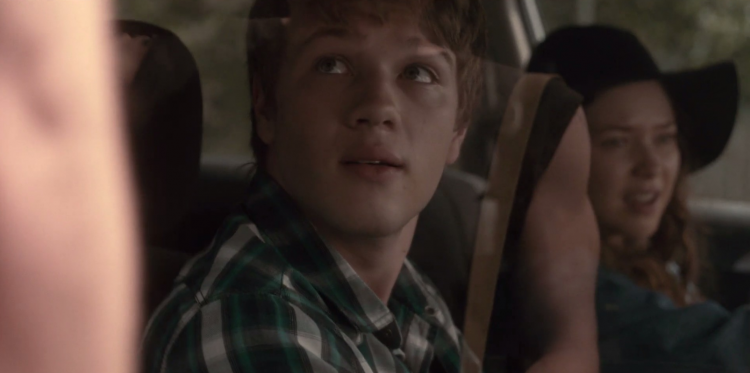
    While it feels like Closet Monster is hitting the usual young adult beats, you quickly realize that it has other plans for its young protagonist. Dunn has even admitted that stories like this have been told before, but because it is so personal, that didn’t matter to him. That intimacy is palpable.While Dunn’s screenplay and direction have to be credited with that, Connor Jessup’s performance is simply electric.

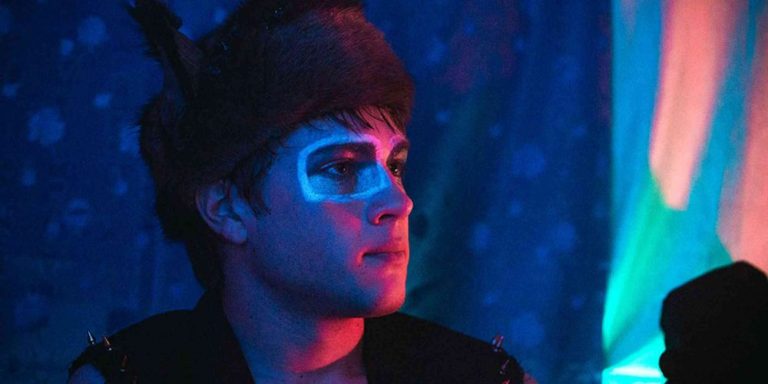
    Connor Jessup in Closet Monster

    With near flawless execution, Jessup builds Oscar with his physicality rather than dialogue. The amount of emotion he’s able to portray with just his face gives us everything we need to know about how he’s feeling in a given moment. The scene in which he meets Wilder is almost devoid of dialogue on Oscar’s part. However, the adolescence-filled sexual confusion is so easily discerned by his physicality and the way he reacts to Wilder. It’s what made Ashton Sanders’ performance in Moonlight so strong.

    Closet Monster is a little obvious with its symbolism. From a metal rod representing his internalized fear of his true identity to Buffy being his connection youth and innocence. However, Dunn stylistically pulls off the movie’s themes beautifully. By cementing our point-of-view with Oscar, he allows us to see what he sees and feel what he feels no matter how surreal they get — a talking hamster, the word unfortunately being scrawled on the walls and furniture after he receives a rejection letter from a college. It’s imperative to the movie’s success since it isn’t plot heavy.


    For a movie so focused on character, we aren’t really given strong portraits of anyone but Oscar. While, of course, this is a movie about him and his struggle with identity, the people around him and how they affect him are integral to his journey. Since we view the movie from Oscar’s point-of-view in two distinct times, we miss a lot of development from his father, mother, and Gemma (Sofia Banzhaf), his best friend. It makes understanding his actions towards them more difficult.

    But this is Oscar’s story. Closet Monster is one of those movies that you watch and understand because it feels so personal. Life doesn’t always work out the way you plan. We don’t get the triumphant happy beats that often bog down movies like this. Instead, we get moments between people, though difficult to watch, that define who we are.

    Closet Monster is available for streaming on Netflix or rental on Amazon!

  • Why Moonlight is one of the most important Best Picture winners in history

    Why Moonlight is one of the most important Best Picture winners in history

    Moonlight winning Best Picture will go down as one of the greatest Oscar upsets of all time

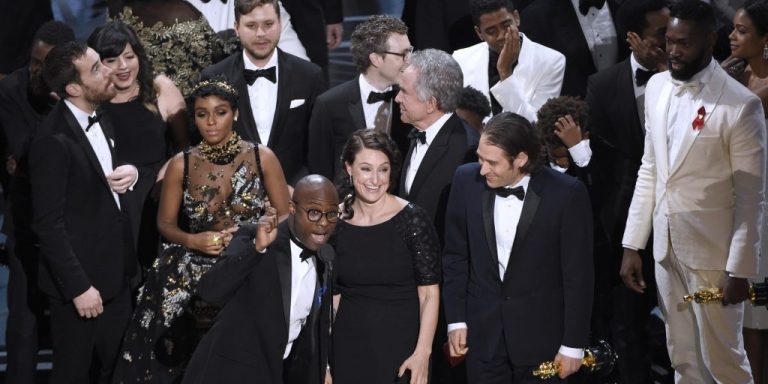
    The emotional rollercoaster that was the last 10 minutes of the 89th Academy Awards was the first of its kind. Never has there been a mistake so colossal in the history of the ceremony. However, it also came during one of the most important wins at the Oscars in history. It’s unfortunate that this mistake overpowered the gravity of the win. So, I wanted to take a moment and talk about what Moonlight‘s win means in terms of the history of the Oscars, of our society, and the times we are living in.

    While the Oscars are slowly fading away in cultural importance as movies move more towards blockbusters and at-home viewing, my love for the process and the films involved has only deepened. I am an Oscars geek. Not only do I love movies and watching people from actors to behind-the-scenes crew members being lauded for their work, I love predicting them. To be honest, I think I fell in love with the Oscars before I fell in love with movies. So, while for some people they are a silly awards show, for me they are a platform, both political and social, that has influence over the industry and the world.

    With the last two years falling beholden to #OscarsSoWhite, all eyes turned to The Academy this year to do something to have all groups represented at the Oscars. When it looked as if movies like Lion, Hidden Figures, Fences, Loving, and Moonlight were making a strong play for awards season, I was ecstatic! Not only did I really love all those movies, it represented a shift in the stories that were being featured heavily on the awards trail. Then, La La Land premiered. Now, to put to rest any anti-La La Land sentiment you may think I’m putting down, take a moment to read my review of the movie. Spoiler: I adore it.


    Moonlight won Best Picture in 2016

    However, my favorite movie of the year was Moonlight. Its exploration of identity, especially of a young gay black boy, hit close to home for me. And while I thought its singular style, sensational performances, and beautiful story would go over well with many people, I didn’t think The Academy would embrace it. Unfortunately, there are two things that the heavily old, white, and male Academy doesn’t like their stories to be: black and gay. I was hopeful that it would make an awards run and end up with a few nominations here and there. However, it was embraced by critics and critic awards — which makes the case for critics yet again — and eventually by the industry itself. The fact that it was getting so much buzz and publicity was enough for me. It was enough that this story was being seen. And while I predicted Moonlight for Best Picture, I knew that a million pieces had to fall into place for it to happen.

    Well, I shouldn’t have been so dramatic and realized that it’s a movie that is beloved and of course would win Best Picture. But the gravity of that win is something that few people are talking about. Moonlight broke so many barriers in Best Picture that from this moment on we will have to reevaluate the way we predict these awards.

    First of all, it’s the first movie with an all-black cast to win Best Picture. Shockingly, it wasn’t until 2013 that a movie with a black main character won — Steve McQueen’s 12 Years A Slave. Obviously, the Oscars have an issue with diversity, so this was a very encouraging win on that front. A win like this is something that says that they are not letting race or sexual orientation get in the way of the movies they view and ignore. In our current environment, minorities — young minorities in particular — don’t have a central figure to look up to or aspire to. Seeing Moonlight and Barry Jenkins being honored at the Oscars in this way is the kind of thing that kids need to see right now.

    The movie also broke they LGBT barrier at the Oscars. No movie with an LGBT main character has won Best Picture. The closest we got was in 2004 when Brokeback Mountain famously lost to Crash. The amount of progress we’ve made since then has been incredible. And a new kind of progress that will hopefully inspire other filmmakers has been achieved with this win. Hopefully, this will encourage other filmmakers to tackle stories that represent a wide array of people from different backgrounds and different walks of life.

    From an industry perspective, Moonlight is one of the lowest-budget movies to ever win Best Picture. As an independent film lover, it’s encouraging to see such a small movie win and encourage studios to finance smaller and more intimate projects rather than the 700th Marvel film.


    However, most importantly, as a message to SCROTUS, Moonlight successfully teaches us the lessons of empathy and what happens when someone is taunted for who they are. Like in Chiron in Moonlight, more people are receding into themselves and hiding from their true selves because the government and parts of the country are saying that they don’t belong. Well, watching a movie about a gay black teen living in poverty will hopefully give them the courage to step out, speak out, and fight back. Call it a narcissistic, self-congratulatory awards show, but this year, the Oscars were a battle cry.

  • Fences review — Viola Davis is an emotional powerhouse

    Fences review — Viola Davis is an emotional powerhouse

    Fences doesn’t take the opportunity to do anything cinematic with August Wilson’s classic source material, however, it does boast career-best performances by Viola Davis and Denzel Washington

    Troy Maxson (Denzel Washington) is one of the most complex characters to be committed to stage, and now film. No wonder it took James Earl Jones and Washington to portray his many layers properly on stage. In FencesAugust Wilson created a compelling character study of a larger than life man who is living in a world that doesn’t recognize him.

    Set in Pittsburgh in 1957, Fences follows Troy Maxson, a garbage man who spends each Friday — his payday — drinking with his co-worker and best friend Jim Bono (the great Stephen McKinley Henderson) and telling various stories ranging from his tangle with death to his abusive father. In particular, he dwells on his time as a star baseball player in the Negro Leagues. However, after aging out, he becomes bitter that he was never given the chance to play in the Majors — by the time the film takes place, Jackie Robinson has already broken the color barrier. This resentment coupled with his boisterous personality causes him to convince himself that everyone and everything are stacked against him. Even his wife, Rose (Viola Davis), who has steadily stood by him for years, and his son, Cory (Jovan Adepo), whose success in football brings back the strong memories of baseball in Troy, received a jolt of his rage.


    Washington plays Troy as a man who is forgotten in the world, but a huge force to the ones around him. For Troy, he is the lead of his story and never a supporting role in someone else’s — a fact that comes to haunt him in regards to his wife. For those closest to him — Rose, Cory, his grown son Lyons (Russell Hornsby) — Troy is the sun that they both revolve around and are threatened to be destroyed by if they fall out of orbit. The one person who has some emotional control over Troy is his brother Gabe (Mykelti Williams — he would have been a fantastic Best Supporting Actor contender at the Oscars), a World War II veteran who was mentally handicapped in the war. His innocence to the situations and Troy’s guilt about him is the only thing that gets to him. At one point, Bono says, “some people build fences to keep people out and other people build them to keep people in.” While it’s an unsubtle nod to the metaphor that is the title, it’s an important line that perfectly sums up Troy’s unspoken meshes and Rose’s attempt to assuage them. Wilson’s prose and dialogue remind us that playwrighting and screenwriting are two entirely different things. However, it’s lines like those that also remind us why plays are so powerful. They speak the simple truths that often feel out of place in film.

    Washington, who along with Davis won a Tony for the Play, stepped into the director’s chair to lead the same cast that he performed beside on stage — save for his son, who was played by a different actor in the play. His reverence for the material, which was written by August Wilson himself before his death in 2005, is apparent. He seemingly didn’t change a single word from the script, which is admirable but feels like he loses the chance to make something more cinematic. Of course, though, Wilson’s script and powerful language are more than enough to make up for any lack of cinematic flourish. If anything, it does more to support the material, which of course is the first job of a director. What he does do, is give each and every actor a place to flex their talents.

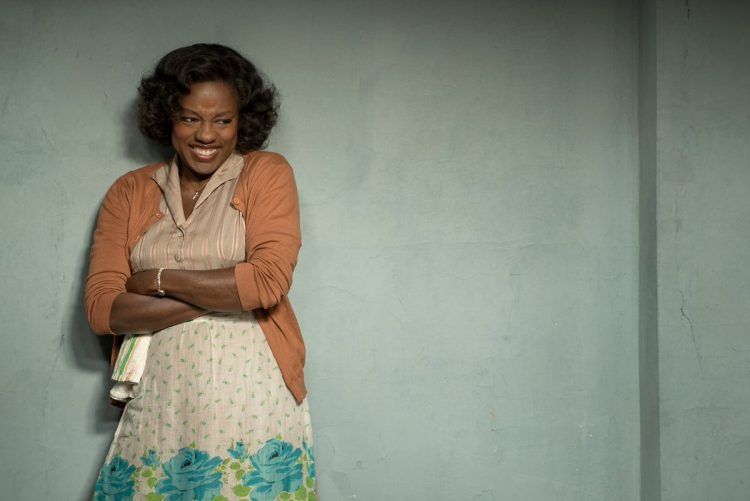
    Viola Davis in Fences
    Viola Davis in Fences

    Viola Davis still plays to the back of the house in the film. The now infamous “I’ve been standing with you” scene will go down as one of the best-acted scenes in history thanks to the emotional flood she is able to release. However, it’s the smaller moments, which make the case for the film, that makes her performance, as a whole, great. She carries the weight of her 18 years of marriage on her face. The look she makes when Troy does something to remind her of the terrible hubris that has defined his life and decisions. One day, when she received a life achievement award, her monologue scene will be the one that they include from this movie. However, you can remember her achievement in this film as one of the single greatest performances from beginning to end.

    While Fences begins as the story about a man that can’t help but absorb all the energy and attention around him, it ends as her story, one of a woman taking back the power she lost for all the years she spent with him. However, the themes run deeper than that. It, of course, touches on the societal issues of the time, but the more interesting, and affecting, is its commentary on parenthood. It asks how you give your children your strengths while protecting them from your weaknesses? How do you prepare your kids from the world and society when it’s constantly changing before your eyes? In the case of Troy, he can’t grasp the change, which is understandable considering the circumstances he lived in. However, it’s his stubbornness of not allowing Cory to grow and live that drives a wedge through his family. His stubbornness and pride is the shadow that follows him. In turn, Troy is the shadow that follows Cory.


    There’s nothing groundbreaking cinematically in Fences. Any opportunities Washington takes to go outside the setting of the play — the vast majority of the film takes place in his backyard and house — feel out of place. However, there’s no doubting that August Wilson’s play is one of the great American dramas to ever grace the stage. While it doesn’t translate perfectly to film, the performances and emotions do — multiple people, including my friend I was seeing it with, cried at the end. In the end, it’s a really important lesson to be mindful of the space you take up in your tiny slice of the world and to leave room for those around you. However, on a macro level, Fences speaks more to our issues today than many people would expect. As Denzel so beautifully put in his SAG speech, August Wilson use his 10-play “Pittsburgh Cycle” to tell the stories of African-Americans that are pushed into the margins of literature, theater, and film. Also, though, Fences portrays what could happen when society constantly denies you the opportunity to advance yourself or simply live.

    ★★★½ out of 5


    Fences is available on DVD, Blu-Ray, and digital on Amazon!

  • The Great Wall Movie Review — Whitewashing? No. Good? No. Well-Made? Yup.

    The Great Wall Movie Review — Whitewashing? No. Good? No. Well-Made? Yup.

    The Great Wall is well-made enough to forgive its narrative flaws and lackluster performance by Matt Damon

    Going into The Great Wall, expectations were both high and terribly low. Besides the whitewashing scandal — more on that later —  the trailer wasn’t well cut enough to truly ratchet up any excitement. However, the names behind the project were. No, not Matt Damon, god help us, but director Zhang Yimou brought a certain level of gravitas to the project. He is a three-time nominee for Best Foreign Language Film and is best known for House of Flying Daggers and Hero — many people consider the latter one of the most beautifully constructed movies ever made. So, with his first foray into English-language filmmaking, I was expecting a certain level of craft. He delivered, and then some. This is perhaps the best-crafted fantasy action movie since The Lord of the Rings Trilogy. One sequence even brings back memories of the famous Helm’s Deep battle in The Fellowship of the Ring. On the other hand, narratively the film is perhaps the dullest I’ve had to sit through recently.


    The Great Wall has come with countless myths and legends, as the opening text states, and the movie tells just one of them. William Garin (Matt Damon) and Pero Tovar (Pedro Pascal) are traders — or thieves — in China looking for fabled black powder. After being attacked by a mysterious beast, they stumble upon the wall and are taken prisoner. There they find a massive army preparing for some attack. However, the army isn’t human. Every 60 years — because 100 years is too long to wait — an army of lizard-like monsters called the Tao Tei emerge from a mountain and kill anything in their path to feed their queen. The wall was built to protect the capital city from attack.

    Jing Tian in The Great Wall
    Jing Tian in The Great Wall

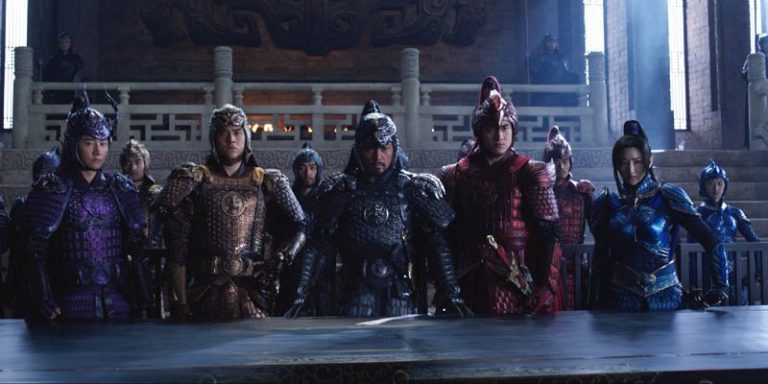
    Once Garin and Tovar are captured, the first wave attacks arrive. Led by General Shao (Zhang Hanyu), the army — The Nameless Order — prepares to defend the wall. The members of the army wear different colored armor — blue, purple, or red — depending on their duty during the battle. From bungee cords to tar covered cannonballs launched from giant catapults to perfectly coordinated arrows, the army is well trained and moves as one. The sequence is easily the best of the movie and an incredible piece of filmmaking. The costume design by Mayes C. Rubeo is intricately put together but works best on a massive scale. The colors work together on screen to form a massive and colorful block against the harsh grays and browns of the wall and surrounding landscape. It’s hard to think of a movie whose work could surpass it this year. Conversely, the production design is more muted, but the detail is still there. The enormous and complex designs of the weapons are pulled right out of a fantasy-obsessed 11-year-old brain and are realized right before your eyes. The metal work on the swords, furniture, and to objects as small as candle holders is exquisite. It’s a shame that the movie couldn’t hold up to that first battle sequence.

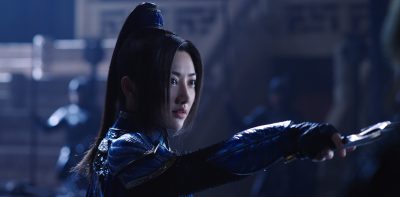
    From there, it’s a steep downhill dive. While the visual style is great, the narrative just isn’t there. There’s no point in even going into it because there’s not much to nitpick at. It follows the usual formula of movies like this. And while Jing Tian as Commander Lin Mae is a really great lead, Damon’s performance — especially that kind of generalized European accent that switches between English and Irish — pulls you out of the movie instantly.


    To address the elephant in the room, I don’t believe this was a case of Hollywood whitewashing. Damon’s role is written for a westerner, which is integral to the plot. He is regularly out skilled and marvels at the army’s ability to work together — something that Commander Lin Mae points out he is not good at. Could this movie have been done without a western character in it? Yeah, probably. But it isn’t whitewashing.

    The Great Wall has a mighty fall from grace after the incredible first battle sequence. Even the final action set piece falls flat. But, as with every Zhang Yimou movie, it is fantastically well-made and produced, which certainly elevates it. If you’re looking for mindless action and ridiculously cheesy storylines that you can laugh at, then The Great Wall will fill that void. It’s a solid matinee watch and beautiful to look at.

    5/10

  • 2017 Oscar Predictions: “The Jungle Book” is a lock for Visual Effects. Or is it?

    2017 Oscar Predictions: “The Jungle Book” is a lock for Visual Effects. Or is it?

    The Jungle Book has maintained its frontrunner status throughout the season for Best Visual Effects. But we think an upset is brewing.

    With incredible and groundbreaking photorealistic effects, The Jungle Book is the clear choice in Best Visual Effects. It would be a similar winner to Life of Pi. However, the biggest issue with it winning is that it the past eight winners of this award had a nomination in at least one other category — the same amount of time the new voting system was in place. The Jungle Book not only doesn’t fit this. It’s the only movie with one nomination. That could leave it open for an upset.

    Kubo and the Two Strings is nominated for Best Visual Effects
    Kubo and the Two Strings is nominated for Best Visual Effects

    The most likely contender would be Kubo and the Two Strings. After nabbing a surprise nomination, similarly to Ex Machina last year, it could muster up enough support because of the publicity it received. The only issue is — which also separates it from a pulling off an Ex Machina style upset — is that there is a clear frontrunner in the category. The reason Ex Machina upset is because Mad Max: Fury Road and The Revenant probably split the vote. There really isn’t another film that could draw votes away from The Jungle Book. However, it has a nomination for Best Animated Feature, which fulfills the criteria of having a nomination in another category.

    But, of course, there’s the issue of no animated movie winning this category. The only other animated film to be nominated was The Nightmare Before Christmas. But, go big or go home, right? Let’s go with Kubo.

    Check out all our 2017 Oscar Predictions!

    Will Win: Kubo and the Two String
    Could Win: The Jungle Book
    Dark Horse: Deepwater Horizon
    Should Win: Kubo and the Two Strings

  • 2017 Oscar Predictions: Original Screenplay is Down to “Manchester by the Sea” and “La La Land”

    2017 Oscar Predictions: Original Screenplay is Down to “Manchester by the Sea” and “La La Land”

    Best Original Screenplay is a tight race between Kenneth Lonergan (Manchester by the Sea) and Damien Chazelle (La La Land)

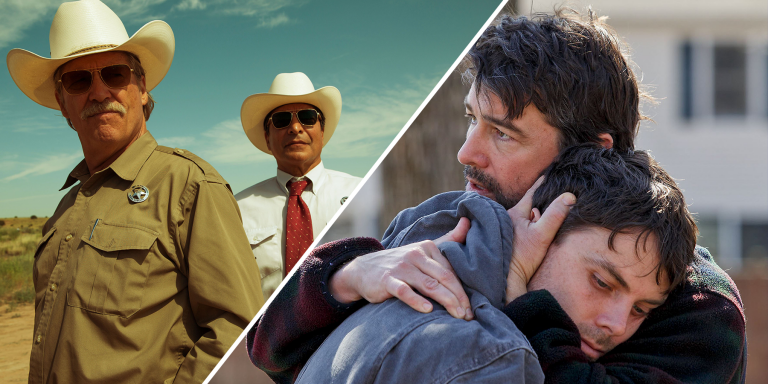
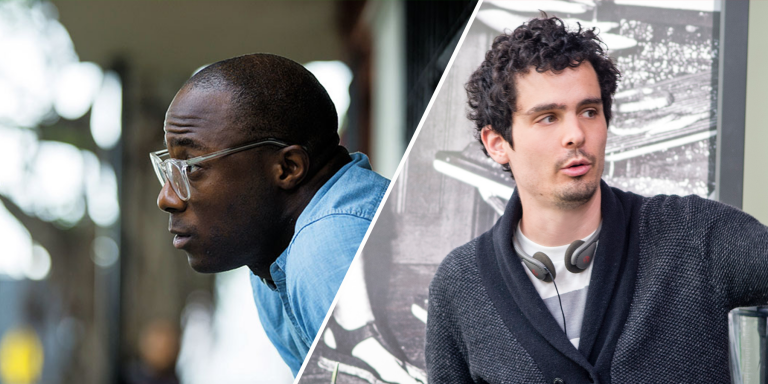
    Barry Jenkins (Moonlight) pulled off an upset at the WGA Awards. However, he is competing in the Adapted Screenplay race, which he should win. That leaves two movies to compete over Best Original Screenplay. From the beginning of the season, Kenneth Lonergan (Manchester by the Seawas the frontrunner for the Oscar. That was until he lost the Golden Globe to Damien Chazelle (La La Land). While there isn’t exactly a perfect correlation between the two categories, they do often match up. That bodes well for Chazelle. However, one statistic going against him is that it’s been more than 75 years since a musical won a screenplay award. Even Best Picture winner Chicago lost the award. While it’s rare, I think he’s very much in this race. But, I’m going to give Lonergan the thin edge to win. With Casey Affleck on wobbly territory in Best Actor, this will be the only place to award the film, which has its fans.

    Hell or High Water is nominated for Best Original Screenplay
    Hell or High Water is nominated for Best Original Screenplay

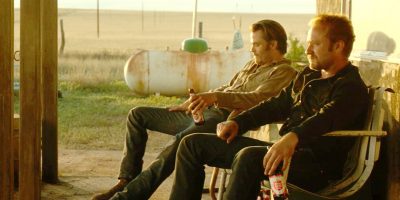
    If there is an upset, it could be Taylor Sheridan (Hell or High Water) taking the prize. In addition to penning Sicario last year, Sheridan’s newest film just premiered at Sundance, which could give him a higher profile. Plus, lovers of Hell or High Water, which there a lot of, will want to award it somewhere. Its screenplay is easily its strongest aspect. So, if you’re filling out your work’s Oscar ballot, go with Lonergan. But if you’re going big, then Sheridan could be your ticket.

    Check out all our 2017 Oscar Predictions!

    Will Win: Kenneth Lonergan, Manchester by the Sea
    Could Win: Damien Chazelle, La La Land
    Dark Horse: Taylor Sheridan, Hell or High Water
    Should Win: Taylor Sheridan, Hell or High Water

  • 2017 Oscar Predictions: “Arrival” vs. “Lion” vs. “La La Land” in Best Cinematography

    2017 Oscar Predictions: “Arrival” vs. “Lion” vs. “La La Land” in Best Cinematography

    La La Land could continue its Oscar sweep in Best Cinematography, but Lion and Arrival have a chance at upsetting.

    Best Cinematography seemed like a shut category until Greg Fraiser (Lionupset frontrunner Linus Sandgren (La La Landat the American Society of Cinematographers Awards. Even though the group only predicts the Oscar winner about half of the time, it showed that La La Land isn’t infallible. While Sandgren maintains its frontrunner status — he won the BAFTA in this category — he is still the best bet to win. In the last ten years, the winner of the BAFTA repeated at the Oscars seven times. While that isn’t the most solid statistic, it’s enough to pay attention to.

    Bradford Young is nominated for Best Cinematography for his work in Arrival
    Bradford Young is nominated for Best Cinematography for his work in Arrival.

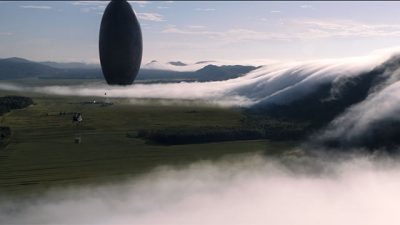
    However, the beautiful cinematography in Lion is still a dark horse for the win. There is another possibility as well. Sci-Fi movies tend to do well in this category. Just look at the upsets by Avatar and Inception a few years back. That means that Bradford Young (Arrivalcould sneak in. Plus, his work is easily the most epic of the group, which is often the key to winning Best Cinematography. Plus, he is the first black cinematographer to be nominated in this category, which is a great, yet sad that we had to wait this long. Many voters are ticking the boxes off for people of color, so this could give him an edge.

    If I had my vote, I’d give it to James Laxton (Moonlightand his singular cinematography. He not only lights his actors beautifully, the composition of his shots are gorgeous and emotive. Sandgren would be a worthy winner, but Laxton truly deserves this prize.

    Check out all our 2017 Oscar Predictions!

    Will Win: Linus Sandgren, La La Land
    Could Win: Bradford Young, Arrival
    Dark Horse: Greg Fraiser, Lion
    Should Win: 
    James Laxton, Moonlight

  • 2017 Oscar Predictions: Barry Jenkins or Damien Chazelle for Best Director?

    2017 Oscar Predictions: Barry Jenkins or Damien Chazelle for Best Director?

    Best Director looks like a locked up category with Damien Chazelle becoming the youngest winner in history for La La Land.

    Best Director is probably the easier of the major categories to predict at the Oscars. Even if Best Picture is a surprise — Shakespeare in Love over Saving Private Ryan or Crash over Brokeback Mountain — Best Director always goes the way that we believe it will go. The only year that we had a surprise is when Rob Marshall (Chicago) lost to Roman Polanski (The Pianist). Often, the best indicator for this award is the Directors Guild of America Award. Since 1970, the winner of this award and the winner of the Oscar for Best Director didn’t match up five times. That’s 5 out of 46. That means it’s 90% accurate. So, that means that barring a huge upset, Damien Chazelle (La La Landis probably going to be the winner. In addition to winning DGA, the Golden Globe, and multiple critics awards, his film has the most nominations of any movie this year and ties the Oscar record. That’s particularly helpful because since switching to a preferential ballot in 2009, the winner of Best Director’s film had the most nominations all but one time. The one time was when Michel Hazanavicius won for The Artist — it had the second most with 10 versus Hugo’s 11. The only way I can seem him losing is because he is young and the Academy prefers its directors more seasoned. If he wins, he would be the youngest winner since 1931. Though, I’m pretty confident there isn’t going to be an upset in this category.


    Barry Jenkins is nominated for Best Director

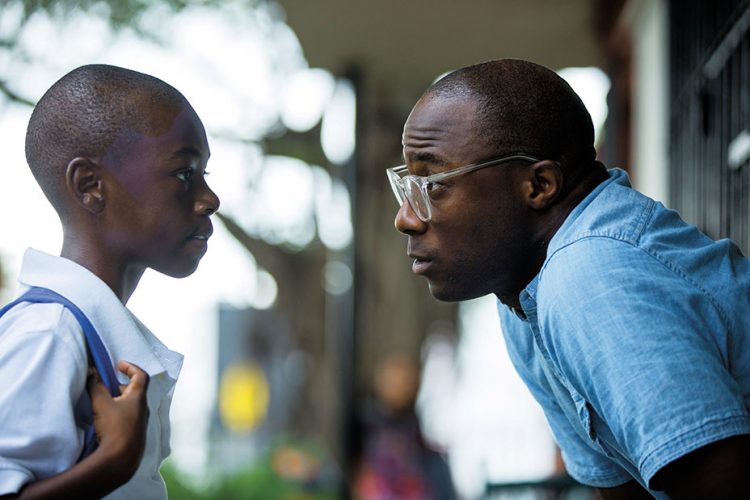
    If there was, it would be Barry Jenkins (Moonlight). His film is only second to La La Land in total nominations and is its rival in Best Picture. While he is likely going to win Adapted Screenplay, Moonlight is a director’s movie. With its careful camera work and incredible performances, it would be the most logical place to honor Barry Jenkins. However, without a major award under his belt, it’s unlikely he’ll be able to take down Chazelle.

    There is one dark horse contender that I can (unfortunately) see shocking. The parallels to the race in 2002 are quite shocking. Chicago, the last musical to win Best Picturelooked like it was going to have an easy win in Best Picture. Director Rob Marshall won the DGA and was expected to win at the Oscars. Instead, controversial veteran Roman Polanski won in a shocking upset for The Pianist, a World War II movieWell, if La La Land is Chicago, then what is The Pianist? Well, another World War II movie is nominated and also has a controversial veteran director, Mel Gibson (Hacksaw Ridge). I’m warning you, it could happen.

    Check out all our 2017 Oscar Predictions!

    Will Win: Damien Chazelle, La La Land
    Could Win: Barry Jenkins, Moonlight
    Dark Horse: Mel Gibson, Hacksaw Ridge
    Should Win: Chazelle or Jenkins

  • Tower review — Bravely reconstructs the first American school shooting

    Tower review — Bravely reconstructs the first American school shooting

    Tower is one of the most innovative documentaries in recent memory by blending rotoscope animation with live-action footage to emotional results.

    Many times with documentaries, especially those covering historical events, it feels like you are being taught a piece of the past that stays in the past and belongs in the past. However, with TowerKeith Maitland, instead reconstructs the day using rotoscope animation and drops us into the world that consumes you before crashing you back into reality with a single, incredible cut. It’s not until that “big reveal” that Tower truly comes to life. The reveal is a punch in the gut that brings all the emotions flooding in all at once. It sets the tragedy in a time and a place. It’s simply one of the most incredible moments of cinema in 2016 and Tower is simply one of the best movies of the year.

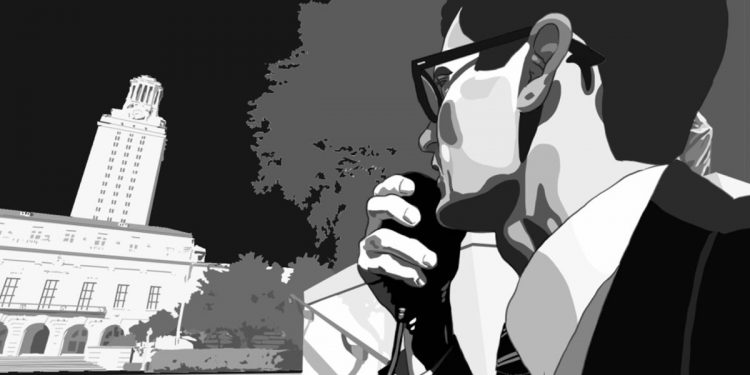
    On August 1, 1966, a sniper climbed to the top of the University of Texas tower and terrorized the campus for 96 minutes. Unfolding in what is essentially real time, Tower follows the victims, the bystanders, and the community during and after what would become the first mass shooting at a school. Director Keith Maitland made the decision early on to use rotoscoping rather than live reenactments — this is the act of animating over live footage. While the style is off-putting at first, it’s an important decision and one that gives life to Tower. In particular, the decision allows the “talking head” interviews to be told in present tense and in the way that the victims and bystanders looked in 1966. The immersive design and incredible editing by Austin Reedy — he beautifully intercuts the interviews with archival footage and the animation — grabs your attention and senses and never lets you go for the entire running.


    Some of the people that we follow include Claire James (then Claire Wilson), who is one of the first people shot. A lot of Tower‘s emotional moments come from her experience lying on the ground in 100-degree heat while people watch on in horror. We also follow two police officers. The first we’re introduced to is Houston McCoy. While his story may not seem as remarkable as the others in the movie, it comes together in an incredibly emotional revelation towards the end of the movie. In fact, the way Maitland and Reedy were able to shape the movie into being true human journeys is remarkable.

    As the minutes tick by and more and more people are injured and killed, the difference between the animation and the archival footage slip away. You are simply watching this terrifying act of violence. Throughout the entire film, we hear gun shots both in the distance and as if they were whizzing past our heads. Each shot sends a chill down your spine. You feel like you are on the campus.

    Tower

    The big reveal that I mentioned earlier comes at the halfway point of the movie. Up until this point, we are immersed in the animation and archival footage of the film. Maitland adamantly sets our point of view in the present as if the event is unfolding before our eyes. However, in a quick cut, he brings us into reality. While we hear Claire talking about what it felt like to be lying there and thinking that this was the end of her life, Maitland cuts to Claire today. Obviously, she has aged in the 50 years since the shooting. She looks straight into the camera and says, “I guess this is the end.” The emotional weight of that statement juxtaposed against this sudden switch from animation to live action is palpable but so necessary for the film to work.

    With all documentaries, the most important part is the commentary that the film makes. Tower isn’t an intentionally political film. Maitland didn’t use it as a call for gun control, overtly. But what it does is remind us how all too common school shootings have become and how desensitized we, as a society, have become to their occurrence. One of the subjects Neal Spelce, a newsman covering the shooting live, at one point says “what in the world has happened to my world.” Before August 1, 1966, the term “school shooting” wasn’t in the collective vocabulary we share. As Brian put after we watched the film, “the one thing people take away from tragedy is a relationship forged out of trauma and pain. In those moments, having such a raw connection to someone means so much. Like Claire and Rita or McCoy and Martinez.”


    Tower is an incredibly important film that doesn’t feel self-important despite its extremely stylized take on the shooting. Its style is integral to its emotional core. It will surprise you in a way that no film in years has been able to surprise. The film’s humanity is palpable. It’s something that we don’t get to say about documentaries as often. Maitland is able to take a horrible event and find the moments that make us human. He finds the moments of courage and cowardice, of compassion and cruelty. More than anything, he stresses that trauma isn’t something to internalize. And while the name of the killer is mentioned only a few times in the film, I’m going to leave you with a word on him from the great Walter Cronkite: “the crimes of Charles Joseph Whitman are society’s crimes.”

    ★★★★½ out of 5


    Tower is available for digital rental on Amazon!