Michael Wampler

  • Shameless Review: “Crazy Love” (5×06)

    Shameless Review: “Crazy Love” (5×06)

    shameless crazy love

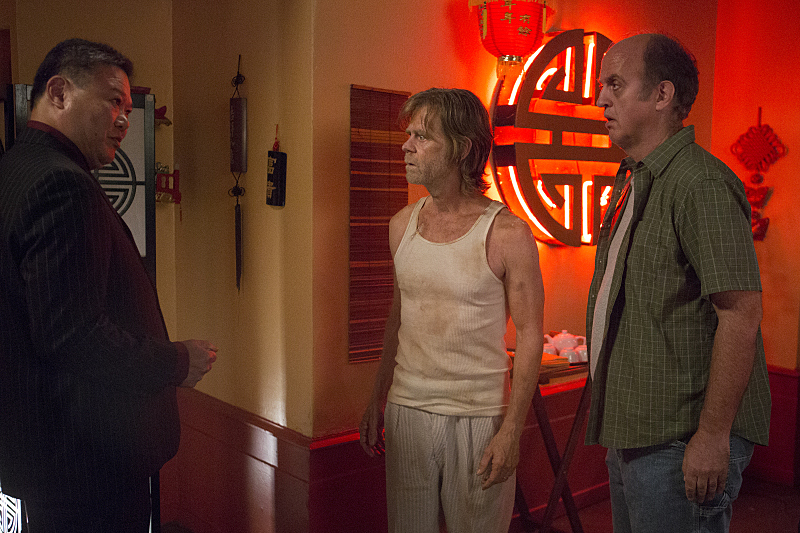
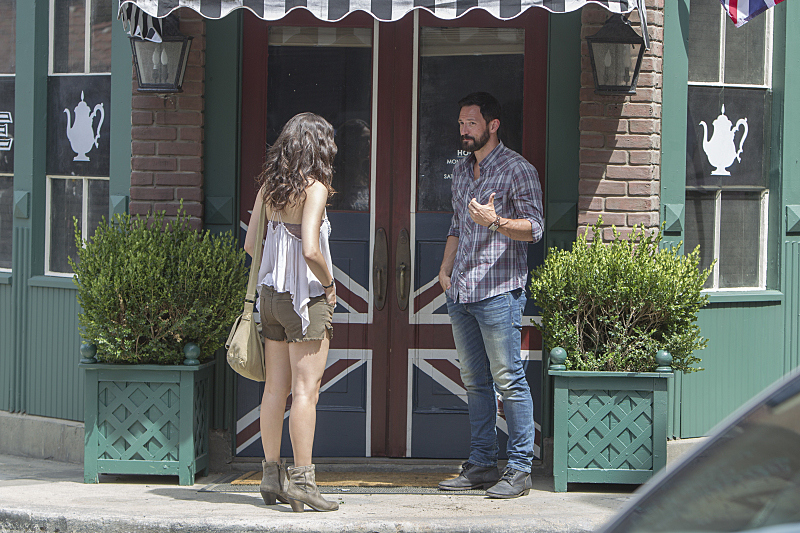
    Better late than never, right? For viewers like myself who were growing restless with Shameless’s fifth season so far, “Crazy Love” is a breath of fresh air. Not only is this handily the best episode of the season, it also sits comfortably among the very best episodes of the series to date. The process of setting up the various plot bombs that go off in this episode has been scattershot and tedious to say the least, but the payoff here is so good that it’s hard to hold a grudge.

    Ian takes center stage this week, as his psychotic break throws most of the rest of the cast into crisis and imbues the episode with a crucial sense of purpose and momentum. It’s probably no coincidence that an episode that skews dramatic is more favorable to me, but man, what I wouldn’t give for Shameless to be consistently on this level. As it stands, this episode is packed with emotional gut punches, and is just astounding on a scene-by-scene basis.

    How good is “Crazy Love”? I’m even amenable to Jimmy/Steve, that’s how good. As annoyed as I’ve been by this character’s continued presence on the show—and even as Fiona quite deservedly beat the shit out of him, I was still rankled by it—his reappearance ultimately serves to force Fiona to come to terms with several of the more complicated aspects of her life, and the resulting conflicts and scenes really are tremendous.

    Emmy Rossum has been wanting for a truly great showcase this year, and “Crazy Love” gives it to her in spades. Her confusion and indecision with regard to Jimmy/Steve belies a fragility to the character that has been on the backburner recently. This is a side of Fiona that she does not let others, or the audience, often see, and so this is yet another way in which Jimmy/Steve brings out the worst in her. And so the pair of sex scenes toward the episode’s end function as two sides of the same coin—or, really, as the same side of the coin. Rossum’s performance as Fiona begins crying at Jimmy to stop fucking her is stunning in its tragic beauty, and her silent sex with Gus is somehow even more affecting. Just really great stuff in the Fiona department this week, as finally her story is firing on all cylinders.

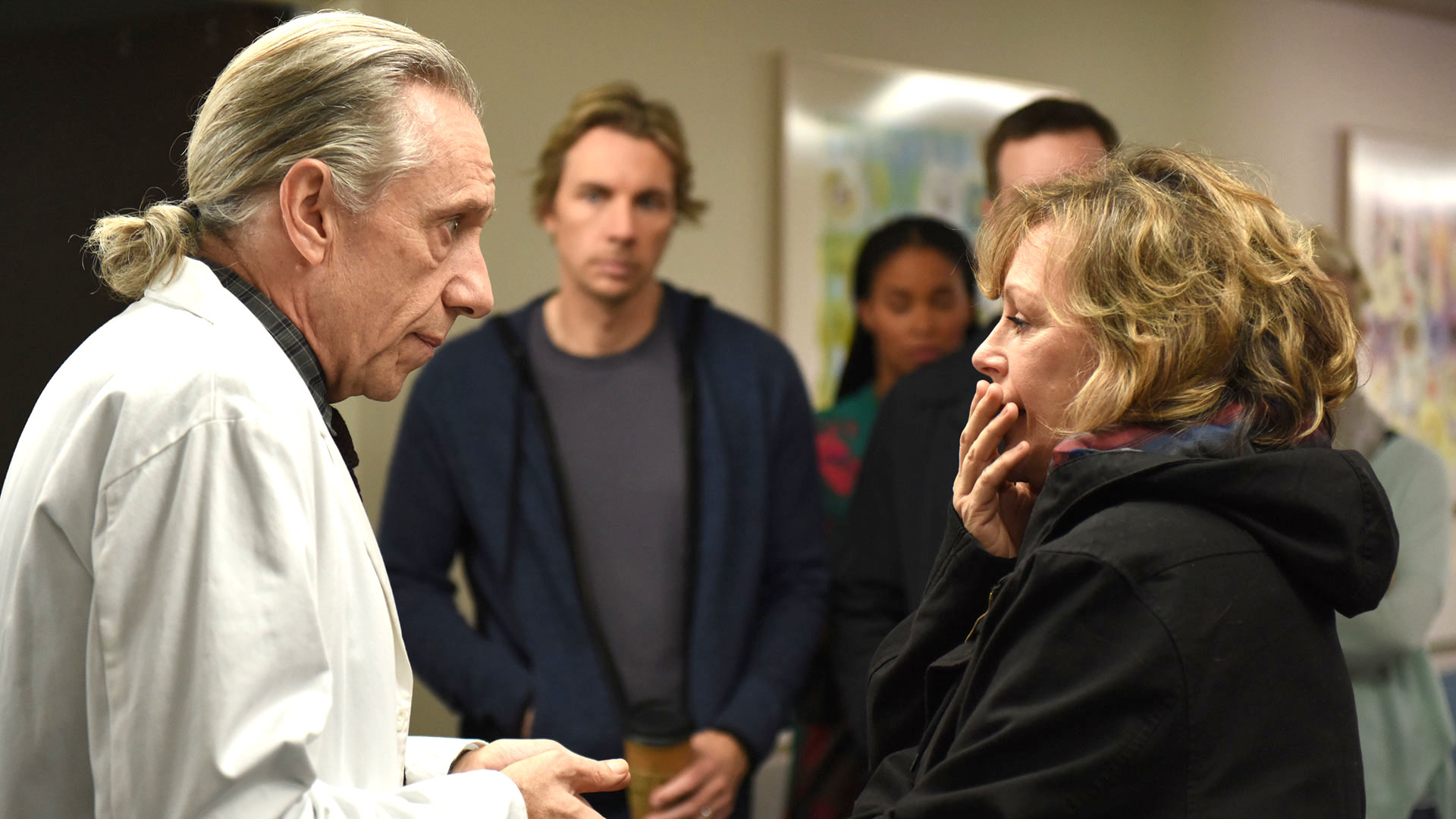
    Speaking of firing on all cylinders: the writing for Ian this year hasn’t done a truly great story justice at all times, but Cameron Monaghan brings it in this episode, and the writing rises to the occasion as well. His trip to Florida with baby Yevgeny has the feel of a darkly comic road trip, but pulls of a pretty amazing narrative feat, becoming more desperately sad with each new incident. Ian’s pit stop at a convenience store is particularly heartbreaking (though one wonders why no one thinks they should call the police at this juncture), and his final freakout at the police is bad news through and through.

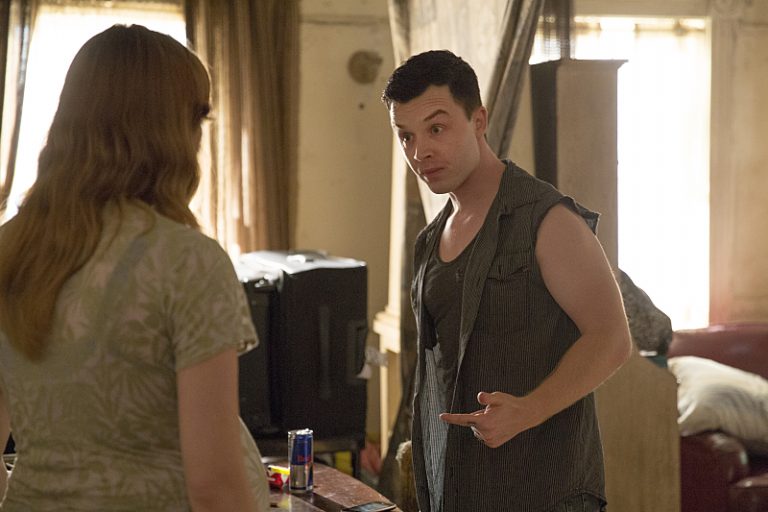
    But the real hero of this story is Mickey Milkovich. Noel Fischer has spend the past several seasons earning his promotion to series regular over and over again, and I’m not sure that he has ever made a stronger case than he does in “Crazy Love.” His panicked reaction to Ian’s initial departure, his hesitant acquiescence to bringing the rest of the Gallagher clan in for help, and his final heartbreaking goodbye to Ian as he checks into a mental health facility show so many shades to this wonderfully complex character, and Fischer is constantly revealing a new facet, a new layer, a heretofore unsuspected moment of depth. He carries more than his share of the emotional weight of the episode—I can’t compliment this performance enough.

    If I had to quibble with “Crazy Love,” it would be on two scores. First, I still am not feeling it with Carl this season, and I worry that a story that has been played for laughs thus far (questionably so) will take a sharp dramatic turn that the show is not equipped to handle.

    Second, I really wish the show would have the balls to kill off Frank. His boy is thoroughly rejecting his liver, because he is too irresponsible to take his medicine, and because he is willfully poisoning his body, because he is a selfish prick of a man who, frankly, deserves to die. Instead he gets a third chance at life, and will re-learn the same lessons he has time and again, and presumably will thumb his nose at god at the end of it all anyway. If that’s the story we’re telling, fine, but there’s no value in telling it over and over again the way Shameless has been so determined to.

    Those are quibbles, though, and so much of “Crazy Love” is too arresting to worry much about them. Even the scenes with Frank have a haunting beauty to them. The episode is a visual home run too, with some beautiful shots of the Florida landscape, and a great tracking shot of Ian checking in to the facility that echoes Fiona’s arrival at prison in “Iron City.” In many ways “Crazy Love” feels like the true beginning of the season, and it’s a welcome one indeed.

    Stray Observations:

    • Lip has been such a non-entity this season. I really would like for that to change. But hey, he’s an RA now, so there’s that.
    • Kevin’s scene in the park is played for laughs, but is also a pretty clever riff on his conflict with Veronica. In so many stories their roles would be reverse, and V would complain that Kev was insufficiently devoted to the kids.
    • “Shouldn’t somebody call the police?” Suddenly Jimmy/Steve is reasonable. Of course the Gallaghers all shout “NO!” in unison.
    • Debbie’s first day of high school goes about as expected, as suddenly everyone wants to fight her. This story is on slow burn, but again, I’m so happy for an age appropriate love interest here that I’m fine with things slowing down for poor Debs.
  • Scandal Review: “Gladiators Don’t Run” (4×12)

    Scandal Review: “Gladiators Don’t Run” (4×12)

    scandal gladiators don't run

    It could just be that I watched Scandal late this week, and after a stellar night for HBO’s dramas, but color me underwhelmed by “Gladiators Don’t Run,” which is a scattered, confusing mess of an episode, one that twists and contorts the plots into braided pretzels so intricate that even the writers themselves seem to lose the thread by the end. (Not unlike this opening sentence…)

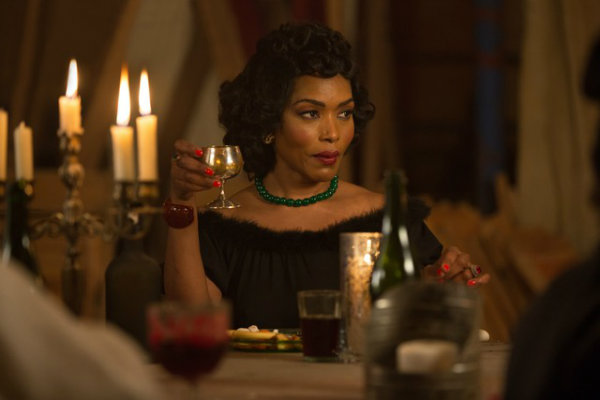
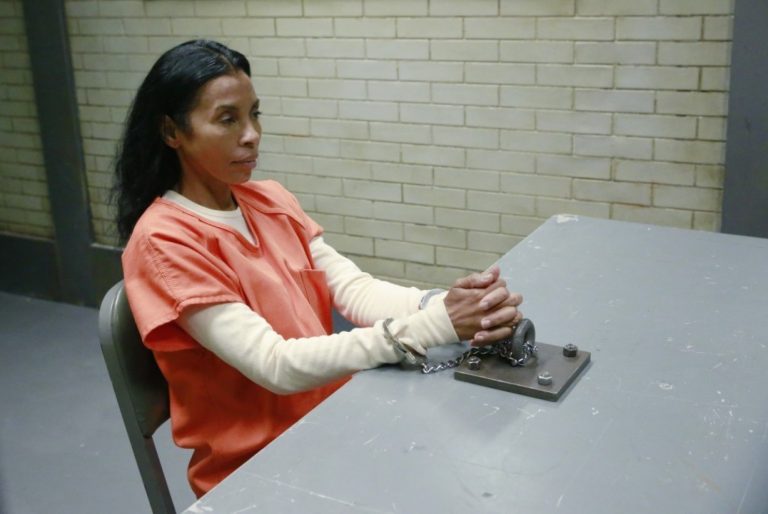
    By the end of this episode, Olivia has been sold at auction to the highest bidder (Iran), Andrew Nichol has gotten away scot-free (due to his manipulation of Mellie), and I honestly have no idea what on earth the plot mechanics were to get us here. At the beginning of the episode Olivia is sharing champagne with Ian and negotiating her own auction. But in short order, henchman Gus shoots Ian dead and Olivia is back to being a prisoner (how she lost this status in the first place is a mystery to me, unless I missed something last week somehow). Who exactly is behind this whole thing? Who are the actors involved? How did Olivia get to the point of working with Ian? How did Andrew Nichol get boxed out of his own conspiracy? Where did this cabal of young hot hacker terrorist kidnappers even come from in the first place?

    Scandal doesn’t see fit to answer any of these questions. Stuff just happens, and that’s that. Now, since the “stuff” in question is the kidnapping of Olivia Pope, the fallout at least has some inherent dramatic interest. But that gut, emotional reaction will only carry the show so far, and there’s no escaping the fact that if you stop to think about any one aspect of the show’s plot right now, the whole enterprise falls apart.

    That’s a problem for an episode like “Gladiators Don’t Run,” which is concerned entirely with the progression and contortion of said plot. Who is on whose side, who knows what about whom at any given time—these are the sorts of shifts that the episode delves into, but since 1) it is impossible to keep track without some sort of flow chart and 2) any such flow chart would immediately reveal that none of this makes any sense, an episode with such a project just feels aimless and silly.

    It’s a shame, because moments here really do land. Kerry Washington continues to be fantastic, though she has a noticeably diminished presence this week in terms of screen time. Olivia goes through so many situational changes in this episode alone, and Washington skillfully navigates her emotional state through each. Tony Goldwyn as well is inspired, imbuing Fitz’s search for Olivia with the sort of romantic passion that hadn’t been seen in the character for a while, until recently. This is also an uncommonly funny episode, with a few zingers and setups that had me laughing out loud. The obvious winner is Quinn (“It doesn’t matter how many times you re-invent your identity, Sallie Mae will find you.”), but pretty much everyone gets a good moment or two in.

    But despite the moments of levity and some further attempts at characterization in light of Olivia’s disappearance (Abby shoulders much of this weight, being the literal last person in Washington to learn of Olivia’s current situation), this is an episode that is killing time until what will surely be a shocking reveal next week as to who, really, has won Olivia Pope at auction. (Might it be Harrison? It would explain why we spent so much time mourning him in the early season.) “Gladiators Don’t Run” is an occurrence of plot without story, incidence without import. Even Maya Pope’s return is essentially an excuse for a fetch quest, a way for Jake and Huck and Quinn to mark time until another aspect of the plot resolves itself. We spend most of the episode watching characters watching the auction, being unable to do anything about it, and then having none of it matter, because Iran swoops in from outside of the auction anyway. That’s entirely too much time to spend on what amounts to a red herring.

    When you’re telling a heavily serialized story such as Scandal’s, there are bound to be bits and pieces of your story that will suffer from this. But there’s no excuse for basically an entire episode of it. “Gladiators Don’t Run” continues to run with what’s been successful this season, but it’s mired in boring, confusing, plotty nonsense from beginning to end.


    Stray Observations:

    • So Huck just happens to have $2 billion laying around, which is so improbable that they actually felt the need to flash back to Rowan explaining his ridiculous, Office Space scheme to siphon money from the treasury in order to justify it.
    • The self-referential use of “gladiator” by the characters feels kind of twee to me, especially as ABC continues to use the term to refer to the show’s fans. I wish they’d stop doing it.
    • What do the Grants want most in the world? Fitz wants Jerry alive again; Mellie wants to be president. If this is a long-term direction for Mellie, I’m intrigued.
    • Runner-up for best joke of the episode: Fitz asks, rhetorically, “Who has more money than the United States of America?” Cy and Mellie shrug and start rattling off countries.
    • I thought for sure the violent content disclaimer would involve Maya more directly, but the grisly violence we got sure was unsettling enough.
  • Shameless Review: “Rites of Passage” (5×05)

    Shameless Review: “Rites of Passage” (5×05)

    shameless rites of passage

    I have to admit that as the season wears on, it is becoming increasingly difficult for me to write about Shameless. It’s still a bridge too far to call the show weak at this stage—in fact I think it’s attempting a number of really interesting things—but there is a spark that, for me at least, has undeniably gone out. Part of that is just simple aging. Shameless is five years old now, and what was one fresh and edgy is now old hat, especially for a series so very reliant on envelope pushing. But part of it is also the show’s refusal to engage fully with its most viable aspects, instead choosing to hold on to things that don’t work anymore simply because it feels like it should.

    I’m obviously talking about two things here primarily, and let’s get the one out of the way right now—I do not care about Jimmy/Steve. Not one bit. The character was always a lukewarm love interest for Fiona, useful insofar as he played straight man to various Gallagher antics. But as we got further acclimated to the Gallagher clan and began to see them not as a motley crew of South Side weirdos but as actual people with actual personalities, that narrative usefulness ran out. That the writers chose to replace it with the batshit incongruous insanity of Jimmy/Steve’s subsequent plots remains, to me, their most baffling decision. When he’d finally seemingly been killed off, it was a dumb but merciful end for a character who had gone way, way off the rails. His return this season (we are, after all, still pretending that the last scene of last season does not exist) shows no signs of being any less contrived, needlessly complicated, and ultimately unnecessary. The season needs a kick in the pants, but this is not what I had in mind by a long shot.

    Fortunately Jimmy/Steve is but a small part of the episode. Unfortunately, our other vestigial character, fucking Frank, is once again front and center for entirely too much time. On the one hand I get it—William H. Macy is a hugely entertaining performer who is capable of some legitimately great stuff in this role. God knows Frank would be completely insufferable in less capable hands. But with the rest of the Gallaghers having shunned him and Sheila having run off, Frank has little to no place in the world of the show, and the haphazard employment of the character becomes more problematic with each episode. I get that Frank’s time with his organ donor’s parents this episode is black comedy, but I’m just not in on the joke here, I guess—or more accurately, there is just one joke here, being beaten senseless into the ground. The father is uncomfortably weird, and doesn’t garner the laughs that the script so clearly expects. Ditto the turn where Frank sleeps with the mother. The whole thing perpetuates the tonal whiplash that is so problematic.

    Frank’s greatest sin, though, is the time he steals from the other, vastly more interesting characters and conflicts. The game of marital chicken that V is playing with Kevin is tremendously stupid, but is a thoroughly fascinating dynamic to explore. Why, then, is it relegated to C-plot status? It’s by far the most compelling aspect of the episode, and of the season, and it’s past time the show starts giving these characters their dramatic due. The same is true of both Ian and Lip, who once were so vital to the show, and who now both feel like afterthoughts to me. Ian’s increasingly wild mood swings have been jotted off carelessly in the margins of the show, making his decision to run off with Mickey’s baby at the end of this episode seem jarring more in a bad way than a good way. The way this story has reversed the emotional roles of Ian and Mickey should be paying way more dividends than it currently is, and it’s because the script is dealing with it in the bare minimum number of scenes possible.

    Lip’s story is also playing out in the margins, and for no discernible reason. The fantastic shot of him standing, alone and slightly off center, in the middle of the empty Gallagher house is more compelling in its brevity and silence than anything that Frank has to offer. The kid has a serious problem—there’s no other way to explain how he ends up with an AK in his hands and running from the cops. Why can’t we delve further into the internal conflict here? There’s an amazing scene between him and Fiona early on in the episode, but then the characters go their separate ways. These two have a wonderful dynamic—take advantage of it!

    The biggest sign of trouble, I think, is that I can get this far in the review and only now mention Fiona. She’s mostly basking in the afterglow of her shotgun wedding here, until her co-worker Jackie ODs on heroin right before the court hearing to retain custody of her daughter. Jackie and Sam are both dark mirrors Fiona can hold up to herself. Maybe her current brand of chaos and destruction is of the meet-cute, let’s get married and damn the haters variety, but it’s really just another side of the same coin, and deep down she knows that. That subtext runs throughout these scenes, but it might be too subtextual.

    Shameless is a show with many, many strengths, and it’s just a shame (no pun) to see them squandered. This Sunday will bring us to the halfway point; in other words, to the point where it will be too late to say, maybe this all has a point. We need an episode with the laser focus of something like “Iron City,” and it can’t come soon enough.

    Stray Observations:

    • Holy shit Kevin’s playground game is absolutely horrid, and is also the episode’s biggest laugh.
    • Mickey’s type: red head, batshit crazy, packing nine inches. Favorite character right here.
    • Gus meeting Chuckie is fantastic, as is everything to do with Chuckie.
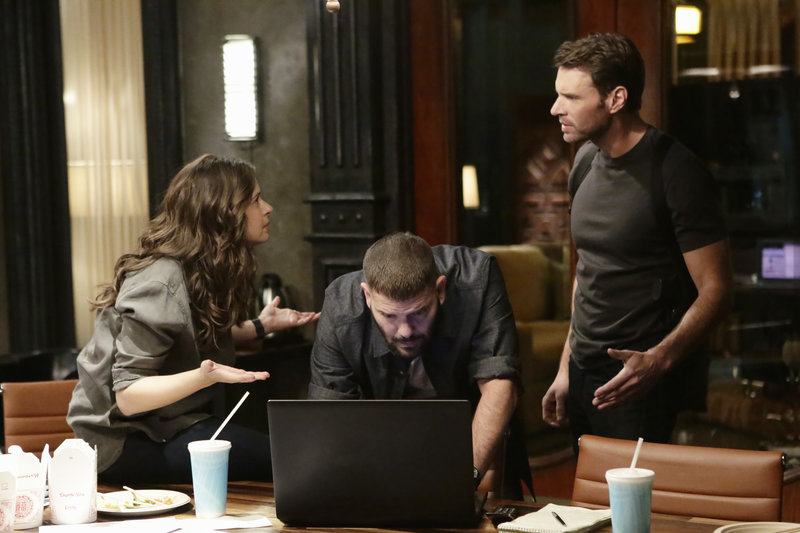
  • Scandal Review: “Where’s the Black Lady?” (4×11)

    Scandal Review: “Where’s the Black Lady?” (4×11)

    scandal Where’s the Black Lady

    Perhaps inevitably, “Where’s the Black Lady?” does not quite reach the fever pitch of last week’s “Run,” though it sure tries like hell to. That said, Scandal packs in some really great scenes this week, and guest director Debbie Allen does some uncommonly great work here, as does Tony Goldwyn in what is one of Fitz’s greatest episodes to date.

    Where the episode unequivocally succeeds is in its many smaller (at least, by Scandal standards) scenes and character moments, which are heightened by Allen’s lovely camera work. It is impossible not to marvel at the magnificent shots of Fitz and Mellie at the residence, tight shots of their tense conversation as Mellie airs their dirty laundry left and right and Fitz fears that their every word is recorded. (It’s equally impossible not to marvel at Goldwyn’s acting here, as Fitz’s silencing of Mellie is equal parts anger with her and desperation to get her to shut up for their own safety; Mellie takes it as the former, the audience as the latter, and either [or both] interpretations are valid.) Ditto Allen’s canny use of flashback, along with some spectacular sound mixing, during Fitz’s meeting Abby, Cyrus and David. In other words this is an exceptionally stylish episode of an already pretty stylish show.

    The plot isn’t shabby either, even if it is a little bit shoe-leathery. That’s owing as much to the episode’s placement in the season as it is to any particular aspect of the script. After the rip-roaring yet withholding premiere, “Where’s the Black Lady?” is a veritable info-dump, obligated to catch us up with the rest of the cast and to give greater context to Olivia’s current plight. It’s fairly thankless work, and the episode tends to do it in a circuitous, repetitive manner. Multiple scenes of Huck torturing Liz, for instance, make the same point they could in half the time. There’s a real sense of padding here, of over-explaining, which is never more apparent than in Andrew Nichols’ scenes with Fitz. The Vice President has seemingly overnight become Dick Dastardly, but his constant explication of his Improbable Plot to Kidnap Olivia Pope, And Thereby Ignite War, doesn’t make the plot any less improbable, or any more engaging.

    We already have the emotional stakes necessary for this story, and while this episode does a stellar job of filling in the blanks on Fitz’s side, deceptively little else of import happens here—we end in much the same place as before, save a war in West Angola, of course. In fact I’m not even sure that “too little happens” is the criticism I’m seeking. Ultimately this feels like half an episode, giving information that is necessary in parallel with “Run,” but that can’t help but feel superfluous a week after the fact.

    I’m nitpicking, though—especially considering how very high octane “Run” was. At the end of the day this is solid episode that does a particularly excellent job of tying the more tedious aspects of the conspiracy plot (i.e. most of them) to tangible character moments and conflicts—Cyrus feels boxed out, but really Fitz is shielding him; Fitz is truly in love with Olivia, and will absolutely ignite war if it means saving her; Mellie learns that truth and continues to assert herself accordingly; and so on. Ridiculous things continue to happen, as they always will in this funhouse mirror version of Washington, but it’s all anchored in the very real drama between these characters, which keeps everything with at least one foot firmly planted in reality, and which helps the stakes really land as a result.

    Plus it’s gorgeous to look at. Can we please keep Debbie Allen?

    Stray Observations:

    • We can officially lay this Helen of Troy metaphor to rest. I’m beginning to think that The Iliad is the only thing Tom has ever read.
    • Further potential Helen of Troy inferences: Fitz and Jake cooperating to save Helen? Surely bound to be a lasting partnership.
    • Though Huck’s scenes are largely plot filler, Guillermo Diaz does a nice job portraying Huck’s singular obsession with protecting/avenging Olivia, and does so in a more measured way than he usually performs the more extreme aspects of Huck’s character. (Which, let’s face it, all aspect’s of Huck’s characters are extreme.)
    • How bizarre was that scene of the Secret Service telling Fitz what’s up? On the one hand it almost crossed the line into silliness, but on the other, it starts the episode on truly shaky, uncertain ground, which is a nice touch.
    • Pretty sure Huck repeats the exact line about breadcrumbs twice in this episode, vis a vis the repetitive nature of same.
    • Mellie’s invocation that she “took care of anything” will surely end well for all involved, yes?
  • Shameless Review: “A Night to Remem—Wait, What?” (5×04)

    Shameless Review: “A Night to Remem—Wait, What?” (5×04)

    A Night to Remem—Wait, What? shameless

    First and foremost, fuck that title, which is a bitch to type and is not clever in the least.

    With that out of the way, while this week’s episode of Shameless shows sparks of promise in a few key areas, it does not deliver on these within the confines of the episode itself, which is a sluggish, overly cartoonish romp that plays up the show’s weakest aspects while giving short shrift to the things the season is actually doing well—in other words, the opposite of a successful strategy. I’ll freely admit that a big part of my issue is that I am partial to the version of Shameless that skews dramatic, and this season has been resolutely not that. But even with that bias acknowledged, there’s no getting around the way that this season has so far been a mish-mash of ideas. Plots careen together without much thought or reason, jokes don’t land, structures don’t hold up; and this episode is more of the same, at the end of the day.

    The bummer of it all is that much of the character work is pretty solid. For instance this episode returns to an idea that the show began seriously toying with toward the end of the last season—namely, that Fiona and Frank are far more similar than Fiona would ever be comfortable admitting. It’s no stretch to draw a parallel between Fiona’s lost week with Gus, one that ends in an impromptu marriage, with Frank’s lost evening of temporarily rich debauchery. This will always be interesting ground for the show to cover, and in fact I wish it would address the similarities more directly than it does here. Even so, the final shot of Fiona speaks volumes on the issue.

    So it’s a shame that the actual storytelling here is so poorly executed. Fiona’s time spent with Gus is sweet for a scene or so, but it drags on forever, and is just bland, boring and predictable, even up through the marriage itself. Gus just isn’t a fully-fledged character, not even to the extent that someone like Mike was, and certainly not the way Jimmy was before the Steve nonsense. What’s of interest here isn’t what’s happening, but how Fiona and, more especially, the rest of the Gallaghers, will react to it, and that’s all withheld from us, save for, again, that closing shot.

    As for Frank, he spends the episode reenacting The Hangover, which is every bit as grating as it sounds. He receives his insurance payout, only to lose it in a massive binge (of course), and so has to re-trace his steps from one ludicrous situation to the next in order to find it again. It turns out he donated the money to a charity for kids in need of prosthetic limbs, which is actually pretty funny, and the fact that Frank decides this is a mistake and wants the money back further highlights how much of a total monster he is (as though we needed reminding). The fact that he blew up his wife’s house and is ostensibly homeless himself goes unmentioned, as does Sammie, which feels like another narrative misstep to me.

    Meanwhile, Lip takes a break from hauling rocks to visit Amanda, and ends up bonding with her dad over engineering. Credit to the writers—this does not immediately cause Amanda to stop liking him, and in fact it seems like Lip may be growing on her. The story is told in pretty broad strokes, and the dad goes from cartoonishly stand-offish to pot-smoking Cool Dad in an insanely short amount of time, but this is such a great direction for the character, and it’s so satisfying to see Lip with a positive male role model for once, that I ended up buying into it this week anyway. As usual, not enough time was spent here, and I wonder if more scenes would have helped everything feel more three-dimensional than it does as is.

    Meanwhile, Debbie takes up boxing after she gets saved from a girl fight by an improbably handsome young man. Age appropriate love interests are always welcome for Debbie, and while there’s not much to this storyline, it’s also nice to see a lighter touch, given that last week she raped a twenty-year old. (The sentences one gets to write when reviewing Shameless!) As for Carl, he starts selling drugs under a bridge, about which the less said, the better. Black humor is Shameless’s bread and butter, yes, but I had a hard time finding the funny with a lot of this story. One exception: Frank teaching Carl “drug fractions”, and Carl studying flashcards on the subject in the tag, had me laughing out loud.

    Overall this is about on the same level as “The Two Lisas”, raising some good ideas and suggesting a direction for the remainder of the season, but not making any real strides in the direction. The episode is content with broad strokes, but since too many of the notes fall flat (to mix metaphors), the overall effect is diminished. As always, a caveat that an episode down the line may bring all of this into focus, but it seems increasingly more likely that the obvious explanation is the correct one: this is all a mess just because this season of Shameless is kind of a mess.


    Stray Observations:

    • Debbie: “Here’s what went down last week on Shameless.” Carl: “Me, a lot.” I laughed.
    • Veronica and Kevin’s marital issues continue, and I like the show’s brutally honest portrayal of post-partum depression here, even if it has yet to label Veronica’s condition as such.
    • Mickey and Ian have a cute moment involving a dildo (which is not nearly as dirty as it sounds), but man, the show is underutilizing these two so far.
  • Shameless Review: “The Two Lisas” (5×03)

    Shameless Review: “The Two Lisas” (5×03)

    shameless the two lisas

    I don’t know about you guys, but I’m still waiting for this season of Shameless to get a move on already. It’s by no means bad, but the sum of the parts is not quite adding up to a cohesive whole, at least not yet. That in itself isn’t a sin, but there’s also not enough sense of forward momentum, not enough promise that, eventually, this is going to all add up to something.

    So, what to make of this? “The Two Lisas” is perfectly alright, but it continues a trend of stagnation, like the show can’t shake this malaise that seems to have settled in over the hiatus. Is it because things got so heavy at the end of last season? Maybe. I can’t quite put my finger on it yet to be honest, but the pulse of this season is not as strong by a long shot, and it’s hampering my enjoyment a little more each week.

    A lot of the issue is that several of the stories feel trivial. Frank conquered death itself last season; now he’s brewing some truly potent beer and ambling around the South Side like some demented soothsayer, warning of the perils of gentrification. Now, gentrification in itself is a really smart thread to weave throughout the season, especially given how very important a sense of place is to Shameless. But until the show starts grappling with the concept directly, rather than paying it lip service and easy jokes, it won’t be able to reap the full benefit.

    Even Fiona’s storyline this week is meh-inducing, as she more or less by accident falls into the arms of a good guy, who is the band mate of the bad guy that she will almost certainly fuck instead in two episodes’ time. Not only does this feel an awful lot like going through the motions, it’s also going through motions that we’ve been through before. Again, I think a big part of the problem, insofar as there is a problem here, is that we’re coming down from a super-dramatic, high stakes season, and so far Shameless is not interested in building up to that fever pitch again. That’s fine, but nothing equally worthwhile, regardless of its tone, has sprung up instead.

    The other main thread of the week follows Kev and Veronica, as the Rub and Tug is permanently shut down, leading V to employ what appears to be every hooker in town as part of her new breast milk farm business venture. It’s an outsized plot to be sure, but one rooted in the central conflict of her and Kev’s marriage, and his outburst to her at the end of the episode carries real weight as a result. For the third week running, these two are the best part of the show, which is not something I ever thought I’d say about either character. They’re so often used for comic relief that it’s actually a nice change of pace to see them and their relationship given equal time, especially as the more prominent characters take some time on the back burner.

    That said, I don’t necessarily want the more prominent Gallaghers to take time on the back burner. As Carl and especially Debbie get older, it’s natural to want to give them more to do. But given a choice between Debbie and Lip’s stories this week, I would much rather have spent more time with Lip. His lone major scene is with Mandy, and it is gorgeous and heartbreaking. He tells her every good thing about herself that no one has had the decency to say to her before, and she tells him she loves him, and he can’t even say it back. The next day she skips town. In a few scenes, Shameless lands one doozy of a emotional sucker punch. Debbie’s story is similarly heartbreaking, but in a more twisted and, I think, less effective way. It’s almost impossible to sell Matt in this situation. I am vaguely interested in the almost role-reversal approach the episode takes with Debbie’s (unintentional?) rape of him, but Matt is too problematic of a character, and the situation still too icky (for lack of a better or more effective term) for the turn of events to really hit home.

    Now, given that by episode’s end Frank blows up Sheila’s home and she takes off in an RV, it stands to reason that the pace picks up after this. It’s certainly a surprising turn of events, one that jump starts Frank’s story in an interesting way, and one that comments on the note of gentrification in typically Shameless fashion. (If the show has any sense, Sheila is gone for good, if not at least for a good long while.) But the season is way too uneven, and at times perilously boring, and “The Two Lisas” doesn’t do anything to change that.

    Stray Observations:

    • Frank whores Sammie out in exchange for brewery equipment, which leads to his falling out with her as well. Sammie has become a total cartoon this season, but now that we’ve reached the breaking point, one hopes the dynamic here will improve.
    • That said, “I don’t wanna make the same mistakes I have with the last thirty or forty guys I’ve been with” is a pretty funny line.
    • Frank’s Dangers of Gentrification: This week it’s gastro pubs and stores for dog clothes
    • Chuckles, staring at Frank as he works. Chuckles, effortlessly hilarious.
    • “We call him Carl-lingus. I’m going back for seconds.”
  • Scandal Review: “Run” (4×10)

    Scandal Review: “Run” (4×10)

    scandal run

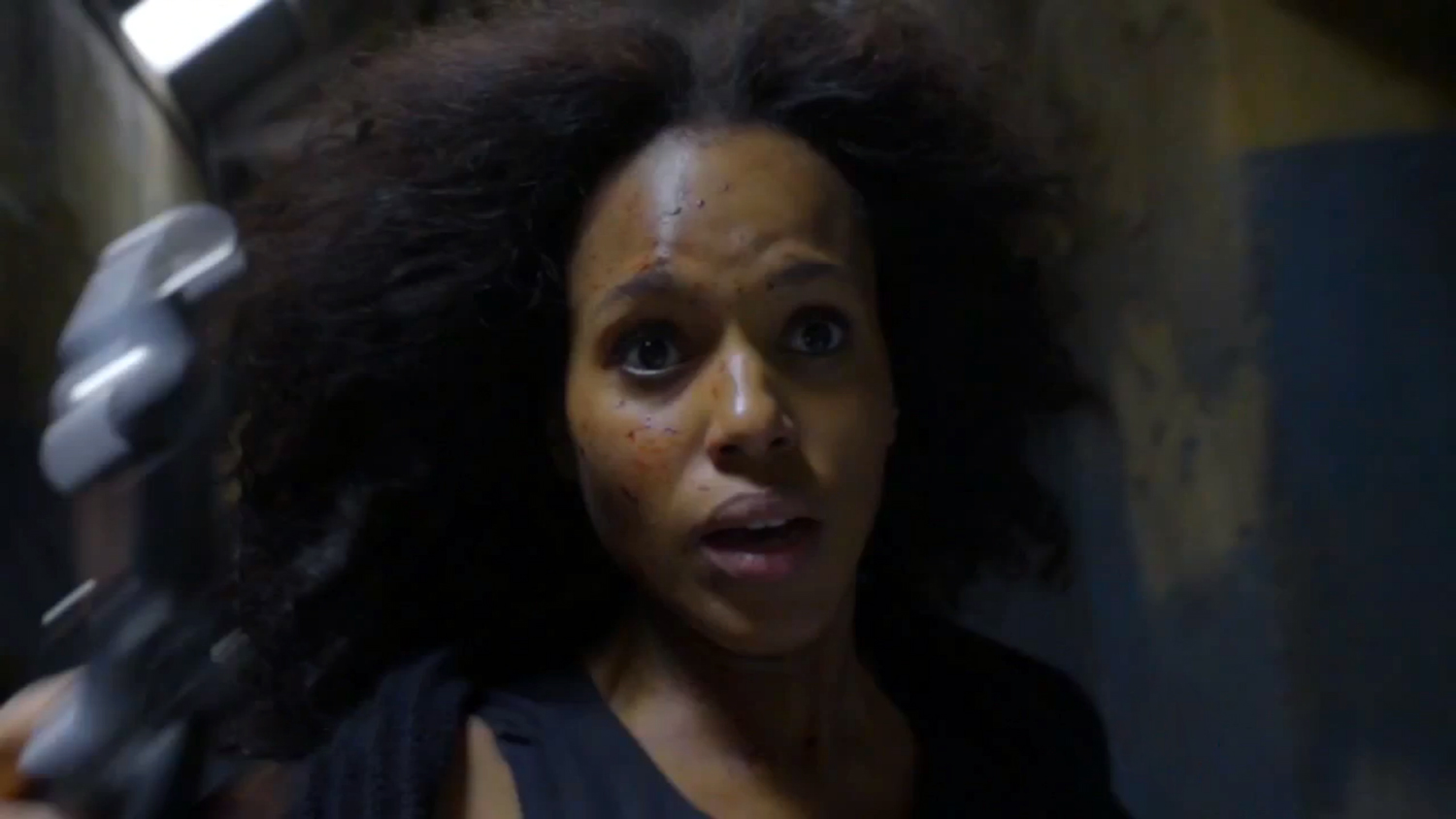
    Say what you will about Scandal, but Shonda Rhimes and her team know how to do a mid-season opener right. “Run” is energetic, tense, revelatory, and downright pulse pounding for early every minute of its running time.

    Seriously. “Run” is definitely a season best and mostly a series best episode. I didn’t get to watch it live, but it was impossible to avoid the cavalcade of accolades being heaped upon Kerry Washington across social media throughout the night. None of those people was wrong. Washington is a powerhouse in this episode, commanding every scene she’s in even as Olivia Pope is backed into a situation of near total helplessness. She is phenomenal, carrying the episode so forcefully and effortlessly that you won’t notice until they show up about two-thirds of the way in that the supporting cast has been largely absent from the episode. “Run” is essentially an Emmy reel, and one that deserves to pay its star dividends come September.

    The episode is structurally strong, and often even inventive. The opening is hugely energetic, playing through the winter finale’s excellent closing moments multiple times, with an ever increasing sense of dread. After that, the episode maintains a tight focus, eschewing the typical trappings of a Scandal episode for some pretty gripping psychological drama instead. The structure here is so atypical for the series, and yet nestled within it is an extremely typical Olivia/client relationship. Throughout the episode she is “handling” her own damn kidnapping, and her slowly deteriorating resolve is something to behold.

    “Run” words so very well entirely because of its restrained scale. It is close, focused, unconcerned with conspiracy or with explanation, and it mostly rocks as a result. Given its strengths, it is somewhat disappointing when the episode’s final twist rolls around and brings us right back to the oblique conspiracy theorizing that has come to define the series at its worst.

    I’m not inherently interested in the identity of Olivia’s kidnappers, or what their relationship is to Lizzie Bear and company back in DC, who are thankfully completely absent from the episode What I am interested in is Olivia herself, and how she reacts to these extreme circumstances. So when “Ian” is murdered to punish Olivia, it’s a rare moment of failure on her part, an acknowledgment and rebuke of her hubris, of her total conviction that because she is Olivia Pope and for no other reason, she will triumph. The reveal that her cellmate was playing her all along robs the earlier sequence of some of its power.

    That hardly ruins an otherwise stellar episode, though. “Run” sets the stage for an exciting back half, and even if the question of Olivia’s kidnapping may not be the most exciting about the show at this point, the fact of her kidnapping is fertile dramatic ground. Al that “Run” really needed to do was get us all pumped for Scandal again, and it achieves that in spades.

    Stray Observations:

    • “Batty dream sequences under duress” is a bit overplayed, but Olivia’s rescue fantasy at least reveals itself as such more or less immediately, and also provides the impetus for her getting out of the prison by her own damn self, rather than waiting on either of her men. (Of course, freedom is short-lived, but the moment is still a triumph in itself.)
    • “You make jam for a living now? Do you know how to use a Dutch oven? Do you know how to turn on a regular oven?” Even in improbably dream sequences, Abby is the best.
    • That said: I’m not sure how funny the dream is actually meant to be, but some of the lines and deliveries in the Vermont sequence especially had me laughing out loud, not least Washington’s enthusiastic declaration of “boysenberry!”
    • Echoes of “Bitch Baby” probably were not meant to make me laugh out loud, but they did kind of deflate that moment for me.
    • So that these aren’t all about the dream: Jake calls Huck and Quinn for help tracking Olivia. Quinn immediately suggests she has simply run off to an island with another man, and is clearly angling for a role as New Abby.
  • Parenthood Series Finale Review: “May God Bless and Keep You Always” (6×13)

    Parenthood Series Finale Review: “May God Bless and Keep You Always” (6×13)

    parenthood series finale

    After six long years, the last few of which were rather unexpected, Parenthood draws to a close in solid if unsurprising fashion. So much of this finale has been more or less locked in since the season premiere, if not even before then, that it’s hard to really consider this episode as anything other than the final flourish on a pretty flagrant victory lap of a season. Even for Parenthood, the stakes are relatively low. There is no Big Bad, no final crisis—even the conflicts between Adam and Crosby or Joel and Julia are subdued, halfway resolved before the opening credits even roll. Even Zeek’s death (spoiler alert, but come on) is a tragic grace note, rather than a central event.

    But, as the bottom of my review notes read: I mean, who can complain about that? And at the end of the day those are my sentiments still. Finality is not a construct that is familiar to Parenthood, which has always been a show about the process of life rather than any of its specific moments, even if those moments are milestones like birth, marriage or death. “May God Bless and Keep You Always” is a collection of such moments, but it’s not an event—it’s just another day in the life. It’s a structural mess in the exact same ways as “We Made It Through the Night,” yet for some reason I am not as bothered. In fact, the finale is even more of a mess in some ways, a formless menagerie of montages and songs, but because it is a finale, and a finale of a show that has often been supremely unconcerned with plot in any conventional sense, it’s hard to really hold that against Jason Katims’s script.

    The real test of “May God Bless and Keep You Always” is whether it is emotionally satisfying—has the show brought this leg of the collective Braverman journey to a good enough close? The answer, unfortunately, is that it depends on which Braverman. The cast by now is so sprawling that it would have been impossible to do right by every single one of them in the space of forty-two and a half minutes. But I mainly came away from the episode like most of the Bravermans got short shrift, and some of them unforgivably so.

    Is there really any excuse for how far on the back burner Kristina was placed this season? How much of a non-entity Jasmine became over time? Or good lord, Camille, who gets I think two or three lines in this entire episode? Parenthood’s sixth season made some curious narrative choices, including a prolonged focus on Hank’s family, along with on the travails of the Luncheonette, and it seems at the end that these came at the expense of characters and stories that we are arguably more invested in. Not that the Luncheonette story doesn’t fulfill a purpose—it brings Crosby’s series arc to a really touching close, and I love that it’s Zeek who is the one to finally have faith in him and instill some confidence in him. But we reached this conclusion well ahead of the show, two or three episodes ago, and the plot has been running in circles since. I would rather have gotten more time with other characters, in the limited time that remained to us.

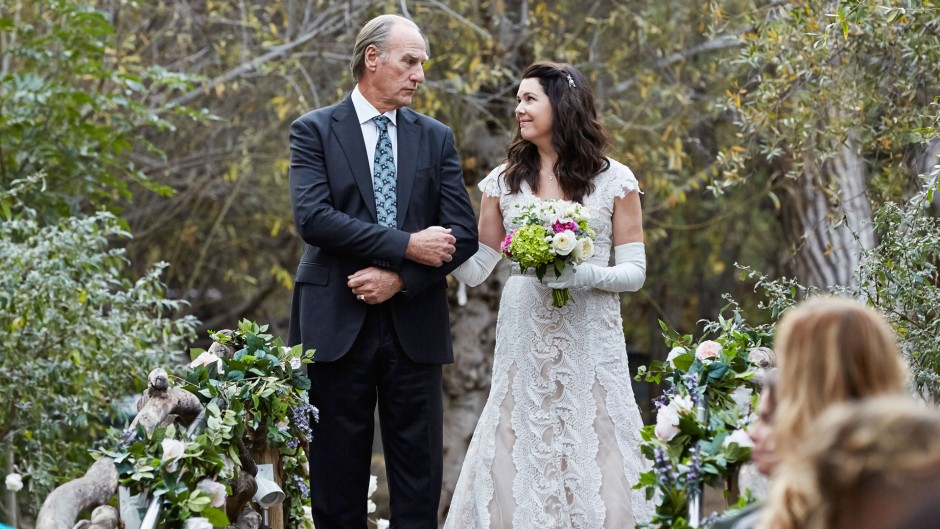
    Speaking of. The limited time remaining to us, as a concept, obviously runs throughout the episode, both within the narrative and without, as Katims so clearly struggles to include at least a moment with each major character. And let’s give credit where it’s due—he pulls it off. I don’t know how “good” per se this finale is, but I watched much of it with a big smile on my face anyway. The centerpiece montage (in an episode that, seriously, is chock full of montages) is the wedding photo series, culminating in one gigantic cast photo. The wedding sequence, including the lovely song that plays as Zeek walks Sarah down the aisle, is beautiful, and the reception captures the kind of family-friendly, forced fun one finds at these events.

    The episode is peppered with little moments designed to warm the heart, and they do so. Max finds a girlfriend maybe! Amber moves in with Camille and Zeek! Sarah is Zeek’s favorite child! Victor has a surprise half-sister and Joel and Julia are adopting her too! Haddie lives! And if we are measuring by these moments—and there is no good reason not to, really—then “May God Bless and Keep You Always” is a success.

    After the wedding, just when the episode is winding down and you think, oh hey, maybe no one will die after all!—Zeek dies quietly at home. The episode closes with his funeral, which appropriately enough is a family baseball game. The memorial is beautifully bizarre, and a perfect coda, a final statement on this family’s and this show’s strange and yet familiar aesthetic. It’s not maudlin, not a tear-inducing cryfest (as Vulture might term the series overall), and it shouldn’t be, either. Mixed in are little flash-forwards, giving us the tiniest glimpses of the various Bravermans, not in their old age, but just a few years down the line, as life goes on without Zeek, and is perfectly okay, because the family sticks together. In many ways the Bravermans are his legacy, and what a fine one to leave behind.

    I mean, who can complain about that?

    Stray Observations:

    • The grade below is for the season. The episode grade is a B, on the strength of heartwarming fuzzies. The series grade is a B+. I found Parenthood to always be a solid family drama, and I’m disappointed that there is no immediate heir apparent on television (Transparent may be the closest, honestly), but it also never reached the dazzling heights of similar shows like Friday Night Lights.
    • Which, while we’re comparing: This is nowhere near as good a finale as “Always,” although really, what could be? I ultimately find myself thinking that the fourth season finale, “Because You’re My Sister,” was the place to stop here, but I don’t begrudge the good moments of the last two seasons anyway.
    • Max leaves us with some gems: “Your complexion is far too pale. You make a terrible assistant.” Or, even better, “You cannot take a selfie, selfies are ruining my industry.”
    • Haddie shows up, which is always nice, but then she gives this super forced speech about how Max made her a better person, simultaneously constructing and closing a character arc in the space of two minutes.
    • Joel and Julia’s flash forward reveals that not only did they adopt Victor’s secret half-sister, they also had another baby of their own! Not pictured: Chris, just outside the window, drunk and homeless.
    • Adam’s secret for chopping onions without crying is to wear goggles, because of course it is.
    • Kristina trades her fake job for another fake job, and gives her old fake job to Adam, and the Braverman financial crisis is resolved. Goodbye, strange, economically walled off world of Berkeley.
    • Jason Street makes a cameo but hot damn I barely even recognized him. That said, in the future Amber is co-parenting with the Dillon Panthers lineup, and there’s nothing wrong with that.
    • Did Drew Holt Get a Haircut? The final word is no, he did not, and he’s got some unfortunate facial hair going on now too. Shave for your mother’s wedding, Drew!
    • I really did love this show, even if it’s more on the level of, like macaroni and cheese or grilled cheese or other cheese-based comfort food than it is, like, the gourmet cooking of Friday Night Lights. But it was a pleasure to watch and be reminded of my own family in sweet and often unexpected ways, and as always it’s been a privilege to have you along for the ride. May you all stay forever young.
  • Parenthood Review: “We Made It Through the Night” (6×12)

    Parenthood Review: “We Made It Through the Night” (6×12)

    parenthood we made it through the night

    The penultimate episode of Parenthood is in the curious position of both needing to tie up outstanding stories in time for the finale, while also not really having very much in the way of outstanding stories to tie up. The result is an episode that is emotionally if not narratively satisfying; an episode that in earlier seasons, or even earlier in this season, would not quite work, but that here is able to still rise above its weaker moments.

    The strongest episodes of Parenthood are united thematically, even across the many disparate threads they may follow. I don’t think that “We Made It Through the Night” quite achieves this goal, and so the episode can be a little disorganized and chaotic at times. With no clear connection between the characters, the episode instead jumps from scene to scene, often without any particular logic or reason. This possibly is the result of sloppy editing rather than a poorly organized script—though more likely, it is a combination of the two.

    What makes the episode curious is that for all its faults on these technical scores, its individual units are not nearly so problematic, and several scenes are actually high watermarks for the entire season. I’m thinking both of small, incidental scenes, such as Kristina’s pissy argument with Jasmine, and of major, emotional powerhouses such as Sarah’s wedding announcement to Zeek. It’s these moments, more than any particulars of craft or plot, that are the heart of Parenthood, and when an episode delivers on these scores, it’s hard to fault it for much else.

    On the one hand I wish this episode was more focused, but on the other, I can’t really think of any specific scenes that could be cut—and if the reward for a somewhat sloppy episode here is a tightly focuses finale, then all the better. Even something like Career Day at Chambers, which is easily the episode’s most superfluous bit, provides a necessary touchstone for Max’s arc, which is pretty likely to be marginalized next week. The scene where Kristina and Max reassure him of his career prospects, and the amazing progress that he’s made over the course of the show, is unquestionably shoehorned into the episode, but it resolves an emotional arc that has been with the show, if inconsistently, since day one, and is therefore the sort of necessary business that the show must get to at this stage in the game. Plus, the story allows for Max’s lovelorn glance toward Dylan toward episode’s end, a blink and you’ll miss it shot as well as a fantastic piece of acting from Max Burkholder.

    Everything else continues to build from previous episodes. Most notably, of course, is the birth of Amber’s son, also named Zeek, perhaps with premature morbidity. The first trip to labor at the episode’s beginning is, of course, a false alarm, one that brings all of the Bravermans descending upon the hospital once again. (The staff must really hate this family by now.) If I were Amber, the absolute last thing I would want at the birth of my child was my entire extended family, and yet the utter chaos of this opening scene is yet another Parenthood moment that is remarkably true to life. (Another—Julia’s nonchalant observation to Joel that there’s no rush to get to the hospital, confirming that Julia is absolutely my spirit Braverman.) Amber’s second trip to the hospital is the real deal, though, and is a beautiful moment that is shared just between her and Sarah, appropriately enough. Another tear-jerker: Zeek setting eyes on his namesake for the very first time. I think that closing shot is a wordless decision to get the surgery after all—we’ll see after next week, but it’s a testament to Craig T. Nelson’s abilities that the moment is filled with such complexity.

    In fact, Nelson can’t be praised enough for his work in this episode with any number of scene partners. As Camille paints Zeek’s portrait, Nelson sits there stony-faced, Zeek on the left of the frame and the portrait on the right, and it’s almost as though the painting has more life in it than Zeek does. Or when Sarah tells Zeek about the upcoming wedding, and Nelson lays in the bed and lets his body just sink into it, practically backwards out of the shot. It’s a tremendous physical performance; Zeek is just old now, and old and frail are not characteristics we’re used to applying to him. It’s heartbreaking, especially as it motivates Sarah and Hank’s decision to greatly speed up the impending nuptials.

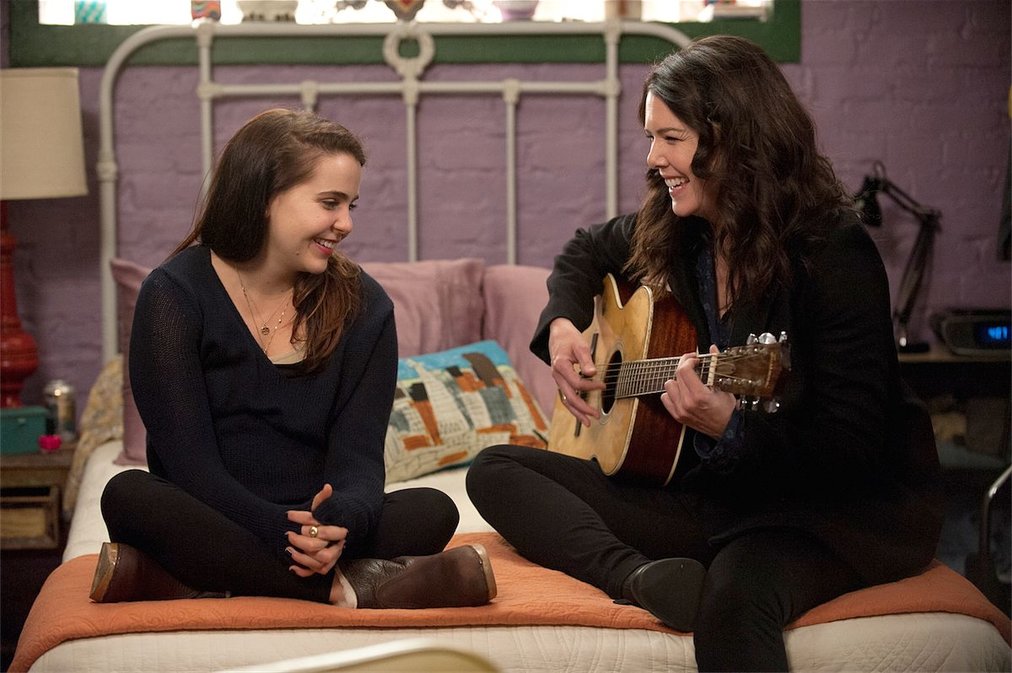
    The other big component of “We Made It Through the Night” is the continuing trials of Joel and Julia’s reconciliation, which turns out to be slightly more complicated than it may have previously seemed. That’s typical Parenthood though; the show gets by far the most mileage out of digging into these moments, into what happens after “happily ever after,” so to speak. It’s a series about life itself, what surrounds the big moments and makes those big moments worthwhile. Amber having her baby or Zeek nearly dying are the milestones, but what we’re actually here for is Sarah and Amber singing with each other and strumming the guitar, and Zeek laying eyes on his great-grandson and namesake for the very first time. Parenthood has always intuited that and delivered on it, and so here we are.

    Stray Observations:

    • Can you believe the finale is next week already? Will Haddie return? How about Ryan? (We already know Seth will not, sadly.) Might we perhaps catch a glimpse of Piecat?
    • Did Drew Holt Get a Haircut? I don’t know; apparently the birth of his nephew does not rate an appearance.
    • Adam and Crosby continue to go back and forth on the Luncheonette this week, and while I still appreciate the way that the story has become about their brotherly relationship, things end on such a dire note that reconciliation next week seems all but inevitable.
    • I know I am not the only person to note this, but The Newsroom has ruined all “Ave Maria” montages forevermore.
  • AHS: Freak Show Review – “Curtain Call” (4×13)

    AHS: Freak Show Review – “Curtain Call” (4×13)

    freak show curtain call

    Wow.

    Let’s just all take a minute to consider “Curtain Call,” which is an astoundingly, thuddingly bad conclusion to a season that, while not great, wasn’t necessarily a disaster.

    Well, leave it to Ryan Murphy to rewrite history at the eleventh hour. “Curtain Call” is awful: tone deaf, flat, boring, ridiculous—take your pick. It is among the worst hours American Horror Story has put us through, which is at this point a rather tall order. It is easily the worst episode of Freak Show.

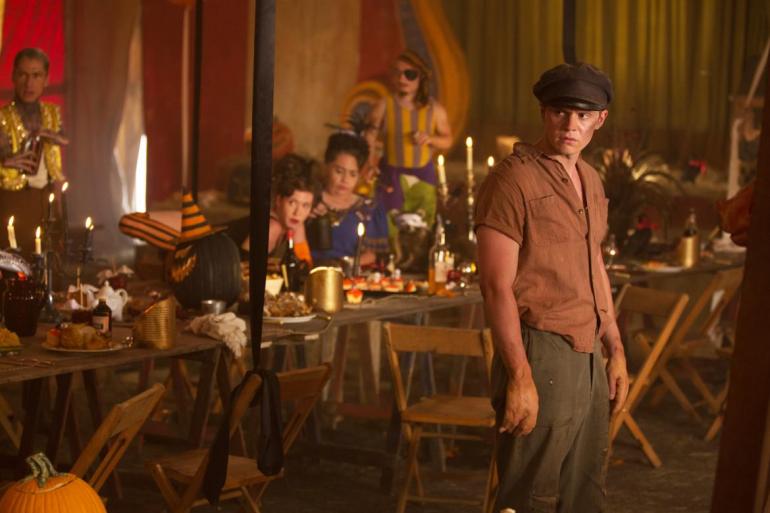
    The episode divides rather neatly into two halves. The first concerns Dandy’s takeover of the Cabinet of Curiosities. As the episode opens, Dandy lords over the freaks, and they rise against him, seemingly too easily. And of course it is too easy—before long Dandy is silently strolling around the camp, shooting the freaks dead one by one. RIP Grace Gummer the Fork-tongued Tattoo Monster, dead without consequence like every other woman on this show. Coven may have trivialized death by making it a temporary, stakes-free status for most of its characters (Nan just stayed dead). But Freak Show commits an arguably greater skin by robbing death of its necessary dramatic weight. Dandy’s massacre of the freaks underlines a point that needs no further expounding, and comes at the expense of characters in whom the audience could not possibly be expected to have any investment. Even Dandy, despite Finn Wittrock’s game performance, has been absent so long and so underwritten overall that his motivation beyond “is a murderous psycho” is non-existent. There is some beautiful cinematography throughout the sequence, but that’s just surface (albeit a gorgeous one). Far from shocking or moving, this turn of events is mean and violent and totally empty. Even Desiree’s anguished embrace of Jimmy upon their discovery of the bodies rings hollow, even though it theoretically checks every box it needs to. In Freak Show, grief and violence and loss are all surface, no depth.

    From there we have an abrupt cut to the wedding of Dandy Mott to Bette and Dot. If I weren’t committed to reviewing this show for Smash Cut, I would’ve shut off the television at this wedding scene. No joke. Of course the twins are playing a long (well, not very long) con, but fuck it, who cares? By the time Bette and Dot and the surviving freaks (just Desiree and Jimmy at this point) have drugged Dandy and dragged him back to the circus, I have completely checked out. I think my major issue with this whole thing is that this final confrontation begins in this episode—it doesn’t build from anything that came before, even despite some hamfisted attempts to pull everything together such as Desiree’s speech. “You may look like a motion picture dream boat, but you are the biggest freak of them all.” You don’t say!

    As with Coven, the season arc has done a heel turn to be about something that isn’t tangential—in fact, the rest of the season was the tangent—but which is entirely without consequence anyway. In this instance, it’s the notion of Dandy wanting to own the freak show, which was nominally raised in the first episode and then promptly abandoned in favor of literally a million other things. The funny thing is, this is true of all the show’s seasons: both Murder House and Asylum made similar eleventh hour turns that revealed the stories to be about something different than expected. The difference is, those seasons revealed the stories as being about something more than expected, too. Freak Show’s ending is reductive, unexpected only in how thoroughly unsatisfying it is.

    Anyway, then Bette and Dot and Desiree and Jimmy trap Dandy in a Houdini-esque tank and drown him to death, all the while sitting there and munching popcorn and cracking wise. And so, what? Are we supposed to feel good about this? Is this supposed to be a triumph for these characters—that they, too, are horrible murderers?

    And then suddenly it is 1960, and Elsa is famous (sure) and has a variety hour (okay) and is married to David Burtka (alright, fine) and she won’t perform on Halloween because she doesn’t do that because Edward Mordrake. Do you remember Edward Mordrake?

    Just to be clear: the entire remainder of the episode is an extended rhapsody on the nadir of Elsa Mars’s fame, which has apparently all along been the heart and soul of the season. Eventually the hardcore German murder-porn videos of Elsa’s past come back to haunt her, and also Massimo is dying of lung cancer, and so she decides that maybe she will perform on Halloween after all, and so she sings David Bowie’s “Heroes” (poorly) and Edward Mordrake shepherds her soul away on national television, accompanied by Twisty. Do you remember Twisty?

    Wait. It gets stupider. Edward Mordrake decides that Elsa Mars isn’t made for his Gang of Ghouls or whoever the fuck and so instead, Elsa passes into Freak Show Eternal and there’s the fucking ghost of Ma Petite and Grace Gummer the Fork-tongued Tattoo Monster and yes, even Ethel, and they all hug and make up and Elsa sings “Life on Mars” to an audience of ghosts, happily ever after. I’m not kidding. This is how American Horror Story: Freak Show ends. What a spectacular nosedive into the asinine for a season that’s been content to tread the line of mediocrity for so long.

    Merry Christmas, Noodle Mouse. See you next year for Amish aliens from the future or whatever.


    Stray Observations:

    • As always, the grade below is for the season. The episode grade is 3/10, and that only because some of the actors are trying really hard and a few shots are very pretty.
    • Shout out to Finn Wittrock, who was by far the MVP of Freak Show, and a more than worthy addition to the repertory. Here’s hoping that if he’s back for more, it’s a more deserving script.
    • Neither Maggie nor Dell warrants any mention in a finale that turns out to be extremely preoccupied with ghosts. This may suggest something about the superfluity of, oh, say five or six episodes in the middle of the season.
    • Per reports from TCA week, American Horror Story is going to be radically re-invented for season five. Given that this is a Ryan Murphy show and so the phrase “radically re-invented” is pregnant with literally boundless possible meanings. Perhaps it will be re-invented as a “good television show.”
    • My primary motivation for reviewing American Horror Story this season was my hope that it would ascend to the terrible, laughable heights (sure, we’ll call them heights) of Coven, and so mostly I’m bummed that it turned out to be too little, too late. Imagine if we had hit this high water mark around episode eight! Anyway, The Americans takes over the time slot next week, so if you need a palate cleanser you could do worse. Thanks for following along on this dumb journey with me!
  • Shameless Review: “I’m the Liver” (5×02)

    Shameless Review: “I’m the Liver” (5×02)

    shameless I'm the liver

    As with “Milk of the Gods,” this week’s episode of Shameless is something of a mixed bag. There’s quite a bit of good material here, but the show is doling it out very slowly, and as a result much of “I’m the Liver” repeats the beats of the premiere, without adding any depth or creating any further complications. Even the instances that do develop new wrinkles this week (I’m thinking mainly of Fiona here) are still baby steps forward in a season that is in no rush to make its point.

    Again, Shameless has more than earned this sort of measure storytelling. There’s no reason not to be confident that the season is building to something, and that much or all of this early work will pay off down the line. But when aspects of the episode are as trying as aspects of this episode are, it can be difficult to be as patient as one would like with the storytelling.

    Once again, the bulk of the episode is spent with Frank and company, and once again, I’m left to wonder if this isn’t a mistake. The broader comedy on this show can be hit or miss, and Frank’s story this week exemplifies both extremes. There is some excellent physical comedy—in fact, Sheila casually squirting Sammie with the hose is side-splitting—but also some misguided attempts at black comedy that ultimately forget they’re meant to be telling a joke. The Father’s Day luncheon to which Frank and Sheila are invited, hosted by the parents of the donor whose liver Frank is now abusing, is dark to the point of discomfort. By the time the donor’s mother is cringing in horror at the head of the table, the audience is way ahead of her. It’s not funny enough to warrant how very dark the scene is, and so it ends up gross and even somewhat exploitative, too weird for its own good. Wrapped up in all of this is Sheila and Sammie’s continued feud, which is, like so many things with these characters, too outlandish to achieve any sort of pathos; and without the pathos, the comedy falls flat, too.

    Lip and Ian are both stuck in retreads of the premiere. Lip has his first day of work on the demolition crew; he puts on a brave face, pretending to be this strange, idealized version of himself that he holds in his head, like he can still be the blue collar, working class South Side hero. But he’s not that guy, and after a hard day of work, he rounds the corner and collapses. The story is well-told in its few scenes, but divulges no new information, nor does it change Lip’s status quo, not even when he briefly crosses paths with Mandy. Still, it’s a sight better than Ian’s story, which is equally repetitive but less well done, featuring an (admittedly accurate) caricature of the Westboro Baptist Church and an increasingly heightened manic episode of Ian’s that is never quite believable or engaging. It may just be that Cameron Monaghan is better at playing the depressive episodes than the manic, but something in the combination of performance and writing just doesn’t work this week.

    Much more successful is the C-plot featuring Debbie and Carl, which starts out as a light-hearted, standard teen-movie romp, through the lens of Shameless, before turning into a more careful study of Debbie’s continuing journey into adolescence. Her scenes with Svetlana are comedic gold, as are Debbie’s studied attempts at sexiness at the public pool. Svetlana is pretty much always awesome to have around, but tonight’s scenes are a good reminder of just how well rounded the character has become.

    But what’s truly best about this particular thread is the way it dovetails so neatly with Fiona’s, leading to a devastating final scene that sneaks up on the viewer, so that you don’t realize its horror until it’s too late. Fiona spends much of the episode flirting back and forth with Sean, newly free of her ankle monitor and suddenly (or perhaps usually?) flush with options with regard to men. But after a violent encounter with a diner who was rude to Fiona (and I mean, super fucking rude), Sean hits the brakes. He might have seemed like the responsible and respectable option, but is in fact the same kind of conflicted, bad news guy that she’s always into. And he confirms every scary thing that Fiona has ever thought about herself. “I’m not just chaos,” she pleads, but he knows better.

    And so she takes her fourteen year old sister, dressed like a hooker, to a 21-plus concert, puts her directly in harm’s way with some gross pervert, punches a guy, draws the singer of the band into a fight, and runs like hell out of there lest she violate her probation. Chaos with a capital-C, sweetheart. This is a great note to end the episode on, not just narratively speaking, but also just with the composition of the shot. Debbie is foregrounded, giggling with excitement, finally off on an adventure with her big sister. Meanwhile Fiona is behind her, exhilarated as well, at first, until she realizes just how much trouble she is.

    It’s this ability to turn on a dime that makes Shameless a better-than-average series. It doesn’t hit these heights often, and tends to only really be consistently sublime with regard to Fiona, but man, do moments like this one make the whole endeavor worth it. I’m still waiting, somewhat less patiently than before, for the rest of the season’s elements to coalesce; but as far as Fiona and Emmy Rossum are concerned, at least, I’m all in.

    Stray Observations:

    Little Chuckles continues to be an absolute delight, with his “Happy Father’s Day Gampa” sign and all.

    “This is just like with the Jews.” “Today, the urban gentry is moneyed lesbians.” Frank’s thoughts on gentrification are typically complex.

    Another great shot: just when I was feeling a little skeptical, Frank and Sheila are prancing down the street holding hands, and dare I say my heart melted a little a bit.

    Kevin gets some great scenes in with Svetlana as well, as his and Veronica’s parenting troubles take a turn for the worst this week. Sometimes a haircut is not just a haircut.

    “Surrogate. I rent uterus like youth hostel.” Svetlana is a treasure.

    “You can’t wear the uniform and wield the cross as a weapon, soldier.”

  • Parenthood Review: “Let’s Go Home” (6×11)

    Parenthood Review: “Let’s Go Home” (6×11)

    Parenthood

    As Parenthood draws to a close, its aims of a work of fiction haven’t really changed, but they have come into sharper focus. There is a scene late in this week’s episode, the aptly titled “Let’s Go Home,” where Zeek and Camille return to the old house to retrieve an old souvenir baseball. (First, just consider that enough time has passed for the Braverman house to become “the old house”.) They’re greeted with the sight of a young boy frolicking in the yard with his dog, and a fresh coat of paint in a color Camille never would have thought of. Life goes on, and we adapt and rebuild. They leave without with baseball, without even going inside.

    “Let’s Go Home” is very much concerned with ideas of belonging, of going forward or going backward but keeping “home” in your sights regardless. It’s a more typical episode of the series than “How Did We Get Here?” in terms of structure, and it’s a stronger episode for that. Characters are paired off as usual, splintering away into their own stories, with no physical focal point such as the hospital, or even a family dinner, to anchor them to each other.

    That turns out to be a good thing. Last week’s efforts to tie everything physically to the crisis over Zeek’s health meant that anything that moved away from that became a distraction. This week, the clan is allowed to sprawl as far away as they need to; home is an idea, not a place.

    If the project of Parenthood is portraying this family unit as together and cohesive, through thick and thin, always and forever, then “Let’s Go Home” is largely an episode that puts those pieces into a place for a final statement on a theme in the coming weeks. The series is not reinventing the wheel at this point, nor does it need to. I loved this episode; it’s one of my favorites of the season. (Yes, even the business with the Luncheonette.)

    Much of the episode is about characters building things or fixing things. You first notice this when the show smacks you over the head with it—Amber and Sarah can’t figure out how to put together the crib that absent dad Seth mailed. But soon a pattern emerges throughout the episode, of characters sitting on the floor together, wondering how to rebuild the fragmented or simply forgotten pieces of their lives. Julia and Sarah do strange-looking crunches on the grass and weight the pros and cons of getting back together with Joel, or of saying yes to Hank’s proposal. Adam and Crosby wonder whether to go out on a limb for a shared dream, or to play it safe by giving up. Sarah and Hank sit by the finished crib and map out the next phase of their lives, together.

    It should come as no surprise that in every instance, Parenthood endorses risk taking, endorses reunion, endorses any course of action that brings the Bravermans together. It’s the same drum that the show has been beating all this time, and to its credit, it hasn’t really gotten old. What sets this episode apart is its slightly different variation on this enduring theme. Parenthood has spent a fair amount of time now disassembling its various parts, a fact that is much more obvious in retrospect than it was as it was happening. Whether it’s Kristina’s battle with cancer, Adam losing his job, Zeek facing death, Julia contemplating divorce, Amber getting pregnant—the ties that bind the Bravermans have frayed but have not broken. With the end in sight, there is no longer a need to continue testing those ties—now the show can purely celebrate and reinforce them.

    The result is a sweet and refreshing take on the usual Parenthood schmaltz (which I say with nothing but love.) It’s what gives us scenes like the unexpectedly romantic kiss on the ice between Julia and Joel, whose reunion just two weeks ago was my most dreaded outcome of the season. Their tentative steps toward fixing their marriage had a lightness of touch this week that is a gigantic benefit to the story, making it a delight to watch.

    Even the Luncheonette story was not totally unbearable! I’ll quibble with Adam a little bit this week; after Zeek plainly tells him that Crosby is an adult and can handle the business on his own, Adam goes and continues to tell Crosby that, since Adam wants to back out, its lights out for the studio. Adam is the worst. But the situation with the Luncheonette this week leads to the best use of Crosby in some time, giving him something to be legitimately serious about, and creating a final test of faith for the rest of his family; instead of bemoaning his continued arrested development, I’m excited to see Crosby (presumably) rise to the challenge.

    “Let’s Go Home” is more heartwarming than heart wrenching, which is a fine change of pace for the series in the home stretch. It’s one of the season’s finer hours, one that’s sure to leave you with a smile plastered onto your face. You’d have to have a heart of stone not to be moved by Sarah’s “yes” to Hank, or by Joel’s admittedly smooth moves in regaining Julia’s love and trust. This almost aggressively optimistic mode is one that only works when the question of future stories is removed, but it works well indeed, and it makes these final hours with Bravermans a well-earned pleasure.

    Stray Observations:

    • I was thinking how hilarious it would have been there was some tragic family secret hidden away on those rolls of film, but it turned out they’re actually the opening credits, which is even more hilarious.
    • I’m happy Jasmine gets to do something here, even if it is just prop Crosby up.
    • Semi-regular praise for Monica Potter again, who is so, so good. Her face after Adam tells her about Jasmine’s visit is running through eighteen different emotions simultaneously and they are all captivating.
    • “I prefer actual silence to Aunt Sarah’s voice.” Max returns with a vengeance this week.
    • Chris gets thrown under a bus this week without so much as a goodbye. Chris, we hardly knew you.
    • He was always a cute kid, but this is the first time I’ve actually thought to myself that Miles Heizer grew up pretty fine. (Maybe it’s the haircut.)
  • American Horror Story: Freak Show: “Show Stoppers” (4×12)

    American Horror Story: Freak Show: “Show Stoppers” (4×12)

    ahs freakshow show stoppers
    If nothing else, “Show Stoppers” is proof positive that Freak Show, if not the whole concept of American Horror Story altogether, is far beyond the point of course correction. Because on its face this is a pretty solid penultimate episode, just in terms of stuff that happens and what it sets up. The problem is that at almost no point has the show bothered to give two shits that this is the moment its been building to. The freaks rebelling first against society, then against the interlopers that threaten their well-being, and lastly against their “mother” who is The Real Monster Within, is a fine arc for the season. It’s just not the one that we’ve been following all this time.

    Coven was guilty of this too; it began and ended as the search for the titular coven’s next leader, and a bunch of truly inconsequential shit happened in between. I don’t think that problem has been as pronounced this season, but it’s certainly still there, and as a result what should be some of the season’s crowning moments instead fall disappointingly flat.

    Take the opening dinner sequence. Props to the cast and crew behind this one—it at the very least achieves the tone of aberrant freakishness that has been too lacking so far. But Stanley getting his comeuppance is only fun or satisfying insofar as Denis O’Hare has truly hammed it up in the past few episodes. He doesn’t have an existing relationship with anyone at that table beside Elsa, and maybe Maggie, but Maggie barely even registers as a character at this point, so it’s moot.

    Ditto the eventual realization among the freaks, many of whom I still cannot even name, despite watching each episode multiple times and taking copious notes, that Elsa is responsible for Ethel’s death, and their subsequent decision to kill her as well, because why not, they’re killing people left and right anyway. But none of these characters exist as anything more than vehicles for a thin plot that really doesn’t need any of them to get where it’s going. What makes Paul tick, other than banging Grace Gummer the Fork-tongued Tattoo Monster? Why does Desiree have absolutely no thoughts at all about Elsa blowing a hole through her husband’s head? (In fact, why doesn’t anyone?) Ethel died weeks ago; isn’t it a bit late to be dealing with this? What was the hold up?

    The freaks haven’t ever been portrayed to be particularly violent—the earlier encounter with the police was portrayed as an aberration, and in the very beginning of the season they seemed downright disturbed by the notion that they were immediately blamed for Twisty’s misdeeds. (Remember Twisty?) Where on earth does the sudden spate of violence come from?

    Have the freaks been corrupted by Stanley and Elsa? I don’t know, maybe? But if that’s the case, it’s not there on the screen, because we’ve spent all our time with Stanley and Elsa, and not with the characters whose journey we are now being asked to care about. Or, worse, we’re spending entirely too much time with Neil Patrick fucking Harris and his stupid doll. It is entirely too late in the game to spend so much time on this tertiary character, especially when his story this episode is a near scene-for-scene retread of last week’s.

    Or how about Jimmy Darling? He at least has had a semi-developed emotional arc this whole time—seeing him so dejected, robbed of the only things that had ever given his life meaning, is legitimately moving. But it’s tethered to Maggie, who is the flattest character in a show full of them. She’s always loved him? They can move to New York, like they’d always planned? When? What show are these writers watching? Maggie’s death this episode isn’t tragic, it’s a snoozefest, and Jimmy’s reaction to it is bland and forceless as a result.

    When the episode is over, Elsa has skipped town, tipped off by Bette and Dot (another instance of a relationship being abandoned for episodes on end, then being resurrected to diminishing returns). In her stead is Dandy—Elsa has somehow managed to sell the show twice, although it helps that Chester is an idiot. Dandy’s cocky stride into the tents elicits nothing more than a meh. Remember when this guy was a violent serial killer? Anyone?

    For all its faults, though, this really is a beautiful show. There are some truly great compositions this week. I particularly loved the shot of Elsa reuniting with Massimo, all washed out in sunlight inside the empty tent. The music this week is also pretty excellent, featuring a simple melody that carries the weight of emotion in the scenes it scores.

    But still. It’s endgame time now, and everything just kind of is. Freak Show doesn’t even have the decency to be abysmal; it’s just a rote, sloppily told story. Actually, let me take that back—the last scene is one worthy of American Horror Story’s legacy of absurdity, as Jimmy shows the audience his new fake lobster hands and everyone “awwws” at how his deformity made him special. Give me a fucking break, is literally what I yelled at my television as I turned it off in mild disgust. Mild disgust, I tell you—this is the strongest emotion I can muster at this point.

    At any rate, next week things will happen and we will close the book on another season of American Horror Story. There will probably be yet another tenuous connection to earlier, better seasons of this show, and then we’ll all be back next fall for more abuse at the hands of Ryan Murphy, which is its own American horror story.


    Stray Observations:

    This week in dumb callbacks I don’t care about: a young Hans Grouper had something to do with Elsa’s disfigurement, apparently? Whatever, show.

    At that dinner scene the cast starts summarizing basically the entire plot of Freaks, which, yeah, we get it.

    Grace Gummer the Fork-tongued Tattoo Monster! You’re alive, and you remain my favorite thing about this season.

    Seriously, no one so much as bats an eye over Dell this week. That strains credulity more than even this show can get away with.

    The freaks torture Stanley by turning him (somewhat implausibly) into a little Meep creature, which is a darkly hilarious one-off gag, in a blink-and-you’ll-miss-it shot .


  • Shameless Review: “Milk of the Gods” (5×01)

    Shameless Review: “Milk of the Gods” (5×01)


    shameless milk of the godsWelcome to Smash Cut’s reviews of Shameless season five! This is one of my favorite shows on the air right now, and I am beyond excited to spend some time with the Gallaghers alongside you all.

    This is a big premiere, touching on all of the main characters at least briefly, both recapping where we left of, and at least beginning to outline where we’ll be going next. As such, it’s a busy episode, and there isn’t as much substance as there could be here owing to the sheer shoe-leathery-ness of it all. In a way it’s fitting that any Shameless premiere would be a little messy, rough around the edges—and given the way that the excellent fourth season built to such a laser focus, it’s only fair to allow this season some time to build up speed.

    It’s also worth noting early on the show’s skewed sense of morality. Traditional notions of right and wrong are right out the window here. Feel that swell of pride as Mickey dons a tie and heads out to work? Well he’s running a fake moving company and selling rich people’s shit. And so on and so forth.

    The downside of a messy, rough around the edges premiere is that not everything lands the way it should. There’s plenty to admire here, to be sure, not least the episode’s somewhat surprising MVPs, Veronica and Kevin, whose struggles with new parenthood are a perfect blend of gooey sentimentality and classic Shameless raunch. It’s not always easy to relate to the characters on this show, but the script and actors work together here to find a real, beating heart in both v and Kev. Steve Howie especially is a powerhouse here, delivering on the comedy as always, but also delivering on an emotional level. Their conflict is real and raw, and a breath of fresh air given the cartoonish heights the episode occasionally reaches.

    I’m partial to Mickey and Ian, so their story this week worked for me as well (even if it is breaking my heart to watch it unfold!). Noel Fisher is a great addition to the regular cast, and he and Ian have perhaps the most compelling relationship on the show at the moment. Cameron Monaghan is running with the bipolar material, and does a great job selling both the manic and the depressive moments. There’s likely going to be a few episodes of this waiting for the other shoe to drop, but “Milk of the Gods” does a fine job of establishing the stakes. What’s clear throughout the episode is the extent to which Mickey truly loves Ian—and so we already know just how much damage Ian is going to end up doing here.

    Jeremy Allen White is also reliable as always, with Lip’s homecoming taking an unexpectedly melancholic turn. His return to the neighborhood is muted and disappointing for him, a fish out of water story in reverse. How far he has come in just a year away at school. The shots of Lip on the subway are really well done, creating a sense of claustrophobia and discomfort. Lip thought he had trouble adjusting to university, but he’s practically gone native now; it’s the South Side where he has trouble belonging.

    That leaves us with Fiona and Frank, who unfortunately have the more underwhelming moments of the premiere. Fiona’s story isn’t bad so much as it’s stagnant. The arc of her brief rise and crushing fall gave definition to both the character and the series last season. Now she’s in the same place we’ve seen her so often, working a job that should be beneath her, flirting with an inappropriate man. She seems happier and more well-adjusted than during her spiral, and Emmy Rossum is lovely as always, but there’s no bite to this story right now.

    At least Fiona’s story is steady and consistent, though. Everything involving Frank, as is too often the case, is stupid. After a transcendent arc toward the end of season four, it’s more than a little disappointing to see the writing for the character return to such juvenile, puerile nonsense. I get that Frank is meant to be reprehensible, but with his life on the line there was at least drama in it. Now it’s just more of the same, and it’s a complete waste of William H. Macy and Joan Cusack’s considerable talents. Sheila’s feud with Samantha is absolutely terrible, and has no dimension to it at all. Samantha’s complete heel-turn in characterization falls totally flat—in fact it’s almost embarrassing to watch unfold. There’s just no room for sympathy left with Frank as a character, regardless of the situations the writers concoct, after his magnificent “fuck you” to God. It’s a point that is only exacerbated by the entire Gallagher clan’s rejection of him. We have far too quickly arrived at the point where time spent with Frank only detracts from the other, more interesting characters; and this episode spends entirely too much time on Frank.

    It’s not perfect, but season four was so good that it’s not quite fair to expect “Milk of the Gods” to reach those heights immediately. What’s good here is great, while what doesn’t work still has plenty of room to improve. One hopes the writing staff will figure out a better way to write Frank, and something more engaging for Fiona, but there’s plenty here to like aside from them. It’s good to have the Gallaghers back.

    Stray Observations:

    • We’ll have the Gallaghers around for a while yet, as the show has been renewed for a sixth season, as is Showtime’s wont.
    • Watching the “previously on” had me immediately nostalgic for season four, which really was just great television through and through.
    • “That Chuckie thing” is my new favorite way to refer to Chuckles, who is still inherently funny without having to do or say a damn thing.
    • Dermot Mulroney has replaced Jeffrey Dean Morgan as Sam, which had me extremely confused for much of the episode, mainly because I was conflating Sam with Mulroney’s New Girl character for no reason that I can think of now.
    • Sam’s relationship with Fiona, meanwhile, is kind of bland, not least because Jimmy/Steve is out there somewhere, gathering strength to ruin my enjoyment of this show once more.
    • Stumpy, Lip’s friend with the new piercings, is disgusting looking.
    • A real estate company is running around looking to buy up South Side homes on the cheap. I love when Shameless takes the unique opportunity to do stories about class, and I’m looking forward to its take on gentrification.
  • Parenthood Review: “How Did We Get Here?” (6×10)

    Parenthood Review: “How Did We Get Here?” (6×10)

    parenthood how did we get here

    Parenthood’s hundredth episode is something of a miracle. The series, much like Jason Katims’s previous show Friday Night Lights, has never been a ratings success. It has held steady in its Thursday at 10 time slot, ostensibly a slot for prestige dramas, but renewal has never been a sure thing for the show. After an (ill-advised) full season order for season five, that the series is back for this victory lap is nothing short of amazing. (It helps that NBC has nothing better to put here, cc: Hannibal.)

    The thing about Parenthood is that it is not a prestige drama. It’s not even quite on the level of Friday Night Lights; it lacks for example that show’s formal specificity, its realist edge. Parenthood is utilitarian, the last of the family dramas, not quite a soap, not quite prestige. It knows what it is, knows what it can do, and more often than not does it well.

    The same is true of “How Did We Get Here?”, which encapsulates all of the things the show does well, along with some of the things it does annoyingly, if not quite poorly. It is in other words exactly what a hundredth episode should be, and it functions perfectly as a summation of the show. In fact, if not for a few outstanding threads of plot, “How Did We Get Here?” would serve as an excellent finale. As it stands, it sets the stage for the final three (!) episodes of Parenthood rather nicely.

    What I love most about this one is the way it functions as a sort of bottle episode, containing all of the Bravermans in the hospital for the bulk of its running time. I cannot emphasize enough my joy at getting the whole cast in the same place again. Budgetary issues have meant leaving several characters out of episodes, and some of the show’s unique chemistry was lost as a result. That spark is back in full force here, and it shows. Right from the beginning, with an otherwise silent musical montage that is super effective, the script sets some of the highest emotional stakes the series has ever seen, and pulls the audience right back into the lives of the Braverman clan.

    Zeek’s health issues have been by far the strongest thread this season, not least because they provide a means to bring the entire cast together. It makes sense that this milestone episode would put him in crisis once more. When we left the show before the holidays, it was on a note of cheap, telegraphed shock—but here, dealing with the aftermath, is where Parenthood truly excels. Emotional realism is what the episode has going for it in spades. The Bravermans are all sitting around helpless with the world rushing around them, and all they can do is react and lean on each other. Looking back, very little actually happens in “How Did We Get Here?”, but that doesn’t matter. It’s scenes of characters reacting, talking to each other and processing the fact of Zeek’s mortality, that are what we’re here for, and on that count, the episode delivers.

    Take this week’s MVP, Bonnie Bedelia, whose Camille has her most substantial episode in ages here. Her wonderful chemistry with Craig T. Nelson contains within it decades of history; it’s impossible not to be moved when Camille breaks down in the chapel with Adam, or when her voice cracks with palpable relief when she learns that, for now at least, her husband is okay.

    Perhaps somewhat surprisingly, Miles Heizer also gets a couple great showcases here. Parenthood doesn’t always know what to do with Drew, and I felt that last episode’s conflict between him and Zeek was forced, to put it mildly—it didn’t really land for me that even Zeek would be quite so harsh to his grandson. But once again, the fallout from those harsh words provides fertile ground for drama here, as Drew worries that his last conversation his grandfather might be one where Zeek told him how he’d let him down. Is they symbolism of the Pontiac breaking down maybe a little too on the nose? Sure. But Heizer is great in the scene, and throughout the episode. He’s paired off with Hank at the hospital, which is a no-duh character pairing that the show hasn’t really mined yet. Like so many of the pairings in Parenthood, it’s an emotional goldmine. Ray Romano is practically a national treasure, and watching him navigate the latest Braverman family crisis is not without its humor—I love how he decides to stay because Joel is doing it, too.

    Unfortunately the episode isn’t entirely successful. The Luncheonette has never been the greatest idea Parenthood had, but this ransacking-slash-burglary is even more unbelievable than the idea of the Luncheonette in the first place. What, the thieves loaded up the entire damn recording booth on their shoulders and just waltzed on out of there? It would take literally hours to do the damage we see. It’s absurd and immediately lets the air out of the story. What’s worse, a story that seemed like it was jettisoning the Luncheonette in time for the home stretch actually ends up reaffirming it as the driving force behind what will be Adam and Crosby’s final major storyline. Booooo.

    Somewhere in between these two extremes is the ad hoc baby shower the ladies hold in the hospital waiting area for Amber. On the one hand, it’s a sweet scene, though it’s a little too saccharine even by Parenthood’s standards. On the other hand, it’s oddly placed at the end of the episode, as though it was tacked on simply to have the women share their reflections on motherhood as part of the hundredth episode festivities. A nice enough scene to be sure, but one that feels like it might belong to a different episode entirely.

    Overall “How Did We Get Here?” is a strong return for Parenthood, and the missteps that it does make are minor. As a celebration of the show’s legacy, it definitely works, and as a set-up for the final episodes, it does a good job of setting the stakes and putting all of the pieces in place for a satisfying finale.

    Stray Observations:

    – Hank’s proposal to Sarah is so very typical of him, and it’s beautiful to boot. What a journey this character has gone on.

    – “That was my first instinct, not to talk to you.” Hank is also very comforting.

    – “You’re right that it’s practical, it’s practically not a Porsche.”

    – Joel and Julia are now maybe getting back together, or something? Chris is, I don’t know, I guess he’s dead or something? I assume there will be more conflict yet to come on this front, but it’s all very swept under the rug this week in a way that’s off-putting to me.