Michael Wampler

  • Boardwalk Empire Review: "Devil You Know" (5×06)

    Boardwalk Empire Review: "Devil You Know" (5×06)


    boardwalk empire devil you know

    After five episodes of slow, careful build-up, Boardwalk Empire explodes into a violent burst of chaos. By the end of “Devil You Know,” we are careening full throttle into an all-out gang war, and all bets are off.

    This is one of those episodes that will be judged primarily for one or two significant sequences, rather than as a whole episode. And given the events of two very important sequences this week, that judgment shouldn’t come as any shock.

    We’ll get to those sequences momentarily, but first, let’s talk about Nucky. He drowns his grief in booze at a local dive bar, beats up an old drunk, gets blackout drunk himself, and is knocked unconscious by one of the women he tries to sleep with. Throughout the whole ordeal, he’s just slightly out of character—loud, boisterous, and quick to violence, he even acquits himself better in the barroom brawl than I ever would have thought possible. That’s all intentional, of course. Nucky is very lost following Sally’s death, and this episode lets him wallow in that. What “Devil You Know” also does, of course, is let Sally’s death stand in for the many, many other times that Nucky has cause the death of a partner or a loved one.

    Specifically, this episode draws a direct parallel between Nucky’s guilt over Sally and his guilt over Gillian Darmody. It’s not the first time the season has applied its flashback structure in this way, but it’s certainly the most effective. As the episode cuts back and forth between Nucky’s stay at the bar and his time as deputy sheriff, seeking out a pickpocket along the boardwalk, the connection slowly reveals itself. By the time Joe Harper happens upon Nucky as he returns to consciousness, Nucky is reminiscing about Gillian himself, and he’s shouting at, but not to, Joe, “why would you trust me?” There’s more yet to go with regard to Gillian’s youth, but we already know the broad strokes, and it’s clearer now than ever that something awful looms.

    Not that it takes any great leap of analysis to determine that, given what else goes down this week. I’ve talked circles around it enough, but suffice to say that if you haven’t watched yet, you won’t want to read on.

    We good?

    Because this week features the sudden deaths of two regular cast members, as the season arc kicks into high gear all at once, finally launching us into Luciano’s war with Nucky and setting up Capone’s downfall. When it’s not waxing philosophical over Nucky’s soul, “Devil You Know” presents the viewer with two sustained sequences, each featuring an interloper, caught entering a room he shouldn’t be in. Each sequence is beautifully shot and paced, maximizing the tension, simultaneously building to inevitable tragic climax, while also maintaining reasonable doubt—maybe, just maybe, the terrible thing that must happen won’t happen. There are two episodes left, after all.

    The first of these sequences features Eli and Van Alden, and begins much like their previous outings this season, rooted firmly in buddy cop comedy territory. The plan they’ve cooked up with the feds in Capone’s crew is laughably bad, and mostly involved passing off a bag full of newspaper clippings as a drop-off, hoping no one notices, and then making off with Capone’s ledgers to boot. It is monumentally stupid, and it instantly fails. They nearly lie their way out of the situation, but just as the embedded fed is escorting them away, ostensibly to “take care of” them, but really to scrap the operation and cut them loose to safety, Capone himself arrives, and things go from bad to worse.

    Capone’s interrogation of the two lasts minutes, and their feeble lie (they wanted to steal from Capone to help Van Alden’s wife at home) doesn’t have a hope of swaying Capone, who instead puts a gun to Van Alden’s head and accuses him once more of being a badge. And then, in a glorious burst of anger, Van Alden completely loses his shit, swats the gun away, and tackles Capone onto his desk, wrapping his hands around his neck. Michael Shannon lets completely loose in what turn out to be his final moments on the show, as Van Alden announces himself. I’m just going to leave the entire speech here, because it is awe-inspiring, a fearsome callback to the character’s earliest days on the show:

    I am Nelson Kaspar Van Alden! I am a sworn agent of the United States Treasury, and I swear by Jesus, our lord, that JUSTICE will rain down upon you if it is the last—

    It ends there, interrupted by a gunshot to the back of the head that takes a chunk of Van Alden’s face with it. Of the episode’s two deaths, this is the big shocker, even if was an historical impossibility for Van Alden to make it out of that room alive. After years of pretending to be George Mueller, the mewling, milquetoast iron salesman turned low-level gangster, Van Alden finally re-asserts himself and his purpose in life, even if it is, indeed, the last thing he does. It’s a fitting send-off for the character, even more so considering that his outburst lands the ledgers in Mike D’Angelo’s hands after all, turning the mission into an unlikely success.

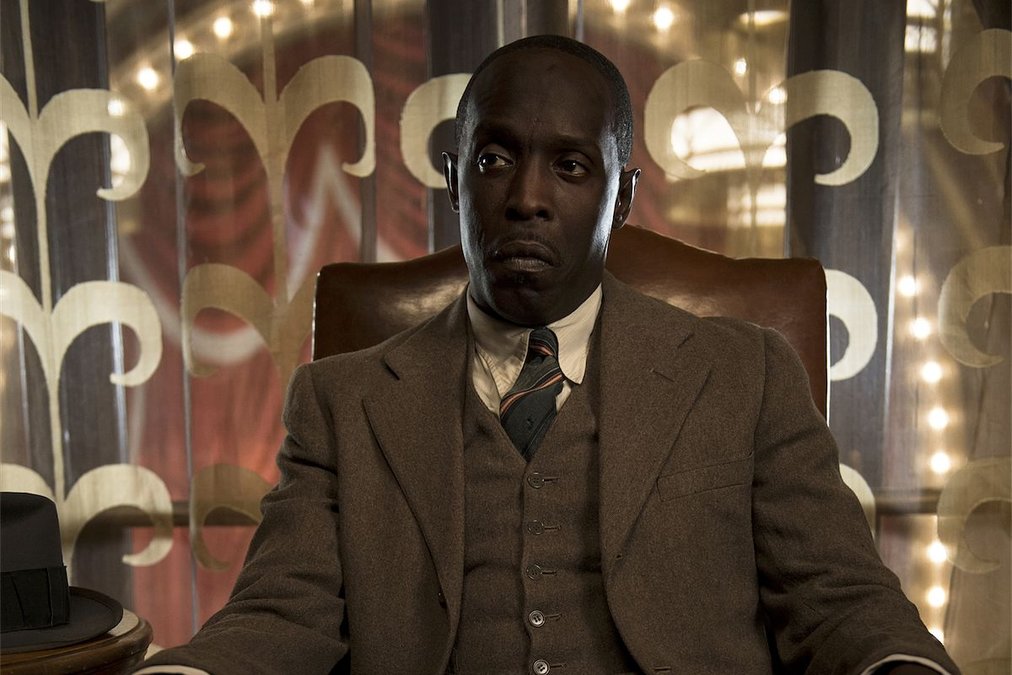
    The episode’s other death is, sadly, no surprise at all. Chalky White arrived at Narcisse’s last week fully expecting and intending to die, What he did not expect was to encounter Daughter Maitland, there with her daughter, Althea—and his, as well. They talk for a while, never directly to each other, but more at each other, each speaking about the other, in that elliptical way that defines their brief relationship. Narcisse joins them, and rather than have Chalky shot immediately, suggests that perhaps they all have some things to discuss. Jeffrey Wright and Michael Kenneth Williams both give quiet, subdued performances in these roles, and never more than in this scene have their similarities been quite so on display. There is rage simmering within both men, who, in another situation, may have been allies. But now they are too far gone, and each is well aware of it.

    Ultimately, Narcisse cuts a deal with Chalky: Daughter’s freedom, in exchange for Chalky’s service. Chalky takes it, even though Daughter insists he cannot trust Narcisse. Chalky knows that, of course, but he sends her away anyway, and he steps outside with Narcisse, who is now in league with Luciano. As Narcisse leaves, Chalky calls after him, “Ain’t nobody ever been free.” For once, Narcisse has nothing to say; he leaves, replaced by five bodyguards who open fire on Chalky White in the alleyway, as Daughter’s voice sounds once more in his head, before the record scratches as the shots are heard. Another fitting send-off, a sad, heroic, inevitable conclusion to Chalky’s story. Whether Narcisse keeps his word or not, Chalky dies choosing to believe that he will, and that he has, at least in some small way, kept another daughter from the fate of his eldest. One can only hope that he’s right.

    When Joel Harper brings Nucky back to the club, Mickey Doyle is gathering the troops, and he asks Nucky if they’re gearing up for a confrontation. Nucky looks down upon his army like he’s Henry V, and says, simply: “We are.” Of course they are. The wheels have been in motion for too long now, and with the deaths this week, war is the only option left. In many ways, the whole of Boardwalk has been an exercise of narrative inevitability, and that is on full display here, in the best way possible.

    Boardwalk has an exceptionally strong history of final episodes, and this, as the beginning of the end, is no exception. It does double duty of tying up tertiary arcs, while also setting the final confrontation into motion. That it manages to combine those plot necessities, while also maintaining suspense even in the face of historical certainty, is a feat not to be underestimated. This is easily a season-best, even series-best episode, making sense not just of this season’s arc to date, but of several season-long arcs as well. Stunning television this week from Howard Korder and team, and the clearest sign yet that their endgame is one worth sticking around for.


    Stray Observations:
    – I rejected the Tommy Darmody theory last week, and I continue to think that the show is throwing red herrings at us with regard to this. That said: Joel’s weird reaction to Micky’s “your mother” joke, and the way he reacts when Nucky is babbling to Gillian in his mind, are certainly evidence for it. If that eleventh hour reveal is on the way, it will at least have been foreshadowed—but I still don’t think it’s going to happen. Thematically, he might as well be Tommy, but it’s not generally the sort of thing the show will make literal.

    – What happens with Eli now? I doubt we have seen the last of him, but he also doesn’t have a very solid reason for heading back to Atlantic City.

    – Young Nucky hates the nickname, bestowed upon him by the Commodore and co. And yet it stuck with him his entire life.

    – Margaret is absent from this episode, which has me wondering what her role in the final two episodes will be. Of course, now there’s much more room for the other characters.

    – The casting for the flashbacks continues to be impeccable: Ryan Dinning is a dead ringer for Shea Whigham.
  • American Horror Story: Freak Show Review: “Massacres and Matinees” (4×02)

    American Horror Story: Freak Show Review: “Massacres and Matinees” (4×02)

    massacres and matinees

    As we make our way through the second hour of Freak Show, it becomes very clear (if it wasn’t already) that this season is much more concerned with establishing atmosphere than it necessarily is with accelerating the plot (or even with having one in the first place). The plot beats are pretty basic, but it’s the setting and the colorful cast that makes this particular version of the story one worth telling. In this early stage of the overall story, that kind of investment in world building can be invaluable.

    That’s not to say it works flawlessly here. The freak metaphor is a double-edged sword, and while a much more straightforward allegory helps streamline the season’s themes and make them immediately coherent (as opposed to the scattered storytelling of Coven), depictions of “freaks” and outcasts is well-worn territory for this show and for Ryan Murphy in general. The kind of on-the-nose metaphor that’s employed this season is genre-appropriate, but that doesn’t stop some scenes from landing with a thud. Any time a character (usually Jimmy Darling) admonishes someone with a stern, “Don’t call us freaks!”, the show feels like a fractured after school special. These are pat themes, addressed in a pat way.

    Or rather they would be, except for the wild characters and the psychotic clown on the loose. Atmosphere is so important to the show right now because it’s the one thing distinguishing it from the rest of the American Horror Story repertoire, as well as Murphy’s work in general, and most other shows about oppressed minorities or angst-ridden teenagers. Director Alfonso Gomez-Rejon, a regular in the Murphy stable, pulls out all the stops to give this episode the creepy, unsettling edge it needs, especially since the story itself is, well, a little boring. The opening bit in the toy store is predictable, but the tracking shots and blocking provide tension, while the framing in the Mott’s dining room accentuates Gloria and Dandy’s truly bizarre dinner conversation.

    That scene in particular is a showcase for the episode. It is supremely weird, but also instantly quotable. The Motts are odd people, and both Frances Conroy and Finn Wittrock make the most of the deeply strange material they’re given. (“I am simply protecting your from a life of degradation and opprobrium!”) It’s perhaps too obvious to do the bit where “the ‘normal’ people are even weirder than the freaks”, but again, it’s highly stylized enough here that, for now, it’s working. Now, with the sudden revelation that Dandy is now a deputy murder clown? That development comes with zero explanation, and is not followed up on in this episode. That’s the American Horror Story we all know and love (to hate).

    The episode does make some moves in the larger story of the season, and introduces some much needed conflict within the camp, as well as without it. Michael Chiklis and Angela Bassett join the cast, as strong man Dell Toledo and his wife, Desiree Dupree, an intersex woman with three breasts. The pair of them inject instant conflict into the camp setting, as Dell begins giving orders and calling the shots with regards to Elsa’s show. Jimmy’s plan to frame him for murder is both poorly thought out by the character and poorly displayed by the show, and it ends in the murder of Meep in a group prison cell. In case this story wasn’t clichéd enough already, Evan Peters ends the episode with a despairing yell into the night sky.

    At the end of the day, too much of this is familiar, and in a show about “freaks,” it seems that everything should have a bit more verve and originality. Even Twisty the Clown is a standard, uninventive serial killer story, dressed up in (extremely creepy) clown clothes. Elsa’s character has so far been cobbled together from various previous Jessica Lange characters, and her arc so far is identical to Fiona’s in Coven, with hints of Sister Jude as well. Both scenes with Bette and Dot singing are ripped directly from the pages of Glee, especially the first, where Jimmy encourages Bette to sing, which might as well be a speech from Finn Hudson. Ditto Jimmy’s trip to the diner with the rest of the freak show, which plays out only on the most superficial level. It’s a horror standard to apply metaphor to the violent proceedings, but since this show so rarely does straight horror, instead straddling the line between horror and drama, it needs to inject a little more oomph into the storytelling to keep things engaging.

    The same goes for the players. Even though there are a wide variety of characters, they so far are all very one-dimensional, with only Jimmy Darling showing any signs of depth (and since those depths appear to be mostly a quickness to violence inherited from his father, we’ll see how that ends up affecting everyone else). The flash and panache of the show’s circus setting will only carry it so far. I’m all for slow burn storytelling, and god knows Ryan Murphy could do with a little restraint, but at the same time, I can’t help but feel this is moving more slowly than it needs to be.


    Stray Observations:

    – Of course, next week apparently the ghost of freak shows past is coming to haunt the circus or whatever, so who the hell knows.

    – “Unless you got pony legs under those trousers or a double ding dong.” “No, but I do know the entire Cole Porter canon.”

    – So Twisty is missing the lower half of his face, if you weren’t creeped out enough. Related: Sure, Gloria Mott is not quite with the program most of the time, but how on earth does anyone really take a look at Twisty and think, “Oh, what a perfectly normal looking clown!”

    – “Amuse me, clown!” See what I mean? Although maybe Dandy knows more than it seems at first.

    – Bette and Dot singing “Criminal”? OK. I’m wondering if the musical numbers are going to be a weekly occurrence here.

    – Apparently Kathy Bates is doing a Baltimore accent? She sounds like literally no person I have ever heard.

  • Sons of Anarchy Review: “Smoke Em If You Got Em” (7×06)

    Sons of Anarchy Review: “Smoke Em If You Got Em” (7×06)

    smoke em if you got em

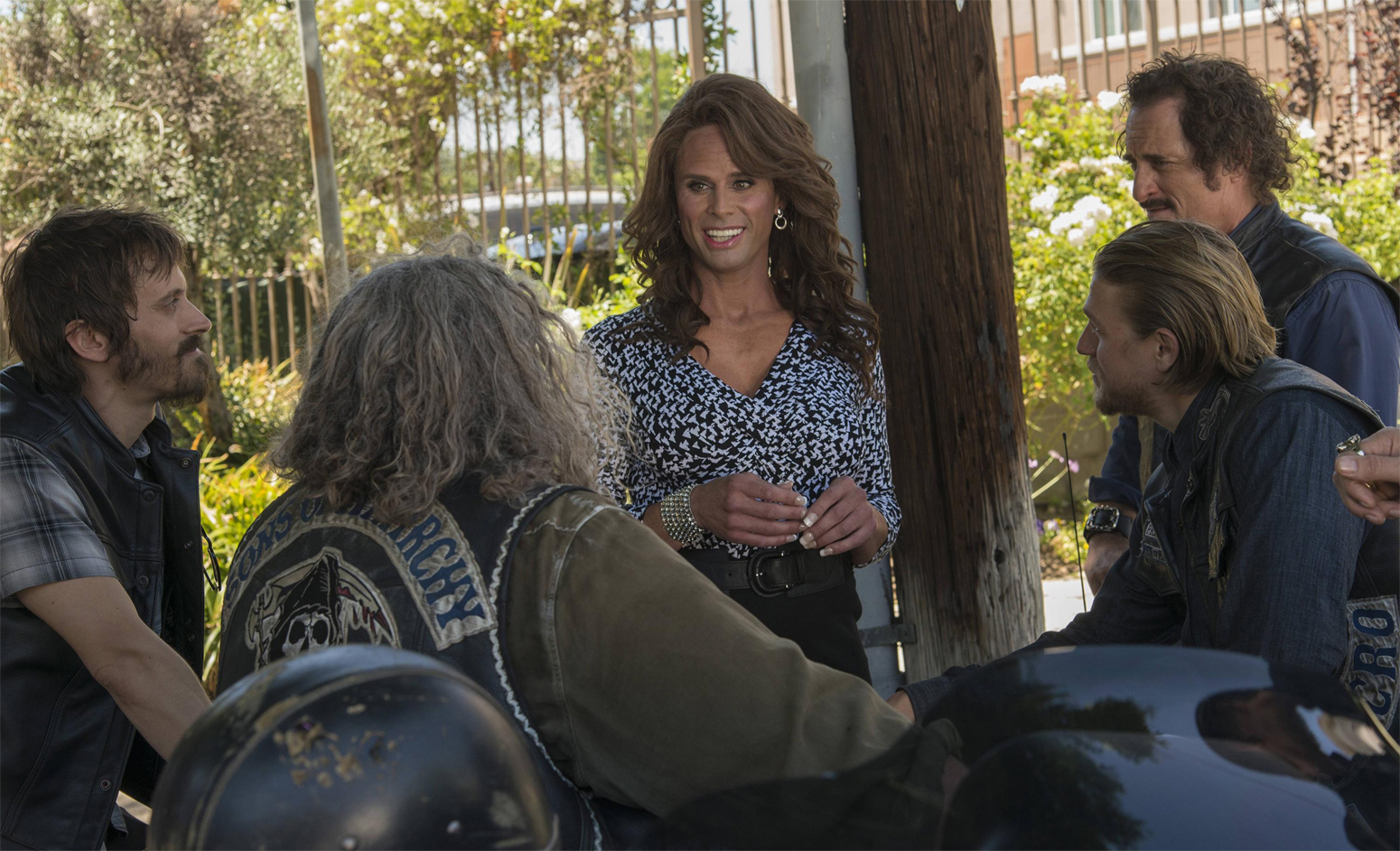
    There isn’t much to say about “Smoke ‘Em If You Got ‘Em” that hasn’t already been said about the past several episodes this season. No appreciable progress is made in any of the season’s arcs, save that of Juice. The episode concludes on a series of manufactured climaxes, which serve only to delay a conclusion the show is not ready to carry out. Everything leading up to those false climaxes, then, is just a repetitive series of complications, designed solely to artificially fill time. We’re officially in a holding pattern, that too-long patch of mid-season episodes that plagues many shows, but seems to plague Sons most of all.

    Not only is it redundant, but the depiction of the Sons’ collective moral bankruptcy has become gratuitous once more. Whether it’s his cocksure fight with the meth heads, or his gleeful ambush of the dealers alongside the Grim Bastards, Jax’s scenes this week are unnecessary restatements of his over-the-top villainy. It’s not enough to pair them with cloying scenes meant to humanize Jack, like Bobby’s conversation with Wendy. Either get to the tragedy, or else dramatize his efforts at redemption. Abstract conversations about how he’s really a good person on the inside don’t outweigh what we actually see on the screen. Worse, they’re boring, as are the narrative gymnastics involved as Jax sets up yet another double cross.

    Most egregious is Jax’s answer to Nero, when he asks what they all should do with Diosa now. “Clean it up. Find more girls,” is Jax’s response, and just, wow, right? Or how about Chibs suggesting maybe they “take care” of Office Engler, who’s recovering from her wounds last week? Do you see how far Jax has fallen now?

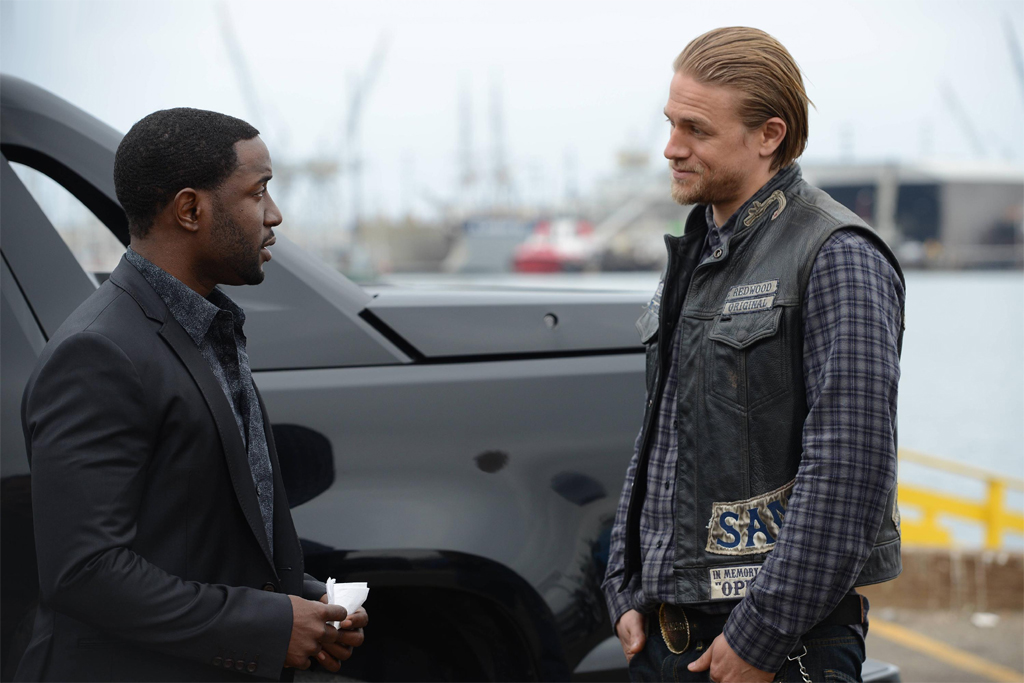
    As exhausting and tension-free the episode is, at least the week isn’t a total wash. Jimmy Smits is the MVP of the week, as Nero turns in great scenes with Jax, Juice, and Gemma. He’s approaching a breaking point, and Smits portrays the conflict within him in an understated, complex way. Nero has been landed in the middle of a lot of shit, and this week the Mayans get in on the fun as well. At first it’s just another tangle in Jax’s plan, but soon, Juice arrives to speak with Alvarez as well. Even though that’s a moment that was spoiled in the sneak preview, it still manages to kick the episode into a higher gear. Similarly, his scene with Nero is meant to tease us–maybe Juice will tell Nero what really happened to Tara (he doesn’t. Of course he doesn’t). But the scene itself is nice, as Nero appears to reconsider his hatred of Juice in light of Jax’s recent actions. If nothing else, it’s a surprise that Juice ends up back in SAMCRO’s clutches this soon, but the episode ends with them ushering him out of the Mayans’ garage, as though there is some sort of tension as to what will happen next.

    We know better than that, though. We all know how Sons handles cliffhangers in the midseason doldrums—by completely ignoring them. As expected, this week opens with Gemma, alive and well, living yet another day. We don’t even get to see the circumstances under which Juice lets her go, so unbelievable is the notion. Gemma’s story this week is nice, self-contained, and a good acting showcase for both Katey Sagal and guest star Lea Michele. Michele is really good as Gertie the waitress, and it’s impressive just how far from Rachel Berry the performance is. As an actress, Michele can occasionally be grating, but here she vanishes completely into the role. Meanwhile, Gemma is still talking to Tara’s ghost, and she’s doing it in the middle of a diner, to boot. It takes a skillful actress to ground this material, and Sagal manages it. If we’re going to stall, at least this is an interesting way to do it.

    The rest is more of the same, though. By the time this episode ends, Gemma just nearly tells Nero the truth about Tara. Engler is just about to tell Unser that the Sons were at the scene of the shooting. Jax is just about to murder Juice. Unser is this close to uncovering the truth about Tara’s death. We get it. We know all of this already, and it’s absurd to try to generate tension by revealing situations the audience is already well aware of. It’s endless shuffling of the deck, without ever dealing any of the cards. What more can you say? It’s time for Sons of Anarchy to deal, already.
    Stray Observations:

    So many people on this show brush off legitimately important questions with, “It doesn’t matter,” and the people they are speaking with just sit there and accept that like it’s no big deal.

    – “It’s my job to maintain the brand” is a great bit of dark comedy from Marilyn Manson.

  • Parenthood Review: \"The Waiting Room\" (4×03)

    Parenthood Review: \"The Waiting Room\" (4×03)

    parenthood review the waiting room

    This week’s Parenthood gets off to a pretty sluggish start. Everything before the title sequence feels like an unnecessary recap of last week’s episode. That redundancy is especially egregious in the scene where Amber shows Zeek her ultrasound, which is the exact same emotional beat as their conversation at Zeek’s party.

    Fortunately, the episode quickly shifts gears, turning its focus to Zeek’s surgery, and more importantly, on the Bravermans’ day-long waiting room vigil. For a few scenes, at least, “The Waiting Room” treats us to a mini-bottle episode, letting the various Bravermans’ personalities bump up against each other. Unfortunately, the show doesn’t really take advantage of this opportunity, instead choosing to highlight once again the conflict between Adam and Crosby, in a story that largely repeats the beats of the previous episodes. Even the bits with Sarah, Hank, and Ruby reestablish existing conflicts rather than forging ahead. Much of the episode feels like it’s in a holding pattern—a waiting room, if you will. (Sorry.) The next phase of Zeek’s story is his recovery from surgery, and his continued struggle with his own mortality. Parenthood is not the sort of show where Zeek will die on the operating table, and so there is no suspense as the family waits in the hospital. That’s just not the dramatic mode it operates in. Jason Katims is interested in much smaller moments of drama than that, and while there are a few great moments in this episode, there’s no avoiding the fact that narratively, for the bulk of this episode, we’ve been there, done that.

    That’s not to say that the episode is devoid of merit. While some moments feel obvious, like Amber’s talk with Zeek, or Crosby’s interminable motorcycle jaunt, others are intimate and well observed. Bonnie Bedelia, particularly, kills it this week. The shot of Camille steeling herself before returning to her kids in the waiting room is captivating, and director Patrick Norris smartly holds it for a long, long moment. And Amber’s impromptu road trip with Drew may be poorly timed (seriously, the same day as Zeek’s surgery?), but their scene in the Pontiac is great, especially considering it’s the first major pairing of these two this season.

    Julia’s story is also pretty interesting to me this episode. Chris is viable contender for Julia’s heart, and while on the one hand it’s a little unbelievable that Julia would manage to land the perfect guy twice, on the other, it makes for a conflict not often portrayed. By not outright villainzing either Chris or Joel, Parenthood presents a legitimate and difficult decision for Julia. There are very good reasons for reasons for her to pursue either one, and that means the story becomes about her and her agency, and not the particular actions of one or the other guy. It helps that Chris’s “Waiting Room Survival Kit” is such a sweet surprise, one that manages to avoid seeming too saccharine or too sentimental.

    The other major plot of the episode concerns Amber’s attempt to tell Ryan about the baby. It’s not clear if this will be the last we see of Ryan or not, but it’s heartbreaking to watch Amber come so close to repeating Sarah’s mistake. This is a meaty story for Mae Whitman, and she does a lot of great work with the material. It’s also great to see her and Drew bond, and to see the way that Drew has her best interest at heart. His real talk to her outside Ryan’s house is inspired, and show just how much his freshman year has matured Drew.

    It’s a fine episode, but it takes too long to cut to the chase, and too many of its stories run in circles for the week. It’s what Alex Epstein calls “shoe leather”—just the necessary setup to get us to the last scene of Zeek in the hospital bed. There are some nice moments in it, and some of the episode’s supporting plots are more interesting. But shoe leather is rarely the most exciting part of any story, and that’s true here, as well. Hopefully the lull is brief.


    Stray Observations:

    – Of course Adam sent out an email of bypass worst-case scenarios. OF COURSE.

    – Julia tells the surgeon “good work,” which also feels very character-specific.

    – So does Drew’s new room mean there’s no more Berto? That would be pretty disappointing.

    – This is a Kristina-free episode, and Adam appears only briefly. Adam is insufferable enough this week for the two of them, though—he follows up his email by sitting in the waiting room and reminding his family of all the ways their father could die. Growing up with Adam must have been terrible.

    – Sarah tries to bond with Ruby, but Ruby ends up shoplifting, and Hank has to tell his ex about it. It’s all very familiar, and Jessica Goldberg’s script doesn’t really offer any twist on this standard, “troubled child of divorce” setup.

    Has Drew Holt Gotten a Haircut Yet? Maybe? It looks like it may be shorter in the back now. But it is still a literal mop, so we’ll be reviving this feature and keeping it around.

  • Scandal Review: “Inside the Bubble” (4×03)

    Scandal Review: “Inside the Bubble” (4×03)

    scandal review inside the bubble

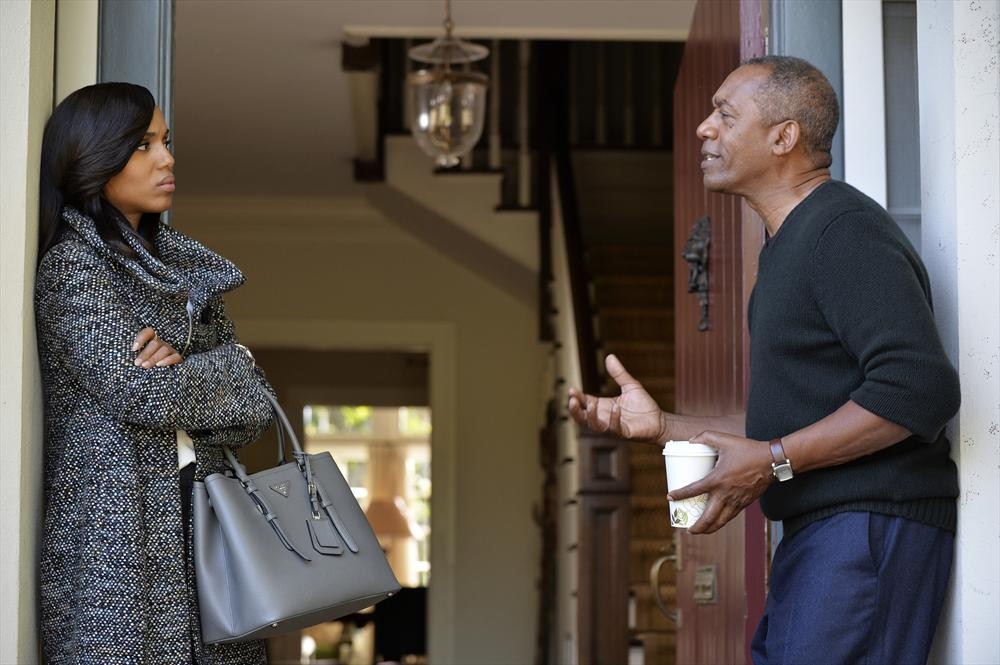
    With “Inside the Bubble,” Scandal is just about back to the breakneck pace that we know and love. What’s less certain is whether all of the very many things transpiring here are as interesting as the show believes them to be. I’m thinking specifically of the revelation that Rowan arranged for the murder of Fitz’s son, and further, had Harrison and Adnan killed when it turned out they knew about it. Not only does this put us waist-deep back into a B-613 conspiracy, it puts us waist-deep into last year’s B-613 conspiracy, one that had appeared happily put to rest for a glorious moment there. Worse, it’s one that is pretty obviously and shamelessly designed to get Olivia back into Fitz’s arms. A long, drawn out, boring conspiracy storyline is one thing; it’s another thing when it’s engineered to revolve around the female lead’s love life.

    The problem with this episode is that, even when performances are good, when speeches are good, when storylines themselves are good, many of them feel perfunctory, as though this is a season of Scandal: Color by Numbers. For instance, anyone get through any scene of David Rosen smirking and scheming with a straight face? It’s so obvious that his actions will lead to something terrible that when he gets the news that Judge Sparks has killed himself, the reaction is to roll your eyes. The entire plot is a massive cliché, and it’s incredibly on the nose to boot.

    Or let’s consider the case of Jake, who in this episode kidnaps Quinn and locks her in room with Charlie, for him to do god knows what with or to her, so that he can get intelligence on Rowan. First, if I never saw Charlie on this show again I’d be thrilled—he’s an unctuous character who has by this point overstayed his welcome. But more than that, how are we supposed to keep rooting for Jake in this instance? Because he’s less of monster than Rowan? Now yes, all of these people are monsters, but that’s hardly the point—the show wants us to see Jake and Fitz both as white knights competing for Olivia’s heart.

    Jake himself is such a milquetoast character, though, that it’s hard to get worked up about any particular action of his. He whines to Olivia about their relationship, in typical Shondaland-fashion, whenever it doesn’t proceed strictly on his terms, and lately, whining is all he seems to do. It doesn’t help that Joe Morton and Kerry Washington, his most frequent scene partners this episode, have such a clear command of their characters, while Scott Foley never seems to have gotten a foothold in his. What drives Jake beyond B-613 and Olivia Pope? If there’s anything else to him, the script doesn’t suggest it, and neither does the acting.

    What works considerably better in this episode is everything going on the White House. Cyrus is still seeing his escort, Michael, unaware that Michael has been paid off by Liz. In some ways, waiting for the fallout here is as clunky and obvious as the Rosen storyline, but there’s still something sweet about Jeff Perry’s performance, the way he imbues Cyrus with a sense of longing, and that gives the story the extra kick of tragedy that it needs to work.

    The best thing about “Inside the Bubble,” though, is the Grants, both of whom are absolutely killing it this season. Fitz’s explosion at David Rosen about gun control is mesmerizing and revelatory. “If I can’t go be a soccer dad in Vermont, then all of this has to mean something.” There’s the slightest hint in his outburst that he blames and/or resents Olivia for so much of what has happened—that if she had just run away with him, and not with Jake, his son would be alive and they would all be happy, even Mellie. That’s an emotional thread that adds some much needed depth to the character and his romance with Olivia, and it’s one I’d love to see the show pull out further.

    And meanwhile, Mellie Grant plays dress-up as Olivia Pope. She becomes obsessed with the “killer cliff bride” story, collating data, running reports, and holding meetings to prove the bride’s innocence. This works on the obvious level—that Mellie blames herself for the difficulties Fitz is having in his second term, and wants to absolve herself from that blame. But that’s boring. She’s pretending to be Olivia Pope, and that’s what makes her scenes tonight so crazy compelling. She even talks to Abby and the assembled cabinet in that same clipped rhythm that Olivia uses during her various cases of the week. When the rug gets pulled out from her and her work goes to waste, her face falls and she locks eyes with Fitz, not because she can’t escape blame (the wife is innocent after all), but because she couldn’t be Olivia for him, not today, and not ever. That’s powerful stuff, and Bellamy Young and Tony Goldwyn both play that silent look with all the pent-up, repressed regret it requires.

    All of which brings us to Olivia Pope, who is still wandering about Washington, looking for a purpose, when her minions have mostly scattered and filled her old roles. As the season settles into its groove, it addresses two main concerns. The first is plotty, the conspiracy around Jerry Grant’s death. But the second, and the much more exciting one for me, is the continued poking at and disintegration of Olivia’s gladiator armor. Scandal is explicitly questioning just how much of a hero Olivia is. Of course David Rosen’s plot is meant to examine her means and ways, but so is her rivalry with Abby, who accuses her of the ego-centrism that we’ve seen on display for three years and called “wearing a white hat.” The rift between these friends is a goldmine of interpersonal drama (“Ethically? You, the rigger of elections?”), but it will also be a useful tool going forward for examining Olivia herself. That’s where the real interest of this episode, and this season, lies.


    Stray Observations:

    – Abby’s face throughout Mellie’s “cabinet meeting” is a thing of cringe-y beauty, especially after Fitz arrives. Her scene with him afterward is lovely as well.

    – The level of dirty talk and innuendo in Michael’s conversation with Cyrus at the bar is astounding.

    – Case of the week: Penny from Lost plays Olivia’s friend from law school, who slept with her daughter’s boyfriend and lied about, and is now under arrest for the daughter’s subsequent murder. It looks as though this will carry into next week, since there’s no resolution here, but I didn’t catch the previews, so I could be hugely mistaken.

    – Let’s talk about Quinn for a moment, because as gross as I found Charlie and Jake this episode, I can’t help but find Quinn a little gross, too. She plays these weird, psychosexual games, allowing herself to be seen as basically a rape-object and using that to manipulate men. I suppose that’s one kind of strength, but it feels icky to me (for lack of a better word).

  • Sons of Anarchy Review: “Some Strange Eruption” (7×05)

    Sons of Anarchy Review: “Some Strange Eruption” (7×05)

    sons of anarchy review

    Another week, another step closer to total ruin. That’s the mode Sons of Anarchy is in this season, as we continue what’s essentially the fifth act of one long tragedy. We feel the full weight of the show’s dramatic structure and its Shakespearean inspiration this week, as various characters’ decisions have repercussions throughout Charming. The story’s beats may be familiar, but that familiarity lends a sense of inevitability that enhances the story rather than detracts from it.

    The show has a lot of balls in the air at the moment, and it’s impossible not to be impressed that, so far, it hasn’t dropped any of them. In fact, “Some Strange Eruption” even begins to bring the various threads together, the many strands of Jax’s scheme quickly pulling themselves into a know. While it’s entirely too obvious that Nero is setting Lin up, it’s much less obvious that Unser will learn of the meeting as well, and alert the legit police in Stockton. And it’s even less obvious that Gemma would panic and take Juice, her last loose end, and eliminate him. By the time Gemma is cowering on the ground, Juice’s gun leveled at her temple, Sons has found a way to genuinely surprise the viewer.

    This is a show that had lost any element of surprise prior to this season, mind you. Any number of plot twists in recent memory, beginning with the absurd revelation of Romeo as CIA agent, have been convoluted, unnecessary, unjustified extensions of a plot that was clearly stalling its endgame. But what Kurt Sutter and his team have successfully (unbelievably?) managed is to take all of that accumulation and still make it add up to something. Juice’s confession to Gemma, that he killed that boy’s mother under Jax’s orders, is a moment that arises from character, and which serves to develop character. Theo Rossi deserves the highest praise this week, for fully portraying the rapid, confused decision-making processes that Juice undergoes this week. “I betrayed our king,” is a powerful admission that doubles as a revelation. Moving Juice into this role makes sense dramatically and narratively, and the idea of him setting out on a crusade against the club, with Gemma as his hostage or worse, is a compelling one.

    It does take entirely too long to get to this point, though. The episode dances around Jax’s double-cross of Lin, and then Unser intervenes, leaving the conflict off for another day. There isn’t nearly enough of interest in the various scenes that set-up this double cross; for now, all interest lies in what’s happening surrounding Jax, and not what’s happening to him. It’s in this area that the show has some trouble this week, as delaying the moment Jax learns the truth about Tara is the only way to maintain the show. Once he knows what Gemma did, there is no turning back for the narrative.

    That knowledge also deflates the cliffhanger ending a bit. Juice is almost certainly not going to kill Gemma. But even if the show does take a left turn and kill her now, that feels like a distinct disappointment, as well. That’s so unlikely as not to be worth worrying over, though. Instead, the show goes to lengths to underscore the idea that all this violence is laid directly at Jax’s feet. Abel watches over Thomas with a hammer, to protect him, because that’s what he learned from his father and grandmother. Juice kills an innocent man, because he’s terrified that everyone is trying to kill him.

    There’s just enough toward the end of this episode to suggest continued forward momentum, but this episode is a lot of middle, too, and for the first time this season, it does feel a bit like marking time. It’s not necessarily a dealbreaker at this stage, though. There’s more than enough else of interest in this episode. Dayton Callie turns in some great work this week, as Unser gets pulled in two very different directions as he tries to remain loyal both to the club and to his conscience. Annabeth Gish is also hugely entertaining, putting a refreshing spin on the sheriff role. I’m enjoying Jarry’s morally great characterization; she’s clearly a good person, but she’s no squeaky clean cop, either.

    The middle of any story is tough, especially coming after several seasons’ worth of middle. Sons was never going to sustain the momentum of those first several episodes, but nor does it lose enough momentum here to be more than, occasionally, a little boring. There’s enough good characterization, and enough new wrinkling of the plot, to hold interest, and the tone remains on point. Tragedy will always take a moment to reflect on how very bad things are, and the massacre on Diosa is a significant enough event that it warrants the extra time spent on the fallout. With that out of the way, the show can soldier on—if we’re still in this same place this time next week, well, then we’ll talk.


    Stray Observation:

    – My lone stray observation this week isn’t really all that stray, because that horrid cover of “Age of Aquarius” dominated all of my thoughts on this episode. “Age of Aquarius” is a deeply silly song to begin with, and makes for one of the more egregious, ridiculous montages we’ve had in quite some time on this show.

  • American Horror Story: Freak Show Review – “Monsters Among Us” (4×01)

    American Horror Story: Freak Show Review – “Monsters Among Us” (4×01)

    american horror story: freak show

    “Monsters Among Us” begins with Dot’s arrival at Elsa’s camp, the American Horror Story signature Dutch tilt cleverly hiding Bette’s head from the viewer. We then double back almost immediately, to first the birth of the twins, and then to the hospital where they’re held following Dot’s murder of their caretaker, and Bette’s stabbing of Dot. (It’s admittedly hard to know which twin is responsible for which here, and Elsa adds salt to the wound, accusing Bette of allowing the murder to happen.) I’m not sure the doubling back is necessary, as the episode doesn’t truly pick up steam until we arrive at the camp once more, and the crucial reveal happens after that point anyway. But if American Horror Story would like to practice the virtue of patience this season, for once, I’m certainly not going to complain.

    The episode may move slowly, but it also sets a tone for the entire season, something that last year’s “Bitchcraft” failed to do. There’s a very clear sense of place and purpose here already, and that can only be a good thing. Now, that doesn’t mean a flying space kangaroo won’t arrive in episode seven and turn the whole thing lopsided, but for now, it’s nice to see the story have some confidence, as well as competence, in its mission.

    Just because the episode moves slowly doesn’t mean there isn’t a lot going on, of course. Even though we meet only a handful of the characters that have been teased over the past several months, there are still plenty of introductions to be made. Evan Peters plays Jimmy Darling, whose condition, ectrodactyly, gives him lobster claw-like hands. These apparently also make him extremely talented with the ladies, if you get my meaning. (My meaning is we meet him fingering some society girls at a Tupperware party.) Ryan Murphy has always been interested in sexual horror in addition to body horror and psychological horror, and we look to be in store for a healthy dose of all three this season. Granted, Coven teased a lot of these same themes, and that got us nowhere. But Freak Show takes a more simplified approach, at least to start, and that’s a good sign for the future of the show.

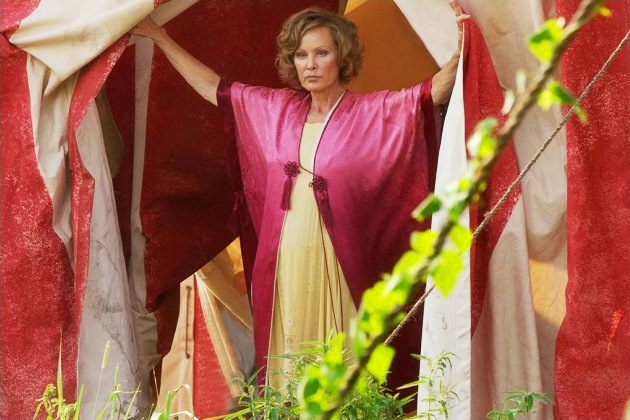
    There is the typical undercurrent of “freaks as metaphor,” whether that metaphor is feminist, economic, racial—any minority or disadvantaged person might feel like a freak at one time or another. If everyone on Glee had a horrifying mutation, you’d have Freak Show, more or less, right on down to the requisite musical number. Jessica Lange’s performance of “Life on Mars” is not meant to be a showstopper; in fact, as Frances Conroy’s Gloria Mott points out, it’s the last, desperate wails of an old woman with a doomed act. But man, if the number doesn’t stop the episode in its tracks anyway. Like in Glee’s very best episodes, the song and the performance serve as a narrative shorthand that, maybe paradoxically, present the character much more openly and fully than any scripted conversation or contemplative silent shot could do. There is room in Freak Show for all manner of weird, unconventional storytelling (even if “TV musical number” is a dime a dozen lately), and there’s no reason not to embrace something if it works.

    We also have a serial killer clown on the loose, by the way. Twisty the Clown might be the most disturbing thing this show has come up with yet, from a visual standpoint. It’s standard killer clown fare, but that doesn’t make Twisty’s first scene any less unnerving, as he slowly approaches the camera from a distance, doing the typical clown business, before letting loose and murdering the teenagers he’s come upon. His murder spree quickly incorporates kidnapping as well, and while there’s no sense just yet of what he wants to do with (or to) his captives, I’m unsettled enough to be sufficiently curious to find out.

    I was admittedly skeptical following Coven, and so I’m happy to say that, so far, Freak Show is a vast improvement. Already the characters feel more real, with more potential to grow into the complex characters that Asylum featured. This season is also beautifully shot; the cinematography contributes essentially to the development of place, making Jupiter, FL feel like a lived-in, real place, with something sinister lurking just beneath the surface. The split-screen work has been done before on this show, but I still find it fairly imaginative to use it to highlight the differences in Bette and Dot’s literal perspectives, as well as their emotional ones (look at how Dot eyes up Jimmy, for instance). It is very, very like Ryan Murphy to rope everyone in with a tantalizing appetizer, before revealing that he forgot to put the main course in the oven.

    It remains to be seen what will happen with the rest of Freak Show, but at least “Monsters Among Us” is reasonably paced and strongly atmospheric. Certainly, horror fans should be more satisfied this time around than they were with the increasingly campy Coven. But fans and connoisseurs of television drama will find something to appreciate here, too. For now.


    Stray Observations

    – Pepper returns, in a nod to Asylum. It makes enough sense to do as a sort of (very obvious) Easter egg, but the torrent of theories about a unified AHS universe really has to stop. I mean, seriously, does anyone really want to revisit Coven.

    – The other “freak” we meet this week is Kathy Bates’ Ethel Darling, Jimmy’s mother and the show’s resident bearded lady. She doesn’t do much this week beyond act as a foil for the twins, but already Ethel emerges as a more fully-formed character than Delphine LaLaurie ever did. Ethel is a sort of den mother to everyone at Elsa Mars’ Cabinet of Curiosities, while Elsa is more their boss.

    – Elsa is pretty similar to Judy Martin, with the whole, “washed up entertainment act” thing going on. I’ll be curious to see how Murphy and Lange work together to keep her from seeming too similar.

    – Jimmy murders the policeman who comes to arrest Dot, which seems poised to inevitably bring even more law enforcement to the circus. That escalated quickly. Even so, I’m curious to see how that dovetails with Twisty the Clown’s killings.

    – More on the sexual horror: Elsa basically kidnaps and drugs Penny the candy striper (played by Streep-spawn Grace Gummer), then shows her a tape of all the sexy times she got up to while high on opium. It’s, well, it’s really dark, and the first indication that Elsa may not be all she seems. (And she already seems like quite a lot.)

    – The second indication that Elsa may not be all she seems is that, at the end of the episode, she removes her legs. Does anyone else know about this? How did she lose them? Certainly both questions will be raised in due time.

  • Boardwalk Empire Review: “King of Norway” (5×05)

    Boardwalk Empire Review: “King of Norway” (5×05)

    boardwalk empire review

    How do you know what you are? That’s the question that the asylum’s doctor levels at Gillian Darmody, who claims to recognize the insanity that overtook her, and to have now overcome it. It ironically is the most rational we have seen her in quite some time. But the doctor doesn’t believe her. There must be something inside her, and they will find it and get it out. How do you know what you are? It’s a question that’s come up again and again throughout this season, and really, throughout the series. Is Nucky a gangster or isn’t he? He was supposed to have proven it by murdering Jimmy, but he’s in just as much doubt now as ever. Chalky is convinced that he’s unfit as a husband and father, a criminal to the bone—but surely he’s better than that? Van Alden has been living under an assumed name for years, long enough perhaps to have forgotten his true self. How do you know what you are?

    Throughout “King of Norway,” it becomes increasingly obvious (if it wasn’t already perfectly plain) that Terence Winter and company are setting up a very long story in this final season. A smaller episode order and an impending finale are of no concern. On almost any other show, this downright luxurious pace would be a concern; but “King of Norway” proceeds with such confidence, such conviction in its own storytelling, that it’s basically impossible to do anything but look on, mesmerized, and wonder just how the hell this is all going to come together.

    The plot may be running itself in circles now, creating new tangles and heretofore unseen complications, but unlike other shows (and, perhaps, unlike earlier seasons of this show), these are not stalling tactics, are not unlikely or even outright impossible complications that exist purely to extend narrative and mark time. Each and every complication is borne of character, borne of a decision made years ago, that only now is rearing its head and revealing its consequences.

    This week Chalky returns to Atlantic City, and not a moment too soon. He stops to see Nucky first, but he has just one goal: to find and kill Narcisse. Michael Kenneth Williams remains one of the show’s greatest assets (though really, every actor on the bench is an asset), delivering his lines with a flat, hopeless affect that still does not hide the bloodlust boiling just below the surface. Nucky senses it, too. He offers Chalky money, “between friends,” and wonders why Chalky won’t return to his family. But Chalky knows better than Nucky, knows there is no going back to family after what he’s wrought. And yet, when he does arrive at Narcisse’s at episode’s end, he finds himself face to face not with the man himself, but with Daughter Maitland. Family, of whatever kind, is not so easily abandoned.

    Obviously, the gangster life has done a number on all of the family units in this show, and not just Chalky’s. Nelson Van Alden’s family is a farce, invented to better hide himself as George Mueller, but even now, after living more or less comfortably in this invented skin for the better part of a decade, it’s past indiscretions that come forth to tear everything down. Sigrid’s revelation that she and Eli, “we fuck,” as she so elegantly states it, is crushing, especially since June is pregnant with yet another Thompson child. Sigrid’s quiet tension looms over the dinner table until finally she explodes, but her revelation coincides with another, even more dangerous one, as the feds from a couple weeks back have tracked down Eli and Van Alden, and they know exactly who they are. Now, the two have become complicit in the scheme to take down Capone for tax evasion, and we’ve seen more than enough of Capone to know that there’s more blood on the horizon.

    As for Nucky himself, he meets with Maranzano, warning him that Luciano is not to be trusted. Torrio, of course, knows this already, and soon bullets are flying at Nucky once more. For a man who’s spent his whole life trying “to get himself ahead,” to ingratiate himself to the right parties, he’s found himself a target an awful lot. The guard is changing, and so far Nucky has survived the slaughter of the men he ingratiated himself to, but not for long. This is a process that began years ago, with Jimmy Darmody. When the Commodore fell, he was merely the first. Luciano sees the opportunity to kill all of these old men, and take everything for himself. Nucky’s been on the outside long enough; he sees the plan, but now he’s out for blood. He’s already gotten himself ahead, as far as he’s concerned, and now he’s determined to stay put.

    What “King of Norway” is, chiefly, is a tightening of the noose. Perhaps it comes too late in the season; and yes, too little actually happens in this episode, which feels mostly like a pivot upon which the season will ultimately turn, making Sally Wheat’s death last week simply the last overture of the preamble. It might seem that it’s pace slowly, but there are some major revelations that happen in this episode, major enough to send a clear signal: the time for playing out is over. All that’s left now is reckoning, and, perhaps, understanding, even a slightly better sense of who these people are. It’s the type of novelistic storytelling that Boardwalk excels at, and to have the conclusion in sight empowers that storytelling all the more.


    Stray Observations

    – The actor playing Nucky as a young adult does a literally pitch perfect impression of Steve Buscemi. The dead-on voice and mannerisms, and even the similar eyes and sunken cheeks, all contribute to an eerie verisimilitude.

    – The flash of recognition Nucky has with young Joe Harper is the kind of small link that makes the flashbacks feel, if not worthwhile, at least intentioned. They jump forward in time this week, and in doing so, restore the momentum that had flagged a bit last week.

    – Speaking of the flashbacks, surely they are building to a reveal involving Gillian, no?

    – Sigrid Mueller is a treasure.

    – Of the speculation that Joe Harper is in fact Tommy Darmody, I say: highly unlikely. It’s not the sort of game the show tends to play.

  • Scandal Review: “The State of the Union” (4×02)

    Scandal Review: “The State of the Union” (4×02)

    scandal reviews

    This week’s episode is aptly titled, as the show continues to take stock of its characters and where they stand in the wake of the carnage that closed out season three. The episode is very much painting a portrait of broken people, and now we are watching them attempt to piece themselves back together, with varying degrees of success.

    Nowhere is this more evident than in the scene on the balcony where Cyrus confronts Mellie, who refuses to attend the State of the Union address. She’s been photographed in her bathrobe, eating potato chips, at her son’s grave, and now the media is speculating that she may not have it all together. (The media has obviously not been as privy to Mellie’s antics as we have all this time.) Now, Mellie has frequently been villainized on this show, and she’s a character that tends to be written in the broadest strokes. As with the reveal of her rape last season, Jerry’s death is fairly transparently functioning as a device to generate sympathy for her.

    It’s down to Bellamy Young, then, to ensure that there is at least some depth to this over the top, clichéd display of grief. Fortunately for the show and for us, she delivers. She approaches the material seriously, and when she plays out the maniacal laughter, the hysterical munching of chips, she plays it as though Mellie herself is putting on an act. There’s an additional layer to the performance that, in some ways, suggests that Mellie’s demeanor has always been an act, and that she’s always just been one screw loose from becoming completely unhinged. We get that at the end of the episode, when she collapses in the portrait room, with all the First Ladies surrounding her (fortunately, this time there are no zoom cuts to the portraits themselves). This meltdown is, perhaps, overwrought, and the scoring certainly doesn’t help; it’s a disappointing capper to what’s otherwise the best story of the night.

    Second best is good old Cyrus Beene, who is, in his own way, equally wracked with grief. His actions led directly to his husband’s murder. He cannot turn back from that now, and he knows it. So he casually blackmails Olivia. He spends the night with a sex worker. He tries to convince Mellie that his grief is equal to hers. Jeff Perry doesn’t slouch this week, either, even when the writing surrounding him is a little lazy (of course Portia de Rossi is blackmailing him!). In a show full of broken, soulless people, Cyrus is perhaps the most soulless, or at least he has done the most damage to his soul in the name of his country and his ambition.

    So, when the two of them stand on the balcony and compare notes on their grief, it’s an excellent and much needed reflection upon the carnage that ensued last season. Last week brought us up to speed with the plot; this scene, and several others this week, bring us up to speed emotionally, and it’s this that is much more important for the show to work. Scandal is drama writ large, Greek mythology by way of the Washington beltway. These are bad, powerful people, and their actions have wrought chaos and gotten people they love killed.

    The question is even raised by David Rosen, who states, correctly, “Olive Pope just gets whatever she wants, and sometimes you’re just collateral damage.” The white hats are long gone, even after the show she made of putting them back on last season. So it’s interesting that this outburst occurs in an episode where “Fitz and Olivia” rears its head again in a massive way. Sure, she just helps him deliver an impassioned speech; but her idea is to use his child’s death as a catalyst for that passion, to essentially turn Jerry into a political talking point. It’s Olivia’s idea that sends Mellie into hysterics later that evening. And of course, Fitz is still obsessed with her: “Can Ms. Pope and I have the room?” is laden with sexual tension. He’s not just asking a favor.

    So that’s what’s happening with character work this week. But, in the opposite of what’s usually the case with Scandal, the plot it hangs on is uninspired, dull, and occasionally just outright bad. The couple that the White House is trotting out for gun control, a former POW and a paralyzed woman who saved a group of kids at a school shooting, is a living cartoon. I’m still cringing this morning from how thinly and poorly the characters were written, and how terribly the actors over-performed each cloying, obvious line. The episode requires everything to ride on Olivia’s success in getting these two idiots to attend the State of the Union, but it is impossible to care about something so stupid. Any narrative tension at all deflates the instant these characters appear on screen. And they end up not mattering at all, since it’s Olivia’s addition to the speech that ultimately saves the day. In addition to being a horrible, dumb distraction from the episode, they’re also an entirely unnecessary one. Boo.

    This, then, is a good Scandal episode, buried within a terrible Scandal episode. Too much relies on the gun control couple for me to truly say that I enjoyed it as a whole, but there are strong moments nestled within here, such as another brief encounter between Olivia and Huck, or Abby’s scenes in the White House. But you still have Jake, who is seemingly still in competition with Fitz to see who can be more grossly protective; and in these scenes, the writers seem to be in competition with each other to see who can make Olivia more grossly submissive. Shondaland’s idea of romance has always been just slightly off, and the love triangle here accentuates that a lot. Jake himself is also tied to the biggest piece of dead weight this show has, B-613, and from this week, it seems we haven’t laid that or Harrison’s death to rest just yet.

    We’re not quite there yet with this season. But we’re getting there, and the scenes in this episode that do work are more than worth the time. My hope is that season will get a good serial storyline going, one that hopefully involves minimal B-613, and then we’ll be able to begin the scheming, double-crossing antics that give the show the energy it desperately needs right now.


    Stray Observations:

    – Putting Abby in the White House has been a great narrative move, and the character pairs well with both Cyrus and Mellie. I hope we keep her in this role for a while.

    – Is Quinn dressing like Huck on purpose or what? Their weird thing continues to be a weird thing, but as it functions tonight, as a conduit for more Huck-Olivia heart to hearts, it works pretty well.

    – “Singing the Army song what the hell are you doing?” is perhaps Huck’s best line to date.

  • Parenthood Review: “Happy Birthday, Zeek” (6×02)

    Parenthood Review: “Happy Birthday, Zeek” (6×02)

    parenthood review

    About two thirds of the way through this week’s Parenthood, Jabbar asks Crosby a deceptively simple question: “How old is Grandpa?”

    And yet, it’s a question that gets to the heart of this final season. The show is called Parenthood. Confronting the reality that your parents get old is the perfect way to bring everything to whatever conclusion it is that Jason Katims has in store. In fully committing to the question of Zeek’s health, as well as to the various Bravermans’ reactions to it, the show creates a strong emotional center around which everything else can orbit. When “Happy Birthday, Zeek” features the titular character, then, it’s a quietly powerful episode of television.

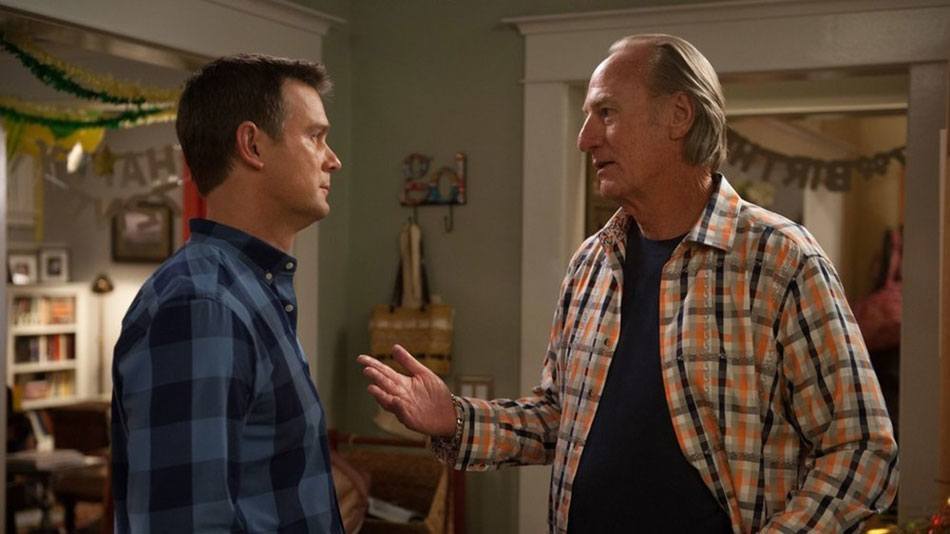
    Take your pick of scenes: Adam’s confrontation with Zeke at the birthday party, particularly, is powerful. A 72nd birthday celebration is tinged with a notion of mortality anyway, and here it’s even more so, since it’s all anyone will talk about. Zeke takes offense at the healthy food, Kristina’s offhand comment that he’s “not in the best of health,” Julia’s gift of a pedometer; but it’s Adam’s tearful, fearful plea for his father to not die that finally hits home for the audience. Peter Krause nails the desperation of the moment, the plaintive cry of a man who, though grown, is still a child coming to grips for the first time with the fact that his father will die. Each man demonstrates his own, unique brand of stubbornness, and the way the conversation stops without any real resolution is both true to life and dramatically effective.

    But in the end, it’s Amber’s revelation that she’s pregnant that finally convinces Zeek that he might actually need the open-heart surgery his doctor recommends. Mae Whitman is a superstar even on this show’s deep bench, but any scene pairing her with Craig T. Nelson is always a pleasure to watch. There’s no denying she gives good cry, but she also keeps Amber’s pregnancy from becoming too maudlin or sentimental. In truth, the whole party sequence is wonderful; I love how deftly it turns on a dime from fraught with drama and tension to a light-hearted celebration of this family’s love for each other, complete with a soundtrack that sounds like Fauxsplosions in the Sky. Such moments were a regular occurrence on Friday Night Lights, and have been on Parenthood as well, and when used to the effect they are here, they can be the lifeblood of the show.

    In the same vein, this episode features several small scenes between Sarah and Amber, another potent dramatic pairing. Their discussions throughout the episode are lovely, small and dramatic in the very best way. Sarah is watching Amber go through the same struggle she did at Amber’s age, and her greatest fear is that Amber will also make the same mistakes. It’s another story where the stakes are rather higher than the execution, and it’s that discordance that Parenthood excels at. This is a show that makes even the small moments seem epic—and isn’t that what life is, at the end of the day?

    I’m making such a fuss out of these storylines because the episode’s third major storyline features Kristina’s attempts to run Chambers Academy, and it is absurd. On the one hand, I’m happy to see the show address actual difficulties in the process of opening and running a charter school over the course of one summer. On the other hand, it’s presented as such a goddamn cartoon that it’s impossible to take with a straight face. This woman’s quest to find a food vendor who will make individual meals for over forty kids is absolutely insane, and Adam’s determination to appease her just makes him seem ridiculous. Parenthood can get laughs out of almost any character combination on this show, so detailed is the writing and so nuanced the acting. When they put various characters in these wacky sitcom situations, it’s not only dumb, it’s completely unnecessary and avoidable. The scene at the end of the episode with Adam and Kristina is actually quite sweet, but the way we get there is, well, I can’t think of a better word than silly.

    I’d be remiss if I didn’t mention Sydney’s woes at schools, which force Joel and Julia to come to terms with the impact their separation has had on the daughter. The most interesting thing here is the way the show equates Julia with Sydney; they both have the same deflecting approach to challenges in their lives, the same quickness to blame others, and while Julia has grown of that a little, she certainly hasn’t as much as she’d like to believe. I’d be concerned I seem to remember Julia being more complicit in the separation than she herself does, if I didn’t the show wants me to think exactly that. As ever, the aftermath of her conflict with Joel last year is infinitely more interesting than the actual happening of it was, and the show finds continued new twists on the post-separation, pre-divorce dance.

    As far as Parenthood goes, 3 for 4 on Braverman storylines isn’t a bad deal. Certainly there have been episodes that struck out way worse than that. “Happy Birthday, Zeek” isn’t firing on all cylinders to the extent that last week was, and it does also repeat a lot of the same conflicts. But there are some tremendously strong scenes, almost vignettes here, that demonstrate some of the best that the show has to offer. Saying goodbye to the Bravermans was never going to be easy, especially not if our last go around with them is this engaging.


    Stray Observations:

    – I was typing it “Zeek” for a while but spell check kept suggesting “Zeke” instead and eventually I just gave in. Apparently I was right the whole time!

    – Kristina gave out the house number to every single parent and invited them to call at any hour. Kristina is a fucking idiot.

    – “Why did we found this school?” “To be a fascist institution.” Max is perfect.

    – Jasmine lives! But Haddie disappears overnight, never to be heard from again (until the finale, maybe).

    – I see we will be treated to another season of insanely overwrought episode previews. There’s a very fast-paced drinking game to be had here.

  • Sons of Anarchy Review: “Poor Little Lambs” (7×04)

    Sons of Anarchy Review: “Poor Little Lambs” (7×04)

    sons of anarchy review 7x04

    This week’s episode of Sons of Anarchy is, for a while, business as usual. Jax’s murder of the reverend comes back to haunt him, Juice finally agrees it’s time to skip town, and Gemma realizes she’s accidentally framed Nero.

    But then, with twenty or so minutes to go, things escalate, and fast. When the club meets up with those meth heads, two cops get shot, and one survives, perhaps to tell the tale. When Jarry goes to confront the club at Scoops, the Chinese lob a handful of bombs through the window; and while the Sons and Nero are distracted by that, Lin’s men murder all the women at Diosa.

    At this point in the series, the momentum of the narrative depends on the rate at which everything twists out of control and into chaos. Each episode must introduce a new complication, or else the show merely treads water. So far, the writing has made good on that, making clear that the center here cannot hold, and throwing everything into disarray with wild abandon. The writing on the wall has never been clearer. Escalation is an effective storytelling technique only when the escalation doesn’t have to stop. Sons, finally, is in a place where stalling is no longer necessary. The continued success of the narrative here, then, is entirely dependent on future episodes continuing the pattern. For now, though, the Sons’ final ride has been one heck of a rollercoaster.

    The characters, as well, are finally falling victim themselves to the havoc they’ve wrought. Gemma descends ever more deeply into madness. Even in admitting that Jax is responsible for beating that girl’s father up, she won’t reveal her own complicity in that. She truly believes she can manipulate everyone around her and get away with it. Meanwhile she’s having regular conversations with Tara’s ghost. Gemma’s delusion is so total, and her madness so vividly and explicitly portrayed, that she has yet to realize she’s the villain of the piece.

    Jax, also, is seemingly ignorant of the evil within him. When a mission to track down the reverend’s son goes awry, he rescues the reverend’s widow from drowning. It’s a real “save the cat” moment, one that ordinarily might fall flat, but here serves to highlight how Jax is as deluded as his mother. He believes he can be a good man, still; but just as the narrative explodes all around his character, Jax is faced with the death of sixteen women, and the blame lies directly at his feet.

    Zach Handlen of the The A.V. Club writes this week that the show is setting up Jax for the same old redemption story, that by having Lin’s men murder Diosa, the writers’ have moved the morality markers, so to speak, and given Jax a legitimate reason to go on a resumed vengeance quest. And while yes it’s true that Jax has not crossed that particular line, I think for once the show is still asking Jax, and therefore asking us, to consider his own complicity in this. The hammer will fall harder upon Gemma, if there is any justice at all, since it is her lie that has set this whole war in motion; but I think show and character both are well aware of Jax’s role in this. As I’ve noted before, he long ago made the decision that sealed Tara’s fate, and his own. Now, I could end up being wrong about this, and if this turns out to be a legitimate attempt to paint Jax as an essentially “good” antihero, that will re-color my whole perception of this season. For now, though, I’m buying what Kurt Sutter is selling; this is the reckoning for six seasons of increasingly immorality.

    By episode’s end, there is a legitimate question as to how the Sons will escape this situation. It’s been a while since that’s been the case. This kind of breakneck pace might not be sustainable for a full thirteen episodes, but so far, it is indeed holding up. While some of the moments this episode are quite predictable (Tig’s fling with Venus, for one, as well as every plot twist leading up to the explosion), others are genuinely shocking, especially the final twist of the knife at the end of the episode.

    The other major development this week is not so major at all, as Juice’s decision is another of those forgone conclusions. Theo Rossi’s acting is still only intermittently effective, and he isn’t quite as good as Katey Sagal at selling the whole act of soliloquizing. But then, the writing doesn’t provide as strong of a reason for his soliloquizing, either. It’s not exactly a weak link in the episode, but this scene could just as easily have been put at the end of last week’s episode, too.

    Overall? This final season has been a pleasant surprise. All-out tragedy is a mode that suits Sons well, if it can keep things going at this rate.


    Stray Observations:

    – “This is a bad place, isn’t it, Wayne?” Althea Jarry asks. Sister, you don’t know the half of it.

    – Speaking of “sister,” Gemma’s taunting of Jarry over her name is so typically Sons, but somehow pretty funny.

    – Jarry also appears to be getting chummy with Chibbs. That’ll be an interesting development to keep an eye on.

    – Theo Rossi is suddenly naked all the time on this show (not that I’m complaining about it). Sons has always had a fairly equal-opportunity nudity policy, and seems like Rossi is filling the FX man-ass requirement until a Jax sex scene makes narrative sense again.

    – Venus Van Dam returns this week, and more Venus is never, ever a bad thing. Walton Goggins does so much with what could easily have been a one-note joke in poor taste. Even the running joke of Jax wondering if he should be “worried” about Tig plays as funny, rather than offensive. We know these characters extremely well by this point, and the joking, the innuendos, are all rough edges we know to expect; but they also treat Venus like a person, as does the show itself.


  • Boardwalk Empire Review: “Cuanto” (5×04)

    Boardwalk Empire Review: “Cuanto” (5×04)

    boardwalk empire review

    “How much?” is a question asked regularly by this show. . How much is enough? How much of yourself will you give up? How much that you love will you sacrifice, and to what end? So far, Boardwalk Empire’s answer to this question is two-fold: eventually you will lose everything, and your loss will be in vain. This week’s episode paints a bleaker picture than usual. In his youth, Nucky is released from work by the Commodore at summer’s end; unable to bear the thought of returning to school, and to his life, Nucky ends up sneaking back into the mansion with little Eli, showing him the Commodore’s various wonders, including a fully functioning toilet. Nucky is caught, of course, by Sheriff Lindsey, but, in the first suggestion of a talent we’ll watch him exercise later in life, he parlays this into a new “job” as deputy sheriff.

    The story of Nucky’s youth feels particularly Dickensian this week, telling of a downtrodden, poor young man, who makes a promise to himself and to his brother to one day pull himself out of poverty, to make something out of himself. (You might even say “to leave something behind,” if you were feeling particularly cheeky.) But the flashbacks this week intrude in a way that they did not last week. They don’t feel like they are particularly informative; in fact, they feel obvious, on the nose. Once again, they are providing information we already knew about Nucky. There are some great beats that arise from the flashbacks this week—for instance, juxtaposing young Nucky’s protectiveness over Eli to the brief, clipped conversation on the phone in the present—but nothing that justifies the great amount of time spent on them this week.

    Sluggish pacing has always been an issue with this show, and even this truncated season is no exception. Here, at the end of episode four, the death of Sally Wheat finally indicates that the season might be done drawing its breath, and is now at long last ready to begin the sprint to the finish. But that’s just one portion of what’s become a sprawling story. “Cuanto” does push Van Alden to a similar point, as the truth of his identity is now out, the hammer poised to fall at any moment. But with other characters entirely absent, one wonders when the show is going to begin telling stories with them, and not merely playing catch-up with the viewer.

    With all of that said, there is very much to enjoy this episode, but much of it is atmospheric, or performative, rather than narrative. Everything with Capone draws a giant line under character traits we’ve already become well acquainted with. Al Capone is a bona fide psychopath, and its his lack of control that will eventually give Luciano the upper hand. The show has great fun with these scenes, though, as does Stephen Graham. The newsreel clip especially is a neat way of briefly recapping Capone’s historical rise to fame.

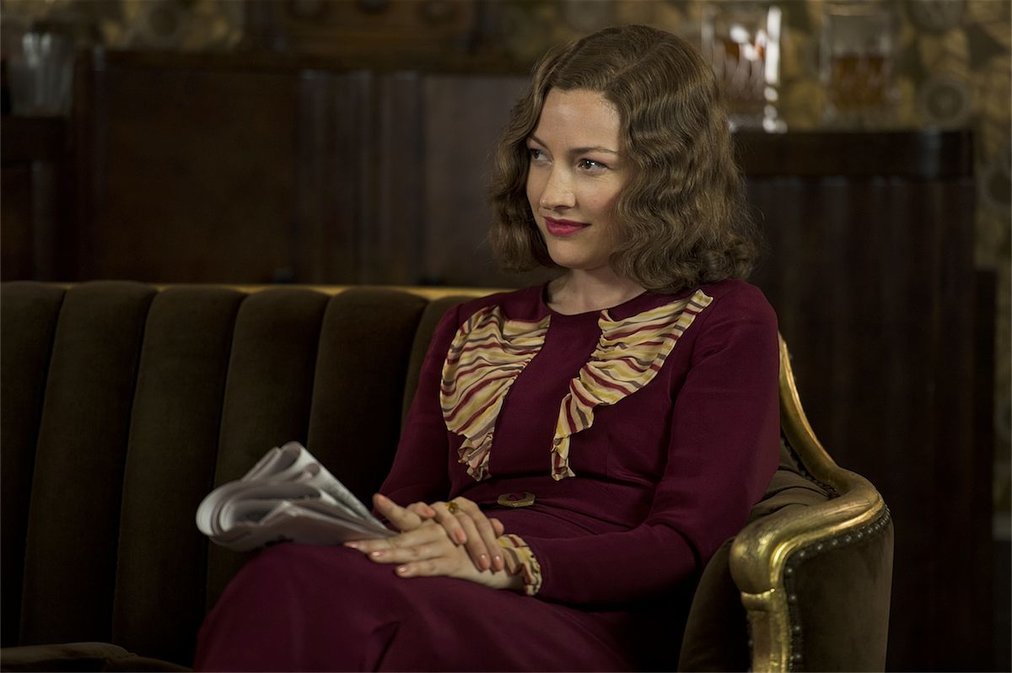
    Margaret Schroeder is more entertaining and interesting in this episode than she has been in a long time. She waltzes back into Nucky’s life with one hell of a complication, especially as Nucky endeavors to go legit. Their relationship was never simple, but now has taken on a new level of criminality. They spend much of the episode just talking over a boozy lunch, and it is magnetic. This new arrangement between them is a shot in the arm for a relationship that had grown stagnant in terms of its importance to the show. Kelly Macdonald plays Margaret’s ambivalence really well, and with verve and a sense of fun to boot. Her chemistry with Steve Buscemi is palpable, as well. Margaret and Nucky sit there, feeling each other out, testing how far they can push back, wondering how far apart they’ve really grown.

    The pieces are slowly—slowly—moving into place. While that happens, the show remains often captivating and occasionally fascinating. But the sluggish crawl of the season arc is too much for “Cuanto” to bear, especially with respect to the flashbacks, and we end up with an episode that feels longer or bloated than it should. The moments of excitement or genuine tension are swallowed up by the tedium elsewhere. “Cuanto” is almost certainly a turning point, though, and where we go from here will ultimately determine Boardwalk’s legacy.


    Stray Observations

    – The scene where Capone interrogates Van Alden is an example of that genuine tension. With the show coming to an end, there is no reason at all that Capone wouldn’t splatter Van Alden across the wall, and the show plays that uncertainty for all that it’s worth.

    – The chain of lackeys handling Capone’s Empire State Building statue is hilarious. The statue itself was marked for its violent end the moment it appeared on screen.

  • Scandal Season Premiere Review: “Randy, Red, Superfreak, and Julia” (4×01)

    Scandal Season Premiere Review: “Randy, Red, Superfreak, and Julia” (4×01)

    scandal season premiere review

    Scandal’s fourth season premiere is something of re-pilot, and it functions that way for the bulk of its running time. When we first meet Olivia again, she’s living it up on a private island “a hundred miles off the coast of Zanzibar,” with Jake. She’s completely off the grid and pretending to be happy. The entire sequence is completely over the top, the light so bright, the island so idyllic, and it all serves to underscore just how much Olivia is lying to herself. Even when she’s actually living her fantasy of freedom, it’s still a fake, constructed thing.

    The rest of the episode is an exercise in getting Olivia Pope back in the game. She returns to Washington upon receiving news, from Quinn, of Harrison’s death. Her desire to plan a funeral for him leads to her re-recruiting the old team one by one. Quinn is still at the office, being awful and spending her time tracking down Olivia. Huck is working as a tech repairman, and going by the name Randy; he’s in worse shape even than when we last saw him, as a result of what he sees as Olivia’s abandonment of him. And Abby is the new White House Press Secretary.

    Honestly, I completely forgot that Columbus Short was being written off the show, and even in an episode devoted to Harrison’s funeral, I can’t say that I miss the character at all. He never came to life the way the other characters did. The end of the last season was the first real attempt to give him a storyline, but even that fizzled out into anticlimax as a result of the actor’s off-screen complications. All the overwrought emotion of sending him off, then, doesn’t have quite the impact that the script wants it to, despite the actors’ best efforts.

    More successful is the show’s use of the classic case-of-the-week structure as a device to bring Olivia back into the fold. Season three took many, many steps away from the idea of “white-hatted gladiators,” so now is as good a time as any for both Olivia and the show to emphatically restate their purpose. The case itself is typical Scandal: Olivia gets a call from a senator, who is afraid she has accidentally killed another senator. Instead, it turns out the man attempted to rape her congressional aide. That’s all it takes; the firebrand Olivia we know and love is back, even is she is flying solo for the time being.

    Olivia is on her own in more ways than one. The team has scattered, yes, but there’s also the question of Fitz, still racked with grief over his son’s death, and busy trying to salvage his presidency at the same time. Plus he has to deal with Mellie, who is in even worse shape than he, drunk all the time, even more drunk and prone to cruel soliloquy than usual. Bellamy Young sells both the comedic and dramatic aspects of the performance, as always, and when the two have a frank conversation about the past several months, it’s Young who shines.

    The Grants, and especially the stuff with Olivia and Fitz, can be the most tiring part of any given Scandal episode, so it’s nice to see the Grants with some of the best material for once. Jake is still tiresome, a cipher, and he’s the one to resurrect the godforsaken love triangle, as well, taking Olivia’s obsession with returning to work as a secret signal of her pining for Fitz, because of course. Jake is also a reminder of the show’s obsession with B-613, as is David Rosen, and frankly, the less said about evil secret organizations at this point, the better.

    So basically, the premiere boils down to Olivia returning after a prolonged absence. She can’t function without her world, and it can’t function without her, either. The episode, then, becomes an exercise in playing around with everyone’s newfound roles, but also setting up the new status quo, which of course is just the old status quo. The more things change, the more they stay the same, or something.

    Scandal is as its best when it’s at fever pitch, firing on all cylinders. Quiet reflection is not its strong suit, but that’s kind of what this episode aims at for much of the time. Still, after the tumultuous run of the second half of season three, a solid palate-cleanser was in order. With everyone back in place, and Olivia where she belongs, expect season four to take off properly in no time at all.

    Stray Observation

    – Perd Hapley makes another appearance on Scandal! I feel bad for the actor, but through no fault of his own, it takes me out of the moment every single time.

    – Olivia’s relationship to Huck has always provided a nice emotional throughline for the series, and this week is no exception.

    – Portia de Rossi debuts as the RNC chairwoman, and as a rival for Cyrus. She doesn’t do much beyond be generically bitchy this evening, but then, neither does Cyrus. Again, once a wrinkle or seven gets thrown in here, everyone and everything is bound to become much more exciting.

  • Parenthood Review: “Vegas” (6×01)

    Parenthood Review: “Vegas” (6×01)

    parenthood review

    Reviewing Parenthood is always an interesting prospect for me. Coming up with a score can honestly feel a bit like alchemy. I love this show because it perfectly nails such significant minutiae of family life, like that little shrug Camille gives Julia after Kristina brings Joel on board at the school. You know they are about to talk shit on Kristina, because she does this shit all the time. The show so fully portrays all of life’s small moments, and so gracefully, in such a way that we are instantly reminded of our own families. Suddenly I am not watching Zeke; I’m watching my own grandfather, or seeing some future vision of my father. I see not Kristina and Sarah and Julia, but my mother and aunts. Certain dynamics are more familiar than others. Parenthood achieves this effect even in its lesser episodes, but when it marries this effect with genuinely great craftsmanship, it is one of the best shows on television. Tonight, it does just that.

    “Vegas” is an excellent way to kick off this last season. It draws upon the show’s deep, rich history, and in doing so pushes many of the characters in new, challenging directions (and sets the rest up for a later payoff). Zeke must now come to terms with his mortality. Amber is pregnant. Hank and Sarah are dating, finally. Julia seems on track to replace Joel, just when Joel decides to forgive her. We are engaged in each of these stories because we are intimately familiar with these characters, and with this family.

    The episode revolves around Zeke’s surprise birthday trip to Vegas, courtesy of Sarah. It’s a blast, until he collapses. The sustained sequence where he is in the hospital is riveting, showing the siblings’ various reactions and playing them against each other, so that every reaction reveals character in some way or another. Julia responds to Joel’s kiss by agreeing to see her law firm hookup. Adam immediately decides Sarah is not mature enough to handle the situation, and spends his time remotely trying to wrest control from her, until finally he and Crosby just show up in Vegas themselves. Zeke himself doesn’t even want to be in the hospital—after he’s discharged, he sneaks back out onto the casino floor, and soon his kids are out there with him, having a good time.

    In other words this week’s episode covers the full array of Parenthood’s strong points, putting Adam up against his less-responsible siblings and his cantankerous father for laughs, but not before letting us feel each siblings’ panic upon hearing the news. Meanwhile, the rest of the cast helps out with the opening of Chambers Academy, and while it’s still a little farfetched that Adam and Kristina now run a school, it provides this week a good central gathering point for the various Bravermans. The show relies upon the chemistry among its large web of characters, and so the more Bravemans per capita, the better. Plus, the fact that the school is run by Max’s parents puts an effectively dramatic, personal spin on Max’s already heart wrenching struggle with returning to school.

    We’re robbed of an Amber heart-to-heart with Sarah until next week, but she does share a lovely scene with Haddie, who appears to be sticking around on at least a semi-regular basis. I hadn’t realized how much I missed the character, but she’s a pleasure to have back. Mae Whitman plays Amber’s nervous trepidation with a perfect jittery edge, and when she finally comes clean to Haddie, she and Sarah Ramos have a really great exchange that’s a perfect example of the show’s effective use of its own history.

    So much goes on in any given episode that it’s hard not to just start summarizing the plot. But at its best, Parenthood is less about what actually happens, and much more about how the individual scenes make you feel. What the best episodes of Parenthood do is construct a plot that showcases these character moments; it’s a show that excels in the in-between of life’s biggest moments. Zeke’s hospital stay is not as important as his reaction to it. The reason for Julia’s divorce matters less than its aftermath. The joy of Parenthood is that we watch life happen, and find ourselves satisfied.

    As an opening to the final season, “Vegas” accomplishes all it needs to and then some. This is a long-overdue and very, very welcome reunion with the Braverman clan, one that celebrates where the show has been while pointing the direction for its final episodes. It’s by far the most sure of itself the show has been in quite some time. If this is a sign of things to come, then we’re in for a rewarding closing stretch here.


    Stray Observations:

    – The premiere does a pretty good job of servicing most of the main characters, but Drew essentially cameos, and Crosby is strictly on comic relief duty.

    – Pretty much the entire Internet called it that Zeke would be having some health woes this season, but the prospect of it still feels momentous.

    – Betsy Brandt guest stars as Hank’s ex-wife. She fits this show perfectly, doesn’t she?

  • Sons of Anarchy Review: “Playing With Monsters” (7×03)

    Sons of Anarchy Review: “Playing With Monsters” (7×03)

    sons of anarchy review

    Nothing much happens this week on Sons of Anarchy, and yet, I can’t help but feel like this is the best episode of the season so far. As things plummet further into darkness, the show gains a surety of narrative that it hasn’t had in a long time. Now that there is no question as to Jax’s villainy and Gemma’s madness, we are back in full-on Hamlet mode. Jax is going to start a war and likely (figuratively) burn Charming to the ground, only to realize that his mother is the monster he’s been seeking. And what’s worse he’ll do it all for Gemma’s sake to begin with.

    We are fully in on Jax being a terrible monster, now, and the show makes that statement in a very powerful way, none more so than a neat piece of editing in the middle of the show. Gemma ensures Abel that Jax is a good man, then we cut to Jax immediately after he’s committed yet another cold-blooded murder. Charlie Hunnam answers the phone and says, “Hey, Mom, what’s up?” in this wonderfully flippant way, like he’s a cocky high school kid playing at gangsters. He’s perfectly nonchalant, in a way that suggests not only the extent to which he is cavalier about his actions, but also that he considers it behavior his mother would approve of, and even be proud of. When he answers the phone he’s practically giddy—he’s solving problems the way Gemma told him how. This week’s closing scene it the show’s most toxic portrayal yet of their relationship, but it feels surprisingly vital.

    Even thought he show is just spinning its wheels, this week—Jax continues to enact his revenge, which boils down to “kill them all,” and Juice tries one last time with Chibs before splitting town. The main conflicts are yet to come. But this episode is still a powerhouse, featuring some strong acting, some legitimately good writing, and a tone that embraces the pseudo-Shakespearean tragedy of the plot. In a way these three episodes have been a very long first act, one likely to conclude last week, but since it’s the first act of the last season in the cycle, everything is allowed to feel vital again. Any wheel-spinning here is a legitimate attempt to build tension, and not a desperate grasping of straws for fodder for future seasons.

    It helps, of course, that the attempts to build tension are also successful. The machinations of Jax’s plan concerning the Niners are exciting to watch unfold, and sufficiently dastardly. Yes, we’ve seen this all before, and need no further convincing of the extent of Jax’s villainy. But the show is no longer trying to convince us. There is a gleefulness to Charlie Hunnam’s performance tonight; he makes Jax like a Richard III or a Macbeth, rather than the brooding anti-hero he’s been for too long now.

    Katey Sagal accomplishes the same with Gemma this week. Sagal deserves a lot of credit, because it is her performance above all else that keeps this show afloat. She is digging into Gemma’s arc this year with even more verve and aplomb than usual, and it shows. Gemma has now taken to addressing Tara’s ghost, which on its face is ludicrous, but is so dementedly Shakespearean, and so entrancingly performed by Sagal, that these soliloquies become fascinating illustrations of Gemma’s madness. This kind of stuff is what Sons should be doing more of.

    Juice has his best scenes so far as well. The character is torn between Gemma and Unser, two parental figures in his life, while he loses the third, Chibs, in a heartbreaking scene. Tommy Flanagan hasn’t had as much to do as many others on this show, but he’s always great to watch, and he’s made Chibs such a fully realized character that his cold abandonment of Juice here stings.

    Would it be nice if we’d reached this point a long time ago? Absolutely. And from the previews, it looks like the hammer won’t even begin to fall until next week. The sense that, to an extent, we’re marking time, is unavoidable, and it does linger in this episode still.  But even though this episode retreads so many of the same old Sons twists and motifs, it embraces the usual baggage with such energy that it’s hard not to be pretty happy with it anyway. It’s taken us a while to get to this point, but now that we’re here, the final act proves to have been worth sticking around for after all.

    Stray Observations:

    -Althea Jarry is most reminiscent of Ally Walker’s June Stahl, right down to the corrupt act she pulls to curry favor with Jax and the club. It’s ambiguous at this point how much is an act, but Annabeth Gish is great fun in the role, and Jarry’s flirtatious scene with Chibs was a highlight of the episode.

    – This week in SAMCRO: my DVR cut off the beginning of the episode slightly, and so I was launched immediately into the shooting of the lesbian pornographic masterpiece, Skankenstein. And you know what? That’s hilarious. Point, Sons.