Sarah Hamernick

  • Film Review: “Wild”

    Film Review: “Wild”

    wild film review
    Jean-Marc Vallee directs the biographical film written by Nick Hornby, Wild. This film is based on the memoir, Wild: From Lost to Found on the Pacific Crest Trail, written by Cheryl Strayed. Vallee’s Dallas Buyers Club last year elicited two Oscar-winning performances, setting a high standard for Reese Witherspoon in the lead role and Laura Dern as supporting. However, with the help of Vallee’s cunning direction, the actors give award-worthy performances and the story ascends one of self-awareness and acceptance of the things we cannot change. It highlights the struggles of finding our identity in the shadow of tragedy. But most of all, it highlights the talent of Witherspoon and Vallee.

    Wild follows Cheryl Strayed (Witherspoon) as she travels the Pacific Crest Trail searching for a meaning to her tangled life. Divorce from Cheryl’s abusive father leaves her mother (Dern) struggling to regain the years she has lost. She is working to get her GED and put their life back together as she is struck with the news of terminal cancer. This leaves Cheryl to step into her mother’s role and abandon the success to which she is striving. After the death of her mother and the responsibilities become too much, Cheryl’s life plunges into chaos. She descends into a life of drug use and, despite her marriage, promiscuity. As Cheryl lets go of the cares of life, her relationships begin to deteriorate, particularly with her husband. Although it is clear that they care for each other, Cheryl’s emotional absence leads them to divorce. This is the turning point at which she decides to change something. She decides to trek the thousand miles across all types of terrain through the PCT. She encounters others with similar journeys and comes face to face with some of her own demons.

    Wild is packed with powerful metaphors. Cheryl literally carries around her baggage on her back, in the form of an enormous backpack filled with hiking supplies. As she begins her journey, her pack is completely full. She struggles to even get it off the ground. Her baggage is so overwhelming she has to lie down to even attempt to pick it up. She walks, with the highway at her side at first. With surrender so close, Cheryl pushes on carrying her pack. When she approaches her first check point on the trail, she receives a warm welcome. Some of the more experienced hikers help her unload her bag and pick out the things she can leave behind, thus ridding her of some of the weight and making it easier to withstand. Along with her pack and fellow hikers, the animals she encounters on her journey also play an important role, all representing certain struggles and challenging Cheryl to overcome them. Like a fox that she meets several times taunting her along her journey.

    The stand-out achievement of Wild is the career-defining performances given by Reese Witherspoon and Laura Dern. Their talent, combined with Vallee’s, allow this film to reach its full potential. Witherspoon delivers her most powerful performance, capturing the plights of Cheryl with ferocity, compassion, and grit. The unabashed honesty, with which the story is told, elevates Wild into Oscar contention. Although a film about a woman walking through the desert may seem dull, Witherspoon has no problem holding the attention of her audience. The sweeping landscapes and flashbacks add to help the story flow. Instead of a linear story about how Cheryl wound up at the PCT, we start with her already in the thick of it and go back to find out more. The star of the flashbacks is definitely Dern. She delivers an impactful and dignified performance. Wild is introspective and engaging, giving Witherspoon and Vallee space to flex their impressive talents.
     

  • Film Review: “The Babadook”

    Film Review: “The Babadook”

    the babadook

    Jennifer Kent wrote and directed the Australian horror film, The Babadook. Based on the short film, also by Kent, The Babadook rose to critical acclaim after being premiered at the Sundance Film Festival. This is Kent’s debut feature film, drawing inspiration from early horror, fairy tales, and magic. Kent puts a hand-crafted twist on a traditional tale. The Babadook explores real-life horrors through well-timed scares and psychological suspense.

    The film takes place in the two weeks before Samuel’s (Noah Wiseman) seventh birthday, which coincides with the anniversary of his father’s death. He often tells the story when he meets someone knew: his father died driving his mother, Amelia (Essie Davis), to the hospital to give birth to him. Sam is fascinated with his father, but Amelia refuses to speak of him; she hasn’t been quite the same since. She gave up writing to support her son as an orderly. Her detachment is obvious. Sam loves his mother unconditionally but notices her shortcomings and tries his best to help her. They are close but Amelia’s baggage is clearly weighing on the pair.

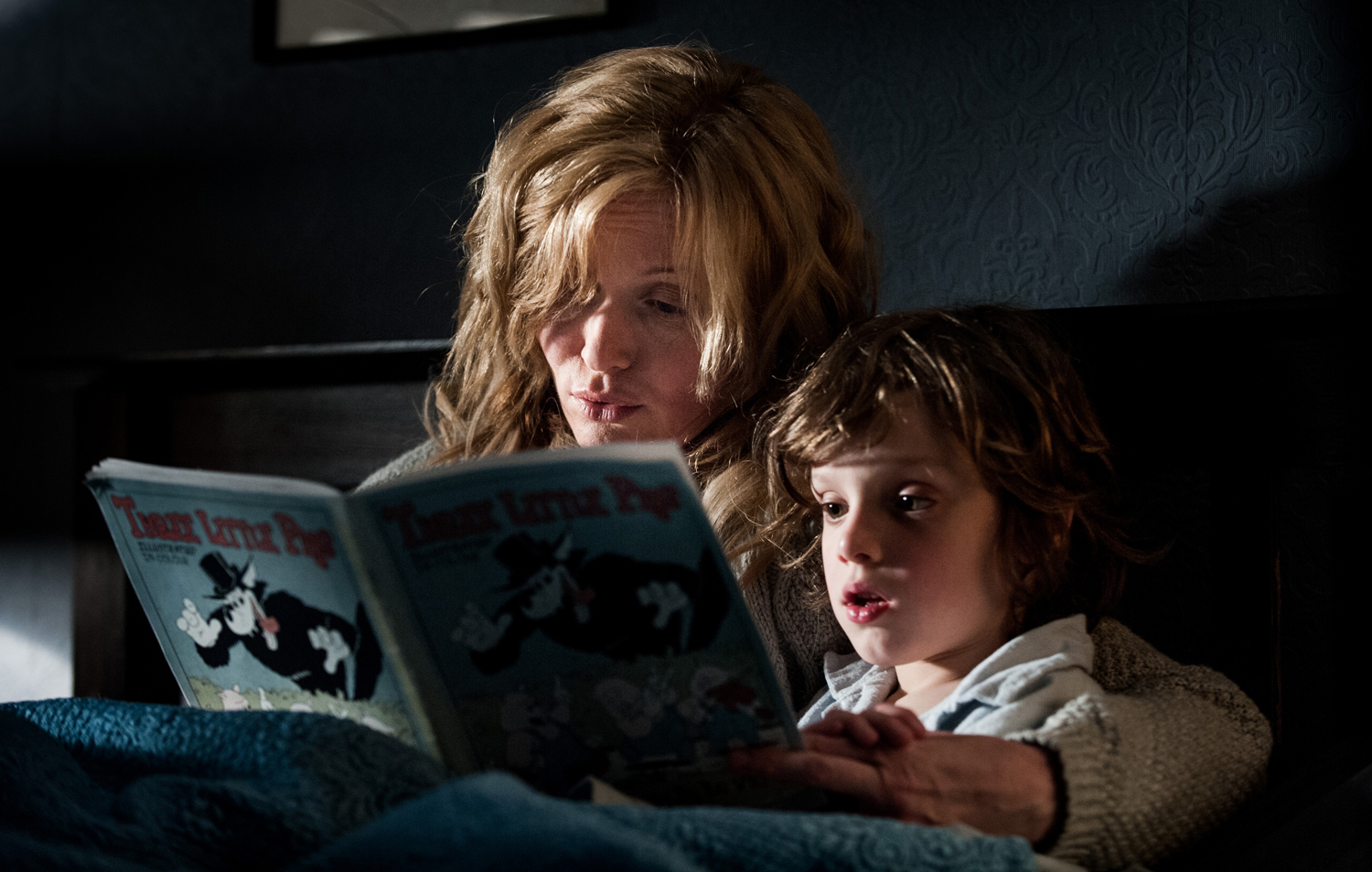
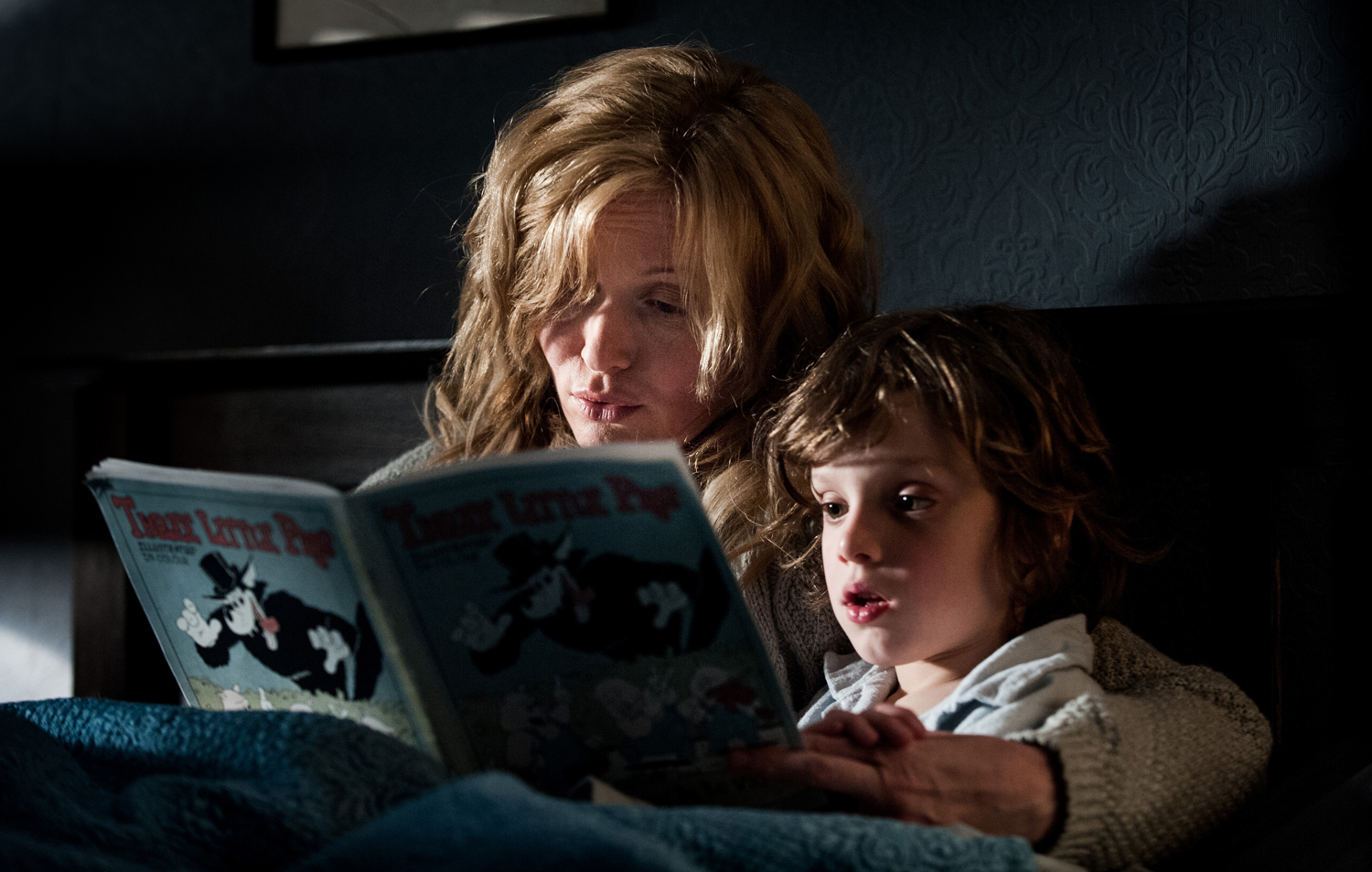
    One night, Sam chooses a new bedtime book from his shelf, Mister Babadook. It is unfamiliar to him and his mother but they start to read. As the children’s book grows dark, Sam and Amelia become unsettled. The book seems to be speaking to them specifically, trying to convince them to let Mister Babadook in. Sam grows frightened and can’t seem to shake it. The book is gone but the damage has been done. He acts out causing Amelia to take him out of school, for fear of his safety and others. As her stress level rises and the date of Sam’s birthday draws nearer, Amelia begins to unravel. The book reappears and nightmares become real. You can’t get rid of the Babadook…

    Resembling the pop-up book from which it is titled, this film plays with visual design to invoke a sense of mourning. Kent uses old-fashioned shadow play and sound effects to convey the sense of dread in the characters’ lives. The Babadook is an externalization of Amelia’s grief; it’s easier to confront a ghoul than her own reality. “If it’s in a word or in a look. You can’t get rid of the Babadook. I’ll wager with you. I’ll make you a bet. The more you deny, the stronger I get. The Babadook is growing right under your skin.” The parallels between the Babadook and Amelia’s mourning are ingenious.

    This analogy is really brilliant. Amelia’s begins by denying the Babadook’s existence, as she has done with her feelings of despair. But, Sam can see through her charade and insists the Babadook is real. He is shown only in shadows and without a true form. At times he appears as Amelia’s deceased husband, asking for the boy. Amelia eventually experiences the Babadook, admitting to herself that her mourning has never ended. She is overtaken by the demon as she tries to take back control of her emotions. During her possession, her neighbor and son express their love for her despite her perceived unlovable feelings. This is the encouragement she needs to expel the Babadook. It flees to the basement. Amelia’s grief has a home where she can visit. She soothes the Babadook, regaining control.

    Although this film uses many familiar horror techniques, Kent puts her spin on them by adding this giant metaphor to the whole thing. The Babadook is expelled through Amelia vomiting up some kind of black good, which has become synonymous with dark forces in today’s horror. Kent also pays homage to classic horror. She employs a lo-fi technique to depict the Babadook, using stop motion for the monster’s appearances. Although Kent’s production choices set The Babadook apart, the performances of the lead actors are remarkable. This is Wiseman’s debut. His character is intense and well-acted, managing to shock audience while still keeping them emotionally invested. Davis’ character could seem unlikeable but her performance allows the audience to sympathize and understand her plight. The Babadook is a refreshingly impactful horror film in a sea of cheap scares. With impressive production quality and meaningful analogy, the real terror of the Babadook lies deep within.

  • Film Review: “Men, Women, and Children”

    Film Review: “Men, Women, and Children”

    Men, women, and childrenJason Reitman, of Thank You for Smoking and Juno, brings us his latest comment on modern society: Men, Women, and Children.

    This film follows the lives of several teenagers and their parents, befitting the title. It focuses on the constraints of our technological world, loss of human connection, with an overarching theme of insignificance. The cast is extensive, including Adam Sandler, Jennifer Garner, Dean Norris (Hank of Breaking Bad), and Ansel Elgort (The Fault in Our Stars). Emma Thompson voices over the film occasionally.

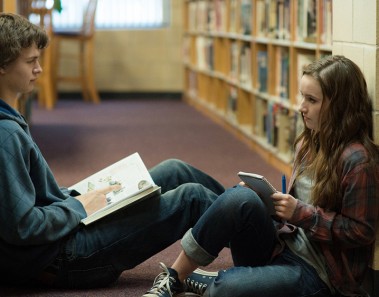
    Men, Women, and Children focuses on four families. Don and Helen Truby (Adam Sandler and Rosemarie DeWitt) have a troubled marriage which leads them both to infidelity. Their son, Chris (Travis Tope) struggles with an addiction to internet porn and resulting impotence. Chris’ love interest is Hannah Clint (Olivia Crocicchia), who is an aspiring actress and model. Hannah‘s friend, Allison Doss (Elena Kampouri), struggles with an eating disorder. Hannah’s mother, Joan (Judy Greer), was also once a struggling actress who hopes to give her daughter the opportunities she never had. To help jumpstart Hannah’s career Joan sets up a website to display headshots and occasionally takes photo request from (sketchy) online fans. Joan’s love interest is Kent Mooney (Dean Norris). Kent’s wife abandoned their family to move to California. His son, Tim (Ansel Elgort), recently gave up his high-school football career in favor of video games and existentialism. His growing depression is apparent throughout the film. Tim’s love interest, Brandy Beltmeyer (Kaitlyn Dever), has a mother, Patricia (Jennifer Garner), who tracks her on social media. Patricia checks her daughter’s computer and phone every night, reading messages and scanning for unwholesome behavior or unwanted attention.

    The biggest problem in Men, Women, and Children is the lack of cohesion. The themes are scattered and dull. On the surface, it attempts to attack technology and its effect on our generation and our parents’. It might succeed at doing so if it stuck to one story line. Some of the problems faced by the characters cannot possibly be traced back to their cell phone. Don and Helen have grown tired of their lives and each other. This is a simple plot adding very little to the movie as a whole. There is a lot of that in this movie: extra. Extra characters, extra storylines, extra voices, extra themes…

    Emma Thompson narrates this film, sometimes over a scene and sometimes coupled with the image of a satellite hurling through space. The narration and imagery are equally useless and poorly executed. The images of space draw in yet another, not-so-subtle, theme. Life is meaningless. Earth is inconsequential. The voiceover undermines the film’s brooding tone.  Ansel Elgort’s character brings the themes of technology and meaninglessness together. He has an obsession with video games and questions his existence. This theme has not only been done before, but done much better. In addition to the loathsome space scenes the production quality of the rest of the film is sub-par. The incorporation of technology into the scenes (i.e. text bubbles over people’s heads to depict what they’re seeing on their phone) is not graceful. The intention is obvious, but not well executed. It looks clunky and a little silly, detracting from the film’s dark tone. The acting is standard, nothing horrible, and nothing groundbreaking. The abundance of characters leaves each with little screen time, but also little time to mess things up which works to the movie’s advantage.

    Men, Women, and Children’s lack of direction, plethora of storylines, and absurd Stranger Than Fiction-esque voiceover leaves the film with little substance or clear endpoint. The themes are confusing. The acting is just okay.  The plots are too many and too contrived. The narration doesn’t fit. Everything seems forced, like it could be out of an after school special on PBS or Lifetime.

  • Sharp and funny, “Dear White People” urges discussion on racism

    Sharp and funny, “Dear White People” urges discussion on racism

    Dear White People film reviewDirector Justin Simien makes his feature film debut with the satirical drama Dear White People.

    It premiered at the Sundance Film Festival; leaving with the Special Jury Award for Breakthrough Talent, which was certainly deserved. The movie focuses on several students’ experiences at an Ivy League college during a pseudo- race war. Dear White People comments on the presence of racism in the Obama era. Filled with unknowns, it is well-acted and executed effectively, prompting plenty of conversation on the ride home.

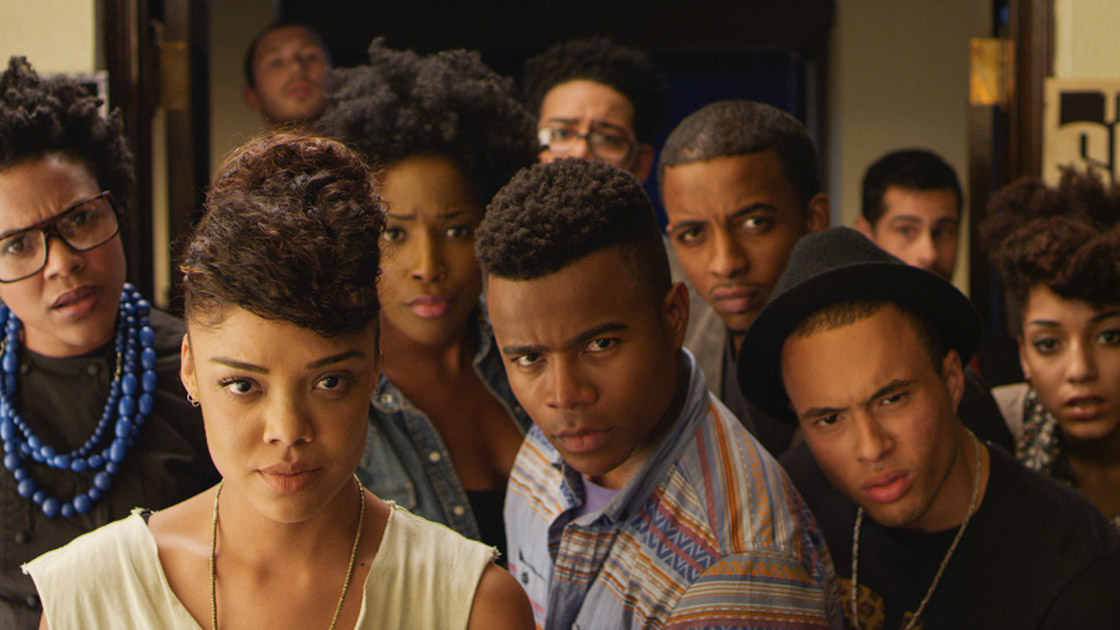
    One name you may find familiar in this movie is Tyler James Williams. He has previously starred in the sitcom Everybody Hates Chris. In Dear White People he plays Lionel Higgins, a quiet kid with an afro traveling between residence halls. He’s having trouble finding a place to fit in and is often ostracized when placed somewhere new. When a race war erupts, due to a controversial radio show and upcoming African American themed party, he’s not sure what he believes or how to express it. Tessa Thompson portrays Samantha White, the half-black host of a divisive radio show entitled “Dear White People”, on which she provocatively airs her grievances towards her classmates. Troy Fairbanks (Brandon Bell) is her ex-love interest who is the son of the Dean of Students. He struggles to separate his father’s expectations from his own aspirations. He has a fling with Coco Conners (Teyonah Parris), a student hoping to become famous and distance herself from racial stereotypes.

    We follow these four characters as they experience life at a predominately white institution. Each faces their own obstacles and find themselves divided when a “race war” explodes on campus when the administration attempts to randomize housing. Some black students believe that this randomization is a result of an African American house having developed on campus. They accuse the administration of fearing the group. To exacerbate things, the house associated with white privilege decides to throw a black people themed party for Halloween. Students show up in black face and stereotypical African American costumes. The black community at the college is hurt and outraged, causing the race war to erupt.

    Dear White People is sharply written, exploring black identity in a “post-racial” society. With so many movies portraying the plight of the black man in other time periods (12 Years a Slave, The Butler, Fruitvale Station) recently released, it’s refreshing to get the perspective of the present day. Many foolishly, in the movie and real life, label today’s society as some kind of post-racial utopia. Many foolishly, in the movie and real life, take things too far, reigniting race wars that have long since been resolved. The great thing about this movie is that it acknowledges both extremes and pokes fun at them. There are black people that see racism in everything, like Sam, and there are some that wish to deny it exists at all, as with Coco. There are white people that ignorantly mock racism and there are those that believe it is harder to be white, equally as ignorant. Kyle Gallner’s character, Kurt Fletcher, portrays this white stereotype too well. He is the son of the president of the college, epitomizing white privilege.

    The most shocking part of Dear White People is its sincerity. As you’re watching, you draw examples from your own life. You’ve heard the words in the film spoken in real life and it’s frightening. It’s a stunning commentary on the subtle racism existing in today’s society. It provokes discussion and calls us out on our own behavior. It has flaws, often vying for more than it can produce, but overall it meets its goal. It opens up a lane of communication that is often dismissed as being old-fashioned. With thoughtful performances, a sharply funny script, and smart production, Dear White People exposes our flaws and prompts discussions on racism in the Obama era.

  • Film Review: “Nightcrawler”

    Film Review: “Nightcrawler”

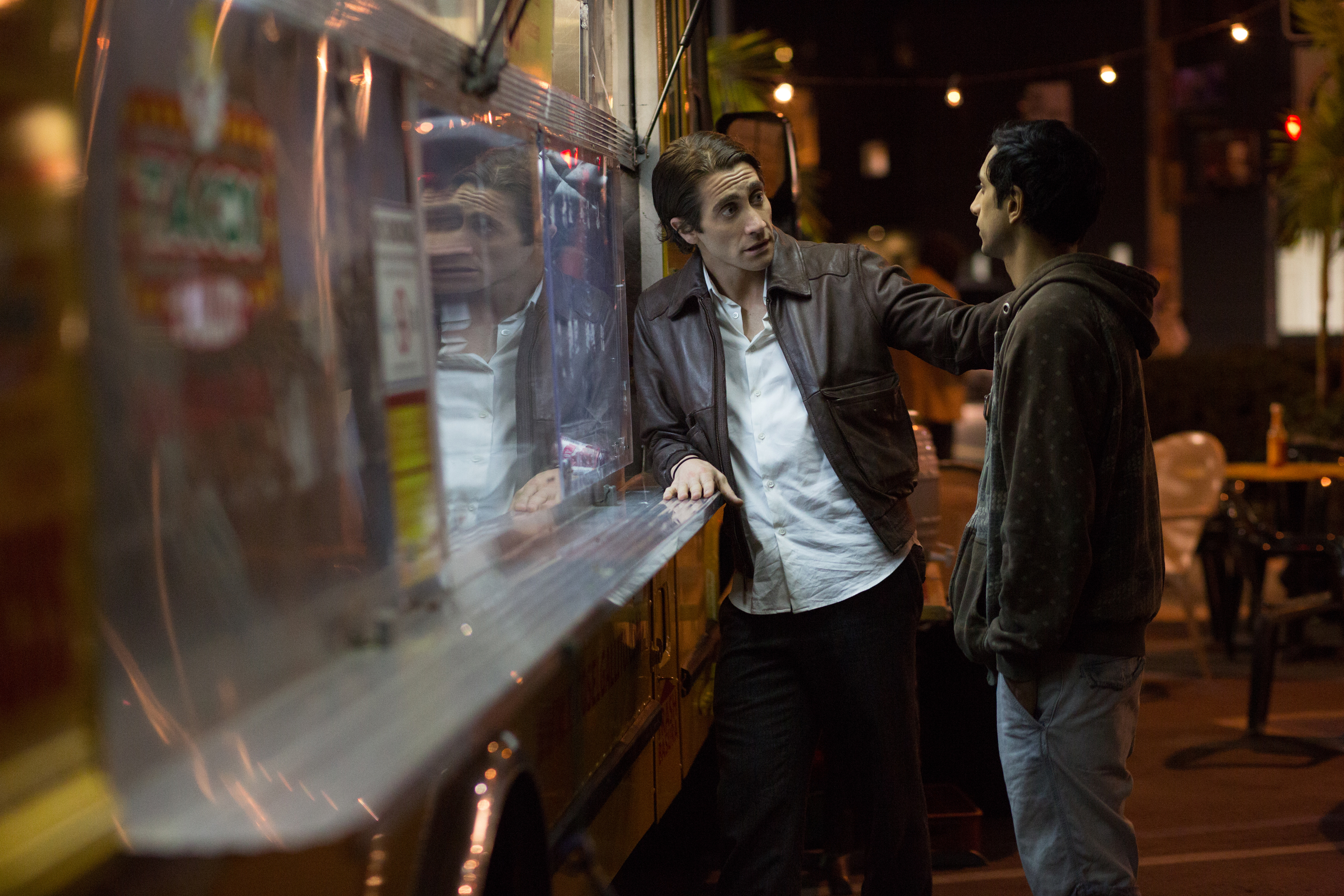
    nightcrawlerDan Gilroy makes his directorial debut with Nightcrawler, which he also penned, starring Jake Gyllenhaal. A gripping psychological thriller, Nightcrawler follows Louis Bloom (Gyllenhall), a persistent young man eager to break into the world of L.A. crime journalism. Having first screened on the Toronto International Film Festival, Nightcrawler claims a Halloween release date, a fitting day for this twisted insight into the mind of sociopath.

    Louis Bloom seems like everyone else. He’s handsome, well-read, driven, generally a normal guy trying to make money where he can. Louis scrapes up cash here and there. He commits a string of petty burglaries in lieu of a steady job. When he happens upon a car accident on the interstate Louis discovers his passion: the whirl of excitement, the flutter of suspense and the thrill of crime reporting in the heart of Los Angeles. He decides to buy a video camera and police scanner and throw himself into the action. It takes time for him to get on his feet but soon he shoves his way to the head of the pack, beating even the police to the crime scenes. Louis is highly motivated and tenacious, but he does have flaws. He’s a high-functioning sociopath highly skilled in manipulation. He lacks empathy and a sense of right and wrong. Pretty much, he drags dead bodies across asphalt so his shot will be more balanced. He “charms” his pseudo-coworker Nina, played by Rene Russo, and establishes an exclusive relationship with her news station. His footage is the best because he goes to insurmountable lengths to get it, filming crimes as they happen and withholding evidence from the police in order to break the story first. His obsession with power and recognition would become too much for most people, but not Louis. Nightcrawler is a journey into the mind of a sociopath and the cutthroat nature of success.

    [Tweet “Jake Gyllenhaal gives an Oscar worthy performance in “Nightcrawler””]

    Louis speaks matter-of-factly. Often the things he says seem prepared or as if they’re being read off out of a self-help book for aspiring entrepreneurs. He mentions that he spends a lot of time on his computer, researching all kinds of things. It only makes his character more convincing. His interactions with others are well-rehearsed and calculated. He uses others to his own benefit, to the extreme, threatening and blackmailing with a subtle charm that convinces you that there’s no choice. He clearly doesn’t feel regret or form any real connections with other characters.

    Gyllenhaal’s performance is by far the most riveting aspect of this movie. He balances the characteristics of a sociopath so well; acting irrational when he’s after something, laughing things off when most would cringe, and using is charming craziness to manipulate others. Often threatening others or bargaining when he has no leverage, but always coming out the victor. Gyllenhaal gives a stunning performance. His dialogue is sharp and his movements, unnerving. The best way to describe his character is unsettling; a guy who’s not quite weird enough to turn heads, but weird enough to send a chill down your spine. His portrayal is strangely hypnotic, balancing empty stares with endless rambling while charming his prey. He’s backed up by solid performances from Rene Russo and Bill Paxton, who plays a fellow driver, as well as Riz Ahmed who plays his assistant. Although the performances put this film over the top, the rest of the production was quality. There were a few car chase scenes that could have come off hokey, but were done in such a way as to emphasize the protagonist’s unpredictability. For a first-time direction, Gilroy did an incredible job.

  • "The Rocky Horror Picture Show" remains a must-see Halloween treat

    "The Rocky Horror Picture Show" remains a must-see Halloween treat

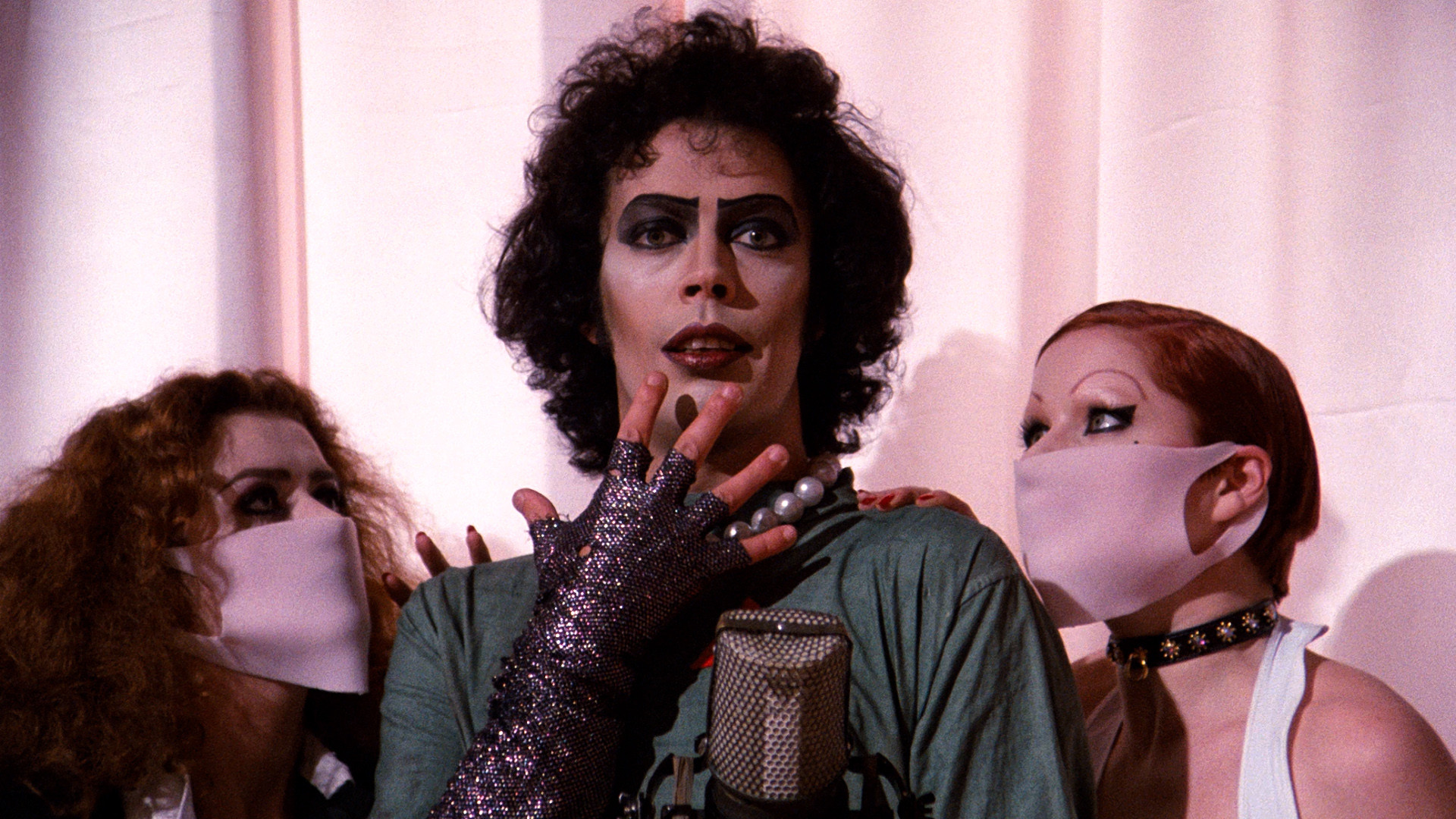
    rocky horror picture showIn the spirit of Halloween, I found it fitting to discuss one of the greatest horror cult classics of all time: The Rocky Horror Picture Show. If you haven’t already been exposed to this ostentatious parody now is the time. With exceptional music and campy feel, Rocky Horror is the perfect flick for movie-lovers and fun-seekers alike.

    Jim Sharman directs this this musical horror parody starring Susan Sarandon, Barry Bostwick, and Tim Curry. Based on the 1973 stage show, Rocky Horror was the first feature film for nearly every actor involved, excluding Sarandon. Richard O’Brien, who wrote the original play and music, costars as Riff Raff. Susan Saradon and Barry Bostwick play Brad and Janet, a couple whose car breaks down on their way to inform an old professor of their engagement. But, Tim Curry is the main attraction, as a transvestite alien scientist named Dr. Frank N Furter. Rocky himself is played by Peter Hinwood, who has since retired from acting. He doesn’t have any lines except for a song upon his first creation. Meat Loaf makes a special appearance as Eddie, one of Frank N Furter’s former flings. Patricia Quinn and Nell Campbell also costar as Magenta and Columbia, a maid and a groupie.

    The movie opens with Brad Majors and Janet Weiss at a friend’s wedding. Brad proposes to Janet in a nearby graveyard and they share a duet about their love for one another. They decide to go and visit the professor that introduced them, that also happens to be Eddie’s uncle, and share the good news. On the way there it beings to pour and their car breaks down, forcing them to seek refuge in Dr. Frank N Furter’s castle. Right away Brad and Janet feel out of place. Everyone they encounter is odd, only topped by Frank N Furter’s grand entrance and rendition of “Sweet Transvestite”. He explains to them that he has created a man in his laboratory and invites them to the unveiling of the creature, Rocky. Eventually, Brad and Janet are seduced by the doctor and within hours of their engagement have each tasted forbidden fruit. As chaos ensues it is revealed that the doctor, Magenta, and Riff Raff are aliens from Transsexual Transylvania.

    Although it’s hard to find deeper meaning in Rocky Horror it can be seen as an allegory for America’s transformation during the 1970’s. It parodies- or pays homage to- 50’s rock ‘n roll, B horror movies, and science fiction. The unintentional humor of bad horror is apparent throughout Rocky Horror. The plot is completely ridiculous, coupled with hokey dialogue and over-the-top performances; this film is nothing if not fun. It takes conventional ideas and gives them a 70’s twist. Brad and Janet leave behind their ordinary lives in favor of experimentation and an uncertain future.

    Rocky Horror teeters on the edge of socially acceptable sensuality. The 70’s saw a sexual awakening, as experienced by Brad and Janet. Several songs in the film push this boundary. This isn’t the first gender-bender film but it is the most in your face. Dr. Frank N Furter alludes to having had relations with just about every in the movie, men and women alike. Brad and Janet each give themselves to the doctor after having only been in the castle for a few hours. This lights a fire under Janet, who then seduces Rocky and sings her controversial “Touch-A, Touch-A, Touch Me”. Sex is a huge theme in this movie, but it also plays with a deeper meaning. After Frank N Furter has destroyed himself the voiceover’s last verse is heard– “crawling on the planet’s face, some insects called the human race, lost in time, and lost in space, and meaning”.=

  • Film Review: “Annabelle”

    Film Review: “Annabelle”

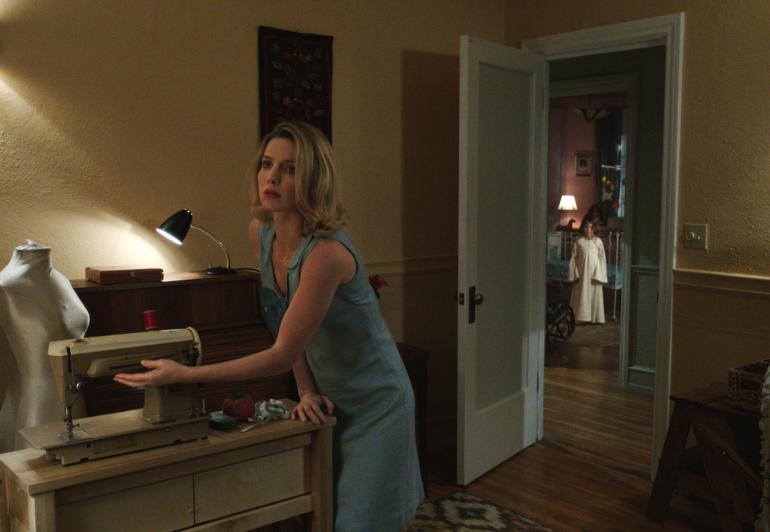
    annabelle
    Annabelle is the prequel to 2013’s The Conjuring, directed by James Wan, which received generally favorable reviews.  James Wan handed the directorial baton over to his cinematographer, John R. Leonetti, whose previous experience includes Mortal Kombat: Annihilation and The Butterfly Effect 2; safe to say that this may not have been a wise choice.

    The film opens with a scene from The Conjuring describing the Annabelle doll and its alleged possession by a murderous demon by a couple of young nurses to Ed and Lorraine Warren. One year earlier, Annabelle centers on a young couple, John (Ward Horton) and Mia (Annabelle Wallis) Form, expecting their first child. Mia collects antique dolls. Husband John surprises her with a new rare collectible doll to add to her assortment in the baby’s nursery. Soon after the doll arrives Mia awakens to screams next door. Their neighbors are being murdered by their deranged daughter Annabelle and her boyfriend. They are members of a satanic cult making a sacrifice to Lucifer. John goes to investigate the screams next door, leaving pregnant Mia alone in the house. The assailants make their way to Mia and assault her. Before things escalate any further, the police arrive and gun down the intruders. Annabelle is holding the new doll as a single drop of her blood is absorbed through the doll’s eye socket.

    This plot is promising enough. The association with The Conjuring makes Annabelle even more alluring. Unfortunately, Annabelle does not even come close to its predecessor’s quality. The scariest part of this movie is the acting. Annabelle Wallis shares the name of the antagonist. She also shares the doll’s level of acting skills. Wallis is an English actress best known for Showtime’s The Tudors. I don’t know if that show requires facial expressions, but I’m going to guess that it does. In that case, I’m going to assume she doesn’t perform much better on TV. She refuses to put any sort of enthusiasm into her performance. Ward Horton, however, provides us with plenty of generic emotions. Together, this couple is unbelievable, as in it’s impossible to get stitched into this story. Not for a second do you believe anything Annabelle is trying to sell you.

    The production style of this film is reminiscent of The Conjuring which is mildly enjoyable. The score is also similar, except for the addition of cheesy melodramatic ballads which gives certain scenes the feel of a soap opera. There are a few jump scares, but even these aren’t effective because you can see them a mile away. The shot is framed in such a way that the character is on one side and a long hall or doorway is in full view. The wide shot enables the audience to anticipate the scares minutes before they happen; thus negating them all together. You see the devil in this movie, literally the face of the devil, horns and all. It is the least frightening representation of Satan you will ever encounter. Nothing is hidden. There’s no mystery or spookiness to the character at all. Also, he’s not really worked into the story. It goes from the doll being possessed by a small child to Annabelle to a possible demon to Satan without any explanation. There is a priest, of course, that attempts to provide answers, but he is generic and uninformative.

    There is one scary scene in Annabelle in which Mia is trying to take the elevator from the basement up to her apartment after being spooked. However, the apartment keeps opening up to the same eerie storage cellar. This scene is well shot and actually invokes some anticipation. However, this scene alone is not enough to redeem Annabelle. This movie combines lackluster scares with uninspired acting to create a prequel far less ambitious than the original.

  • Film Review: “The Skeleton Twins”

    Film Review: “The Skeleton Twins”

    the-skeleton-twins02

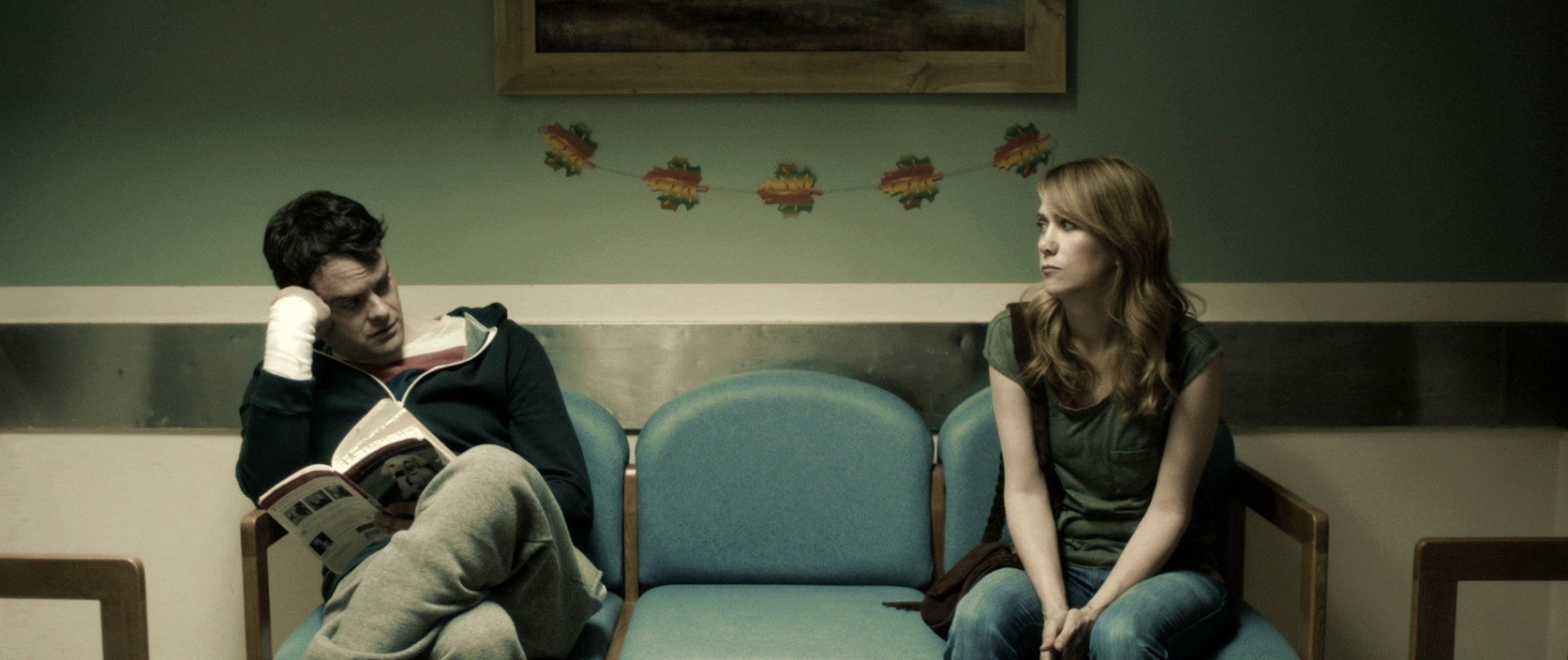
    Craig Johnson takes the directorial reigns of his second film with the dark family dramedy, The Skeleton Twins. Having debuted at the Sundance Film Festival and won the Waldo Salt Screenwriting Award, this film offers a gorgeous commentary on the strength of blood and revival of hope. Former SNL costars, Bill Hader and Kristen Wiig, share the screen and prove to us that they can do more than comedy and do it well.

    Estranged siblings, Milo (Bill Hader) and Maggie (Kristen Wiig), are brought together through unusual circumstances in The Skeleton Twins. The film opens with Milo in the bathtub having just written an informal suicide note. Blood stains the water as we cut to Maggie, whom we learn is his twin sister. She is holding a fistful of pills staring into herself as the phone rings and informs her of Milo’s attempted suicide. They haven’t spoken in a decade. The meeting is tense and awkward but Maggie convinces her brother to stay with her and her husband Lance (Luke Wilson), a loveable simpleton with whom Maggie is dissatisfied. Milo’s relationships consist of one-night stands and an infatuation with his high school English teacher (Ty Burrell) who he had an affair with as a teenager. Together, the siblings explore the root of their unhappiness and rediscover what it’s like to have someone to confide in.

    Bill Hader and Kristen Wiig give outstanding dramatic performances. The film is darkly funny and deeply encouraging. Yon won’t see any cameos by Gilly or Stefon, but you will get glimpses of the comedic geniuses behind these characters. The Skeleton Twins will have you smirking through the tears. Johnson’s subtle direction leaves Wiig and Hader to their own devices, drawing on their strong chemistry and ability to play off of each other. Strong supporting actors create a well-rounded film. Ty Burrell passes through the comedic threshold to deliver a stunningly creepy performance, while Luke Wilson is unremarkable in the most charming way. The Skeleton Twins is a film that will leave you asking the big questions and warrant some deep thinking; a film that forces you to feel to the highest extent and leaves you impressed by your favorite comedic duo.