Two decades later, Love & Basketball is still one of the most empathetic romances and sports drama
? This recommendation for Love & Basketball was originally published in our newsletter.Sign up here.
Happy Thursday! If you live in New York City, there will be an emergency rally on Saturday in Washington Square Park protesting the violence again Asian-Americans in recent weeks. If you’re able and comfortable please come out and support!
▶ Streaming on Hulu | Today’s movie is Gina Prince-Bythewood’s romance Love & Basketball. Despite cementing itself in pop culture in subsequent years, the semi-autobiographical film actually flopped in the box office. But what counts is where it’s at at the end of the game, and Love & Basketball certainly scored a homerun (sports!).
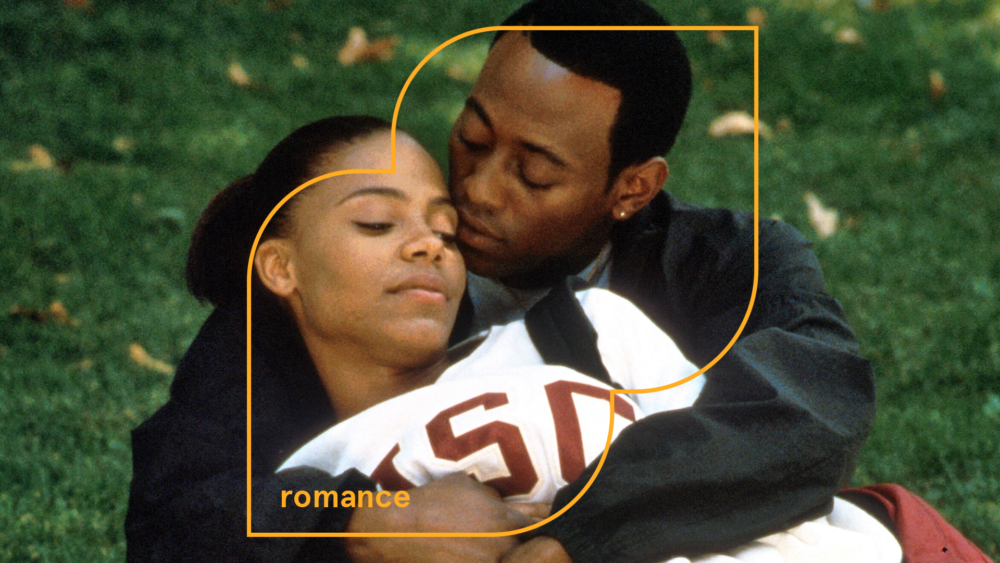
Childhood next-door neighbors Quincy McCall (Omar Epps) and Monica Wright (Sanaa Lathan) slowly fall in love over the years as they pursue their respective basketball careers through high school and college. [Trailer]
ADVERTISEMENT
Sanaa Lathan and Omar Epps in Love & Basketball. Courtesy of Giphy.
Why you should watch it: After its release, Love & Basketball has become one of the most known and admired romances that came out of the 2000s. However, even with its newfound reputation, it’s somehow still underrated. The movie is beautifully complex with layers upon layers of achingly human emotions in each of the characters. Prince-Bythewood’s direction is brilliant as it shifts you in and out of the characters’ POV.
At its core, the film is a deeply intelligent and subversive character study about dreams, love, relationships, gender roles. However, what makes the film great is its memorable and irresistible cast of characters — in particular, Lathan, Epps, Alfre Woodard, and Debbi Morgan, who hits buckets in every scene she’s in (more sports!).
Directed by Gina Prince-Bythewood Runtime 124 mins Year 2000
Chloé Zhao makesNomadland‘s melancholic but hopeful story of nomads traversing the American West a stunningly complex character study of life on the margins of society.
💌 Sign up for our weekly email newsletter with movie recommendations available to stream.
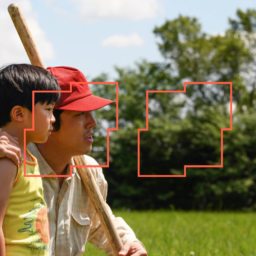
Minari follows a Korean-American family as the set down roots and builds a farm in rural Arkansas in the 1980s
Minari is a beautifully told family drama about chasing the American dream and all the costs and beauty that entails. Terrifically acted by the entire cast, Minari is perhaps the best movie to come out of the 2020 Sundance Film Festival.
▶︎ Minari is available to purchase on all platforms, including Prime Video.
ADVERTISEMENT
See all our reviews from the 2020 Sundance Film Festival here.
I can’t begin to describe how it feels to have so many Asian-American stories being told through film in recent years. From Lulu Wang’s remarkable The Farewellto the delightful Crazy Rich Asiansor John Cho in thriller Searching. It feels like each is more personal than the last, and Minari is yet another great entry in that canon. However, that’s not to discount it as just another film with Asian leads. It is singular in its story — it is partially based on director Lee Isaac Chung’s own life — and style.
Set in1980s rural Arkansas (is that an oxymoron?) — the time period doesn’t really play into the narrative — Minari follows the Yi family as they pull up to their new home. The modest trailer, that’s missing stairs up to the front door, is set on a large plot of land with no neighbors in sight. The patriarch Jacob (Steven Yuen) is excited by the move from California, where he and his wife Monica (South Korean actress Yeri Han) made a living determining the gender of chickens (sexing is the technical term) for a decade. For him, this move represents a step forward as he’s determined to use the five-acre plot to build a farm and start a business.
Monica isn’t quite so ecstatic. All she sees is a waste of space, no community, and a house on wheels. She might have a point too. The couple has two kids, Anne (Noel Kate Cho), a young teen girl seemingly wise for her years, and a curious seven-year-old boy named David (Alan Kim) who is suffering from a heart murmur. Despite her begging and a blow-up argument between them that could marvel the one in Marriage Story, Jacob is adamant that this is where they need to be.
They compromise by bringing Monica’s mother (Youn Yuh-Jung) over from Korea to care for the kids while they are at work. Soonja, who hasn’t seen her daughter for years, is exactly the foul-mouthed, sassy grandmother we all we wish we had. Upon her arrival, it’s clear that David is put off by her — he was born after they moved to the States. She’s not the picture of an American grandma. In addition to her crass language, she gifts him a Korean card game that involves gambling (he should learn early, she says), makes him drink a concoction including deer antlers and at one point makes them hike deep into the forest to plant minari, which is a Japanese herb. David also makes it a point to say she smells like Korea.
ADVERTISEMENT
💌 Sign up for our weekly email newsletter with movie recommendations available to stream.
ADVERTISEMENT
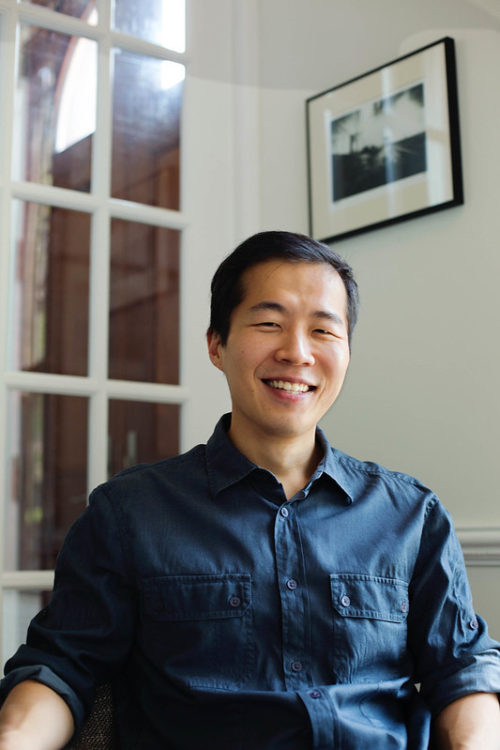
Lee Isaac Chung, director of Minari, an official selection of the U.S. Dramatic Competition at the 2020 Sundance Film Festival. Courtesy of Sundance Institute
However, her presence does ease some of the tension between Jacob and Monica. Jacob has time to get his farm up and running with odd but well-meaning local Paul (Will Patton) and Monica starts to fall into a routine trying to make the house a home and practicing sexing so she can make more money to support the family. She’s particularly helped by her mother’s presence as outlined in a hilarious scene where her mom shows her all the food and spices she brought from Korea — Monica cries when she sees she brought chili powder. Still, the financial burden of supporting the farm and the constant worry about David’s health makes Monica question her husband’s priorities.
Though the plot sounds like it could tread into melodramatics it never actually gets there. There is so much warmth and life in Minari. Chung grounds the movie in something real — since it is his own experience. None of the characters feel like caricatures. Even larger-than-life Soonja and precocious David — their banter is a highlight. And though set in 1980s Arkansas, they experience little overt racism. Instead, we see them suffer from microaggressions, like Monica being called “cute” by some of her fellow church parishioners or a little girl asking Anne if any of the words she’s saying are real Korean words before launching into verbal diarrhea that includes the words “ching” and “chong.” None of it is done out of malice and instead ignorance.
ADVERTISEMENT
This is the Yi’s internal story. In particular, Minari explores identity in the face of struggle and change. Jacob and Monica came to the States to find a better life. Jacob still seeks that out. He feels he’s destined for something more. That he owes it to his family to be successful. However, that’s the very thing that hurts the family. Monica struggles to find a place in Jacob’s dream and in the town they settle in. Soonja learns how to be the “right” kind of grandmother for David. An Americanized one that bakes cookies and doesn’t teach him how to gamble. But most importantly, we see the movie largely through David who more than anything wants to be a “normal” kid, even if that’s not attainable.
Minari is the kind of movie that wins you over with its sweetness and comedic edge — some of David and Soonja’s antics will have you in stitches — but keeps you in with its richly complex themes and characters. It’s an irresistible movie. I might even go as so far as to say that this is one of the great families in cinema.
All of it is aided by Emile Mosseri’s (coming off last year’s The Last Black Man in San Francisco) dreamlike score and cinematographer Lachlan Milne warmly lit cinematography. Whether or not it’s meant to feel like a dream is up to Chung to explain. However, it feels like Minari is someone looking back on their life with sadness but ultimately fondness.
The final scene escalates to great heights and ends with an emotional shot of the family that will leave you in tears of happiness. And in the moment before the movie cuts to black I realized how much I’d miss seeing these characters on the screen. I wish I could watch their lives continue to develop and watch them grow. That is how I know Minari is a great movie — perhaps a masterpiece of a family drama.
All Light, Everywhere is a provocative and timely documentary that won Sundance Film Festival Special Jury Prize for Non-Fiction Experimentation
NEW YORK, NY | February 17, 2020 – SUPER LTD, the boutique division and incubator from NEON, have acquired North American rights to Theo Anthony’s All Light, Everywhere, which made its World Premiere to critical acclaim in the U.S. Documentary Competition section at the 2021 Sundance Film Festival, where it won a Special Jury Prize for Non-Fiction Experimentation. Written, directed, and edited by Anthony, the film is a MEMORY production in association with Sandbox Films, produced by Riel Roch-Decter and Sebastian Pardo for MEMORY, and Jonna McKone. It is executive produced by Greg Boustead and Jessica Harrop for Sandbox Films. It features an original score by Dan Deacon.
All Light, Everywhere is an exploration of the shared histories of cameras, weapons, policing and justice. As surveillance technologies become a fixture in everyday life, the film interrogates the complexity of an objective point of view, probing the biases inherent in both human perception and the lens. Roger Ebert said All Light, Everywhere is a “vital criticism about American policing”, with the New Yorker describing it as “a film of individual and immediate fascinations”, and the Hollywood Reporter adding it is “a brilliant and chilling study in watching the watchers”.
ADVERTISEMENT
Ayo Kepher-Maat and Jeff Deutchman negotiated the deal for SUPER LTD with CAA Media Finance on behalf of the filmmakers. Autlook is handling international rights.
All Light, Everywhere marks Theo Anthony’s sophomore feature following Rat Film, which received critical acclaim following its premiere at the Locarno and True/ False Film Festivals, and was nominated for a 2017 Gotham Award for Best Documentary Feature film as well as Cinema Eye Honors for Best Debut Feature.
SUPER LTD recently acquired master director Gianfranco Rosi’s Notturno, Italy’s official submission for this year’s Academy Awards® which was shortlisted for Best Documentary Feature. Super LTD’s principals Darcy Heusel and Dan O’Meara were the team behind NEON’s Honeyland, which was the first non-fiction feature to land Academy Award nominations for Best Documentary and Best International Feature Film in the same year, and Victor Kossakovsky’s Gunda which was also shortlisted for Best Documentary Feature.
Nicolas Cage is on a mission to return a missing woman in the Japanese Wild West post-apocalyptic hellscape that is Prisoners of the Ghostland
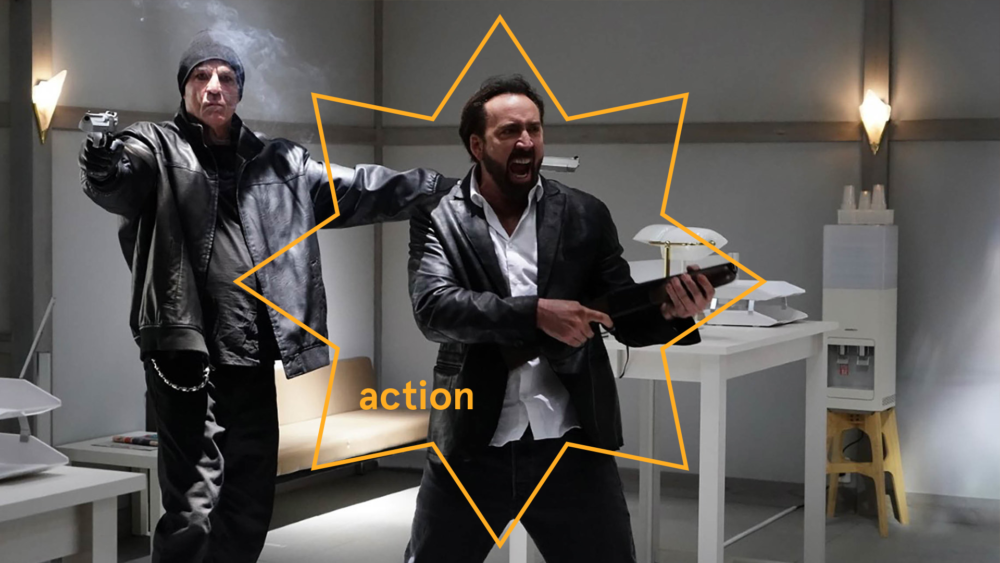
Prisoners of the Ghostland is easily the wildest film of Nicolas Cage’s epic career. Mixing elements of Escape from New York and Mad Max: Fury Road with acid, the result is a psuedo-western-samarai post-apocalyptic action film that is going to be a midnight screening staple for years to come.
In the words of Trinity the Tuck, “I don’t know what the f—k she’s saying, but girl, I am living.” Prisoners of the Ghostland is an assault on the eyes, ears, mind, and sanity as Nicolas Cage rips through a Japanese Wild West post-apocalyptic hellscape littered with *checks notes* mutated corpses of prisoners. Yeah, I think I got that right.
To say that director Sion Sono, who is making his English-language debut with the 2021 Sundance Film Festival premiere of this film, is one of the most subversive filmmakers working today is an understatement. This satirical pseudo-western-samurai film feels like it has never existed before in any form. Yes, comparisons could be made to George Miller’s Mad Max: Fury Road or Quentin Tarantino’s Kill Bill or John Carpenter’s Escape from New York, but it’s his amalgamation of all those films, combined with some inventive East meets West production and costume design, that makes Prisoners of the Ghostland a singular property.
ADVERTISEMENT
Hero (Cage) is tasked by the Governor (Bill Moseley) to rescue his daughter Bernice (Atomic Blonde’sSofia Boutella) from a mysterious outpost just past the ghostland where unknown nightmares await. And that’s really the entire plot. Nothing else is going on — and nothing else needs to go on. All you need to enjoy this film is the wildly inventive staging of this incredibly built world, the surprisingly adept action, and some of ballsy humor and line delivery from Nicolas Cage — this is a pun.
I could go on and on about Prisoners of the Ghostland. I could tell you about the testicle-exploding suit or the interpretive dance explaining a nuclear explosion or the bank heist gone wrong with famed actor John Cassavetes son, but I’m just going to let you experience this acid trip of a film on its own. Is it good? I mean, objectively, no. It’s dramatically inert, devoid of character, and confusing as all hell. Did I enjoy every minute of it? You’re damn right.
💌 Sign up for our weekly email newsletter with movie recommendations available to stream.
ADVERTISEMENT
Chloé Zhao makesNomadland‘s melancholic but hopeful story of nomads traversing the American West a stunningly complex character study of life on the margins of society.
💌 Sign up for our weekly email newsletter with movie recommendations available to stream.
Judas and the Black Messiah is an electrifying and contemplative biopic about Black Panther party chairman Fred Hampton and the plot to bring him down
Chloé Zhao makesNomadland‘s melancholic but hopeful story of nomads traversing the American West a stunningly complex character study of life on the margins of society.
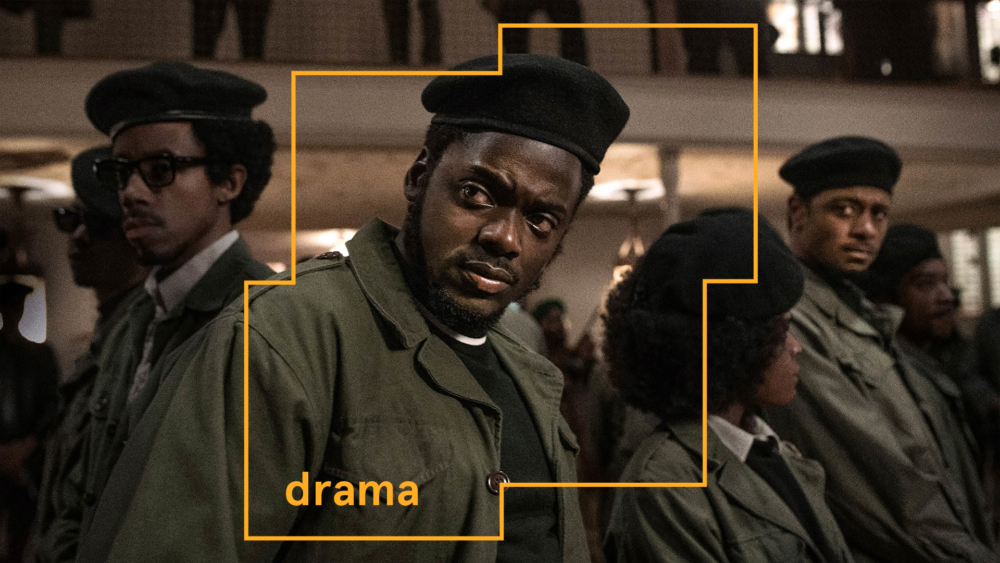
Of the movies that have come out after last year’s Black Lives Matter protests, Judas and the Black Messiah is perhaps the most essential. A raw and in the trenches look at the Black Panther party through the eyes of Fred Hampton (Daniel Kaluuya returning to Chicago after his incredible turn in Widows), the chairman of The Illinois chapter, and FBI informant William O’Neal (Lakeith Stanfield), director Shaka King’s sophomore feature feels like a magnum opus.
That’s stunning considering his last feature, which also premiered at the Sundance Film Festival, came out six years ago to little fanfare. However, what makes Judas and the Black Messiah so essential is its ability to switch between electric moments of rebellion against an oppressive system and quiet moments of beauty, sadness, and love in the movement.
ADVERTISEMENT
To properly communicate my feelings towards the movie, I have to talk about my very visceral reaction to watching it. In one scene after returning from prison for a throwaway charge, Hampton gives a speech to a packed church of party supporters. Kaluuya is brimming with emotion — happiness, pride, rage — as his onlookers cheer him on. I was shaking like I was in the room, unable to sit any longer.
In another moment, as Hampton is talking to the mother of his child, Deborah Johnson (played sensitively by Dominique Fishback). She recites a poem to him about the fear of bringing a child into this “war zone.” Not the war between the party and the cops, the war between the country and Black people. It’s impossible not to ache physically. To feel empathetic for the experience of being Black in America.
ADVERTISEMENT
I’m writing this review immediately after watching the film and I’m having trouble communicating what makes it work so well. It’s above plot and above character. It’s a feeling. It’s purely human. Even O’Neal, seen as a traitor to many, is humanized. However, as Stanfield put in the post screening Q&A, that humanization isn’t meant to explain away his behavior. It’s meant to show us he felt guilty, but did what he did anyway.
Judas and the Black Messiah is perhaps the closest I’ve gotten in this long quarantine to feeling engulfed by a film like it is to watch one in a theater. It’s oscillation between electric moments of genre storytelling — thrilling moments of action — and quiet introspective studies of character keep you spellbound. That’s the word I’ve been looking for this whole review. It’s a spellbinding movie. One that will be studied for years to come.
Coming Home in the Dark follows a family on a road trip in the New Zealand mountains that is isolated and tormented by an unknown assailant
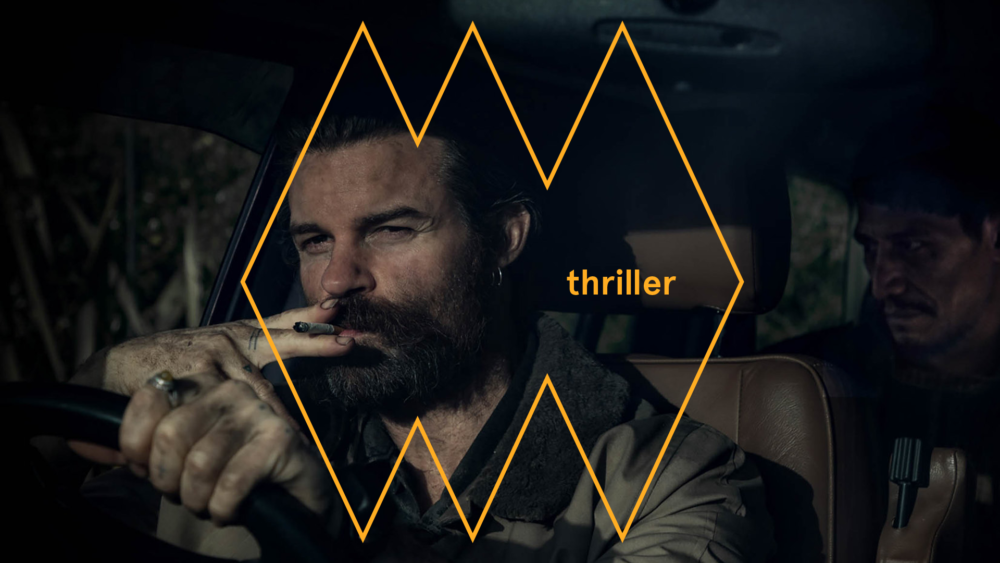
While Coming Home in the Dark doesn’t bring anything new to the thriller genre, it is an anxiety-inducing mean and lean entry that is the perfect kind of Midnight screening at Sundance 2021.
Coming Home in the Dark is like the best of home invasion thrillers — slow-burning, shocking, and continually shifting circumstances — except it’s not set in a home. The movie takes us off a hiking trail and on the road across the New Zealand landscape. If there is a perfect film to screen in the Midnight section of the 2021 Sundance Film Festival, it is this one.
The plot is simple. A family is on a road trip to do some hiking in the mountains of New Zealand. There’s father Hoaggie (Erik Thomson), mother Jill (Miriama McDowell), and their two sons. With sweeping vistas captured by cinematographer Matt Henley, it’s clear that the family is alone.
ADVERTISEMENT
That is until Mandrake (Daniel Gillies) and his quiet sidekick Tubs (Matthias Luafutu)come walking over the ridge towards the picnicking family wielding a powerful rifle and nothing to lose. The entire ordeal, which takes place over a chilling twenty or so minutes is reminiscent of the infamous lake scene in Zodiacor perhaps the eggs scene in Funny Games. It’s restrained, simmering with tension — until it’s not.
Director James Ashcroft, who wrote the film alongside Eli Kent, said at the start of the screening, “I hope it gets under your skin.” And it does. Coming Home in the Dark is built for maximum anxiety-inducing suspense that can turn into violence — though not glorified — at the drop of a hat. That opening scene, one of the best of the fest, is the perfect example of that.
ADVERTISEMENT
As the story moves from the mountains to a car driving to an unknown location in the dark, the claustrophobic atmosphere becomes all the more apparent thanks to Gillies’ committed and unpredictable performance. However, unlike many other home invasion-inspired movies, Mandrake and Tubs aren’t torturing the family for no reason — like The Strangers’s infamous “because you were home” line. No, they have a purpose, which makes things feel all the more hopeless.
Coming Home in the Dark doesn’t necessarily reinvent the thriller genre. Instead, it takes all its best elements and puts them to good use. The result is a sleek, well-shot, mean, and lean — it clocks in at 93 minutes — entry that leaves you satisfied knowing that you got exactly what you were looking for.
💌 Sign up for our weekly email newsletter with movie recommendations available to stream.
ADVERTISEMENT
Chloé Zhao makesNomadland‘s melancholic but hopeful story of nomads traversing the American West a stunningly complex character study of life on the margins of society.
💌 Sign up for our weekly email newsletter with movie recommendations available to stream.
Mass watches as four people come together to talk through an old wound that has been preventing them from moving on with their lives
Mass is a stunningly raw and emotional journey through trauma, grief, and healing featuring four tour-de-force performances that’ll leave you breathless.
Four people gather in a small room in the back of a Church basement. We know that they have a history considering the meeting is being coordinated like a sitdown between mafia bosses, but we don’t quite know what. And to truly appreciate Mass, which premiered at the 2021 Sundance Film Festival, you should keep it that way. The movie will tell you eventually, but it’ll earn that reveal.
Although, if you’re reading this review you likely already know it, so I’m not holding back.
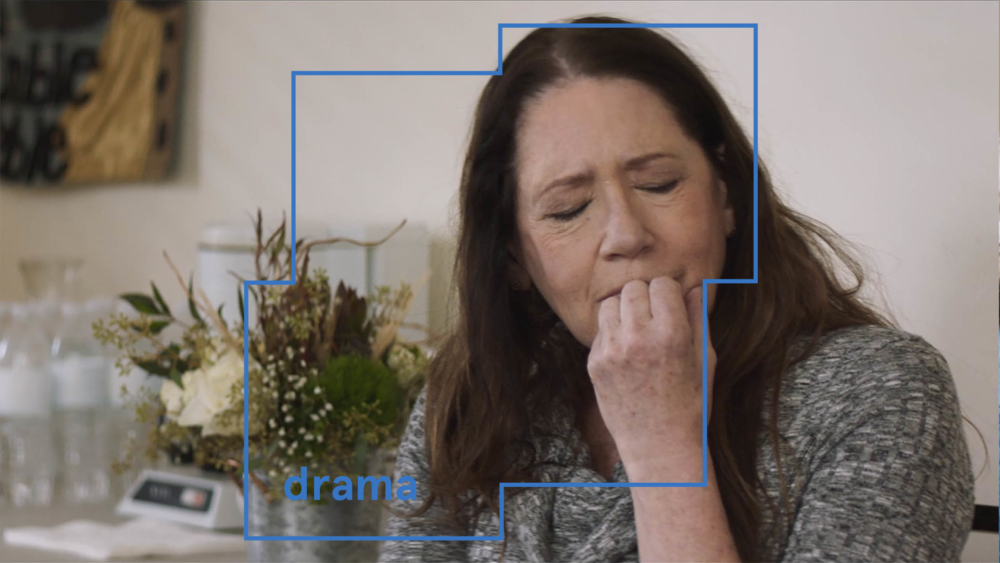
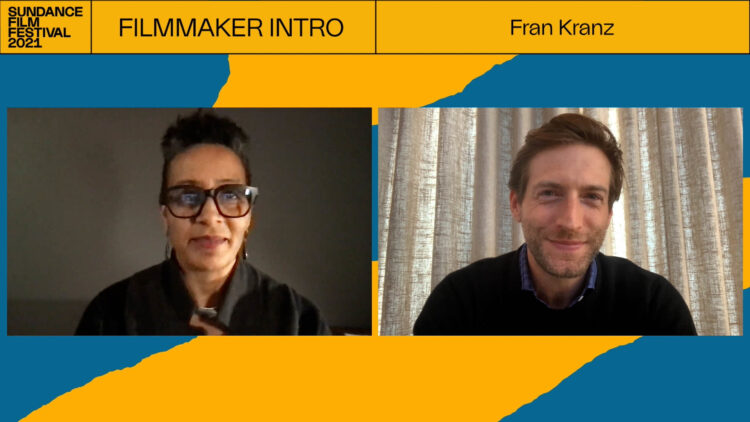
Fran Kranz, perhaps best known as the stoner Marty in my beloved The Cabin in the Woods, directed the film from a script he wrote. His debut in both roles. But you would never know it from how assured the film is. Something happened to Gail (Martha Plimpton) and Jay (Jason Isaacs). Something so traumatic that they’ve been in therapy for years working up the courage to face Linda (Hereditary’s Ann Dowd) and Richard (Reed Birney).
The first 45 minutes of the film are spent skirting around the subject. Blessedly sparing us from any clunky exposition. We don’t need it anyway. All we need to know is the emotions. Gail is angry and hesitant. Jay is also angry but willing to hear things out. Linda is regretful. And Richard… well, Richard is detached. We sit in these roles through simmering, slow-burn dialogue where the couples catch up. Clearly not friends but connected. And then that moment happens. When Gail finally stops being hesitant and runs headlong into it all. “Well, your son killed my son, so I’d like to know.”
It’s revealed that Linda and Richard’s son killed Gail and Jay’s son in a mass shooting at their school. After years of therapy, Gail and Jay feel ready to ask Linda and Richard the questions that have been preventing them from moving on. Did they see the signs ahead of time? What happened in his childhood to make this happen? Do they blame themselves?
That last question holds a lot of weight for both couples. That’s because Gail and Jay want to find someone to blame, Richard wants to explain it away, and Linda is still trying to figure out whether or not she is to blame. Kranz’s screenplay shows incredible restraint by rarely veering into anything that feels overwrought or inauthentic — perhaps the one thread of conversation that does is about gun control.
ADVERTISEMENT
For a premise that is prime for melodrama, Mass has little of it. There is a flow to the conversation. A flow that starts out as a leek before becoming a tsunami in the third act. There are threads about parenting, consequence, and grief that take you on an emotional rollercoaster driven by four stunning and committed performances that is a watershed moment in each of the actors’ careers — Plimpton and Dowd steal the show though.
One theme that you’d expect me to list is forgiveness. But from my perspective Mass isn’t about that. Perhaps forgiveness is a part of it somehow, but it is simply a means to an end. At its core it is about healing. It is about hope. How in the darkest moments of life we have the capacity to heal our spirits. We have the means to do that but simply have to be willing to do the work. Mass shows us the work.
💌 Sign up for our weekly email newsletter with movie recommendations available to stream.
ADVERTISEMENT
Chloé Zhao makesNomadland‘s melancholic but hopeful story of nomads traversing the American West a stunningly complex character study of life on the margins of society.
💌 Sign up for our weekly email newsletter with movie recommendations available to stream.
John and the Hole follows a teen named John who holds his entire family captive in a deep concrete hole in the middle of the woods.
John and the Hole as an intriguing enough premise holds you for some of its running time, but its lack of commitment to the black comedy or biting satire that it begs for leaves you wanting it to dig deeper.
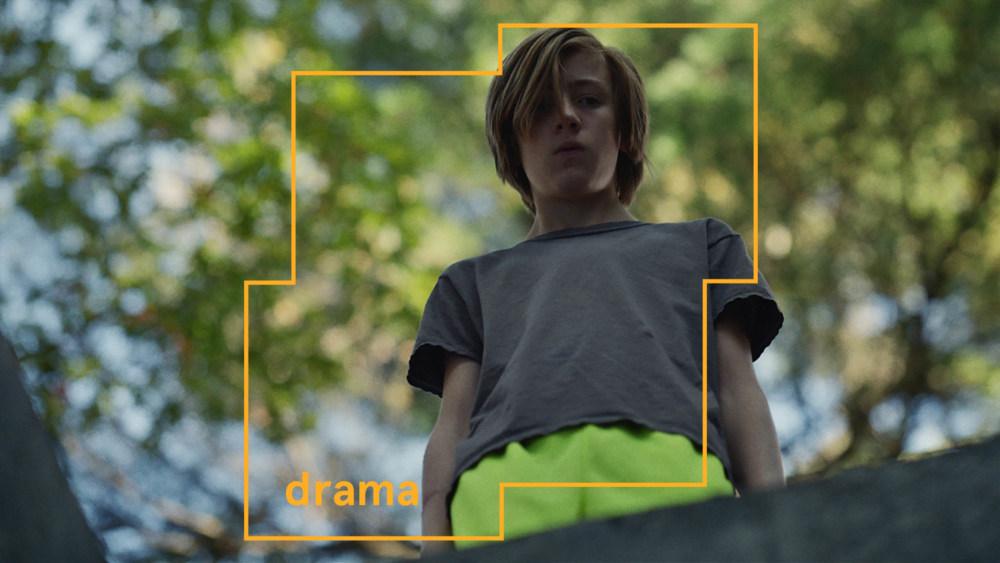
A boy named John (Charlie Shotwell) stumbles through the woods looking for his lost drone and instead happens upon a nearly ten-meter deep concrete hole in the ground. Cue title card John and the Hole. Fascinatingly we don’t get that title card until about thirty minutes into the film when we cut away from John’s narrative to a young girl in an alternate story (universe?) who asks her mother to tell her the story of “John and the Hole.”
That aside does a lot for the film, which premiered in the U.S. Dramatic Competition at the 2021 Sundance Film Festival. It tells us that this is a cautionary tale rather than a depiction of real life. That’s partly why it feels so akin to director Yorgos Lanthimos’ work like Dogtooth or The Killing of the Sacred Deer. It’s clear that John and the Hole director Pascual Sisto — this is his directorial debut — was at least inspired by those films. It also explains why this film was a selection at the canceled 2020 Cannes Film Festival — Lanthimos was a favorite.
ADVERTISEMENT
We don’t learn much about the titular John other than the fact that he’s motivated to be an adult, which partially explains why one night he systematically and quietly drugs his family — father Brad (Michael C. Hall), mother Anna (Jennifer Ehle) and sister Laurie (Taissa Farmiga) — and places them at the bottom of the titular hole with no way out.
Outside of the hole John drives his parents’ car, buys himself food with money he withdraws from the ATM, and even tries and propositions Anna’s friend. It’s like a twisted version of Home Alone. Meanwhile, in the hole, the family struggles to understand why John is doing this to them. From what little interaction we see it seems the family is well-adjusted and loving. And John still cares for them by bringing them water and food — he even cooks them risotto at one point, the only time he actually addresses them.
ADVERTISEMENT
And while this setup and much of the plot feels prime for some Lanthimos-like black comedy or a stinging satire on parenting, it feels like the movie is just kind of there. Sisto noted that he got the inspiration for the film after reading an article about “snowplow parenting,” a strategy where parents clear any potential obstacles or challenges for their children to succeed. And while I can see the story pushing for some commentary on the subject, it never really scratches the surface.
There’s so much potential in a movie with the premise (hell, even the title) of John and the Hole. But what makes Lanthimos such a successful and singular filmmaker is his ability to find the outsized versions of humanity in his absurdist situations. John and the Hole is almost too realistic in its approach to even hold your attention. Honestly, a little less John and a little more hole would have done wonders for this movie.
💌 Sign up for our weekly email newsletter with movie recommendations available to stream.
ADVERTISEMENT
Chloé Zhao makesNomadland‘s melancholic but hopeful story of nomads traversing the American West a stunningly complex character study of life on the margins of society.
💌 Sign up for our weekly email newsletter with movie recommendations available to stream.
A doctor and a park ranger venture into the forest to find a research hub that went quiet in In the Earth. However, after a run-in with a stranger, they get more than they bargained for.
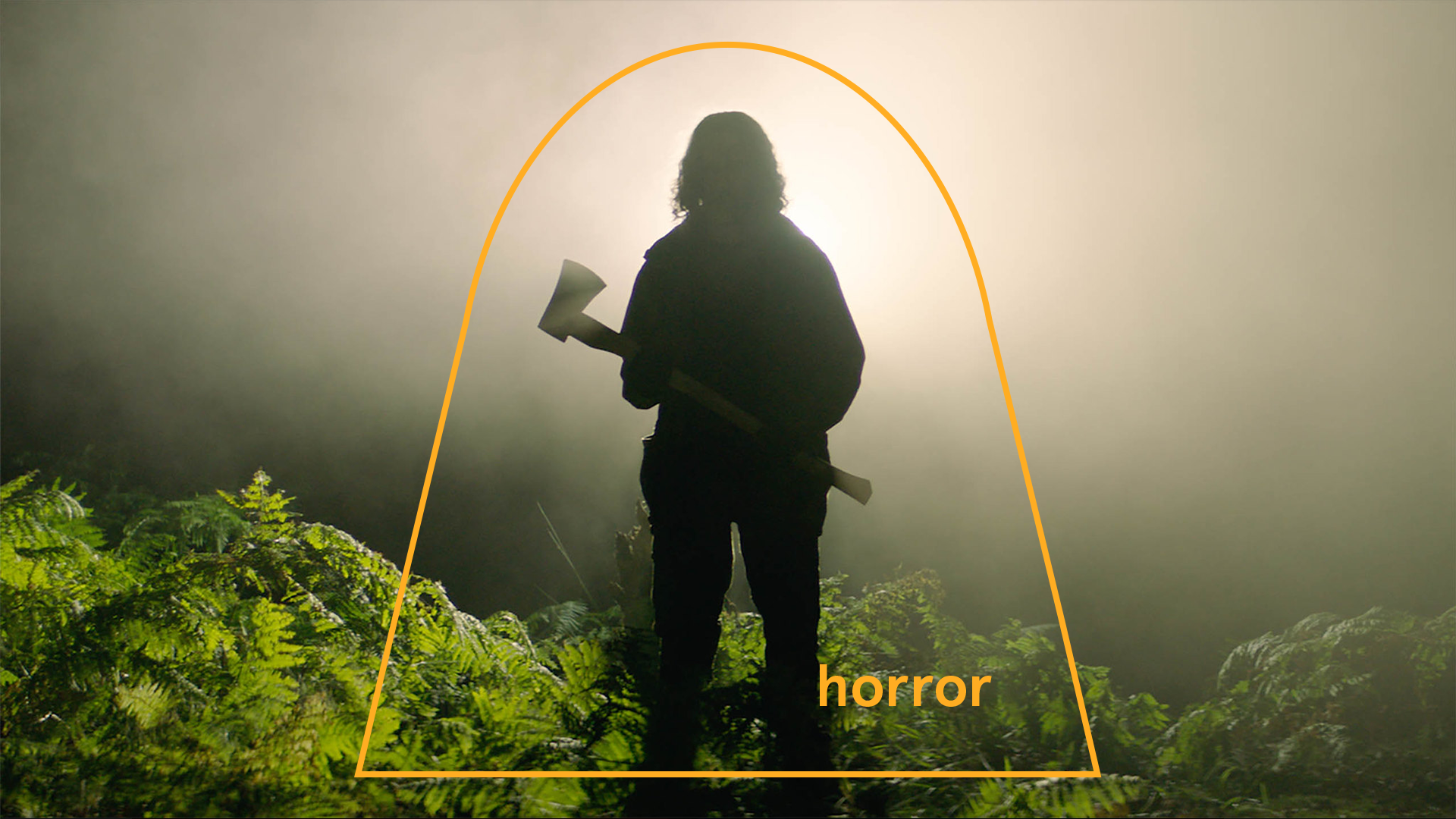
In the Earth is a hypnotic, psychedelic, and anxiety-inducing assault on the senses that invokes comparisons to the best of folk horror, body horror, slashers, and science fiction, yet still comes out as a singular — and stunning — piece of filmmaking.
In the Earth, director Ben Wheatley’s newest film that premiered at the 2021 Sundance Film Festival this week, is clearly derived from a broad range of cinematic influences spanning multiple genres. Yet it still feels like a singular piece of work and perhaps his most successful film to date.
I’ll be candid, I struggle with Wheatley’s films. They’re well-made, intriguing for a moment, but I’m left cold in the end. With In the Earth, Wheatley is able to capture your attention with an ever-changing narrative that makes slight shifts to constantly keep you on the edge of your seat.
ADVERTISEMENT
In the first act, which harkens back to the best of folk horror — The Blair Witch Project, The Wicker Man, and the more recent The Ritual come to mind — we’re introduced to Dr. Martin Lowery (Joel Fry), who makes his way to a checkpoint on the edge of a forest where he is meant to meet with the park ranger to guide him.
There are allusions to our current day, masks, hand sanitizer, temperature checks. However, it’s not explicitly stated what is happening in the world. The movie isn’t about that. The park ranger, Alma (Ellora Torchia), is tasked with taking Martin into the forest on an arduous two-day hike to meet with his research colleague who has stopped responding to his correspondence.
The hike is underscored by an incredible synth-infused score by frequent Wheatley and Darren Aronofsky composer Clint Mansell and isolating cinematography by Nick Gillespie that invokes the feeling of dread so often associated with folk horror. It’s a slow-burn until a terrifying attack in the middle of the night leaves Martin and Alma injured, shoeless, and looking for help.
ADVERTISEMENT
They run into Zach (Reece Shearsmith), a man living in the woods who shows them kindness by tending to their wounds, giving them food, and shoes. But not all is as it seems. Eventually, the pair find themselves in the middle of a slasher movie complete with The Shining-like imagery and edited with masterful precision for maximum anxiety.
There are so many comparisons I could make to try to help you understand what In the Earth is. In addition to the folk horror and slasher elements, there are flashes of body horror — like last year’s Possessor (produced by Wheatley), high-concept science fiction reminiscent of Upstream Color or Annihilation, and even moments of fantasy. However, In the Earth stands completely on its own.
It would be a disservice to divulge any more of the plot than I already have, but what I can say is that In the Earth is an assault on the senses — your eyes, your ears, even touch. In the Egyptian theater at the center of Park City, this film would have swallowed the audience whole. Even from my living room, I felt untethered. It’s psychedelic, hypnotic, and impossible to not lose yourself.
💌 Sign up for our weekly email newsletter with movie recommendations available to stream.
ADVERTISEMENT
Chloé Zhao makesNomadland‘s melancholic but hopeful story of nomads traversing the American West a stunningly complex character study of life on the margins of society.
💌 Sign up for our weekly email newsletter with movie recommendations available to stream.
Herself follows a domestic abuse survivor and her two daughters as they literally rebuild their lives by building their own house
See all our reviews from the 2020 Sundance Film Festival here.
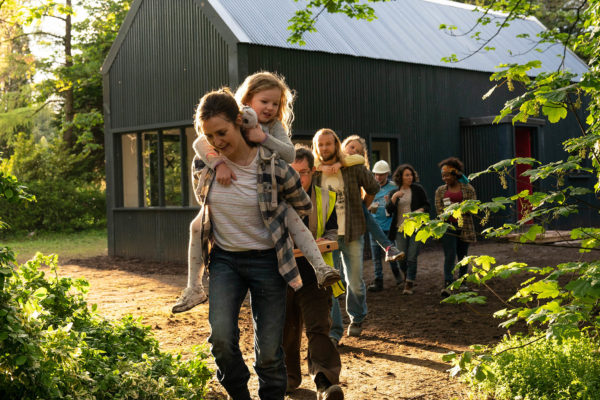
The opening scene of Phyllida Lloyd’s Irish drama Herself, which premiered in the World section at the 2020 Sundance Film Festival, features a devastating act of domestic violence that is difficult to watch. It’s made even more difficult considering Sandra’s (co-screenwriter Clare Dunne) children were there. It isn’t what you’d expect from the director that brought us Mamma Mia!, perhaps one of the most benign movies ever made. However, for the better, the movie begins to show incredible empathy and warmth in the face of such tragedy.
After the attack, Sandra separates from her husband Gary (Ian Lloyd Anderson) and moves her two young girls Molly (Molly McCann) and Emma (Ruby Rose O’Hara) into a hotel with the help of a women’s shelter. However, revealing a flaw in the system, Gary still has visitation rights and sees the girls on the weekend, much to Sandra’s dismay. Life has become a struggle for her. She’s working multiple cleaner jobs — at a bar and the house of a doctor suffering from an injured hip — looking for permanent housing for her and the girls, all the while with a broken hand.
💌 Sign up for our weekly email newsletter with movie recommendations available to stream.
ADVERTISEMENT
Incensed by the system’s inability to find her a permanent home and an offer of a plot of land on her property from Peggy (Harriet Walter), a doctor who Sandra’s mother worked for, Sandra makes the decision to build a house for her and her daughters. She finds a plan online and sets out to try to make her dreams come true. However, building a home on top of her other responsibilities and Gary breathing down her neck proves difficult. So, she seeks out the help of a contractor (Game of Thrones’ Conleth Hill) to help steer the project, which eventually attracts more volunteers.
We’ve seen this kind of story before. However, Herself differentiates itself by avoiding a lot of the pitfalls of this kind of empowerment story. Rarely does it wade into melodrama and instead remains relatively grounded. That’s partially thanks to Dunne’s massively winning performance as Sandra, who is defiant in the face of her obstacles but clearly overwhelmed — as most people would be. The screenplay that she co-wrote with Malcolm Campbell effectively build Sandra as a character while also giving us a chance to really understand the pitfalls of the system — both governmentally and societally — that make it difficult for her to get back onto her feet.
The movie has a deep understanding of the character’s plights and particularly how those plights make her stronger, but also how they sometimes defeat her. But in the face of it all Sandra persists with the help of those around her. The message of the movie is one of community, strength, and empowerment. And despite some questionable needle drops it never preaches that to you. Instead it gets its point across using its story. And what a story that is. It’s no wonder Amazon Studios acquired the film. It’s the kind of heartwarming project you want to sit on the couch and lose yourself to.
The titular Promising Young Woman spends her nights baiting male predators into taking her home with them and teaching them a lesson they’ll never forget
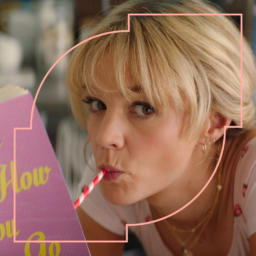
Promising Young Woman balances its serious subject matter with a darkly comedic tone and satisfyingly entertaining revenge narrative that feels like a centerpiece of the #MeToo era. Add in a career-best performance by Carey Mulligan and you have a unique gem of a film.
▶︎ Available on-demand and in theaters on Christmas Day.
ADVERTISEMENT
If points were being awarded for level of difficulty, Promising Young Woman would score a ten. The incredible amount of thematic, tonal, and character weight that director and writer Emerald Fennell has to balance in the film—her debut—is admirable. Does it all work? Most of the time. Sometimes it gets away from her, but even when it does it’s hard to look away.
The movie, which makes a play for my heart by instituting Charli XCX’s “Boys” to great effect, opens with Cassie Thomas (Carey Mulligan) doing her best impression of me at a bar pre-pandemic. She’s sh!tfaced, barely able to hold her head up. Watching from afar, of course, are a group of men just off of work on the prowl. Fennell captures the group like predators—which you’ll see why—stalking their prey.
One of them, however, seems like a nice guy. Jerry (Adam Brody) chastises the men for objectifying Cassie before offering to help her get home. And that seems like the plan at first, but while in the car her makes a last minute decision to take her to his apartment. There he begins to try and have sex with her even though she’s passed out. However, he’s horrified to find you that she’s not drunk.
This is what Cassie does over and over every night as a way of scaring men into never preying on women again. We dig into exactly why Cassie is doing this throughout the movie in bits and pieces, but the core is because of an incident in college where her friend Nina was raped and, as the story often terribly goes, wasn’t believed. Though it’s never said, it’s heavily implied that Nina eventually killed herself.
After a swoon-inducing meet cute with Ryan (Bo Burnham), an old classmate, Cassie decides to finally enact revenge on the people that led to Nina’s suicide—a friend that didn’t believe her (Alison Brie), the dean of the school (Connie Britton), the lawyer who bullied her into silence (Alfred Molina), and the man who did it (Chris Lowell).
ADVERTISEMENT
This is the point when Promising Young Woman hits its stride with a keen handle on its darkly comedic tone mixed with devilishly fun revenge thrills—the movie is broken into sections as Cassie takes them down one by one. However, what elevates the movie is the sensitive exploration of Cassie’s complex and fractured psyche. We explore her motivations and why she’s chosen the life she’s chosen—with interludes with her parents played by Clancy Brown and the legend Jennifer Coolidge and her boss Gail (Laverne Cox). She was once on track to be a doctor, but this incident threw her life off track like it does many women.
The observations about men, sexism, and the systems in place—both societal and institutional—that allow predators to often get off free are both broad and specific, giving an acute insight into the plights of being a women in a society that doesn’t protect them. And that very ambition is admirable of Fennell.
The film does feel uneven at points. There’s a lot of story and development to get through—and to pack it up in a glossy and entertaining experience makes it even more difficult to pull off. However, Mulligan’s performance, emotional without being overwrought and campy without being over-the top, keeps us grounded in something real. She’s a revelation.
Even with a questionable ending, Promising Young Woman is one of those movies that you’ll find yourself coming back to. Its a heavy subject that it’s trying to cover, but Fennell does it with both reverence and a bit of cheeky fun that only someone who has a deep understanding of its complexities can pull off.
The Midnight Sky follows a cataclysmic event that leaves a scientist alone in the Artic and a spaceship returning home in the dark
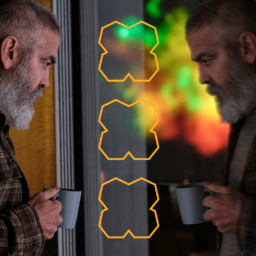
The Midnight Sky combines the story of Interstellar with the action set pieces of Gravity but ends up being less than stellar and unable to leave the ground.
George Clooney’s directorial filmography is really as mixed as they come with highs (Good Night, and Good Luck) and lows (The Monuments Men) and then the low lows (Suburbicon). And so it’s fitting that his latest film The Midnight Sky—streaming on Netflix on December 23rd—lands very much in the middle. It feels as if it should be a sprawling sci-fi epic. It isn’t. It feels as if it should be a meditation on loneliness and regret. It isn’t. What it is is a perfectly serviceable two hour mishmash of the science fiction films that came before—mainly Interstellarand Gravity—that were noticeably more successful.
The Midnight Sky follows two storylines. In one, Augustine Lofthouse (George Clooney plays him in the present, Ethan Peck in flashbacks), a scientist who voluntarily stayed behind in the Arctic as the rest of the base evacuates back to their families during a global catastrophe is shocked to find a girl that was left behind (Caoilinn Springall). The pair, struggling to survive, must travel to a distant communications satellite that they are going to use to communicate with the spaceship Aether to warn them not to return to Earth.
ADVERTISEMENT
That spaceship is on its return mission from K-23, a recently discovered moon orbiting Jupiter that is able to sustain human life. Onboard are Sully (Felicity Jones), a bright and cheery communications officer, her partner Tom (David Oyelowo), the commander of the ship, along with the rest of their crew (Kyle Chandler, Damien Bichir, and Tiffany Boone). They are unaware of what has happened on Earth, all they know is that communication has gone dead, which has caused them to drift from course and into uncharted swathes of Space leaving them vulnerable to the unknown.
The two storylines battle for priority in Mark L. Smith’s screenplay, which betrays any momentum the film could muster. There are flashes of excitement, particularly a narrow escape from the frigid sea for Clooney’s half and a Gravity-like brush with an asteroid field for the Aether, but any of the thrills feel hollow because our investment in the characters and story are left in zero gravity.
ADVERTISEMENT
It’s one of the few times I’ve felt more exposition would have been welcome. We teased with so many interesting tidbits of information—including this cataclysmic event on Earth and the search for a habitable planet, but are left with more questions than answers. Which would be fine if the film had strong character arcs—instead we’re left with unearned payoffs.
And then it just ends with a third act twist that would have been more impactful had Augustine been more than just a character we were following. The Midnight Sky shot for the… well, sky, but missed in almost every one of its ambitions. A more focused-film and tighter screenplay might have helped this movie take off. Instead, it’s left grounded.
In Netflix’s DickJohnson is Dead, cameraperson Kirsten Johnson stages various enactments of her father’s death as he suffers from dementia.
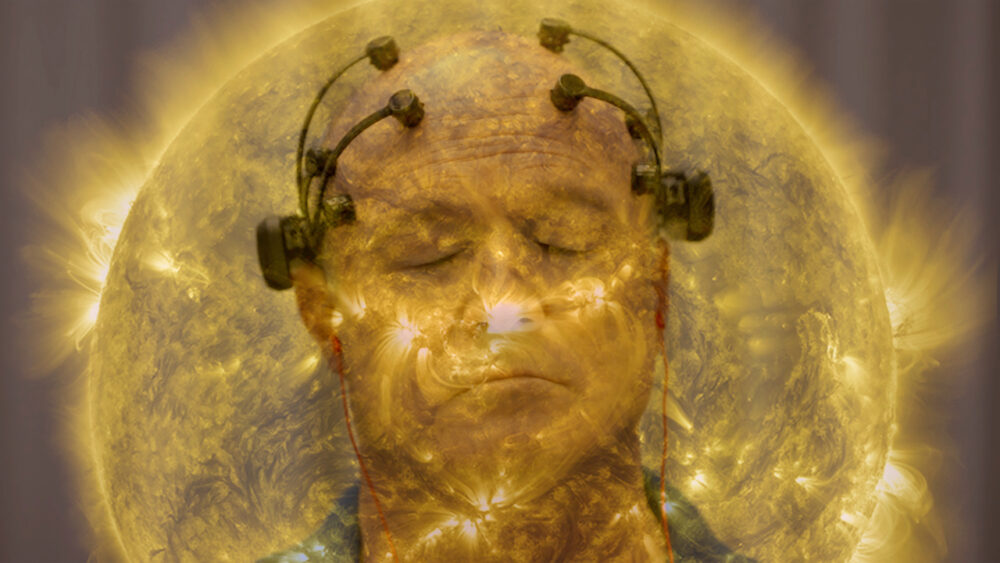
Dick Johnson is Dead is a fascinating and extremely personal exercise in experimental documentary filmmaking that will have you laughing until you cry and crying until you laugh. It is a film unabashedly about death—and life.
There are a few constants in life. Maybe it’s a person. Maybe it’s something that has become a part of your story. Maybe it’s a part of your body. For C. Richard Johnson, they’re his wife and then his daughter, a chocolate cake and a chair, and his deformed toes. This is not a joke. In actuality, Dick Johnson is Dead the filmis a bit of a joke seeing as the titular Dick is very much alive. His daughter Kirsten Johnson, a documentary cameraperson as she puts it—she even made a film called Cameraperson (streaming on The Criterion Channel or you can rent it on Amazon), has tasked herself with filming dramatizations of her father’s death.
Why? Dick, a recently retired clinical psychologist, is suffering from dementia—the same illness that took his wife seven years prior, which Kirsten captured some of in Cameraperson. Instead of waiting for the inevitable, she films various enactments of his death, which at the start he enthusiastically participates in. The scenarios range from bleeding out from a neck wound to every New Yorker’s fear of being struck by a falling air conditioning unit. She even stages his funeral and entrance into heaven, which is full of glitter, modern dance, and Jesus performing a miracle. And as dark as the humor is, I found myself laughing at all of it—until it started to make me cry.
ADVERTISEMENT
What’s fascinating about both Cameraperson, which was stitched together from excess footage from her various projects across the globe, and Dick Johnson is Dead is that the filmmaking bleeds on the edge. You see what went into getting the shot—casting stunt people, the special effects. There are moments when Kirsten is discussing her motivations for the film with her father and asking him about certain scenarios. At one point, the voiceover we’re hearing cuts to her recording it her apartment closet. But this is all to say that the movie isn’t about these reenactments. Instead, it’s about what’s happening in between.
Both of them are still dealing with his wife’s passing, even if it was a decade ago. And the fact that he’s suffering from the same illness makes it all the harder because Kirsten knows what is coming. In one clip Dick heartbreakingly apologizes to her for it. The camera is on the floor and neither of them are in shot. We get those moments in passing. As I was watching the movie I got the sense that Kirsten was using it as a way to spend more time with her father and learn more about his life. I also got the sense that it was a sort of therapy for her. Ironic since Dick himself was a therapist—and a great one based on a scene later in the film.
I’m 26. My father just turned 60 and my mother is 57. I’m just now starting to feel the mortality of my parents, and Dick Johnson is Dead only made me feel it more. However, what it also did is motivate me to learn more about them. To spend more time with them. To capture them more. This movie isn’t the old cliché of being about life instead of death. It’s very much about death. It’s unabashedly about death. However, it’s about the alternating sensations of crying and laughing we feel when we confront it. Both are valid reactions from everyone involved, the person, their loved ones, and even those that only saw them in passing. Dick Johnson Is Dead is a love letter to life—a life that includes death.
Schitt’s Creek went from underrated gem to an instant comedic classic. Here are our 10 favorite episodes to laugh, cry and swoon at.
Schitt’s Creek wrapped up its final season last month and officially cemented itself as one of the greatest sitcoms of the modern era. With memorable characters, iconic lines and some of the sweetest moments in an otherwise absurd comedy, it has gone from an underrated gem to a full-blown instant comedy classic.
It’s almost impossible to choose a favorite episode from the bunch — it’s like picking a favorite bébé, but after a dozen or so rewatches of the full series, I’ve come to a top ten best episodes of Schitt’s Creek. Here we go:
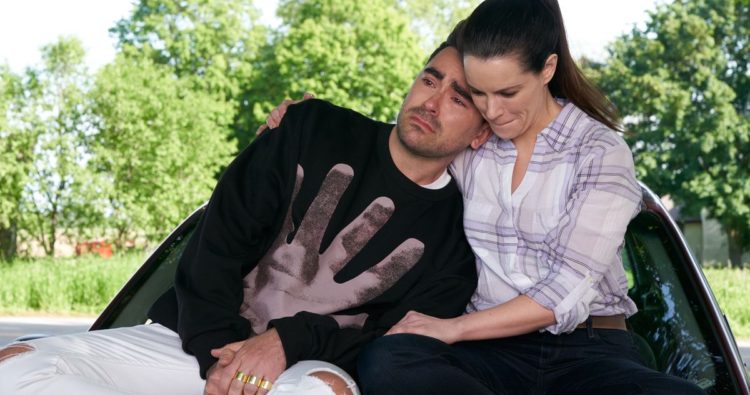
“Happy Anniversary” (season 2, episode 13)
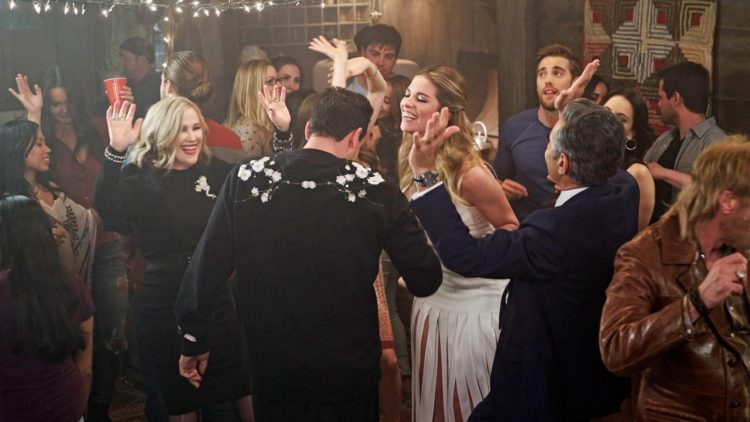
Catherine O’Hara, Dan Levy, Annie Murphy, Dustin Milligan, Eugene Levy, Emily Hampshire, and Chris Elliott in the Schitt’s Creek episode “Happy Anniversary”
“Actually, those boys did burn a bridge last summer. Luckily they don’t get as bored as they used to.”
— Twyla
As you’ll see, almost every season finale made it on this list and it’s not hard to see why. Schitt’s Creek is at its best when pivots from absurdist comedy to heartwarming character study. And while the first two seasons lean on a comedy of manners for its storylines, “Happy Anniversary” starts to see the heartwarming edge that has made Schitt’s Creek so addicting.
Schitt’s Creek is a story about broken people realizing they’re broken and slowly healing and we begin to see that healing in this episode. The ending, which is one of those uplifting moments that fill you up with hope, finds the Roses breaking down their hard surfaces and finally letting themselves admit their love for each other, which is one of three times David (Dan Levy) has said: “I love you,” as he mentions in “Singles Week” (see below).
Best moment: In the first of many heartwarming scenes in the show’s history, the entire cast dancing together in Mutt’s barn is one of Schitt’s Creek‘s great moments.
ADVERTISEMENT
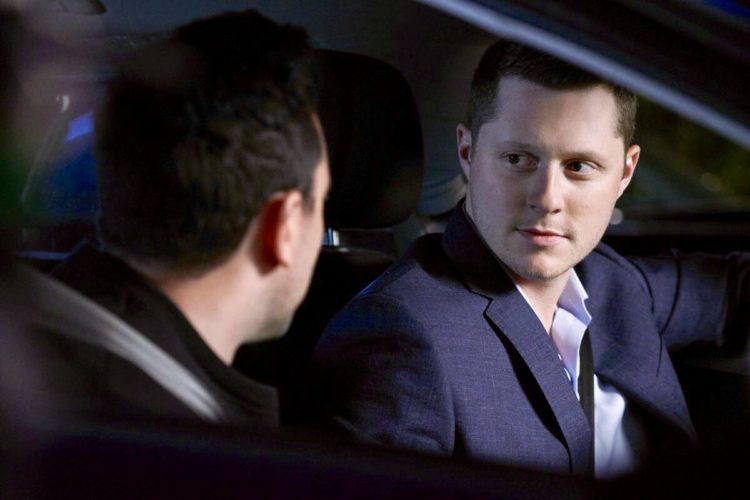
“Meet the Parents” (season 5, episode 11)
Noah Reid in the Schitt’s Creek episode “Meet the Parents”
“But there will be a safe word in case the gaggle of asymmetrical faces becomes too much.”
— Moira
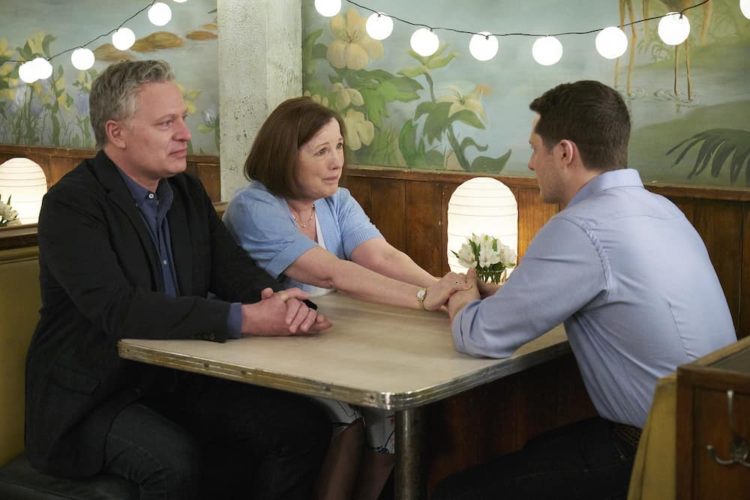
Very few episodes revolve around a single storyline, but when it does happen they tend to be great. “Meet the Parents” starts off with a classic misunderstanding that triggers a perfect setup to explore sexuality, acceptance, and coming out.
Patrick’s (Noah Reid) coming out is so refreshing because the show is careful to remove any risk for the viewers by letting us know that it will all work out in the end. However, it doesn’t stop the show from teaching us a very important lesson. Coming out is a very personal journey that should be done on a person’s own terms. Schitt’s Creek greatest strength is teaching us those lessons without every feeling like it’s teaching us anything.
Best moment: Patrick’s coming out scene is one of the show’s best moments.
“The Hike” (season 5, episode 13)
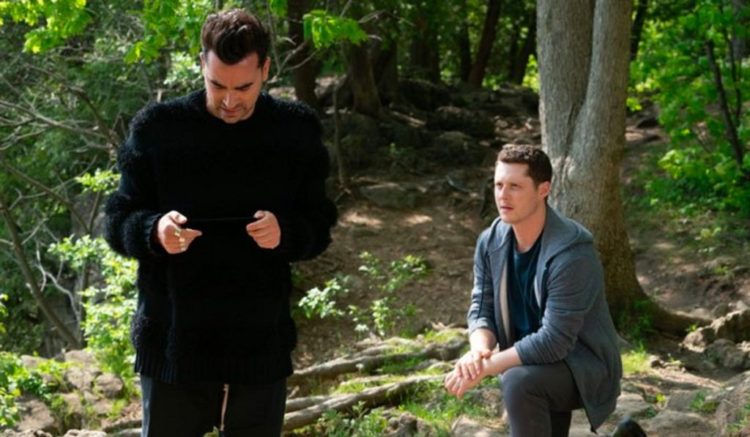
Dan Levy and Noah Reid in the Schitt’s Creek episode “The Hike”
“Ew, Ted. What am I? Thirty-two?”
— Alexis
“The Hike” has three storylines that never cross, but fundamentally test the relationship each character has to each other. There’s Moira (Catherine O’Hara) and Stevie (Emily Hampshire) who deal with Johnny’s (Eugene Levy) health scare — and as we know Moira doesn’t deal with pressure well, Ted (Dustin Milligan) and Alexis (Annie Murphy) discussing their future, and, of course, David and Patrick taking the next step in their relationship.
And while some very serious conversations and events happen in the episode, it never loses its hilarious slapstick comedy that makes the show a delight to watch. Of course, though, it’s the pivot from those moments to moments of genuine growth and emotion that make the show great and David and Patrick’s picnic is one of the best.
Best moment: Is that even a question? Look above.
ADVERTISEMENT
“Happy Ending” (season 6, episode 14)
“Don’t answer that! Was it? Don’t.”
— Patrick
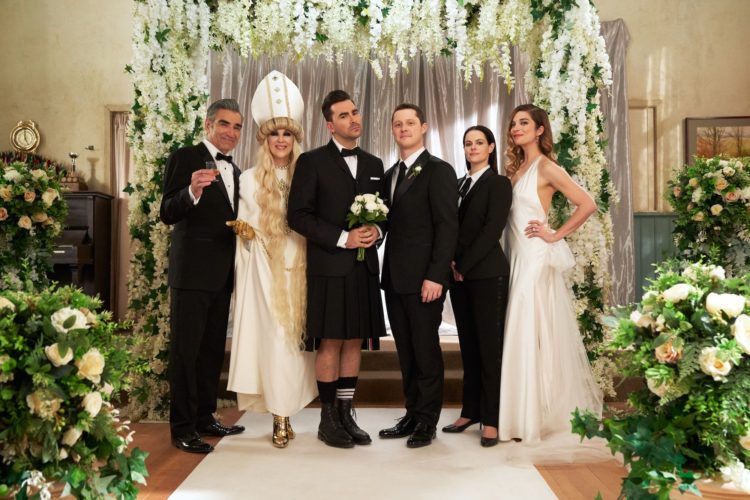
What makes a great series finale? For me, it’s a mix of smart callbacks, classic setups that feel familiar to the show, and an ending that says life goes on. In that case, “Happy Ending” is a perfect series finale. Without hounding us with awkward fan service and instead intelligently reminding us of our favorite moments, Schitt’s Creek gives us a chance to say goodbye to every one of our favorite characters while bidding them farewell to hopeful futures.
However, what makes it a truly great finale is that it feels like the best version of an episode of the show. It deals with comical misunderstandings, the best Moira-sims, Johnny troubleshooting an issue, and a classic Schitt’s Creek tender moment of love. You laugh, you cry, you swoon, and you cheer. That’s what this show does best.
Best moment: I don’t think I’ve laughed harder at anything than Moira’s entrance into the wedding.
ADVERTISEMENT
“Open Mic” (season 4, episode 6)
Noah Reid in the Schitt’s Creek episode “Open Mic”
“Okay, no, worst case scenario I watch improve.”
— David
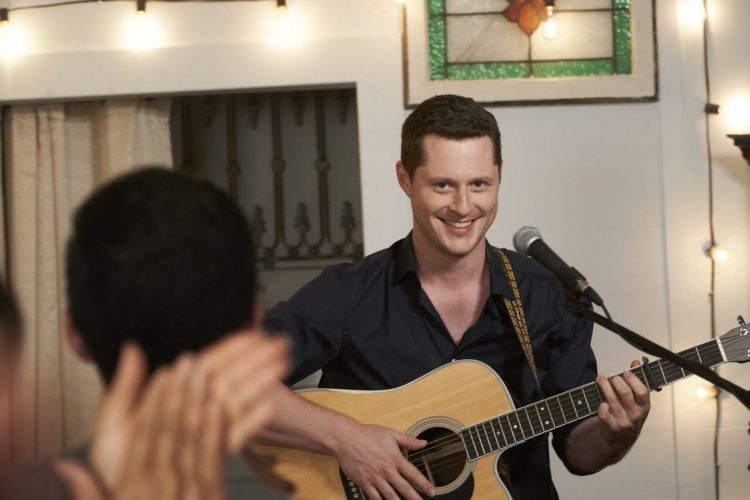
“Open Mic” contains one of most iconic, if not the most, iconic moments in Schitt’s Creek as Patrick serenades David with a cover of Tina Turner’s “Simply the Best.” And the reason that moment is so iconic is that so many queer stories and romances are told through the lens of tragedy and sacrifice. This scene lets us see ourselves as the romantic leads in our own rom-com like any other kind of couple. It’s truly a watershed moment in queer television history.
However, “Open Mic” makes it onto this list because all three storylines harmonize into a hilarious episode filled with classic sitcom setups that also find a way to subtly move the story for each character forward.
Best moment:
“Housewarming” (season 5, episode 5)
Noah Reid, Dan Levy, Emily Hampshire, and Dustin Milligan in the Schitt’s Creek episode “Housewarming”
“Oh my god, John! Don’t forget to wash its hands.”
— Moira
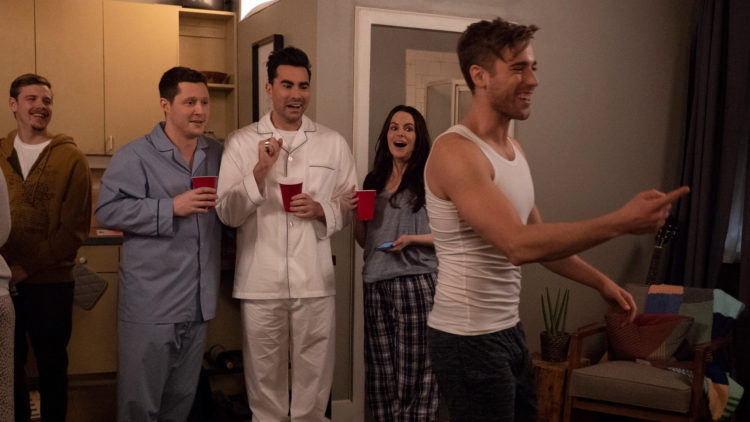
While most of the entries on this list have some of the show’s most noteworthy or heartwarming moments, it’s the episodes that are just having silly fun I come back to most. No episode is a better example than “Housewarming,” which puts all the Roses and their respective partners in uncomfortable situations.
Moira and Johnny are tasked with caring for Jocelyn and Roland’s bébé, which leads to some of the funniest lines and line deliveries in the show’s history. It also gives Eugene Levy and Catherine O’Hara a chance to show why their partnership has endured for so many years. In the other storyline, we get a perfectly orchestrated sitcom setup when a game of spin to bottle leads to an awkward moment that is pitch-perfect every step of the way.
Best moment: Moira and Johnny trying to change Roland Jr.’s diaper is a masterclass in comedic delivery. So many of my favorite lines from the show come from this scene.
ADVERTISEMENT
“Singles Week” (season 5, episode 12)
Sarah Levy, Annie Murphy, and Dustin Milligan in the Schitt’s Creek episode “Singles Week”
“Don’t start without me you little frippet! You don’t have the media training.”
— Moira
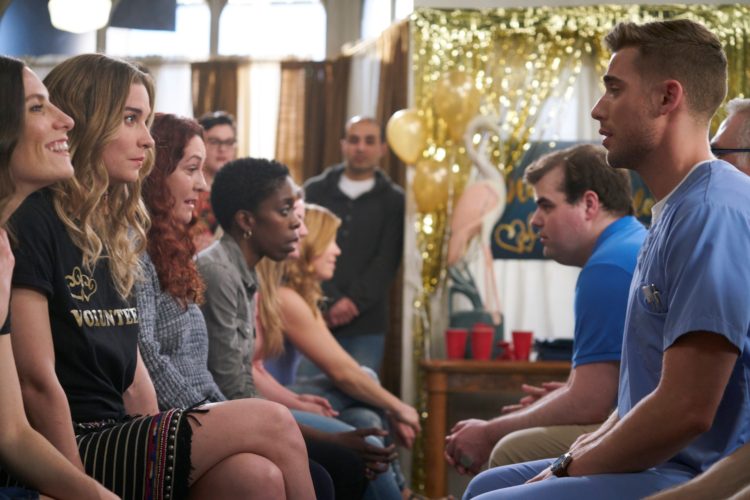
Throughout the series, Alexis perhaps makes the biggest 180 of the Rose family by going from selfish and entitled rich girl to a full empathetic and giving woman. After two seasons of making decisions that benefit her, she finally does the most unselfish thing: she lets someone she loves go. That act of selflessness almost demands that she get some satisfaction, which pays off in the most romantic and swoonworthy way in the “Singles Week.”
However, what makes the episode truly great is other storylines. In one mismatched pairing, David helps Ted through his feelings for Alexis and delivers some much needed advice, despite feeling uncomfortable (in the most David-way possible). In the other, Moira brings an in-labor Jocelyn to the hospital threatening her time in the spotlight resulting in this iconic line:
Best moment: Ted’s big romantic gesture is as heartwarming as they come.
ADVERTISEMENT
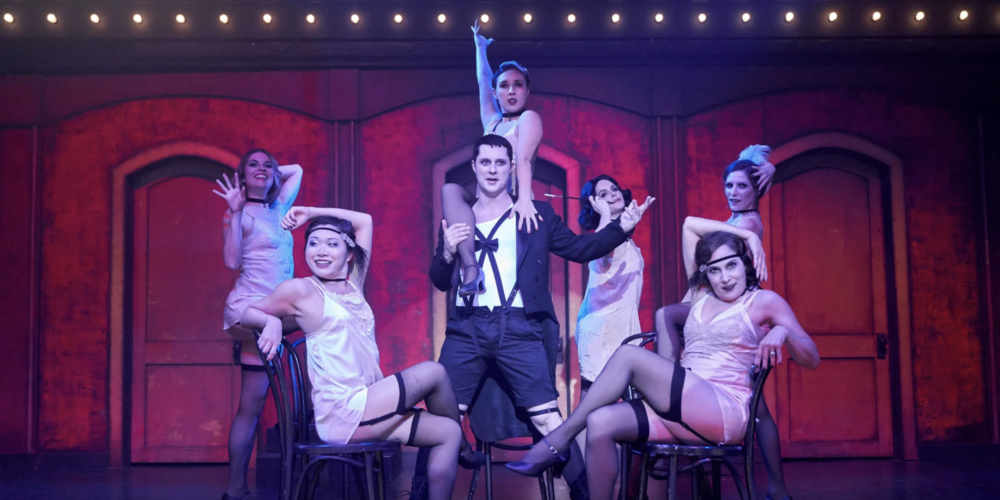
“Life is a Cabaret” (season 5, episode 14)
Annie Murphy, Noah Reid, and Sarah Levy in the Schitt’s Creek episode “Life is a Cabaret”
“Jocelyn! I’m the one standing on the chair!”
— David
An episode of Schitt’s Creek rarely focuses on someone outside the Rose family, but in “Life is a Cabaret” Emily Hampshire‘s Stevie is front and center — both literally and figuratively. In one of the show’s most fruitful storylines, Stevie finds herself playing Sally Bowles in Moira’s community theater production of Cabaret. And while the idea of Moira directing the show that launched her career is hilarious, it also gives Stevie a chance to reflect on her own life, choices, and desires.
Using the iconic “Maybe it’s Time” number as an “I want” song for the character, we explore her feeling of directionless. As Stevie says, “I just wish I wasn’t watching it all happen from behind the desk.” It’s as profound as the show gets and gives Catherine O’Hara the chance to show a softer side of Moira. All the while, David’s engagement news is a hilarious through-line that connects it all.
Best moment: Emily Hampshire deserved an Emmy nomination for her performance of “Maybe it’s Time.” It would do Liza Minelli proud.
ADVERTISEMENT
“Start Spreading the News” (season 6, episode 13)
“What was I going to say? I just won $92 million?”
— Twyla
While there are certainly plenty of laughs in “Start Spreading the News,” the penultimate episode of Schitt’s Creek, it’s largely the dramatic fare that makes the episode one of the best of the series. As the series reaches its final episodes, each of the Roses and the people around them are beginning to make progress towards their futures, except for David. For him, his future has always been tied to his old life despite the happiness he’s found in this new life. In this episode, we watch him accept with the person he’s become and, more importantly, accept happiness.
Moira, Alexis, and David also find a way to acknowledge the relationships they’ve built in Schitt’s Creek. Specifically the Jazzagals, Twyla, and Stevie. “Start Spreading the News” doesn’t deliver any specific answers about each of the characters’ futures. Instead, it assures us that they will be okay, which is even more profound.
Best moment: There are so many small heartwarming moments in this episode, but none as fully emotional and intelligent as David and Stevie’s conversation in front of the house that looks like Kate Winslet’s cottage in The Holiday.
ADVERTISEMENT
“Grad Night” (season 3, episode 13)
Dan Levy and Noah Reid in the episode “Grad Night” of Schitt’s Creek
“Maybe there’s a job out there that I’m better suited for. And some other like gorgeous, slightly under-qualified girl is sitting at my desk asking herself the same question.”
— Alexis
“Grad Night” is perhaps one of the most important episodes in Schitt’s Creek history as it propels the show into its final three seasons. Alexis finally graduates from high school, which is impressive considering she’s ten years older than her classmates. More importantly, it begins Alexis on a path to finally find a calling all her own. Moira often underestimates (and sometimes forgets) Alexis, which makes her act of love at the graduation all the more heartwarming and the first crack in her absurd facade.
Meanwhile, this is also the episode that launches our favorite couple into the stratosphere. Patrick and David’s storyline in this episode so subtly explores sexuality and how it’s a constant discovery process in your own life. Patrick’s line, “I’ve never done that before… with a guy,” cuts warmly into your heart and is the perfect starting point to their love story.
Best moment: This is a tight race between Moira’s surprise performance at Alexis’ graduation and David and Patrick’s first kiss. I’m going to give a slight edge to the kiss because it is an elegant and heartwarming way for Patrick to come out.
Honorable mentions
There are so many episodes that were painful to leave off, the first of which is “Family Dinner” which has one of my favorite comedic scenes (pictured above). Then, of course, there’s David’s iconic “Simply the Best” lipsync in “The Olive Branch” which could have easily landed it in the top ten.
There are several episodes that feature Catherine O’Hara giving one of the best comedic performances of all time including “Wine and Roses,““Pregnancy Test” and “RIP Moira Rose”. And lastly, more than one episode that has the show’s patented heart-tugging moments like “Presidential Suite” and “Girls Night.”
Happiest Season follows a lesbian couple who go home for the holidays for the first time. One problem: Harper’s family doesn’t know she’s gay and that Abby is her girlfriend. Hijinks ensue.
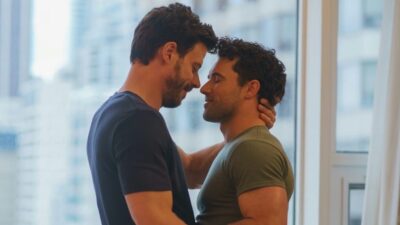
Happiest Season is filled with hilarious misunderstandings, more than one coming out pun, and a running joke about dead fish. However, at its core, it’s a character-driven dramedy that’s so rooted in the queer experience that, to be frank, is going to be a bit divisive. Whether you’re satisfied by the end, I’m not sure, it’s up to you. But the journey there is a jolly holiday treat.
The holiday romantic comedy is as much a staple of the season as a dysfunctional family argument at the Christmas dinner. Oh wait. Either way, there’s often a formula to our holiday entertainment. However, Happiest Season—now streaming on Hulu—looks to break the mold by focusing on a lesbian couple played by Kristen Stewart and Mackenzie Davis. And while the story does hit some of the same familiar beats, it’s a largely subversive take that’s rooted in the queer experience. Still, there’s something for every member of the family to enjoy.
Abby (Stewart) and Harper (Davis) are a long term couple living together happily in Pittsburgh—they’re so happy in fact that Abby is ready to pop the question much to her best friend John’s (Schitt’s Creek’s Dan Levy) chagrin. After talking about Abby’s dislike for the holiday since her parents died—take a drink for the holiday movie drinking game—Harper makes the spontaneous decision to invite her to her conservative small town for her family’s annual Christmas party. However, on the way Harper reveals that she lied to Abby about coming out to her family and asks her to pretend to instead be her roommate until she can tell her family she is gay after the holiday.
ADVERTISEMENT
💌 Sign up for our weekly email newsletter with movie recommendations available to stream.
ADVERTISEMENT
From there, Happiest Season has all the hijinks you’d expect as the pair arrive having set the ruse. Immediately it’s clear the Harper’s mother Tippy (Mary Steenburgen) has taken Abby’s status as an orphan a little too to heart as she looks down at her with sadness. Her father Ted (Victor Garber), on the other hand, is too focused on his campaign for mayor to pay too much attention to her. And of course, there are the kooky siblings Jane (Mary Holland), an awkward and nerdy holiday lover, and Sloane (Alison Brie), a perfectionist in constant competition with Harper.
Every member of the cast is superb in creating little ticks and moments with their characters, especially Holland whose performance as Jane very nearly steals the film. After a series of misunderstandings, more than one pun about being in a closet, and a subplot about dead fish, Happiest Season heads for more dramatic territory as the strain of hiding her identity weighs on Abby and strains her relationship with Harper. It doesn’t help either that Harper seems to be slipping into her at home “straight” persona a little too well and her high school friend Riley (Aubrey Plaza) hits it off with Abby.
ADVERTISEMENT
Therein lies the problem with Happiest Season. The very act of hiding oneself until you’re comfortable is completely valid—something I did too for some time. However, the movie is a little too heavy-handed with Harper’s betrayal of Abby to the point that it’s hard to root for the couple. However, Dan Levy’s gorgeously delivered third act monologue about the very personal journey about coming out infuses some understanding that saves the ending a bit—still it will be quite divisive.
Happiest Season has its problems but at the core, it is the exact kind of delightfully entertaining holiday rom-com that we’re looking for. There are moments that had me laughing, crying, and screaming with delight. And, of course, there’s the lesson. “I’m gay.” Why are those two words so difficult for so many of us queer people to say? Happiest Season aims to find an answer to that question while simultaneously delivering an entertaining holiday comedy filled with the nutty characters we all love—and love to hate.