Blog

  • 2017 Emmy Predictions: Comedy Series — Can Atlanta take down Veep?

    2017 Emmy Predictions: Comedy Series — Can Atlanta take down Veep?

    Freshman series Atlanta and returning nominee black-ish will give Veep a run for its money in the race for Outstanding Comedy Series

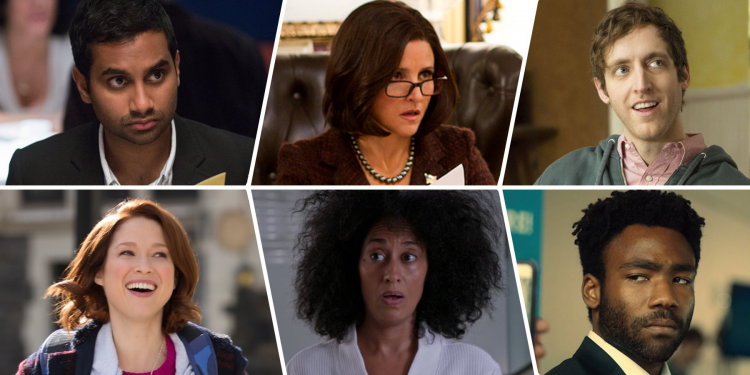
    Unlike its Drama counterpart, Outstanding Comedy Series is a relatively weak category this year that won’t have much change from last year. Two-time winner Veep will get back in and is the frontrunner to win. However, there are a couple contenders that are looking to challenge it. One newcomer and one previous nominee that is hoping to find its footing this year.

    However, I want to start off with two dark horse candidates that I don’t think people are talking about enough. The first is NBC’s The Good Place. It premiered to great reviews and solid ratings despite its odd premise of a recently deceased woman who was sent to a type of heaven called “the good place” despite her less than good behavior in life. Emmy favorite Ted Danson stars alongside Kristen Bell, which gives it a higher profile. With three surprise TCA nominations under its belt — Achievement in Comedy, New Program, and Individual Achievement in Comedy for Bell — and NBC without a clear comedy contender, The Good Place could be a major contender none of us were paying attention to. The other dark horse — to a lesser extent — is Amazon’s Catastrophe. Stars Sharon Horgan and Rob Delaney were nominated for writing last year, which means the show is on the Emmys radar. But what makes this a more intriguing contender is its network. Amazon Prime has had great success with Transparent the last couple years and is looking for another series to breakthrough. Catastrophe already has a foot in the door. With the right campaign, it can step all the way in.

    Joining Veep in the lineup, and giving it some stiff competition, is black-ish. In terms of awards, the show had its best year yet with three Golden Globe nominations — series, actor, and a win in actress for Tracee Ellis Ross — and two SAG nominations — ensemble and actor. Last year at the Emmys, the show nabbed three nominations but missed out on a writing and directing nominations despite being favored to. Smartly, the show only submitted one episode in each category, so it’ll have a better chance this year. If you see the show nab a nomination in either of those categories, then watch out for it for the win.

    A new contender, and another show giving Veep some chase is Donald Glover’s Atlanta. After winning the Globe for Comedy Series and nabbing four TCA nominations, the FX series has certainly had a good run of the season so far. I think the question now shifts from “can it be nominated?” to “can it win?” If it overperforms in nominations — writing, directing, and supporting acting — then there is a good chance that it can do it.

    After those three, the category essentially breaks down into the nominees from last year. I think that Master of None is set to have a good year following its writing win last year. Look for it to tick up in nominations. Silicon Valley seems to only grow in nominations — last year it hit a series high with 11. This year is looking to be no different. Amazon’s Transparent has also been a solid Emmys player thus far winning three awards last year. The last spot is going to be tricky. Five-time winner Modern Family has slowly been declining in acclaim, ratings, and Emmy nominations. Last year, they received just two nominations. I find it hard to believe that it can hold on to a nomination in this category another year, which is why I’m predicting Unbreakable Kimmy Schmidt to take the last spot.

    There is a chance that sentiment takes Girls to a farewell nod. However, I think HBO is also going to be putting a lot of weight behind the acclaimed Insecure. Though I think it’s going to have a better chance in lead actress in a comedy series, it can also surprise in this category.

    Check out all our 2017 Emmy Predictions!

    Predictions

    Atlanta
    black-ish
    Master of None
    Silicon Valley
    Transparent
    Unbreakable Kimmy Schmidt
    Veep

    Spoilers
    Modern Family
    Girls
    Insecure

    Dark Horses
    The Good Place
    Catastrophe

  • 2017 Emmy Predictions In Every Category Before Sunday’s Ceremony

    2017 Emmy Predictions In Every Category Before Sunday’s Ceremony

    The Emmys are this Sunday! So, we made our predictions in every category.

    Drama Series

    Will Win: Stranger Things
    Could Win: The Handmaid’s Tale
    Dark Horse: The Crown

    If you asked me who was going to win earlier this year, I would have said that The Crown was a lock. However, its buzz has waned since then and The Handmaid’s Tale picked up steam. But I feel an upset brewing in this category. That’s because Stranger Things did well at the Creative Arts ceremony — they won five awards. Most importantly, it took the crucial Picture Editing award, which has predicted the last 5 winners of Best Drama Series.

    Lead Actor in a Drama Series

    Will Win: Sterling K. Brown, This Is Us
    Could Win: 
    Bob Odenkirk, Better Call Saul
    Dark Horse: Anthony Hopkins, Westworld

    Brown should win this easily barring a major upset.

    Lead Actress in a Drama Series

    Will Win: Elisabeth Moss, The Handmaid’s Tale
    Could Win: Claire Foy, The Crown
    Dark Horse: Viola Davis, How to Get Away with Murder

    This is going to be a tight race between Moss and Foy. And though Foy won the Globe and the SAG, Moss has been an Emmy bridesmaid for so long that an overdue win should be coming her way. Though, look out for Davis, who is riding high on her recent Oscar win for Fences

    Supporting Actress in a Drama Series

    Will Win: Millie Bobby Brown, Stranger Things
    Could Win: Chrissy Metz, This Is Us & Thandie Newton, Westworld
    Dark Horse: Ann Dowd, The Handmaid’s Tale

    This is going to be the hardest category to predict the entire night. This is Us has been incredibly popular with actors — they have seven acting nominations — and is the only broadcast show in contention on the drama side. Metz has a narrative to win. However, Millie Bobby Brown, is the actor of the moment. She has become such a cultural icon even larger than the show itself. Plus, if the show wins Drama Series, it can certainly take her along the ride. Thandie Newton has received the most acclaim of anyone in this category, but Westworld‘s confusing narrative could squander its chances in these main categories. It’s a coin flip at this point. I’m going to give Brown the VERY slight edge, but don’t be surprised if one of the other two actresses surprise.

    Supporting Actor in a Drama Series

    Will Win: John Lithgow, The Crown
    Could Win: Ron Cephas Jones, This Is Us
    Dark Horse: David Harbour, Stranger Things

    John Lithgow should easily win this category. But Ron Cephas Jones certainly has room to upset. If Stranger Things goes on a sweep, Harbour could be taken along.

    Writing for a Drama Series

    Will Win: “Offred” (The Handmaid’s Tale)
    Could Win: “The Vanishing of Will Byers” ( Stranger Things)

    Directing for a Drama Series

    Will Win: “The Vanishing of Will Byers” (Stranger Things)
    Could Win: “Offred” (The Handmaid’s Tale)

  • ‘The Guilty’ review — A kidnapping unfolds in real time in Demark’s Oscar entry

    ‘The Guilty’ review — A kidnapping unfolds in real time in Demark’s Oscar entry

    The Guilty is a somewhat predictable, but taut single-location thriller of a kidnapping case unfolding in real time.

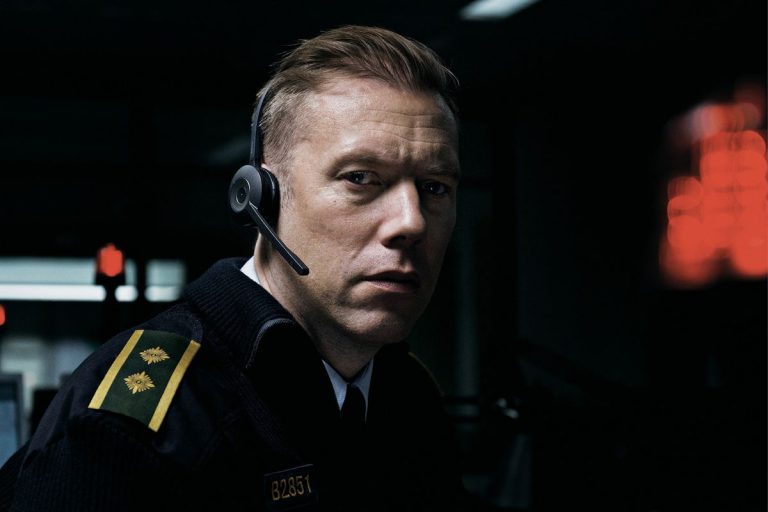
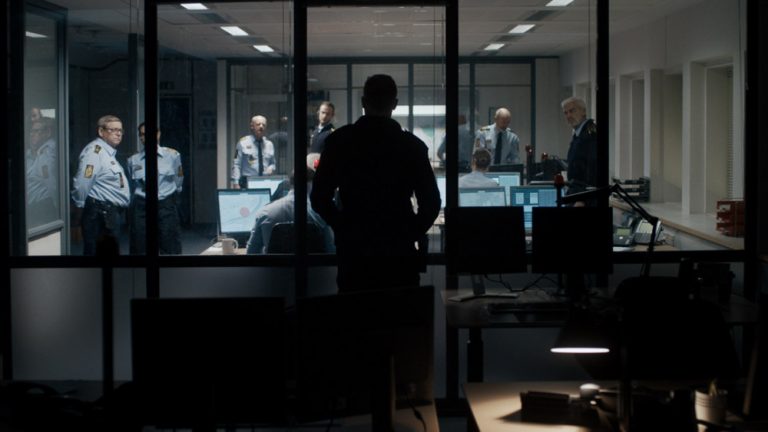
    The Guilty, Denmark’s entry for Best Foreign Language Film at the Oscars, is a taut thriller that plays out like an episode of Law & Order: SVU. Told in real time, the film follows Asger (Jakob Cedergren), a police officer demoted to 911 dispatcher while he awaits trial, as he tries to save a kidnapped woman named Iben. The film never leaves Asger’s face as he makes various calls—to other police officer’s, the victim’s family members, his partner—in an attempt to track down and save Iben. The entire story, which is at points predictable, unfolds completely over the phone. We never see any characters involved except for Asger. However, first-time director Gustav Möller is able to overcome the cookie cutter plot to reveal some hard truths about law enforcement. 

    What The Guilty presupposes is that the police are flawed, make mistakes, and, at their worst, do more harm than good—even when they have the best intentions, which is not a guarantee. While Asger begins as an officer with some clear baggage—it’s easy to see that he is resentful that he has to work as a dispatcher—he is slowly transformed through the 88-minutes that we follow him. 

    The end of his shift is filled with the standard—muggings, tripped out teens—until he receives a call from a woman named Iben (voiced by Jessica Dinnage). She speaks to Asger as though she’s talking to her child. He quickly deduces that she has been taken by someone and is trying to seek out help, but can’t since he’s right next to her while she’s on the phone. Asger’s instincts automatically kick in as he guides her through getting more information without tipping off her kidnapper. 

    The Guilty
    Courtesy of Sundance Institute

    Soon, she is disconnected, and he must piece together who she is, where she’s being taken, and who has taken her. However, his colleagues—other dispatchers and patrol units—aren’t as interested. At one point, when he calls to have units look out for the suspect’s van another dispatcher responds, “but why?” In another scene, he asks his former partner to go to a suspects house and look for something that could give them a hint to where the suspect is taking Iben, to which his partner rebukes, “she will be dead by the time I’m done.”

    It’s that resistance that Asger faces while he tries to save Iben. The general lack of care in the police department. However, he has a selfish reason for wanting to be more involved at the beginning of the mystery—he misses being a cop. However, instead of doing the groundwork himself, he has to do it over the phone and rely on other people to do it for him. By only hearing the action going on the tension is ratcheted up. In painfully long takes we wait for some piece of information or the fate of someone to be revealed. It’s that kind of tension that keeps the movie compelling, even when you can call the story’s shots. 

    Single-location movies are hard to pull off, but when they’re done well—Karyn Kusama’s The Invitation, for example—they can be really effective. The Guilty has its moments, particularly during Asger’s calls with Iben and her kids, who eventually fold into the story. However, the handling of its themes, particularly of morality, is sloppy and introduced too late into the story to make any real impact in the end. However, even if the plot is something we’ve seen in countless police procedurals, The Guilty has some really interesting choices that make it a solid debut for Möller. 

    The Guilty is available to buy or rent on Amazon

    Karl’s rating:

  • Moonlight Movie Review — An instant classic and landmark in film history

    Moonlight Movie Review — An instant classic and landmark in film history

    Moonlight is gorgeously crafted, masterfully acted, surprisingly timely, and demands to be watched and respected

    It wasn’t until I got into my twenties that I became aware of what identity is. Identity is as much how you view yourself as what the world views you as. You may be a minority or gay or poor, but that doesn’t mean you have to identify as those things. It’s truly your experience that shapes your identity. Any LGBTQ+ person knows what it is to struggle with identity. Hell, anyone that is anything different from what society views as normal has struggled with identity. It’s a process that is as emotionally taxing as it is satisfying. Learning who you truly are and who you see yourself to be is one of the most liberating — sometimes heartbreaking — experiences. That’s what Moonlight really is about: identity. Not only the concept of identity, but the process of discovering, struggling, and ultimately accepting who you are.

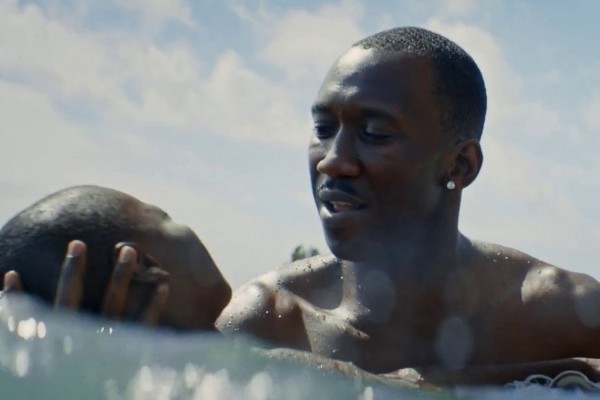
    Moonlight is split up into three parts that are named after the nicknames that our main character is called: Little, Chiron, and Black. In little, we meet young Chiron (Alex Hibbert) as he is running away from a group of taunting classmates. Eventually, he finds shelter in a crack house and is soon discovered by Juan (Mahershala Ali), who takes him under his wing. Juan is an interesting character. He is the only character whose perspective we see outside of Chiron’s. This is an important choice because Juan is a character whose identity as a drug dealer directly contradicts his caring personality.


    Eventually, Juan takes him under his wing along with his girlfriend Teresa (Janelle Monae). They become Chiron’s figurative parents while his real mother, Paula (Naomie Harris), is on drugs or with random men. This part is about Chiron discovering his identity. Juan is there to assure him that there are other people out there like Chiron.

    The second part of the film follows Chiron as a teenager as he struggles with his identity. At this point in his journey, he’s as confused and vulnerable as ever. He must deal with his mother falling further into drug addiction, his place as a punching bag for the school’s bullies, and his deepening confusion about his sexuality. However, maintaining a close eye on his subjects, Jenkins portrays Chiron’s struggle with a chilling intimacy that culminates in a chilling final shot.

    In the final act, Chiron has transformed into Juan both physically, professionally, and mentally. There is even a scene where he gives a pep talk to a younger associate. However, this act is outlined by his acceptance of who he is. Ultimately, he must face his past ghosts and find a way to embrace it as part of his identity.

    moonlight movie review

    Jenkins and cinematographer James Laxton were careful to shoot nearly the entire film in close-up. It’s a deeply personal story. However, Jenkins also doesn’t shy away from cinematic flair. In particular, composer Nicholas Brittell’s score mixes old school rap and hip hop with classical music to outline the beauty and savagery of growing up. The most surprising element though is the sound. It comes in and drops out in the perfect places. However, the most effective part of its design is when we hear dialogue, but all we see is a look in the actors’ faces.

    I need to take a moment to talk about this incredible cast. First, the three actors that portray Chiron are revelations and bring entirely different perspectives on the role that come together to create this dynamic character. Alex Hibbert, who portrays the young Chiron, has this knowing look that captures his attempt to understand something that is just out of grasp. Teen Chiron, portrayed by Ashton Sanders, instead uses his physicality to show his inner battle to embrace who he truly is or what society wants him to be. Finally, Trevante Rhodes’ performance as the adult Chiron shows the character at his most emotionally vulnerable.


    However, they are joined by a supporting cast that use their limited screentime to make huge impacts. Naomie Harris, who plays Chiron’s mother in all three parts of the film, is phenomenal throughout the film. But her third act monologue is one of the best-acted scenes of the year. Jharelle Jerome, who plays Chiron’s love interest Kevin as a teenager, is a surprisingly naturalistic performer. Mahershala Ali, though, towers in the film. Though his screen time is short, his impact is felt throughout the movie. It’s truly a masterclass in acting. Then there is Andre Holland who plays Kevin as an adult. His performance is perhaps one of the best of the year. Along with Rhodes, he created scenes that felt so natural and real that I was floored that this was actually a movie. 

    LGBTQ+ characters are marginalized in film. However, black gay characters are completely in the periphery. Moonlight bravely brings them into the forefront. It is easily a turning point for queer cinema and black cinema alike. In the end, though, Moonlight is a love letter to the people that struggle with their identity and sometimes feel isolated. It works as both a comfort and a glimmer of hope. But that’s not to take away from the craft of the film. The only way to describe Moonlight is as art. It’s pure, unadulterated art. It’s storytelling at it’s best. It’s filmmaking at it’s best. It’s romantic, emotional, and, most importantly, a film that needs to be seen. 

    10/10

    Preorder Moonlight on DVD, Blu-Ray, or digital on Amazon!

  • ‘Get Out’ review — Social issues meet horror with Jordan Peele’s debut

    ‘Get Out’ review — Social issues meet horror with Jordan Peele’s debut

    Get Out is easily one of the most original horror movies — or just movie for that matter — in years by one of the most exciting filmmakers of our generation.

    Take the setup Guess Who’s Coming to Dinner, the world of Stepford Wives, and the exploration of the black experience in I Am Not Your Negro and you have a movie that is certainly not as successful as Jordan Peele’s near-perfect directorial debut, Get Out. While the movie has elements of others that came before it, the horror-thriller is completely unique in the way it carries them out. It mixes old-fashioned scares and genuinely hilarious comedy with a specific perspective that makes it one of the most original movies in years.

    The cold opening of the movie, which features a young black man (LaKeith Stanfield) walking alone down a deserted suburban street, shows off Peele’s aptitude for thriller directing. His uninterrupted shot down the shady street is joined by some truly hilarious comedic timing and a creeping sense of dread that culminates to a worthy opening jolt. And while the scene certainly makes you laugh, it also sets the unsettling atmosphere that never truly lifts from the film — save for a hilarious ten or so minutes where we follow Lil Rey Howrey‘s Rod.

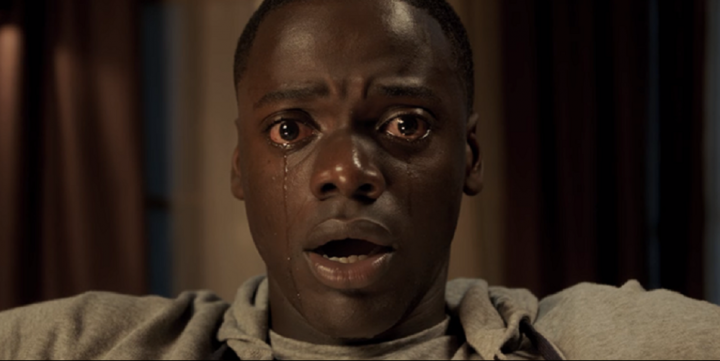
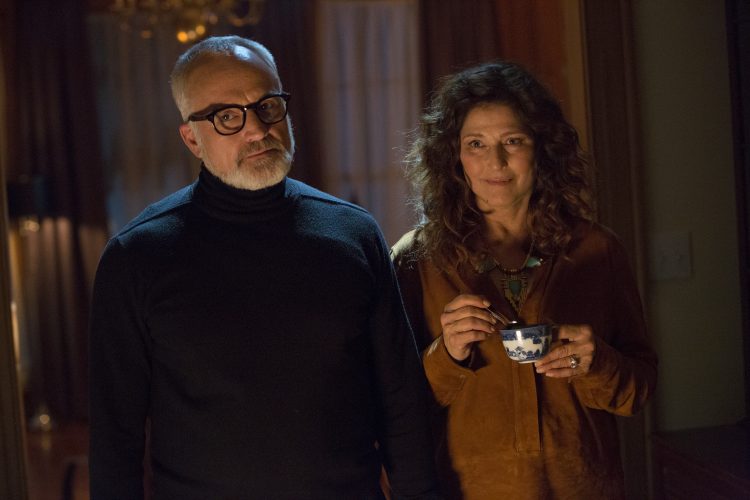
    Get Out sets up very much like Guess Who’s Coming to Dinner with Chris (Daniel Kaluuya) getting ready to meet his girlfriend Rose’s (Allison Williams) parents for the first time. “Do they know I’m black?” Chris asks Rose just before they leave, to which she jokingly responds, “Mom and Dad, my black boyfriend will be coming up this weekend. I just don’t want you to be shocked that he’s a black man.” She has a point and he takes it. However, it seems that his worries were justified when they finally meet her parents Dean (Bradley Whitford) and Missy Armitage (Catherine Keener).

    This is where Get Out gets really interesting, but not in the way you think. Peele perfectly replicates this seemingly post-racial America that so many people think exists. However, comments like “I would have voted for Obama a third time if I could have” and “Do you play golf? I know Tiger!” suggest otherwise. Up until about a third of the way through the movie, the main focus of the film is the increasing tension in the house due to Rose’s parents’ odd behavior around Chris.

    Bradley Whitford and Catherine Keener in Get Out

    Peele is incredibly patient and doesn’t tip his hand until the last minute possible. Until then, he imbues us with some genuinely chilling moments including an incredible sequence involving Missy hypnotizing Chris using a tea cup. It literally sent chills down my spine. There aren’t any other bit horror set pieces, but the tension in the movie is almost unbearable at some points, as is the yearning for answers.

    Unlike Karyn Kusama’s The Invitation, there’s almost no question that something is amiss in this household, whether it be with Rose’s family or the Georgina (Betty Gabriel) and Walter (Marcus Gabriel), the family’s staff.Although Peele doesn’t blow his big reveal until late into the movie, that doesn’t stop him from dropping hints along the way. In fact, the attention to detail is remarkable. Even details outside of the plot make a huge impression.

    Although Peele doesn’t blow his big reveal until late into the movie, that doesn’t stop him from dropping hints along the way. In fact, the attention to detail is remarkable. Even details outside of the plot make a huge impression. Early in the movie as Chris and Rose are driving up to the house, they hit a deer. Chris goes into the woods when he hears the animal crying. And as he’s looking at it, there’s a look of familiarity and sympathy. This is because Chris knows what it’s like to be the prey.

    That theme continues throughout the movie. Another detail is in the costuming. When the entire neighborhood goes to the Armitage’s house for an annual party, there is a small detail separating Chris from everyone else. While he wears blue, everyone else wears some form of red. It’s that attention to even the smallest facets of the film — the set, small lines of dialogue, clothing, cereal — that make it such a fun puzzle for the audience to solve. It begs to be watched over and over to dissect it.

    However, there’s one piece of the film that is almost as pivotal to its success as any other: the humor. Obviously, with Jordan Peele directing a script that he wrote you expect it to be funny. And it is. Every joke lands squarely every time. What’s more impressive, though, is that he earns those laughs. Don’t be fooled. This is not a horror comedy. The first goal of those movies is to make you laugh. The comedy comes from the natural awkwardness of the situation. It comes from the characters — Lil Rey Howrey is particularly strong. Most importantly, it comes from the fact that these interactions, as exaggerated as they may be, are unfortunately true.

    Get Out is easily one of the most original horror movies — or just movie for that matter — in years. It perfectly homages classic horror movies while feeling contemporary in its themes. However, it’s also one of the most entertaining movie experiences I’ve ever had. Both times I watched it, the crowd was laughing, screaming, and cheering the entire time. That’s rare to get an entire group of different people eating out of the palm of your hand or the clink of your teacup.

    Get Out is available on Amazon!

    Karl’s rating:

  • ‘A Star is Born’ review — A rousing musical romance

    ‘A Star is Born’ review — A rousing musical romance

    A Star is Born is an electrifying directorial debut by Bradley Cooper even if it’s somewhat flawed in its execution.

    A Star is Born, Bradley Cooper‘s directorial debut, is the third remake of the 1937 film of the same name—versions were made in 1954 and 1976 with Judy Garland and Barbara Streisand, respectively. And it’s easy to see why it’s been adapted so many times. The story is truly timeless. However, for this version, Cooper updated the story to mostly success to comment on the modern era of stardom. And as a director, he is assured in style and commands the film visually, even when the story gets away from him. 

    A Star is Born opens with a first act that is nothing less than electrifying. We begin with rock n’ roll country star Jackson Maine (Cooper) as he plays in front of an eager crowd—the concert scenes were filmed in front of an actual audience at Coachella—riffing on his guitar with ease. Then we cut to Ally (Lady Gaga), a waitress by day and performer at a drag bar by night—the queens (including Shangela and Willem Belli) were so impressed with her voice they allowed her to be a part of their show. Stripped down and de-glammed, Gaga maintains her pop star glow while hiding it under self-doubt. She’s quite good. 

    Eventually, she meets Jackson, hunting for a drink after his gig, in a classic meet cute. The chemistry between the pair is incredible. One of the great assets of having an actor turned director is the ability to understand how to get great performances out of their actors. Cooper does it throughout. Over one boozy and raucous night the pair essentially fall in love. The energy is kinetic. It’s perfectly paced switching effortlessly between high-energy and comedic scenes to softer introspective ones. A standout scene is one that takes place in front of a grocery store as Ally performs one of her songs for Jackson. 

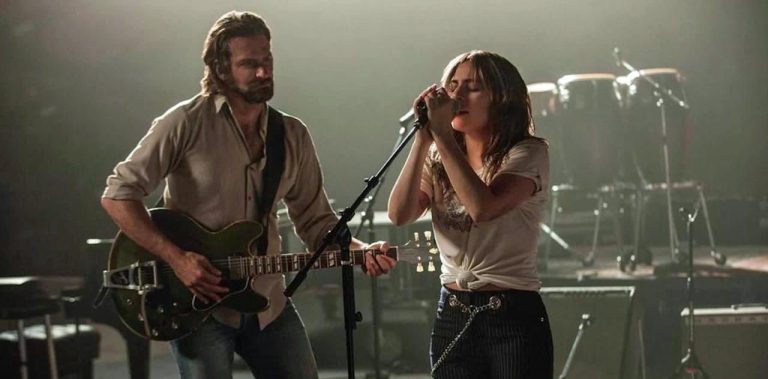
    Soon after their night together, Jackson summons Ally to one of his concerts and perform the duet “Shallow” on stage. It’s a charged scene that’s stunning to watch and makes the case for Lady Gaga in the role. She’s magnetic and emotes best through song—she’s more rocky with dialogue. Still, it’s a great film debut performance that is certain to earn her some Oscar attention

    A Star is Born
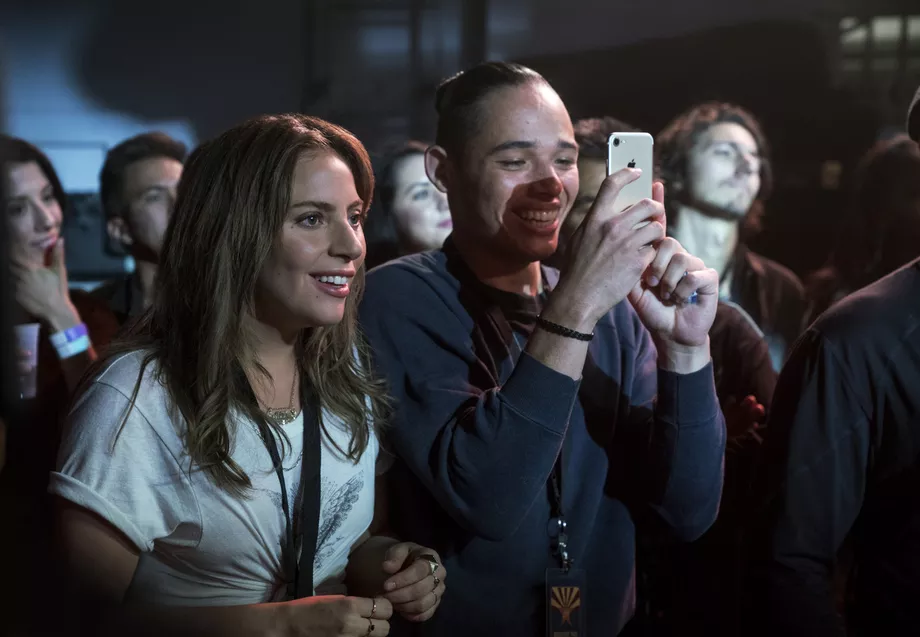
    Lady Gaga and Anthony Ramos in A Star Is Born.
     Clay Enos / Warner Bros.

    From there, the pair hops from place to place performing more and more songs and falling deeper and deeper in love. Soon, Rez (Rafi Gavron), a music producer takes notice of Ally and offers to help make her a star—and that he does. Soon she’s on the rise recording a full album—closer to Gaga’s mainstream pop that the country rock that we’ve heard in the movie so far—performing on SNL, and even being nominated for Grammys. All the while, Jackson’s star begins to fade as he slips deeper and deeper into drug and alcohol addiction. 

    Cooper has never turned in a more nuanced and emotionally grounded performance than this. Jackson’s deterioration is heartbreaking. However, the film itself doesn’t do the storyline justice. The pacing, which was such a strong suit during the first act, becomes the film’s enemy in its middle section. It feels as if there was a longer version of the movie that was hacked up to fit into an already robust 137 minute running time. The result is a film that starts and stops too much to connect with. However, digressions with Jackson’s brother Bobby (Sam Elliott) and friend Noodles (Dave Chappelle) are welcome digressions. 

    Thankfully, the final act finds its way back to the electrifying roots of the beginning and allows Cooper to turn in some of the best scenes his career. And stylistically he captures the wrought moments of Jackson’s addiction and recovery in increasingly interesting and cinematic ways. It all culminates in a final scene and shot that makes a great case for Lady Gaga as a movie star (and eventual Oscar nominee) as she performs the showstopping 11 o’clock number “I’ll Never Love Again”.

    A Star is Born is best when it forgets what it’s trying to be about and is just about the relationship at its core. Nothing more. When it occupies that space—like in front of the grocery store, on stage, at the piano, in a bar—the movie soars. Cooper and Gaga make a stunning onscreen pair and the ensemble, particularly Anthony Ramos and Andrew Dice Clay as Ally’s friend and father respectively, really shine. Cooper seems to be following in the footsteps of fellow actor turned director Clint Eastwood—he’s worked with him on American Sniper and The Mule—and his talents as a director seem similar. Though it’s flawed, A Star is Born is still an exciting directorial debut for Cooper who is assured a long and healthy career in Hollywood. 

    A Star is Born is now playing in wide release.

    ★★★½ out of five

  • ‘Thoroughbreds’ review — Coming-of-age has never been so diabolical

    ‘Thoroughbreds’ review — Coming-of-age has never been so diabolical

    Thoroughbreds is a twisted and darkly funny coming-of-age debut film about what it means to be evil

    Thoroughbreds is about evil. What makes someone evil? However, it begs that question in two ways. What makes someone evil—meaning what action or actions that a person takes that makes them considered evil—and what makes someone evil—in that what happens in someone’s genetics or upbringing that could make them evil. The film, however, is more opaque than that. Director Cory Finney’s first feature is a subversive coming-of-age that is deliciously twisted and bleakly hilarious in a way that we haven’t seen since Park Chan-Wook’s Stoker.

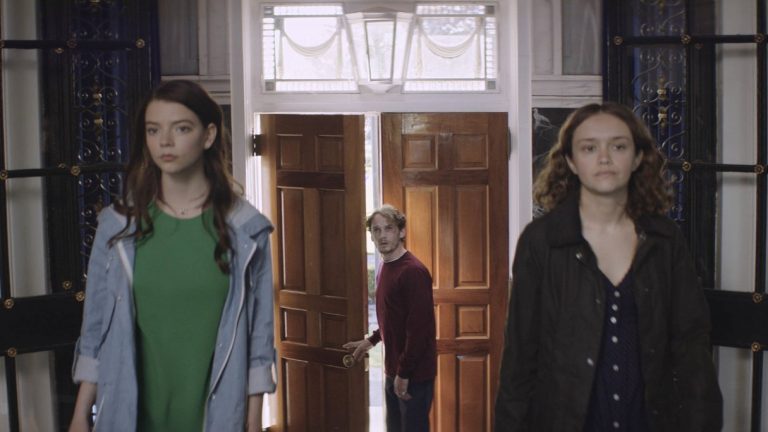
    The characters in Thoroughbreds come from privilege and imbue everything that comes with that. Lily (Anya Taylor-Joy following up her breakout roles in The Witch and Split) is a polished and intelligent boarding school girl who has countless prospects in life. Amanda (Olivia Cooke), on the other hand, could simply care less about what life has in store for her. She admittedly is completely devoid of emotion and can’t even process it in other people. However, the two were old friends and have again started to talk to each other, even though they both know that it’s because Amanda’s mother Karen (Kaili Vernoff) paid Lily to casually tutor her.

    The two girls haven’t spoken to each other in years since drifting apart after middle school—the way it always goes—and Lily is clearly hesitant to interact with Amanda after she euthanized her injured horse with nothing but a knife. And while their reunion is uneasy, the quickly bond over one thing: Lily’s contempt for her stepfather Mark (Paul Sparks). Amanda quickly dispatches an easy solution: murder Mark.

    Like most film noir’s, which Finley used as the basic structure, Thoroughbreds is interested in the morality of its character’s actions. Much of the film’s lean 90-minute running time is spent with the pair debating the absurd plan’s ethics in darkly funny exchanges. Cooke delivers Amanda’s dialogue with a pointed deadpan that always seems to get to Taylor-Joy’s Lily. Connecting back to the central question of the movie, Amanda is the makes question and Lily is the what question.

    “You cannot hesitate. The only thing worse than being incompetent, or being unkind, or being evil, is being indecisive.”

    — Amanda (Olivia Cooke), Thoroughbreds

    Eventually, the low-level drug dealer Tim (Anton Yelchin in one of his final film roles before his tragic death) is introduced into the story. His kicked assumed tough guy exterior mixed with a kick puppy dog endearment makes him an interesting third wheel in the story. He serves as a bridge between the two extremes of the girl. He may be doing something harmful—dealing drugs to teenagers—but he’s doing it for a noble purpose—pursuing his slice of the American dream. Yelchin’s performance just makes the sting of losing him even worse. Few actors could both endear themselves to an audience with characters that don’t always deserve it.

    The girls plan to use Tim as a hitman to murder Mark, who Sparks plays absolutely despicably with few redeeming qualities if any. But does he truly deserve to die for that? Instead of going for genre thrills, Thoroughbreds is more meditative than that. Case in point, a climactic scene is a single image that doesn’t change except for the sounds we hear just outside the frame. This may be Finley’s first film, but he’s extremely assured as a director.

    Thoroughbreds is a perfect example of various elements coming together to make a great film. Taylor-Joy and Cooke deliver incredible performances that act as foils to one another while Yelchin, though limited in screentime, acts as an emotional grounding for the film. The twisted but simple plot is expertly stitched together by Louise Ford and scored by Erik Friedlander—one of the best movie scores of the year. And at the core is a stunning feature debut by Finley. The movie flies by, but it’s impactful and daring. Thoroughbreds is one of the year’s best.

    Thoroughbreds is available to watch on Amazon ➤

    Karl’s rating:

  • ‘BlacKkKlansman’ review — Spike Lee’s response to Trump and hate

    ‘BlacKkKlansman’ review — Spike Lee’s response to Trump and hate

    BlacKkKlansman is an astonishing and often ridiculous true story that is terrifyingly relevant today

    BlacKkKlansman begins with a clip of Gone with the Wind where Vivian Leigh as Scarlett O’Hara navigates thousands of bodies during the aftermath of a Civil War battle. Then, it abruptly cuts to a Dr. Kennebrew Beaureguard (Alec Baldwin essentially assuming his SNL Trump persona) as he films—attempts to, at least—a PSA that explains why “scientifically” the white race is superior. It’s an off-kilter way to begin a movie that explores such a serious topic, but that’s just the way that Spike Lee operates. When Lee adds style to his films, it’s to also add substance. That’s what makes the film’s ending knock the breath out of you.

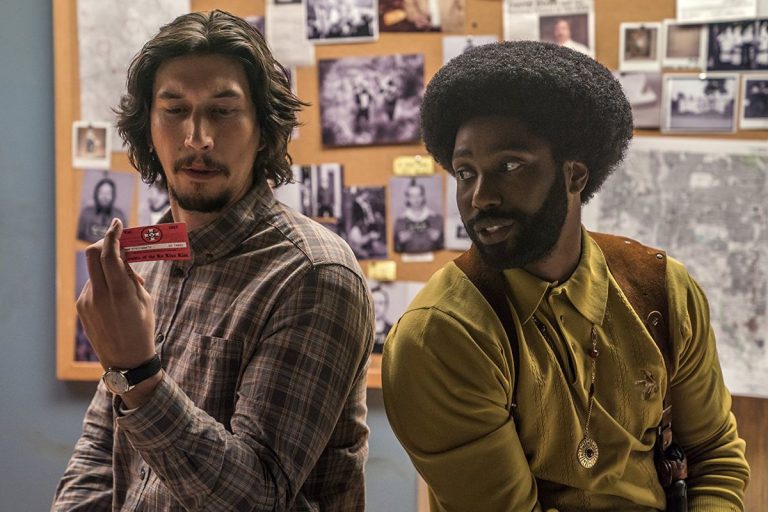
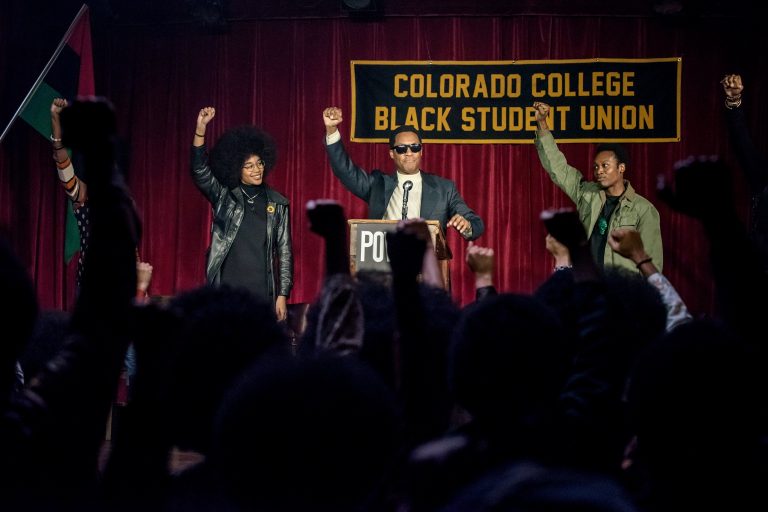
    One of the highlights of the film is an early scene where Ron Stallworth (John David Washington)—he is the first black detective in the Colorado Springs Police Department—is assigned to infiltrate a rally where civil rights activist and leader Kwame Ture (Corey Hawkins with an incredible one-scene performance) is delivering a speech. Since it is his first real assignment—he was been working in the records room taking racists taunts mostly from Landers (Fred Weller)—Stallworth is the consummate professional.

    In the speech, Ture emphasizes the importance of black pride in the fight for equality and the liberation of black people. “We have to stop being ashamed of being black. A broad nose, a thick lip and nappy hair is us and we are going to call that beautiful whether they like it or not,” he says. And all throughout his speech, images of the black faces that are listening intently with fire and hope in their eyes fade in and out of frame. It’s thrilling and emotional. Stallworth seems to be affected by the speech too. Most movies are lucky to have one of those moments. Lee is able to pull off several in BlacKkKlansman.

    Eventually, Stallworth is promoted to the intelligence division where he responds to an ad in the paper promotion the Ku Klux Klan. He calls the number listed and speaks with Walter Breachway (Ryan Eggold), the local president of the chapter. Stallworth is sure to list every race, religion, and people that the KKK despise and using their colorful language to describe each group. Impressed, Breachway invites Stallworth to meet. Of course, he can’t actually meet him, which is why Flip Zimmerman (Adam Driver) steps in as the physical embodiment of Stallworth.

    “Stop running away from being black.”

    — Kuame Ture (Corey Hawkins), BlacKkKlansman

    Whenever we see the Klan members, Lee portrays them like they are in a minstrel show. Some of what happens is slapstick and darkly hilarious. At one point, Felix (Jasper Pääkkönen), one of the more aggressive members of the chapter, forces Zimmerman—who is still posing as Stallworth and slowly making bonds in the group—to take a lie detector test. The ensuing scene between the two is some of the most sharply hilarious dialogue I’ve seen in a film all year. Another member, Ivanhoe (Paul Walter Hauser), might as well be wearing a dunce cap.

    However, the threat they pose is not underplayed. Felix, along with his wife Connie (Ashlie Atkinson, a standout), are planning an attack on the Black Student Union led by Stallworth’s love interest and activist Patrice (a criminally underused Laura Harrier from Spider-Man: Homecoming). Elsewhere, the Grand Wizard of the Klan David Duke (Topher Grace)—eventually Stallworth has several conversations with him and Zimmerman eventually meets—has political ambitions that terrifyingly mirrors our world today too closely. As one character puts it, it’s “another way to sell hate.”

    However, Lee also explores this true story based on Ron Stallworth’s memoir—he took creative liberties in several places—on the character level. Specifically, he explores identity as Stallworth tries to figure out how to both be a black man and a cop—a fact that Patrice finds hard to get over—and Zimmerman attempts to accept his Jewish heritage.

    In the end, BlacKkKlansman is greater than the sum of its parts. Though it comes in at a robust 135 minutes, I almost wish it was a little bit longer to tie up some of the plot threads that we pick up and drop along the way. However, the power of the story can’t be underplayed and that’s all thanks to Spike Lee’s masterful execution and knockout performances by Washington and Driver—both Oscar-worthy. After the truly stunning final sequence, an upside down American flag appears before fading to black and white. It’s Lee’s way of saying—and what one character says at a point in the film—”why don’t you wake up?” 

    BlacKkKlansman is available to rent or buy on Amazon!

    Karl’s rating:

  • ‘Crazy Rich Asians’ review — A step forward for represenation and rom-coms

    ‘Crazy Rich Asians’ review — A step forward for represenation and rom-coms

    Crazy Rich Asians is a big step forward for representation, but also a refreshing take on a genre that has needed a mainstream hit.

    Crazy Rich Asians is the first Hollywood studio movie to feature an all-Asian cast since The Joy Luck Club nearly 25 years ago. However, that’s not the only thing that it is doing after nearly that long. Despite being groundbreaking for its cast and subject matter, it also throws back to an age of Hollywood when romantic comedies were flashy, a little corny, but grounded by its characters.

    What’s so refreshing about the characters in Crazy Rich Asians is they are archetypes we’ve seen before, but because they’re pulled from different experiences they feel fresh. The perfect example is the protagonist, Rachel (Constance Wu). She was raised by a single mother who immigrated from China to the US to give her daughter a better life. That experience is something that has shaped Rachel and who she is today. As a first-generation Asian-American, even the mention of that backstory was a watershed moment for me.

    Rachel, an economics professor at New York University, is dating fellow professor Nick Young (a ridiculously charming Henry Golding). Nick asks Rachel to accompany him back home to Singapore to attend—and be the Best Man— at his best friend Colin (Chris Pang) and his fiance Araminta’s (Sonoya Mizuno) wedding. What he failed to tell Rachel is that he is the heir to his family’s massive Singaporean real estate developer fortune and they are—well, crazy rich. 

    In a subversion of many other romantic comedies—where Asian characters are often put into stereotypes or shown simply in the background of a date set at a Chinese restaurant—American Rachel is the outsider. Not quite Asian enough to be a part of the Young family’s world. It’s especially apparent as Nick introduces her to his mother Eleanor (a deliciously devious Michelle Yeoh), his grandmother Shang Su Yi (Lisa Lu), a parade of Aunties, and countless young eligible bachelorettes that despise Rachel.

    While there are people on her side like Araminta and Nick’s sister Astrid (Gemma Chan), who is having troubles of her own, it seems that almost everyone is weary of Rachel. At one point while at Araminta’s bachelorette party Rachel finds a dead and gutted fish on her bed with the message “catch this you gold digging bitch” on the wall. Yeah, these crazy rich Asians don’t play. And while a moment like that is shocking and the way she’s treated by Eleanor—most of which consists of icy stares and cool takedowns—and others could be over-the-top, it’s all told in a fun way. Crazy Rich Asians is essentially—and I say this in the best way possible—a soap opera.

    Crazy Rich Asians
    Michelle Yeoh, Henry Golding, and Constance Wu in Crazy Rich Asians.

    However, there is a lot of heart, as well. A large part of that heart comes from Rachel’s Singaporean college friend Goh Peik Lin (Awkwafina is hilarious and used perfectly) and her family (Ken Jeong and Koh Chieng Mun to name a few actors) who are all hilarious and Rachel’s mother Kerry (Tan Kheng Hua). 

    And while Rachel tries her best to win over Nick’s family—they’re constantly trying to convince him that Rachel doesn’t belong among them—she eventually learns that to beat them she has to join them. She returns Eleanor’s icy stares and cold takedowns and stunts on the other jealous girls at the wedding. The movie is tightly plotted and almost all of it is about relationships and communication—both spoken and unspoken. 

    The importance of diversity and telling a wide array of stories in Hollywood becomes so apparent in a movie like Crazy Rich Asians. While the story and movie have mass appeal, it’s the small moments and gestures that make it clear that this is made for an Asian audience—crazy rich and regular alike.  One of the moments—one of many that I smiled at simply because I recognized it from my own life—is a tense Mahjong game that also doubles oddly as a negotiation. And while the game furthers the story, what was more emotional was watching something that was such a large part of my childhood being reflected on screen.

    Fireworks, private island resorts, lavish balls, one of the most entertaining things about Crazy Rich Asians is how crazy rich the characters are. However, the most fascinating thing about the movie is how much it’s about the things that connect us as Asians—and not just culture. I think the expectations of Asian parents and their desire for their kids to be as happy and successful in life sometimes cause rifts in our relationships with our parents. That’s one part of what Crazy Rich Asians is about. The other part is about how our parents always have our best interests at heart—whether it’s Rachel’s mom’s decision to bring her to American or Nick’s mom’s desire for him to take over the family business. No offense to rom-coms in the past, but this is much more interesting than a straight-forward love story. Crazy Rich Asians is a step forward for representation, but also a step forward for an entire genre.

    Crazy Rich Asians is available to rent or buy on Amazon!

    Karl’s rating:

  • ‘Calibre’ review — Netflix’s suspenseful Scottish Highlands thriller

    ‘Calibre’ review — Netflix’s suspenseful Scottish Highlands thriller

    Calibre is a lean and oppressively dark thriller set in the Scottish Highlands that announces Matt Palmer as an exciting new filmmaker and Jack Lowden as a star

    Calibre at the beginning is interspersed with sweeping, silent shots of the Scottish Highlands. The shots are beautiful but foreboding and isolating. Slowly the film closes in. The shots get tighter and lighting gets darker. The movie is literally closing in on the main characters.

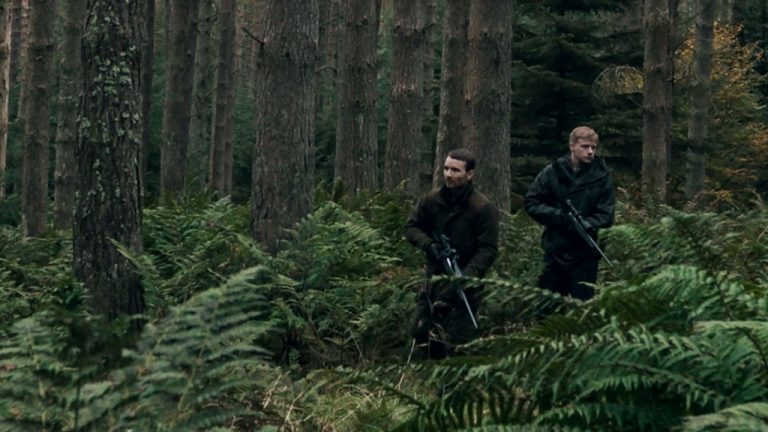
    The film, which is director Matt Palmer’s feature debut, is methodical and precise in its plot as two friends, Vaughn (Jack Lowden—last seen in Christopher Nolan’s Dunkirk—is brilliant here) and Marcus (Martin McCann), go on a hunting trip far into the Scottish Highlands.

    Palmer’s screenplay deftly sets up the relationship of the pair in the breezy first act of the film. Vaughn, who has fiance and baby on the way, and Marcus, a businessman with a cocaine habit, are old boarding schoolmates that have the air of friends that can pick up where they left off even after time apart.

    Their hunting trip takes them to a small village on troubled times held up and led by Logan (Tony Curran in a great performance). Though their drunken night on the town is light and fun despite some tension with the locals, the trip is anything but a relaxing reunion between schoolmates.

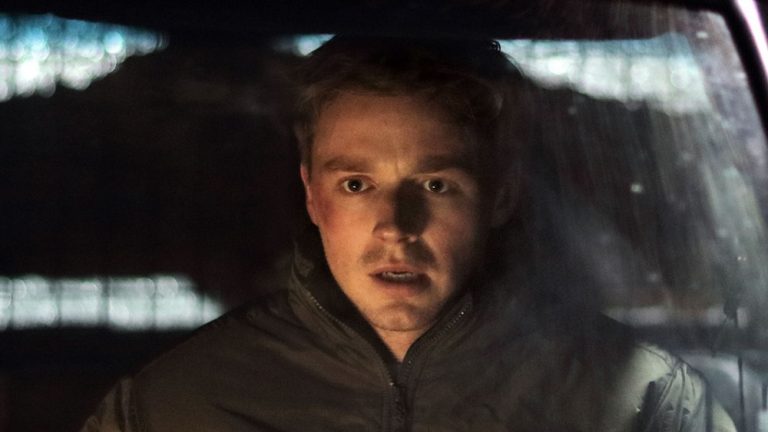
    Jack Louden in Calibre

    Something remarkable happens about 20 minutes into the film. In short, the hunting trip goes awry and someone ends up dead. From that point on, it’s nearly impossible to look away from the screen for most of the running time. Continually Calibre wounds tighter and tighter as new information and increasingly distressing events hammer at the pair before a bracing but inevitable finale closes out the taut thriller.

    Even more impressively, the most suspenseful scenes are the ones where it’s just characters talking. However, Palmer’s sharp writing and tight directing keep you at arm’s length so you’re constantly at the edge of your seat trying to decipher who knows what.

    Calibre flirts with folk horror like Kill List and, in an odd way, The Texas Chainsaw Massacre. They all follow polished city folk as they go up against rural counterparts. However, the more important similarity is the main characters’ series of decisions that lead them to their fates.

    Truly though, the story isn’t something we haven’t seen before. However, when a movie is told this effectively with a Hitchcockian flair—credit has to be given to Chris Wyatt’s masterful editing and composer Anne Nikitin simple but oppressive score—it’s hard not to be engrossed in Calibre.

    Calibre is now streaming on Netflix!

    Karl’s rating:

  • ‘The Nun’ review — Commits one too many sins

    ‘The Nun’ review — Commits one too many sins

    The Nun feels like too much of a blockbuster with a lack of plot and focus on jump scares to be an effective entry in this horror franchise.

    The Conjuring series has turned into an unlikely cinematic universe following the model that has made Marvel so successful. However, with The Nun, the fifth entry in the franchise, we’re already beginning to see some wear. The film, directed by Scottish director Corin Hardy, is on track to be the biggest film in terms of box office. It’s also the biggest film in the franchise in terms of scale, which is exactly what the problem is.

    Although, The Nun isn’t the first movie in the franchise to set off in the wrong direction. Many of the problems I had with this movie seem to have started in The Conjuring 2. That movie again covered the haunting of a family, but the excessive use of CGI, a lean more towards jump scares rather than atmosphere, and a complete lack of subtlety fail to recreate the success of the original. The Nun takes those problems and amplifies them. It’s the first movie in this series that feels like a blockbuster. And that’s not a good thing.

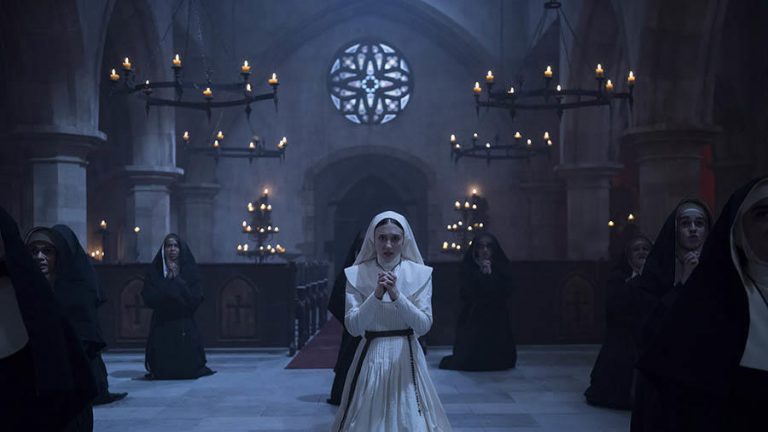
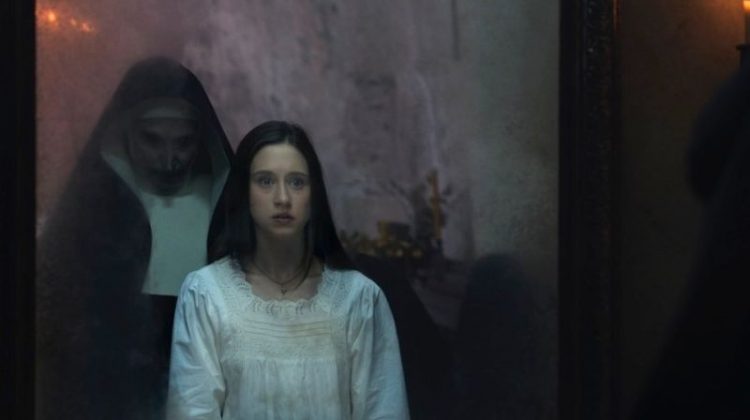
    Like any good cinematic universe, The Nun is tightly connected to the previous movies. The concept for this movie was introduced in The Conjuring  2 where a demonic nun called Valak terrorized the Warrens. In 1952 Romania, that same demonic nun is terrorizing an abbey of nuns, two of whom at the start are venturing into an area that a sign warns, “God ends here.” Eventually, one of those nuns is killed and the other commits suicide, which is what causes the Vatican to send Father Burke (Damián Bichir) and novitiate Sister Irene (Taissa Farmiga, sister of The Conjuring star Vera Farmiga) to the abbey to investigate.

    The investigation, of course, doesn’t last long as paranormal occurrences almost instantly begin as they arrive at the abbey with the help of a local named Frenchie (Jonas Bloquet)—his character is one of the main problems of the movie. Unlike most of the movies in the Conjuring universe, the scares begin almost immediately in the film without much build up. However, the scale of them is too large. Even worse, they use the same formula of shot, pan to the left, pan back, and of course, something appears in the background. For a while, it’s at least a fun experience, but that fades away quickly.

    To the movie’s credit, it is beautifully shot. Cinematographer Maxime Alexandre plays with light and shadow well to imbue at least some atmosphere into the movie where the direction and writing fail. There is one scene that works. Sister Irene, sleeping in the abbey after being unable to leave, wakes to find another sister kneeling facing away. Unbeknownst to Sister Irene, a crucifix begins to slowly turn upside down. It’s the slow and effective atmosphere based horror that made The Conjuring so successful. Quickly though, all the goodwill from that scene is taken away when the movie returns to its formula.

    Towards the end, The Nun tries to beef up its plot and eventually connects it to the rest of the franchise, but its sins are too many to ever make it interesting. It’s disappointing considering its predecessor Annabelle: Creation was such a successful entry in the franchise. There is promise for a franchise like this, however, if it continues in this direction there may be no hope to salvage it. There are glimmers of something good. Here’s hoping we can find it through all the evil.

    The Nun is available to rent or buy on Amazon!

    Karl’s rating:

  • ‘The House with a Clock in Its Walls’ review — A bizarre and scary family movie

    ‘The House with a Clock in Its Walls’ review — A bizarre and scary family movie

    The House with a Clock in Its Walls is too deeply weird to not at least admire the effort.

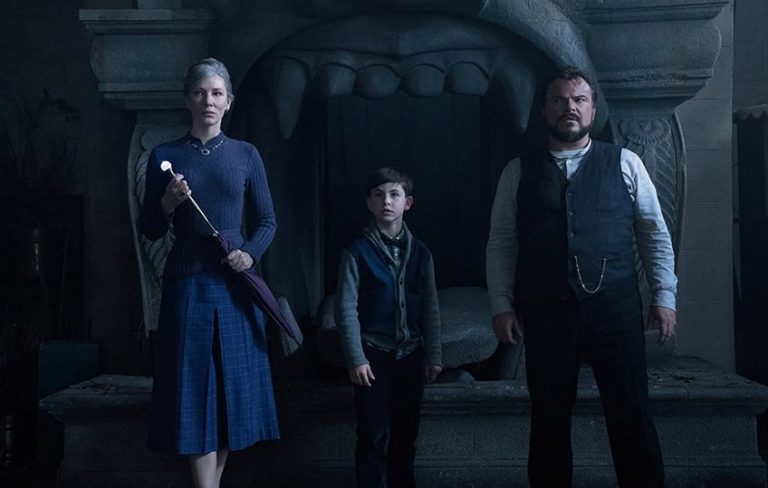
    Director Eli Roth is best known for his violent and gory action and horror movies like Cabin Fever, Death Wish, and the Hostel series. So it was surprising to see him tackle the a family-friendly PG movie based on the John Bellairs novel The House with a Clock in Its Walls. And his foray into this dark young adult fantasy is given some serious power with Cate Blanchett and Jack Black playing a witch and warlock trying to fight back an evil that has the potential to doom the world. However, the movie doesn’t match the amount of effort they are both—in particular, Blanchett—are putting in. 

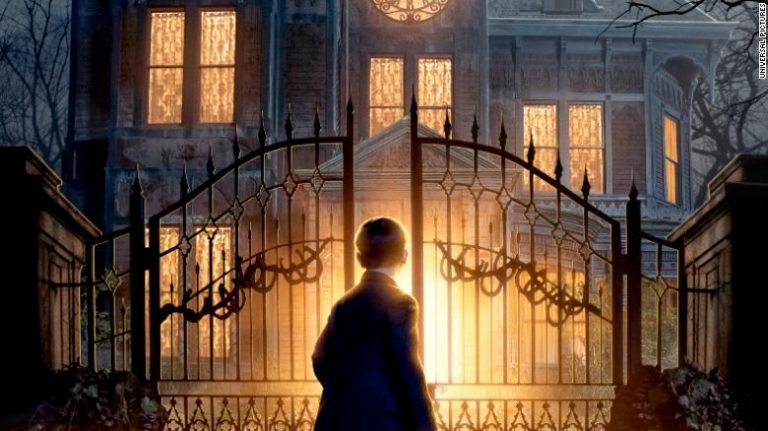
    That’s not for lack of trying. Roth makes interesting choices, especially for a supposedly family-friendly movie. Truly, The House with a Clock in Its Walls is too deeply weird to not at least admire the effort that went into making it. However, it feels like Roth is constantly fighting the urge to make the movie scarier and more intense than its PG rating allows. Still, though, the movie is told from the perspective of a wonderfully quirky kid, Lewis Barnavelt (Owen Vaccaro), a 10-year-old orphan who goes to live with his Uncle Johnathan (Black) in an old creepy house in the fictional town of New Zebedee, Michigan in 1955.

    During his first few nights in the dark maze of a house, Lewis meets Florence Zimmerman (Blanchett), Jonathan’s purple-clad and fabulously dressed neighbor, and encounters some oddities while exploring—a stain glass window that changes, suit of armor that moves, a living chair that acts like a dog. However, the oddest thing about the house is that within the walls comes the foreboding ticking of a clock left by the previous tenant and Jonathan’s friend Isaac Izard (Kyle McLaughlin) and his wife Selena (Renee Elise Goldsberry). The purpose of the clock is a mystery until the true nature is uncovered and terrifying events unfold within the house. 

    Blanchett, Black, and Vaccaro make an interesting trio to follow and root for. The actors do most of the heavy lifting where the movie falters, especially as it becomes more repetitive with whimsical magic as Lewis studies magic under his uncle and nightmarish imagery—at least for the young audience. The conception and design of the world are great. Particularly the costuming and production design. Though it’d be great to venture further than the house and Lewis’ school. Kids seeing the movie are sure to be entranced—and scared—by the imagery. However, there is less for the adults to latch on to.

    The pacing becomes an issue during the middle portion, which feels like it drags. There is some reprieve, though, when the movie focuses more on the trio’s relationship as a family unit of “black swans” as Jonathan puts it at one point. Blanchett does a lot to elevate her character’s storyline with much-needed subtlety. However, those moments are fleeting and instead, we get progressively weirder and creepier scenes as the mysterious clock in the walls winds down. And when Roth lets loose and makes a dark fantasy rather than a kids movie, it works well. In one scene, Blanchett head-butts a demonic jack o’lantern that spews adhesive pumpkin guts. Yes, it’s as trippy as it sounds. 

    It’s that pure unadulterated weirdness that makes The House with a Clock in Its Walls interesting to watch. Tonally, that’s what the movie needed to commit to. At one point, Florence even says about Lewis, “wow, he is weird.” And yes, Lewis is a properly weird goggles-wearing protagonist. That should have leaked more into the rest of the movie. And more demonic jack o’lanterns too.

    The House with a Clock in its Walls is available to rent or buy on Amazon!

    Karl’s rating:

  • ‘Heavy Trip’ review — Ridiculous and lively heavy metal comedy

    ‘Heavy Trip’ review — Ridiculous and lively heavy metal comedy

    Heavy Trip is a joyous and affectionate love letter to the outcast that is almost impossible to resist. 

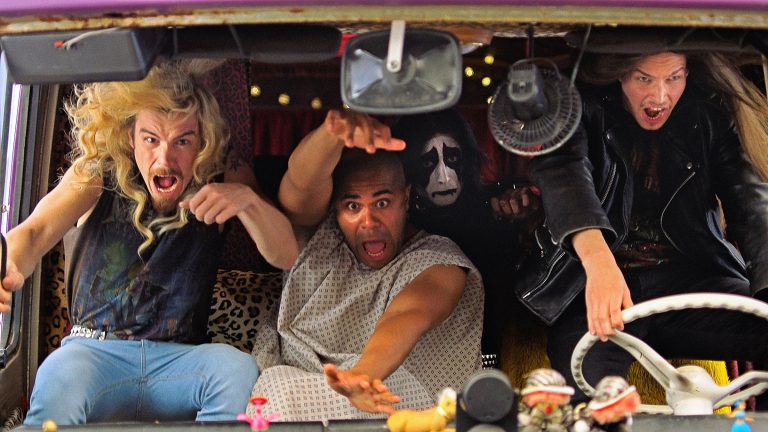
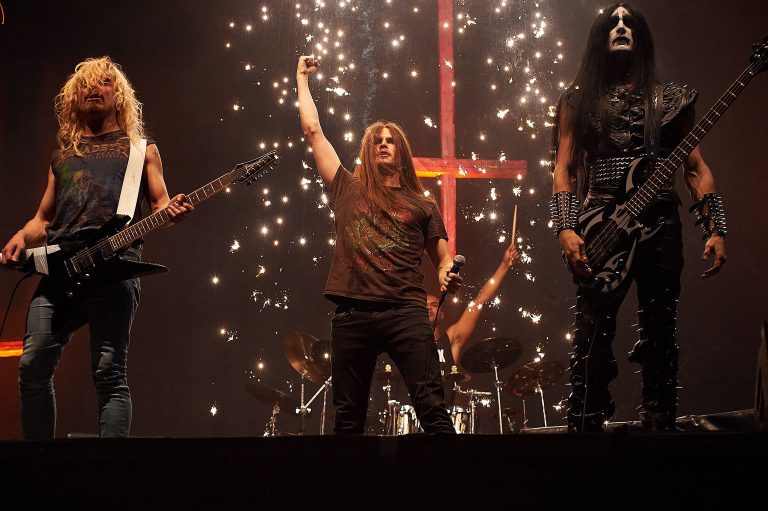
    Heavy Trip—also known as A Band Called Impaled Rektum—is billed as a heavy metal comedy. And it completely is. Told with the same off-beat humor as Taika Waititi’s best—Hunt for the WilderpeopleThor: RagnarokHeavy Trip follows wannabe Finnish heavy metal band Impaled Rektum as they finally, after 12 years of practicing in the basement of a reindeer slaughterhouse (so metal) could be performing their first gig. The catch is that the gig is all the way at a heavy metal festival in Norway—and may or may not exist.

    Lead singer Turo (Johannes Holopainen) tries his best along with his bandmates to realize their dream to be a “symphonic, post-apocalyptic, reindeer-grinding, Christ-abusing, extreme war pagan, Fennoscandic metal” band, as bassist Pasi (standout Max Ovaska) often puts it. The movie is a parody of metal culture through and through, but directors Juuso Laatio and Jukka Vidgren—the first feature for both—aren’t laughing at the metalheads, they’re laughing with them and admiring them.

    Not only that, the members of Impaled Rektum are the true heroes of the story. Drummer Jynkky (Antti Heikkinen)—the heart of the group—is so optimistic in their pursuit of success that it’s hard not to root for them through all their antics. Of course, not everyone wants to see the band succeed. The citizens of the band’s rural town aren’t keen on the group’s fabulous long hair, leather jackets, and propensity towards music that sounds like a reindeer carcass stabbed with a knife run through a meat processor—and that’s exactly how guitarist Lotvonen (Samuli Jaskio) accidentally discovers the band’s sound. 

    Heavy Trip
    Samuli Jaskio, Johannes Holopainen, and Max Ovaska in HEAVY TRIP. Courtesy of Music Box Films.

    Eventually, after an unfortunate incident involving the promoter for a huge metal festival in Norway and a vat of reindeer blood—yeah, this movie is metal—the band starts to find some confidence. Especially the shy Turo who finally musters up the courage to ask out his crush Miia (Minka Kuustonen) despite her police captain father’s protests. Naturally, he’s the band’s number one enemy.

    Heavy Trip isn’t something we haven’t seen before. We follow a group of outcast dorks on a mission to become something more. It’s a story we’ve seen time and time again. That’s what the movie is for much of its first third. For its last third, it turns into a road trip movie (and chase) with one of the funniest scenes I’ve seen this year involving the Norwegian border patrol and a bachelor party with a questionable theme. The second third has some structural issues that prevent it from reaching the height of its beginning and end, but Heavy Trip is a joyous and affectionate love letter to the outcast that is almost impossible to resist.

    It’s a blast watching Impaled Rektum find themselves through increasingly ridiculous—and increasingly metal—hijinks like exhuming a body, helping a mental patient escape, and even commandeering a group of Vikings. The quirky slapstick humor works perfectly with the group’s metal aesthetics and the entire cast is completely tuned into the movie’s off-beat wavelength. Not everyone will be able to find the rhythm that Heavy Trip is drumming, but once you do it’s futile not to drum along.

    Heavy Trip is available to rent or buy on Amazon!

    Karl’s rating:

  • ‘First Man’ review — Claire Foy steals this Neil Armstrong biopic

    ‘First Man’ review — Claire Foy steals this Neil Armstrong biopic

    First Man is a de-glamourized version of Neil Armstrong’s reluctant journey to becoming the first man on the moon.

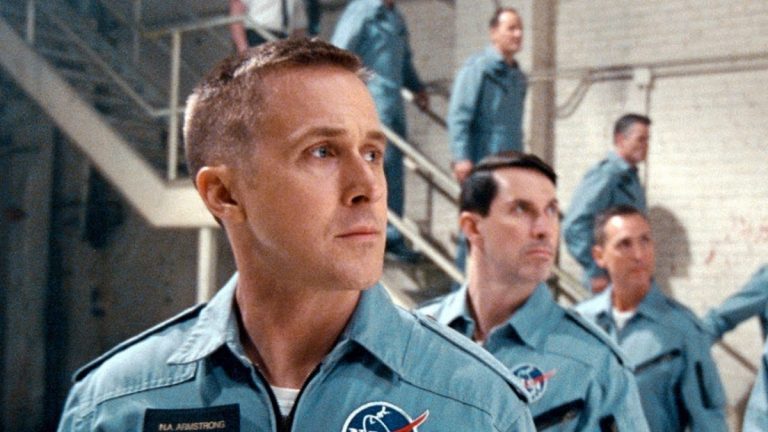
    What’s remarkable about Neil Armstrong (Ryan Gosling) is how unremarkable he is. He’s quiet. Almost shy. Sometimes he’ll crack a joke or offer a closed mouth smile, but he internalizes most of his emotions. There are a few moments where we see them break through. Early on he breaks into tears over the death of his daughter. Later, his anger shows for a flash after he finds out some of his friends were killed in a shuttle accident. Gosling does incredibly well portraying Armstrong’s steely resolve in the wake of such adversity in First Man. But the movie is careful not to sanctify him. Armstrong was a normal man doing an extraordinary thing. But he himself didn’t think it that extraordinary. He was truly a reluctant American hero, as he’s often billed. 

    First Man is a change of pace for Oscar-winning director Damien Chazelle. After directing and writing three musicals—Guy and Madeline on a Park Bench and the Oscar-winning Whiplash and La La Land—he tackles this biopic from a script by Josh Singer, the Oscar-winning screenwriter of Spotlight and The Post, with a lot more restraint than his other projects. Though he is known for impressive Steadicam shots, kinetic editing, and hyperrealism in his films, First Man almost does the exact opposite. Much of the movie is shot handheld, which comes specifically in handy during the breathtaking flight sequences. Aided by the superb sound mixing and Chazelle’s knack for visual storytelling, the sequences feel dangerous and nightmarish. It truly makes you think who in their right mind would try to go to space. 

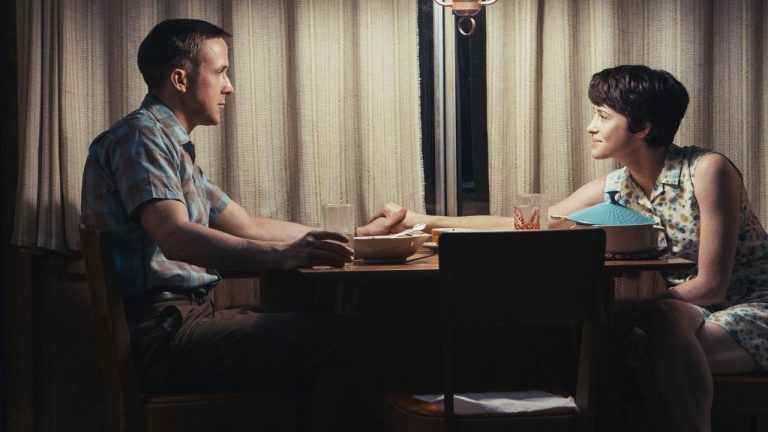
    It’s something that Janet (Claire Foy), Armstrong’s wife, struggles with and ultimately understands. She knows why he’s obsessed with space and getting there, even if it’s heartbreaking for her. Foy owns this movie. So many biopics about famous men always have the doting wife archetype that often is relegated to sitting in the background and worrying about her husband. In First Man, Foy doesn’t just support him. She challenges him. She makes him take responsibility for his obsession with space. In the best scene of the movie—surely to be her Oscar scene—she confronts him for not explaining to their sons that he might not return from the trip. It’s fiery, focused, and, most importantly, realistic.

    First Man
    Ryan Gosling and Claire Foy in Damien Chazelle’s First Man

    Unlike Hidden Figures in 2016, which portrayed the women of color behind another NASA accomplishment—it was nominated against Chazelle’s La La Land that year—First Man isn’t a Hollywood-ized version of the story. That’s not to say that makes Hidden Figures a lesser movie—I quite liked it. But in Hidden Figures, you want to see Taraji P. Henson be the hero and succeed and beat racism. First Man almost does the opposite and tries to portray Neil Armstrong the way that many people have described him. That stripped down version doesn’t make him the most compelling protagonist, but it matches the gritty realism of the rest of the film. 

    That realism is what makes every flight sequence phenomenal to witness. It’s no wonder that Chazelle loves portraying obsessed men because he is clearly obsessed with the details. He pays attention to everything. From the smallest bolt holding a ship together to the tempo of Justin Hurwitz’s fabulous score. It’s all to communicate that space—and space travel, specifically—is terrifying and insane. The reason Foy is so successful in this film is that she is the audience surrogate. She questions why anyone would be crazy enough to attempt what Armstrong and the rest of NASA are attempting. That is until the moon landing sequence. 

    The vastness and nothingness of space swallow up Armstrong and Buzz Aldrin (Corey Stoll) as they finally make their approach on the surface of the moon. Linus Sandgren’s cinematography brilliantly uses the negative space of, well, space, to emphasize the emptiness of it all while Hurwitz’s score makes us feel the intensity and danger of the task. However, when the sequence comes to a head in its climactic moment, it’s not about winning the space race—the flag planting being omitted was a point of controversy for some reason—or patriotism. It’s about Neil’s grieving process. That sequence and the film’s final moments alone are worth the price of admission.

    First Man is now playing in wide release.

    Karl’s rating:

  • ‘Bohemian Rhapsody’ review — Rami Malek is electric as Freddie Mercury

    ‘Bohemian Rhapsody’ review — Rami Malek is electric as Freddie Mercury

    Bohemian Rhapsody doesn’t do much to break the mold of the typical biopic, but it boasts a breathtaking performance from Rami Malek as Freddie Mercury.

    Bohemian Rhapsody isn’t about the creation of Freddie Mercury. Yes, the movie starts with Mercury as a baggage handler before joining a band that would ultimately become Queen. However, the movie still doesn’t tell us where that famous—and infamous—persona came from. That’s because Freddie Mercury was never created. He just existed. Though the film tries to explore Mercury’s struggle with his identity by introducing us to his family and their own struggle to connect with Freddie, any introspection is ultimately put aside in favor of hitting various plot points. 

    Even then, those plot points like the creation of the eponymous “Bohemian Rhapsody” and the band’s famous Live Aid performance in 1985 are captured with uproarious energy and performed impeccably by Rami Malek whose portrayal of the rocker is breathtaking. In particular, Malek captures the physicality of Mercury in performance with precision and commands the frame—it’s useful considering he’s in every shot. However, this isn’t just the story of Mercury, it also concerns the people around him during his meteoric rise.

    In particular, the film tracks his relationship and marriage to Mary Austin (Lucy Boynton). Through her, we investigate Freddie’s loneliness and sexuality. In one scene he comes out to her as bisexual, to which she responds that he is just gay—it feels a bit like bi erasure, especially since his true sexuality was never known. However, their scenes always felt the most genuine. Against the glitzy energetic patina of the Queen scenes, these “domestic” scenes feel a lot more genuine, albeit still an arm’s length away like most biopics. 

    Bohemian Rhapsody
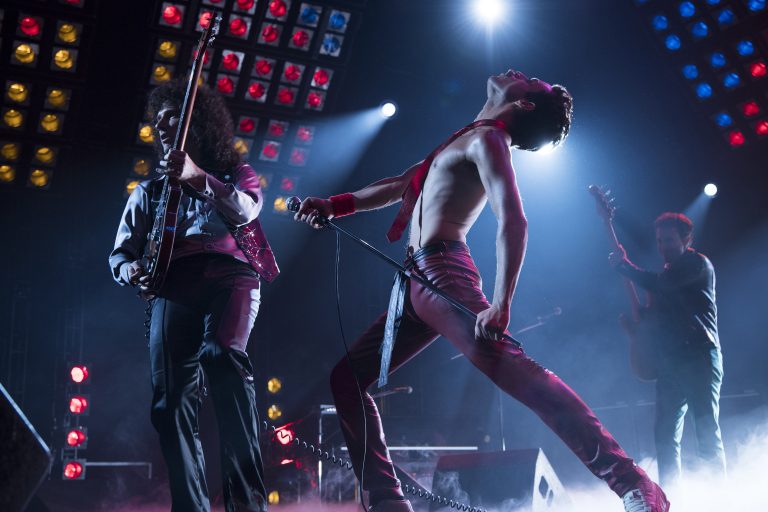
    L-R: Gwilym Lee (Brian May), Rami Malek (Freddie Mercury), and Joe Mazzello (John Deacon) star in Twentieth Century Fox’s BOHEMIAN RHAPSODY. Photo Credit: Courtesy Twentieth Century Fox.

    The other person that Freddie has much one on one time is his personal manager and lover Paul Prenter (Allen Leech). Contrary to early reports, Freddie’s sexuality is a main throughline in the film and drives his internal struggle about identity. Leech does well with what he is given—he’s a talented actor best known for his role in Downton Abbey—but the character’s arc feels choppy and again feels like it’s more beholden to the plot than any character development. 

    What would have been more interesting—and something we get a small taste of—is the dynamic between the members of the band—Brian May (Gwilym Lee), Roger Taylor (Ben Hardy), and John Deacon (Joseph Mazello). Like most “getting the band together” movies, of which Bohemian Rhapsody certainly pulls from, there is that moment where the band breaks up or has a falling out. Of course, in this story, it’s based off a real moment. However, the change from friends trying to make it in the industry to an egotistical frontman versus his bandmates is sudden and pulls out the emotional weight behind the finale.

    I don’t want to sound overly negative. Bohemian Rhapsody is well-crafted and exhilarating at times. It doesn’t do much to break the mold of a typical biopic, but thanks to Malek’s performance and the fact that Freddie Mercury is a fascinating subject for a film, it is at least entertaining to watch. The story of Mercury and Queen feels like the stuff of legend. Bohemian Rhapsody does a little to humanize it. But what it also does is remind us how larger-than-life Queen really was. Every time we get to another “how the song was made” scene—there are more than a few—it’s a reminder of another hit that is still in the cultural zeitgeist. For that, Bohemian Rhapsody is worth a watch. 

    Bohemian Rhapsody will be released in theaters on November 2nd, 2018. 

    Karl’s rating: