Blog

  • Blade Runner 2049 review — An instant classic worthy of the original

    Blade Runner 2049 review — An instant classic worthy of the original

    Denis Villeneuve’s Blade Runner 2049 is a visually stunning and emotionally rich sequel that stands equally with the 1982 original

    Blade Runner 2049 is an all-out assault on your senses. Famed cinematographer Roger Deakins does some of his best work to date in the film — a statement that could be applied to each one of his films. He douses the familiar grey landscapes of the 1982 original with sweeping amber tones and bright neons that contrast the movie’s darker tone. More importantly, the dazzling visuals coupled with stunning CGI help totally immerse you in the Blade Runner universe. It’s almost overwhelming but also begs to be seen on the biggest screen possible.

    With the world already set up beautifully in the 1982 original, Director Denis Villeneuve doesn’t have to do anything but apply a new story to explore the existential themes that Ridley Scott started. However, refreshingly, the movie doesn’t lean on the original. The nods to the original will be enough to stave the appetite of the Blade Runner-purists. But it surely stands on its own similar to the way Aliens and Terminator II build on the original rather than become bogged down by it.


    The last four films by Villeneuve have made my best-of-the-year list for their respective years and more likely than not, he’ll be making a return this year as well. As a filmmaker, he’s refined, stylish, and cerebral much like Christopher Nolan. However, unlike early Nolan films, Villeneuve has always been a humanist. So, a story about the meaning of humanity — similar to the story about parenthood and morality in Arrival — is a perfect canvas for him to paint with.

    Taking place 30 years after the original, Blade Runner 2049 portrays the world as one that has progressed from the point we last saw it — or better or worse. The oceans have risen, Los Angeles has somehow become even more overpopulated, and San Diego has turned into a literal garbage dump. More importantly, though, Androids have made a return to the planet. The new Nexus 9 model replicants, which are designed by the Wallace Corporation to obey like never before, are legal on the planet due to a limited-lifespan determined by their owner. Some are used to retire older models. They’re still called blade runners. K (Ryan Gosling) is a replicant blade runner — this is not a spoiler, it’s revealed almost immediately — who works for the LAPD under Luitenent Joshi (Robin Wright — perfectly cast here).

    Though much of K’s storyline has to do with a plot point that I won’t discuss — the spoiler prevention on this movie was marvelous — a huge interest is placed on his relationship with Joi (Ana de Armas), his holographic girlfriend. Through her, the movie explores a lot of the character motivations that drove the replicants in the original: the desire to be human. As real as she may seem and intimate as their interactions become, there’s always that slight transparency — literally and figuratively — that reminds K that it isn’t all real. But what if it is? That’s the question that this film — and the original — always pondered: do android dream of electric sheep?

    That question — it’s also the title of the Phillip K. Dick novel the original was based on — is what makes Blade Runner 2049 a great movie. All great sci-fi ponders some existential question. However, Blade Runner 2049 is hypnotic in its exploration. Some scenes — like one where K has sex with Joi via a hired prostitute similarly to the scene in Her. That Spike Jonze movie is actually an adept comparison to some parts of the movie. Specifically with the scenes between Joi and K. de Armas, like Scarlett Johansson in Her, gives her non-human character the most humanity out anyone else in the movie, mostly with her voice. There is warmth and depth that emulates genuine care for K. It’s a breakout performance.


    Like the original, Blade Runner 2049 explores the company that creates the replicants. Niander Wallace (Jared Leto — he gives quite an impressive performance), though, unlike Eldon Tyrell, his aspirations are terrifying. He functions almost like a Frankenstein-like mad scientist with a God-complex that has never been put in check. In two pivotal scenes, Leto essentially gives an extended “evil plan monologue” that would give any Bond villain a run for his money. More terrifying is his replicant assistant Luv (Sylvia Hoeks — her performance harkens back to Rutger Hauer’s in the original) who is tasked with carrying out that plan. But even though the Wallace Corporation is the big villain of the story, the more emotional and human elements are the real foundation of success for the film.

    Every year, more and more sequels and reboots have popped up with aspirations for easy money with huge opening weekends. So, it’s incredibly refreshing to see a sequel that is actually trying to challenge its audience. With a nearly three-hour running time, it certainly puts up a fight. However, leaving the theater following the final shots is a euphoric experience. To call Blade Runner 2049 a satisfying experience would be an understatement. It’s the reason we go to movies, to feel something — whether its the rumble of Hans Zimmer and Benjamin Wallfisch’s score or the soaring emotions when we finally see Harrison Ford‘s Decker back on the screen. It’s an experience from beginning to end. And the end feels like a beginning in the best way possible.
    ★★★★½ out of 5


    Watch Blade Runner 2049 on Amazon!

  • The Florida Project review — A heart filled look at childhood

    The Florida Project review — A heart filled look at childhood

    The Florida Project is a warm, sun-drenched look at the magic and darkness of childhood in America’s poverty stricken areas

    At the end of The Florida Project, Sean Baker’s follow-up to his acclaimed 2015 film Tangerine, I just sat in the dark theater watching the silent end credits roll by. So did most of the people in the theater. It’s the kind of ending that hits you like a ton of bricks. It’s surprising considering the movie’s opening credits play against a pastel pink wall and scored with Kool & the Gang’s “Celebration.” The first half of the movie as a whole is splashed with colorful pastels, bright blue skies, and whimsical cinematography that would make Wes Anderson blush. However, as the story progresses around our young protagonist, those colors seem a little less bright, the skies give way to rain, and we begin to tighten in with hyper focus on our characters.

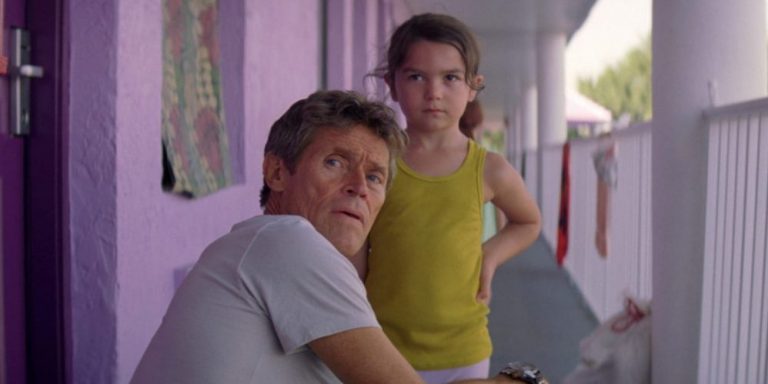
    Taking place in the Kissimmee, FL, which is basically the underbelly of the tourist and theme park areas of Orlando, Baker, similarly to Tangerine, explores the people that the rest of America has forgotten. In this case, it’s the residents of a strip of seedy motels that stand in the shadow of the mega resorts. Though an occasional tourist passes through, the motel is mostly inhabited by poor families including Moonee (Brooklynn Prince) and her mother chronically unemployed mother Halley (Bria Vinaite — a great debut performance). Moonee runs through the overgrown landscape with her friends tormenting the residents and tourists, yet are blissfully unaware of how truly devastating the area and people are. To them the motel — named “Magic Castle” no relation to the Magic Kingdom — is truly magical.


    However, Moonee’s life of getting food from Halley’s friend Ashley’s diner job or churches and helping her mom sell perfume to tourists outside upscale resorts is anything but magical. Though we’re completely aware of the life the Moonee is living, Baker does an incredible job portraying the kind of ignorance only a child experiences. One that shields them from the hardships around them, even when they’re so close to home. The first half of the film is largely episodic. We watch Moonee and her friend Scooty (Christopher Rivera) and later Jancey (Valeria Cotto) as they beg for money outside an ice cream shop, run through abandoned condos, and torment the motel’s manager Bobby (Willem Dafoe — a solid performance by the veteran actor).

    But like all good things, it has to come to an end. However, the brilliance of The Florida Project is that Moonee, like most kids, is so unaware of how bad things are that nothing ever seems different. Of course, for Halley, desperation sets in as money runs dry and each passing day reveals a new challenge to get through. Moments of joy like watching fireworks in a field or flipping of helicopters full of tourists are unsecured with dread. That partially has to be credited to Baker, but also to Vinaite, who makes Halley more than a one-note incapable young mother.

    For that reason, Bobby takes a particular interest in helping Halley and Moonee. Especially since his relationship with his son (Caleb Landry Jones who was seen earlier this year in Get Out) is strained at best. He works hard to bring some relief to the pair’s plights. Though, they run deeper than he even imagines. Baker proved that he was a director that understands characters and their growth with Tangerine, but with The Florida Project he shows that he’s a subtly innovative filmmaker. In one heartbreaking sequence we watch as Moonee takes a bath on three separate occasions. The first seems joyful and innocent enough. The second feels more empty. And the third is gut-wrenching. But he’s not obvious with the progression. In many instances you don’t realize the path he’s going down until you’re at the end. But then it all seems more brilliant for it. An extended sequence where Moonee eats breakfast at one of the upscale resorts — they sneak in of course — focuses completely on the joy that she’s feeling. But in a single cut, we realize that the joy is only in Moonee’s point of view. And that there’s real darkness behind it.


    Prince gives one of the best performances by a young actor in recent memory. Like Jacob Tremblay in Room, she is able to tap into the well of emotions that kids feel, but don’t completely understand. But outside of that, she also shows the wonder in the simplest things without feeling like she’s performing. She’s remarkable. She also makes the movie a complete joy to watch. Even though with each passing scene you know that things aren’t as bright as they seem, your adventures with the kids are a sun-drenched romp through their kingdom.

    The Florida Project isn’t a critique on the poor or an indictment of the system that makes it rampant in this country. Instead, it’s a portrait of one slice of poverty in the United States and the difficulties that come along with it. More specifically, it explores adolescence in one of those situations. But the way that Sean Baker explores it is so innovative and exciting that it has to be one of the best directorial efforts of the year. Kids are blissfully ignorant — until they’re not. The final minutes of The Florida Project so beautifully show that in one of the best movie endings I’ve seen this year. It’s one filled with hope and warmth, as is the rest of the movie. If you take anything away from The Florida Project, it’s that there is magic in childhood and it’s one of the most important things to happen to you in life.

    ★★★★½ out of 5


    Watch The Florida Project on Amazon!

  • Wonder review — Get ready to laugh and cry during this feel-good movie

    Wonder review — Get ready to laugh and cry during this feel-good movie

    Wonder will win over audience’s affection with its charming take on R.J. Palacio’s novel of the same name.

    Wonder is an inspirational poster of a movie, which I say in the least cynical way possible. Like director Stephen Chomsky’s last movie The Perks of Being a Wallflower, Wonder knows how to emotionally invest its audience in its characters and story. You cheer when it wants you to cheer, laugh when it wants you to laugh, and cry when it wants you to cry. In a lesser movie, it might have felt like manipulation or washed with sentimentally. But Wonder earns the emotions it makes you feel, even if it has to push you just a tad.

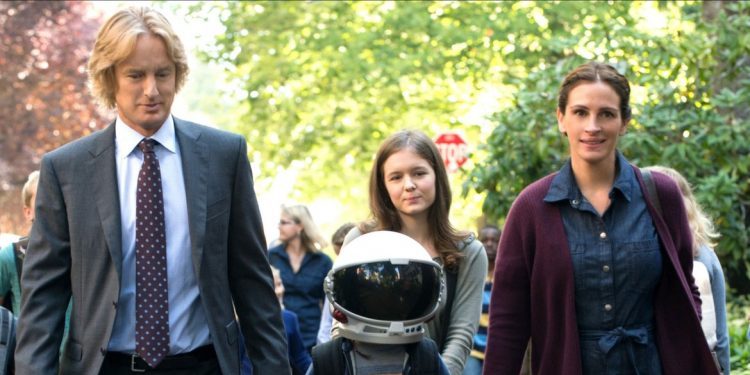
    Based on J.C. Palacio’s novel of the same name, Wonder follows 10-year-old August “Auggie” Pullman (Room’s Jacob Tremblay) as he navigates his first year of middle school after being homeschooled by his mother, Isabel (Julia Roberts). That in itself already sounds like the plot of a movie. But there’s one thing complicating Auggie’s transition into a “real school.” Auggie was born with a facial deformity that required 27 corrective surgeries. Still, he looks anything but ordinary. But Auggie is just a normal kid, a fact that he tries to emphasize in his narration — he loves Star Wars and video games and wants to be an astronaut. The other kids just don’t know it yet. Up until now, Auggie has worn a space helmet whenever he was in public. So, the jump from near isolation to school is anything but easy for him. However, it’s a decision that Isabel and Auggie’s father Nate (Owen Wilson) had to make sooner or later.


    When starting school, Auggie has some allies — affable school principal Mr. Tushman, Daveed Diggs’ supportive and insightful Mr. Browne, and Jack Will (Noah Jupe), who becomes the first student to truly befriend Auggie — and some enemies — mainly the school bully Julian (Bryce Gheisar). Wonder makes you incredibly sympathetic to Auggie’s plights. Not just because of what is happening to him on screen, but because of the Tremblay’s incredible effective performance. His quiet, downturned expression and high, quiet voice make it incredibly easy to sympathize with him. But more importantly his defeatist attitude towards the cruelty from kids, which he is hurt by, but fully expected, makes you empathize with his loneliness. Even if the movie is an amplified version of it.

    And while the movie starts off solidly in Auggie’s point of view, it shifts to his sister Via’s (Izabela Vidovic) point-of-view. Similarly to Lady Bird, we quickly realize that this movie is not only about Auggie, but the people surrounding him. Via knows that Auggie is the center of her parents’ universe, but she’s okay with that. She’s learned to deal with her own struggles on her own, but as she approaches this new year of school, it becomes harder for her, especially since her best friend Miranda (Danielle Rose Russell) has suddenly stopped talking to her.


    Wonder, the book and the movie, is targeted at kids. And this shifting point-of-view — we eventually get stories from the perspective of Via, Miranda, and Jack Will — is a clearly a way to help kids learn the lesson of empathy. Chomsky’s The Perks of Being A Wallflower is so effective because he has an understanding of the way that young people think and feel. Particularly the feeling of loneliness. In Perks, the main character’s aching longing for connection is palpable and so is Auggie’s. And like Perks, the way that the people around the main character interact is almost as important as the main character’s journey.

    I don’t want to say that if you didn’t like Wonder, then you don’t have a heart. But this is really one of those movies that can cheer anyone’s day up. It’s really the feel-good movie of the year. That’s not to take away its cinematic achievement. Chomsky is a good director with an ability to imbue emotion on his audience. And just when you think it couldn’t get any better, the movie ends with a Passion Pit song.

    ★★★½ out of 5


    Wonder is available on Amazon!

  • Three Billboards Outside Ebbing, Missouri review — Hilarious, but problematic black comedy

    Three Billboards Outside Ebbing, Missouri review — Hilarious, but problematic black comedy

    Three Billboards Outside Ebbing, Missouri is a bleak black comedy that boasts some of the best performances and writing of any movie this year.

    “Raped while dying.”

    “Still no arrests?”

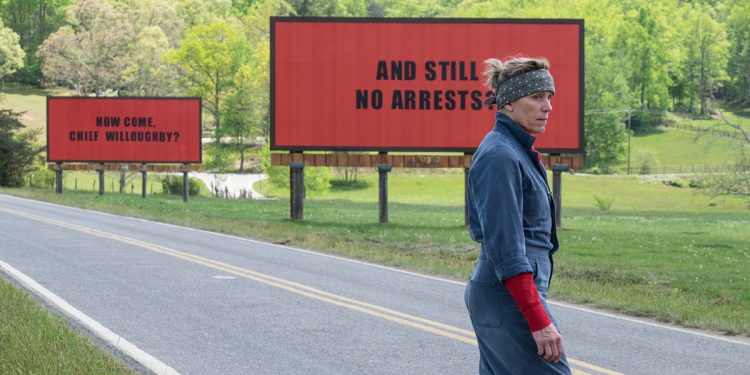
    “How come, Chief Willoughby?”

    That is what is written on the titular billboards in Three Billboards Outside Ebbing, Missouri. And while it seems like a simple targeted message, the entire small town of Ebbing is sure going to know about it. The reason Mildred Hayes (Frances McDormand) puts up these billboards — she pays the head of Ebbing Advertising Red (Caleb Landry Jones, wonderful here and earlier this year in Get Out) $5000 a month to erect her message — is because her teenage daughter Angela was raped, murdered, and burned seven months earlier. However, the case went cold and police stopped updating Mildred. It’s not for lack of trying, though. Police Chief Willoughby (Woody Harrelson) reassures Mildred in one scene that they tried finding a DNA match to no avail and eventually reveals he has cancer. However, she continues her crusade saying, “they won’t be as effective after you croak.”

    What Mildred is mad at isn’t the fact that the cops haven’t found the killer, but their complacency in the matter. She even goes as far as saying that they’re “too busy torturing black folks” to solve her daughter’s murder, a fact that is proven true when racist cop Jason Dixon (Sam Rockwell) mistakenly admits that he did torture a black citizen — he’s borderline incompetent. As other members of the town become involved including Mildred’s son Robbie (Lucas Hedges, who also did great work in Lady Bird), local James (Peter Dinklage), and her friend Denise (Amanda Warren).

    Though Three Billboards starts off as a David versus Goliath story with Mildred pitted against Willoughby and the police department, it quickly becomes clear that there’s no good and bad in this story as morals are tested on all sides. Each scene feels like a scene of a play where two or three characters are simply talking through their situation. At one point a priest comes to visit Mildred to try and convince her to take the billboards down. She launches into an incredible monologue comparing the church to the gangs in L.A. before delivering one of the greatest mic drop lines of the year. Three Billboards gives an outlet for actors to play with these characters and they are performing to the cheap seats.

    Though Three Billboards is steeped in a dry wit that will certainly earn laughs, the comedy is as pitch black as they come. Don’t be mistaken, this is a brutal movie at times, both physically and emotionally for the characters. Though it at times becomes whimsical in its storytelling, it’s rooted in a very real portrait of grief. Mildred is angry and she lets that inform her decisions for better or worse. However, Three Billboards is also a portrait, or microcosm, of a very specific sect of red state America where people say what’s on their minds even though they know word in a small town spreads like a wildfire. It’s an asset to McDonough, who writes dialogue that has to be spoken at a rapid-fire pace. It’s also evident that he has something to say about police and power and violence, specifically how one violent act leads to another before it spirals out of control. However, that message becomes muddled through the movie, which eventually knocks the final act off track.

    The movie’s core, though, is Frances McDormand. No actor is better at letting you in a character’s head but also keeping you out than McDormand. Mildred is unpredictable and brash and McDormand tackles her scenes at a level of intensity that pushes you to the edge of your seat whenever she is on screen. But what makes this a truly great performance is the moments that Mildred is contemplative. It may be a tilt of the head to the ground or the pursing of her lips, but either way, you’re hit with a wave of emotion. You understand what she’s thinking. You can almost read her mind. McDormand is astonishing. It is her best performance since Fargo, perhaps of her career.

    That’s not to take away from the rest of the cast. This movie is an ensemble film and every actor gets their moment. Jones, Harrelson, and Hedges all do fantastic work, but the clear standout supporting player is Sam Rockwell. While Mildred stays fiery but broken throughout, Dixon goes on a full arc beginning in one place and ending up nowhere you’d expect. However, it tracks. McDonough is calculating where he takes Dixon and Rockwell is there to hit every single beat. He plays him as a one-note comic relief character that you truly despise. Not only for his actions but for the way that he carries himself. He’s the last character you’d expect to undergo a real solid development, but Rockwell convinces you that there is depth to Dixon, even when he seems hopeless.

    However, therein lies the problem with the film. Rockwell’s character is given room to redeem himself, but there are some truly despicable things he does that aren’t addressed. On top of that, the black characters in the film are completely pushed to the periphery — the black man that Dixon tortured is never seen, Mildred’s friend and a good samaritan are given no development. Even Mildred’s daughter, who is the victim of the heinous crime, is a plot device. There never really is a commentary on race or sexual assault. It’s almost apolitical. Still, the film is well-made enough to be a perfectly good character study, but it is certainly problematic.

    Three Billboards Outside Ebbing, Missouri isn’t an indictment of the complacency of police or anger-driven revenge. It doesn’t judge any of its characters, even though some of them do truly despicable things. McDonough mixes on-the-ground realism with a stinging black humor that makes the characters seem larger than life. But thanks to some incredible performances, no character seems outlandish. By the end, you understand them. Beneath the hilarity of it all or the bleakness of the situation, there’s real humanity in watching people navigate a hard time in life. The crime that the billboards are meant to bring attention to is not the center of the movie. Instead, it’s the people surrounding the crime that it is interested in. And I’d take a bleak character study over a crime thriller any day.

    ★★★½ out of 5


    Watch Three Billboards Outside Ebbing, Missouri on Amazon!

  • Call Me By Your Name review — A masterpiece about first love

    Call Me By Your Name review — A masterpiece about first love

    Call Me By Your Name is a sensitive and beautiful portrait of a first love set against the summery backdrop of Italy’s countryside.

    Drenched in the warm tones of summer and set against the backdrop of 1983 “somewhere in Northern Italy” as an opening title card says, Call Me By Your Name tells the story of Elio (Timothée Chalamet), an intelligent and contemplative 17 year-old who spends his days reading books, transcribing music, swimming at the river, and going out at night. That is until his routine is interrupted by Oliver (Armie Hammer), an American student who is receiving help with his academic paperwork from Elio’s father Lyle (Michael Stuhlbarg), a professor of archeology. The 2007 book of the same name that the movie is based on is told in what is essentially an internal monologue from Elio’s perspective thirty years after that summer. With the film, director Luca Guadagnino adapts that monologue by moving it into the present day and visually representing Elio’s emotional journey without clunky dialogue or distracting narration. It’s the ultimate use of visual filmmaking and one of the reasons Call Me By Your Name is the best film of the year.

    There’s not much to add in terms of plot summary when it comes to the film since it is so character based. Elio and his parents — his mother Annella is played by Amira Casar — are intellectuals who enjoy conversations around the various academics each excel at and are bored by those who cannot entertain that kind of discussion. And when Oliver arrives, they’re all smitten with his ability to keep up with them. However, Elio is put off by his seemingly cocky attitude. Something that he becomes attracted to as the movie moves along.


    Elio’s infatuation with Oliver is confusing for him, of course, since, unlike the book, this is seems to be his first time feeling attracted to a man. However, even though he is dating his childhood friend Marzia (Esther Garrel), this is the first time he’s truly falling for someone. It’s his first real crush.

    The first half of the movie takes place completely in subtext. The focus of the movie seems to be more on the beautiful landscapes and carefree attitude of the Italian summer rather than the potential romance blossoming before us. However, if you pay attention, the real story is in the details. Looks, touches, movements tell the story of what Elio is feeling and what he is feeling is confused. Anyone did feeling those emotions for the first time. Like any teen, he starts off by resenting Oliver. In particular, he takes issue with the blasé way he says “later” whenever saying bye.

    However, as Elio begins to realize that these aren’t feelings of jealousy or resentment, but attraction, he becomes obsessed with Oliver the way that anyone becomes obsessed with a crush. But it’s something more. Elio is too much of an introspective person to not know exactly the game he is playing. He leaves signs for Oliver — questioning his whereabouts, leaving the door to his room from their shared bathroom opened — hoping that he picks up on them. Guadagnino is masterful at portraying Elio’s inner thought process with the camera. However, Chalamet (Lady BirdInterstellar) must be credited with giving one of the most humanistic and expressive performances of the year. Elio is a masterwork of a character. Complex in more ways than one and constantly changing and adapting to his situation. Chalamet keeps up with those changes and always allows the audience into his head with just his facial expressions. It’s a real powerhouse performance by a promising young actor.

    Eventually, Elio decides to take the plunge and become more direct with his feelings for Oliver. And from there, it becomes a struggle internal struggle for both characters to fight their urges despite knowing what’s right. Hammer tackles Oliver with the perfect amount of self-confidence that leaves room for mystery, which leaves the audience wanting to unravel his true persona. And his work with Chalamet makes them one of the most successful onscreen pairings in years.

    However, Elio and Oliver’s story has to be places within the context of their surroundings. Elio’s parents have some idea that his relationship with Oliver is anything but ordinary. And their subtle cues to both Elio and Oliver have impact on the story’s forward momentum. And that’s the real virtue of Call Me By Your Name. It lives in the silent moments.


    For such a simple story, the thematic depths that Call Me By Your Name covers is incredibly impressive. Elio’s struggle with his sexuality is confusing and aggressive. But it isn’t new ground to be covered, especially in queer cinema. What makes the movie different is it taps into our innate desires. It taps into our desire to be touched. To be held. To be understood. To be loved. Not only that, it taps into that guttural feeling you experience when those things are gone. Most importantly, it expresses those things without words. Though, there is powerful dialogue to be heard.

    The final two scenes of the film, which features the now famous speech performed by Stuhlbarg, who deserves an Oscar for his quiet power, and a nearly seven-minute single take of Elio are perhaps the most powerful of the year. And in those last few moments before the film cut to black, the audience sat in silence before applauding, then falling silent again. And though the projector cut out quickly through the screening and we had to switch theaters, the audience was with the film from beginning to end. We laughed, we cried. Simply put, it’s one of the best cinematic experiences I’ve had all year. And that’s including DunkirkCall Me By Your Name is a masterpiece. A film filled with life and one that any one can empathize with. But the mark that it’s a great film is that as the credits are rolling over that magnificent seven-minute single take, you are hoping it never ends.

    ★★★★★ out of 5


  • Coco review — Mexican culture shines bright in this great Pixar film

    Coco review — Mexican culture shines bright in this great Pixar film

    Coco is a beautifully designed and emotionally resonant Pixar film that is a step in the right direction for diversity at the studio

    Death, murder, loss, and grief are just some of the topics and themes that Pixar’s 19th feature Coco tackles, which is surprising considering it’s a kids movie featuring talking skeletons and an incompetent dog. However, like all of Pixar’s best, Coco is a lively tale that tackles complex themes in a way that kids can understand and perhaps even learn from. And though it may not be the studio’s most inventive film, the emotional depths that it reaches are great. I was even shedding tears by the final number. Plus, whether it’s a direct response to our political climate or the studio’s less than diverse slate of characters thus far, Coco is a celebration of culture, Mexican and otherwise.


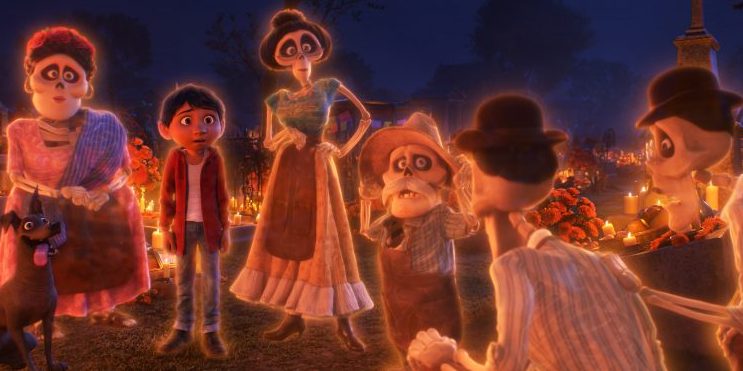
    Like Moana did last year with Polynesian culture, Coco mines much of its mythology from Mexican culture and specifically El Dia De Los Muertos, The Day of the Dead. The fictional Mexican town of Santa Cecilia is in deep preparation for the day with food offerings, decorations, and orange petals adorning the graves of loved ones. The town even has a talent show to commemorate the day, something that 12-year-old aspiring musician Miguel (Anthony Gonzalez) is hoping to participate in. However, his family, specifically his grandmother Elena (Renée Victor), shuns music from the household since Miguel’s great-great-grandfather left the family to pursue his dream of being a musician as a breezy intro explains at the beginning.

    But Miguel is in love with music and worships the Ernesto De La Cruz (Benjamin Bratt), a music megastar who came from Miguel’s hometown. And though Ernesto has since died, Miguel continues to listen to his music and carefully watches his movies to learn how to play the guitar. Eventually, an incident leads Miguel to attempt and steal Ernesto’s guitar that his kept in his mausoleum. However, when he strums the guitar he is transported to the Land of the Dead. There, he meets his relatives that have passed on including Miguel’s great-great-grandmother Mamá Imelda Rivera (Alanna Ubach) — she’s the mother of the titular Coco (Ana Ofelia Murguía) who is Miguel’s dementia-suffering great-grandmother.

    The Land of the Dead is among the most visually stunning worlds created for a Pixar film. Connected to the Land of the Living by a bridge made of orange flower petals, the other plane is a built-up world of warm golds and bronze and festive colors of the Day of the Dead. An entire world is built for the dead and it’s beautifully thought out and realized by the animators and director Lee Unkrich. Part of the delight of this movie is discovering more and more of the world as Miguel ventures deeper into a plot that becomes bigger than he could ever imagine. Along the way, he meets Hector (Gabriel García Bernal), a trickster in the Land of the Dead who’s looking for any way to cross over to the Land of the Living. Eventually, he becomes Miguel’s guide through his journey to find Ernesto, who is adored in death as he was in life.


    The plotting of the film isn’t as inspired as the most recent Pixar films and most of the twists are predictable. However, most importantly, the emotions are there. The emotional climax of the film hits hard and is earned. That’s partially thanks to the incredible animation of Coco and the vocal performance by Gonzalez, who is a standout throughout the movie. The film builds on each of its themes — culture, dreams, loss — and comes to terms with all of them in what is one of the most emotional scenes in a Pixar film the ends the movie on the highest note possible.

    Crafted impeccably, one of the standout elements is the score by Michael Giacchino (Spider-Man: Homecoming) and the central song “Remember Me” by Oscar-winners Robert and Kristen Lopez, who are surely going to be back in contention for this film. In the end, Coco is greater than the sum of its parts. It’s not the best the studio has put out, but it’s certainly the most emotionally wrought. It’s almost hard to believe this is a movie for children. But, as usual, they strike a perfect balance between making a movie that the kids will enjoy and the adults will appreciate. Coco is a delight that will not easily be forgotten.

    ★★★★ out of 5


    Watch Coco on Amazon!

  • Thor: Ragnarok review — Funny, quirky, the best Thor movie yet

    Thor: Ragnarok review — Funny, quirky, the best Thor movie yet

    Thor: Ragnarok is a quirky and hilarious departure from the usual Marvel fare that feels fresh and possibly one of the best movies the studio has put out

    The Thor sect of the sprawling Marvel Cinematic Universe needed a life saver change after two middling movies that are among the least critically successful movies that the franchise has produced. Well, that lifesaver came in the form of a disco-infused, neon colored shot delivered by director Taika Waititi. His last movie, Hunt for the Wilderpeople, was among my favorites last year and one of the most inspired comedies of the last decade or so. So it’s not surprising that Thor Ragnarok succeeds mainly as a comedy. However, this retro-fitted isn’t just a Guardians of the Galaxy rip-off like it might seem on the surface. Ragnarok succeeds because it has personality. It’s characters come off the screen and become more than just a few well-delivered one-liners. No offense to the Guardians of course.


    The plot of Ragnarok sounds like typical Marvel fare, which usually involved some world-ending event that needs to be stopped. Following Age of Ultron, Thor (Chris Hemsworth) goes out to investigate the apocalyptic dreams he’s been having, which turns out to be the eponymous Nordic legend that foretells the destruction of Asgard. However, in the first scene, which starts with Thor, chained up in a cage, in voiceover saying: “You might be wondering how I got here…” It harkens back to the 80s films that Waititi clearly found inspiration in, but more importantly, it tells the audience this is not just going to be fun. It’s going to be silly fun. After seemingly stopping Ragnarok — refreshingly at the beginning of the movie rather than the end — Thor returns to Asgard to learn that Odin isn’t there and is instead on Earth, dying. With the help of Doctor Strange (Benedict Cumberbatch in a hilarious cameo), he tracks his father to Norway where he learns that when Odin dies, Thor’s evil sister Hela (Cate Blanchett), goddess of death, will be freed from the prison she was locked away in. And she’s pissed.

    Blanchett slips perfectly into the universe as this deliciously evil villain partially because she isn’t afraid to ham up her line deliveries, strut her way between brutal killings, and do everything but twirl a mustache. But it’s what this movie needs in its villain. It needs someone that the audience is going to hate, but love hating her. Hela quickly disposes of Thor and Loki (Tom Hiddleston) and makes her way to Asgard and begins her take over. Meanwhile, Thor wakes up in a garbage dump in the planet of Sakaar. This planet, which embraces every color of the rainbow, is what I had been hoping to see from the Thor franchise. Of all the Marvel superheroes, Thor is the only one, other than the Guardians, that has a world that could be built any way that the creators want. And instead, the first two movies opted for New Mexico and London. Here, Waititi fills the world with hilarious and quirky characters — Rachel House is hilarious as a bodyguard and Waititi lends his voice to the pebble-brained Korg — head by the Grandmaster (Jeff Goldblum, wonderful in his usual Goldblum way).

    From there, the movie follows Thor as he attempts to find a way to escape the crazed dictator and finds help from Valkyrie (Tessa Thompson) and Bruce Banner aka the Hulk (Mark Ruffalo). Many of the scenes on the planet are served with Waititi’s usual offbeat humor that works so well and will have you laughing nearly nonstop. The jokes come as often as the action and give the movie a personality and rhythm that none of the others have had.

    Hemsworth seems to have finally found the director that meshes with his natural comedic sensibilities that were hinted at in Ghostbusters. Thor, often seen as the most boring Avenger, is allowed to be the comedic force behind this movie and Hemsworth takes up the duty with flair. And that allows the supporting cast to truly have shining hero (and villain) moments. Most notably, Heimdall (Idris Elba), who has been stealthily sheltering the people of Asgard, finally has a storyline worthy of his actor. In watching the first two Thor movies in preparation for this film, one thought carried through to both: why doesn’t Elba have anything to do. Well, that is certainly rectified in this movie. While his screen time isn’t great, Elba has the kind of movie star quality that makes him magnetic on screen.


    However, the actor that proves yet again that he’s an indispensable part of the Marvel Cinematic Universe is Loki. My one and biggest complaint about the movie is that it doesn’t have the strong emotional character arc that most of the Marvel movies have. Something that Spider-Man Homecoming nails. But the closest it comes is the relationship between Thor and Loki. Hiddleston is there largely for the laughs as he attempts to outwit nearly every character with little success. But his best scenes are those where he underplays the relationship that Loki and Thor have built, destroyed, and rebuilt over the entire franchise. This movie would have been the best Marvel movie ever made had it explored the characters on an emotional level, but based on pure entertainment, this is in the upper echelons.

    Thor: Ragnarok takes the humor and world-building from Guardians and meshes it nearly seamlessly with the usual Marvel formula to stunning results. It just shows that Marvel needs to continue hiring interesting directors and give them the kind of control they need to bring their vision to life. Ragnarok is the perfect example of that formula succeeding. Waititi turned one of the franchises that seemed to be Marvel’s few failures into the one I’m most interested in seeing continue.

    ★★★★ out of 5


    Watch Thor: Ragnarok on Amazon!

  • The Shape of Water review — Sally Hawkins gives the performance of a lifetime

    The Shape of Water review — Sally Hawkins gives the performance of a lifetime

    The Shape of Water is a beautifully crafted story by master filmmaker Guierrmo Del Toro, but lacks the emotional depth to make it great.

    Love is love, even if it’s between a human woman and an amphibian man. That’s the message that Guierrmo Del Toro seems to be trying to get across with his newest movie The Shape of Water, a modern fantasy romance during the height of the Cold War. Like his last film Crimson PeakThe Shape of Water is presented as a fairy tale and is stylistically told as such. There are even moments where it seems like the image on screen could be a page in a picture book. However, like a fairy tale, his delivery of this message is a bit on the nose. But that isn’t anything new for Del Toro.


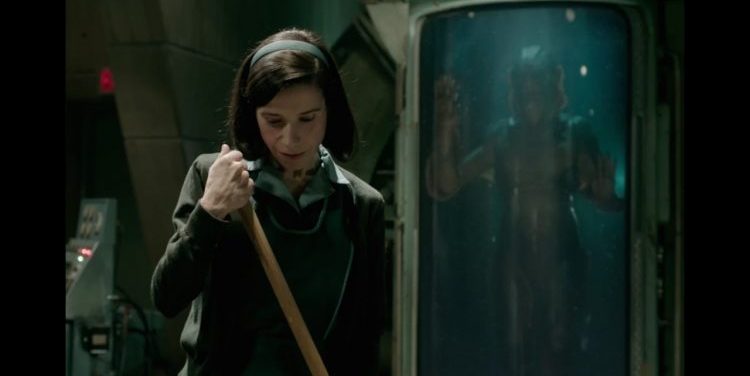
    In early 1960s Baltimore, Elisa Esposito (Sally Hawkins) lives a routine life. When she wakes she changes over the calendar, puts eggs on the stove to boil, makes her lunch for the day, and of course masturbates in the bath. You know, routine. However, Elisa isn’t exactly a normal woman. She is mute. But she doesn’t let that fact crush her spirit. She’s a lively woman who enjoys conversation with her neighbor Giles, an advertisement artist who has let go from his company because of some type of addiction that we don’t quite learn of. Elisa is also special because she works nights cleaning at the Occam Aerospace Research Center, a top-secret government facility that recently acquired an asset that they believe may be the key to besting Russia at the space race.

    This asset is a mysterious creature that was found in the waters of South America. He is simply referred to as Amphibious Man (Doug Jones) in the credits, but that doesn’t quite cover what he is. What is clear is that Elisa is taken aback by him, especially when the head of the team researching the creature, Colonel Richard Strickland (Michael Shannon), is injured by him. As time goes on, Elisa begins sneaking into the room that contains the creature to feed him hard-boiled eggs and play him music off her portable record player. Over time, the creature and Elisa begin to bond. She begins to see the humanity in him, as does Dr. Robert Hoffstetler (Michael Stuhlbarg, he’s having a great year between this and Call Me By Your Name), who might have ulterior motives for the creature. As Strickland becomes more hostile towards the creature, Elisa decides to recruit the help of Giles and her friend and co-worker Zelda (Octavia Spencer, as charming as ever) to help her break him out of the facility.

    Del Toro is one of the finest visual filmmakers working today and The Shape of Water is a perfect example of that. The movie is carefully designed to take place within the period, but also have a surreal quality to it with its costumes and sets splashed in a sea-foam green color tone. Del Toro knows how to heighten reality to fit the story he’s trying to tell by having every department fully committed to his vision. Credit also has to be given to cinematographer Dan Laustsen, who shot the film like a cold war movie, with a storybook flare.

    However, as engaging as the story is, I never felt truly immersed. Part of the problem with Crimson Peak was its general emotional coldness. None of the characters had strong arcs that you could become invested in. The same problem happens in The Shape of Water. There are glimpses of emotional undercurrents. Giles, a closeted gay man, has taken an interest in a waiter at a local diner and often drags Elisa along to see him. And while that storyline comes close to becoming an emotional arc, a pivotal scene is cut right before it really says anything and then the storyline is dropped.

    Sally Hawkins, though, delivers a lot of heart to the movie. She’s an emotional powerhouse without speaking a single word. In one scene, she forces Giles to repeat everything he’s saying to ensure he’s understanding. And though Jenkins pretty much deadpans the translations, the pain in Hawkins’ face is enough to carry the emotional heft of the scene. Her relationship with the creature isn’t exactly built up or earned. It feels like it’s rushed for the sake of the plot. But again, Hawkins makes me believe that she truly has fallen for him. She’s sensational. The same goes for Jenkins. He portrays his character’s loneliness with incredible restraint and though the script doesn’t give him the chance to build much of an emotional arc, he adds a lot of depth.


    And even though I was ultimately disappointed in my lack of emotional investment in the movie, Del Toro is a masterful storyteller. Elisa and Giles both bond over their love of old Hollywood musicals. And that imagery is often invoked with Giles and Elisa sitting on the couch mimicking the movie they’re watching on screen or when at one point Elisa imagines her and the creature performing a classic black-and-white musical number. Like all of his films, The Shape of Water has a quirky tone to everything, even when it drifts into the horrifying. That tone is also aided by Alexander Desplat’s playful score, which is certainly one of the most memorable elements of the film.

    For a movie about a creature of the deep, The Shape of Water keeps everything surprisingly surface level. It feels like what you get on screen is all that you are given. Still, Guierrmo Del Toro is such a masterful filmmaker that he is able to make the story and visuals interesting enough to keep audiences in their seats. However, the movie left me cold with nothing to attach to. It is the visual feast that his past projects were, certainly. But the emotional heft is put on the shoulders of its cast. In particular, Sally Hawkins and Richard Jenkins, who both deserve Oscar nominations for their work. The Shape of Water is definitely worth a watch for its story and filmmaking prowess.

    ★★★½ out of 5


  • Brigsby Bear review — SNL’s Kyle Mooney is the hero we need in this surprisingly sweet comedy

    Brigsby Bear review — SNL’s Kyle Mooney is the hero we need in this surprisingly sweet comedy

    Brigsby Bear is an offbeat comedy with a large beating heart at its center in the form of Saturday Night Live’s Kyle Mooney

    Kyle Mooney is arguably the most underrated repertory cast member on Saturday Night Live. Since joining the cast in 2013, many of his sketches written with frequent collaborator and long-time friend Beck Bennet have been relegated to the pre-shot ten to one spot or simply cut for time. However, his specific brand of awkward 80s infused humor has become a favorite among the fans watching the sketches online. And I am one of those fans. While his sketches don’t often have much of an undertone other than commenting specifically on 80s and 90s era pop culture, Brigsby Bear, which he co-wrote and stars in, has a huge amount of heart at the center of its oddball plot and humor.


    James is a 25-year-old man-child who spends his days watching and carefully analyzing the 24 seasons of “Brigsby Bear,” a show only presented on VHS about a magical bear and his adventures across the universe battling the evil Sun Snatcher. The show is an odd blend of 80s children shows ranging from “Barney” to “Captain Planet.” Still, James worships the show. Partially because it’s the only show he’s ever seen. He spends his days putting together presentations about “Brigsby,” recording recaps for the online “Brigsby Bear” forums, and filling his room with memorabilia. However, the show’s origins are a lot more sinister than they seem. “Brigsby Bear” is the invention of his “parents” Ted (Mark Hamill) and April (Jane Adams), who are revealed to have kidnapped James when he was an infant. The couple used the show as a tool to keep James from asking questions about the world outside their underground bunker, which explains the strange lines like “curiosity is an unnatural emotion” and lessons like only masturbating twice a day. Simply put, “Brigsby Bear” is responsible for James’ development and is his only connection to the outside world.

    One night, while James is sitting on the roof of the bunker (wearing an air mask since he was told the outside world was toxic), he sees a squad of police cars approach the compound where they arrest Ted and April and take James away. Usually, this would be a spoiler. But all this happens within the first ten minutes of the film. Detective Vogel (Greg Kinnear, great here) explains to James the circumstances of his captivity and returns him to his biological parents, Greg (Matt Walsh) and Louise (Michaela Watkins), and his sister Aubrey (Ryan Simpkins). From there, the film turns into a fish-out-of-water comedy akin to Unbreakable Kimmy Schmidt. However, unlike that show, Brigsby Bear flirts with the darker side of the subject. James’ lack of understanding of the outside world is both hilarious and devastating, particularly his obsession with “Brigsby Bear,” which he finally finds out was a show only made for him to see.

    What makes Brigsby Bear such a unique and original take on the subject, though, is that it toes the very thin line between making light of the dark subject and delivering some real perspective on it. Though James is overwhelmed by his situation, he’s more concerned with the fact that the show will never continue. So, he takes it upon himself to finish the story along with Aubrey’s friend Spencer (Jorge Lendeborg Jr., seen very briefly in Spider-Man Homecoming this year), who has become as interested in the show as James. His parents and psychiatrist Emily (Claire Danes) are concerned that James is holding on to a show that was essentially used as a mind control device by his captors. However, it becomes clear that in finishing the story, James is working through his transition the best way he knows how. In that respect, the movie becomes a remarkably thoughtful meditation on trauma and how we deal with it.


    Mooney, though underrated on SNL, finally gets the chance to show that he is a comedic actor with force behind him. He brings his endearingly awkward persona that underlines so many of his characters to the movie but adds a sympathetic edge to it. Though he mostly shuts down when he first meets his new family, he does know how to do one thing: talk about Brigsby. It’s those two mental states that James flips between that make this movie so charming. His passion for the show is commendable. You end up rooting for him to complete it.

    There is a surprising lack of conflict in the film that allows its sincerity to come through without veering into self-importance. Director Dave McCary tells the film with little cynicism. Like Unbreakable Kimmy Schmidt, the people behind the film love their main character and want him to succeed, which translates beautifully on screen. In the end, there is a striking amount of hope and friendship at the center of Brigsby Bear. Which makes sense considering the inspiration of the eponymous show ends with those lessons. Mooney’s James overcomes his adversity with creativity and teaches us a lesson about sympathy that for once feels genuine. Though he’s just a normal guy that wears t-shirts tucked into his pants, he’s the kind of hero we need today.

    ★★★★ out of 5


    Watch Brigsby Bear on Amazon!

  • Phantom Thread review — Daniel Day-Lewis falls in love in his final performance

    Phantom Thread review — Daniel Day-Lewis falls in love in his final performance

    Phantom Thread is a surprisingly funny and poignant romance with stellar performances by Daniel Day-Lewis, Lesley Manville, and, in particular, Vicky Krieps.

    I could listen to Daniel Day-Lewis order breakfast all day. In what is supposedly his final film performance, the three-time Oscar winner plays a role that encapsulates what makes him one of the greatest actors to have ever lived. Day-Lewis has always been attracted to roles of difficult and complicated men. Take his Oscar-winning turns in There Will Be Blood or Gangs of New York. He played men consumed by their passions. Often losing their humanity to them. As Reynolds Woodcock, a renowned fashion designer working in the couture world of 1950s London, in Paul Thomas Anderson’s Phantom Thread, he plays yet another difficult man, though a quieter one than his past roles. However, Mr. Woodcock, as he’s often called, is not only consumed by his passion for dressmaking. He’s obsessed with it. He believes that his artistry and genius is more meaningful than the pleasantries of society, which is why he often doesn’t participate in them.


    Woodcock and his sister, and business partner, Cyril (Lesley Manville, lovely here) understand each other to the point where most of their conversations could happen without words if they needed. In particular, Cyril understands what her brother needs to successfully pursue his work — silence during breakfast, strict adherence to his schedule. So, when he takes a liking to Alma (Vicky Krieps), Cyril believes that she’s just another woman who will act as his muse for a period of time before Reynolds is more distracted by her presence than inspired and is eventually dumped, usually by Cyril herself. But Alma is different. Unlike past women in Reynolds’ life who strive to please him, Alma isn’t just happy being subservient. She has wants and desires too. Which is why this unconventional love story almost feels like a battle between two titans than a waltz between lovers. Eventually, Reynolds invites Alma to live with him in his and his sister’s house — it doubles as his workspace — which, as the description for the film says, disrupts his carefully tailored life.

    What caught me most off guard is that Phantom Thread, more than any other of Anderson’s other movies, is incredibly funny. Though Reynolds is a daunting figure often consumed by his own genius — often propelled by the royals passing through his doors — going up against two strong women often leads to incredibly funny exchanges that almost classify this film as a romantic comedy. Still, it’s a captivating character study about a man who thrives in his craft but is nearly destroyed by disorder, which comes in the form of Alma’s presence. Not only that, the film has moments of pure sexual tension that are almost too much to bear. When Reynolds first meets Alma while she is working as a waitress in a restaurant in the countryside, he orders breakfast in one of the most sensual ways possible. But Day-Lewis barely moves his body. It’s all in his subtle intonation. It’s masterful.

    As Alma’s presence becomes a threat to the very work he cherishes, he begins to act erratically. After all, he’s an artist. A tortured one that never wants to admit he’s tortured. From there, the movie takes a dark turn, albeit an increasingly intriguing one. The movie turns into a story about love and companionship, but certainly not one to swoon over. Like Mother! and Raw earlier this year, Phantom Thread is about the darker side of marriage — or not marriage, I suppose. The side where you have to give up a piece of yourself to make the relationship work. Both of those movies cover the extremes of it, though the themes in Mother! — the tortured artist and the long-suffering wife — are eerily similar to those in Phantom Thread. But Anderson is such a commanding writer that he is able to spend nearly an hour setting up his characters before thrusting them into the plot.

    While the story of this movie is that it is Daniel Day-Lewis’ final performance, the real star of this film is Vicky Krieps and her astounding performance as Alma. She is a full-bodied actor. Even when she’s sitting down she uses her entire body to convey emotion. Even when she simply says “yes,” it has an impact. Alma is a complicated character who experiences a wide-range of emotions. Krieps handles everything Anderson throws at her with a staunch confidence. It’s quite the performance to announce her to the world.


    Though the performance and screenplay are certainly motivating factors to the movie’s success, Anderson proves yet again that he’s one of the greatest directors working today by presenting the story with an unrelenting rhythm that gives the audience little time to rest. It’s thrilling to watch with an audience because they become instantly absorbed in the movie’s humor, sexuality, and drama. It’s like a toned down melodrama with actual themes it can comment on. Also essential is Jonny Greenwood’s (of Radiohead fame) magnificent score that is almost never not underscoring the film. It’s whimsical, soaring, foreboding, and a driving force behind the movie’s emotional core.

    To try and adequately describe Phantom Thread is a nearly impossible task. It’s about a dress designer in 1950s London, a plain girl turned muse and a partnership that is both constructive and destructive at the same time. And still, that doesn’t even begin to cover it. While this is supposedly the final time we are going to see Daniel Day-Lewis on the silver screen, it also feels like the beginning of Vicky Krieps’ career, which is bound to be great. It’s fitting considering the movie is about one artist on the way down and another on the way up. But I promise you, you will have no idea where this ride takes you.

    ★★★★½ out of 5


  • ‘Mom and Dad’ review — Honey, I killed the kids

    ‘Mom and Dad’ review — Honey, I killed the kids

    Mom and Dad is a ridiculous, campy horror-comedy starring Nicolas Cage and Selma Blair with a premise that it stretches to the absolute max.

    Mom and Dad comes on the heels of a line of highly successful horror movies about the anxiety of parenthood—mainly The Babadook, A Quiet Place, and Hereditary. While each of those examples is elevated arthouse movies, Mom and Dad comes on almost the complete opposite side—exploitation. Even though the boiled down logline is basically that parents suddenly have the urge to violently murder their children, it is a surprisingly self-aware movie. Director Brian Taylor knows exactly what kind of movie he’s making. The movie only goes astray when it thinks it’s about something deeper—maybe it is—but it isn’t much more than some good genre thrills, except for one central scene.

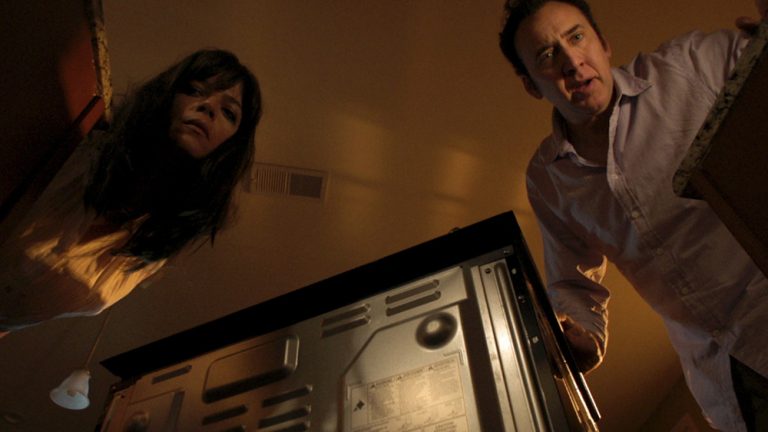
    That central scene comes nearly two-thirds of the way through the movie and delivers the idea that the movie is trying to put forward in a neat package beautifully delivered by Selma Blair, who plays the titular Mom, Kendall. After her husband, Brent (Nicolas Cage giving the exact performance you’d think he’d give) has a meltdown in the basement of their picturesque suburban house screaming about his dreams that were lost to parenthood, Kendall calmly sits down beside him and with a tear-streaked face assures him that this isn’t the life she pictured for herself either. It’s a surprisingly powerful scene that comes amid the carnage of the first two-thirds of the film and would have more impact if Taylor was able to complete an idea. Instead, the movie switches back to being the B-movie that audiences are expecting to see.

    There’s not much to explain in the plot of Mom and Dad. The logline that I mentioned earlier really covers most of the plot. Kendall and Brent’s High School sophomore daughter Carly (Anne Winters) is almost too stereotypical—which is nearly perfect for this movie. While being driven to school by her Mom, she idly scrolls through Instagram while her mom complains that they don’t speak anymore. Carly sharply responds that it’s because Kendall doesn’t have a life. It’s over-the-top, but not far off from the reality of Mother/Daughter relationships. Brent, a typical suburban husband—too much machismo, vaguely racist, etc.—disapproves of Carly’s boyfriend Riley (Robert T. Cunningham) who happens to be black, though Brent says that he doesn’t like him because he’s a year older than her.

    Nicolas Cage in Mom and Dad

    All this setup is to establish that the parents and kids—the other being Carly’s younger brother Josh (Zackary Arthur)—have a strained relationship. Still, even if it’s over the top, it seemingly is nothing worse than any other parent’s relationship with their kids. That is until we see other parents gathering outside the gates of Carly’s school stalking their kids with nothing but malice in their eyes. Visually, it feels like a clear homage to George Romero’s Dawn of the Dead while the concept feels like it’s lifted from The Crazies. Eventually, the parents begin to scale the fence to the school and chase down their kids like lions hunting.

    From there, Mom and Dad turns into a nonstop ridiculous and violent B-movie of parents trying to murder their children. To the movie’s credit—and detriment—it knows what it is. At just 83 minutes, it’s for the most part able to maintain its ridiculous premise. Selma Blair is phenomenal as she tries to fight the urge to both protect and potentially maim her children. Cage’s character, on the other hand, is almost too eager to join the legion of parents taking baseball bats and hammers to their kids. His career has been one odd choice after another, but Mom and Dad does the exact thing you need to do with Nicolas Cage: let him go crazy.

    There’s not much more to the movie. You could probably watch it with one eye on the screen and still get everything you need to get out of it. It’s half-baked at best in terms of plot and character and doesn’t amount to much more than a B-movie with an interesting premise. That being said Blair and Cage are giving legitimately good performances and the movie as a whole is, for the most part, what you want it to be. Turn off the lights, gather up some friends, pop some popcorn, and laugh both at and with the movie. You’ll have an ideal movie night. 

    Mom and Dad is now streaming on Hulu. It is also available on Amazon ➤

    ★★½ out of five

  • ‘Annihilation’ review — Science fiction that will make your skin crawl

    ‘Annihilation’ review — Science fiction that will make your skin crawl

    Annihilation is equal parts beautiful, terrifying, and intellectual while also including an emotional truth about what it means to be human.

    High-minded sci-fi has defined the late 2010s with entries like Arrival and Blade Runner 2049 defining the period. Another film that could be included in that group is Alex Garland’s Ex Machina. Garland explored extremely human topics by framing it in something not human. So, he seemed like the perfect fit to be tackling Jeff VanderMeer’s Annihilation a novel that I loved. What I loved about it is it poses more questions than it offers answers. And while Garland’s adaptation certainly seems to offer more answers, he grounds the sci-fi in another exploration of what it is to be human. That’s not to say that this film is straightforward or easy-to-digest. It’s quite the opposite actually. Annihilation feels like an assault on the senses without going over-the-top with its style. To call it engrossing would be an understatement.

    While I loved the novel, the film doesn’t follow it except for its basic premise. Most sequences that occur in the book don’t appear in the film. But I think that it’s for the better. Garland takes the Southern Reach and Area X and uses them to explore different ideas. It’s a thrilling discovery for book readers unless you live by the novel. What Garland carries over from the novel is the atmosphere. Area X, an ever-expanding bubble bordered off by something called “the shimmer,” is a mysterious and disorienting place that challenges almost all of our scientific beliefs. The film is unsettling the same way that The Blair Witch Project is. Annihilation infringes on your comfort zone and makes you feel disoriented the second the characters step into Area X.

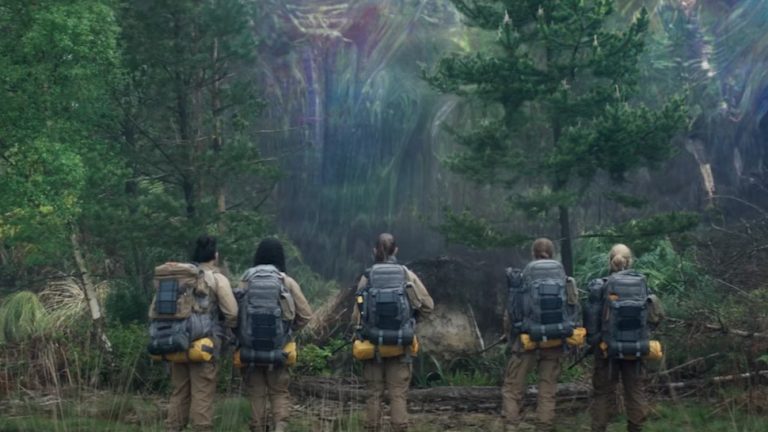
    But before all that happens, we see a meteor-like object strike a lighthouse on the Gulf Coast before cutting to Lena (Natalie Portman), a professor of biology who seems like a shell of a person as she mourns her husband, Kane (Oscar Isaac), who went missing on a mysterious mission a year prior. However, one day, he shows up. But it’s clear that the man that returned to her is not the man that left her. He is confused, unsure of how he got there or where he’s been, then his organs begin to fail. On route to the hospital, the ambulance is forced to stop by a squad of black SUVs that take Kane and Lena to a facility called the Southern Reach. Lena wakes up in a cell with Dr. Ventress (Jennifer Jason Leigh), a psychologist. Ventress explains that the Southern Reach has sent dozens of research teams into Area X and have never heard back from any of them, that is until Kane reappeared. Lena learns that her husband was a part of one of these teams and is the first person to return from across the shimmer. Eventually, seeking answers to help her husband, Lena decides to enter The Shimmer along with Dr. Ventress, paramedic Anya (Gina Rodriguez), physicist Josie (Tess Thompson, fresh off of Thor: Ragnarok), and anthropologist Cass (Tuva Novotny). It would be an understatement to say what happens beyond The Shimmer is extraordinary.

    The set-up and much of the story is told in fragmented scenes that give us some information, but end up raising more questions. It makes sense, though. The story is framed by Lena’s interrogation following her return from Area X — it’s revealed almost at the beginning of the film, as are the fates of every character. That’s just a testament to what Garland was able to do. Despite knowing the outcome, Annihilation is never less tense or horrifying. That doesn’t mean that it leans heavily on gore or horror movie logic. In fact, it’s quite the opposite. The movie is heady and cerebral. The same can be said for the thrills and action. Every image and moment feels calculated. The movie gets under your skin.

    Much of the film follows how you’d expect a movie about an exploration into an alien world to go. Each character is picked off one by one. But even the circumstances around their demises remain mysterious. That’s what separates it from Alien and other films that came after it. Even each death feels like another piece of the complex puzzle of Area X and the film itself. In that way, it feels more similar to Arrival or 2015’s Coherence. It’s as concerned with the emotional implications of the plot as it is the science. At one point, Cass tells Lena that all the women — it’s refreshing that all the people on the expedition being women is not a major plot point — have experienced some type of loss or are on some type of path of self-destruction. By the mind-bending final scenes, you understand why this discussion is so important.

    There has been a lot of talk about how Paramount essentially dropped all hope of Annihilation having a theatrical life from the moment producer Scott Rudin refused to “dumb down” the film. After watching it, I understand why. Though the design and thrills of Area X are impeccable, the true beauty of the film lies beneath. And it’s a beauty that you have to work for. Unfortunately, modern movie audiences aren’t ready for that type of sci-fi. Arrival and Interstellar may be the two examples of intellectual sci-fi surviving in this age of blockbusters. However, Annihilation is a film that has to be experienced on the big screen. There’s too much nuance to be affected by it on Netflix.

    A lot of that nuance comes from the cast. After giving the best performance of her career in Jackie, Natalie Portman gives perhaps the second best performance in this film. Playing a seven-year army vet and biology professor as both strong and vulnerable is a task that few actors could succeed in. On top of that, the character’s emotional journey is explored almost silently, particularly in the last 15 minutes. Without her, the impact wouldn’t be as strong. The same could be said for the set design by Mark Digby. His realization of Area X and all its oddities are equal parts beautiful and unsettling. As are the creatures that they encounter. The film is impeccably designed. The score also stands out — “The Alien” may be one of the most terrifying pieces I’ve ever heard in a film.

    Annihilation is complex, terrifying, engrossing, and beautiful, but above all, it feels completely unique. While the actual design and direction are unique, the themes it deals with and the way it comes to terms with those themes are what really sets it apart. It taps on a human process that we are too afraid to confront — our mortality and self-destruction. However, that is even a simplistic way to describe the themes. It’s truly a movie that has to be experienced and experienced on the biggest screen possible. It envelops you, gets under your skin, and stays with you long after it ends. Annihilation has monsters, but it exposes that the biggest monster of all is our own humanity.

    ★★★★½ out of five


  • ‘Red Sparrow’ review — Muddy plot to match Jennifer Lawrence’s muddy Russian accent

    ‘Red Sparrow’ review — Muddy plot to match Jennifer Lawrence’s muddy Russian accent

    Red Sparrow delivers a thinly plotted, gratuitous espionage thriller that fails to take off despite a strong cast (with some questionable accents)

    At the end of Red Sparrow, the entire audience at the screening all physically recoiled when the screen cut to black. A few seconds after that, someone began to slow clap sarcastically and the entire audience together had a chuckle. The plot of the film is mystifying, to say the least. It has all the twists and turns you’d expect in an espionage thriller, but it seems that the film twists just because it feels like it. Not because it plays into a deeper plot. Though, it eventually tries to tie up loose ends in what really feels like an afterthought of a scene.

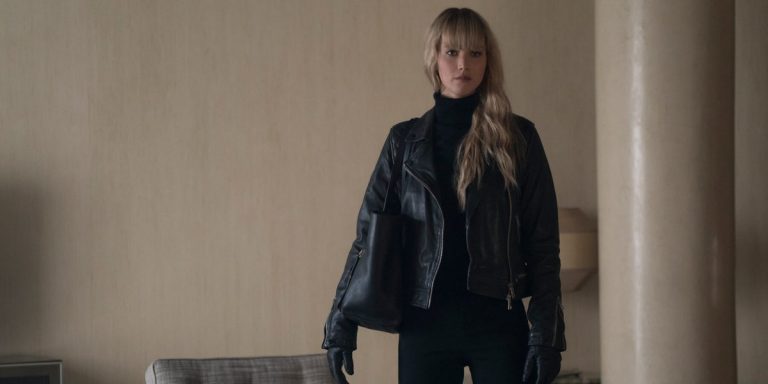
    Red Sparrow doesn’t start that way, though. Its opening sequence is riveting. It’s a prime example of cinematic storytelling. Dominika (Jennifer Lawrence) is a famed Russian ballerina and niece of Ivan Igorov (Matthias Schoenaerts), a high ranking official in Russian intelligence. We’re introduced to Dominika’s daily life, which includes caring for her ailing mother, Nina (Joely Richardson), and dancing in the ballet. This is all we know about her at this point (and the rest of the movie, honestly). We’re then introduced to Nate Nash (Joel Edgerton)… Yes, that’s his actual name. He’s preparing for a mysterious meeting with his contact, who is a mole in Russian intelligence. What was he going to achieve in the meeting? How did they get the mole? What information was the mole doing? None of this we know at this point (and the rest of the movie, honestly). The scenes begin to intercut. Nate prepares for his meeting while Dominika prepares for her performance. The dramatic score and artful cinematography make the scene engrossing. Nate’s meeting ends with his contact nearly being caught and Dominika’s performance ends with a career-ending injury. The pacing and editing of the scene are masterful, something the rest of the film aspires to but never reaches.

    As she struggles to take care of her mother after her injury, Ivan forces Dominika into an ultimatum and sends her to become a Sparrow. Highly trained operatives of Russian Intelligence that specialize in seducing their targets to get information. She, as Dominika points out, is essentially going to whore school. This may be a good time to bring up 2017’s Atomic Blonde, another female-led espionage thriller. Without the gratuitous nudity and violence that Red Sparrow boasts, Atomic Blonde reads as a story of female empowerment. Through the Sparrow training scenes, it’s clear that the feminist gaze that views Charlize Theron’s character in Atomic Blonde is traded for a keenly male one that stalks Jennifer Lawrence in Red Sparrow. It’s a key reason the film doesn’t work.

    Matron (Charlotte Rampling) puts Dominika and the other recruits through grueling and cruel training sessions that teach them how to read the desires of their targets and exploit them, often sexually. Rampling is great as the ruthless headmistress and delivers key information about why Red Sparrow should be relevant in today’s environment, however, these scenes are shortlived to the detriment of the film. These are the only scenes in place to convince of Dominika’s natural talent as a Sparrow, however, all they tell us instead is that she knows how to pick a lock.

    She’s quickly swept away on a mission to make contact with Nash, gain his trust, and find out who his contact is. A lot of things happen in between involving an odd but hilarious Mary Louise-Parker cameo, brutal torture, a lot of double-crossing, and a lot of bad Russian accents, but demystifying the plot of Red Sparrow may be the real thrill of the movie. It feels as if the screenwriter and director Francis Lawrence — he directed Jennifer Lawrence in the last three Hunger Games movies — had ideas and plot points and set pieces that never ultimately fit together. Everything ends up feeling muddled, characters included. Though Cirian HindsJeremy Irons, and Sakina Jaffrey do the best they can with what little they’re given in supporting roles

    Red Sparrow thinks its a smarter movie than it is. The plot of Atomic Blonde is admittedly nonsensical, but it makes up for it with characters the jump off the screen and some of the best action set pieces in years. Red Sparrow had neither. The central relationship between Nash and Dominika, which should be a driving force behind the film, feels like an afterthought. Even with violence and enough nudity and sex to make Tarantino blush, the film doesn’t even succeed in the exploitation genre. That opening scene is kinetic, thrilling, and beautiful. In contrast, the rest of the movie chugs along in a dull fashion. If only the talent onscreen was given the material they deserve.

    ★★ out of 5


  • ‘Love, Simon’ review — The coming-of-age story that’s a long time coming

    ‘Love, Simon’ review — The coming-of-age story that’s a long time coming

    Love, Simon is groundbreaking as the first gay coming of age film by a major studio. Although, it is more than what it seems on the surface.

    This is what straight people must feel like when they watch romantic comedies. That’s a comment that I’ve been seeing a lot about Love, Simon, the newest film by Greg Berlanti based on Becky Albertalli’s novel Simon vs. the Homo-Sapiens Agenda. It’s not wrong. There have been countless sappy coming-of-age stories told about straight people with barely etched characters and an emotionally manipulative tearjerker of a plot that turns uplifting in the end. However, first the first time ever, a major studio — 20th Century Fox — made one about a gay teen. For that, Love, Simon, deserves tons of praise. And while it does feel like The Perks of Being a Wallflower for gay teens, there’s an understanding the film has that will allow countless people in the LGBTQ+ community to see their experience somewhere on screen.

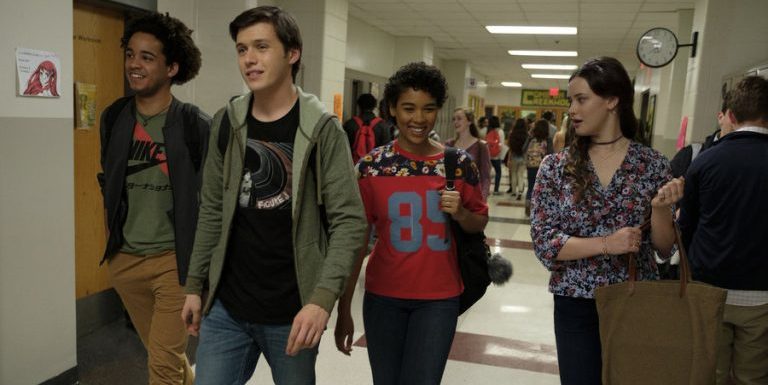
    I’m not naive to the fact that the titular Simon Spiers (Nick Robinson) is a straight-passing, white, good-looking teen who comes from a more than financially comfortable family in the Atlanta suburbs. Love, Simon is the mainstream version of a gay romantic comedy. But that’s not necessarily a fault of the movie. Berlanti, who is gay, always reminds us that Simon is gay in subtle ways that will feel all too relatable to the community — that obsessing over whether someone is gay or not, the awkwardness whenever someone makes a straight comment at you. To the movie’s credit, it’s not about the process of discovering your sexuality. When we meet Simon, he’s already come to terms with the fact that he’s gay. Though, he isn’t out yet. He emphasizes that he’s just like “you.”

    Simon has a strong network of friends and family. His best friends Leah (Katherine Langford) and Nick (Jorge Lendeborg Jr.) have grown up together, while Abby (Alexandra Shipp) only recently moved to the town, but fit in with the group perfectly. However, none of them know he’s gay. Neither does his family — his parents, Jack (Josh Duhamel) and Emily (Jennifer Garner, fantastic here), and sister Nora (Talitha Bateman). He’s simply not ready to change his world. A feeling that a lot of us had before coming out. However, when an anonymous student — he goes by the name Blue — in his school posts on a Tumblr-like website comes out, Simon finally begins considering that coming out may not be all that bad.

    What Berlanti nails is that before coming out, so many gay people live in fantasies. In Love, Simon, Simon fantasizes about various other boys in his life being Blue, following each thread until he’s left heartbroken by the fact that they aren’t who he’s looking for — Joey Pollari, Keiynan Lonsdale, and Miles Heizer are among them. At the center, of course, is the school musical that stars Martin (Logan Miller) as the Master of Ceremonies in Cabaret. A blackmail plot complicates Simon’s online relationship with Blue, which is progressing quickly as the two help each other come to accept themselves and eventually be accepted by others. On the outskirts of the main plot, other characters deal with their own issues and identities. It’s something that I wish the film explored more.

    As Simon pursues his love story, the movie’s importance becomes more clear. I will add to the cacophony of people saying, “if I had seen this movie when I was a teen…” Of course, there are other queer movies that teens can clench to — Moonlight and Call Me By Your Name are recent examples, Closet Monster is an underrated one. However, in addition to being a mainstream release, Love, Simon doesn’t deal with the devastating side of being gay — it has its moments, but nowhere near those in the movies I mentioned. But that’s not the space it needs to be dealing in. The movie is idealistic and corny, but by the end, I was laughing and crying along with it. I was floating as I left the theater. If this is what straight people felt like when they watch romantic comedies, then I’m extremely jealous then get one of these a month.

    That’s not to say Love, Simon is typical. Thanks to its synthy score by Rob Simonsen and music direction by Bleacher’s Jack Antonoff, the movie moves swiftly from emotional beat to emotional beat while scoring laughs along the way — Tony Hale and Natasha Rothwell score the most as the school’s principal and drama teacher, respectively. It’s emotionally manipulative and corny but hooks you in a way that makes you not mind it at all. It’s going to fill adults with nostalgia or regret, depending on your experience. More importantly, though, it’s going to tell gay teens that your coming out story is yours. No one can take it from you. You can exhale.

    ★★★★ out of 5


    Get the movie tie-in edition of Love, Simon here!

  • ‘Ready Player One’ review — Colorful video game world, dull characters

    ‘Ready Player One’ review — Colorful video game world, dull characters

    Ready Player One is a visual feast and boasts impressive action sequences that will certainly entertain, but it’s missing heart, which makes the movie a letdown.

    The culture that Steven Spielberg’s latest film Ready Player One invokes is one that he had a hand in creating. Geek culture is something today that is discussed both positively and negatively. It’s about passion over a specific topic. However, it seems in recent times that that passion has grown to dangerous levels. It’s an angle that could have been interesting to explore, especially considering Ernest clines novel of the same name that the film is based on makes a point to criticize the pop culture obsessed. However, Spielberg celebrates the positive aspects of geek culture without acknowledging the negatives.

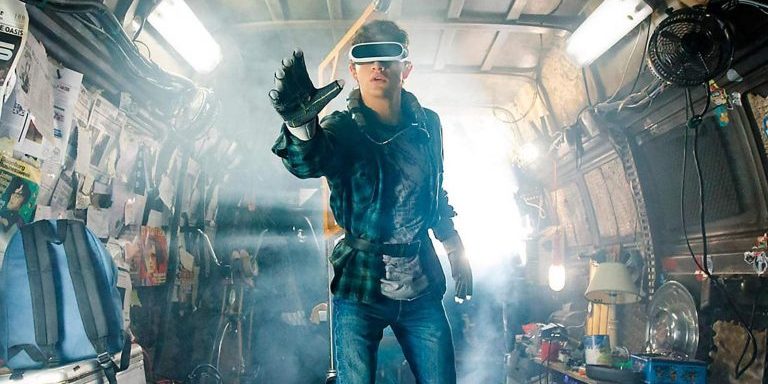
    The entire conceit of Ready Player One is a world where knowledge of pop culture — particularly that of the 80s — is now the currency. That’s because James Halliday (Mark Rylance in a weird, but great performance), has created a virtual world where people have invested all their real world time and money into living in — the Oasis. Players can enter the space and be whoever they want to be, which means a lot of 80s references. A lot. However, this has also caused the real world to crumble. Society has crumbled and completely transferred online. It’s an aspect of the premise that Spielberg ignores to the detriment of the rest of the film.

    Wade Watts (Tye Sheridan), who was named that by his father because it sounds like a superhero’s secret identity (references and nostalgia!). Wade lives in the stacks. A discombobulated structure of twisted metal and mobile homes built up stories high on the outskirts of the Columbus, Ohio — the fastest growing city in the world. We don’t learn a lot about Wade. We know his home life isn’t great, though that’s barely touched on, which is why he escapes to an abandoned van outside the stacks to live in the Oasis.

    In the Oasis, Wade becomes Parzival. He’s an extremely skilled player and Gunter. Gunters, which is short for Egg Hunters, are players who are focused on unlocking Halliday’s last dying wish in the Oasis. Halliday created a scavenger hunt where players must find 3 keys to win complete control of the Oasis both in the game and the real world.

    Compared to the book, which I enjoyed, the film is a lot simpler in its execution. To its detriment, the creation of the Oasis and its impact on society are quickly glossed over, which ultimately changes what the film is commenting on versus the book. The book takes time to set up that the world has become an oppressive environment where movement between classes has become impossible, except for in the Oasis. By stripping that message out and barely touching on the dichotomy of geek culture, the movie ends up not saying very much.

    It does attempt to have some commentary through Artemis (Olivia Cooke — she does great work here with the little material she’s given). She leads a group of resistance members — at one point she actually says, “welcome to the resistance” — that are focused on preventing IOI, a video game conglomerate that creates most of the equipment used to access the Oasis, from winning the prize. IOI and its CEO Nolan Sorrento (Ben Mendohlsen) have been forcing people into indentured servitude to help them win the game — essentially they raise an army. However, even with that storyline ripe for some commentary, the story breezes over it.

    Not every movie needs to be subversive. However, Ready Player One is asking us to care about its main characters because they are fighting for something bigger than themselves. But without making them struggle or there being some sense of stakes in the real world, it makes any moment that feels like a rallying cry fall flat. There are moments where a character is all but standing on a soapbox and there is almost no impact.

    Ready Player One suffers from a similar problem to last year’s Valerian and the City of a Thousand Planets. It’s visually a feast — an accomplishment of CGI. There are sequences that feel like they’re going to be iconic in the future. Dare I say, sequences that people will be nostalgic for. Specifically, the second act The Shining sequence is one of the few references that made me perk up. However, it feels like it achieves those moments at the stake of the plot and characters. No characters, lead or supporting, feel fully drawn out or have complete arcs.

    Spielberg seemed more interested in the possibilities that the Oasis presents rather than the societal implications of such a world. He set out to make a modern-day Willy Wonka and the Chocolate Factory but forgot to make the characters as colorful as the world around them. Spielberg is the master of setpieces the race for the first egg — it feels like the perfect amount of homage — and The Shining sequence are both evidence of that. It’s enough to make Ready Player One at least enjoyable. However, it’s one of those movies that slips through your fingers. If you’re looking for a colorful, video game-inspired, 80s homage, give Thor: Ragnarok a chance. It’s everything I wish this movie was.