Blog

  • ‘Alex Strangelove’ review — A coming out dramedy with an identity crisis

    ‘Alex Strangelove’ review — A coming out dramedy with an identity crisis

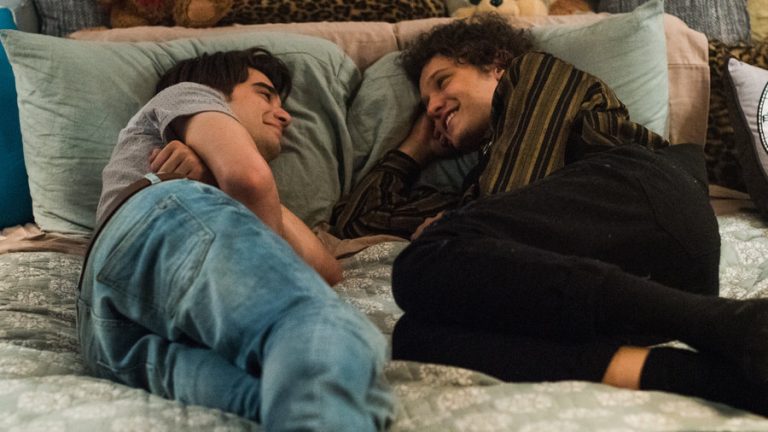
    Alex Strangelove, now streaming on Netflix, is a coming out dramedy with an identity crisis despite a charming lead performance by Daniel Doheny.

    Netflix’s Alex Strangelove follows on the heels of Love, Simon, the first LGBT teen movie from a major studio. Love, Simon succeeds mostly in part to its lack of self-importance. It treats protagonist Simon as any other protagonist in a teen rom-com. Its unremarkableness is what makes it so unremarkable. However, what elevated Love, Simon past typical rom-com is that it has a specific perspective — albeit a narrow one — and knows that perspective inside and out. Director Greg Berlanti has empathy for his characters and allows them to be real, despite the over-saturated teen movie-ness of it all.

    It’s not always fair to compare movies to each other. However, when such similarly-themed movies come out in such close proximity to each other it’s hard not to. Alex Strangelove follows Alex Truelove (Daniel Doheny), an average high-school senior who has everything going for him. He’s the class president, runs a successful YouTube channel about animals, and is on the verge of being accepted to Columbia University alongside his girlfriend Claire (Madeline Weinstein in a great performance). The one thing Alex hasn’t done yet before the end of his high school career is lost his virginity, something that he is insecure about, which Claire notices. It doesn’t help either that his group of friends seem to be the stereotypical sex-obsessed outsider teens.

    For much of its first act, Alex Strangelove touts a quirky style, not unlike Mean Girls. That’s not just because the movie begins with a montage of various high school stereotypes being compared to animals. Though, if anything, it feels more forced than what Mean Girls achieves with its version of the scene. And while it’s not the most original, it works. That’s mostly thanks to Doheny’s charming performance as Alex. He overacts enough to match the style, while still maintaining some grounding in reality. His best scene — and the movie’s best scene — is his meet-cute with Elliott (Antonio Marziale).

    This scene balances the two movies that Alex Strangelove is trying to be: a quirky teen sex comedy and an emotional melodrama. Alex and Elliott’s meeting is filled with awkwardness and jokes, but also has underlying sentiment as Elliott tells Alex how his coming out, which he made a video of and posted online, didn’t sit well with his father and was eventually kicked out. This slow down in the narrative works because it’s a genuine moment set within the context of the movie. Director Craig Johnson tries to recapture that feeling along the way — Claire speaking to her cancer-stricken mother, Alex’s friend Dell (Daniel Zolghadri) talking about rejection — but never quite gets there again. It feels like the studio asked for a raunchy sex comedy while Johnson set out to make a teen melodrama.

    Love, Simon is the perfect example of a movie that strikes a balance between the two. That’s because Simon earns its emotional moments without slowing down the narrative or taking a pause from the inherent comedy of it all. Alex Strangelove tries to be what Love, Simon ended up being, but gets distracted along the way. Of course, both movies were filmed at the same time, so any similarities are purely coincidental. But they serve as counterpoints to each other. Simon does the teen coming out movie right, while Alex misses the mark.

    I had similar issues with The Skeleton Twins, Johnson’s last project starring Kristen Wiig and Bill Hader. In that movie, he mines the tropes of a family drama and infuses it with a darkly comedic tone that shifts awkwardly throughout. He handles the two movies that he’s trying to create better in Alex Strangelove but still doesn’t mend the two seamlessly together.

    That being said, the fact that Alex Strangelove is on the homepage of Netflix and Love, Simon coming to VOD in the same month is heartening. And the movie has its moments. Alex and Elliott’s meet-cute, their trip to Brooklyn, and much of the first act work even if the connecting pieces don’t. I pined for more scenes of Alex and Elliott’s chemistry, which to the credit of Doheny and Marziale, is palpable. I wish we got more of that movie.
    ★★ out of five

  • ‘Mission: Impossible — Fallout’ review — The blockbuster of the summer

    ‘Mission: Impossible — Fallout’ review — The blockbuster of the summer

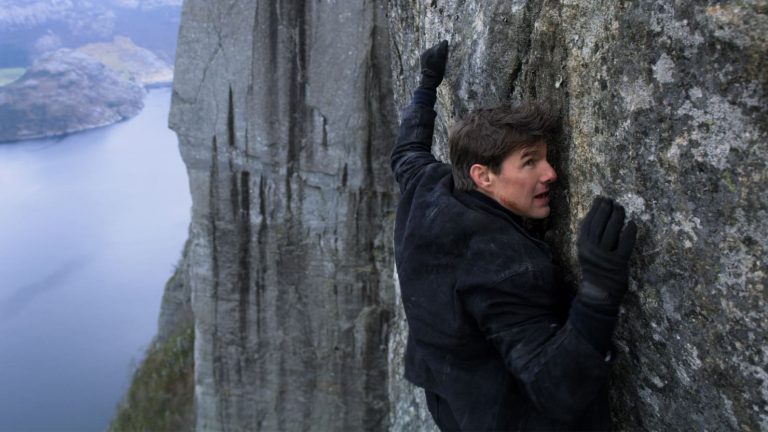
    Mission: Impossible — Fallout is yet another great entry in this long-running franchise thanks to Christopher McQuarrie and Tom Cruise.

    Over the course of six movies, Mission: Impossible has basically turned into the franchise where Tom Cruise does crazy stunts. Fallout, the newest entry, is no exception—and I’d have it no other way. Christopher McQuarrie—he wrote and directed this film as well as its predecessor Rogue Nation—seems to have cracked the code to this long-running franchise. In Fallout, the story is negligible. There’s enough plot to keep the momentum and the twists keep it engaging. McQuarrie seems to be the perfect match to star Tom Cruise‘s unique take on action.

    The difference between the action in this movie and the action in the equally audacious Fast & Furious franchise is that in Fallout, McQuarrie captures the action in a clean and economical way. It’s the reason Mad Max: Fury Road was so successful. Every action set piece has a narrative pulse whether it be a two on one brawl in a bathroom or an epic car chase through the streets of Paris or a HALO jump from an airplane—the best scene in the film and possibly of the year.

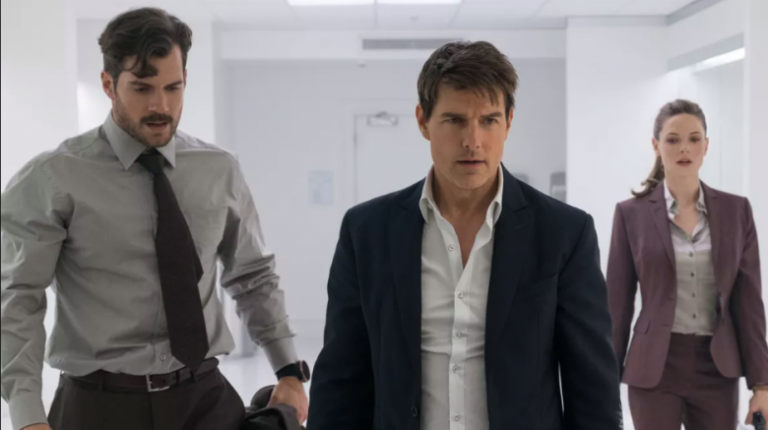
    In Fallout, we begin, as always, with Ethan Hunt (Cruise) receiving his mission, should he choose to accept it. He is tasked with retrieving three plutonium cores that can be easily turned into nuclear bombs that can reek destruction on any city that the holder chooses. In this case, the holder is a group dubbed “The Apostles,” a terrorist organization born out of the remains of “The Syndicate.” Refreshingly, that main plot, which is set up breezily in the cold open—it features an amusing cameo by Wolf Blitzer—is the goal for the entire film. Unlike the Bond films or Bourne films which have twisting plots that end up somewhere different than where they started, Fallout stays focused.

    “The Apostles” want to use the bombs to create a new world order by inflicting the maximum pain on the planet. As they say, “the greater the pain, the greater the peace.” Ethan’s search—he’s aided by a skeleton crew consisting of Benji (Simon Pegg) and Luther (the consummate steady hand Ving Rhames)—leads him to Paris where an arms dealer known as White Widow (Vanessa Kirby is a clear standout in the role) is allegedly selling the cores to a man called John Lark, who wants to carry out “The Apostles’” agenda. However, before going to Paris, CIA director Erica Sloane (a deliciously headstrong Angela Bassett) forces Ethan to take along August Walker (Henry Cavill sporting the infamous mustache) as a failsafe.

    From there, Fallout puts out some of the most impressive and thrilling action sequences ever committed to film. However, every action set piece has a purpose. The HALO jump adeptly sets up Hunt’s moral center and juxtaposes against Wilson’s more brash tactics. The scene, which is devoid of composer Lorne Balfe’s (The Florida Project) impressive score, is breathtaking. McQuarrie gives every moment and action weight. As the pair tumble towards the Earth, you feel the stakes of what is happening, even if you know everything is going to come out fine.

    Every set piece is infused with those stakes. At one point, an armored truck carrying former leader of “The Syndicate” Solomon Lane (Sean Harris) is rammed into a river. Instead of the truck slowly filling with water, which would throw off the rhythm of the scene, an intense and literal wall of water swallows Lane. The camera is attached to the truck to give the illusion that the water, not the truck is rotating. It’s that kind of innovative filmmaking that makes Fallout a bold practice in the action movie genre.

    Tom Cruise is infamous for concocting crazier and crazier stunts that he performs himself. While it seemed like a publicity ploy, Mission: Impossible — Fallout makes it clear why he’s been indispensable until now. His screen presence is irreplaceable specifically when he is performing action. Now that he’s found a director that knows how to capture them, the Mission: Impossible franchise has found new life. Don’t let us down Ethan. That is your mission, should you choose to accept it.

    Mission: Impossible — Fallout is available on Amazon ➤

    ★★★★ out of five

  • ‘Blockers’ review — A surprisingly progressive teen sex comedy

    ‘Blockers’ review — A surprisingly progressive teen sex comedy

    Blockers is an uneven, but hilarious, profound, and progressive take on the American sex comedy

    The teen sex comedy has been a staple in American cinema for decades with massive hits like American Pie and The 40-Year-Old Virgin anchoring the contemporary era. However, these raunchy gross-out comedies have been due for a refresh for some time. Especially now as Hollywood is being held more accountable for the way it portrays marginalized groups that are usually forced into stereotypes in this kind of movie. That’s what makes Blockers such an interesting movie. The movie, which is the Pitch Perfect screenwriter Kay Cannon’s directorial debut, explores progressive themes despite its raunchy sex comedy exterior.

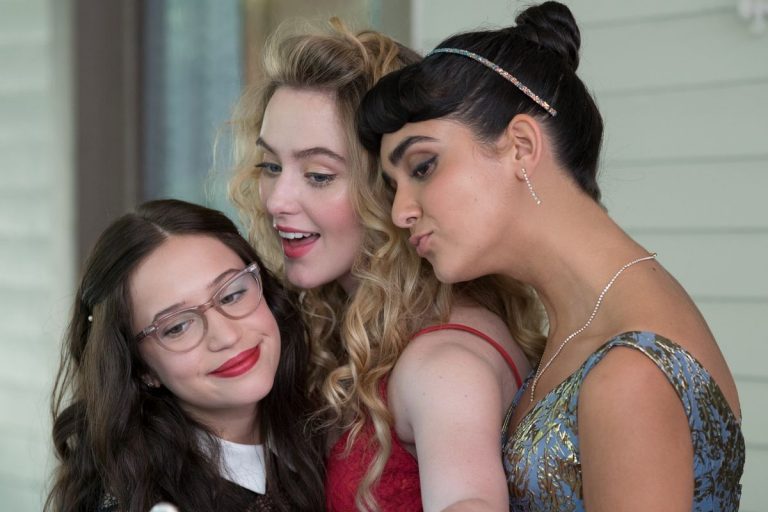
    The plot itself doesn’t sound very innovative. Three friends, Julie (Kathryn Newton), Kayla (Geraldine Viswanathan), and Sam (Gideon Adlon, a standout), are looking forward to their senior prom and specifically the night following it. They create a pact that all of them will lose their virginity, a pact that their parents discover hilariously by decoding the girls’ emoji messages to each other. However, each of the girls is losing their virginities for a different reason. Julie plans to lose her virginity to her boyfriend Austin (Graham Phillips). Kayle plans on losing it to her date and lab partner Connor (Miles Robbins), even though she doesn’t know him well. Sam is questioning her sexuality and thinks she may be a lesbian, however, she joins the pact to feel closer to her friends and to help her truly realize whether she is gay or not.

    That is one half of the story. The other half lies with their parents. Lisa (Leslie Mann), Julie’s mother, feels connected to her daughter and often refers to her as her best friend. Though it’s only hinted at, we can deduce that Lisa had Julie at a young age and raised her as a single mother, which explains her attachment to her. Mitchell (a fantastic and perfectly dressed as a dad John Cena), Kayla’s dad, championed her as an athlete and is overly protective of her. While Sam has a good relationship with her mother Brenda (June Diane Raphael) and stepfather Frank (Hannibal Buress), it’s her estranged father Hunter (Ike Barinholtz) that joins Lisa and Mitchell on their adventure to chase down their daughters and stop them from following through with the pact.

    What elevates Blockers past most teen sex comedies is that it’s clear that Cannon specifically was empathetic to both sides of the narrative: the parents and the kids. On the kid’s side, the movie explores both the incredible invincibility and confusion of being a teen. All three girls are so sure and unsure of their actions as they bounce from party to party before ending up at a hotel where their pact will potentially be fulfilled.

    On the parents’ side, Lisa is desperately trying to keep her relationship to Julie alive as she considers what college to attend in the fall. Mitchell’s overprotective nature turns into mistrust of anyone around Kayla. And Hunter tries to salvage what small relationship he has with Sam.

    And while all this deep emotional exploration is great, it doesn’t mean that Blockers doesn’t have fun. If anything, part of the issue is that it veers too far into raunchy teen comedy in some scenes. Mainly, there’s a chain reaction of throw up in a limo, an awkward walk in on a sexual encounter (not involving the teens), and, of course, butt chugging. However, there are also moments where the comedy is smarter. The scene where the parents try to decode the emoji messages is so smart and perfectly timed and a scene where they fight over control of a car is physical comedy at its best. The balance with the emotional elements of the story is sometimes off, but it’s never dull.

    Progressive is not often a term you can apply to a movie produced by Seth Rogen and written by four men, however, Blockers is pointedly progressive. In one scene, Kayla’s mom Marcie (Sarayu Blue)—Kayla is mixed, which is refreshingly not a main plot point—chastises the other parents for not allowing their daughters to explore their sexualities in a safe way. She touches on feminism and sex positivity without being preachy. And even racist, homophobic, and misogynistic humor that often laces similar movies are pointed out and dismantled hilariously.

    Blockers is a huge step in the right direction for studio broad comedy the same way that Game Night was earlier in the year. There are some issues like the pacing and the way that the emotional elements work in and sometimes the jokes don’t always land, but the good parts are really good. In particular, Barinholtz has a couple monologues that catch you off guard considering his character’s deadbeat dad stereotype feels so on the nose. However, his storyline is more profound than that. The ending is also near-perfect and brings closure to every character in one way or another. If anything, the best thing that Blockers does is that it proves that being funny and being progressive and being profound aren’t mutually exclusive things. They can live together. Even if it doesn’t get it perfectly right, it comes close.

    ★★★½ out of five

    Blockers is available on Blu-ray and Digital HD on Amazon ➤


  • ‘The Meg’ review — All shark, no bite

    ‘The Meg’ review — All shark, no bite

    The Meg doesn’t deliver on its summer B-movie promises, though Jason Statham does his best to hold the movie together. 

    Jason Statham fighting a giant prehistoric shark is a log line that promises a perfectly campy B-movie summer blockbuster. And that fact that it’s coming out in the heat of August only supports that theory. However, The Meg only delivers on part of that promise. It is certainly a summer blockbuster with its shallow thrills and classic action hero moments, but this John Turteltaub directed movie completely swims past the campy B-movie moments that would make this movie pure “so bad it’s good” gold. 

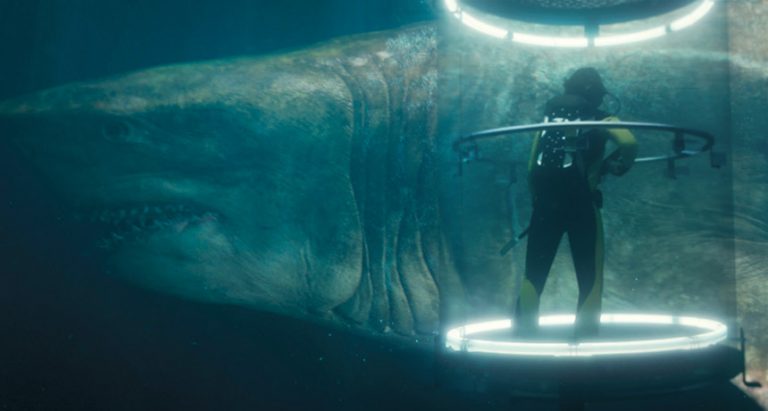
    That’s not to say that the movie doesn’t have its moments, Statham is a perennially solid leading man who would have absolutely shined had this movie given him more moments to flex his comedic chops like he did in 2015’s Spy. Still, he’s able to pull off a few good one-liners as Jonas Taylor, a deep-sea rescue diver who has come off a bender in Thailand to help rescue his ex-wife Lori (Jessica McNamee) from a recently uncovered section of the Marianas Trench. As Jonas was five years ago, her sub was attacked by an unseen enormous creature that is later revealed to be the titular Megalodon, a giant shark thought to be extinct for millions of years.

    The Meg

    Eventually, Jonas is able to rescue Lori, but a new problem presents itself: The Meg was set loose from its watery dungeon. With the help of the crew of the Mana One, a marine biology research facility funded by Jack Morris (Rainn Wilson) and run by Dr. Minway Zhang (Winston Chao) and his daughter Suyin (Li Bingbing), he tracks down the Meg and attempts to kill it. And, to Turteltaub’s credit, the action scenes are the kind of adrenaline popcorn action flick set pieces that belong in a movie like this. It’s the scenes in between that are the problem. When not dealing directly with the shark, The Meg takes itself way too seriously. Usually, that’d be fine. Mission: Impossible — Fallout, another blockbuster from this summer, balances its serious moments with its camp divinely. However, The Meg can’t find that balance. It can’t be both, so it does neither. 

    While some characters are certainly given more to do and play up the camp—DJ (Page Kennedy) and The Wall (Ólafur Darri Ólafsson) have their momenets—most feel like flat cutouts that are there to up the body count. There are glimmers of what this movie could have been in Statham’s performance as well, but they are few and far between. Eventually, the finale, for the most part, delivers what we want—the PG-13 rating prevents it from going all the way, though—but it’s little too late for the movie. 

    The Meg is fine when you’re watching it, but you could easily keep one eye on the screen or bury your head in your popcorn and not miss much. It simply fades away from memory the instant the house lights come up. Truly, the movie is not bad enough to be good. It lacks the bite it needs to reach the gigantic size of shark movie classics like Jaws or even the more recent The Shallows. Hollywood needs to give Jason Statham a broad comedy stat. Anything to make up for this dead in the water movie.

    The Meg is available on Amazon ➤

    ★★ out of five

  • Spider-Man: Homecoming review — A funny and bright teen superhero romp

    Spider-Man: Homecoming review — A funny and bright teen superhero romp

    Funny, bright, and charming, this younger version the web-slinger in Spider-Man: Homecoming breathes new life into the character and superhero genre.

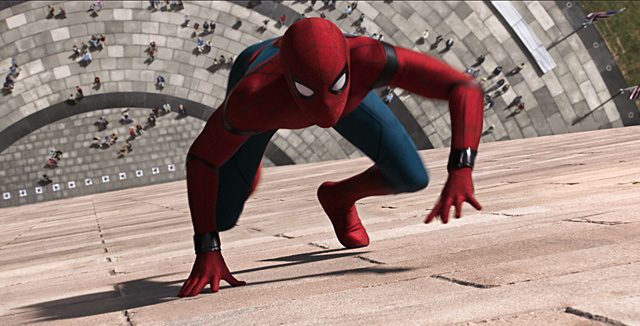
    The bright colors, catchy soundtrack, and witty dialogue make this incarnation of Spider-Man the most light-hearted. However, what makes Spider-Man: Homecoming the best movie in the many versions of the character so far is that it’s hyper-aware of what it is, who the character is, and has something completely different than both the 2002 and 2012 versions: Tom Holland. For all the genius direction and strong screenplay, the memorable supporting performances and top-notch character development, the best part of Spider-Man: Homecoming is the man — or should I say boy — himself.

    Holland, at 21, is closer in age to the original Peter Parker than Tobey McGuire or Andrew Garfield, which is already an asset to the film. It makes the character’s plights and personality more understandable. However, Holland brings even more. He gives Spider-Man a playful and endearing energy. He is truly a boy looking to live up to the name and the suit that Tony Stark (Robert Downey Jr.) gifts to him in Captain America: Civil War. But first and foremost, he’s a teenager. In this version of Spider-Man, Peter Parker is a 15-year old teen living in Queens with his Aunt May (a criminally underused Marisa Tomei), attending a science and technology high school, and is constantly drooling over the school’s it-girl Liz (Laura Harrier). It feels more like the set-up for a John Hughes movies or an episode of Freaks and Geeks. Except, this time the geek has superpowers.


    Luckily for us, we’re spared the retread of Peter’s all too familiar origin story. The movie even makes jokes at its expense. Instead, we’re thrown right into Peter’s quest to prove himself worthy of The Avengers, while also balancing school, friends, and the all too familiar teen urges. All the while, Stark acts like big brother, keeping a close eye on Peter with the help of Happy (Jon Favreau). Peter wants to do so much more than just be “your friendly neighborhood Spider-Man” as Tony puts it.

    However, as we see in the opening scene, there are bigger problems than a bike thief or giving a Dominican woman directions as we see in a hilarious sequence of Spider-Man performing good deeds. Immediately following the events of The Avengers, Adrian Toomes (Michael Keaton) wins a contract with the city scrapping the alien artifacts and debris from the damaged New York. But before he can get far in the cleanup, he is stopped by Tony Stark’s U.S. Department of Damage Control who take over. Toomes is enraged. But when he discovers he still has a truck full of alien artifacts leftover, he, along with his crew, start producing advanced weapons that he sells on the black market.

    Peter discovers the plot and wants to pursue it, but Stark won’t let him until he’s proven himself. At one point he says to his friend Ned (a delightful Jacob Batalon), “I’m sick of Mr. Stark treating me like a kid.” To which Ned replies, “But you are a kid.” However, like any teen told that they can’t do something, he does it. But still, he’s a teen in high school and must attend to his responsibilities like homework, the academic decathlon team, and ogle his crush.

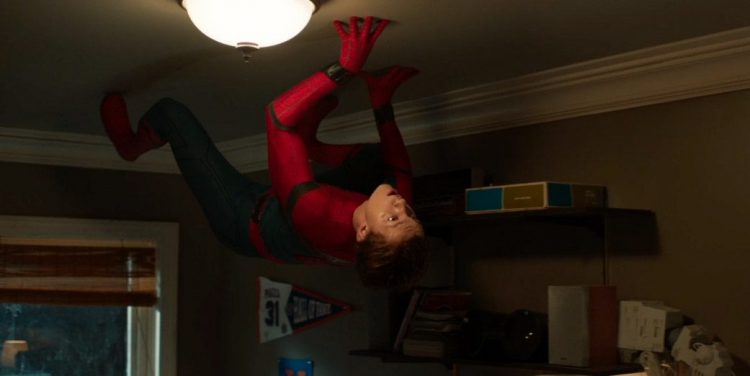
    Tom Holland in Spider-Man: Homecoming

    Superhero movies are balancing acts. No good superhero movie is just a single genre. The Dark Knight is also a crime movie. Captain America: The Winter Soldier is also a conspiracy thriller. Spider-Man: Homecoming is also a high school movie. For every scene of high action is a scene in detention or gym class or a party. Peter builds a Lego Death Star in between his crime-fighting activities. He uses his decathlon field trip as a cover for his investigation of the advanced weapons. The two storylines intertwine seamlessly until a reveal that sends them careening towards each other. The screenwriters unearthed the full potential of having a teenaged Spider-Man by letting him act like a teenager. One of the funniest gags throughout the movie is Ned’s inability to get over the fact that Peter is Spider-Man. “Can you summon an army of spiders?” he asks at one point. It’s the reaction you’d expect from a geeky teen finding out his friend is a superhero.

    Batalon isn’t the only supporting player that does great work here. Keaton is a clear highlight in the supporting cast — he’s almost too perfectly made for the part. However, actors like Zendaya, who plays one of Peter’s Academic Decathlon teammate, makes the most of her short screen time. She steals scenes with single lines and even looks.

    “I like drawing people in crisis… it’s you.”

    Hannibal Burress and Martin Starr both have short, but memorable roles as the school’s gym teacher and decathlon coach, respectively. Bokeem Woodbine is deliciously campy as the shocker. Chris Evans has a hilarious cameo as Captain America delivering an “after school special” type lesson via video. And Tony Revolori — best known as Zero in The Grand Budapest Hotel — gives us an updated version of Eugene “Flash” Thompson that feels in and of his time. However, the success of the movie still all comes back to Tom Holland and his sensational performance as the web-slinger.


    The success of Spider-Man: Homecoming can be boiled down to one thing: this Spider-Man loves being Spider-Man. Who wouldn’t? If you were a geeky 15-year old finding out that you had superpowers, you would too. As he swings down the Manhattan streets, he cheers. Holland is having the time of his life the same way his character is. One of the movies greatest virtues is that it’s hyper-aware of what it is. It’s a bright, splashy superhero movie that knows how to have fun with itself. However, that doesn’t mean it loses perspective in the grand scheme of the Marvel Cinematic Universe. It’s still about what it means to be a hero and the consequences doing good may have on the world around you. But Jon Watts and the six screenwriters also have an incredible sense of the character and what it means to be a hero specifically to him. With great power comes great responsibility, but great responsibility requires great self-awareness of oneself.

    In the end, Spider-Man: Homecoming stands on its own apart from the rest of the MCU — though there are several fun references to other movies. It doesn’t feel beholden to the franchise or obligated to launch a sequel, like 2014’s The Amazing Spider-Man 2. It’s a scaled-down version of a superhero movie, which is one of its many assets. Even its final battle feels close to the ground compared to the ones in movies past. But still, it leaves you craving for more. Aunt May makes sure of it with her blistering final line that will drive audiences to their feet.

    ★★★★ out of 5


    Watch Spider-Man: Homecoming on Amazon!

  • The Conjuring Universe Films, Ranked

    The Conjuring Universe Films, Ranked

    The Conjuring Universe is the first horror cinematic universe. See how we rank each of the movies in the franchise from worst to best!

    With five movies and over one billion dollars at the box office—and counting—The Conjuring franchise of movies has become one of the most unlikely cinematic universes following in the model of Marvel’s. It all launched in 2013 with James Wan’s The Conjuring, which premiered to critical acclaim and a box office to match. It eventually spawned two spin-off series and shows no signs of stopping—The Nun recently posted a franchise-best opening weekend. However, as the franchise expands, the expectations for each installment rises. So, below we’ve ranked all The Conjuring Universe films from worst to best!

    Let us know in the comments if you agree with our list and your rankings!

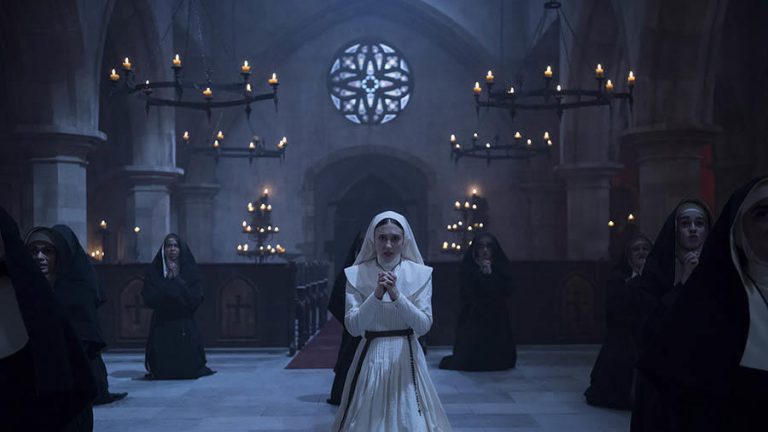
    The Nun (2018)

    Taissa Farmiga in The Nun

    The Nun is incredibly well shot and designed—its the first move in the franchise to not take place in a house—but that’s really where the compliments end. This entry is the first to feel like a big horror blockbuster, and that’s not a good thing. As with The Conjuring 2 later in this list, the reliance on CGI to support the scares cheapens the movie as a whole. Also, the movie has no tension because it goes from 0 to 100, then stays there, which would be fine if every scare didn’t follow the exact same formula. Its visually striking and has a strong lead performance by Taissa Farmiga, but this is the first movie in the The Conjuring Universe that makes me nervous for its future. 

    The Nun is available for pre-order on Amazon!

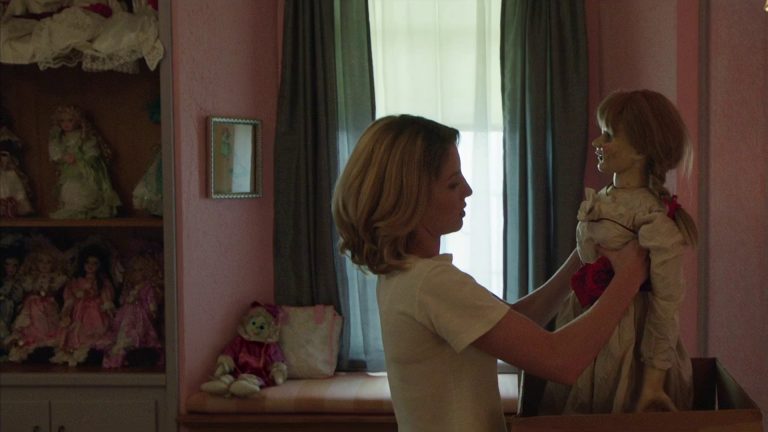
    Annabelle (2014)

    Annabelle Creation the Conjuring Universe

    Annabelle is actually better than it’s been made out to be. Yes, it relies too much on jump scares, has a formulaic plot, and two wooden leads that don’t add much substance. However, its horror, while fleeting, is effective—the home invasion set piece is particularly effective. Had the plot broken away from a typical horror movie formula and given interesting supporting characters like Alfre Woodard more screentime, it had the potential to be a solid entry in the franchise. 

    Annabelle is available to rent and buy on Amazon!

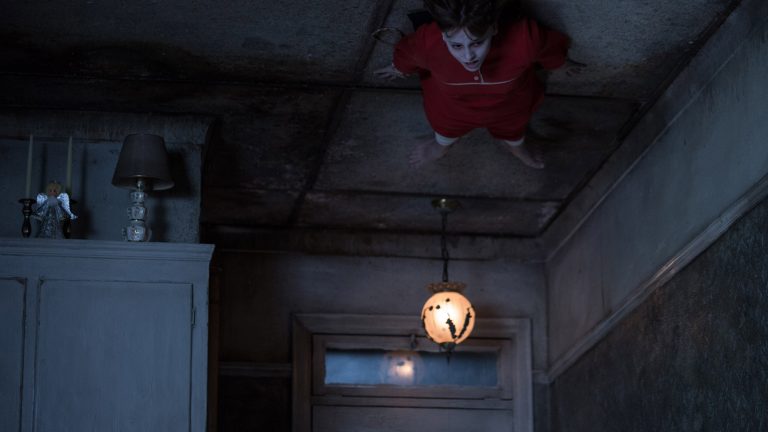
    The Conjuring 2 (2016)

    The Conjuring 2 finds the Warren’s tackling yet another family being tormented by a demon. This time, however, the Warrens are also being tormented by their own demons. Beginning with a stellar cold open featuring the infamous Amityville haunting, The Conjuring 2 has its moments, but fails to live up to the original. Its issues can be traced back to the problems most sequels have—it’s too big of a movie. The scares, while sometimes effective, are too reliant on CGI and retracing the patterns of scares from the original. The plot also became to complicated for the deeper emotional arc of the Warrens to truly pay off. 

    The Conjuring 2 is available to rent and buy on Amazon!

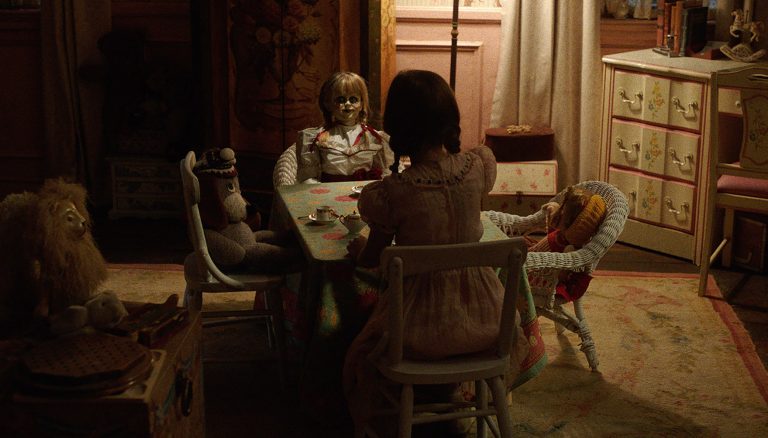
    Annabelle: Creation (2017)

    For franchises like The Conjuring Universe to work, studios need to hire interesting directors to tackle the projects—like Taika Waititi for Thor: Ragnarok or Patty Jenkins for Wonder Woman. That’s exactly what happened with Annabelle: Creation. Director David F. Sandberg, who broke out with his debut feature Lights Out, tackles the second movie in the Annabelle series with old-fashioned scares and atmospheric tension that make it a tense experience from beginning to end. Instead of relying on sudden loud noises, the movie relishes in its imagery and the silences that add tension.

    Annabelle: Creation is available to rent and buy on Amazon!

    The Conjuring (2013)

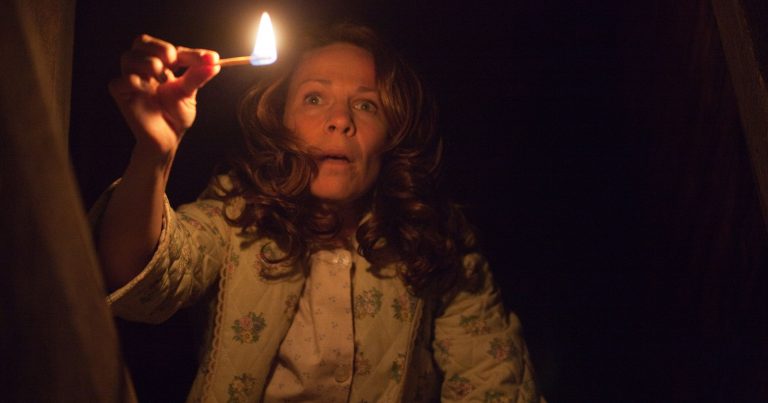
    Even five movies in, James Wan’s original The Conjuring remains the best movie in this franchise and one of the tentpoles of this new golden age of horror. Truly, The Conjuring holds up as a nearly pitch-perfect ghost story that treats its scares as fully thought-out set pieces—something that the franchise has strayed away from. It even arguably has one of the best horror set pieces in recent memory with the “hide and clap” scene (pictured above). However, the scenes connecting the scares are just as impressive. Unlike a lot of horror movies, The Conjuring actually develops its characters, specifically the Warrens. Even the scares are often character driven. There’s yet to be another movie in this franchise that has risen to this level. Granted, it set quite a bar. 

    The Conjuring is available to rent and buy on Amazon!


    What do you think? How would you rank The Conjuring Universe films? Let us know in the comments!

  • ‘Split’ review — James McAvoy gives the performance of his career

    ‘Split’ review — James McAvoy gives the performance of his career

    Split is an incredibly tense and well-made thriller that features fantastic performances by James McAvoy and Anya Taylor Joy.

    M. Night Shyamalan is back, for better or worst. The last Shyamalan movie I watched was 2008’s The Happening, so you could understand my hesitance going into this movie. Although I heard mostly good things about his last movie The Visit, dissociative identity disorder or multiple personalities is a hard subject to pull off well. Of course, you get into the dilemma of portraying mental illness as a danger to society. However, Shyamalan toes the line gently with Split

    The movie opens with a slow dolly shot of Casey (Anya Taylor-Joy) at a classmate’s birthday party in a suburban mall. She’s contemplative, uncomfortable, and obviously doesn’t belong. After her ride fails to show up, she hitches a ride with two of her classmates, Claire (Haley Lu Richardson) and Marcia (Jessica Sula). However, their driver, Claire’s father, doesn’t show up in the driver’s seat. As the camera menacing approaches the father packing gifts in the trunk, we realize that we are watching from the perspective of a malevolent force. A strange man (James McAvoy) steps into the car instead of Claire’s father. After knocking out Claire and Marcia, he turns to Casey, then we cut to the main title sequence.


    This scene is a perfect study of the patience and grasp of tension Shyamalan has in this movie. He lets shots linger. Like when the mysterious stranger approaches the car or the opening shot of Casey. Coupled with the brilliant cinematography by Mike Gioulakis, who shot 2015’s It Follows to great success, the opening is an incredible practice in tension and visual storytelling, which is something that we haven’t seen from Shyamalan since 2002’s Signs.

    And it’s not just the opening scene that is filled with tension. All of Split has this impressive slow-burning dread that underlies every scene. It makes you want to turn away from the screen. It’s a combination of the creative elements that Shyamalan was able to pull together that pulls it off. Specifically, the simple production design of the bunker, which feels like an endless maze of tunnels, the heavy bass of the score, the cinematography, and the performances come together to create an ominous mood. When we start getting into the meat of the story some of that goes away, but generally, the movie keeps tightening and tightening until the last 20 minutes.

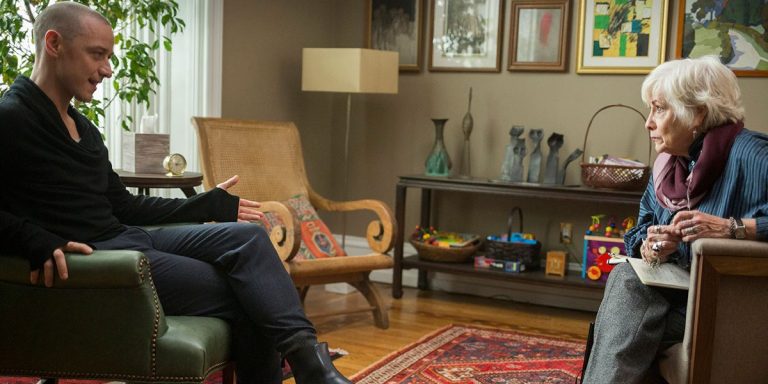
    The girls’ captor is revealed to have Dissociative Identity Disorder, which means 23 different personalities control this one body — a spirited nine-year-old, an obsessive-compulsive brute, a disciplined and proper English woman. The main alter, Barry is a fashion designer with a generally happy attitude and motivation to get past his condition. His scenes with his therapist Dr. Karen Fletcher (Betty Buckley) have nearly as much tension as the scenes with the three girls as they attempt to escape from the bunker he brought them to. It’s difficult to talk about why the use of DID as a plot device is justified without edging into spoilers. However, this is a movie that is recontextualized by its ending — for the better.

    James McAvoy is remarkable. Not only because he has to play a menagerie characters, but because the way he distinguishes between each is so specific. When he walks into a room you can tell just by his posture which alter he is. And when he becomes each alter, he inhabits them wholly in his speech, facial expressions, and even the way he moves his jaw. Though he’s certainly playing to the back of the theater, it works because of the recontextualization of the movie.

    That’s not to take away from the other performances. Betty Buckley is marvelous and sure-footed as Dr. Fletcher and Anya Taylor-Joy gives a complex, yet nuanced performance as Casey. But you just can’t help but be both drawn in and terrified by McAvoy.

    Split is built like a mystery that allows the audience to piece together the clues without tipping its ultimate hand.


    We know and fully expect a plot twist in an M. Night Shyamalan movie. However, the question becomes whether it enhances or destroys the plot. And honestly, it does both. For those who are confused or put off by the movie’s

    Up until the last 20 or so minutes, Split is a tense, tightly directed thriller that would probably have ended up among my favorite movies at the end of the year. It is still a really great movie, but the ending nearly takes all the momentum it had going. Does it make it a bad movie? No. It’s still a good movie. While Shyamalan is known for his self-indulgence – some low brow humor and of course an appearance in the movie – he shows restraint for most of the movie. However, nearly all of its success has to be put on James McAvoy who should hopefully finally get the roles and respect he deserves. If anything, watch Split for the masterclass in acting happening on the screen.

    ★★★ out of 5


    Split is available on Blu-Ray and Digital HD on Amazon!

  • Midnight Special Movie Review — A pitch-perfect 80’s sci-fi throwback

    Midnight Special Movie Review — A pitch-perfect 80’s sci-fi throwback

    Midnight Special proves that you don’t need huge explosions, action set pieces, or over-the-top special effects to make a great sci-fi movie

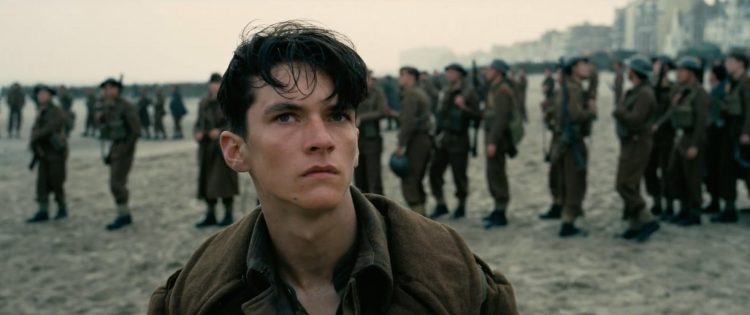
    The 80s are back in style. From Carly Rae Jepsen’s EMOTION to Stranger Things to Everybody Wants Some, it seems like Hollywood had a board meeting and decided that this is the decade we’re going to be homaging this year. However, unlike the clear homages that these were, Director Jeff Nichols’ Midnight Special feels more influenced by the decade. And specifically by E.T., It’s influenced by its character-driven plot that overshadows the sci-fi one and it inherits the decade’s anxiety about the extent of the government’s control.

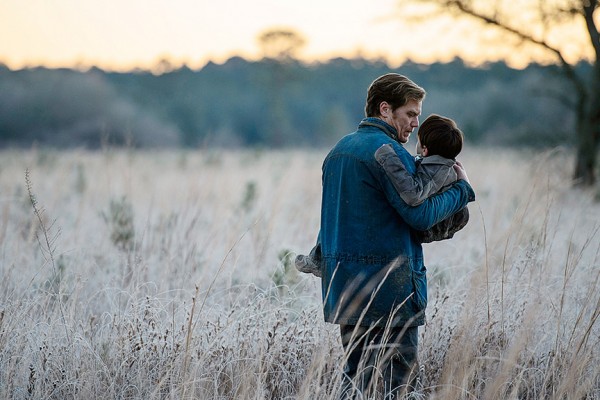
    However, the story is much small than that. Boiled down, it’s a story about a father and the lengths he will go to protect his son, Alton (Jaeden Lieberher). However, Alton isn’t just any 8-year old kid. He possesses incredible powers that are not of this world (which seem to be influenced again by E.T.). This has made him a hugely sought after property by two groups in particular: The Ranch and the government. The Ranch is a cult that sees Alton as a Jesus figure while the government sees him as a weapon. Both groups will go to extraordinary lengths to retrieve him, which Roy (Michael Shannon), Lucas (Joel Edgerton), and Sarah (Kirsten Dunst), won’t let happen.


    The entire movie begins en media res. From there, Nichols builds a compelling narrative that doesn’t concern itself with huge ideas (though the ending betrays this, but I’ll leave that for you to decide). All we know at the beginning is that there is an amber alert for a 9-year old boy. The government is orchestrating a cross-country chase for Alton, Roy, Lucas, and Sarah which is being led by Paul Sevier (Adam Driver), a surprisingly amicable NSA agent. As the group makes a run for it, we learn what exactly they’re running to and why so many people are interested in a 9-year old that wears giant headphones and swimming goggles.

    One of the most amazing things about Midnight Special is its incredible trust in its audience. It is a true exercise in showing, not telling. The most obvious example (although the movie is strewn with subtle ones) comes from the character of Lucas. Nichols is so careful with his framing of Lucas. He never shares the frame with the full family, and when he does he’s relegated to the far background. To me, Lucas’ storyline is the most intriguing. He has no reason to help Roy and Alton. However, with smart cinematography and Edgerton’s career-high performance we are able to attain that he is looking to be a part of a family. Just some lingering looks he gives is all we need to know that he cares.


    Overall, the movie has wealth of phenomenal performances. There’s Michael Shannon whose struggle to be strong for his son is outlined by his clear fear of losing him. He tells him at one point: “I’ll always worry about you, Alton. That’s the deal.” Kirsten Dunst;s perpetually worried Sarah, who is Alton’s mother, offers more outward emotion compared to Shannon’s intrinsic approach and becomes the emotional center of the film. However, Joel Edgerton is the true standout for me. His understated performance is a pitch-perfect complement to the film’s naturalistic style.

    Midnight Special isn’t going to be a movie that everyone loves. While the pretty simple, linear narrative is the set-up for most crowd-pleasers the focus on the family unit and their motivations may cause some people to ask, “what’s the point?” Government conspiracies, cults, and even the sci-fi elements take a back seat to the family drama surrounding Alton Meyer. While the entire movie is exciting with incredibly realized set pieces, the love that the principle characters show for each other is what makes it a great movie.
    7/10

    Midnight Special is available on DVD, Blu-Ray, and digital on Amazon!

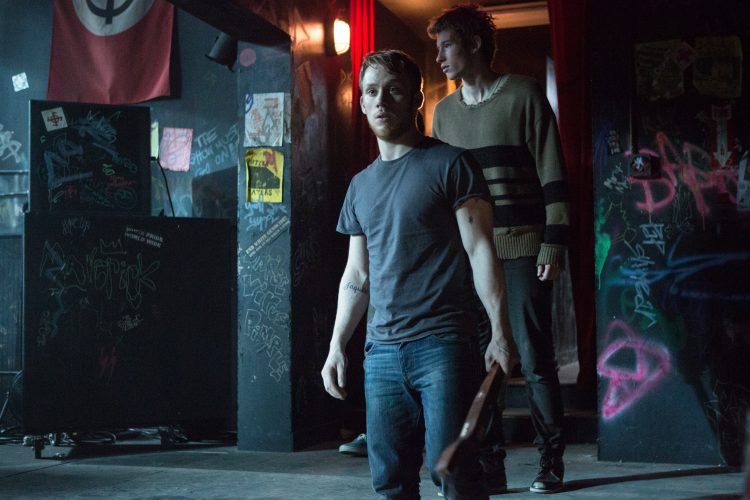
  • Green Room Movie Review — A tense thriller that pits punks against Nazis

    Green Room Movie Review — A tense thriller that pits punks against Nazis

    Tense, grizzly, and incredibly well-made, Green Room is a unique and incredibly strong entry in the thriller genre.

    What can I say about Jeremy Saulnier’s dark and twisted Green Room that hasn’t already been said? It’s a movie that has never truly existed until now. Maybe the general premise has, but the way Saulnier tackles it is unique in almost every way. However, it’s this point-of-view of non-violent violence that I find the most interesting. He doesn’t linger on the violence or the gore of the film, which is impressive considering there’s a lot of it. Instead, he focuses on the characters and the story, which could easily fade into the background. This careful perspective makes Green Room one of the most successful genre films in the last few years.

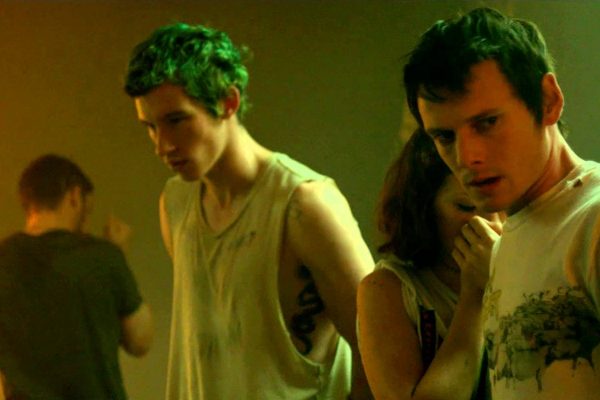
    The reason Saulnier’s last film Blue Ruin, which first brought him into the public eye, was so successful was because of its protagonist. He was an ordinary man in extraordinary circumstances. The Ain’t Rights, a fictional punk band touring the Pacific Northwest, definitely fits the bill. The movie begins with them in a cornfield after the band’s singer Tiger (Callum Turner) falls asleep behind the wheel. They are out of gas, which forces Pat (Anton Yelchin), the bassist, and Sam (Alia Shawkat), the guitarist, to find cars to siphon gas from. This small detail is interesting because it immediately pulls their innocence as people away. But Saunier’s screenplay redeems them as people by subtly detailing their commitment to each other as friends and bandmates.


    The first 20 minutes or so is a phenomenal exercise in character building. Without any expositional dialogue, you learn the relationship between the bandmates and their personalities. Pat (Anton Yelchin) is the more reserved heart of the group, Reece (Joe Cole) is impulsive and aggressive, Tiger (Callum Turner) feels like the kid of the group, while Sam (Alia Shawkat) is devoted to all of them. Character details aren’t crammed down your throat. Instead, as the movie goes on we pick up on those character details as they’re needed.

    After a performance goes bad, they take a gig at a neo-Nazi punk bar. Yeah, they’re not the sharpest tools in the shed. However, after spending some intimate moments with them during the beginning of the film, you realize that they’re taking the gig out of necessity. Needless to say, things don’t go quite as planned. After their set, during which they hilariously play “Nazi Punks F*ck Off,” Pat stumbles on a crime committed by one of the guys in the club. They are locked in the green room and must figure out how to escape before the fearsome Nazi leader Darcy (Patrick Stewart) arrives with reinforcements. It’s punks vs. Nazis.

    Unsurprisingly, it gets ugly – blades, dogs, and all. But not in the way you’d think.

    Joe Cole and Callum Turner in Green RoomLet’s get back to this non-violent violence. The premise is inherently a violent one. However, playing against genre tropes, Green Room doesn’t focus on the violence or really show much of it. The same goes for the gore. While it is there and present, he doesn’t dwell on it. In one intense scene, a character’s arm gets injured. Most directors would be interested in that aspect of the scene. Instead, Saulnier takes a look at what is happening around this one violent act. It’s incredibly refreshing after a period of time where it seemed that every movie wanted to be the next Saw.

    That doesn’t mean it doesn’t have some genre cliches. At one point a character even suggests they split up. However, it’s aware of its own “horror movie logic.” Another character immediately shuts down the idea of splitting up. I’m not going to put it lightly, these characters are dumb. But they feel real. The decision-making process is the same as yours or mine if we were in this situation. You’re not always going to make the smart decision under pressure. That’s what makes Green Room so unique. There aren’t any incredible acts of heroism or superhuman actions. It’s a movie that is as grounded in reality as possible. That goes for both sides. Even the neo-Nazis, who seem like fearsome villains, make mistakes and selfish decisions. There isn’t this horde mentality that often happens with the villains in these “escape” movies. Each one has their own distinct motivations and personalities. In particular, Gabe (Macon Blair) becomes the most interesting from the group.


    As the movie progresses, sides are crossed, lives are lost, and the situation becomes dire. There are small pieces of plot that play in, but this movie is about the characters. That’s partially thanks to the actors. Anton Yelchin, who moves to the forefront among the band, is a phenomenally grounded character. His body language and line delivery suggest his reluctance to be the leader and his desire for this situation to just be over. Imogen Poots is also a standout as on of the Nazis who becomes shuffled in with the band. It’s surprisingly layered. On the surface, she’s this potentially insane, creepy presence. But small details reveal that there’s more there. Even something on the edge of caring. Patrick Stewart plays refreshingly against type. And while it’s a good performance, I really wished he had more to do. There wasn’t much depth to him.

    Green Room is a movie that deserves to be rewatched. It’s really hard to articulate how well-made this movie is. I’ve watched it at least five times and still want to come back for more. There’s just so much in it to dissect and so many details to discover. Every time I watch it, I find something new or learn something different about a character. I see something happening in the background of a scene or a detail in the set. It’s a thoroughly realized piece of film that will hopefully retain the acclaim it has received. And, for the record, my desert island band would be…

    9/10

    Green Room is available on DVD, Blu-Ray, and digital on Amazon!

  • Star Trek Beyond Movie Review — Focus on character revitalizes the reboot franchise

    Star Trek Beyond Movie Review — Focus on character revitalizes the reboot franchise

    Justin Lin’s Star Trek Beyond shows that a blockbuster can be in the same realm as a character drama and still be successful

    Going into Star Trek Beyond I wasn’t feeling the highest on Star Trek Into Darkness (check out my review here). I thought it was thisclose to being a great movie. But two things kept it from that. The first was the underutilization of the full cast. Second, the movie felt more concerned with having these epic action set pieces that it forgot to have a strong plot underneath connecting them. Since Justin Lin was directing it I was a bit nervous that it would actually be even more concerned with action set pieces. He proved me wrong. He proved me so wrong, in fact, that I think this is the strongest movie in the Star Trek reboot franchise.
    Now, I will precede this review with the fact that I saw the movie during an incredible birthday weekend orchestrated by Brian, but I really think that this movie will hold as one of the best blockbusters of the decade.

    I’m not too familiar with the Star Trek franchise outside the reboot films, but I imagine this is what the series felt like. Justin Lin has shown surprising restraint in character scenes throughout the movie. The movie begins with a simple, but resonant monologue that talked about what is like aboard the Enterprise when they aren’t being attacked or fighting. Lin said he was interested in those moments outside of work and how characters interacted with each other in a personal setting and this sequence was perfect in positioning the overall mood of the movie.



    In all, this movie was the most humanizing of the franchise so far. That brings me to the much talked about decision to make Sulu (John Cho) gay as a tribute to George Takei. As a gay Asian man it was so refreshing to see that particular culture portrayed on screen and the meaning behind it was even stronger. The way it was handled was so beautiful. It didn’t feel like an epic moment. It felt normal. As John Cho said, in ten years it’ll just fade into the background because his sexuality didn’t matter. But what was even more impressive was that this movie talked about the lives of these characters outside of the ship. There was Sulu’s family, but early in the movie, there was a scene between Bones (Karl Urban) and Kirk (Chris Pine) where they talked about his father’s death and talking to his mother. It’s so easy to forget that these characters have lives and that three years aboard a ship is going to take a toll.

    As for the main plot and action, I think that it is visually one of the most interesting and impressive of the series so far. The Enterprise is attacked just above an uninhabited and uncharted planet and as the crew gradually evacuates, they are separated and some are taken by the mysterious villain Krall (Idris Elba).

    The pairings make for incredibly funny moments, but also such great character moments. There are McCoy and Spock which makes for a hilarious pair, but also really touching moments when Spock begins to question his morality. They naturally seem like such opposites, but when they are faced with what seems like a hopeless situation they raise each other up in their own unique ways.

    Then there’s Chekov (Anton Yelchin [RIP]) and Kirk. I think that Chekov felt like a boy in the first two movies, but he truly comes into himself here with Kirk as his fatherly figure. I wish there was more to their story, but the work the Yelchin and Pine put into it is some of the strongest acting of the series.

    Uhura (Zoe Saldana) remains the heart of the crew and that continues when she’s imprisoned by Krall. She is out insight into him. Plus, she gets to kick ass. I wish her role was more integral to the plot, but I’ll take what I can get. She matches with Sulu, who has also become this strong heart in the crew as well.

    Lastly, we have Scotty (Simon Pegg) and Jayla (Sofia Boutella). They become unlikely partners when she saves him from a group of bandits on the planet. Her ignorance to some of the human tendencies makes for hilarious exchanges between the two. But she also has a nice arc about what it is to be brave. Boutella is a breakout star. Her addition ups the female power in the series and shows what an action hero can truly be.


    But as much as I love the action set pieces like the Enterprise being attacked and crashing into the planet or the rescue plan for the imprisoned crew, I still go back to these character moments. However one sticks out to me in particular.

    MILD SPOILER ALERT AFTER THE JUMP

    Early in the film, we are shown the futuristic Federation base Yorktown. The same way our hearts swelled when we first saw dinosaurs in Jurassic Park and we heard the score swell, the visuals of this city were incredible. But it plays a part at the end of the movie too when Krall turns his attack towards it.

    We are introduced to Sulu’s family on the base, which adds an emotional element to the attack. We aren’t seeing faceless red shirt being killed. It is Sulu’s family who we care about because we care about Sulu. It was a smart simple touch that made the film all the better.

    END SPOILERS!

    Star Trek Beyond is about unity and why being together is better than being apart. With the Brexit and Donald Trump being in the news this year, that message holds, even more, truth. However, Star Trek doesn’t concern itself with politics. Yes it had the first interracial kiss on television, yes they have a gay Asian character, but these are born out of moments of character. It’s what made Mad Max: Fury Road so great and what makes this one of the best movies of the year so far.

    8.5/10

    Get Star Trek Beyond on DVD, Blu-Ray, or digital on Amazon!

  • Star Trek Into Darkness Movie Review — A solid but underwhelming follow up

    Star Trek Into Darkness Movie Review — A solid but underwhelming follow up

    It doesn’t live up to the first movie in the franchise, but Star Trek Into Darkness holds its own as an action thriller

    With Star Trek Beyond hitting theaters this week I thought it’d be the perfect time to go back and review its predecessor, Star Trek Into Darkness (the title gets a negative review).

    I need to explain my history with the Star Trek franchise before diving into this review. Three words: I. Have. None. Yes, my first experience with Star Trek was J.J. Abrams’ 2009 reboot and Patrick Stewart’s facepalm meme. That being said, it was nice going into this film with no prior conceived notions of even the tone of what came before. I didn’t know if it was going to be a crowd pleaser like Star Wars or a gritty action thriller like Alien. I quickly found that it essentially toed the line down the middle, though straying more a bit to the crowd-pleasing side.

    I loved the first movie. I thought it was an incredibly sleek and well-shot action thriller that had a surprising amount of depth in its characters. It was the chemistry among the cast and Abrams’ surprising grasp of the film’s mood that made it so successful. It’s surprising that it took me this long to finally get to the sequel. It’s simply one of those movies that just slipped through the cracks. But when I finally did I thought it was a mixed bag.

    Starting off with the cast. I think that the supporting cast was severely underutilized. Zoe Saldana‘s strong, take-what-I-want Uhura was relegated to a pissed off girlfriend role while Anton Yelchin‘s (RIP) endearing Chekov simply ran around saying what was going wrong. John Cho‘s Sulu, even though at one point becoming the acting captain of the Enterprise, didn’t get much more than some strong lines then fades into the background.

    “Nyota, you mistake my choice not to feel as a reflection of my not caring. Well, I assure you, the truth is precisely the opposite.” – Spock

    Instead, a lot of time was devoted to the relationship between Chris Pine‘s Captain Kirk and Zachary Quinto‘s Spock. I didn’t mind that per se, but much of that storyline didn’t need nearly as much time as it received. Another storyline that had a little too much time was Benedict Cumberbatch‘s villainous turn as Kahn. While I appreciated the attempt to create a multi-layered antagonist with motives that could be perceived as admirable, they gave him too much time to monologue and not enough to be a really cruel bad guy.

    We get a moment briefly when his cruelty is truly explored when Kirk, Spock, Scotty, and Dr. Carol Marcus (Alice Eve) are trapped on an enemy ship, but that moment is short lived. That’s the issue I think Abrams had this time around. He was too concerned with creating these epic set pieces like Kirk and Kahn space diving to another ship or a battle with a Klingon patrol and forgot that there was a story to tell.

    That being said, I thoroughly enjoyed these set pieces and the chemistry between the two lead actors. Plus, there were some moments that weren’t as epic but still showed great vision from Abrams, like an attack on a Star Fleet archive early in the movie. He showed some great restraint and focused more on this incredibly minor character’s motivations to the point that it very well might have been the most affecting part of the movie.

    If you enjoyed the first Star Trek, then you will probably enjoy Star Trek into Darkness for what it is: a summer blockbuster. It doesn’t have the charm or the heart of the first, but it gives enough fuel to the franchise to warrant its existence.

    7/10

    Get Star Trek into Darkness on DVD, Blu-Ray, or digital on Amazon!

  • Atomic Blonde review — Charlize Theron is the action hero we need

    Atomic Blonde review — Charlize Theron is the action hero we need

    Atomic Blonde is a fun, 80s romp of an action movie with a performance announcing Charlize Theron as our next great action heroine

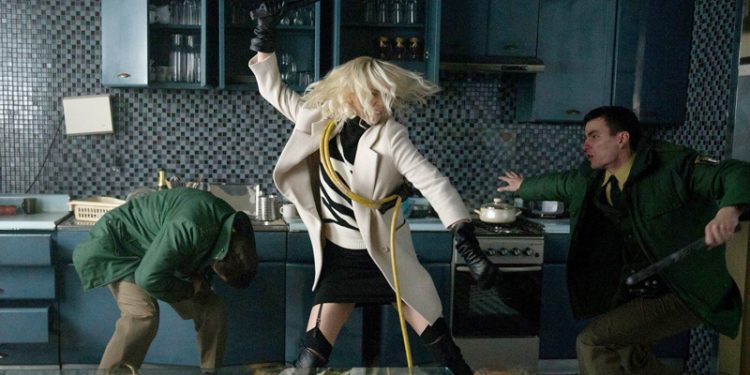
    There’s a scene about two-thirds of the way through Atomic Blonde that can only be summed up as “that scene.” It’s the scene that will stick with you at the end movie. At the end of it, I sighed under my breath, “oh my god,” in awe. David Leitch, the stuntman turned director best known for John Wick, knows how to capture action the same way he knows how to choreograph it.


    Atomic Blonde is based on the graphic novel The Coldest City, which isn’t surprising watching the film. Every frame feels like it could be a comic panel. Tight close-ups on the characters are given equal weight as the epic wide shots. The opening text explains how the Berlin Wall would eventually come to fall before quickly clarifying that this is now that story. The movie is framed by a debriefing of Lorraine (Charlize Theron), an MI6 operative that went rogue in the days leading up to the fall of the wall. When we first see our protagonist, she rises out of a bathtub filled with ice badly bruised across her entire body. “What happened? ” you might ask. Well, that’s exactly what MI6’s Eric Gray (Toby Jones) and the CIA’s Emmett Kurzfeld (John Goodman) are trying to figure out.

    By framing the movie as a debriefing where Lorraine is telling us the story of the past ten days, the rest of the movie is essentially told by an unreliable narrator. One that is especially hostile towards her interrogators. It makes the twisting plot all the more interesting. She is tasked with going to Berlin to find a list containing secrets of the agents in Berlin. It’s the classic espionage movie setup, but Leitch has fun with it. Throughout the movie spies, assassins, and double agents are thrown at Lorraine. Secret messages are traded. It feels like a classic spy movie.

    David Leitch doesn’t hold back when it comes to action sequences. Though, he uses them sparingly. Unlike John Wick, Atomic Blonde isn’t non-stop action. It allows time to build relationships and character. Even if the story does get lost in the plot heavy second act, stylistically it’s beautiful to watch. It also helps that they’re undercut with 80s hits like “Father Figure,” “99 Luftballoons,” “Voices Carry” and “Under Pressure.” It’s bright, it’s efficient, and it has a musicality to it that makes it a pleasure to watch.

    The first and last thirds of the movie, though, are what makes Atomic Blonde great and a delight to watch. The first real action sequence of the movie shows Lorraine fighting her way out of a car, then fighting her way out of an upper floor apartment. So much of the movie’s action is her escaping. It’s almost as if she never intends to get into fights. It’s refreshing considering so many action movies today are focused on getting to something or getting revenge. The violence in this movie is necessary, but it’s never lingered on.

    https://www.instagram.com/p/BhXj-wng8B8/?taken-by=cinemabunbaking


    However, for all the incredible action, well-curated soundtrack, and sleek directing choices, it’s the actors that elevate it past the page. Theron’s impressive action sequences — she did most of her own stunts — and icy demeanor make her an instantly likable action heroine. And though she definitely gives the movie its edge, other characters give it life. James McAvoy does great work as the eccentric Percival and makes every moment he’s on screen count. Even the smaller roles make a huge impact. Sofia Boutella’s role as a mysterious woman that encounters Lorraine — in more ways than one — is a strong emotional core that with a different actress could have made the end of the movie very different. The standout in the supporting cast, for me, is Bill Skarsgard as an MI6 agent supporting Lorraine in Berlin. He portrays so much with just looks. He’s a surprising highlight in the film.

    Atomic Blonde looks and feels different than any action movie before it. It takes every beat with a spring in its step. However, when it has to get down to business, it gets down to business. Whenever I think of the movie, I always go back to “that scene.” It’s tightly choreographed and shot to look like a 10-minute continuous take. You can’t do anything but hold your breath until it’s over. It’s that effective. Nearly every element of the film comes together to sell it. However, the film surrounding that film is pure fun. It’s the action romp that feels right at home in summer blockbuster season.

    ★★★★ out of 5


    Watch Atomic Blonde on Amazon!

  • Why ‘Closet Monster’ is a Modern Gay Masterpiece of Accepting Yourself

    Why ‘Closet Monster’ is a Modern Gay Masterpiece of Accepting Yourself

    While there has been a resurgence of great gay coming-of-age stories, Closet Monster has been pushed to the side. However, it deserves to get its due as a queer masterpiece.

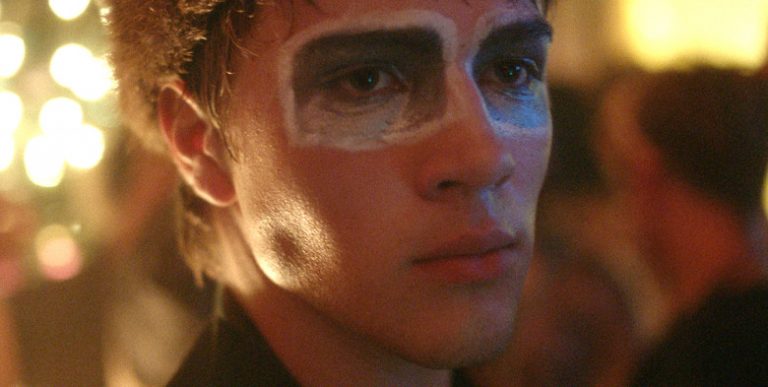
    I have watched this movie 4 times before being able to put into words what this movie makes me feel. Closet Monster revolves around Oscar Madly as a 9-year-old (Jack Fulton) but, for the majority of the movie, an 18-year-old (Connor Jessup), who is told by his mother Brin (Joanne Kelly) and father Peter (Aaron Abrams) that they are separating. Harboring negative sentiments towards his mother, Oscar lives with his dad and hamster Buffy (voiced by Isabella Rossellini) and sees his mother sparingly. Later on, Oscar, at the ripe age of 9, becomes the sole eye witness to a gay hate crime committed in a cemetery where multiple teenagers insert a metal rod into a young gay man’s anus who becomes paralyzed from the waist down as a result. Okay, so he is not the sole eye witness if we are counting Buffy.

    After a pretty cool transition shot of Oscar falling from a tree house as a 9-year-old and hitting the ground as his 18-year-old self, Oscar, along with his best friend Gemma (Sofia Banzhaf), are planning a move to New York City after graduation. Oscar is a burgeoning special effects makeup artist who is putting all his hope into his dream school. As Oscar eagerly awaits an acceptance letter, he spends his time working a retail job where he meets Wilder (Aliocha Schneider), who apparently has a jawline that can’t be found in Canada. After a less-than-exciting kiss with Gemma and a brush with Wilder, it becomes apparent to Gemma and Oscar that he is gay. The movie spans Oscar’s daily life as he butts heads with his immature father who wreaks of toxic masculinity.

    Upon first viewing, I was far too stuck in the literal to understand the movie well. With a talking hamster, throwing up screws, and recurring stomach pains, I was just a bit confused, but then I watched it again. I was able to appreciate the blended figurative with the literal. While I am a big fan of movies, I rarely find myself on screen. I mean, that is not that odd in general, especially because I am gay. While gay characters are certainly on the rise and getting their stories told (finally), I never related to a characteruntil Oscar.

    This is a movie that was not just entertaining but it helped me reflect on my life, my difficulties with my own sexualities, and how I came to terms with it. In the beginning of the movie, Oscar’s father gives him a dream one night, which is their routine where his father describes a scenario for Oscar to dream of, blows it into a balloon, and lets the air out on Oscar’s forehead. In this dream, he tells 9-year-old Oscar that he will be surrounded by sexy ladies. This was the first thing that resonated with me because I remember how I would squirm internally when someone would say something that would imply that I was attracted to women. From family to doctors and friends to even strangers, the world assumes you are heterosexual, and when you are not, little things like that can be extremely anxiety-inducing. Oscar’s father also regularly used the term queer as an insult towards Brin’s new husband. Peter is a prime example of toxic masculinity, presumed heterosexuality, and homophobia.

    As the movie progresses, Oscar’s feelings for Wilder grow, which is made abundantly clear as Oscar masturbates to a shirt that was worn by Wilder. While masturbating, Oscar, to his horror, looks down and, instead of his penis, sees the very bloody rod that was used years ago during a hate crime. In an inversely proportional relationship, Oscar’s relationship with his father deteriorates rapidly. Their relationship comes to a head one night when Oscar dresses in some of his mother’s old clothing for a costume party at Wilder’s. His father, disgusted at the thought of his son wearing any clothing or partaking in any event that may be construed as gay, tells him he can’t go. To which, Oscar ironically kicks him into his closet and leaves the house. During the night, Oscar is offered a pill, which he takes.

    In a drug-induced daze, Oscar is pursued by a handsome stranger. As they dance, this stranger attempts to grope Oscar, which makes Oscar quickly leave and attempt to collect himself in a bathroom. The stranger quickly follows him and, while never actually kissing him, begins to have sex with Oscar that seems to be less than fully consensual. This ends shortly as Oscar becomes sick and throws up bloody bolts. The recurring rod and bolts are a beautiful metaphor that periodically returns every time Oscar attempts to address or process any thought or action that may be seen as gay.

    What I love about this movie is his relationship with Buffy the hamster and the fact that Oscar always carried a wooden stake as a child for a form of protection, which he dropped at the scene of the hate crime. It may seem like a less significant storyline, but Buffy is truly an important reflection of Oscar. Upon first viewing, I took Buffy’s words as her own dialogue, but the movie took on such a deeper meaning for me when I viewed everything Buffy said as if Oscar was saying it himself. Buffy always responded with what he needed to hear. When his parents fought as a kid, Buffy would confide in Oscar that she was afraid, which was his only coping mechanism for the shattering of his family. When he witnesses a hate crime, Oscar is rightfully frozen in fear. It is Buffy who utters “do something,” which makes Oscar step forward and help scare away the attackers. Buffy is able to convey some of Oscar’s deepest fears or feelings to him without Oscar feeling like he is approaching them head on alone.

    On top of that, any gay thought or feeling Oscar has is always encumbered by the hate crime he witnessed. Whenever Oscar fantasizes about Wilder, Wilder is always pictured in the exact graveyard that the hate crime took place in. Throughout the movie, Oscar realizes Wilder is predominately straight. Although Oscar realizes there will not be a relationship between them, Wilder does help Oscar accept that he is gay after they share a kiss. I think it is important that Wilder has the obvious faults that he does. I like that Wilder quietly exits the movie with no real goodbye because it is indicative of what growing up gay is like for many people. At least for me, I grew up developing crushes on anybody that I thought may like me back. I mean, I felt like a complete outsider, so the thought of any boy maybe liking me back was honestly enough to have my interest; I think this is why Oscar gravitated towards Wilder so much.

    As Oscar wakes up the next day, he goes to his mother’s house and has a heart-to-heart with her about the divorce and how he felt abandoned. During this talk, his mother tells Oscar that when he was born, he came out with the umbilical cord wrapped around his neck like a noose. What I thought was amazing was that much earlier in the film, Oscar is flipping through his photoshoots, and the camera briefly shows a photoshopped image of Oscar with a noose around his image. I really enjoyed the subtle full circle moment this conversation brought to the table. After this conversation, Oscar returns to his father’s house to find that his room has been torn apart by Peter. As he faces his father, Oscar admonishes his father for his actions.

    Oscar leaves the house to find his mother urgently telling him to get in the car. She fails to protect Oscar from the scene of all of his belongings on the front lawn. Unfortunately, he discovers Buffy’s dead buddy and, along with it, his old stake, which was left at the scene of the hate crime many years ago. As a beautiful score begins, which I am currently listening to on repeat as I write this review, one of the most powerful cinematic moments plays out. All audio fades out as Julian Brewer’s Trance plays. Oscar doubles over in pain from a protrusion in his stomach. At last, he pulls the bloody rod from his stomach–a beautiful portrayal of his finally accepting his sexuality and pain as being valid.

    Oscar steps toward his mother and father, who are arguing. As Oscar approaches his father, he raises the metal bar. Happy memories of his father from his childhood flash across the screen. Obscure images of Buffy and Wilder are intermingled with these memories. The music takes a powerful crescendo as Oscar yields the bar and is set to strike as his terrified father and petrified mother look on. As Oscar brings the rod down on the mailbox, the music ends. His father scurries into the house, and Oscar uses the very bar that has hurt him for so long to lock away the man who has hurt him for his whole life inside the home where he felt so much pain.

    As the movie ends, Oscar goes to live in an artist’s residency. As he lays in bed, he hears his father’s voice utter loving thoughts. His father’s disembodied voice tells him he loves him and is so proudAnd then the balloon pops. The dream is broken. It is just that. A dream.

  • 2018 Oscar Nominations — Final Predictions

    2018 Oscar Nominations — Final Predictions

    The Oscar nominations for the 90th Annual Academy Awards are upon us! This has easily been the most unpredictable season in recent memory for the Oscars. There is still no solid Best Picture frontrunner and most categories don’t have a solid group of nominees yet. Come nominations morning — Tuesday, January 23rd — we are in for snubs, shocks, and surprises.

    I’m predicting that The Shape of Water will lead with 13 Oscar nominations, followed by Dunkirk with 8.

    Here are my final Oscar nominations predictions!

    Best Picture

    Call Me By Your Name
    Dunkirk
    Get Out
    The Florida Project
    I, Tonya
    Lady Bird
    Three Billboards Outside Ebbing, Missouri
    The Post
    The Shape of Water

    Because of the rule that there can be between 5 and 10 nominees in this category — basically, you have to earn at least 5% of the total first-place votes — it’s almost impossible to predict exactly how many nominees there will. That makes predicting the bottom half of the category particularly hard. Get Out, Lady Bird, The Shape of Water, and Three Billboards are the frontrunners in the category and are safe for nominations. Dunkirk and Call Me By Your Name have been consistent the entire season, so they should be safe too. That leaves 2-3 spots. Mathematically, this category should always end up with 8 or 9 nominees. The Post is probably the safest bet. Since this has been such a divided season, I think there is a good chance for 9 nominees. The Florida Project could follow Room and fly under the radar all season, then show up at the Oscars and I, Tonya is certainly popular and nabbed a surprise PGA nomination, so those would be my picks.

    Best Director

    Sean Baker, The Florida Project
    Guillermo Del Toro, The Shape of Water
    Greta Gerwig, Lady Bird
    Jordan Peele, Get Out
    Martin McDonough, Three Billboards Outside Ebbing, Missouri

    A good rule of thumb for this category is that it mirrors the Directors Guild Award nominations with one difference. Last year, Garth Davis was pushed out for Mel Gibson. Before that, Ridley Scott was pushed out for Lenny Abrahamson. I think that the second example is the precedent I’m using for this. I think Christopher Nolan is going to be snubbed, yet again, and Sean Baker is going to slip in for The Florida Project. This is probably the gutsiest prediction I’m making this year. Let’s see if it pans out.

    Best Actor

    Timothée Chalamet, Call Me By Your Name
    Daniel Day-Lewis, Phantom Thread
    James Franco, The Disaster Artist
    Daniel Kaluuya, Get Out
    Gary Oldman, Darkest Hour

    With the sexual harassment allegations against James Franco coming out just a couple days before the end of the voting period, I think he still gets in. There simply wasn’t enough time to snub him. I think this category will closely follow the SAG nominations, except Daniel Day-Lewis replaces Denzel Washington.


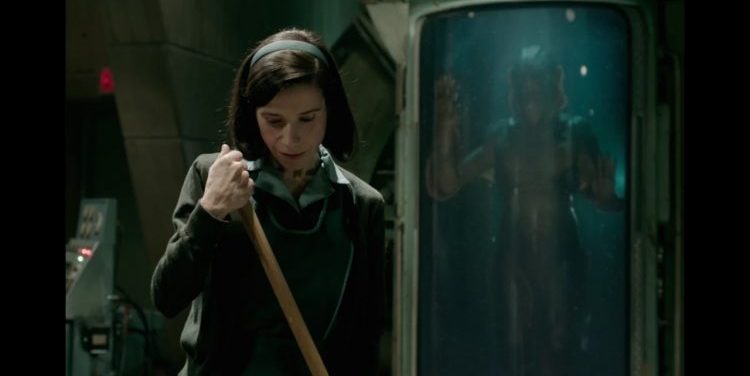
    Sally Hawkins and Doug Jones in The Shape of Water

    Best Actress

    Sally Hawkins, The Shape of Water
    Frances McDormand, Three Billboards Outside Ebbing, Missouri
    Margot Robbie, I, Tonya
    Saoirse Ronan, Lady Bird
    Meryl Streep, The Post

    Every nominee in this category feels safe except for, surprisingly, Meryl Streep. The Post has been struggling this season, and Molly’s Game has been picking up steam. So, Jessica Chastain could replace her.

    Best Supporting Actor

    Willem Dafoe, The Florida Project
    Woody Harrelson, Three Billboards Outside Ebbing, Missouri
    Richard Jenkins, The Shape of Water
    Sam Rockwell, Three Billboards Outside Ebbing, Missouri
    Michael Stuhlbarg, Call Me By Your Name

    Sam Rockwell and Willem Dafoe are the frontrunners and are really the only two safe nominations in this category with Richard Jenkins also likely to be nominated, but with the number of contenders could be pushed out. Though Armie Hammer received a Golden Globe nomination, I think there’s more passion for this Call Me By Your Name co-star Michael Stuhlbarg.

    Best Supporting Actress

    Mary J. Blige, Mudbound
    Holly Hunter, The Big Sick
    Allison Janney, I, Tonya
    Laurie Metcalf, Lady Bird
    Octavia Spencer, The Shape of Water

    Never underestimate Octavia Spencer. Despite not having much to do last year in Hidden Figures, she was still nominated. The Shape of Water looks like it’s going to have a lot of support across the board. So, Spencer will probably be swept along. The one wild card is really a WILD card. Tiffany Haddish had some heat early in the season that faded away. But the Academy could go for her over Holly Hunter. 

    Best Original Screenplay

    The Big Sick
    Get Out
    Lady Bird
    The Shape of Water
    Three Billboards Outside Ebbing, Missouri

    This is easily the most crowded category at the Oscars this year. It’s full of Best Picture contenders, so it really depends on how that category shakes out. I think the only vulnerable nominee here is The Big Sick. If the Academy goes for it in a big way, then this nomination is a shoo-in. If they swing more for The Postthen that could sneak in, as well. If I, Tonya shows up in Best Picture, then it could be nominated.

    Best Adapted Screenplay

    Call Me By Your Name
    The Disaster Artist
    Logan
    Mudbound
    Molly’s Game

    On the other end of the spectrum from Best Original Screenplay, this category has basically no strong contenders other than Call Me By Your Name, which is easily the frontrunner. Mudbound, Molly’s Game, and The Disaster Artist have the best chance for support outside this category, so they should be safe, as well. The last spot is up for grabs. Wonder, Wonder Woman, and even Blade Runner 2049 have a chance. But I think Logan has the most compelling argument.


    Ryan Gosling in Blade Runner 2049

    Best Cinematography

    Call Me By Your Name
    Blade Runner 2049
    Dunkirk
    Mudbound

    The Shape of Water

    The Academy loves to throw curveballs in this category — Ida, The Grandmaster, The White Ribbon — particularly when there’s a strong Foreign Language contender. But this year, Foreign Language is a thinner category than usual. So, the curveball might come from somewhere else. Darkest Hour is the most vulnerable of the American Society of Cinematographers nominees. I don’t think the Academy will pass up the opportunity to nominate a woman for the first time in this category — yes, I realize how crazy it is that it’s been this long. So, Rachel Marrison feels safe for Mudbound. It doesn’t feel like anyone is talking about Darkest Hour. So, Call Me By Your Name or Three Billboards Outside Ebbing, Missouri could sneak in. The former has the better shot.

    Best Costume Design

    Beauty and the Beast
    Darkest Hour
    Murder on the Orient Express
    Phantom Thread
    The Shape of Water

    Best Film Editing

    Dunkirk
    Lady Bird

    Get Out
    The Shape of Water
    Three Billboards Outside Ebbing, Missouri

    The real test for Lady Bird‘s strength in Best Picture is whether it can muster up a nomination in this category. However, Baby Driver or Blade Runner 2049 can push it out.

    Best Makeup and Hairstyling

    Darkest Hour
    I, Tonya
    Wonder

    Best Production Design

    Beauty and the Beast
    Blade Runner 2049
    Darkest Hour

    Dunkirk
    The Shape of Water

    Best Score

    Dunkirk
    Phantom Thread
    The Post
    The Shape of Water
    Star Wars:
     The Last Jedi


    Dunkirk Golden Globes

    Best Original Song

    “Evermore” — Beauty and the Beast
    “The Mystery of Love” — Call Me By Your Name
    “Remember Me” — Coco
    “This is Me” — The Greatest Showman
    “Mighty River” — Mudbound

    Best Sound Editing

    Baby Driver
    Blade Runner 2049
    Dunkirk
    The Shape of Water
    Star Wars: The Last Jedi

    Best Sound Mixing

    Baby Driver
    Blade Runner 2049
    Dunkirk
    The Shape of Water

    Star Wars: The Last Jedi

    Best Visual Effects

    Blade Runner 2049
    Dunkirk
    Okja
    Star Wars: The Last Jedi
    War for the Planet of the Apes

    Best Animated Feature

    The Breadwinner
    Coco
    The Lego Batman Movie
    Loving Vincent
    Mary and the Witch’s Flower

    Best Foreign Language Film

    A Fantastic Woman
    Foxtrot
    In the Fade
    Loveless
    The Square


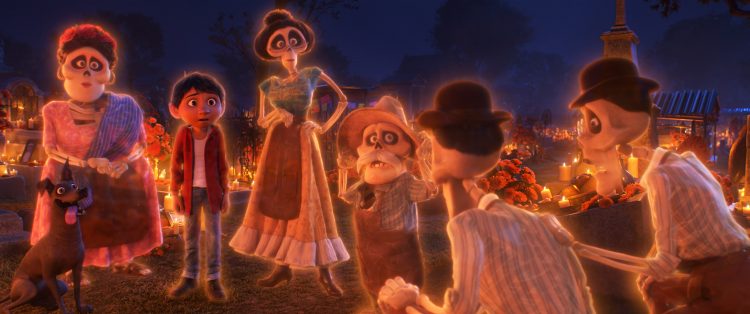
    Coco

    Best Animated Short Film

    Cradle
    Dear Basketball
    Fox and the Whale
    In A Heartbeat
    Negative Space

    Best Documentary Short Film

    116 Cameras
    Alone
    Edith+Eddie
    Heroin(e)

    Ten Meter Tower

    Best Live-Action Short Film

    Dekalb Elementary
    Facing Mecca
    My Nephew Emmett
    Rise of a Star
    The Silent Child

  • Tower review — Bravely reconstructs the first American school shooting

    Tower review — Bravely reconstructs the first American school shooting

    Tower is one of the most innovative documentaries in recent memory by blending rotoscope animation with live-action footage to emotional results.

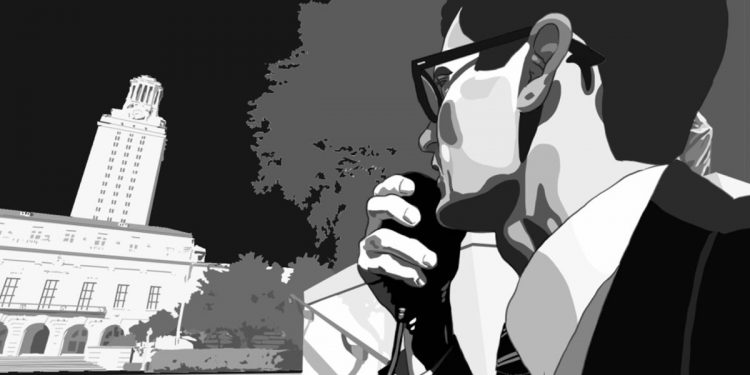
    Many times with documentaries, especially those covering historical events, it feels like you are being taught a piece of the past that stays in the past and belongs in the past. However, with TowerKeith Maitland, instead reconstructs the day using rotoscope animation and drops us into the world that consumes you before crashing you back into reality with a single, incredible cut. It’s not until that “big reveal” that Tower truly comes to life. The reveal is a punch in the gut that brings all the emotions flooding in all at once. It sets the tragedy in a time and a place. It’s simply one of the most incredible moments of cinema in 2016 and Tower is simply one of the best movies of the year.

    On August 1, 1966, a sniper climbed to the top of the University of Texas tower and terrorized the campus for 96 minutes. Unfolding in what is essentially real time, Tower follows the victims, the bystanders, and the community during and after what would become the first mass shooting at a school. Director Keith Maitland made the decision early on to use rotoscoping rather than live reenactments — this is the act of animating over live footage. While the style is off-putting at first, it’s an important decision and one that gives life to Tower. In particular, the decision allows the “talking head” interviews to be told in present tense and in the way that the victims and bystanders looked in 1966. The immersive design and incredible editing by Austin Reedy — he beautifully intercuts the interviews with archival footage and the animation — grabs your attention and senses and never lets you go for the entire running.


    Some of the people that we follow include Claire James (then Claire Wilson), who is one of the first people shot. A lot of Tower‘s emotional moments come from her experience lying on the ground in 100-degree heat while people watch on in horror. We also follow two police officers. The first we’re introduced to is Houston McCoy. While his story may not seem as remarkable as the others in the movie, it comes together in an incredibly emotional revelation towards the end of the movie. In fact, the way Maitland and Reedy were able to shape the movie into being true human journeys is remarkable.

    As the minutes tick by and more and more people are injured and killed, the difference between the animation and the archival footage slip away. You are simply watching this terrifying act of violence. Throughout the entire film, we hear gun shots both in the distance and as if they were whizzing past our heads. Each shot sends a chill down your spine. You feel like you are on the campus.

    Tower

    The big reveal that I mentioned earlier comes at the halfway point of the movie. Up until this point, we are immersed in the animation and archival footage of the film. Maitland adamantly sets our point of view in the present as if the event is unfolding before our eyes. However, in a quick cut, he brings us into reality. While we hear Claire talking about what it felt like to be lying there and thinking that this was the end of her life, Maitland cuts to Claire today. Obviously, she has aged in the 50 years since the shooting. She looks straight into the camera and says, “I guess this is the end.” The emotional weight of that statement juxtaposed against this sudden switch from animation to live action is palpable but so necessary for the film to work.

    With all documentaries, the most important part is the commentary that the film makes. Tower isn’t an intentionally political film. Maitland didn’t use it as a call for gun control, overtly. But what it does is remind us how all too common school shootings have become and how desensitized we, as a society, have become to their occurrence. One of the subjects Neal Spelce, a newsman covering the shooting live, at one point says “what in the world has happened to my world.” Before August 1, 1966, the term “school shooting” wasn’t in the collective vocabulary we share. As Brian put after we watched the film, “the one thing people take away from tragedy is a relationship forged out of trauma and pain. In those moments, having such a raw connection to someone means so much. Like Claire and Rita or McCoy and Martinez.”


    Tower is an incredibly important film that doesn’t feel self-important despite its extremely stylized take on the shooting. Its style is integral to its emotional core. It will surprise you in a way that no film in years has been able to surprise. The film’s humanity is palpable. It’s something that we don’t get to say about documentaries as often. Maitland is able to take a horrible event and find the moments that make us human. He finds the moments of courage and cowardice, of compassion and cruelty. More than anything, he stresses that trauma isn’t something to internalize. And while the name of the killer is mentioned only a few times in the film, I’m going to leave you with a word on him from the great Walter Cronkite: “the crimes of Charles Joseph Whitman are society’s crimes.”

    ★★★★½ out of 5


    Tower is available for digital rental on Amazon!