Blog

  • 10 Cloverfield Lane Movie Review — A Hitchcockian thriller with a twist

    10 Cloverfield Lane Movie Review — A Hitchcockian thriller with a twist

    10 Cloverfield Lane easily one of the best early movies of the year with nail-biting tension that rivals Hitchcock himself

    I think Cloverfield is a movie that got better with age. Despite the questionable decisions of characters and odd editing choices, it was a generally entertaining disaster movie. However, its “spiritual sequel” is changing the way we see franchises. 10 Cloverfield Lane has the same DNA as Cloverfield. It has the same mood, but it is not found footage or directly connected to the original in any way. It is simply placed in the same universe. However, I wouldn’t call 10 Cloverfield Lane a monster movie.

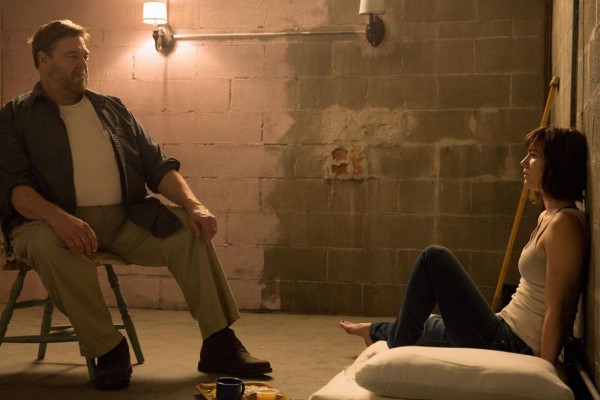
    10 Cloverfield Lane tells the story of Michelle (Mary Elizabeth Winstead), a young woman who never seems to stop running away from her problems, as she leaves New Orleans after an argument with her boyfriend. She gets into a horrifying car crash (and I truly mean horrifying) and wakes up shackled to a bed in a concrete cell. She is told by her captor, Howard (John Goodman) that the country has been attacked and that the air is toxic. He pulled her from the wreck and brought her to his fallout bunker that he has been developing for years. He also casually drops that they may be in there for 1-2 years. From there, trust is a currency between Michelle, Howard, and the bunker’s third occupant, Emmett (John Gallagher Jr.). The latter two are trying to determine whether Howard is telling the truth or whether he is a crazed man that is head deep in his own delusions.

    That last sentence is just one comparison to draw to Hitchcock’s Psycho. Outside the obvious fact that both films follow a woman who is running away from her problems, stylistically director Dan Trachtenberg heavily borrows from Hitchcock. The opening scene is the best example. The first 15 minutes or so of the movie is almost completely devoid of dialogue and the first five is scored with an epic, sweeping orchestral overture by Bear McCreary, who is best known for his work in television. The entire story is told through visuals. We don’t know why Michelle is running away right at the beginning, but we know she’s frantic. It’s not until we hear a call from her boyfriend (voiced by Bradley Cooper), that we know why she’s running away.


    Also, just like Hitchcock, Trachtenberg pays as much attention to sound as he does the absence of sound, which is best exemplified in the opening sequence when the music drops out as Michelle stops at a gas station. She knows something is off and so do we.

    The movie is structured like a three-actor play. It was filmed chronologically, which I think added to the performances. Mary Elizabeth Winstead seems to elevate the material she’s given. With movies like “Final Destination 3” and “The Thing” on her resume, she’s easily the best part of either of those movies. So when she’s given great material like in this movie or in the Sundance movie “Smashed,” she really shows her skills as an actress. She show’s Michelle’s insecurities, but also hints at moments of bravery. She’s the best kind of protagonist because you root before because you truly care about her rather than being forced to care about her. It’s also refreshing to not have to yell at the screen when your main character does something stupid.

    John Goodman, the greatest supporting actor as some have called him, perhaps gives one of the best performances of his career. So much of the film hinges on whether or not you trust Howard. And trust me, Goodman does an incredible job making you question yourself. He is legitimately terrifying but has enough depth for you to understand his internal struggle. He grabs you, shakes you, and leaves you still questioning what happened to Howard to make him this way.

    With two heavy hitters to contend with, John Gallagher Jr. held up as the heart of the group. Emmett, whose journey into the bunker seems almost as hectic as Michelle’s, demonstrates the movie’s ability to balance so many genres. His line, “I live my life in a 40-mile radius,” sums up this theme of regret that runs through the character study vein of the movie.


    However, the movie itself is hard to classify. Yes, it’s a character study, but it also works as a psychological thriller, horror, and sometimes even a comedy if you look at the camp of it. 10 Cloverfield Lane is one of the few great early year movies. However, there’s so much in play that made it that. Its adaptation from its original screenplay that was titled “The Cellar” also stripped away some of the inevitable twists that are so often engrained in psychological thrillers and opts instead to use its characters to ratchet up tension. Is the Cloverfield connection really necessary? No. Not by a long shot. But that’s what makes the movie even more satisfying in the end. “10 Cloverfield Lane” shows that sequels can truly standalone without anything owed to its predecessor. Take note, Hollywood.

    8.5/10

    10 Cloverfield Lane is available on DVD, Blu-Ray, and digital on Amazon!
  • Hush Movie Review — Another slam dunk for Blumhouse

    Hush Movie Review — Another slam dunk for Blumhouse

    Mike Flanagan follows-up Oculus with an equally menacing and thrilling movie in Hush

    Blumhouse Pictures has become a horror-movie machine and the latest one off the conveyor belt is Mike Flanagan’s Hush. Most people were probably introduced to Flanagan after his second feature Oculus, a movie that we loved. While Hush strips out the supernatural elements that Oculus had, what it maintains is the dread that made it so successful. Both take place in pretty much a single-setting with limited characters, but it’s that aching that there’s something around the corner or behind you that make both must-watches.

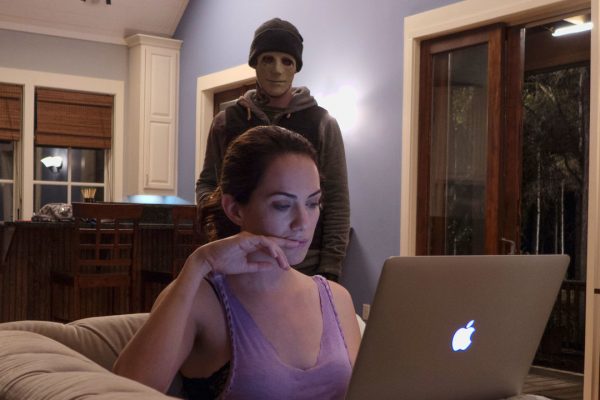
    Hush introduces us to Maddie (Kate Siegel), a deaf and mute author living in the woods writing her next novel. She is essentially isolated save for her cat (appropriately named “bitch”) and her neighbor and friend Sarah. It is the perfect location for a psychopathic murderer with a bow and arrow to stalk his prey and that’s exactly what Maddie’s unnamed assailant (John Gallagher Jr.) does (I’ll be calling him “The Man” from here on out).

    However, what makers this movie different from You’re Next, another home invasion movie that I love, is that the man would easily be able to get into the house, but doesn’t. Instead, he toys with her.Unlike You’re Next or Aubrey Hepburn’s Wait Until Dark, the man isn’t seeking anything. He assaults her both physically and psychologically. He is simply there to terrorize, which makes him all the more terrifying. He is a simply psychopath.


    Hush is not the most original in its concept. However, what it lacks in originality it makes up for in pure technical achievement. The editing and cinematography assist in the film’s goal to set unease and the production design makes you fear that this could happen in the most peaceful of places. Yet, it’s the sound design that really elevates the craft. Since Maddie is deaf, it’s expected that the movie would lack dialogue. But what Flanagan does instead is play with noise. For example, we watch the opening in two perspectives. First, with sound and what we would normally expect when someone is cooking a dinner. Then, we hear it from Maddie’s perspective, which is unsettling and reminds us of her isolation and disadvantage in the situation.

    Although it would have been great to have a deaf actress play the lead role, co-writer Kate Siegel is alluring enough to put us on her side and actually cheer whenever she has a victory, no matter how small. However, the clear revelation here is John Gallagher Jr. who turns in yet another great performance this year after stunning me in 10 Cloverfield LaneDespite his average stature, he towers as a psychopathic villain, which is refreshing after his string of nice guy performances.

    Hush isn’t reinventing the wheel, but it is proving that the genre still has legs. If you’re looking for an entertaining and knuckle-whitening thriller, then you won’t be disappointed.

    6.5/10

  • Eye in the Sky Movie Review — A Taut Political Thriller and One of the Best Films of the Year

    Eye in the Sky Movie Review — A Taut Political Thriller and One of the Best Films of the Year

    A pitch-perfect cast, screenplay, and story make Eye in the Sky one of the best — if not the best — movie of the year

    There are thrillers, and then there are thrillers like Eye in the Sky. What kind of thriller? It’s one that’s not just a treat for the eye but for the brain. It’s one that understands that less is more. It’s one that doesn’t compromise story for dramatics. It’s one that is so effective that not only did it keep me on the edge of my seat, it kept Brian and I in a morality debate after the movie that mirrored the debacle that the characters themselves were having.

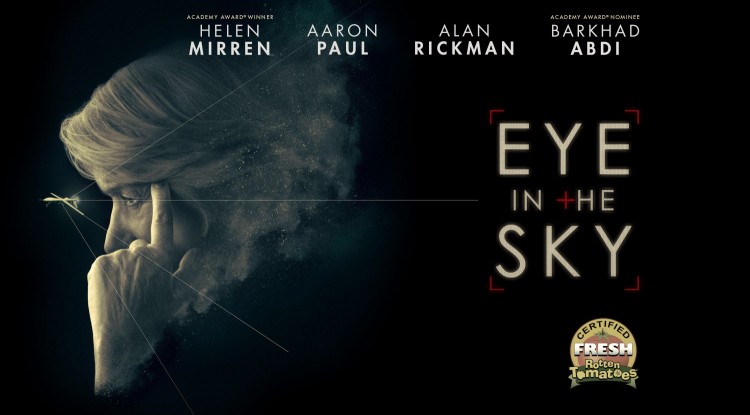
    Told in what is essentially real time, Eye in the Sky follows the multiple people involved in making the decision to launch a drone strike on a compound containing numbers two, four, and five on the British most wanted list in Africa. However, to complicate matters, a little girl is standing within the blast zone. Even worse, the occupants of the compound are preparing for a suicide bombing. From the government to military to the drone pilot himself, everyone has a hand in deciding whether or not to risk the life of one to save the life of many. It’s a classic morality tale, but it’s told in a way that will even make you question your judgment.


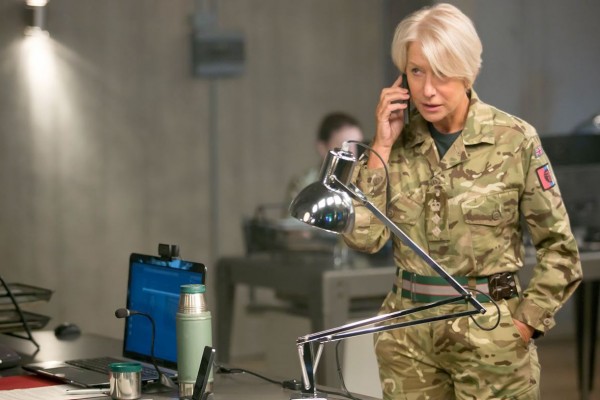
    In all, the large ensemble can be split up into two camps: the military and the government. On the military side, Colonel Katherine Powell (Helen Mirren) is in charge of an intelligence division that is tracking two British citizens and one American citizen who have become radicalized Islamic extremists in Kenya and members of Al-Shabaab. With the help of American 2nd Lieutenant Steve Watts (Aaron Paul), who is piloting an unmanned drone, she tracks them down to a safe house where they are preparing for a suicide bombing.

    Originally a capture only mission, Powell realizes the only way to prevent a suicide bombing and stop the these terrorists is to elevate the mission to a kill order. However, like any drone strike, there is a long chain of higher-ups that have to have a say in deciding. This brings in the other half of the ensemble, which is led by Lieutenant General Frank Benson (Alan Rickman in one of his last performances). Along with members of COBRA (England’s equivalent of our war room), he must determine whether the collateral damage is legal and politically maneuverable — will they be able to control the propaganda war?

    The decision seems clear. That is until a little girl makes her way into the blast zone.

    Eye in the Sky poster

    This little girl’s name is Alia. Throughout the movie, we watch her and her family go throughout their daily lives. Obviously, it was a smart move to humanize Alia and her family without treating her as actual collateral damage. What Eye in the Sky does so intelligently is contextualize her in the world she’s living in. Any filmmaker would have humanized her. Not every filmmaker would show that she is affected by the war in a way that we couldn’t even imagine.

    We are treated to an incredible and lengthy decision-making process that affects everyone involved in different ways. Heart, brain, morals, ethics — all are considered. Colonel Powell is an interesting character, in particular, because she has the attitude of shoot first, ask questions later. For her, there isn’t a question of the risk. She sees her target, one that has affected her personally, and will do anything in her power to stop it. On a side note, it’s refreshing because her gender doesn’t come into play here. The part could have easily been played by a man and still worked just the same. It’s gender-blind casting at its best.

    Then, there is Lieutenant Watts and his US Air Force colleague Carrie Gershon come from the place of the heart. They are the trigger. However, they are almost powerless to the decision that comes from the brain, COBRA. They come from more political motivations, but morality comes into play as well. It’s an intricate puzzle of characters that create one of the greatest discussions ever committed to film.


    The screenplay, which is by BAFTA winner Guy Hibbert, is an exercise in efficient storytelling. He doesn’t bog down the story with unnecessary personal details — except for one involving Rickman’s character which greatly affects your perception of his character. The dialogue is fast and smart, and the characters are explored so deeply, despite spending little time with each. We know their motivations, and we know why they are making the decisions they are making. The cast, in particular, Mirren, Paul, Rickman, and Fox, does much of the heavy lifting on that part. And director Gavin Hood does a beautiful job capturing the moments in the film that truly matter and stitching together the narrative (that involves footage from the drone and surveillance cameras) in a way that makes it move a mile a minute.

    Nevertheless, what makes Eye in the Sky so brilliant is not the tight screenplay or the ambitious narrative or the phenomenal performances across the board; it’s the careful study of this one decision from multiple points of view that makes it one of the best — if not the best — movie of the year. A lesser director or screenwriter might have fumbled their opportunity to make this plot meaningful without being condescending. Instead, the team behind Eye in the Sky adeptly blur the line between good and evil and what constitutes a necessary evil.

    It’s unfortunate that this movie didn’t get in front of the audience it deserved. If it did, I’d imagine that it’d be a shoo-in for a Best Picture nomination and several others. However, it does please me to know that this level of filmmaking still exists, and that this type of storytelling is one that hasn’t been quite abandoned. It’s entertaining as both a political and war drama. But it’s the movie’s balancing of both that elevates it to a level that few movies are able to achieve. In the end, the movie leaves the question with you: how far do you go when it comes to war. 

    9/10

    Eye in the Sky is available on DVD, Blu-Ray, and digital on Amazon!
  • Hell or High Water Movie Review — A modern western with four great lead performances

    Hell or High Water Movie Review — A modern western with four great lead performances

    Hell or High Water is an entertaining visit into the western that has a modern flair and characters to make it a memorable entry.

    Hell or High Water is an interesting movie it’s not really a crime thriller. In fact, the heist scenes felt like an afterthought — save for the centerpiece climax. What it’s really about is relationships, how we interact with the people around us, and how are actions are indicative of our experiences. Led by four truly fantastic performances, Hell or High Water is a modern western that feels so in and of its time. Though, it also feels like its roots are dug deep into the genre.

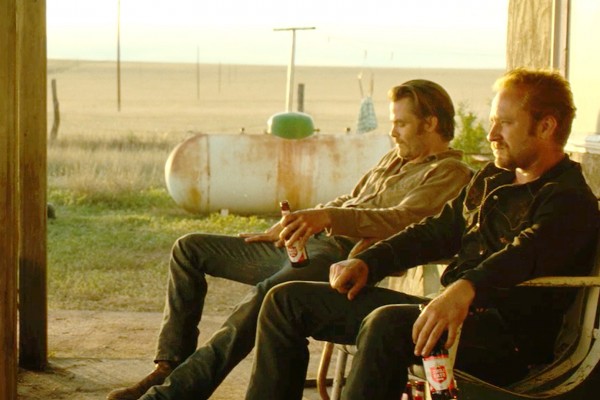
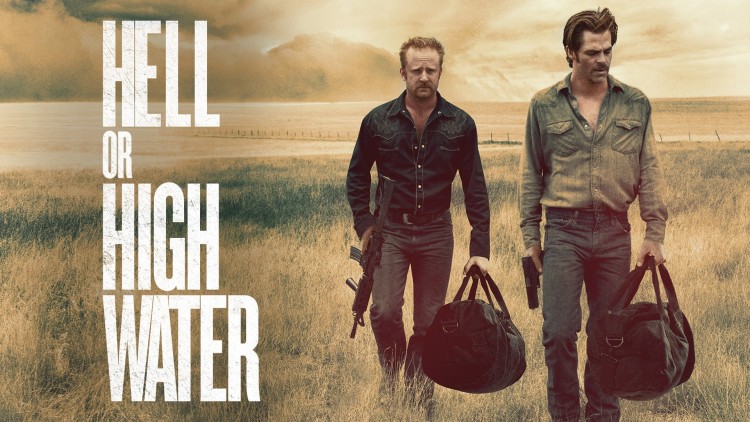
    Hell or High Water tells the story of brothers Toby (Chris Pine) and Tanner Howard (Ben Foster). Their family farm is being threatened with foreclosure following their mother’s passing because of a reverse mortgage that was given out by Texas Midlands bank. With only a few days until the bank seizes the property, the brothers go on a series of bank robberies – Texas Midlands banks to be precise – to pay off the mortgage. However, close on their tail are Texas Rangers Marcus Hamilton (Jeff Bridges) and Alberto Parker (Gil Birmingham).

    Check Out: “La La Land” Movie Review: A surprisingly profound story about dreams and disappointments


    What makes Hell or High Water so endearing is that it carefully treads on the line of satire. I’ve never been to West Texas, but if I had to imagine what it was like, it would probably be this ridiculous version. People say things like “if I can find a rope short enough” and “you’re not even Mexicans!” Even more hilariously, literally every single person has a gun.

    Another element that takes Hell or High Water from entertaining to a smart piece of film is it’s not so subtle subtext about recession-era America. Small towns, big banks, and unpayable mortgages have become the key actors in the housing bubble burst. Just ask Margot Robbie while she sits in a bathtub. While this is every bit a crime movie, that theme shines through.

    However, this is also where my criticism lies. While subtlety usually isn’t the forte of westerns, Hell or High Water really hits you over the head with its themes. From giant flashy bankruptcy billboards to lines that all but say “stick it to the man,” the film doesn’t leave much to the imagination.

    hell or high water movie review

    What does show a little subtlety are the scenes between characters. After all, this is a movie about two partnerships. The relationship between Toby and Tanner isn’t one built on their experiences together. If anything, this spree of bank robberies is their first experience that really brings them together. Their bond is more instinctual. Tanner knows he has to protect his younger brother. He knows the part that he plays in their story.

    The relationship between Marcus and Alberto is both more complex and interesting. Like any western, ball-busting is expected. But the banter between these two, which is sometimes openly racist, doesn’t let on the care that these two have for each other. Though we only see a few days of their lives, the care they have for each other runs deep. You can tell that their collective experiences together have bonded them in the same way brothers are.  While much of Jeff Bridges’ performance is this outlandish stereotypical sheriff, there are some scenes of nuance.

    Taylor Sheridan, whose screenwriting debut was last year’s Sicario, isn’t the striking new screenwriter around. But there’s something endearing about the stories and characters he creates. Look at Emily Blunt’s play-it-by-the-book FBI agent who is out of her depth or Jeff Bridges’ cantankerous cop on the edge of retirement. They’re two completely different characters, but Sheridan instills a quality that feels real in both of them. That carries over to other characters in Hell or High Water, even those with little screentime. Sheridan and director David Mackenzie make the characters feel lived in. Everyone from the four main roles to the waitress at the diner felt like fleshed out people with lives outside of the timeline of the movie.

    Check Out: “Loving” Movie Review: Joel Edgerton and Ruth Negga are quietly powerful


    That being said, so much of the success of the movie has to be accredited to the four main actors. Ben Foster’s dedicated performance seems one-note, but small moments like seeing his mother’s hospital bed adds complexity. Chris Pine has never seemed like an actor in the business for the art. I don’t know if that’s true, but it seems like he took the time to perfect the character. Gil Birmingham has the hard role of playing the straight man to Bridges’ outlandish Texas Ranger. However, he handles himself with ease. But, it is really Jeff Bridges in the role that he was born to play that steals the entire movie. Long drawn out shots of his face hint at something more sincere in his tough guy facade.

    Overall, Hell or High Water works as a modern western because it is just that. It takes the elements of the genre – the cat-and-mouse chase, shootouts – and applies it to a timely setting. Unlike earlier entries in the genre, the movie blurs the line between good and bad and right and wrong. While it’s completely entertaining, it’s that added layer that makes Hell or High Water completely satisfying.

    8.5/10

    Get Hell or High Water on DVD, Blu-Ray, or digital on Amazon!

  • The Big Sick review — Funny, romantic, and one of the best comedies in years

    The Big Sick review — Funny, romantic, and one of the best comedies in years

    Real life story The Big Sick looks and feels like a romantic comedy, but is so much more thanks to its masterful writing and performances.

    “So, what’s your stance on 9/11?”

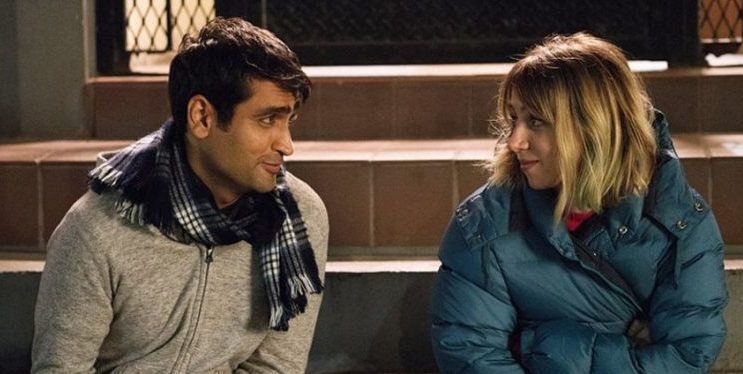
    Yes, that’s an actual line that’s uttered in the Kumail Nanjiani and Emily V. Gordon written film The Big Sick. However, in this movie, which takes a deep look at the cultural clash that often occurs for minorities in this country, the line comes off as endearing. So much of the movie is about learning about other people, their pasts, and what drives them. It’s just that in the case of The Big Sick it’s an ex-boyfriend and his ex’s parents that are doing the learning.


    Love always comes with baggage. However, it’s the way we deal with that baggage that often determines the fate of relationships. But what if you couldn’t confront that baggage head-on? Nanjiani, who plays himself in this movie, meets Emily Gardner (Zoe Kazan) after one of his stand-up gigs in Chicago — Bo Burnham, SNL’s Aidy Bryant, and Kurt Braunohler play his friends and fellow comedians. The two instantly hit it off. Kumail’s self-deprecating confidence and Emily’s youthful energy mesh perfectly. However, after spending the night together, Emily says that she can’t get involved in a serious relationship — she’s getting her masters in psychology. Of course, Kumail woos his way back into her life. There are no big romantic gestures or unrealistic proclamations of love. Still, you find yourself grinning your way through the first part of the movie.

    All the while, Kumail’s traditional Pakistani parents — his father, Naveed (Adeel Akhtar) and mother, Sharmeen (Zenobia Shroff), both actors are standouts — present him with a plethora of often comical women for marriage. As Kumail puts it in one of his sets, “In Pakistan, arranged marriage is just called, marriage.” These scenes feel isolated from the rest of the movie until Kumail’s two worlds come crashing together. It’s refreshing to see a romantic lead with a different background and different set of difficulties when it comes to family and romance.

    Eventually, Emily wonders why she hasn’t met Kumail’s family as Kumail tries his hardest to keep her and his family as far away apart as possible — his parents don’t know about her and are still presenting him with potential wives. When it all becomes too much for Emily, the pair breaks up. Things are complicated, however, when the eponymous “big sick” comes for Emily and she goes into a medically induced coma. Since no one else can, Kumail is the one that informs her parents and is there when they arrived. It goes about as well as meeting your ex-girlfriend’s parents when she has just slipped into a coma could go. Not well.

    The movie makes its shift from romance to dramedy focusing on very different people forced together by a tough situation beautifully thanks to director Michael Showalter’s masterful handling of the tone and the two best performances in the movie. Ray Romano and Holly Hunter as Emily’s parents are the kinds of supporting performances that feel so much larger than they are because they control every minute of screen time they have. As Kumail and Emily’s parents circle each other like cowboys preparing for a shootout, there are moments of understanding and education. In the most memorable scene of the film, a racist heckler disrupts one of Kumail’s sets while Emily’s parents watch on. Beth, Emily’s mom, confronts the heckler in a way that you can only imagine a bereaved mother can. Kumail looks on with surprise at her gusto, while later Emily’s parents marvel at the fact that Kumail has to deal with that kind of behavior.


    As the movie goes on, different obstacles are put into place and are handled often hilariously. And in a show of strong directing, even the smallest roles make a big impact. Akhtar and Shroff, Nanjiani’s parents in the film, are more cartoonish versions of what you’d expect his parents to be like, but it’s delightful and makes their payoff at the end of the movie even better. Burnham delivers one-liners like no other. Even roles as small as one of Emily’s nurses (Myra Lucretia Taylor) have their moments. Still, the emotional, and comedic, core of the movie still lie with Nanjiani, Hunter, and Romano. They play characters that are naturally funny so that even in serious moments they can make you laugh and cry at the same time. They, along with Showalter and Kazan, have to be credited with getting you emotionally invested in the outcome of the story, even if you know what happens in the end.

    Too often do people say a movie “saves” a genre. Mad Max: Fury Road “saved” action movies. The Cabin in the Woods “saved” horror. However, the same way it’s wrong to say The Dark Knight saved comic book movies, it’s a disservice to say The Big Sick saves romantic comedies. The Big Sick isn’t a romantic comedy. However, it doesn’t really fit into any other category either. For once, a movie wasn’t made to fit any marketing campaign. It was made to service a story. And a hell of a story it is.

    ★★★★ out of 5


    The Big Sick is streaming on Amazon Prime Video!

  • Don’t Breathe Movie Review — A tense, incredibly crafted thriller

    Don’t Breathe Movie Review — A tense, incredibly crafted thriller

    Don’t Breathe boasts impressive cinematography and direction that makes the tension almost unbearable, but makes you want to instantly watch it again.

    2016 has been quite the year for genre films with strong entries ranging from Green Room to Hushbut the one that truly unnerved me was Fede Alvarez’s Don’t BreatheIt’s a story that feels familiar. It’s a home invasion movie, except told from the perspective of the robbers. The twist, which sets it apart from the similarly premised Wait Until Dark, is that the blind man they are robbing is a fearsome war veteran with more than a few tricks up his sleeves.

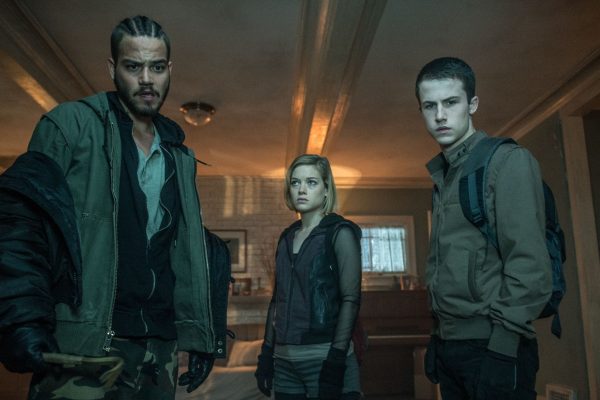
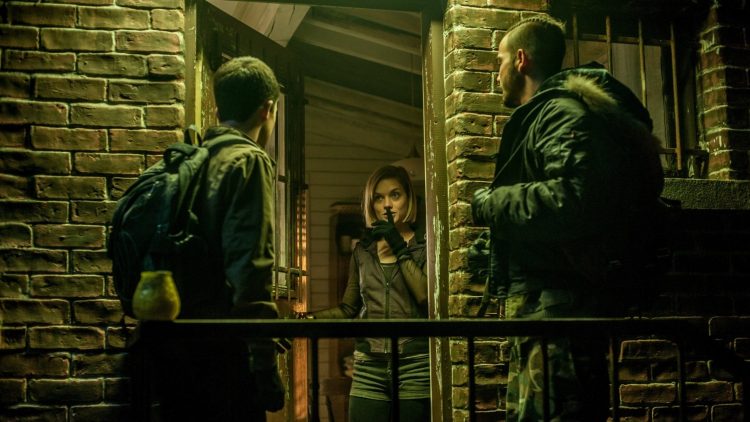
    Don’t Breathe opens with a beautifully directed scene of our three main characters breaking into a house. I love movies that can effortlessly introduce us to its characters without telling us who they are or how we are supposed to feel about them. We quickly realize that Money (Daniel Zovatto) is the young, immature leader of the group. Alex (Dylan Minnette) is more reserved and seems to be in it for the thrill rather than the actual money. Rocky (Jane Levy) imagines the upper-class lifestyle of their targets. And this is all we learn in the first thirty seconds without any dialogue.


    We learn that the three are targeting houses that are protected by Alex’s father’s security company. Money sells the stolen items to a friend. After not making enough on the last hit, he suggests hitting a house in a deserted section of Detroit. However, the house is occupied by a man known as the Blind Man (Steven Lang), a war veteran that apparently has a large sum of money as a settlement. That night, after subduing his fearsome dog, the trio make it into the house. What they find is something much more terrifying than they expected – a blind man that could fight back. From there, the story is flipped on the robbers as they fight to escape the house with their lives.

    Fede Alvarez, whose feature film debut was the remake of Evil Dead, shows that he is a more than competent director. This movie got to me. The title must refer to what the movie makes the audience do. To say this movie was suspenseful is an understatement. The patience that he demonstrates is incredible. He holds shots and moments as long as he can to truly make you uncomfortable. There are some moments that the tension is almost unbearable. While it’s uncomfortable watch, the fact that he was able to make you feel that way is an incredible testament to his direction. Not only that, the jump scares in this movie aren’t outlined with egregious music cues. He allows the content to speak for itself.

    Jane Levy, Dylan Minnette, and Daniel Zovatto in Don't Breathe
    Jane Levy, Dylan Minnette, and Daniel Zovatto in Don’t Breathe.

    However, I think it’s easy to say what nearly steals all of Don’t Breathe is its classic, yet singular cinematography by Pedro Luque. The reason a lot of horror cinematography seems to fall to the wayside is that it has to serve the scares. That’s why shots that show an apparition lurking over someone’s shoulder or in the mirror have been so common. It’s so rare for a horror movie to stand out. However, what Luque does in Don’t Breathe is seamlessly merge the needs of the movie with breathtaking craft. In particular, a three-minute one-take shot – with an assist from CGI – is really the centerpiece of the film. Not only does it set up the “field of play” for the entire movie, it begins the mounting tension that the movie never truly releases. It’s very reminiscent of a similar shot in David Fincher’s Panic Room. However, while that shot feels more for the art of it, this is more intentional.

    Another scene, which has been highly publicized in the trailer, is when the Blind Man turns off the lights in a pitch black basement. Similarly to the tunnel scene in Sicario, it makes marvelous use of night vision camera – like the way they used heat vision cameras – to make the scene feel claustrophobic. The lack of music underscores the tension. It’s an incredible practice in patience and suspense.


    My small issue with the movie is mostly in the character Rocky. She quickly comes to the forefront of the movie and is our main focus. I wasn’t completely sold on her motivations for robbing the house. There are small moments where she will do something risky to get the money that came off as reckless rather than admirable. I think that it is more of an issue with the performance by Jane Levy, which is otherwise really strong. I just think that she doesn’t come off as a “good person” like Dylan Minnette makes Alex. On the other hand, Daniel Zovatto does a fantastic job as the dirtbag Money.

    Don’t Breathe is a gorgeous exercise in great directing that expertly ratchets up tension. However, it’s more complex than that. Some unbelievable and inventive cinematography immediately sets it apart from other genre films. You can even dive in further and talk about its commentary on the economic desolation of Detroit. Nonetheless, taking it at face value shows that it’s a thriller that does exactly what it’s supposed to do: leave you on the edge of your seat while you white knuckle the arm rest. Just remember, don’t forget to breathe.

    8.5/10

    Don’t Breathe is available on DVD, Blu-Ray, and digital on Amazon!
  • Life review — Strong on thrills, weak on character

    Life review — Strong on thrills, weak on character

    Life is an interesting and sleek take on the horror movie in space premise, but it’s too weak on character to bring anything new to the genre.

    Between Gravity, The Martian, and now Daniel Espinosa’s Life, there has been enough movie reaffirming my decision not to go into space… ever. Although, Life has more in common — or blatantly rips-off — Ridley Scott’s masterpiece Alien.

    At the beginning of Life, tension is high as the six-person crew of the International Space Station (ISS) prepare to capture a space probe that is carrying soil samples from Mars. Katerina Golovkina (Olga Dihovichnaya), the captain of the ISS, is coordinating the capture while Rory Adams (Ryan Reynolds) is controlling the arm that will “catch” the probe. They are successful and quickly bring the probe in to let biologist Hugh Derry (Ariyob Bakare) analyze the samples. What they find is quite astonishing — the first proof of life outside of earth. This scene is shot in a long-take that feels reminiscent of Alfonso Cuaron’s Gravity without the stunning special effects. However, it does prime us for the incredibly tense journey that is about to follow.


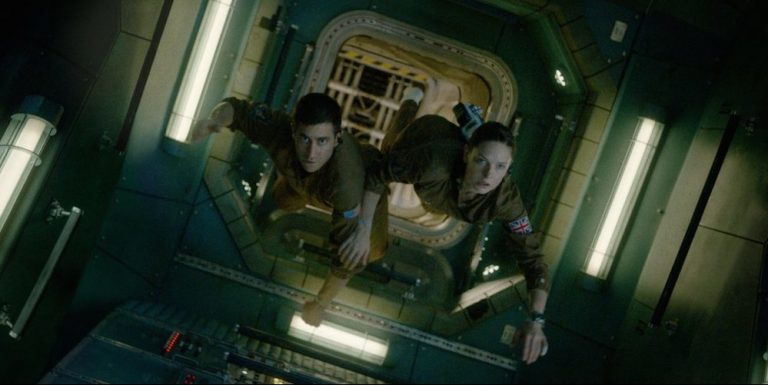
    The organism, which is named Calvin by school kids watching from Earth, is “all muscle, all brain, and all eyes,” is being studied — and admired by — Hugh, who is more concerned with the scientific advancements it could bring rather than the danger. Looking on is Quarantine Officer Dr. Miranda North (Rebecca Ferguson) and senior medical officer Dr. David Jordan (Jake Gyllenhaal) who are suspicious of having an unknown being onboard. Nevertheless, the discovery is incredible and Calvin holds reverence with Hugh. After a few scenes of “character building” on the ship — I’ll explain why that’s in quotes later — which includes Sho Kendo (Hiroyuki Sanada) helping his wife through labor via Skype, the unthinkable happens. As Hugh is working with Calvin in the lab, the organism — which has grown significantly — latches on to his arm and begins to test its strength by crushing it. It’s a gruesome scene, but it’s also incredibly effective. This set piece — which involves trying to prevent Calvin from escaping — is the movie’s chest-bursting scene. From there, it turns into a game of cat-and-mouse while Calvin tries to stay alive by killing the crew.

    One of the few facets of this movie that I will say it did better than Alien is its handling of the horror elements. While it does fall into the jump scare pit, it does tension in a way that Alien never quite hit with me. The scenes of pure horror in Alien are so short that you never really get a chance to savor them. In Life, Espinosa lets the scenes last and you can never truly let your guard down throughout the movie. In fact, you flinch any time a cabinet is opened or a corner is turned. I’d take the Xenomorph over Calvin any day.

    However, what Life fails where Alien truly succeeded is at the character level. There isn’t a single character in Alien that you feel is underdeveloped or underused. Everyone from Sigourney Weaver’s Ripley to Yaphet Kotto’s Parker is necessary to the plot and make you care about them and their survival. On the other hand, Life doesn’t give you any personality behind the characters. The closest we get is Jake Gyllenhaal’s David and his dread of going back to Earth. Still, you can switch around any actor or any character or any character path and you’ll still get the same result. This is not at the fault of the actors. Gyllenhaal does great work here as usual, as does Dihovichnaya and Ferguson. Bakare is the real discovery here for his nuanced and balanced performance. However, they simply never get the chance to carve out their characters. There simply isn’t time in this lean movie.


    That being said, I thoroughly enjoyed Life. It’s everything you’d want out of a horror movie in space movie. The story is efficient, the creature design is interesting, and the production is well-done. The movie loses its way a bit in the third act — it feels a bit cheaper than the beginning of the movie — but the first two acts are certainly strong enough on their own right. However, the issue that’s holding me back from giving this a higher score is its meaning. Alien was a study of nature, Gravity was about human will, The Martian spoke about collaboration. Life doesn’t offer anything further than what is on its surface. Unfortunately, its ending contributes to that. You almost feel cheated. But I’d still recommend it. It will entertain you for its short running time and leave you gripping the armrest.

    ★★★ out of 5


    Life is available on Blu-Ray and Digital HD on Amazon!

  • It Comes At Night review — A stunning and terrifying post-apocalyptic thriller

    It Comes At Night review — A stunning and terrifying post-apocalyptic thriller

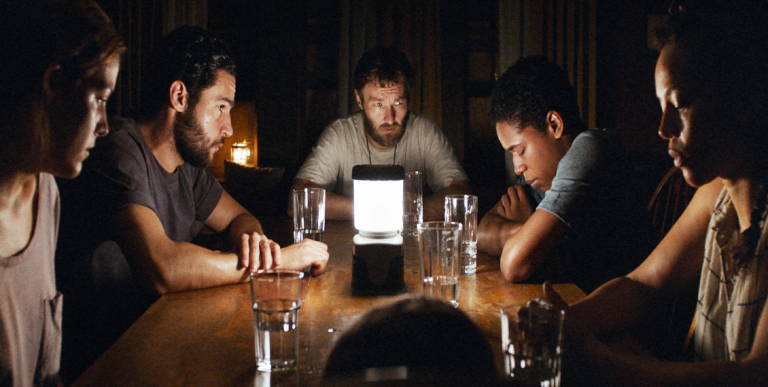
    Atmospheric and menacing, Trey Edward Shults’ sophomore feature It Comes At Night is a family drama disguised as a horror movie that works on both levels.

    The “it” in the title of Trey Edward Shults’ sophomore release It Comes At Night is as much of a mystery as the plague that has driven the characters in the movie into seclusion. Though the set-up of the film feels familiar — a pandemic has plagued the population and pushed resources to their minimum — Shults, the visionary behind the terrifying Thanksgiving dinner in Krishadoes away with the exposition quickly and leaves us with a truly terrifying humanist drama.

    The pandemic in It Comes At Night is never the focus of the film. All we know is that people are becoming sick and dying, resources are scarce, and the living are doing their best to protect from contamination and anything else lurking in the woods. Shults, who also wrote the film, doesn’t go for the cheap scares. If anything, the anxiety of anticipating the scare is more terrifying than anything a studio horror film could muster up. Instead, much like his debut film, he goes for atmosphere and building tension. The camera — Krisha‘s DP Drew Daniels also shot this film — slowly navigates the dark nooks and crannies of the remote forest home that the movie takes place in while Brian McOmber’s screeching score with a heartbeat baseline plays in the background. It Comes At Night features the worst attribute an audience member can go up against in a horror movie — patience.


    The film opens with Paul (Joel Edgerton), Sarah (Carmen Ejogo), and their teenage son Travis (Kelvin Harrison Jr.) surrounding Sarah’s sick father as he slowly succumbs to the pandemic. After disposing of his body, we are introduced to their home — and dog, Stanley — which they have boarded up and turned into a stronghold. Paul maintains strict rules that are meant to keep his family safe and maintain a sense of normalcy — they all eat dinner together every night and unless absolutely necessary, they do not go out at night. However, when they have a run-in with another family, they take the opportunity to add some companionship to their day to day lives. This other family consisting of Will (Christopher Abbott), Kim (Riley Keough), and their young son Andrew (Griffin Robert Faulkner), is taken in by Paul and Sarah and shown a hospitality that is often shown in moments of distress. And for a time, life seems a bit easier. However, like anything good, it has to come to an end. Tensions rise as mistrust begins to run rampant in the house. And like any other animal, when back against a corner, humans attack.

    I think A.O Scott put it best in his review saying, “Mr. Shults’s first feature, the remarkable Krisha, was a family drama that often felt like a horror movie. It Comes at Night is the reverse.” The horror elements of It Comes At Night, largely relegated to Travis’ nightmares, are the centerpiece of the movie. However, the bulk of the movie is this question of the lengths people will go to protect themselves and their loved ones when times become desperate. Shults explores it intimately but leaves all the answering to the audience. It’s one of the most interesting things about the movie. There are no clear answers or signs pointing in a particular direction. If anything, any symbolism that Shults includes almost further complicates any dissecting that can be done in the movie. It’s what makes this movie so polarizing. Anyone expecting a straight horror movie will not get that. However, what you do get can only be described as a masterpiece.

    Joel Edgerton gives what is, in my opinion, the best performance of his career, which is only another indication that he is becoming one of our greatest actors — his performance in Loving was originally, for me, his best performance. It’s a realistic performance that shows our innate conflict in difficult situations flawlessly. Carmen Ejogo also does great work as a woman who is desperately trying to hold on to her morals and Kelvin Harrison Jr. tackles the difficult task of being our point-of-view beautifully. However, in addition to Edgerton, the biggest standout for me is Riley Keough. Her role is less plot-focused than the other characters, but she represents, along with her son, innocence in the situation. She’s seeing everything from the perspective of the old world even though nothing is the same.


    It Comes At Night is about anxiety and the toll that it can take on you physically and emotionally. It’s about the lengths to which we will go to survive. It’s about the compassion we can feel in the darkest of situations. It’s about trust, how it’s earned, and how it’s lost. Shults balances all these themes without straying from its psychological thriller roots. He is a visionary filmmaker that understands that film is not only about making the audience feel but also think. And think you will. Sometimes the thinking is the scariest part of the film. Because once you think you understand something, you see it from another perspective or something happens to make you rethink everything. This is a morality play at its finest. There are no heros and no villains. There are simply humans in a house.

    ★★★★ out of 5


    Watch It Comes At Night on Amazon!

  • You’re Next Movie Review — Pitch black comedy and fun thrills

    You’re Next Movie Review — Pitch black comedy and fun thrills

    images-1

    The first time I watched You’re Next was when it finally made it to a wide release after making the rounds at festivals for nearly two years. Although it already had a lot of premise-bias against it, its biggest hurdle was to overcome the success of “The Conjuring,” which premiered earlier that summer. Although “The Conjuring” didn’t make any strides for the genre, it did what a horror movie was meant to do: horrify. You always have to take caution with indie horror films. Sometimes they become more niche than you would have liked them to be. However, You’re Next

    Coming out of my first viewing of “You’re Next” I was a bit unimpressed. I walked in with high expectations considering the story behind its release and the strong buzz surrounding the movie. However, I couldn’t help but feel a bit gipped by the film. I wasn’t incredibly scared, I wasn’t charmed by it like some, I found it to be a moderately successful home invasion film. However, upon my second viewing on Netflix, the film got me, and it got me good.

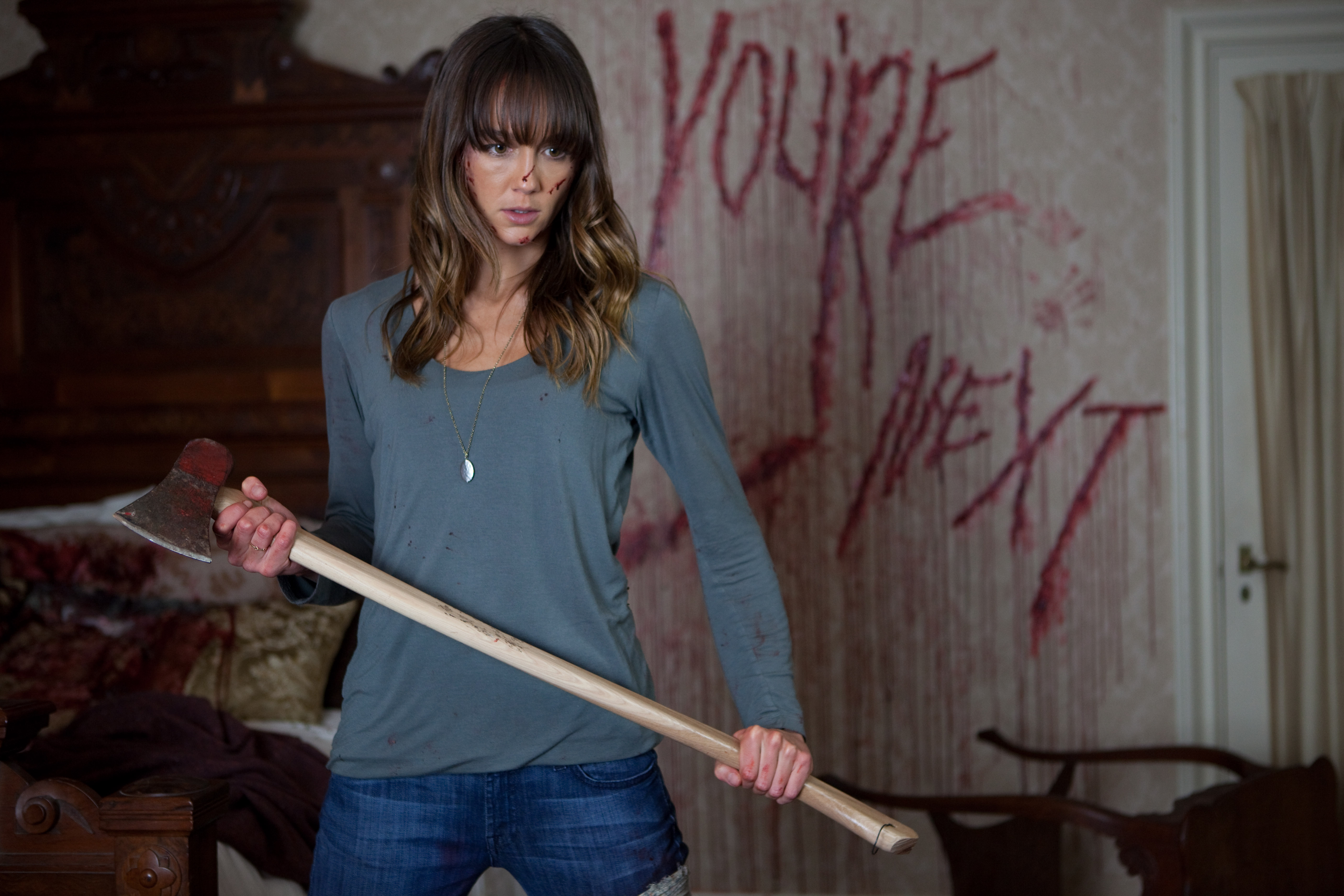
    You’re Next tells the story of the wealthy Davison family, headed by Paul (Rob Moran) and Aubrey (Barbara Crampton). They, along with their adult kids, spend a weekend at their vacation home in a remote location in the woods, but the film quickly takes a turn for the worse as masked assailants begin murdering the family members one by one. As the night of terror unfolds, our heroine, Erin, brilliantly played by Sharni Vinson, somehow makes it out of close calls and terrible violence to solve the mystery of who is attacking the family.

    I’m going to say this in all caps because it needs to be said in all caps: ERIN IS A BAMF! So much of the success from the second half of the film when the jump scares and black humor subside is attributed to the character of Erin and Sharni Vinson’s performance.

    Horror fans will love the clichéd characters and frequent jump scares, while film snobs can take solace in the fact that this is indeed a homage to the genre. For everyone else, this will be a thoroughly entertaining night of thrills and gut-busting humor. Along the way, we do experience unlikable characters and some absurdity that one should expect from this kind of film. But these common missteps never prevent one from enjoying everything else it has to offer.

    “You’re Next” is one of those rare films that knows exactly what it is and aims directly for it. The mix of gore, humor and familiarity takes the film from being a passable “B” movie to a successful and well-executed homage that may change the way we view the genre.

    Do you have a suggestion for a Netflix Flick of the Week? Tell us by tweeting at us with #NetflixFOTW and maybe it’ll be featured on Smash Cut!

  • 13 Best Horror Movies on Netflix

    13 Best Horror Movies on Netflix

    Best horror movies on netflix

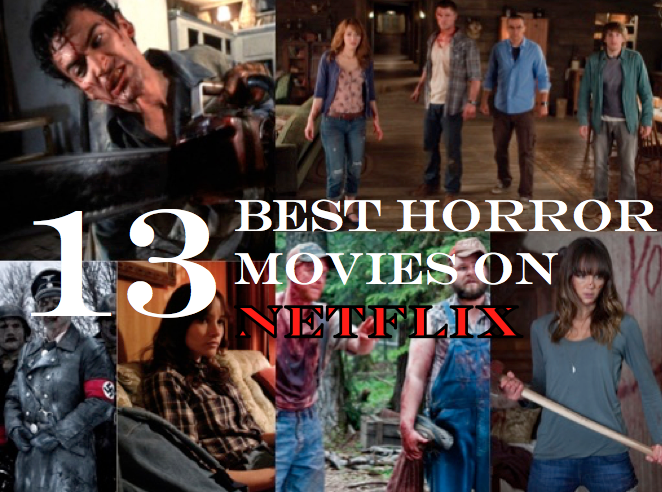
    It’s almost Halloween, which means that you’re looking for one thing: horror. And blood and guts and gore too, I guess. What better way to find those things in a safe and controlled way than watching horror movies at home on Netflix? So, for your ease and pleasure, here is a list of the 13 Best Horror Movies on Netflix.

    Note: This list is based more on entertainment rather than quality, which is really the only way to judge horror flicks. You have been warned.

    13. V/H/S 2
    It’s a clever conceit. V/H/S took the concept of a found-footage horror movie to the next level with 6 directors and 9 writers creating a grouping of short films stitched together by an overarching terrifying narrative. Despite the strong concept, the original V/H/S/ was hit and miss for me. Mostly because of the varying quality of the shorts. However, V/H/S 2 takes that concept and goes batsh!t crazy. Gore, aliens, and zombies is all you need apparently. Although the film still has its lulls and is pretty much as hit and miss as its predecessor, it still makes for a great night of horror.

    12. Grave Encounters
    You know that show Ghost Adventures with Zak Bagans, a man we’re supposed to trust even though he only has a “k” in his name? This movie is like that, but good. I mean we’ll start off with the fact that it so hilariously parodies a fake ghost hunting show, and when I mean fake I don’t mean fictional, and keeps you thoroughly entertained during the entire setup. However, when the shit hits the fan it doesn’t just hit everyone, it breaks the fan. A group of ghost hunters in a mental asylum where they can’t trust what they see or where they are. Sounds like horror to me. Although so much of the success of the film is reliant on dread, there are still enough jump scares to last you that never ending night.

    11. Pontypool
    Zombies and radio. Sounds like my kind of movie. Pontypool is a type of zombie movie that no one has seen before. The concept that words are infecting us is something I never even imagined, so the fact that these filmmakers were able to come up with and flesh out (pun intended) this concept is impressive. Even more impressive is that the film turns at to be dreadful, funny, and heartfelt, so much that by the time the screen cuts black, you sit there not wanting it to end.

    you're next10. Paranormal Activity 3
    The first movie was good because it felt so important. There was nothing out there like it and it was the fans who released it. Remember that whole “like” campaign where you had to like the film to bring it to your city, then when it reached a certain amount it’d get a wide release? Yeah, as a marketing major, that was one of the greatest viral campaigns ever organized. That and Kony 2012, but that’s a completely different story. Although on second inspection the film wasn’t as great as we thought it would be, the 3rd installment finally took the concept to an entirely different level. It balanced the creep and suspense with big scares so well, and it just goes to show you that throwing in a couple kids always makes a movie scarier.

    9. Dead Snow
    Killer zombie nazis. Enough said.

    8. You’re Next
    You’re Next starts and ends as two completely different movies. You begin watching what looks to be a pretentious indie horror flick simply looking to be a smarter, more stylish version of its mainstream counterparts. I’ve never been so wrong in my entire life. Well, maybe I have. Either way, it’s clear about halfway through You’re Next that you’re with it till the end, mostly because of the BAMF lead character Erin who grew up in a survivalist camp in the Australian Outback. Could she be our next Ash Williams? See our full review here.

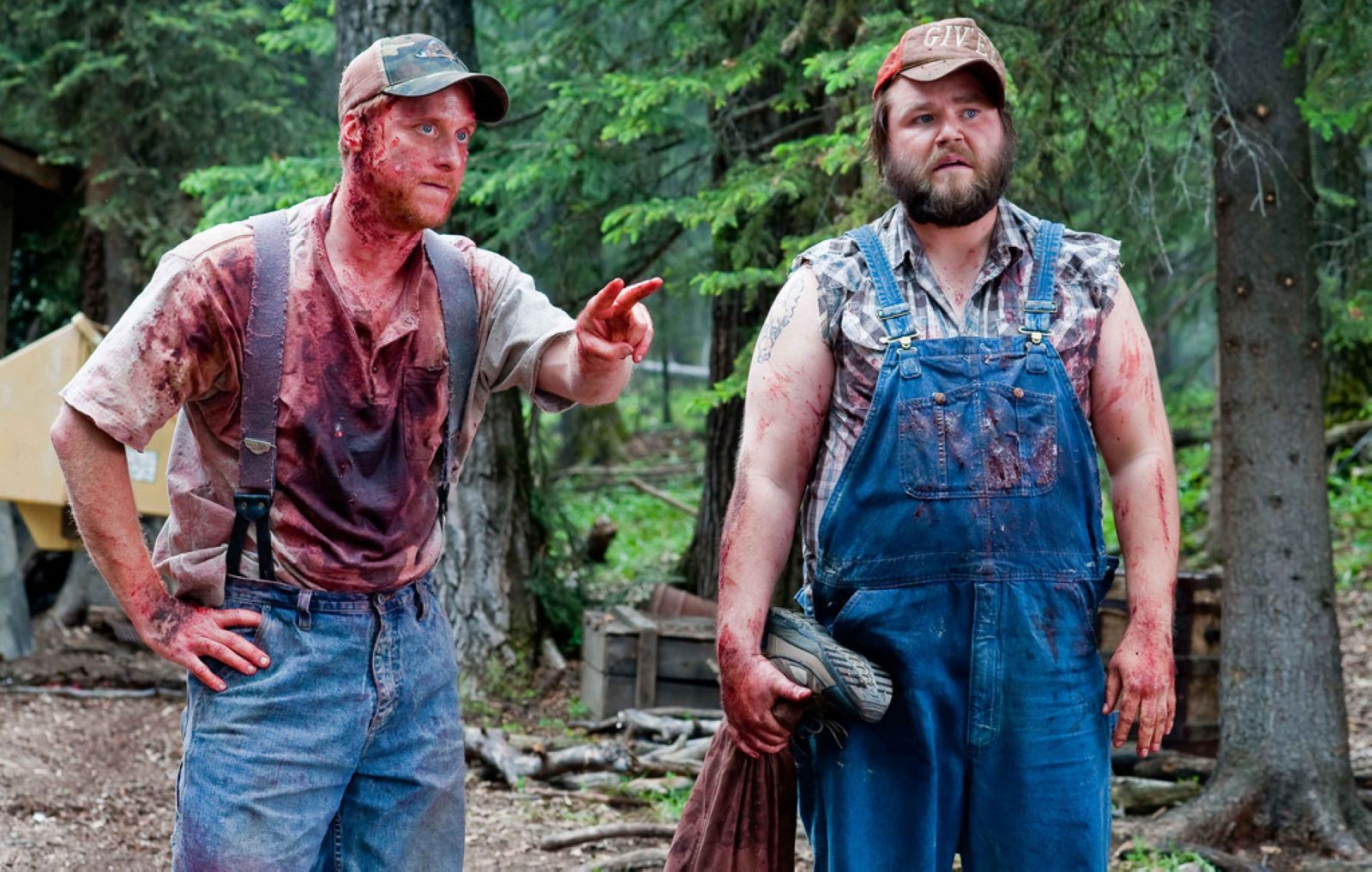
    tucker & dale vs. evil7. Tucker and Dale vs. Evil
    See our review here.

    6. The House of the Devil
    It’s an homage to the horror films of the 60s and 70s, which could be a great relief to someone tired of frequent jump scares and paint by the numbers plots. It’s a masterful movie based on suspense and dread rather than the constant barrage of “jump out of your seat” scares that get old after the 3rd time. There are baby sitters, creepy rituals, and a final reveal that’ll make you ask for more.

    5. The Omen
    This is really the only classic on this list, but it’s definitely one of the few horror movies that would come close to making my Best Films overall list. Although it doesn’t really go for the screams, The Omen knows how to creep people the f*ck out. From hangings to decapitation, it is the true definition of horror. I mean, just throw the word “antichrist” out there and you know you’ve got a movie on your hands.

    4. Scream
    It arguably set the precedent for the modern day horror film. The brilliant mix of horror, gore, and comedy started a chain of horror movies that in reality we could have done without, but like anything that spawns copycats, the original is always the best. What makes Scream even better is its self-awareness of what type of film it is. It knows it’s there for fun and it frequently capitalizes on that fact. Great jump scares coupled with crippling suspense make this teen slasher the perfect Halloween screener. However, if you don’t watch it for that, at least give it a once over to see the who’s who of new celebrities launching their careers.

    3. Let the Right One In
    This is another one of those movies where the less you know the better. Either way, give it a watch. Especially you Twilight fans. See what a proper vampire movie is supposed to be.

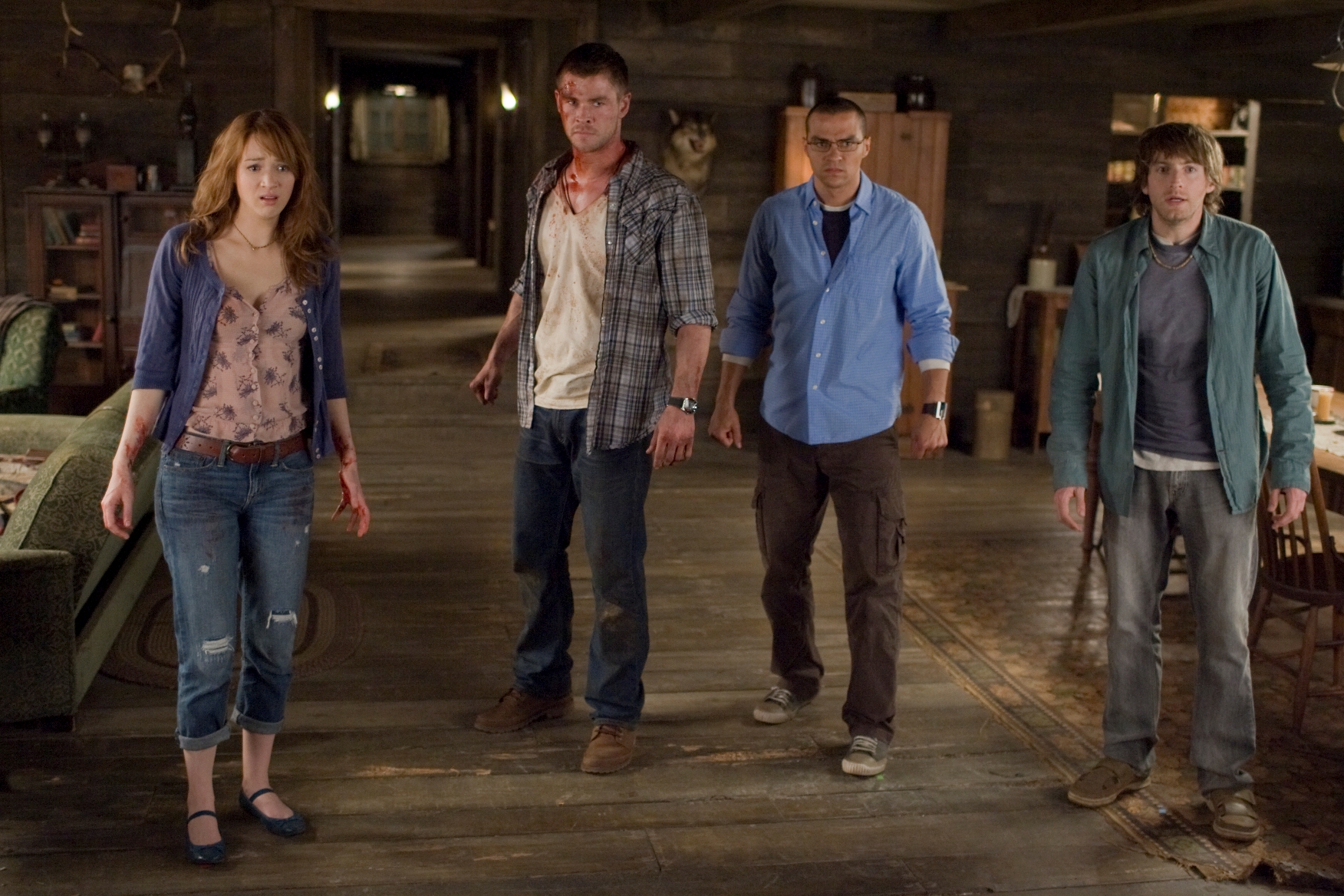
    The Cabin in the Woods2. The Cabin in the Woods
    As of last night, I’ve watched this film 14 times. I. LOVE. IT. The best part about this film is that it’s essentially two movies in one. You have the classic horror movie set up of 5 friends going to a cabin in a remote part of bumf*ck USA (we’ll talk more about this with number 1) and the two mysterious men in short sleeve button downs and ties planning some ritual. I’m not going to go further than that, because watching this for the first time my senior year of high school with my two best friends and no expectations was one of the best experiences I’ve had at the theater. It’s funny, gory, and sometimes legitimately scary, but it’s also one of the best satirical horror movies I’ve ever seen.

    1. Evil Dead 2: Dead by Dawn
    Speaking of the classic horror movies setup, the Evil Dead series basically set the precedent for that. Even to the point that The Cabin in the Woods is a quasi-remake of the film. However, even more impressive, Evil Dead II is basically a parody of the first film. We bring back Bruce Campbell’s Ash, who will always be one of the greatest movie characters, and throw in a bit more gore and tree rape and add some of the best and slightly disturbing slapstick comedy I’ve ever scene on film. I mean, Sam Raimi parodied his own movie! Who does that!? He does apparently. WATCH THIS ISH!

    [Tweet “Zombies, vampires, and ghosts. Here are the 13 Best Horror Movies on Netflix: “]

    What are your favorite horror movies on Netflix?

  • Unfriended Movie Review — A smart premise makes for a great horror movie

    Unfriended Movie Review — A smart premise makes for a great horror movie

    Unfriended turns your laptop into a horror movie with smart atmosphere building tension

    The most successful of horror movies are those that can unsettle you where you feel the most comfortable. And what is more comfortable of a place than at home on your laptop? I mean, chances are you’re reading this on a laptop. Even as I am writing this review I’m toggling between different web pages, iMessage, and even popping into the occasional Skype session (which is probably not the smartest idea after watching this movie). This is what the latest indie horror flick Unfriended thrives on. Fear of the mundane. Though to be fair, the situation portrayed in the film is anything but.

    At its core, Unfriended is a classic slash flick with a bit of I Know What You Did Last Summer thrown in. We are introduced to the five friends who make up the “players” in this convoluted game. Luckily for us, they’re easy to keep track of since they’re confined to their own little boxes on the screen in one impossible long shot. Also, they inhabit the stereotypical horror movie characters. We have the virgin, her boyfriend, the athlete, the fool, and the whore. Which are easily adapted from the simple breakdown in The Cabin in the Woods.


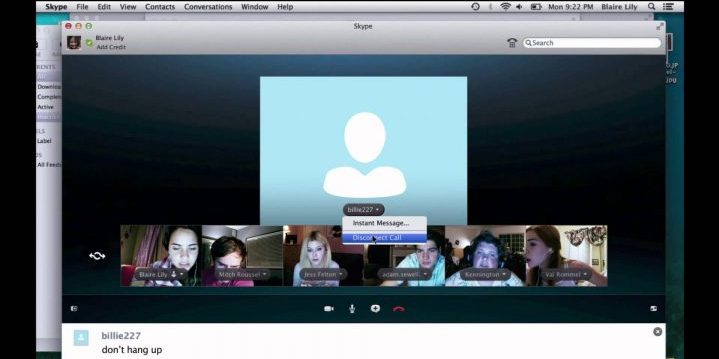
    However, where the film takes a turn for the creative is its setting. The entire film takes place on the laptop of high school student Blaire Lily (Shelley Hennig) as she navigates different windows as her Skype session goes from bad to worse. On the one-year anniversary of the suicide of their classmate Laura Barns (Heather Sossaman), Blaire watches the video of the teenager killing herself on camera. We then see her looking up the video itself, which depicts Laura passed out drunk having defecated herself.

    This is why the film is more successful than other “found footage” horror films that take place on computers like The Den and Open Windows and some slasher flicks in general. Screenwriter Nelson Greeves and director Leo Gabriadze take advantage of the nuances of a personal laptop. From viewing Blaire’s search history and Facebook page to watching videos on YouTube and reading online news articles, the usual clunky expositional dialogue of most horror movies has been replaced by these small looks into the world they’re living in. Even the relationship between Laura and Blaire is explored using the Facebook “see friendship” feature.

    The film begins a Skype chat between the five friends, with an unknown sixth participant. Despite their various attempts to get ride of “billie227,” they can’t. The session takes a turn for creepy when the group begins receiving messages from Laura Barnes’ Facebook. The innocent harassment elevates to threats when she starts dealing out incriminating photos of the group, which leads to fighting amongst themselves, while also fighting for their lives. This leads to different games that the group must participate in at the hands of the ghost of Laura Barnes.

    However, don’t think that the film just goes for cheap jump scares and gore, although there are plenty of those. The film actually shows a surprising amount of restraint. Using their technological landscape to their advantage, the filmmakers build tension with shoddy connections, buffering, and even the dreaded pinwheel of death.

    The second half of the film focuses on a tension-filled lethal game of “never have I ever” that leads the characters to face their past sins, while also feeling what Laura felt after her cyber assault. This is what the movie’s frank lesson is. The dangers of cyberbullying, its consequences, and the cruelty of people and technology. Sure, the lesson is overt, but it is an important one to note.


    This is where I’m going to set the record straight. Unfriended would be an average horror movie at best without its intriguing “found footage” concept. Its general conceit is a slasher revenge film, all the way down to the characters involved. That being said, the concept of the entire film taking place on a laptop screen brings it above and beyond what many horror movies have been doing in recent years. It builds tension opposed to just going for constant cheap jump scares, and it even unsettles you from something in your everyday life. It’s not going to go down as a horror classic, but it should be appreciated for what it is: a stupidly fun movie.

    Unfriended is available on DVD, Blu-Ray, and digital on Amazon!
  • Lights Out Movie Review — Good ol’ fashion scares make for a fun watch

    Lights Out Movie Review — Good ol’ fashion scares make for a fun watch

    Looking for a spooky fun horror movie to watch? Well, Lights Out fits the bill.

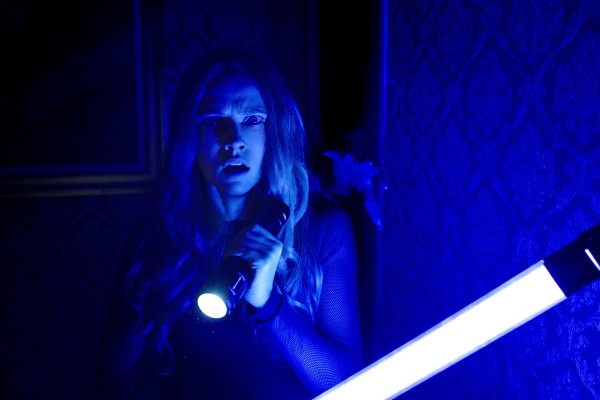
    My favorite thing to do when watching horror movies now is not knowing a single thing about them. No trailers, no reviews, no synopsis. While it becomes difficult to decide what to watch when you do that, often the result is a movie experience like no other. Our most recent success story is probably going into The Invitation blind. It ended up taking top spots on me and Brian’s best of the year list so far. There was a surprising buzz behind Lights OutThe buzz felt like the kind that an indie horror would get even though it was distributed by Lights Out. That’s why when Brian and I heard about it, we were instantly intrigued.

    When the movie started and the opening beats began Brian turned to me and said “it’s starting already. I’m not ready for this.” That’s because had an eerie mix of dark and brooding atmosphere and these well-executed jump scares that instantly put you on edge. I had a heard time keeping my hands away from my face, which is a lot more impressive considering we were watching in a dine-in theater and I could have been eating my Philly flatbread.


    The opener does what every good horror opener should do and that makes you ask “what the hell is going on?” It Follows’ opening scene does this perfectly and so does the one in Lights OutI’ll leave you to be freaked out by this one.

    I think that it’s pretty safe to give a vague synopsis of this movie because unlike The Invitation it isn’t integral to the plot. We are introduced to Rebecca (Teresa Palmer), a seemingly normal angst-filled punk millennial with commitment issues. While this sounds like the making for that horror movie character that you hope dies first, the movie provides enough depth to make her more relatable than anything.

    Her mother suffers from a mental illness that seems like manic depression, which gives Maria Bello some really great material to work with. Rebecca resents her mother for not being there for her during her childhood. In reaction to this, she runs away, which is a theme that is revisited often throughout the film. Her kind-of boyfriend Bret (Alexander DiPersia) even says in one of the film’s stronger character moments: “Are you doing this to help him or hurt her?”

    That story arc is what carries this film past its jump scares and classic horror movie formula to actually make it kind of compelling. That being said, there are some really effective scares in the movie that make it for an incredibly good time at the movies.

    The movie presents some interesting rules. Their mother has an “imaginary friend” who she only talks to in the dark. This causes Martin (Gabriel Bateman), Rebecca’s little brother who still lives with his mother, insomnia. However, this friend ends up not being so imaginary and is willing to do anything to stay “friends” with their mother. The catch? It can’t be seen and has no power in light.


    The movie sets the rules and sticks to them and even presents more rules that raise the stakes. Narratively there is no separation between the character drama and the supernatural elements. They’re one in the same. It makes the movie go by so fast and prevents it from being clunky like other horror flicks that try to alternate between the two.

    I say this a lot about movies but Lights Out doesn’t try to reinvent the horror movie. It uses some good old fashioned jump scares and a tense atmosphere to make a really effective scary movie. One of my favorite moments of the movie comes at the beginning when a character turns off the lights in a room and sees the monster then turns it back on to just have it disappear, then turns the lights back off to see it again, and does it again, and again until… well, you’ll just have to find out. Lights Out is good fun that makes for a perfect late night popcorn flick. 7/10

    Lights Out is available on DVD, Blu-Ray, and digital on Amazon!
  • The Neon Demon Movie Review — Pretentious Garbage with A Little Bit of Style

    The Neon Demon Movie Review — Pretentious Garbage with A Little Bit of Style

    Obsessed with style over substance, Nicholas Winding Refn’s The Neon Demon is a narrative mess that pretends it’s a movie by adding strobe lights and slow motion

    I rarely write reviews for movies that I dislike. They’re just difficult for me to write unless I dislike one passionately. Well, The Neon Demon is one of those movies. I don’t think I’ve ever watched a film so repulsively bad that I felt like I wasted my time and energy watching it.

    The Neon Demon tells the “story” of Jesse (Elle Fanning), a small-town girl who came to LA with big dreams. I know, original. She pursues a job in modeling to pay the bills because her parents died. Even better. Of course, there’s something about her beauty that drives everyone in this movie universe wild. In one laughable scene during a runway audition, the designer who didn’t even give the other models the time of day looks up at her and is instantly enraptured in her beauty. Cue the eye roll.

    As Jesse finds success in the town, she becomes narcissistic and self-absorbed. However, this happens out of nowhere. There’s no development. One second she’s a meek girl who thinks plastic surgery is bad and can barely contain a smile when people call her beautiful, and then in an instant becomes an arrogant and stereotypical supermodel. Refn confuses character development with these strobe light sequences that take the place of actual plot.

    Some of the women in particular who feel this animosity towards Jesse are two other models, Gigi (Bella Heathcote) and Sarah (Abbey Lee), and a make-up artist, Ruby (Jena Malone) who give it their best in the film. Elle Fanning, on the other hand, feels wooden and emotionless and makes you want to see her downfall.


    For a movie that seems so stylistically modern and advanced, the plot is one so simple and contrived. While it could make for an interesting critique of the modeling industry and the pressure to be more beautiful than the next girl. However, in a classic style over substance debacle, instead we see a mess of a plot. Even in moments when we’re supposed to be scared or thrilled, particularly in the tacky third act, you laugh at the absurdity. 

    In so many words, nothing happens for 90 minutes, then everything happens. And well, that everything involves necrophilia, cannibalism, and literal bloodbaths. However, to best summarize the movie, I’m going to let Brian say it:

    “I love a movie with a lot of style. I love a movie that is unconventional. I love a movie that has layers. I do not love a movie that is 99% diluted style with 1% barely existent storyline. This movie has great elements. It was well-shot. It had great actresses and actors. It has a compelling style (in some scenes). But I was completely lost by how bedraggled and messy it all seemed to get. There is really no cohesive story. Sure, I get the metaphors for the vapid way we treat women with blatant misogyny in the fashion industry. I get all of what this movie is supposed to represent. I got it all because it was barely a metaphor. It was more slapped across your face the whole movie without a modicum of subtlety. I wanted to like this movie; I really did, but all it has to offer is dramatic shots that lead nowhere, little well-written dialogue, a ridiculous Keanu Reeves, and crass scenes that just end up repulsive and not intriguing. Polished garbage is still garbage.”

    1/10

  • Alien: Covenant review — A confounding and disappointing entry in the franchise

    Alien: Covenant review — A confounding and disappointing entry in the franchise

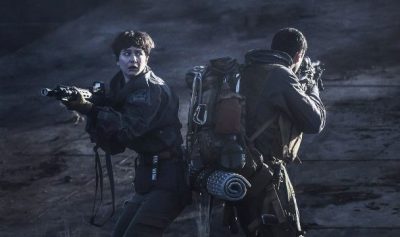
    Alien: Covenant attempts to revive the series following a few lackluster entries. However, it’s quickly apparent that fan service has done a disservice to the movie.

    After the mixed response to Prometheus — unjustly, in my opinion — Ridley Scott looked to reboot his beloved Alien franchise with a back to basics horror movie that would give genre enthusiasts and Alien fans, like myself, a jolt to the system. What made Alien such a successful and groundbreaking movie is its simplicity, which is especially notable against the backdrop of larger films like Star Wars and 2001: A Space Oddessy. Scott didn’t push to make the next great sci-fi movie. He made an effective, suspenseful, and terrifying horror movie set against the backdrop of a great sci-fi movie.

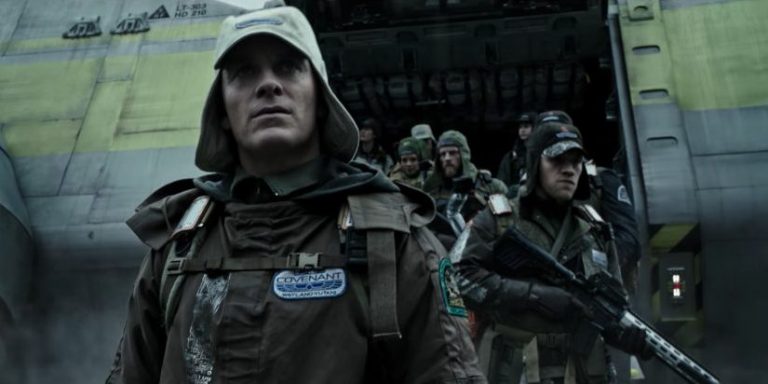
    With Alien: Covenant, he returns to the setting of a dark, claustrophobic spacecraft — for a time — and populates the world with a cast of “everyday” people. The colonization ship Covenant is on a years-long mission to Origae-6, which they intend to set up a colony with the more than 2,000 people in cryosleep on board and 1,000 embryos. The only conscious passenger is Walter (Michael Fassbender), an updated android model of David from Prometheus (the movie is set 10 years after the events of that film). When a neutrino burst damages the ship, including the cryosleep pods, and kills the ship’s captain (James Franco), the crew — now led by second-in-command Christopher Oram (Billy Crudup, who is following up his fantastic performance in Jackie) — decides to explore a closer planet from where they have received a mysterious transmission. They discover that the planet is an idyllic place with wheat fields, high mountains, and fresh water. It is a perfect place for a colony, as several characters note. However, it may be too perfect.


    After exploring the surface, two crew members become infected after inhaling a microscopic pore that does the job of a face hugger a lot more slyly. From there on, chests and spines are burst, xenomorphs run amok, and people make stupid decisions. It’s what we love about the Alien franchise wrapped up into one movie. However, Scott has other plans for the movie. Halfway through, there is a considerable shift in mood and tone when Alien: Covenantthe team discovers that David (also played by Michael Fassbender) has been stranded on the planet for some years. He takes them through a graveyard of engineers who have been preserved like the people of Pompeii. This is where the movie loses me. Instead of the straight, efficient narrative of the first three Alien movies, Covenant gets lost in a labyrinth of themes and storylines that it loses a lot of the momentum it builds during its first half. At one point, the entire audience laughed at the film. Not with it. At it.
    The film is at war with itself by trying to be the best of all the films in the franchise at once. The movie opens with a flashback to Peter Weyland (Guy Pearce) and his first interaction with the android David. At one point, David says, “You seek your creator. I am looking at mine. You will die. I will not.” It’s this heavy-handedness of its themes that make the film trying to get to, especially during its uneven second act. However, one facet almost saves it: Michael Fassbender. His dual performance as the androids Walter and David is one of the most compelling of his already impressive career. A scene later in the movie when David teaches Walter how to play the flute is gorgeous, beautifully performed, and made all the more impressive by the fact that it’s a single actor in the scene. Fassbender would be an early contender for Best Supporting Actor if the Oscar weren’t biased against genre films.


    Alien: Covenant was disappointing to me as a fan of the franchise. It was a promising premise with a strong cast and a seemingly enlightened Ridley Scott. However, in the end, it is a middling entry in the series. Other than Fassbender’s two androids, there are no memorable characters and as for the mythology of the series, it simply muddies the waters further. Take the first act and last twenty minutes and you have a strong enough movie to warrant a sequel. However, at this point in the series, I think we need a hard reset. We deserve one.

    ★★ out of 5


    Alien: Covenant is available on Blu-Ray and Digital HD on Amazon!

  • Under the Shadow review — A satisfyingly spooky Iranian ghost story

    Under the Shadow review — A satisfyingly spooky Iranian ghost story

    Under the Shadow gives a unique spin on the ghost story genre by setting it in a time and city where horror movies don’t often take place.

    The horror genre was taken by storm in 2014 when Jennifer Kent’s The Babadook debuted to incredible acclaim. It’s deep dive take on the ghost story not only felt fresh and new but it also just affirmed the fact that we are in a golden age of horror. And though Babak Anvari’s Under The Shadow certainly bears a resemblance to Kent’s film — both concern mother and child under assault by a malevolent force — it infuses it with a unique political allegory that just begs the industry to start giving us more horror movies from diverse directors. If not for the sake of exciting voices, then for the unique perspective that we don’t often see in the suburbs of Anytown, USA where most ghost stories take place.


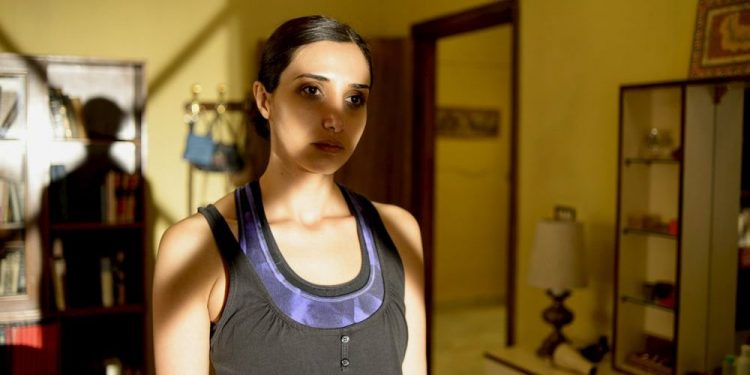
    Under the Shadow already takes a bold step in the genre by taking place against the backdrop of 1988 Tehran during the height of the Iran-Iraq war. Iranian society and the Iraqi bombs that seem to endlessly pummel the capital play as much of a role in the film as the monster at the center. Nights with sirens driving families to underground bunkers are a part of daily life as is the tape on the windows preventing them from shattering. And constantly, progressive women like Shideh (Narges Rashidi — her performance is a revelation) are constantly suppressed by their society. The film opens with Shideh being barred from continuing her studies in medical school because of her involvement in leftist political groups. Moments of female oppression are littered throughout the film. When she returns home, she throws out all of her medical books except for a book of terminologies that her deceased mother gave her. Her husband Iraj (Bobby Naderi), a doctor, does his best to assuage her disappointment over medical school, but it seems that he is just another reminder of her failure — she had to put her studies on hold to raise their daughter Dorsa (Avin Manshadi).

    Soon after, Iraj is called to the battlefront leaving Shideh — she refused to leave their apartment building to escape to her in-laws’ house — alone with Dorsa. While he’s gone, the missile sirens seem to be going off more frequently sending Shideh and her neighbors into the makeshift bomb shelter in the basement of their apartment building. One day, a missile crashes through the roof of the building and lodges itself in the floor of the apartment above the family, but doesn’t detonate. However, other than fear and shattered windows, the missile may have ushered in something more sinister. As mysterious occurrences become more and more frequent — classic “go bump in the night” phenomenon and a case of a stolen Jane Fonda workout tape — Shideh’s neighbor points to the possibility that a djinn may be responsible. In Middle Eastern culture, a djinn is an evil spirit similar to a demon in Western culture. However, for it to possess a victim, it must steal an item of theirs. So when Dorsa’s doll goes missing, a dark mood takes over the house.

    Soon after, families start abandoning the apartment complex to flee to safer cities. However, Shideh stubbornly stays put as one last defiance to her circumstances. But as time goes on and fewer people are adding life to the complex, a sense of dread takes over instead. Anvari uses the building’s dark corridors and home’s dark corners and hallways to create a labyrinth that never truly feels safe. However, Under the Shadow‘s greatest virtue is its atmosphere. Even when nothing is happening, there is tension in the air. In one memorable scene, Shideh does her workout routine — one that she usually does to a Jane Fonda workout tape from the time — in front of the blank television. It’s absent of score or real plot significance. Still, that scene stuck with me because of the feelings it inspires — dread, horror, sadness, desperation. In less than a minute, Anvari gives you an emotional update on the characters without a single line of dialogue. It gives you the sense that he could be a real auteur.


    Similarly to Essie Davis’ troubled protagonist at the center of The Babadook, Shideh is a mother who is afraid of her capabilities (or incapabilities) as a mother. However, Anvari adds an extra layer of political allegory. She’s living in a society where women are oppressed and that weight is palpable throughout the movie and that wears on Rashidi’s exceptional performance. Her character’s slow descent into madness is assured and adds to the terror. It’s hard to separate your feelings from hers. When she runs through the street at night to escape the nightmare in her home, you have a sense of relief because she made the decision that you wanted her to make. Of course, that relief is short-lived and again her society abuses her.

    Though Under the Shadow is steeped in symbolism, it doesn’t drown under the weight of it. There are clear themes of female oppression, motherhood, and the anxiety of war. But refreshingly, it doesn’t feel self-important or like those themes drive the movie. First and foremost, this is a well-directed horror movie that has just the right mix of atmosphere and old-fashioned scares to delight the mainstream audiences. When you look deeper, though, there are treats for cinephiles to unpack. It’s this balancing act that makes Under the Shadow such a successful movie. Anvari makes the most of every minute of the movie — at 84 minutes, it’s a quick watch — and makes you feel satisfied in the process. Under the Shadow is a perfect example of what can come from giving filmmakers from a diverse background the opportunity to exercise their craft. By just changing the perspective, you get a movie that is more complex and interesting than anything a studio can put out with the same plot and scares. Listen up, Hollywood.

    ★★★★ out of 5


    Under the Shadow is now streaming on Netflix and is available on Digital HD on Amazon!