Neon Indianhas basically remained consistent throughout all their albums and Alan Palomo has been able to pump up the quality of each one immensely. Their debut, Psychic Chasms, was a warm, summery dive into the emergence of chillwave. A few years later, he revealed his second album, Era Extrana, and remained steadfast that their 80s synths and adoration of nostalgia would keep them relevant and true while bringing a new swing to the genre. Now with VEGA INTL. Night School, the production value is top notch, the style is slightly different for the better, and by god is it good.
Palomo and company outdid themselves with this release. The sounds that are created and experimented with throughout the album are odd and fantastic, like the Pan’s Labyrinth of new sounds, different from anything we’ve seen before and extremely memorable. From the distorted saxophone of “Dear Skorpio Magazine” to the Crash Bandicoot-esque electric piano from “Street Level”, it sounds a whole lot funkier than anything that the group has done. Palomo himself does bring an extra ounce of soul to his songs with glitched falsettos and a vocal delivery that sounds like his own take on Jamiroquai.
The flow of this album works incredibly as well. There is great single material to almost all of these songs, but the ones that were picked, “Annie”, “The Glitzy Hive” and “Slumlord” all stick out the most. “Slumlord” in particular has two songs that follow it up so perfectly, it gets points on its own for progressive song placement. “Slumlord’s Re-Lease” and “Techno Clique” are offshoots of the single with “Re-Lease” being the bridge between the two. The way it all comes together is nothing short of genius.
The longest track on the album, “Baby’s Eyes” breaks up the album well with this distorted yet sensual slow descent into a hazy glow. Every synthesizer is bouncy and the guitar is reminiscent of the quick “chk” of Prince and other 80s pop stars at the time. “C’est La Vie (say the casualties!)” is the Neon Indian that fans would be used to; a call back to Psychic Chasms with treble-increased guitars and bubbly blips of textures spread across the track like globs of jam on a slice of bread. “61 Cygni Ave.” has that Miami Vice/island reggae sound with quick basslines and guitars lining the backbeat instead of front and center. A new-school old-school party anthem. Even the closer, a live bootleg of “News from the Sun” has single potential, and is a pop hit that was a bit more destined for summer.
Listening to “VEGA INTL. Night School” reminds me of the endless nostalgia that we’ve all grown accustomed to hearing. We listening to music that all uses samples of older, better songs. This album doesn’t need samples to keep it alive, it’s a homage to that time, not a ripoff that we constantly hear. And that’s coming from someone who just recommended a album made up of nothing BUT samples. Neon Indian could’ve just made something better than Era Extrana in terms of experimentation and consistency and a much better callback to themselves and the era they love.
The Dead Weather has to be Jack White’s 6,798th project if we take into account how active he’s been in recent years, but what makes this different is that it’s not just himself taking the reins and singing and doing all the production; it’s members of The Kills, Queens of the Stone Age and The Greenhornes. Their third album has done the job of distinguishing their sound as a standalone band instead of just these bluesy minds put together.
Distinguished from their previous efforts, Allison Mosshart really takes the lead as the frontwoman while Jack barely says a word except for on 2 tracks. It also has a lack of classic 60s and 70s instruments that were prominent in their second album, Sea of Cowards. Instead, they’re replaced with a series of grinding effects like echoes, delays, massive fuzz and reverb. Synthesizers also make an appearance but their used in more of a “this generation espionage movie” feel. Songs like “Three Dollar Hat” starts out with this stepping synth that is just so disjointed with the murder ballad that White starts off with and then the effects on the speedy Mosshart part seems like she’s screaming through a mad mod design on a dress from England. While there are some old sounds reused on some of the new tracks, it is obvious that there is a new air to this release. Songs are punchier, but nothing is as sensual as “I Can’t Hear You”, “I’m Mad” or “So Far From Your Weapon” from previous releases.
Having the fuzziest effects this side of Noise Rock does have its upsides though. Songs like “Mile Markers” are my favorite for their layering and hard rock guitar whines and blasting tight snares. Mosshart is yelping into the echoing void in “Too Bad” and the instruments perfectly compliment her confessions to the listener. “Cop and Go” has this constantly plinking piano in the background while the guitar and bass sound like a femme fatale slowly putting a cigarette into her mouth. Right out of a movie. “Beautiful eyes, danger zone.”
So while the single strength isn’t the strongest, the potential for an original sound for the garage rock supergroup does make me hopeful that more experiments will come along the way for more memorable tracks. Dodge and Burn is evanescent, but the sounds are distinct and creative. Mosshart shines in what seems like less of a collaboration and more of her band, and those changes make it a pretty decent album.
The 2015 Emmy Awards are this Sunday where Television’s finest will come together to honor the best and brightest of the year. Below are our final predictions on who will win and who should stay home. Here are our 2015 Emmy Predictions!
Come back to Smash Cut tonight for our Live Blog of the ceremony!
Drama Series
Better Call Saul
Downton Abbey
Game of Thrones***
Homeland
House of Cards
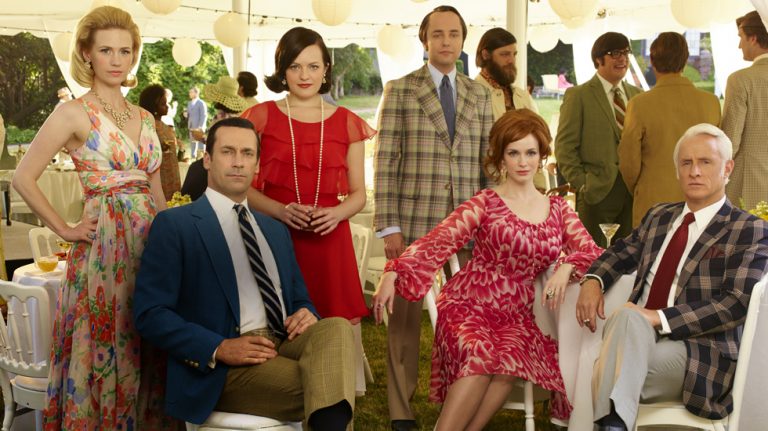
Mad Men
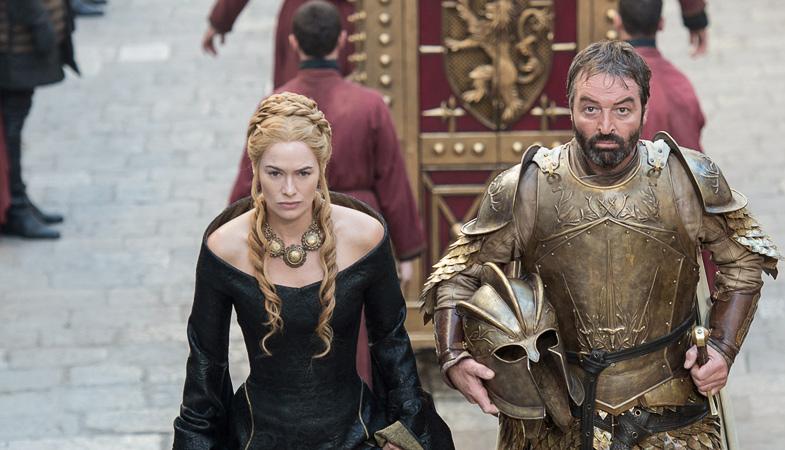
This is probably one of the toughest races of the night, especially with the new voting system, it’s really a race between two beloved series. Mad Menreceived critical raves for its final season and remains one of Hollywood’s one of most beloved series. It helps that the show hasn’t won a single Emmy in nearly two years and still has yet to win an acting award, which is widely known. The other is not only a beloved series, but also the biggest series in the world. Game of Thrones received more than any other nominee this year, which is a feat in itself. It also won 8 awards at the Creative Arts Emmys this past weekend, which is one away from tying The West Wing’s record for the most awards won in a single year of 9. While I think it’s going to be close, I’m going to call the race for Game of Thrones.
Lead Actor in a Drama Series
Dominic West, The Affair
Bob Odenkirk, Better Call Saul
Kyle Chandler, Bloodline Kevin Spacey, House of Cards
Jon Hamm, Mad Men*** Jeff Daniels, The Newsroom
Liev Schreiber, Ray Donovan
I think it’s a pretty well known fact that Mad Men never won an acting Emmy. However, the most egregious of those snubs comes from their leading man. Jon Hamm has a HUGE Emmy IOU that I think they’re likely to pay this year. However, he has to look out for Kevin Spacey, who is a well liked industry actor, Bob Odenkirk, who has a strong episode submission, and Kyle Chandler, the man who beat Hamm the year he should have been unbeatable. Hamm should have this one locked up pretty tight, but one of the 3 men mentioned could surprise.
Lead Actress in a Drama Series
Taraji P. Henson, Empire
Claire Danes, Homeland Robin Wright, House of Cards
Viola Davis, How to Get Away with Murder***
Elizabeth Moss, Mad Men
Tatiana Maslany, Orphan Black
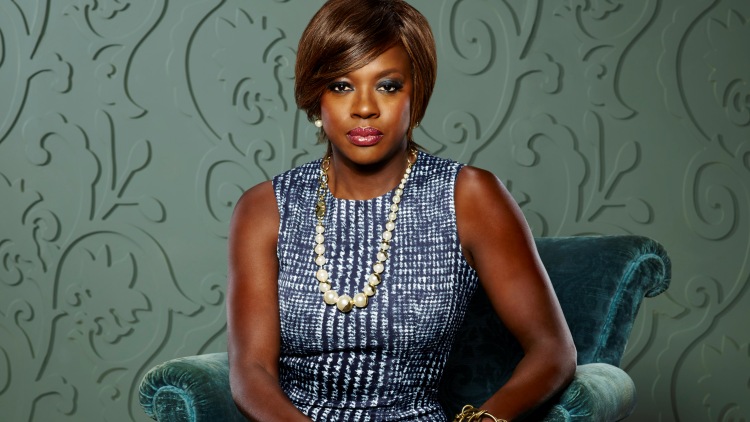
This is a race between two huge performances by two actors who are extremely respected in the industry. Viola Davis has been in the conversation for the Emmy before her show even premiered. The two-time Oscar nominee gives a passionate performance in How to Get Away with Murder that in any other year would win in a walk. However, this year she has to contend with Taraji P. Henson whose larger than life performance in Empire won her raves and propelled her to become a pop culture icon. It’s going to be a close race, however I think Davis has too much momentum behind her for her not to lose.
Supporting Actor in a Drama Series
Jonathan Banks, Better Call Saul***
Ben Mendohlson, Bloodline
Jim Carter, Downton Abbey
Peter Dinklage, Game of Thrones
Alan Cumming, The Good Wife
Michael Kelly, House of Cards
Jonathan Banks has this race locked up for his surprisingly heartbreaking portrayal of Mike. If he gets any challenge, it would come from Michael Kelly or Ben Mendohlson, but don’t count on it.
Supporting Actress in a Drama Series
Joanne Froggatt, Downton Abbey
Emilia Clarke, Game of Thrones
Lena Headey, Game of Thrones***
Christine Baranski, The Good Wife
Christina Hendricks, Mad Men Uzo Aduba, Orange is the New Black
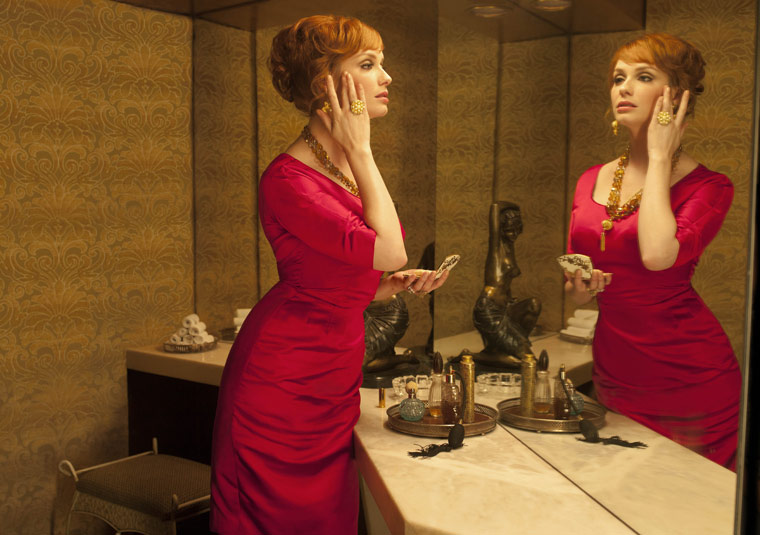
This is probably one of the most competitive acting races this year, with 4 contenders having legitimate shots at winning the Emmy. Lena Headey was the early favorite to win for the “Mother’s Mercy” episode of the show. However, with the new popular vote and the controversy over her body double, she is going to get strong competition from more popular choices like Christina Hendricks or Christina Baranski, who are both overdue for their roles or Uzo Aduba, who is an industry it-girl and current Emmy champ. I think Headey maintains her edge from early momentum, but Hendricks is going to give her a hell of a fight.
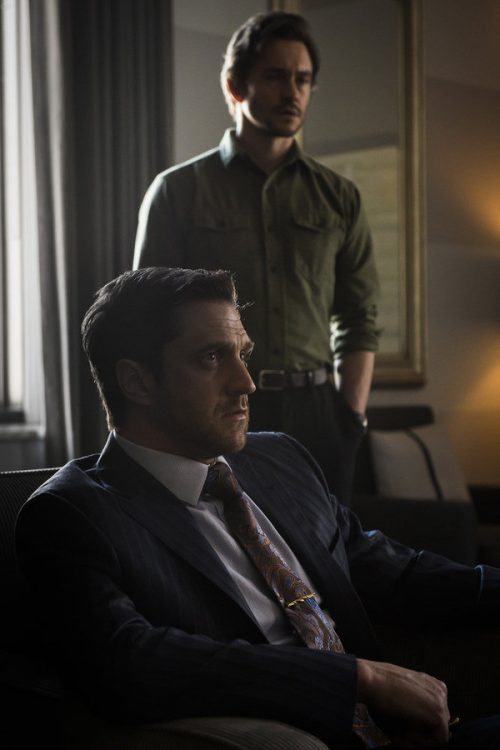
HANNIBAL — “The Number of the Beast is 666” Episode 312 — Pictured: (l-r) Raul Esparza as Dr. Chilton, Hugh Dancy as Will Graham — (Photo by: Brooke Palmer/NBC)
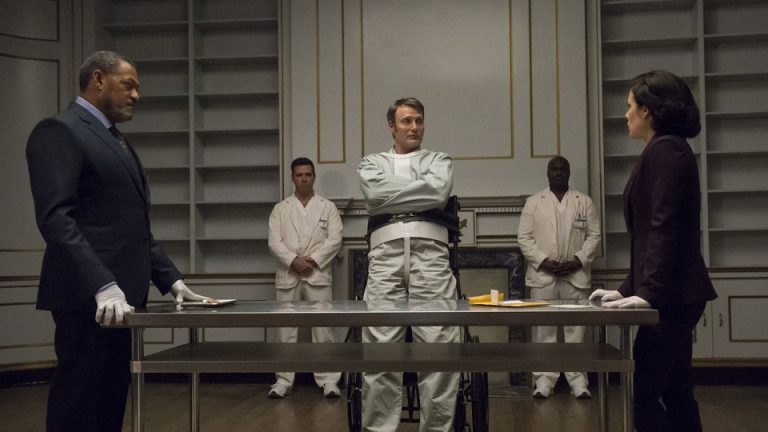
Let’s get one thing straight immediately: “The Number of the Beast is 666” is a non-stop tour de force, from beginning to end. It is virtuosic in its scope, full of intimate scenes and juicy dialogue arranged around a lurid, stunning centerpiece that takes one of the most iconic, oft-parodied scenes of modern horror and makes it freshly terrifying. Make no mistake, Hannibal’s penultimate episode is perfect. It pains me that we have just one more week to revel in this brilliance.
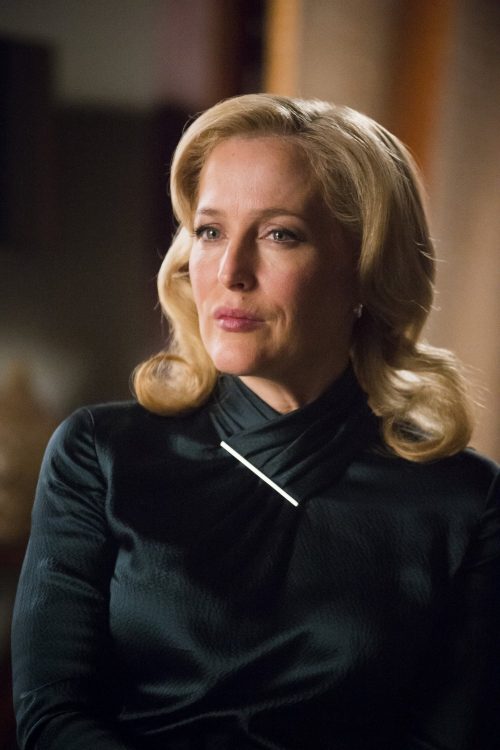
That’s not hyperbole, either. The opening conversation between Will and Bedelia is, as is any conversation on this show featuring Gillian Anderson’s magnificent, lilting delivery, magnetic. A similar conversation appears later in the episode the episode, and taken together they are revelatory. Subtext has been becoming text for most of this season, but here we officially go there, with Will’s realization, at Bedelia’s suggestion, that Hannibal may in fact be in love with him. Leaving aside how very cool the notion of recasting the Hannibal mythos as a queer story is, the idea that the series has all along been built around, and in fact is building toward the conclusion of, this relationship provides context and weight to this final arc.
The discussion of Bluebeard’s wives, the idea that Hannibal uses Will as his agent in the world, and the return to the notion of participation—the suggestion that Will in fact chooses to be Hannibal’s agent in the world—all serve to recapitulate and to magnify the conflicts that have defined the series. Because with Hannibal behind bars, are not many of these conflicts beside the point? The devil is caged. And yet Jack is still a vengeful, manipulative, deceitful God. Alana is still cold and caustic, a far cry from the warm, nurturing woman we met three seasons ago. Will may very well be the murdering lunatic Freddie Lounds accused him being. Francis Dolarhyde may appear to be a wild card streaking through this assemblage, but it is all Hannibal Lecter’s design.
This is something Bedelia knows first-hand, knows instinctively, and perhaps this is why she seems to take such relish in laying it out for Will. Gillian Anderson’s addition to the cast has paid dividends this season, and her delivery here is as on point as ever; each word is clipped and crisp and fraught with meaning beneath the monotone of her voice. Bedelia is not the only who appears to be enjoying herself, either. Hannibal himself is a delight this episode, as Mads Mikkelsen’s performance edges closer to the rendition of the character with which we are most familiar. He has a permanent smirk plastered across his face, whether he is taunting Jack and Alana with their errors, lambasting Chilton one final time, or even, in a split-second gag shot, slurping up one of Chilton’s disembodied lips.
So much of the momentum here, then, is derived from long-standing character arcs coming to a head; from the continued twisting and turning and repeating of various motifs. Jack has always been manipulative of Will; now Will is aware of it and can call Jack on it, even if he continues to participate. Hannibal ribs at Alana, reminding her that he once tasted her lips, as well. Bedelia alludes to Bluebeard’s wives, but says with emotion that she would have preferred to have been the last (implying instead that she, like all of the others, has suffered some sort of death at Hannibal’s hand).
If the episode had just been a string of these sorts of scenes it would have been a series highlight. But it is the Red Dragon’s contribution to the episode that makes “The Number of the Beast is 666” the pinnacle of the series. (At least, one hopes, to date.) Dolarhyde’s abduction and torture and eventual murder of Chilton occupies an entire, extended twenty minute act of the episode, though it is unfortunately split by a commercial break (to give NBC credit, they did time it with a natural deflation of the tension, at Reba’s appearance). The entire thing is masterful, not least because this is such a recognizable, work-defining sequence. If you are anything like me, you cannot hear “do you see?” and not think first of South Park’s parody. But here we have a marvel of sustained a horror, a writer’s workshop in the slow ratcheting up of dramatic tension. Small scenes within the sequence fade to black and fade back in, mimicking Chilton’s consciousness throughout. Chilton is tied to a chair, shot from below, and above him the Dragon towers, his face obscured by a black mask that is more than a little reminiscent of our old friend, the Wendigo.
The writing and the direction are top-notch, but it is both performances that seal the deal. Raul Esparza plays Chilton with the perfect degree of smarm, but he turns that performance on its head here, parlaying Chilton’s fear into a considerable amount of audience sympathy. As for Richard Armitage, he is terrifying. His performance is so innately physical, from the jerking motions he makes as the Dragon, to the guttural growl the he modulates seemingly from the pit of his stomach. You are, in large part thanks to Armitage, on the edge of your seat for the full sequence, and only when you look up do you realize twenty minutes have gone by.
This is how great television is done, full stop—a textbook example of mood-setting, of dramatic structure, of thoughtful performance.
Stray Observations:
“Quantifiably bitchy!” Chilton gets one last sick burn in before he, well, you know.
“Are you a small or medium? Small, I bet.” Freddie Lounds, national treasure. TattleCrime is still a stupid name, though.
The makeup work this episode is phenomenal, as well; Hannibal has never shied from gore, but the work on Chilton’s lipless face is among the grossest things the show has done.
We have been advised to watch the final through the credits. Will there be a tag teasing Silence of the Lambs? Some other sort of Easter egg? My fingers are crossed for an eleventh hour renewal.
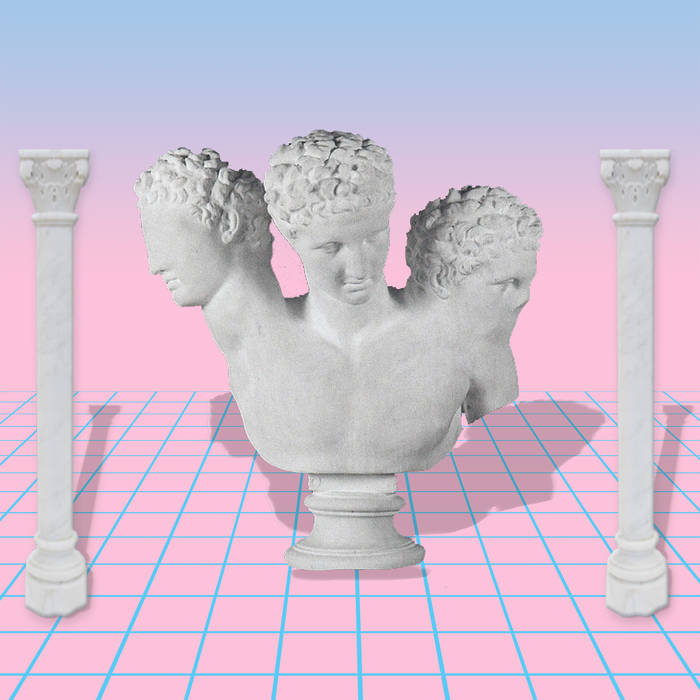
Hey guys, I’m Christopher Hopkins and welcome to The Scour, where I look for new music in every possible region to give you guys hidden gems that could rival the big releases this year. Today, we’ve got a heavily sampled album out of Argentina that is part of a recent art movement called vaporwave.
I’ve listened to my fair share of experimental music, but when a friend introduced me to this genre about a year ago, I was a bit skeptical at first. I thought it was a ripoff of all the classics from my childhood that I held dear to me. The samples from Sade and Art of Noise slowed down to make this odd soul vacuum of misplaced nostalgia was rubbish at first, but then, the more I listened, the more I explored. This intriguing area is full of dedicated musicians whose main ideal is based off of their golden age of music, the late 80s and early 90s, and their manipulation of the media is one to be admired.
Combining the chilled out elevator music of smooth jazz and sometimes the sensual stylings of R&B, vaporwave is in its own niche of slowed-down dreams and memories of a bygone era. One such musician I’ve found and grown a fondness for is bbrainz, a teen from Argentina who uses these old recordings in their original masters, constructs some distortion and, voila! this release has a dissonant but relaxing feel of neon lights and dark city streets (rendered just about as well as a Donkey Kong arcade cabinet).
internet lust is a relatively short album, with each song ending around the 2 minute mark, but these constant, airy grooves only make you want more, to loop indefinitely while working on some big project (or a music review, perhaps). “online”, “atlantico”, and “reflections” all hold some pretty solid samples while the big show-stopper in the beginning of the album has to be “home design” with collaborative work from .casting. If you do enjoy this music, you’ve already got someone else to look out for. “私の魂のデータ” (which translates to “my soul of data” seems like a funky jungle groove and slows down at just to right moment to fade you out. “vice city shopping mall” will seem like exactly that, an old shopping mall that you used to frequent before it was upgraded with the aesthetic of the 2000s. If it wasn’t weird enough, you’ve got the noisy “hotline” with its distorted and fuzzed out moans and subtle melodies. Nonetheless, it puts you in a nighttime trance.
If you’re a bit more daring when it comes to your musical ventures, take a look at internet lust by bbrainz. I would say it’s for fans of ambient music, but also psychedelic rock, lo-fi music like Blank Dogs and Ariel Pink. Fans of the original samples will also have fun in trying to remember that song from their childhood and probably can’t wait to Google it. Take a listen, and hopefully I’ve turned you on to something you like. I’m going back to scouring the endless sea of music and bringing it to you.
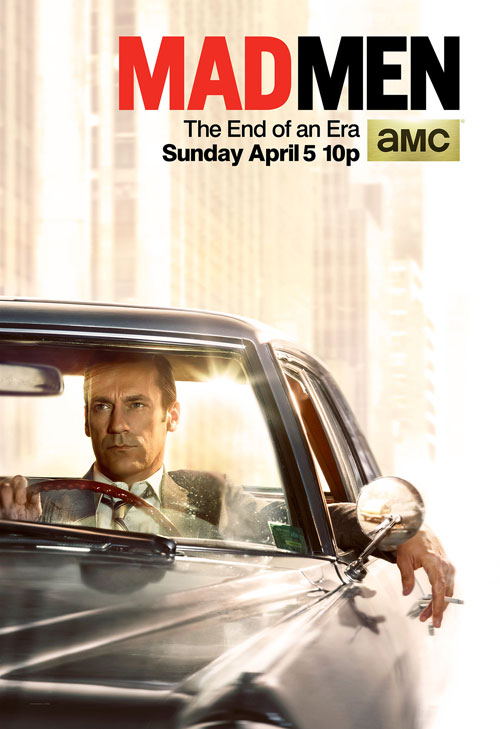
How will Don Draper die? Throughout the final episodes of Mad Men, which aired the second half of its final season this past spring, it was this question, and increasingly speculative answers to it, that dominated so much discussion of the show. As is so often the case with Mad Men, much of that speculation was beside the point. Like with previous similar speculation of the “Megan is surely Sharon Tate” variety, these questions treated Mad Men like a much more conventional, clichéd story than it has ever attempted to be. By the seventh season, you would think we’d know better. But no—we expected Mad Men to submit to conventional narrative tropes straight through to the very end.
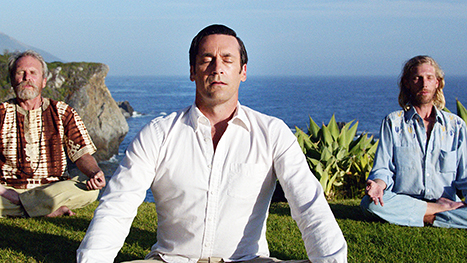
This is likely why the conclusion that Matthew Weiner did provide was at first so jarring. Suddenly there are only ten minutes left of Mad Men, and Don Draper is in a share circle at a hippie commune, hugging a strange man and getting his om on. And then, “I’d Like to Buy the World a Coke.”
Weiner likely thought this ending fairly straightforward, and in fact it is. In the world of Mad Men, Don goes to the Mecca of enlightenment, reinvents himself once more, and subverts an entire subculture to sell soda—and he does it while creating arguably the most successful advertising campaign of the era. That there is any debate at all about this outcome is a testament to the complexity of the series, but that doesn’t make the debate any less wrongheaded. Is it a cynical note to end the series on? Certainly. But it is also distinctly Mad Men, a fitting conclusion in its content and in its surface inscrutability.
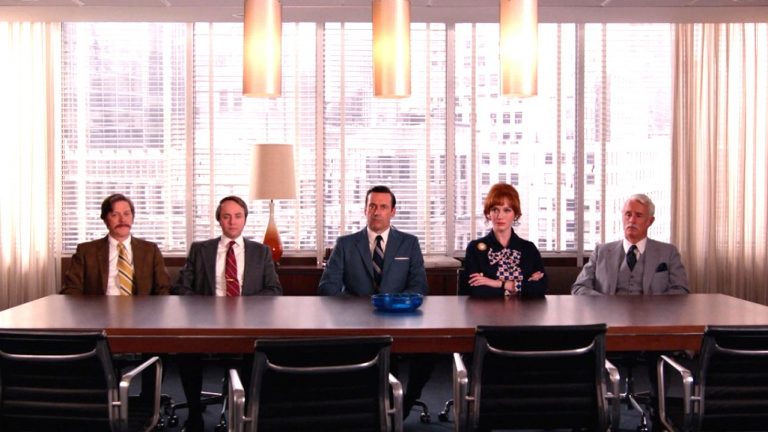
Mad Men’s final run is as notable for what it did not do as for what it did. It did not run through a laundry list of finale must-haves. (The one instance in which it did do this, with Stan and Peggy’s rom-com moment in the finale, is one of the series’ few bum notes.) It did not concern itself overly with explanation, or with tidiness. The finale does do more than it needs to set up “next acts” for the central characters, but this tidiness is happily subverted in many of the cases. Joan’s business may fail. Pete and Trudy may be just as unhappy when they step off that plane. Roger may divorce again. Latter-day Mad Men devoted a lot of time to making its characters unbelievably materially happy; they all end the series millionaires. But if the millions didn’t make them happy, there’s no guarantee that a new job, a new boyfriend, a new try at marriage, or a new outlook on life will have any more success.
Photo Credit: The Unauthorized Critic
That’s what makes the closing moments so great, and it’s what means that they aren’t, necessarily, as cynical as they appear on their face. That Don returns from his sojourn essentially unchanged is a truism of life, but it doesn’t have to be a cynical one. That humans are fundamentally unchangeable is a core notion of the show. It would have been more cynical for Weiner to, in the eleventh hour, suddenly posit that the characters have finally bettered themselves—this time, it all works out! There is no magic salve for the human condition. We come as we are. Mad Men’s thorough, nuanced, empathic understanding of this truth is its single greatest achievement, and that understanding is on display throughout this last set of episodes.
It’s true of Betty, who, perhaps not entirely unexpectedly, receives the series’ only truly tragic sendoff. Yes, Betty Francis ends the series with a cancer diagnosis, one that comes in the midst of her studies toward a psychology degree. But all the same traits are still there: the stubbornness that leads her to refuse Henry’s insistence on more thorough care; the recklessness that leads her to, even briefly, consider a flirtation with a much older Glenn Bishop; and the hardness toward Sally that, ultimately, expresses itself as a kind of maternal protectiveness, in the lovely final letter that Betty pens to her daughter.
It’s true of Peggy, who continues to climb the corporate ladder throughout this final run. For Peggy happiness is much more easily pinned down than it is for Don, but don’t confuse that with contentedness. Peggy must always be moving; she, like Don, always has the next goal in sight. Part of it is that, for women, the goalposts are positioned rather differently. But part of it is that same hunger, and it’s that hunger that scores her Bert’s weird octopus painting, and it’s that hunger that keeps her at McCann-Erickson, rather than running off to join Joan’s business (which is not to belittle either option). It’s that same hunger that makes her sudden realization of her love for Stan feel, if not wrong, then just a little too pat.
Photo Credit: Us Magazine
And it is, as always, true of Don. He ends the series where he began it, more or less. The penultimate episode finds him at a VFW hall, ever the outsider among these hardened veterans, who are nothing like Don. Secretly he thinks they are beneath him; they are the man he abandoned to become Don Draper. There is the creeping sense of dread, that perhaps Don will finally be found out, brought to task for his original sin—but no, that would be too obvious, and besides, we already knew, have known for some time, that the secret of Don’s identity wouldn’t matter. Bert shrugged it off, way back when. And it’s not that identity that gets Don in trouble here. Instead it’s his readiness to identify a kindred spirit, a ne’er-do-well teenager who cons the vets out of their money. Don tries to talk the kid off his path, and onto a better one, or at least, a different one than the path that Don chose. But people don’t change. We come as we are.
The last set of episodes was more polarizing than perhaps would have been expected. Significant stretches of time were spent on seeming irrelevances; except that nothing is irrelevant in Mad Men’s novelistic approach, should you be willing to take the time to engage it. The show concluded more vehemently denying its medium than ever—and it’s a good thing. In doing so Matthew Weiner has delivered a stunning seven seasons’ worth of consistently A+ drama. I am hard-pressed to think of a bad episode of Mad Men; I don’t know that there is one. But don’t be surprised when Mad Men goes home effectively empty-handed at this year’s Emmys, too. There are sacrifices to be made in denying the medium, and among them are viewership and accolades. Those of us who invested the time, the thought, the energy, though—we know what we’ve experienced, and we know we’re not likely to see anything of its kind again. Maybe that’s hyperbole. Or, maybe, it’s just advertising.
Standout episodes: “Time & Life,” “The Milk & Honey Route,” “Person to Person”
This paragraph is about the Emmys and how Mad Men should win, but probs won’t.
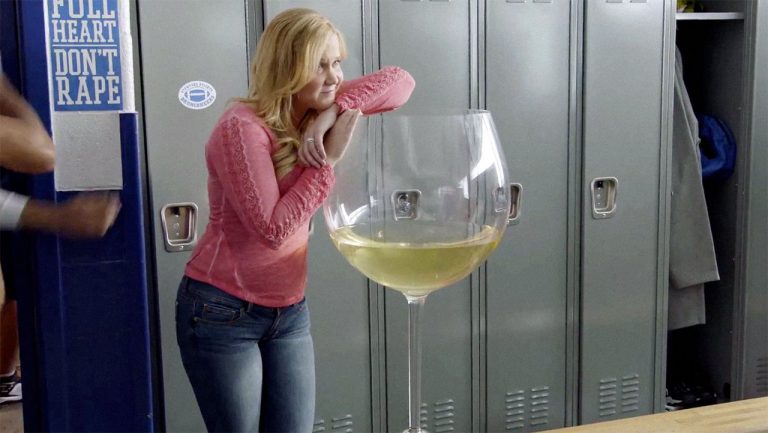
By most measures Amy Schumer is an unlikely It Girl. She is crude and often vulgar. She does not look like or present herself as a vapid, bleached-blond wastrel. She speaks bluntly and frankly about the very system that regularly anoints It Girls, and what she has to say is sharply critical. And yet here we are: Amy Schumer is nominated for an Emmy, is the star of a hit movie, and is a least a weekly headline item. It should go without saying that this is a vastly preferable world, and that it is Amy Schumer’s own body of work that has made her success possible.
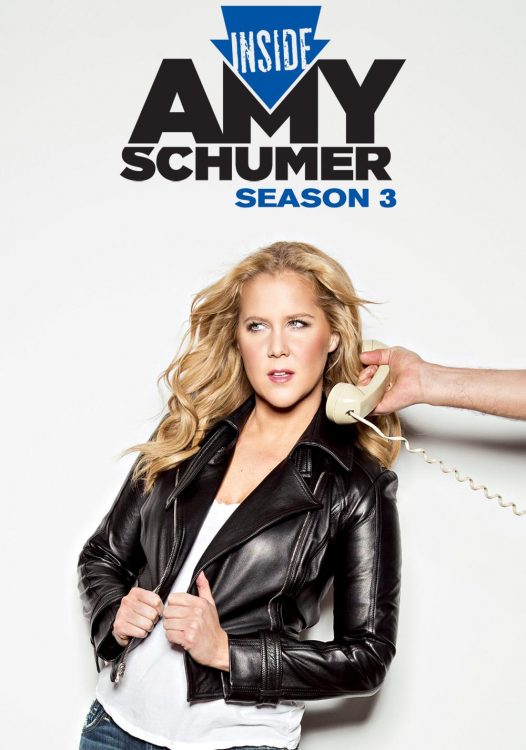
Inside Amy Schumer presents its third season for Emmy consideration this year, but this is the first season to truly become such a hot topic of conversation. Schumer’s ascent into the public eye has been nothing shot of meteoric. In fact you can begin to see the backlash phase beginning; pick any comments section on an article about Schumer and you will find at least one comment complaining about the superfluity of articles about Schumer. You don’t need me to tell you that this backlash is largely imagined, the result of the collective undesirables of the Internet-with-a-capital-I, replete with neckbeards and MRA-pamphlets, finding fault with Schumer’s particular brand of feminism.
These neckbeards are Schumer’s bread and butter. Inside Amy is nominated for Outstanding Variety Series (though really, should not these shows be eligible to compete in the “real” comedy category?), but one need only focus on the episodes and sketches singled out for the show’s other six (!) nominations to see exactly what Schumer’s project is, and where she plumbs society’s less fortunate aspects for maximum comedic effect.
Take “Cool With It”, which of the three episodes highlighted by the Television Academy plays things the most straight. In the titular sketch, Amy plays an office worker determined to play it cool with her office-bro co-workers. They go out to a strip club, get drunk, get lap dances, all to Amy’s repeated, increasingly garbled refrain that she’s “cool with it!” Things escalate until Amy is murdering the stripper and burying the body—still cool with it. The sketch ends with a non-sequitur; Amy turns to the camera and pitches equal pay for women. Then she bashes the still-breathing stripper over the head with her shovel.
https://www.youtube.com/watch?v=UOlELxK83pw
It’s easy to see why the sketch appeals to Emmy votes, and why this episode is the one for which Amy is recognized as an actress. On display is her determinedness to weave current social issues into her comedy, but to do so in challenging and unexpected ways. Here the issue is not just equal pay—in fact that is shoehorned in rather weakly—but also the issues that women face in the office and in other social situations. They are expected to conform to such dudebro behavior—think of Gillian Flynn’s “Cool Girl” for this concept taken to its dramatic extreme. Schumer satirizes it expertly, but what is also on display here is her gameness to use her own physicality in service of the satire. Schumer’s leans into her physicality, not afraid to play a silly, drunken slob. Physical comedy is a huge part of what makes these sketches work, and Schumer’s versatility is showcased here.
That Schumer is not afraid to sound drunk, look silly, or go blue is half of her success recipe. The other half is her braininess, and that of her writing team, all of whom are also recognized for an award this year. Again, the individual episodes recognized are clues into what Emmy voters have rightly recognized in the show as a whole. Nominated for Outstanding Original Music is Girl You Don’t Need Makeup, the One Direction parody that also features in “Cool With It.” The song is first and foremost a quality pop track, which isn’t exactly required, but it certainly helps; the production is so top-notch, this could easily be a real One Direction song.
Photo Credit: Salon
The music and lyrics are by staff writer Kyle Dunnigan, and they are, at first, a straight parody of “You Don’t Know You’re Beautiful”, with the same “you’re naturally beautiful!” message, only infinitely more obtuse. (Sample lyric : You’re beautiful and who cares what they think / Now wash that lovely face off in the sink / In the sink, girl.) But things very quickly take a turn for the absurd, a trademark of many of Schumer’s best sketches; the satire begins obviously, but then is turned on its head. After the first chorus, the boy band exhorts Amy to “hold up, girl / we spoke too soon / with this whole no makeup tune / we kinda changed our minds on the makeup thing.” Now they’re extolling the virtues not of makeup, but of the way makeup can make a girl look like a “naturally beautiful girl.” “You’ll be the hottest girl in the nation / with just a touch of foundation” and “I didn’t realize that your lashes were so stubby and pale / Just a little mascara and you’ll look female” drive home the point, and before long the chorus has been revised as well. Amy is still perfect when she wakes up, “just don’t go outside like that, OK? / just a little makeup, some natural-looking makeup / what more do I have to say?” By the end of the song Amy is made up like a clown. Here again is that perfect marriage of verisimilitude, satire and absurdity.
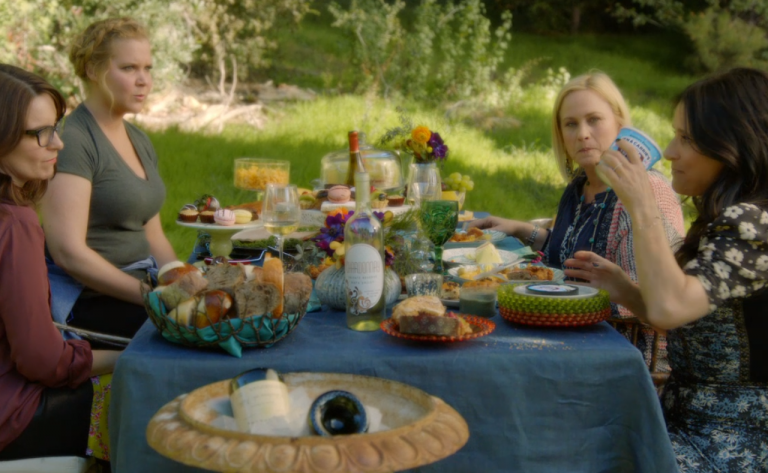
That braininess extends to the other two episodes singled out for Emmy recognition. In the first, “Last Fuckable Day,” the titular sketch features Julia Louis-Dreyfus, Tina Fey, and Patricia Arquette, who are celebrating Julia’s last fuckable today. The thesis is that women in Hollywood reach an arbitrary point at which they are no longer fuckable, and there’s nothing to be done about it. The sketch treats this not just as a tremendous injustice, but as an insurmountable fact. Throughout, the actresses lean into and even celebrate it; now they can eat whatever they want, and fart and belch freely. Unlike many of the other sketches this season, any sort of heightened absurdity isn’t really on display here at all; the sketch is just funny women making pithy jokes about a very real, ongoing situation in Hollywood.
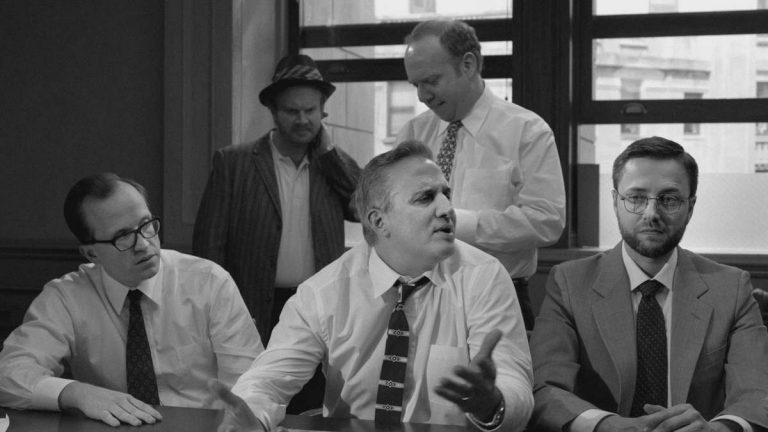
Fuckability is the question at hand in the greatest sketch of the season, as well; and here absurdity is the name of the game. “12 Angry Men Inside Amy Schumer” is an episode-length sketch, which is risk number one; it is a straight, nearly shot-for-shot parody of 12 Angry Men, which is risk number two; and it minimally features Amy herself, which is risk number three. That the thing was made at all is nothing short of a miracle, even with the likes of Jeff Goldblum,Vincent Kartheiser, Kumail Nanjiani, and Paul Giamatti (who is nominated for the episode) lend some star power to proceedings.
Photo Credit: AV Club
They’re all great and they certainly lend to the comedy, but as it turns out they were hardly necessary. The strength of Schumer’s satire more than stands on its own. Up for dispute is a very simple question: is Amy Schumer hot enough to be on television? Given the types of “criticism” that are so often volleyed at Schumer, this episode is most easily read as a more than apt retort to the aforementioned neckbeards of the internet. The comedy lies in the treatment of the issue; all of the actors are incredibly game, discussing degrees of fuckability with straight faces and surprising passion. What if it was late at night and you’re in bed and you squinted at the television? Would she be fuckable then? Some of the jury allows that she would. Eventually the question becomes one of “reasonable chub”; if Amy gets you even a little hard, she gets to be on TV.
This is insane. This is hilarious. And this is how it is to be a woman on television. That Amy Schumer gets weekly to stand before a camera and speak truth to power, and that the reward is, finally, an absurd degree of popularity, visibility, and accolades, is a long overdue recognition of some tremendous work. Not all of her sketches always land—some veer too far in one direction, be that in the direction of satire or of absurdity or of topicality—but when that perfect alchemy is struck, Inside Amy Schumer manages something that a lot of other comedy on television isn’t even attempting.
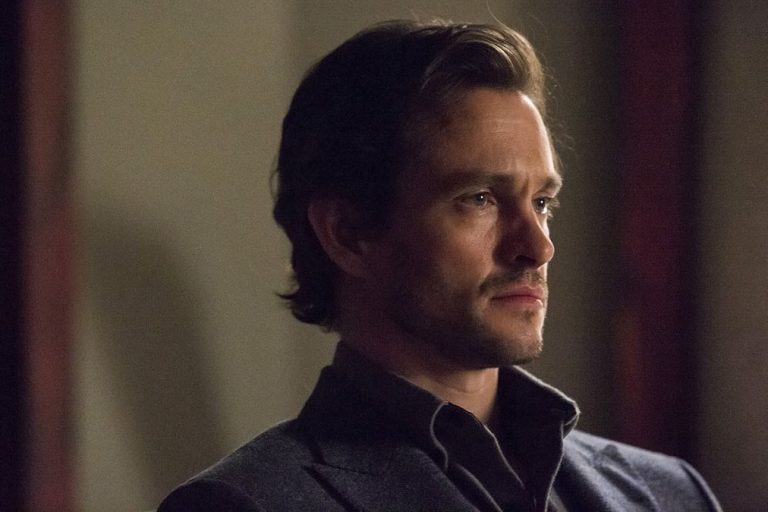
HANNIBAL — “…and the Beast from the Sea” Episode 311 — Pictured: Hugh Dancy as Will Graham — (Photo by: Ian Watson/NBC)
As Hannibal has adapted Red Dragon proper, it has been as consistently great as we’ve come to expect from the series, but it has also been something new: conventional. Up until now, this final stretch of episodes has been a fairly straightforward adaptation of the source material, and while it has been an undoubtedly skillful adaptation, it has also been something of a transliteration. Given the series’ earlier inventiveness—it’s willingness to subvert and sometimes wholesale alter the source material (a key plot point from Red Dragon, for instance, was exhausted some time ago)—these episodes can feel a little by-the-numbers, even if the quality itself hasn’t dipped.
Perhaps it is this sense of security that lends the middle sequence of “…And the Beast From the Sea” its palpable urgency. Dolarhyde’s attack on Will’s family, as prompted by Hannibal, is, in the novel, a final flourish, one that gives Thomas Harris’s story a typical thriller conclusion, which establishes Hannibal as a lingering, unkillable threat to Will’s well-being. By moving this sequence to the middle of the story, having it occur before Will and company even know who the Tooth Fairy is, Bryan Fuller has deftly moved us back into uncharted territory. The hunt for this new killer is distinctly more personal now. In terms of macro-narrative, the conflict between Will and Hannibal is now, once again, directly related to the plot of the season. Photo By: www.imageupload.co.ukThis is a sort of invention that we expect from Hannibal, and the sort that I hadn’t realized I was missing until that pulse-pounding chase through Will’s darkened house. We may know the general shape of things to come, but the emotional impact on our central characters is properly foregrounded once more. The big shift, the final narrative turn, will no longer bill the capture of Dolarhyde, or even his final, fitful attempt to harm Will as Hannibal’s surrogate—it will instead be the final shift of Hannibal’s relationship with Will, and on what note the show will leave their dynamic.
With that reshuffling in mind, the various pieces of the Red Dragon story fall into clearer relief. As Alana, Jack, and Will discuss Will’s run-in with Dolarhyde, which constitutes the first solid lead they’ve got. The focus is instead on Jack’s less-than-honorable approach to the investigation, as it becomes increasingly obvious that he is repeating the same mistakes that led Will into such a mess in the first place. When Molly takes a bullet, the consequences of Jack’s callous manipulation are all too clear. And yet—and Molly knows this—Will won’t say no anyway. He will always take Jack’s call. He will always go to Hannibal’s cell.
Alana’s arc, too, becomes more about playing the emotional fallout of the preceding series than it is about the particular plot mechanics at play now. When she strips Hannibal of his cell’s various amenities, she isn’t just punishing him for his interference in the investigation. She’s also inflicting on him the same indignities that heHANNIBAL — “…and the Beast from the Sea” Episode 311 — Pictured: Nina Arianda as Molly Graham — (Photo by: Sophie Giraud/NBC) has inflicted upon her, Will, Margot, and upon everyone he has ever come into contact with, to some extent or another. It’s no mistake that this scene, in which Alana’s staff strips Hannibal’s cell bare, is the first to explicitly confirm that the space was never real at all, just a figment of Hannibal’s imprisoned imagination. The constructed relationships between all of these people have collapsed, either under the weight of too much tragedy, or under the stress of being rent totally and purposefully asunder.
All of that brings us back around to Francis Dolarhyde, who in this episode begins his own conflict of identity. The Great Red Dragon begins to manifest itself as its own being, separate from Francis, and it calls into question for Francis his very sanity. This is new for Francis—for all he’s done. His sanity has never been in question. But how can he continue to murder, when he also feels this love for Reba? Hannibal’s solution, of course, is simply to feed the dragon elsewise—this was Hannibal’s solution to his love for Will, as well. In a way it’s a simple analogy: the Great Red Dragon is to Francis Dolarhyde as the Wendigo is to Will Graham. The common thread is Hannibal Lecter.
Stray Observations:
Molly really is a badass. I love that in this adaptation, they’ve given her much more agency than she had in either the novel or in the film.
There is a particularly great shot of Will confronting Hannibal—a clean line dividing them, Hannibal in a field of white, Will succumbing to darkness.
Potential spoilers for the final two episodes: the major plot point of Red Dragon that has previously been exhausted is, of course, Freddie Lounds’s fiery wheelchair death, which was presented in season two as a ruse, but which in the novel leads directly to the discovery of Dolarhyde’s identity. Given that many of the newspaper communication games from the novel have been elided entirely from the show, I imagine that the conclusion will be markedly different from here on out.
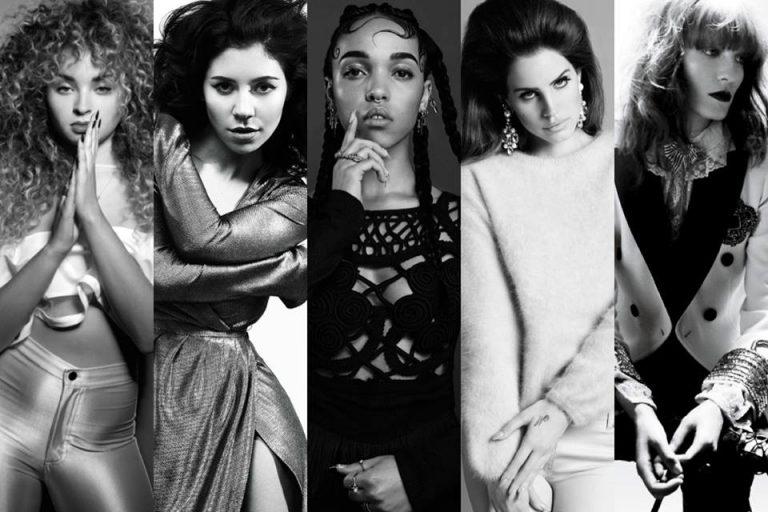
Music has always been enchanted by the beautiful vocals of strong female artists from Tina Turner to Madonna and Pat Benatar to Aretha Franklin. Presently, we have a beautifully diverse and expansive array of female vocalists to enjoy, but I chose five incredibly talented women to talk about today. Of course we have the stunning Beyonce, Rihanna, and Lady Gaga who are dominating the radio waves, but I wanted to focus this article on five spectacular female vocalists who deserve to be lauded as the musical goddesses that they are. This article is meant to celebrate their indie roots, bodies of work, and immense talent that these five gorgeous women of music all have in common. Below, I have written an article of the top five female vocalists in no specific ranking order because they are all too divine and talented to rank against one another.
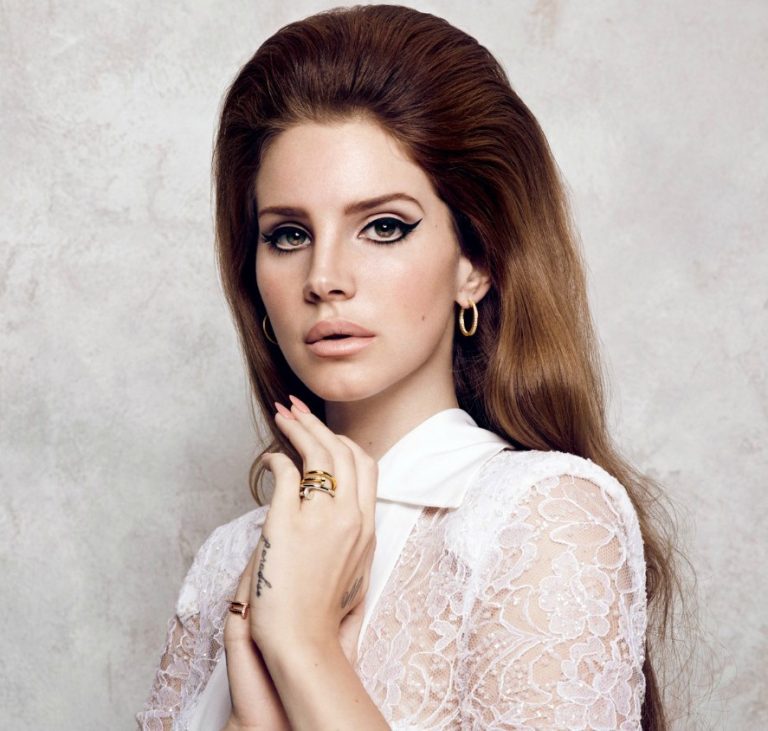
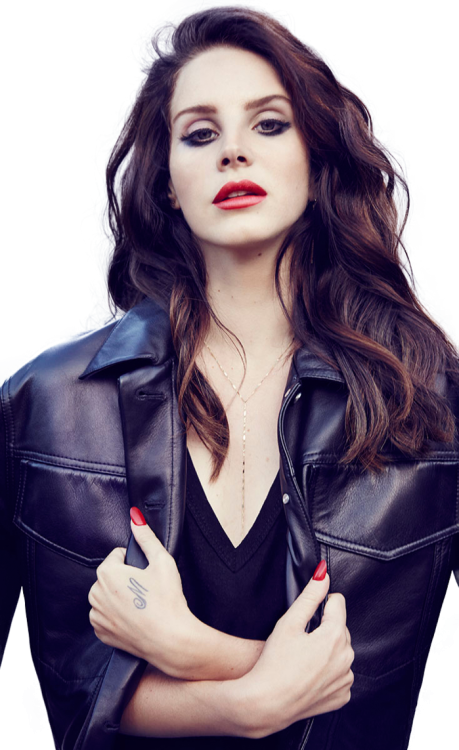
Lana Del Rey
Lana Del Rey bewitches us with glimmering and stoic lyrics shrouded in endearing and mysterious melodies. The enigmatic singer-songwriter has graced our ears with three fantastic albums Paradise, Born to Die, and Ultraviolence. With plans for her fourth album Honeymoon (“Honeymoon” reviewedhere. “High by the Beach” reviewed here) to drop this September, Lana Del Rey has experienced much success and an ever-growing fan base. On top of these successes, Lana has made beautiful and iconic songs for films such as The GreatGatsby, Maleficent, and Big Eyes. Lana enchants her audience with sexy, sultry, and alluring lyrics of jilted lovers, lost flames, and insalubrious relationships with a volatile mixture of addiction and tainted love.
Lana Del Rey easily transports her fans back to the glamourous and drug-infused age of the 60s, when the rebellion of love, peace, and freedom was in full effect. Drawing inspiration from Courtney Love, Jim Morrison, and Kurt Cobain, Lana easily enthralls us with songs that are reminiscent of the days when musical legends like the aforementioned graced us with their music before they were taken from us too soon. Lana’s tracks like “Born to Die” and “Summertime Sadness” have experienced stupendous mainstream success, but I urge anyone who has not done so already to listen to more of Lana’s music, especially her unreleased tracks like “Angels Forever,” “JFK,” and “You, Mister.” Lana has such a beautiful and breath-taking body of work that deserves endless praise, and if you enjoy her singles, you will love the other tracks from her blissful albums.
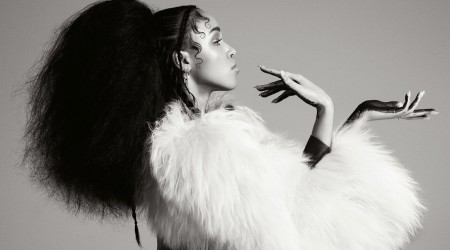
FKA Twigs
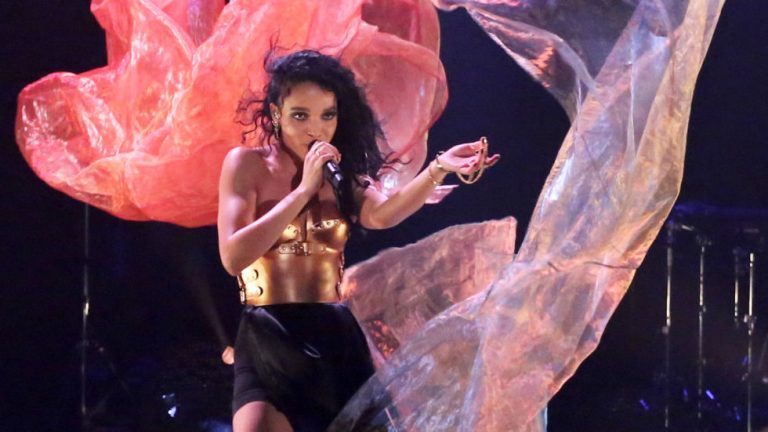
When you first listen to FKA Twigs or watch one of her artistic music videos, you may be taken aback by her style. She has an avant-garde approach to artistry that some are not used to. I have grown to love the mysteriously puzzling songs from the strikingly gorgeous Miss Twigs. Her LP1 has been received with much praise, and I am as much of a fan of her EP2 as I am of her LP. Only a year after her debut album, Twigs has released her newest EP M3LL155X (reviewed here), and her music and videos are the mark of a visionary with unique flair unparalleled by her contemporaries. In her self-directed music video for her track “Glass and Patron,” which will appear on her latest album, FKA Twigs gives birth to a vogue-battle to match Madonna herself.
Starting as a backup dancer at 17, Twigs’ career has blossomed in the indie circuits, and she continues to impress us with mystifying and dark music paired with imaginative videos that tell a story in itself. In her video for “Two Weeks,” FKA Twigs harkens back to the late Aaliyah in Queen of The Damned. What I truly admire about Twigs is her grounded personality, and I love that she does not change to fit the mold of Hollywood. Her lustful voice and dancing mixed with artistic imagery and avant-garde styling blend together seamlessly. FKA Twigs is not only a fantastic artist, but she sticks to her visions and appeals to her fan base that understands and appreciates her for her idiosyncratic style, and she does not sell out to make a buck. I suggest you watch FKA Twigs perform on the The Tonight Show Starring Jimmy Fallon to see how Twigs truly graces the stage with a marvelous voice and ethereal flair.
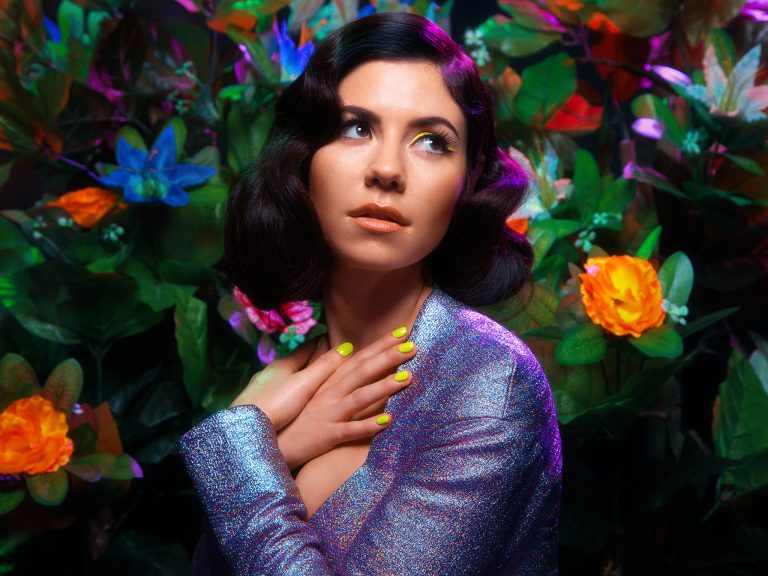
Marina & The Diamonds
The queen of bubblegum and electra-pop has intrigued her audience with her first two albums The Family Jewels and Electra Heart, and she has moved in to a new stage of her career with her latest album Froot. With pop hits like “How to Be a Heartbreaker” and “Primadonna Girl,” Marina solidified her seat among her female vocalist contemporaries. On top of feel-good songs, Marina has addressed serious subjects with captivating songs like “Teen Idle” and “Fear & Loathing.” Marina performed at The Governor’s Ball at Randall’s Island the first weekend of June, and she put on an amazing and lively performance, donning a Froot headband.
Fusing together indie vibes with mainstream pop, Marina has found great success and a platform to mature as an artist. I thoroughly enjoy her constant mixture of bright, airy songs and videos paired with serious, vulnerable tracks on her album. With beauty and a tremendous voice, Marina and The Diamonds easily makes the list as one of the top female vocalists of our time. A multidimensional artist, Marina and The Diamonds continues to mature as an artist, produce soothing yet infectious tracks, and appeal to everyone’s inner primadonna girl.
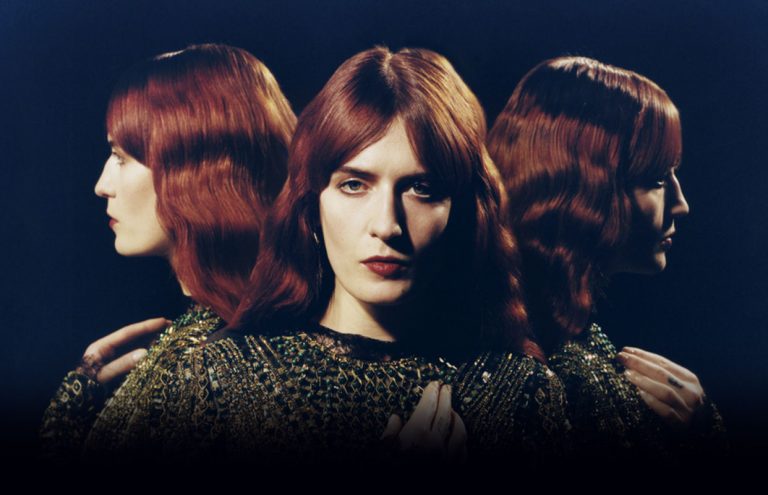
Florence + The Machine
I still remember the day Florence Welch exploded on the scene with her hit “Dog Days Are Over,” and she has released two rhythmically marvelous albums Lungs and Ceremonials. Recently, Florence has released her latest superb album How Big, How Blue, How Beautiful with emotionally charged tracks like “Ship to Wreck” and “Saint Jude.” As she graced the stage of The Governor’s Ball this past June, she enthusiastically greeted her audience with a bubbly demeanor and a healing foot (broken at Coachella), which did not impede her vivacious and infectious dancing around stage. As she finds catharsis through the music she creates, Florence bestows upon us album after album of beautifully crafted lyrics and vocals to leave you astounded.
In addition to powerful lyrics with vocals to match, Florence has appeared on tracks with Calvin Harris like “Sweet Nothing” back in 2012. Florence’s music has appeared in numerous blockbuster movies including The Great Gatsby, Snow White and The Huntsman, and The Twilight Saga: Eclipse. “Over the Love” from The Great Gatsby is one of the most dark yet stunning tracks that I have ever heard. Her newer track “Ship to Wreck” was filmed in her very own home, and it depicts Florence battling herself on the physical and emotional level. I absolutely adore Florence for her tremendous talent, endearingly effervescent personality, and her ability to bare her soul in such a vulnerable way through her art for all to see.
Ella Eyre
The powerhouse voice behind Rudimental’s hit “Waiting All Night” is the stunningly gorgeous Ella Eyre. With a booming voice reminiscent of the late Amy Winehouse, Eyre puts her tremendous talent to good use with tracks like “Comeback,” “Deeper,” and “Together.” Eyre establishes a beguiling melody with stunning vocals in “Comeback,” and, in my opinion, she has immense star potential. In the video for this track, Ella combats the frustrations of an unfaithful boyfriend, and she does so in a style similar to Beyonce’s smash hit “Crazy in Love” released in 2003. If you are looking for an infectious song with a catchy and empowering chorus, then this track is perfect for you.
Her two EPs, Deeper and Ella Eyre, are constituted of alluring vocals, catchy melodies, and an overall stylish aptitude that I was immediately thrilled with. I expect to see a lot more of Miss Eyre because I think she has all the makings for an extremely successful female artist. She is capable of creating songs that range from infectious, up-beat tracks to those fused with a tang of R&B and old-school vibes that I was equally pleased with. Keep an eye out for all the gorgeous ladies from this post, especially the up-and-coming Ella Eyre!
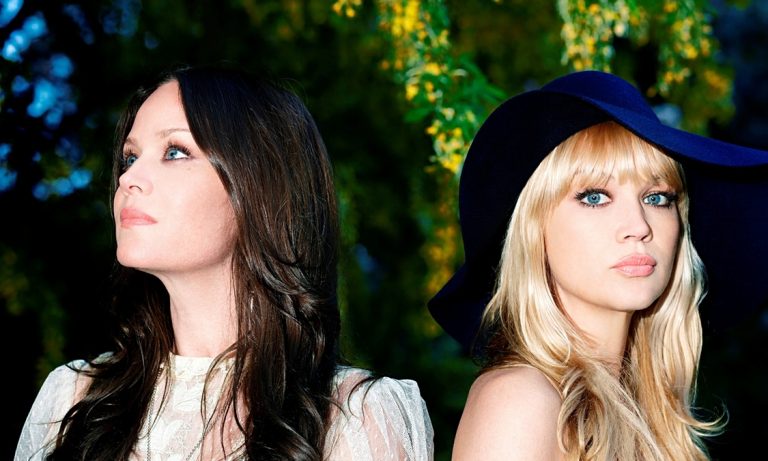
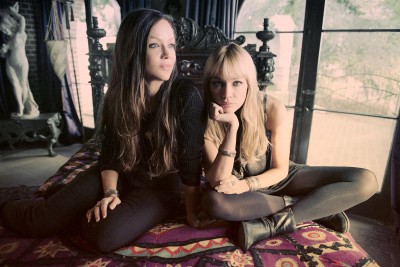
It is no secret who this week’s Femme Fatale is, or should I say fatales? The Pierces lay claim like kings to the title this Friday. Enough with my song related puns? Okay, I’ll stop. You may recognize the sister duo as the voices behind “Secret,” the creepily intoxicating theme song from Pretty Little Liars.
If not, maybe you are familiar with some of their work from the past 15 years. Allison and and Catherine Pierce released their first album The Pierces in 2000. Since their debut album at the turn of the century, The Pierces have released four more albums in the years to follow, with their newest album Creation released in September 2014.
Personally, my favorite album has to be Thirteen Tales of Love and Revenge, which was released in 2007. On this album, you will find the infectiously dark “Secret,” but, besides that, you will come across tracks blended with folk, pop, and downright funk, including “Kill! Kill! Kill!,” “Sticks and Stones,” and “Lights On.”
Having always had a life enriched immensely by music, The sisters received their first record deal when they were 18 and 20. With a career lasting over a decade, you are able to listen to the evolution and maturation of their vocals, style, and music.
The Pierces, in my opinion, have an authentic, genuine sound, and I love an artist who does not manipulate their music, style, or self-respect in order to find larger royalties. They are a duo with a mindset for amazing music, not the number of zeros on a check.
Their latest albumseems to have been a cathartic project for them, and the sisters seemed to have found a new level within their music, careers, and lives that reflect the emotionally charged lyrics that comprise Creation. Finding solid ground to stand on, The Pierces have honed their abilities and have entered a stage in their career in which they are confident in what they want to produce, who they are, and what their music stands for.
What I like about their style is its fluidity. Each song can transport you to a different era, sound, or feeling. Throughout their entire body of work, you will be enchanted by melodies that harken back to the beguling era of the 60s, 70s, and 80s. Their darkly alluring songs have enticed me ever since I have stumbled across them, and I am certainly glad that “Secret” has received attention through Pretty Little Liars. A macabre and stunningly gloomy song as that should gain the recognition it deserves.
You feel unworthy of the throne
You have forgotten who you are
We all have the blood of angels
And we fell from the same star
My favorite track from their latest album has to be “Kings,” which is linked below! Possessing striking beauty and tribal roots, The Pierces have crafted a song and video that trumps my love for their 2007 album Thirteen Tales of Love and Revenge. With no doubt in my mind, The Pierces easily take this week’s nomination of Femme Fatales. After all, they taught me that we could do what kings do.
Given its parallel title, it should be no surprise that “And the Woman Clothed in Sun” is, more or less, a direct continuation of the preceding episode, even more so than this highly serialized final run of episodes. Mostly, what’s here is further explication of Francis Dolarhyde, specifically and more generally, a further explication of exactly what goes on in the mind of a psychopath. Much of Hannibal has been concerned with the finer points of sanity, ever since Hannibal asked Will to draw a clock. Where does sanity end and insanity begin? How fuzzy is the line? Is it a gradient? a cliff? Are you born into it, or can it be cultivated?
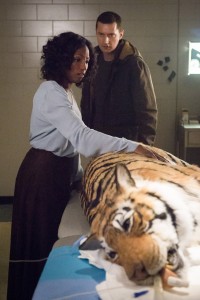
Not that the episode offers any outright answers; in fact, the overarching argument seems to be that there are no answers. But in keeping with its subject matter, what Hannibal does offer is case studies. We spend much time with Dolarhyde this week, as his strange courtship with Reba McClane rounds home base. One of the eeriest scenes from the novel, in which Reba fondles an anaesthetized tiger, junk and all, causing Dolarhyde’s audible arousal, is here basically intact, and it’s lovingly shot, even if it is sometimes a little too obvious that that’s a tiger-patterned rug (maybe). Immediately after, Reba cozies up to Dolarhyde in similar fashion, feeding into his ever-growing ego as the “Red Dragon” begins to possess his mind.
With this continued focus on Dolarhyde, Richard Armitage continues to be a standout member of an already stacked cast. He plays the duality of the character with an unsettling ease. At times, he is vulnerable, even scared; at others, he is menacing. The combined effect is one of confusion and disorientation, which is never more effective than at the episode’s end, when Dolarhyde steals and eats the creepy Blake watercolor from which the novel takes its name. It falls just short of a punchline, which is just where the scene should land for maximum effect.
Another welcome case study is of Bedelia Du Maurier, who makes a triumphant return here as a speaker, capitalizing on her experiences with Hannibal, in which she has recast herself as a victim. Will is obviously unappreciative of this decidedly radical reinterpretation, and their back and forth throughout the episode is a highlight, providing the delightful repartee so many of the pairings on this show share. Bedelia steps almost gleefully into the Hannibal role, poking and prodding at Will as best she can. Hasn’t he learned his lesson? “Or do you just miss him that much?” she teases, raising that homoerotic specter once more. Her best line: “I don’t lie; I obfuscate.” If that isn’t a rationalization right out of Hannibal Lecter’s playbook, I don’t know what is.
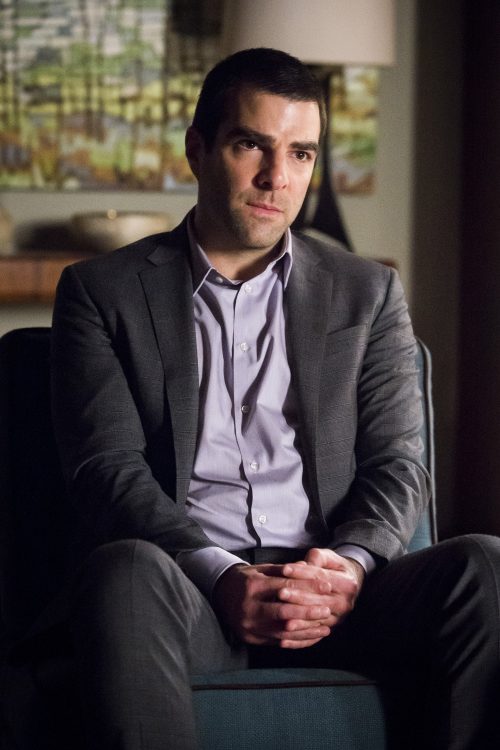
The centerpiece of this story is Bedelia’s extended flashback to her first murder, of the patient whom Hannibal “manipulated” her into finding dangerous. The patient is played by Zachary Quinto, who is subdued and effective. It’s no stunt cast; a serious actor is necessary, even for this small role, to give the scene the weight it requires. This scene is beautifully edited, crossing back and forth to her appointment with Will, so that without a careful look at Bedelia’s wardrobe, it’s never clear to whom she’s saying what. This is a moment that we’ve heard about before, but to see it dramatized here, especially in such gory detail, puts a fine point on the dialogue that Bedelia has with Will. She harps about his exceptional empathy, and argues that it is just as empathetic to end a life as it is to save one; in some cases, it is perhaps smarter. Will refuses to believe this, and it’s that basic good nature (or is it naïveté?) that will ultimately undo him.
At the risk of sounding like a broken record, this is a typically excellent episode of a show that is ending far too soon, and yet, I suspect, also at exactly the right time. The themes are coming full circle; the plot, building to a fever pitch. The effect of the Red Dragon arc is to take one of the “killers of the week” and make him a central figure on the show, and by placing Dolarhyde into relief with these other incredibly damaged people, we see the spectrum of sanity of which Bryan Fuller wishes to convince us. It’s all of a piece, and for that thematic consistency to remain as flawless as it now is, the piece must come to completion. Better a little perfection than a lot of mediocrity, and with this episode, we are one step closer to a perfect version of Red Dragon.
Stray Observations:
I love the way this season plays with time and space, in a manner that surely was fueled as much by budgetary concerns as by artistic intent. There are the flashbacks with Bedelia, but throughout the season, characters have been in multiple places and multiple moments simultaneously; each time Hannibal sees himself in his office, rather than his prison, is another little pang, a sense of justice served to a mad man, for now.
Dolarhyde seems himself, like Will, in a fractured mirror.
Will gets more help from Hannibal, and there’s a great shot of them staring at each other through the glass, and Will’s reflection merges with Hannibal’s body
By now, the project of what is essentially Bryan Fuller’s version of a Red Dragon miniseries is abundantly clear: Hannibal is portraying two parallel and intersecting stories about the lasting effects that a man like Hannibal Lecter and his various, horrible misdeeds can have on the world around him. That’s a thread that runs through the novel and the film adaptation, as well—in a take on the well-worn trope, Jack calls Will back on the job for one final case. But in all the previous takes on this story, that trauma was implied. Here it is text. And we are reminded of it over and over again.
“And the Woman Clothed with the Sun” takes great pains to remind us of perhaps the greatest trauma Hannibal inflicted upon Will: his grooming and eventual murder of Abigail. In stealing Abigail away from Will, he perverted the one healthy relationship Will had managed; he called into question his ability as a friend, father, and his basic humanity. In murdering Abigail before Will’s eyes, Hannibal must have thought he was making some grand gesture of love. Instead, he ruined Will nearly beyond repair.
Knowing all of that and flashing back to Hannibal’s time with Abigail to give even more (super, super creepy) context to the whole affair, makes Will’s status quo in these episodes all the more poignant. He has managed to put himself back together, to find a wife and a son, and to live a relatively normal life. Hannibal inherently threatens that, and Jack knows it. His disregard for Will’s well-being, which was the engine of much of the early half of season two, is back in full force here. Jack seems to think that Will would say no, if he truly were unable to come help. Hannibal knows better, and he knows that that’s the avenue directly into Will’s head.
This is one of the greatest improvements that Hannibal makes upon the source material: these are all good friends. Will, Jack, Hannibal, and Alana have history, and it informs their decisions now. Alana worries about Will and about Jack’s manipulation of him as well as about Hannibal’s: “I’m not just worried about you. Last time it didn’t end with you.”
It’s fitting, then, that the episode hinges around each of the three protagonists paying Dr. Lecter a visit. Will is nearly crippled by just one conversation with Hannibal. Alana takes pleasure in toying with Hannibal, and she clearly revels in his reversal of fortune—check out the great blocking in her conversation with him, as the camera holds close on Hannibal, with Alana out of focus in the background; she only comes into focus when she gets a particularly good jab in about his imprisonment or Will’s utter indifference toward him.
As for Jack, he spends his time trying to justify himself to Hannibal—he recognizes the mind game but still falls victim to it, and, in fact, he leaves, opting out of the conversation rather than winning it, once he realizes that Hannibal has pulled what is essentially a trump card. The best thing any of these people could do is leave Hannibal to rot in his indignity and forget him entirely, but only Will really managed to begin to do that, and now he’s lost his chance. Look at the toll that this is already taking on him: away from Molly, his nightmares return, and his bed is once more drenched in sweat; when he looks into a mirror, his reflection shatters before him.
Of course, throughout all of this, the FBI continues its investigation into the Tooth Fairy murders, and they’re getting nowhere fast, even with Lecter’s help. Francis Dolarhyde is just as theatrical as Hannibal ever was, but the geographical distance between his crimes is a stumper. Seeing Dolarhyde in his daily life, it’s unsurprising that a man so reticent would be so careful in his insanity. Richard Armitage doesn’t speak his first lines until well into this episode, yet even in silence, he is thoroughly magnetic as Dolarhyde. There is a brief, as-yet unexplained flashback to his childhood; there are glimpses of him splicing together horrifying film of his handiwork, paralleled with Will’s study of the families’ home movies. There is the revelation that he kills the family pets prior to killing the families themselves.
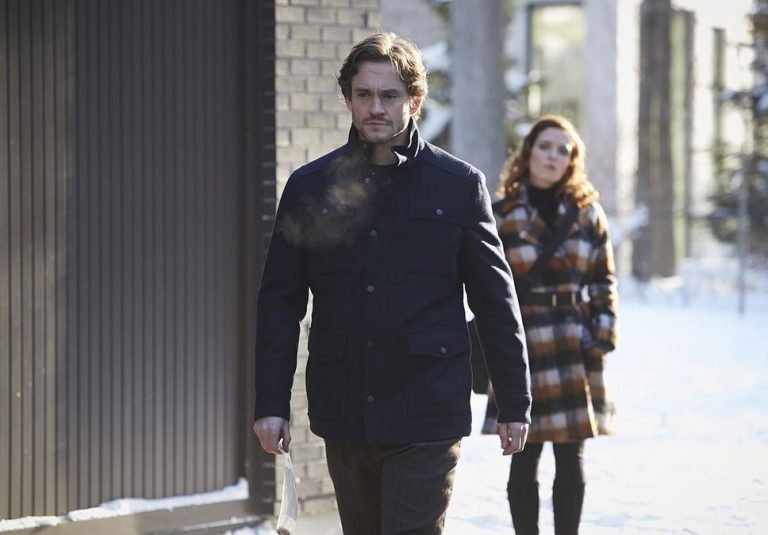
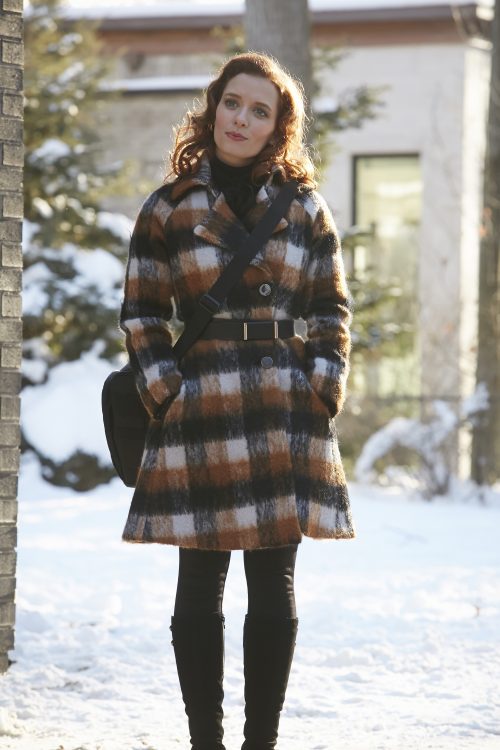
And then there is his courtship with Reba McClane, played here by Rutina Wesley. Reba is blind, which adds a particularly unsettling element to their scenes. His awkward nature plays to her as almost charming, but we can see Dolarhyde and know that he’s anything but. That kind of blindness to certain aspects of one’s character is one that’s been a major theme throughout the series, but especially this season; we see it in Bedelia’s relationship to Hannibal, in Alana’s with the Vergers, and, of course, in Will’s with Hannibal.
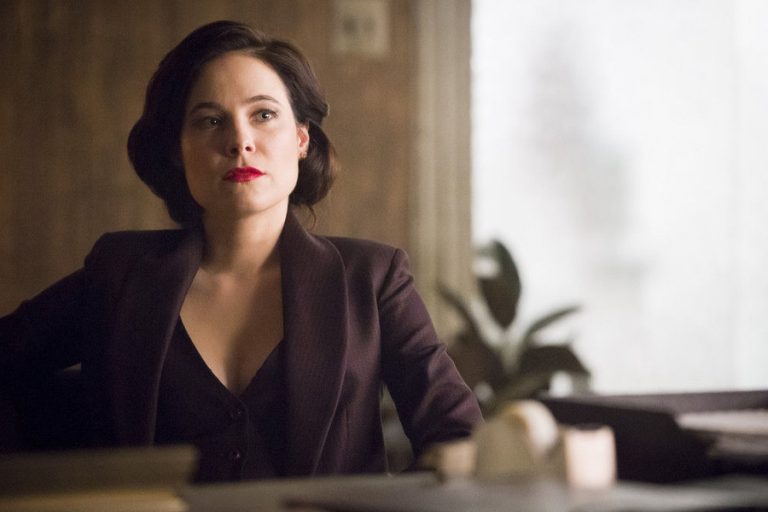
HANNIBAL — “…and the Woman Clothed in the Sun” Episode 310 — Pictured: Caroline Dhavernas as Alana Bloom — (Photo by: Brooke Palmer/NBC)
By the end of the episode, Dolarhyde has placed a call to Hannibal, beginning another different courtship. Their collusion here links the past and present of the show, as well as giving Hannibal another avenue to inflict further trauma, even from within his cell. Why do the characters continue to subject themselves to him? Perhaps it’s something akin to charm. But it appears it’s quickly becoming too late for them to extricate themselves.
Stray Observations:
Once you see the gay subtext on this show, you cannot unsee it. The opening scene is two ex-boyfriends talking to each other, word for word.
Alana is still with Margot! As a matter of fact, this episode marks the first time that I feel like the new characterization of Alana is clicking. They’ve sort of merged her with Chilton from the books (making you wonder why they kept him around at all), but it works quite well.
Another great shot—Will calls home to Molly, and, for a moment, they’re sharing the same bed.
So does Hannibal’s cell really look like that, or is he imagining it? It’s never quite clear.
Freddie Lounds is back! She called Will and Hannibal Murder Husbands! “Well, you did run off to Europe together.”
NBC Doesn’t Care About Fannibals: In my market, Hannibal was pre-empted for a Phillies game and was then joined in progress. There’s making a sound business decision, and then there’s being downright rude.
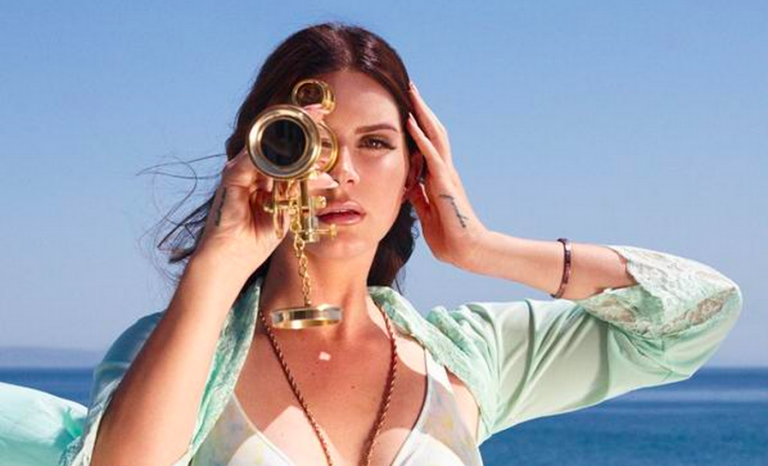
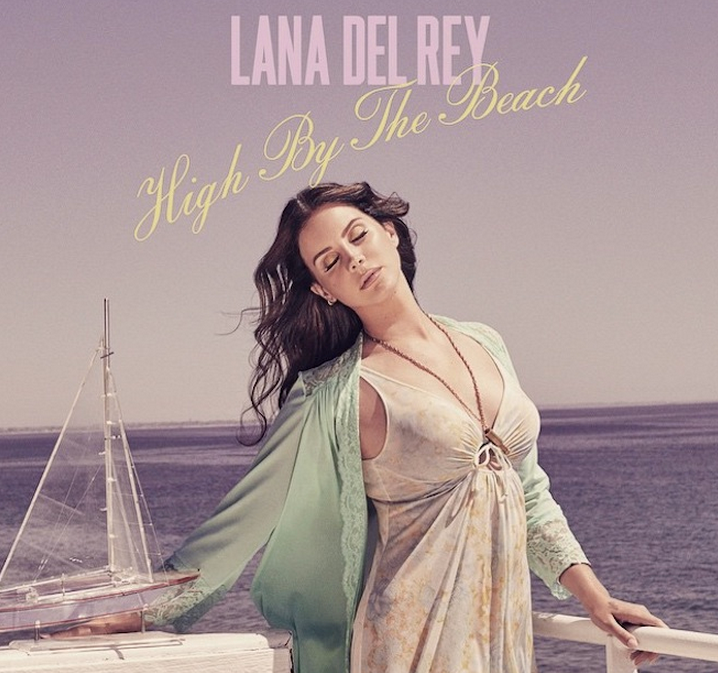
As we all eagerly await the blissful fourth album from the sultry perfection that is Lana Del Rey, her second track from the album has been released today. If you did not already assume so, it was amazing. Teasing us with nautical photoshoots for the single, Lana has continued to build my excitement for Honeymoon.
Lana’s newest album will be dropping this September, but we can all get high by the beach on our honeymoons until then. In typical Lana fashion, she takes to this track with an ethereal voice that transcends perfection. With lyrics of a tainted man who is hard to love, “High by the Beach” has a soothingly rhythmic chorus. What I love about Lana is her ability to craft such an alluringly seductive song on a superficial level, but, often times, these beautiful, delicate songs are comprised of dark, macabre, mysterious, and deadly lyrics, dripping in self-loathing.
You could be a bad motherfucker
But that don’t make you a man
Now you’re just another one of my problems
Because you got out of hand
To me, this track is quintessential Lana. The sound, the lyrics, the perfection. It all brings me back to the immense joy I had when I first discovered the wayward soul that is Lana Del Rey. I have not come across one song, even her unreleased body of work, that has not transported me to a state of blissful rapture when listening to it. “High by the Beach” is no exception to this rule. It is a gorgeous song with a lively melody, paired with the esoteric, obscure, and enigmatic vocals that accentuate the fact that Lana Del Rey is such an immensely talented artist and singer-songwriter.
The sound of “High by the Beach” is a fun and more upbeat melody than that of her album Ultraviolence, and it seems that this track is reminiscent of her Born to Die days, which, I believe, is the closest to perfection an album has come to in a while. Every track was heartfelt, fun, and infectious, and I believe that Honeymoon is on the same track that Born to Die was.
In my opinion, Lana Del Rey has already solidified her album Honeymoon as one of the best albums that will drop this year with her tracks “Honeymoon” and “High by the Beach.” Am I optimistically jumping the gun? Or am I confident that the talented artist has an entire album the likes of her two singles? Definitely the latter. With Ultraviolence released in June 2014, I am simply astounded that Lana is capable of creating such excellent music and albums in such close proximity of one another. Why am I surprised, though? Again and again, Lana has proven that she is an amazing artist and one of the baddest bitches in the music business.
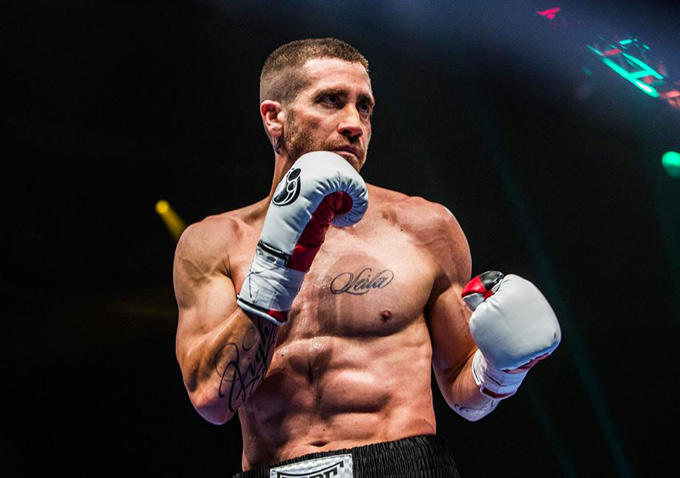
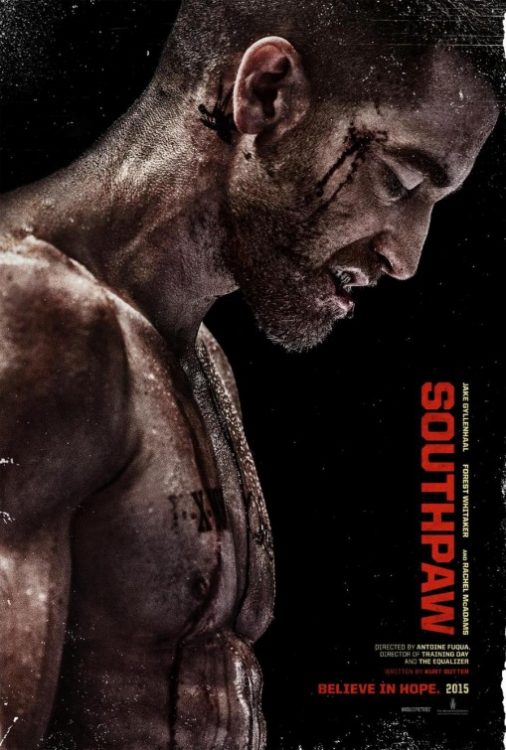
Southpaw is the Jake Gyllenhaal movie you did not know you needed. It is a fantastic motivational sports movie, filled with drama and suspense. In my opinion, Southpaw is the best boxing movie since Million Dollar Baby, which Clint Eastwood starred and directed. This movie will leave you on the edge of your seat and make you seriously contemplate boxing lessons.
Billy Hope (Jake Gyllenhaal) is currently holding an outstanding undefeated record of 43-0 and is the Light Heavyweight champion of the world. His only flaw is that he does not seem to understand the concept of defense because all of his fights leave him bleeding on himself and everything around him. In the ring, he regularly allows jabs to his face.
He has a typical rags to riches story and spent his young life in Hell’s Kitchen Orphanage. The bright side of his time spent in an orphanage is that he learned to box as an outlet and where he met his beautiful wife, Maureen (Rachel McAdams). Maureen attends all of Billy’s matches and clearly loves him. The tender love scenes between Maureen and Billy are sweet and realistic. Maureen wants Billy to stop boxing, she is tired of seeing him get beat up in the ring and wants him to spend more time with her and their young daughter, Leila (Oona Laurence). Their life right now is impressive, but everything soon falls apart.
At a charity dinner, where Billy gives a speech about his life in Hell’s Kitchen Orphanage, Maureen is killed. A rival of Billy Hope, Miguel Escobar (Miguel Gomez), indirectly caused her death.
Very quickly, everything goes downhill. Billy Hope cannot pull himself together after Maureen’s death and loses his home and all of his possessions. His daughter is taken away by Child Protective Services and his once trusted agent (Curtis “50 Cent” Jackson), leaves him to be a manager for Miguel instead. Billy ends up desperately needing a job and finds himself at the gym of Tick Wills (Forest Whitaker) who teaches Billy a method of fighting that includes shielding your face.
Jake Gyllenhaal trained for four months and put on 15 pounds of muscle for the role of Billy. He delivers an excellent performance that went way beyond the typical sports movie character. He put his whole heart into creating a character with great physical and emotional strength. His emotional scenes are just as powerful as the fight scenes.
The director, Antoine Fuqua (Training Day, The Equalizer) must have invested a lot of energy into making sure that the scenes shot in the ring were genuine because it felt like being part of the audience of a real boxing match. His cinematographer Mauro Fiore, a winner of several Academy Awards, shines in every scene. From the vivid fight in Madison Square Garden to the final battle between two talented boxers in Vegas and all the emotional bits in between, Fiore proves his worth, as does the film editor, John Refoua.
Eminem’s song “Phenomenal” is a song about struggle and Eminem’s own fight with entering the rap world. It is a fitting song for the movie and is played during Billy Hope’s training sessions with Tick Wills. Eminem was originally signed on to star in Southpaw back in 2010, but he decided to leave and focus on his music instead. He still wanted to be involved with the movie, so he chose to be the executive producer for the soundtrack.
Southpaw is a movie about rising from the ashes and coming out on top. Jake Gyllenhaal’s performance is mesmerizing and Rachel McAdams has never been better. This movie is rated R so it’s not suitable for children. It is a must see for anyone who is a fan of sports, Jake Gyllenhaal, or feeling motivated.
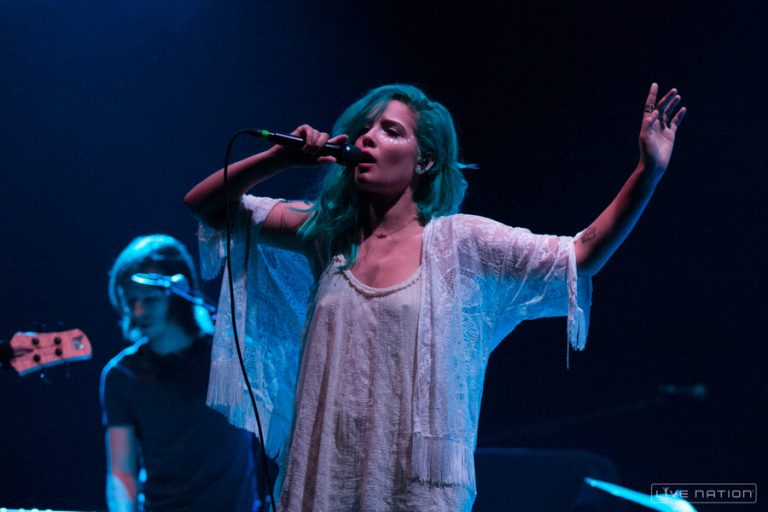
Every Friday we will be honoring the stunning Female musicians who have caught our eyes, ears, and hearts (we know that sounded corny, but roll with it). This week we’re featuring Halsey!
I first discovered Halsey at WTSR, the radio station I’m the manager of (open your mind and bang your f**king head!). The second I read indie pop, Brooklyn, and feminist, I was sold. I spun what the reviewer said was the best song on the record, and I was hooked.
Who is she
Ashley Frangipane was born in New Jersey, though she identifies more with New York. Her stage name is an anagram of her first name and a street that she frequented as a teenager in Brooklyn. Halsey is biracial, which doesn’t effect her music, but it lends to her gorgeous racially ambiguous features. She was raised around music, playing the violin, viola, cello, and eventually, the acoustic guitar. She went to school for songwriting and creative writing. At 18, she turned to music to pay her rent.
What has she done/What is she going to do
She started off posting covers on her personal YouTube channel, which has been deleted (although, thanks to the power of the internet some of those were saved). This eventually led to her recording her original songs and posting “Ghost” on SoundCloud, which got her the attention of Astralwerks who released her debut EP Room 93. It included a remastered version of “Ghost” and features the lead single of her up coming album “Hurricane.”
Why you should listen to her
It seems that dark indie pop has become such a staple in today’s music that we’ve come to the point that the style is being mimicked by lesser pop artists. Halsey just takes the genre and pushes it further. She forgets the upbeat pop beats that seems to be drawing people and goes straight for the moody beats
Where should you start
Since we’ve only seen 5 songs, it’s not difficult to say that Halsey is pretty consistent in quality when it comes to her music. However, I think the clear place to start in her repertoire is the chilling and heartbreaking “Ghost,” which comes off as a moody indie pop entry, but cuts in heartbreaking with lyrics like:
I like the sad eyes, bad guys
Mouth full of white lies
Kiss me in the corridor,
But quick to tell me goodbye.
and has a catchy hook and chorus that will stick with you like an earworm of a more traditional pop song. If you’re looking for a song that highlights Halsey’s power as a vocalist, then “Trouble (stripped)” will outline her raspy vocals. She holds the power in her words rather than the strength in her voice. “Trouble” outlines the emotion of the song – “Let’s cause a little trouble/Oh, you make me feel so weak/I bet you kiss your knuckles/Right before they touch my cheek” – with a faint, but significant voice that will quickly seep into your skin and stay with you. That’s why she deserves to be this week’s Femme Fatale.
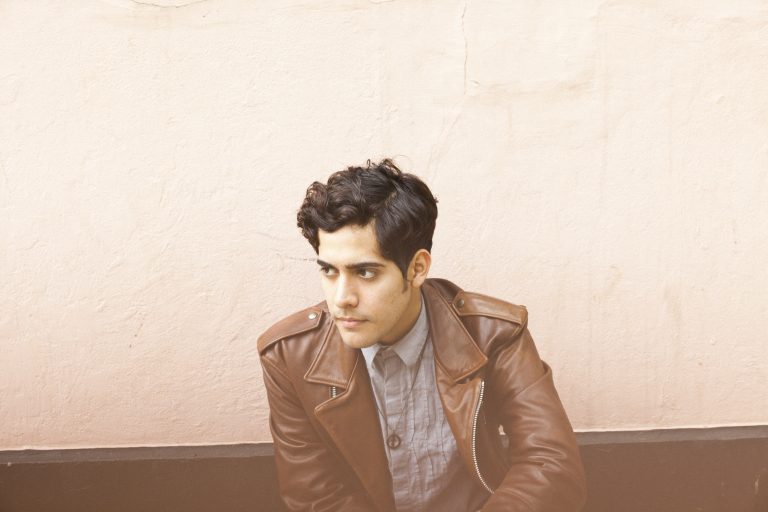
 Neon Indian has basically remained consistent throughout all their albums and Alan Palomo has been able to pump up the quality of each one immensely. Their debut, Psychic Chasms, was a warm, summery dive into the emergence of chillwave. A few years later, he revealed his second album, Era Extrana, and remained steadfast that their 80s synths and adoration of nostalgia would keep them relevant and true while bringing a new swing to the genre. Now with VEGA INTL. Night School, the production value is top notch, the style is slightly different for the better, and by god is it good.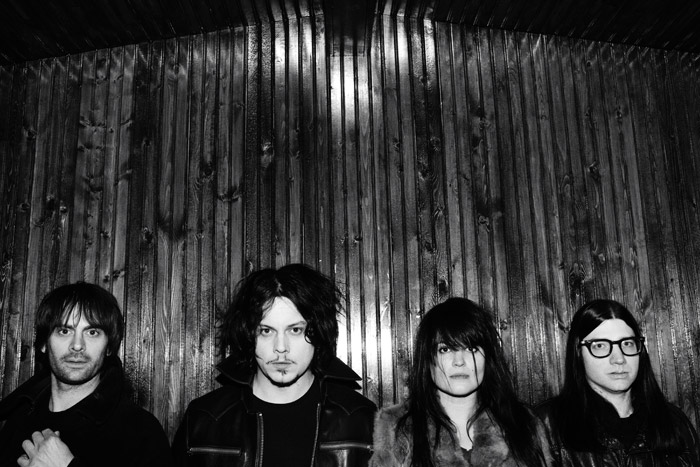




 latest album seems to have been a cathartic project for them, and the sisters seemed to have found a new level within their music, careers, and lives that reflect the emotionally charged lyrics that comprise Creation. Finding solid ground to stand on, The Pierces have honed their abilities and have entered a stage in their career in which they are confident in what they want to produce, who they are, and what their music stands for.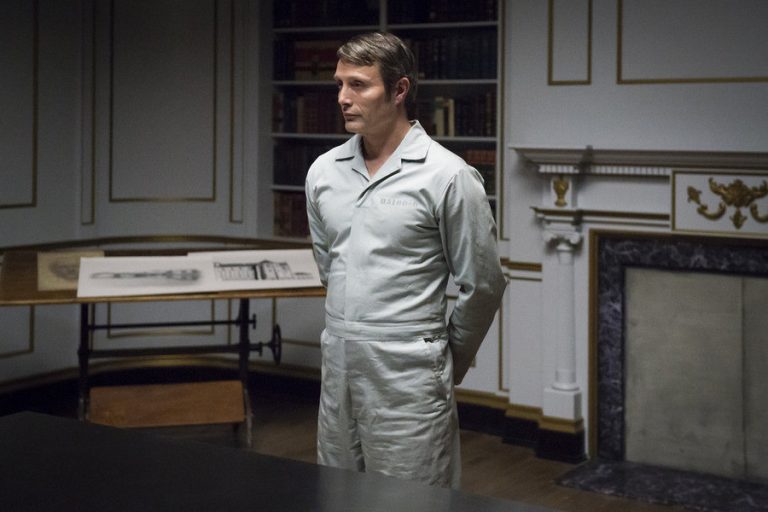
 t before, but to see it dramatized here, especially in such gory detail, puts a fine point on the dialogue that Bedelia has with Will. She harps about his exceptional empathy, and argues that it is just as empathetic to end a life as it is to save one; in some cases, it is perhaps smarter. Will refuses to believe this, and it’s that basic good nature (or is it naïveté?) that will ultimately undo him.