Blog

  • Sons of Anarchy Review: “Faith and Despondency” (7×10)

    Sons of Anarchy Review: “Faith and Despondency” (7×10)

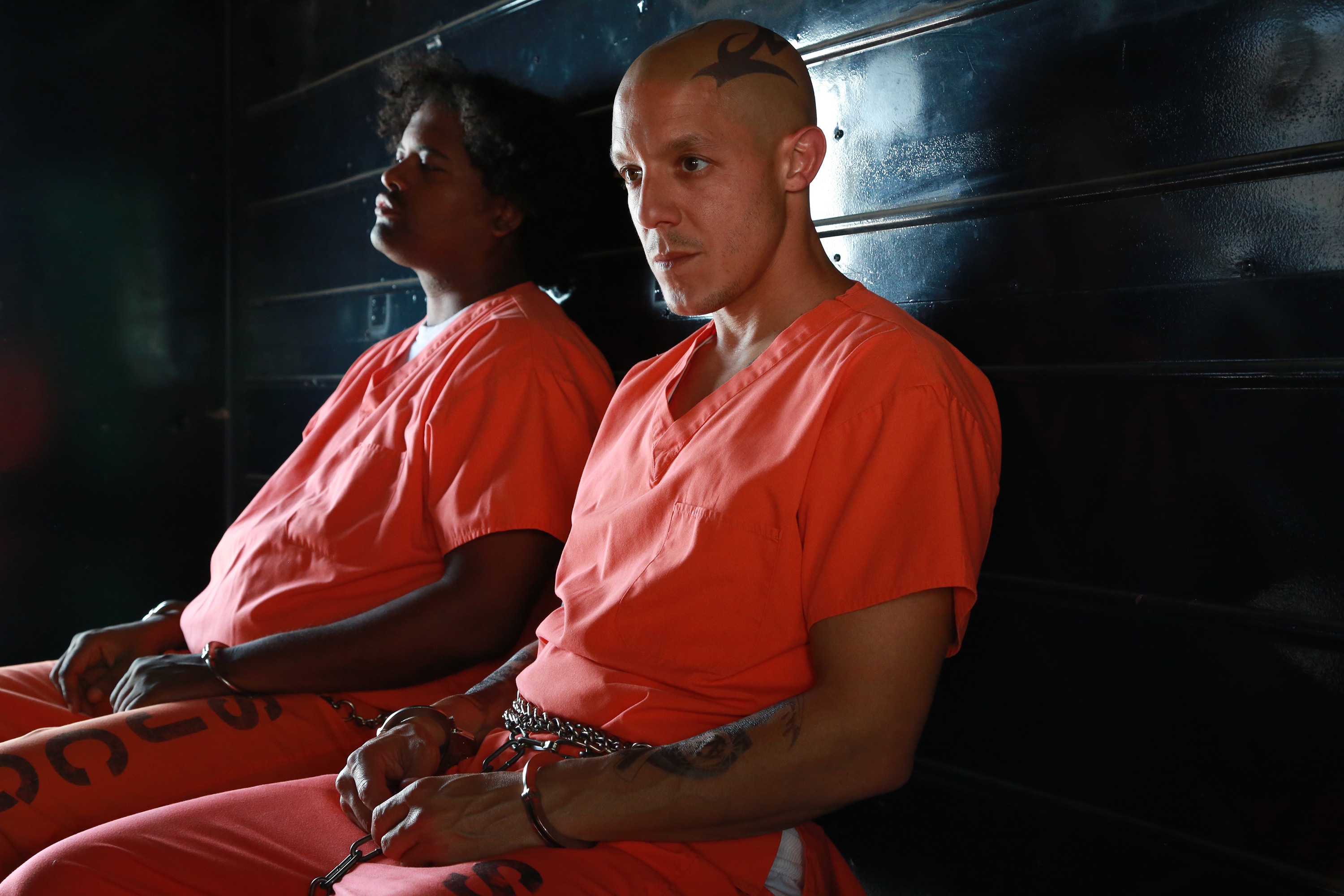
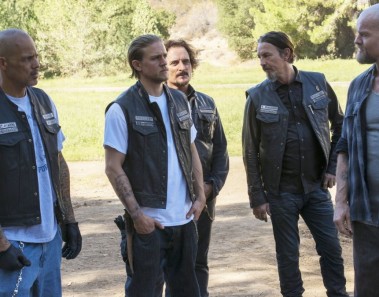
    sons of anarchy faith and despondencyWell, it’s about time.

    In the last moments of “Faith and Despondency” the truth about Tara’s murder is finally revealed. Of course this is done in a way that isn’t totally incontrovertible; I can already envision the seventy-minute fetch quest to find Gemma that will culminate in a dramatic cliffhanger.

    The thing about this episode is that it is long. Like, more than ninety minutes long, including commercials. Multiple set pieces are repeated wholesale from previous episodes this season. Characters whose names I don’t even know run back and forth in circles, shooting at each other. The episode is too long by half, and the pacing is miserable to boot.

    Look, Sons isn’t without its strengths. We all know this. But its focus is so often on process, on plots that are complicated not for any dramatic reason but simply for the sake of being so. Major pieces of this episode are entirely occupied by ciphers rather than characters, by henchmen and soldiers. The only problem is, the plot is not inherently interesting to begin with, and by this point it has been stretched beyond thin. “Faith and Despondency” is the final contortion, the last unnecessary twist before endgame.

    And so you have an episode where Abel gouge into his skin with a fork at school, and then blames Gemma for it. You have Juice being raped by Tully. You have Moses (Marks’s lieutenant) first beating the shit out of Rat, and then having his own eye ripped out by Jax. You have Chibs and Jarry beating the shit out of each other, and then fucking. You have literally every single typical Sons move in the book. A lot of times with this show (and with other popular shows like The Following), “dark and gritty” gets conflated with “serious and dramatic.” The climactic moment of this episode is not the serious and dramatic portion of the story. It’s an inevitable revelation that is so overdue it hardly causes any shock. And as for the material that leads up to it, any effect it does have on the audience is solely because it is so graphic, so twisted, so disturbing, and so obviously calculated to be so. The bodies are piled high—adding any more just doesn’t have an impact at this point.

    It’s a shame, because there’s some great stuff this episode. Unser gets a nice little arc this week, and his assistance with the White Power guy that tries to kill the wounded cop gets him back into SAMCRO’s good graces, just in time, I imagine, for him to corroborate Abel’s story through some good old-fashioned detective work. There is a fantastic scene with Tig and Venus that feels like it belongs on another show entirely. Kim Coates and Walton Goggins are each so great, they make me long for a version of Sons that is composed entirely of scenes like this. When they’re lost amid the unending misery porn, it’s much harder for them to have much of an impact.

    And the actual scene at the end, where first Jax tells Abel that Wendy is his biological mother, and then where Abel tells Jax about Gemma, is actually tense, and makes good use of the expanded run time (for once!). Jax’s decision to tell Abel on the spot like that is presumptuous, and Drea De Matteo runs through too many emotions to name as Wendy watches the conversation. But ultimately she is overjoyed, and despite the history of these two characters (and perhaps even because of it), there is something truly heartwarming about this scene as a conclusion.

    Which, of course, is why it isn’t the conclusion. Just as Jax’s family gets itself back together, the final tear brings it irreparably apart. There’s a simple reason why the show has delayed this moment so long: there is no turning back from it. And so the final, drawn out push toward just gets more and more tense with each second. There is a tragic logic to the whole sequence, especially in the idea that murder is to Abel just another solution to a problem. Knowing that Wendy is his mother is all he needs to be understand why Gemma would kill Tara. By staging the reveal this way, the writers are able to make it not just about Tara’s murder, but also directly about the effect that SAMCRO life as a whole has had on Abel. That’s a great position to be in for the final act.

    So, hey: I’ve been kvetching waiting for us to get to this point, and we’re finally here. The landing was perhaps a little bumpy, but we’re here. I’d be lying if I said I’m not looking forward to it.

    Stray Observations

    • The girl Jax sleeps with (the very same girl he rescued from fucking Greensleeves) looks eerily like Tara. She also cracks wise, all, “you know, before we all get gunned down by Chinese gangsters” which, uh, is not the kind of joke I’d make if I were her. She follows this up by calling Jax a good guy, even though “I don’t know much about you, or your club.” Sweetheart, you more or less covered it with the Chinese gangsters bit.
    • You know what is totally not sexy? Whatever the hell is going on with Chibs and Jarry. I don’t care if Jarry swings first, because I don’t know anything about Jarry at all. It’s another notch on the “gritty” belt, but it’s nonsensical, and its problematically violent to boot.
    • Did Theo Rossi Show His Ass? Everyone showed their ass.
  • American Horror Story: Freak Show Review: “Pink Cupcakes” (4×05)

    American Horror Story: Freak Show Review: “Pink Cupcakes” (4×05)

    ahs freakshow pink cupcakes

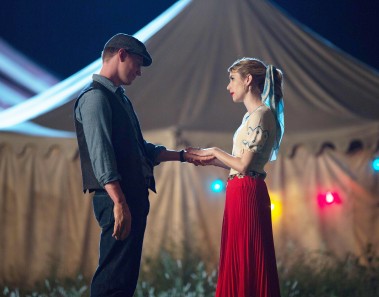
    While there are still some issues with American Horror Story: Freak Show, there’s no doubt in my mind that “Pink Cupcakes” is the first truly great episode of the season.

    It has immediately proven true that, with the introductions and lengthy preamble out of the way, the show can now launch headfirst into the stories and issues that it’s wanted to explore all along. Ryan Murphy had stated several times this week while promoting the episode that it was one that would amp up the horror quotient. Now, I’ve long since trained myself to believe nothing that Ryan Murphy says, but this once at least, he’s telling the truth. “Pink Cupcakes” returns to the psychological body horror well that it’s enjoyed for a while now, but it’s also violent, and at times downright scary, and frankly, it’s been too long since American Horror Story has delivered a good jump scare.

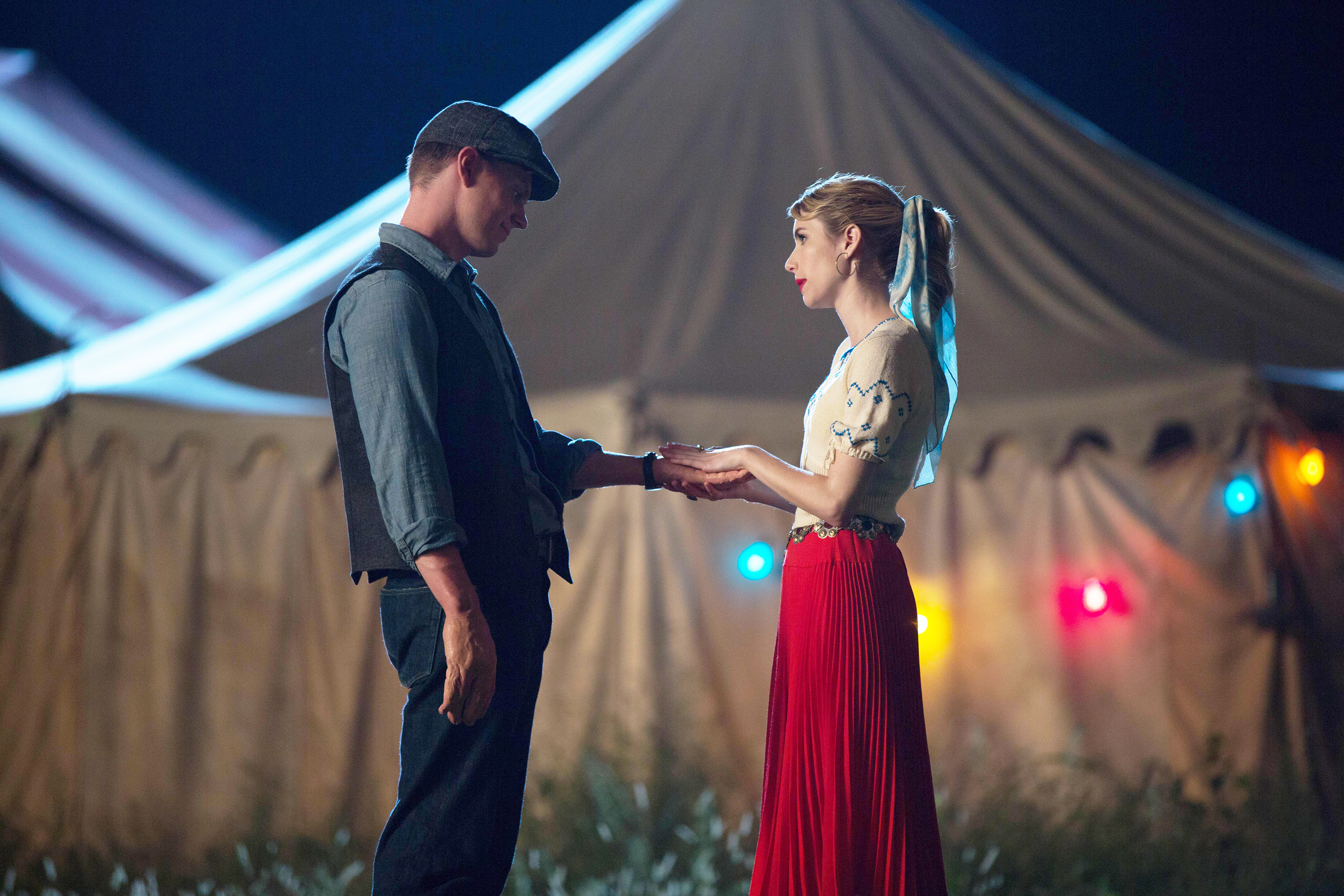
    Of the major stories this week, the strongest by far belongs to Dandy Mott. Finn Wittrock is quickly revealing himself to be the season’s standout performer, delivering a gleefully unhinged performance that turns on a dime from camp to terrifying. Dandy more or less plays out American Psycho this week, hitting the gym (if by “gym” we mean his freakish, candy-colored bedroom that is strangely devoid of furniture), soliloquizing about the sweet language of murder, then hitting the town looking for his next victim. Why he picks a gay strip joint to start could fill many thousands of words, but I don’t think Dandy’s psychosis is quite so easily explained away by closeted gayness. Murder and sexuality are definitely tied together for him, and with the suggestion that his father suffered similarly, I expect we’ll delve much further into this in weeks to come.

    At any rate, his trip to the gay bar leads him to cross paths with Dell, who turns out to be a closet case himself. Dell’s been enjoying the company of Matt Bomer, who guest stars this week as the escort/prostitute. Bomer is essentially playing the stereotypical horror movie vixen here, and while the gay spin is interesting enough, it’s not like he’s really asked to do a whole lot. Dandy’s murder of him is a prime example of the fine tonal line the show walks, and it has done so successfully so far this season. When the first several stabs fail to kill Bomer, Dandy’s petulant cry of, “You’re making me feel bad!” is a deeply uncomfortable laugh-out-loud moment, one that highlights the way that audiences are complicit in violence toward and subjugation of the people we might deem “freaks”.

    Though the show is occupied by the idea of spectacle, and how observation and the “normal gaze” can be their own kind of violence, its exploration of that this week, through Stanley’s attempts to procure freaks for the museum of oddities, leaves something to be desired. His scenes this week are a tough nut to crack, as the show portrays what might be flash forwards, but what might just be fantasies, with no narrative signaling at all to indicate what exactly we’re meant to take from them. The notion of what “really” happened is thrown entirely into question, but not in a way that encourages any deeper consideration. Obfuscation is fine as a narrative device, as is disorientation, but if it serves only to confuse the audience and muddle the storytelling, then what’s the point? The fake-out with the twins’ deaths seems so far to have been only a waste of time.

    Fortunately the remainder of the episode is clearer in its storytelling and more grounded in its conflicts. Out of Dell’s encounter with Bomer springs a confrontation with Desiree, who, after a brief encounter with Jimmy, suffers a miscarriage. Here’s an inversion of a trope for you: the miscarriage, far from a moment of body horror, is instead an affirmation of Desiree’s femininity. Her trip to the doctor confirms that she is biologically a woman (at least, it does so by 1950s scientific standards), and she arranges surgery to reduce or remove her extraneous parts; it also confirms, courtesy of Ethel, that Dell is Jimmy’s father. The real horror comes later, when Desiree confronts Dell with this knowledge, attacking his masculinity in the process, doing enough damage that Dell pays her doctor a visit and breaks all of his fingers. Angela Bassett gets her first great scene of the season here, in a darkly lit confrontation with Michael Chiklis that emphasizes the many physical differences between them in order to highlight her own femaleness.

    Despite some missteps in the narrative’s construction, as well as a story that still can’t find room for all its many characters, “Pink Cupcakes” is still a solid episode, and the first great episode of Freak Show. It reaches at times the lunatic heights of Murder House and Asylum, while still finding room for the pathos of the later series, as well—and suggesting that there is more where that came from, too.


    Stray Observations:

    • The singing returns, but only briefly, and it’s another rendition of “Life on Mars” anyway. (In fact it’s possibly the same rendition?) “Fame” also pops up on the soundtrack this week, and I’m definitely down for more Bowie on this show. Let’s get a “Five Years” ensemble number started, shall we?
    • Twenty dollars to take Matt Bomer home? Sign me up.
    • Gabourey Sidibe makes her first appearance this week, as Dora’s daughter, who is off at secretary school. While it doesn’t help that the conversation is half exposition anyway, and is trapped visually in the artifice of a telephone split-screen, Sidibe really is not the greatest actress, and her appearance here falls flat.
  • Parenthood Review: “These Are the Times We Live In” (6×07)

    Parenthood Review: “These Are the Times We Live In” (6×07)

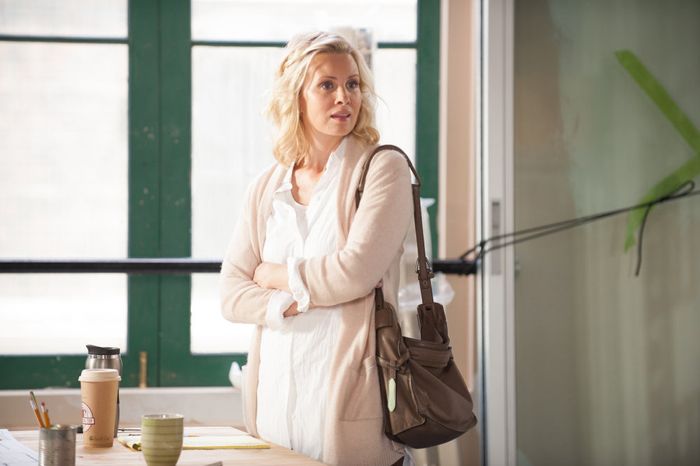
    these are the times we live in parenthoodBy this point in Parenthood’s final season, your enjoyment of any given episode depends in large part on which characters you favor, and whether they appear in said episode.

    For instance, I enjoyed “These Are The Times We Live In” much more than last week’s episode, because I happen to like Julia and Drew best, and I don’t really care for Crosby at all. On the one hand, I hesitate to let this level of favoritism affect my thoughts on each episode, since even though reviewing is ultimately subjective, it really shouldn’t be on that superficial of a level. But really, the balance of characters is integral to Parenthood’s success, and so there is a valid criticism to be made that, by isolating the characters to such a degree (and by going weeks at a time without featuring some of them) (seriously I think Camille might be dead, you guys), the show has lost some of the spark that makes it work.

    Don’t get me wrong: many, many of the small vignettes that Parenthood has done so far have been good, and a handful of them have even been excellent. But they are vignettes, short stories about various members of the Braverman clan, that seem to have very little to do with one another most of the time. This has always been something of an issue with the show, but the problem is much more pronounced when we are not checking in with all of the siblings, every week. Even though Parenthood can excel by finding character combinations that work, putting the actors in a room, and just letting them do their thing, it is most successful when it can bring all of those characters together, as well. This is a show about the family unit, as well as units within the family, but much of this season feels only to be serving the latter purprose.

    Take this week’s Amber story, which folds in Max as well, while Kristina and Adam both continue to be absent, for the second week in a row. That absence is pronounced, especially as this week’s story also more or less ignores Dylan, all while reiterating character beats that by now are firmly established. Amber is still unprepared for motherhood. Max still has trouble empathizing with others. Putting these two characters together does not shed any new light on either of them—or at least, the writers do not take advantage of the opportunity to do so. Mae Whitman has gotten much better material earlier in the season, and it’s somewhat frustrating to see what little Amber gets to do here. Ditto Max Burkholder, who is typically great in this episode, but who doesn’t get to stretch the way he has when Max shares scenes with Dylan. That storyline was new ground; this episode is the same old.

    An exception to all of this is Hank, who this week both intersects with Max’s story, as well continues to demonstrate change in both his behavior and in his situation. Since the show is concerned primarily with navigating the intricacies and subtleties of familial relationships, it makes a tremendous amount of dramatic sense to feature characters that are unable to do this themselves. It allows for closer examination of the relationships, the how’s and why’s of why the characters behave how they do, without requiring them to explain these reasons to each other the way a lesser drama might. This only works if the Asperger’s characters are as fully drawn as Hank and Max are, of course, and when the actors are as talented as Ray Romano is. Hank’s conversation with Linda about his Asperger’s, the first time he’s confided in her about it, is another in a series of showcases for Romano, who, even as a latecomer to the cast, has become its most valuable player.


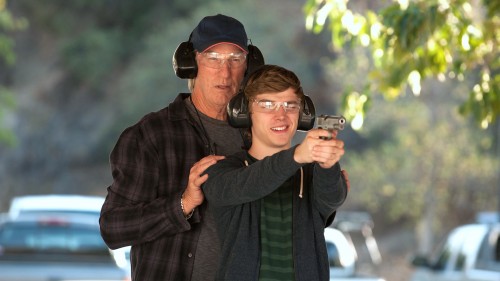
    If balancing the ensemble is Parenthood’s chief difficulty this year, toeing the line of sentiment is a very close second. The other two major stories of the evening illustrate both sides of this double-edged sword. The first, and the successful one, is the trio of road trips taken by Drew and Zeek. While Zeek pairs well with pretty much any other character on the show, he pairs especially well with Drew, and the two have always had an understated but powerful relationship. Zeek tries to spend time with Drew, perhaps with some anxiety that he has few such opportunities remaining, but he miscalculates, the way grandparents often can, taking Drew to shoot at cans of cream corn, while Drew needs to be studying. Natalie’s reprimand of him after Drew ruins the outing is a spot on treatment of the complicated relationships between grandparents and grandchildren. “You could have humored him, at least,” she says, rightly, but that’s the last thing grandkids want to do. The time we spend with grandparents is valuable though, for those of us lucky to still have them with us, and so when Drew realizes that, more than humoring Zeek, he should savor the time they get to spend together, it’s a powerful, emotional moment.

    But there’s heartwarming, and then there’s cloying, and what the show is trying to do with Joel falls squarely on the wrong side of that line. Julia is my favorite Braverman, and so I’m happy enough to see so much time spent on her this week, as her divorce settlement comes to a close. The show’s treatment of divorce, at least initially, is unflinching. There is nothing cut and dry about this process; divorce is complicated, messy, with a tangle of emotions that are not always clear or easy to parse out. There’s a great early shot of the two of them in the elevator, with their tearful embrace obscured by the doors, which open again to them standing the way they were before the embrace; as though an elevator door opening can erase the history between them.

    But then, of course, Joel goes to say goodbye to Zeek, taken as he is with playing the victim of late, and, of course, Zeek turns this into a “fight for the girl thing,” which is both a problematic direction for the story, and also far from the most interesting one. A last minute, motion picture reunion would be boring, especially when the show has so effectively and realistically handled the divorce thing up to this point. The ending is cringe-worthy, and reads as though it was cobbled together from network notes (perhaps by the same executives responsible for the dreadful previews and promos). I want to have enough faith in Parenthood to believe a reunion is not in the cards, or at least, will not be as saccharine as the ending of tonight’s episode would suggest—but even so, this ending would then be the worst kind of false cliffhanger. It’s a no-win situation, and a misstep in what has otherwise been the season’s strongest arc. (A caveat: if the very next scene this season is Julia telling Joel to step the fuck off, I will rescind this entire paragraph.)

    I’ve probably come across as pretty negative thus far, and I really don’t want to be too hard on the show. There are many, many things about this episode that work, even amidst the stories that have issues. Drew and Zeek’s story especially was simple, and lovely. Ray Romano deserves an Emmy. I can’t think of a television series that has handled divorce more sensitively than this one. I just wish the various elements of the show would click together into a more cohesive whole, even if the realities of production make that a more difficult prospect this season than it has been in the past. This is nothing less than solid, but man, it’d be nice for it to be spectacular.


    Stray Observations:

    • “Don’t interrupt me, Nora.” Max Burkholder delivers on the comedy this week.
    • “It’s my fault, I let you watch Fast Times at Ridgemont High too early.” Lauren Graham gets a pretty great week this week, too, as Sarah begins to feel marginalized within Hank’s family unit. And of course she feels that way—there is a complete family there, and she is on the outside of it, no mater how well she gets along with Ruby.
    • The oppressive reign of on-the-nose song choices continues this week as Joel drives to Julia’s house. “Would you give it up?” goes the singer, over and over again. Shut up, band.
    • Did Drew Holt get a haircut? I’m beginning to wonder if they’re shooting these things out of order or something, because boy’s hair is all over the place every week. It looks considerably neater this week, though.
    • Seriously, though, Zeek calls out to Camille before leaving with Drew, but I think she is dead and stuffed in a closet somewhere. At least the last time she vanished, it was to Italy!
  • “A Gentleman’s Guide to Love and Murder” Review: The Musical Wes Anderson Never Made

    “A Gentleman’s Guide to Love and Murder” Review: The Musical Wes Anderson Never Made

    Gentleman's Guide to Love and Murder, AWalter Kerr Theatre

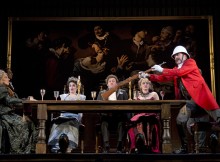
    When you walk into the Walter Kerr Theatre, home of Best Musical Tony winner A Gentleman’s Guide to Love and Murder, you have to do some preparation. You have to suspend your disbelief, let go of your expectations, and open your mind because the 2 hours and 20 minutes ahead will surprise, entertain, and leave you in stitches by the end.

    A Gentleman’s Guide begins with a warning to the audience: “for those of you of weaker constitution, for those you who may be faint of heart, this is a tale of revenge and retribution.” The story is just that. The musical follows Monty Navarro who upon discovering that he is related to the wealthy D’Ysquith family and is the 9th in line to inherit the title of Earl of Highhurst decides to murder those in front of him in the line of succession. The result is a hilarious off-beat comedy that has as much heart as it does laughs.

    Much of the first act is spent watching Monty in his quest to the family fortune. Murdering each quirky relative (all 8 of whom are played by Jefferson Mays) in increasingly ridiculous ways, Monty slowly changes as a character. I can’t tell you how much I appreciate this. Characters so rarely change in musicals, but his strive for power becomes apparent as much in him as it does the story. On the side, a love triangle ensues between Monty, his lover Sibella, and cousin Phoebe. Yes. It does get as ugly as it sounds. The half is fast-paced, exciting, and laugh-out-loud hilarious.

    The second act slows down a bit. Monty is left with a singular relative to get past, which doesn’t allow the momentum from the first half to carry over. However, the laughs and surprises are all still there.

    Although the score is mostly forgettable and the lyrics simply for exposition, there are some high points like “It’s Better with a Man” and Act two showstopper “I’ve Decided to Marry You,” which exemplifies Darko Tresnjak’s Tony-winning direction. It is simply brilliant. The entire musical plays off like a Wes Anderson film with its off-beat world and characters so finely choreographed and staged in a storybook like setting. He takes the already interesting story and infuses it with an impeccable style that keeps you engaged from beginning to end.

    Speaking of engaging, Bryce Pinkham is sensational as Monty. With rarely a minute off stage it is confounding how he is able to maintain that type of energy throughout. He is completely charming and hilarious, but his physical comedy is what throws him over the type. His slight looks at the audience or his facial expressions while we hear his thoughts are captivating. He is really the unsung hero of the musical.

    The reason I say unsung is because Jefferson Mays gets so much of the absolutely deserved praise for his role as the entire D’Ysquith family. I can’t say more than that he is phenomenal. He doesn’t just play each character, he inhabits them. They all have their own type of humor and style. It is really fascinating to watch. Bonus points to his dressers who assist in what looks like the fastest quick changes in broadway history.

    I can’t say much more. It is a riotously fun night on Broadway. Tresnjak has gone above and beyond the call of duty and the actors are really at the top of their game. There are faults. The second act can’t quite match the momentum of the first and the score doesn’t really do the rest of production justice, but those are small factors to look past when it comes to the overall scope of the musical. Bottom line, come for Mays and Pinkham, stay for a truly wonderful musical.

    BRYCE PINKHAM and JEFFERSON MAYS shoutout Smash Cut!

    https://www.youtube.com/watch?v=Bg7R98B1M28&list=PLA4smGy_kg9WQU-MPl3kXw51IS83HUz9r&index=1

  • ‘Star Wars Episode VII’ finally gets its name

    ‘Star Wars Episode VII’ finally gets its name

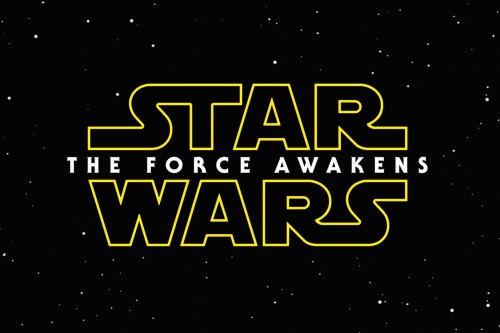
    star wars episode VIIIf you’ve been living under a rock with not WiFi for the past year, you’ve at least heard one person screaming down the street about the new Star Wars movie being released, which will pick up 30 years after 1983’s Return of the Jedi. The film, slated for released in December 2015, will not only feature an incredible group of actors returning from the original trilogy including Harrison Ford (Hans Solo), Carrie Fisher (Princess Leia), Mark Hamill (Luke Skywalker), and Peter Mayhew (Chewbacca), it will also add up and comers like Oscar winner Lupita Nyong’o (12 Years a Slave), Gwendolyn Christie (Game of Thrones), and Oscar Isaac (Inside Llewyn Davis).

    Finally on November 6th, the last day of production, the name for the sequel received its name. Drumroll ple– okay I’ll get to it:

    Star Wars Episode VII: The Force Awakens.

    Get the full story on Entertainment Weekly. 

  • Scandal Review: “Baby Made a Mess” (4×07)

    Scandal Review: “Baby Made a Mess” (4×07)

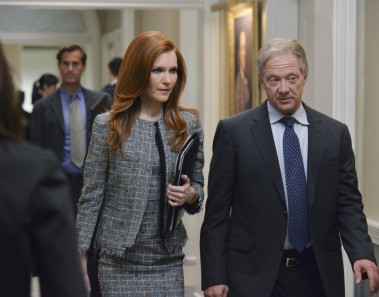
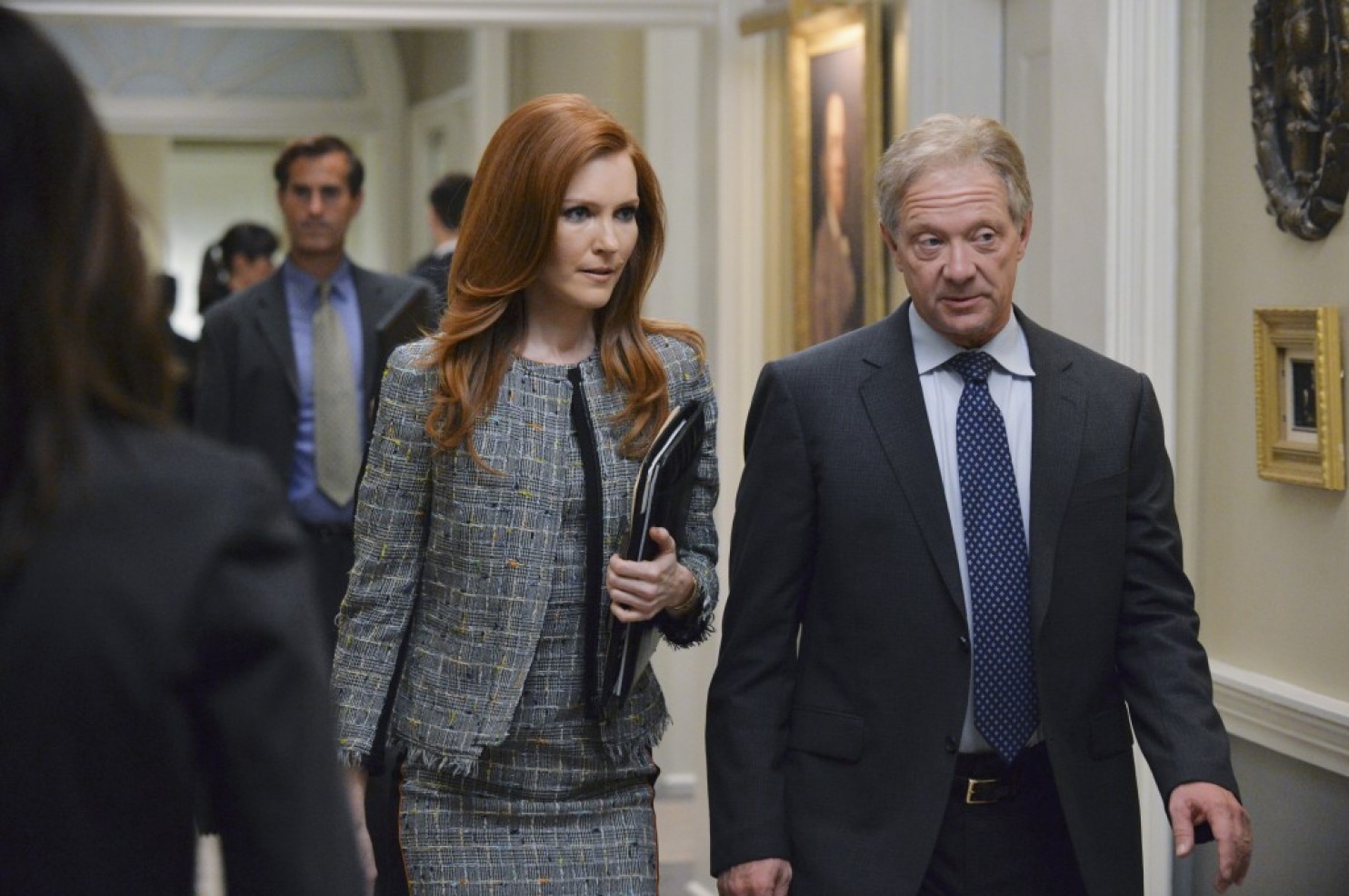
    baby made a mess scandalLet’s get the record straight immediately: I am all about this episode of Scandal.

    “Baby Made a Mess” feels like a direct response to my biggest criticism of the season (and the series) to date, which is that the show has leaned too heavily on Olivia’s romantic life at the expense of her professional life. Well, in short order this episode takes that criticism, ingests it, and throws it right back at the audience.

    Most obviously, the episode does this by pitting Olivia directly against her father, allowing her (or anyone, really) to for once outsmart Rowan. That the narrative reaches this point through Olivia’s own agency, through her co-opting of her father’s tactics, and through her successful attempt at bringing the two dumb men in her life into the same room, is really tremendous. Olivia Pope is on point this week, and the result is by far the best, most exciting episode of Scandal so far this season. This is an episode that demonstrates in turn each of the show’s best qualities, one after the other. The “case of the week” is Susan Ross’s campaign for Virginia’s Senate seat, which Olivia quite literally marches into and takes over. Everything to do with Ross is funny and witty, but not at the expense of showcasing Olivia’s skills as a political operative, often spoken about but not of late seen. The campaign ad she devises featuring Ross’s daughter is brilliant, a simple, elegant, and effective solution to the problem of Ross’s ill-suitedness for the camera. In other words it is quintessential Olivia Pope.

    And of course there is the scene that Kerry Washington shares this week with Joe Morton, which is easily their best dramatic encounter to date. Morton’s monologues are fantastic regardless of their context, but here, the speech serves doubly as a much-needed wake-up call for Olivia. In fact, that wake-up call may come even earlier, in her conversation with Tom, who by this point is little more than Rowan’s proxy. Upon first watch, my reaction to Olivia’s interrogation with Tom was not kind—it instantly becomes about Fitz and Jake, about positioning Olivia as an object of desire between them. It’s not until the episode ends that we realize the show isn’t positioning Olivia as an object at all; it’s allowing her to break free. He remarks on her beauty. He calls her “Helen of Troy, the face that launched a thousand ships,” and while it’s super overwrought (even if in an appropriately Scandalesque way), it also succeeds in turning what until now has been a shortcoming of the season into a strength. Tearing a page out of Rowan’s playbook, she forces Tom to confess, and uses the truth as a weapon to finally get Fitz and Jake into the same room, and onto the same page as she is. No more who-will-she-choose? No more Team Fitz and Team Jake. Just Olivia Pope, kicking ass and taking names. Finally.

    The rest of the episode supports this newly rediscovered feminist streak, as well. There’s a meaty B-plot for Abby, as her ex-husband Chip Putney turns up in the Virginia race as well, as Fitz’s favored candidate. Putney himself is a bit of a cartoon—the scene in the parking garage is extremely over the top, like a Lifetime movie rendition of domestic abuse—but Darby Stanchfield turns in a hell of a performance, ranging from physical comedy to outright drama, even embracing the melodrama of that parking garage bit as she levels a gun at Putney. While it would be justifiable to take issue with the notion that, at the end of the day, the problem is solved not through Abby’s own action but by Leo, there’s still plenty of agency in Abby’s decision to tell Leo the truth. Further, Olivia takes on the Ross campaign solely as a way to defeat Putney for Abby’s sake. I’m not sure if the show got enough mileage out of Olivia and Abby being at odds, and in fact they used it mainly as an excuse for the characters to snipe at each other in full-on Mean Girls fashion, and so in this episode especially, it’s great to see them friends again, supporting each other not just romantically but professionally, even if the two are still pretty deeply entwined.

    And then there is Mellie Grant. Her long mourning has ended, and it’s astonishing and revealing to see just how quickly Fitz changes his tune as a result. What, exactly, did he think he was asking for when he bemoaned Drunk Mellie and Smelly Mellie and all the other forms that Mellie’s grief took on, and asked for the “real” Mellie to come back? Because the real Mellie is back now, in full force, and that Mellie is a woman who is not content to curate china patterns and play housewife to the most powerful man in the world. Real Mellie wants that power, too, and, emboldened by Bitsy Cooper as well as by Lizzie Thompson, she’s going to grab at it posthaste. Bellamy Young is never anything short of amazing, and in just a few scenes here, she completely turns around the character, selling the audience fully on this transformation, and the reasons for it. When she answers Fitz’s phone and lets him know that it’s Olivia calling for him, there’s a spark in her eyes and an edge to her voice, not the shrill jealousy of a few episodes ago, but the knowledge that her husband is weak, and she is strong. That’s the kind of development I want to see more of on this show.

    So, then, what “Baby Made a Mess” is more than anything else is a re-statement of this show’s feminist objective, one that in the wake of the past several episodes was sorely needed, and is extremely welcome. The episode is not without its flaws: Huck’s story, for instance, is still too isolated to carry much weight, and yet, if more time was spent on it, it would only draw more attention to how very creepy it is for Huck to be catfishing his son. The melodrama is amped up just slightly too much at times, as well. That “Helen of Troy” metaphor loses its luster after being repeated seventeen times, and the episode’s closing sequence, with the pounding music and the montage full of smash cuts (hey, that’s the name of the site!) is a bit much. I haven’t mentioned the Winslow conspiracy, either, mainly because it’s still bubbling, not very interestingly, in the background, and like Huck’s plotline, it feels appended on, rather than an integral part of the show. But these are small concerns—what is integral to the show is its central women, and this episode both reaffirms Olivia and Mellie’s feminism in that regard, and fully adds Abby to their ranks as well. That it does this while also running on high-octane excitement is an achievement, and a promising sign of things to come. More of this, please.


    Stray Observations:

    • Despite whatever problems the resolution to Abby’s story may carry, I like the idea of her and Leo, and their scene in the pressroom is a nice contrast to the horrors of Abby’s previous romantic engagement with Putney. The actors have good chemistry, and, on Scandal especially, a non-toxic romance is a breath of fresh air.
    • Speaking of toxic romances, Cyrus plants a trap for Michael, and at first he seems to confirm that Michael is not the leak, before, at the worst possible moment, confirming that he in fact is. The other shoe, I can see it dropping even now.
    • The notable event of the Winslow conspiracy this week is that Winslow shoots himself in the head in front of Quinn. It’s nice to see she can still be rattled by something. Quinn and Huck also finally bring Olivia in the loop on the photos of her that Winslow was keeping, but nothing more amounts from that yet.
    • “The woman could sell a dual ticket of Hitler and Bin Laden.” Pretty much, yeah.
    • Susan Ross is played by Artemis Pebdani of It’s Always Sunny in Philadelphia, in case you, like me, were going crazy trying to figure out where you knew her from. It’s more than a little odd to see her playing such a “normal” role, given how batshit insane the character of Artemis is.
  • Jump Cuts: Marvel Announcements, Daniel Radcliffe Rapping, & More

    Jump Cuts: Marvel Announcements, Daniel Radcliffe Rapping, & More

    Jump Cuts 1In our newest columns, we report the most important stories in the pop culture world and give them to you in our classic Smash Cut fashion. If you would like to suggest a story to add to Jump Cuts, just tweet at us with #JumpCuts


    Happy Halloween Smashers! Here are the biggest Entertainment stories from this past week:

    Marvel Announces Movies through 2020

    Following DC Comics’ announcement last week, Marvel has set their film slate and release dates through the year 2020. Some of the highlights include a Black Panther movie (played by Chadwick Boseman), a Captain Marvel movie, and the two part third Avengers movie. As previously announced, Iron Man will play a major role in Captain America: Civil War, however it was now announced that Boseman’s Black Panther will also appear in the movie. One major release date change came for Guardians of the Galaxy 2 which will now be released in May 2017. Read the full story on The Huffington Post.

    Lily Rabe will reprise AHS: Asylum character on Freak Show

    In an interesting move, Lily Rabe will be reprising her role as Sister Eunice on season 2 Asylum in this season’s 10th episode. With two characters from Asylum now appearing in Freak Show, can we consider this an Anthology series still? Read the full story on IGN.

    Neil Patrick Harris will join Freak Show

    In other American Horror Story: Freak Show news, the recently crowned oscar host and Gone Girl’s resident creeper Neil Patrick Harris will appear on the show after passing on a role in the first season. He will appear on the 11th and 12th episode of the series as a chameleon salesman. His real life husband, David Burtka, will appear on the 13th episode of the season. For more, go over to TV Line.

    Daniel Radcliffe rapping on The Tonight Show

    Do I even have to say more? Just check it out over on The Huffington Post.

    MTV’s Scream gets a full series order

    Back in May 2013 it was announced that MTV was developing a series based on Wes Carven’s classic 1996 slasher flick. The series follows on the heels of the network’s massive hit Teen Wolf and on the barrage of recent horror TV series like The Walking Dead, American Horror Story, and Grimm. However, it was revealed that Ghost Face will not make an appearance in the series. Check out the full story on Entertainment Weekly.


  • Prawn releasing New “Settled” EP and Deluxe Version of “Kingfisher”

    Prawn releasing New “Settled” EP and Deluxe Version of “Kingfisher”

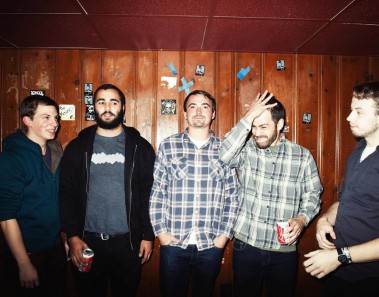
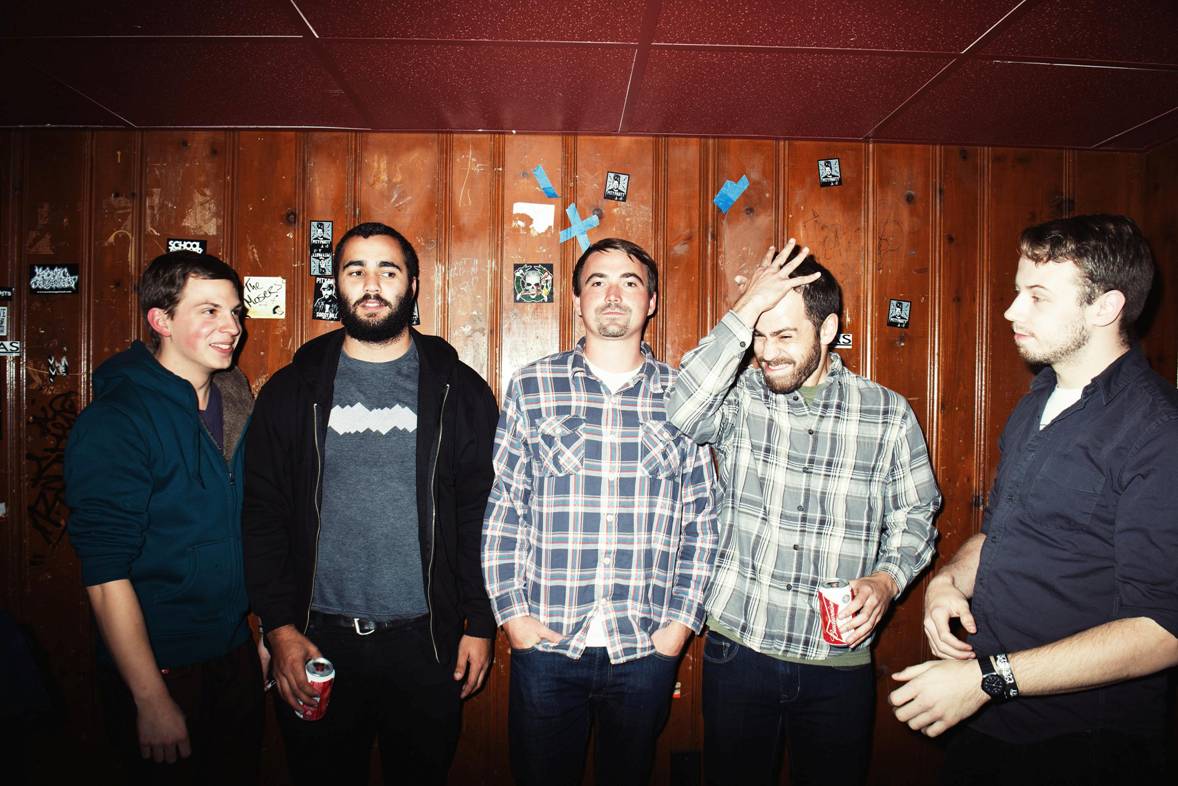
    prawn-press-photoLast time I saw Prawn they were absolutely killing it at The Studio at Webster Hall supporting Hotelier and Foxing. While I didn’t know much about them then, it did spawn a slight obsession with the band. Maybe it’s just natural to want to support local Jersey bands, but these guys know how to put on a show. Either way, when their album Kingfisher dropped, you could so that I was eagerly awaiting it.

    Now, they’re doing it again with a new EP titled “Settled” which is slated to drop on digital on November 25th.  The EP will also feature two b-side from Kingfisher: “Settled” and “Built For.”

    In addition (there’s a lot going on with these guys), Topshelf will be releasing a deluxe version of the Kingfisher LP which will include both songs in the original order that the band intended as a limited edition 7″ vinyl on November 28th for Record Store Day’s Black Friday and on digital.

  • 7 Reasons why “House of Cards” Season 2 was Awesome

    7 Reasons why “House of Cards” Season 2 was Awesome

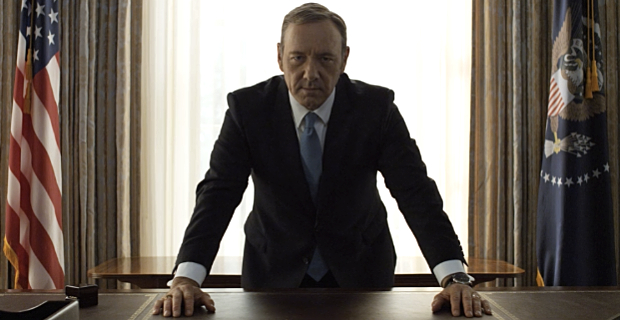
    Kevin-Spacey-in-House-of-Cards-Season-2-Chapter-26 SPOILERS!

    It’s ridiculous, unrealistic, and wonderfully dark, but also so entertaining. It probably won’t win this year at the Emmys, but here are some reasons voters could cast their vote for House of Cards.

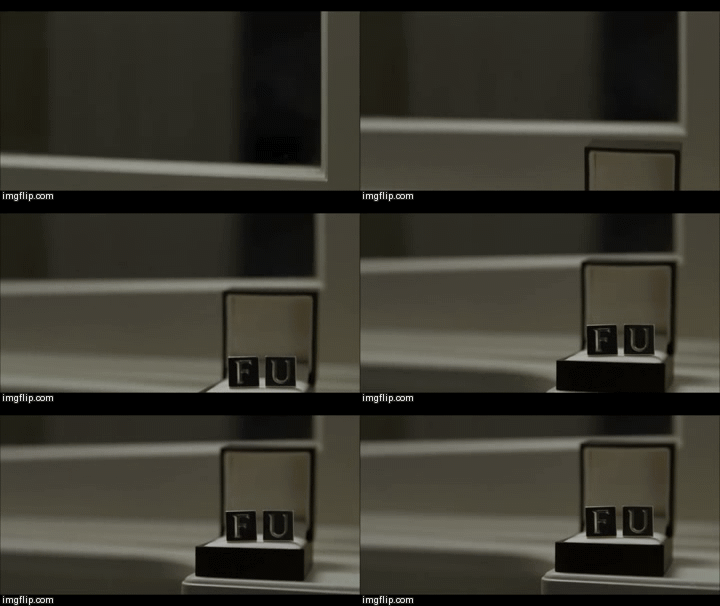
    “One heartbeat away from the presidency and not a single vote cast in my name…”

    aqctu

    Remember when Frank gave us this sterling piece of advice when dealing with Washington? Hopefully you listened to him, this season got messy.

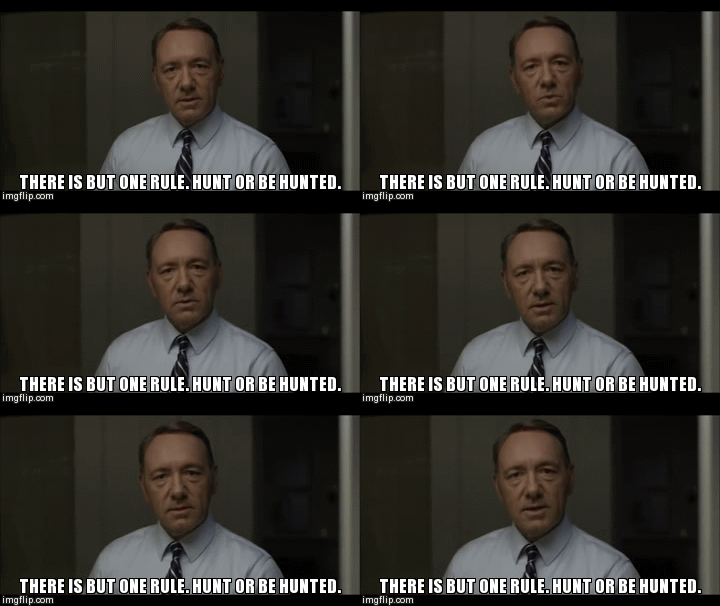
    Then, this one image basically summed up House of Cards. No matter what Frank and Claire do, just remember…

    aqc4c

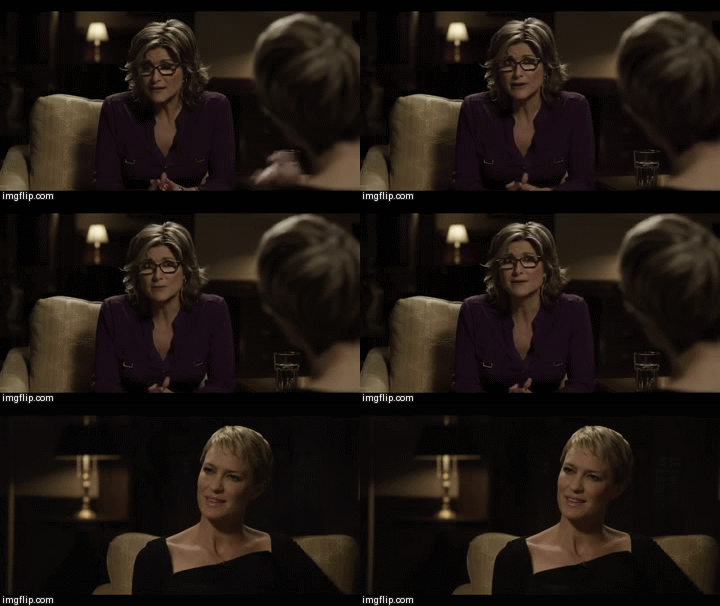
    Remember when Claire got to be a total BAMF during this interview? Also, Robin Wright is a freaking goddess.

    aqcxi

    You know that prostitute from season one? She was freaking amazing this season.

    aqd17

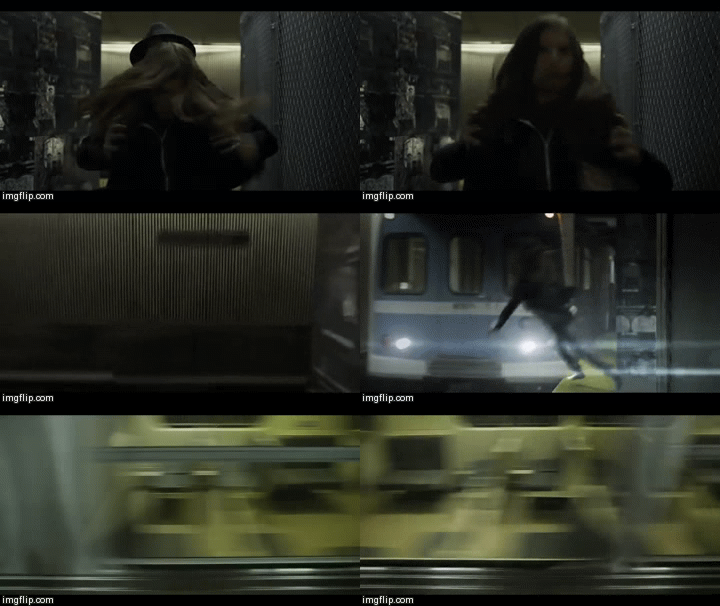
    How could you forget about this shocker. Admit it, you screamed a little when this happened. Goodbye Zoe Barnes and your wonderful hoodies.

    aqbwn

    And last, but not least…

    aqauy

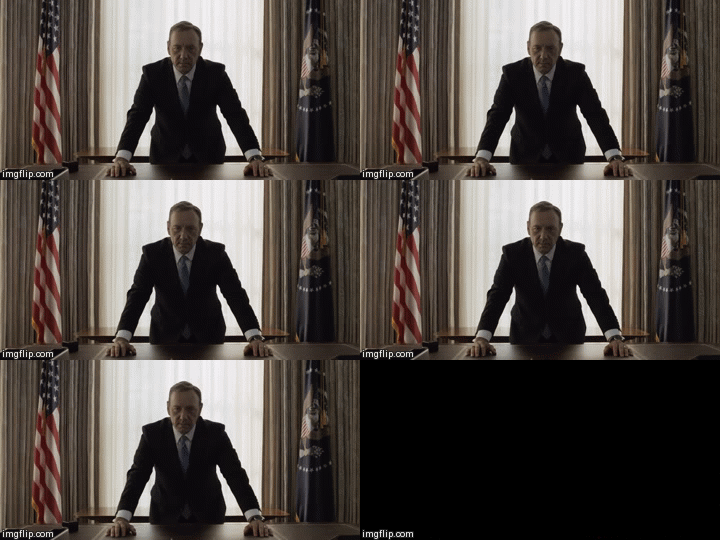
    How could we talk about House of Cards season 2 without mentioning the now infamous desk knock. All hail President Underwood!

    Check out our Emmy Spotlight for the show here! What were your favorite moments from House of Cards season 2?

  • Parenthood Review: “Vegas” (6×01)

    Parenthood Review: “Vegas” (6×01)

    parenthood review

    Reviewing Parenthood is always an interesting prospect for me. Coming up with a score can honestly feel a bit like alchemy. I love this show because it perfectly nails such significant minutiae of family life, like that little shrug Camille gives Julia after Kristina brings Joel on board at the school. You know they are about to talk shit on Kristina, because she does this shit all the time. The show so fully portrays all of life’s small moments, and so gracefully, in such a way that we are instantly reminded of our own families. Suddenly I am not watching Zeke; I’m watching my own grandfather, or seeing some future vision of my father. I see not Kristina and Sarah and Julia, but my mother and aunts. Certain dynamics are more familiar than others. Parenthood achieves this effect even in its lesser episodes, but when it marries this effect with genuinely great craftsmanship, it is one of the best shows on television. Tonight, it does just that.

    “Vegas” is an excellent way to kick off this last season. It draws upon the show’s deep, rich history, and in doing so pushes many of the characters in new, challenging directions (and sets the rest up for a later payoff). Zeke must now come to terms with his mortality. Amber is pregnant. Hank and Sarah are dating, finally. Julia seems on track to replace Joel, just when Joel decides to forgive her. We are engaged in each of these stories because we are intimately familiar with these characters, and with this family.

    The episode revolves around Zeke’s surprise birthday trip to Vegas, courtesy of Sarah. It’s a blast, until he collapses. The sustained sequence where he is in the hospital is riveting, showing the siblings’ various reactions and playing them against each other, so that every reaction reveals character in some way or another. Julia responds to Joel’s kiss by agreeing to see her law firm hookup. Adam immediately decides Sarah is not mature enough to handle the situation, and spends his time remotely trying to wrest control from her, until finally he and Crosby just show up in Vegas themselves. Zeke himself doesn’t even want to be in the hospital—after he’s discharged, he sneaks back out onto the casino floor, and soon his kids are out there with him, having a good time.

    In other words this week’s episode covers the full array of Parenthood’s strong points, putting Adam up against his less-responsible siblings and his cantankerous father for laughs, but not before letting us feel each siblings’ panic upon hearing the news. Meanwhile, the rest of the cast helps out with the opening of Chambers Academy, and while it’s still a little farfetched that Adam and Kristina now run a school, it provides this week a good central gathering point for the various Bravermans. The show relies upon the chemistry among its large web of characters, and so the more Bravemans per capita, the better. Plus, the fact that the school is run by Max’s parents puts an effectively dramatic, personal spin on Max’s already heart wrenching struggle with returning to school.

    We’re robbed of an Amber heart-to-heart with Sarah until next week, but she does share a lovely scene with Haddie, who appears to be sticking around on at least a semi-regular basis. I hadn’t realized how much I missed the character, but she’s a pleasure to have back. Mae Whitman plays Amber’s nervous trepidation with a perfect jittery edge, and when she finally comes clean to Haddie, she and Sarah Ramos have a really great exchange that’s a perfect example of the show’s effective use of its own history.

    So much goes on in any given episode that it’s hard not to just start summarizing the plot. But at its best, Parenthood is less about what actually happens, and much more about how the individual scenes make you feel. What the best episodes of Parenthood do is construct a plot that showcases these character moments; it’s a show that excels in the in-between of life’s biggest moments. Zeke’s hospital stay is not as important as his reaction to it. The reason for Julia’s divorce matters less than its aftermath. The joy of Parenthood is that we watch life happen, and find ourselves satisfied.

    As an opening to the final season, “Vegas” accomplishes all it needs to and then some. This is a long-overdue and very, very welcome reunion with the Braverman clan, one that celebrates where the show has been while pointing the direction for its final episodes. It’s by far the most sure of itself the show has been in quite some time. If this is a sign of things to come, then we’re in for a rewarding closing stretch here.


    Stray Observations:

    – The premiere does a pretty good job of servicing most of the main characters, but Drew essentially cameos, and Crosby is strictly on comic relief duty.

    – Pretty much the entire Internet called it that Zeke would be having some health woes this season, but the prospect of it still feels momentous.

    – Betsy Brandt guest stars as Hank’s ex-wife. She fits this show perfectly, doesn’t she?

  • Sons of Anarchy Review: “What a Piece of Work Is Man” (7×09)

    Sons of Anarchy Review: “What a Piece of Work Is Man” (7×09)

    what a piece of work is man sons of anarchy“What a Piece of Work Is Man,” indeed.

    This week’s episode is still over-stuffed, and the pacing is drawn out at times, but it at least features periodic jolts of excitement in most of the ongoing stories. It at least raises stakes, and at least bothers to feign forward momentum on the season’s major arc.

    The current tango with Marks comes to a bloody end, as he executes Bobby in front of Jax as repayment for Jax’s war on the Chinese. The fact that it took three episodes and several beatings sort of deflates the moment’s tension, as Bobby’s death is as predictable as it is inevitable. But that doesn’t mean that the last few episodes haven’t been a nice final showcase for Mark Boone, Jr., and it doesn’t make the loss of Bobby any less significant. Along with Chibs, Bobby has been the most frequent voice of reason at the table, and so that he should be a casualty of the club’s descent into darkness is appropriately tragic.

    What’s even more promising is that Marks remains the “big bad” of the season at episode’s end—at least, to the extent that Jax doesn’t fill that role himself. Jax doubles down on his war following Bobby’s death, seemingly learning nothing from the actions he’s taken so far, but the show is no longer making any bones about this. The pastor’s wife claims to see that Jax is “fundamentally decent,” but even Jax isn’t claiming that anymore. Instead the show goes to great lengths to isolate Jax and SAMCRO from the world around them.

    The Indian Hills charter is summoning a forum of all Sons charters, with the implicit threat that they wish to disband SAMCRO. More even than last week, they function as audience surrogates, which at this stage is hugely important to the show’s narrative. Even Marks brings Jax to task, placing all the spilt blood at his feet. “Is this what you wanted?” he asks as they negotiate. “Piles of bodies?” And when he actually does murder Bobby, he puts a gun to Jax’s head as well: “This is on you, Jackson.” That’s a powerful statement to have the show’s ostensible villain make, especially since it’s a true one. Of course it’s no big revelation that Jax and the club have long lost any hope at redemption or forgiveness, but by bringing in the other charters’ viewpoints as well, the show at least has the means to challenge and vilify the club’s actions.

    Unser’s investigation into Tara’s murder turns up new developments, as well, as Jarry learns that the Chinese man Gemma pinned the murder on was in jail in a different state the night of Tara’s murder. They’re playing dumb for now, but while this is only a baby step, it is at least some progress in this story. Plus, Abel spies on Gemma as she confesses to yet another inanimate object, this time Bobby’s boy. This is hardly necessary, and in fact just feels silly, especially since it’s not like Abel’s gonna piece together this whole complicated conspiracy. He already knows the one important detail; anything else until he tells someone else (my money’s on Wendy) is just redundant filler. It’s also another lazy (and unnecessary) way to emphasize the dangers of the SAMCRO life. Everyone is pretty much straight up ignoring what is clearly a severely damaged child, which is perhaps the most egregious example yet of just how much these people have normalized and rationalized their destructive lives. Neither they nor the show treat Abel like a real person, and if there’s going to be no commitment on that level, well, then who cares?

    Let’s be honest: the episode doesn’t really shake anything up. It’s a workman-like installment of Sons, advancing the pieces it needs to, and while some of the moves are more interesting than they’ve been at times, they’re the expected moves. Where the show succeeds as always is in its acting, and if nothing else, “What a Piece of Work Is Man” gives its actors the material to deliver some good performances. There’s still too much filler, and not enough genuinely gripping material to justify the bloated run-times. But if you treat like a primetime soap and approach it with a generous fast-forward button trigger finger, you can do worse.


    Stray Observations:

    • What a beautiful shot of Gemma smoking in the cabin kitchen, with everything behind her swallowed in pitch darkness. Major kudos to Peter Weller for that one alone, but really, there are a lot of beautiful compositions this week. Even Chibs fucking Jarry in a parking garage is almost well-shot enough to excuse how stupid the scene itself is.
    • Juice’s story is on a mega-slow burn this week, as he enacts Jax’s plan to have Lin killed, only to have Jarry toss him back into solitary at the last minute. If that’s not a perfect microcosm of bullshit Sons plotting, I don’t know what is.
    • Did Theo Rossi show his ass? Did he ever.
  • Sharp and funny, “Dear White People” urges discussion on racism

    Sharp and funny, “Dear White People” urges discussion on racism

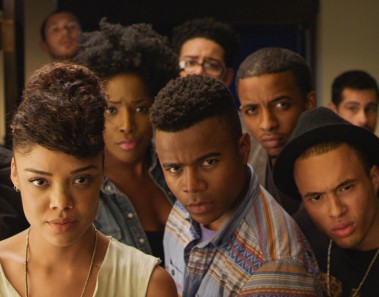
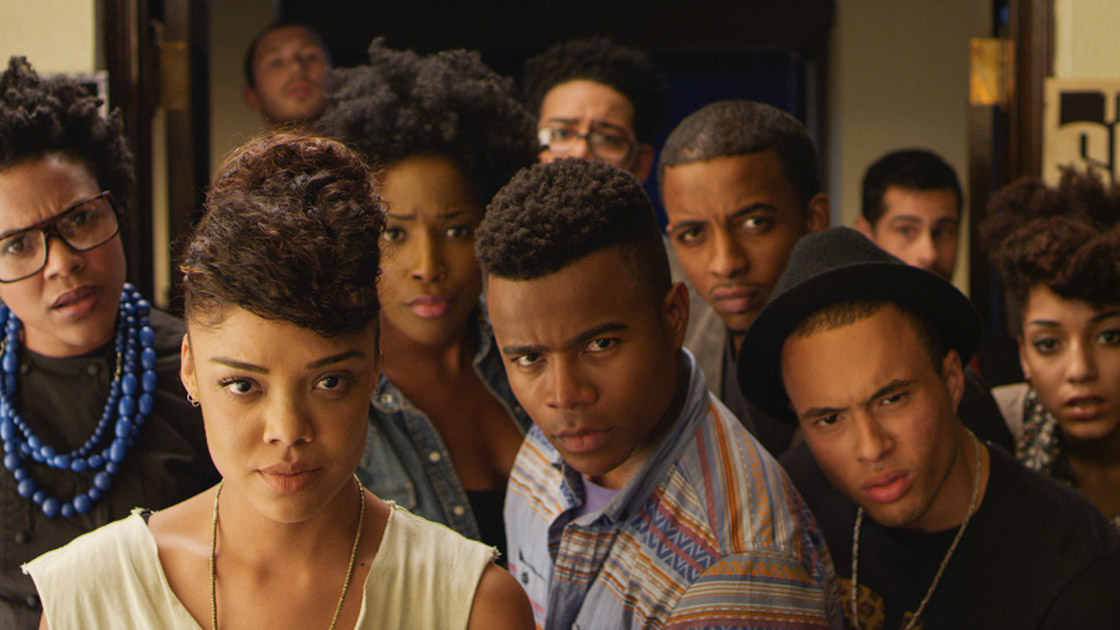
    Dear White People film reviewDirector Justin Simien makes his feature film debut with the satirical drama Dear White People.

    It premiered at the Sundance Film Festival; leaving with the Special Jury Award for Breakthrough Talent, which was certainly deserved. The movie focuses on several students’ experiences at an Ivy League college during a pseudo- race war. Dear White People comments on the presence of racism in the Obama era. Filled with unknowns, it is well-acted and executed effectively, prompting plenty of conversation on the ride home.

    One name you may find familiar in this movie is Tyler James Williams. He has previously starred in the sitcom Everybody Hates Chris. In Dear White People he plays Lionel Higgins, a quiet kid with an afro traveling between residence halls. He’s having trouble finding a place to fit in and is often ostracized when placed somewhere new. When a race war erupts, due to a controversial radio show and upcoming African American themed party, he’s not sure what he believes or how to express it. Tessa Thompson portrays Samantha White, the half-black host of a divisive radio show entitled “Dear White People”, on which she provocatively airs her grievances towards her classmates. Troy Fairbanks (Brandon Bell) is her ex-love interest who is the son of the Dean of Students. He struggles to separate his father’s expectations from his own aspirations. He has a fling with Coco Conners (Teyonah Parris), a student hoping to become famous and distance herself from racial stereotypes.

    We follow these four characters as they experience life at a predominately white institution. Each faces their own obstacles and find themselves divided when a “race war” explodes on campus when the administration attempts to randomize housing. Some black students believe that this randomization is a result of an African American house having developed on campus. They accuse the administration of fearing the group. To exacerbate things, the house associated with white privilege decides to throw a black people themed party for Halloween. Students show up in black face and stereotypical African American costumes. The black community at the college is hurt and outraged, causing the race war to erupt.

    Dear White People is sharply written, exploring black identity in a “post-racial” society. With so many movies portraying the plight of the black man in other time periods (12 Years a Slave, The Butler, Fruitvale Station) recently released, it’s refreshing to get the perspective of the present day. Many foolishly, in the movie and real life, label today’s society as some kind of post-racial utopia. Many foolishly, in the movie and real life, take things too far, reigniting race wars that have long since been resolved. The great thing about this movie is that it acknowledges both extremes and pokes fun at them. There are black people that see racism in everything, like Sam, and there are some that wish to deny it exists at all, as with Coco. There are white people that ignorantly mock racism and there are those that believe it is harder to be white, equally as ignorant. Kyle Gallner’s character, Kurt Fletcher, portrays this white stereotype too well. He is the son of the president of the college, epitomizing white privilege.

    The most shocking part of Dear White People is its sincerity. As you’re watching, you draw examples from your own life. You’ve heard the words in the film spoken in real life and it’s frightening. It’s a stunning commentary on the subtle racism existing in today’s society. It provokes discussion and calls us out on our own behavior. It has flaws, often vying for more than it can produce, but overall it meets its goal. It opens up a lane of communication that is often dismissed as being old-fashioned. With thoughtful performances, a sharply funny script, and smart production, Dear White People exposes our flaws and prompts discussions on racism in the Obama era.

  • Iceage Album Review: "Plowing Into the Field of Love"

    Iceage Album Review: "Plowing Into the Field of Love"

    iceage album review

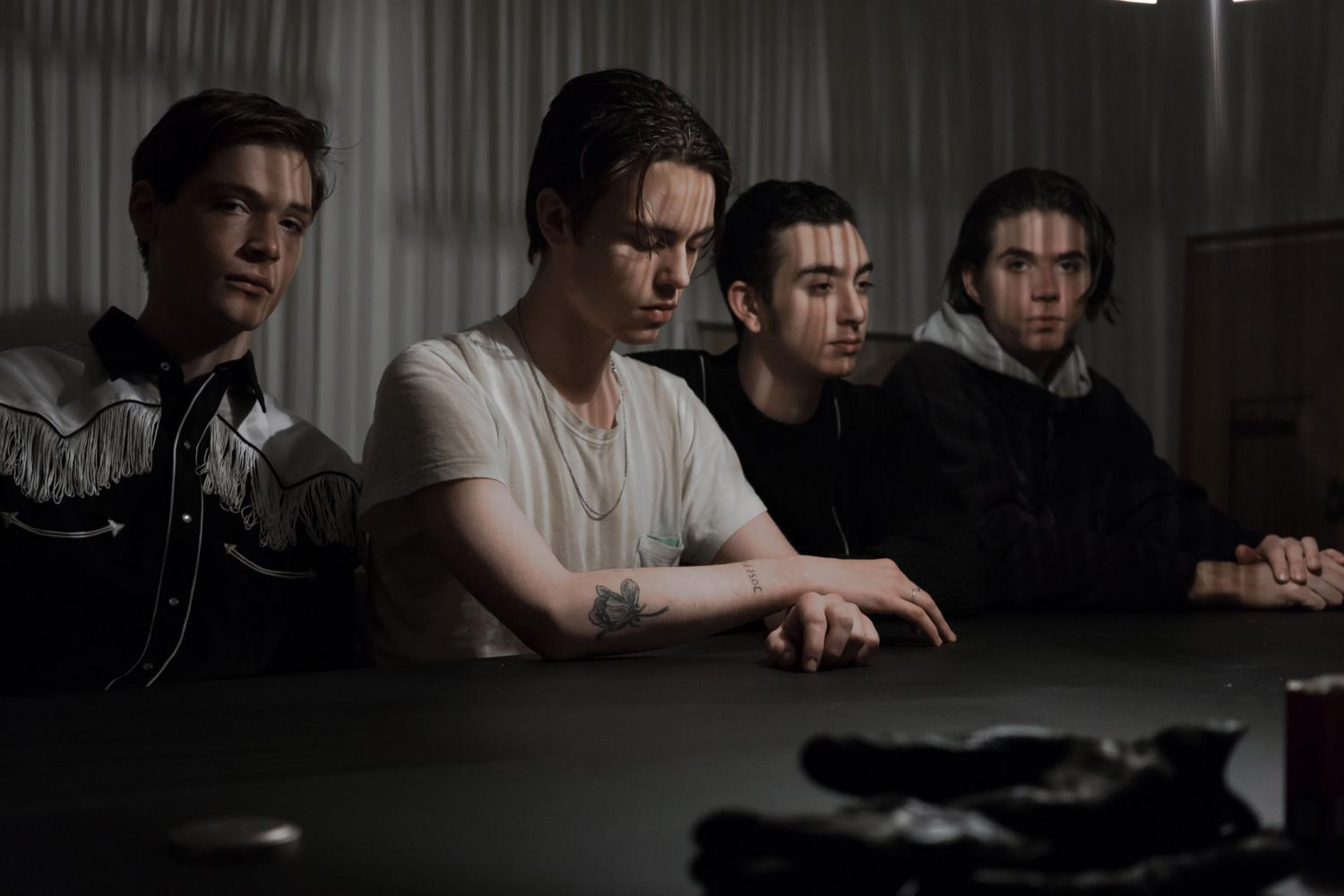
    Punk rock, at its finest, both agitates and puts a smile on your face. Danish band Iceage did that on their previous two albums, New Brigade and You’re Nothing. Both were obliterating affairs dealing with both physical and philosophical anxieties in short, aggressive, and noisy spurts, like a Black Flag for the 21st century. This, their third release, retains that youthful nihilism, while also demonstrating their improved technical ability and desire to go out on a limb musically.

    The most noticeable thing about Plowing Into the Field of Love is how fit for autumn it seems to be. Frontman Elias Bender Rønnenfelt’s Joe Strummer-meets-Tim Armstrong voice sits higher up in the mix than on previous albums, which tended to bury his vocals beneath the cold, gothic-tinged noise of the thrashing guitars. This difference makes Rønnenfelt sound more like the drunken guy at the bonfire, rambling into your ear, with the only difference being that Rønnenfelt actually has some interesting observations. The slight bit of separation between his voice and the rest of the band actually makes the band sound more cohesive; you can tell what each member is doing, but they all interlock now to sound like a band instead of a storm of noise. Obviously the latter has its qualities (and visceral effectiveness) but to hear Iceage’s maturation is relieving; they’re not content to deliver the same product over and over again to diminishing returns. At the same time, it’s not like the band has eschewed all noise, choosing to explore fuzz guitar textures other than the amp-burning ones found so often on You’re Nothing and New Brigade. This exploration also sees the band letting the guitars take on a more nuanced role in the sound. Just as there are quite a few memorable riffs here (“The Lord’s Favorite”, “How Many”, and “Abundant Living” come to mind), there are plenty more times where the electrics sit back in the mix to provide the canvas for perhaps the most startling moments on the record: when the acoustics come in. Viola, mandolin, horns, and guitar all make unplugged appearances, but do so in a decidedly traditional-sounding way. Altogether, these changes make the record sound homey yet aggressive, organic but not folksy, and way more interesting (and harsh) than anything you might hear at a fall festival this year, but still warm.

    plowing into the field of loveThis album feels a little long in comparison to the others. Consider: on New Brigade, only one song reached the three-minute mark. None reached the four-minute mark on You’re Nothing, and now no song is under two-and-a-half minutes with Plowing. Too often, bands confound “maturing their sound” with “bloating,” but that’s mostly untrue here. What we hear instead is a band conserving their energy to make those big, hooky moments actually come off that way. “How Many” achieves an epic chorus unlike any of their previous material. It certainly would still be a solid cut had it been given the same treatment as, say, You’re Nothing’s “Coalition”, but it manages to transcend the rest of their catalogue in emotional weight by not blowing through with breakneck speed. And when they really decide to slow it down, with the drunken-stumble-home of “Against the Moon,” there’s enough going on, what with the horn section and piano motif, to doubly engage the listener while also laying out one of the most emotionally bare (and meta-punk) sentiments: “Whatever I do, I don’t repent.” It reaffirms the idea of “punk” as a concept instead of a sound, and is beautifully exemplified here.

  • Parenthood Review: “Happy Birthday, Zeek” (6×02)

    Parenthood Review: “Happy Birthday, Zeek” (6×02)

    parenthood review

    About two thirds of the way through this week’s Parenthood, Jabbar asks Crosby a deceptively simple question: “How old is Grandpa?”

    And yet, it’s a question that gets to the heart of this final season. The show is called Parenthood. Confronting the reality that your parents get old is the perfect way to bring everything to whatever conclusion it is that Jason Katims has in store. In fully committing to the question of Zeek’s health, as well as to the various Bravermans’ reactions to it, the show creates a strong emotional center around which everything else can orbit. When “Happy Birthday, Zeek” features the titular character, then, it’s a quietly powerful episode of television.

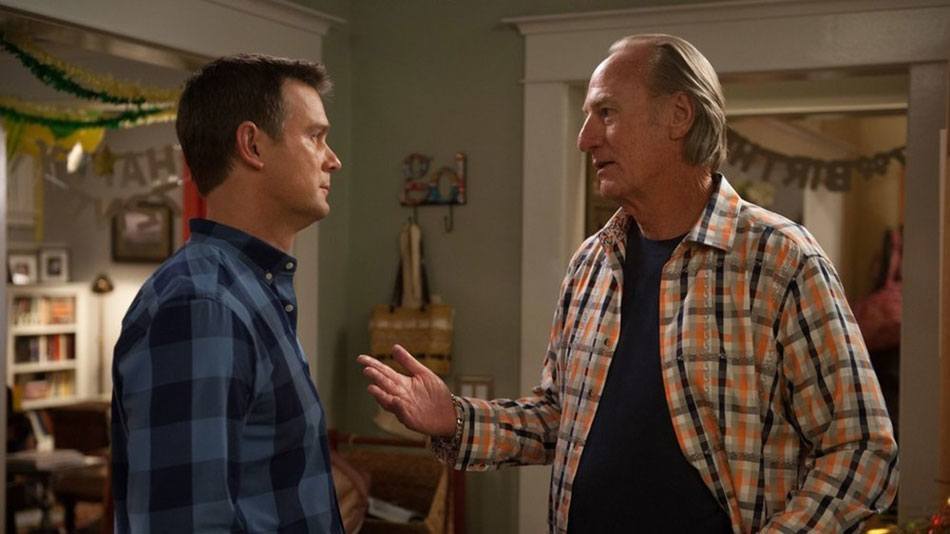
    Take your pick of scenes: Adam’s confrontation with Zeke at the birthday party, particularly, is powerful. A 72nd birthday celebration is tinged with a notion of mortality anyway, and here it’s even more so, since it’s all anyone will talk about. Zeke takes offense at the healthy food, Kristina’s offhand comment that he’s “not in the best of health,” Julia’s gift of a pedometer; but it’s Adam’s tearful, fearful plea for his father to not die that finally hits home for the audience. Peter Krause nails the desperation of the moment, the plaintive cry of a man who, though grown, is still a child coming to grips for the first time with the fact that his father will die. Each man demonstrates his own, unique brand of stubbornness, and the way the conversation stops without any real resolution is both true to life and dramatically effective.

    But in the end, it’s Amber’s revelation that she’s pregnant that finally convinces Zeek that he might actually need the open-heart surgery his doctor recommends. Mae Whitman is a superstar even on this show’s deep bench, but any scene pairing her with Craig T. Nelson is always a pleasure to watch. There’s no denying she gives good cry, but she also keeps Amber’s pregnancy from becoming too maudlin or sentimental. In truth, the whole party sequence is wonderful; I love how deftly it turns on a dime from fraught with drama and tension to a light-hearted celebration of this family’s love for each other, complete with a soundtrack that sounds like Fauxsplosions in the Sky. Such moments were a regular occurrence on Friday Night Lights, and have been on Parenthood as well, and when used to the effect they are here, they can be the lifeblood of the show.

    In the same vein, this episode features several small scenes between Sarah and Amber, another potent dramatic pairing. Their discussions throughout the episode are lovely, small and dramatic in the very best way. Sarah is watching Amber go through the same struggle she did at Amber’s age, and her greatest fear is that Amber will also make the same mistakes. It’s another story where the stakes are rather higher than the execution, and it’s that discordance that Parenthood excels at. This is a show that makes even the small moments seem epic—and isn’t that what life is, at the end of the day?

    I’m making such a fuss out of these storylines because the episode’s third major storyline features Kristina’s attempts to run Chambers Academy, and it is absurd. On the one hand, I’m happy to see the show address actual difficulties in the process of opening and running a charter school over the course of one summer. On the other hand, it’s presented as such a goddamn cartoon that it’s impossible to take with a straight face. This woman’s quest to find a food vendor who will make individual meals for over forty kids is absolutely insane, and Adam’s determination to appease her just makes him seem ridiculous. Parenthood can get laughs out of almost any character combination on this show, so detailed is the writing and so nuanced the acting. When they put various characters in these wacky sitcom situations, it’s not only dumb, it’s completely unnecessary and avoidable. The scene at the end of the episode with Adam and Kristina is actually quite sweet, but the way we get there is, well, I can’t think of a better word than silly.

    I’d be remiss if I didn’t mention Sydney’s woes at schools, which force Joel and Julia to come to terms with the impact their separation has had on the daughter. The most interesting thing here is the way the show equates Julia with Sydney; they both have the same deflecting approach to challenges in their lives, the same quickness to blame others, and while Julia has grown of that a little, she certainly hasn’t as much as she’d like to believe. I’d be concerned I seem to remember Julia being more complicit in the separation than she herself does, if I didn’t the show wants me to think exactly that. As ever, the aftermath of her conflict with Joel last year is infinitely more interesting than the actual happening of it was, and the show finds continued new twists on the post-separation, pre-divorce dance.

    As far as Parenthood goes, 3 for 4 on Braverman storylines isn’t a bad deal. Certainly there have been episodes that struck out way worse than that. “Happy Birthday, Zeek” isn’t firing on all cylinders to the extent that last week was, and it does also repeat a lot of the same conflicts. But there are some tremendously strong scenes, almost vignettes here, that demonstrate some of the best that the show has to offer. Saying goodbye to the Bravermans was never going to be easy, especially not if our last go around with them is this engaging.


    Stray Observations:

    – I was typing it “Zeek” for a while but spell check kept suggesting “Zeke” instead and eventually I just gave in. Apparently I was right the whole time!

    – Kristina gave out the house number to every single parent and invited them to call at any hour. Kristina is a fucking idiot.

    – “Why did we found this school?” “To be a fascist institution.” Max is perfect.

    – Jasmine lives! But Haddie disappears overnight, never to be heard from again (until the finale, maybe).

    – I see we will be treated to another season of insanely overwrought episode previews. There’s a very fast-paced drinking game to be had here.

  • Parenthood Review: “Too Big to Fail” (6×06)

    Parenthood Review: “Too Big to Fail” (6×06)

    parenthood too big to failI’m not going to lie, that “three months later” title card pretty much blew my mind the first time I watched this episode.

    Not because anything particularly shocking happens as a result of it, but because it’s the sort of thing that Parenthood wouldn’t typically do in previous seasons. Between seasons, maybe you would see something like this, but here, this is a purposeful attempt to accelerate the storylines to cover the necessary narrative ground before the series ends. It’s audacious, and it can be very useful; in fact, most of the storylines this season could benefit hugely from such a time jump. The only one that it wouldn’t and doesn’t really have an effect on is Adam, Kristina and Max, and it’s no coincidence that, in their scenes, it’s not even altogether clear that three months has passed.

    But then scheduling and budgetary issues rear their heads in the worst way possible: Joel and Julia, as well as Zeek and Camille, the two segments of the show apart from Amber who would benefit most from a time jump, are completely absent from this episode. Considering where we left these stories, a lot could have changed in this time, and it’s frustrating at best to have the two strongest stories of the season hit a wall so forcefully.

    Rather that lament what we’re missing, though, let’s try to enjoy what we have. “Too Big to Fail” is a functional, frequently solid episode of Parenthood, even if it’s a bit of a structural mess. Plus, though I’d still rather have seen what’s up with Julia or Zeek, their absence does allow for more time spent with characters there would otherwise not be room for, like Drew and the long-suffering Jasmine.

    The impact of the three-month time jump is most obvious on Amber, who is suddenly much more pregnant than she was when last we saw her. Her growing realization of the difficulties of raising an infant (as well as the fact that it costs a lot of money) leads her to ask Adam and Crosby for a raise at the Luncheonette. The only problem is, the Luncheonette isn’t making any money. Money woes are at the root of many of the stories this week, as Amber worries about how she’ll provide for her baby, Crosby worries about how he can provide for his own family, Adam worries about his own income (which is also gutted by Chambers Academy, another shockingly unprofitable Braverman business venture), and even Drew gets in on the worrying action, fretting about which major he should choose to be able to provide for a hypothetical family that is years from existing.

    Frankly, the idea of any of the Bravermans having financial trouble is a tough pill to swallow, given the way that Parenthood treats money as no object most of the time. It makes at least some sense with Amber, at least, and even as far as Crosby goes I’ll buy it. But Adam and Kristina have never been portrayed as anything less than comfortable, and usually much more than that. Parenthood is an upper middle class fantasy most of the time, and given that approach, it feels somewhat disingenuous to suddenly decide now that money is a serious issue, and even more so to do so after a three month time jump that skips over any of the events that led to this point.

    On the bright side, at least the focus on finance gives some focus to Crosby’s story, which until this point has been a sort of aimless malaise; now, at least, we have some sense of his dissatisfaction that goes beyond the show’s desire to portray him as a mirror to Zeek. And as the youngest, most reckless Braverman sibling (well, perhaps not as reckless as Sarah), it’s not completely out of the realm of possibility that he’d find himself in dire financial straits.

    While I usually appreciate when Parenthood episodes revolve around a theme, this week the most successful stories are the ones that abandon the ideas of money and responsibility. Unfortunately, these are also the stories that make the least use of the time jump; in fact, they basically ignore it. For Max’s part, his continued courtship of Dylan is sweetly touching—it certainly got dusty in my living room when he tells Adam, “She said I nice eyes.” I also love how the show has inverted the initial dynamic of Kristina and Dylan’s relationship—it’s clear Kristina is warming up to the girl, even if it’s in her own, awkward, almost disbelieving way. It’s easy to see even now how Dylan’s presence will lead Kristina and Adam to see Max in a new light, as a person and growing young man rather than a problem to be solved or a victim in need of protection. In their own quirky way, Dylan and Max are more normal than many of us can manage most days.

    Hank’s story with Sarah and Ruby is also touching, and even manages to draw Amber in for the game night Sarah plans. The story doesn’t cover much new ground—Ruby and Hank have tension, the combination of Sarah and Amber begins to soften her cruel, hard teenage heart—but it does introduce the idea that Hank’s difficulty with her owes just as much to his Asperger’s as it does to her pubescent brattiness. In that sense, the episode gives some dimension both to Ruby’s character and her relationship with Hank, and as we spend even more time with them, that’s a great thing.

    It won’t go down as one of the all-time great Parenthood episodes, and it wastes a lot of the opportunity that that “three months later” card suggests, but “Too Big to Fail” is by no means bad, and its component parts range from good to great, even if they never come together into a very cohesive whole. Ultimately, though, even the individual parts aren’t great enough to forgive what the episode squanders.


    Stray Observations

    • “We’ll go to Target or something.” Drew goes baby furniture shopping exactly the way
    • Caring for drunken teenagers is in fact exactly like caring for an infant. Good call, show.
    • Max is dating Dylan now. And of course Adam and Kristina walk by the room constantly.
    • “We’ve been on two dates now. Would you like to stay the night?” It’s cool, Dylan still only likes Max at a two and a half.
    • The Lowe’s commercial with Parenthood’s set designer is the sort of advertising I wouldn’t mind seeing more of.
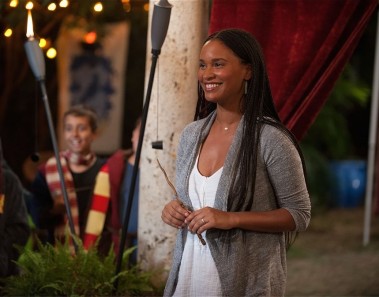
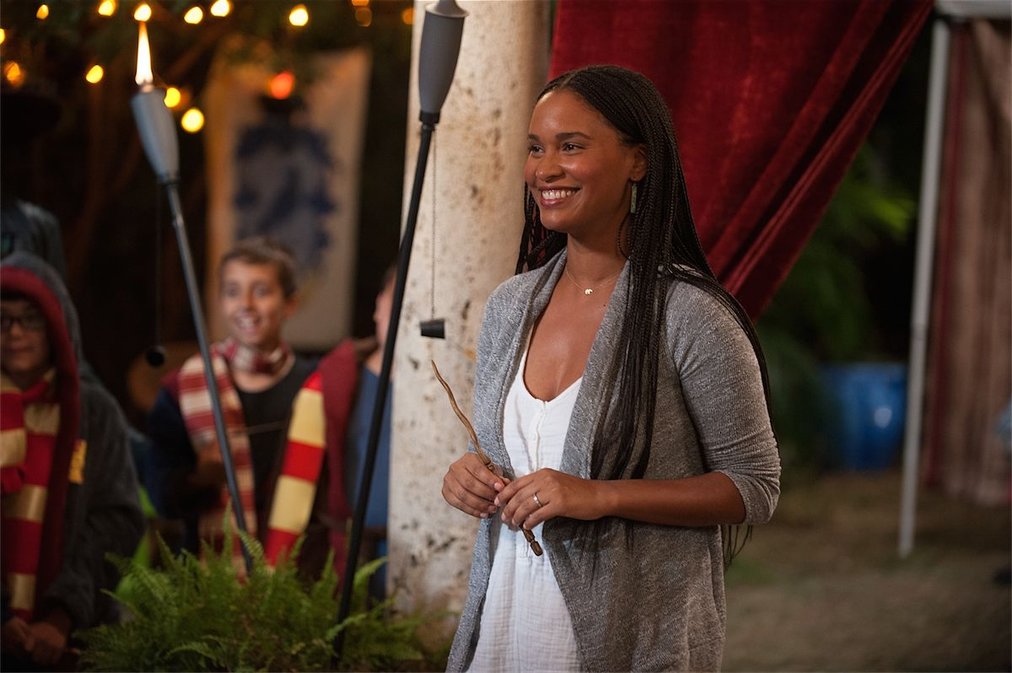
    • Oh hey Jasmine, how ya been? Nice to see she hasn’t completely vanished, and her Harry Potter party for Jabbar hits that perfectly Parenthood level of schmaltz, even if the song choice, with its repeated refrain “I’m trying the best that I can,” is too on the nose.
    • Did Drew Holt get a haircut? Three months have not been kind, let’s put it that way.