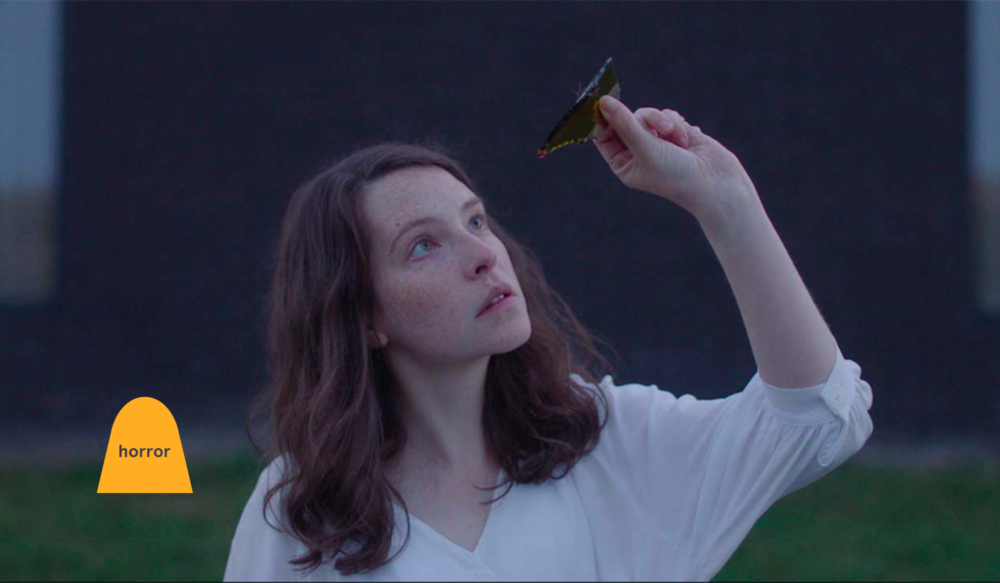
The opening scenes of The Feast, a new Welsh folk horror that premiered in the Midnighters section at the 2021 Online SXSW Film Festival, give you everything you need to know about the wealthy family at the center of the film.
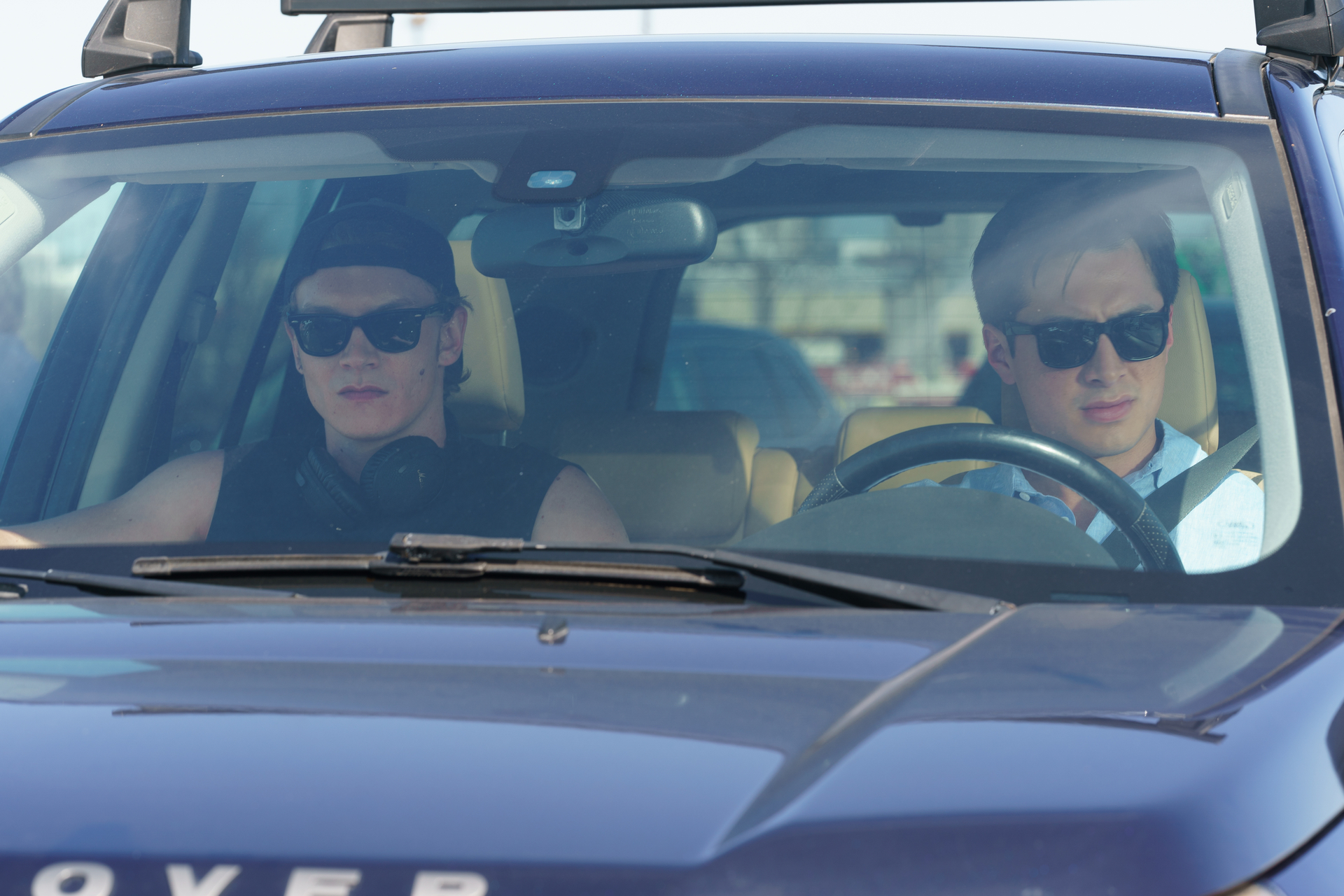
There’s matriarch Glenda (Nia Roberts), the picture-perfect politician’s wife, her Parliament member husband Gwyn (Julian Lewis Jones), a no-nonsense caricature of a politician, and their two sons. There’s recovering drug addict Guto (Steffan Cennydd), who is confined to his family home until he kicks the habit and can return to London and Gweirydd (Siôn Alun Davies), a narcissistic former doctor obsessed with training for a triathlon.
And while The Feast is the slowest of burns, it immediately sets up its dark and dread-filled atmosphere with its setting at the family’s remote home on the Welsh countryside — Glenda takes pride in everyone inch of the impeccably designed modern estate — and a highly effective score by Samuel Sim.
ADVERTISEMENT
We’re soon introduced to Cadi (Annes Elwy), a local waitress who has been hired by Glenda to help with a dinner party she’s throwing for a local land developer and the neighbor they hope to convince into selling their land. However, there’s something about Cadi. Perhaps it’s the blank stares off into space or the creepy folk tune she hums while walking down the dark corridors or the soil that seems to appear on every surface she touches.
The majority of the film consists of atmospheric horror that primes you for the diabolical third act that some could see as gratuitous, but is exactly what The Feast needs to build up to to work. The nightmarish imagery throughout and the hypnotic cadence of the Welsh dialogue is enough to keep you engaged — although some moments of levity in the bleak story would have been a welcome respite from the gloom — it’s when the mystery comes fully into view that the movie truly satisfies your craving for folk horror.
Director and writer Martin Edralin talks about his new film Islands, which is premiering in the narrative feature competition at the 2021 Online SXSW Film Festival
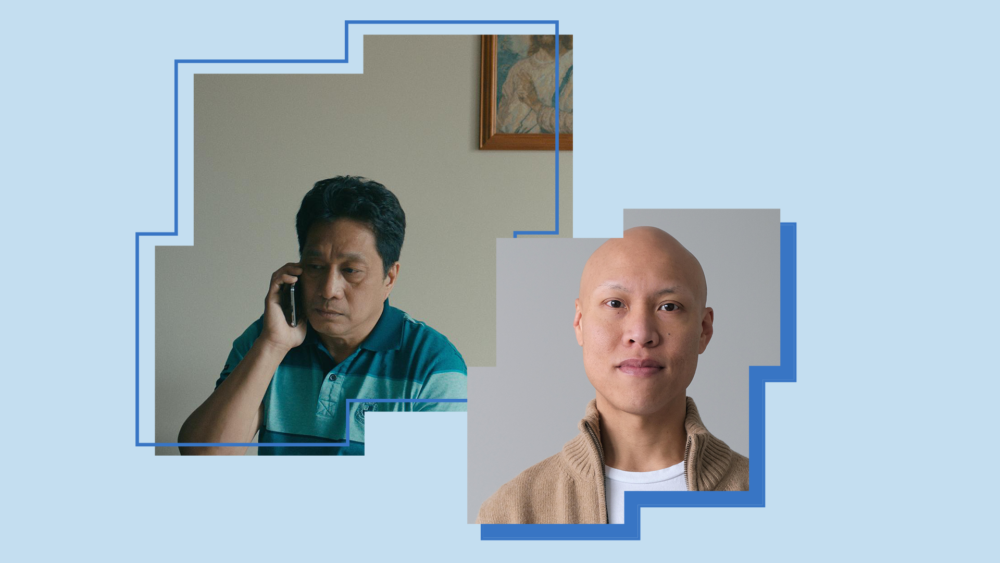
As I was perusing the lineup for the 2021 Online SXSW Film Festival one film, in particular, caught my eye. Martin Edralin’s Islands had a logline that immediately captured my attention with one word: Filipino. As a Filipino-American, it was a visceral experience to see my race so unabashedly showcased in a film premiering at a major festival. But that wasn’t even something that directorand writerMartin Edralin had thought about.
“It seems like there’s a movement in the US with foreign language right now, so it’s really interesting timing,” he told to me in an interview the week before the film premieres on Tuesday, March 16th.
In our chat, we talked about how Filipino culture shaped the film, how it relates to his great short film Hole, and how it was working with two non-professional actors in the lead roles.
Note: This interview has been edited and condensed.
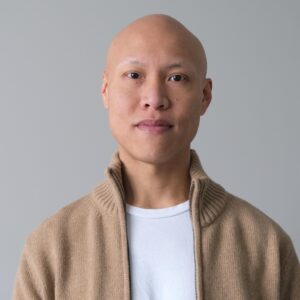
Martin Edralin, director of Islands, premiering at the 2021 Online SXSW Film Festival. Credit: Karen Tsang
Karl Delossantos (Smash Cut):I watched the film last night and I don’t know if I should thank you for the therapy or charge you for the emotional distress. It was terrific!
Martin Edralin: Oh, thank you!
This is the first film in Tagalog to premiere at SXSW and as a Filipino-American that was great to see. How does it feel to have that distinction?
It feels great! I had no idea. It wasn’t something I even thought about. I think it was after they accepted the film that I looked into it and noticed it. I didn’t even know as a Canadian movie that we could be in the narrative competition. I thought it would be world cinema. It’s really exciting. It seems like there’s a movement in the US with foreign language right now, so it’s really interesting timing.
Yeah, especially coming off the heels of the Minari Golden Globe controversy where it was considered foreign language even though it’s an American film. The Filipino diaspora is at the center of Islands. What about that was interesting for you to explore?
That’s what I lived. Originally this was going to be made in the Philippines. Because of some funding in the development process that I qualified for I had to move it to Canada. And in that process, I realized that yeah I’m Filipino but I don’t actually know what it’s like to live in the Philippines. I visited a few times, but being Filipino in Canada or the US is very different.
And it’s my first Filipino film too so there was an awareness in the process where I really know [the material]. Where in my other films with white characters I was telling stories about humans and emotions I’m familiar with, but for Islands we could really color it with the houses we know and the family relationships. It all feels so natural. Even though I was on set, when I watched the movie for the first time I could smell the food in the scenes.
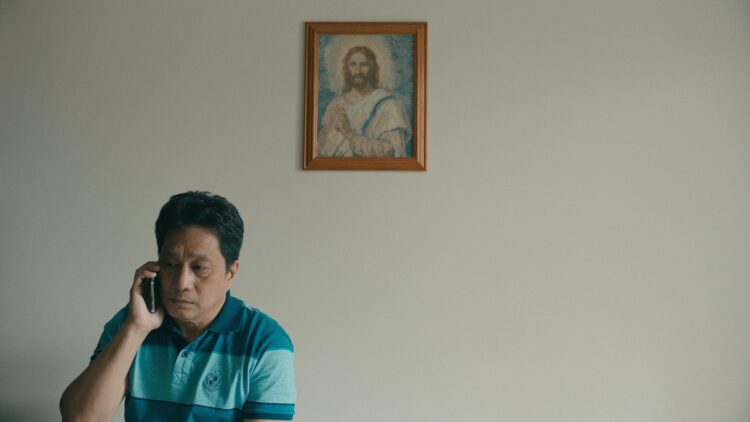
Joshua (Rogelio Bataglas) calls for help in Martin Edralin’s Islands | Credit: Film still
ADVERTISEMENT
Watching the opening scene was such a visceral experience for me because it was these artifacts of my childhood that I recognized. The one that really got to me was chopping the whole raw chicken with the cleaver!
Exactly! It’s little things like that. We know those sounds.
The theme of Islands is actually pretty similar to your short film Hole in that it’s about intimacy and someone trying to find it and they’re unable to.
It’s something I didn’t really realize until I was writing it or filming it that it was kind of like a follow-up. [Both films] have lead characters that are past their “prime dating years” and aren’t going to have an experience of love or sex or any real human connection.
Yeah, they’re definitely similar in that way. How did you find Rogelio Balagtas [Josua in Islands]? He and Sheila Lotuaco [Marisol in Islands] are both remarkable.
We went out to the community and we went on Facebook and I emailed every Filipino organization I could find in Canada and eventually we went to the US and the Philippines. We just really had to find the right people. With Rogelio, someone told me about a short that was made in Winnipeg and I saw him in it. He was a dad, it wasn’t the lead role or anything and he barely spoke, but there was something interesting about him.
So we asked him to self-tape and there was still just something about him. So we did a Skype audition, which was super fun because we did a few dialogue scenes but it was really about him doing things without dialogue. So we made him dance in a room by himself and cry into a pillow and pretend to masturbate and we were like wow this is the guy. Because we didn’t want the character to be sad or pathetic. We didn’t want him to masturbate and have it be seen as gross. And he’s just a sweet guy. He’s a nice guy.
Another connection with Hole where sexuality isn’t a taboo and it’s embraced and seen as a part of human life.
Yes! And especially with masturbation with men. It’s always portrayed as something as gross or bad or wrong unlike with women where it’s hypersexualized. I just felt like that’s just what everybody does.
I’m glad you mentioned too that you had Rogelio dance in his audition because I was texting my parents while watching it that line dancing is a plot device, which is so Filipino! Was that a part of the fabric of the film?
I don’t actually remember. I have a feeling that it was during casting when we were looking for senior actors — and they’re always difficult in any ethnicity to find. And I knew there were a lot of these line dancing classes out there — my mom actually goes to one — and there was one in particular that was four-hours long. The first time I went there I was almost moved to tears. It was so beautiful to see all these people that are old and some could barely dance, but they were there and doing this thing together.
💌 Sign up for our weekly email newsletter with movie recommendations available to stream.
ADVERTISEMENT
I love that the ability to dance alone is seen as something liberating in the film.
Yeah liberating and thinking of it as pleasure. It’s something we take for granted, the ability to move and to move to music. Thinking about love or sex, it’s just one of those things where it’s joy that needs to be experienced.
I want to talk about Sheila Lotuaco and the watershed scene in the middle of the film where she talks about her experience working abroad as a Filipino expatriate.What was it like shooting that scene?
That scene was made very early. This film was originally about that character, an overseas Filipino worker. It was becoming muddled and felt like two different stories so that script is away in a drawer somewhere. I did a lot of research about the OFW (Overseas Filipino Worker) experience and just read a lot of horror stories about these things happening in the Middle East and I felt like I had to keep that in the movie and say something about it.
I actually thought shooting it was going to be really challenging, but she was a natural. Even in the audition and in rehearsals, she would just cry. Actually both actors when we were rehearsing they would just cry. And I would be like, “you’re not even professional actors!” But they could really just live the experience.
And Sheila is a caregiver [like in the film], she’s a healthcare worker in Canada so it’s a little different than what other OFWs are doing around the world, but it was something important we had to say.
ADVERTISEMENT
We’ve all been thinking about mortality a lot with the pandemic. How did the entire story of Joshua bearing the burden of taking care of his aging parents come together?
My mom had just retired at the time in 2015 when I had just started thinking about the film, and my dad was on his way to retiring. And you hear these stories about how after someone retires they start to get old really fast from the inactivity or not using their brains in the same way. So I was thinking about that. As you know in Filipino culture we take care of our parents and I have a lot of South Asian friends who also have these multigenerational households where you’re taking care of your parents and they’re taking care of your kids, so I was also thinking about that.
Living a freelance filmmaker life with a busy schedule and whether you’re being paid well one month or paid at all the next month, how do you in this sort of life take care of your parents?
Yeah, it’s a distinction between American and Asian culture. It’s always something in the back of your mind: how do you live your life and also take care of them?
I almost feel guilty thinking about how am I going to do this. In the Philippines it isn’t even a question. It’s just something you do, it’s a part of life.
For an audience that is not familiar with the Filipino experience, what do you want them to take away from the film?
There was never really any intention of putting our culture on display, but we were certainly looking to decorate the film with it — in the production design and including line dancing and religion, how we mourn, our food. It’s all in there. We wanted to show what’s it like to be in a Filipino home.
The film was going to be quite dark. Hole and other shorts I’ve done are slower and there’s almost no levity whereas with Islands there are touches of dry humor and it’s brighter and more colorful overall. But if anyone is going to take anything from it, and I’m going to get a little dark, but we’re all aging and we’re all going to lose everybody in our lives and eventually we’re going to leave. I was thinking a lot about avoiding regret and experience these things whether it’s love or dance. We should just enjoy and experience the things we can while we can and take chances and if you life someone you should just ask them, maybe not if they’re your cousin *laughs* but yeah, just live.
Islands is premiering on Tuesday, March 16thduring the 2021 SXSW film festival. Visit sxsw.com to register.
💌 Sign up for our weekly email newsletter with movie recommendations available to stream.
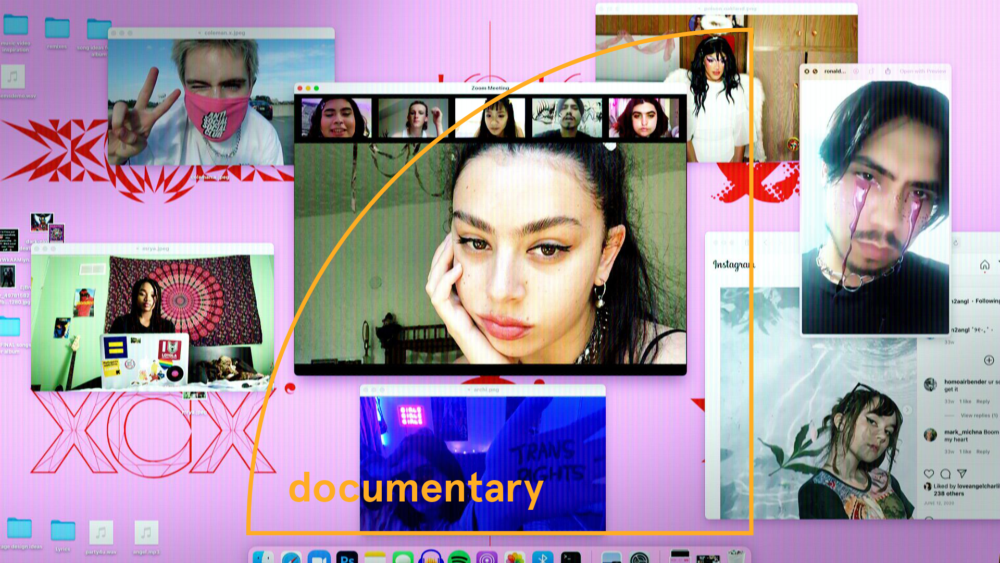
Alone Together follows musician Charli XCX as she writes and records her album howi’m feeling now while under lockdown during the coronavirus pandemic
While working through the writing, producing, and release of her album how I’m feeling now, Charli XCX explores creativity, self-doubt, and connection in the age of the pandemic to great and surprisingly poignant effect in Alone Together.
Music documentaries that follow an artist’s creative process — Lady Gaga’s Five Foot Six or Taylor Swift’s Miss Americana come to mind — are meant to drive (or combat) a narrative that is put onto them. But with an almost blank slate to write in for her public persona, Charli XCX is able to do something completely unheard of: be herself.
Despite her mainstream success with singles like “Fancy” and “Boom Clap,” Charli XCX has become somewhat of an underground sensation. You can’t walk into a gay club without at least one of her tracks bumping out of the speakers. In letting go of her preconceived notions of success, Charli has found exactly that. She was on a roll in 2019 and early 2020 after a well-received fourth studio album sent her across the world on tour for thousands of fans. Full disclosure: I was one of those fans in New York.
ADVERTISEMENT
However, when the COVID-19 pandemic hit, like everyone else she was under lockdown in her home in Los Angeles. When the film begins, she already made the decision to do the impossible: write, record, and release her fourth album in under five weeks. The album would be called how i’m feeling now and she commits to capturing the entire process along with her two managers and boyfriend Huck.
What makes Alone Together such a successful documentary is that it isn’t trying to capture Charli’s career as a whole or explain the essence of who she is off the stage as Charlotte Emma Aitchison is. The film captures a specific moment of time and all the very raw and intimate feelings she encountered during it. From her self-hatred and doubt to her trepidation about the future of her relationship and frustrations during the creative process.
Though there are moments that feel too Gen Z to be genuine, the end result is powerful and profound because Charli anchors the whole film in her psyche. You come away knowing more about the musician, but more importantly you see her doing what we all have been doing this year: finding ways to cope. In that case, Alone Together is a more than apt title.
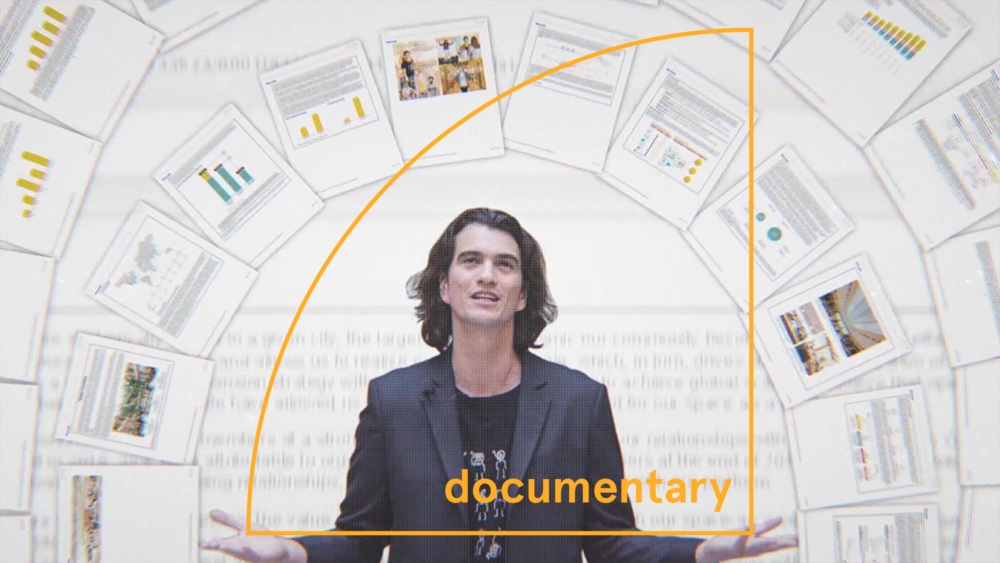
WeWork: Or the Making and Breaking of a $47 Billion Unicorn is a step by step telling of how Adam Neumann founded a company so big it was bound to fail
While the rise and fall of WeWork is an interesting enough fable to fuel Hulu’s WeWork: Or the Making and Breaking of a $47 Billion Unicorn for some time, it’s not a spectacular enough disaster to be anything more than a rundown of facts.
WeWork: Or the Making and Breaking of a $47 Billion Unicorn is just one of the many films attempting to chronicle the age-old story of humans and their misguided belief that they’re too big and too important to fail. Most notably, Netflix and Hulu’s dueling Fyre Festival documentaries — Fyre and Fyre Fraud, respectively — offered two different approaches to telling the tale of overinflated ego and the gloriously entertaining burst that follows.
Netflix’s Fyre approaches the subject almost as a true-crime documentary by giving us the breadcrumbs — with a suspenseful atmosphere — that eventually led to disaster. On the other hand, Hulu’s Fyre Fraud was a satirical comedy of errors that took a social media angle to the Fyre disaster. Both have their merits — though Netflix’s film is more successful — because their angle on the subject is clear. WeWork, on the other hand, tries to piece together the best of both approaches but ends up feeling less than the sum of its parts.
ADVERTISEMENT
Just like the title tells us, the movie begins with the making of WeWork. It gives us the background of New York City’s cutthroat real estate market, founder Adam Neumann’s early years in the US after immigrating from Israel, and how the idea of a futuristic coworking space would come to life. We follow the early development years that those of us that have worked in a startup knows all too well — long hours, impossible deadlines, and stretch resources. But the team did it.
However, the one thing missing from the narrative is Chekov’s gun, a narrative concept that presupposes that if a story element is introduced in the first act (ex. A pistol hanging on the wall), then it has to come into play in the second act (ex. Firing the pistol). WeWork doesn’t tell us exactly what is going to lead to the downfall. If anything, it does a lot of work to tell us why WeWork *will* work instead of why it won’t.
There are perhaps flashes of it. A throughline in the first half is Neumann’s pushback at the categorization of a real estate company. “It’s a community,” he’d reply. Another bit of foreshadowing involves Neumann’s wife Rebekah, Gwyneth Paltrow’s cousin — a fact she points out frequently as one former employee notes, and her surprising amount of control over the business. However, neither thread payoff.
ADVERTISEMENT
WeWork’s flaw that it devotes precisely the wrong amount of time to both the “making” and “breaking” of the business without intermingling the two. What made the Fyre or even something like The Social Network so compelling is they give you the signs that point to the imminent failure. Instead, WeWork does exactly what Neumann does: sell us the vision.
However, when the movie moves to the downfall of why his vision doesn’t work, it feels like it’s telling us rather than showing. And because of that, it’s never as entertaining or biting as your want it to be. Perhaps it’s because the story of WeWork isn’t as much of a spectacular disaster as the Fyre festival and Neumann isn’t as intriguing of a figure as Billy McFarland or Elizabeth Holmes of Theranos fame.
For those not familiar with WeWork’s downfall, the documentary is a more than serviceable Wikipedia entry to catch you up. However, if you followed the news, the WeWork: Or the Making and Breaking of a $47 Billion Unicorn doesn’t add as much color to the story as one might have hoped. If you already knew that WeWork was a highly expensive train barrelling towards an unfinished bridge, then you already know the story.
I’m Fine (Thanks for Asking) follows a young mother as she tries to collect enough money to pay for an apartment for her and her daughter in the midst of the coronavirus pandemic
I’m Fine (Thanks for Asking), with its highly empathetic approach to telling a story of financial struggle during the coronavirus pandemic, is one of the best films about 2020. Entertaining, emotional, and highly effective, it will be a film we go back to a decade from now and marvel at our resilience.
Even though I’m Fine (Thanks for Asking) takes place during the pandemic, it’s not about the pandemic. It’s about what we do to ourselves (and each other) in times of strife. It’s about the inability to give an honest answer to “how are you?” It’s about those small nuances in our human existence that make us so resilient — and so fragile. Because of those things, I’m Fine (Thanks for Asking) is the first great movie about the cursed year that is 2020.
ADVERTISEMENT
When we first meet Danny (co-director Kelley Kali), a recently widowed hairdresser, and her 8-year-old daughter Wes (Wesley Moss) they’re sleeping in a tent just off the side of the road — a “fun camping trip” as Danny puts it to Wes. However, we soon find out that their fun camping trip isn’t exactly optional as they lost their home during the pandemic following the death of Danny’s husband Sam.
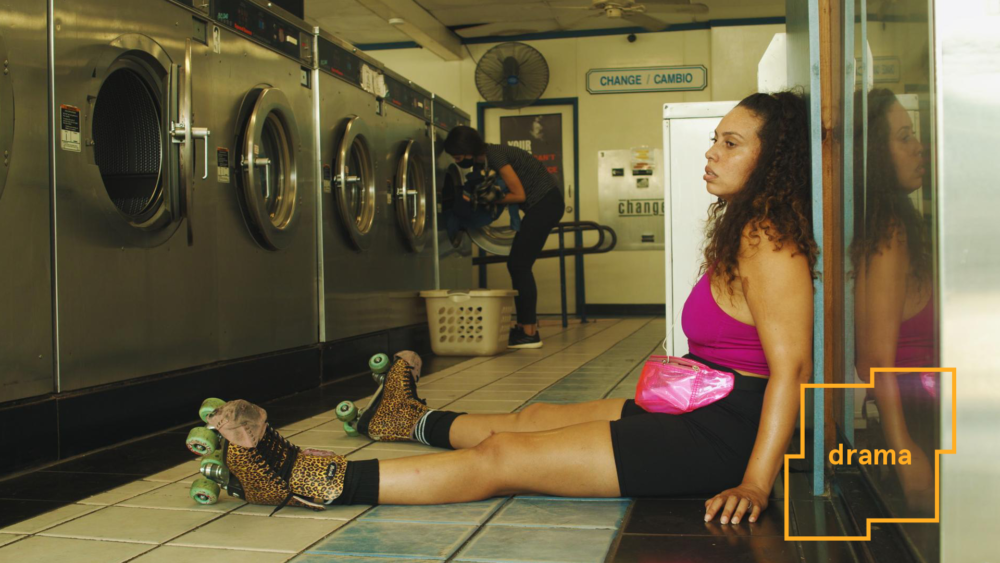
Now with just one day to collect the money for a security deposit on an apartment, Danny crisscrosses around the city in her rollerblades taking hair clients, running delivery service gigs, and chasing down any avenue to make the payment. It doesn’t go well.
Kelley Kali, co-director and star of I’m Fine (Thanks for Asking). Premiering at the 2021 Online SXSW Film Festival. Credit: Elton Anderson
A series of unfortunate events set her back every step of the way leaving her tired, depressed, and angry at her situation. It oddly plays like a suspenseful slow-burn thriller that is set against a racing clock — Uncut Gems comes to mind — but with a charm and humor to it. However, Kali and co-director Angelique Molina never let the movie stray into absurd. What they’re telling is a very real tale.
Despite her frustrations, Danny doesn’t actually tell anyone the predicament that she’s in, whether out of pride, embarrassment, or not wanting to make someone feel uncomfortable. More than once someone asks her how she’s doing to which she responds, “I’m fine, thanks for asking.” However, the people asking don’t want their real answer. In one scene, an acquaintance equates Danny’s husband dying to losing her husband’s cousin’s coworker.
ADVERTISEMENT
💌 Sign up for our weekly email newsletter with movie recommendations available to stream.
ADVERTISEMENT
That is the brilliance of I’m Fine (Thanks for Asking). The cultural objects of the pandemic are present — the masks, the distancing, the closed shops — but it instead focuses on the individual struggle and the keenly human nature of making every situation about yourself. How can one be empathetic to another’s struggle when you’re “struggling” yourself?
After accidentally tripping into a puddle while high — a long story — Danny finds herself underwater. Money, her husband’s ring, and her rollerskates float around her. She is quite literally drowning. Of course, this is just a hallucinatory dream caused by the unintentionally powerful weed her friend gave her thinking it’s what she needed — instead of actual help. That’s the feeling that I’m Fine (Thanks for Asking) is trying to make you empathetic to. Even though the pandemic was hard for you, there are people that are actually drowning. You just have to take a second and ask, “how are you doing?”
See You Then follows two college exes, one of whom has come out as a transwoman, who reunite more than a decade after a contentious split
See You Then explores and challenges the nuances of being a woman and being a transwoman through a deeply satisfying conversation between two exes — masterfully portrayed by Pooya Mohseni and Lynn Chen.
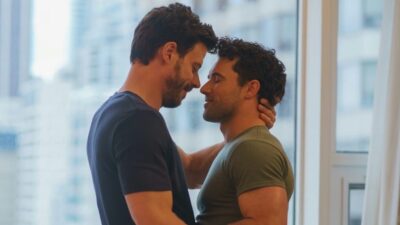
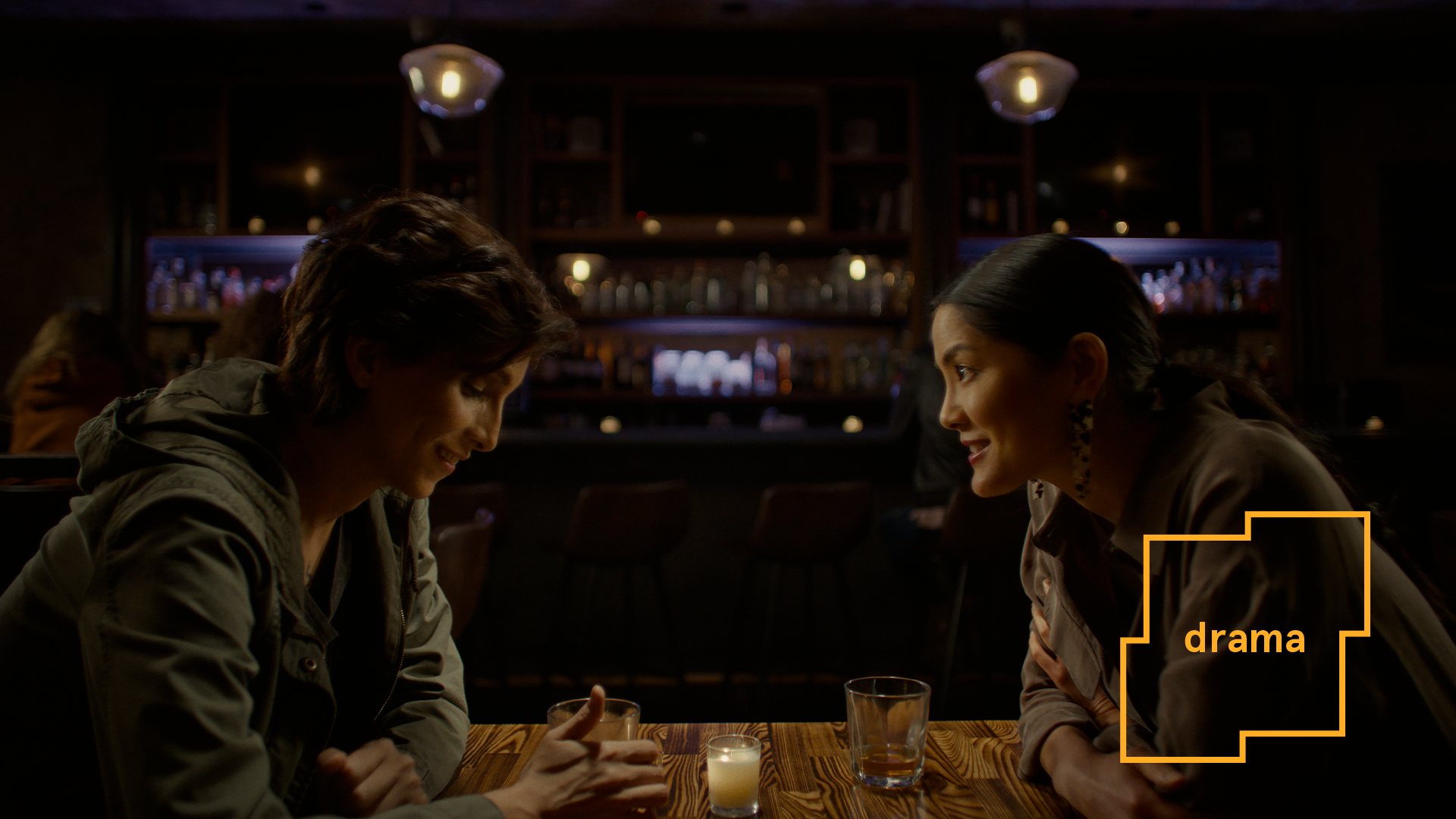
What is most remarkable about See You Then, which premiered in the narrative spotlight section of the 2021 Online SXSW Film Festival, is how unremarkable it treats its story of two old college friends catching up after a sudden breakup. And it is remarkable because the main impetus of the story is Kris (Pooya Mohseni) coming out as trans and catching up with her ex-girlfriend Naomi (Lynn Chen) after a decade of silence.
Instead of adding over-the-top dramatics or watershed emotional grandstands, writer/directorMari Walker allows the conversation, which takes place over one night on their old college campus, to unfold organically. Truly, just two people whose lives intersected for a moment in time untangling their pasts and how it’s affected their present.
ADVERTISEMENT
As we learn in the first strained minutes of their reunion, Kris and Naomi once dated in college before Kris was out as a transwoman. However, just as she started to discover those feelings she left without notice leaving Naomi devastated. Now, thirteen years later, Kris has returned to make amends and explain her disappearance.
It’s a slow burn as the women’s experiences over the past decade come into focus — Kris transitioned and is living in Arizona and Naomi is married with two kids having given up her art career to become a professor. However, both of their lives are filled with regrets. Kris deals with the goon of time stealing away the time she could have had as her real self while also dealing with the limitations of being a transwoman, in particular those around love. Naomi, on the other hand, struggles with the stability that married life and motherhood present. Both experiences feel lived in and real.
ADVERTISEMENT
However, the restrained direction eventually gives way to a powerhouse final scene where Walker uses every tool available to her to deliver an emotional gut-punch that leaves you stunned. The mix of visuals, sound, and two massively impressive performances by Mohseni and Chen catapult us into a neat, but profound end that is worth the trip for.
Perhaps See You Then will be a film that cispeople will watch and begin to understand the nuances of being trans. “My life didn’t even begin until 14 years ago,” Kris says in one scene. The film explains that while there is something to gain from the trauma of being trans and transitioning, it’s not as empowering as people think it is. Our society doesn’t let it. See You Then gives us a moment to meditate on that.