In Decision to Leave, a picture-perfect detective’s murder investigation slowly goes off the rails when he finds himself fascinated by the victim’s enigmatic wife
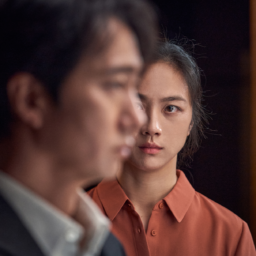
Decision to Leave finds South Korean director Park Chan-wook at the absolute top of his game as he breathes new life into a not-so-classic detective story. The fiercely paced first half is a twisting police procedural that engrosses you with its clever editing and a brilliant score by Jo Yeong-wook before pivoting to a romantic exploration of two people trapped in life patterns finding liberation with each other. While it’s not as subversive as his last film The Handmaiden, Park has a knack for using genre movies to explore deeper themes whilst never being less than entertaining. Park Hae-il’s performance as Inspector Hae-jun joines the pantheon of great detectives while Chinese actress Tang Wei gives the performance of a lifetime. The Oscars should keep an eye on them.
Full review coming soon. Sign up for our newsletter to see it first.
Here is a round-up of three films competing for the Palme d’Or at the 2022 Cannes Film Festival: Boy From Heaven, The Eight Mountains, EO
Boy From Heaven
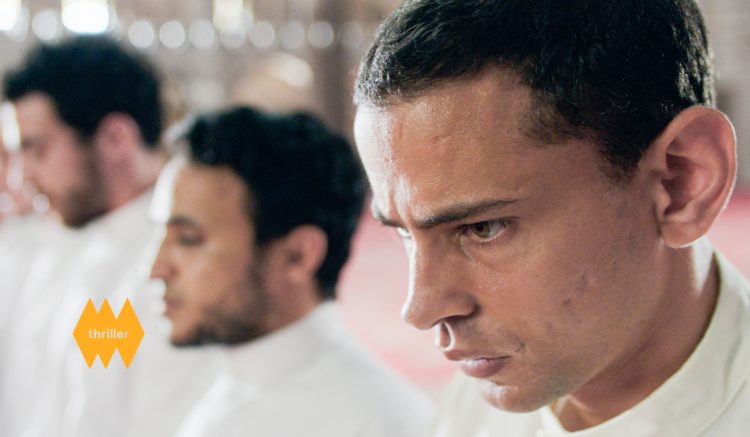
Tawfeek Barhom in Boy From Heaven, which is competing for the Palme d’Or at the Cannes Film Festival. Image Credit: Atmo Rights AB
Boy From Heaven follows young student Adam (Tawfeek Barhom) as he attends Al-Azhar University, the most prestigious Islamic educational institution in the world. The school, which he’s attending on a state scholarship, takes him far from his small fishing town to the bustling metropolis of Cairo. However, plans are in motion in the shadowy corridors after the grand imam, the head of the university and the most influential religious figure in the country dies in front of the school. Looking to install a leader that is in their best interests, state security colonel Ibrahim (Fares Fares) recruits a reluctant Adam to help their cause from the inside.
If this sounds like a story you’ve seen before, then you’re right. A thriller following a young reluctant recruit tasked with spying from within an organization isn’t new. However, what director Tarik Saleh proves is that a story can be fresh and new with a change of setting and perspective. Saleh directs the film with a methodical slow-burn pace that keeps you hooked with every new revelation as Adam’s position puts him into further danger. With each progressive scene, the Hitchcockian influences become even clearer as suspicion and paranoia slowly increase. At just over two hours, it’s surprisingly one of the shorter titles at the 2022 Cannes Film Festival, but never for a moment does it lag.
Though the story may be familiar, the world it takes in, at least to me, is foreign. Saleh tackles the sensitive subject of Egypt’s separation of church and state or lack thereof. The political maneuvering of the state almost completely conflicts with the religion’s “if God wills” teaching. By the movie’s end, the title Boy from Heaven almost feels tongue-in-cheek as Adam’s fate lies in the hand of earthly forces. Newcomer Tawfeek Barhom gives a committed performance of a boy asked to grow up and face the harsh realities of a culture he’s loved as he reluctantly fights for survival. It is one of the best performances of the festival.
ADVERTISEMENT
The Eight Mountains
Alessandro Borghi and Luca Marinelli in The Eight Mountains, which is competing for the Palme d’Or at the Cannes Film Festival. Courtesy of Festival du Cannes.
The logline for Felix van Groeningen and Charlotte Vandermeersch’s The Eight Mountains (Le otto montagne in the original Italian) of the friendship between two men that over the years reignites in a remote Alpine village could conjure up comparisons to movies like Into the Wild, Wild, or Brokeback Mountain. However, unlike any of those movies, The Eight Mountains starts at the bottom of an incline but never climbs it.
I had the same problem with Groeningen’s previous film Beautiful Boy as I did this. The craft is undoubtedly beautiful, the score from Daniel Norgren and cinematography from Ruben Impens in particular, but underneath it’s empty. It is nothing but an emotionless exploration of self-identity that doesn’t do anything to actually unpack it. Gratuitous voiceover and a collection of unremarkable scenes are meant to stir some empathy for the characters. Instead, those scenes reek of self-importance. The movie tells us to care instead of showing us why.
It’s unfortunate considering the autobiography of the same name it is based on is regarded highly for its intimacy and perspective. In place of that intimacy, Groeningen and Vandermeersch opted for aesthetics that keep us at an arm’s length from the characters. Perhaps it’s because they themselves don’t understand the story they are telling. Themes of memory, regret, friendship, and loneliness crop up. But once we begin to explore those trails they disappear. For example, when the film’s protagonist Pietro (well-acted by Luca Marinelli) ventures to Nepal to find himself after a loss, he explains in voiceover what he felt, but we never visualize it. We’re told to trust his word that he’s a better person, that he found love, that he understands his life somehow. But it’s impossible to trust someone that we aren’t taught to care for.
Maybe others will be affected by The Eight Mountains. Maybe it’s a journey I haven’t needed to take. But frankly, I’m not sure that Pietro took the journey either — like the equivalent of reading a self-help book instead of going to therapy.
ADVERTISEMENT
Eo
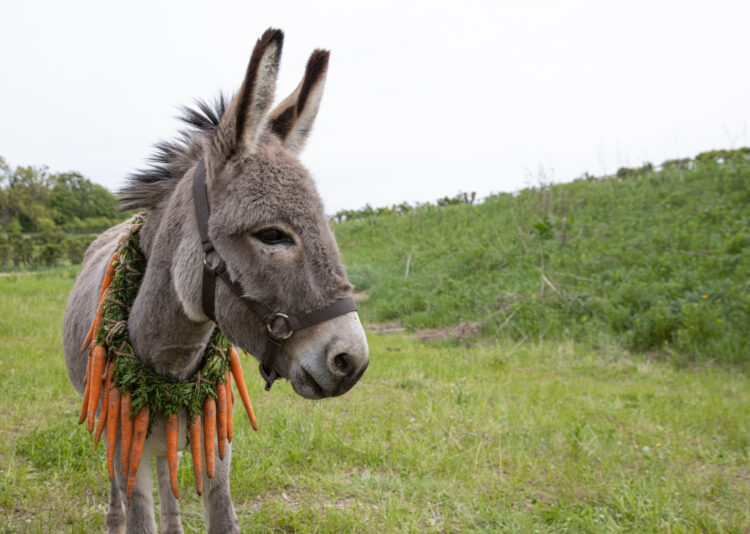
An image from Eo, which is competing for the Palme d’Or at the 75th Cannes Film Festival
EO, which is competing for the Palme d’Or,doesn’t have a plot, little dialogue and, oh, the protagonist is a depressed donkey that may or may not wish he was a horse, but this weird little movie is irresistible. Sure, its lead is a donkey, but this movie is as human as it gets as we watch him journey away from home and back again. And just like Mr. Frodo, he experiences a wide array of people at their best but mostly at their worst.
Polish director Jerzy Skolimowski, who has been a blind spot for me until now, doesn’t over personify his character though. He’ll close in on Eo after a significant event or have him react to something in some way. But he makes clear that he is an animal. That’s not to say he doesn’t care for him. The whole point of the movie is to mine empathy for Eo while also exploring the human world, particularly the conflict in it.
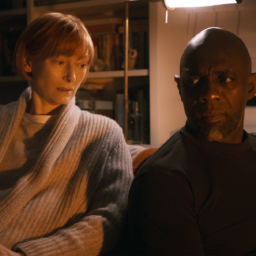
Tilda Swinton plays an academic who frees a Djinn (Idris Elba) from centuries-long imprisonment and is granted three wishes in Three Thousand Years of Longing.
George Miller has never made the same movie twice in his storied career and Three Thousand Years of Longing is no exception. The movie is a visual feast as it hops across millenniums to tell the story of how a Djinn (Idris Elba) found his way into the hands of a lonely academic (Tilda Swinton). Elba’s grainy baritone voice over the lush visuals that Miller renders with the same imaginative spectacle that he did Fury Road draws you in and underlines the movie’s power of storytelling theme. However, whenever the movie trails from that thread and explores that potential romance between Swinton and Elba’s characters the spell is broken. Stories have power, but stories are only as good as their ending. Three Thousand Years of Longing needed one more wish.
Three Thousand Years of Longing is about a genie—or more specifically, a Djinn—and his worst enemy: an intellectual. Many of the myths we know about the concept of a genie tell us that they’re tricksters looking to leave their hapless “master” worse off than before. In that way, they’re cautionary tales. Interestingly, the Djinn at the center of George Miller’s newest film—played by Idris Elba—does the opposite. More than anything, he wants Alithea (Tilda Swinton), the scholar traveling through Istanbul who frees him, to make the right wishes. Still, this is a cautionary tale. One of love and loneliness rather than greed.
ADVERTISEMENT
It’s been seven years since Australian director Miller premiered Mad Max: Fury Road at the Cannes Film Festival and reminded us why he is one of the greatest directors working today, especially in the fantasy genre. Naturally, his return to the festival was one of the most anticipated movie premieres of the year—mine included. With a blank check from the incredible critical and awards success of Fury Road, I was anticipating nothing but the most impressive world-building wrapped in a visual spectacle that has to be seen to believe. Instead, Three Thousand Years of Longing left me yearning for much more like the characters at its center.
Alithea, a dedicated and eccentric scholar, journies to foreign lands to speak about her theories of how fantastical stories in our history have been rendered obsolete by science and now relegated to the pages of comic books. However, science can’t quite explain away the visions of ghosts of history haunt her including one of King Solomon who seems a bit angry at Alithea’s presentation at a conference. After exploring Istanbul with a colleague, she comes across an odd glass bottle. Warped, lined with a swirling blue design, and, of course, sealed shut.
ADVERTISEMENT
When she returns to her hotel room, the bespeckled Alithea inadvertently opens the bottle while cleaning it with her electric toothbrush. A thick dark mist envelopes her hotel room to reveal an enormous Djinn, a ghostlike creature from Arabian mythology but is used interchangeably with a genie in the movie. Elba’s hulking figure and striking face coupled with prosthetic pointed ears and yellow eyes make for a striking effect. He reveals to Alithea that he’s been imprisoned for hundreds of years and that now he owes her three wishes for setting him free.
Alithea, the ever-analyzing historian that she is knows from mythology that these wishes rarely turn out well and refuses. Djinn, sent into a frenzy, cautions that if she does not make her wishes nothing good could come of it recalling how it is what caused his imprisonment for the second time. He reveals to Alithea that he has been imprisoned three times over the past three thousand years.
So begins Three Thousand Years of Longing’s ode to storytelling as Djinn recounts in poetically-written narration his journey through millennia. From the Queen of Sheba (Aamito Lagum) to a poor concubine during the age of the Ottoman Empire, Miller brings each encounter to life as vivid magical landscapes that quite literally shimmer on the screen. However, we’re not given time to luxuriate in each world. This is a story that Djinn is telling us. As with all orally passed down stories, there are gaps as it jumps from moment to moment rarely letting the emotions of the events to seep through. It’s like there’s a barrier between the storyteller and the audience—it’s why Three Thousand Years often feels cold.
ADVERTISEMENT
Based on B.S. Ayatt’s short story The Djinn in the Nightingale’s Eye, Three Thousand Years of Longing feels like a blank check movie in that most studios wouldn’t immediately greenlight a $60 million fantasy romance told mostly in voiced-over flashbacks. You’d expect an epic. However, the movie feels slight because of its structure—especially compared to Fury Road. Though, that slightness is a benefit to the second half of the movie, which shifts—somewhat abruptly—from epic fantasy to a quiet romance.
There are two key ingredients to make a romance work: chemistry and overcoming adversity. Unfortunately, neither work here. Not to the fault of Elba or Swinton, who as always give masterful performances. Particularly Elba who has to literally portray three thousand years of longing and trauma—something he carries on his face throughout the movie. The movie structurally doesn’t give us the chance to fall for the characters as they fall for each other as we switch back and forth between times and places. We don’t have a reason to root for Djinn and Alithea’s love story by the time the movie focuses in on it. It’s a shame since the part of the story is what would have it work. Despite Djinn’s warnings and Alithea’s logic, they still fall into the same traps that Djinn has seen for millennia. It implies that matters of the heart are often clouded because it’s our nature as humans. However, Miller is never able to consummate that theme and the story.
There’s magic to be had in Three Thousand Years of Longing. And if you know Miller’s work—Mad Max, Babe, Happy Feet, The Witches of Eastwick—you know that you’re going to see and feel it. The world he builds is nothing less than spectacle. But behind the sparkling vivid imagery is emptiness. Ironically, the movie leaves us longing for more. More character, more emotion, more humanity. What made Fury Road such a monumental achievement was its ability to consummate a genre story with deeply complex human themes. Three Thousand Years frankly fails on both accounts. Well, here’s hoping for the Furiosa movie.
Hirokazu Kore-eda follows a group of misfits that form a would-be family as they trek across Korea to sell a recently “abandoned” baby in Broker
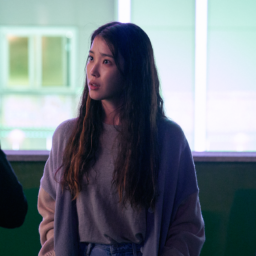
Hirokazu Kore-eda’s Broker is at once a heartwarming cheeky road-trip comedy and a heartbreaking drama of misunderstood misfits that continues his exploration of the meaning of family that he began with his 2018 Palme d’Or winning drama Shoplifters. Though the movie’s slight crime narrative keeps the plot moving, it’s the irresistible and charming cast of characters that keep you engaged — particularly Song Kang-ho’s would-be patriarch Sang-hyeon and Lee Ji-eun’s (better known as singer-songwriter IU) flawed yet complex young mother So-young. Each character and performance feels like an actual person that lived a full life before the movie begins and Kore-eda finds those complexities as they continue to develop during the movie’s breezy running time.
Broker is premiering at the 2022 Cannes Film Festival.Neon acquired the movie for U.S. distribution prior to the festival.
At the start of Broker, we see So-young (Lee Ji-Eun, better known as popstar IU) leave her baby outside a “baby box,” a drop-off point where would-be mothers can leave their unwanted baby in safe hands. Some people would say that she was abandoning her child. But as police sergeant Soo-jin (Bae Doona) puts it later, So-young was protecting her baby. That is a theme throughout Hirokazu Kore-eda’s Palme d’Or competing drama, which premiered at the 2022 Cannes Film Festival. What is perceived as an act of selfishness by some could in fact be an act of love.
ADVERTISEMENT
It’s a similar theme to Kore-eda’s last movie, the Palme-winning Shoplifters, which presupposed that chosen families bonded by similar life experiences or trauma are stronger than those by blood.
However, Broker expands on that to explore the idea that families are only as strong as your actions to protect them. If it sounds like grounds for sentimentality, then you would be right. Kore-eda is a bit of a master when it comes to balancing sweetness with the realities of the world. And if Shoplifters and Broker are any indications he’s most interested in exploring them through complicated characters whose reasonings may not immediately seem just.
Such is the case with the titular “brokers” of the movie — Sang-hyeon (Parasite’s Song Kang-ho and Dong-soo (Gang Dong-won) — who take babies from the baby box of a church and sells them to desperate families for the highest price. One of those babies is So-young’s Woo-sung who Sang-hyeon and Dong-soo feel they can sell despite his thin eyebrows — a fact that is hilariously brought up often. We’ll learn more about why the brokers feel just in their actions, even if it’s not their conscious reason. But that’s the beauty of Broker, Kore-eda fills his script with so many moments of empathy that it’s easy to understand such complex characters.
Eventually, in a surprising change of heart, So-young comes back for Woo-sung. However, because of a technicality she no longer has parental rights to him. Instead, the broker pair convinces her to let them find him a family. The ever street-smart So-young instead uses the opportunity to ensure that Woo-sung goes to a home that deserves him rather than just any family with enough money to buy a baby.
ADVERTISEMENT
Though the entire cast is effortlessly charming with characters that feel lived-in with fully formed pasts and looking towards the future, it’s Song Kang-ho’s would-be patriarch Sang-hyeon and IU’s So-young that are the heart of the movie.
While larger plot machinations come into play including a criminal investigation run by detectives Soo-jin and Lee, the movie’s main focus is each character’s (including the investigators) relationship with their past — and the fight to become more than it. Sang-hyeon, who has an ex-wife and daughter, is seemingly never able to connect with them and is seen as flighty and inconsistent. On the other hand, So-young harbors a secret that gives her pause to start a family with Woo-sung. Though it sounds ripe for manufactured overwrought sentimentality, it never strays into melodrama.
In the most impactful scene in the movie on the precipice of their time together, So-young turns off the light in their hotel room — as to not have to face each member of their ragtag family — and says, “thank you for being born” to each one. There are no waterworks (except from me and the audience), no dramatic declarations, just five people in a room grateful to have found each other. The scene is earned rather than muscled in to pry a few tears from the audience.
Kore-eda understands that drama can be warm without unearned emotionalism. Broker may be charming and slightly heightened, but like any good tale, it’s based in something fully human.
Like Shoplifter before it, Broker doesn’t have an easy ending. Possibly not even one that you’d consider happy. As much as the movie is a serotonin booster and heartstrings-tugger, Kore-eda always finds his way back to the ground level. While this new family that we’ve come to love over a two-hour period may not get a happily ever after, they certainly get a “and life goes on” ending. Taken with Shoplifter, its spiritual prequel, Broker is a promise that although life has its ebbs and flows and happiness is fleeting, there is a way to survive it. And that way to survive is with each other.
A group of billionaires on a private yacht cruise have their world turned upside down when a catastrophic event strikes in Triangle of Sadness
Triangle of Sadness is a two-and-a-half-hour joke-a-minute biting satire of the rich and class that keeps you guessing in every scene. And despite having jokes like an extended 10-minute puke scene, it’s a well-studied character study about people of privilege and how they would react with it taken away. The cast of characters that ranges from a capitalist Russian oligarch, a drunk Yacht captain, and two dating models are perfectly wrought parodies of the rich that you miss hanging out with after the final credits roll. I could have watched it for hours.
Triangle of Sadness is premiering at the 2022 Cannes Film Festival. Update: Neon has acquired the film for distribution later this year
A few times during Triangle of Sadness, Swedish director Ruben Östlund’s Palme d’Or-competing film at the 2022 Cannes Film Festival, we see and hear “everyone’s equal.” But nothing is quite as ironic as that phrase being splashed up on screens at a high fashion runway show or uttered on a luxury cruise targeted at billionaires and influencers. That’s Östlund’s intention. Every one of his films takes aim at something wrong in our society by taking people in power and with privilege and putting them in situations that take them away: an avalanche in Force Majeure, a leaked video in The Square, and now a catastrophe on a yacht in Triangle of Sadness.
But what he was exploring in his prior two films he perfected in Triangle of Sadness. The result is one of the best comedies in years.
ADVERTISEMENT
The movie is split into three parts plus a prologue where we meet model Carl (Harris Dickinson) on a casting call where he’s hilariously told to relax his “triangle of sadness” aka the wrinkles between your eyebrows when you scrunch your face. “Maybe a little botox will help,” says one of the casting directors. Then, part one, titled “Carl and Yaya” begins.
Yaya (Charlbi Dean), a high fashion runway model, and Carl are at dinner when the check comes which she ignores until his hand barely grazes it and she thanks him for paying. This sets off a night-long argument about the principle of paying for dinner — something every couple has experienced at one point or another. Taken as its own short film, part one would be a perfect deconstruction of relationships where currency comes in power given and taken. More than once it’s mentioned that Carl makes less than Yaya but he also points out that it’s not about the money but the principle.
ADVERTISEMENT
We later catch up with them in part two, “The Yacht.” Carl and Yaya are among the passengers on a luxury yacht cruise that plays like a seabound version of Upstairs Downstairs where we spend time with the various ridiculous (and ridiculously rich) passengers and the staff that serves them led an overly ambitious and eager to please cruise director (Vicki Berlin). The part fully becomes a broad comedy as the cast of characters increasingly show how out of touch they are with the real world. Among them are war profiteers proud of their business, a capitalist Russian oligarch and his wife who insists the staff stop work and go for a swim, and the cruise’s drunk captain (Woody Harrelson).
If the first part and cold open were closer to satire, this part is a purely broad comedy with hilarious introductions to the most out-of-touch rich people, a storm-laden drunken dinner, and a ridiculous 15-minute gross-out gag that’s like Titanic with more puking. Particularly hilarious is Harrelson’s Tom, a self-proclaimed socialist, and Dimitry (Zlatko Burić), a capitalist Russian tycoon, having a healthy commiseration of ideologies loudly and drunkenly broadcast over the ship’s PA system.
ADVERTISEMENT
I’m not sure I want to tell you where the movie ends up. Part of the fun is the unexpected turn that it takes for its third and final part that sees the social system turned on its head as Gloria (Dolly de Leon), the Filipino toilet manager of the ship, finds herself in a new position of power. Let’s just say it’s like an episode of Survivor without the film crew. The hyjinks continue as the movie romps its way to a perfect ambiguous conclusion fit for its characters. By the movie’s end, I was sad that I wouldn’t be able to see more of them. I could have watched it for hours more.
Triangle of Sadness comes after a long run of “eat the rich” movies from Get Out to Parasite. While both of those movies have their fun, there is a darkness at their center. The value that Östlund brings to the genre is a lack of self-seriousness. Rich people are out of touch. We know that. He’s not interested in adding the message. He’s here to have fun and take the piss out of deplorable rich people (among other bodily fluids). If Triangle of Sadness proves anything it’s that the broad comedy is not dead.
Eo follows life through the eyes of the eponymous donkey as he experiences life and conflict in the human world
Eo doesn’t have a plot, little dialogue and, oh, the protagonist is a depressed donkey that wishes he was a horse, but this weird little movie is irresistible. Sure, its lead is a donkey, but it is as human as it gets. Constructed from our hero donkey’s journey away and back again, Eo meditates on loneliness, human nature, and empathy.