Tag: 2022 Sundance Film Festival

  • ‘After Yang’ and sci-fi as therapy | review and analysis

    ‘After Yang’ and sci-fi as therapy | review and analysis

    After Yang follows a father’s attempts to save his daughter’s robot brother as the family deals with identity, parenthood, and love

    After Yang premiered at the 2022 Sundance Film Festival. A24 will release it in theaters in March.

    At its best, science fiction acts as a meditation on something we know through the lens of the unfamiliar. In After Yang, the second film by writer-director Kogonada, the unfamiliar in this case is artificial intelligence, in the form of possibly the closest we’ll ever get to creating a human from computers — a “techno-sapien” as the film puts it. As for what we know, it’s those many things we’re already intimate with: memories, identity, love; the very fabric of our existence. If those sound like lofty themes, they are. It’s an ambitious movie. But those subjects are tackled with the same quiet sensitivity that Kogonada used to direct his egregiously underseen debut feature Columbus.

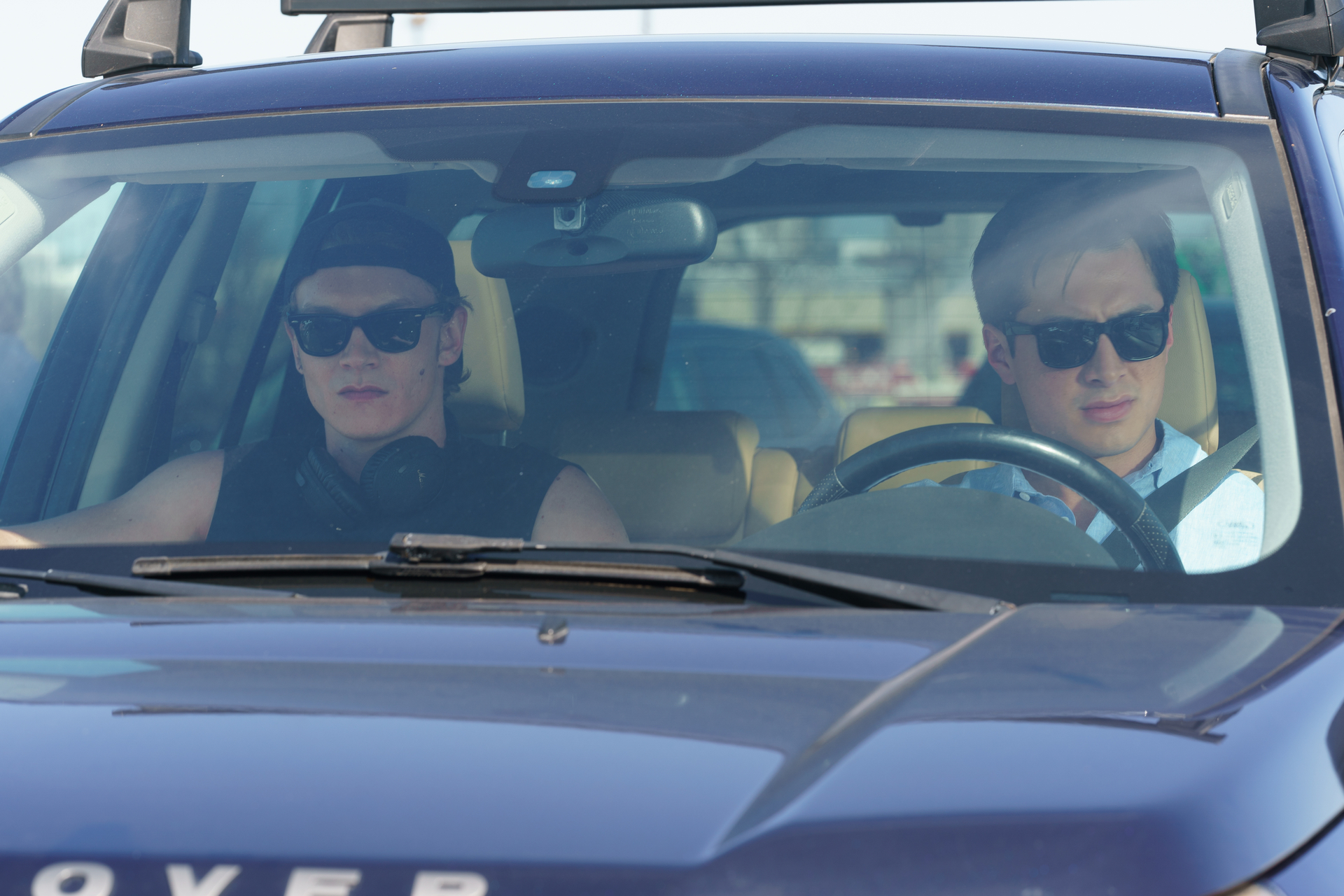
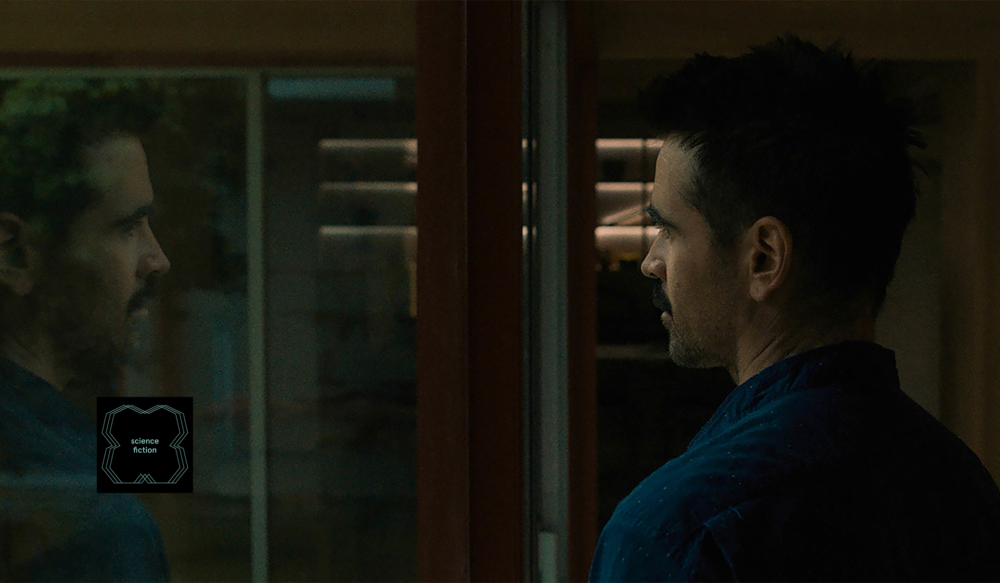
    The opening shot of the movie is of a quintessential family photo; posing are Jake (Colin Farrell), Kyra (Jodie Turner-Smith), and their young adopted daughter Mika (Malea Emma Tjandrawidjaja). Behind the camera is Mika’s brother Yang (Justin H. Min). But he doesn’t join the family immediately — he holds the view of the family photo for a beat longer than most comfortably would. We’ll return to this scene later, and see it play out multiple times, a recurring motif that extends to other moments in the movie as well.


    ADVERTISEMENT


    In one scene Yang says to Kyra, “there’s no something without nothing.” Then we rewind and we hear him say it again. “There’s no something without nothing.” This time, however, he says it with a slight inflection in his voice and the smallest smile at the end. Each scene we see is shown with this staccato editing and sudden cuts. We’ll hear one line two or three times but derive a slightly different meaning each time. Almost like a memory desperately trying to be remembered.

    After an incredible opening credits sequence, in which each family featured in the film competes in a massive online Dance Dance Revolution-esque competition, Yang malfunctions. Here would be a good time to mention that Yang is a robot that Jake and Kyra bought to help Mika explore her identity as an adopted Chinese child. Though you wouldn’t be able to tell from looking at him: he’s strikingly emotional and singular as a real human. His breakdown is sudden and has a massive impact on Mika who saw Yang as one of the few people she could confide in. In the process of desperately finding a way to fix him before he decomposes, Jake gains access to Yang’s memories.

    After Yang is told through conversations in Yang’s memories and asks a series of questions: How do we perceive our memories and what do we focus on? Why do we like certain things? Why are they important? What details are important? Why are we who we are? If those seem like concepts that are too large to be answered by a single movie, you’d be correct. But Kogonada isn’t interested in answering them — he wants the audience to do so. The movie merely serves as a companion and guide, much like Yang himself is to the family.


    ADVERTISEMENT


    Through his memories, we gather bits and pieces of who he was in relation to these people. In one memory Mika says, “the kids at recess were asking about my real parents. I told them about mom and dad and they said, ‘no, your real parents.’” Instead of giving her platitudes, Yang asks her, “do you believe them?” Eventually, Mika finds her way to her own conclusion.

    The beauty of sci-fi is that you can mold it to whatever you need it to be for your story whether it’s a high-reaching epic like 2001: A Space Odyssey or something that feels closer to home, like Her, Arrival, and now, After Yang. Kogonada takes a human problem that will be with us for as long as we’re alive — one of identity, family, parenthood — and wraps it into a futurist story that allows him to explore it with subtlety. More than a film, it’s a meditation on life, and in that way, I’d go as far to say that After Yang is akin to therapy. It takes a problem, so constant and looming in the undercurrent of our lives that it feels impossible to solve, and breaks it down into questions that we can answer. One of those questions is what comes after? After life and death? After each chapter of life ends? What comes next?

    There’s no simple or clear answer to these questions, just as there isn’t a satisfying finality to the film. Like the family, we’re left with as many questions as we came in with, but After Yang, we’re better equipped to try and find these answers for ourselves.


    ADVERTISEMENT


    More movies, less problems


    Hey! I’m Karl. You can find me on Twitter and Letterboxd. I’m also a Tomatometer-approved critic.

    💌 Sign up for our weekly email newsletter with movie recommendations available to stream.


    ADVERTISEMENT

  • Sundance 2022 Round-Up: Speak No Evil, Watcher, Dual

    Sundance 2022 Round-Up: Speak No Evil, Watcher, Dual

    The 2022 Sundance Film Festival is in full swing. Here is a review round-up of some of the thrillers we’ve seen so far.


    Speak No Evil

    A still from Speak No Evil, which premiered at the Sundance Film Festival.
    Sidsel Siem Koch and Morten Burian in Speak No Evil. Courtesy of the Sundance Institute.

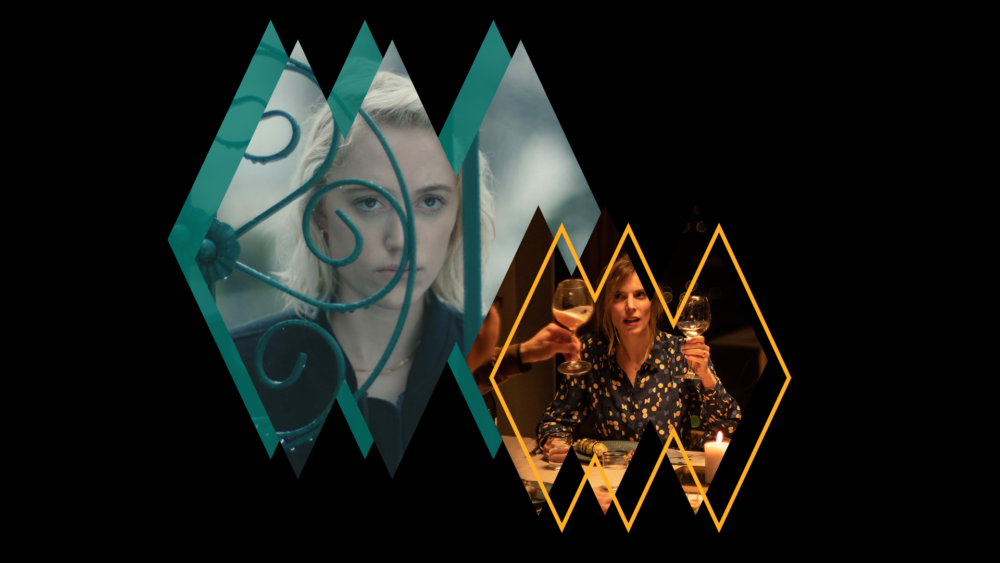
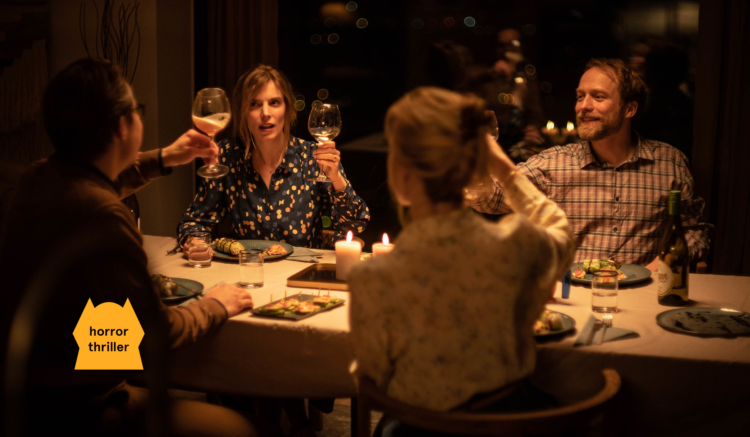
    The Cabin in the Woods, one of my favorite horror movies of all time, explains that for the characters in a horror movie to be punished they have to choose their fate. They have to decide to ignore the creepy old man at the gas station. They have to decide to leave the marked trail. They have to decide to stay in the countryside house with the creepy family that they just met on holiday. That last one happens in Christian Tafdrup’s Danish horror Speak No Evil. Danish couple Louise (Sidsel Siem Koch) and Bjorn (Morten Burian) seal their fate by deciding not to leave when they had their chance. Granted, the couple certainly had so many red flags waved in their face that it’d put Murray Hill finance bros shame.

    After returning home from their Tuscan holiday, Louise and Bjorn are surprised to find an invitation from Dutch couple Patrick (Fedja van Huet) and Karin (Karina Smulders), who they met at the same resort, asking them to visit them at their countryside home. Though they don’t really have a desire to, the couple decides it would be rude to turn them down. When they arrive, though, a series of increasingly bizarre encounters put the couple on edge — blasting heavy metal while drunk driving, feeding Karin meat even though she’s mentioned she’s a vegetarian. Being the model guests they are, Louise and particularly Bjorn brush off these happenings. However, after a particularly troubling incident involving Louise and Bjorn’s daughter Agnes (Liva Forsberg) the couple is forced to confront their hosts to which Patrick responds, “No one’s forcing you to stay.”

    Much of Speak No Evil plays like the bleakest comedy of manners like Force Majeure. But director Christian Tafdrup makes it a point to remind you with the screeching score and uneasy tone that this is a horror movie. And when it makes that shift you are both expecting it and completely taken aback realizing that Funny Games might be a more apt comparison. For some, that shift will be too abrupt. For some, the character’s decision will be bordering on absurd. But that’s the point of the film: to make you uncomfortable. Tafdrup reminds you that sometimes a kindness isn’t always just a kindness. You’ve been warned.

    Speak No Evil was acquired by AMC networks’ Shudder streaming service. A release date hasn’t been announced.


    ADVERTISEMENT


    Watcher

    Maika Monroe in Watcher. Courtesy of the Sundance Institute.
    Maika Monroe in Watcher. Courtesy of the Sundance Institute.

    Maika Monroe has been a bonafide scream queen since she broke out with roles in It Follows and The Guest. Her character-grounded approach to horror makes her the perfect audience surrogate for whatever story she’s in. In her return to those genre roots with Chloe Okuno‘s feature directorial debut Watcher she’s able to flex those muscles that made her so successful. This time as a recent American transplant in a familiar gaslit woman thriller set in Bucharest, Romania.

    Julia’s (Monroe) decision to accompany her husband Francis (Karl Glusman) across the globe for work colors much of the background of the movie as Julie, who doesn’t know the language, tries to find routine in her new life. However, that routine is thrown off when she glances out of the massive windows that frame the couple’s apartment and notices a shadow in one of the windows — watching. She’s already been shaking by learning of a recent string of murders in the neighborhood and begins to notice a strange man popping up wherever she goes. Of course, though he’s initially supportive Francis brushes it off as a mix of culture shock and an unfamiliar place.

    On the other hand, the movie goes to a very familiar place. Despite Okuno’s strong direction that effectively ratchets up the tension throughout the movie and makes good use of the city’s dour atmosphere and Monroe’s performance that subtly portrays a woman on the edge, Watcher never really elevates past its stereotypical thriller roots. You can see nearly every plot point from a mile away — even with its attempts to trick you more than once. Okuno crafted a well-made thriller, but from the second it ends nothing follows you home.

    Watcher premiered at the 2022 Sundance Film Festival. It is currently seeking U.S. distribution.


    ADVERTISEMENT


    Dual

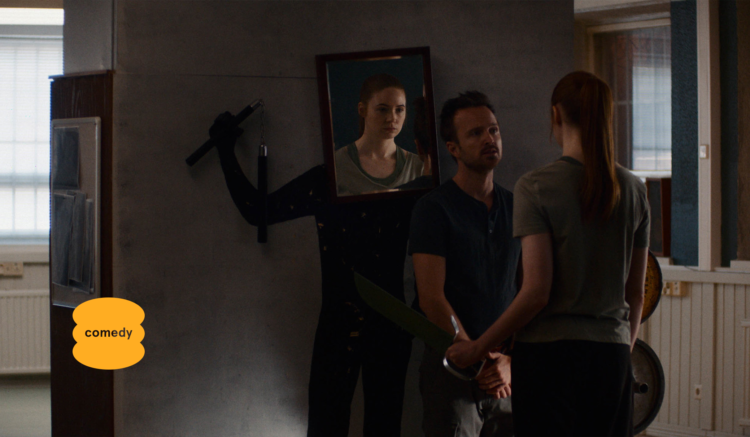
    Aaron Paul and Karen Gillan in Dual. Courtesy of Sundance Institute.
    Aaron Paul and Karen Gillan in Dual. Courtesy of Sundance Institute.

    Yorgos Lanthimos has made a career out of his unique brand of deadpan surrealism creating worlds where matter-of-factness is the norm and emotions never control decisions.


    ADVERTISEMENT


    More movies, less problems


    Hey! I’m Karl. You can find me on Twitter and Letterboxd. I’m also a Tomatometer-approved critic.

    💌 Sign up for our weekly email newsletter with movie recommendations available to stream.


    ADVERTISEMENT

  • ‘Cha Cha Real Smooth’ is Gen Z’s The Graduate | movie review

    ‘Cha Cha Real Smooth’ is Gen Z’s The Graduate | movie review

    In Cha Cha Real Smooth, a recent college grad tries to find his purpose in life as he takes up a side hustle as a bar mitzvah party starter

    Cha Cha Real Smooth premiered at the 2022 Sundance Film Festival. It is currently seeking U.S. distribution.

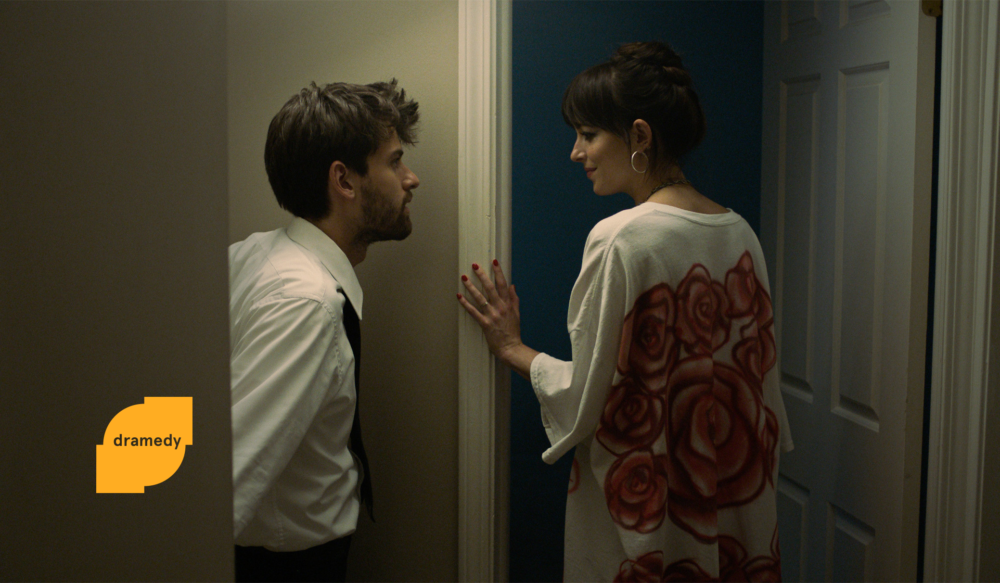
    The greatest coming-of-age movies — like Lady Bird and The Graduate — understand that although there is a central protagonist, they are not the main character. In the beginning, they believe they are the center of the universe but eventually learn there is more to their lives than what they see. That everyone surrounding them is the main character of their own lives. That’s what makes Cooper Raiff’s sophomore feature Cha Cha Real Smooth so effortlessly charming as a perfectly pitched dramedy. Although Andrew (Raiff) filters everyone else’s experience around him through his own, Raiff, as the writer-director of the film, gives color to everyone.

    Just like The Graduate, Andrew is newly graduated. His college girlfriend is off to Barcelona for her Albright Fellowship and he’s back in his hometown of Livingston, New Jersey working at “Meat Sticks” — where they sell meat… on sticks. He’s as aimless as they come. He doesn’t even have his childhood home to return to as his mother (Leslie Mann) has moved in with his stepfather (Brad Garrett) and has to sleep on the floor in his tween brother David’s (Evan Assante) room.

    However, his life finally finds some direction when he takes it upon himself to liven up a subdued bar mitzvah he’s accompanying his brother to. In particular, he hones in on young mother Domino (Dakota Johnson) and her daughter Lola (Vanessa Burghardt) who starts to break out of her shell when Andrew dances with her. It’s worth singling out Burghardt here, an autistic actress who’s playing an autistic character, whose performance rings nothing but sincere.


    ADVERTISEMENT


    Before long, he’s ambushed in the parking lot. “You are being swarmed by Jewish mothers who are recruiting you to be our motivational dancer,” says one of the mothers. For Andrew, it seems like quick money and something he genuinely enjoys. However, this isn’t just a bar mitzvah-set The Wedding Singer. Raiff focuses the movie on Andrew’s avoidance — of responsibility, of making decisions, of coming-of-age.

    For how quiet the story is, it says magnitudes about post-college aimlessness. Not just for recent graduates, though. What Cha Cha Real Smooth presupposes is that no one has truly “figured it out” as an adult. Domino, for instance, is facing down her marriage to lawyer Joseph (Looking’s Raúl Castillo) and confides her trepidation to Andrew. The wonder of the movie is that wherever you think this triangle goes, you’re probably wrong. Both Raiff and Johnson ooze with chemistry as two people set on different paths but completely empathetic to the other’s plights.

    There’s so much sweetness, witty humor, and swoon-worthy relationships (platonic and otherwise) in this movie. But despite a title and premise that errs towards comedy, Cha Cha Real Smooth is a drama that knows itself so well with Lola serving as the movie’s foil. “Sometimes I enjoy being in an empty room,” she tells Andrew, who has become her de facto babysitter. “Well, I’m jealous,” he responds, “I wish I could do that.” She almost doesn’t understand the answer. By the end of the movie, you’ll understand that she’s right.


    ADVERTISEMENT


    More movies, less problems


    Hey! I’m Karl. You can find me on Twitter and Letterboxd. I’m also a Tomatometer-approved critic.

    💌 Sign up for our weekly email newsletter with movie recommendations available to stream.


    ADVERTISEMENT


  • ‘Resurrection’ goes for the gut | movie review

    ‘Resurrection’ goes for the gut | movie review

    In Resurrection, a mother desperately tries to keep her past life from spilling into her present as an old figure walks back in to her life

    Resurrection premiered at the 2022 Sundance Film Festival. It is seeking U.S. distribution.

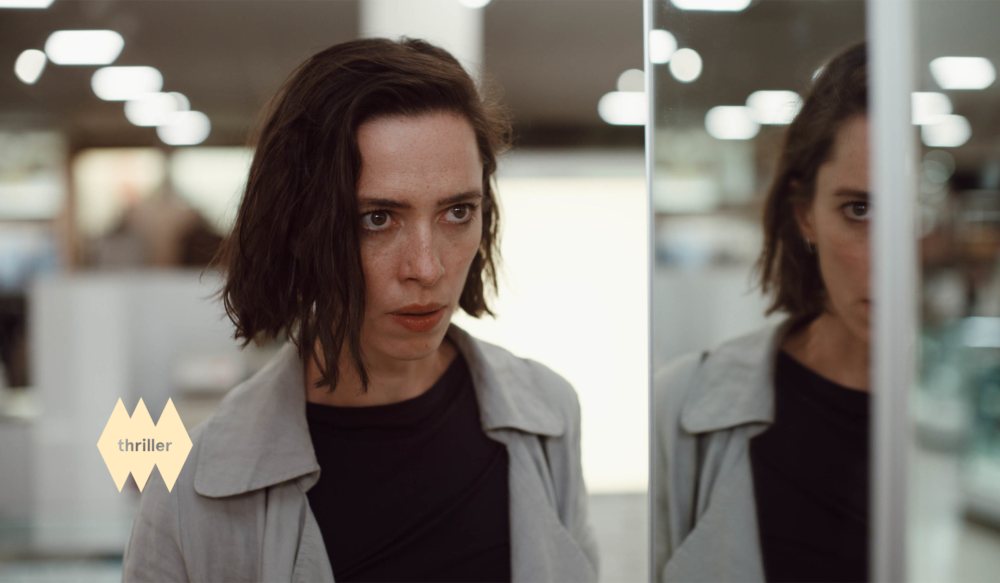
    Halfway through Resurrection, there’s a 10-minute scene where Margaret (Rebecca Hall) recounts a traumatic period of her life to a coworker. It’s done in close-up and in a single-take. The camera doesn’t move, and neither does Margaret. Memories spill out from her as a single tear falls down her face. There aren’t hysterics, it’s like suddenly, a pipe burst. Margaret, usually so controlled, has lost it for the first time.

    Her admission is so outlandish that it’s difficult to stomach at first. Her coworker Gwyn (Angela Wong Carbone) even asks if she’s messing with her. But when you sit with what she said you realize that it’s too detailed to be anything but real, and it justifies Margaret’s response when David (Tim Roth), a man from her past, comes roaring back into her life.


    ADVERTISEMENT


    Though it has the sheen of a gaslit woman thriller — Steven Soderbergh’s Unsane or Leigh Whannell’s The Invisible Mandirector Andrew Semans keeps much of the movie slight in comparison. There are scenes of a paranoid Margaret running through the streets convinced she’s being followed, and much of the horror is left to the imagination. Though an early image hints that this thriller is unafraid to tread fully into the dark waters of horror.

    Without spoiling the contents, because the plot is already so straightforward, Resurrection is about the psychological impacts of grooming and the accompanying Stockholm Syndrome that lingers well past the fact. Rebecca Hall’s performance will rattle you to the core as she physically reacts to her perfectly curated life beginning to crumble around her. And though this descent becomes repetitive, the movie’s surprisingly gruesome finale more than makes up for it.

    As Semans tries to dredge up some thematic weight around motherhood to tie the story together in a pretty bow, he nearly loses control of the movie. “I am a good mother,” Margaret says when she’s challenged. But Resurrection is at its best when it’s messy and unafraid to leave threads dangling. Ultimately, I’m not sure if it’s more than a well-made psychological thriller, but there are scenes that I know will stick with me. I feel that in the pit of my stomach (that’s a hint).


    ADVERTISEMENT


    More movies, less problems


    Hey! I’m Karl. You can find me on Twitter and Letterboxd. I’m also a Tomatometer-approved critic.

    💌 Sign up for our weekly email newsletter with movie recommendations available to stream.


    ADVERTISEMENT

  • ‘Master’ is a modern-day Giallo horror | Sundance review

    ‘Master’ is a modern-day Giallo horror | Sundance review

    Three Black women navigate the horrors — both real and supernatural — of working and attending a predominently white institution in Master

    Master is playing at the 2022 Sundance Film Festival. It will be released on Prime Video in March.

    The most horrifying scene in Master, the feature debut of director Mariama Diallo, takes place at a house party. There’s nothing quite supernatural about it, despite the core of the movie involving a legend centering on ghosts and witches. In the party scene, freshman Jasmine Moore (Zoe Renee) is having the time of her life as the song playing switches to Sheck Wes’ “Mo Bamba.” Around her, white faces illuminated in red begin to crowd around her and scream the lyrics without regard: “I be ballin’ like my n— Mo.” Except they don’t censor themselves. Diallo directs the scene with intense precision. The swirling camera blurs the faces around Jasmine until they look inhuman. It’s claustrophobic.

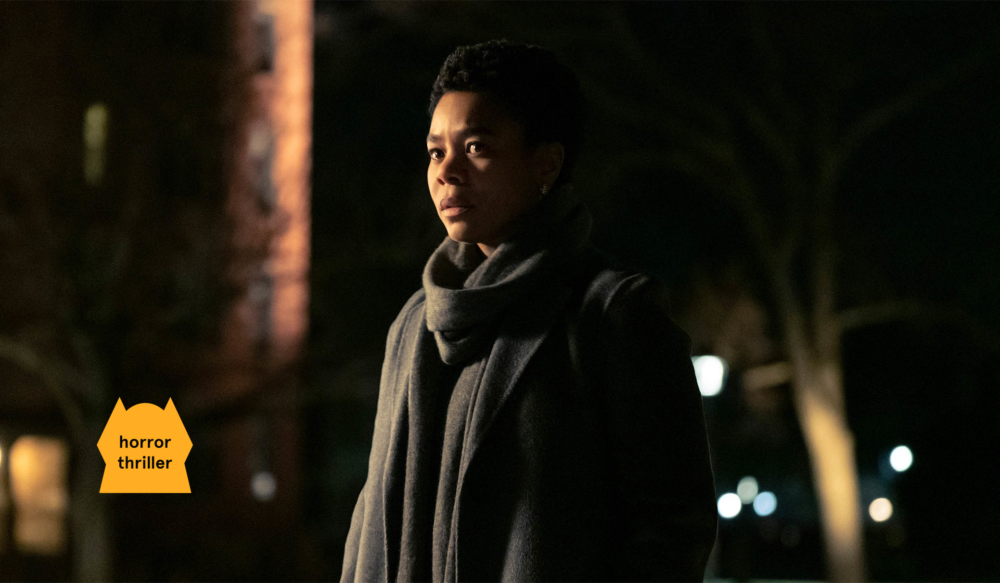
    That’s the overwhelming feeling throughout Master: an atmospheric sense of creeping dread that points to the supernatural haunts on the campus of Ancaster College. At the same time, the film works just as much to translate the very real feeling of three Black women as they navigate attending and working at a predominately white institution. Combining elements of Italian Giallo films — specifically Suspiria — and social horrors like His House, Diallo creates a type of haunted house movie that keeps you at arm’s length — until it doesn’t.


    ADVERTISEMENT


    Along with Jasmine, the movie follows the newly appointed House “Master,” or dean of students, Gail Bishop (Regina Hall) as she navigates the waters of leadership as the first Black person appointed to the role. Both women face microaggressions, and macroaggressions, in their day-to-day life. Jasmine, one of the few black students at the school, is asked to have her bag searched after it sets off an anti-shoplifting alarm. Gail, in a meeting with college leadership, is asked if she could be objective in determining whether Professor Liv Beckman (Amber Gray), a Black professor, should get tenure.

    Ancaster — a fictional college substitute for any Northeast liberal arts school — has its own share of mythology and lore, not uncommon for institutions of its kind. For Ancaster, it’s the story of Margaret Millett, a woman accused of being a witch and who was killed near school grounds. Legend has it that since then, the school has been cursed and she returns at night to claim the souls of students. Learning about this tale sets Jasmine on edge from the start, and it isn’t helped by the fact that a student killed herself in the very room she lives in.

    Diallo, taking a page from the shadowy film noir stylings of Giallo films, constructs the movie and school like a maze where the walls slowly close in on the characters. Jasmine, for reasons not entirely her own, never quite finds her footing, socially or academically. Gail, on the other hand, finds her path by potentially compromising her own identity. The dueling storylines have their strengths and keep the plot moving, though sometimes the lack of focus removes some of the effectiveness of the horror and story.


    ADVERTISEMENT


    Despite its assured direction, Master is not a perfect film. It falls into some of the trappings of a first-time director — showing instead of telling, uneven pacing and plotting — but manages to keep audiences engaged with horror imagery that sticks well past the end of the movie. And as well rendered as the supernatural sequences are — Jasmine’s nightmare encounters are sufficiently creepy — a scene with a seven-person panel consisting of five white men and women, an Asian man, and a Black woman, determining the worth of a Black professor, is just as unsettling.

    Gail, who is a face of resilience and determination throughout the movie, tells a defeated Jasmine, “it’s not a ghost, it’s not a witch, it’s America.” Diallo likens the very real experience of Black women in spaces built by and for white people to the oppressive weight of an urban legend like the one of the witch at Ancaster. These are the shadows you can’t shake, the itches you can’t scratch. These are the memories and ghosts that are always there and always weighing you down. The movie doesn’t give many solutions to this condition but instead offers the solution by portraying the problem for what it is: true horror.


    ADVERTISEMENT


    More movies, less problems


    Hey! I’m Karl. You can find me on Twitter and Letterboxd. I’m also a Tomatometer-approved critic.

    💌 Sign up for our weekly email newsletter with movie recommendations available to stream.


    ADVERTISEMENT


    ADVERTISEMENT


  • ‘When You Finish Saving The World’ | Sundance review

    ‘When You Finish Saving The World’ | Sundance review

    When You Finish Saving the World follows a mother and son pair who are, in their own ways, finding ways to leave their mark on the world

    When You Finish Saving the World is playing at the 2022 Sundance Film Festival.

    When You Finish Saving the World comes close to finding its footing in the final twenty minutes, which is typically when a movie reveals its design to deliver a message or lesson. Actor-turned-director Jesse Eisenberg would have succeeded in that emotional gut-punch had the prior 70 minutes been more nuanced in its skewering of white upper middle-class suburban progressives. Instead, we’re hit over the head with obvious artifacts and dialogue to hammer in the point to oblivion. They drive a smart car! They listen to classical music! They think white people shouldn’t play the blues!

    However, that is what makes it the perfect movie for Sundance. Audiences are typically more-forgiving and gravitate towards movies that have a message with a capital M. It’s no wonder the fest has become a bastion for actors to test their aptitude as writers and directors for the first time. First-time directors already have the tendency to over-direct and write. Actors who assume the director’s chair seem to make that mistake even more. It doesn’t help that Eisenberg also wrote the original story — released as an audiobook — and adapted it. Without someone to filter through all of the layers of this work, the movie becomes overwhelmed by its own sensibilities. 


    ADVERTISEMENT


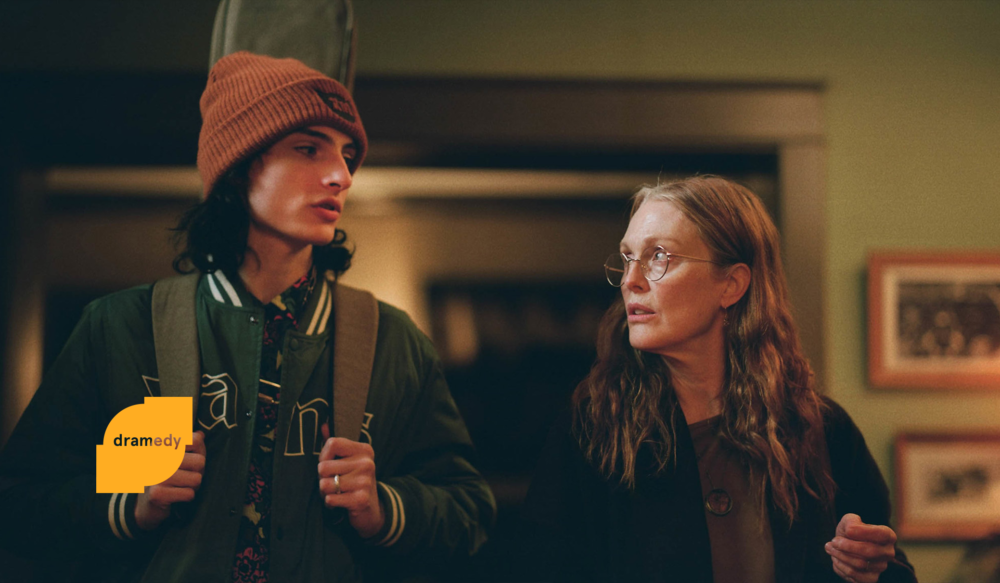
    Had When You Finish Saving the World either leaned more into its satire or had taken a more nuanced approach it might have succeeded– and there are flashes of success in both arenas. Evelyn (Julianne Moore) somberly assures Kyle (Billy Bryk), the son of a woman staying at the domestic abuse shelter she runs, that he’s not going to become his father. Hilariously, he responds, “why would I become him? I’m not worried about that.”

    Evelyn’s son Ziggy (Finn Wolfhard), on the other hand, tries to connect with his politically engaged crush Lila (Alisha Boe) by touting his international online presence. “I have 20 thousand followers and I think what they like about me are my passion and charisma,” he says, making a point to single out one of his Chinese viewers.

    Evelyn and Ziggy are both passionate about what they do, but also fundamentally misunderstand each other’s motivations — and their own. In theory, the movie’s central struggle is this mother-son dynamic and their inability to find value in the other’s mission. Evelyn is by the book, so much so that she sometimes comes off as disconnected. Ziggy is a free spirit and his songs, that exude mid-2000s garage emo pop-punk self-important sincerity, communicate a similar disconnect from reality.


    ADVERTISEMENT


    However, their screen time together is so limited that we’re unable to explore their connection to the depths we need to be interested as an audience. Their own storylines — Evelyn trying to “save” one of her charges and Ziggy trying to become “political” — feel so disparate that the movie becomes less than the sum of its parts.

    Eisenberg’s heart is in the right place. The movie has its moments where it feels like the biting indictment of the white savior narrative almost takes full form, but when it’s as shallow as its two leads it becomes the exact thing it’s trying to lambast. The movie is for people that have the resources to help and the desire to help, but lack the emotional stakes and inherent empathy it takes to be an actual ally. It’s like a person saying they’re an empath and asking a crying person if they’re sad. The idea is there. It’s a minor, but well-intentioned vision, and unfortunately, too singular of a viewpoint to be effective in its primary message – that of saving the world. 


    ADVERTISEMENT


    More movies, less problems


    Hey! I’m Karl. You can find me on Twitter and Letterboxd. I’m also a Tomatometer-approved critic.

    💌 Sign up for our weekly email newsletter with movie recommendations available to stream.


    ADVERTISEMENT