
Tag: Brian Tyree Henry

  • ‘If Beale Street Could Talk’ review — An intimate and political love story

    ‘If Beale Street Could Talk’ review — An intimate and political love story

    If Beale Street Could Talk is gorgeous, powerful, stunningly crafted, and another masterpiece from Barry Jenkins.

    If Beale Street Could Talk is a love story at its core the same way that Moonlight, director Barry Jenkins’ last film, is. It makes sense considering Jenkins excels at everything you need to make a good romance. He nails communicating intimacy on screen, often using delicious close-ups of faces and people touching.

    And like Moonlight, If Beale Street Could Talk is cast against a melancholic theme that tests the relationship. In Moonlight, the main character fights against his own identity and the circumstances of his coming-of-age as a queer black man. In If Beale Street Could Talk, the challenges are more tangible. 

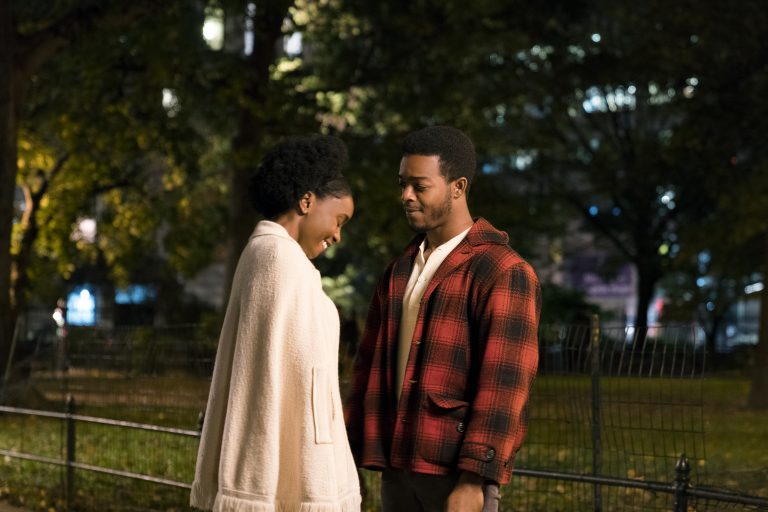
    The main couple, sweet perfume counter clerk Tish (Kiki Layne) and swoon-worthy woodworker Fonny (Stephan James), have known each other since childhood. Through Tish’s gentle voiceover we learn about their love story and how it developed from friendship to something more. However, Fonny is in trouble. 

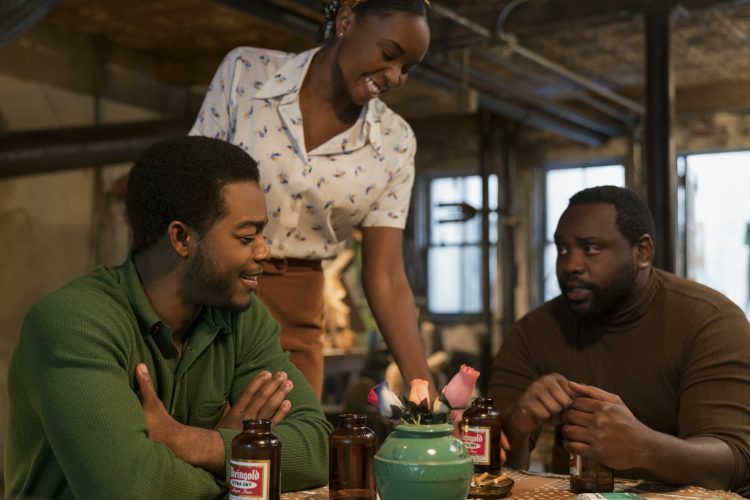
    He is accused by a white cop (an extremely creepy Ed Skrein) of raping a Puerto Rican woman named Victoria Rogers (Emily Rios). With only Tish and an old friend Daniel (Brian Tyree Henry in a masterful one scene performance) with a criminal record as his alibi, Tish must work to free him.

    It wasn’t always easy for the couple as the movie shows — it’s structured as a series of vignettes from their relationship sprinkled between moments from the present, which is 1970s Harlem.
    If Beale Street Could Talk
    Stephan James as Fonny, KiKi Layne as Tish, and Brian Tyree Henry as Daniel Carty star in Barry Jenkins’ IF BEALE STREET COULD TALK, an Annapurna Pictures release.

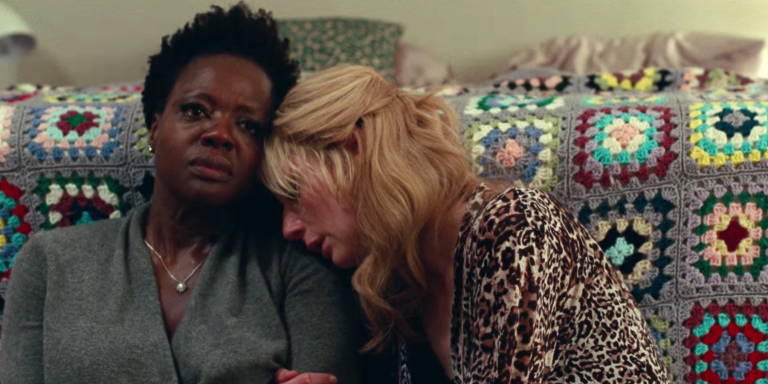
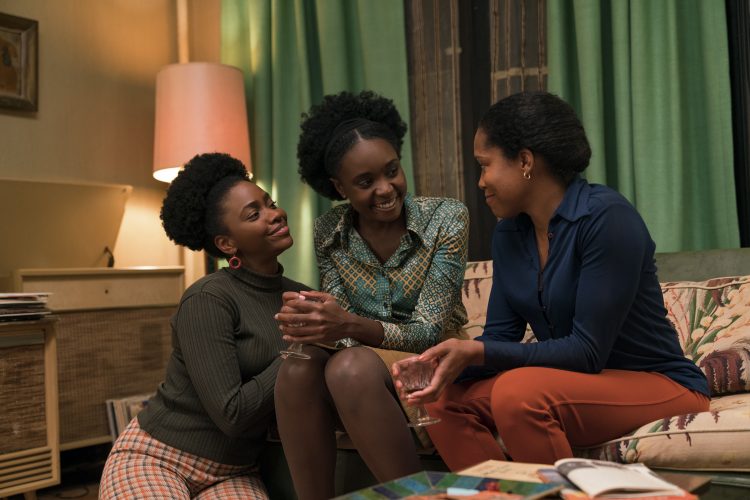
    The first 30 minutes are dedicated to Tish trying to tell her family that she and Fonny are expecting a child. Her mother Sharon (Regina King) is warm and supportive. And after an initial shock, so are her father Joseph (Coleman Domingo) and sister Ernestine (Teyonah Parris). But, she is also tasked with telling Fonny’s deeply religious mother (Aunjanue Ellis).

    That first scene is a masterful practice in acting and staging supported by Jenkins’ generous screenplay — based off of James Baldwin’s novel of the same name. It all feels like a stage play with actors navigating the space in relation to each other and changing positions as the power in the scene ebbs and flows. 

    If Jenkins is best at anything it’s his ability to communicate emotion and power without words. In another scene, Fonny and Tish prepare to have sex for the first time. The music in the background drops out to make way for the sound of rain as we watch their bodies intertwine. It’s a powerful and emotional scene dripping with intimacy.

    Moonlight grappled with the themes of care — for oneself and others — and love. Often that care and love were represented by a safe space. If Beale Street Could Talk deals with that same idea. What is a safe space for a black person? Well, the movie answers that with its opening quote:

    “Every black person born in America was born on Beale Street, born in the black neighborhood of some American city, whether in Jackson, Mississippi or in Harlem, New York. Beale Street is our legacy.”

    James Baldwin

    What is so heartbreaking about If Beale Street Could Talk is that it presupposes that those safe spaces are almost impossible to find in America.
    If Beale Street Could Talk
    (l to r.) Teyonah Parris as Ernestine, KiKi Layne as Tish, and Regina King as Sharon star in Barry Jenkins’ IF BEALE STREET COULD TALK, an Annapurna Pictures release.

    There are pockets where it exists — a grocery store where an elderly woman defends Tish and Fonny from a racist cop or an old warehouse where the Jewish landlord (Dave Franco) is willing to rent to the couple — but largely those places are vanishing. Fonny and Tish’s story acts as the conduit to explore that theme and their love story is what makes that exploration so effective.

    The film is pieced together like a memory — it’s edited by Joi McMillon and Nat Sanders, the Oscar-nominated editors of Moonlight — and Nicholas Britell’s score — also a collaborator on Moonlight — is a melancholic piece with notes of hope and yearning — the best score of the year. All those elements come together to create a masterwork of mood.

    Like his last film, Jenkins and casting director Cindy Tolan pieced together a flawless group of actors. Kiki Layne and Stephen James are both marvelous discoveries who possess so much chemistry with each other that it’s nearly impossible to resist falling for them as a couple.

    However, it’s the supporting cast that standout. Particularly, Coleman Domingo is a strong but sentimental steady hand, and Regina King — worthy of an Oscar — has a show-stopping segment set in Puerto Rico that cements her performance as one of the best of the year.

    If Beale Street Could Talk has so many moving parts that make it work. However, the core of its success is the main couple’s story. Not just the story to get Fonny freed but their love story — a beautiful black love story that we should be seeing more of. Gorgeous, powerful, and stunningly crafted, If Beale Street Could Talk is another masterpiece from Barry Jenkins.

    If Beale Street Could Talk will be in theaters on December 14th.

    Karl’s rating:

  • ‘Spider-Man: Into the Spider-Verse’ review — One of the best superhero movie in years

    ‘Spider-Man: Into the Spider-Verse’ review — One of the best superhero movie in years

    Spider-Man: Into the Spider-Verse is a bright and bold loving critique of the superhero genre and a much needed hard reset.

    30-second review: Spider-Man: Into the Spider-Verse is so keenly aware of what it wants to be even though what it wants to be has never existed before. It’s a bright and bold loving critique of the superhero genre and a much needed hard reset. It doesn’t shy away from the usual tropes, but it tackles them in a way that is innovative, visually jaw-dropping, and laced with real emotion. With great power comes great responsibility, and the responsibility was in the right hands with Into the Spider-Verse.

    Where to watch Spider-Man: Into the Spider-Verse: Available to stream on Netflix. You can also buy or rent it on Prime Video.

    With great power comes… oh, you get it. Full review below ?


    Spider-Man: Into the Spider-Verse leans into the ridiculousness of superhero movies but respects how empowering they can be. In an odd way, Into the Spider-Verse feels akin to The Cabin in the Woods. The 2012 horror film directed by Drew Goddard was a loving hate letter to the genre in played in. Into the Spider-Verse seems to be interested in the same thing. 

    It’s a meta-commentary on the oversaturation of superhero origin stories told over and over again—each hitting the same beats as the last. Hilariously, the movie begins with an origin story montage that pokes fun of previous movie incarnations of the superhero. Specifically, the Sam Raimi trilogy—even the infamous Spider-Man 3 street walk-dance.

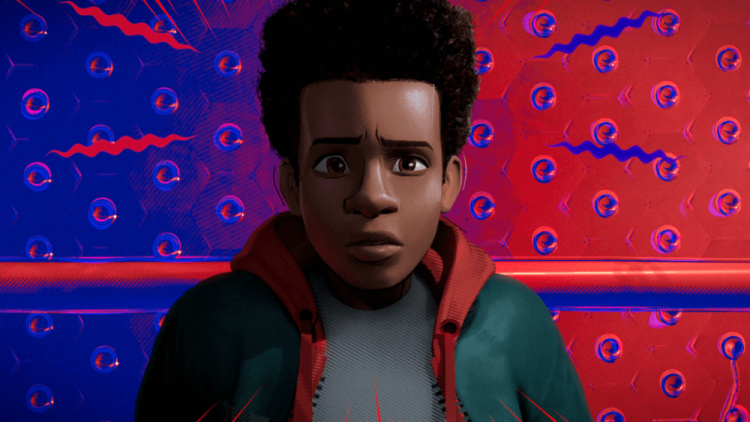
    In Into the Spider-Verse, we watch the origin story of 13-year-old Miles Morales (Shameik Moore), a half-black/half Puerto Rican teen who is unexpectedly thrust into the position of Spider-Man.

    However, this is not your typical origin story. Yes, we hit the familiar beats of the Spider-Man story we all know—bit by a radioactive spider, unexpectedly discovers powers and doesn’t know how to control them—but there’s the added layer of Miles existing in a world where Spider-Man (Chris Pine) is already a fixture.

    So, when that Spider-Man is taken down by baddie Kingpin (Liev Schreiber), Miles is inspired to take over. At first, he’s overwhelmed by his powers and the responsibility. However, he’s not alone.

    Fisk’s evil plan is to open up a multiverse underneath Brooklyn for reasons I will keep unspoiled. However, in doing so, a Spider-Man from another dimension is brought into Miles’. This Spider-Man goes by the name Peter B. Parker (Jake Johnson). In his world, he’s been Spider-Man for a lot longer than the one in Miles’ world and has become jaded—and overweight—by the job.

    Spider-Man: Into the Spider-Verse
    Shameik Moore voices Miles Morales in Spider-Man: Into the Spider-Verse.

    The movie is upbeat, colorful, and hyper-stylized in a way that comic fans will appreciate. Into the Spider-Verse is, perhaps, the best film interpretation of a comic book’s sensibility—it includes on-screen sound effects and the classic comic book text box without feeling gimmicky.

    The filmmakers even went as far as slowing down the frame rate to 12 frames per second—the standard is 24—to make the action look like a moving image. This is best used in a hilarious action scene where Peter B. Parker and Miles first meet.

    As they bounce through the streets of Brooklyn—hilariously attached by their own webs—chased by the police, there is a keen cartoon sensibility to the comedy and comic book veneer to the way the action is rendered. That carries throughout the movie and delivers some of the best action and comedic set pieces of the year. 

    At first, Peter B. Parker, who feels inferior compared his dimensional counterpart, is hesitant to take Miles under his wing. But when he finds out that Miles holds the key to getting him back home he finally accepts. 

    Now that the pair teamed up, they begin to form a mentor/mentee relationship that drives part of the emotional crux of the movie. The other emotional crux is Miles’ relationship with his police officer father Jefferson (Brian Tyree Henry) and with his Uncle Aaron (Moonlight‘s Mahershala Ali)—Miles often feels overwhelmed by his parents’ high expectations of him and goes to his uncle for a reprieve. 

    After a hilarious visit Aunt May (Lily Tomlin)—a badass assistant to this universes Spider-Man—Miles and Peter B. Parker realize that the multiverse has brought in even more Spider-People.

    Spider-Man: Into the Spider-Verse
    Hailee Steinfeld voices Gwen Stacey in Spider-Man: Into the Spider-Verse.

    There’s the dark and gritty—to hilarious levels—film-noir Spider-Man (a terrific Nicolas Cage) who is rendered in high contrast black and white and talks in exactly how you’d expect a noir detective to speak. There’s the anime rendered Penni Parker (Kimiko Glenn) who fights with a spider-like robot she controls with her mind. And there’s Spider-Woman who turns out to be Gwen Stacey (Hailee Steinfeld), a young and energetic Spider-Person.

    Together they work to take down Kingpin and return each Spider-Person to their own universe. Of course, there’s a time crunch. If they aren’t returned soon, their cells will degenerate. Along the way, they battle Kingpin’s goons in fan-service references, callbacks, and homages.

    And what is so refreshing—especially with the MCU being the template for most superhero movies—is that there are real stakes and danger in the action. I found myself tensing at the light and funny action because it feels often like any character could be hurt or killed.

    All the elements I’ve mentioned above make Into the Spider-Verse the boldest superhero movie in years and most innovative animated movies ever made. It’s so keenly aware of what it wants to be even though what it wants to be has never been done before. 

    Audiences have become desensitized by the at least three MCU movies, a cadre of DC movies, and a Sony Marvel movie coming out each year. Into the Spider-Verse is a refreshing reset to the genre. In a world where we know superheroes can do anything—with the help of CGI—how do you keep things interesting? Into the Spider-Verse solves this by playing with—and criticizing—the formula.

    It’s bold, funny, sentimental, and one of the best movies of the year.


    ADVERTISEMENT


    More movies, less problems


    Hey! I’m Karl. You can find me on Twitter and Letterboxd. I’m also a Tomatometer-approved critic.

    💌 Sign up for our weekly email newsletter with movie recommendations available to stream.


    ADVERTISEMENT


  • ‘Widows’ review — Viola Davis leads the best movie ensemble of the year

    ‘Widows’ review — Viola Davis leads the best movie ensemble of the year

    Widows is successfully a thrilling heist movie, emotional character study, and dissection of our current social climate.

    Widows is based on the 1983 British television show of the same name, but you wouldn’t know that watching Oscar-winning director Steve McQueen’s adaptation from a screenplay written by Gone Girl scribe Gillian Flynn. The film, which changes the location from London to Chicago, is distinctly American.

    The themes ranging from corruption to police shootings to race to the wealth gap are covered with poignancy and impact. However, like all of McQueen’s films, including the Oscar-winning 12 Years a SlaveWidows is also a character study. It’s all packaged up neatly in a twisting heist thriller that makes it one of the most compelling, and best, films of the year.

    Widows begins with Veronica (Viola Davis fresh off her Oscar win for Fences) and Harry Rawlings (Liam Neeson) waking up in their sun-drenched Chicago high-rise apartment. Smash cut to four masked men stumbling into a van. One of them is injured and one of them is revealed to be Harry. After a brilliantly captured car chase, the men are brought down in a hail of bullets before their van ultimately explodes.

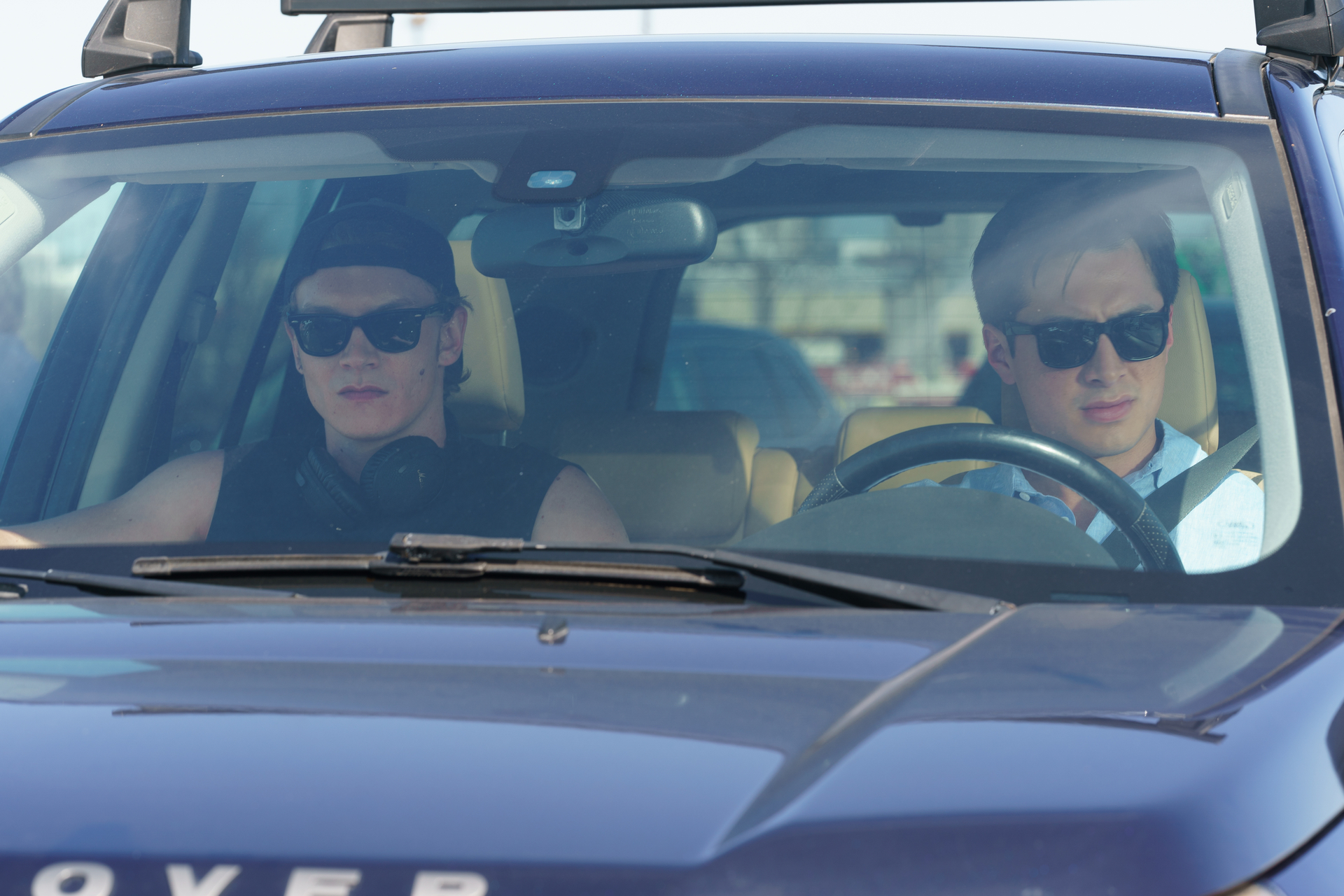
    However, Veronica doesn’t have much time to grieve as Jamal Manning (Brian Tyree Henry), a crime boss turned alderman-candidate, with his brother Jatemme (Oscar-nominee Daniel Kaluuya of Get Out fame), who acts as his muscle, come to Veronica demanding the $2 million that her husband stole from them.

    Henry and Kaluuya both give menacing performances. Henry is a sneering devil who is calm and composed until he’s not. Kaluuya is similarly, and eerily, quiet, but is unpredictable in his explosive actions, like in Get Out so much of his performance happens just in his face.

    Veronica, who is eventually led to her late husband’s journal by their driver Bash (Garret Dillahunt), recruits the other widows of Harry’s deceased crew to help her finish the job he outlined in his journal to clear his debts and start a new life for herself.

    The other widows, Alice (Elizabeth Debicki) and Linda (Michelle Rodriguez), also have reasons to pull off the heist. Linda lost her store after her husband’s passing and is having trouble supporting her kids with her mother-in-law breathing down her neck. Alice, also looking for money, turns to escorting at her mother’s (Jacki Weaver in a great one-scene performance) suggestion and is eager to get out of it.

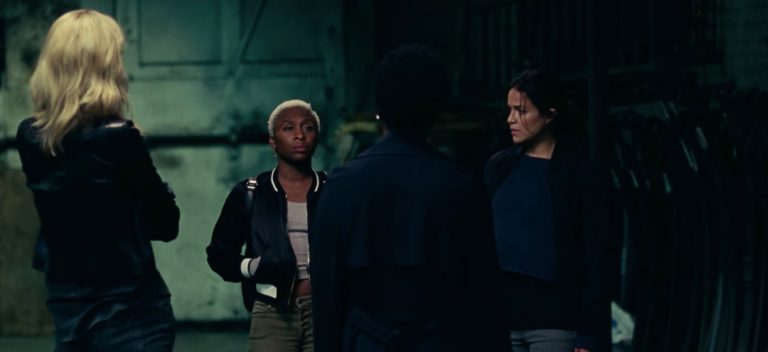
    Widows
    Elizabeth Debici, Cynthia Erivo, and Michelle Rodriguez in Widows.

    However, their planning and execution of the heist is not the center of the story. It’s thrilling and suspenseful, especially when Hans Zimmer’s beaming score is supporting it, but it’s not the main propulsion of the story. Instead, it’s the widows themselves that are the narrative and emotional drive as we watch them navigate life after losing their husbands and finding strength in a society that undercuts them as women.

    All the while, in the background, a story of political intrigue plays out as the contentious election between Manning and Jack Mulligan (Colin Farrell) the son of the current alderman of the 18th Ward (Robert Duvall). There, we also confront McQueen’s interest in adapting this story specifically in Chicago and at this time in our political history. 

    The main theme of Widows can be boiled down to dichotomies in our increasingly polarized country. Those lines, drawn across race, wealth, and gender, are captured visually through Sean Bobbitt’s stunning cinematography.

    There are physical separations between each side. In one of the best scenes of the movie, and perhaps of the year, Mulligan, leaving a campaign event, climbs into his limo. However, the camera doesn’t follow him in. Instead, it’s fixed on the hood of the car showing us the neighborhood turn from abandoned lots and distressed storefronts to tree-lined suburban streets with ivy-covered mansions within minutes. It emphasizes the modern-day segregation in Chicago.

    The balancing act McQueen pulls off with the film is impressive. It succeeds on every field it’s playing in. However, if there’s anything takes Widows from good to great, it’s the performances. Every single actor has their moment. Kaluuya and Henry are worthy villains. Cynthia Erivo, who plays a single mother who helps the widows, turns in more great work after nearly stealing Bad Times in the El Royale last month. Carrie Coon and Garret Dillahunt do great work in small roles. Duvall and Farrell make a great onscreen father and son team.

    But the real success her comes from the performances of Michelle Rodriguez, Viola Davis—giving another powerhouse performance—, and particularly, Elizabeth Debicki, whose heartbreaking, funny, and charismatic performance as Alice ranks as one of the best of the year.

    At one point, a cop says, “he should burn in hell, but hey, Chicago will do.” In Widows, Chicago stands in as a microcosm of the United States. Racial tensions are the highest they’ve been in decades, police shootings are on the rise, the wealth gap is turning into a chasm, and women have to fight against a system that oppresses them every day.

    Flynn’s smart screenplay and McQueen’s always stylish and steady direction guide the film through those nuances and the result is nothing short of extraordinary. Widows boast the best cast of the year and is sure to be that rare film that bridges the gap between arthouse and mainstream.

    Widows is in theaters now.

    Karl’s rating: