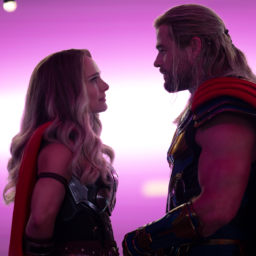
Tag: Chris Hemsworth

  • ‘Thor: Love and Thunder’ leans into weirdness and queerness | movie review

    ‘Thor: Love and Thunder’ leans into weirdness and queerness | movie review

    In his fourth solo outing, Thor: Love and Thunder finds Thor and Valkyrie align with an unlikely new hero to take down a villain with a taste for revenge.


    Thor: Love and Thunder makes up for what it lacks in structure and narrative in charming oddball energy, maximal laughs-per-minute, and a cast that is game for anything. Director Taika Waititi, returning after a very successful entry in Thor: Ragnorok, throws everything but the kitchen sink into the movie—for both better and worse. Sometimes the emotional beats are betrayed by the comedic tone and vice-versa, but when the movie gets it right—like in the riotous but stirring reveal of The Mighty Thor—it’s perfection.

    Thor: Love and Thunder might be more of a Taika Waititi movie than it is a Marvel Cinematic Universe movie. I mean, it’s colorful, gay, and has a running gag about screaming goats—it doesn’t get much more Waititi than that.

    While the most recent movies in Phase Four of the Marvel Cinematic Universe have to do much heavy-lifting in setting up the rest of the series, Thor: Love and Thunder stands on its own—even with the cameos.

    After all, the last time we saw Thor (Chris Hemsworth) was in Avengers: Endgame where he became one of the few main superhero holdovers from the original Avengers. Much time has passed and there is much to catch up on, which we see in a sleek and often-hilarious montage narrated by fan-favorite Korg (voiced by Waititi). Korg explains that Thor has been galavanting across the universe with the Guardians of the Galaxy “helping” various worlds with their problems. What the catch-up is meant to explain (other than how Thor dropped all his Endgame weight) is how Thor has become a bit more of a bohemian narcissist as he’s searched for meaning after helping defeat Thanos.


    ADVERTISEMENT


    Another thing Phase Four has had in common is the use of cameos to draw audiences in (I’m looking at your Spider-Man: No Way Home). And while the move can sometimes come off as cumbersome pandering, the Guardians’ (Chris Pratt, Pom Klementieff, Karen Gillan, Vin Diesel, Bradley Cooper, Sean Gunn, Dave Bautista) appearance feels slight enough to not detract from the movie. Were they completely necessary? Probably not. But they were a welcome sight.

    Eventually, following a distress message from Sif (Jamie Alexander reprising her role), Thor learns that Gorr the God Butcher (Christian Bale under heavy makeup) has been going from planet to planet murdering Gods. In the movie’s cold open, we see Gorr lose his daughter after he’s slighted by the God he worshipped spurring his journey of revenge. More importantly, Sif reveals that New Asgaard is next.

    The Sif scene is the perfect example of Waititi maintaining his comedic tone while still delivering on narrative. Sif asks Thor to let her die following a battle with Gorr so that she can go to Valhalla. An apologetic Thor informs her that she actually needs to die in the battle to go to Valhalla, but quips in the movie’s funniest one-liner that maybe her missing arm made it to Valhalla.

    Thor rushes back to the settlement of Asgardians where leader King Valkyrie (Tessa Thompson) is battling with the shadow creatures sent by Gorr. In yet another scene of Waititi’s ingenuity, we are treated to an epic battle, introduced to The Mighty Thor, and see a hilarious montage of how Thor and his one true love Jane Foster’s (Natalie Portman) relationship crumbled under the weight of both of their duties—Thor’s to the Avengers and Jane’s to her research.

    We learn that Jane, who is suffering from cancer, was called to Thor’s destroyed hammer Mjölnir. When she got to the hammer, it repaired and gifted itself to Jane in an attempt to save her. Now, as The Mighty Thor, she vows to help Thor and Valkyrie defeat Gorr who kidnaps New Asgard’s children to a mysterious land called the shadow realm.


    ADVERTISEMENT


    Thor and Jane’s relationship acts as the emotional anchor for the movie through all its absurdness. However, as often as the tonal balance between humor, thrills, and drama works—it doesn’t.

    The journey to the shadow realm takes our heroic quartet to Omnipotence City, a haven for the gods, where they hope to drum up support in their battle against Gorr. Specifically, they want to get the help of Zeus (Russell Crowe in a hilarious extended cameo). Unfortunately, Zeus is more interested in showing off with his lightning bolt for the other gods and, oh yeah, the orgy scheduled for later in the day.

    The riortous scene is comedy gold (pun intended) where we get to see just how far Marvel is willing to let Waititi go (we go as far as seeing Chris Hemsworth’s golden buns). We’re also treated to Valkyrie queering it up—and bopping to Mary J. Blige’s “Family Affair”—a gold-splashed action scene, and, of course, screaming goats. It’s a highlight scene.

    On the action side, a battle in the “shadow realm” is presented almost completely in black-and-white in one of the most thrilling creative decisions I’ve seen in a Marvel in quite some time. The scene is almost pure horror, but because of the tone up until that point it’s difficult to feel the stakes. While Bale is completely committed to the role of Gorr—and is often terrifying—you never truly feel he’s dangerous.

    That’s why when the movie works best when it focuses on just the characters.

    With Tessa Thompson’s Valkyrie, a history lesson on Korg’s people, and Chris Hemsworth’s peach, Love and Thunder is easily the queerest MCU movie yet.

    Still, it was a low bar. In the first three phases of the MCU, it seemed that LGBTQ+ people did not exist despite romance and sexuality being front and center. I mean, one of the first few scenes of Iron Man was Tony Stark sleeping with a female reporter. Queer representation in the MCU has only now started to settle in with characters like Phastos in Eternals and now Thompson’s Valkyrie and Waititi Korg in the Thor franchise wearing their queerness unapologetically. The result? A more colorful movie, both literally and figuratively.


    ADVERTISEMENT


    The dimension that it adds to a character like Valkyrie helps elevate the movie to a more profound plane in the same way that Thor and Jane’s past gives us an emotional investment in their narrative. Instead of being heroes of perfection, they themselves have trauma that drives them forward—or hold them back. Waititi’s grasp of tone and narrative in those scenes is perfection—much like his underrated gem Hunt for the Wilderpeople. It’s when he has to dig back into the MCU formula that the movie loses its color.

    It’s clear that the best way for the MCU to move forward is to give its directors full creative control over their movies from screenplay to direction.

    Much of Thor: Love and Thunder feels like MCU mastermind Kevin Feige handing Taika Waititi a blank check and a script and saying, “go,” much like Doctor Strange in the Multiverse of Madness felt like it had Sam Raimi’s DNA in it. However, these two movies in addition to Chloé Zhao’s Eternals show that unless Marvel truly allows these directors to completely run away with their movies—story and all—it’s difficult to meld the two visions. Of those three movies, I think Love and Thunder might be the least successful because Waititi had the more difficult balancing act. He was making a comedy. All the while, Disney needed him to deliver a popcorn blockbuster and Marvel needed him to deliver on storylines familiar to comic readers. He mostly succeeds. It’s clunky, the pacing is off, but I can’t deny that I laughed nearly every second of screentime.


    ADVERTISEMENT


    More movies, less problems


    Hey! I’m Karl. You can find me on Twitter and Letterboxd. I’m also a Tomatometer-approved critic.

    💌 Sign up for our weekly email newsletter with movie recommendations available to stream.


    ADVERTISEMENT
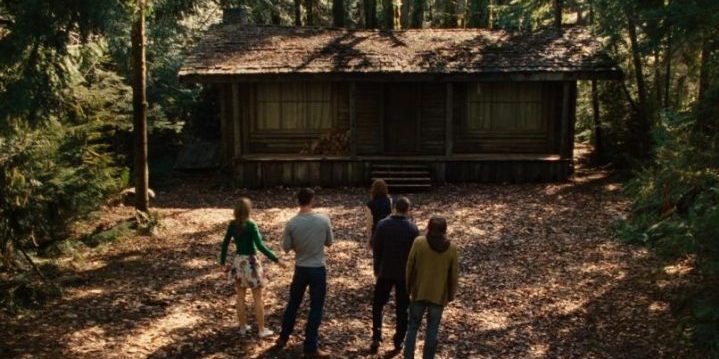

  • Why The Cabin in the Woods is A New Classic Horror Movie

    Why The Cabin in the Woods is A New Classic Horror Movie

    Five years later, The Cabin in the Woods is looking more and more like a horror classic that is singular in its mission to revitalize the genre that we know and love.

    Five years ago, the trajectory of the horror genre was forever changed with the release of the Joss Whedon and Drew Goddard film The Cabin in the WoodsWell, maybe not forever changed, but it sent a statement to the horror community that has certainly been heard.

    Cabin is a loving hate letter to the horror genre. It simultaneously emulates — specifically the genre post-Evil Dead — and criticizes its new tropes by “explaining” its most outlandish aspects. The last movie to attempt this to success is Scream, which set off yet another wave of copycat movies. However, The Cabin in the Woods is one that won’t be easily copied, which is why it is and will stand as a new horror classic.

    Drew Goddard and Joss Whedon wrote The Cabin in the Woods in essentially a weekend as a response to a couple of failed projects and a glut of “torture porn” horror movies — popularized by the Saw series. In the Blu-ray commentary, they called the movie “something for us.” However, that “us” can also describe fans of the genre. This movie could only be born out of horror movie fanatics that are so well-versed in its history and tropes that it would take another horror movie fanatic to truly catch all the references. In that sense, The Cabin in the Woods is a gift to horror fans.

    💌 Sign up for our weekly email newsletter with movie recommendations available to stream.


    ADVERTISEMENT
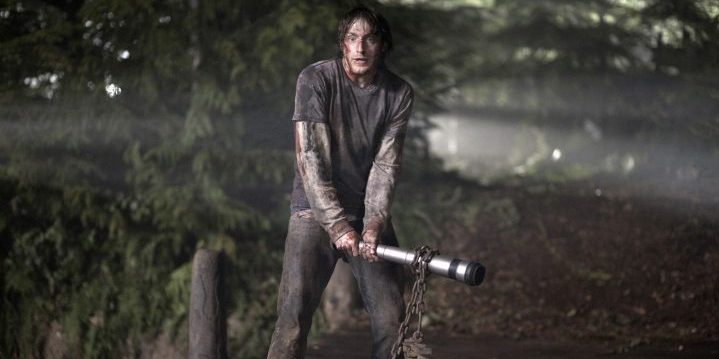

    The Cabin in the Woods doesn’t just subvert the genre tropes, it challenges the very fabric of the horror movie industry. The movie opens on Sitterson (Richard Jenkins) and Hadley (Bradley Whitford) speaking to Wendy Lin (Amy Acker) about several failed rituals around the globe. Goddard and Whedon’s decision to open with this scene was surprising but completely necessary to the success of the movie. Without it, we’d open to the next scene which shows the girl next door type Dana (Kristen Connolly) packing for a weekend at the eponymous cabin in the woods with her newly blonde friend Jules (Anna Hutchison) and her jock boyfriend Curt (Chris Hemsworth). Goddard creates the opening of almost every 2000s horror slasher so perfectly — right down to the score — that the audience would immediately be turned off by it. However, the opening scene in the facility coupled with the fact that the characters don’t exactly meet their stereotypical horror counterparts — Dana had an affair with a professor, Jules is pre-med, and Curt is at school on full academic scholarship — makes you realize that this is a horror movie like no other.

    Fran Kranz in The Cabin in the Woods

    Goddard was careful to actually recreate the horror movie setup that he is looking to tear down — the other two friends joining them on the trip fill the roles of the comedic stoner Marty (Fran Kranz, who gives one of the best performances of 2012 in the film) and love interest Holden (Jesse Williams). The group even encounters a creepy old man at a seemingly abandoned gas station warning them of their impending doom. However, Goddard and Whedon use the scenes at the facility to explain those occurrences. It’s a subtle jab as to why every horror movie plays out the same.

    By the time the film comes together — which is refreshingly gradual compared to the sudden “twist ending” that has also plagued the genre — you’ve already pieced together the clues and have come to an understanding about it. Simply put, The Cabin in the Woods is one of the sharpest satires of our generation. It’s a meta-horror movie that simply laughs at the very movies it’s trying to perpetuate. More than that, there’s a clear sense of recognition. Any horror fan watching the movie can pick out the cliches and stereotypes. However, the movie quickly subverts those and replaces them with reference after reference to classic horror movies — some direct and some you have to dig through your brain to unlock. There are so many that you have to pause the movie several times to catch them all. But that’s why Cabin is so good. As much of a sharp criticism it is, it’s also a playground for horror fans to play in. After watching this movie a dozen or so times I am still discovering new references.

    💌 Sign up for our weekly email newsletter with movie recommendations available to stream.


    ADVERTISEMENT

    But what does it mean? Satires often have a message to whatever they’re satirizing. So, what is the message to the horror genre? Well, the last few minutes of the movie quite efficiently lay that out there. The genre and its fans need a hard reset. We need to stop asking for more blood, more gore, and more sex when it comes to the genre. Instead, the movie begs for smarter characters, more interesting rules, and new stories to be told. Instead of the 33rd Halloween movie, Goddard and Whedon send out a plea for the next Scream or 28 Days Later. The genre needed a reinvention and, in my opinion, The Cabin in the Woods started one.

    Following Cabin we’ve seen an influx of original horror. Some can’t be attributed to the movie. The Conjuring is another movie that was on the forefront of the horror renaissance and part could be attributed to the fact that people that grew up with 80s horror now have the chance to make movies that they want to see. However, I also think that Cabin gave filmmakers the confidence to tackle more interesting stories. Between The Witch, It Follows, The Babadook, and Get Outthis decade has had its lion’s share of great horror. However, I’m always going to look fondly on The Cabin in the Woods for encapsulating the mood of the times and acting as a transition into the golden age of horror.

  • ‘Avengers: Endgame’ is a fitting end to the MCU — movie review

    ‘Avengers: Endgame’ is a fitting end to the MCU — movie review

    Avengers: Endgame is an epic, emotional, spectacle-driven farewell to the Marvel Cinematic Universe as we know it — and it’s perfect in every way. 

    30-second review: Avengers: Endgame is an epic, emotional, spectacle-driven farewell to the Marvel Cinematic Universe as we know it. And the fact that it is so clearly an end is part of the reason it’s so successful. There are many callbacks and moments of familiarity that will make fans cheer, but they don’t feel pandering. Screenwriters Christopher Markus and Steven McFeely took care to earn every one of the moments and often having them based in character.

    It also helps that the movie’s structure is that of an epic balancing multiple story threads and arcs without feeling overstuffed. And it all culminates in a satisfying, glorious end that reminds us why seeing movies with a crowd is so powerful. The MCU is an incredible feat and Avengers: Endgame is the perfect capper to it.

    Where to watch Avengers: Endgame: Available to buy or rent on Amazon.

    Whatever it takes. Full review below ?


    Don’t get it wrong, Avengers: Endgame is the end of the Marvel Cinematic Universe. Yes, these movies will continue. But this is a series finale. And like any good series finale, it’s filled with moments of joy — and fan service (more on that later) — sadness, nostalgia, and, most importantly, a vision for the future. Whatever comes next is something new — and that’s the way it should be.

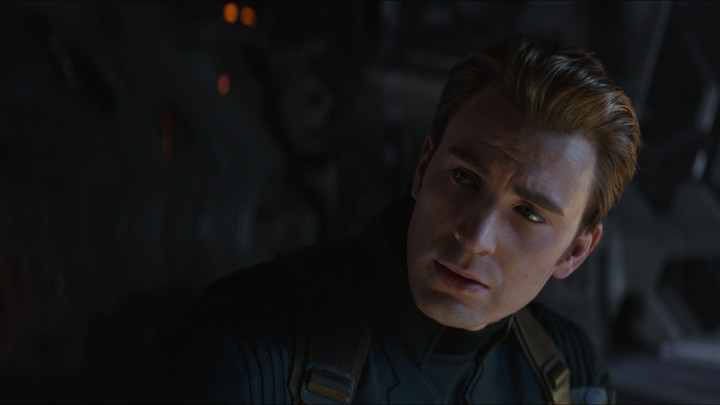
    To the credit of MCU mastermind Kevin Feige and directors Joe and Anthony Russo, this movie is proof that every movie, every moment, and every character along the way mattered. Endgame is a celebration of the journey and the six heroes that began it all — Tony Stark/Iron Man (Robert Downey Jr.), Steve Rogers/Captain America (Chris Evans), Thor (Chris Hemsworth), Natasha Romanoff/Black Widow (Scarlett Johannson), Clive Barton/Hawkeye (Jeremy Renner), and Bruce Banner/The Hulk (Mark Ruffalo). It’s their finale — and what an emotional, surprising, and exciting curtain call it is.

    It’s difficult to talk about Endgame without spoiling any plot details — and yes, avoid spoilers at all costs. I’ll be vague here. Because even if you think you know what’s going to happen, you don’t. We begin about a month after Thanos (Josh Brolin) wiped out half the population of the universe using the six Infinity Stones and the Avengers are at a loss.

    Even though Endgame clocks in at just over 3 hours, it doesn’t drag. Though the first act spends a lot of time with the characters working through their defeat. They have always been the world’s hope. Now, they’re the ones in need of some hope.

    It’s the raw moments with these characters that I missed in Infinity War. That movie had the difficult job of setting up the stakes for this movie and it did that successfully. But what makes the MCU so impressive is its willingness to slow the action down for the sake of character development. So much of Endgame is spent delivering payoffs and callbacks for fans. A large chunk of the movie is a clever and entertaining trip down memory lane. That doesn’t mean that it doesn’t earn the emotional payoffs for its characters — particularly the original six Avengers.

    Eventually, the story shifts to a Hail Mary attempt at reversing the effects of Thanos’ snap that is so ridiculous that it might just work. And the screenplay penned by Christopher Markus and Stephen McFeely keeps things moving. I’ve always praised the original Avengers movie for its brilliant story structure, Endgame is similarly well-paced and focused. It builds to a brilliant final act that can only be described as Earth-shattering. It’s not an exaggeration to say I was physically shaking.

    But that’s what these movies do so well. They get you laughing when they want you to laugh, crying when they want you to cry, cheering when they want you to cheer. If the Russo’s specifically are to be credited with anything it’s that they get you to do those things without feeling like you’ve been manipulated.

    Some of the praise for that has to be given to the performances as well. Chris Evans gives the best performance of his decade-long turn as Captain America while Robert Downey Jr. absolutely nails every emotional beat of Tony’s storyline. On the other hand, Chris Hemsworth and Mark Ruffalo hold down the comedic end. It’s a well-oiled machine that chugs to its incredibly satisfying conclusion.

    Which is good, since this is the end. The MCU will go on, but this is a bittersweet finale this 22-movie run. Storylines come to a end — all well-earned — and characters leave — some die, some move forward to uncertain futures, some stay right where they are. Still, they’re all changed. Every single character is different from when they were first introduced and that’s why no franchise has been able to do what the Marvel Cinematic Universe has been able to do.

    Endgame is a farewell. An epic, emotionally draining, spectacle-driven farewell. And yet, things are just getting started.


    ADVERTISEMENT


    More movies, less problems


    Hey! I’m Karl. You can find me on Twitter and Letterboxd. I’m also a Tomatometer-approved critic.

    💌 Sign up for our weekly email newsletter with movie recommendations available to stream.


    ADVERTISEMENT


  • ‘Bad Times at the El Royale’ review — A nostalgic 60s neo-noir

    ‘Bad Times at the El Royale’ review — A nostalgic 60s neo-noir

    Bad Times at the El Royale is a thrilling, character-driven neo-noir homage that will keep you guessing from beginning to end. 

    Don’t let the flashy trailers, catchy title, or A-list stars fool you. Bad Times at the El Royale is not your typical popcorn thriller. Written and directed by Drew Goddard, who had a lot to live up to after his masterpiece debut film The Cabin in the WoodsBad Times unquestionably lives up to its pulpy title and delivers a twisting mystery with a cast of characters whose intentions are always in question.

    However, Bad Times is not a straight-forward entry in the neo-noir genre. It’s not surprising considering Cabin is a loving deconstruction of the horror genre that presupposes — correctly — that both the machine putting out horror movies and the fans that flock to them are off on the wrong track. 

    With Bad Times at the El Royalehe emulates the pulpy neo-noir genre that has found new life through Quentin Tarantino’s carefully crafted homages. The movie is complete with title cards introducing each section — each character’s section is defined by their assigned room. Unlike Tarantino, Goddard is more interested in the themes of the genre. Good and evil, right and wrong, alienation and paranoia. He explores those themes by directly tying them to the time period: 1969.

    The El Royale hotel is split right down the middle. Half is in California and half is in Nevada. As the first two guests in our cast of characters arrive, the bright colors and whimsical 60s design of the hotel set us firmly in the time period. However, it’s not indicative of the rest of the movie.

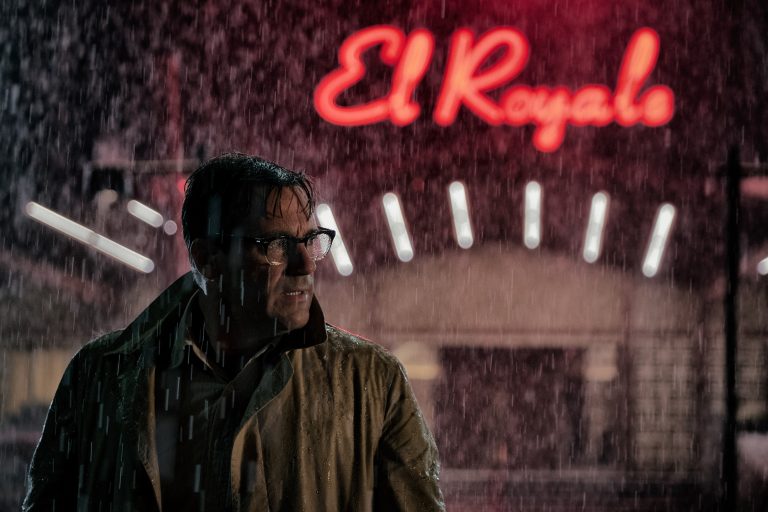
    For almost the whole running time—the movie is set over one night—the hotel is shrouded in darkness and pummeled by a storm that seems to react to the bad times happening in the hotel. And yes, they’re as bad as you imagine. 

    You see, though the guests consist of hopeful lounge singer Darlene Sweet (Cynthia Erivo) and old grizzled priest Daniel Flynn (Jeff Bridges), not everyone has good intentions. The movie is patient. It doesn’t tip its hand too soon. It’s a reason it’s so mesmerizing.

    The slow and methodical cold open where we watch a mystery man (Nick Offerman) arrive in a hotel room and take it apart to hide a bag with unknown contents is captivating even if the camera doesn’t move and nothing really happens. Even the next scene where we watch each guest arrive plays out slowly but with an underlying tension that doesn’t give any hints as to where the story is going. 

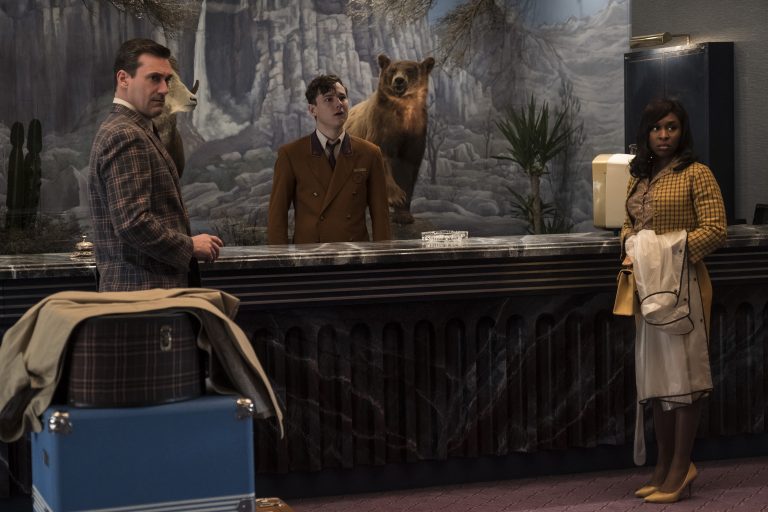
    Bad Times at the El Royale
    Jon Hamm stars in Twentieth Century Fox’s BAD TIMES AT THE EL ROYAL. Photo Credit: Kimberley French.

    From there, the movie plays out like an Agatha Christie crime novel mixed with a Hitchcockian thriller with an added dose of Tarantino-esque style. Pieced together with clips from different characters perspectives — often covering the same event — and flashes to their pasts and what led them to the El Royale, the movie doesn’t necessarily have a linear narrative. However, all plotlines lead to one fateful event. 

    The amiable southern vacuum salesman Seymour Sullivan (Jon Hamm) sulks around the hotel before coming across a corridor with two-way mirrors that look into each room — we’ll revisit this place a few times — he watches as each guest does increasingly strange things.

    The nervous, but eager to please concierge/waiter/housekeeper Miles Miller (Lewis Pullman) is struggling with things he’s done in his past that he assures to Father Flynn only get worse. Even more mysterious, and more sinister, is Emily Simmerspring (Dakota Johnson), who has an unusual cargo with her. 

    Eventually, the ghosts that haunt each of the characters begin to intertwine as characters are unmasked to deadly results. Just as the El Royale straddles two states, the characters straddle moments in their lives. It’s a purgatory that each person will leave — alive or dead — as a good or bad person even if the line between the two isn’t as clear as you’d think. And it’s deliciously fun to watch where each guest ends up. 

    Bad Times at the El Royale will be polarizing to mainstream audiences. I’m surprised it’s a wide release at all. At 140 minutes, it could feel like a bloated meandering thriller that takes too long to get to the point. In reality, it’s a slow-burn character drama that puts these seven characters to the test. I know, I only mentioned five. I’ll leave the rest to surprise. What I will say is one of them is an amiable cult leader played by Chris Hemsworth. I’ll let you imagine how he fits in.

    However, if you take a chance and give yourself over to the movie, it’s an extremely fun and surprisingly emotional ride. That’s thanks to the ensemble, which is easily the best this year. In particular, the most junior members of the cast, at least on film, Cynthia Erivo and Lewis Pullman, give the two best performances.

    Erivo belts out songs that often play under scenes to great effect. But she tinges every one of them with a hint of sadness and regret. On the other hand, Pullman’s physicality and delivery reveal a person that is struggling with who they are in a way that you genuinely ache for him. That’s what caught me off guard watching the movie.

    In the end, as each character makes their exit, I was saddened saying goodbye to each of them. All their quirks and flaws. Their bad times at the El Royale were great times to watch in my book. 

    Where to stream Bad Times at the El Royale: Available to rent or buy on Prime Video.

  • Thor: Ragnarok review — Funny, quirky, the best Thor movie yet

    Thor: Ragnarok review — Funny, quirky, the best Thor movie yet

    Thor: Ragnarok is a quirky and hilarious departure from the usual Marvel fare that feels fresh and possibly one of the best movies the studio has put out

    The Thor sect of the sprawling Marvel Cinematic Universe needed a life saver change after two middling movies that are among the least critically successful movies that the franchise has produced. Well, that lifesaver came in the form of a disco-infused, neon colored shot delivered by director Taika Waititi. His last movie, Hunt for the Wilderpeople, was among my favorites last year and one of the most inspired comedies of the last decade or so. So it’s not surprising that Thor Ragnarok succeeds mainly as a comedy. However, this retro-fitted isn’t just a Guardians of the Galaxy rip-off like it might seem on the surface. Ragnarok succeeds because it has personality. It’s characters come off the screen and become more than just a few well-delivered one-liners. No offense to the Guardians of course.


    The plot of Ragnarok sounds like typical Marvel fare, which usually involved some world-ending event that needs to be stopped. Following Age of Ultron, Thor (Chris Hemsworth) goes out to investigate the apocalyptic dreams he’s been having, which turns out to be the eponymous Nordic legend that foretells the destruction of Asgard. However, in the first scene, which starts with Thor, chained up in a cage, in voiceover saying: “You might be wondering how I got here…” It harkens back to the 80s films that Waititi clearly found inspiration in, but more importantly, it tells the audience this is not just going to be fun. It’s going to be silly fun. After seemingly stopping Ragnarok — refreshingly at the beginning of the movie rather than the end — Thor returns to Asgard to learn that Odin isn’t there and is instead on Earth, dying. With the help of Doctor Strange (Benedict Cumberbatch in a hilarious cameo), he tracks his father to Norway where he learns that when Odin dies, Thor’s evil sister Hela (Cate Blanchett), goddess of death, will be freed from the prison she was locked away in. And she’s pissed.

    Blanchett slips perfectly into the universe as this deliciously evil villain partially because she isn’t afraid to ham up her line deliveries, strut her way between brutal killings, and do everything but twirl a mustache. But it’s what this movie needs in its villain. It needs someone that the audience is going to hate, but love hating her. Hela quickly disposes of Thor and Loki (Tom Hiddleston) and makes her way to Asgard and begins her take over. Meanwhile, Thor wakes up in a garbage dump in the planet of Sakaar. This planet, which embraces every color of the rainbow, is what I had been hoping to see from the Thor franchise. Of all the Marvel superheroes, Thor is the only one, other than the Guardians, that has a world that could be built any way that the creators want. And instead, the first two movies opted for New Mexico and London. Here, Waititi fills the world with hilarious and quirky characters — Rachel House is hilarious as a bodyguard and Waititi lends his voice to the pebble-brained Korg — head by the Grandmaster (Jeff Goldblum, wonderful in his usual Goldblum way).

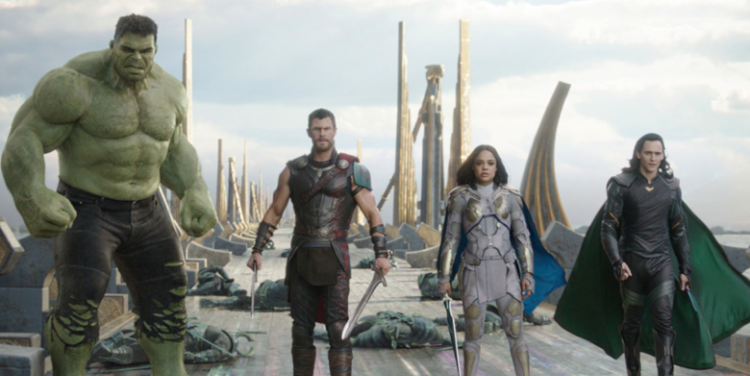
    From there, the movie follows Thor as he attempts to find a way to escape the crazed dictator and finds help from Valkyrie (Tessa Thompson) and Bruce Banner aka the Hulk (Mark Ruffalo). Many of the scenes on the planet are served with Waititi’s usual offbeat humor that works so well and will have you laughing nearly nonstop. The jokes come as often as the action and give the movie a personality and rhythm that none of the others have had.

    Hemsworth seems to have finally found the director that meshes with his natural comedic sensibilities that were hinted at in Ghostbusters. Thor, often seen as the most boring Avenger, is allowed to be the comedic force behind this movie and Hemsworth takes up the duty with flair. And that allows the supporting cast to truly have shining hero (and villain) moments. Most notably, Heimdall (Idris Elba), who has been stealthily sheltering the people of Asgard, finally has a storyline worthy of his actor. In watching the first two Thor movies in preparation for this film, one thought carried through to both: why doesn’t Elba have anything to do. Well, that is certainly rectified in this movie. While his screen time isn’t great, Elba has the kind of movie star quality that makes him magnetic on screen.


    However, the actor that proves yet again that he’s an indispensable part of the Marvel Cinematic Universe is Loki. My one and biggest complaint about the movie is that it doesn’t have the strong emotional character arc that most of the Marvel movies have. Something that Spider-Man Homecoming nails. But the closest it comes is the relationship between Thor and Loki. Hiddleston is there largely for the laughs as he attempts to outwit nearly every character with little success. But his best scenes are those where he underplays the relationship that Loki and Thor have built, destroyed, and rebuilt over the entire franchise. This movie would have been the best Marvel movie ever made had it explored the characters on an emotional level, but based on pure entertainment, this is in the upper echelons.

    Thor: Ragnarok takes the humor and world-building from Guardians and meshes it nearly seamlessly with the usual Marvel formula to stunning results. It just shows that Marvel needs to continue hiring interesting directors and give them the kind of control they need to bring their vision to life. Ragnarok is the perfect example of that formula succeeding. Waititi turned one of the franchises that seemed to be Marvel’s few failures into the one I’m most interested in seeing continue.

    ★★★★ out of 5


    Watch Thor: Ragnarok on Amazon!