Tag: Chris Pine

  • ‘Spider-Man: Into the Spider-Verse’ review — One of the best superhero movie in years

    ‘Spider-Man: Into the Spider-Verse’ review — One of the best superhero movie in years

    Spider-Man: Into the Spider-Verse is a bright and bold loving critique of the superhero genre and a much needed hard reset.

    30-second review: Spider-Man: Into the Spider-Verse is so keenly aware of what it wants to be even though what it wants to be has never existed before. It’s a bright and bold loving critique of the superhero genre and a much needed hard reset. It doesn’t shy away from the usual tropes, but it tackles them in a way that is innovative, visually jaw-dropping, and laced with real emotion. With great power comes great responsibility, and the responsibility was in the right hands with Into the Spider-Verse.

    Where to watch Spider-Man: Into the Spider-Verse: Available to stream on Netflix. You can also buy or rent it on Prime Video.

    With great power comes… oh, you get it. Full review below ?


    Spider-Man: Into the Spider-Verse leans into the ridiculousness of superhero movies but respects how empowering they can be. In an odd way, Into the Spider-Verse feels akin to The Cabin in the Woods. The 2012 horror film directed by Drew Goddard was a loving hate letter to the genre in played in. Into the Spider-Verse seems to be interested in the same thing. 

    It’s a meta-commentary on the oversaturation of superhero origin stories told over and over again—each hitting the same beats as the last. Hilariously, the movie begins with an origin story montage that pokes fun of previous movie incarnations of the superhero. Specifically, the Sam Raimi trilogy—even the infamous Spider-Man 3 street walk-dance.

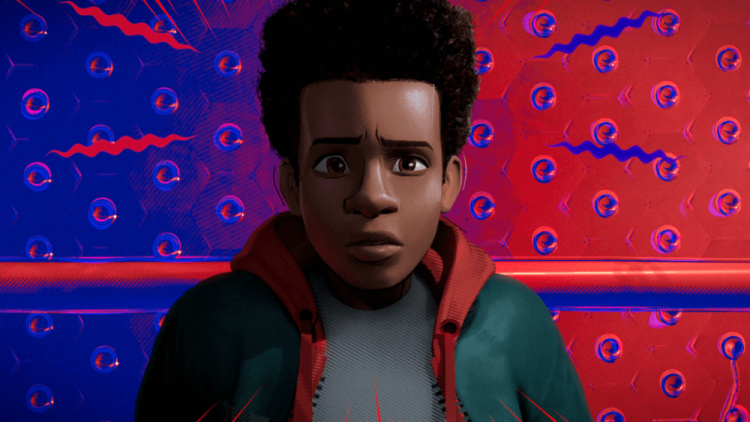
    In Into the Spider-Verse, we watch the origin story of 13-year-old Miles Morales (Shameik Moore), a half-black/half Puerto Rican teen who is unexpectedly thrust into the position of Spider-Man.

    However, this is not your typical origin story. Yes, we hit the familiar beats of the Spider-Man story we all know—bit by a radioactive spider, unexpectedly discovers powers and doesn’t know how to control them—but there’s the added layer of Miles existing in a world where Spider-Man (Chris Pine) is already a fixture.

    So, when that Spider-Man is taken down by baddie Kingpin (Liev Schreiber), Miles is inspired to take over. At first, he’s overwhelmed by his powers and the responsibility. However, he’s not alone.

    Fisk’s evil plan is to open up a multiverse underneath Brooklyn for reasons I will keep unspoiled. However, in doing so, a Spider-Man from another dimension is brought into Miles’. This Spider-Man goes by the name Peter B. Parker (Jake Johnson). In his world, he’s been Spider-Man for a lot longer than the one in Miles’ world and has become jaded—and overweight—by the job.
    Spider-Man: Into the Spider-Verse
    Shameik Moore voices Miles Morales in Spider-Man: Into the Spider-Verse.

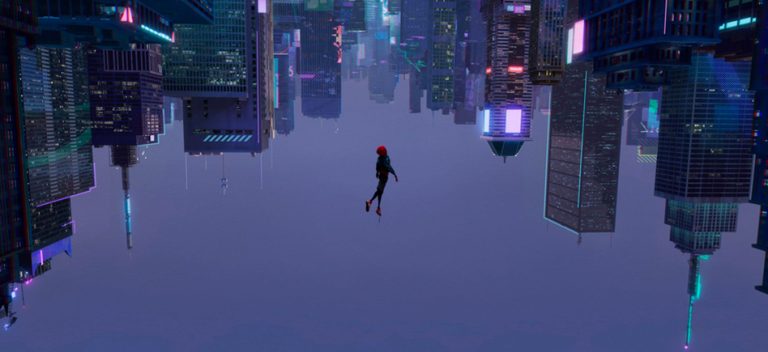
    The movie is upbeat, colorful, and hyper-stylized in a way that comic fans will appreciate. Into the Spider-Verse is, perhaps, the best film interpretation of a comic book’s sensibility—it includes on-screen sound effects and the classic comic book text box without feeling gimmicky.

    The filmmakers even went as far as slowing down the frame rate to 12 frames per second—the standard is 24—to make the action look like a moving image. This is best used in a hilarious action scene where Peter B. Parker and Miles first meet.

    As they bounce through the streets of Brooklyn—hilariously attached by their own webs—chased by the police, there is a keen cartoon sensibility to the comedy and comic book veneer to the way the action is rendered. That carries throughout the movie and delivers some of the best action and comedic set pieces of the year. 

    At first, Peter B. Parker, who feels inferior compared his dimensional counterpart, is hesitant to take Miles under his wing. But when he finds out that Miles holds the key to getting him back home he finally accepts. 

    Now that the pair teamed up, they begin to form a mentor/mentee relationship that drives part of the emotional crux of the movie. The other emotional crux is Miles’ relationship with his police officer father Jefferson (Brian Tyree Henry) and with his Uncle Aaron (Moonlight‘s Mahershala Ali)—Miles often feels overwhelmed by his parents’ high expectations of him and goes to his uncle for a reprieve. 

    After a hilarious visit Aunt May (Lily Tomlin)—a badass assistant to this universes Spider-Man—Miles and Peter B. Parker realize that the multiverse has brought in even more Spider-People.
    Spider-Man: Into the Spider-Verse
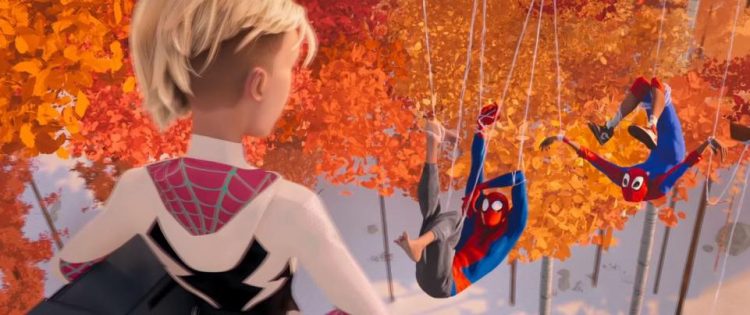
    Hailee Steinfeld voices Gwen Stacey in Spider-Man: Into the Spider-Verse.

    There’s the dark and gritty—to hilarious levels—film-noir Spider-Man (a terrific Nicolas Cage) who is rendered in high contrast black and white and talks in exactly how you’d expect a noir detective to speak. There’s the anime rendered Penni Parker (Kimiko Glenn) who fights with a spider-like robot she controls with her mind. And there’s Spider-Woman who turns out to be Gwen Stacey (Hailee Steinfeld), a young and energetic Spider-Person.

    Together they work to take down Kingpin and return each Spider-Person to their own universe. Of course, there’s a time crunch. If they aren’t returned soon, their cells will degenerate. Along the way, they battle Kingpin’s goons in fan-service references, callbacks, and homages.

    And what is so refreshing—especially with the MCU being the template for most superhero movies—is that there are real stakes and danger in the action. I found myself tensing at the light and funny action because it feels often like any character could be hurt or killed.

    All the elements I’ve mentioned above make Into the Spider-Verse the boldest superhero movie in years and most innovative animated movies ever made. It’s so keenly aware of what it wants to be even though what it wants to be has never been done before. 

    Audiences have become desensitized by the at least three MCU movies, a cadre of DC movies, and a Sony Marvel movie coming out each year. Into the Spider-Verse is a refreshing reset to the genre. In a world where we know superheroes can do anything—with the help of CGI—how do you keep things interesting? Into the Spider-Verse solves this by playing with—and criticizing—the formula.

    It’s bold, funny, sentimental, and one of the best movies of the year.


    ADVERTISEMENT


    More movies, less problems


    Hey! I’m Karl. You can find me on Twitter and Letterboxd. I’m also a Tomatometer-approved critic.

    💌 Sign up for our weekly email newsletter with movie recommendations available to stream.


    ADVERTISEMENT

  • Star Trek Beyond Movie Review — Focus on character revitalizes the reboot franchise

    Star Trek Beyond Movie Review — Focus on character revitalizes the reboot franchise

    Justin Lin’s Star Trek Beyond shows that a blockbuster can be in the same realm as a character drama and still be successful

    Going into Star Trek Beyond I wasn’t feeling the highest on Star Trek Into Darkness (check out my review here). I thought it was thisclose to being a great movie. But two things kept it from that. The first was the underutilization of the full cast. Second, the movie felt more concerned with having these epic action set pieces that it forgot to have a strong plot underneath connecting them. Since Justin Lin was directing it I was a bit nervous that it would actually be even more concerned with action set pieces. He proved me wrong. He proved me so wrong, in fact, that I think this is the strongest movie in the Star Trek reboot franchise.

    Now, I will precede this review with the fact that I saw the movie during an incredible birthday weekend orchestrated by Brian, but I really think that this movie will hold as one of the best blockbusters of the decade.

    I’m not too familiar with the Star Trek franchise outside the reboot films, but I imagine this is what the series felt like. Justin Lin has shown surprising restraint in character scenes throughout the movie. The movie begins with a simple, but resonant monologue that talked about what is like aboard the Enterprise when they aren’t being attacked or fighting. Lin said he was interested in those moments outside of work and how characters interacted with each other in a personal setting and this sequence was perfect in positioning the overall mood of the movie.


    In all, this movie was the most humanizing of the franchise so far. That brings me to the much talked about decision to make Sulu (John Cho) gay as a tribute to George Takei. As a gay Asian man it was so refreshing to see that particular culture portrayed on screen and the meaning behind it was even stronger. The way it was handled was so beautiful. It didn’t feel like an epic moment. It felt normal. As John Cho said, in ten years it’ll just fade into the background because his sexuality didn’t matter. But what was even more impressive was that this movie talked about the lives of these characters outside of the ship. There was Sulu’s family, but early in the movie, there was a scene between Bones (Karl Urban) and Kirk (Chris Pine) where they talked about his father’s death and talking to his mother. It’s so easy to forget that these characters have lives and that three years aboard a ship is going to take a toll.

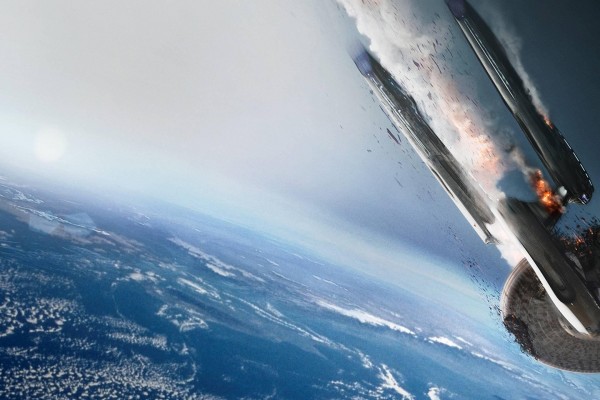
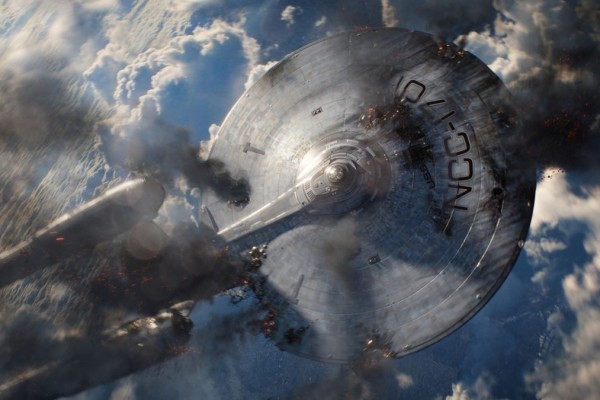
    As for the main plot and action, I think that it is visually one of the most interesting and impressive of the series so far. The Enterprise is attacked just above an uninhabited and uncharted planet and as the crew gradually evacuates, they are separated and some are taken by the mysterious villain Krall (Idris Elba).

    The pairings make for incredibly funny moments, but also such great character moments. There are McCoy and Spock which makes for a hilarious pair, but also really touching moments when Spock begins to question his morality. They naturally seem like such opposites, but when they are faced with what seems like a hopeless situation they raise each other up in their own unique ways.

    Then there’s Chekov (Anton Yelchin [RIP]) and Kirk. I think that Chekov felt like a boy in the first two movies, but he truly comes into himself here with Kirk as his fatherly figure. I wish there was more to their story, but the work the Yelchin and Pine put into it is some of the strongest acting of the series.

    Uhura (Zoe Saldana) remains the heart of the crew and that continues when she’s imprisoned by Krall. She is out insight into him. Plus, she gets to kick ass. I wish her role was more integral to the plot, but I’ll take what I can get. She matches with Sulu, who has also become this strong heart in the crew as well.

    Lastly, we have Scotty (Simon Pegg) and Jayla (Sofia Boutella). They become unlikely partners when she saves him from a group of bandits on the planet. Her ignorance to some of the human tendencies makes for hilarious exchanges between the two. But she also has a nice arc about what it is to be brave. Boutella is a breakout star. Her addition ups the female power in the series and shows what an action hero can truly be.


    But as much as I love the action set pieces like the Enterprise being attacked and crashing into the planet or the rescue plan for the imprisoned crew, I still go back to these character moments. However one sticks out to me in particular.

    MILD SPOILER ALERT AFTER THE JUMP

    Early in the film, we are shown the futuristic Federation base Yorktown. The same way our hearts swelled when we first saw dinosaurs in Jurassic Park and we heard the score swell, the visuals of this city were incredible. But it plays a part at the end of the movie too when Krall turns his attack towards it.

    We are introduced to Sulu’s family on the base, which adds an emotional element to the attack. We aren’t seeing faceless red shirt being killed. It is Sulu’s family who we care about because we care about Sulu. It was a smart simple touch that made the film all the better.

    END SPOILERS!

    Star Trek Beyond is about unity and why being together is better than being apart. With the Brexit and Donald Trump being in the news this year, that message holds, even more, truth. However, Star Trek doesn’t concern itself with politics. Yes it had the first interracial kiss on television, yes they have a gay Asian character, but these are born out of moments of character. It’s what made Mad Max: Fury Road so great and what makes this one of the best movies of the year so far.

    8.5/10

    Get Star Trek Beyond on DVD, Blu-Ray, or digital on Amazon!

  • Star Trek Into Darkness Movie Review — A solid but underwhelming follow up

    Star Trek Into Darkness Movie Review — A solid but underwhelming follow up

    It doesn’t live up to the first movie in the franchise, but Star Trek Into Darkness holds its own as an action thriller

    With Star Trek Beyond hitting theaters this week I thought it’d be the perfect time to go back and review its predecessor, Star Trek Into Darkness (the title gets a negative review).

    I need to explain my history with the Star Trek franchise before diving into this review. Three words: I. Have. None. Yes, my first experience with Star Trek was J.J. Abrams’ 2009 reboot and Patrick Stewart’s facepalm meme. That being said, it was nice going into this film with no prior conceived notions of even the tone of what came before. I didn’t know if it was going to be a crowd pleaser like Star Wars or a gritty action thriller like Alien. I quickly found that it essentially toed the line down the middle, though straying more a bit to the crowd-pleasing side.

    I loved the first movie. I thought it was an incredibly sleek and well-shot action thriller that had a surprising amount of depth in its characters. It was the chemistry among the cast and Abrams’ surprising grasp of the film’s mood that made it so successful. It’s surprising that it took me this long to finally get to the sequel. It’s simply one of those movies that just slipped through the cracks. But when I finally did I thought it was a mixed bag.

    Starting off with the cast. I think that the supporting cast was severely underutilized. Zoe Saldana‘s strong, take-what-I-want Uhura was relegated to a pissed off girlfriend role while Anton Yelchin‘s (RIP) endearing Chekov simply ran around saying what was going wrong. John Cho‘s Sulu, even though at one point becoming the acting captain of the Enterprise, didn’t get much more than some strong lines then fades into the background.

    “Nyota, you mistake my choice not to feel as a reflection of my not caring. Well, I assure you, the truth is precisely the opposite.” – Spock

    Instead, a lot of time was devoted to the relationship between Chris Pine‘s Captain Kirk and Zachary Quinto‘s Spock. I didn’t mind that per se, but much of that storyline didn’t need nearly as much time as it received. Another storyline that had a little too much time was Benedict Cumberbatch‘s villainous turn as Kahn. While I appreciated the attempt to create a multi-layered antagonist with motives that could be perceived as admirable, they gave him too much time to monologue and not enough to be a really cruel bad guy.

    We get a moment briefly when his cruelty is truly explored when Kirk, Spock, Scotty, and Dr. Carol Marcus (Alice Eve) are trapped on an enemy ship, but that moment is short lived. That’s the issue I think Abrams had this time around. He was too concerned with creating these epic set pieces like Kirk and Kahn space diving to another ship or a battle with a Klingon patrol and forgot that there was a story to tell.

    That being said, I thoroughly enjoyed these set pieces and the chemistry between the two lead actors. Plus, there were some moments that weren’t as epic but still showed great vision from Abrams, like an attack on a Star Fleet archive early in the movie. He showed some great restraint and focused more on this incredibly minor character’s motivations to the point that it very well might have been the most affecting part of the movie.

    If you enjoyed the first Star Trek, then you will probably enjoy Star Trek into Darkness for what it is: a summer blockbuster. It doesn’t have the charm or the heart of the first, but it gives enough fuel to the franchise to warrant its existence.

    7/10

    Get Star Trek into Darkness on DVD, Blu-Ray, or digital on Amazon!

  • Hell or High Water Movie Review — A modern western with four great lead performances

    Hell or High Water Movie Review — A modern western with four great lead performances

    Hell or High Water is an entertaining visit into the western that has a modern flair and characters to make it a memorable entry.

    Hell or High Water is an interesting movie it’s not really a crime thriller. In fact, the heist scenes felt like an afterthought — save for the centerpiece climax. What it’s really about is relationships, how we interact with the people around us, and how are actions are indicative of our experiences. Led by four truly fantastic performances, Hell or High Water is a modern western that feels so in and of its time. Though, it also feels like its roots are dug deep into the genre.

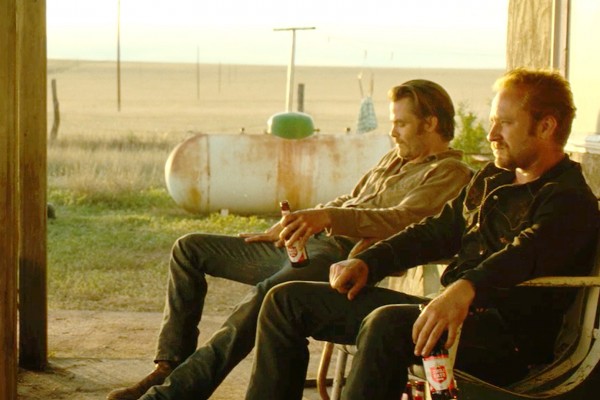
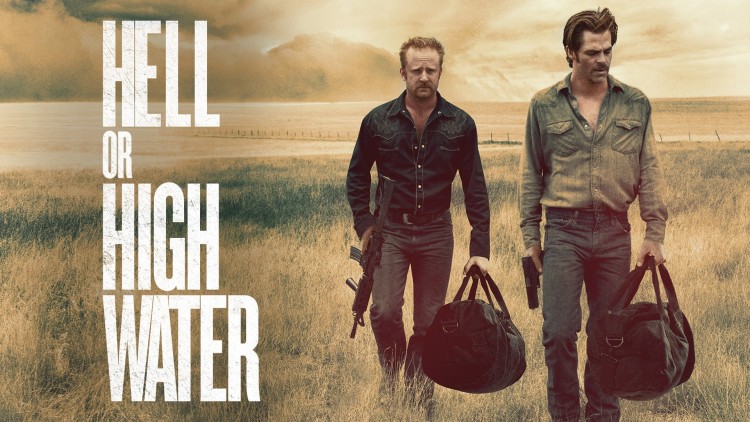
    Hell or High Water tells the story of brothers Toby (Chris Pine) and Tanner Howard (Ben Foster). Their family farm is being threatened with foreclosure following their mother’s passing because of a reverse mortgage that was given out by Texas Midlands bank. With only a few days until the bank seizes the property, the brothers go on a series of bank robberies – Texas Midlands banks to be precise – to pay off the mortgage. However, close on their tail are Texas Rangers Marcus Hamilton (Jeff Bridges) and Alberto Parker (Gil Birmingham).

    Check Out: “La La Land” Movie Review: A surprisingly profound story about dreams and disappointments


    What makes Hell or High Water so endearing is that it carefully treads on the line of satire. I’ve never been to West Texas, but if I had to imagine what it was like, it would probably be this ridiculous version. People say things like “if I can find a rope short enough” and “you’re not even Mexicans!” Even more hilariously, literally every single person has a gun.

    Another element that takes Hell or High Water from entertaining to a smart piece of film is it’s not so subtle subtext about recession-era America. Small towns, big banks, and unpayable mortgages have become the key actors in the housing bubble burst. Just ask Margot Robbie while she sits in a bathtub. While this is every bit a crime movie, that theme shines through.

    However, this is also where my criticism lies. While subtlety usually isn’t the forte of westerns, Hell or High Water really hits you over the head with its themes. From giant flashy bankruptcy billboards to lines that all but say “stick it to the man,” the film doesn’t leave much to the imagination.

    hell or high water movie review

    What does show a little subtlety are the scenes between characters. After all, this is a movie about two partnerships. The relationship between Toby and Tanner isn’t one built on their experiences together. If anything, this spree of bank robberies is their first experience that really brings them together. Their bond is more instinctual. Tanner knows he has to protect his younger brother. He knows the part that he plays in their story.

    The relationship between Marcus and Alberto is both more complex and interesting. Like any western, ball-busting is expected. But the banter between these two, which is sometimes openly racist, doesn’t let on the care that these two have for each other. Though we only see a few days of their lives, the care they have for each other runs deep. You can tell that their collective experiences together have bonded them in the same way brothers are.  While much of Jeff Bridges’ performance is this outlandish stereotypical sheriff, there are some scenes of nuance.

    Taylor Sheridan, whose screenwriting debut was last year’s Sicario, isn’t the striking new screenwriter around. But there’s something endearing about the stories and characters he creates. Look at Emily Blunt’s play-it-by-the-book FBI agent who is out of her depth or Jeff Bridges’ cantankerous cop on the edge of retirement. They’re two completely different characters, but Sheridan instills a quality that feels real in both of them. That carries over to other characters in Hell or High Water, even those with little screentime. Sheridan and director David Mackenzie make the characters feel lived in. Everyone from the four main roles to the waitress at the diner felt like fleshed out people with lives outside of the timeline of the movie.

    Check Out: “Loving” Movie Review: Joel Edgerton and Ruth Negga are quietly powerful


    That being said, so much of the success of the movie has to be accredited to the four main actors. Ben Foster’s dedicated performance seems one-note, but small moments like seeing his mother’s hospital bed adds complexity. Chris Pine has never seemed like an actor in the business for the art. I don’t know if that’s true, but it seems like he took the time to perfect the character. Gil Birmingham has the hard role of playing the straight man to Bridges’ outlandish Texas Ranger. However, he handles himself with ease. But, it is really Jeff Bridges in the role that he was born to play that steals the entire movie. Long drawn out shots of his face hint at something more sincere in his tough guy facade.

    Overall, Hell or High Water works as a modern western because it is just that. It takes the elements of the genre – the cat-and-mouse chase, shootouts – and applies it to a timely setting. Unlike earlier entries in the genre, the movie blurs the line between good and bad and right and wrong. While it’s completely entertaining, it’s that added layer that makes Hell or High Water completely satisfying.

    8.5/10

    Get Hell or High Water on DVD, Blu-Ray, or digital on Amazon!

  • Wonder Woman review — Fun, entertaining, a solid summer blockbuster

    Wonder Woman review — Fun, entertaining, a solid summer blockbuster

    DC finally gets it right with Patty Jenkin’s Wonder Woman thanks to its tight direction, lighter tone, and star affirming performance by Gal Gadot.

    Finally, after nearly ten years of the Marvel Cinematic Universe and four years of the DC Extended Universe has a female superhero been featured as the lead. Not only that, they’ve paired her up with a female director! Gender equality in Hollywood is here! Right? Well, that’s a discussion for another time. But the fact that this is the first major studio superhero film directed by a woman has to be celebrated when talking about Wonder Woman, the fourth installment in the DC Extended Universe. And it’s good! It’s actually good! After three failed attempts to get the franchise off the ground, Patty Jenkins has finally been able to harness an iconic character in the DC pantheon and apply her to the superhero origin formula successfully. While she definitely adheres to the formula, especially since this is an origin story, Jenkins uses all the potential it has, which helps you forgive the movie for its flaws.


    However, many of those flaws carry over from the dour style established in the first two movies in the DCEU. Jenkins takes the parameters she has to work in and builds the film around an inspired performance by Gal Gadot. Although this is yet another origin story, it isn’t one that audiences are as familiar with as the ones for Batman or Superman. This gives Jenkins the freedom to shape the story as she sees fit. Though, she doesn’t stray too far from the source material. Young Diana is the princess of the island Themyskira, a hidden paradise populated by a society of all-female Amazons. The women were created by Zeus to protect men against the corruption of his son Ares, the god of war. Ares eventually fights with the gods before ultimately falling to Zeus. Unsure whether or not he’ll return, Zeus gives the woman a weapon that is capable of killing Ares — the god killer. Young Diana is desperate to train with the warrior Amazons including her aunt, General Antiope (Robin Wright, a standout in this section). However, her mother, Queen Hippoltya (Connie Nielsen) forbids her. Eventually, as Diana’s desire becomes too much, Hippoltya allows her to train. However, the one caveat is that Antiope must trainer her harder than any other warrior before her. The first act of this movie is extremely expositional, which makes it lag compared to later sections. However, Jenkins had the fortune of taking a less-known origin story and really bringing it to live. The vividness of Themyskira comes through in the costume and production design. And every woman from Gadot to the background actors bring the island to life.

    Later, an older Diana, after training extensively for years, watches a plane go down after crashing through the barrier that makes the island invisible to outsiders. Inside is Steve Trevor (Chris Pine), a U.S. Army captain who has been working as a spy against the Germans during World War I. Diana saves him, but not before German troops break through the barrier as well and begin to invade the island. This first battle sequence between the Amazons and the Germans gives us just a taste of Jenkins’ ability to direct action. And while she contends with Snyder’s speed-up/slow down style, she also gives the fight a clear narrative, not dissimilar to the way George Miller directed the action in Mad Max: Fury Road. After learning about the war and becoming convinced that Ares is behind it, Diana compels Trevor to take her to the battlefront to find Ares and kill him before more innocent people are. From the first scene they have together, Gadot and Pine display an incredible chemistry that really drives the emotional beats of the movie. Even with the comic tone of their first scenes, the connection is palpable.

    Gal Gadot in Wonder Woman

    The first third of the movie is shaky but impressive. However, the movie takes flight when the duo arrives in Jolly Ol’ London. Steve leaves Diana with his secretary Etta Candy (a truly delightful Lucy Davis) to get her into more appropriate clothing for the time. The comedy of manners trope has been used in superhero movies before, but it still works here and is fresh. Especially due to the fact that many of Diana’s comments to society are biting and true — her takedown of marriage is specifically memorable. Trevor approaches the Imperial War Cabinet with a journal that contains the notes of Isabel Maru aka Dr. Poison (Elena Anaya), who, along with Erich Ludendorff (Danny Huston), has developed a poisonous gas that they plan on using at the front of the war just as the armistice is about to be called. Most of the cabinet shrug off the threat saying that it is not going to happen because of the impending armistice. However, with the help of Sir Patrick Morgan (David Thewlis), Diana, Trevor, and his team — grifter Sameer (Saïd Taghmaoui), marksman Charlie (Ewen Bremner), and smuggler Chief (Eugene Brave Rock) — make their way to the western front to confront Maru and Ludendorff. I think the three men that make up Trevor’s team are a perfect example of why this movie works and the other DCEU movies don’t. Though their screen time is small, each makes an impact. Each matter. Each has a character that has emotional resonance in the story.

    Wonder Woman doesn’t reinvent the superhero genre. What it does is it shakes off the chains binding it to its franchise and the burden of creating the first installment in a series and instead becomes an actual movie with actual characters and actual conflict. This is something that has unfortunately eluded the DCEU until now. Not only that, the film actually has fun with its characters. The brooding and dark tone of Batman vs. Superman and Man of Steel is left behind for the light and colorful look that the Marvel movies have so successfully harnessed. While Jenkins’ direction is a huge reason for that, Gadot and Pine give performances that elevate the already solid material. Gadot exudes the hero that she is playing. She gives Diana an air of importance, but not self-importance. More importantly, her internal conflict is one of a hero and she sells it even when the script doesn’t. Pine, on the other hand, inhabits the sidekick/love interest role that has been filled by a woman in superhero movie perfectly. He lets Gadot drive the movie, but he gets his moments to make the audience laugh and swoon.


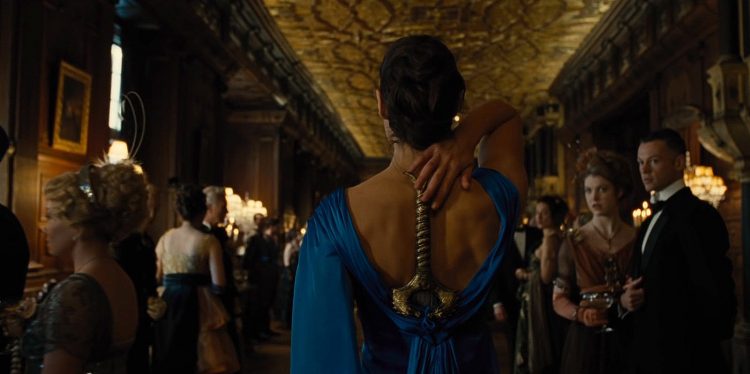
    I think the final twenty minutes of the movie loses the pace and smartness of the second act — the final act, in general, is rough around the edges plotwise. It turns into a less scattered version of the final battle in Man of Steel. The difference, though, which is a testament to Patty Jenkins, is that it takes time to give us character moments throughout the battle. After all, we spent an entire movie with them, getting to know about them, and caring about them. Jenkins doesn’t let the need for a final battle take away from that fact. It just shows that with good direction, even a formulaic superhero movie can be good. A prime example is the first major action sequence with Diana in full Wonder Woman garb. The fluidity of the action matched with the emotional swell of the moment makes it one of the most memorable superhero reveals in an MCU or DCEU movie. Gadot sells every move with a confidence that few actors would be able to exude while Jenkins captures her grace with bravado. That scene stays with you throughout the movie.

    Patty Jenkins has already made history with Wonder WomanHowever, it was an earned victory. She singlehandedly made a case for the DC extended universe to go on. She proved that you can make a successful movie with these properties that is also good. It’s a legitimately good movie. It doesn’t necessarily add anything new to the genre. You have to go back to The Dark Knight to find any original elements in a superhero movie. However, she adds a new flair to the familiar beats that make Wonder Woman one of the most exciting superhero movies in recent memory. It has its flaws. It is not infallible. But you can’t help but root for Diana and the characters on screen. The same way you can’t help but root for Jenkins. Still, she makes it easy to be on her side. Wonder Woman is a pure delight.

    ★★★½ out of 5


    Watch Wonder Woman on Amazon!