Tag: Featured

  • ‘Marty Supreme’ is messy, mad, and mesmerizing

    ‘Marty Supreme’ is messy, mad, and mesmerizing

    Timothée Chalamet stars as a would-be table tennis star tears through New York City in the pursuit of greatness—and some cash—in “Marty Supreme”


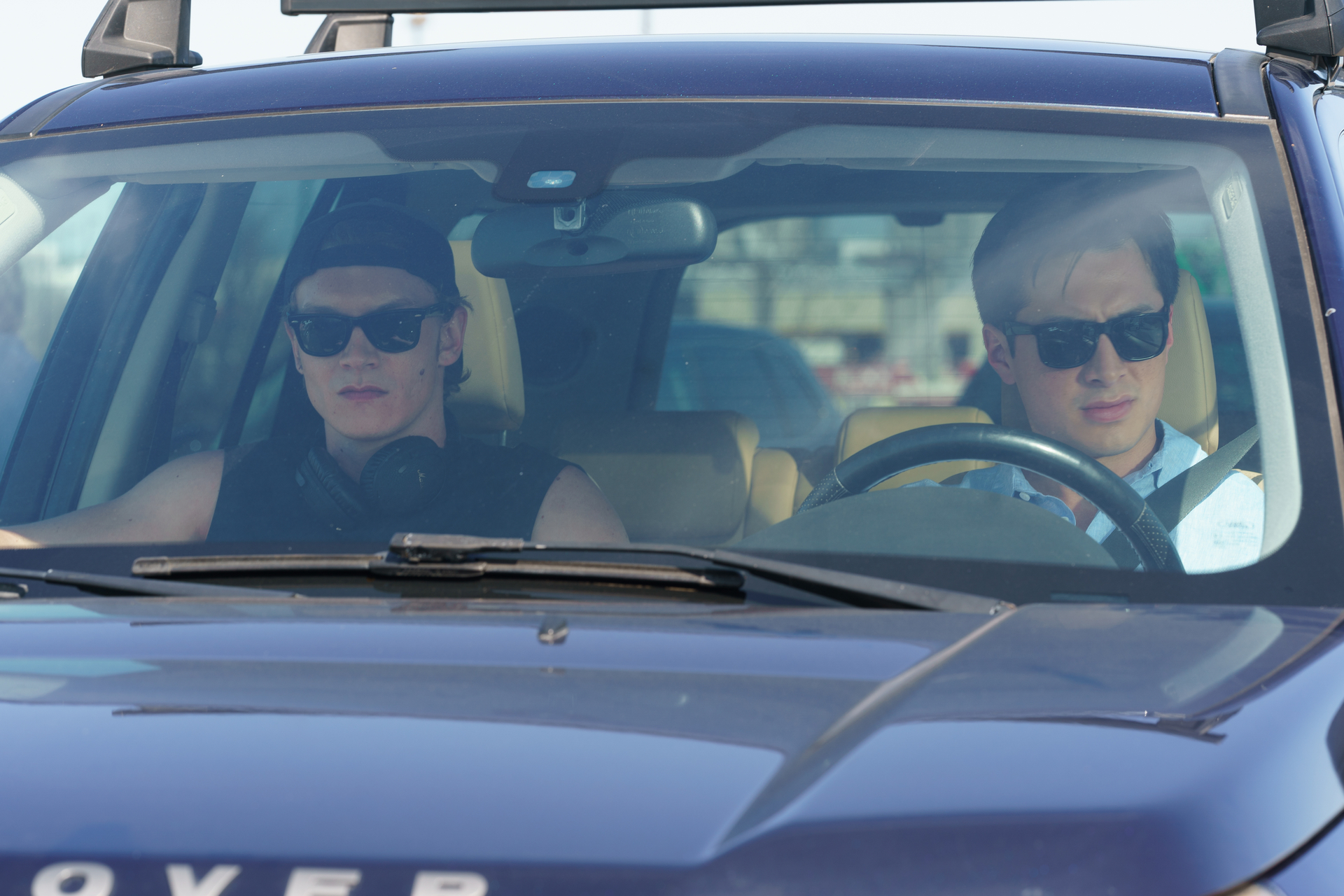
    “Marty Supreme” is basically a comedy of errors, and series of unfortunate events, that pits would-be table tennis star Marty against his greatest enemy—failure. And for 149 glorious meteoric minutes, we want nothing more than for Marty to keep going. With a career-best performance by Timothée Chalamet, “Marty Supreme” is messy and maddening, but impossible to turn away from.

    “Marty Supreme” is in theaters on Christmas Day.

    After a series of setbacks that leaves a trail of black eyes, smashed cars, and orange ping pong balls, Marty Mauser (Timothée Chalamet) is told by a potential way out, “there are no second chances in life.” To which he responds with an emphatic, “why not?” That’s the attitude in which Marty walks (or perhaps “trounces” is more suitable) through life. He talks a mile a minute, lies like his life depends on it (because sometimes it does) and makes decisions like consequences don’t exist. And for 149 glorious meteoric minutes, we want nothing more than for Marty to keep going. Even if we can’t decide if we want to cheer, cry or hit him upside the head, there’s something intoxicating about the New York playground writer-director Josh Safdie allows Marty to play in.


    ADVERTISEMENT


    We get to see this version of 1950s post-World War II New York the way Marty sees it, full of opportunity, danger and people that simply don’t understand if you want something you just have to try harder. Chalamet, sporting wire-framed glasses, greasy hair and even greasier mustache, is devilishly charming as we watch him float through the city trying to shake down his uncle for cash to get to the table tennis championships in London (armed robbery is the solution, of course). When he gets there, we get to understand what drives him: greatness. He doesn’t even say he’s competing in a tournament, which assembles the best table tennis players in the world, he says he’s winning it. Like this is a reality in his mind. The same reality that drives him to rack up a bill in the thousands at the Ritz Carlton, even after he’s told that treatment is reserved for the star players (he is one, in his mind).

    After watching him compete through several thrilling rounds of table tennis, which Safdie captures with sweat-dripping intensity, he makes it to the final against Japanese phenom Endo (Koto Kawaguchi. Despite his hard-hitting and running and diving, Marty is no match for Endo’s innovative technique. Marty is enraged, calling the win a sham and accusing him of cheating. There’s no way he lost (again, at least in his mind). It sets him on a course for revenge, if only he can gather the money to get to the next championship in Japan.

    “Marty Supreme” is basically a comedy of errors, and series of unfortunate events, that pits Marty against his greatest enemy—failure. As he tears through the city weaponizing his signature charm to try to gather the money for his flight, we see the limits of his own self-deluded confidence. From the Lower East Side to Chelsea to Jersey, Marty leaves a messy path as he storms through. We meet a cast of characters along the way including acclaimed Marty’s old gambling buddy Wally (a hilarious Tyler Okonma aka Tyler, The Creator), his mischievous mistress Rachel (a fabulous Odessa A’zion), and silent movie actress Kay Stone (Gwyneth Paltrow) whose husband Milton (Kevin O’Leary of “Shark Tank”  giving a surprisingly delightful performance) could hold the key to Marty’s success.


    ADVERTISEMENT


    Like his previous movies “Good Time” and Uncut Gems“, Safdie balances the dark comedy and devastating reality of male hubris to a dizzying effect that is not just hypnotic, but damn entertaining. Marty’s inability to get any part of his plan right is satisfying for an audience that knows exactly who this man is. A man who believes that he is owed success and will do anything to obtain it. Chalamet is so convincing as Marty that it feels like he truly believes his own lies as he switches effortlessly between a charm offensive, machismo, or straight-up violence to get what he wants. It’s masterful and sinfully entertaining. 

    However, it is to an end. While “Marty Supreme” could have easily been just another entry in the dirtbag scammer movie, Safdie casts it against a world in flux where there’s nothing but opportunity whether for a Jewish girl from the Lower East Side or a Japanese table tennis player with his country on his shoulder. It is about dreams and who is allowed to chase them. It’s where those opposing forces of hoping Marty will stop ruining his own life and urging him to go on come from. While it is all fun and games (I mean, it’s literally ping pong), it’s also the stuff humanity is made of.

    The movie may not be perfect. “Marty Supreme” is messy and maddening, but isn’t life?
  • ‘Queer’ is messy, mad and marvelous | review and analysis

    ‘Queer’ is messy, mad and marvelous | review and analysis

    Based on William S. Burroughs novel of the same name, Queer follows an American expat’s obsession with a young man he meets in 1950s Mexico City.

    This review was originally published out of the 2024 Toronto International Film Festival.

    Luca Guadagnino’s Queer is a mesmerizing and haunting exploration of desire, loneliness, and the search for connection. Set in 1950s Mexico City, the film follows Lee (Daniel Craig) as he navigates a complicated, obsessive relationship with Eugene (Drew Starkey). Through stunning cinematography, an evocative score, and an engaging, surreal narrative, Guadagnino and screenwriter Justin Kuritzkes deliver a thought-provoking, emotionally raw drama that speaks to queer longing, desire, and the transformative power of intimacy. Bold, challenging, and ultimately moving, Queer is not easily shaken.

    Queer is in limited release on Nov 27. It will be released nationwide on Dec 13 by A24.

    Anyone who claims to fully understand what William S. Burroughs is trying to tell us with his writing is either lying or on some really good drugs—and I’ll have what she’s having. Another filmmaker might have tried to smooth out the raw, jarring edges of Burroughs’s trademark sensibilities. But director Luca Guadagnino (Call Me By Your Name, Challengers) and screenwriter Justin Kuritzkes (Challengers) lean wholeheartedly into his idiosyncratic style, transposing his unsettling blend of mesmerizing horror and reality into something deeply affecting. And somehow, it’s also an aching romance about longing and desire. Amid the drug-addled maze of Burroughs’s thoughts, Guadagnino and Kuritzkes manage to find a thread—a profound one that, once pulled, unravels into a beautiful, moving drama that is, at its core, deeply… well, queer.


    ADVERTISEMENT


    Set in 1950s Mexico City, the film follows a community of American expatriates, many of whom are queer men, living in a lively enclave of bars where gossip flows as freely as the alcohol. Among them is Lee (Daniel Craig), a man who drifts through the streets in search of something—or someone. Lee’s haggard, drunken appearance and his self-destructive bravado are a stark contrast to Craig’s more notable roles as James Bond and Benoit Blanc. His presence often unsettles those around him. One man who crosses his path later notes to a friend that Lee can never just be friends with someone—it always turns sexual.

    Lee’s only friend, Joe (Jason Schwartzman), rambles about his various sexual exploits, most of which end in robbery, but Joe seems grateful for any company. Lee, on the other hand, is searching for something more meaningful. Though he’s clearly lonely, he seems incapable of breaking through his own emotional walls to form a real connection. Even after a one-night fling with a man at a bar (musician Omar Apollo), Lee is left feeling empty. Even assuming that the man slept with him for money. It’s that insecurity that keeps Lee from experiencing true intimacy. That is, until he spots Eugene Allerton (a sensational Drew Starkey) walking through the sultry streets. In stark contrast to Lee’s disheveled, unkempt appearance, Eugene is effortlessly cool—his tailored polo and well-fitting slacks clinging to his toned physique as passersby steal glances.


    ADVERTISEMENT


    Guadagnino and cinematographer Sayombhu Mukdeeprom beautifully capture the sweaty heat and energy of Mexico City’s bustling nights, imbuing the scenes with such textural detail that you can practically feel the heat on your skin. Eugene, however, seems impervious to the heat, and to everything else. Lee becomes obsessed with discovering who he is, and after exchanging a few furtive glances, he finally approaches Eugene one drunken night. While their conversations aren’t especially titillating, the tension between them is palpable, as if we’re just waiting for the space between them to collapse. At times, we see Lee’s ghostly hand reach out to touch Eugene, as though he’s willing himself to do so but can’t. As Eugene speaks (or listens to others speak), we catch Lee staring at him as if he’s trying to understand what’s going on beneath the surface.

    The first hour of the film moves at a pleasantly meandering pace, as Lee and Eugene oscillate between getting closer and drifting apart—having sex and then completely ignoring each other. It’s as if they both want to turn away from their desires while simultaneously giving in to them. It feels all too relatable to the queer experience—even now. While this dynamic could easily slip into melodrama, Guadagnino skillfully maintains a frenetic, sweltering energy, much like the city itself. This is all underscored by a melancholic score from Trent Reznor and Atticus Ross, with energetic needle drops ranging from Nirvana to Prince.


    ADVERTISEMENT


    As the story moves into its second half, Lee invites Eugene on a journey through South America in search of a mystical herb called yage, which is said to give the consumer telepathic abilities. This is where the film becomes more jumbled—perhaps intentionally, as Lee’s opioid addiction comes to the forefront. While the push and pull between the two men continues, the narrative loses some of its initial focus. Lee’s obsession with the herb seems linked to his desire to understand Eugene, himself, and perhaps his own queerness, but the journey to find it lacks the bite and momentum of the earlier parts of the film. That is, until they finally find the herb.

    In the film’s surreal and entrancing third act, the two men encounter Dr. Cotter (Lesley Manville), a kind of mad scientist living in the Amazon who studies indigenous plants, hunts for her and her partner’s food, and apparently trains their guard snake. Here, Lee learns that yage is more commonly known as ayahuasca, and he eventually persuades Cotter to let him and Eugene take it. The resulting sequence is a feverish, expressionistic dance that finally brings Lee and Eugene together in a moment of understanding. As Burroughs’s own words from his journals echo in the scene—“I’m not queer, I’m disembodied”—it adds an additional layer of meaning to this powerful, otherworldly encounter.


    ADVERTISEMENT


    At its heart, Queer is about queer loneliness, queer desire, and the queer desire to know we’re not alone. In the final moments, Lee faces his own loneliness. To borrow a line from Guadagnino’s Call Me By Your Name, “Is it better to speak or to die?” In that film, the character chooses to speak. Here, Lee suffers a kind of death—a raw, emotional moment that’s deeply impactful. It ultimately makes the film’s challenging journey worthwhile. Queer is a call for intimacy: to reach out, make yourself vulnerable, and let the space between you and others collapse. Because, in the end, where there may be rejection, there may also be acceptance.


    ADVERTISEMENT


    More movies, less problems


    Hey! I’m Karl. You can find me on Twitter and Letterboxd. I’m also a Tomatometer-approved critic.

    💌 Sign up for our weekly email newsletter with movie recommendations available to stream.


    ADVERTISEMENT


  • ‘Aftersun’ is a masterpiece of memory | review and analysis

    ‘Aftersun’ is a masterpiece of memory | review and analysis

    Aftersun follows the childhood memory of a girl on vacation with her father to the Turkish coast. But where there’s sun there is also shadow.

    Aftersun is one of the greatest depictions of depression and grief captured on film as it meditates on childhood, parenthood, and memory. Beautifully wrought with cinematography and score that play like a memory on loop. As the movie comes to its stunningly satisfying and emotional conclusion—perhaps one of the greatest final moments of a movie I’ve seen in some time—we’re taught that opening that box might be a means to an end. A means to heal the burn that memories can leave.

    You might also like: Past Lives, The Worst Person in the World

    Do you know that lethargic feeling after sitting in the sun on a hot summer day? Or the melancholic daze that follows you home after a perfect vacation? Do you get blotches in your vision after looking into a bright light or staring up at the sun? All those sensations perfectly described Charlotte Wells’ debut feature Aftersun, which feels like the perfect term to encapsulate each of those feelings. And that is what the whole movie is: a feeling. For its largely plotless 96-minute runtime nothing really happens in front of you. But rest assured, there’s plenty happening in the shadows of the sunny father-daughter beach holiday at the center of the movie.


    💌 Get weekly streaming movie
    recommendations in your inbox

    Wells presents Aftersun as a childhood memory flashing into the mind of a girl 20 years later—when she’s the same age as her father at the time. But as with any memory, things look different in retrospect.

    In the early 90s, young father Calum (Normal People’s Paul Mescal) brings his 11-year-old daughter Sophie (played as a child by Francesca Corio, a real festival breakout) on a sleepy summer vacation on the Turkish coast. Gregory Oke’s dreamy cinematography simultaneously underlines the sunny haziness of a beachy summer and the soft edges of memory. In between days lounging at the pool, trips to the resort’s restaurant, and interactions with the other guests, we see interstitial clips from home video of the trip filmed by either Sophie or Calum. It’s in those clips—and interruptions often taking place at night while Sophie is asleep—that we sense there’s more meaning and heaviness in this vacation for Calum.

    Those feelings only come in waves though. We never see Calum being less than a devoted (and goofy) father to Sophie, almost a complete juxtaposition to the view we have of the usual young parent—sometimes he’s even mistaken for her brother. Sophie, as a child, sees him as nothing less than an invincible infallible hero—how many of us see our parents. Her childlike wonder extends to the world around her as she becomes enamored with a group of older kids—a bit of a nod to the typical coming-of-age story, of which Aftersun is decidedly not. However, that wonder also leads to conflict when Sophie’s frank questions lead to revealing that not all is great and perfect in the background of Calum’s life. At the moment, she thinks nothing of them. However, when adult Sophie looks back at the same clips we’re watching, they play very differently. Like videos taken before a coming disaster.


    ADVERTISEMENT


    Memories always have their blind spots. You remember the bright moments while blocking out the darker ones. It’s not until you look back and unpack them as an adult that you see their profundity.

    31-year-old Sophie (Celia Rowlson-Hall), who we cut to for short moments throughout the movie, is the same age as her father when they went on that vacation. As she remembers the bright spots—the late night karaoke, her first kiss, her dad clumsily juggling bread rolls at dinner—the darker ones slip in as well. Or, at the very least, she fills them in—her dad crying in the middle of the night, his quiet swaying while smoking a cigarette on the balcony, his muffled contentious phone calls back home. However, the movie never lingers on those moments—like adult Sophie is trying to keep them out of her perfect vision of that summer vacation. The same way that we exclude the awkward pauses at an otherwise lovely dinner or the arguments heard through walls late at night after you went to bed in our memories. You keep the good and avoid the bad until you can no longer stand the weight of the past.

    It’s difficult to describe Aftersun because nothing and everything is happening at the same time. Though what’s happening on screen may seem mundane, it’s drenched in subtext. For those that aren’t looking in the right places, the movie might be tedious to get through.


    ADVERTISEMENT


    Aftersun is about many things, but at its core it’s about the blindspots of our memories and traumas—and how we fill them in to make them whole again.

    Our parents try to create the best childhood for us. Short of that, they at least try to create the best version of those memories for you, whether intentionally or unintentionally. It’s why nostalgia exists and why some memories float to the surface while others burrow themselves deep into our psyches. Charlotte Wells uses Aftersun to show us what it’s like to unlock that box that we all keep away in a hidden dark corner of our minds. What it’s like to admit that our perfect childhood memories are just afterimages of the brightest moments. As the movie comes to its stunningly satisfying and emotional conclusion fittingly underscored by Queen’s “Under Pressure”—perhaps one of the greatest final moments of a movie I’ve seen in some time—we’re taught that opening that box might be a means to an end. A means to heal the burn that memories can leave.


    ADVERTISEMENT


    More movies, less problems


    Hey! I’m Karl. You can find me on Twitter and Letterboxd. I’m also a Tomatometer-approved critic.

    💌 Sign up for our weekly email newsletter with movie recommendations available to stream.


    ADVERTISEMENT