Tag: Florence Pugh

  • Florence Pugh and Andrew Garfield charm and fall in love in We Live In Time | TIFF 2024

    Florence Pugh and Andrew Garfield charm and fall in love in We Live In Time | TIFF 2024

    TIFF 2024 | Moving back and forth in their history, We Live In Time follows a couple through the ups and downs of life.


    Headlined by charming-than-ever performances by Florence Pugh and Andrew Garfield, We Live In Time is a surprisingly entertaining and funny rom-dramedy that is elevated by a smart non-linear structure and kinetic pace. It’ll warm your heart before tearing it into pieces.

    We Live In Time premiered at the 2024 Toronto International FIlm Festival. A24 will release the film on October 11.

    From their fateful meet cute (if you can consider near vehicular manslaughter one) to the birth of their child to a devastating diagnosis, We Live In Time floats back and forth through time to tell the story of Almut (Florence Pugh) and Tobias’s (Andrew Garfield) relationship. It’s a familiar story. Boy meets girl, boy falls for girl, boy and girl have ups and downs, then something threatens to tear them apart. You can, with some certainty, predict every story beat from start to finish.


    ADVERTISEMENT


    But two things set We Live in Time apart. The non-linear narrative, moved with swift pace thanks to John Crowley’s deft direction and Bryce Dessner’s twinkling score, tells you the ending before showing the journey. It lets you fall into step with the emotion of the story rather than the specifics of it. Second, the charisma and chemistry of Pugh and Garfield are impossible to resist and give Almut and Tobias so much lived-in life and voracity.

    As the movie unravels their pasts, we deepen our understanding of their decisions leaving us with an empathetic portrait of all stages of a relationship and what happens when you merge individuals with their separate ideologies, traumas and hopes into one. And while that might sound heavy, We Live In Time never feels overwrought. The emotions are real, but treated as simply a part of life rather than a plot point. Something that holds weight but because time marches on needs to fade away.


    ADVERTISEMENT


    Almut, a chef at the top of her game who at one point says she couldn’t imagine having a child, and Tobias, a corporate drone with a romantic heart and aspirations for family navigate the trickiness with cheer and humor. British playwright Nick Payne, who penned the screenplay, presupposes that life’s big struggles are best defeated with life’s little joys. In one of the best sequences, type A Tobias is tasked with helping Almut deliver their first child in a gas station bathroom. A trauma that is made better by their ability to laugh through life’s pains. It makes watching them go through it all the more enjoyable. 

    Follow the rest of our coverage of the festival here.


    ADVERTISEMENT


    More movies, less problems


    Hey! I’m Karl. You can find me on Twitter and Letterboxd. I’m also a Tomatometer-approved critic.

    💌 Sign up for our weekly email newsletter with movie recommendations available to stream.


    ADVERTISEMENT

  • Dune: Part Two is an epic science fiction masterpiece | review

    Dune: Part Two is an epic science fiction masterpiece | review

    Dune: Part Two finds would-be messiah Paul Atreides on a revenge mission that may take him to the dark side of Arrakis

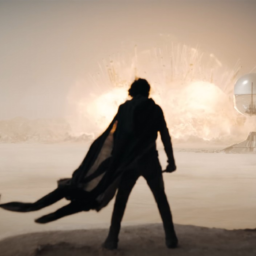
    Dune: Part Two is a visceral masterpiece and one of the best science fiction movies ever made. Besides delivering a visually impressive assault on all the senses, it’s also a riveting political thriller and character study that struggles with morality, religion and power. Director Denis Villeneuve guides every facet of the movie—costumes, production design, visual effects, sound—to the very top of its craft.

    Dune: Part Two is a The Empire Strikes Back or The Return of the King-level event. A science fiction classic in the making that’ll inspire the next generation of science fiction and fantasy films. Denis Villeneuve continues his unblemished filmography.

    Dune: Part Two is in theaters March 1.

    From the opening throngs of Hans Zimmer‘s score and saturated rust-colored first shot of the desert planet Arrakis, it’s impossible not to feel immediately transported. Like you were shot out of a rocket straight into a sand dune—ironic because we first encounter our protagonist (?) buried hiding in the sand. That’s partially thanks to director Denis Villeneuve‘s skillful world-building in the first half of the story that brings a detailed view of the future set out in Frank Herbert’s novel of the same name. But what sets Dune: Part Two apart is its absolute audacity of vision that often has your heart skipping a beat.


    ADVERTISEMENT


    Like the moment when a group of Harkonnen soldiers leap and gracefully float from a sand dune to a rocky plateau to escape an incoming sandworm. Villeneuve makes the moment one of effortless wonder. Like what is happening in front of us is completely normal and the most incredible feat we’ve ever seen before us—partially because it is.

    There are countless moments like that throughout Dune: Part Two. There is the breathless battle sequence where suspected messiah Paul Atreides (Timothée Chalamet) and Chani (Zendaya) along with the desert-born Freman people take down a Harkonnen-held spice mining operation or Paul’s jaw-dropping and anxiety-inducing wormriding rite of passage that involves… well, riding a giant sandworm. Both sequences feel like an assault on every one of your senses. It’s like you can feel the grains of sand whipping by your face when an army of Fremen-ridden sandworms blast through a sandstorm to the apparently inaccessible southern hemisphere of the planet.


    ADVERTISEMENT


    It’s almost impossible not to overstate Villeneuve’s absolute cinematic achievement. It is perhaps the most visually impressive movie I’ve ever seen—a visual and auditory spectacle that is at times difficult to comprehend in the same way that I imagine audiences felt when seeing Star Wars or 2001: A Space Odyssey for the first time.

    And just when you didn’t think it could surprise you any more, it introduces you to the black-and-white Harkonnen world as it explore the sadistic but intoxicating villain Feyd-Rautha Harkonnen (Austin Butler is a terrifying scene stealer in a role that proves that Elvis wasn’t a fluke).

    Admittedly, I’ve never read Frank Herbert’s book nor seen David Lynch’s much-maligned 1984 adaptation. And after watching the first part of Villeneuve’s adaptation I was confused why this story had to be retold. The story of Paul, an aristocracy-born and bred white man, tapped to lead an oppressed people against his own enemies wasn’t only formulaic but reductive. Hadn’t we advanced past the white savior narrative? So when Dune: Part Two takes a turn to the morally grey area I wasn’t just enthralled, I was impressed.


    ADVERTISEMENT


    Throughout the movie, Paul is resistant to the label messiah. Not because of some internal imposter syndrome, but because he is prescient of the potential outcome if he embraces the label. That isn’t a new concept. What does feel fresh is the social and political implications of a messiah—or at the very least a leader that people see as the only way out. Dune: Part Two tackles the moral-quandary from many different angles.

    There’s the one of Paul who sees it as both a strategic blessing in his mission of revenge against the people that betrayed his family—mainly the Emperor (Christopher Walken) and Vladimir Harkonnen (Stellan Skarsgård)—and a curse that would betray his closest confidant Chani. There’s his mother Lady Jessica (Rebecca Ferguson who continues her enthralling complex performance) who works on behalf of the Bene Gesserit, a group that aligns itself with those that could best help their pursuit of power. There’s the aristocratic elite, the Emperor and his daughter Princess Irulan (Florence Pugh), who are playing for their own relentless pursuit. And then there’s the Fremen, split into two groups. One that is seeing the messiah as their way out of struggle—particularly Stilgar (Javier Bardem)—and the other that see him as a threat to their pursuit of freedom.

    In the middle is Chani, who wants to believe in the good she sees in Paul but worries that her infatuation is clouding her better judgement for her people. Zendaya has for years been bubbling to the surface as one of the great new talents of her generation. Dune: Part Two cements her movie star status.


    ADVERTISEMENT


    With interwoven plots that involve a meddling mastermind fetus, intergenerational feuds and a social and political game of colonization and power, it could have been easy for Dune: Part Two to buckle under the weight of its ambitions—it’s the reason Lynch’s movie and John Harrison’s miniseries adaptations failed. Instead, Villenueve finds a balance between engrossing political thriller and epic science fiction action that grabs for heart and mind and doesn’t let up through its entire surprisingly breezy runtime.

    Dune: Part Two in many ways is the classic blockbuster spectacle with its intense battle sequences, ever unfolding world and characters that are held up as heroes. But the way it subverts the hero’s journey, in a way that angered many in The Last Jedi, is what makes it a classic-in-the-making that feels like it has the gravitas of The Empire Strikes Back or The Return of the King. Like those movies, I could see Dune: Part Two inspiring the next generation of great science fiction and fantasy stories. It is that singular. It is that impressive. It is that awe-inspiring.

    Dune: Part Two is a once-in-a-generation cinematic event that you do not want to miss. Will you follow the call?


    ADVERTISEMENT


    More movies, less problems


    Hey! I’m Karl. You can find me on Twitter and Letterboxd. I’m also a Tomatometer-approved critic.

    💌 Sign up for our weekly email newsletter with movie recommendations available to stream.


    ADVERTISEMENT


  • ‘Don’t Worry Darling’ works (just barely) | movie review

    ‘Don’t Worry Darling’ works (just barely) | movie review

    Don’t Worry Darling follows a 50s housewife begins to suspect that the desert oasis that she and her husband call home may not be as idealistic as it appears

    I’m not going to talk specifically about all the well-documented drama around Don’t Worry Darling in this review (if you just emerged from an underground bunker, here’s a refresher). What I will say is I choose to believe Harry Styles spit on Chris Pine. However, the intrigue around the movie’s production and press tour do color my feelings about the movie. They don’t directly affect them, however, it does supply an explanation. That’s because I don’t think Don’t Worry Darling is a bad movie, as is often the case with projects with feuding creatives. There is a strong vision, and, at least half of the runtime, the movie delivers on that vision. But hearing that director Olivia Wilde was absent for part of the production explains why the vision was never completed. 


    ADVERTISEMENT


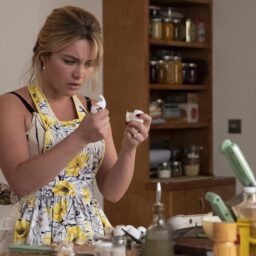
    Don’t Worry Darling isn’t exactly a fresh story—it very much feels like an amalgamation of The Stepford Wives, The Village, and an episode of Black Mirror. Refreshingly, though, the movie knows that. Instead of wasting some of its running time trying to trick you into thinking things are normal for the sake of its own magic trick, immediately you know something is off in its world. While Alice (Florence Pugh) and Jack Chambers (Harry Styles) seem like a young, happy couple living in an idyllic dessert company town in the 1950s, Wilde makes it clear with John Powell’s sinister score and quick cuts to a mysterious black-and-white film of synchronized swimmers that things aren’t as they seem. 

    Throughout the first half, tension is slowly ratcheted up as we learn more about the town of Victory, California. Wives wait at home as their husbands leave each day to work on some unspecified project, they’re not allowed to drive or leave town limits, and the town’s creator Frank (Chris Pine) is an omnipresent force in their lives. Of course, they’re also discouraged from asking questions. There’s a satirical quality to the perfect pastel-colored world that Wilde creates, which is punctuated by strong supporting performance from Kate Berlant and Gemma Chan. But it’s Margaret (a wildly underused Kiki Layne, who was last seen in The Old Guard and If Beale Street Could Talk) who starts to break down the illusion for Alice. 


    ADVERTISEMENT


    However, as impressive as that world-building is, what counts is what you do with it—and that’s where Don’t Worry Darling falters. In the second half of the film, after Alice for the first time acknowledges that something is amiss, the movie struggles to be compelling while leaving its sterling world-building patina behind. It’s partially a function of the twist, which you could honestly call during Frank’s first speech to the community about control and order. However, there are a few fun campy reveals (whether intentional or unintentional) that helped bolster the movie from complete boredom. 

    Much of my problem with the second half stems from the movie’s lack of direction (or a director). It felt as if each scene went a little too long yet never furthered the plot or added color to the characters. If the screenplay doesn’t fill in the gaps, it’s up to the director to—and if rumors are to be believed there might not have been one. It’s a shame because Pugh—who has never been less than magnificent in movies like Midsommar and Little Woman—does some of her best work in those scenes. A climactic dinner scene where things finally come out into the open is a particularly impressive acting showcase—and tests the limits of Styles’ acting ability.


    ADVERTISEMENT


    Florence Pugh famously said, “the nature of hiring the most famous pop star in the world, you’re going to have conversations like that.” Those conversations involved the explicit sex scenes scattered throughout the movie. And while Harry Styles’ most-famous-man-in-the-world persona works for some of the movie, when he plays outside of that type his skills as an actor are stretched to their absolute limits. Even my audience filled with Styles’ couldn’t help but laugh out loud at his more emotional moments. 


    ADVERTISEMENT


    More movies, less problems


    Hey! I’m Karl. You can find me on Twitter and Letterboxd. I’m also a Tomatometer-approved critic.

    💌 Sign up for our weekly email newsletter with movie recommendations available to stream.


    ADVERTISEMENT

  • 'Little Women' is boldly told, but at a cost — movie review

    'Little Women' is boldly told, but at a cost — movie review

    Greta Gerwig gives her take on Louisa May Alcott’s classic novel Little Women with a narrative twist and an all-star cast

    Quick review: While Gerwig’s narrative risks don’t always payoff, Little Women thrives on a timeless story, great performances, and a strong beating heart.

    There have been seven film adaptations of Louisa May Alcott’s classic novel Little Women with each one seemingly further modernizing the last take (Be Kind Rewind does a terrific breakdown of the four most notable versions). Of the modern auteurs working today, Greta Gerwig seemed like the perfect person to write and direct our generation’s version. And it’s clear in the film that she has so much admiration and respect for the novel. Like Rian Johnson’s take on Star Wars, that respect manifests itself as a loving subversion of the source material — a subversion that only someone with a deeper understanding of it could pull off successfully. And Gerwig almost nails it.

    Retelling an old classic

    So much of the brilliance of Gerwig’s Lady Bird comes from the story’s tightly structured screenplay. In that movie, she plays with time. Opting to tell the story through short vignettes and montages rather than linger on any scene for too long. It’s a story choice that supports the central thesis of the film — that Lady Bird thinks she’s the main character of her own story, forgetting that she’s a supporting character in others’. 

    She carries over a similar structure to Little Women. Each scene from the present is cut in with a scene from the past — bringing the two halves of the novel together. Gerwig again doesn’t linger on any scene or storyline for too long — a detriment to the first half, which I’ll talk about later. 

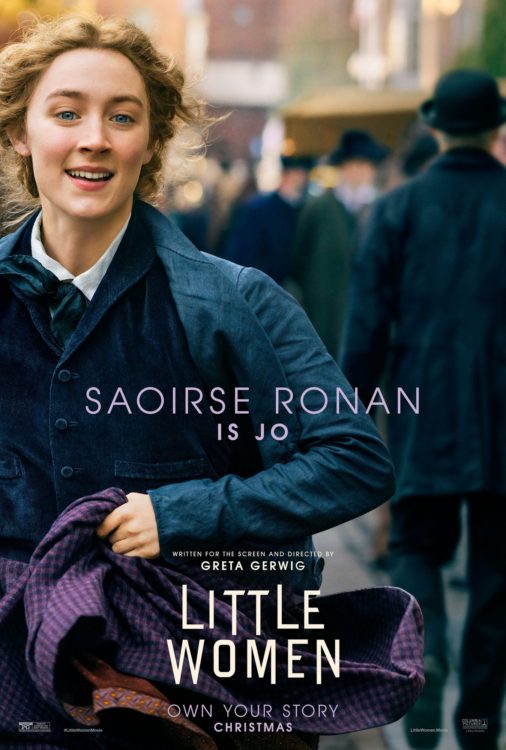
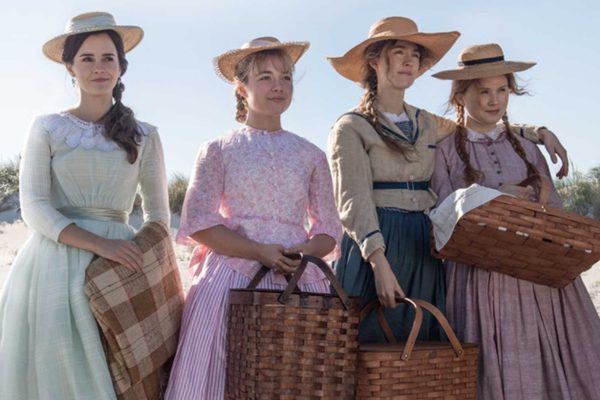
    The movie follows Jo March (Saoirse Ronan following up her performance in Gerwig’s Lady Bird), a headstrong and fiercely independent writer making her way in the big city. Her younger sister Amy (a delightful Florence Pugh) is in Paris accompanied by her Aunt March (Meryl Streep) where she is studying painting. Meg, the oldest of the March sisters, is married with kids and still living in their Massachusetts hometown near their mother Marmie (Laura Dern). The youngest, Beth, has recently fallen ill, which brings Jo home and reckon with her past.

    💌 Sign up for our weekly email newsletter with movie recommendations available to stream.


    ADVERTISEMENT

    Taking an emotional risk

    By switching between past and present, Little Women almost becomes a memory play where we see the cause and effect of the events and decisions in the women’s lives simultaneously play out. In the past, we watch Jo flirt and fall in love with Laurie (Timothée Chalamet), the grandson of their wealthy neighbor (Chris Cooper). In the present scenes, we see that she doesn’t end up with Laurie and that he is in Europe where he runs into Amy. It’s a small change that has a large impact.

    And while the structure itself helps set a melancholic tone and creates a more immediate emotional payoff, it also prevents us from getting to know the characters and see their relationships grow and change. It felt as if the emotional stakes were taken away from us. Or, at least, someone like me. Maybe if I’d been a fan of the book or previous adaptations — I didn’t watch the 1994 version before this one — I’d already have the emotional investment in the characters. Instead, I felt like I had to fill in the blanks and imagine what led each character to each specific moment.

    Eventually, the rhythm of the movie made a bit more sense and after spending much of the first hour piecing together who the characters are and their relationships with each other, the second half felt so much easier and I started to see the fruits of Gerwig’s risk. Though, they came at a cost.

    It’s a woman’s, woman’s, woman’s world

    Gerwig is a perfect match for the material because, like Alcott, she subtly pushes against the boxes that society makes for women. The same goes for Ronan, who plays Jo with the same defiance that made her Lady Bird performance so terrific. However, pushing against that defiance is matters of the heart — towards her family and Laurie. It’s truly a millennial’s tale. How do you balance your ambition with the things that you want but can’t take along with you for the ride? 

    Little Women Poster

    On the other end of things, Watson’s Meg is excited to fall into society’s ideal for womanhood. Somewhere in the middle, Pugh’s Amy wants both, driven partly from middle child syndrome. When the movie focuses on this quandary, it reaches its fullest potential. Though the relationship between the March sisters — the so-called little women — is the true heart.

    March-ing to the beat of its own drum

    Though the structure is the main reason I didn’t completely fall for Little Women, it was refreshing that it wasn’t a straight adaptation of the material. We need more directors and screenwriters to take the risk with existing IP. If we’re going to continue to get remake after reboot after remake, then at the very least we can have something slightly different. Something that marches to the beat of its own drum. 

    Little Women might be flawed, but it’s a movie with a timeless story that will embrace you. In the days since watching it, the story itself has grown on me and the characters have endeared themselves to me. It’s no wonder Hollywood is so attracted to telling it over and over again. I’m glad Gerwig got her shot. She cements herself as one of the most exciting storytellers working today.