Tag: Haley Lu Richardson

  • ‘After Yang’ and sci-fi as therapy | review and analysis

    ‘After Yang’ and sci-fi as therapy | review and analysis

    After Yang follows a father’s attempts to save his daughter’s robot brother as the family deals with identity, parenthood, and love

    After Yang premiered at the 2022 Sundance Film Festival. A24 will release it in theaters in March.
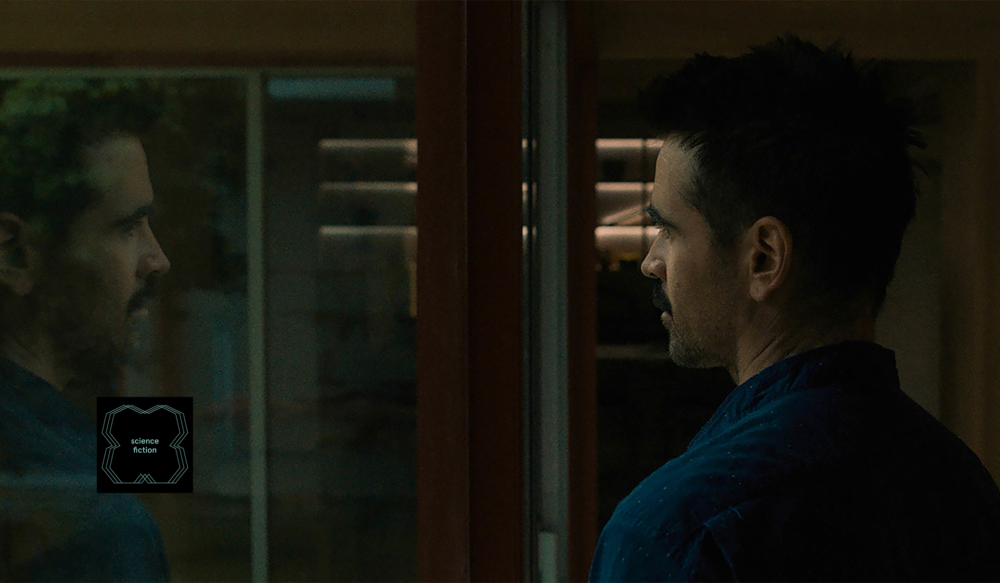
    At its best, science fiction acts as a meditation on something we know through the lens of the unfamiliar. In After Yang, the second film by writer-director Kogonada, the unfamiliar in this case is artificial intelligence, in the form of possibly the closest we’ll ever get to creating a human from computers — a “techno-sapien” as the film puts it. As for what we know, it’s those many things we’re already intimate with: memories, identity, love; the very fabric of our existence. If those sound like lofty themes, they are. It’s an ambitious movie. But those subjects are tackled with the same quiet sensitivity that Kogonada used to direct his egregiously underseen debut feature Columbus.

    The opening shot of the movie is of a quintessential family photo; posing are Jake (Colin Farrell), Kyra (Jodie Turner-Smith), and their young adopted daughter Mika (Malea Emma Tjandrawidjaja). Behind the camera is Mika’s brother Yang (Justin H. Min). But he doesn’t join the family immediately — he holds the view of the family photo for a beat longer than most comfortably would. We’ll return to this scene later, and see it play out multiple times, a recurring motif that extends to other moments in the movie as well.


    ADVERTISEMENT


    In one scene Yang says to Kyra, “there’s no something without nothing.” Then we rewind and we hear him say it again. “There’s no something without nothing.” This time, however, he says it with a slight inflection in his voice and the smallest smile at the end. Each scene we see is shown with this staccato editing and sudden cuts. We’ll hear one line two or three times but derive a slightly different meaning each time. Almost like a memory desperately trying to be remembered.

    After an incredible opening credits sequence, in which each family featured in the film competes in a massive online Dance Dance Revolution-esque competition, Yang malfunctions. Here would be a good time to mention that Yang is a robot that Jake and Kyra bought to help Mika explore her identity as an adopted Chinese child. Though you wouldn’t be able to tell from looking at him: he’s strikingly emotional and singular as a real human. His breakdown is sudden and has a massive impact on Mika who saw Yang as one of the few people she could confide in. In the process of desperately finding a way to fix him before he decomposes, Jake gains access to Yang’s memories.

    After Yang is told through conversations in Yang’s memories and asks a series of questions: How do we perceive our memories and what do we focus on? Why do we like certain things? Why are they important? What details are important? Why are we who we are? If those seem like concepts that are too large to be answered by a single movie, you’d be correct. But Kogonada isn’t interested in answering them — he wants the audience to do so. The movie merely serves as a companion and guide, much like Yang himself is to the family.


    ADVERTISEMENT


    Through his memories, we gather bits and pieces of who he was in relation to these people. In one memory Mika says, “the kids at recess were asking about my real parents. I told them about mom and dad and they said, ‘no, your real parents.’” Instead of giving her platitudes, Yang asks her, “do you believe them?” Eventually, Mika finds her way to her own conclusion.

    The beauty of sci-fi is that you can mold it to whatever you need it to be for your story whether it’s a high-reaching epic like 2001: A Space Odyssey or something that feels closer to home, like Her, Arrival, and now, After Yang. Kogonada takes a human problem that will be with us for as long as we’re alive — one of identity, family, parenthood — and wraps it into a futurist story that allows him to explore it with subtlety. More than a film, it’s a meditation on life, and in that way, I’d go as far to say that After Yang is akin to therapy. It takes a problem, so constant and looming in the undercurrent of our lives that it feels impossible to solve, and breaks it down into questions that we can answer. One of those questions is what comes after? After life and death? After each chapter of life ends? What comes next?

    There’s no simple or clear answer to these questions, just as there isn’t a satisfying finality to the film. Like the family, we’re left with as many questions as we came in with, but After Yang, we’re better equipped to try and find these answers for ourselves.


    ADVERTISEMENT


    More movies, less problems


    Hey! I’m Karl. You can find me on Twitter and Letterboxd. I’m also a Tomatometer-approved critic.

    💌 Sign up for our weekly email newsletter with movie recommendations available to stream.


    ADVERTISEMENT

  • ‘Columbus’ review — Romantic and charming, John Cho and Haley Lu Richardson are stellar

    ‘Columbus’ review — Romantic and charming, John Cho and Haley Lu Richardson are stellar

    Columbus is a charming and romantic movie in the vein of Before Sunrise that features stellar performances by Haley Lu Richardson and John Cho

    Quick review: Anchored by two Oscar-worthy performances, Columbus is perhaps one of the great romances of the decade.

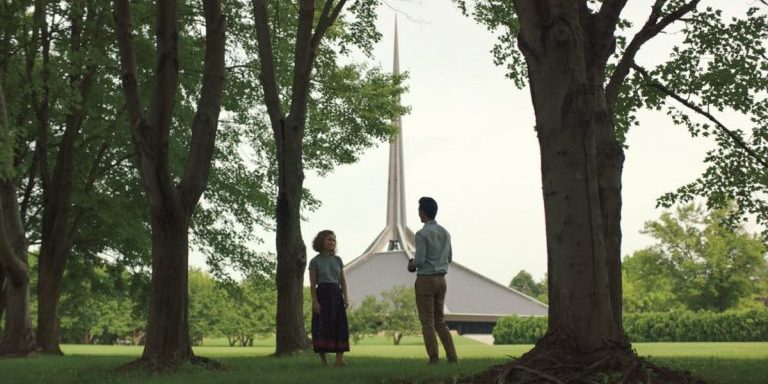
    Columbus, a small city located in southeastern Indiana, is a juxtaposition. Even though it’s located deep in the midwest, it has become a mecca for modern architecture and art.

    It’s almost as far from the culture-rich liberal coasts as you can get, yet it still lays claim to some of the biggest advancements of postwar modernism in the United States. But what does that have to do with writer-director Kogonada’s debut film named after the city? Well, everything.

    Columbus is about relationships. The relationship between modern architecture and the city. The relationship between a father and son, a mother and daughter. But, at the core, it’s about the relationship between Casey (Haley Lu Richardson), an 18 or 19-year-old young woman who works at the public library, and Jin (John Cho), a Korean-American man who returns to the US after working overseas when his father falls ill.

    💌 Sign up for our weekly email newsletter with movie recommendations available to stream.


    ADVERTISEMENT
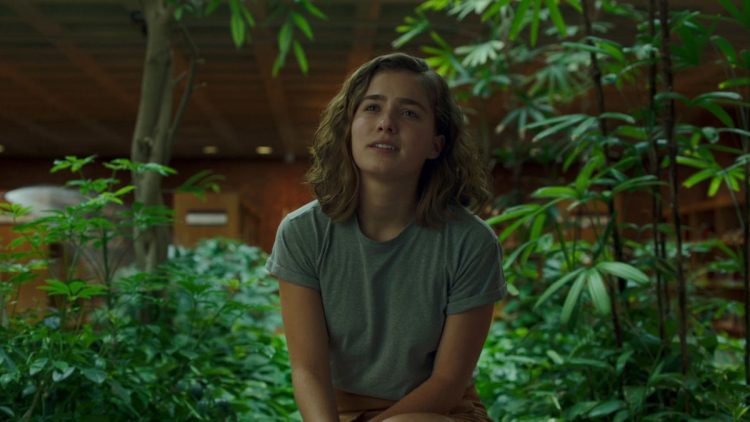

    Over a couple of Before Sunriseesque days, Casey and Jin learn about each other’s pasts, where they are now in their lives, and where they think they should be in the future. And that’s really all there is to it.

    Along the way, there are revelations that test this new friendship — or is it more? But what they have in common is a steadfast appreciation for modern architecture, which is what brings them together in the first place. Casey loves it from growing up in the town.

    Jin simply absorbed the information through his father’s studies and his journal. And though their conversations pretty much only surround architecture, Kogonada infuses them rich subtext that makes the movie a beautiful character study at its core.

    Cho, best known for Harold & Kumar and the Star Trek films, gives a remarkable performance that demands he be taken seriously as an actor. Asian men don’t often get the chance to be leading men, especially in romances. But Cho controls the screen with a steely conviction. More impressively, he is able to decide when to allow audiences to understand his thought process, which makes his emotional arc all the more impactful.

    Columbus movie
    Haley Lu Richardson in COLUMBUS

    💌 Sign up for our weekly email newsletter with movie recommendations available to stream.


    ADVERTISEMENT

    However, he gives room for his scene partners to shine — he often plays across Eleanor (Parker Posey) an old friend and his father’s assistant — particularly Richardson, whose performance is simply astounding and one of the best of the year.

    What I found so refreshing about Columbus is that it captures a specific time in life. The time where you’re at a crossroads — in this case, post-high school — and have to decide what direction you want to take. However, as with many aspects of life, there is pressure from all sides. Even from people that don’t realize their applying pressure.

    Casey feels pressure to pursue education from her co-worker Gabriel (Rory Culkin, a scene-stealer), but feels stuck looking after her mother Maria (Michelle Forbes, fantastic here),a recovering drug addict, Richardson portrays that desire to just push back on the pressure and scream so adeptly that it feels like a gut punch once you recognize the feeling. It’s remarkable considering this movie for most of its running time is quiet and meditative — though that doesn’t make it any less impactful.

    Columbus is one of those gems that doesn’t seem like anything extraordinary until you’re sitting through the credits trying to absorb what you just watched. In terms of conversation movies, it approaches the level of Before Sunset, which I consider the best of the Before trilogy. Kogonada allows the conversation to flow naturally, but with purpose, and that purpose is for two completely different people, a juxtaposition in their own right, to understand each other and eventually help the other understand which road to take.

    The beautiful thing is that we don’t know if it’s the right road, but the ending is still filled with hope. Something that we need more of in film.

    Columbus is available to stream on Hulu or on Digital HD on Amazon!

  • ‘Support the Girls’ review — Regina Hall is a powerhouse

    ‘Support the Girls’ review — Regina Hall is a powerhouse

    Support the Girls is a charming and emotional day-in-the-life dramedy with another magnificent performance by Regina Hall. 

    Regina Hall is one of the best and most underrated actresses working today. From her perfectly timed one-liners in Scary Movie to her grounded and emotional performance at the core of Girls Trip she has been consistently great in so many projects. It’s time Hollywood took notice. And if there’s ever been a movie for them to look to, it’s her latest performance in Support the Girls.

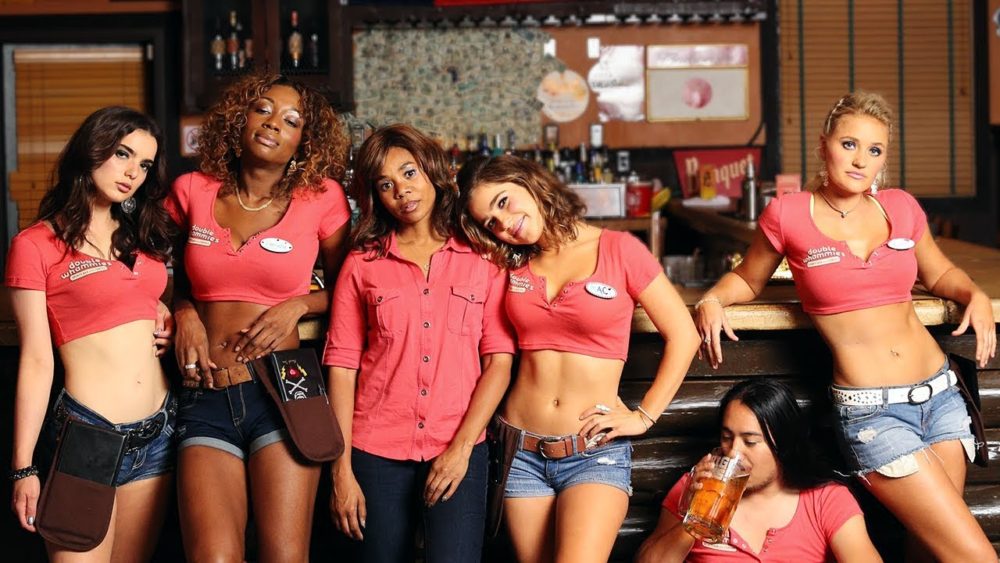
    Hall plays Lisa, the manager of a Hooters-like bar and restaurant called Double Whammies where twentysomething waitresses wearing crop tops and Daisy Dukes serve beer and wings to less than subtle men. When we meet her, she’s in the middle of a crying spell in the parking lot before the lunchtime rush. There’s no context for why as we watch her try to get herself under control. It’s a perfect scene to display Hall’s talents as she somehow imbues some subtlety into the least subtle human emotional response. Eventually, one of the waitresses Maci (Haley Lu Richardson in yet another great performance after last year’s Columbus and Split) interrupts her and walks her into the restaurant. No questions asked. 

    It’s that kind of quiet realism that defines Support the Girls and most of the director and screenwriter Andrew Bujalski’s career. Noted as the “Godfather of Mumblecore”—a subgenre of indie film that focuses on naturalistic dialogue and performances over plot—Bujalski brings an incredibly specific style to seemingly mundane storylines. It’s what made Jim Jarmusch’s Paterson so compelling.

    Support the Girls
    Shayna McHayle, Haley Lu Richardson, and AJ Michalka in Support the Girls.

    We follow Lisa through her day as she troubleshoots the ever-growing list of problems she faces as the general manager of Double Whammies—a would-be robber stuck in the air vents, a waitress who gets a curious tattoo, an off-the-books car wash fundraiser, a misogynist owner (James LeGros) breathing down her neck, and on top of that the cable is out just when there is going to be a big boxing match. However, Lisa tackles each one with a smile and still has time to make sure every single waitress that works there feels safe.

    However, there’s not much more to the plot than that. Along the way we meet a cast of characters that all bring different kinds of humor and charm to the movie. There’s Lisa’s right-hand woman Danyelle (Shayna McHayle giving a great debut performance) who delivers sharp one-liners and observations, butch lesbian regular Bobo (Lea Delaria) whose sharp respect for the girls sometimes gets her in trouble, and ditzy new hire Jennelle (Dylan Gelula) whose character could be summed up when she says, “I’m like a marketing major.”

    Admittedly, I didn’t understand Support the Girls for much of the running time. It feels like scene after scene of nothing happening. However, the remarkable final 20 minutes pull the entire movie together. It was all on the screen. I was just looking in the wrong place. The movie lies in the faces of each of the characters, every one of whom carries the baggage of their days and lives with them. That’s why Regina Hall is so incredible in the lead role. From the first frame where we watch her crying in a car facing the day to the last as she closes one out, we know exactly what she is feeling.

    Support the Girls is—as deservedly corny as it sounds—about the power of sisterhood and the work that women put in every day to just survive. However, unlike other female empowerment movies, everything doesn’t work out for all of our characters. It’s just reality. As one character notes, you cry until you laugh and you laugh until you scream. If Support the Girls wants you to walk away with one thing it’s that it’s okay to do all those things. Life is frustrating. Just take it one day at a time.

    Support the Girls is available to buy or rent on Amazon!

    Karl’s rating:

  • ‘Split’ review — James McAvoy gives the performance of his career

    ‘Split’ review — James McAvoy gives the performance of his career

    Split is an incredibly tense and well-made thriller that features fantastic performances by James McAvoy and Anya Taylor Joy.

    M. Night Shyamalan is back, for better or worst. The last Shyamalan movie I watched was 2008’s The Happening, so you could understand my hesitance going into this movie. Although I heard mostly good things about his last movie The Visit, dissociative identity disorder or multiple personalities is a hard subject to pull off well. Of course, you get into the dilemma of portraying mental illness as a danger to society. However, Shyamalan toes the line gently with Split

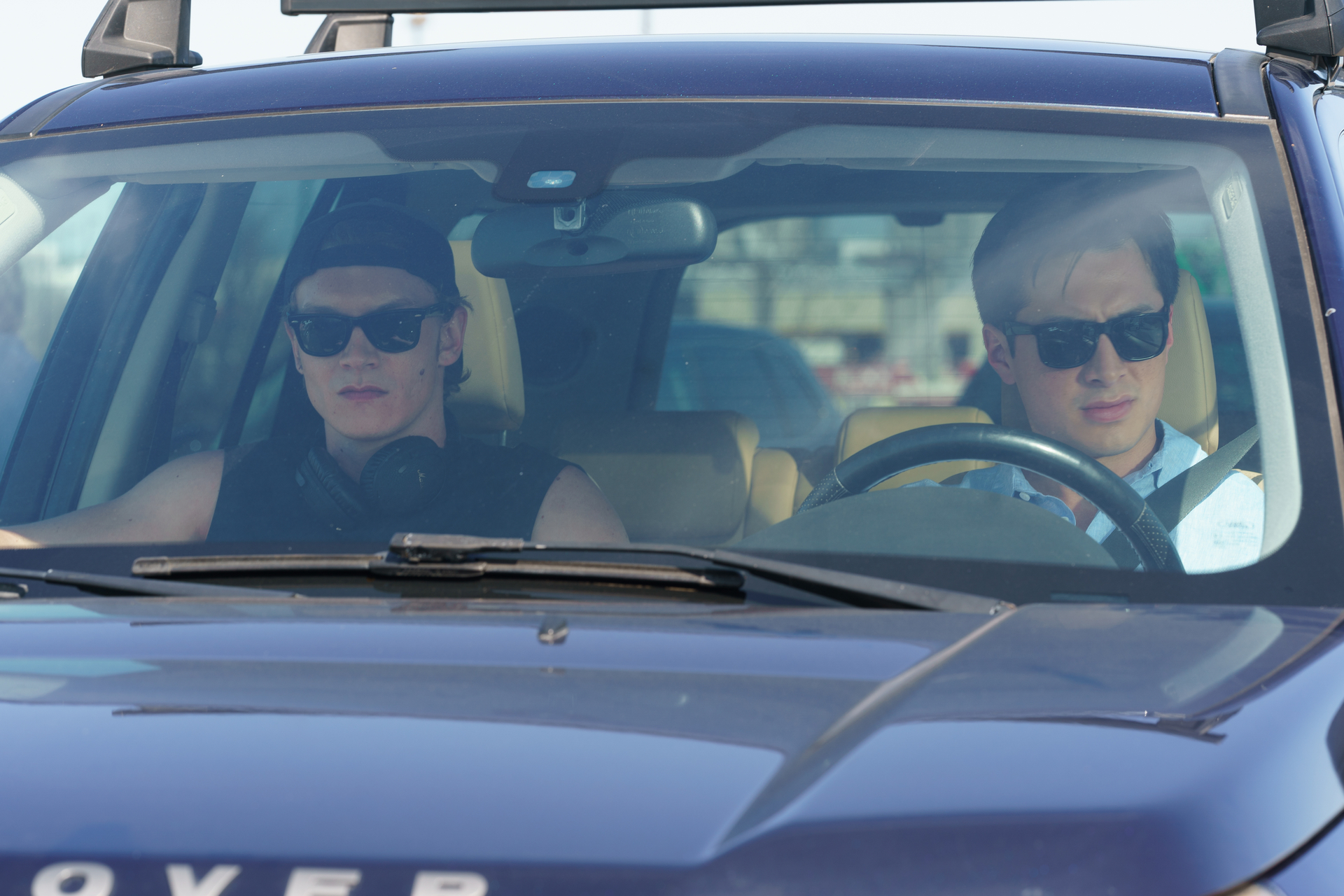
    The movie opens with a slow dolly shot of Casey (Anya Taylor-Joy) at a classmate’s birthday party in a suburban mall. She’s contemplative, uncomfortable, and obviously doesn’t belong. After her ride fails to show up, she hitches a ride with two of her classmates, Claire (Haley Lu Richardson) and Marcia (Jessica Sula). However, their driver, Claire’s father, doesn’t show up in the driver’s seat. As the camera menacing approaches the father packing gifts in the trunk, we realize that we are watching from the perspective of a malevolent force. A strange man (James McAvoy) steps into the car instead of Claire’s father. After knocking out Claire and Marcia, he turns to Casey, then we cut to the main title sequence.


    This scene is a perfect study of the patience and grasp of tension Shyamalan has in this movie. He lets shots linger. Like when the mysterious stranger approaches the car or the opening shot of Casey. Coupled with the brilliant cinematography by Mike Gioulakis, who shot 2015’s It Follows to great success, the opening is an incredible practice in tension and visual storytelling, which is something that we haven’t seen from Shyamalan since 2002’s Signs.

    And it’s not just the opening scene that is filled with tension. All of Split has this impressive slow-burning dread that underlies every scene. It makes you want to turn away from the screen. It’s a combination of the creative elements that Shyamalan was able to pull together that pulls it off. Specifically, the simple production design of the bunker, which feels like an endless maze of tunnels, the heavy bass of the score, the cinematography, and the performances come together to create an ominous mood. When we start getting into the meat of the story some of that goes away, but generally, the movie keeps tightening and tightening until the last 20 minutes.

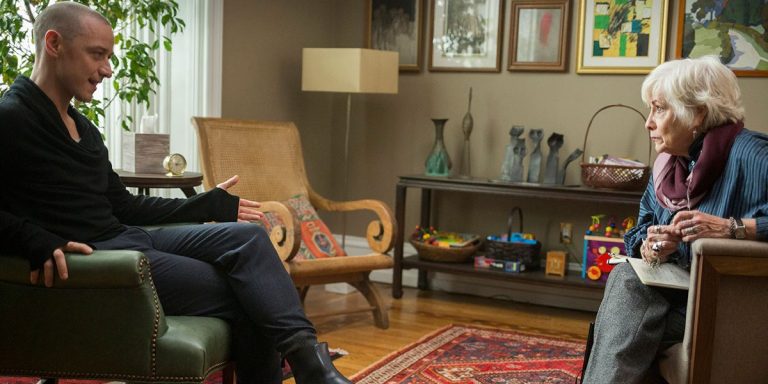
    The girls’ captor is revealed to have Dissociative Identity Disorder, which means 23 different personalities control this one body — a spirited nine-year-old, an obsessive-compulsive brute, a disciplined and proper English woman. The main alter, Barry is a fashion designer with a generally happy attitude and motivation to get past his condition. His scenes with his therapist Dr. Karen Fletcher (Betty Buckley) have nearly as much tension as the scenes with the three girls as they attempt to escape from the bunker he brought them to. It’s difficult to talk about why the use of DID as a plot device is justified without edging into spoilers. However, this is a movie that is recontextualized by its ending — for the better.

    James McAvoy is remarkable. Not only because he has to play a menagerie characters, but because the way he distinguishes between each is so specific. When he walks into a room you can tell just by his posture which alter he is. And when he becomes each alter, he inhabits them wholly in his speech, facial expressions, and even the way he moves his jaw. Though he’s certainly playing to the back of the theater, it works because of the recontextualization of the movie.

    That’s not to take away from the other performances. Betty Buckley is marvelous and sure-footed as Dr. Fletcher and Anya Taylor-Joy gives a complex, yet nuanced performance as Casey. But you just can’t help but be both drawn in and terrified by McAvoy.

    Split is built like a mystery that allows the audience to piece together the clues without tipping its ultimate hand.


    We know and fully expect a plot twist in an M. Night Shyamalan movie. However, the question becomes whether it enhances or destroys the plot. And honestly, it does both. For those who are confused or put off by the movie’s

    Up until the last 20 or so minutes, Split is a tense, tightly directed thriller that would probably have ended up among my favorite movies at the end of the year. It is still a really great movie, but the ending nearly takes all the momentum it had going. Does it make it a bad movie? No. It’s still a good movie. While Shyamalan is known for his self-indulgence – some low brow humor and of course an appearance in the movie – he shows restraint for most of the movie. However, nearly all of its success has to be put on James McAvoy who should hopefully finally get the roles and respect he deserves. If anything, watch Split for the masterclass in acting happening on the screen.

    ★★★ out of 5


    Split is available on Blu-Ray and Digital HD on Amazon!