Tag: Jacob Tremblay

  • ‘The Little Mermaid’ review: Halle Bailey swims to stardom

    ‘The Little Mermaid’ review: Halle Bailey swims to stardom

    Disney’s 1989 classic The Little Mermaid makes a splashy return to the screen with a refresh that finally bucks Disney’s live-action adaptation losing streak


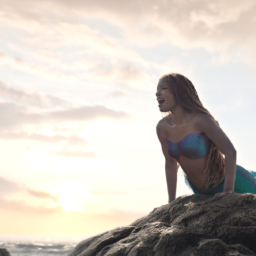
    The Little Mermaid is largely successful off the back of recreating the original film — but how wonderful it looks in live-action. Bolstered by a star-is-born turn from Halle Bailey as Ariel, this is the Disney live-action to finally capture some of the magic from our childhood for the new generation.

    The Little Mermaid is in theaters May 26.

    “Welcome back, ladies and gentlemen. Before we continue I’d like to apologize to anyone who might be upset or offended by what you saw before the break. It’s not every day you see a demonic possession on live television.” That’s how host Jack Delroy (David Dastmalchian)follows up a segment of the Halloween episode of his late-night talk show where he interviews suspected possession victim young teen Lilly (Ingrid Torelli). While it might seem bizarre for a 1977 late-night show, it’s by design. Night Owls with Jack Delroy is lagging in ratings behind a little program known as The Tonight Show starring Johnny Carson and it’s sweeps week — the time of the month when Nielsen comes up with its ratings for what Americans are watching on TV. If you were desperate enough you’d commune with the devil too. 

    After enduring expressionless hyperrealistic animals in The Lion King and an eerily artificial genie in a surprisingly dull Aladdin, Disney has finally broken their live-action losing streak with Rob Marshall’s adaptation of the 1989 classic The Little Mermaid. And there were two clear reasons for the movie’s success. 

    There’s Marshall himself, who has become the go-to movie musical adapter since winning Best Picture for Chicago in 2002 — though The Little Mermaid is easily his best film since. And, of course, there’s Halle Bailey who makes the jump from musician to actor with the ease of Lady Gaga in A Star is Born, Janelle Monae in Moonlight and Hidden Figures, and Rina Sawayama in John Wick: Chapter Four (What? Like it’s hard?). If anyone keeps the movie afloat, it’s her Ariel.


    ADVERTISEMENT


    This version of The Little Mermaid largely follows the story of the original. Ariel, a young mermaid who longs to live in the surface world, gets the chance to live her dream when sea witch Ursula (a deliciously camp Melissa McCarthy) strikes a deal to make her into a human in exchange for her siren call. Of course, there’s a catch. If she doesn’t get the swoon-worthy Prince Eric (Jonah Hauer-King) to give her true love’s kiss by the third sunset, she will revert to a mermaid and find herself pledged to Ursuala.

    Her journey to the surface world is aided by her father King Triton’s (Javier Bardem) trusted advisor Sebastian (voiced by Hamilton’s Daveed Diggs), her (terrifying looking) fish friend Flounder (Jacob Tremblay), and squirrely seagull Scuttle (Awkwafina). And while the surface world brings its own kind of magic, it is ahem… under the sea that is the most impressive.

    Where Jon Favreau strived for realism in The Jungle Book or The Lion King (because a lion version of Shakespeare’s “Hamlet” just begs for realism), Marshall was unafraid to infuse surrealism into the world — it is a movie about mermaids after all. There’s no better example than the colorful musicality of “Under the Sea”, which largely errs to the original sequence. As Diggs joyously laments on the wonders of their ocean world, colorful sea creatures dance around the coral reef — whether sea turtles marching to the beat or sea fans mimicking burlesque fans. It’s the kind of energized musical number that was lost to the uncanny valley of The Lion King


    ADVERTISEMENT


    “Kiss the Girl” is formed by the sounds of the environment — wind through the trees, bird fluttering their wings — bringing the impossible magic of the cartoon into the real world. McCarthy, taking note from Ursula’s original inspiration Divine, brings us a deliciously camp “Poor Unfortunate Souls” that teems with the spellbinding antics of the original number while bringing a new sense of danger with the live-action elements. The movie’s sense of stakes was a welcome surprise. 

    And while the classic numbers certainly do the heavy lifting, the movie charts new territory. Screenwriter David Magee (Life of Pi, Finding Neverland) expanded the lore in ways that help the movie reach new depths (though others leave it shipwrecked). Moving the story to an unspecified Caribbean island adds a fresh perspective to the well-worn Disney Princess genre — and adds an island musicality that keeps the scenes between musical numbers light and airy.

    New numbers like “For the First Time” fall into step with the classic score, while still feeling like it fits within the tone and possibilities of this adaptation. The island kingdom itself has a new life (and music) to it — adding a new complexity to the themes of the original.

    At the core of the movie’s success, however, is Hauer-King’s Prince Eric, who feels more than just a love interest thanks to added character development — and a new musical number that plays suspiciously like “Edgar’s Prayer” from Barb and Star Go To Vista Del Mar — and, of course, Bailey’s singular Ariel who teems with charisma, uniqueness, nerve, and talent. Her version of “Part of Your World” (and its subsequent reprises) have bore themselves into my psyche since seeing the movie — and likely the rest of the audience if judging by the applause break after her final ethereal riff.


    ADVERTISEMENT


    Bailey’s take on “Part of Your World” is perhaps the greatest characterization of the movie’s success. Her rendition has a deep reverence for Jodi Benson’s iconic original but finds ways to push the song in new directions to feel one with herself. As much as she is the lead of the movie, the movie is her. From her palpable chemistry with Hauer-King to her doe-eyed wonder at the surface world to her teenage angst of where she came from, her performance drives (sails?) The Little Mermaid to its peak.

    Does The Little Mermaid change my mind about Disney’s commitment to producing films off of existing IP? No. I’d rather they focus on creating new stories for this generation to fall in love with. Still the movie, for all its imperfections and missteps — I will never forgive Lin Manuel Miranda for subjecting me to “The Scuttlebutt” rap — finds heart within material that already had one beating strong in it. And that heart is Halley Bailey, the Disney princess a new generation needs and deserves.

  • ‘Good Boys’ mini-review — Good boys doing bad things

    ‘Good Boys’ mini-review — Good boys doing bad things

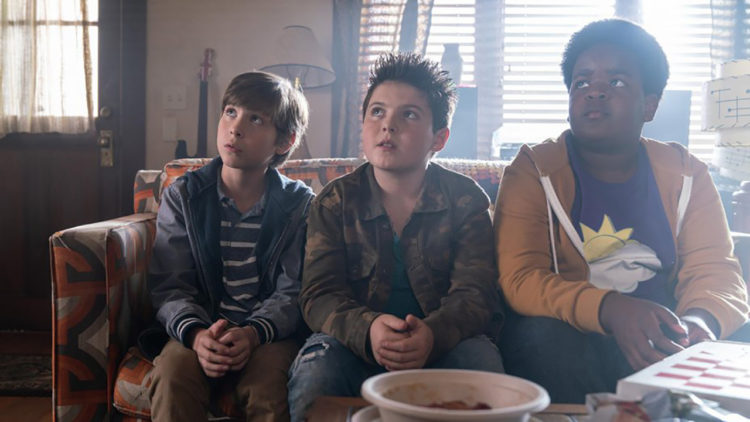
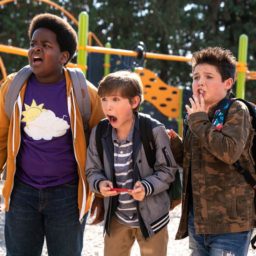
    Three tween boys ditch school and go on an adventure that involves drones, drugs, and a suspicious number of sex toys in Good Boys.

    90-second review: If movies like Superbad and Booksmart prove anything, it’s that watching uncool teens try to be cool is a comedy gold mine. Good Boys mines the same tropes for humor — the entire plot revolves around the main trio doing anything and everything to make it to their first spin-the-bottle kissing party. However, there’s also the added layer that they’re tweens and they still don’t understand how many things in the world work.

    One of those things is how to kiss. Then even look up “porn” in an attempt to learn and are hilariously horrified to learn that it doesn’t just involve kissing. So, Max (Jacob Tremblay who gave one of the best child performances in history in Room) comes up with a plan to use his father’s beloved drone to spy on his high schooler neighbor Hannah (Molly Gordon) — “she’s nymphomaniac, someone who has sex on land and sea,” he says — and hopefully, learn how to kiss. However, when Hannah and her friend Lilly (Midori Francis) capture the drone, hijinks ensue as the boys try to get it back, which involves a too-realistic sex doll, molly, a brawl in a frat house and more gags than you can keep track of

    However, the movie isn’t ridiculous. A lot of why it works is the incredibly low stakes of it all. However, for Max, who is determined to finally kiss his crush, Thor (Brady Noon), who wants to prove he’s cool by drinking a beer in front of the popular kids, and Lucas (Keith L. Williams — a standout), who simply doesn’t want to get in trouble, the stakes seem life or death.

    And even though each member of the “bean bag boys” — what the three eponymous good boys call their friend group — is given one characteristic and goal to run with for the whole movie, it works because the three young actors are so good at portraying each of those small struggles as something huge.

    It’s refreshing too that the humor, while crude, is never offensive or gross. Good Boys, like Booksmart this year, proves that a raunchy comedy can also be smart and thoughtful — there’s an underlying thread around whether the beanbag boys should be friends in the first place. And while this movie doesn’t quite reach greatness, it never has a moment where it’s not funny or entertaining. 

    Where to watch Good Boys: Now playing in theaters.


    ADVERTISEMENT


    More movies, less problems


    Hey! I’m Karl. You can find me on Twitter and Letterboxd. I’m also a Tomatometer-approved critic.

    💌 Sign up for our weekly email newsletter with movie recommendations available to stream.


    ADVERTISEMENT


    Good Boys
    Jacob Tremblay, Brady Noon, and Keith L. Williams in Good Boys. Credit: Universal Pictures.
  • Wonder review — Get ready to laugh and cry during this feel-good movie

    Wonder review — Get ready to laugh and cry during this feel-good movie

    Wonder will win over audience’s affection with its charming take on R.J. Palacio’s novel of the same name.

    Wonder is an inspirational poster of a movie, which I say in the least cynical way possible. Like director Stephen Chomsky’s last movie The Perks of Being a Wallflower, Wonder knows how to emotionally invest its audience in its characters and story. You cheer when it wants you to cheer, laugh when it wants you to laugh, and cry when it wants you to cry. In a lesser movie, it might have felt like manipulation or washed with sentimentally. But Wonder earns the emotions it makes you feel, even if it has to push you just a tad.

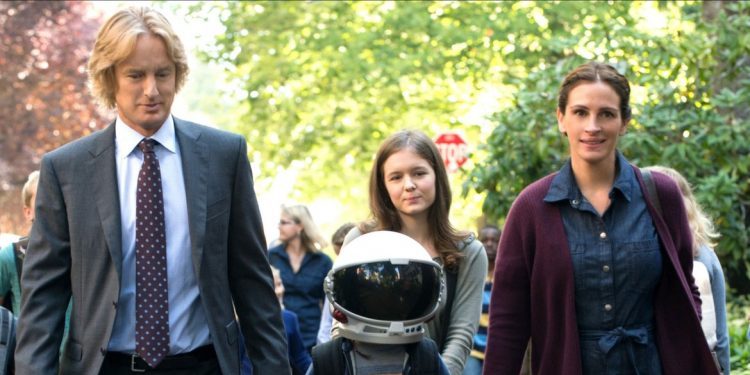
    Based on J.C. Palacio’s novel of the same name, Wonder follows 10-year-old August “Auggie” Pullman (Room’s Jacob Tremblay) as he navigates his first year of middle school after being homeschooled by his mother, Isabel (Julia Roberts). That in itself already sounds like the plot of a movie. But there’s one thing complicating Auggie’s transition into a “real school.” Auggie was born with a facial deformity that required 27 corrective surgeries. Still, he looks anything but ordinary. But Auggie is just a normal kid, a fact that he tries to emphasize in his narration — he loves Star Wars and video games and wants to be an astronaut. The other kids just don’t know it yet. Up until now, Auggie has worn a space helmet whenever he was in public. So, the jump from near isolation to school is anything but easy for him. However, it’s a decision that Isabel and Auggie’s father Nate (Owen Wilson) had to make sooner or later.


    When starting school, Auggie has some allies — affable school principal Mr. Tushman, Daveed Diggs’ supportive and insightful Mr. Browne, and Jack Will (Noah Jupe), who becomes the first student to truly befriend Auggie — and some enemies — mainly the school bully Julian (Bryce Gheisar). Wonder makes you incredibly sympathetic to Auggie’s plights. Not just because of what is happening to him on screen, but because of the Tremblay’s incredible effective performance. His quiet, downturned expression and high, quiet voice make it incredibly easy to sympathize with him. But more importantly his defeatist attitude towards the cruelty from kids, which he is hurt by, but fully expected, makes you empathize with his loneliness. Even if the movie is an amplified version of it.

    And while the movie starts off solidly in Auggie’s point of view, it shifts to his sister Via’s (Izabela Vidovic) point-of-view. Similarly to Lady Bird, we quickly realize that this movie is not only about Auggie, but the people surrounding him. Via knows that Auggie is the center of her parents’ universe, but she’s okay with that. She’s learned to deal with her own struggles on her own, but as she approaches this new year of school, it becomes harder for her, especially since her best friend Miranda (Danielle Rose Russell) has suddenly stopped talking to her.


    Wonder, the book and the movie, is targeted at kids. And this shifting point-of-view — we eventually get stories from the perspective of Via, Miranda, and Jack Will — is a clearly a way to help kids learn the lesson of empathy. Chomsky’s The Perks of Being A Wallflower is so effective because he has an understanding of the way that young people think and feel. Particularly the feeling of loneliness. In Perks, the main character’s aching longing for connection is palpable and so is Auggie’s. And like Perks, the way that the people around the main character interact is almost as important as the main character’s journey.

    I don’t want to say that if you didn’t like Wonder, then you don’t have a heart. But this is really one of those movies that can cheer anyone’s day up. It’s really the feel-good movie of the year. That’s not to take away its cinematic achievement. Chomsky is a good director with an ability to imbue emotion on his audience. And just when you think it couldn’t get any better, the movie ends with a Passion Pit song.

    ★★★½ out of 5


    Wonder is available on Amazon!