Tag: Janelle Monae

  • Moonlight Movie Review — An instant classic and landmark in film history

    Moonlight Movie Review — An instant classic and landmark in film history

    Moonlight is gorgeously crafted, masterfully acted, surprisingly timely, and demands to be watched and respected

    It wasn’t until I got into my twenties that I became aware of what identity is. Identity is as much how you view yourself as what the world views you as. You may be a minority or gay or poor, but that doesn’t mean you have to identify as those things. It’s truly your experience that shapes your identity. Any LGBTQ+ person knows what it is to struggle with identity. Hell, anyone that is anything different from what society views as normal has struggled with identity. It’s a process that is as emotionally taxing as it is satisfying. Learning who you truly are and who you see yourself to be is one of the most liberating — sometimes heartbreaking — experiences. That’s what Moonlight really is about: identity. Not only the concept of identity, but the process of discovering, struggling, and ultimately accepting who you are.

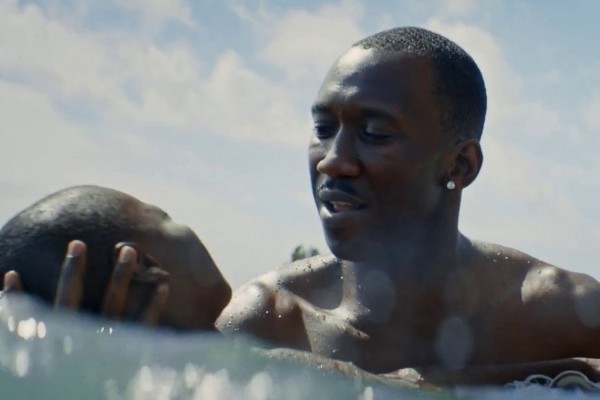
    Moonlight is split up into three parts that are named after the nicknames that our main character is called: Little, Chiron, and Black. In little, we meet young Chiron (Alex Hibbert) as he is running away from a group of taunting classmates. Eventually, he finds shelter in a crack house and is soon discovered by Juan (Mahershala Ali), who takes him under his wing. Juan is an interesting character. He is the only character whose perspective we see outside of Chiron’s. This is an important choice because Juan is a character whose identity as a drug dealer directly contradicts his caring personality.


    Eventually, Juan takes him under his wing along with his girlfriend Teresa (Janelle Monae). They become Chiron’s figurative parents while his real mother, Paula (Naomie Harris), is on drugs or with random men. This part is about Chiron discovering his identity. Juan is there to assure him that there are other people out there like Chiron.

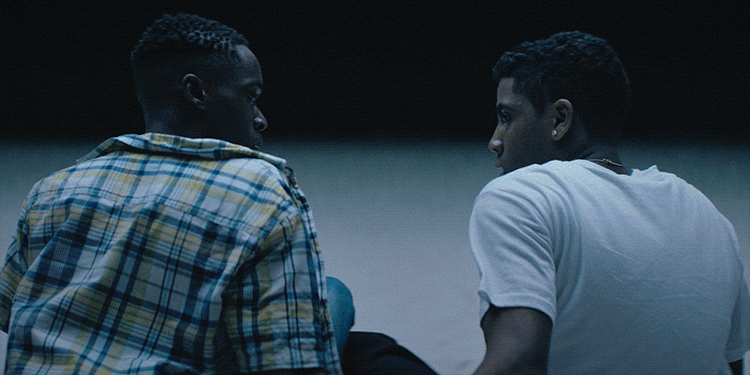
    The second part of the film follows Chiron as a teenager as he struggles with his identity. At this point in his journey, he’s as confused and vulnerable as ever. He must deal with his mother falling further into drug addiction, his place as a punching bag for the school’s bullies, and his deepening confusion about his sexuality. However, maintaining a close eye on his subjects, Jenkins portrays Chiron’s struggle with a chilling intimacy that culminates in a chilling final shot.

    In the final act, Chiron has transformed into Juan both physically, professionally, and mentally. There is even a scene where he gives a pep talk to a younger associate. However, this act is outlined by his acceptance of who he is. Ultimately, he must face his past ghosts and find a way to embrace it as part of his identity.
    moonlight movie review

    Jenkins and cinematographer James Laxton were careful to shoot nearly the entire film in close-up. It’s a deeply personal story. However, Jenkins also doesn’t shy away from cinematic flair. In particular, composer Nicholas Brittell’s score mixes old school rap and hip hop with classical music to outline the beauty and savagery of growing up. The most surprising element though is the sound. It comes in and drops out in the perfect places. However, the most effective part of its design is when we hear dialogue, but all we see is a look in the actors’ faces.

    I need to take a moment to talk about this incredible cast. First, the three actors that portray Chiron are revelations and bring entirely different perspectives on the role that come together to create this dynamic character. Alex Hibbert, who portrays the young Chiron, has this knowing look that captures his attempt to understand something that is just out of grasp. Teen Chiron, portrayed by Ashton Sanders, instead uses his physicality to show his inner battle to embrace who he truly is or what society wants him to be. Finally, Trevante Rhodes’ performance as the adult Chiron shows the character at his most emotionally vulnerable.


    However, they are joined by a supporting cast that use their limited screentime to make huge impacts. Naomie Harris, who plays Chiron’s mother in all three parts of the film, is phenomenal throughout the film. But her third act monologue is one of the best-acted scenes of the year. Jharelle Jerome, who plays Chiron’s love interest Kevin as a teenager, is a surprisingly naturalistic performer. Mahershala Ali, though, towers in the film. Though his screen time is short, his impact is felt throughout the movie. It’s truly a masterclass in acting. Then there is Andre Holland who plays Kevin as an adult. His performance is perhaps one of the best of the year. Along with Rhodes, he created scenes that felt so natural and real that I was floored that this was actually a movie. 

    LGBTQ+ characters are marginalized in film. However, black gay characters are completely in the periphery. Moonlight bravely brings them into the forefront. It is easily a turning point for queer cinema and black cinema alike. In the end, though, Moonlight is a love letter to the people that struggle with their identity and sometimes feel isolated. It works as both a comfort and a glimmer of hope. But that’s not to take away from the craft of the film. The only way to describe Moonlight is as art. It’s pure, unadulterated art. It’s storytelling at it’s best. It’s filmmaking at it’s best. It’s romantic, emotional, and, most importantly, a film that needs to be seen. 
    10/10

    Preorder Moonlight on DVD, Blu-Ray, or digital on Amazon!

  • Hidden Figures review — One of the most enjoyable biopics in years

    Hidden Figures review — One of the most enjoyable biopics in years

    Hidden Figures delicately balances a racial drama with a biopic while also telling the story of the space race. The result is one of the most delightful movies of the year.

    It takes the right kind of movie to get a Thursday night crowd actually cheering in the theater. Well, Hidden Figures is that kind of movie. Crowdpleasers aren’t hard to find in our current cinematic environment. It seems that Hollywood lives off of them. Financially, they do. However, good crowd pleasers are a rarity. Last year saw The Martian was the perfect example. You rooted for the success of the main characters and wallowed in their defeats. But in the end, you were up off your seat cheering at the photo finish. However, Hidden Figures is a more complex story than The Martian. In addition to being a true story, director Theodore Melfi had to carefully balance a biopic with a race drama, all the while telling the story of the space race with Russia.

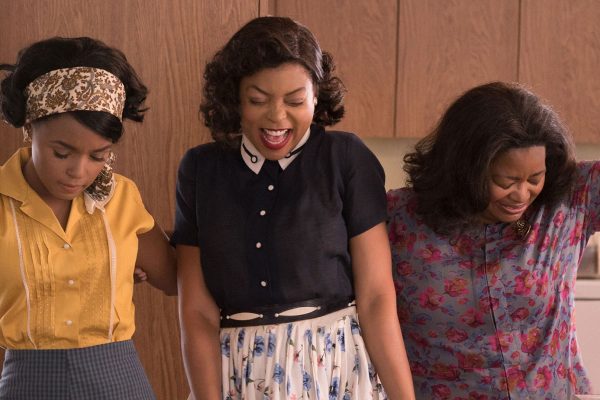
    Hidden Figures tells the story of three unsung heroes of NASA. Dorothy Vaughan (Octavia Spencer) is the informal supervisor of the West Area Computers Division, which is a group of thirty black women doing the calculations for the spacecrafts. Two of those women are Mary Jackson (Janelle Monáe), an aspiring engineer, and mathematician Katherine Goble (Taraji P. Henson), who is the center of our story.


    The movie opens with the three ladies stranded on the side of the road after Dorothy’s car breaks down. A cop comes to investigate and becomes distracted by the fact that the ladies work for NASA. This scene makes two things clear. First, it reminds us of the racial tensions of our society at the time. Second, it reveals that no matter what, the space race is at the front of everyone’s mind. Katherine is reassigned to the Space Task Group, which does the calculations for the all the shuttle missions. However, she finds that she is the only female and only person of color working in the division. This leads to animosity between her and her coworkers. They bring in a coffee pot for colored people in a heartbreaking instance. More subtly, Katherine’s bright patterned dresses clash against the uniform white button downs and black ties worn by everyone else in the department.

    However, this animosity is demonstrated beautifully and heartbreakingly in a single scene. The building that contains the Space Task Group doesn’t have a colored bathroom. So, she has to run in her heels and skirt half a mile to the West Area Computers division with her work in hand. She works while she uses the bathroom, then runs back to her office. This is played for laughs the first few times. It is even set to Pharrell’s song “Runnin’.” However, on a rainy day, this simple injustice causes Katherine to snap. Taraji P. Henson is an actress with a lot of power behind her, and she lets it go in this scene. But what makes it so effective is that Melfi builds up to it. He earns that scene and Henson knocks it out of the park. It may be emotionally manipulative filmmaking, but to the movie’s credit, it essentially asks you to buy into it emotionally and you allow it.

    More than anything, these women just want to work and do what they love. They want to have the opportunity to prove themselves. Allison Schroeder and Melfi’s screenplay, which they adapted from the book of the same name, does just that. It places the lens of the movie squarely on these ladies. It filters our society through their experiences. It’s one thing for a biopic to tell a story. Hidden Figures is the rare biopic to show me a real person.


    The movie tells the story of unsung heroes and it makes it a point to remind you of the impact of both their work and the work. It has a reverence for its subjects that is so vital. Part of that is thanks to the incredible performances from the cast. Kevin Costner does great work as Al Harrison, the director of the Space Task Group. He is a champion for Katherine and often helps her break the barriers that are systematically set in place. Jim Parsons is also great outside his typical mold as the head engineer Paul Stafford. Kirsten Dunst and Mahershala Ali, who is destined for an Oscar for Moonlight, also give great performances. Glen Powell gives a charming performance as John Glenn, the first American to orbit the Earth.

    However, it’s the three leading ladies who carry the movie on their shoulders. Octavia Spencer does her usual great work as the forward-thinking and motivated Dorothy Vaughn. Breakout Janelle Monáe is a scene stealer for much of the movie and has two scenes that would have made excellent Oscar clips. But Taraji Henson gives one of the best performances of the year as Katherine Johnson. She gorgeously emotes in two incredible scenes that are high points for the movie. Though, what I most appreciate about her performance is her internal struggle of suffering from injustices while trying to just do her the best work she can do.

    Is Hidden Figures one of the best written or directed movies of 2016? No. But is it one of the most satisfying and enjoyable movies? Yes! Hidden Figures will hook you from the very first time you see Taraji Henson, Janelle Monáe, and Octavia Spencer grace the screen and not let go until the last credit rolls. Watching Hidden Figures is perhaps one of the best times I had in the theater recently. It doesn’t just emulate a crowd pleaser, it’s the definition of a crowd pleaser.

    ★★★★ out of 5