Tag: John Cho

  • ‘Columbus’ review — Romantic and charming, John Cho and Haley Lu Richardson are stellar

    ‘Columbus’ review — Romantic and charming, John Cho and Haley Lu Richardson are stellar

    Columbus is a charming and romantic movie in the vein of Before Sunrise that features stellar performances by Haley Lu Richardson and John Cho

    Quick review: Anchored by two Oscar-worthy performances, Columbus is perhaps one of the great romances of the decade.

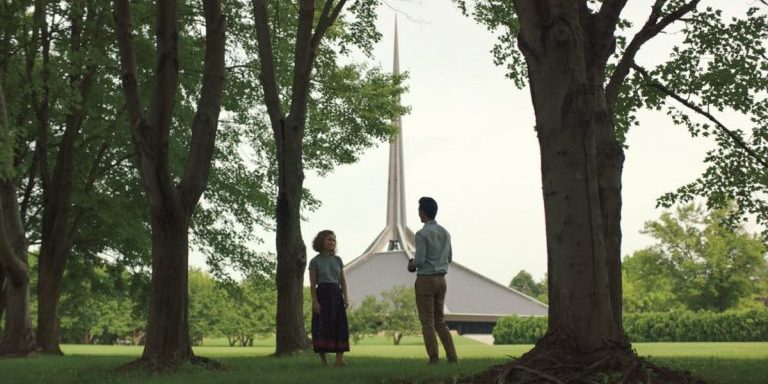
    Columbus, a small city located in southeastern Indiana, is a juxtaposition. Even though it’s located deep in the midwest, it has become a mecca for modern architecture and art.

    It’s almost as far from the culture-rich liberal coasts as you can get, yet it still lays claim to some of the biggest advancements of postwar modernism in the United States. But what does that have to do with writer-director Kogonada’s debut film named after the city? Well, everything.

    Columbus is about relationships. The relationship between modern architecture and the city. The relationship between a father and son, a mother and daughter. But, at the core, it’s about the relationship between Casey (Haley Lu Richardson), an 18 or 19-year-old young woman who works at the public library, and Jin (John Cho), a Korean-American man who returns to the US after working overseas when his father falls ill.

    💌 Sign up for our weekly email newsletter with movie recommendations available to stream.


    ADVERTISEMENT


    Over a couple of Before Sunriseesque days, Casey and Jin learn about each other’s pasts, where they are now in their lives, and where they think they should be in the future. And that’s really all there is to it.

    Along the way, there are revelations that test this new friendship — or is it more? But what they have in common is a steadfast appreciation for modern architecture, which is what brings them together in the first place. Casey loves it from growing up in the town.

    Jin simply absorbed the information through his father’s studies and his journal. And though their conversations pretty much only surround architecture, Kogonada infuses them rich subtext that makes the movie a beautiful character study at its core.

    Cho, best known for Harold & Kumar and the Star Trek films, gives a remarkable performance that demands he be taken seriously as an actor. Asian men don’t often get the chance to be leading men, especially in romances. But Cho controls the screen with a steely conviction. More impressively, he is able to decide when to allow audiences to understand his thought process, which makes his emotional arc all the more impactful.
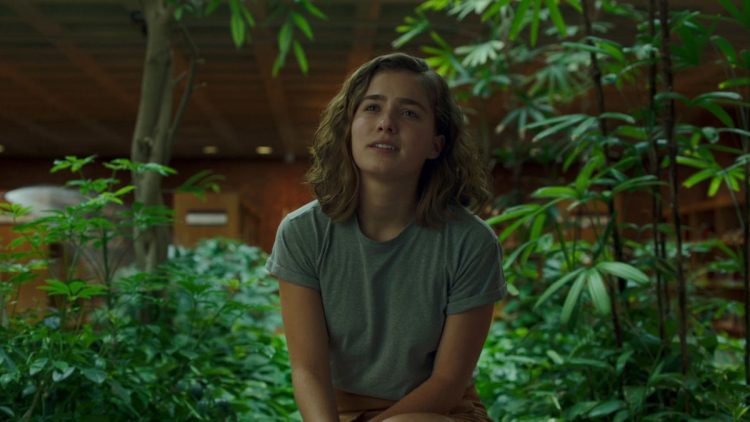
    Columbus movie
    Haley Lu Richardson in COLUMBUS

    💌 Sign up for our weekly email newsletter with movie recommendations available to stream.


    ADVERTISEMENT


    However, he gives room for his scene partners to shine — he often plays across Eleanor (Parker Posey) an old friend and his father’s assistant — particularly Richardson, whose performance is simply astounding and one of the best of the year.

    What I found so refreshing about Columbus is that it captures a specific time in life. The time where you’re at a crossroads — in this case, post-high school — and have to decide what direction you want to take. However, as with many aspects of life, there is pressure from all sides. Even from people that don’t realize their applying pressure.

    Casey feels pressure to pursue education from her co-worker Gabriel (Rory Culkin, a scene-stealer), but feels stuck looking after her mother Maria (Michelle Forbes, fantastic here),a recovering drug addict, Richardson portrays that desire to just push back on the pressure and scream so adeptly that it feels like a gut punch once you recognize the feeling. It’s remarkable considering this movie for most of its running time is quiet and meditative — though that doesn’t make it any less impactful.

    Columbus is one of those gems that doesn’t seem like anything extraordinary until you’re sitting through the credits trying to absorb what you just watched. In terms of conversation movies, it approaches the level of Before Sunset, which I consider the best of the Before trilogy. Kogonada allows the conversation to flow naturally, but with purpose, and that purpose is for two completely different people, a juxtaposition in their own right, to understand each other and eventually help the other understand which road to take.

    The beautiful thing is that we don’t know if it’s the right road, but the ending is still filled with hope. Something that we need more of in film.

    Columbus is available to stream on Hulu or on Digital HD on Amazon!
  • Never hold a 'Grudge' — and don't watch it either — movie review

    Never hold a 'Grudge' — and don't watch it either — movie review

    The Grudge is back for its third haunt as a Japanese curse haunts multiple families connected by one house.

    Quick review: The Grudge is more horrifying than any horror movie — because it’s boring. The cheap scares and thin plot do nothing but… well, make you hold a grudge against it.

    For the briefest of moments, I thought director Nicolas Pesce’s remake of The Grudge was going to be not terrible. I was sorely mistaken. Pesce directed the very solid and very disturbing Piercing last year, which relied on a bleak tone and anxiety-inducing imagery to create a surprisingly effective horror. That, along with a strong cast, gave me hope that maybe he could make up for the dreadful — and not in a good way — 2004 American remake starring Sarah Michelle Geller. The opening moments proved to be all I needed to know otherwise.

    Sticking to the script

    Like the original 2002 Japanese version, Ju-On: The Grudge, and the 2004 American remake, this version of The Grudge is told as a non-linear narrative following various families who have encountered a vengeful spirit that is created when someone dies in the grip of extreme rage or sorrow. Anyone that crosses its path is killed and the curse is reborn to terrorize another unwitting victim. 

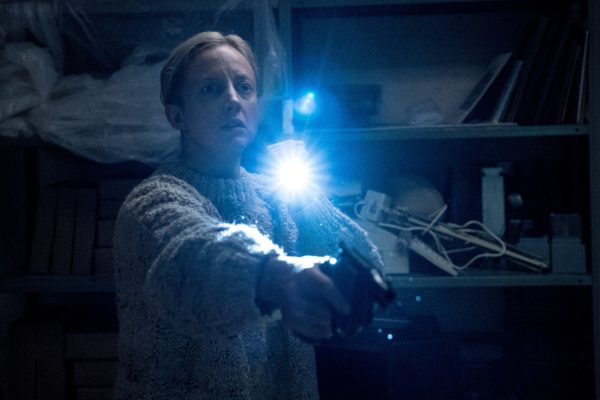
    At the center of the film is Detective Muldoon (Andrea Riseborough) and her partner Detective Goodman (Demian Bichir) who discover the decomposed body of Lorna Moody (Jacki Weaver) in her car in the middle of the woods. That leads them to other connected murders that have taken place of several the past few years involving real estate agents and expecting parents Peter and Nina (John Cho and Betty Gilpin), elderly couple William and Faith (horror legend Lin Shaye and William Sadler), and a young mother (Tara Westwood).

    As the plot gets going, it’s interesting enough. Pesce seems to be attracted to slow burns and other than the confounding cold open, he sticks to that pace. By the time we’re introduced to John Cho and Betty Gilpin’s characters and storyline— two of the actors I was most excited to see — we’re already deep into the mystery. Their scenes are easily the most successful narratively and often have the best scares.

    However, even those scares feel empty.

    💌 Sign up for our weekly email newsletter with movie recommendations available to stream.


    ADVERTISEMENT


    What you don’t know won’t hurt you

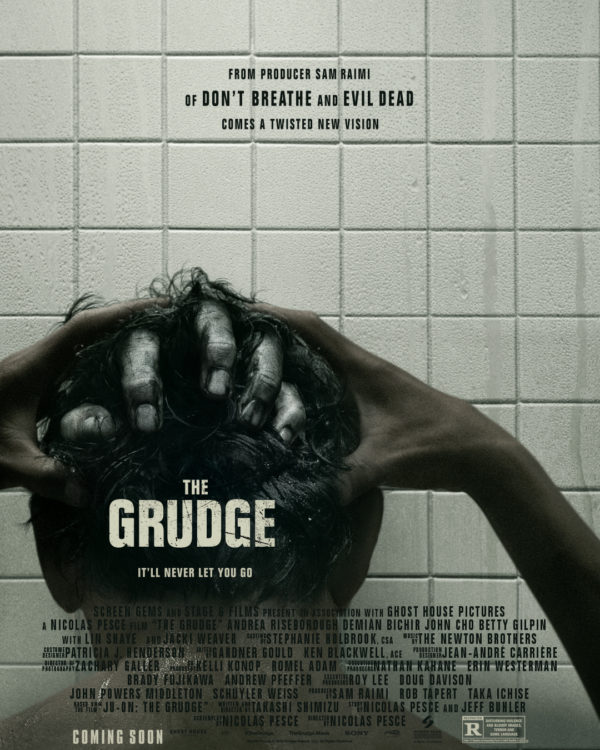
    The Grudge Poster

    For all the flaws with the screenplay, it isn’t the main reason for the movie’s ineffectiveness. The scares leave a lot to be desired. Japanese horror — or J-horror — relies on two things: atmosphere and imagery. The former is often melancholic and full of dread. The latter is what makes J-horror the most terrifying movies. They’re less focused on the shock and instead look to unnerve. The biggest issue with The Grudge is that every scare is a jumpscare with no build — yet, they’re all predictable.

    It also relies on the tired trope of something happening behind the characters that they can’t see. Then they turn around and it’s gone. That trick is good for a scare maybe once. However, nearly every scare uses that setup. It’s almost as if they didn’t feel there weren’t enough moments of horror, so they used them to fill the gaps.

    Horror works because fear is a universal emotion. By removing the anticipation of a scare, you almost lose all of its effectiveness. Add flat characters and a thin plot and The Grudge is yet another in a long line of failed horror reboots.

    Random thoughts ?

    • The final shot — and entire conclusion — basically comes out of nowhere. It’s almost like they forgot to write an ending and just threw something in.
    • One of the first shots of the movie is of the ghost. Note for future filmmakers: Make us want to and be terrified to see your monster. That means making us wait.
    • None of The Grudge movies are particularly good. So, why do we keep making them?
    • The entire cast actually does great work — especially Andrea Riseborough, John Cho, and Betty Gilpin.
  • ‘Searching’ review — A thriller for the digital age

    ‘Searching’ review — A thriller for the digital age

    John Cho shines in Searching, an engaging and suspenseful thriller that takes place completely on a computer screen

    Searching begins with a very familiar landscape with rolling hills, a blue sky speckled with clouds, and mountains in the distance. This vista is the desktop of a computer. That’s where the entire running time of Searching, like the film Unfriended before it, takes place.

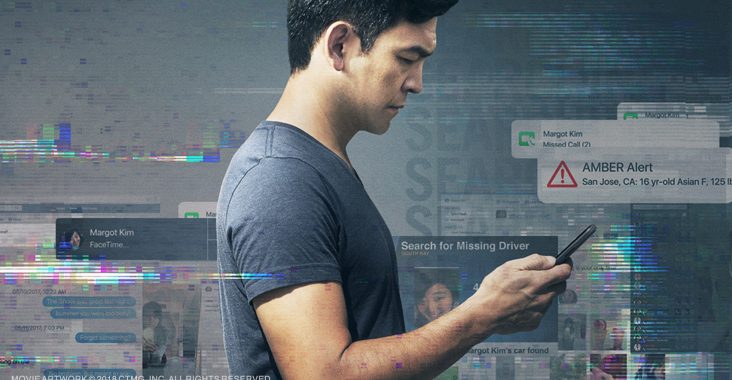
    For the most part, it takes place on the computer screen of widower David Kim (John Cho), a father who frantically searches for his daughter by piecing together her real-world life by learning about her digital life. While the way the movie is presented might feel like a gimmick—and the tactic has been used as a gimmick in the past—Searching quickly undoes any skepticism you’d have by using it in increasingly innovative ways.

    However, the plot isn’t something we haven’t seen before. Through a breezy montage at the beginning of the film that brilliantly walks us through Margot’s (Michelle La), David’s daughter, childhood from kindergarten to high school. Along the way, through home videos uploaded onto YouTube, calendar events, and emails we learn the story of how Margot’s mother Pam (Sarah Sohn) succumbs to cancer. So much of our lives are spent online. It seems like a fitting way to throw us into the narrative.

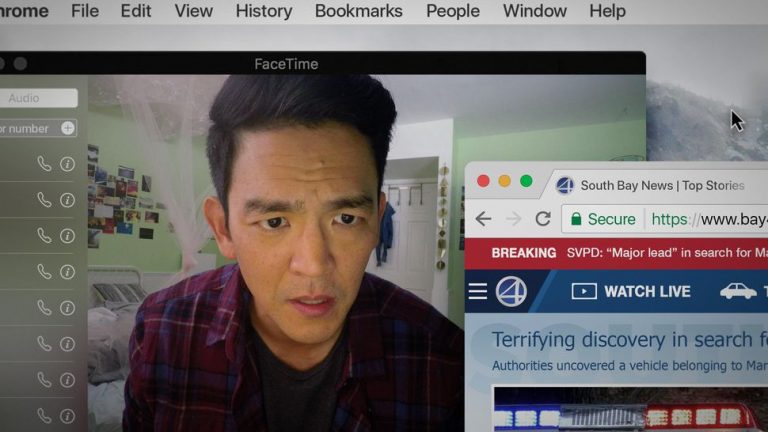
    We skip forward some years since Pam has passed, something that still weighs heavily on David and Margot. Much of the film is told through texts and FaceTime calls between characters, which is how the center of the plot gets moving. We see the familiar multi-colored tentacles of a Mac screensaver fill the screen. Soon, a call from Margot pops up. Then another. Then a FaceTime call that activates the camera and shows David fast asleep.

    The next day, he’s oblivious to his daughter’s disappearance. However, like any parent that hasn’t had contact with their child for a few hours—he sends her countless texts, the familiar “hello” and “are you alright?” that we always get from our parents even as adults—he begins to worry.

    John Cho in Searching

    From there, he goes on a digital journey from Facebook to YouCast to Venmo to try and find his daughter and piece together her mysterious life. Along the way, Detective Rosemary Vick (Debra Messing) becomes attached to the case and works with David to unravel the mystery.

    At one point, David goes onto Margot’s Facebook—he recovers her password by hacking his way onto her email in a way that I’m sure almost all of us have experienced—and makes his way through her friends list calling and texting every person to figure out where she’s been and what she’s doing. All of David’s actions on his computer screen are things that we’re all familiar with. It’s one of the main reasons that the movie feels so realistic, at least at the beginning.

    Searching is beautifully stitched together Nick Johnson and Will Merrick who balance the narrative with subtle hints to the horror that the internet can bring. Specifically, we journey through YouTube comments and Reddit threads as the public catches on to the case.

    At one point, a girl that admits to David that she wasn’t friends with Margot posts a tearful video mourning the loss of her “best friend.” The film dissects society’s response to a crisis, both good and bad. It feels all too real.

    The movie’s greatest asset is how grounded it feels. During the first half of the film, it truly feels like we’re intruding on character’s lives. However, unlike Unfriended, the format can’t sustain the narrative the movie is trying to tell.

    Workarounds for the limitations of the format like surveillance cameras and live streams feel bulky in the otherwise lean plot. Even more, the film’s finale, while pleasing to some, knocks some of the air out of the film. However, Searching feels like another step further in capturing the digital age. And John Cho—always a steady hand in Star Trek and off a career-high performance in Columbus—shines as an equally hopeful and hopeless Daniel.

    Searching is available to buy or rent on Amazon!

    Karl’s rating: