Tag: LGBTQ+

  • ‘Queer’ is messy, mad and marvelous | review and analysis

    ‘Queer’ is messy, mad and marvelous | review and analysis

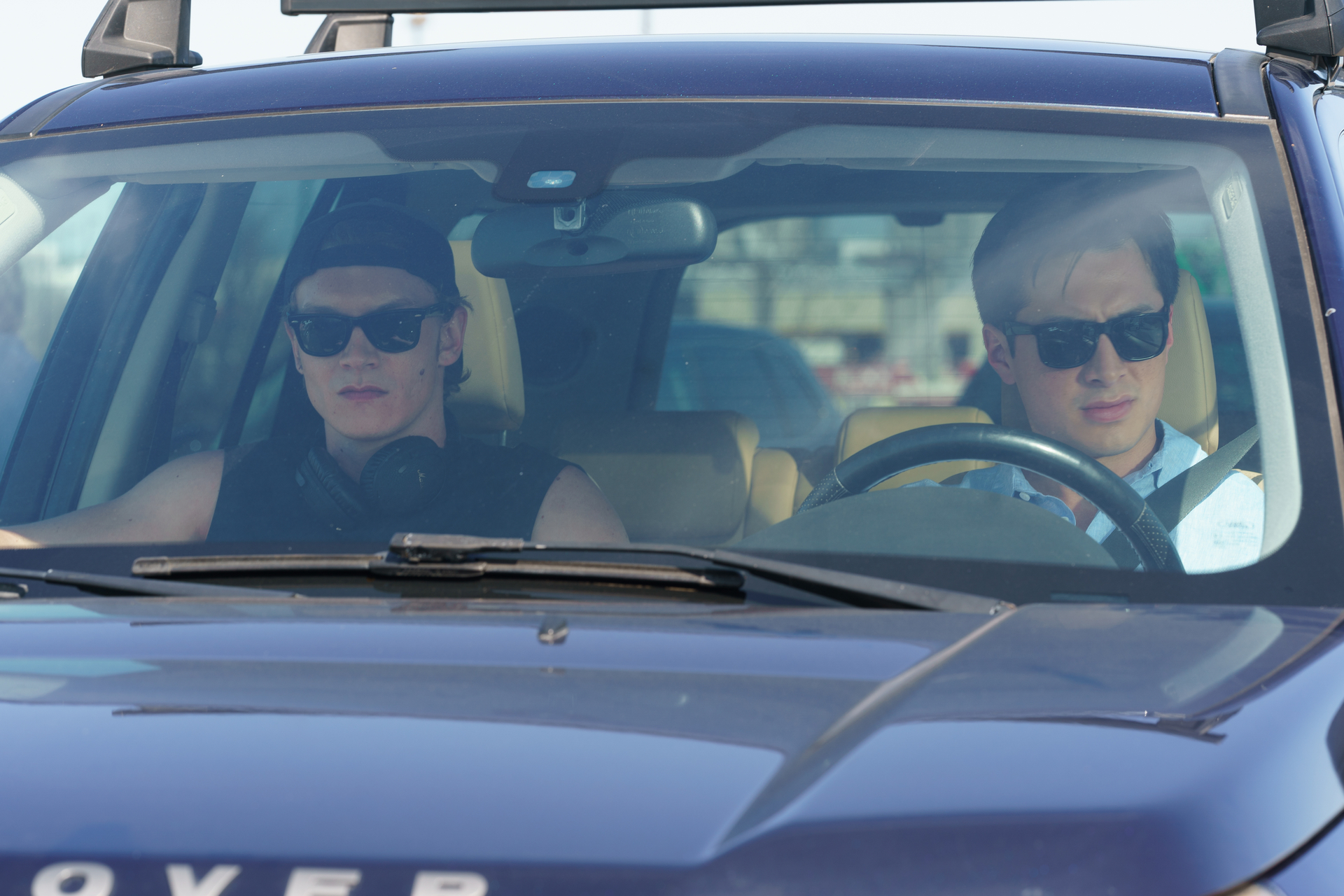
    Based on William S. Burroughs novel of the same name, Queer follows an American expat’s obsession with a young man he meets in 1950s Mexico City.

    This review was originally published out of the 2024 Toronto International Film Festival.

    Luca Guadagnino’s Queer is a mesmerizing and haunting exploration of desire, loneliness, and the search for connection. Set in 1950s Mexico City, the film follows Lee (Daniel Craig) as he navigates a complicated, obsessive relationship with Eugene (Drew Starkey). Through stunning cinematography, an evocative score, and an engaging, surreal narrative, Guadagnino and screenwriter Justin Kuritzkes deliver a thought-provoking, emotionally raw drama that speaks to queer longing, desire, and the transformative power of intimacy. Bold, challenging, and ultimately moving, Queer is not easily shaken.

    Queer is in limited release on Nov 27. It will be released nationwide on Dec 13 by A24.

    Anyone who claims to fully understand what William S. Burroughs is trying to tell us with his writing is either lying or on some really good drugs—and I’ll have what she’s having. Another filmmaker might have tried to smooth out the raw, jarring edges of Burroughs’s trademark sensibilities. But director Luca Guadagnino (Call Me By Your Name, Challengers) and screenwriter Justin Kuritzkes (Challengers) lean wholeheartedly into his idiosyncratic style, transposing his unsettling blend of mesmerizing horror and reality into something deeply affecting. And somehow, it’s also an aching romance about longing and desire. Amid the drug-addled maze of Burroughs’s thoughts, Guadagnino and Kuritzkes manage to find a thread—a profound one that, once pulled, unravels into a beautiful, moving drama that is, at its core, deeply… well, queer.


    ADVERTISEMENT


    Set in 1950s Mexico City, the film follows a community of American expatriates, many of whom are queer men, living in a lively enclave of bars where gossip flows as freely as the alcohol. Among them is Lee (Daniel Craig), a man who drifts through the streets in search of something—or someone. Lee’s haggard, drunken appearance and his self-destructive bravado are a stark contrast to Craig’s more notable roles as James Bond and Benoit Blanc. His presence often unsettles those around him. One man who crosses his path later notes to a friend that Lee can never just be friends with someone—it always turns sexual.

    Lee’s only friend, Joe (Jason Schwartzman), rambles about his various sexual exploits, most of which end in robbery, but Joe seems grateful for any company. Lee, on the other hand, is searching for something more meaningful. Though he’s clearly lonely, he seems incapable of breaking through his own emotional walls to form a real connection. Even after a one-night fling with a man at a bar (musician Omar Apollo), Lee is left feeling empty. Even assuming that the man slept with him for money. It’s that insecurity that keeps Lee from experiencing true intimacy. That is, until he spots Eugene Allerton (a sensational Drew Starkey) walking through the sultry streets. In stark contrast to Lee’s disheveled, unkempt appearance, Eugene is effortlessly cool—his tailored polo and well-fitting slacks clinging to his toned physique as passersby steal glances.


    ADVERTISEMENT


    Guadagnino and cinematographer Sayombhu Mukdeeprom beautifully capture the sweaty heat and energy of Mexico City’s bustling nights, imbuing the scenes with such textural detail that you can practically feel the heat on your skin. Eugene, however, seems impervious to the heat, and to everything else. Lee becomes obsessed with discovering who he is, and after exchanging a few furtive glances, he finally approaches Eugene one drunken night. While their conversations aren’t especially titillating, the tension between them is palpable, as if we’re just waiting for the space between them to collapse. At times, we see Lee’s ghostly hand reach out to touch Eugene, as though he’s willing himself to do so but can’t. As Eugene speaks (or listens to others speak), we catch Lee staring at him as if he’s trying to understand what’s going on beneath the surface.

    The first hour of the film moves at a pleasantly meandering pace, as Lee and Eugene oscillate between getting closer and drifting apart—having sex and then completely ignoring each other. It’s as if they both want to turn away from their desires while simultaneously giving in to them. It feels all too relatable to the queer experience—even now. While this dynamic could easily slip into melodrama, Guadagnino skillfully maintains a frenetic, sweltering energy, much like the city itself. This is all underscored by a melancholic score from Trent Reznor and Atticus Ross, with energetic needle drops ranging from Nirvana to Prince.


    ADVERTISEMENT


    As the story moves into its second half, Lee invites Eugene on a journey through South America in search of a mystical herb called yage, which is said to give the consumer telepathic abilities. This is where the film becomes more jumbled—perhaps intentionally, as Lee’s opioid addiction comes to the forefront. While the push and pull between the two men continues, the narrative loses some of its initial focus. Lee’s obsession with the herb seems linked to his desire to understand Eugene, himself, and perhaps his own queerness, but the journey to find it lacks the bite and momentum of the earlier parts of the film. That is, until they finally find the herb.

    In the film’s surreal and entrancing third act, the two men encounter Dr. Cotter (Lesley Manville), a kind of mad scientist living in the Amazon who studies indigenous plants, hunts for her and her partner’s food, and apparently trains their guard snake. Here, Lee learns that yage is more commonly known as ayahuasca, and he eventually persuades Cotter to let him and Eugene take it. The resulting sequence is a feverish, expressionistic dance that finally brings Lee and Eugene together in a moment of understanding. As Burroughs’s own words from his journals echo in the scene—“I’m not queer, I’m disembodied”—it adds an additional layer of meaning to this powerful, otherworldly encounter.


    ADVERTISEMENT


    At its heart, Queer is about queer loneliness, queer desire, and the queer desire to know we’re not alone. In the final moments, Lee faces his own loneliness. To borrow a line from Guadagnino’s Call Me By Your Name, “Is it better to speak or to die?” In that film, the character chooses to speak. Here, Lee suffers a kind of death—a raw, emotional moment that’s deeply impactful. It ultimately makes the film’s challenging journey worthwhile. Queer is a call for intimacy: to reach out, make yourself vulnerable, and let the space between you and others collapse. Because, in the end, where there may be rejection, there may also be acceptance.


    ADVERTISEMENT


    More movies, less problems


    Hey! I’m Karl. You can find me on Twitter and Letterboxd. I’m also a Tomatometer-approved critic.

    💌 Sign up for our weekly email newsletter with movie recommendations available to stream.


    ADVERTISEMENT


  • Found family drama Crossing is one of the year’s best | movie review

    Found family drama Crossing is one of the year’s best | movie review

    Crossing follows a retired schoolteacher who enlists the help of a young 20-something to find her trans niece who disappeared years ago.

    Crossing is a sweet, sensitive and effortlessly charming found family drama that follows three vastly different people as the grapple with the truths of their pasts, presents and futures. In just 105 minutes, writer-director Levan Akin so firmly wins you over that you’ll miss the characters as soon as it cuts to black. Filled with joy (particularly queer joy) amongst the realities of the world, Crossing is a beautiful and moving testament to change and one of the best movies of the year.

    Crossing will be released in select theaters on July 19. It will stream worldwide on MUBI on August 30.

    In the final scenes of Crossing, the new film from Georgian director Levan Akin, we say goodbye to each of the three characters we’ve been following over the course of a fateful week. One by one, we watch them step into an uncertain but hopeful future. And yet my heart ached. Not for the trio, they find themselves in a better place than we found them having been profoundly changed by the events of the film. Rather I was going to miss spending time with them in their world, like when your favorite TV show airs for the final time. It’s an impressive feat for 105 minutes but a testament to Akin’s ability to pour empathy through the screen—a reason it is one of the best films of the year.


    ADVERTISEMENT


    While we spend equal time with each of the three characters the story begins with Lia (Mzia Arabuli), a retired school teacher who we meet on a mission to find her trans niece Tekla as a promise to her dying sister. On that journey, she quickly meets Achi (Lucas Kankava), a quick-tongued 20-something living on the outskirts of the Georgian capital Batumi with his less-than-agreeable older brother (“put a shirt on around my wife,” he nags). When he meets Lia, she sees her as his way out, which is convenient as he says he knew her niece and where she lives in Istanbul just across the Turkish border.

    There’s an easy charm between Arabuli’s old curmudgeon Lia and Kankava’s young eager Achi—not unlike Paul Giamatti and Dominic Sessa recently in The Holdovers—as it turns into a road trip movie complete with quippy banter and unexpected snafus—like when Achi books them into a seedy hostel, much to Lia’s dismay. Their search for Tekla hits a dead end when the people in the apartment complex where Achi believes she lived, which is tucked in a rundown neighborhood where much of the city’s LGBTQ+ community resides, don’t recognize her name.

    Deniz Dumanlı in Crossing. Courtesy of MUBI.

    ADVERTISEMENT


    Left to wander and search an unfamiliar city, Lia and Achi find themselves on separate journeys of discovery—Lia, an older woman of the past reckoning with a newfound present, and Achi, a boy of the present looking for a future. However, there’s a third variation of this journey. Intercut with Lia and Achi’s story is trans NGO lawyer Evrim’s (Deniz Dumanlı). Her journey is one of a woman of the future living in the present. As we follow her day-to-day interacting with friends, going on a date with a handsome taxi driver and trying to change her gender to female on her government documents (“you have to get this form signed by every department in the building,” a clerk tells her, which she happily does despite its ridiculousness) we get a deeper understanding of her way of life—and that of many queer people in Turkey.

    And while it doesn’t shy away from the hard truths of being queer in a country where LGBTQ rights are actively diminished, Akin lets Evrim experience her life with joy and triumph—even if it has to be done largely in the shadows. Dumanli breezes through each scene with lived-in confidence that feels like safety for the audience. It puts Lia and Achi’s own turbulent journeys into perspective although they get to experience their moments of joy too. 

    As Achi wanders the streets of Istanbul looking for work—and a way to stay in the country—he encounters a group of young people who show him companionship and kindness—and more importantly help feed his seemingly endless appetite. Lia encounters moments that remind of her past and the free woman she used to be. On one night, where she leans too heavily on her alcohol vice that we see throughout the movie, she recounts how she used to be the best dancer in her village before twirling in the street amongst the crowd. Where she usually has a scowl we finally see a smile and Achi understands her just a bit more. It seems understanding is Akin’s goal with the entire movie.


    ADVERTISEMENT


    It’s the small moments of intimacy that bring Crossing to greatness like Achi bringing Lia a pastry after he disappeared for a night, Lia dancing in the street with a group of strangers or Evrim bringing a small local boy to get his haircut. They’re small gestures that speak to the movie’s humanity.

    In many ways, Crossing falls into the familiar “chosen family” dramedy genre with movies like Short Term 12 or Hirokazu Kore-eda’s brilliant Shoplifters. Each character’s effortless charm wins you over while their stories move you with profound emotion. At the end, Lia finds Tekla, but perhaps not in the way that you’d expect. It’s in those stunning final scenes that you realize Akin has deep knowledge of the story he’s telling and the redemption that his characters are after. 


    ADVERTISEMENT


    More movies, less problems


    Hey! I’m Karl. You can find me on Twitter and Letterboxd. I’m also a Tomatometer-approved critic.

    💌 Sign up for our weekly email newsletter with movie recommendations available to stream.


    ADVERTISEMENT


  • Queer revenge thriller Femme slays | review

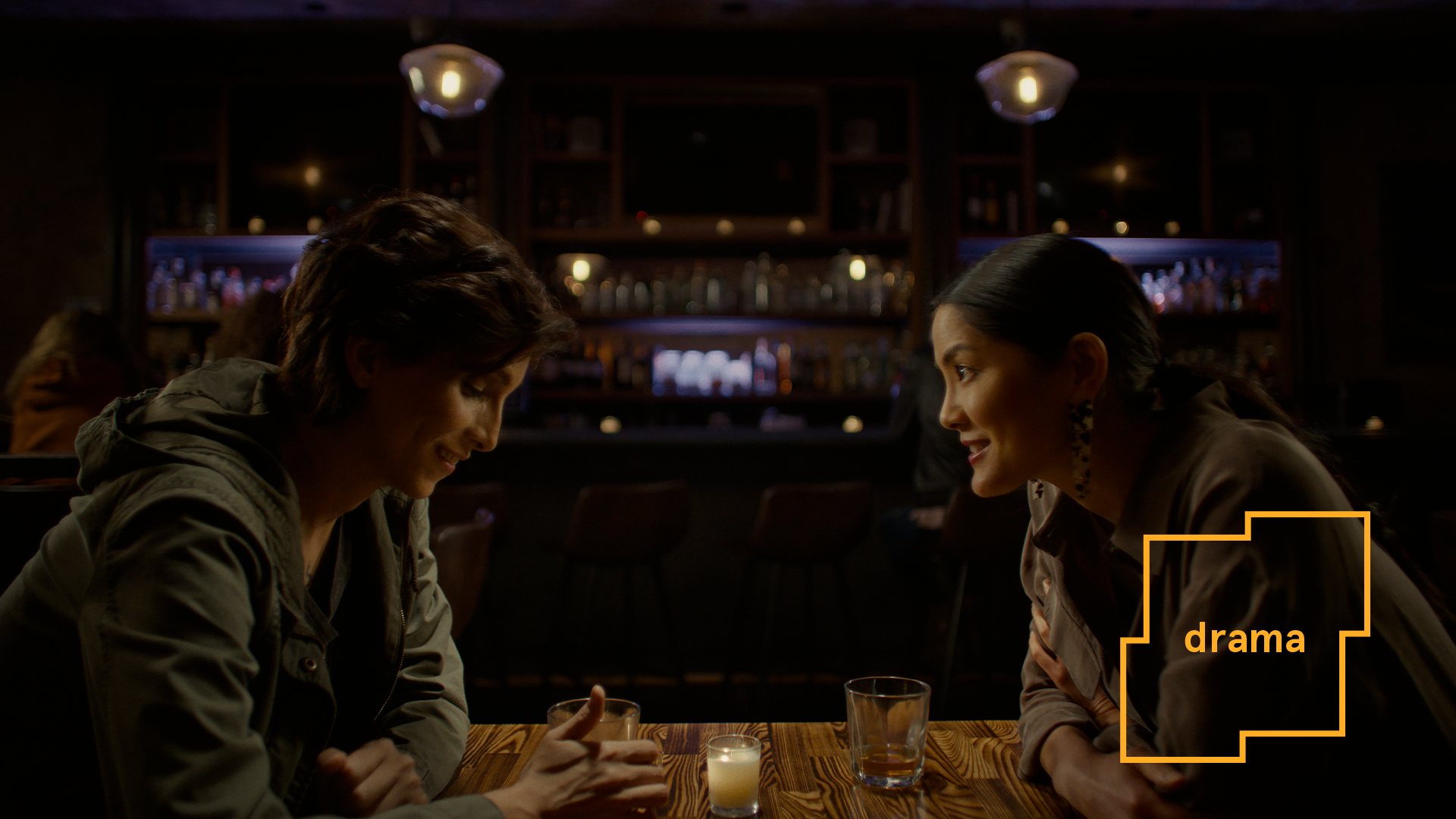
    Queer revenge thriller Femme slays | review

    After a homophobic attack, a gay man sets out for revenge on his assailant when he discovers he is closeted in Femme

    Anchored by stellar performances by Nathan Stewart-Jarrett and George MacKay, Femme is a tense, sexy and engrossing queer revenge thriller that feels for us and by us. Subverting the classic “femme fatale” erotic thriller trope and archetype, directors Sam H. Freeman and Ng Choon Ping create a morally ambiguous face-off between two queer men that blurs the line between good and evil and right and wrong. One of the best movies of the year so far.

    While the inciting incident of first-time directors Sam H. Freeman and Ng Choon Ping’s Femme is a brutal outburst of homophobic violence, I felt an unexpected feeling of relief after it was over. Erotic thrillers like Brian de Palma’s Dressed to Kill or Paul Verhoven’s Basic Instinct and Elle can at times feel exploitative in their use of violence, sex and sexuality as a plot device. And like those films, as the title implies, Femme centers on a “femme fatale” whose sexuality is front and center. However, instead of feeling like the movie is admonishing our fatale or punishing them for the indiscretions it empowers them. The incident while visceral and vicious doesn’t feel lingered on.


    ADVERTISEMENT


    It’s helpful that unlike the de Palma or Verhoven movies, Freeman and Ping have the utmost respect for their protagonist, drag queen Aphrodite Banks (Nathan Stewart-Jarrett). 

    When we first meet her, they’re performing a surprisingly high production number for a drag club. After her number, Aphrodite notices tattooed and toned Preston (George MacKay) outside the venue watching intently. Jules catches his gaze that she returns with a charismatic smile — he sulks off. Later in the night, Aphrodite is at a bodega when Preston and his friends enter, posturing as men do. 

    When they start verbally harassing Aphrodite, there’s a moment where it seems she’s going to try to ignore it and shrink back. But like a switch ticked off in her brain, she decides to take space up as any queer person would and reads them down. Especially Preston who she calls out for checking her out at the club. It’s what leads to Preston’s assault that leaves Aphrodite beaten and naked on the street.


    ADVERTISEMENT


    Three months later, the incident has left Jules, who has given up his Aphrodite drag persona much to the chagrin of his roommates Alicia (Asha Reid) and Toby (John McCrea), completely withdrawn from the world. That’s until one day he finds himself in a gay bathhouse where he once again encounters Preston who is cruising. For our straight friends, cruising is when you go to a public space looking for someone to have sex with. It’s not helpful that he lashes out at any forward man with a hearty f-slur. “We’re all faggots here,” someone cheekily responds.

    Both horrified and intrigued, Jules follows Preston to the locker room. Unaware of who Jules is, Preston invites him back to his apartment for sex. Behind Jules’ eyes — and a testament to Stewart-Jarrett’s quietly powerful and emotive performance — is panic, interest and, horrifyingly to himself and the us, lust. Preston is dominant and very clearly knows what he wants to which Jules obliges, but right as they’re about to have sex, his rowdy and drunk roommates return. Panicked and left alone in the room, Jules makes a last minute decision to don the hoodie that Preston wore when he assaulted him and leave the room. 

    The risky move pays off when Jules is able to pass himself off as an old friend of Preston’s and is able to slip out. Angered yet impressed by the move, Preston asks to see Jules again saying he’ll text him when he needs him. 


    ADVERTISEMENT


    Fueled by his performance in the apartment, Jules hatches a plan to get revenge on Preston by weaponizing his sexuality against him and secretly recording a revenge sex tape to out him to the world. 

    This is where Femme takes a hard firm turn towards a dark and brooding erotic thriller. Jules sets out to lure Preston — like a queer femme fatale — before enacting his revenge. The cat-and-mouse game, that is unbeknownst to Preston, occurs as a series of encounters between the pair that challenge our assumptions of what we know of them. To Jules’ surprise, their first meeting after the bathhouse and apartment incident is an intimate dinner where Preston takes care to make Jules comfortable — like a real date. And while the conversation begins to unwrap the mystery, it eventually devolves into a rough sex scene in the woods where Preston leaves Jules to get home on his own. 

    There’s a distinct queerness to the entire story and the way each of the characters functions in Femme.

    It feels like it’s derived from lived experience. Something that the erotic thrillers of the 90s that it sends up doesn’t have with its female characters — those movies are by and large written and directed by men. There isn’t good or evil. The rights are as morally ambiguous as the wrongs. While our sympathies at first lie with Jules, the more we learn about Preston gives us an understanding — albeit opaque — of his own queer trauma that he’s experiencing. While we never fully dive into his backstory, MacKay’s bombastic performance that oscillates between a put on machismo and tender longing tells us everything we need to know about the character — like his tatted skin is a literal armor for his sexuality. 


    ADVERTISEMENT


    Then there’s Jules, who in the pursuit of much-deserved vengeance, has to grapple with the vulnerability and intimacy that he begins to feel towards Preston as he carries out his plan. While the movie never loses its sense of danger and Preston is always presented as a violent figure that could lash out at any moment — especially in an incident when Jules is caught trying to film one of their backseat rendezvous — the focus is very much on a study of the characters. It makes Stewart-Jarrett’s performance all the more impressive as he has to communicate Jules’ thought process with few words rather furtive glances and body language.

    And while Femme has empathy for its characters, it doesn’t ask us to forgive them for their sins. That moral ambiguity is what makes the character dynamics as engrossing as the suspense.

    As the movie careens to its conclusion, there’s a sense of romance. A sense that perhaps a lesser movie would give into. Instead, Femme understands its characters but isn’t afraid to leave them as imperfect beings. Perhaps they’re capable of change, but that isn’t the story that Freeman and Ping are telling. Instead, they’re interested in what it is to be unapologetically queer in a space that isn’t made for us, how masculinity is a prison that even we sometimes can’t escape and how our feelings, as powerful and magnetic as they are, are messy and can lead us down paths we shouldn’t follow.

    Femme is as messy and beautiful and complicated as we are. It’s the kind of queer thriller we deserve.


    ADVERTISEMENT


    More movies, less problems


    Hey! I’m Karl. You can find me on Twitter and Letterboxd. I’m also a Tomatometer-approved critic.

    💌 Sign up for our weekly email newsletter with movie recommendations available to stream.


    ADVERTISEMENT

  • ‘Red, White & Royal Blue’ is the sappy gay fairytale we deserve | review

    ‘Red, White & Royal Blue’ is the sappy gay fairytale we deserve | review

    Red, White & Royal Blue follows the star-crossed romance between the First Son of the United States and a British prince

    Red, White & Royal Blue is every bit as corny and sappy as you’d expect for a romantic comedy with a premise as improbable as the First Son of the United States and the Prince of Great Britain falling in love — but it’ll have you grinning from ear to ear. With a clear queer perspective and strong chemistry between Taylor Zakhar Perez and Nicholas Galitzine, it’s almost impossible to resits.

    Red, White & Royal Blue is streaming on Prime Video.

    You might also like: The Half of It

    Red, White & Royal Blue is a fairytale. A gay fairytale. Like “first 50 rows at a Lady Gaga concert” gay fairytale. One where a line like “first 50 rows at a Lady Gaga concert kind of gay” is eye-roll-inducing but oddly charming at the same time. It’s an especially hard line to tow when the gay rom-com canon ranges from good (Fire Island and the unfairly maligned Bros) to tragic (Spoiler Alert) to “set gay rights back 20 years” (Love, Simon). However, writer-director Matthew Lopez finds a way to keep his adaptation of Casey McQuinton’s book of the same name from becoming an international incident (between gays and the book’s largely straight female fan base)… unlike the start of Alex’s (Taylor Zakhar Perez) and Henry’s (Nicholas Galitzine) improbable romance.


    ADVERTISEMENT


    If you’ve somehow avoided the “Best Sellers” section at every bookstore in the United States and United Kingdom, Red, White & Royal Blue is a star-crossed romance between Alex, the son of the President of the United States, and Henry, the Prince of Great Britain. It’s a plot straight out of the romance textbook. After a gruesome run-in between the pair and a comically large cake at the heir to the British throne’s wedding, Alex and Henry must quash their beef (at least in front of the cameras) to appease both the King (Stephen Fry) and President Ellen Claremont (Uma Thurman). One mistaken assassination attempt and entrapment in a janitor’s closet later and the pair’s beef turns into a swoon-inducing banter-filled friendship… that quickly develops into more when they admit that their vitriol for each other was just meant to cover up an intense attraction. Enemies-to-lover girlies, this one’s for you.

    Perez and Galitzine, despite a shaky start, are convincing in their love affair with sharp repartee sweet and soppy enough to cause a toothache. Their conversations eventually culminate in a fateful New Year’s Eve party underscored by Flo Rida’s “Low” — the most romantic of early 2000s bops — where Henry confesses his feelings for Alex. While their romance is surprisingly devoid of real stakes — this is a fairytale after all, a happily ever after is inevitable — both actors put in surprisingly deft work to make their characters full of depth as they talk about their insecurities in both of their unique positions. Their interactions, despite all other parts of the plot being completely heightened, feel genuine. It in large part stems from a screenplay, though imperfect, that strives to be authentic to the queer experience.


    ADVERTISEMENT


    There are knowing touches that make watching the movie as a gay man more satisfying, at least more than the book which I found enjoyable but wanting for more. Those details are most apparent in the tender centerpiece sex scene that has caused more of a stir than its actual impact in the movie — while it’s more graphic than a typical rom-com sex scene it is surprisingly tame for an R-rated movie. Lopez lingers on small moments — the slight push on a lower back, a shaky exhale — that feel like they come from experience rather than some romantic ideal of what it is to be a man with another man. Contrary to the vague objectification I felt from the book, the movie feels made for and by us.

    Additional to the success of “rom” part, Lopez also excels in bringing the comedy. Sarah Shahi‘s scene-stealing Chief of Staff Zahra is a highlight, whose sass reminds us that reading is fundamental (her delivery of “little lord f-ckleroy” is a highlight before a sarcastic curtsy brings the house down). On the other hand, Uma Thurman’s performance, slathered in a deep southern drawl, looks camp right in the eye (never in my life did I think I’d hear Mia Wallace say “Truvada”). The light tone makes the surprisingly robust two-hour runtime fly by.


    ADVERTISEMENT


    Red, White & Royal Blue benefits from its themes at a surface level. While Alex has more recently begun his bisexual awakening and Henry has already accepted himself as gay — even if his duty quashes any possibility of being open — Lopez intelligently doesn’t hold those themes precious to the story (even if Ellen does say the line “the B in LGBTQ is not invisible.”) They’re engrained into the characters and their journeys, but it doesn’t stop them from charmingly referring to Henry’s… ahem, excitement as “Stonehenge” and “Big Ben.” It’ll have you giggling and swinging your feet like you’re a lovelorn teen again. And isn’t that exactly what the movie is trying to achieve?

    Cynics will find nothing but fault in Red, White & Royal Blue, a story that ends with the United States presidential election coming down to a single state (who could have seen it coming when Alex mentioned his Texas strategy plan at least a dozen times in the lead up) and the British public holding demonstrations in support of a gay prince. But the fairytale-like improbability of the plot is a feature, not a bug, as are cheeky if not corny lines like “I went to an English boarding school. Trust me, you’re in good hands.” It’s okay for gay men to have our silly little romantic comedies that require a suspension of disbelief. Even better if it’s told by a person that is chasing that very fairytale ending… even if it’s not with a prince.


    ADVERTISEMENT


    More movies, less problems


    Hey! I’m Karl. You can find me on Twitter and Letterboxd. I’m also a Tomatometer-approved critic.

    💌 Sign up for our weekly email newsletter with movie recommendations available to stream.


    ADVERTISEMENT


  • ‘Unicorns’ is a glittering unlikely queer romance | review

    ‘Unicorns’ is a glittering unlikely queer romance | review

    TIFF 2023 | Unicorns follows a South Asian drag queen and Essex mechanic’s sparkling will-they-won’t-they romance of queer discovery and joy

    Unicorns is a gorgeous glittering hidden gem. Full of queer life and spirit, it charmingly mines familiar tropes of queer repression and exploration to examine the unlikely relationship between a single dad and a drag queen. Ben Hardy and newcomer Jason Patel make an intoxicating pair that hold your attention with their electric chemistry from beginning to end.

    Unicorns premiered at the 2023 Toronto International Film Festival.

    You might also like: Weekend, Moonlight, Past Lives

    Towards the end of Unicorns, writer-director James Krishna Floyd’s directorial debut that premiered at the 2023 Toronto International Film Festival, Ashiq (musician Jason Patel, also in his feature film debut) tells mechanic Luke (Ben Hardy) that “she wasn’t real,” referring to his drag queen persona Aysha who we see him as for the majority of the movie. In response Luke says, “she was real to me.” 

    The main tension of Unicorn is between warring identities, not just between our protagonists but within them. Ashiq, when we first see him out of drag, rolls out his prayer mat and begins prayers like he wasn’t just twirling for tips in a gay club an hour ago. Luke, the father to a young son, finds himself in crisis when he discovers his attraction for Aysha. It’s that exploration of the fluidity of gender and sexuality that elevates Unicorns past its perhaps familiar tropes and themes. The beauty of the romance is it isn’t necessarily one of sexuality discovery than it is a discovery that gender in matters of love doesn’t matter.

    The result is a gorgeous glittering gem that captures your attention from beginning to shimmering end. 


    ADVERTISEMENT


    Luke first meets Aysha when he stumbles down a dark corridor to a basement gay club where she is performing (more like slaying the house down boots mawmah) on stage mixing the electronic techno trappings found in any gay bar with traditional South Asian music and dance. The way Floyd, along with co-director Sally El Hosaini, captures Aysha is with mysticism. A spectacle you can’t look away from. Even the way that Luke finds himself in the club feels like Alice tumbling down to Wonderland.

    Sequined for the Gods and twirling for her tips, Luke is transfixed by her and she knows it. She strikes up a conversation before going in for a kiss that gets interrupted when Luke realizes that Aysha is a drag queen. The kiss sends him into a tailspin. But unlike other versions of this story, Luke never moves to full blown homophobia or violence. He holds back as if aware that deep down he liked it — and Aysha noticed it too.

    Despite their not-so-meet-cute ending with hostility, Aysha seeks Luke out to drive him to gigs after her usual driver falls through. Not being able to turn down the cash — perhaps a glimmer of curiosity in Aysha — he accepts. What follows is an all-night romp that includes three more hilarious drag queens, a private mansion party and a broken nose following a brawl. And Luke comes back for more, becoming Aysha’s regular driver and escort to gigs. They begin to form a close bond that hinges on their experience in boxes that they’ve found themselves in that spirals into an irresistible will-they-won’t-they romance.


    ADVERTISEMENT


    There’s so much texture to Luke and Aysha. Unicorn takes some incredulous turns along the way that in a weaker movie may take you out of the story but the purely intoxicating screen presence of Patel and particularly Hardy, who nearly runs away with the movie, is enough to keep you engrossed. Patel, who’s most at home as Aysha, eats every frame without saying a word — a rare star quality. Hardy, on the other hand, gives a physical performance communicating his internal struggle that he holds in his body. Both his resistance and attraction to Aysha could be felt through the screen in a way that feels raw and authentic.

    Queer repression is a familiar theme. Movies like Brokeback Mountain, God’s Own Country, and Moonlight all mine the too relatable experience of feeling your sexuality repressed in the name of “normalcy.” Unicorns doesn’t quite reach the heights of those movies in the canon, but what it does is give us a dazzling invocation of the queer experience that is steeped mostly in joy rather than tragedy. To see drag queens read each other — “he didn’t know I was a queen” / “was he blind?” — or gaysians communing is so rare but so uplifting. Throughout the movie, Luke physically sees more of Ashiq under Aysha — something that she is resistant to sharing. First it’s a wig, then it’s makeup, then it’s seeing his bare chest. But with the physical unpacking, there is the emotional one. And that is a wonder to watch both actors perform. A sparkling wonder. 


    ADVERTISEMENT


    More movies, less problems


    Hey! I’m Karl. You can find me on Twitter and Letterboxd. I’m also a Tomatometer-approved critic.

    💌 Sign up for our weekly email newsletter with movie recommendations available to stream.


    ADVERTISEMENT


  • ‘Spoiler Alert’ review: Love, loss, and smurfs make a perfect rom-com

    ‘Spoiler Alert’ review: Love, loss, and smurfs make a perfect rom-com

    Spoiler Alert follows Michael and Kit’s imperfect romance through various ups and down before they’re faced with a crisis that tests the bounds of their love

    Spoiler Alert is the kind of realistic romantic tragicomedy that makes you feel nearly every emotion at once. Funny but not forced. Tragic but not overwrought. Romantic but not unrealistic. It hits all the beats in each of its genres while delivering a satisfying albeit devastating rom-com that says love is worth the pain. Am I romantic now?? I think so.

    Spoiler alert: This romantic comedy is actually a tragedy. But it wants you to know that. Spoiler Alert opens with a shot of Michael Ausiello (Jim Parsons) lying across from his husband Kit Cowan (Ben Aldridge) in a hospital bed, clearly in his last moments, before flashing back to the pair meeting for the first time thirteen years earlier. Why, though, does the story spoil its tragic ending? Isn’t it enough that the couple doesn’t get their happily ever after? Instead, we’re forced to watch in dread knowing their fate. Well, that’s by design. While there are flashes of the romantic comedy tropes we’ve come to know and fall for time and time again, Spoiler Alert is grounded in realism — as it should be since it is based on Ausiello’s memoir Spoiler Alert: The Hero Dies: A Memoir of Love, Loss, and Other Four-Letter Words. Still, the way it errs so closely to his actual story is admirable as it doesn’t shy away from the ugly. 


    ADVERTISEMENT


    And not just the ugly of a terminal cancer diagnosis. It doesn’t present Michael and Kit as a glorified picture-perfect gay couple. We’re first introduced to TV-obsessed Michael when he’s a staff writer for TV Guide, a dream job since he was a child. He’s a workaholic, a bit of a prude, and a man of habit (he always needs his diet coke like half the gay men in New York City). That’s why when he meets photographer Kit out at a gay club on “jock night” it is truly a surprise — the only reason he goes is that his friend (Jeffery Self) goads him into it. Despite some initial awkwardness including a cringe Knight Rider reference, Michael and Kit hit it off. 

    They seem like complete opposites. Michael is uncomfortable in his skin in every way and especially as a gay man — it is the early aughts after all. Kit, on the other hand, breezes through like a hurricane — confident, assured, and swoony. The perfect romantic lead. Despite their differences, though, the pair make it to a second date that director Michael Showalter perfectly presents. One of those conversations that just never seems to run out and can go on for hours. Eventually, they make their way back to Kit’s apartment — where they have a hilarious run-in with his monosyllabic lesbian roommate — to extend their night. However, as they’re hooking up, Michael has a fit as he’s about to remove his shirt. Sensing his discomfort, Kit slows down and asks Michael if he’s doing anything wrong. He reveals he is an “FFK” aka Former Fat Kid. Instead of having him leave, Kit asks if he can just hold him. 

    It’s those moments that make the romance in Spoiler Alert feel so real. Figures since Michael himself said that the movie doesn’t take many creative liberties with the story. Their jagged line to love is imperfect but believable. The story doesn’t shy away from those moments of uncertainty — like when Michael reluctantly hosts Kit at his Jersey City apartment for the first time. I’ll save that reveal for the movie, but let’s just say it leaves them feeling a little blue. In another scene, Kit asks Michael to pretend to be his friend as he hasn’t come out to his parents yet (the charming and hilarious duo of Sally Field and Bill Irwin). It all culminates in a hilarious coming-out scene where three people confess they’re gay at once. Despite the bumps, Kit, who Aldridge plays perfectly as a swoony (and chiseled) romantic lead, sticks around long enough for the pair to move in together and we’re treated to the corny but genuine moments that make us love love — a montage of their Christmases together is warm enough to melt any anti-romance cynic’s heart.


    ADVERTISEMENT


    However, what is so refreshing is that 13 years down the line Michael and Kit are separated and in couple’s counseling drudging up every complaint, big and small, they have about each other. Some are universal and some are specific to the gay experience like being on Grindr (“you can look, but can’t touch”), feeling jealous of the hot gay coworker, missing an episode of Drag Race. It feels similar to director Michael Showalter‘s previous film The Big Sick, which similarly told an imperfect love story.

    Just like that movie, Spoiler Alert takes a turn towards tragicomedy when Kit discovers he has an aggressive type of cancer — get your prostate exam, fellas. And with that, the movie becomes an exploration of regret, grief, trauma, and the boundaries of love. While it doesn’t lose its wit, it does inject understated moments that invoke feelings of loss. In perhaps one of the more quietly impactful scenes, Michael and Kit take photos of each other at a restaurant they’ve frequented — it’s Benny’s Burritos, which recently closed, for you West Village gays. There are no words, but Parsons and Aldridge quietly communicate to us (and each other) the fear, longing, and sadness they both feel. It’s those moments that elevate Spoiler Alert to greatness.

    Sometimes the swings that Spoiler Alert takes don’t completely pan out. Flashbacks to Michael’s childhood that are presented as scenes from a sitcom do little to explain how his mother’s own battle with cancer colors his experience with Kit. There is also an underbaked subplot around Kit’s fidelity during the relationship involving his co-worker Sebastian (Queer Eye‘s Antoni Porowski) that could have been more impactful. Still, it never detracts from the tear-jerky effectiveness of the movie.

    Spoiler Alert is funny but not forced. Tragic but not overwrought. Romantic but not unrealistic. It is the kind of romantic comedy that we gays in New York City can’t roll our eyes at. It wasn’t until Spoiler Alert that I realized the reason so many gay rom-coms fall flat is we’re immune to bullshit. To love who we want to love without prejudice takes years of trauma, therapy, and, eventually, acceptance. We are all too aware that love isn’t like what it is like in the movies — it’s imperfect, messy, and cruel. We want that kind of love. We fought to have that kind of love. The kind of love that even though it’s hard, it’s worth it in the end. Sure, more likely that not the great loves in our lives are not going to end quite as tragically as Michael and Kit’s. At the very least, though, it affirms that through it all life, love, and pain are just a part of the experience. Embrace every moment.


    ADVERTISEMENT


    More movies, less problems


    Hey! I’m Karl. You can find me on Twitter and Letterboxd. I’m also a Tomatometer-approved critic.

    💌 Sign up for our weekly email newsletter with movie recommendations available to stream.


    ADVERTISEMENT


  • Cold War gay romance ‘Firebird’ lacks spark | movie review

    Cold War gay romance ‘Firebird’ lacks spark | movie review

    Firebird tells the true story of a hidden romance between a private in the Cold War-era Soviet military and a star fighter pilot

    The best queer cinema lives in the silences and the subtext. In the looks and the touches. In the underlying messages. That’s because the lives of queer people are often lived in these spaces out in the world — in the present, but particularly the past. It is a defense mechanism for living in a society where safety is a privilege we aren’t often afforded. And it doesn’t get more dangerous than the Cold War-era Soviet Union.

    That’s where the love story at the center of Firebird, the feature debut of Estonian director Peeter Rebane, takes place. The film, based on Sergey Fetisov’s memoir The Story of Roman, focuses on young private Sergey (Tom Prior, who also co-wrote the screenplay) and fighter pilot Roman (Oleg Zagorodnii) as they strike up a secret romance in the shadows of their Air Force base.


    ADVERTISEMENT


    Matters are complicated by the base’s second-in-command Major Zverev’s (Margus Prangel) all-seeing eye and his secretary Luisa’s (Diana Pozharskaya) budding interest in both Roman and Sergey. That’s where much of the movie’s dramatic tension lies, largely because the central romance feels too easy. Unlike the great period-set queer romances — Portrait of a Lady on Fire, Call Me By Your Name, Maurice — Firebird doesn’t focus on the smoldering tension between Sergey and Roman. 

    There are moments when Rebane understands the needs of the story. At times he focuses on those passing touches, quick glances, and underlying meanings that underline so much of the communication between queer people. The problem is Firebird is afraid of living in the silence of those moments and fills them with often clunky dialogue — “I search for something deeper, but I can’t quite grasp it.” In that way, the directing far surpasses the screenplay, which feels overwrought and overwritten.


    ADVERTISEMENT


    However, the biggest failure of the movie is its inability to give reason to root for the central couple. It gets so distracted by its plot — and desire to be a war thriller — that it forgets to make its characters characters. In the final text epilogue, it’s hinted that Sergey lived a much more complex and rousing life than what is portrayed. It’s as if Rebane and Prior wrote their screenplay by connecting various plot points rather than journeying their characters through them.

    Sergey Fetisov has a story worth telling. One that I imagine is filled with emotional complexity and gives insight into the hardship of queer life in a specific time and place. The movie fails to mine any deeper than surface-level and opts for melodramatics rather than reality. The premise promises great love. But like any great love, it has to be earned. Unfortunately, Firebird doesn’t try to earn it.


    ADVERTISEMENT


    More movies, less problems


    Hey! I’m Karl. You can find me on Twitter and Letterboxd. I’m also a Tomatometer-approved critic.

    💌 Sign up for our weekly email newsletter with movie recommendations available to stream.


    ADVERTISEMENT

  • ‘Crush’ is a typical high school rom-com — and that’s a good thing | movie review

    ‘Crush’ is a typical high school rom-com — and that’s a good thing | movie review

    Crush follows an awkward queer high schooler as she tries clear her name as the school vandal while navigating a new crush

    In many ways, Crush is your typical high school coming-of-age romantic comedy that falls into all the genre trappings. An endearingly awkward lead, quirky side characters including a too-comfortable mom, a quick music-driven pace, melodramatic heart-to-hearts, and, of course, a third act public confession in front of the whole school — but that familiarity is a feature, not a bug. While Kirsten King and Casey Rackham‘s screenplay is often too adorkable and low stakes for its own good, it’s never less than charming — and queer kids deserve silly high school romantic comedies of their own. Rowan Blanchard and Auli’i Cravalho, best known as the voice of Moana, have enough charisma to power through the movie’s expected beats that it’s impossible not to fall for them.

    Crush will be available exclusively on Hulu on April 29.

    Paige (Rowan Blanchard) is your typical awkward high school junior with her dreams set on attending a summer program at The California Institute of the Arts. There’s just one problem: she has artist’s block. The prompt is to create a piece around her happiest moment. In the movie’s breezy intro, she considers the moment she came out to her mother (a delightful Megan Mullally), but that daydream is broken when her mother gifts her with glow-in-the-dark dental dams. Some parents are too supportive. The next she considers is when she told her straight best friend Dylan (Tyler Alvarez) she liked girls, but that option is kiboshed by his unremarkable reaction: “I like girls too.”

    Then, she considers a moment she has completely gotten over: when she first formed her crush on school it-girl Gabby (Isabella Ferreira). Crush immediately drew me in with the way it treated its queer themes — as if there’s nothing to see here. This isn’t a coming out movie like many other queer high school rom-coms. In one scene, Coach Murray (scene-stealing Aasif Mandvi), the school’s track coach, hands out keys for the hotel rooms for an away meet and quips: “do not go in each other’s rooms, even though I know 60% of you are queer.” It’s refreshing that this isn’t where the movie derives its plot and tension.


    ADVERTISEMENT


    Instead, the story surrounds the mystery of “King Pun,” a graffiti artist and social media star who has anonymously been vandalizing the school with their punny artwork. The problem is the school’s principal (Michelle Buteau) is convinced that Paige is King Pun and is threatening her with suspension threatening her CalArts hopes. However, Paige is able to strike a deal. If she can find the real identity of the vandal before the semester’s end she can avoid suspension. The catch is she has to join the school’s track team — yeah, it’s a bit of sweaty plot manuevering — that Gabby is co-captain of with her twin AJ (Auli’i Cravalho). Of course, hijinks ensue including a montage of Paige embarrassing herself at practice, which leads Coach Murray to assign AJ as her trainer.

    You could probably figure out the story from there.

    Through all the cute crushing back and forth between the triangle of girls, we get bits of their internal life — AJ feels pressure from her father and living up to her sister’s success, Gabby feels like people use her because she’s popular, Paige has never been kissed. But Crush isn’t precious about these issues and keeps much of its exploration surface-level — to both its benefit and detriment. Do you yearn to learn more about the characters? Or course. Is it refreshing for a movie not to be distracted by deeper themes in service of its simpler story? Yes.


    ADVERTISEMENT


    Blanchard and, in particular, Cravalho are irresistibly charming as the romance leads while the rest of the cast — Alvarez and Mandi, in particular — provides the much-needed goofs and laughs. There are some hilarious one-liners like “trigger warning, there will be a gunshot to start but it’s fake” and “you look like a serial killer, change your eyes,” that catch you off guard in such a sweet movie.

    There’s a sense that movies targeted at the LGBTQ+ community need to be about something whether our queerness or our trauma. For all its formulaic stereotypical corniness, Crush‘s normalization of its queer characters is what makes it a joy to watch. It doesn’t ignore it either, it just decenters it in the narrative allowing kids and teens to see that a queer life isn’t just darkness. They can have silly crushes too. And sometimes those crushes turn into something more. We need more movies like Crush.


    ADVERTISEMENT


    More movies, less problems


    Hey! I’m Karl. You can find me on Twitter and Letterboxd. I’m also a Tomatometer-approved critic.

    💌 Sign up for our weekly email newsletter with movie recommendations available to stream.


    ADVERTISEMENT


  • Queer prison drama ‘Great Freedom’ finds hope | movie review

    Queer prison drama ‘Great Freedom’ finds hope | movie review

    Great Freedom is an intimate prison drama that follows a gay man over decades as he is repeatedly imprisoned as a part of Germany’s outdated anti-gay laws.

    While Great Freedom takes place during a dark time in Germany’s history, its hopeful story filled with empathy doesn’t feel anything less than authentic and, against all odds, enjoyable. Taking notes from Shawshank Redemption, director Sebastian Meise’s telling of gay men persecuted under Germany’s strict anti-homosexuality laws is epic-in-scope but intimate in its execution. Without becoming overwrought, it feels genuine to the queer experience.

    Great Freedom will open at the Film Forum in NYC on March 4 and Laemmle Royal in Los Angeles on March 11.

    Great Freedom begins in 1968 with a series of hidden camera videos from a public restroom where various gay men cruise for sex. One of the men in those videos is Hans Hoffman (Franz Rogowski) who seems all too comfortable with the prospect of going to prison for two years for “homosexual acts” which are outlawed in West Germany. That’s because this isn’t Hans’ first time. In fact, he’s been in and out of the same prison since 1945. In the prison, Hans, and the other men imprisoned for the same crime, are called “175ers” after paragraph 175 of the West German criminal code which outlaws homosexuality.

    For Hans, the prospect of being locked up in prison versus spending his life metaphorically locked up in the outside world is an easy choice. Plus, he seems to have prison life down pat. As he starts his most recent stint he doesn’t need the guard to tell him the booking procedure, he performs it as if it’s second nature. When he passes the threshold he thrives. He knows how to work the system to get what he wants much like his friend Viktor (Georg Friedrich) who has been inside for decades.


    ADVERTISEMENT


    It’s a jarring place to start a prison drama. Things just seem so peaceful. It’s like Hans is back home and Viktor has his friend back. We’re so accustomed to seeing struggle in prison. Instead, we see the opposite. However, when Hans gets locked up in solitary confinement — a hellish pit where he has to remain with no light, no clothes, and nothing but a bucket to relieve himself in — the darkness makes way to the past. To 1945, specifically, when Hans is first imprisoned and meets Viktor.

    We’ll flashback a few times throughout Great Freedom to moments both big and small. Like Hans and Viktor’s first meeting where Viktor repeatedly kicked Hans out of his room for being a “175er” or a tender moment later when Viktor offers to cover Hans’ number tattoo that he was given when he was in a Nazi concentration camp. The movie jumps around in time to not give us a full picture of either character, but just enough to understand them.

    We’ll also see Hans with other men. Lovers, specifically. In 1957, Hans is back in the prison, but this time with his live-in partner Oskar (Thomas Prenn) who, unlike Hans, hasn’t gotten a chance to adjust to their prison setting or accept the prison they live in outside. “I want to be fearless too,” Oskar says in a note to Hans that is read in voiceover as film images of the couple’s trip to a lake play on the screen — it’s one of the few cinematic flourishes director Sebastian Meise adds in. Hans is almost too much of a hopeful romantic with Oskar, a vision that is quickly shattered.


    ADVERTISEMENT


    Later on in 1968 Hans is once again imprisoned with a lover. This time it’s Leo (Anton von Lucke), a teacher who has an encounter with Hans in a public bathroom. This time, however, a tender Hans understands that sometimes love isn’t all the hopeful. It’s a remarkable portrait of what oppression can do to a person. That’s part of the wonder of the screenplay by Meise and Thomas Reider. The movie is less of a story than it is an exploration. If anything, it’s when the movie tries to push a plot that it loses some of its authenticity.

    Shawshank Redemption is maybe the easiest comparison to make to Great Freedom. Obviously, both movies share DNA as prison dramas and focus on a specific friendship at its center, but the connection goes even deeper. Both stories struggle with what freedom really is. What is it to be in this world when this world isn’t made for people like you? Great Freedom’s final sequence, easily the best of the movie, answers that question. To be accepted is to be with people you love, no matter where they are.


    ADVERTISEMENT


    More movies, less problems


    Hey! I’m Karl. You can find me on Twitter and Letterboxd. I’m also a Tomatometer-approved critic.

    💌 Sign up for our weekly email newsletter with movie recommendations available to stream.


    ADVERTISEMENT


  • ‘See You Then’ untangles the nuances of being a transwoman | SXSW review

    ‘See You Then’ untangles the nuances of being a transwoman | SXSW review

    See You Then follows two college exes, one of whom has come out as a transwoman, who reunite more than a decade after a contentious split

    See You Then explores and challenges the nuances of being a woman and being a transwoman through a deeply satisfying conversation between two exes — masterfully portrayed by Pooya Mohseni and Lynn Chen.

    What is most remarkable about See You Then, which premiered in the narrative spotlight section of the 2021 Online SXSW Film Festival, is how unremarkable it treats its story of two old college friends catching up after a sudden breakup. And it is remarkable because the main impetus of the story is Kris (Pooya Mohseni) coming out as trans and catching up with her ex-girlfriend Naomi (Lynn Chen) after a decade of silence.

    Instead of adding over-the-top dramatics or watershed emotional grandstands, writer/director Mari Walker allows the conversation, which takes place over one night on their old college campus, to unfold organically. Truly, just two people whose lives intersected for a moment in time untangling their pasts and how it’s affected their present.


    ADVERTISEMENT


    As we learn in the first strained minutes of their reunion, Kris and Naomi once dated in college before Kris was out as a transwoman. However, just as she started to discover those feelings she left without notice leaving Naomi devastated. Now, thirteen years later, Kris has returned to make amends and explain her disappearance.

    It’s a slow burn as the women’s experiences over the past decade come into focus — Kris transitioned and is living in Arizona and Naomi is married with two kids having given up her art career to become a professor. However, both of their lives are filled with regrets. Kris deals with the goon of time stealing away the time she could have had as her real self while also dealing with the limitations of being a transwoman, in particular those around love. Naomi, on the other hand, struggles with the stability that married life and motherhood present. Both experiences feel lived in and real. 


    ADVERTISEMENT


    However, the restrained direction eventually gives way to a powerhouse final scene where Walker uses every tool available to her to deliver an emotional gut-punch that leaves you stunned. The mix of visuals, sound, and two massively impressive performances by Mohseni and Chen catapult us into a neat, but profound end that is worth the trip for. 

    Perhaps See You Then will be a film that cispeople will watch and begin to understand the nuances of being trans. “My life didn’t even begin until 14 years ago,” Kris says in one scene. The film explains that while there is something to gain from the trauma of being trans and transitioning, it’s not as empowering as people think it is. Our society doesn’t let it. See You Then gives us a moment to meditate on that.

    ? Hey, I’m Karl! Thanks for reading. Follow me on Twitter and Letterboxd. I’m also a Tomatometer-approved film critic.

    💌 Sign up for our weekly email newsletter with movie recommendations available to stream.


    ADVERTISEMENT