Tag: Lucas Hedges

  • ‘Honey Boy’ review — Shia LeBeouf plays his own abusive father

    ‘Honey Boy’ review — Shia LeBeouf plays his own abusive father

    Shia LaBeouf plays his own abusive father in Honey Boy, which is a semi-autobiographical film about his time as a child actor and in rehab

    One-sentence review: Honey Boy sees Shia LeBeouf grappling with his past in a highly personal and emotionally devastating drama.

    Details: ? Alma Har’el // ⏳ 93 minutes // ? 2019

    The cast: Shia LeBeouf, Lucas Hedges, Noah Jupe, FKA Twigs

    Where to watch Honey Boy: In theaters November 8th.

    Anyone who’s done therapy knows that it’s an often frustrating and confusing process that is without a doubt the most rewarding thing you could do for yourself. And that’s what’s fascinating about Honey Boy. Shia Lebouf wrote the movie as a semi-autobiographical telling of his life as a child actor and his very high-profile struggles with addiction a decade later. However, the movie isn’t really a narrative. Like therapy, the screenplay is more of an exploration. LeBeouf is using the movie to understand what he went through. He even plays his own father in the film.

    Honey Boy deals with LeBeouf’s past in two different times

    Honey Boy is split into two timelines: 1995 and 2005. In 2005, we meet Otis Lort (Lucas Hedges) as he’s filming a scene that looks like it was pulled straight out of a Michael Bay movie — you know which one. Then in a breezy montage, we see all the things he did to land himself in rehab. There, his therapist (Laura San Giacomo) asks him to recall his relationship with his father, which she uncovers caused Otis to have PTSD. In real life, the incident that landed him in rehab happened in 2017, which is also where he wrote the screenplay for the film. 
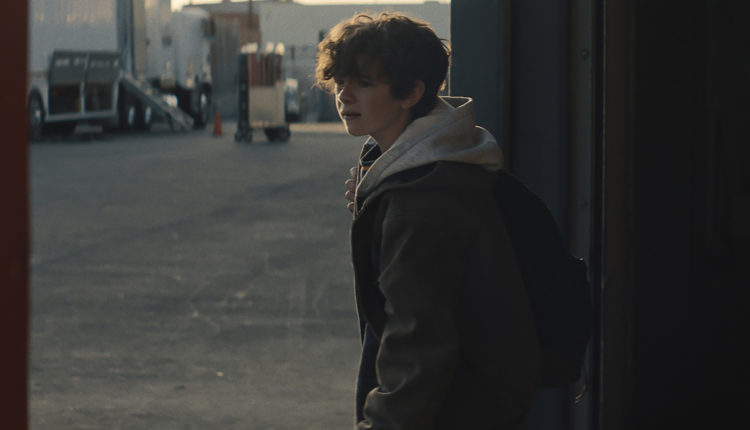
    Noah Jupe stars in Honey Boy. Courtesy of Amazon Studios.

    In 1995, he’s filming a scene for an unspecified children’s TV show — you know which one. His father James (a nearly unrecognizable LeBeouf) — a former rodeo clown — is his paid chaperone who he also lives with at a seedy motel crawling with unsavory characters. There we explore their often turbulent relationship. James himself is plagued by PTSD from serving in the army and is a recovering alcoholic who is acutely aware that without his son, he’d been in even worse shape. At one point, the two argue about how it must feel for him to work for his son. Otis shoots back, “if I didn’t pay you, you wouldn’t be here.”

    The flashback scenes are so interesting because they’re presented in the way that someone would approach trauma in therapy. Each scene is so clear, but also inconsistent and sometimes erratic. It feels like we go over the same argument multiple times, which is a frustrating experience at first. But when you take into account that those scenes are the older Otis processing what happened to him, then it makes complete sense. After all, James was verbally and physically abusive towards him. He was terrified and confused, so the memories are probably blurred. 

    LeBeouf gives the best performance of his career and deserves to be in the Oscar conversation

    It also helps that LeBeouf gives a powerhouse performance — a classic Best Supporting Actor turn — that is as complex as the thoughts and feelings he must have been working through. James isn’t completely vilified. However, he isn’t completely redeemed either. Otis doesn’t make it out unscathed either. The movie isn’t interested in justifying his behavior more than it is in explaining it. 

    Admittedly, though, as good as Hedges is, the 2005 scenes don’t work nearly as well as the flashbacks. Director Alma Har’el — she’s directed documentaries in the past, but Honey Boy is her first narrative feature — has a clear vision for the scenes surrounding the young Otis. Like her documentary work, the scenes are impressionistic and ethereal — the score is twinkling and the cinematography warm or neon splashed. It’s fitting then that singer-songwriter FKA Twigs plays a large role as a resident of the motel who befriends Otis.

    The movie ends up being a little more than the sum of its parts. The lack of a plot is both refreshing and frustrating. At some points, I wished something more substantial would happen — maybe nothing did in real-life. However, that doesn’t take away from the fact that this is highly personal meditation on one’s life. One that you can feel the catharsis of. By the end, you can feel LeBeouf exhaling and accepting his past for what it is. It’s chilling to see. 
  • ‘Waves’ review — One family faces the music

    ‘Waves’ review — One family faces the music

    Waves follows an all-American family as a tragedy sends them into a tailspin

    One-sentence review: Waves is an electrifying and music-filled family drama that is as emotional as it is thrilling to watch.

    Details: ? Trey Edward Shultz // ⏳ 130 minutes // ? 2019

    The cast: Taylor Russell, Kelvin Harrison Jr., Sterling K. Brown, Renée Elise Goldsberry, Lucas Hedges, Alexa Demie, Neal Huff

    Considering the number of needle drops and montages set to rap and R&B songs in new drama Waves — including songs by Frank Ocean, Alabama Shakes, Animal Collective, and Radiohead — you could almost classify it as a musical. And when the movie imbues the fluidity and momentum of a musical, it really soars. Take the disorienting opening scene where we meet high school senior Tyler (Kelvin Harrison Jr. — who is Oscar-worthy as he was with Luce earlier this year) as he goes through his daily routine — school, wrestling practice, time with his girlfriend Alexis (Alexa Demie). The camera whips and tracks through his life as we rapidly cut between scenes. It’s like the opening number of a broadway musical that’s meant to get you on its wavelength. It succeeds. 

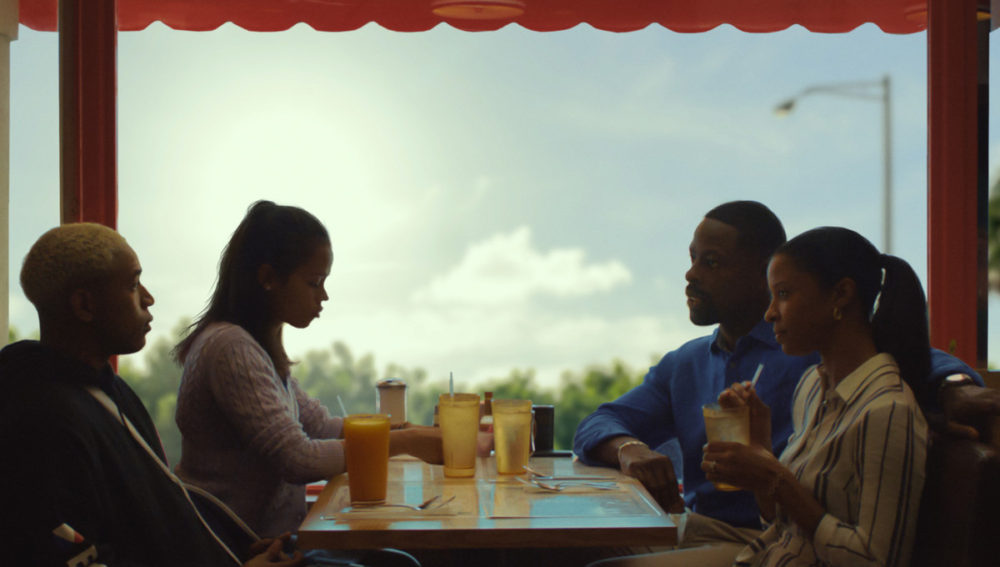
    That energy is kept up throughout the movie as we watch Tyler interact with his hard and demanding father Ronald (a terrific Sterling K. Brown), who pushes his son to be better in every aspect of his life, often to a toxic level. It’s not without reason. As Ronald says in one scene, as black men they have to be 10x better to get anywhere in life — and still it doesn’t seem to be enough. Without realizing it, though, the pressure he’s putting on Tyler is manifesting itself in dangerous ways. It’s something Ronald’s wife and Tyler’s stepmom Catherine (Renée Elise Goldsberry doing great work) is acutely aware of. Off in the periphery is the youngest of the family, Emily (Taylor Russell is a breakout). We’ll come back to her. 

    Kelvin Harrison Jr. and Alexa Demie in Waves. Credit A24.

    The first half of the movie is spent with Tyler. We watch as the pressure to do better and be better gets to him. He begins taking prescription painkillers to ease the pain of an injured shoulder — his doctor tells him to stop physical activity, but Tyler ignores him. He begins to party and drink excessively. At one point, Emily finds him on the bathroom floor incoherent and crying. She comforts him in that moment. 

    Then something happens. Something stunning. Something that you shouldn’t know about until you watch the movie. It changes our perspective of the film — literally and figuratively — and sends us off on a tailspin with no end in sight. However, there is an ending and Waves nails it.

    Shultz, who has done great work in his career between psychological family drama Krisha and post-apocalyptic thriller It Comes at Night, is so assured of his style. With Waves, he takes it to the next level. There’s rarely a moment to rest, which makes it a nearly unbearable viewing experience in the best way. Each scene and shot feels so intentional — like they’re musical numbers. But really what makes this melodrama work is the assuredness of the narrative. 

    Each character, including Emily’s love interest Luke (Lucas Hedges), has their baggage. You can see the things that shaped them in life. The wounds that made them who they are — whether it plays out in the movie or happened years before it’s set. What Waves presupposes is that we’re all broken people, but not unfixable. The first half of the movie is dedicated to the events and traumas in life that tear us down and make the cracks in our psyche larger. The second half is dedicated to how we can heal them. It’s the Kramer vs. Kramer or Ordinary People of our day. Along with Marriage Story, also released this year, it’s taking a look at our own psyche. 

    Unlike any of those movies, Waves is extremely experimental in its form. It feels like Moonlight — another drama set in South Florida — in that it uses cinematic language to communicate human emotion. Shultz achieves feelings of fear, sadness, suspense, hope, heartbreak, and more without much dialogue. Sometimes it’s a look or touch between characters or a camera movement. The most inventive times it’s a piece of sound design where the movie plays with what we can and can’t hear — sound designer Johnnie Burn is deserving of an Oscar. It’s a movie that shows more than it tells. 

    There is a lull midway through that prevents it from being a real masterpiece — trust me, it comes close in the first half. However, it pulls it together for an ending that feels so satisfying and healing. In addition to the themes of toxic masculinity, race, and gender, what makes Waves so modern is that it understands our societal moment. At one point a preacher says in his sermon that everyone today is focusing on what makes them hate other people. Waves is a plea for kindness and compassion. It may not be the answer to all our problem, but it’s a start. 

  • Lady Bird review —  A quintessential coming-of-age dramedy

    Lady Bird review — A quintessential coming-of-age dramedy

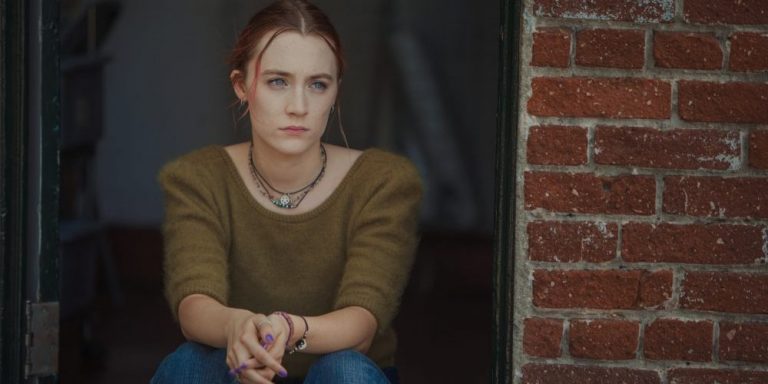
    Hilarious and poignant, Lady Bird announces Greta Gerwig as one of the most exciting new filmmakers and solidifies Soarsie Ronan as a major star

    The vast number of themes Greta Gerwig tackles in her directorial debut Lady Bird would lead you to believe that it’s an overstuffed, melodramatic dramedy that tries to say something without making a point. However, it’s far from that. Actually, it hits every point it’s trying to make with a stinging poignancy that it’s almost impossible not to relate in some degree to each one. Parenting, love, hate, socioeconomic relations are just a few themes that the movie tackles. But what would most easily sum this up is that Lady Bird is the definitive teen movie of the post 9/11 era.

    Christine McPherson (Soarsie Ronan) — she goes by the name Lady Bird because “it’s given to me, by me,” as she says — is a senior at a girls’ Catholic high school in Sacremento, California. Lady Bird’s indictment of her hometown is summed up in the movie’s opening quote: “Anybody who talks about California hedonism has never spent a Christmas in Sacramento.” However, she’s not your typical pink haired teen rebel. Unlike most teen movie leads, Lady Bird isn’t handicapped by her quirkiness nor taken down by her high opinion of herself compared to her hometown. She is simply a girl with dreams bigger than where she lives. More specifically of New York City.


    However, for the next year, she’s stuck at home dealing with boys, college applications, school plays, and her family as she navigates the murky waters of her relationship with her mother, Marion (Laurie Metcalf). We view the movie through Lady Bird’s limited perspective, which makes our view of other characters extremely narrow. But that seems to be Gerwig’s intention. At one point, Lady Bird is cast as an ensemble member in the school musical. Her friend Julie tries to reassure her by saying that she still got cast in the play. However, Lady Bird feels like it’s not being cast at all. For her, it’s the starring role or nothing. We all remember the feeling of our own problems being the biggest in the world. Lady Bird understands that and portrays it subtly, but effectively.

    Gerwig captures the feeling of being a high schooler so perfectly that it’s nearly impossible to not identify with one of the characters in some way. You have Lady Bird as an ambitious misfit, her friend Julia (Beanie Feldstein — a breakthrough performance) is an endearing nerd, Lucas Hedges’ Danny is an overachieving prodigal son, Timothee Chalamet‘s (Call Me By Your Name) Kyle is a “fight the system” rebel. However, none of them turn into archetypes. They’re lived in characters that have their own backstories that inform their decisions. Even if we don’t get to explore those, they’re present.

    That goes for the older characters too. Everyone from Lady Bird’s father, Larry (Tracey Letts), to her adopted brother Miguel (Jordan Rodrigues) and his girlfriend Shelley (Marielle Scott) have lived experiences that have affected who they are when we meet them in the movie.

    Because of the way the movie is set up, every character gets their moment to shine. However, among the male supporting cast, Letts and Hedges are clear standouts. Letts’ quite and supportive father character is a character that we’ve seen before, but he injects a lingering dourness that makes the outcome of certain scenes all the more profound. And Hedges, who received his first Oscar nomination last year for Manchester by the Sea, makes Danny sweet and filled with a natural teenage awkwardness that is masked by a confidence that only theater kids could understand.


    However, the centerpiece of the film is Lady Bird’s relationship with Marion. Like most mother/daughter relationships, it’s one that can completely turn around at just a wrong word. No scene better portrays this than when Lady Bird and Marion, on a road trip visiting colleges, cry together after completing an audio version of The Grapes of Wrath, which is then followed by just a few lines of dialogue that cause Lady Bird to jump out of the moving car. While the relationship is played for laughs during their first couple scenes together, later scenes give way to a heartbreaking dynamic that is too familiar for any teen that grew up during the 2000s. Ronan and Metcalf give Oscar worthy performances that are sure to become iconic in the near future.

    The true thematic depth of Lady Bird is only rewarded after repeat viewings. When I say it runs the gauntlet of teenage problems, it truly covers a multitude of them. But the reason for it is justified. Lady Bird is an extraordinary character who is so firmly the lead her own movie that every supporting plot falls to the wayside — until they don’t. In a telling scene, Lady Bird encounters one character who she finds crying. We don’t know why. We don’t know how long she’s been crying. It feels like there was a completely different scene or movie preceding this one that we didn’t see since we’re so stuck in a Lady Bird’s point of view. When she asks the person why they are crying, they simply reply, “some people aren’t built happy, you know?”

    ★★★★½ out of 5


    Watch Lady Bird on Amazon!

  • Three Billboards Outside Ebbing, Missouri review — Hilarious, but problematic black comedy

    Three Billboards Outside Ebbing, Missouri review — Hilarious, but problematic black comedy

    Three Billboards Outside Ebbing, Missouri is a bleak black comedy that boasts some of the best performances and writing of any movie this year.

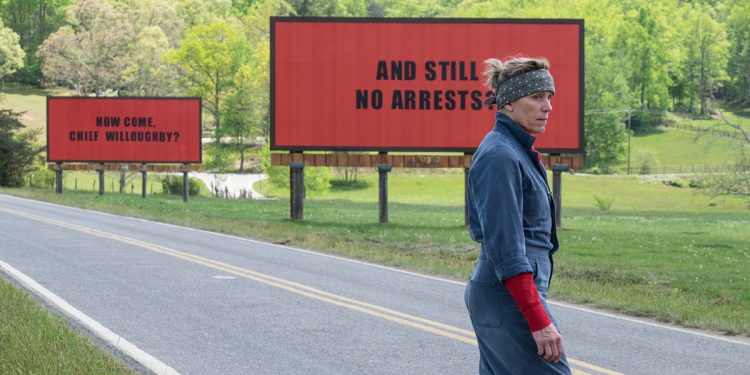
    “Raped while dying.”

    “Still no arrests?”

    “How come, Chief Willoughby?”

    That is what is written on the titular billboards in Three Billboards Outside Ebbing, Missouri. And while it seems like a simple targeted message, the entire small town of Ebbing is sure going to know about it. The reason Mildred Hayes (Frances McDormand) puts up these billboards — she pays the head of Ebbing Advertising Red (Caleb Landry Jones, wonderful here and earlier this year in Get Out) $5000 a month to erect her message — is because her teenage daughter Angela was raped, murdered, and burned seven months earlier. However, the case went cold and police stopped updating Mildred. It’s not for lack of trying, though. Police Chief Willoughby (Woody Harrelson) reassures Mildred in one scene that they tried finding a DNA match to no avail and eventually reveals he has cancer. However, she continues her crusade saying, “they won’t be as effective after you croak.”

    What Mildred is mad at isn’t the fact that the cops haven’t found the killer, but their complacency in the matter. She even goes as far as saying that they’re “too busy torturing black folks” to solve her daughter’s murder, a fact that is proven true when racist cop Jason Dixon (Sam Rockwell) mistakenly admits that he did torture a black citizen — he’s borderline incompetent. As other members of the town become involved including Mildred’s son Robbie (Lucas Hedges, who also did great work in Lady Bird), local James (Peter Dinklage), and her friend Denise (Amanda Warren).

    Though Three Billboards starts off as a David versus Goliath story with Mildred pitted against Willoughby and the police department, it quickly becomes clear that there’s no good and bad in this story as morals are tested on all sides. Each scene feels like a scene of a play where two or three characters are simply talking through their situation. At one point a priest comes to visit Mildred to try and convince her to take the billboards down. She launches into an incredible monologue comparing the church to the gangs in L.A. before delivering one of the greatest mic drop lines of the year. Three Billboards gives an outlet for actors to play with these characters and they are performing to the cheap seats.

    Though Three Billboards is steeped in a dry wit that will certainly earn laughs, the comedy is as pitch black as they come. Don’t be mistaken, this is a brutal movie at times, both physically and emotionally for the characters. Though it at times becomes whimsical in its storytelling, it’s rooted in a very real portrait of grief. Mildred is angry and she lets that inform her decisions for better or worse. However, Three Billboards is also a portrait, or microcosm, of a very specific sect of red state America where people say what’s on their minds even though they know word in a small town spreads like a wildfire. It’s an asset to McDonough, who writes dialogue that has to be spoken at a rapid-fire pace. It’s also evident that he has something to say about police and power and violence, specifically how one violent act leads to another before it spirals out of control. However, that message becomes muddled through the movie, which eventually knocks the final act off track.

    The movie’s core, though, is Frances McDormand. No actor is better at letting you in a character’s head but also keeping you out than McDormand. Mildred is unpredictable and brash and McDormand tackles her scenes at a level of intensity that pushes you to the edge of your seat whenever she is on screen. But what makes this a truly great performance is the moments that Mildred is contemplative. It may be a tilt of the head to the ground or the pursing of her lips, but either way, you’re hit with a wave of emotion. You understand what she’s thinking. You can almost read her mind. McDormand is astonishing. It is her best performance since Fargo, perhaps of her career.

    That’s not to take away from the rest of the cast. This movie is an ensemble film and every actor gets their moment. Jones, Harrelson, and Hedges all do fantastic work, but the clear standout supporting player is Sam Rockwell. While Mildred stays fiery but broken throughout, Dixon goes on a full arc beginning in one place and ending up nowhere you’d expect. However, it tracks. McDonough is calculating where he takes Dixon and Rockwell is there to hit every single beat. He plays him as a one-note comic relief character that you truly despise. Not only for his actions but for the way that he carries himself. He’s the last character you’d expect to undergo a real solid development, but Rockwell convinces you that there is depth to Dixon, even when he seems hopeless.

    However, therein lies the problem with the film. Rockwell’s character is given room to redeem himself, but there are some truly despicable things he does that aren’t addressed. On top of that, the black characters in the film are completely pushed to the periphery — the black man that Dixon tortured is never seen, Mildred’s friend and a good samaritan are given no development. Even Mildred’s daughter, who is the victim of the heinous crime, is a plot device. There never really is a commentary on race or sexual assault. It’s almost apolitical. Still, the film is well-made enough to be a perfectly good character study, but it is certainly problematic.

    Three Billboards Outside Ebbing, Missouri isn’t an indictment of the complacency of police or anger-driven revenge. It doesn’t judge any of its characters, even though some of them do truly despicable things. McDonough mixes on-the-ground realism with a stinging black humor that makes the characters seem larger than life. But thanks to some incredible performances, no character seems outlandish. By the end, you understand them. Beneath the hilarity of it all or the bleakness of the situation, there’s real humanity in watching people navigate a hard time in life. The crime that the billboards are meant to bring attention to is not the center of the movie. Instead, it’s the people surrounding the crime that it is interested in. And I’d take a bleak character study over a crime thriller any day.

    ★★★½ out of 5


    Watch Three Billboards Outside Ebbing, Missouri on Amazon!

  • 2017 Oscar Predictions: It’s Mahershala Ali vs. Dev Patel for Best Supporting Actor

    2017 Oscar Predictions: It’s Mahershala Ali vs. Dev Patel for Best Supporting Actor

    Best Supporting Actor is looking like it’s going to go to Mahershala Ali for Moonlight. However, there is certainly room for an upset.

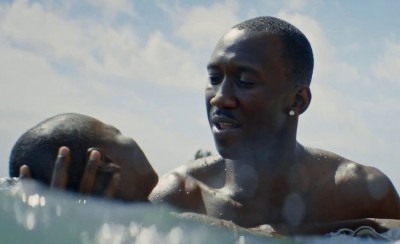
    While it took a while for the race for Best Supporting Actor to take shape, a clear frontrunner has emerged in Mahershala Ali (Moonlight). His towering performance was a favorite among the early critic awards (and in my review for the movie) and he will certainly be swept along with the buzz for the movie. Plus, the Best Picture frontrunners tend to win an acting award. So, if Moonlight remains popular, then Ali could be taken along. His loss at the Globes and BAFTA is telling, though. It shows that he isn’t infallible like Viola Davis (Fences) over in supporting actress. 

    Starting with the actor with the smallest chance of upsetting is Michael Shannon (Nocturnal Animals). He was probably the most critically-acclaimed actor in the film despite the odd Aaron Taylor-Johnson win at the Golden Globes. However, no acting award winner has won the Oscar after being snubbed by the Globes and SAG — Marcia Gay Harden is the only actor to pull this off. Plus, his film was shut out from all the other categories. So, Shannon probably doesn’t need to worry about preparing a speech.

    oscars mahershala ali best supporting actorCheck Out: Will Moonlight, La La Land, or Manchester by the Sea win Best Picture?


    Lucas Hedges (Manchester by the Sea) has the benefit of pretty much being a co-lead to Casey Affleck. Though the supporting actor category is a lot less prone to category fraud as the actress counterpart, when it does happen, it seems like it's more of a pro than a con. However, there is a bigger statistic going against him. The Academy tends to award older and more veteran actors. In fact, supporting actor has become a sort of lifetime achievement award — Christopher Plummer, Alan Arkin, Morgan Freeman. And at the ripe age of 20, Hedges is the youngest nominee this year in any category. Unless there is a sudden and unexpected Manchester sweep, it's safe to say he probably won't win. Who I do think has a chance at upsetting Ali is Jeff Bridges (Hell or High Water). His grizzled police officer role is a popular type for the older and whiter Academy. Plus, Bridges is a very popular actor. In thus Trump era we're in, he would be the alternative for voters that skew towards that demographic. The nominee with the best chance at beating Ali is Dev Patel (Lion). With the great Harvey Weinstein behind him fueling his campaign, Patel will have a strong narrative behind him. He's been in the industry for a while and was snubbed for his main role in the Best Picture winning Slumdog Millionaire. He has a lot of screentime in a really meaty role. Plus, I think Lion is the dark horse contender in a lot of categories. It's a feel-good movie with a lot of substance. The biggest indication that he could be the more likely contender than Bridges is his win at BAFTA. While BAFTA isn't exactly the best indicator. It does help with where the momentum is going. While there is no perfect contender to take Ali down, Patel is certainly the closest. Either way, I think Mahershala should be getting a space set up on his mantel! Check out the rest of our 2017 Oscar Predictions! Will Win: Mahershala Ali, Moonlight Could Win: Dev Patel, Lion Dark Horse: Jeff Bridges, Hell or High Water Should Win: Mahershala Ali, Moonlight