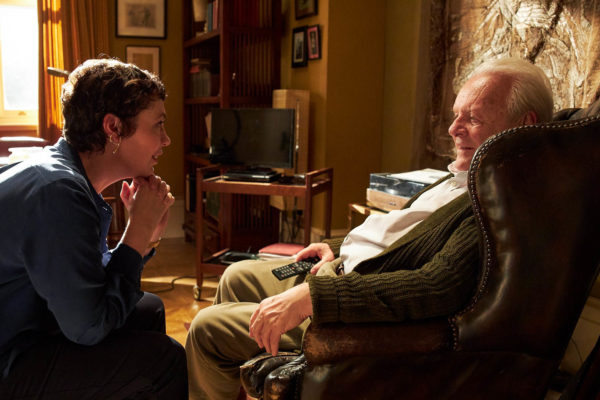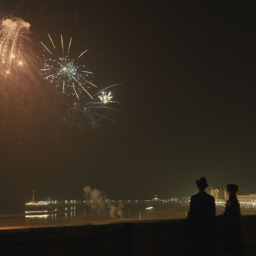
Set on the moody southern coast of England in the 1980s, Empire of Light follows a lonely movie theater worker who finds herself in a whirlwind romance.
There is something otherworldly about sitting in a movie theater. The artistry. The magic. That indescribable feeling we get when the lights begin to dim, and we go somewhere we’ve never been before. We’re not just entertained, but somehow reborn together. Those dazzling images on a huge silver screen. The sound that we can feel. Somehow, heartbreak feels good in a place like this (and I believe I’m the first person to ever describe the theater this way). Sam Mendes’s ninth feature film Empire of Light, which debuted at Telluride before crossing the border to the Toronto International Film Festival, bottles up this sentiment expressed so eloquently by Nicole Kidman in her AMC ads.
Mendes—best known for American Beauty, Skyfall, and 1917—solutes cinema as he follows a group of employees working at a movie theater on the southern coast of 1980s Britain. At the center is Hilary Small (Olivia Colman) a middle-aged concessions counter worker who struggles to find happiness selling popcorn, sweeping out theaters, and regularly jerking off her boss (Colin Firth). As the film progresses we learn that Hilary has previously suffered under bouts of depression and mania. Nevertheless, she returns to her job at the Empire, no matter how mundane, as the one constant in her life.
ADVERTISEMENT
Eventually, however, Hilary’s existence—and the entire atmosphere of the Empire—are brightened by the arrival of a new ticket-taker called Stephen, played by the charming Michael Ward (who you may recognize from Steve McQueen’s Lovers Rock). Stephen is brimming with joie de vivre, and the entire staff is instantly smitten. He strikes up an unlikely friendship/romance with Hilary, he gets chummy with punk-rocker-turned-candy-girl Janine (Hannah Onslow), and even manages to endear himself to the curmudgeonly projectionist Norman (Toby Jones, who is as brilliant as always).
Hilary and Stephen are two lonely misunderstood souls.
She because of her age and mental health issues and he as a black man living in a predominately white community. They begin to fall in love, sneaking away to the abandoned second floor of the theater to hook up during shifts. While on the surface this romance may seem unlikely (and some have called it out as unrealistic), anyone who has ever felt adrift and isolated can relate to the yearning for connection and the unexpected places we often find it.
As the film swirls into its second act, their idyllic relationship is confronted by outside forces. Hilary’s mental health, the racial tensions of the UK and the rise of the skinhead movement, and confrontations with other employees of the theater all drag the pair back to a harsher reality than exists in their private alcoves. In a Lost in Translation sort of way, however, Empire of Light celebrates their starcrossed romance and the different kinds of relationships that we find comfort in.
ADVERTISEMENT
In the least shocking news to come out of the fall festivals, Olivia Colman is breathtaking as Hilary, delivering a performance that probes new directions for her.
Come Oscar nomination morning, she will undoubtedly be looking at her fourth nomination in five years. Michael Ward, while given a role that’s not quite as showy, exudes confidence and charm. You can so easily see why Hilary instantly falls for him, and he is every bit as deserving of an Oscar nomination—although his may be an uphill battle this season.
Mendes, who proved in 1917 that he knows how to harness the full breadth of the filmmaking craft to create a singular world, has done so again. Cinematographer Roger Deakins showcases his abilities as he breathtakingly captures the rundown Empire Theater. And theater itself, with its dilapidated second floor, is a triumph of set design. All those elements are elevated by Trent Reznor and Atticus Ross’s melancholic score. I’ve been constantly refreshing Spotify since the movie’s TIFF premiere in hopes that the piece played over Hilary’s euphoric movie-watching experience in the film’s final act has been released.
ADVERTISEMENT
Some have called out the screenplay as the singular weak spot in this barrage of masterclass craftsmanship, but I’d argue that the loose threads contribute to the melancholy vignette quality of the film.
This is not an overly finessed studio film, but one that does make some surprising and uncomfortable moves—and the conclusion is more satisfying for it. While it is certainly a “filmmaker loves films” movie that will appeal to the Academy, I do not think it is as pandering or commercial as the likes of Belfast, King Richard, or CODA. It’s a story of loneliness and the places we go (the beach, the cinema, romance, friendship) to find solace.
Perhaps as someone with a degree in English (I was salivating at theseveral full poem readings in the film) and a cinephile, I am an impartial judge. But I found Empire of Light to be extremely poignant—and was lowkey weeping for the last thirty minutes. It was my favorite film of the festival. As a little closeted gay boy growing up in an extremely conservative environment, I have vivid memories of going to see The Curious Case of Benjamin Button alone in theaters to find succor, and Empire of Light taps into that exact feeling. Nowhere has heartbreak ever felt better.
Hey! I’m Matt. You can find me on Twitter here. I’m also a staff writer at Buzzfeed.
ADVERTISEMENT