Tag: Riley Keough

  • 'The Lodge' twists itself into terrifying knots — movie review

    'The Lodge' twists itself into terrifying knots — movie review

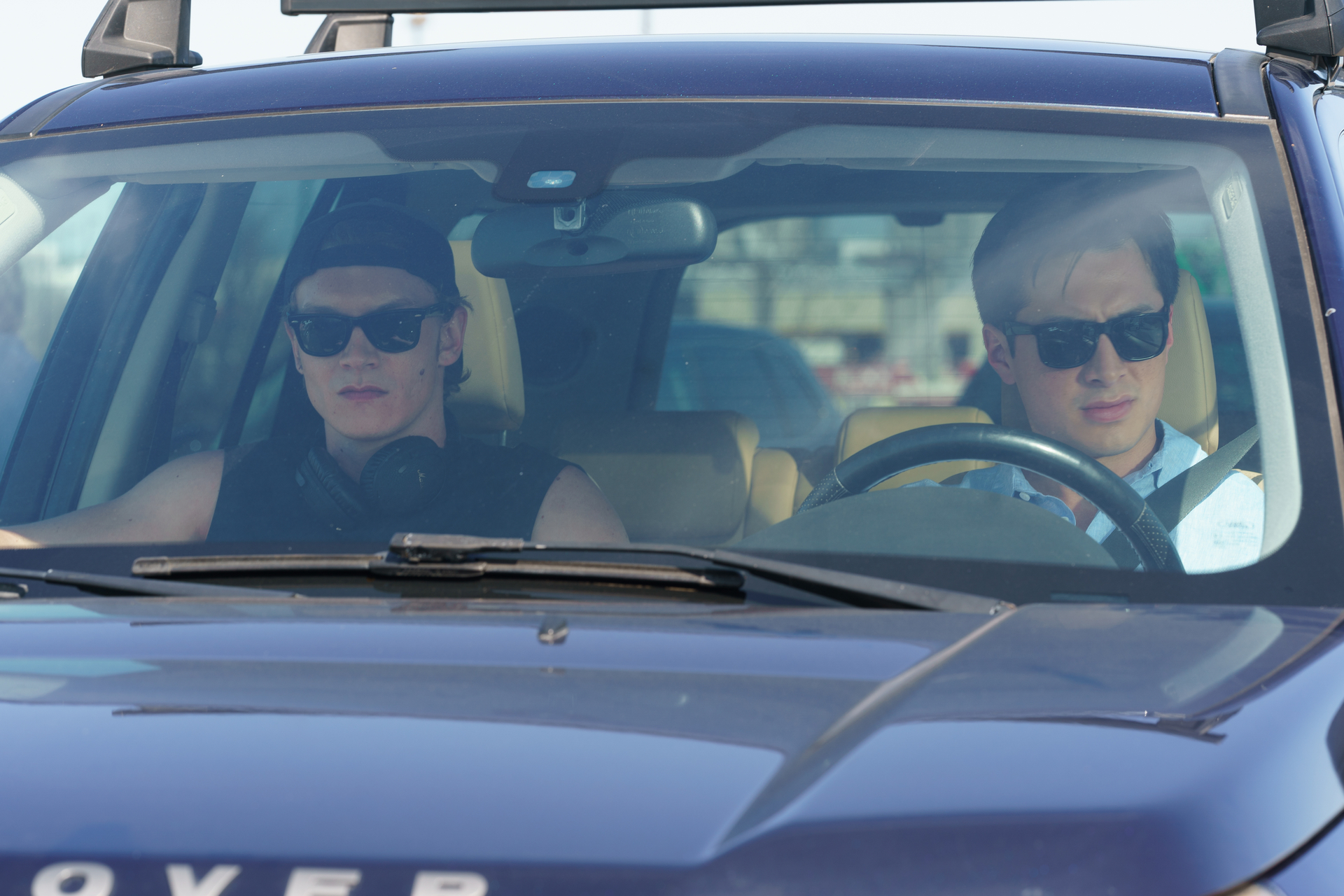
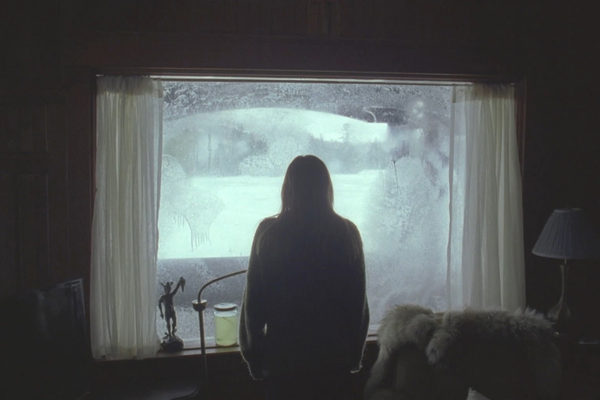
    In The Lodge, Grace is tasked with taking care of future stepkids in a remote cabin where things slowly spiral into cold madness

    Quick review: Despite well-drawn tension and a sense of pure frigid dread, the twists of the plot almost undo The Lodge. However, Riley Keough’s devastating performance and the bleak atmosphere keep the movie interesting.

    Where to watch The Lodge: In theaters in New York and Los Angeles on Friday.

    The Lodge, which premiered at last year’s Sundance Film Festival, feels similar to another horror that just premiered at this year’s Sundance, The Night House. Both movies rely on a dread-filled atmosphere that is relentlessly bleak and play thematically in the realm of grief and trauma. They also have the same issues. Despite a slow-burn plot that strikes just the right balance of mystery and horror, they eventually start getting a little too far into their own twists before becoming a little too incredulous to overlook.

    Richard (Richard Armitage) maybe too bluntly tells his wife Laura (Alicia Silverstone), who is separated from, that they need to finalize their divorce so her can marry Grace (Riley Keough) much to their kids Aiden (Jaeden Martell) and Mia’s (Lia McHugh) dismay. Laura doesn’t take the news well. Some time later in an effort for the kids to get to know her, Richard suggests they go to the family’s isolated cabin, which is tucked away in a snowy tundra, where Grace will watch over them while he goes to work in the city without a car and no civilization for miles. A little suspension of disbelief is needed. Trust me, this isn’t the most unbelievable plot point. 

    Aiden and Mia are obviously not happy with the arrangement. Not only are they stuck with their future stepmom and was involved in the demise of their mother, Grace is also a former patient of Richard’s — keep that disbelief suspended — who is the only survivor of a religious cult that committed mass suicide. The kids are petrified to be around her and often shut themselves away. 

    What the movie does incredibly well is give us both sides of the narrative almost simultaneously. While we can see and feel the kid’s reluctance to accept this new woman into their lives, we also see Grace’s struggle to connect with them in the face of her past trauma and the person she’s replacing — the house is covered in religious totems from Laura.

    💌 Sign up for our weekly email newsletter with movie recommendations available to stream.


    ADVERTISEMENT
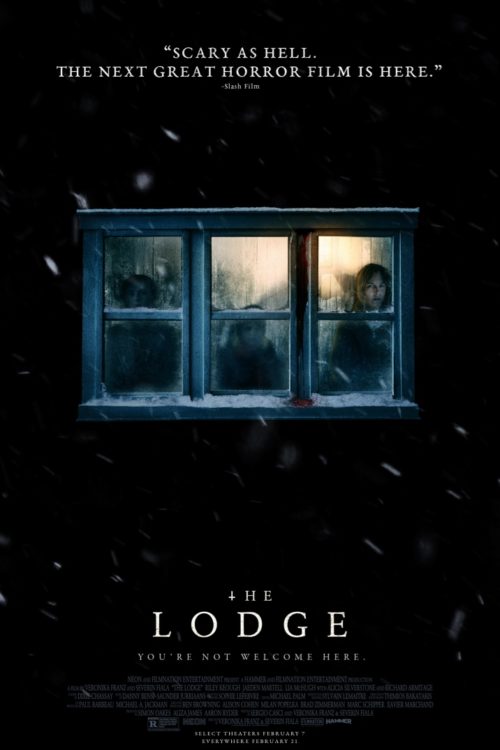

    The Lodge poster

    The movie then takes a shift towards The Innocents or The Shining as Laura begins to see and hear flashes from her past urging her to repent and even more sinister things going on in the house. First the power and the heat go off, then her beloved dog goes missing, then the food and jackets go missing. The assault of extraordinary happenings starts to push Laura towards the edge. She starts to sleepwalk, sometimes with a gun in her hand. She starts to confuse the kids for the bodies of her cult members. However, it’s when she finally steps off the edge that the movie starts its uncontrollable descent.

    Though Ari Aster’s Hereditary hadn’t been released by the time The Lodge was in production, it’s hard not to compare the two. Both begin with a traumatic and mine similar imagery — a creepy dollhouse, vaguely comedic funeral. However, The Lodge feels a lot less elegant than the assured and rhythmic style of Hereditary, which stays in the domain of arthouse. 

    Directors and co-writers Veronika Franz and Severin Faila (Sergio Casci was also a writer), who previously co-directed the similarly unnerving Goodnight Mommy, have a clear style. And while I wish it felt more singular, it serves the core story. The probably is that the plot becomes unwieldy and unrealistic, which clashes with their style. It almost needed Aster’s hyper-stylized touch for it to work. 

    However, there’s no denying just how effective the tension-building is in The Lodge. Like any great single location movie — The Shining comes to mind — it makes you feel trapped and like you yourself are losing your sanity. Keogh’s subtly complex performance, one of her best, needs to be credited, as well. However, the movie is in a bit too much of a rush to show you its work and just how “clever” it is. Though, that might be part of the appeal. It’s incredibly bleak. So bleak that I don’t know if I could watch it again. As it slowly approaches the edge, you need to make the decision whether to hang on or jump off with it. Whether you love or hate it hangs on that decision.


  • ‘Under the Silver Lake’ mini-review — To live and trip in L.A.

    ‘Under the Silver Lake’ mini-review — To live and trip in L.A.

    Under the Silver Lake follows an aimless slacker as he unravels a mystery following the disappearance of his neighbor.

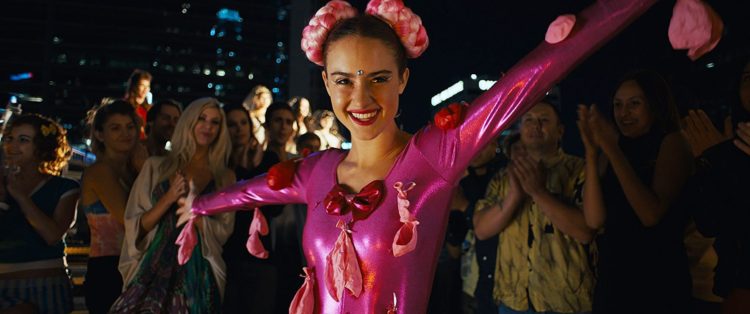
    90-second review: Under the Silver Lake alternates between being incredibly compelling and frustratingly confused. It misses the assuredness of director David Robert Mitchell‘s masterpiece film debut It Follows, because he has to spend so much time navigating the tricky world he created. Sometimes he’s successful — particularly when he explores the series of elite Hollywood parties surrounding indie-pop band “Jesus and the Brides of Dracula” — and sometimes he gets distracted by the weirdness of it all.

    The tone reminds me a lot of Boots Riley’s political satire Sorry to Bother You, but unlike that film Under the Silver Lake lacks the point-of-view and narrative clarity to pull it off. In other words, it’s underdeveloped. Mitchell has so many ideas — both thematic and cinematic — that he wants to explore, which explains the bloated 2 1/2 hour running time. When he focuses in on the central mystery of aimless conspiracy theorist and professional slacker Sam’s (Andrew Garfield) missing neighbor Sarah (Riley Keough), the movie and his vision take shape. But then the potential of the neo-noir fantasy world comes into play and muddies the waters.

    It’s not all bad though. He makes some genuinely interesting choices that prove he was never interested in making another It Follows. And so much of it is bold and funny with a dry wit that keeps it entertaining. A lot of that is thanks to Garfield’s immersive performance that is an almost too-accurate portrayal of a scum bum LA conspiracy theorist. Truthfully, I was never bored with it until it began wrapping up.

    Under the Silver Lake is incredibly frustrating because it feels like you can piece together a good movie from what’s on-screen. Even then, it’s not completely clear what Mitchell is trying to say with it. Is he criticizing Hollywood’s misogynistic culture? Or is he more broadly exploring the LA lifestyle? And then there’s the more straightforward read of a man coping with a difficult time by wrapping himself up in a conspiracy and mystery that isn’t his to solve. Whatever the intention of the movie is, it’s unclear. And that’ll work for some. You’ll either love it or hate it. I’m the rare person in the middle ground.

    Where to watch Under the Silver Lake: Streaming for free on Prime Video.


    ADVERTISEMENT


    More movies, less problems


    Hey! I’m Karl. You can find me on Twitter and Letterboxd. I’m also a Tomatometer-approved critic.

    💌 Sign up for our weekly email newsletter with movie recommendations available to stream.


    ADVERTISEMENT


    Under the Silver Lake
    Grace Van Patten in UNDER THE SILVER LAKE. Credit: A24.
  • Logan Lucky review — A southern wannabe Ocean’s Eleven

    Logan Lucky review — A southern wannabe Ocean’s Eleven

    Logan Lucky makes an attempt at recreating the charm of Soderbergh’s earlier heist movies, but ultimately misses the mark.

    Logan Lucky is being touted as a red state Ocean’s Eleven, which is a lofty comparison considering the latter movie is considered THE heist movie of the 21st century. However, if any director is going to pull it off, it’s Ocean’s director Steven Soderbergh, whose self-imposed retirement seems to have been premature. And while Logan Lucky certainly has its moments, any comparisons to its iconic predecessor yield disappointment.


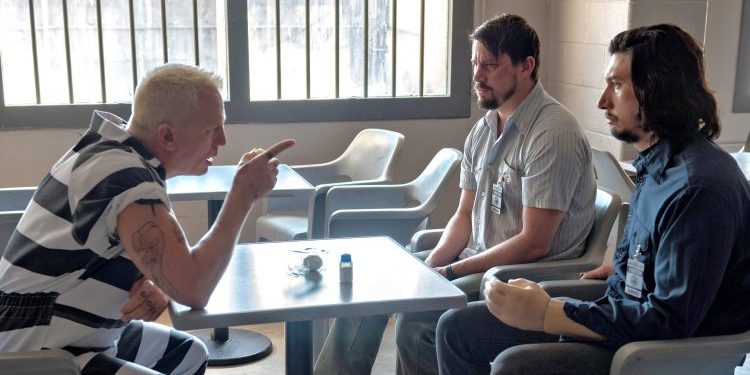
    Featuring an all-star cast, Logan Lucky tells the story of the generally unlucky Logan brothers Jimmy (Channing Tatum) and Clyde (Adam Driver). When Jimmy is let go from his job, he enlists Clyde into a scheme that is sure to go down in hillbilly history. The brothers plan to rob Charlotte Motor Speedway, where Jimmy was working construction under the stadium. They enlist the help of their sister Mellie (Riley Keough, who stunned in It Comes At Night earlier this year), Joe Bang (a juicy Daniel Craig), an explosives expert, his brothers to help on the scheme.

    The overarching problem with Logan Lucky is that nothing is developed enough. The characters, no matter how talented the actors are, just never have the depth required to make you care about them. Although, Keough, Craig, and particularly, Driver certainly make the most of what they have. The plot is also half-baked at best. Though the actual heist has its fun moments, the lack of stakes, ingenuity, and panache make the final reveal fall flat. It doesn’t have the rhythm or charm of the Ocean’s movies. It’s something that you’ll sorely miss by the end of the film.


    The moments of humor do hit sometimes — an extended Game of Thrones joke is easily the best part of the movie. However, so much of the movie relies on the performances to elevate it past its bland direction. Craig, playing against type, has moments of pure comedic genius. He’s the typical comedic scene stealer. But the best performance is easily Adam Driver’s dry, yet sensitive Clyde. It’s in his moments of silence that the brilliance of his performance comes through. At one point, he searches for his prosthetic arm with an air of both desperation and anger that plays perfectly. It’s unfortunate that the writing doesn’t allow the other actors much room to stretch their talents.

    Logan Lucky feels like a movie that Soderbergh just couldn’t decide what he wanted be. It has moments of more ridiculous humor that pokes fun at its subjects, then moments that tries to pay respect to them. The moments of heart — there’s a subplot with Jimmy’s daughter Sadie (Farrah Mackenzie) — that just don’t fit and a half-hearted FBI investigation led by Hilary Swank and Macon Blair that feels like an afterthought. I really wanted this movie to be good. For the cast, for Soderbergh. But there’s more disappointing moments than satisfying. Save yourself some time and just rewatch Ocean’s Eleven.

    ★★ out of 5


    Watch Logan Lucky on Amazon!

  • It Comes At Night review — A stunning and terrifying post-apocalyptic thriller

    It Comes At Night review — A stunning and terrifying post-apocalyptic thriller

    Atmospheric and menacing, Trey Edward Shults’ sophomore feature It Comes At Night is a family drama disguised as a horror movie that works on both levels.

    The “it” in the title of Trey Edward Shults’ sophomore release It Comes At Night is as much of a mystery as the plague that has driven the characters in the movie into seclusion. Though the set-up of the film feels familiar — a pandemic has plagued the population and pushed resources to their minimum — Shults, the visionary behind the terrifying Thanksgiving dinner in Krishadoes away with the exposition quickly and leaves us with a truly terrifying humanist drama.

    The pandemic in It Comes At Night is never the focus of the film. All we know is that people are becoming sick and dying, resources are scarce, and the living are doing their best to protect from contamination and anything else lurking in the woods. Shults, who also wrote the film, doesn’t go for the cheap scares. If anything, the anxiety of anticipating the scare is more terrifying than anything a studio horror film could muster up. Instead, much like his debut film, he goes for atmosphere and building tension. The camera — Krisha‘s DP Drew Daniels also shot this film — slowly navigates the dark nooks and crannies of the remote forest home that the movie takes place in while Brian McOmber’s screeching score with a heartbeat baseline plays in the background. It Comes At Night features the worst attribute an audience member can go up against in a horror movie — patience.


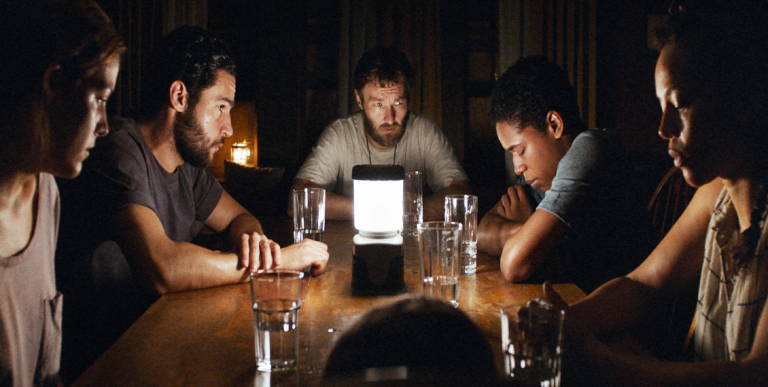
    The film opens with Paul (Joel Edgerton), Sarah (Carmen Ejogo), and their teenage son Travis (Kelvin Harrison Jr.) surrounding Sarah’s sick father as he slowly succumbs to the pandemic. After disposing of his body, we are introduced to their home — and dog, Stanley — which they have boarded up and turned into a stronghold. Paul maintains strict rules that are meant to keep his family safe and maintain a sense of normalcy — they all eat dinner together every night and unless absolutely necessary, they do not go out at night. However, when they have a run-in with another family, they take the opportunity to add some companionship to their day to day lives. This other family consisting of Will (Christopher Abbott), Kim (Riley Keough), and their young son Andrew (Griffin Robert Faulkner), is taken in by Paul and Sarah and shown a hospitality that is often shown in moments of distress. And for a time, life seems a bit easier. However, like anything good, it has to come to an end. Tensions rise as mistrust begins to run rampant in the house. And like any other animal, when back against a corner, humans attack.

    I think A.O Scott put it best in his review saying, “Mr. Shults’s first feature, the remarkable Krisha, was a family drama that often felt like a horror movie. It Comes at Night is the reverse.” The horror elements of It Comes At Night, largely relegated to Travis’ nightmares, are the centerpiece of the movie. However, the bulk of the movie is this question of the lengths people will go to protect themselves and their loved ones when times become desperate. Shults explores it intimately but leaves all the answering to the audience. It’s one of the most interesting things about the movie. There are no clear answers or signs pointing in a particular direction. If anything, any symbolism that Shults includes almost further complicates any dissecting that can be done in the movie. It’s what makes this movie so polarizing. Anyone expecting a straight horror movie will not get that. However, what you do get can only be described as a masterpiece.

    Joel Edgerton gives what is, in my opinion, the best performance of his career, which is only another indication that he is becoming one of our greatest actors — his performance in Loving was originally, for me, his best performance. It’s a realistic performance that shows our innate conflict in difficult situations flawlessly. Carmen Ejogo also does great work as a woman who is desperately trying to hold on to her morals and Kelvin Harrison Jr. tackles the difficult task of being our point-of-view beautifully. However, in addition to Edgerton, the biggest standout for me is Riley Keough. Her role is less plot-focused than the other characters, but she represents, along with her son, innocence in the situation. She’s seeing everything from the perspective of the old world even though nothing is the same.


    It Comes At Night is about anxiety and the toll that it can take on you physically and emotionally. It’s about the lengths to which we will go to survive. It’s about the compassion we can feel in the darkest of situations. It’s about trust, how it’s earned, and how it’s lost. Shults balances all these themes without straying from its psychological thriller roots. He is a visionary filmmaker that understands that film is not only about making the audience feel but also think. And think you will. Sometimes the thinking is the scariest part of the film. Because once you think you understand something, you see it from another perspective or something happens to make you rethink everything. This is a morality play at its finest. There are no heros and no villains. There are simply humans in a house.

    ★★★★ out of 5


    Watch It Comes At Night on Amazon!