Tag: Steven Soderbergh

  • ‘Presence’ is a ghost story like no other | movie review

    ‘Presence’ is a ghost story like no other | movie review

    Unfolding from the perspective of a ghost haunting their house, a family deals with family tensions in Presence.

    This review was originally published out of the 2024 Toronto International Film Festival.

    If you think you’ve seen every haunted house movie, Presence is here to prove you wrong. Steven Soderbergh ditches the usual ghost story formula by letting us see everything from the spirit’s perspective—turning voyeurism into an eerie, strangely emotional experience. With family drama, supernatural chills, and a sharp, unsettling look at loneliness, this is more than just a spooky flick. At 85 minutes, it’s a quick, haunting watch that lingers long after the credits roll.

    Presence is in theaters now.

    In many ways, director Steven Soderbergh’s Presence is a classic haunted house movie. An idyllic family moves into their dream home in the suburbs, only for it to turn into a nightmare when daughter Chloe (Callina Liang) begins to notice something is amiss inside the house. It starts small. She notices a notebook she thought she had placed on her desk now resting on her bed. A disembodied breath on her neck that she explains away with the classic, “It was the wind.” There are haunts, frustrating skepticism, psychic mediums—the works.

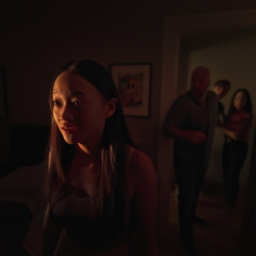
    However, this is no normal ghost story. Like many of our ghosts, the specter lurks in Chloe’s closet. We know this because we watch the movie unfold from its point of view.


    ADVERTISEMENT


    There’s an uneasy feeling as we sweep through the empty house, visiting room after room, before the family enters for the first time with their real estate agent (a punchy cameo from Julia Fox). The sensation of taking the role of an unseen voyeur into this family’s life feels creepy—like the infamous opening shot from Michael Myers’s perspective in Halloween—especially when the specter dares to approach one of the family members. While most of them are unaware, Chloe senses something immediately. From there, still viewing the story through the ghost’s eyes, we get glimpses into the family’s lives.

    There’s headstrong, controlling matriarch Rebecca (Lucy Liu), who makes her preference for her athlete son Tyler (Eddy Maday) painfully evident—“I’ve never felt more connected to another human,” she says, to which he replies, “What about Chloe?” On the other hand, warm, caring patriarch Chris (Chris Sullivan) is more empathetic to Chloe’s plights. While she assumes the role of the typical black-sheep teenager in a ghost story, we learn it’s not without reason—her friend Nadia recently died of an apparent overdose. The ghost watches as these family tensions unfold. After a while, it begins to feel like the phantom itself has emotions—as Chloe’s relationship with her mother sours, she fights with her brother, and she catches the eye of her brother’s friend and the school’s popular boy, Ryan (West Mulholland).


    ADVERTISEMENT


    Presence hits other familiar beats of the ghost story—like the family’s general skepticism when Chloe insists a ghost is haunting her room—before a dramatic moment finally forces them to believe her. But knowing the reason behind those supernatural moments makes them feel new, as if you’ve never seen them in another movie before. In a way, the film feels somewhat plotless and meanderingbut in a surprisingly comforting way, like you’re simply drifting through this family’s life.

    At its core, however, Presence is a family melodrama—filled with biting infighting, teenage and marital angst, and a few, perhaps improbable, twists. However, shifting our perspective to that of the ghost—and therefore limiting us to bits and pieces of the story—smooths out the narrative’s jagged edges. Instead, it leaves us to contemplate some of the film’s more profound lines of dialogue, like when Chris asks Rebecca, “You ever notice how your advice always corresponds with us doing nothing?”

    For some, Presence will just be another experimental work from Soderbergh in his post-“retirement” era. However, there’s something more profound beneath its cinematic tricks. There’s a quiet melancholy, comforting in its relatability. Its portrayal of loneliness and isolation—so easily felt in life, even when you’re not alone—strikes a chord. And perhaps most telling is that, by the end of its breezy 85-minute runtime, you might just find yourself missing being someone’s ghost in a dark corner of their closet.


    ADVERTISEMENT


    More movies, less problems


    Hey! I’m Karl. You can find me on Twitter and Letterboxd. I’m also a Tomatometer-approved critic.

    💌 Sign up for our weekly email newsletter with movie recommendations available to stream.


    ADVERTISEMENT

  • ‘Kimi’ is a techno-thriller for the pandemic era | review and analysis

    ‘Kimi’ is a techno-thriller for the pandemic era | review and analysis


    ADVERTISEMENT


    Kimi follows a young tech worker is faced with a corporate conspiracy when she hears a crime through an Alexa-like smart speaker

    Where to watch Kimi:

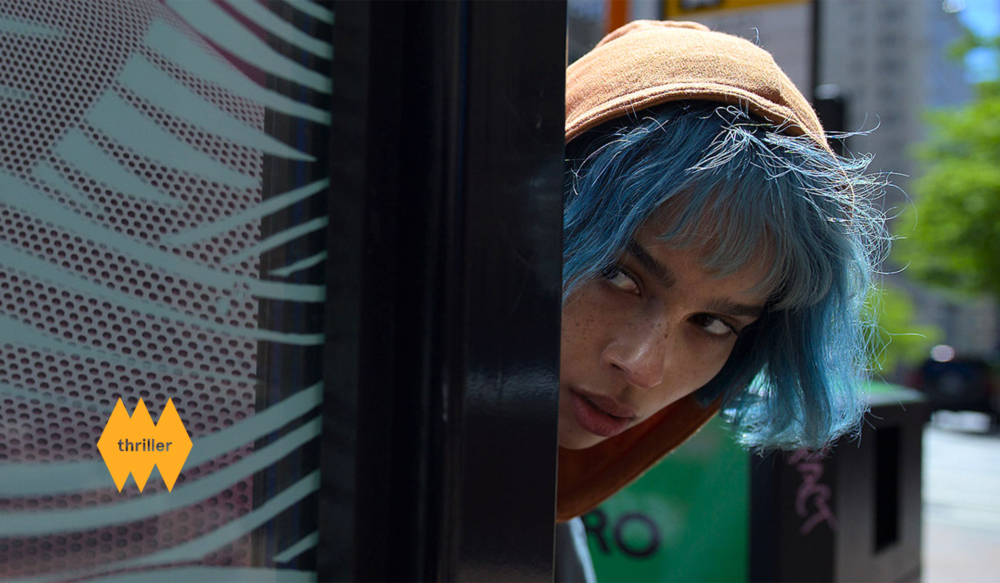
    There’s a scene in Kimi, the newest movie from Oscar-winning director Steven Soderbergh, when protagonist Angela (Zoë Kravitz) puts her AirPods on to drown out the sounds of her Seattle loft. It mirrored me in my New York City apartment watching the movie with my headphones to drown out the noise coming from the street — and my radiator. When she put her right earbud in, my right headphone went quiet. When she put on the left, my left went silent. It’s a small detail, but one that was crucial to my viewing experience.

    That was the moment I knew that Kimi was something special.

    First of all, for its immersive quality. Like it was made for me to watch it in my apartment with my headphones on immersed in the world. Second, unlike many movies made in the pandemic era, Kimi doesn’t shy away from living in that world. Actually, the pandemic helps drive the plot — a twist on the classic Rear Window-esque psychological thriller. Angela already suffered from agoraphobia from a previous assault that left her riddled with anxiety. You could imagine that a global pandemic didn’t help her mental state.


    ADVERTISEMENT


    Angela sticks to a rigid schedule. She eats breakfast, rides on her Peloton, checks in with her cute neighbor (Byron Bowers) who lives across that street. Soderbergh — known best for directing the Ocean’s Trilogy — catches the action as methodically as Angela is. She’s just as regimented when it comes to her job as a sort of quality assurance engineer for Kimi, an Alexa or Apple HomePod analog. Angela’s job is to analyze snippets of failed requests and correct the mistakes. However, one recording doesn’t sit right with her. Something sounds off. Sinister even.

    In another wondrous scene of immersive sound design, Angela slowly toys with the audio file— reminiscent of Gene Hackman in The Conversation — until she is able to clearly hear a woman being attacked. The discovery finally gives her a reason to leave her apartment when her boss (Rita Wilson) invites her in to share her discovery. However, these case isn’t as simple as a trip to the corporate office.

    In Angela’s apartment the camera is rigid, steady, and ordered but when it’s outside it becomes frenetic and unsteady with unnatural angles mirroring Angela’s state of mind. The jarring soundscape juxtaposed against the peace of the apartment is anxiety-inducing. It’s what Soderbergh is best at. Evoking the specific feeling he wants you to experience.


    ADVERTISEMENT


    Kravitz gives one of the best performances of her career as she portrays the panicked feeling of anxiety that many of us felt in the face of the pandemic. Trying to muster up the courage to go outside and meet her crush for breakfast, she dons her mask, grabs a handful of hand sanitizer packets, and slowly unlocks her door only to be met with the crushing feeling of panic that is so familiar. Soderbergh makes it so easy to empathize with her, something that similar movies — *cough*The Girl on the Train *cough* — fail to do.

    After Angela ventures out into the world, Kimi makes the transition to a full-blown thriller for its second half filled with corporate intrigue, paranoia-filled thrills, and a stunning villain turn from Jane the Virgin actor Jamie Camil before pivoting to a third act conclusion that might be too tidy but is certainly satisfying. It tracks with Soderbergh’s “post-retirement” era — he announced a retirement from filmmaking in 2015 but apparently got bored. His filmmaking is still as lean, mean, and effective as before. But he’s not looking to push his craft or genre further. He’s simply having fun and you can tell.

    Kimi grapples with many of today’s issues — information security, big tech, trauma, homelessness, civil unrest, pandemic anxiety — but it never overstays its welcome and never overstates its purpose. Soderbergh knows that this is a popcorn movie and it’s all the best for it. As we move into the post-pandemic era, it’ll be interesting to see how filmmakers grapple with our collective trauma. If Kimi is any indication, there are stories just waiting to be heard.


    ADVERTISEMENT


    More movies, less problems


    Hey! I’m Karl. You can find me on Twitter and Letterboxd. I’m also a Tomatometer-approved critic.

    💌 Sign up for our weekly email newsletter with movie recommendations available to stream.


    ADVERTISEMENT