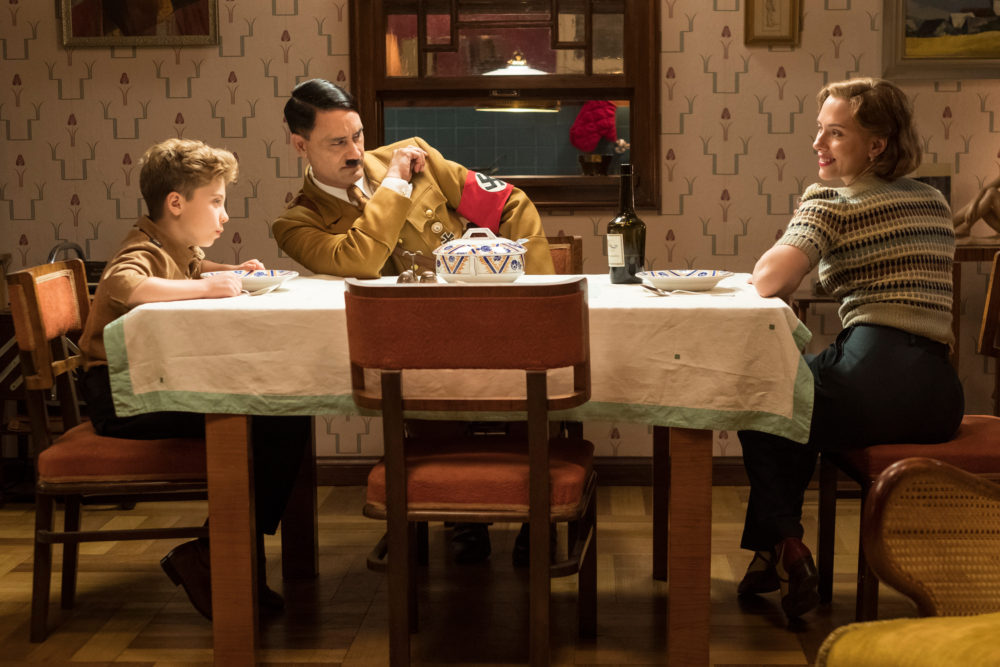
Jojo Rabbit follows a misguided Nazi youth whose imaginary friend is a buffoonish version of Hitler. It’s a comedy.
One-sentence review: Jojo Rabbit lacks a real hop in its step to be truly great, but director Taika Waititi’s comedic sensibilities are enough to make it an enjoyable crowdpleaser.
Details: ? Taika Waititi // ⏳ 108 minutes // ? 2019
The cast: Roman Griffin Davis, Thomasin McKenzie, Taika Waititi, Rebel Wilson, Stephen Merchant, Alfie Allen, Sam Rockwell, Scarlett Johansson
Where to watch Jojo Rabbit: In theaters now.

Taika Waititi has built his career on being silly. I mean, his breakout movie was a mockumentary about mild-mannered New Zealand vampires and his fire big Hollywood blockbuster reimagined Thor as a hilarious slapstick comedy. Jojo Rabbit is his first “blank check” movie — a term used for directors that earned the right to minimal studio input on projects — which would make you think that he’d push the boundaries as far as they could go. In actuality, he stays within his borders.
Jojo Rabbit follows Johannes “Jojo” Betzler (Roman Griffin Davis gives a massively charming performance), a ten-year-old boy living in Nazi Germany at the tail end of World War II. Like many boys his age, he’s completely bought into the Nazi propaganda and national pride. His imaginary friend is even a larger-than-life version of Hitler (Taika Waititi) who he often talks to and gets misguided encouragement from.
He gets sent to a Hitler Youth training camp led by Captain Klensendorf (Sam Rockwell), who was demoted “since Operation Screw-Up, where [he] lost a perfectly good eye in a totally preventable enemy attack.” Joining him is the equally misguided Fraulein Rahm (Rebel Wilson) and Finkel (Alfie Allen). However, after a totally preventable accident involving a hand grenade, Jojo is sent home to his loving mother Rosie (Scarlett Johansson) who seems to be harboring a secret.
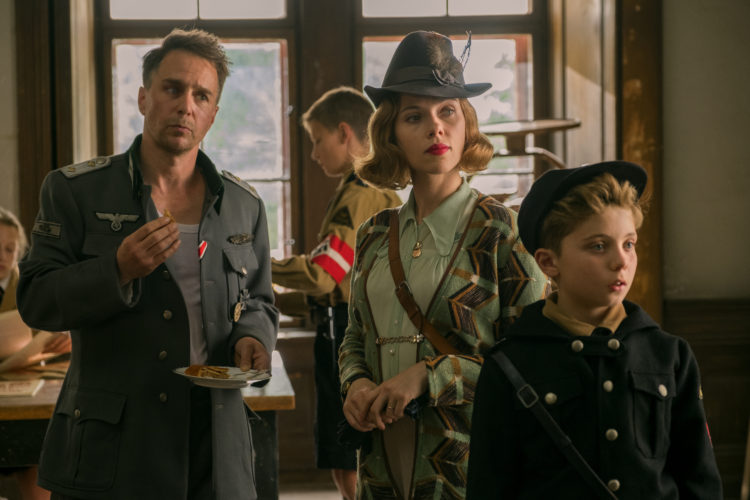
That secret comes in the form of Elsa (Thomasin McKenzie, who broke out in last year’s Leave No Trace), a Jewish girl Rosie is hiding in the walls of the home who Jojo soon discovers. From there, he must decide whether to turn her in or go on protecting her, which goes against everything he’s learned about being a Nazi.
Like all of his films — Hunt for the Wilderpeople, in particular — Waititi mixes real character development and emotional beats with gut-busting deadpan humor and slapstick sensibilities. Here, he hones in on the ridiculousness of anti-Semitism and the perils of blind patriotism. And while it’s an admirable subject, something about it lacks real bite to be truly effective.
Much of the movie is spent between Jojo and Elsa negotiating their various positions. Hilariously, Elsa seemingly always has the upper hand. The real issue with the plot, though, is that Jojo’s trajectory is obvious and Waititi doesn’t really pull any punches we didn’t see coming: being a Nazi is bad and blind patriotism is foolish. He could have made up for the simplicity of the message by filling out the running time spending time with the many hilarious side characters — Stephen Merchant has a too short role as a Gestapo agent and Archie Yates steals nearly every scene he’s in as Jojo’s best friend.
To compare the movie to Green Book, which oversimplifies race relations in the Jim Crow-era South, is probably overstepping, but it does describe the problem with Jojo Rabbit. Thankfully, Waititi isn’t feigning and self-importance like Green Book. He knows he’s making a simplistic crowdpleaser, even if it isn’t as satisfying one would hope. It’s a crowdpleaser nonetheless.

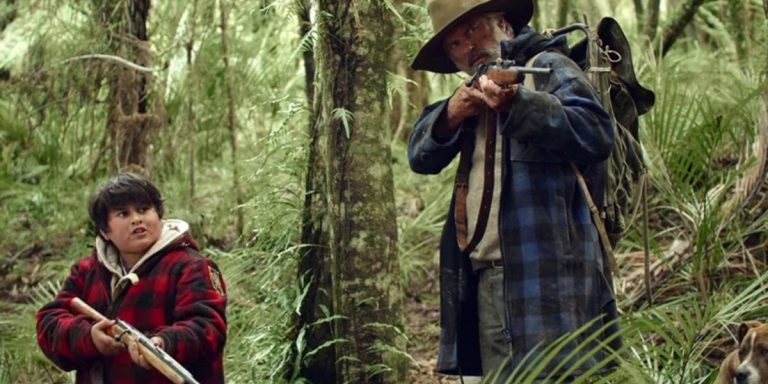
 However, Ricky goes on the run, for reasons I won’t spoil, with the intention of living off the land. The problem is that Ricky isn’t suited for the wilderness and is soon found by Bella’s husband Hector (Sam Neill) — he’s a grizzled, old, cantankerous outdoorsman. After Hector hurts his ankle on the way out of the bush, he and Ricky must camp out for a couple weeks while he heals. In that time, however, a national manhunt — swat teams, helicopters, dogs, and all — ensues after it’s assumed that Hector kidnapped Ricky. The duo goes on the run, which leads to hilarity along the way. It’s the classic mismatched pair setup. Ricky is ill-equipped to live in the wilderness — he eats through his rations within the first hour. Hector, on the other hand, is an experienced outdoorsman. Ricky passes time by writing haikus, while Hector hunts for eels. As the chase goes on longer, the story gets national attention and the two become famous. But more importantly, this road movie set up lets the two discover that once you strip away the constraints of society, you can become something more than you’re destined to be.