Tag: TIFF 2025

  • Crime romance ‘Carolina Caroline’ will steal your heart

    Crime romance ‘Carolina Caroline’ will steal your heart

    TIFF 2025 | ‘Carolina Caroline’ twists the Bonnie and Clyde story for the turn of the century as a couple stages a crime spree across the American south.


    “Carolina Caroline” is a fiery blend of romance and crime that crackles with energy, driven by Samara Weaving and Kyle Gallner’s irresistible chemistry. Set against a ‘70s West Texas backdrop, the film turns small-time cons into a stylish, music-fueled crime spree that builds toward an inevitable crash. Director Adam Carter Rehmeier keeps the thrills high while asking whether the love is real or just another beautiful lie. Sexy, daring, and slyly subversive, it’s a crime romance worth taking for a ride.

    Carolina Caroline premiered at the Toronto International Film Festival.

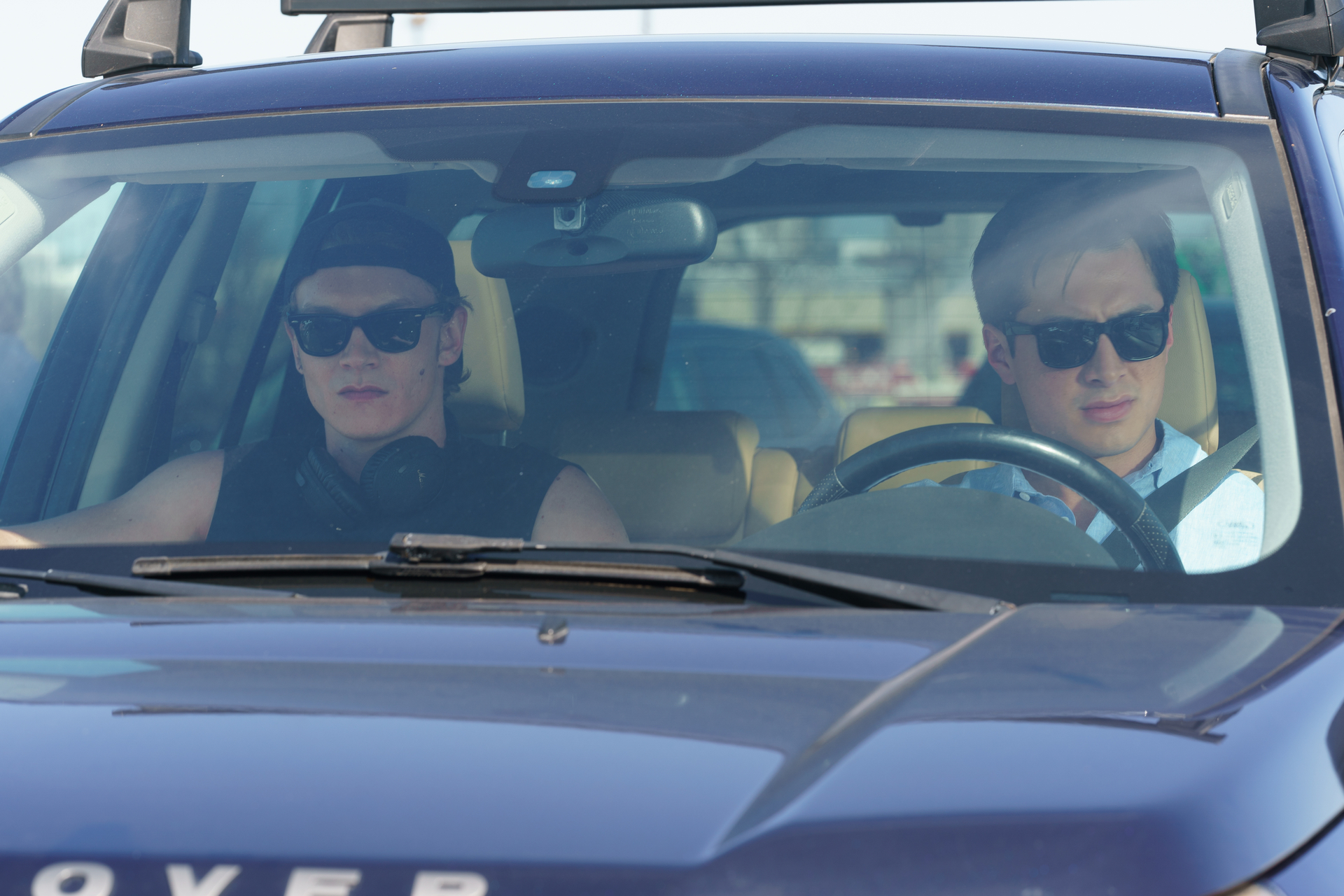
    “Let’s rob the whole world.” When titular Caroline mutters those words in the passenger seat of a hot-wired muscle car your heart skips a beat. It flutters from the romance of it. After all, she and her bank robbing beau Oliver fell in love over the fiery energy and adrenaline of committing a crime. But in the pit of your stomach you know that it can’t last because you’ve seen this story told countless times. You know that this kind of love and passion needs to have its tragic end. Its those expectations that writer-director Adam Carter Rehmeier relies on. Robbery and romance are just a part great American tale at the end of the day.

    Despite the familiar, “Carolina Caroline” constantly feels exciting. It’s like being behind the wheel of a vintage sports car. The rumble and purr of the engine gets your adrenaline going because you know the second you hit the gas there’s no slowing down. There’s a charming rhythm to the way Caroline and Oliver banter from the moment they meet cute over a small-time con he pulls off in the gas station she works at. It’s love at first fraud. Samara Weaving (“Ready or Not“) and Kyle Gallner (“Strange Darling“) ooze with charisma on screen. The 70s West Texas world of the film is built entirely on their backs. Their thick southern drawls, easy charm and instant chemistry immediately transport you.

    Their steamy tryst culminates in a proposition. Oliver asks Caroline for 500 dates. An offer Caroline can’t quickly refuse seeing as she’s never been outside of West Texas. Oliver’s easy cool, like a scruffy 70s James Dean, also isn’t easily refused. Just like his marks for a swindle, he seems to know what Caroline wants before she does. Thus begins a country music-driven romp through a slice of Americana as Oliver teaches Caroline the art of the grift—pickpocketing, hot-wiring and smooth talking—with the same breezy confidence that made Steven Soderbergh’s “Ocean’s Eleven” a modern classic.

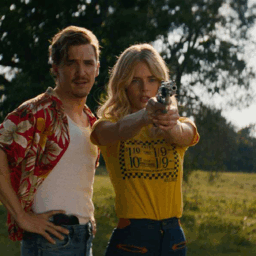
    However, petty theft has its limitations and Caroline and Oliver have a hunger for more just as their desire for each other grows. After all, justifying their actions by saying they’re stealing back from the corporations stealing from them doesn’t exactly work when they’re robbing small town gas stations. So, donning a severe black bob, dark sunglasses and a set of killer outfits, they set their sights on something bigger—the banks. Caroline hatches a series of bank robberies across the South with Oliver as getaway driver. Their debaucherous and sexy crime spree is impossible to resist.

    But the real brilliance of “Carolina Caroline” becomes obvious when it comes careening towards its inevitable conclusion. When you realize that you were the mark. Because if there’s anything more American than robbery, it’s lies. Just as Caroline and Oliver lie to themselves, and each other, they also convince us that this wasn’t a romanticized dream and that one day they’d drive off into the sunset having done justice. There aren’t any easy answers as to what is real and what is just a convincing lie they are telling themselves—or we are telling ourselves.

    Rehmeimer isn’t interested in guiding us to any sort of conclusions about the characters either. Their motivations are mostly kept close to their chests other than a scintillating one scene barn-burner performance from Kyra Sedgwick that pushes Caroline even further into her debauched decisions. Instead he convinces us of their love story and then asks the same questions Caroline asks herself, “are we good people doing bad things?” Instead of answering that question, “Carolina Caroline” asks us if the love was real or just another way to avoid reality. And what is more American than that?


    ADVERTISEMENT


    More movies, less problems


    Hey! I’m Karl. You can find me on Twitter and Letterboxd. I’m also a Tomatometer-approved critic.

    💌 Sign up for our weekly email newsletter with movie recommendations available to stream.


    ADVERTISEMENT


  • ‘Hamnet’ transforms grief into art | analysis and review

    ‘Hamnet’ transforms grief into art | analysis and review

    TIFF 2025 | “Hamnet” follows a couple as they grow into a family only to suffer a devastating loss that forces them to confront the question of how to move on

    “Hamnet” is devastating, but what makes it so powerful is that it is about the living—and what keeps us living. It’s our memories. It’s our art. It’s our stories. It’s our culture. They are why as we leave some behind we persist through grief. Through a vivid dreamlike vision, Chloe Zhao tackles the mysticism and lyricism of a family confronting loss with power and empthy. A cinematic masterpiece.

    Hamnet is playing at the 2025 Toronto International Film Festival.

    “Hamnet” may be about a death, but what makes it so powerful is that it is about the living—and what keeps us living. In the face of a devastating loss, two parents have to find a way to go on. Writer-director Chloe Zhao, adapting Maggie O’Farrell’s novel of the same name, has an answer for them. It’s our memories. It’s our art. It’s our stories. It’s our culture. It is these pieces of our history and humanity that push us to persist through the pain of grief as we leave some behind. Not in spite of the loss, but in honor of it. To mourn is to remember. And to remember is to love. And “Hamnet” will be remembered as one of the best movies of the decade.


    ADVERTISEMENT


    Adapting the novel was no easy task. While the story is simple, there’s a quiet mysticism and lyricism that ebbs and flows to create a tapestry of the family at its center. Not to mention, the Shakespeare of it all. It’s an atmosphere not easily captured on film. Zhao and cinematographer Łukasz Żal allow each frame to speak for the characters. They allow each image to carry all the interiority and emotionality of the characters. When William Shakespeare (Paul Mescal, “Aftersun“) and Agnes (Jessie Buckley, “I’m Thinking of Ending Things“) meet, it is like a force is driving them together. With few words and gentle touches, the magnitude of their connection is understood and will eventually drive them to marry.

    There is a dreamlike quality to the early scenes of “Hamnet.” As we watch William and Agnes grow up out of their families—they both never quite fit in with them anyway—and into their own just the two of them, it’s like we’re watching a prophecy fulfilled in front of us. And in a way, Agnes, who we learn is rumored to be the daughter of a forest witch, has a certainty to her life through an ability to see a person’s true nature (and future) by holding a person’s hand between the thumb and index finger.

    Zhao allows the story to unfold without urgency. Vivid visuals and crisp sound carry us through William and Agnes’s lives as they move into their own house, get married, and have children—Susanna and twins Judith and Hamnet (Jacobi Jupe). Warmth and joy are emanating from the screen, especially thanks to Buckley’s performance, which makes Agnes feel like a character with a past and future and Mescal who allows William’s interior genius to show on the surface. All is well until it isn’t.


    ADVERTISEMENT


    Like its namesake play, “Hamnet” is a tragedy. However, because the movie takes its time building this family before our eyes, the death doesn’t simply feel like a piece of a story. It feels like a tragedy happening to us, like we are being robbed of our time with these people. Their loss is our loss. And like all grief, the rest plays in fits and starts as William disappears and Agnes performs the machinations of everyday life, filled with sadness, anger, and questioning. But that isn’t the story’s main focus.

    Instead, it strives to give the family and us, the audience, catharsis. In its stunning final act, we watch the story of “Hamnet” transform into the tale we’ve known for centuries. Except now, we have its intention. We can see the grief, anger, and questioning that we watched this family suffer. But we can also see the joy and time that they lost being reclaimed and enshrined in a story that we’re still telling today. That is the magnificent part of “Hamnet” and what makes it a masterpiece. It is cinema as therapy. It holds up a mirror to the audience and asks, “to be or not to be.” And the answer is clear.


    ADVERTISEMENT


    More movies, less problems


    Hey! I’m Karl. You can find me on Twitter and Letterboxd. I’m also a Tomatometer-approved critic.

    💌 Sign up for our weekly email newsletter with movie recommendations available to stream.


    ADVERTISEMENT


  • ‘Obsession’ is an instant horror classic

    ‘Obsession’ is an instant horror classic

    TIFF 2025 | Bear gets more than he bargained for when his wish that his long-time crush falls in love with him goes awry in “Obsession”

    With every eerie creep and dread-soaked beat, Obsession feels like a classic we’ve been watching for years—less derivative than timeless. It’s unquestionably a horror classic in the making.

    “Him” is in theaters September 19th.

    “Be careful what you wish for” has been a cornerstone of storytelling for ages. From genies to witches to mysterious neon-green serums that birth younger versions of ourselves, we’ve seen countless victims of desire fall prey to wanting more without sacrifice. Often, that premise has paired neatly with body horror—think “The Picture of Dorian Gray” or, more recently, “The Substance“. Both turn desire into a weapon against us. Writer-director Curry Barker taps into that tradition for his debut feature Obsession, delivering a film steeped in familiar tropes yet stamped with a singular vision. Remarkably, with every eerie creep and dread-soaked beat, Obsession feels like a classic we’ve been watching for years—less derivative than timeless. It’s unquestionably a horror classic in the making.


    ADVERTISEMENT


    The setup is simple: Bear (Michael Johnston), a quintessential nice guy with little game, pines for his childhood friend and co-worker Nikki (Inde Navarrette). Despite warnings from his best friend Ian (Cooper Tomlinson), he plans to confess his feelings with a gift. At a crystal shop, he finds a red box straight out of a 1960s infomercial. The “One Wish Willow” promises its owner a single granted wish if they break the branch inside. When Bear chickens out after driving Nikki home, frustration gets the better of him. He wishes for Nikki to love him more than anything in the world—and breaks the branch. Instantly, Nikki appears on her porch, staring. She looks like Nikki, but instead of playful sarcasm, her voice drips with desperate affection. Bear is hooked.

    Their whirlwind “romance” escalates fast. Nikki practically moves in overnight, smothering him with affection, buying gifts, and clinging to his every move. Friends, especially Sarah (Megan Lawless), are baffled—after all, she recalls Nikki told her she saw Bear as a little brother. Bear ignores the comments. He finally got what he wanted. But of course, you know how the story goes: be careful what you wish for.

    The only red flag, if you will, is Nikki sometimes snaps into another persona—confused, screaming, as if her soul were in torment. She stares at Bear from the dark corners of his bedroom, hyperventilates at the slightest criticism, and, oh, may have cooked his cat into a sandwich. At least she leaves him a cute love note.


    ADVERTISEMENT


    The brand of horror that Barker presents isn’t necessarily new, but he employs it brilliantly. Through shadow and light, Nikki becomes a specter (or demon) haunting Bear’s apartment, creating an atmosphere of constant dread. It’s like a haunted house and the ghost is your girlfriend. Her unnatural, unpredictable movements recall Japanese horror like “The Grudge” and “Pulse“, or possession films like “The Exorcist“, where the terror lies in losing control of your body. Subtle hints suggest what happened to the real Nikki, but “Obsession” wisely never explains everything, making the story all the more horrifying.

    Johnston’s endearing performance has an easy charm that would’ve played perfectly in the romantic comedy. Alas, “Obsession” isn’t one. You feel for Bear. And you’re rooting for him. It makes the horror to come all the more tragic. As Bear finally admits that something may be wrong with Nikki, he starts to distance himself from her. She doesn’t take it well. As she turns from his dream girl to his worst nightmare, a path of blood and destruction follows that will have you glued to your seat and gripping the arm rest.


    ADVERTISEMENT


    Obsession feels like part of a new wave of horror. Alongside filmmakers like Zach Cregger (Barbarian, Weapons) and the Philippou brothers (Talk to Me), Barker leaves “prestige horror” behind in favor of something meaner, darker, and more cynical—where the consequences are deserved, brutal, and terrifying in their simplicity: you wanted too much. It’s horror for the post-pandemic age, where nothing is scarier than our own choices. At the same time, it’s devilishly entertaining, laced with dark comedy and kinetic filmmaking that make it endlessly rewatchable. Obsession feels like the kind of classic horror you revisit every October—that you fall in love with every moment of. Guess you could say we’re…


    ADVERTISEMENT


    More movies, less problems


    Hey! I’m Karl. You can find me on Twitter and Letterboxd. I’m also a Tomatometer-approved critic.

    💌 Sign up for our weekly email newsletter with movie recommendations available to stream.


    ADVERTISEMENT

  • Shakespeare’s sad boy ‘Hamlet’ gets a thrilling modern reinvention

    Shakespeare’s sad boy ‘Hamlet’ gets a thrilling modern reinvention

    TIFF 2025 | ‘Hamlet’ gets a modern retelling that trades Denmark for London’s high society, infused with Hindu culture and led by Oscar winner Riz Ahmed.

    Aneil Karia’s “Hamlet” fuses Shakespeare’s lyrical verse with Hindu culture and a majority South Asian cast, yielding a fresh, electric retelling. Riz Ahmed commands the screen, from a ferocious BMW-set soliloquy to a reimagined wedding sequence that spirals into chaos. Though shifting the story to corporate intrigue limits its scope and sidelines subplots, Karia’s visceral, emotive filmmaking and Ahmed’s powerhouse performance anchor the film. Not every reinvention lands, but its clarity of vision makes it undeniably compelling.

    Hamlet is playing at the 2025 Toronto International Film Festival.

    Shakespeare’s rich, lyrical language delivered by a majority South Asian cast already breathes fresh energy into this modern retelling of “Hamlet”, giving it a mesmerizing, electric charge. Yet it isn’t simply the infusion of Hindu culture that makes Aneil Karia’s adaptation so compelling. Its strength lies in his bold reimagining of the play’s most iconic moments, rendered with filmmaking that is visceral, muscular, and deeply emotive. These choices elevate both the performances, particularly Oscar winner Riz Ahmed (“Sound of Metal“) in the title role, and, at times, the story itself, pushing them beyond their already formidable power.

    A gripping reinvented wedding

    It is best displayed when the movie reaches its peak in a stunning sequence where “The Murder of Gonzago” scene from the play is reimagined as a choreographed performance at Claudius (Art Malik) and Gertrude’s (Sheeba Chaddha giving a gripping performance) wedding. Hamlet transforms the festivities into an accusation, using the stage to expose what he believes is his uncle’s crime. The dancers begin with a joyous traditional Indian routine, vibrant and full of life. Then, at Hamlet’s direction, the celebration curdles. Movements grow jagged and violent as the performers tear and claw at the main dancer representing the king. The murder is pantomimed in escalating frenzy, while the lighting and editing spiral into chaos, building toward a breathless climax that leaves the wedding suffocated in silence.

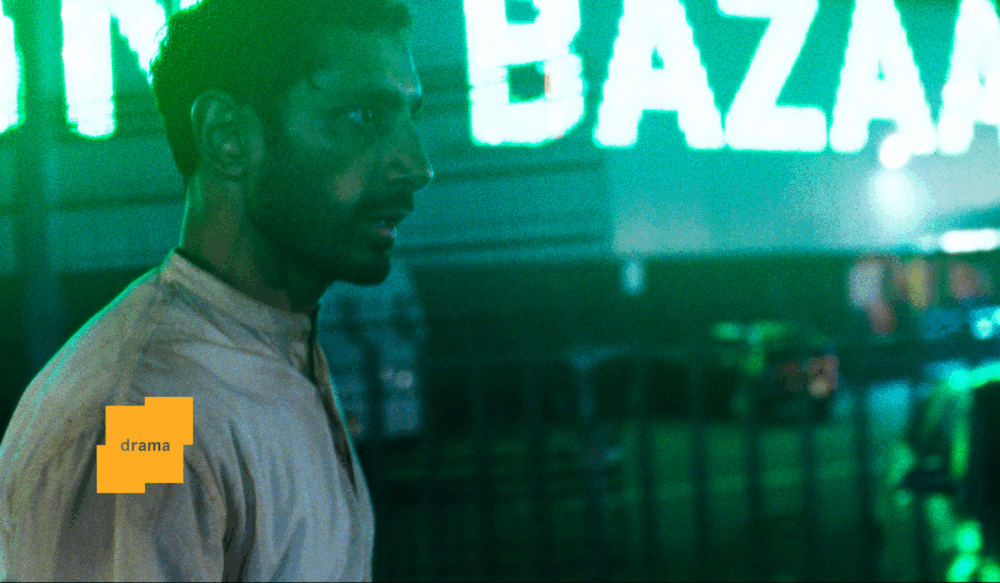
    Ahmed’s turn in the title role carries the same breathtaking force. Karia stages the “to be or not to be” soliloquy inside a speeding BMW, as Hamlet barrels through London’s midnight streets in a fit of road rage. Ahmed’s face grips the screen, taut with intensity, as he unfurls Shakespeare’s verse in a rhythm that lands with the precision of a freestyle rap. When Hamlet releases the wheel and lets the car drift into oncoming traffic, the monologue explodes into pure cinema: headlights slash across the frame, horns blare, and vehicles swerve in a symphony of chaos. Ahmed and Karia channel fury rather than melancholy, as the character is iconically known for, reframing Hamlet as a man consumed by rage.

    A scaled down “Hamlet”

    Not every reinvention strikes the same chord. Shifting the action from Denmark to the interal politics of a family-run conglomerate narrows the scope, trading Shakespeare’s sense of epic tragedy for corporate intrigue. The film hints at social commentary in its depiction of the company’s gentrification schemes, but these threads never fully develop, in part because so much dialogue is lifted wholesale from the play. The focus instead tightens on Hamlet’s grief, amplifying Ahmed’s towering performance but diminishing other arcs—his fractured bond with Ophelia (a luminous Morfydd Clark), or the political maneuverings of Polonius (an always terrific Timothy Spall) and his fiery son Laertes (a delightful Joe Alwyn). The result is a portrait of Hamlet that burns brilliantly at the center, even as the world around him flickers at the edges.

    Some may argue that Karia never fully justifies why this version of Hamlet needs to exist. And to a degree, the film doesn’t wring every nuance from Shakespeare’s text. Yet the sheer force of weaving Hindu culture and South Asian performers into the fabric of those iconic lines feels like reason enough—even if this isn’t the brooding “sad boy” Hamlet audiences have come to expect. The vision remains clear and intentional, even when the storytelling falters. “To be or not to be”—Karia responds with a defiant answer: “I choose to be myself.


    ADVERTISEMENT


    More movies, less problems


    Hey! I’m Karl. You can find me on Twitter and Letterboxd. I’m also a Tomatometer-approved critic.

    💌 Sign up for our weekly email newsletter with movie recommendations available to stream.


    ADVERTISEMENT