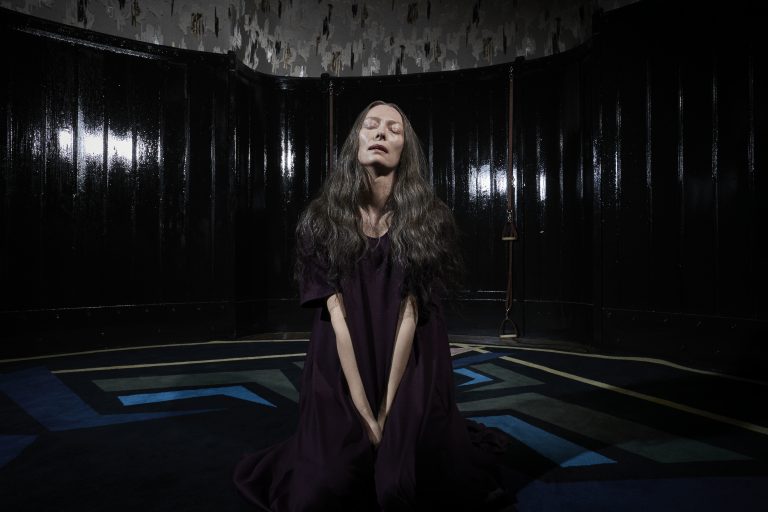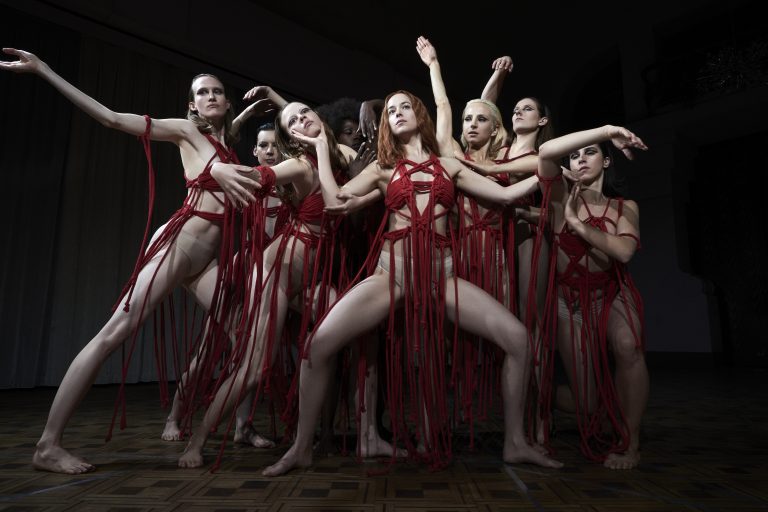
Tilda Swinton plays an academic who frees a Djinn (Idris Elba) from centuries-long imprisonment and is granted three wishes in Three Thousand Years of Longing.


George Miller has never made the same movie twice in his storied career and Three Thousand Years of Longing is no exception. The movie is a visual feast as it hops across millenniums to tell the story of how a Djinn (Idris Elba) found his way into the hands of a lonely academic (Tilda Swinton). Elba’s grainy baritone voice over the lush visuals that Miller renders with the same imaginative spectacle that he did Fury Road draws you in and underlines the movie’s power of storytelling theme. However, whenever the movie trails from that thread and explores that potential romance between Swinton and Elba’s characters the spell is broken. Stories have power, but stories are only as good as their ending. Three Thousand Years of Longing needed one more wish.
Three Thousand Years of Longing is about a genie—or more specifically, a Djinn—and his worst enemy: an intellectual. Many of the myths we know about the concept of a genie tell us that they’re tricksters looking to leave their hapless “master” worse off than before. In that way, they’re cautionary tales. Interestingly, the Djinn at the center of George Miller’s newest film—played by Idris Elba—does the opposite. More than anything, he wants Alithea (Tilda Swinton), the scholar traveling through Istanbul who frees him, to make the right wishes. Still, this is a cautionary tale. One of love and loneliness rather than greed.
ADVERTISEMENT
It’s been seven years since Australian director Miller premiered Mad Max: Fury Road at the Cannes Film Festival and reminded us why he is one of the greatest directors working today, especially in the fantasy genre. Naturally, his return to the festival was one of the most anticipated movie premieres of the year—mine included. With a blank check from the incredible critical and awards success of Fury Road, I was anticipating nothing but the most impressive world-building wrapped in a visual spectacle that has to be seen to believe. Instead, Three Thousand Years of Longing left me yearning for much more like the characters at its center.
Alithea, a dedicated and eccentric scholar, journies to foreign lands to speak about her theories of how fantastical stories in our history have been rendered obsolete by science and now relegated to the pages of comic books. However, science can’t quite explain away the visions of ghosts of history haunt her including one of King Solomon who seems a bit angry at Alithea’s presentation at a conference. After exploring Istanbul with a colleague, she comes across an odd glass bottle. Warped, lined with a swirling blue design, and, of course, sealed shut.
ADVERTISEMENT
When she returns to her hotel room, the bespeckled Alithea inadvertently opens the bottle while cleaning it with her electric toothbrush. A thick dark mist envelopes her hotel room to reveal an enormous Djinn, a ghostlike creature from Arabian mythology but is used interchangeably with a genie in the movie. Elba’s hulking figure and striking face coupled with prosthetic pointed ears and yellow eyes make for a striking effect. He reveals to Alithea that he’s been imprisoned for hundreds of years and that now he owes her three wishes for setting him free.
Alithea, the ever-analyzing historian that she is knows from mythology that these wishes rarely turn out well and refuses. Djinn, sent into a frenzy, cautions that if she does not make her wishes nothing good could come of it recalling how it is what caused his imprisonment for the second time. He reveals to Alithea that he has been imprisoned three times over the past three thousand years.
So begins Three Thousand Years of Longing’s ode to storytelling as Djinn recounts in poetically-written narration his journey through millennia. From the Queen of Sheba (Aamito Lagum) to a poor concubine during the age of the Ottoman Empire, Miller brings each encounter to life as vivid magical landscapes that quite literally shimmer on the screen. However, we’re not given time to luxuriate in each world. This is a story that Djinn is telling us. As with all orally passed down stories, there are gaps as it jumps from moment to moment rarely letting the emotions of the events to seep through. It’s like there’s a barrier between the storyteller and the audience—it’s why Three Thousand Years often feels cold.
ADVERTISEMENT
Based on B.S. Ayatt’s short story The Djinn in the Nightingale’s Eye, Three Thousand Years of Longing feels like a blank check movie in that most studios wouldn’t immediately greenlight a $60 million fantasy romance told mostly in voiced-over flashbacks. You’d expect an epic. However, the movie feels slight because of its structure—especially compared to Fury Road. Though, that slightness is a benefit to the second half of the movie, which shifts—somewhat abruptly—from epic fantasy to a quiet romance.
There are two key ingredients to make a romance work: chemistry and overcoming adversity. Unfortunately, neither work here. Not to the fault of Elba or Swinton, who as always give masterful performances. Particularly Elba who has to literally portray three thousand years of longing and trauma—something he carries on his face throughout the movie. The movie structurally doesn’t give us the chance to fall for the characters as they fall for each other as we switch back and forth between times and places. We don’t have a reason to root for Djinn and Alithea’s love story by the time the movie focuses in on it. It’s a shame since the part of the story is what would have it work. Despite Djinn’s warnings and Alithea’s logic, they still fall into the same traps that Djinn has seen for millennia. It implies that matters of the heart are often clouded because it’s our nature as humans. However, Miller is never able to consummate that theme and the story.
There’s magic to be had in Three Thousand Years of Longing. And if you know Miller’s work—Mad Max, Babe, Happy Feet, The Witches of Eastwick—you know that you’re going to see and feel it. The world he builds is nothing less than spectacle. But behind the sparkling vivid imagery is emptiness. Ironically, the movie leaves us longing for more. More character, more emotion, more humanity. What made Fury Road such a monumental achievement was its ability to consummate a genre story with deeply complex human themes. Three Thousand Years frankly fails on both accounts. Well, here’s hoping for the Furiosa movie.
ADVERTISEMENT
More movies, less problems
- Cannes 2024: Three great movies in Un Certain Regard

- “Heated Rivarly” episode 6 recap and review: “The Cottage”

- “Heated Rivalry” episode 3 review: “Hunter”

Hey! I’m Karl. You can find me on Twitter and Letterboxd. I’m also a Tomatometer-approved critic.
💌 Sign up for our weekly email newsletter with movie recommendations available to stream.
ADVERTISEMENT