Tag: Timothée Chalamet

  • ‘Marty Supreme’ is messy, mad, and mesmerizing

    ‘Marty Supreme’ is messy, mad, and mesmerizing

    Timothée Chalamet stars as a would-be table tennis star tears through New York City in the pursuit of greatness—and some cash—in “Marty Supreme”

    “Marty Supreme” is basically a comedy of errors, and series of unfortunate events, that pits would-be table tennis star Marty against his greatest enemy—failure. And for 149 glorious meteoric minutes, we want nothing more than for Marty to keep going. With a career-best performance by Timothée Chalamet, “Marty Supreme” is messy and maddening, but impossible to turn away from.

    “Marty Supreme” is in theaters on Christmas Day.

    After a series of setbacks that leaves a trail of black eyes, smashed cars, and orange ping pong balls, Marty Mauser (Timothée Chalamet) is told by a potential way out, “there are no second chances in life.” To which he responds with an emphatic, “why not?” That’s the attitude in which Marty walks (or perhaps “trounces” is more suitable) through life. He talks a mile a minute, lies like his life depends on it (because sometimes it does) and makes decisions like consequences don’t exist. And for 149 glorious meteoric minutes, we want nothing more than for Marty to keep going. Even if we can’t decide if we want to cheer, cry or hit him upside the head, there’s something intoxicating about the New York playground writer-director Josh Safdie allows Marty to play in.


    ADVERTISEMENT


    We get to see this version of 1950s post-World War II New York the way Marty sees it, full of opportunity, danger and people that simply don’t understand if you want something you just have to try harder. Chalamet, sporting wire-framed glasses, greasy hair and even greasier mustache, is devilishly charming as we watch him float through the city trying to shake down his uncle for cash to get to the table tennis championships in London (armed robbery is the solution, of course). When he gets there, we get to understand what drives him: greatness. He doesn’t even say he’s competing in a tournament, which assembles the best table tennis players in the world, he says he’s winning it. Like this is a reality in his mind. The same reality that drives him to rack up a bill in the thousands at the Ritz Carlton, even after he’s told that treatment is reserved for the star players (he is one, in his mind).

    After watching him compete through several thrilling rounds of table tennis, which Safdie captures with sweat-dripping intensity, he makes it to the final against Japanese phenom Endo (Koto Kawaguchi. Despite his hard-hitting and running and diving, Marty is no match for Endo’s innovative technique. Marty is enraged, calling the win a sham and accusing him of cheating. There’s no way he lost (again, at least in his mind). It sets him on a course for revenge, if only he can gather the money to get to the next championship in Japan.

    “Marty Supreme” is basically a comedy of errors, and series of unfortunate events, that pits Marty against his greatest enemy—failure. As he tears through the city weaponizing his signature charm to try to gather the money for his flight, we see the limits of his own self-deluded confidence. From the Lower East Side to Chelsea to Jersey, Marty leaves a messy path as he storms through. We meet a cast of characters along the way including acclaimed Marty’s old gambling buddy Wally (a hilarious Tyler Okonma aka Tyler, The Creator), his mischievous mistress Rachel (a fabulous Odessa A’zion), and silent movie actress Kay Stone (Gwyneth Paltrow) whose husband Milton (Kevin O’Leary of “Shark Tank”  giving a surprisingly delightful performance) could hold the key to Marty’s success.


    ADVERTISEMENT


    Like his previous movies “Good Time” and Uncut Gems“, Safdie balances the dark comedy and devastating reality of male hubris to a dizzying effect that is not just hypnotic, but damn entertaining. Marty’s inability to get any part of his plan right is satisfying for an audience that knows exactly who this man is. A man who believes that he is owed success and will do anything to obtain it. Chalamet is so convincing as Marty that it feels like he truly believes his own lies as he switches effortlessly between a charm offensive, machismo, or straight-up violence to get what he wants. It’s masterful and sinfully entertaining. 

    However, it is to an end. While “Marty Supreme” could have easily been just another entry in the dirtbag scammer movie, Safdie casts it against a world in flux where there’s nothing but opportunity whether for a Jewish girl from the Lower East Side or a Japanese table tennis player with his country on his shoulder. It is about dreams and who is allowed to chase them. It’s where those opposing forces of hoping Marty will stop ruining his own life and urging him to go on come from. While it is all fun and games (I mean, it’s literally ping pong), it’s also the stuff humanity is made of.

    The movie may not be perfect. “Marty Supreme” is messy and maddening, but isn’t life?

  • Dune: Part Two is an epic science fiction masterpiece | review

    Dune: Part Two is an epic science fiction masterpiece | review

    Dune: Part Two finds would-be messiah Paul Atreides on a revenge mission that may take him to the dark side of Arrakis

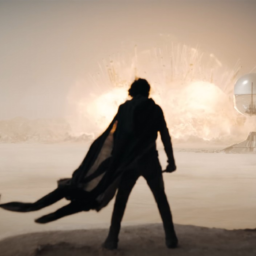
    Dune: Part Two is a visceral masterpiece and one of the best science fiction movies ever made. Besides delivering a visually impressive assault on all the senses, it’s also a riveting political thriller and character study that struggles with morality, religion and power. Director Denis Villeneuve guides every facet of the movie—costumes, production design, visual effects, sound—to the very top of its craft.

    Dune: Part Two is a The Empire Strikes Back or The Return of the King-level event. A science fiction classic in the making that’ll inspire the next generation of science fiction and fantasy films. Denis Villeneuve continues his unblemished filmography.

    Dune: Part Two is in theaters March 1.

    From the opening throngs of Hans Zimmer‘s score and saturated rust-colored first shot of the desert planet Arrakis, it’s impossible not to feel immediately transported. Like you were shot out of a rocket straight into a sand dune—ironic because we first encounter our protagonist (?) buried hiding in the sand. That’s partially thanks to director Denis Villeneuve‘s skillful world-building in the first half of the story that brings a detailed view of the future set out in Frank Herbert’s novel of the same name. But what sets Dune: Part Two apart is its absolute audacity of vision that often has your heart skipping a beat.


    ADVERTISEMENT


    Like the moment when a group of Harkonnen soldiers leap and gracefully float from a sand dune to a rocky plateau to escape an incoming sandworm. Villeneuve makes the moment one of effortless wonder. Like what is happening in front of us is completely normal and the most incredible feat we’ve ever seen before us—partially because it is.

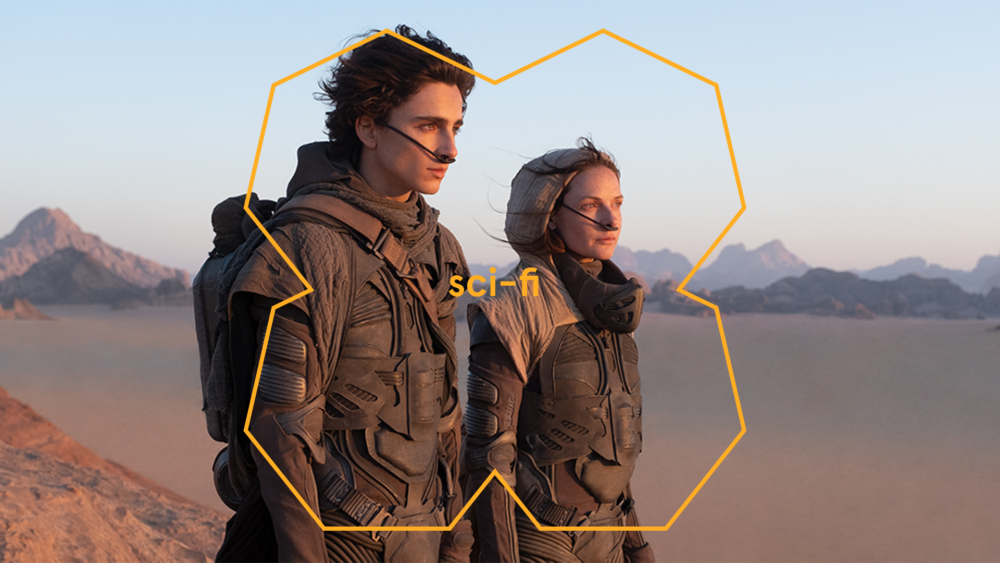
    There are countless moments like that throughout Dune: Part Two. There is the breathless battle sequence where suspected messiah Paul Atreides (Timothée Chalamet) and Chani (Zendaya) along with the desert-born Freman people take down a Harkonnen-held spice mining operation or Paul’s jaw-dropping and anxiety-inducing wormriding rite of passage that involves… well, riding a giant sandworm. Both sequences feel like an assault on every one of your senses. It’s like you can feel the grains of sand whipping by your face when an army of Fremen-ridden sandworms blast through a sandstorm to the apparently inaccessible southern hemisphere of the planet.


    ADVERTISEMENT


    It’s almost impossible not to overstate Villeneuve’s absolute cinematic achievement. It is perhaps the most visually impressive movie I’ve ever seen—a visual and auditory spectacle that is at times difficult to comprehend in the same way that I imagine audiences felt when seeing Star Wars or 2001: A Space Odyssey for the first time.

    And just when you didn’t think it could surprise you any more, it introduces you to the black-and-white Harkonnen world as it explore the sadistic but intoxicating villain Feyd-Rautha Harkonnen (Austin Butler is a terrifying scene stealer in a role that proves that Elvis wasn’t a fluke).

    Admittedly, I’ve never read Frank Herbert’s book nor seen David Lynch’s much-maligned 1984 adaptation. And after watching the first part of Villeneuve’s adaptation I was confused why this story had to be retold. The story of Paul, an aristocracy-born and bred white man, tapped to lead an oppressed people against his own enemies wasn’t only formulaic but reductive. Hadn’t we advanced past the white savior narrative? So when Dune: Part Two takes a turn to the morally grey area I wasn’t just enthralled, I was impressed.


    ADVERTISEMENT


    Throughout the movie, Paul is resistant to the label messiah. Not because of some internal imposter syndrome, but because he is prescient of the potential outcome if he embraces the label. That isn’t a new concept. What does feel fresh is the social and political implications of a messiah—or at the very least a leader that people see as the only way out. Dune: Part Two tackles the moral-quandary from many different angles.

    There’s the one of Paul who sees it as both a strategic blessing in his mission of revenge against the people that betrayed his family—mainly the Emperor (Christopher Walken) and Vladimir Harkonnen (Stellan Skarsgård)—and a curse that would betray his closest confidant Chani. There’s his mother Lady Jessica (Rebecca Ferguson who continues her enthralling complex performance) who works on behalf of the Bene Gesserit, a group that aligns itself with those that could best help their pursuit of power. There’s the aristocratic elite, the Emperor and his daughter Princess Irulan (Florence Pugh), who are playing for their own relentless pursuit. And then there’s the Fremen, split into two groups. One that is seeing the messiah as their way out of struggle—particularly Stilgar (Javier Bardem)—and the other that see him as a threat to their pursuit of freedom.

    In the middle is Chani, who wants to believe in the good she sees in Paul but worries that her infatuation is clouding her better judgement for her people. Zendaya has for years been bubbling to the surface as one of the great new talents of her generation. Dune: Part Two cements her movie star status.


    ADVERTISEMENT


    With interwoven plots that involve a meddling mastermind fetus, intergenerational feuds and a social and political game of colonization and power, it could have been easy for Dune: Part Two to buckle under the weight of its ambitions—it’s the reason Lynch’s movie and John Harrison’s miniseries adaptations failed. Instead, Villenueve finds a balance between engrossing political thriller and epic science fiction action that grabs for heart and mind and doesn’t let up through its entire surprisingly breezy runtime.

    Dune: Part Two in many ways is the classic blockbuster spectacle with its intense battle sequences, ever unfolding world and characters that are held up as heroes. But the way it subverts the hero’s journey, in a way that angered many in The Last Jedi, is what makes it a classic-in-the-making that feels like it has the gravitas of The Empire Strikes Back or The Return of the King. Like those movies, I could see Dune: Part Two inspiring the next generation of great science fiction and fantasy stories. It is that singular. It is that impressive. It is that awe-inspiring.

    Dune: Part Two is a once-in-a-generation cinematic event that you do not want to miss. Will you follow the call?


    ADVERTISEMENT


    More movies, less problems


    Hey! I’m Karl. You can find me on Twitter and Letterboxd. I’m also a Tomatometer-approved critic.

    💌 Sign up for our weekly email newsletter with movie recommendations available to stream.


    ADVERTISEMENT


  • ‘Dune’ is a spectacle that gets lost in a sandstorm | TIFF movie review

    ‘Dune’ is a spectacle that gets lost in a sandstorm | TIFF movie review

    House Atreides is tasked with controlling the mining operation on the dangerous desert planet of Dune, but what they don’t know is political intrigue is afoot

    On the surface, Dune is ambitious and thrilling. However, it feels like a good movie that flirts with greatness but never quite gets there. Though it’s stunningly made and designed, the classic story just doesn’t hold the same weight as it did when it was first released and the decision to only release half of it doesn’t help.

    Why did Blade Runner 2049 work when it really shouldn’t have? When it was announced that Denis Villeneuve would direct the sequel to Blade Runner it had already toiled in development hell for nearly two decades, usually the kiss of death even if the film eventually does see the light of day. However, Villeneuve delivered a singular meditative vision that didn’t set out to remake the original, but rather expand on the world that was already there and dive even further into its thematic depths. That’s what Villeneuve had to do with Dune, especially after David Lynch’s much-maligned 1984 adaptation. And while he delivered on the world-building and action, underneath feels like a lack of a beating heart.

    Erring closely to Frank Herbert’s 1965 novel, Dune follows the members of House Atreides. Duke Leto Atreides (Oscar Isaac) is tasked with stewarding the dangerous desert planet Arrakis, which is used by the Empire for its endless supply of “spice,” a powerful substance that has supernatural effects on humans. He, along with his concubine Lady Jessica (Rebecca Ferguson) and son Paul (Timothée Chalamet), journeys to the planet to begin the difficult work controlling the spice mining operation. However, political intrigue is afoot as Vladimir (an unrecognizable Stellan Skarsgård), Baron of House Harkonnen, is plotting the downfall of House Atreides.


    ADVERTISEMENT


    The world, captured gloriously by cinematographer Greig Fraser (Lion, Zero Dark Thirty), is built with terrific detail that makes it so fun to explore. The world is littered with fun details in the costumes (Ferguson’s Lady Jessica is a fashion icon), ships (dragonfly spaceships!), and culture. The mythology feels rich and deep. Like there are endless layers to parse through. 

    There is a gaggle of names and places to keep in order, but Villeneuve’s deliberate pacing makes it easy to keep track of the story — almost too easy. The story is quite simple, for better and worse. Better because heavy exposition tends to bog down sci-fi. On the other hand, he exposes how thinly built the plot of Dune is.

    Though Dune was heavily acclaimed at the time of its release and still stands as one of the most influential novels ever written, nearly six decades later we’ve seen countless iterations of the “chosen one” storyline that is at its core — Star Wars, The Terminator, The Matrix, even Harry Potter. This undercuts the exceptional world-building that Villeneuve accomplishes by giving us a story that frankly fails to take full advantage of what the world has to offer. 

    💌 Sign up for our weekly email newsletter with movie recommendations available to stream.


    ADVERTISEMENT


    ADVERTISEMENT


    And the main part of that failure is Paul himself. The movie hinges on our desire for his success and the success of his people. And while yes, it’s easy enough to understand that House Atreides and the Fremen are good and House Harkonnen is bad, we’re never shown in earnest why we should root for them. We’re simply told.

    On the surface, Dune is ambitious and thrilling. The few action set-pieces are tight and suspenseful as are the scenes of pure dramatic heft. In particular, many of the scenes between Ferguson’s Lady Jessica and Chalamet’s Paul start to find the humanistic quality that the rest of the film is missing. In one scene, Jessica and Paul use their shared knowledge of hand signs and telepathic powers to take down a group of soldiers. It’s the kind of plot and character-driven action that made Blade Runner 2049 so successful. However, in Dune it feels like it slips away like sand through your hands as soon as it is over because it’s difficult to muster up a connection to any of the characters. 

    Dune, or Dune Part 1 as the title card puts it, feels like half of a movie. Unlike all the “chosen one” films I listed above, it can’t stand on its own. Even the introduction of the Fremen people (led by Zendaya and Javier Bardem) feels cut short. There is a lot of story to get through, but the decision to split the film may have stretched the story to its absolute limit. I don’t mean to sound overly negative. Dune is a good movie that flirts with greatness but just never quite gets there — much like the chosen one. But perhaps, as the story goes, it’ll get there in the end.


    ADVERTISEMENT


    ADVERTISEMENT


    More movies, less problems


    Hey! I’m Karl. You can find me on Twitter and Letterboxd. I’m also a Tomatometer-approved critic.

    💌 Sign up for our weekly email newsletter with movie recommendations available to stream.


    ADVERTISEMENT


    💌 Sign up for our weekly email newsletter with movie recommendations available to stream.


    ADVERTISEMENT


  • ‘Beautiful Boy’ review — Timothée Chalamet shines in this faulty addiction drama

    ‘Beautiful Boy’ review — Timothée Chalamet shines in this faulty addiction drama

    Beautiful Boy has a story worth telling, but the way it’s told doesn’t do justice to its subjects as it avoids the real pain of addiction.

    30-second review: Beautiful Boy has an incredible true story worth telling at its center, but the way director Felix Van Groeningen presents that story zaps any impact that it could have by opting for style over substance. It’s a classic case of telling instead of showing. The movie tells us that addiction takes a toll on both the addict and their loved ones and that it’s a cycle, but it doesn’t show us that. Instead, it focuses on fleeting emotional moments.

    Timothée Chalamet is terrific as Nic, the drug-addict son at the center of the story. The movie works best when it focuses in on him and his journey. But, the movie regularly flinches before it gets to the hard truths. That’s the biggest disservice it does to the story.

    Where to watch Beautiful Boy: Streaming on Prime Video.

    From its opening moments, it’s clear that Beautiful Boy is going to be one of those tearjerker overwrought emotional dramas. Whether it’s a successful one could take time to parse out—yes, there are successful ones. However, it’s apparent from the cold open, frequent time jumping, and aggressive music cues that Beautiful Boy is going to be a trying experience.

    That’s not to say the true story of father and son pair David (Steve Carell) and Nic Sheff (Timothée Chalamet) working through the latter’s addiction isn’t worth telling. However, director Felix Van Groeningen‘s interpretation of the material strips out the actual emotion from the story and replaces it with something that feels artificial and cold. Emotional moments are often dictated in the movie, not earned.

    The issue is that it seems the entire movie is made up of “emotional moments” as Nic bounces from rehab to hospitals to the streets as David seems to be chasing him around trying to force him to get better, something that just pushes Nic further away from his grasp. Along the way, Nic’s stepmother Karen (Maura Tierney) and mother Vicki (Amy Ryan) are also there to support both men in the journey, but this is truly a father and son story. 

    💌 Sign up for our weekly email newsletter with movie recommendations available to stream.


    ADVERTISEMENT


    Beautiful boy
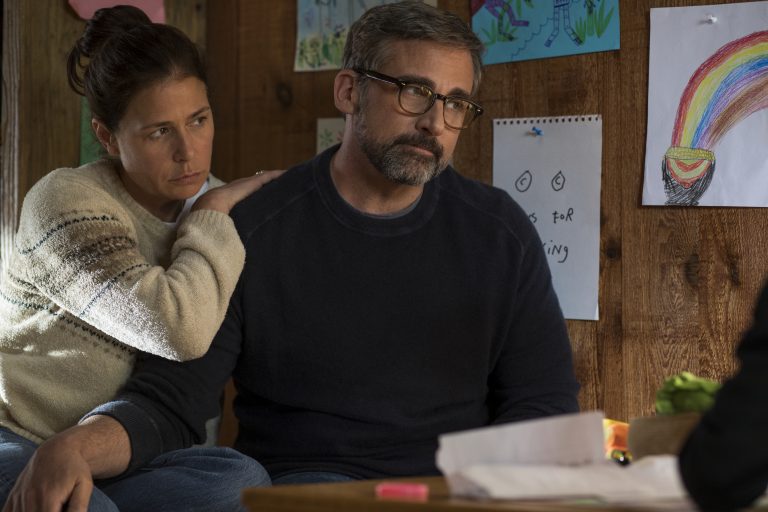
    Maura Tierney as Karen Barbour and Steve Carell as David Scheff star in BEAUTIFUL BOY

    Beautiful Boy has its moments and Groeningen deserves credit for those. A highlight comes nearly midway through the movie when David waits for Nic at a diner to confront him after his latest relapse. It’s a gorgeous dance between two great actors, particularly Chalamet whose balance of desperation from the high and frustration with his enabling father feels realistic and spot-on.

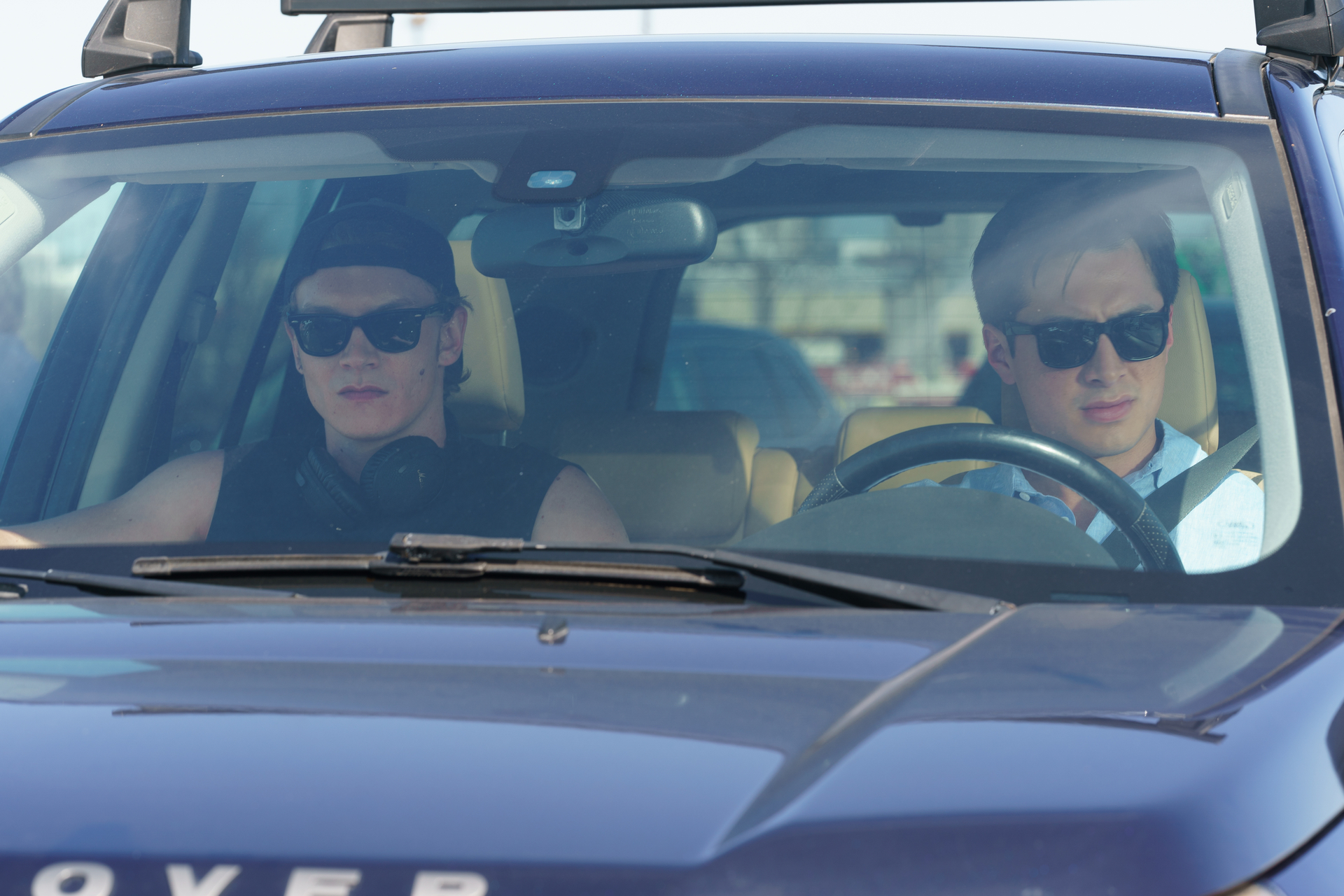
    In another moment, after Nic and his addict girlfriend Lauren (Kaitlyn Dever) break into David and Karen’s home to get money to support their habit. However, David and Karen return home and catch them as they drive off. Karen hops in the family’s minivan and gives pursuit. As she drives, though, Karen is quickly flooded with emotion at the lost “beautiful boy” she’s chasing. Tierney is great here. But moments like these are sparse in the movie.

    When Groeningen allows the actors to take the material and the characters and run with it with their incredible instincts Beautiful Boy works. However, he’s often too heavy-handed.

    The same goes for the erratic editing style which distracts from the narrative. There’s an argument to say that it helps communicate the feeling of addiction both on the person and their family. Particularly the repetitiveness of addiction—addiction, sobriety, relapse, addiction, sobriety, relapse. But the style also brings out another feeling: avoidance. 

    Beautiful Boy
    Timothée Chalamet as Nic Sheff and Steve Carell as David Scheff star in BEAUTIFUL BOY

    It feels like the characters and the story are an arm’s length away. The majority of the movie is told in breezy music montages—the number of needle drops is confounding—that doesn’t give you a chance to actually get to know the characters and make grasping the narrative even harder.

    Beautiful Boy has a great story and tackles a part of addiction that movies often miss—how the people we love do more harm than good when they’re trying to help. There’s been some criticism around the portrayal of meth addiction here, specifically, that I don’t have the insight into, but that being said Chalamet does great work. Carell, on the other hand, feels miscast.

    Addiction dramas need to be unflinching and Groeningen, to be frank, flinches. The movie looks beautiful, but addiction isn’t beautiful. It was almost as if he was afraid of the truth of it all. I’d love to have seen this story tackled by another director. 

    Beautiful Boy is now streaming on Prime Video.


    ADVERTISEMENT


    More movies, less problems


    Hey! I’m Karl. You can find me on Twitter and Letterboxd. I’m also a Tomatometer-approved critic.

    💌 Sign up for our weekly email newsletter with movie recommendations available to stream.


    ADVERTISEMENT


    💌 Sign up for our weekly email newsletter with movie recommendations available to stream.


    ADVERTISEMENT


  • 'Little Women' is boldly told, but at a cost — movie review

    'Little Women' is boldly told, but at a cost — movie review

    Greta Gerwig gives her take on Louisa May Alcott’s classic novel Little Women with a narrative twist and an all-star cast

    Quick review: While Gerwig’s narrative risks don’t always payoff, Little Women thrives on a timeless story, great performances, and a strong beating heart.

    There have been seven film adaptations of Louisa May Alcott’s classic novel Little Women with each one seemingly further modernizing the last take (Be Kind Rewind does a terrific breakdown of the four most notable versions). Of the modern auteurs working today, Greta Gerwig seemed like the perfect person to write and direct our generation’s version. And it’s clear in the film that she has so much admiration and respect for the novel. Like Rian Johnson’s take on Star Wars, that respect manifests itself as a loving subversion of the source material — a subversion that only someone with a deeper understanding of it could pull off successfully. And Gerwig almost nails it.

    Retelling an old classic

    So much of the brilliance of Gerwig’s Lady Bird comes from the story’s tightly structured screenplay. In that movie, she plays with time. Opting to tell the story through short vignettes and montages rather than linger on any scene for too long. It’s a story choice that supports the central thesis of the film — that Lady Bird thinks she’s the main character of her own story, forgetting that she’s a supporting character in others’. 

    She carries over a similar structure to Little Women. Each scene from the present is cut in with a scene from the past — bringing the two halves of the novel together. Gerwig again doesn’t linger on any scene or storyline for too long — a detriment to the first half, which I’ll talk about later. 

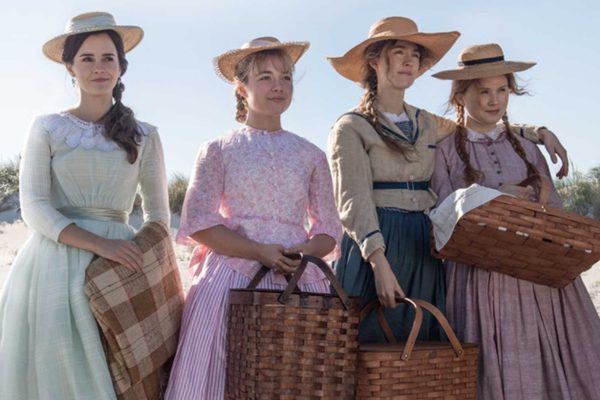
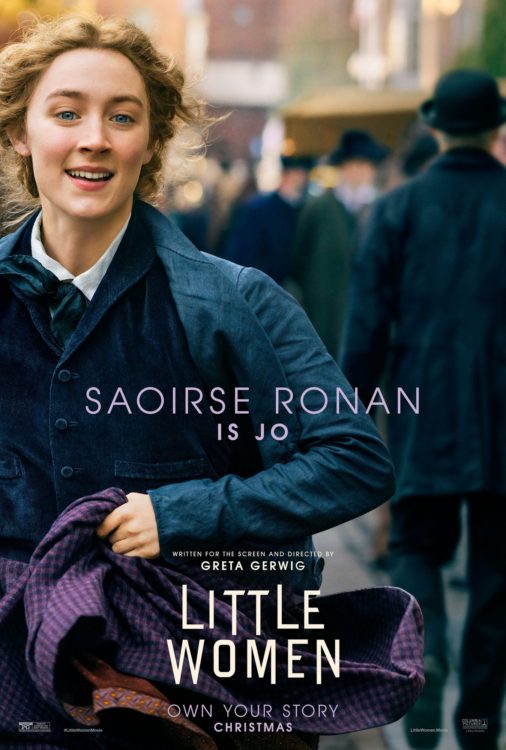
    The movie follows Jo March (Saoirse Ronan following up her performance in Gerwig’s Lady Bird), a headstrong and fiercely independent writer making her way in the big city. Her younger sister Amy (a delightful Florence Pugh) is in Paris accompanied by her Aunt March (Meryl Streep) where she is studying painting. Meg, the oldest of the March sisters, is married with kids and still living in their Massachusetts hometown near their mother Marmie (Laura Dern). The youngest, Beth, has recently fallen ill, which brings Jo home and reckon with her past.

    💌 Sign up for our weekly email newsletter with movie recommendations available to stream.


    ADVERTISEMENT


    Taking an emotional risk

    By switching between past and present, Little Women almost becomes a memory play where we see the cause and effect of the events and decisions in the women’s lives simultaneously play out. In the past, we watch Jo flirt and fall in love with Laurie (Timothée Chalamet), the grandson of their wealthy neighbor (Chris Cooper). In the present scenes, we see that she doesn’t end up with Laurie and that he is in Europe where he runs into Amy. It’s a small change that has a large impact.

    And while the structure itself helps set a melancholic tone and creates a more immediate emotional payoff, it also prevents us from getting to know the characters and see their relationships grow and change. It felt as if the emotional stakes were taken away from us. Or, at least, someone like me. Maybe if I’d been a fan of the book or previous adaptations — I didn’t watch the 1994 version before this one — I’d already have the emotional investment in the characters. Instead, I felt like I had to fill in the blanks and imagine what led each character to each specific moment.

    Eventually, the rhythm of the movie made a bit more sense and after spending much of the first hour piecing together who the characters are and their relationships with each other, the second half felt so much easier and I started to see the fruits of Gerwig’s risk. Though, they came at a cost.

    It’s a woman’s, woman’s, woman’s world

    Gerwig is a perfect match for the material because, like Alcott, she subtly pushes against the boxes that society makes for women. The same goes for Ronan, who plays Jo with the same defiance that made her Lady Bird performance so terrific. However, pushing against that defiance is matters of the heart — towards her family and Laurie. It’s truly a millennial’s tale. How do you balance your ambition with the things that you want but can’t take along with you for the ride? 

    Little Women Poster

    On the other end of things, Watson’s Meg is excited to fall into society’s ideal for womanhood. Somewhere in the middle, Pugh’s Amy wants both, driven partly from middle child syndrome. When the movie focuses on this quandary, it reaches its fullest potential. Though the relationship between the March sisters — the so-called little women — is the true heart.

    March-ing to the beat of its own drum

    Though the structure is the main reason I didn’t completely fall for Little Women, it was refreshing that it wasn’t a straight adaptation of the material. We need more directors and screenwriters to take the risk with existing IP. If we’re going to continue to get remake after reboot after remake, then at the very least we can have something slightly different. Something that marches to the beat of its own drum. 

    Little Women might be flawed, but it’s a movie with a timeless story that will embrace you. In the days since watching it, the story itself has grown on me and the characters have endeared themselves to me. It’s no wonder Hollywood is so attracted to telling it over and over again. I’m glad Gerwig got her shot. She cements herself as one of the most exciting storytellers working today.

  • 2018 Oscar Predictions: Best Actor

    2018 Oscar Predictions: Best Actor

    Best Actor has quickly become one of the hardest categories to predict at the Oscars with several contenders and no clear frontrunner. Though, it looks like Timothée Chalamet or Gary Oldman could rise to the top.

    If there’s a category without a frontrunner, it’s Best Actor. Early in the season, Gary Oldman (Darkest Hour) seemed to be a lock to win the category. However, as critics prizes started rolling out, it became clear that he wasn’t going to be a critics darling like some past winners. But that’s not always a requirement. Leonardo DiCaprio and Eddie Redmayne basically didn’t win anything until the major awards. It’s hard to picture Oldman winning without at least some critical support. Although, part of the reason he became a frontrunner was because the role is classic Oscar bait — grandstanding speeches, a revered historical figure. That might give room for a less conventional Oscar performance by Timothée Chalamet (Call Me By Your Name) to sneak in. Unlike Oldman, Chalamet has been the consensus critical pick.

    Chalamet is arguably the breakout star of 2017, but the Oscars aren’t kind to younger actors in Best Actor. At just the age of 21, he’d be the youngest nominee in the category since 1939. The most recent nominee to be in his 20s was Heath Ledger who was 25 when he was nominated for Brokeback Mountain. Before that, Adrian Brody was 29 when he won for The Pianist, the youngest winner in this category. His age is going to be his biggest hurdle to a win.


    There are a few veterans in contention as well. Any of combination of them could be nominated. As of right now, I think the safest bet would be Daniel Day-Lewis (Phantom Thread). The movie, which was arguably the last major contender to premiere, was even higher profile than most of his films because it is supposedly his final film performance. I think it’ll be hard for the Academy to pass up nominating him for that fact alone. It only makes it easier that he gives yet another winning performance. However, he missed out on a Screen Actors Guild nomination to Denzel Washington (Roman Israel, Esq.) depending on how you look at it, but it’s not uncommon for one nominee from that ceremony to drop out of the Oscar shortlist.

    Washington still has a chance of being nominated, but he’ll have to contend with Tom Hanks (The Post). Hanks was shockingly snubbed by SAG as well, but The Post also screened for voters later, which could account for that fact. Still, much of the praise for the film lands with Meryl Streep, who is a top contender for Best Actress. However, Hanks has been snubbed for his past three performances — two of them were shocking snubs. I don’t know whether that fact will help or hurt his campaign, but with two strong candidates also on the bubble, I could see him being snubbed once more.

    Those final two candidates will appeal to the hipper set of Academy voters — most likely the newest members. Daniel Kaluuya (Get Out) is perhaps the more surprising of the two. Get Out was always a strong contender in a lot of categories, but Best Actor wasn’t one of them. Still, he surprised with a SAG nomination and could stand as a representative for the ensemble. Plus, one of the most iconic images from this past year in movies has to be him petrified in a leather chair. That will stick with voters. But what has also been having a lot of cultural resonance is James Franco (The Disaster Artist) playing one of the most infamous filmmakers of all time.

    Though Best Actor started as one of the less competitive categories this year, it’s quickly evolved to being the most unpredictable. In addition to the 7 contenders I’ve mentioned so far, there are still a few other that have a feasible shot at being nominated. The most likely of which is Jake Gyllenhaal (Stronger), who could get a late-breaking push. Right now, it’s a coin flip.

    Check out all our 2018 Oscar Predictions!

    Current Rankings (1/2/18):

    Timothée Chalamet, Call Me By Your Name
    Daniel Day-Lewis, Phantom Thread
    James Franco, The Disaster Artist
    Daniel Kaluuya, Get Out
    Gary Oldman, Darkest Hour

    Other Contenders:
    Jake Gyllenhaal, Stronger
    Kumail Nanjiani, The Big Sick
    Robert Pattinson, Good Time
    Denzel Washington, Roman Israel, Esq.

  • Lady Bird review —  A quintessential coming-of-age dramedy

    Lady Bird review — A quintessential coming-of-age dramedy

    Hilarious and poignant, Lady Bird announces Greta Gerwig as one of the most exciting new filmmakers and solidifies Soarsie Ronan as a major star

    The vast number of themes Greta Gerwig tackles in her directorial debut Lady Bird would lead you to believe that it’s an overstuffed, melodramatic dramedy that tries to say something without making a point. However, it’s far from that. Actually, it hits every point it’s trying to make with a stinging poignancy that it’s almost impossible not to relate in some degree to each one. Parenting, love, hate, socioeconomic relations are just a few themes that the movie tackles. But what would most easily sum this up is that Lady Bird is the definitive teen movie of the post 9/11 era.

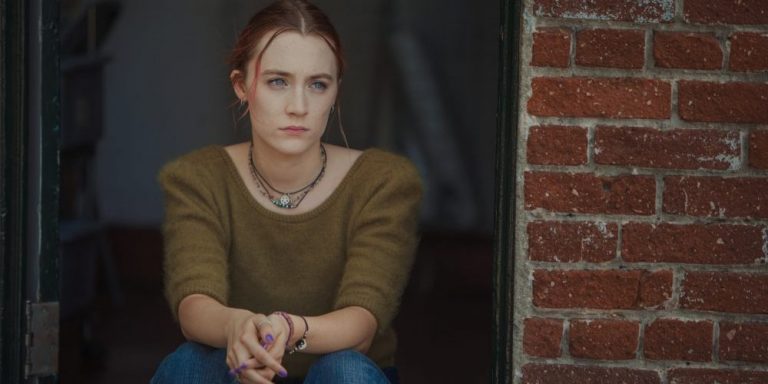
    Christine McPherson (Soarsie Ronan) — she goes by the name Lady Bird because “it’s given to me, by me,” as she says — is a senior at a girls’ Catholic high school in Sacremento, California. Lady Bird’s indictment of her hometown is summed up in the movie’s opening quote: “Anybody who talks about California hedonism has never spent a Christmas in Sacramento.” However, she’s not your typical pink haired teen rebel. Unlike most teen movie leads, Lady Bird isn’t handicapped by her quirkiness nor taken down by her high opinion of herself compared to her hometown. She is simply a girl with dreams bigger than where she lives. More specifically of New York City.


    However, for the next year, she’s stuck at home dealing with boys, college applications, school plays, and her family as she navigates the murky waters of her relationship with her mother, Marion (Laurie Metcalf). We view the movie through Lady Bird’s limited perspective, which makes our view of other characters extremely narrow. But that seems to be Gerwig’s intention. At one point, Lady Bird is cast as an ensemble member in the school musical. Her friend Julie tries to reassure her by saying that she still got cast in the play. However, Lady Bird feels like it’s not being cast at all. For her, it’s the starring role or nothing. We all remember the feeling of our own problems being the biggest in the world. Lady Bird understands that and portrays it subtly, but effectively.

    Gerwig captures the feeling of being a high schooler so perfectly that it’s nearly impossible to not identify with one of the characters in some way. You have Lady Bird as an ambitious misfit, her friend Julia (Beanie Feldstein — a breakthrough performance) is an endearing nerd, Lucas Hedges’ Danny is an overachieving prodigal son, Timothee Chalamet‘s (Call Me By Your Name) Kyle is a “fight the system” rebel. However, none of them turn into archetypes. They’re lived in characters that have their own backstories that inform their decisions. Even if we don’t get to explore those, they’re present.

    That goes for the older characters too. Everyone from Lady Bird’s father, Larry (Tracey Letts), to her adopted brother Miguel (Jordan Rodrigues) and his girlfriend Shelley (Marielle Scott) have lived experiences that have affected who they are when we meet them in the movie.

    Because of the way the movie is set up, every character gets their moment to shine. However, among the male supporting cast, Letts and Hedges are clear standouts. Letts’ quite and supportive father character is a character that we’ve seen before, but he injects a lingering dourness that makes the outcome of certain scenes all the more profound. And Hedges, who received his first Oscar nomination last year for Manchester by the Sea, makes Danny sweet and filled with a natural teenage awkwardness that is masked by a confidence that only theater kids could understand.


    However, the centerpiece of the film is Lady Bird’s relationship with Marion. Like most mother/daughter relationships, it’s one that can completely turn around at just a wrong word. No scene better portrays this than when Lady Bird and Marion, on a road trip visiting colleges, cry together after completing an audio version of The Grapes of Wrath, which is then followed by just a few lines of dialogue that cause Lady Bird to jump out of the moving car. While the relationship is played for laughs during their first couple scenes together, later scenes give way to a heartbreaking dynamic that is too familiar for any teen that grew up during the 2000s. Ronan and Metcalf give Oscar worthy performances that are sure to become iconic in the near future.

    The true thematic depth of Lady Bird is only rewarded after repeat viewings. When I say it runs the gauntlet of teenage problems, it truly covers a multitude of them. But the reason for it is justified. Lady Bird is an extraordinary character who is so firmly the lead her own movie that every supporting plot falls to the wayside — until they don’t. In a telling scene, Lady Bird encounters one character who she finds crying. We don’t know why. We don’t know how long she’s been crying. It feels like there was a completely different scene or movie preceding this one that we didn’t see since we’re so stuck in a Lady Bird’s point of view. When she asks the person why they are crying, they simply reply, “some people aren’t built happy, you know?”

    ★★★★½ out of 5


    Watch Lady Bird on Amazon!

  • Call Me By Your Name review — A masterpiece about first love

    Call Me By Your Name review — A masterpiece about first love

    Call Me By Your Name is a sensitive and beautiful portrait of a first love set against the summery backdrop of Italy’s countryside.

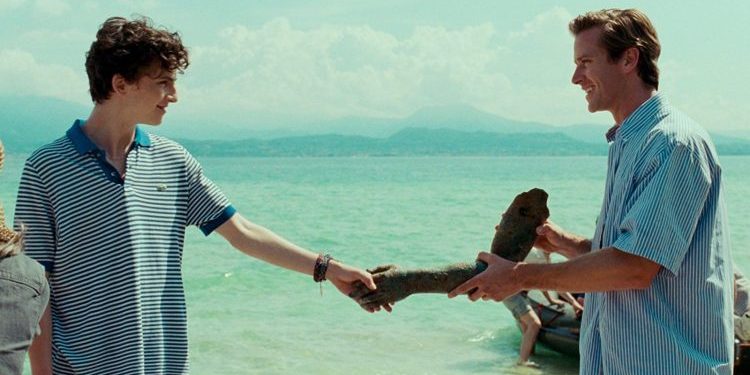
    Drenched in the warm tones of summer and set against the backdrop of 1983 “somewhere in Northern Italy” as an opening title card says, Call Me By Your Name tells the story of Elio (Timothée Chalamet), an intelligent and contemplative 17 year-old who spends his days reading books, transcribing music, swimming at the river, and going out at night. That is until his routine is interrupted by Oliver (Armie Hammer), an American student who is receiving help with his academic paperwork from Elio’s father Lyle (Michael Stuhlbarg), a professor of archeology. The 2007 book of the same name that the movie is based on is told in what is essentially an internal monologue from Elio’s perspective thirty years after that summer. With the film, director Luca Guadagnino adapts that monologue by moving it into the present day and visually representing Elio’s emotional journey without clunky dialogue or distracting narration. It’s the ultimate use of visual filmmaking and one of the reasons Call Me By Your Name is the best film of the year.

    There’s not much to add in terms of plot summary when it comes to the film since it is so character based. Elio and his parents — his mother Annella is played by Amira Casar — are intellectuals who enjoy conversations around the various academics each excel at and are bored by those who cannot entertain that kind of discussion. And when Oliver arrives, they’re all smitten with his ability to keep up with them. However, Elio is put off by his seemingly cocky attitude. Something that he becomes attracted to as the movie moves along.


    Elio’s infatuation with Oliver is confusing for him, of course, since, unlike the book, this is seems to be his first time feeling attracted to a man. However, even though he is dating his childhood friend Marzia (Esther Garrel), this is the first time he’s truly falling for someone. It’s his first real crush.

    The first half of the movie takes place completely in subtext. The focus of the movie seems to be more on the beautiful landscapes and carefree attitude of the Italian summer rather than the potential romance blossoming before us. However, if you pay attention, the real story is in the details. Looks, touches, movements tell the story of what Elio is feeling and what he is feeling is confused. Anyone did feeling those emotions for the first time. Like any teen, he starts off by resenting Oliver. In particular, he takes issue with the blasé way he says “later” whenever saying bye.

    However, as Elio begins to realize that these aren’t feelings of jealousy or resentment, but attraction, he becomes obsessed with Oliver the way that anyone becomes obsessed with a crush. But it’s something more. Elio is too much of an introspective person to not know exactly the game he is playing. He leaves signs for Oliver — questioning his whereabouts, leaving the door to his room from their shared bathroom opened — hoping that he picks up on them. Guadagnino is masterful at portraying Elio’s inner thought process with the camera. However, Chalamet (Lady BirdInterstellar) must be credited with giving one of the most humanistic and expressive performances of the year. Elio is a masterwork of a character. Complex in more ways than one and constantly changing and adapting to his situation. Chalamet keeps up with those changes and always allows the audience into his head with just his facial expressions. It’s a real powerhouse performance by a promising young actor.

    Eventually, Elio decides to take the plunge and become more direct with his feelings for Oliver. And from there, it becomes a struggle internal struggle for both characters to fight their urges despite knowing what’s right. Hammer tackles Oliver with the perfect amount of self-confidence that leaves room for mystery, which leaves the audience wanting to unravel his true persona. And his work with Chalamet makes them one of the most successful onscreen pairings in years.

    However, Elio and Oliver’s story has to be places within the context of their surroundings. Elio’s parents have some idea that his relationship with Oliver is anything but ordinary. And their subtle cues to both Elio and Oliver have impact on the story’s forward momentum. And that’s the real virtue of Call Me By Your Name. It lives in the silent moments.


    For such a simple story, the thematic depths that Call Me By Your Name covers is incredibly impressive. Elio’s struggle with his sexuality is confusing and aggressive. But it isn’t new ground to be covered, especially in queer cinema. What makes the movie different is it taps into our innate desires. It taps into our desire to be touched. To be held. To be understood. To be loved. Not only that, it taps into that guttural feeling you experience when those things are gone. Most importantly, it expresses those things without words. Though, there is powerful dialogue to be heard.

    The final two scenes of the film, which features the now famous speech performed by Stuhlbarg, who deserves an Oscar for his quiet power, and a nearly seven-minute single take of Elio are perhaps the most powerful of the year. And in those last few moments before the film cut to black, the audience sat in silence before applauding, then falling silent again. And though the projector cut out quickly through the screening and we had to switch theaters, the audience was with the film from beginning to end. We laughed, we cried. Simply put, it’s one of the best cinematic experiences I’ve had all year. And that’s including DunkirkCall Me By Your Name is a masterpiece. A film filled with life and one that any one can empathize with. But the mark that it’s a great film is that as the credits are rolling over that magnificent seven-minute single take, you are hoping it never ends.

    ★★★★★ out of 5


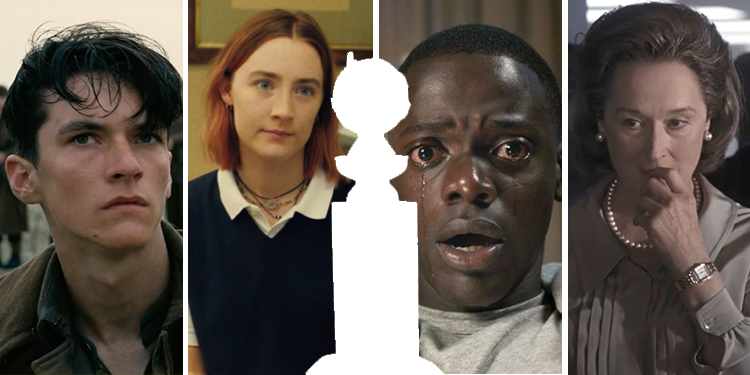
  • 2018 Golden Globes Predictions — Movie Categories

    2018 Golden Globes Predictions — Movie Categories

    The Golden Globes, Hollywood’s biggest party, is this Sunday and we have predictions in all the motion picture categories below!

    The 75th Annual Golden Globe Awards are on Sunday, January 7th. They are the first major awards ceremony of this unpredictable awards season. Although the Golden Globes aren’t seen as an Oscar predictor, they can give a boost to films already in the hunt for Oscar. This year, Guillermo Del Toro’s fantasy-romance The Shape of Water led with 7 nominations (see the full list of nominees here) and will be the favorite coming into the ceremony. Check out our predictions in all the motion picture categories below!

    Best Motion Picture, Drama

    Will Win: The Shape of Water
    Could Win: Three Billboards Outside Ebbing, Missouri
    Should Win: Call Me By Your Name

    Pretty much any nominee in this category could end up winning for any number of reasons, but the foreign voting body that makes up the HFPA will most likely skew towards Guillermo Del Toro’s The Shape of Water, which led the nominations. Since this is the earliest major ceremony, the winner of this category tends to be the Oscar frontrunner at the time, even if that film doesn’t ultimately win — Moonlight, 12 Years A Slave, Boyhood. That means it has to be a film that is in wide release or had already had its wide release. That narrows it down to two — the other is Three Billboards Outside Ebbing, Missouri. However, the quirky tone and less US-centric themes will help it appeal to the HFPA.

    Best Motion Picture, Comedy or Musical

    Will Win: Lady Bird
    Could Win: Get Out
    Should Win: Lady Bird

    This race is Lady Bird vs. Get Out. Both movies are Oscar frontrunners and have a strong consistent buzz around them, which is most important when it comes to the Golden Globes. However, after Get Out was controversially deemed eligible as a comedy and snubbed in the screenplay category — both films missed out on director nominations — Lady Bird feels like a more concrete frontrunner. Though leave it to the Golden Globes to nominate something controversially, then give it the win — The Martian is the most recent example. Get Out is still in this race, but it looks like Lady Bird‘s to lose.

    Best Actress in a Motion Picture, Drama

    Will Win: Sally Hawkins, The Shape of Water
    Could Win: Frances McDormand, Three Billboards Outside Ebbing, Missouri
    Should Win: Sally Hawkins, The Shape of Water

    With Ronan in the comedy category, this is Hawkins vs. McDormand. Movies tend to sweep at the Globes, which gives Hawkins the edge.

    Best Actor in a Motion Picture, Drama

    Will Win: Timothée Chalamet, Call Me By Your Name
    Could Win: Gary Oldman, Darkest Hour
    Should Win: Timothée Chalamet, Call Me By Your Name

    Though Oldman is the frontrunner, I see the Globes going for the buzzier Chalamet.


    Best Actress in a Motion Picture, Comedy or Musical

    Will Win: Saoirse Ronan, Lady Bird
    Could Win: Margot Robbie, I, Tonya
    Will Win: Saoirse Ronan, Lady Bird

    While every category so far has been a toss-up, this is the one that I feel confident in predicting. Ronan is the Oscar frontrunner and in the likely winner for Motion Picture, Comedy or Musical. The Golden Globes love sweeps, so she should be swept along.

    Best Actor in a Motion Picture, Comedy or Musical

    Will Win: James Franco, The Disaster Artist
    Could Win: Daniel Kaluuya, Get Out
    Should Win: Daniel Kaluuya, Get Out

    Franco and Kaluuya are the two nominees with the best shot at Oscar nominations, which automatically puts them in the top two spots. Franco has gotten more individual acclaim, which will most likely carry him over to a win. Plus, the Golden Globes love to see a movie star on their stage.

    Best Supporting Actress

    Will Win: Laurie Metcalf, Lady Bird
    Could Win: Allison Janney, I, Tonya
    Should Win: Laurie Metcalf, Lady Bird

    Like her co-star, Metcalf should easily coast to victory.

    Best Supporting Actor

    Will Win: Christopher Plummer, All the Money in the World
    Could Win: Willem Dafoe, The Florida Project
    Should Win: Willem Dafoe, The Florida Project

    Like I said before, leave it to the Golden Globes to pat themselves on the back for their own out of left field nominee. Since they obviously really loved All the Money in the World, it’s natural they’d award its buzziest aspect. Christopher Plummer’s last-minute entry into the film is going to be the story that pushes him over the edge over Oscar-frontrunner Dafoe.

    Best Director

    Will Win: Guillermo Del Toro, The Shape of Water
    Could Win: Ridley Scott, All the Money in the World
    Should Win: Christopher Nolan, Dunkirk

    Del Toro should win this prize along with the motion picture category, but again, don’t put it past the Golden Globes to award Ridley Scott.


    Dunkirk Golden Globes

    Best Screenplay

    Will Win: Martin McDonough, Three Billboards Outside Ebbing, Missouri
    Could Win: Guillermo Del Toro and Vannessa Taylor, The Shape of Water
    Should Win: Greta Gerwig, Lady Bird

    Best Animated Feature

    Will Win: Coco
    Could Win: The Breadwinner
    Should Win: Coco

    Best Foreign Language Film

    Will Win: First They Killed My Father
    Could Win: The Square

    Best Score

    Will Win: The Shape of Water
    Could Win: The Post
    Should Win: Phantom Thread

  • The 10 Best Movies of 2017

    The 10 Best Movies of 2017

    This year has been one of the best movie years in recent memories with films that pushed the boundaries of filmmaking. Here are the best movies of 2017!

    2017 is a year that started strong and ended even stronger, which is refreshing considering the end of the year always has an influx of awards-friendly prestige movies. But what is even more refreshing is the variety of movies this year that were successful commercially and critically. Horror had a huge year, as did comedy. Action made a comeback and romance became original again. But these genres don’t totally cover the movies on this list. If movies in 2017 could be summed up, you could say it was a genre-bending year. More and more movies have escaped classification, which is the right direction for the industry. However, more importantly. It seems that movies that had something real to say about our current political and societal moment are being seen.

    The more movies that stray away from the typical movie formula and become successful, the more original movies we will start seeing. This list, I believe, is a testament to those new original directions and voices. Here are what I consider the best movies of 2017.

    Note: See every 2017 movie I watched ranked on Letterboxd!


    Brigsby Bear
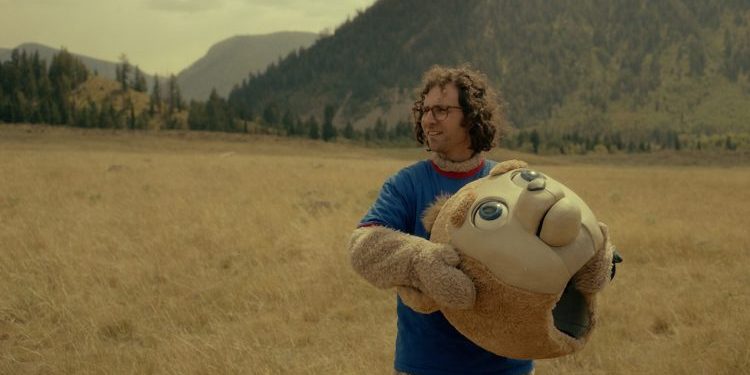
    Kyle Mooney in Brigsby Bear

    When I heard that Saturday Night Live’s Kyle Mooney — one of my favorite repertory players — was co-writing and starring in a movie I was expecting something hilarious, awkward, and downright weird. Brigsby Bear was all those things, but what surprised me is that it had a surprising amount of heart. Mooney brings his usual endearingly awkward persona to his character, but the story makes it both charming and a bit devastating. It’s actually a rational exploration of trauma and how we deal with it. That doesn’t stop it from being a hilarious “fish out of water” comedy with the sensibilities as Mooney’s sketches on SNL. Still, its weird exterior is just a way to take the audience off guard and hit them with the kind of warmth and hope we need today.

    Brigsby Bear is available on Blu-Ray and Digital HD on Amazon ➤

    Get Out
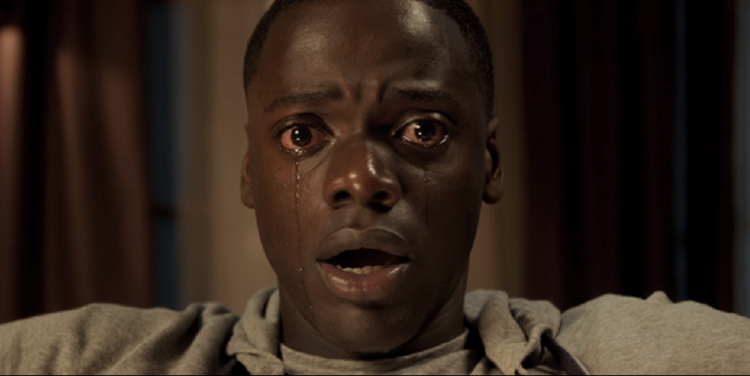
    2017 was a great year for first-time filmmakers. However, no first film quite made an impact as large as Jordan Peele’s Get OutNot only did it make an impact critically and commercially, it sparked a national conversation about race while also being eminently entertaining. It has the sharp wit that Peele has become known for along with his collaborator Keegan Michael Key (who didn’t work on him for this film) that drive big laughs, but also a really smart take on racism, particular that of the liberal elites. However, what makes Get Out one of the best movies of 2017 is the incredible attention to detail. It’s the type of movie that is more rewarding on multiple viewings. Every line and image serves a purpose in the grand scheme of the movie. Not only that, it makes a star out of Daniel Kaluuya. To which, I say, it’s about time.

    Get Out is available on Blu-Ray and Digital HD on Amazon ➤

    The Florida Project
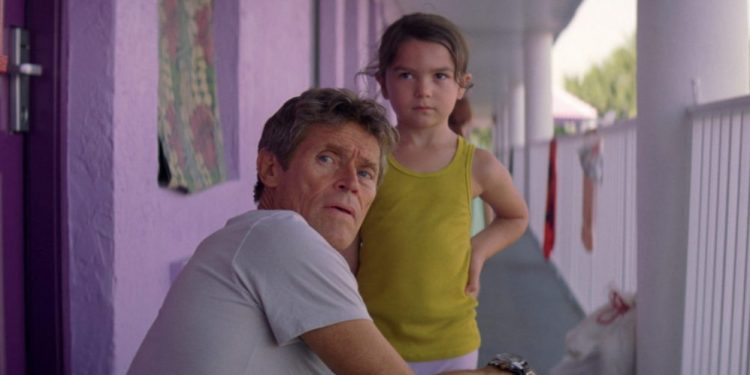
    Willem Dafoe and Brooklynn Prince in The Florida Project

    Director Sean Baker specializes in making films about people on the fringes of society. In The Florida Project, he tells a story about the invisible homeless on the outskirts of the family resorts of Orlando. But what makes this movie truly great and one of the best movies of 2017 is that he tells it firmly in a child’s perspective. To the protagonist Moonee (Brooklynn Prince), everything is magical. However, she doesn’t understand that some of the things her young mother Halley (Bria Vinaite) are less than normal and sometimes even illegal. But Baker never judges his characters. He has sympathy for their experiences, much like Willem Dafoe‘s character, who manages the hotel where Moonee and Halley live. In the end, audiences will view it with the same childlike wonder that Moonee has. It’s heartfelt, a bit dark, but also a delight to watch.

    The Florida Project is available on Blu-Ray and Digital HD on Amazon ➤


    Phantom Thread

    Daniel Day-Lewis and Vicky Krieps in Phantom Thread

    To say that Paul Thomas Anderson created a romantic comedy with Phantom Thread might be overreaching, but he came close. In what is apparently his last performance, Daniel Day-Lewis continues his streak of playing complicated and difficult men. However, this time he has a complicated woman (Vicky Krieps) to go up against. And that battle of the Titans is one of the most thrilling relationships to see play out on screen. Reynolds Woodcock is a character for the ages and is certainly fitting to be Day-Lewis’ march into movie history, but more importantly, we have been introduced to an exciting new star in the making in Vicky Krieps. While this is a movie about a tortured artist, it’s also very much about the women — the other being his sister Cyril (Lesley Manville) behind that tortured artist who have to find new ways to both support him and keep him grounded. Phantom Thread is a meditation on marriage. And if I was Maya Rudolph, Anderson’s wife, then I might be a bit worried.

    Blade Runner 2049

    Creating a follow-up to a film as technically dazzling and thematically rich as Ridley Scott’s 1982 classic Blade Runner seemed like a fool’s errand. That is until Denis Villeneuve (Arrival) stepped into the director’s chair. Along with Hans Zimmer and Benjamin Wallfisch, who composed the score, and Roger Deakins, who shot the film, Villeneuve created one of the dazzling worlds seen on film this year. Splashed with neon tones that contrast to the industrial infrastructure that has befallen Earth, Blade Runner 2049 is a visual feast. But what made the film one of the best movies of 2017 is it continued to explore the themes of humanity, while also delving into new directions, most interestingly involving Ryan Gosling‘s K. Though it has a nearly 3-hour running time, it’s endlessly engrossing as its mysterious plot reveals itself. What differentiates it from the original, though, is it has a strong emotional center that catches you off guard and brings warmth to an otherwise cold world.

    Blade Runner 2049 is available on Blu-Ray and Digital HD on Amazon ➤

    Next Page: The Top Five

    My top five favorite movies of the year are an eclectic group of films that I believe balanced beautiful filmmaking with profound storytelling. These filmmakers have certainly earned their place as the best movies of 2017!

    Columbus

    Haley Lu Richardson and John Cho in Columbus

    What made Richard Linklater’s Before trilogy such an amazing achievement is its ability to make conversation so compelling. The same could be said for Kogonada’s film debut Columbus. Although this conversation isn’t as contained as Jess and Celine’s in terms of time, Casey (Haley Lu Richardson, who gives one of the best performances of the year) and Jin (John Cho) help each other come to terms with their pasts and plan for the future. All of this happens in the shadow of the modern architecture of Columbus, Indiana, which is captured beautifully by Elisha Christian. However, what makes this film great and one of the best movies of 2017 is that Columbus is the third lead of this film. Its existence is a juxtaposition much like Casey and Jin are to each other, and it’s exactly what they need.

    Columbus is available on Digital HD on Amazon ➤

    Personal Shopper

    Kristen Stewart in Personal Shopper

    I’ve tried to describe Personal Shopper to people and it always comes out sounding like an overzealous student film. But masterful director Olivier Assayas takes the seemingly disparate elements and competing genres to create a profound meditation on grief — with a detour towards the supernatural. The ghostly elements of the film are legitimately terrifying mostly because there is so much mystery behind them. Assayas doesn’t give audiences the answers, which makes the film into a puzzle that we have to solve. And that’s thrilling enough, but he then instills Hitchcockian tension that turns it into a psychological thriller. While all these genre elements are happening, Maureen, played by a masterful Kristen Stewart, has to come to terms with her own mortality and her grief. It’s an emotional powerhouse of a movie disguised as a psychological thriller, which makes it one of the best movies of 2017.

    Personal Shopper is available on Blu-Ray and Digital HD on Amazon ➤


    Lady Bird
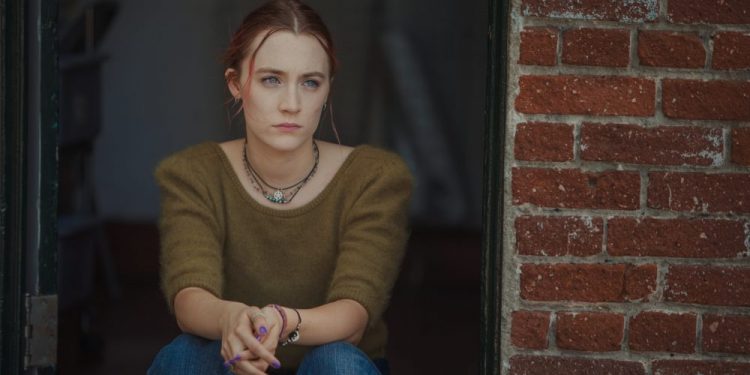
    Saoirse Ronan Lady Bird Review

    The same way movies like Clueless and Never Been Kissed so accurately portrayed the painful awkwardness of growing up in the 90s, Lady Bird is almost a near perfect coming-of-age dramedy about adolescence in the post-9/11 era. Though the movie is based on writer and director Greta Gerwig‘s teenage years growing up in Sacramento, California, Christine “Lady Bird” McPherson (Saoirse Ronan) is the kind of character that nearly anyone can see themselves in. In particular, she’s a teen that is trying out different versions of herself, and Gerwig captures that in a quick-paced, hilarious romp that hits emotional beats that will make you want to give your parents a call and tell them that you love them. Lady Bird reminds us that even though we may see ourselves as the star of our own story, we may be a supporting character in someone else’s.

    Lady Bird is available on Blu-Ray and Digital HD on Amazon ➤


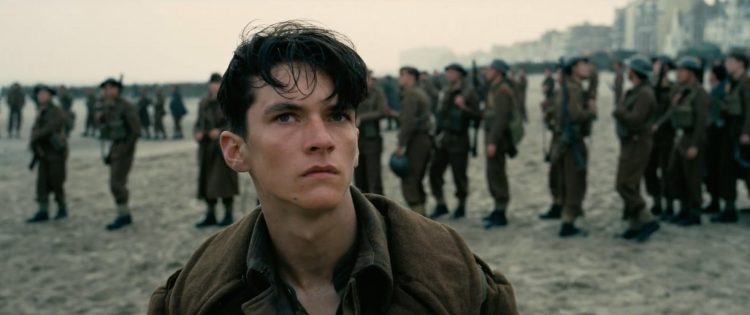
    Dunkirk

    Dunkirk Best Picture

    No studio filmmaker is pushing the boundaries of cinema quite like Christopher Nolan. But he may have launched us into a new frontier with his World War II movie Dunkirk. I so often use the word epic when describing Nolan’s films. Interstellar was a nearly 3-hour journey through space and time. Epic is really the only word you can use to describe it. However, Dunkirk is almost the antithesis of that. It deconstructs the war movie and only leaves the action, which makes it an unrelenting and tense experience that makes a fantastic argument as to why movies have to be seen in the theater. With the sweeping cinematography by Hoyte Van Hoytema and dissonant score by Hans Zimmer, Nolan was able to achieve full immersion into the world. By the end, you’ll feel like you went through war. It’s a cinematic experience of the highest caliber. Read by

    Dunkirk is available on Blu-Ray and Digital HD on Amazon ➤

    Call Me By Your Name
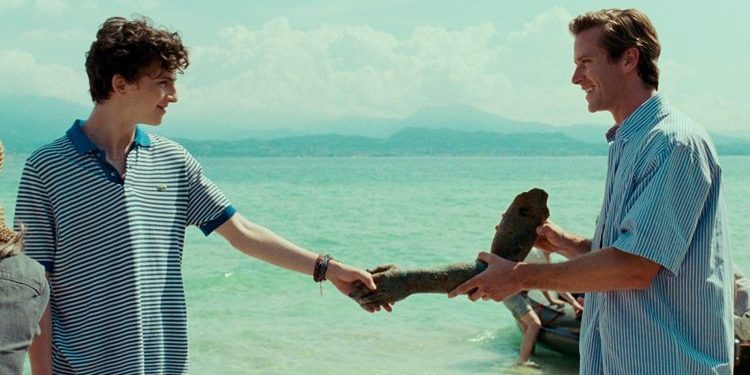
    Timothee Chalamet and Armie Hammer in Call Me By Your Name

    For all the movies giving commentary on our current political moment, commenting on the injustices of our society, or simply bringing stories forward that are no often told, the one that stands out and tops this list as the best movie of 2017 is largely unpolitical. Call Me By Your Name is at its heart a romance. Specifically, a first love. And it captures that feeling brilliantly under the direction of Luca Guadagnino who, along with cinematographer Sayombhu Mukdeeprom, present the movie with the feeling of a fleeting summer’s glow. And like Moonlight, my number one film last year, Call Me By Your Name recalls feelings that nearly everyone has felt — love, hate, jealousy, fear, hope, helplessness — without doing much to force those feelings on you. Movies are emotionally manipulative. However, the best movies are the ones that are getting you to feel something without you even noticing. And Call Me By Your Name achieves this flawlessly.

    James Ivory’s screenplay and Guadagnino’s sensitive direction gave the cast the room to play with their characters, which gives every conversation an authentic quality. But, much credit must be given to the cast. Michael Stuhlbarg‘s intellectual father character is bubbling with excitement over the prospect of discovered artifacts or sparring over the origin of words. But by the time we get to his closing speech, we understand that his character is more sensitive than we’re initially led to believe and the love for his son knows no bounds. With the enigmatic Oliver, Armie Hammer constantly keeps us guessing about his motives, his thoughts, and his feelings. However, at the center of it all is Timothée Chalamet. He’s effortless in his portrayal of youthful energy, but when the emotions that come with the exploration of sexuality hit him, it’s like a floodgate is opened.

    Call Me By Your Name is the rare film where really nothing is happening on screen, yet everything is at the same time. It’s beautiful and bold and sexy and sensitive. It’s a film about love that is impossible not to love.


    Honorable Mentions

    Looking back, it has been an incredible year for movies. So, parring this list down to a top ten was nearly impossible, and I’m still not completely confident in my rankings or inclusions. Although, that’s just a testament to the quality of films this year. So before I get to the “best movies” — if there’s really such a thing in this crop — I want to take a moment to highlight some of the high points of cinema this year.

    It’s safe to say that this year included some of the most original and best superheroes movies in the past few year. Patty Jenkins’ Wonder Woman, in addition to being the highest-grossing film to be directed by a woman, did something that no film in the DC universe of films has done. Be good. Not only that, though, the film has some of the best action scenes of the year and a strong heart at its center with Gal Gadot. Marvel also had a great year with Spider-Man: Homecoming and Thor: Ragnarok, both of which felt like departures from the usual Marvel formula with the former being a John Hughes-inspired high school movie and the latter being a broad comedy.

    However, action also had other great entries. In particular, David Leitch (co-director of John Wick) brought us one of the greatest female action heroes with Atomic Blonde. Even though the Cold War plot gets convoluted, it boasts the single best action scene even made with the now famous stairwell scene.

    There were two fantastic ghost stories this year. One of them made this list, the other, A Ghost Story, just missed out. However, its melancholic journey through time is beautifully captured in a way that feels wholly unique. Another ghostly film with a more family-friendly approach also proved to be one of the emotionally satisfying experiences of the year. Pixar hits it out of the park again with Coco, an entertaining, funny, and sentimental take on processing loss.

    Two real-life stories also made a strong impression this year. The first was one of the most surprising revelations of the year. Stronger on the surface looked like another “based on a true story” movie about a man overcoming incredible odds. But with sensational performances by Jake Gyllenhaal and Tatiana Maslany and a smart directorial style, it turns into a real story of triumph in the face of adversity. The other, The Big Sick, tells a story that seems too crazy to be true. But Kumail Nanjiani and Emily V. Gordon adapted their real-life love story with enough of a witty realistic punch to make it a charming reinvention of the romantic comedy genre.

    Lastly, the film that just barely misses out on my top ten best movies of the year is Bong Joon-Ho’s Okja. More than any film this year, it takes creative swings that test both genre and filmmaking conventions and ends up being a sweet and profound tale of friendship and without a doubt the best original Netflix film to date.


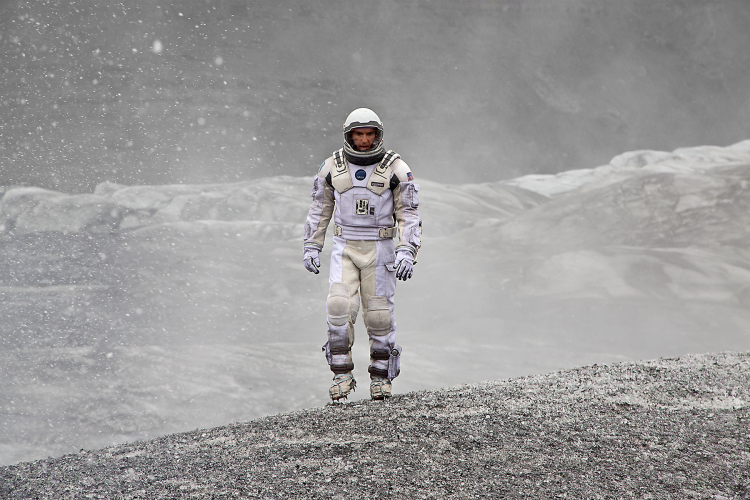
  • Interstellar Movie Review — Christopher Nolan’s most epic, but human movie yet

    Interstellar Movie Review — Christopher Nolan’s most epic, but human movie yet

    Interstellar is a visual masterpiece that has a human touch that propels it to greatness. It is perhaps one of the best space movies ever made.

    Christopher Nolan isn’t one known to be taciturn when it comes to his movies. Even his smaller movies like Momento have grand structures bolstering their simple plots. However, Interstellar is easily is first brush with the epic — unless you consider the full Dark Knight trilogy as one. On paper, it should not work. A sweeping narrative covering different times and worlds would be eaten up by audiences. That’s why Gravity found so much success financially and at the Oscars. But Nolan does something completely different with Interstellar. He introduces science in a way that isn’t watered down or ignored. His film, according to astrophysicists, is completely plausible. Though that fact makes the movie a hard one to digest for viewers, the end result is an incredible study of human nature and our desire to survive.

    Food is running out. The world is becoming overpopulated. The Yankees look nothing more than a high school baseball team. A crop blight is threatening the very existence of the human race. Nolan drops into this terrifyingly realistic future plagued with dust storms and the risk of the world simply ending within grasp. With this, the nation turns its attention to farmers and away from the sciences and engineers to save the world.

    Check Out: “Sleeping Giants” Book Review: A Unique, Engaging Sci-fi Thriller


    However, Joseph Cooper (Matthew McConaughey) who was once a pilot for NASA, maintains his faith in STEM. After a dust storm, a mysterious gravitational disturbance leads him back to the formerly disbanded agency. He discovers that NASA, led by Dr. Brand (Nolan regular Michael Caine) and his daughter Dr. Amelia Brand (Anne Hathaway) have discovered a wormhole. “One system with three potential worlds,” as Amelia puts. it. Something, or someone, has given the human race a chance to live by presenting them with potential new planets to call home.

    Cooper is given the seemingly possible decision to leave his children forever, potentially, or save the humanity from extinction. Choosing the latter, he embarks into an incredible mission on the ship Endurance. He, along with Amelia, Dr. Doyle (Wes Bently), and Dr. Romilly (David Gyasi) set off to assess the three worlds to choose where to start a new civilization.

    Back on earth, Murphy Cooper (Jessica Chastain), who grows up while her father is gone, begins to help Dr. Brand determine the formula to get humans off of earth in a mass exodus.

    While wormholes and other worlds seem like the work of science fiction, the science is very real. Though throughout the movie it sometimes gets a little confusing, with a little thinking you can piece it together. Essentially, it’s the Neil DeGrasse Tyson of movies. The science is explained in a non-condescending way.

    interstellar movie review


    One of the most surprising elements of Interstellar is not the story or the science, but the sentimentality. It’s shockingly emotional and often heartbreaking. In fact, parts of it gutted me. Whether it’s surprising because of the director or the premise is anybody’s guess. However, the grasp it has on humanity is both refreshing and welcome. Especially in the science fiction genre, a human factor is usually missing. But Nolan and the screenplay exhibit human nature for all its beauty and destruction.

    We have an innate desire to survive. That’s why the people on earth in Interstellar begin to lose faith in the dream to leave the planet. They are thinking of how they can solve the problems on Earth. The very idea of the movie is thinking of a way to save our race. However, the movie explores the selfish motivations we also innately have. The way it is explored is surprising and devastating.

    But it’s not just the screenplay and direction that exudes that. The ensemble was tasked with accessing emotions that humans would actually feel in these situations. Overall, the entire cast is phenomenal. However, there are three standouts for me. The first is Matthew McConaughey. I think it’s very unfortunate that he won his Oscar for Dallas Buyers Club. Not to take away from that performance. His performance in Interstellar is an incredible meditation on one of the hardest questions for humans: how much will you sacrifice for the greater good. There is no better way to show this than when he is watching messages from his kids as the years go by. This is the best performance of his career.

    Check Out: “Arrival” Movie Review: One of the Best Sci-Fi Movies of the Decade


    The other two performances that stood out were the two actresses that portrayed Murph. Mackenzie Foy breaks any stigma surrounding child actors with a really naturalistic and heartbreaking performance. She has these knowing gazes that foreshadow the scientific curiosity that follows her throughout her life. Jessica Chastain is an incredible presence as the older Murph. She carries over the knowing gazes, but adds the emotional baggage of years of abandonment by Coop. It is easily one of her most memorable performances.

    Masterpiece isn’t a word I take lightly. I’ve said it in probably two reviews on this blog (Boyhood and Moonlight – the former I’m less inclined to continue using that phrase). However, I’d call Interstellar a masterpiece of filmmaking. It’s as grand as it is introspective and as grounded as it is existential. By the end of the nearly three-hour running time — it goes by in a flash — you feel as if you’ve experienced something that is so rarely captured on film. If not for the plot or performances, watch it for the stunning visuals that haven’t been seen on the silver screen since perhaps 2001: A Space Odyssey. I think a decade from now we’re going to look back and wonder how we fell asleep to such a grand and sweeping epic. 

    ★★★★★ out of 5


    Get Interstellar on DVD, Blu-Ray, or Digital on Amazon or stream for free with Amazon Prime!