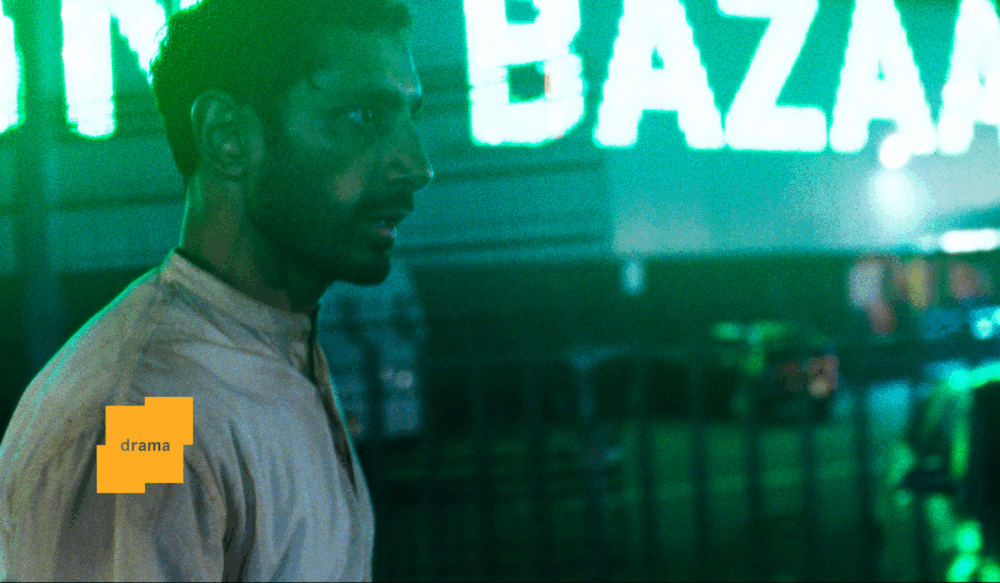
TIFF 2025 | ‘Hamlet’ gets a modern retelling that trades Denmark for London’s high society, infused with Hindu culture and led by Oscar winner Riz Ahmed.


Aneil Karia’s “Hamlet” fuses Shakespeare’s lyrical verse with Hindu culture and a majority South Asian cast, yielding a fresh, electric retelling. Riz Ahmed commands the screen, from a ferocious BMW-set soliloquy to a reimagined wedding sequence that spirals into chaos. Though shifting the story to corporate intrigue limits its scope and sidelines subplots, Karia’s visceral, emotive filmmaking and Ahmed’s powerhouse performance anchor the film. Not every reinvention lands, but its clarity of vision makes it undeniably compelling.
Hamlet is playing at the 2025 Toronto International Film Festival.
Shakespeare’s rich, lyrical language delivered by a majority South Asian cast already breathes fresh energy into this modern retelling of “Hamlet”, giving it a mesmerizing, electric charge. Yet it isn’t simply the infusion of Hindu culture that makes Aneil Karia’s adaptation so compelling. Its strength lies in his bold reimagining of the play’s most iconic moments, rendered with filmmaking that is visceral, muscular, and deeply emotive. These choices elevate both the performances, particularly Oscar winner Riz Ahmed (“Sound of Metal“) in the title role, and, at times, the story itself, pushing them beyond their already formidable power.
A gripping reinvented wedding
It is best displayed when the movie reaches its peak in a stunning sequence where “The Murder of Gonzago” scene from the play is reimagined as a choreographed performance at Claudius (Art Malik) and Gertrude’s (Sheeba Chaddha giving a gripping performance) wedding. Hamlet transforms the festivities into an accusation, using the stage to expose what he believes is his uncle’s crime. The dancers begin with a joyous traditional Indian routine, vibrant and full of life. Then, at Hamlet’s direction, the celebration curdles. Movements grow jagged and violent as the performers tear and claw at the main dancer representing the king. The murder is pantomimed in escalating frenzy, while the lighting and editing spiral into chaos, building toward a breathless climax that leaves the wedding suffocated in silence.
Ahmed’s turn in the title role carries the same breathtaking force. Karia stages the “to be or not to be” soliloquy inside a speeding BMW, as Hamlet barrels through London’s midnight streets in a fit of road rage. Ahmed’s face grips the screen, taut with intensity, as he unfurls Shakespeare’s verse in a rhythm that lands with the precision of a freestyle rap. When Hamlet releases the wheel and lets the car drift into oncoming traffic, the monologue explodes into pure cinema: headlights slash across the frame, horns blare, and vehicles swerve in a symphony of chaos. Ahmed and Karia channel fury rather than melancholy, as the character is iconically known for, reframing Hamlet as a man consumed by rage.
A scaled down “Hamlet”
Not every reinvention strikes the same chord. Shifting the action from Denmark to the interal politics of a family-run conglomerate narrows the scope, trading Shakespeare’s sense of epic tragedy for corporate intrigue. The film hints at social commentary in its depiction of the company’s gentrification schemes, but these threads never fully develop, in part because so much dialogue is lifted wholesale from the play. The focus instead tightens on Hamlet’s grief, amplifying Ahmed’s towering performance but diminishing other arcs—his fractured bond with Ophelia (a luminous Morfydd Clark), or the political maneuverings of Polonius (an always terrific Timothy Spall) and his fiery son Laertes (a delightful Joe Alwyn). The result is a portrait of Hamlet that burns brilliantly at the center, even as the world around him flickers at the edges.
Some may argue that Karia never fully justifies why this version of Hamlet needs to exist. And to a degree, the film doesn’t wring every nuance from Shakespeare’s text. Yet the sheer force of weaving Hindu culture and South Asian performers into the fabric of those iconic lines feels like reason enough—even if this isn’t the brooding “sad boy” Hamlet audiences have come to expect. The vision remains clear and intentional, even when the storytelling falters. “To be or not to be”—Karia responds with a defiant answer: “I choose to be myself.“
ADVERTISEMENT
More movies, less problems
- Cannes 2024: Three great movies in Un Certain Regard

- “Heated Rivarly” episode 6 recap and review: “The Cottage”
- “Heated Rivalry” episode 3 review: “Hunter”

Hey! I’m Karl. You can find me on Twitter and Letterboxd. I’m also a Tomatometer-approved critic.
💌 Sign up for our weekly email newsletter with movie recommendations available to stream.
ADVERTISEMENT