Tag: What to Watch on Netflix

What to watch on Netflix? It’s the eternal question that people face late at night, on weekends and date nights. Well, we’re here to help! You can find all the best movies to stream on Netflix right on this page, reviewed! For movies streaming on other platforms, you can check out this page!.

  • 'Those People' Movie Review — Jonathan Gordan is remarkable in this solid debut

    'Those People' Movie Review — Jonathan Gordan is remarkable in this solid debut

    Those People follows a twentysomething Upper East Sider who’s torn between pursuing his socialite best friend and a new romance with an older pianist

    Quick review: Despite some first-time feature issues, Joey Kuhn’s Those People gives enough material to its talented lead Jonathan Gordan to introduce him as an exciting new talent.

    When Those People is good, it soars. It lives in those moments of humanity — a kiss on the street, a mother/son heart to heart — and revels in the relationship between its characters. Though it flirts with melodrama, Joey Kuhn’s debut feature tries to ground its character even if they live in the sky of Manhattan known as the Upper East Side.

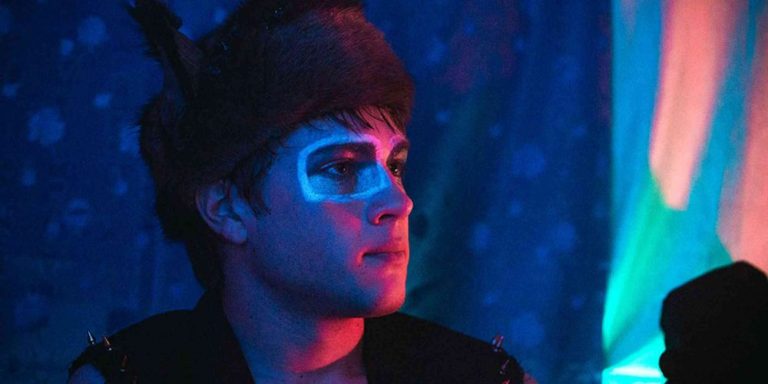
    Toeing the line between the melodrama of Gossip Girl and the LGBT coming-of-age stories that have become a genre in itself, Those People follows Charlie (Jonathan Gordon), a 23-year-old painter who is the heart of his group of attractive friends living in New York. And while he’s the one that glues the group together, Sebastian (Jason Ralph) is the one gravitational pull. As the son of a Bernie Madoff type, he is dealing with a crisis of identity that drives much of the forward plot. Because of this, he unwittingly craves the attention of his friends with cries for help — excessive drinking, veiled suicidal thoughts. In particular, he needs support from Charlie, who has had a crush on him since they were younger.

    However, when Charlie begins dating older concert pianist (Haaz Sleiman), the group of friends begin to be tested as Sebastian moves closer to the brink and Charlie struggles with his own feelings for the two men. In a way, it feels like a Gatsby for the modern age. Unfortunately, it never quite reaches those heights. I was pleasantly surprised that the movie was able to move past its premise — which is unjustly boiled down to a love triangle — and into something more profound. Still, it never takes enough diversions from the predictable direction.
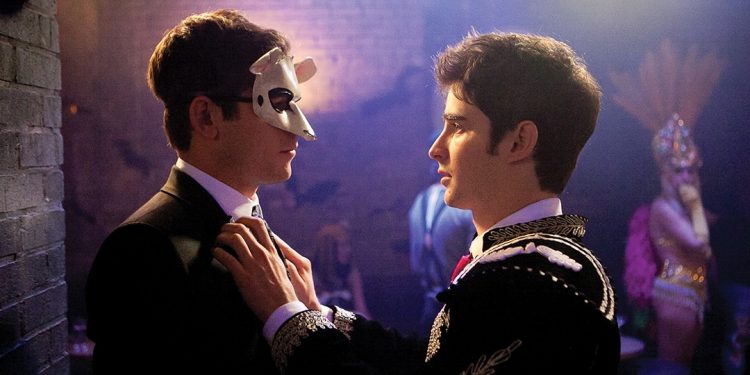
    Jason Ralph and Jonathan Gordon in Those People

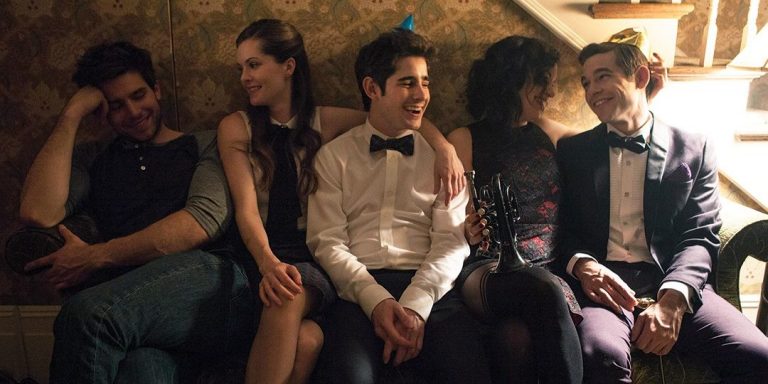
    What it does have, though, is heart and charm. In those moments, the movie soars — an early scene when the group of friends comes together to celebrate Charlie’s birthday is a prime example. That’s partially thanks to the cast — supporting players Britt Lower, Meghann Fahy, and Chris Conroy do great work. But the only way Those People works is with Jonathan Gordon in the central role. He sells the character’s struggles not only in words but with mannerisms. He turns a character who did not have much depth written into the script into a fully-fledged and realized person.

    Those People never quite becomes the movie that I wanted it to become after I realized that it wasn’t just about a love triangle. In the final moments, we find the group of friends at the center of the film standing together in the apartment that we were first introduced to them. It felt like the series finale of a TV show. However, it doesn’t feel like Kuhn earned that final scene or the climax for that matter. Sebastian says at one point, “you don’t just face our good sides. You stare right at our one eye and you find the beauty in it anyway.” That’s the movie I wanted. One about friendship and relationships and the confusion of love. We get that most of the time, but at others, it loses its way distracted by extraneous plot lines. However, what is on the screen is good enough to introduce us to an exciting new talent in Jonothan Gordan.
  • Frank review — A celebration of weirdness and papier-mâché heads

    Frank review — A celebration of weirdness and papier-mâché heads

    Michael Fassbender is fascinating as the papier-mâché headed lead singer in Frank, which celebrates weirdness and understands mental illness

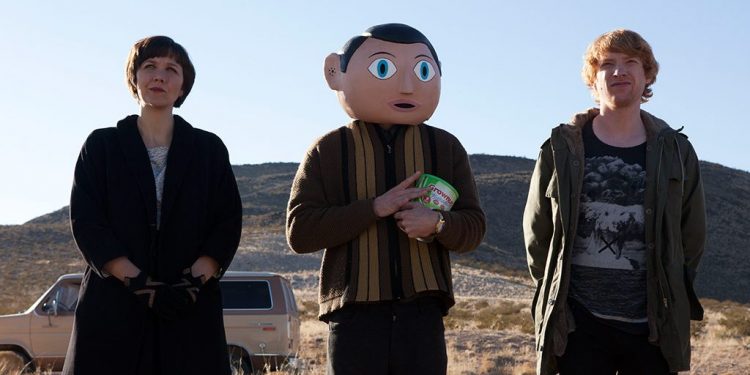
    Frank is just about as quirky and surreal as you’d imagine a movie about an experimental indie band with a lead singer who constantly wears a giant papier-mâché head would be. However, surprisingly, the character of Frank (Michael Fassbender) — who dons that giant head for the entire 90-minute running time — isn’t the weirdest character in this movie. And that is one of the many reasons that this movie triumphs. Although this is a pretty sharp satire of the creative process, particularly that of the new wave of pretentious indie artists that seem to think that building an audience is a threat to their artistic integrity, it also has an appreciation for the same people and has a firm step in reality. It begs interesting questions, even if the way it ponders them can only be described as eccentric.


    Jon (Domhnall Gleeson, in yet another strong, but under appreciated performance) is a down-on-his-luck wannabe musician who is tolling his days in his cubicle or walking down the street piecing together lyrics based on his observations. One day, as he’s walking down the beach, he witnesses a man being pulled out of the ocean by paramedics. As the man is being attended to, he encounters Don (Scoot McNairy), who reveals that the man was drowning himself and was the keyboardist in the band Soronprfbs — no one actually knows how to pronounce it. When Jon mentions that he is a keyboardist, Don, the manager of the band, invites him to fill in at their gig that night. When Jon shows up, the rest of the band is reluctant except for Frank.

    This first performance with the band, with all the disparate electronic sounds, nonsensical lyrics being talk-sung by Frank, and lack of melody, is surprisingly charming. That’s mostly due to the fact that Frank, thanks to Fassbender, is as whimsical as the enormous papier-mâché head he wears — the head is oblong and smooth with enormous eyes that constantly feel like they’re judging you. After the performance, which goes well until it doesn’t, Frank invites Jon to become a full-time member of the band and to join them in Ireland and record the band’s first album. The band, particularly Clara (Maggie Gyllenhaal), has a strong disdain for Jon whose mainstream tastes rub them the wrong way.

    Eventually, after explicit hot tub sex, a Viking funeral, and a lesson on YouTube, Jon reveals that he has been sharing videos of the band rehearsing online and that they’ve been invited to the South by Southwest festival. It takes a while for the movie to get to its main points, but it ponders them vigorously until the very end. Who is art for? The artist or the audience? In the case of Frank, there is the added storyline of mental illness. The way you react to the tonal switch in the third act will determine how you react to this movie as a whole.

    On the two sides of the aisle are Jon and Clara. Jon, who is more concerned with his social media followers, is encouraging Frank as an artist to share their music with the world. Clara, on the other hand, recognizes the fragility of Frank’s psyche. She understands that for Frank the music is art and medicine. In director Lenny Abrahamson’s able hands, the shift from quirky comedy to character study is jarring, but a welcome relief. Though watching the band set in the woods painstakingly use various household objects to make disparate noises to use on their album is hilarious, there isn’t necessarily a way that you can see the movie wrapping up successfully on that tone.


    Gleeson’s character is set up to be the “straight man” of the group, though his social awkwardness certainly gives him comedy points. Seeing the movie through his eyes give us a chance to view Frank mythically, then as misunderstood. Fassbender, on the other hand, gives us a surprisingly grounded view of a character as weird as Frank before giving us a view into his world. Mind you, Fassbender is doing this all without ever showing his face — he even wears it in the shower with a plastic bag protecting it — though his character does announce his expression periodically throughout the movie. Just through his physicality, you can witness the journey Frank goes through. It’s remarkable how much he emotes just through his body. More than that, though, he makes Frank more than just his papier-mâché head.

    Banksy — another enigmatic artist whose identity has yet to be revealed — once said, “Art should comfort the disturbed and disturb the comfortable.” It’s hard to grasp that quote unless you’re an artist. What screenwriters Jon Ronson and Peter Straughan were able to do was give us a look into the mind of an auteur — the screenplay is based on several musicians including Frank Sidebottom and Daniel Johnston — for better or worse. The first part of the movie, which is as entertaining as they come, lets us in on the better. The final act, the worse. However, you leave the movie with a different understanding of art, mental illness, and what it means to be different. For the disturbed, you will be comforted. For the comfortable, get ready to get disturbed.

    ★★★★ out of 5


    Frank is available to stream on Netflix and for rental on Amazon and iTunes

  • Under the Shadow review — A satisfyingly spooky Iranian ghost story

    Under the Shadow review — A satisfyingly spooky Iranian ghost story

    Under the Shadow gives a unique spin on the ghost story genre by setting it in a time and city where horror movies don’t often take place.

    The horror genre was taken by storm in 2014 when Jennifer Kent’s The Babadook debuted to incredible acclaim. It’s deep dive take on the ghost story not only felt fresh and new but it also just affirmed the fact that we are in a golden age of horror. And though Babak Anvari’s Under The Shadow certainly bears a resemblance to Kent’s film — both concern mother and child under assault by a malevolent force — it infuses it with a unique political allegory that just begs the industry to start giving us more horror movies from diverse directors. If not for the sake of exciting voices, then for the unique perspective that we don’t often see in the suburbs of Anytown, USA where most ghost stories take place.


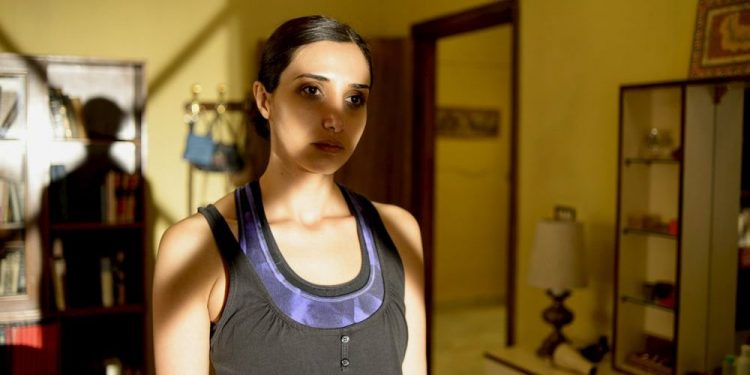
    Under the Shadow already takes a bold step in the genre by taking place against the backdrop of 1988 Tehran during the height of the Iran-Iraq war. Iranian society and the Iraqi bombs that seem to endlessly pummel the capital play as much of a role in the film as the monster at the center. Nights with sirens driving families to underground bunkers are a part of daily life as is the tape on the windows preventing them from shattering. And constantly, progressive women like Shideh (Narges Rashidi — her performance is a revelation) are constantly suppressed by their society. The film opens with Shideh being barred from continuing her studies in medical school because of her involvement in leftist political groups. Moments of female oppression are littered throughout the film. When she returns home, she throws out all of her medical books except for a book of terminologies that her deceased mother gave her. Her husband Iraj (Bobby Naderi), a doctor, does his best to assuage her disappointment over medical school, but it seems that he is just another reminder of her failure — she had to put her studies on hold to raise their daughter Dorsa (Avin Manshadi).

    Soon after, Iraj is called to the battlefront leaving Shideh — she refused to leave their apartment building to escape to her in-laws’ house — alone with Dorsa. While he’s gone, the missile sirens seem to be going off more frequently sending Shideh and her neighbors into the makeshift bomb shelter in the basement of their apartment building. One day, a missile crashes through the roof of the building and lodges itself in the floor of the apartment above the family, but doesn’t detonate. However, other than fear and shattered windows, the missile may have ushered in something more sinister. As mysterious occurrences become more and more frequent — classic “go bump in the night” phenomenon and a case of a stolen Jane Fonda workout tape — Shideh’s neighbor points to the possibility that a djinn may be responsible. In Middle Eastern culture, a djinn is an evil spirit similar to a demon in Western culture. However, for it to possess a victim, it must steal an item of theirs. So when Dorsa’s doll goes missing, a dark mood takes over the house.

    Soon after, families start abandoning the apartment complex to flee to safer cities. However, Shideh stubbornly stays put as one last defiance to her circumstances. But as time goes on and fewer people are adding life to the complex, a sense of dread takes over instead. Anvari uses the building’s dark corridors and home’s dark corners and hallways to create a labyrinth that never truly feels safe. However, Under the Shadow‘s greatest virtue is its atmosphere. Even when nothing is happening, there is tension in the air. In one memorable scene, Shideh does her workout routine — one that she usually does to a Jane Fonda workout tape from the time — in front of the blank television. It’s absent of score or real plot significance. Still, that scene stuck with me because of the feelings it inspires — dread, horror, sadness, desperation. In less than a minute, Anvari gives you an emotional update on the characters without a single line of dialogue. It gives you the sense that he could be a real auteur.


    Similarly to Essie Davis’ troubled protagonist at the center of The Babadook, Shideh is a mother who is afraid of her capabilities (or incapabilities) as a mother. However, Anvari adds an extra layer of political allegory. She’s living in a society where women are oppressed and that weight is palpable throughout the movie and that wears on Rashidi’s exceptional performance. Her character’s slow descent into madness is assured and adds to the terror. It’s hard to separate your feelings from hers. When she runs through the street at night to escape the nightmare in her home, you have a sense of relief because she made the decision that you wanted her to make. Of course, that relief is short-lived and again her society abuses her.

    Though Under the Shadow is steeped in symbolism, it doesn’t drown under the weight of it. There are clear themes of female oppression, motherhood, and the anxiety of war. But refreshingly, it doesn’t feel self-important or like those themes drive the movie. First and foremost, this is a well-directed horror movie that has just the right mix of atmosphere and old-fashioned scares to delight the mainstream audiences. When you look deeper, though, there are treats for cinephiles to unpack. It’s this balancing act that makes Under the Shadow such a successful movie. Anvari makes the most of every minute of the movie — at 84 minutes, it’s a quick watch — and makes you feel satisfied in the process. Under the Shadow is a perfect example of what can come from giving filmmakers from a diverse background the opportunity to exercise their craft. By just changing the perspective, you get a movie that is more complex and interesting than anything a studio can put out with the same plot and scares. Listen up, Hollywood.

    ★★★★ out of 5


    Under the Shadow is now streaming on Netflix and is available on Digital HD on Amazon!

  • Closet Monster Movie Review — An electric journey of self-discovery

    Closet Monster Movie Review — An electric journey of self-discovery

    Closet Monster is a unique take on the LGBT coming-of-age genre with a stellar performance by Connor Jessup

    The exploration of sexuality is a sub-genre that has emerged from under the glut of young adult coming-of-age stories. From Dee Rees’ confident debut Pariah or Barry Jenkins’ masterpiece Moonlight, the movies that encompass these themes are heartbreaking, but important in portraying stories that so often feel identical. While Stephen Dunn’s Closet Monster doesn’t quite touch the artistic heights set by those two films, his singular style and focused storytelling make it a strong entry into the canon of the gay coming-of-age genre.


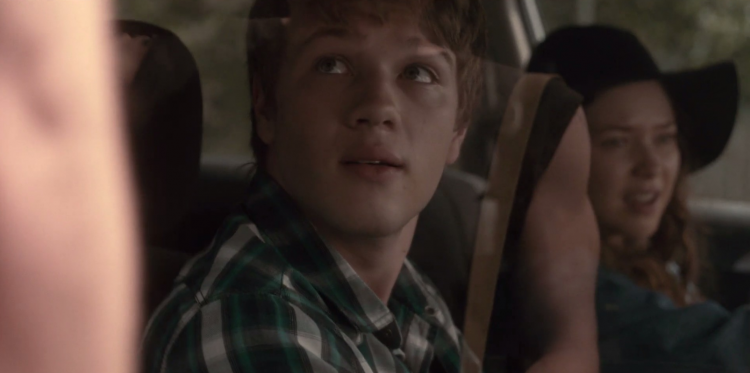
    There are those moments in the youth of LGBT kids when they realize that the feelings they are having are different from others. Before we even meet him as a teenager, Oscar (Connor Jessup) seems to be having those feelings. However, any exploration he might have been going towards is instantly stopped when he witnesses the brutal attack of a gay teen when he is 10. Just before that, his mother, Brin (Joanne Kelly) divorces his father, Peter (Aaron Abrams), and moves out, which leaves him with his hypermasculine father and his pet hamster Buffy (voiced by Isabella Rossellini) — she occasionally speaks to him and acts as his conscious. We skip years later to 17-year-old Oscar who is changed by the events of his childhood. Without a model relationship in front of him and the constant diminishing of any weakness he shows by his father, Oscar simply retreats into himself.

    However, as with many teens, his sexuality comes into question when he forms a crush on Wilder (Aliocha Schneider), his free-wheeling co-worker at a Home Depot type store. As Oscar and Wilder get closer, Oscar’s difficulty of dealing with his feelings, his father, and the stress of trying to get into a special effects makeup school in New York become entangled.

    While it feels like Closet Monster is hitting the usual young adult beats, you quickly realize that it has other plans for its young protagonist. Dunn has even admitted that stories like this have been told before, but because it is so personal, that didn’t matter to him. That intimacy is palpable.While Dunn’s screenplay and direction have to be credited with that, Connor Jessup’s performance is simply electric.

    Connor Jessup in Closet Monster

    With near flawless execution, Jessup builds Oscar with his physicality rather than dialogue. The amount of emotion he’s able to portray with just his face gives us everything we need to know about how he’s feeling in a given moment. The scene in which he meets Wilder is almost devoid of dialogue on Oscar’s part. However, the adolescence-filled sexual confusion is so easily discerned by his physicality and the way he reacts to Wilder. It’s what made Ashton Sanders’ performance in Moonlight so strong.

    Closet Monster is a little obvious with its symbolism. From a metal rod representing his internalized fear of his true identity to Buffy being his connection youth and innocence. However, Dunn stylistically pulls off the movie’s themes beautifully. By cementing our point-of-view with Oscar, he allows us to see what he sees and feel what he feels no matter how surreal they get — a talking hamster, the word unfortunately being scrawled on the walls and furniture after he receives a rejection letter from a college. It’s imperative to the movie’s success since it isn’t plot heavy.


    For a movie so focused on character, we aren’t really given strong portraits of anyone but Oscar. While, of course, this is a movie about him and his struggle with identity, the people around him and how they affect him are integral to his journey. Since we view the movie from Oscar’s point-of-view in two distinct times, we miss a lot of development from his father, mother, and Gemma (Sofia Banzhaf), his best friend. It makes understanding his actions towards them more difficult.

    But this is Oscar’s story. Closet Monster is one of those movies that you watch and understand because it feels so personal. Life doesn’t always work out the way you plan. We don’t get the triumphant happy beats that often bog down movies like this. Instead, we get moments between people, though difficult to watch, that define who we are.

    Closet Monster is available for streaming on Netflix or rental on Amazon!

  • Weekend Movie Review — One of the defining movies of queer cinema

    Weekend Movie Review — One of the defining movies of queer cinema

    In honor of Pride Month, we’re taking a look at one of the best LGBT movies of the decade, Andrew Haigh’s Weekend.

    It’s hard to think of queer cinema of this decade without mentioning the film WeekendUntil Moonlight captured the collective consciousness of cinephiles and mainstream audiences alike, the defining film in the LGBT film canon could be traced back to Andrew Haigh’s masterpiece. But why did this small and intimate film with really only two characters take such a high position in the history of queer cinema? Well, in addition to the lack of high-profile gay movies, Haigh shows us a gay relationship from with an understanding of the dynamics of a gay relationship.

    Unlike the doomed love stories of the past like Brokeback Mountain or, more recently, Carol, Weekend features a story with no risk other than the one of a missed connection. Russell (Tom Cullen) is the character we view the story from. And his background is one that only LGBT people can really understand. There is an odd limbo between being out and fully accepting your identity. Some people fully accept their identity before coming out to those closest to them. Russell can’t fully accept himself, even when he’s around his closest friends who embrace him — Jonathan Race’s Jamie is a general stand-in for this group. For Russell, much like many other gay men, finds safety and comfort in gay clubs, where he goes after spending time with his “straight friends.”


    One night, he runs into Glen (Chris New), an art student. The two men go home together and the next morning after having sex, Glen asks Russell if he can record him talking about their night together for an art project. After, the two trade numbers and go their separate ways. The next day, Russell invites Glen to meet up again. From there, the two strike up a weekend-long conversation that eventually leads to a coming-of-age that both characters sorely needed.

    Weekend is a meditation on moments. There are no grand romantic gestures or ridiculous ultimatums. Though, the central conflict of the movie is an impending departure. Its greatest virtue is its realism. So rarely in relationships nowadays we say what we feel. So two men with a mutual attraction that want it to become more won’t explicitly address that feeling. Instead, Haigh hides that development in the small moments — a touch, a look of familiarity or understanding. As the two men see each other more, each sexual encounter become more explicit — their first hookup isn’t shown on screen. It’s Haigh’s way of showing their growing intimacy and perhaps love.

    Weekend has often been hailed as a gay romance that isn’t necessarily about being gay. And yes, if you strip away those elements the movie would still be able to get by. However, the sexuality of the characters is ingrained in the story as much as it is ingrained in their identity. As I said before, the character of Russell is struggling with his identity. It’s not until he meets Glen that he is forced to confront his identity. Glen, on the other hand, is frustrated at the heteronormativity in our society and vocalizes that dissatisfaction often and loudly. While Russell fades into the background whenever the topic comes up — even when it’s being spoken about around him he shrinks back into himself — Glen takes it on. It’s what helps both characters grow. Russell faces his identity while Glen realizes that he isn’t beholden to the stereotypes.

    In a touching scene later in the film, Glen allows Russell to come out to him — a chance he wasn’t afforded with his parents. It’s a quiet, unassuming scene that is shot without theatrics. However, the emotional impact is palpable. It’s a moment of understanding and unspoken growth. That’s what makes Weekend so effective. Haigh doesn’t need to throw plot or themes in your face. The realistic, conversational dialogue does all the heavy lifting for the movie. Nothing really happens. But, at the same time, everything does.


    There have been grander stories and more flashy movies, but I always find myself going back to Weekend. It’s escapist in its own unique way. You can’t help but immerse yourself in Glen and Russell’s conversation the same way that you did with Jesse and Celine in the Before Trilogy. That’s because, in some way, you can see yourself in them. Whether it’s a moment or a feeling. Or maybe a place or a line. Anyone that has fallen in love can see when other people are falling. Weekend lets you witness two people opening up to each other and discovering each other on a level that can only be described as falling. And I swear, you won’t be able to stop smiling about it.

    ★★★★½ out of 5


    Weekend is available on Digital HD on Amazon!

  • Okja review — A surreal and quirky movie about a super pig

    Okja review — A surreal and quirky movie about a super pig

    Bright colors, quirky characters, and at the center of it a super pig. Okja is a visual delight but offers something deeper below its surface.

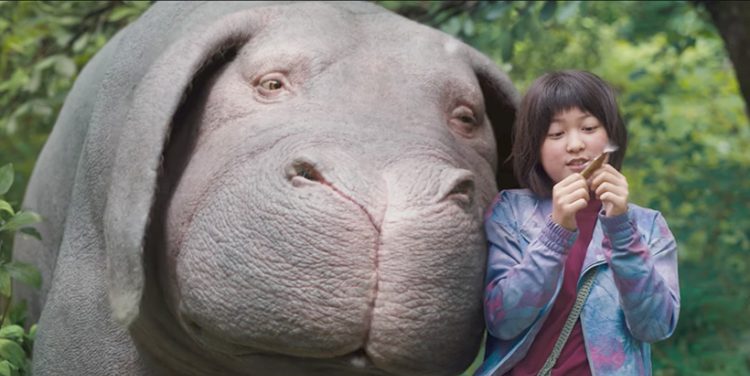
    Okja is a super pig. Yes, that’s what they call her species in the eponymous film. This animal, which is double the size of a hippo, slobbers uncontrollably, and has a propensity to fart — sometimes on command — is also a gentle and loyal giant. That’s clear from Okja’s relationship with Mija, a farm girl in Korea who has grown up with Okja from when she was a toddler. It’s the setup for the classic kid and their animal best friend movie that we’ve seen countless times — Charlotte’s Web, Free Willy, etc. However, this is certainly not one of those movies.

    At the center of Okja is darker themes that can be summed up in the opening scene. Lucy Mirando (Tilda Swinton), the new CEO of the Mirando Corporation, announces in a bright and flashy presentation in 2007 the company’s newest venture: the super pig. Framed as the next step of meat production, the corporation isn’t holding back any expense in promoting the product — flashy graphics, a room full of press. However, the centerpiece is a 10-year contest that involves the company sending twenty-six of the super pigs to locations throughout the globe to see which farmer raises the best pig.


    However, Mija doesn’t seem to understand that the company has darker intentions as its end game. Specifically, that the super pigs are going to slaughtered and eaten. For all the glitz and glamor that the Mirando Corporation has, they are simply covering up that fact that they are the embodiment of corporate greed. Swinton — following up her incredible performance in the director’s last film Snowpiercer — acts as the human stand-in for the company. However, her character’s journey is a lot deeper than that. This campaign is her chance to finally crawl out from under the shadow of her grandfather, father, and menacing twin sister (also played by Swinton), who have all taken the reigns of the company at some point. Her complete lack of empathy for the creatures and Mija stem from money and success blinding her.

    The opening act of the film is a surreal study of a human, their companion, and their relationship. Mija and Okja aren’t human and pet. They’re truly best friends. Okja is as loyal and caring for Mija as she is for her. More importantly, though, Okja’s intelligence and compassion are on full display. It shows that there is a soul behind her eyes. However, that all comes crashing down when a caustic television veterinarian (played by Jake Gyllenhaal) comes to retrieve Okja for the media rounds before ultimately becoming just a product in a grocery store.

    As the setting shifts from Seoul to New York, we are introduced to the members of the Animal Liberation Front (ALF) — led by Paul Dano, who gives a marvelous performance — a PETA like organization that tries help Mija get Okja back. However, they, like Mirando, have ulterior motives as well. After the first act, which plays a lot like the dreamscapes of a Hayao Miyazaki film, the rest of the movie works best when the ALF or Tilda Swinton is on screen. Both sides are at times morally compromised. However, they also have a humanity that makes you understand the dilemma’s they face. That’s not to say that the movie is constantly bleak or overly serious. In the end, Bong Joon-Ho is a director that finds the humor in even the darkest of topics. For example, one of the members of ALF is constantly fainting because he eats as little as possible to leave the smallest carbon footprint. How far do you go to exemplify your ideals?

    However, there are moments when the movie doesn’t work. Specifically, Jake Gyllenhaal’s performance often takes you out of the world. The world that the movie takes place in is surreal, but his performance is on another planet. From his high squeaky voice to his twitchy movements, it’s over-the-top in the exact way a good over-the-top performance shouldn’t be. Compare that to Tilda Swinton’s idiosyncratic antagonist who still makes you feel even in her most overzealous moments. Steven Yuen does great work as well as another ALF member. However, the actor that makes the biggest impact in the film is Ahn Seo-hyun as Mija. So much of the movie relies on your reaction to her character. And she nails every scene.


    Even the smaller roles make a huge impact, though. It’s one of the best things about Bong Joon-Ho movies. Everyone from a disgruntled truck driver to Lucy Mirando’s neurotic assistant get a chance to make an impact on the screen that is memorable, and more importantly, adds to the surrealist world the movie takes place in. And for a movie featuring animal cruelty and corporate greed, it’s incredibly funny. But it doesn’t try hard to be. By just being its quirky self, it accomplishes that.

    To try and classify Okja would be a disservice to the movie. It’s as one of a kind of a film as they come. And that’s its greatest virtue. For this movie to work, it has to march to the beat of its own drum. That beat is a wonderfully unconventional movie that’s sometimes satire, sometimes dark comedy, but all heart.

    ★★★★ out of 5


    Okja is available for streaming on Netflix!