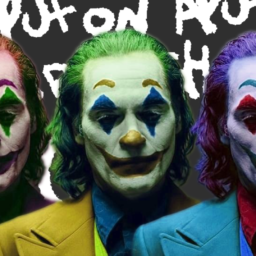
Joker is an example of the mental toll that the struggle to adequately perform emotional labor can have on a person who is already struggling.
In The Managed Heart: Commercialization of Human Feeling, by Arlie Russell Hochschild, (1983) Hochschild defines emotional labor in the following way:
“This labor requires one to induce or suppress feeling in order to sustain the outward countenance that produces the proper state of mind in others-in this case, the sense of being cared for in a convivial and safe place. This kind of labor calls for a coordination of mind and feeling, and it sometimes draws on a source of self that we honor as deep and integral to our individuality.”
(Hochschild, 7)
While this concept is strongly linked to gender (women are often expected to perform emotional labor in both professional and personal life) it is also a concept strongly linked to class — many of the careers most notable for their demands of emotional labor are working class and middle-class professions — nurses, bank tellers, social workers, and careers in hospitality and food service.
Joker is a film concerned with performance in a variety of spheres. For example, in its aesthetic and philosophical fixation on masks, dance, and stand-up comedy. It also explores the way a failure at emotional performance can have severe material and psychological ramifications for vulnerable members of society. One such person is Joker’s protagonist Arthur Fleck (Joaquin Phoenix), a man struggling with poverty, childhood trauma, and mental illness. “The worst part about having a mental illness is people expect you to behave as if you don’t,” Arthur writes in the diary he is instructed to keep by a social worker. The expectation of gleeful subservience (“Don’t forget to smile!”) is one not only required by Arthur’s job as a clown — to repress, to entertain, primarily in order to turn a profit for others — but also in his personal life as a person with a mental illness and obtrusive neurological disorder.
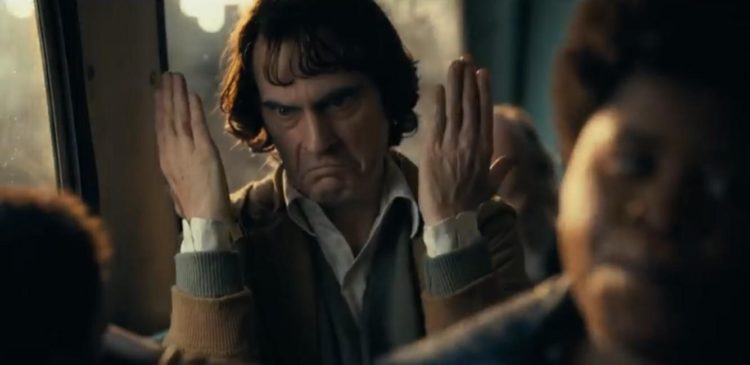
Arthur is a pleasant person for the early portions of the film. He is a diligent caretaker of his ailing mother (Frances Conroy), polite to those around him, and hardworking at his job. Despite his efforts to make those around him not only at ease but happy, Arthur is still left lonely, unheard, and rejected. He is described by his boss as simply “weird” and that he makes people uncomfortable. He is a plain, even unkempt dresser, sickly thin with poor posture, often feminine in his mannerisms, with a disorder that attracts negative attention; his inability to convincingly play the role of normative manhood and regulate his outward expression of emotion has a material effect on his social and financial mobility, leaving him trapped in abject poverty.
“For the flight attendant, the smiles are a part of her work, a part that requires her to coordinate self and feeling so that the work seems to be effortless. To show that the enjoyment takes effort is to do the job poorly.”
(Hochschild, 8)
Joker intertwines Arthur’s class and psychological state with a surprising level of emotional depth and social consciousness. Arthur doesn’t just have one bad day that makes him snap, he lives within a system that demands that his entire existence as a member of the working class involves assuring the comfort and entertainment of those around him. His repeated failure to live up to this task eventually causes him to give up the pursuit altogether.
Ancillary characters, predominantly the black employees of state-sponsored institutions, are also shown to have their emotional labor taken for granted. Social workers, an administrative clerk at Arkham Asylum (Brian Tyree Henry), and Sophie (Zazie Beetz), a single mother working as a bank teller, it is the job of these four characters in their professional and personal lives to constantly consider the feelings of those around them, even when they are rarely afforded the same courtesy by those of higher status.
Garbage piles up around the city of Gotham, Thomas Wayne (Brett Cullen) shows nothing but patronizing disdain for those in need, and these characters are expected to continue to perform their roles with a smile. When Gotham cuts social service funding for the office, Arthur’s social worker says that the city doesn’t care about people like him, and doesn’t care about people like her either. But the two must both put on a pleasant face, their happiness taken for granted as they are abandoned by the government systems that should be supporting them.
“The deferential behavior of servants and women-the encouraging smiles, the attentive listening, the appreciative laughter, the comments of affirmation, admiration, or concern-comes to seem normal, even built into personality rather than inherent in the kinds of exchange that low-status people commonly enter into.”
(Hochschild 84-85)
Arthur’s journey is in many ways an escape from a life of performing for others’ benefit, a process of committing himself to free expression for his own sake. He abandons self-consciousness and repression and learns to express his feelings fully, and violently. In the climax of the film, Arthur’s posture and voice have changed, he is vibrant in his dress and physically expressive, free from societal expectations of anonymity and subservience. It is horrific to see Arthur enact so much violence in the film’s final scenes, but there is also a sense of triumph in seeing a downtrodden, abused man free himself from the demands of others, to find cohesion between his internal self and external expression.
Notably, Arthur’s convulsive laughter is largely absent once he adopts the Joker persona in earnest; the manifestation of the innermost chaos which he was constantly struggling to stifle no longer plagues him. Unconcerned with economic class, social acceptance, or the care of others, escaped from the artifice of emotional labor, Arthur is at home in his body and mind, and is free to behave — horrifically, theatrically, truthfully, as his heart desires.