Tag: Zendaya

  • Challengers is a winner. Game, sex, match. | review and analysis

    Challengers is a winner. Game, sex, match. | review and analysis

    Challengers follows a decade-long love triangle between three would-be tennis stars that culminates in a match nearly as intense as their entanglement.


    Challengers tells the story of a decade-long deliciously messy love triangle that is as quick and thrilling as a tennis match and crazy, sexy, cool as the best erotic thrillers. Rapidly volleying between the past and present, director Luca Guadagnino keeps a light and fun tone thanks to a stellar heart-pumping score and clever editing even as the competition (both tennis and for the heart) gets heated. With a trio of perfectly-matched performances with Zendaya further cementing her start status and Josh O’Connor and Mike Faist building on their already impressive work, Challengers is as engrossing, entertaining and delightful as they come. A crowd-pleaser that’ll have you on your feet asking for more.

    To call Challengers a romance would be both apt — it is about love and relationships after all — and underplaying just how deliciously messy the love triangle at its center becomes. The plot isn’t particularly shocking, unless you consider a well-placed drop shot a twist. But the increasingly debauched ways that each of the three corners of the triangle tangle, using their pasts and understanding of their psychologies against each other, are constantly satisfying even if you know what’s coming.


    ADVERTISEMENT


    That’s because Challengers builds to every moment with incredible precision knowing exactly where to hit and how hard for maximum effect.

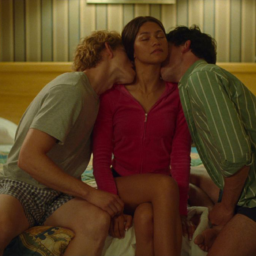
    So when Zendaya’s tennis prodigy Tashi Duncan turns a three-way make-out with best friends and tennis partners Art Donaldson (Mike Faist) and Patrick Zweig (Josh O’Connor) in a dingy motel room during the 2006 Junior U.S. Open Championships into a two-way make-out between the two boys, it’s not only devilishly sweet, it’s exactly where we wanted them to end up.

    It all comes back to Justin Kuritzkes’s ingenious screenplay that frames the rocky history between the three would-be tennis stars with what should be a low-stakes match between Art and Patrick that instead becomes a metaphor for their volatile friendship. Each time a point is scored during the match or there’s a particularly intense volley, the movie flashes back to a moment in the entanglement that has the exact same result. Except rather than a point they win Tashi.


    ADVERTISEMENT


    It’s not pedantic as it sounds, but the feeling it evokes has all the intensity and suspense of any tennis match.

    When we first meet Tashi and Art they are married. He a tennis pro in a rut and Tashi his scrupulous coach. To help him gain his confidence back, she enters him into a U.S. Open Qualifier hilariously sponsored by Phil’s Tire Town in the very unglamorous town of New Rochelle, New York. It should be a walk in the park for Art, that is until he realizes that Patrick is also in the challenger.

    In flashbacks, Art is portrayed as the more serious of the two. He sees tennis as a serious sport. Something to be mastered. Patrick, on the other hand, with a sly grin often laying back with manspreading as wide as possible, believes you either have it or you don’t. It’s that kind of teenaged dirtbag posturing (the he never really shakes even as an adult) that pushes him to unabashedly pursue Tashi at a post-tournament party at the 2006 Junior Opens. However, Tashi, as tactical and strategic in love as she is on the court, can immediately pick up on the dynamic between the pair — and exploits that by pitting them against each other. Both psychologically and literally when she says she’ll give her number to whoever wins the Men’s Singles Final during the tournament.


    ADVERTISEMENT


    Zendaya plays Tashi with an easy confidence that captures you as much as it it captures the boys. Her charisma mixed a knowing wit is irresistible.

    Her performance is as much of a technical marvel as the well-captured tennis matches. From the start of the triangle, she is in complete control. Not because she wants to be, but because she knows she can. It’s what’s fascinating about the underlying fascination Challengers has with relationships. Like last year’s Fair Play, the movie presupposes that relationships are as much about power as they are emotion. Whether or not there is actually love between Tashi, Art and Patrick isn’t the question. It’s how the tension — both sexual and psychological — drives their decisions.

    In the present, Art is on the precipice of retiring at a low point in his career. An emasculating decision that puts strain on his relationship with Tashi as both wife and coach. With so much of their relationship tied up in tennis, how can they go on without it? The subtext: how can she love him without it? On the other hand, Patrick’s unpredictability, that makes him less malleable for Tashi’s uses, also makes him more attractive. It’s those opposing and attracting forces that make the movie drives the movie’s tension through the roof. Even without sex scenes — most end before or pick up after — the eroticism is palpable.


    ADVERTISEMENT


    However, Guadagnino brilliantly uses the visceral and immersive tennis scenes as the movie’s proxy for sex.

    He captures sweat falling, muscles flexing and strained grunting in glorious high definition slow motion that is as captivating as it is gorgeous to look at — for more reasons than one. Guadagnino wrings out the proverbial cinematic rag and switches from player POVs to slow-motion to quick cuts to a stunning tennis ball POV that has the audience literally volleyed between the two players. All the while, Trent Reznor and Atticus Ross‘s thumping electronic score — their best since The Social Network — keeps the momentum going. Along with the crispest ball hitting racket sounds, Challengers is an immersive cinematic experience worthy of seeing on the biggest screen possible (find your local IMAX or Dolby Theater immediately).

    However, every single shot is charged. Even though Art and Patrick’s relationship is platonic, there’s something so romantic and even erotic about the way they taunt and chide each other — and of course hit balls.

    Challengers feels like a movie we haven’t seen before, or at least in recent memory. One that doesn’t feel bogged down by its self-importance nor trying so hard to be shocking or camp (I’m looking at you, Saltburn). Guadagnino simply has fun with Justin Kuritzkes’s brilliant screenplay and uses each of his three actors exactly as they should. Zendaya is the movie star of a generation. Mike Faist is the steady straight man. Josh O’Connor is a scene-stealer with one of the most complex storylines of all. And at the very least, it’s a blast.


    ADVERTISEMENT


    More movies, less problems


    Hey! I’m Karl. You can find me on Twitter and Letterboxd. I’m also a Tomatometer-approved critic.

    💌 Sign up for our weekly email newsletter with movie recommendations available to stream.


    ADVERTISEMENT

  • Dune: Part Two is an epic science fiction masterpiece | review

    Dune: Part Two is an epic science fiction masterpiece | review

    Dune: Part Two finds would-be messiah Paul Atreides on a revenge mission that may take him to the dark side of Arrakis

    Dune: Part Two is a visceral masterpiece and one of the best science fiction movies ever made. Besides delivering a visually impressive assault on all the senses, it’s also a riveting political thriller and character study that struggles with morality, religion and power. Director Denis Villeneuve guides every facet of the movie—costumes, production design, visual effects, sound—to the very top of its craft.

    Dune: Part Two is a The Empire Strikes Back or The Return of the King-level event. A science fiction classic in the making that’ll inspire the next generation of science fiction and fantasy films. Denis Villeneuve continues his unblemished filmography.

    Dune: Part Two is in theaters March 1.

    From the opening throngs of Hans Zimmer‘s score and saturated rust-colored first shot of the desert planet Arrakis, it’s impossible not to feel immediately transported. Like you were shot out of a rocket straight into a sand dune—ironic because we first encounter our protagonist (?) buried hiding in the sand. That’s partially thanks to director Denis Villeneuve‘s skillful world-building in the first half of the story that brings a detailed view of the future set out in Frank Herbert’s novel of the same name. But what sets Dune: Part Two apart is its absolute audacity of vision that often has your heart skipping a beat.


    ADVERTISEMENT


    Like the moment when a group of Harkonnen soldiers leap and gracefully float from a sand dune to a rocky plateau to escape an incoming sandworm. Villeneuve makes the moment one of effortless wonder. Like what is happening in front of us is completely normal and the most incredible feat we’ve ever seen before us—partially because it is.

    There are countless moments like that throughout Dune: Part Two. There is the breathless battle sequence where suspected messiah Paul Atreides (Timothée Chalamet) and Chani (Zendaya) along with the desert-born Freman people take down a Harkonnen-held spice mining operation or Paul’s jaw-dropping and anxiety-inducing wormriding rite of passage that involves… well, riding a giant sandworm. Both sequences feel like an assault on every one of your senses. It’s like you can feel the grains of sand whipping by your face when an army of Fremen-ridden sandworms blast through a sandstorm to the apparently inaccessible southern hemisphere of the planet.


    ADVERTISEMENT


    It’s almost impossible not to overstate Villeneuve’s absolute cinematic achievement. It is perhaps the most visually impressive movie I’ve ever seen—a visual and auditory spectacle that is at times difficult to comprehend in the same way that I imagine audiences felt when seeing Star Wars or 2001: A Space Odyssey for the first time.

    And just when you didn’t think it could surprise you any more, it introduces you to the black-and-white Harkonnen world as it explore the sadistic but intoxicating villain Feyd-Rautha Harkonnen (Austin Butler is a terrifying scene stealer in a role that proves that Elvis wasn’t a fluke).

    Admittedly, I’ve never read Frank Herbert’s book nor seen David Lynch’s much-maligned 1984 adaptation. And after watching the first part of Villeneuve’s adaptation I was confused why this story had to be retold. The story of Paul, an aristocracy-born and bred white man, tapped to lead an oppressed people against his own enemies wasn’t only formulaic but reductive. Hadn’t we advanced past the white savior narrative? So when Dune: Part Two takes a turn to the morally grey area I wasn’t just enthralled, I was impressed.


    ADVERTISEMENT


    Throughout the movie, Paul is resistant to the label messiah. Not because of some internal imposter syndrome, but because he is prescient of the potential outcome if he embraces the label. That isn’t a new concept. What does feel fresh is the social and political implications of a messiah—or at the very least a leader that people see as the only way out. Dune: Part Two tackles the moral-quandary from many different angles.

    There’s the one of Paul who sees it as both a strategic blessing in his mission of revenge against the people that betrayed his family—mainly the Emperor (Christopher Walken) and Vladimir Harkonnen (Stellan Skarsgård)—and a curse that would betray his closest confidant Chani. There’s his mother Lady Jessica (Rebecca Ferguson who continues her enthralling complex performance) who works on behalf of the Bene Gesserit, a group that aligns itself with those that could best help their pursuit of power. There’s the aristocratic elite, the Emperor and his daughter Princess Irulan (Florence Pugh), who are playing for their own relentless pursuit. And then there’s the Fremen, split into two groups. One that is seeing the messiah as their way out of struggle—particularly Stilgar (Javier Bardem)—and the other that see him as a threat to their pursuit of freedom.

    In the middle is Chani, who wants to believe in the good she sees in Paul but worries that her infatuation is clouding her better judgement for her people. Zendaya has for years been bubbling to the surface as one of the great new talents of her generation. Dune: Part Two cements her movie star status.


    ADVERTISEMENT


    With interwoven plots that involve a meddling mastermind fetus, intergenerational feuds and a social and political game of colonization and power, it could have been easy for Dune: Part Two to buckle under the weight of its ambitions—it’s the reason Lynch’s movie and John Harrison’s miniseries adaptations failed. Instead, Villenueve finds a balance between engrossing political thriller and epic science fiction action that grabs for heart and mind and doesn’t let up through its entire surprisingly breezy runtime.

    Dune: Part Two in many ways is the classic blockbuster spectacle with its intense battle sequences, ever unfolding world and characters that are held up as heroes. But the way it subverts the hero’s journey, in a way that angered many in The Last Jedi, is what makes it a classic-in-the-making that feels like it has the gravitas of The Empire Strikes Back or The Return of the King. Like those movies, I could see Dune: Part Two inspiring the next generation of great science fiction and fantasy stories. It is that singular. It is that impressive. It is that awe-inspiring.

    Dune: Part Two is a once-in-a-generation cinematic event that you do not want to miss. Will you follow the call?


    ADVERTISEMENT


    More movies, less problems


    Hey! I’m Karl. You can find me on Twitter and Letterboxd. I’m also a Tomatometer-approved critic.

    💌 Sign up for our weekly email newsletter with movie recommendations available to stream.


    ADVERTISEMENT


  • ‘Dune’ is a spectacle that gets lost in a sandstorm | TIFF movie review

    ‘Dune’ is a spectacle that gets lost in a sandstorm | TIFF movie review

    House Atreides is tasked with controlling the mining operation on the dangerous desert planet of Dune, but what they don’t know is political intrigue is afoot

    On the surface, Dune is ambitious and thrilling. However, it feels like a good movie that flirts with greatness but never quite gets there. Though it’s stunningly made and designed, the classic story just doesn’t hold the same weight as it did when it was first released and the decision to only release half of it doesn’t help.

    Why did Blade Runner 2049 work when it really shouldn’t have? When it was announced that Denis Villeneuve would direct the sequel to Blade Runner it had already toiled in development hell for nearly two decades, usually the kiss of death even if the film eventually does see the light of day. However, Villeneuve delivered a singular meditative vision that didn’t set out to remake the original, but rather expand on the world that was already there and dive even further into its thematic depths. That’s what Villeneuve had to do with Dune, especially after David Lynch’s much-maligned 1984 adaptation. And while he delivered on the world-building and action, underneath feels like a lack of a beating heart.

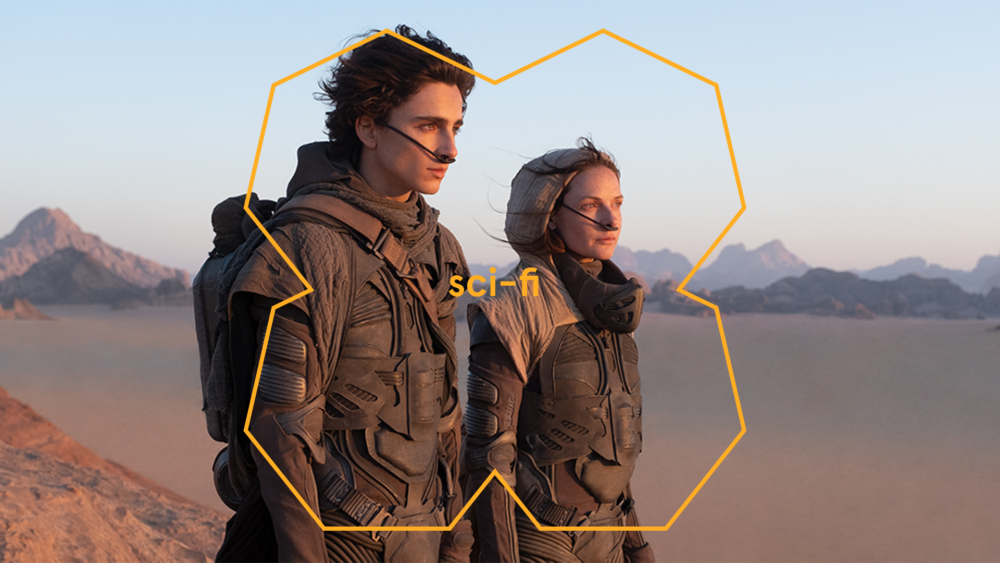
    Erring closely to Frank Herbert’s 1965 novel, Dune follows the members of House Atreides. Duke Leto Atreides (Oscar Isaac) is tasked with stewarding the dangerous desert planet Arrakis, which is used by the Empire for its endless supply of “spice,” a powerful substance that has supernatural effects on humans. He, along with his concubine Lady Jessica (Rebecca Ferguson) and son Paul (Timothée Chalamet), journeys to the planet to begin the difficult work controlling the spice mining operation. However, political intrigue is afoot as Vladimir (an unrecognizable Stellan Skarsgård), Baron of House Harkonnen, is plotting the downfall of House Atreides.


    ADVERTISEMENT


    The world, captured gloriously by cinematographer Greig Fraser (Lion, Zero Dark Thirty), is built with terrific detail that makes it so fun to explore. The world is littered with fun details in the costumes (Ferguson’s Lady Jessica is a fashion icon), ships (dragonfly spaceships!), and culture. The mythology feels rich and deep. Like there are endless layers to parse through. 

    There is a gaggle of names and places to keep in order, but Villeneuve’s deliberate pacing makes it easy to keep track of the story — almost too easy. The story is quite simple, for better and worse. Better because heavy exposition tends to bog down sci-fi. On the other hand, he exposes how thinly built the plot of Dune is.

    Though Dune was heavily acclaimed at the time of its release and still stands as one of the most influential novels ever written, nearly six decades later we’ve seen countless iterations of the “chosen one” storyline that is at its core — Star Wars, The Terminator, The Matrix, even Harry Potter. This undercuts the exceptional world-building that Villeneuve accomplishes by giving us a story that frankly fails to take full advantage of what the world has to offer. 

    💌 Sign up for our weekly email newsletter with movie recommendations available to stream.


    ADVERTISEMENT


    ADVERTISEMENT


    And the main part of that failure is Paul himself. The movie hinges on our desire for his success and the success of his people. And while yes, it’s easy enough to understand that House Atreides and the Fremen are good and House Harkonnen is bad, we’re never shown in earnest why we should root for them. We’re simply told.

    On the surface, Dune is ambitious and thrilling. The few action set-pieces are tight and suspenseful as are the scenes of pure dramatic heft. In particular, many of the scenes between Ferguson’s Lady Jessica and Chalamet’s Paul start to find the humanistic quality that the rest of the film is missing. In one scene, Jessica and Paul use their shared knowledge of hand signs and telepathic powers to take down a group of soldiers. It’s the kind of plot and character-driven action that made Blade Runner 2049 so successful. However, in Dune it feels like it slips away like sand through your hands as soon as it is over because it’s difficult to muster up a connection to any of the characters. 

    Dune, or Dune Part 1 as the title card puts it, feels like half of a movie. Unlike all the “chosen one” films I listed above, it can’t stand on its own. Even the introduction of the Fremen people (led by Zendaya and Javier Bardem) feels cut short. There is a lot of story to get through, but the decision to split the film may have stretched the story to its absolute limit. I don’t mean to sound overly negative. Dune is a good movie that flirts with greatness but just never quite gets there — much like the chosen one. But perhaps, as the story goes, it’ll get there in the end.


    ADVERTISEMENT


    ADVERTISEMENT


    More movies, less problems


    Hey! I’m Karl. You can find me on Twitter and Letterboxd. I’m also a Tomatometer-approved critic.

    💌 Sign up for our weekly email newsletter with movie recommendations available to stream.


    ADVERTISEMENT


    💌 Sign up for our weekly email newsletter with movie recommendations available to stream.


    ADVERTISEMENT