Category: Interviews

  • New Voices: How Rabiah Rowther’s global education inspires her

    New Voices: How Rabiah Rowther’s global education inspires her

    Rabiah Rowther is a screenwriter, director, and producer based in New York City. Since 2022, she has served on the Screening Committee for the Hamptons International Film Festival. Her career includes roles in development and production at Jane Startz Productions, FilmNation Entertainment, and Milojo Productions. She was also an assistant to Emmy-nominated filmmaker Peter B. Barton on We Rise Up Singing. With directing credits spanning theatre and new media, Rabiah holds a BS from Boston University and an MFA from NYU’s Tisch School of the Arts. She recently completed her MFA in Theatre Directing at the Actors Studio Drama School.

    We chatted with Rabiah about her career, inspirations and the what she sees for herself in the future.

    How have your travels across the globe and experience as an expat from India helped inspire your work?

    As I was growing up, moving from one country to another every few years really formed what art meant to me. I was incredibly fortunate to receive a global education, one that exposed me to other theatre, film, and literary traditions that diverged from the “traditional” western canon. This helped to foster an appreciation and recognition of culturally-specific and differing works, as well as created a strong yet malleable foundation that continues to focus my work through the lens of universality. I was also really privileged in that moving constantly meant that I additionally got the chance to travel around the world (a lot!), and that only meant further exposure to art and the ways the definition of art was challenged. Being able to explore space and environment –– and developing an awareness of the differences and similarities of various spaces and environments while I was growing up –– really helped to shape the kind of work I direct with regard to meaning and context, as well as enriches the worlds and circumstances I create when I write.


    Is there a filmmaker whose career has inspired you?

    Filmmaker Mira Nair often speaks to the clash of cultures and finding one’s own cultural identity in a world that is constantly changing and exchanging, which is something I’ve had to contend with all my life. I really admire her work as a director, as she brings truth and relatability to the stories she tells with a refreshing and timeless simplicity, even when they’re culturally specific or rooted in uniquely individual struggles and circumstances. Her works speak to the range that she has as an artist, a versatility that appeals to me as an artist now, and a quality that I hope to be known for in the future.

    Do you have any specific aspirations for your career?

    I just want to keep on making work that speaks to people. I love works that can make people laugh, I love directing pieces and writing scripts that even the most reluctant viewer or reader will enjoy. Along with this, I hope to broaden the view of what kind of art can exist in a commercial space, as well as develop stories that reflect the rich diversity of our world that has yet to be explored.

    You can find Rabiah @rabiahrowther and www.rabiahrowther.com.


  • Director and writer Martin Edralin talks his history-making SXSW film ‘Islands’ | Interview

    Director and writer Martin Edralin talks his history-making SXSW film ‘Islands’ | Interview

    Director and writer Martin Edralin talks about his new film Islands, which is premiering in the narrative feature competition at the 2021 Online SXSW Film Festival

    As I was perusing the lineup for the 2021 Online SXSW Film Festival one film, in particular, caught my eye. Martin Edralin’s Islands had a logline that immediately captured my attention with one word: Filipino. As a Filipino-American, it was a visceral experience to see my race so unabashedly showcased in a film premiering at a major festival. But that wasn’t even something that director and writer Martin Edralin had thought about.

    “It seems like there’s a movement in the US with foreign language right now, so it’s really interesting timing,” he told to me in an interview the week before the film premieres on Tuesday, March 16th.

    In our chat, we talked about how Filipino culture shaped the film, how it relates to his great short film Hole, and how it was working with two non-professional actors in the lead roles.

    Note: This interview has been edited and condensed.

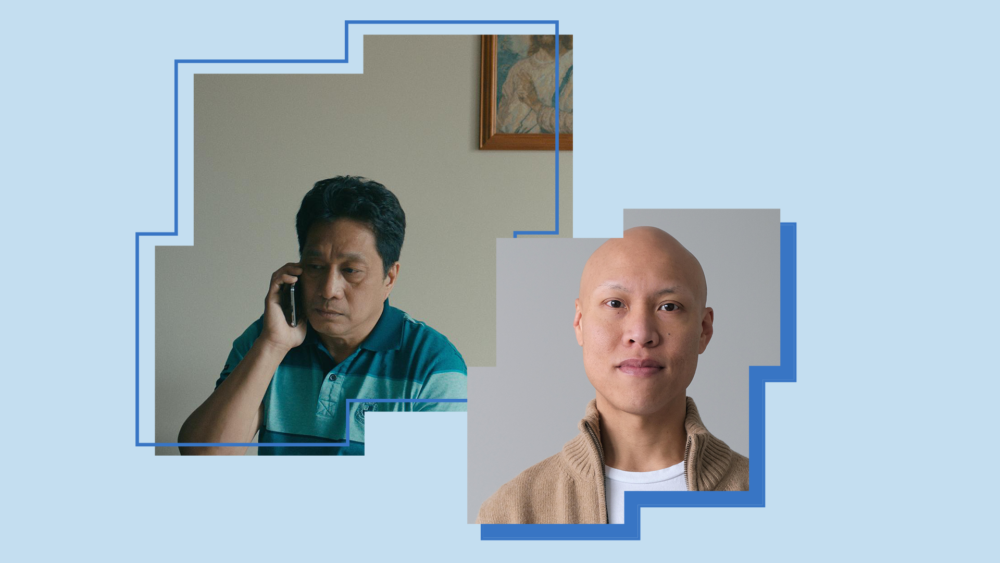
    Martin Edralin, director of Islands. Credit: Karen Tsang
    Martin Edralin, director of Islands, premiering at the 2021 Online SXSW Film Festival. Credit: Karen Tsang

    Karl Delossantos (Smash Cut): I watched the film last night and I don’t know if I should thank you for the therapy or charge you for the emotional distress. It was terrific!

    Martin Edralin: Oh, thank you!

    This is the first film in Tagalog to premiere at SXSW and as a Filipino-American that was great to see. How does it feel to have that distinction?

    It feels great! I had no idea. It wasn’t something I even thought about. I think it was after they accepted the film that I looked into it and noticed it. I didn’t even know as a Canadian movie that we could be in the narrative competition. I thought it would be world cinema. It’s really exciting. It seems like there’s a movement in the US with foreign language right now, so it’s really interesting timing.

    Yeah, especially coming off the heels of the Minari Golden Globe controversy where it was considered foreign language even though it’s an American film. The Filipino diaspora is at the center of Islands. What about that was interesting for you to explore?

    That’s what I lived. Originally this was going to be made in the Philippines. Because of some funding in the development process that I qualified for I had to move it to Canada. And in that process, I realized that yeah I’m Filipino but I don’t actually know what it’s like to live in the Philippines. I visited a few times, but being Filipino in Canada or the US is very different.

    And it’s my first Filipino film too so there was an awareness in the process where I really know [the material]. Where in my other films with white characters I was telling stories about humans and emotions I’m familiar with, but for Islands we could really color it with the houses we know and the family relationships. It all feels so natural. Even though I was on set, when I watched the movie for the first time I could smell the food in the scenes.

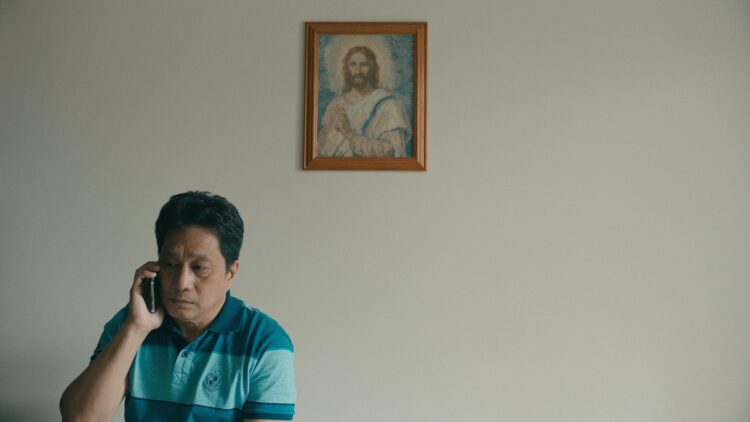
    Joshua (Rogelio Bataglas) calls for help in Martin Edralin's Islands | Credit: Film still
    Joshua (Rogelio Bataglas) calls for help in Martin Edralin’s Islands | Credit: Film still

    ADVERTISEMENT


    Watching the opening scene was such a visceral experience for me because it was these artifacts of my childhood that I recognized. The one that really got to me was chopping the whole raw chicken with the cleaver!

    Exactly! It’s little things like that. We know those sounds.

    The theme of Islands is actually pretty similar to your short film Hole in that it’s about intimacy and someone trying to find it and they’re unable to.

    It’s something I didn’t really realize until I was writing it or filming it that it was kind of like a follow-up. [Both films] have lead characters that are past their “prime dating years” and aren’t going to have an experience of love or sex or any real human connection.

    Yeah, they’re definitely similar in that way. How did you find Rogelio Balagtas [Josua in Islands]? He and Sheila Lotuaco [Marisol in Islands] are both remarkable.

    We went out to the community and we went on Facebook and I emailed every Filipino organization I could find in Canada and eventually we went to the US and the Philippines. We just really had to find the right people. With Rogelio, someone told me about a short that was made in Winnipeg and I saw him in it. He was a dad, it wasn’t the lead role or anything and he barely spoke, but there was something interesting about him.

    So we asked him to self-tape and there was still just something about him. So we did a Skype audition, which was super fun because we did a few dialogue scenes but it was really about him doing things without dialogue. So we made him dance in a room by himself and cry into a pillow and pretend to masturbate and we were like wow this is the guy. Because we didn’t want the character to be sad or pathetic. We didn’t want him to masturbate and have it be seen as gross. And he’s just a sweet guy. He’s a nice guy.

    Another connection with Hole where sexuality isn’t a taboo and it’s embraced and seen as a part of human life.

    Yes! And especially with masturbation with men. It’s always portrayed as something as gross or bad or wrong unlike with women where it’s hypersexualized. I just felt like that’s just what everybody does.

    I’m glad you mentioned too that you had Rogelio dance in his audition because I was texting my parents while watching it that line dancing is a plot device, which is so Filipino! Was that a part of the fabric of the film?

    I don’t actually remember. I have a feeling that it was during casting when we were looking for senior actors — and they’re always difficult in any ethnicity to find. And I knew there were a lot of these line dancing classes out there — my mom actually goes to one — and there was one in particular that was four-hours long. The first time I went there I was almost moved to tears. It was so beautiful to see all these people that are old and some could barely dance, but they were there and doing this thing together.

    💌 Sign up for our weekly email newsletter with movie recommendations available to stream.


    ADVERTISEMENT


    I love that the ability to dance alone is seen as something liberating in the film.

    Yeah liberating and thinking of it as pleasure. It’s something we take for granted, the ability to move and to move to music. Thinking about love or sex, it’s just one of those things where it’s joy that needs to be experienced.

    I want to talk about Sheila Lotuaco and the watershed scene in the middle of the film where she talks about her experience working abroad as a Filipino expatriate. What was it like shooting that scene?

    That scene was made very early. This film was originally about that character, an overseas Filipino worker. It was becoming muddled and felt like two different stories so that script is away in a drawer somewhere. I did a lot of research about the OFW (Overseas Filipino Worker) experience and just read a lot of horror stories about these things happening in the Middle East and I felt like I had to keep that in the movie and say something about it.

    I actually thought shooting it was going to be really challenging, but she was a natural. Even in the audition and in rehearsals, she would just cry. Actually both actors when we were rehearsing they would just cry. And I would be like, “you’re not even professional actors!” But they could really just live the experience.

    And Sheila is a caregiver [like in the film], she’s a healthcare worker in Canada so it’s a little different than what other OFWs are doing around the world, but it was something important we had to say.


    ADVERTISEMENT


    We’ve all been thinking about mortality a lot with the pandemic. How did the entire story of Joshua bearing the burden of taking care of his aging parents come together?

    My mom had just retired at the time in 2015 when I had just started thinking about the film, and my dad was on his way to retiring. And you hear these stories about how after someone retires they start to get old really fast from the inactivity or not using their brains in the same way. So I was thinking about that. As you know in Filipino culture we take care of our parents and I have a lot of South Asian friends who also have these multigenerational households where you’re taking care of your parents and they’re taking care of your kids, so I was also thinking about that.

    Living a freelance filmmaker life with a busy schedule and whether you’re being paid well one month or paid at all the next month, how do you in this sort of life take care of your parents?

    Yeah, it’s a distinction between American and Asian culture. It’s always something in the back of your mind: how do you live your life and also take care of them?

    I almost feel guilty thinking about how am I going to do this. In the Philippines it isn’t even a question. It’s just something you do, it’s a part of life.

    For an audience that is not familiar with the Filipino experience, what do you want them to take away from the film?

    There was never really any intention of putting our culture on display, but we were certainly looking to decorate the film with it — in the production design and including line dancing and religion, how we mourn, our food. It’s all in there. We wanted to show what’s it like to be in a Filipino home.

    The film was going to be quite dark. Hole and other shorts I’ve done are slower and there’s almost no levity whereas with Islands there are touches of dry humor and it’s brighter and more colorful overall. But if anyone is going to take anything from it, and I’m going to get a little dark, but we’re all aging and we’re all going to lose everybody in our lives and eventually we’re going to leave. I was thinking a lot about avoiding regret and experience these things whether it’s love or dance. We should just enjoy and experience the things we can while we can and take chances and if you life someone you should just ask them, maybe not if they’re your cousin *laughs* but yeah, just live.

    Islands is premiering on Tuesday, March 16th during the 2021 SXSW film festival. Visit sxsw.com to register.

    💌 Sign up for our weekly email newsletter with movie recommendations available to stream.


    ADVERTISEMENT


    ADVERTISEMENT


  • Interview: Chris Beninato and Carter Henry of Monterey

    Interview: Chris Beninato and Carter Henry of Monterey


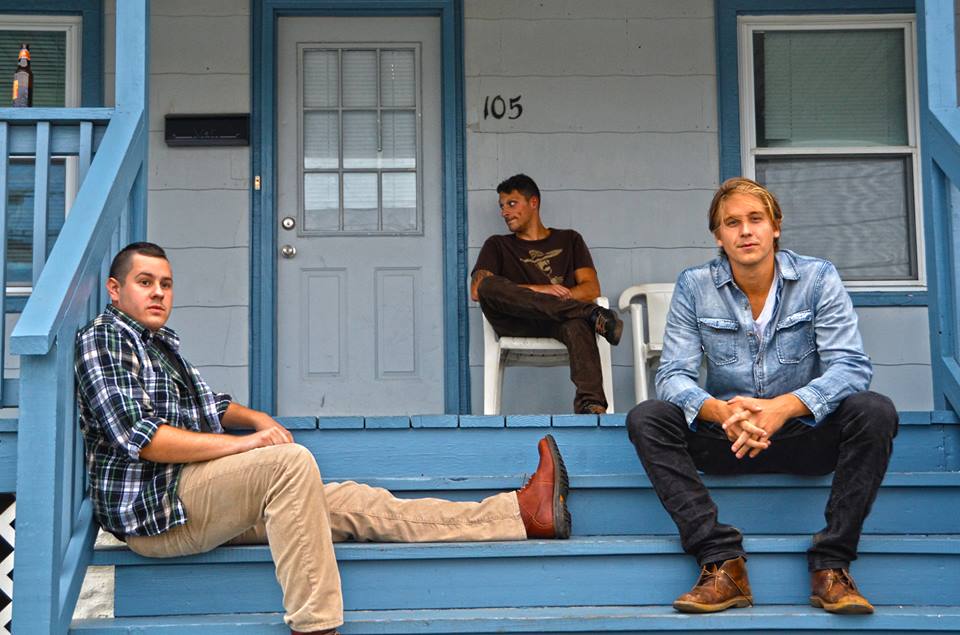
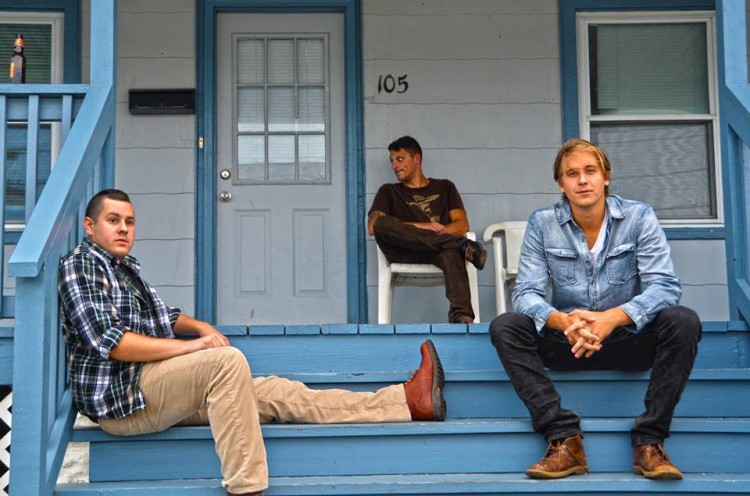
    monterey band

    If you don’t know about the booming music scene in New Brunswick or Asbury Park, you should educate yourself. One of the bands making a splash are rockers Monterey. With their newest release, the trio is taking a different route and exploring a more emotional side (check out our review here). I sat down with bassist Chris Beninato and lead vocalist and guitarist Carter Henry about their time on tour, playing as Nirvana on Halloween, and their new EP “Sailors,” which drops on November 18th. Check out our interview below!


    Smash Cut: First of all, thanks for taking the time to talk with me.

    Chris: Of course.

    Carter: Thanks for having us.

    SC: So you guys just got off of a tour from this summer, which started off at the Stone Pony, which was probably awesome for you guys as a New Jersey Band.

    Carter: Yeah, that was really cool. We opened up for Pepper and the Dirty Heads. It was pretty wild cause him and I, especially back in the day were big reggae fans and we used to always head to concerts. So, it was wild to be on a tour with them.

    SC: How was touring?

    Carter: Fun! A lot of fun. It’s been a lot of fun.

    Chris: An adventure everyday. Long nights, but it was fun. We definitely got to meet a lot of bands. As you know is the plan of touring, you know trying to network as much as possible.

    Carter: It was cool seeing how music worked in other parts of the country. We never really toured extensively before, mostly just Jersey shows, then New York and Philly. But it was cool going out to Ohio and seeing what type of music they play out there and what they’re into. It was comforting knowing that everyone is real into it no matter where you go.

    Chris: There are so many passionate people involved. Between the promoters and who booked us there. The bartenders, everyone.

    SC: You’re coming out of a really awesome community in New Brunswick too.

    Chris: Yeah, which is great! And we’re also getting involved in Asbury. The scenes are bumping.

    SC: Yeah, and you recorded your EP at Lakehouse Studios.

    Chris: Yeah, magnificent studio. You have to see it to believe sort of thing.

    Carter: If you ever get a chance when you’re down in Asbury to check it out. It’s right on Lake Ave. They got a music store down below and a music video company upstairs. It’s a really nice place.

    Chris: And recording there was great. I never felt so comfortable in a recording studio in my life. It was great. A great energy. The people we worked with like Tim Panella helped us a lot for the three days we were there.

    Carter: They just got us really quick. Right off the bat. I think in the past, the people we worked with tended to be older and this guy we worked with was I think 25. I think he just understood music and younger music a little better.

    SC: I mean, Asbury has this rich history of music. If you go to any stage, there’s some legend’s sweat on that stage and Lakehouse is cool new addition to the community.

    Chris: Yeah, I see a lot of bands turning to Lakehouse. Between The Wonder Bar, Asbury Lanes, The Stone Pony, which is great. The scene is awesome. It’s a really intimate type of venue.

    Carter: There’s a great atmosphere there.

    SC: And you’re also playing a house show tonight.

    Chris: Yeah, we do a lot in New Brunswick basements and stuff like that. And they’re a lot of fun. And the venues they make in these basements are crazy.

    SC: Do you change anything up between playing a venue like The Stone Pony and playing a basement show?

    Carter: It’s mostly what covers we play or you know how we’ll play a song. We’ll be a little rowdier in a basement.

    Chris: We just play louder cause it just feels more acceptable in that sense.

    Carter: You know, throw in a punk song to cover.

    Chris: Yeah, we love doing covers in sets.

    SC: Speaking of covers, you guys performed as Nirvana on Halloween.

    Chris: [Laughs] Yeah! That was a lot of fun.

    Carter: One of the more fun shows we ever done.

    SC: Whose decision was that? Were you guys just thinking “hey, let’s play as Nirvana.”

    Carter: Well, we recently became just a three-piece. We’re finding that fourth person. We have a guy we’re working with right now, but no one ready to go for that show. So, instead of just playing as a three piece doing our music, let’s just play as Nirvana. And it was cool learning all the songs. We learned eight songs in a week doing two a night.

    Chris: Yeah, it was a lot of fun.

    Carter: Sometimes they just blended together in my head learning the lyrics and stuff, but it was so cool playing the songs like that. Like, everyone knew the words and stuff. Playing originals, people they dig it and they move to it, but we’re not on the level of Nirvana, so they don’t know our songs like that.

    Chris: I feel like we weren’t sloppy enough in a way with that Nirvana sound [Laughs]. It was awesome with people in our faces screaming the words.

    Carter: It was rowdy.

    Chris: Save Face rocked it too.

    SC: Your new EP is dropping November 18th and listening to “The King’s Head” and then “Sailors” is a jump.

    Carter: It’s a total jump.

    Chris: It’s a big jump. It’s kind of what we always wanted, it was just past producers would have more of their influence on it. Like I said, we just clicked with the guy. He knew what we were going for and what our EP sounds like now is pretty much what we sound like live. We used the same amp, same guitars.

    Carter: We worked with great people in the studios before, but it didn’t really quite click totally. We didn’t get exactly what we wanted.

    Chris: It was a compromise. We definitely kind of compromised in the past to a degree, but I think the direction it’s heading in is going to continue.

    SC: It’s also a more of emotional route.

    Chris: Yeah definitely it’s gonna continue. I mean this guy writes great hooks and great lyrics and it’s gonna continue.

    SC: Yeah, I mean the track “Sailors,” that end with the gang vocals.

    Chris: Yeah, I mean unfortunately our drummer Matt isn’t here, he plays guitar, drums, he plays a little bit of everything. [Laughs]

    Carter: [Laughs] He’s a jack of all trades. But he did a lot of great vocals on the EP. I know exactly the part you’re talking about when everyone comes in and sings it with us.

    Chris: Yeah, we had a great time recording it. It happened so fast almost. It happened too fast, but it was great.

    Carter: Recording that, it was just 4 or 5 of us in a room. Even the guy who was recording was in it, he had like an intern hit the record button cause we just needed more voices. We were like screaming and the microphones were on the other side of the room. It was wild.

    Chris: Yeah, it was fun.

    SC: You guys also got darker, do you pull from anything?

    Carter: Yeah, we definitely pull from experiences and our own emotions. You know, we come up with the music part of it we’ll just kind of free form jam and then we’d say “oh, you know that sounds good.” Then, we’ll add a little structure to that and once in a while I just mumble some things singing, but our drummer texts me “about that new one you should write it about a guy on trial for something that he didn’t do” and I don’t know, it just sparked and I wrote it in like a day. Even though it’s about something, you know I’ve never been on a trial like that obviously, but you can’t help pulling feelings and emotions and experience and that’s gonna show even if you’re just making up a story.

    Chris: I think a lot of songs will have its own meaning for each individual. So one song will sound like and mean something to one person and way different to someone else, but I totally think we captured something we wanted to.

    Carver: Yeah, we definitely wanted it to be darker.

    Chris: More angsty, more pissed off in a way, but at the same time still upbeat and fun.

    Carver: Yeah, we still wanted to have that energy that we have at our shows.
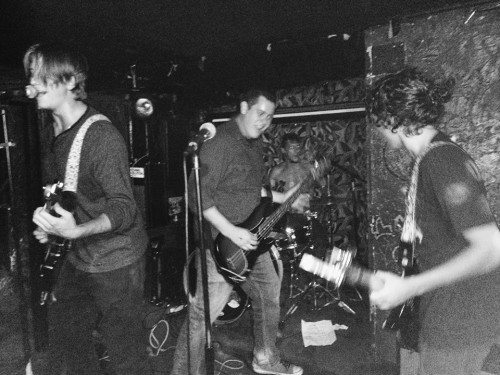
    10305183_805805069442994_3728677459742425457_nSC: That’s awesome. You guys also recently performed at the CBGB festival.

    Carter: That was really cool. There were a lot of great bands that played.

    Chris: I think that was my favorite place that we played in New York.

    SC: The Lit Lounge, right?

    Carter: It’s like a basement. Almost like a cavern. It was cool.

    Chris: Like some catacombs (Laughs).

    Carter: And a lot of people turned out, which was cool. It was similar to the Court Tavern in New Brunswick. But the sound guy was great and it was a good set. We had our old manager play guitar for us that night. It was the first time he ever played for us. So yeah, really good time. Good experience.

    SC: Are there any venues you definitely want to play in?

    Carter: Definitely Starland. We want to play there within the next year. I mean, I can say more far reaching ones (Laughs). But we won’t jinx it. But yeah, definitely Starland to start out. Then, Bowery and the Electric Factory in Philly. I would love to play those.

    Chris: Absolutely. Somewhere we are actually going to play where we haven’t played before is Asbury Lanes on December 11th. It’s our friend’s release show and he asked us to play in the line up.

    Carter: Deal Casino is dropping their EP a couple weeks after us. Yeah, Asbury Lanes. It’s gonna be good show.

    SC: And you guys started in 2011, did you guys meet then?

    Chris: We’ve been friends for-

    Carver: Yeah, technically I’ve been playing with this kid since we were fourteen, but just you know jamming. The four of us that started the band, we played together a little bit in 2009 and 10, but we would do like one show a year because one guy played baseball for Rider and it was just hard for him to get together much. We were all kind of just starting college, Matt was actually just getting done with high school, we were all kind of in different spots, so it didn’t really match up. I would always consider the start 11/11/11 at the Court Tavern. We played a show there.

    Chris: That was at the reopening right?

    Carver: No, we played a show and then the closed. Then a year later someone bought it and reopened it, which was a blessing for us.

    Chris: And just to see that place transform. It was definitely run down when it was closing down, it still had this great energy but the ceiling tiles were falling down.

    Carver: A really great guy over there if you ever go down there, Andy Diamond. He’s been a really great friend. He pretty much books all the bands there and he just helped us a lot along the way, getting us shows and guiding us.

    SC: Are there any bands around you would like to play with?

    Carver: I would love to play with, or I guess we technically already kind of played with River City Extention.

    Chris: Yeah, we did do a festival with them, but their just awesome.

    Carver: I would love to play a show with The Front Bottoms, they just get wild at their shows.

    Chris: We played with them at a festival too I guess, but more at an actual show. There are just so many good bands. Even at the show today there will probably be two bands I never heard before who are awesome.

    Carver: We love playing with our friends and Deal Casino is probably one of our favorite bands that are also our friends. I mean far reaching ones, I would love to play with Cage the Elephant and Kings of Leon someday. The Black Keys, all three of those. Maybe one show [Laughs].

    SC: Well, you’ve got to aim high.

    Carver: [Laughs] Well you know, shoot for the stars.


    I’d like to thank Chris and Carter for being awesome and talking with me. Monterey is releasing their EP “Sailors” on November 12th. You can check out our review here. The EP is currently available for pre-order over on iTunes.