Fire of Love is not just a documentary. It’s a love story.
Love Notes is a feature where a writer talks about why they love a movie, how it makes them feel or how it changed their life.
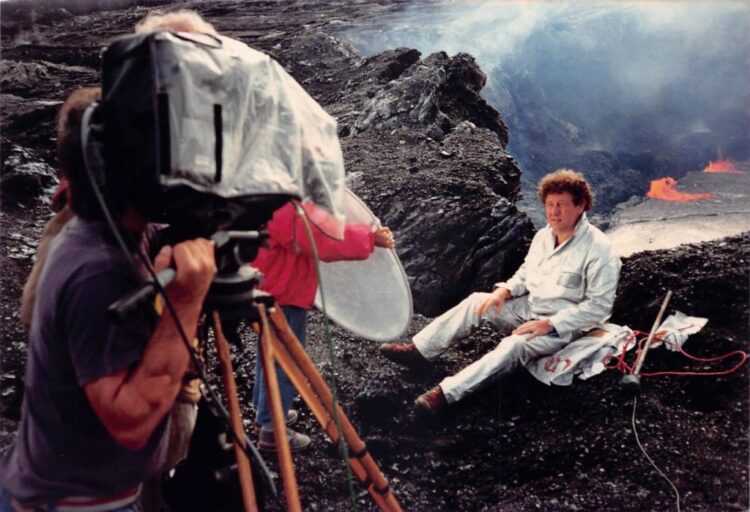
Fire of Love is less a love story between Katia and Maurice Krafft—which is, yes, very much the primary theme of Sara Dosa’s 2022 documentary that chronicles their lives as intrepid adventurers and daredevil volcanologists—and no, the love story isn’t with the volcanoes they research, though they definitely do love them. Their obsession consumes their entire lives—both figuratively and literally—as (spoiler) their lives reach their end at the site of a volcanic eruption.
ADVERTISEMENT
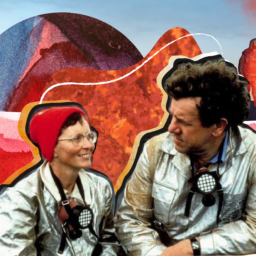
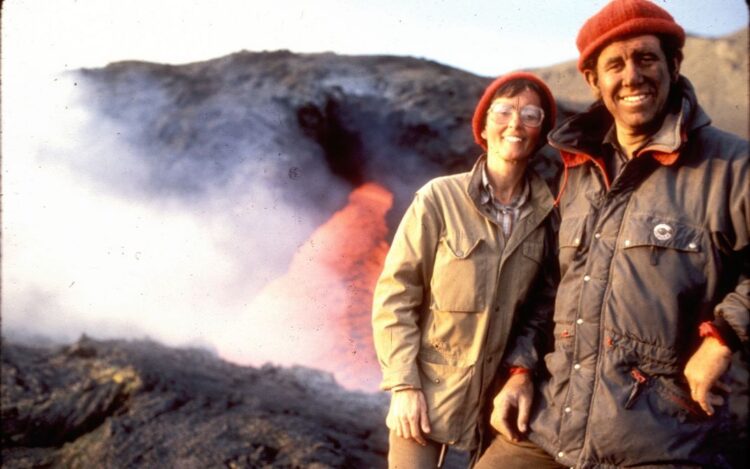
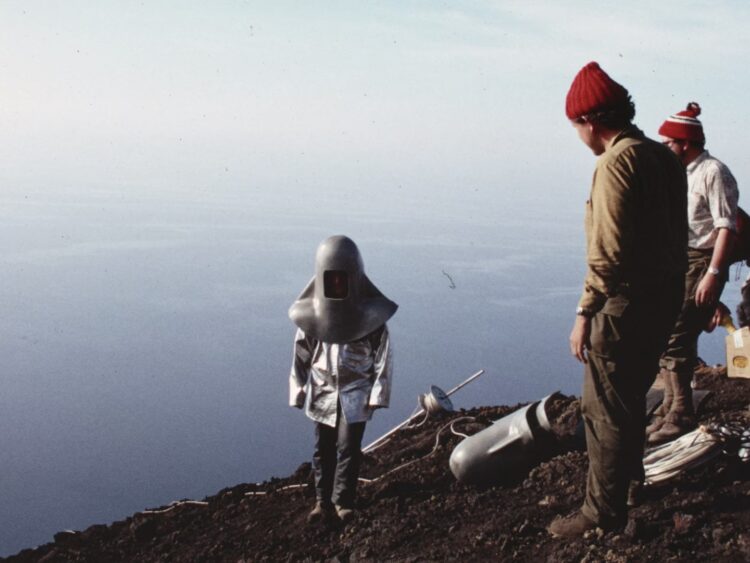
There’s a moment in the film, mostly composed of illustrations and the Kraffts’ own archival footage, that shows Katia and Maurice’s perfectly chosen red beanies adorning their sunburnt faces as they trek up the side of an active volcano, and I realized—this is a love story to us. They aren’t just volcanologists; they’re artists, perfectly aware of their image in spite of their insane human feats in the pursuit of scientific research. To be a scientist and an artist doesn’t necessarily have to be mutually exclusive—if anything, I think their mission was intricately aligned with what they wanted to express: a sheer love for this planet that most of us struggle to understand, and many have a hard time simply appreciating.
They dedicated their lives to getting as close as humanly possible to an unexplainable force, in an effort to capture its beauty and terror—for us, for you and me—so we begin to love this planet again, or for the first time. So we go beyond our comfort zones and explore a little further each day. So we push the boundaries of what we know about our beautiful world so that we can conserve it, learn from it, and care for it in our role as guardians.
With every perfectly composed shot in this documentary, underscored by Miranda July’s poetic narration, you feel the care they had for their field and for each other—using photos and film as a way to capture the magnificent things they experienced with the rest of the world. They shared a love of storytelling and a love of our shared humanity in the face of something beyond comprehension.
ADVERTISEMENT
“Look at how small we humans are against this volcanic force. The only thing that will remain of our passage is that we can write, tell stories, and film,” Maurice says toward the end of the film, and he’s right. This footage is what remains of their life’s work and passion.
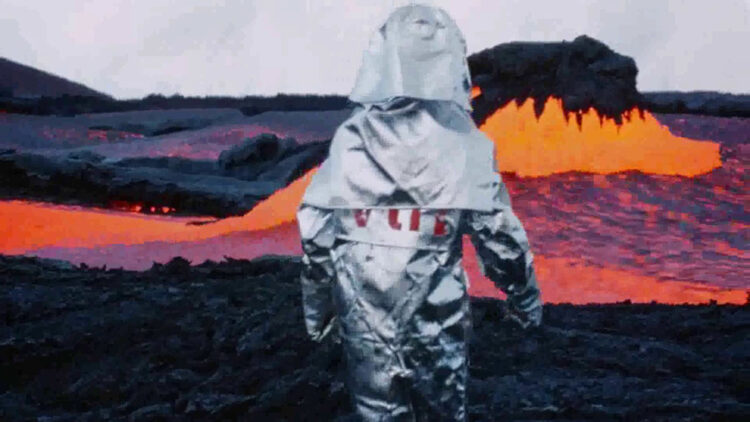
With every breathtaking, impossible shot—as the vibrant reds and oranges of the magma bleed through the frame, or the gray smoke distorts and envelops the landscape—there is love: in the supernatural scenes they are witnessing, in the sheer effort and bravery it took to document it all, in the companionship Katia and Maurice shared, side by side as they stood at the edge of the abyss. And then there is love for us—the unknown viewers and curious humans they hoped to connect with, to share the thing they loved more than anything else. Like a volcano erupts and changes everything in its wake, there is love in all that they created and all that they left behind.
This week, we analyze romantic drama Past Lives and discuss how it explores race, the immigrant experience and challenges the concept of a soulmate
Hey! We’re Karl and Ana. Best friends, writers and movie obsessives that love to analyze (overanalyze?) movies. In Movie Therapy, we take a movie that we love and explore its story and themes to understand what it means to us (and maybe you). This week we analyze Past Lives. Spoilers are abound so proceed with caution.
For the best experience, we recommend you read on desktop. This conversation has been edited and condensed.
Karl Delossantos Hello! 👋 Welcome to the first edition of Movie Therapy, a series where my co-movie over-analyzer Ana Toro and I discuss a movie to understand what it means to us (and maybe you). Today, we’re analyzing the meaning behind Celine Song’s Oscar-nominated drama Past Lives. Shameless plug: you can read my review here.
Hello, Ana! Ready to overthink?
Ana Toro Yes! Our specialty!
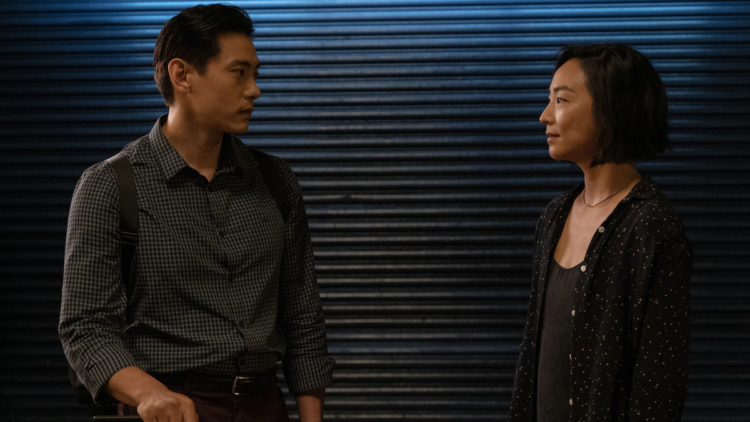
Karl I want to start this discussion at the very end of the movie. We watch Nora (Greta Lee) and Hae Sung’s (Teo Yoo) emotional goodbye. As she walks back towards her home and husband Arthur (John Magaro) in the East Village (in my home neighborhood!) Nora begins to cry. How do you interpret that moment?
Ana I think she’s mourning the past – what could have been. In that moment she witnesses a chapter closing. And though it’s the rational thing to want closure, it tends to bring an unexpected amount of pain.
Karl It’s interesting because it feels like she spends a lot of the movie only looking forward. Even when she does look back in the second act when they reconnect over Skype she quickly realizes that it’s something that’s “holding her back” even if it’s not necessarily the case. But I think because she never allowed herself to confront where she’s come from, she’s never had to close the chapter… until that scene.
But at the same time, she’s where she’s always wanted to be. And if you ask me, where she belongs. Something we might disagree about.
Teo Yoo and Greta Lee in Past Lives. Courtesy of A24.
Ana Haha yes! I mean, the brilliance of this movie is that it is so subtle and nuanced that it really does reflect back at you whatever your current beliefs, or point of views are. When I watched it the first time with you, I was very much in a place in my life where I was looking back to the past, and towards someone from the past specifically. I’m pretty nostalgic by nature, so this wasn’t out of character for me, and I definitely sympathized the most with Hae Sung’s character… to the point where you’ll remember that I was pretty accusatory towards Arthur’s character, believing him to not be right for Nora, and insisting that she should look towards the past to move forward, and be the version of herself that she had left behind.
Karl Projecting, essentially.
ADVERTISEMENT
Ana Exactly. When I watched it a second time I was definitely in a more calm place in my life, having had a bit more closure and feeling a lot more present in my day to day life. So of course, I was more neutral while watching the narrative play out, and I realized that the end wasn’t a tragedy, but rather something beautiful, an acceptance of the past and the present. Nora’s outburst was a catharsis, not necessarily something bad, or more meaningful than it was.
Karl Yeah when we first watched it we were the closest we’ve ever been to arguing in our friendship over whether Hae Sung or Arthur was her soulmate. And perhaps the answer is that soulmates don’t actually exist. At least in the very black-and-white sense that most people think about them.
“Which is interesting because the movie constantly brings up the concept of soulmates, and it’s a recurring motif / theme of the movie so it’s almost like a red herring.“
Ana Which is interesting because the movie constantly brings up the concept of soulmates, and it’s a recurring motif (if not the outright theme!) of the movie. It keeps the viewer guessing as to who she’s going to choose – who is the actual soulmate. For such a quiet movie this is the biggest source of tension that drives the film forward. It almost feels like holding your breath, until the very end when they say goodbye.
Karl Yeah. I mean, the movie is structured like a romance. The direct comparison a lot of people have been making is to the Before trilogy. A series of movies that we love. And in a lot of ways, they are similar in that they talk about the seeming randomness of romance that is actually clouded in fate.
ADVERTISEMENT
Ana It’s like the Before trilogy but happening all at once!
Karl 💯
This might be the time to note too that the writer-director Celine Song based the character of Nora in some part on herself and is currently married to the equivalent of Arthur. Her husband Justin Kuritzkes is a white writer that she lives with in New York. And ironically wrote Challengerswhich is another movie about a love triangle. Maybe they’re dropping hints.
Ana That absolutely changed everything for me. I almost couldn’t believe that in some ways we were given the answer to such an open ended mystery in Past Lives. To me it means that she chooses Arthur in the end! Because he represented her present, and her future. How did you feel when you found that out? Did it change the movie at all for you, or am I reading too much into fiction and its likeness to reality?
Karl I think you can’t not think it’s connected in some way. But unlike you I was always on the side that Arthur is who she should be with. Right now, at least. I think hearing that just affirmed that for me. I went through a pretty big breakup a few years ago and since then I’ve felt very much how Nora felt. Looking forward. Working on my career. Moving myself up and out of my current circumstances.
But I did have times where I thought, “what is this all for?”
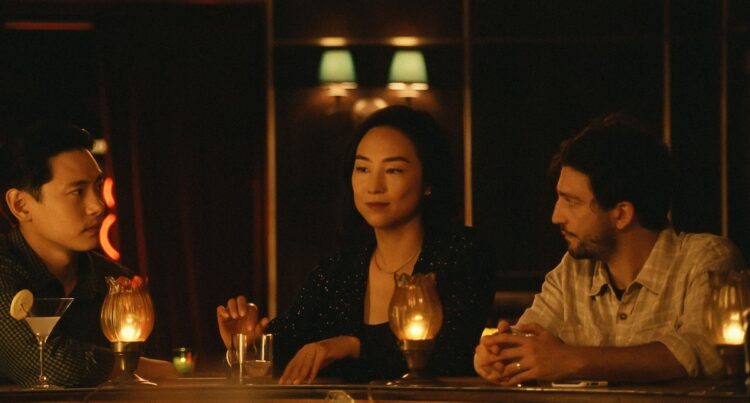
Ana I think that’s the thing that we’re meant to be feeling at the end of the movie though – we aren’t ever going to be sure if something is the right choice or not. There are ways to justify any decision or relationship – Arthur and Nora could have in-yun, but so could Hae Sung and Nora. This concept is even poked at by Hae Sung and Arthur during their conversation at the bar: maybe they’re the ones that have the multiple layers of in-yun! There’s truly no way to know, so we just have to accept whatever choice is made.
Karl It makes me wonder whether Past Lives is almost an exercise to assuage the uncertainty of whether you made the right decision.
Ana That makes me wonder a lot about her intentions for making this film, and how much of it she admits to being autobiographical. It’s a beautiful film regardless, but I think it does bring up questions as to how much art resembles life, and if the film’s narrative should stand alone regardless of what she has revealed during the press circuit.
“Nora and Hae Sung are in many ways in opposition to each other. He stayed in Korea, she moved to Canada and then New York. He followed his head to a technical career. She followed her heart to the arts. He’s living in the culture he grew up in and she’s grounding herself in a new one.“
ADVERTISEMENT
Karl As a viewer the first time without that background I think we still picked up what Song was struggling with. Nora and Hae Sung are in many ways in opposition to each other. He stayed in Korea, she moved to Canada and then New York. He followed his head to a technical career. She followed her heart to the arts. He’s living in the culture he grew up in and she’s grounding herself in a new one.
Which is funny when we learn that Arthur is learning Korean to understand her better. Oddly, I think I also related to Arthur, as well.
Ana I know I’m being superficial and too focused on aesthetics and a simplistic romantic worldview, but I just have to say: it is so unfair that Greta Lee and Teo Yoo are the most beautiful people in the world, with chemistry in this movie that is off the charts, inhabiting a film that comes across as aesthetic visual ASMR, and we don’t actually get to see them profess their love to each other. It’s inevitable to root for the beautiful couple with perfect bone structure, that are also childhood sweethearts, separated by fate. But I guess that’s the expectation we’re meant to be pushing up against.
Teo Yoo, Greta Lee and John Magaro in Past Lives. Courtesy of A24.
Karl The bone structure!! Cut from marble both of them.
Ana No like, they were made to be on camera.
Karl But I think this was an intentional decision. We get all these very superficial indications that Arthur is just some average white guy. The book he authored in the movie is called “Boner” for God’s sake!
ADVERTISEMENT
Ana WITH A JEFF KOONS BALLOON SCULPTURE ON THE COVER. Nothing screams out more “mediocre white man” that fumbled his way to the top more than that. I’m sorry, I’ll relax, but my art history minor clocked that immediately and I am of the belief that every single choice in a film is intentional. So why add that? This would be my question to Celine Song if I were to ever attend a Q&A with her.
Karl #Arthur4Lyfe <3
Ana Rethinking our friendship as we speak. I’d leave the conversation if I wasn’t digitally chained to this chat.
Karl I just knew this would end in an argument. But then we see his relationship with Nora and I think there’s a real love there. That scene in the bedroom before they’re about to go to sleep is oddly the centerpiece of the movie.
Ana Karl. No it is not. It is a movie full of beautiful set pieces, and him trying to say fried chicken in Korean is not the one.
“They never express their full feelings. Which is, as an Asian-American, a very real thing. Whereas Arthur is so willing to vocalize the way he feels in that moment. And he delivers for me the most potent line of the movie: ‘You make my life so much bigger. I’m just wondering if I do the same.’”
ADVERTISEMENT
Karl I think I find that scene so refreshing because Hae Sung and Nora often talk around each other. They never express their full feelings. Which is, as an Asian-American, a very real thing. Whereas Arthur is so willing to vocalize the way he feels in that moment. And he delivers for me the most potent line of the movie: “You make my life so much bigger. I’m just wondering if I do the same.”
For Nora, Arthur does make her life bigger. For Hae Sung, Nora makes his life bigger. But I’m not sure he does the inverse. And that’s why Past Lives feels as much about the transient experience (I’m intentionally not saying immigrant here) as it is this specific romance.
Arthur even calls out in a different story he’d be the villain. Though, you certainly think he is. But he’s not. He’s the third protagonist, if anything.
Ana I’m curious as to why you won’t say immigrant! To me this movie really does encapsulate the immigrant experience. Immigrating is all about that central theme, captured by that same line you just mentioned: what makes your world bigger? Does staying in Korea make your world bigger, or smaller? If you feel like you’ve outgrown a place, and like you can grow so much more outside of it, that’s why you immigrate. So you don’t live an entire life unsatisfied, feeling stuck, and wondering “what if”. Just like you would with a past lover – places can encapsulate the same feeling of lost potential, and wanting more. Nora’s parents, even though her dad was successful filmmaker, knew they could have bigger lives for themselves and their daughters abroad, and so they did.
Hae Sung goes to China for the same reason, it’ll expand his work opportunities. After visiting New York, temporarily making his world that much bigger — literally, does he then seek job options abroad? Maybe! Maybe that’s his smile at the end of the movie — he sees a bigger world for himself thanks to Nora. Maybe not a life with her, but his own future, which he can now literally visualize since Nora paved the way, but he’s also free to pursue, without any attachments (at least romantic) in Korea, or New York.
Karl While I do think it definitely touches on the immigrant experiences and uses it to explore about the sensation you’re describing it feels like with a lot the movie it paints in broader strokes as to allow as many people as possible to relate to it. So what you were about outgrowing a place. That doesn’t necessarily have to tie to leaving your specific country. I left New Jersey to move to New York City and that small of a move still felt like my world was expanding. But I think it could be as simple as just leaving the path that is predestined for you. Hae Sung follows the very pragmatic Korean expectation of living with your parents until you’re married, going to school so you can find a stable job. Even going to China was in service of that mission. But that isn’t specifically the immigrant experience, which is why I used the word transient. Maybe transplant might even be more appropriate.
I think if Past Lives was about the immigrant experience then that first section when they were kids wouldn’t have jumped to 12 years later right when she was about to start her life in Canada.
Ana Fair! Totally understand what you mean, and agree that transplant is a better word. Though in an interview with Deadline, Celine Song does say that while the movie is objectively true to her immigrant experience, she does want people to relate to her story even if their experience is moving from St. Louis to L.A., for example. But this is getting into the weeds of how we define immigrants and transplants.
Karl To wrap this up, because this chat is now over 2000 words, I have one last question: which character (or combination of) do you relate to most and why?
I’ll start with my favorite character… Arthur. Muahaha 😈.
Ana Is he really your favorite?
Karl I love them all for different reasons. I think part of it is my affinity for John Magaro who I’ve loved since First Cow. A movie you have to watch since I know your affinity for cows. And I think he has the dialogue that felt most potent to me in a lot of cases.
I guess I feel like I’m a mix of all three of them in a way. I have the good boy aversion to risk like Hae Sung, the headstrong ambition of Nora and the insecurities of Arthur. And perhaps I’ve felt more Arthur recently than Hae Sung or Nora.
ADVERTISEMENT
Ana I agree, I mean I think the beauty of this movie is that it is up to interpretation, and you could see yourself as any of them depending on your current circumstance, or play out a different reality where you, as Nora, does get into the car with Hae Sung at the end. In my first watch with you, pining for an ex-love, I was fully in Hae Sung’s shoes, living in the past, remembering everything and not moving forward. Now I feel a bit more self-assured about the present and my future, like Nora. But through this conversation I’ve actually had a pretty potent realization —
Karl Ahhh a movie therapy breakthrough!
“The reason I was so put off by Nora and Arthur’s relationship (and why I reactively took Hae Sung’s side at first) was that it reminded me of my own relationships and the insecurities I’ve had in them…”
Ana The reason I was so put off by Nora and Arthur’s relationship (and why I reactively took Hae Sung’s side at first) was that it reminded me of my own relationships and the insecurities I’ve had in them, especially regarding having a white partner as a Colombian that I was afraid would never understand my native language, or my immigrant experience.
Karl Yeah I completely get where you’re coming from. It’s something you become so aware of too as you get older and our understanding of race evolves.
Ana In my early twenties and the immaturity that comes with that time of my life, I definitely felt misunderstood and didn’t have the tools or mental stability to have those conversations about my culture, without feeling…
Karl Without feeling immediately defensive about your feelings.
Ana Exactly! It’s a shame, because I do think that relationship could have had a future if we had met later on in life, when I had actually come to terms with my own immigrant experience and that it doesn’t mean I had to explicitly date someone that came from where I came from — they simply had to love me in spite of our differences, and make a true, honest effort, like Arthur does with Nora.
Seung Min Yim and Seung Ah Moon in Past Lives. Courtesy of A24.
Karl And granted we went to a predominantly white college, which I think made all those differences all the more obvious. Same with how Nora found herself in a place so different and foreign from what she knew.
I also had a white boyfriend around that time.
Ana Oh, I remember!
Karl Haha it was a time!! But something he did that I appreciated was take the time to understand where I was coming from in our relationship. We had a lot of conversations about how we could come off as an interracial Asian/White couple. Like cue the colonizer jokes (often from me…). And it angered him that we would be seen that way but I think he eventually understood is that’s a fact of my life. And that understanding was enough. He didn’t have to solve it. But just know about it.
Maybe that’s why I appreciated Nora and Arthur’s relationship. Particularly the discussion they have mid-way through the movie. All Arthur wanted to do is understand where she comes from — even if she was resistant to look back at her own life.
ADVERTISEMENT
Ana That’s lovely! Yeah I definitely was so insecure during that time, that I became a victim and my own worst enemy when it came to having those conversations. But you live and you learn. Which is funny, this is that same relationship I was wondering about right as we watched Past Lives together, and I was thinking, what if things had been different? What if it all took place now?
I remember that day so distinctly: we were having a reflective day, one of those very beautiful fall days where the city and the light is perfect, and it’s unseasonably warm, but you can still pull off a nice fall outfit. The first of our college friend group turned 30 that day, and we met up with her at a cafe. And I remember thinking that we all felt content about where we were in life at that moment. Naturally, that day fell apart in spectacular fashion for me, but we met up again at the end of it.
Karl And while we were walking I think I remember saying we should watch Past Lives because (1) it’s the kind of movie we love. Melancholic. Introspective. Poetic. And (2) it’s so meditative and poetic that I figured it’d calm you down.
Ana It both calmed me down and sent me spiraling, thank you.
Karl The Karl special.
Ana So we were primed to think about our past, present, and futures that day, and me particularly, to imagine a different reality of a life that could have been. It was the perfect film to watch and it highlighted exactly where I was in that moment in my life.
Karl And it helped us both look at our lives at that moment as this long journey. We both separately post-pandemic went on these journeys that took us away from our comfort zones. The movie looks back and explores the many decisions we make to get to a certain point. But it also emphasizes that it is a necessary exercise to move forward and understand you are in the right place. To bring it back to the movie, Nora and Hae Sung on the street with Arthur waiting for her at their apartment was the right place.
And perhaps that place for us was on my couch in the East Village eating a sweet treat watching a movie.
Ana And that place is also here right now with you. I feel like we unearthed some pretty vital and new realizations despite having talked about this movie non stop since we first watched it, and you talking around the plot for months while I gathered up the will to watch it with you. This has been surprisingly cathartic, but I guess that was the point! Thank you, as always, for these conversations. ❤️