Category: Adventure

  • Jordan Peele’s ‘Nope’ is a chopped and screwed summer blockbuster | review and analysis

    Jordan Peele’s ‘Nope’ is a chopped and screwed summer blockbuster | review and analysis

    Nope follows two siblings that become convinced that UFOs are visiting their ranch to abduct horses. Seeing a path to fortune, they set out to capture it on video.


    Nope is Jordan Peele’s Jaws. A chopped, screwed, and depraved homage to the summer blockbuster with stunning anxiety-inducing, white-knuckled suspense pieces that had my heart racing. Peele’s loving hate letter to the blockbuster is his most ambitious project to date that forces us to question our obsession with spectacle. Wildly creative, constantly twisting and turning, masterfully crafted with Oscar-worthy sound design, Nope is a worthy follow-up to Get Out and Us.

    Jordan Peele has had perhaps the most prolific run for a new director in the last decade. Get Out his debut film became a cultural phenomenon and garnered Best Picture and Director nominations at the Oscars in addition to a win for Best Original Screenplay. His win felt like the coronation of an exciting new auteur, which was further evident with his equally terrific sophomore movie Us. How does a director of that caliber top himself? Enter his latest movie Nope, Peele’s most ambitious, off-the-wall, and deranged movie yet. Like a studio gave him a blank check and asked no further questions—best indicated by the movie’s chilling cold open the features a bloodied sitcom set sitting lifeless except for a motionless body and a chimpanzee who seems to be the culprit of the carnage.


    ADVERTISEMENT


    After the relatively modest narratives of his first two movies, Nope ups the scale to an astronomical degree—to a near blockbuster size.

    Interestingly, the closest analog to Peele’s career thus far is Steven Spielberg, who created the modern-day blockbuster. Coincidentally—or not since nothing seems to be a coincidence with him—Nope is Peele’s Jaws. Or at least an homage to it and the many other summer blockbusters that followed. Though the movie is packed full of references from Close Encounters of the Third Kind and Jurassic Park to Twister and War of the Worlds to Signs and Creature from the Black Lagoon it is every bit as original and electrifying as Get Out and Us. Watching it felt the way I imagined audiences felt the first time watching any of those classics—at least if my shrieking friend next to me was any indication.

    Though the movie pulls from a lot of corners, Nope is another story of humans and the curiosity—and invasiveness—that plagues them. Think Creature from the Black Lagoon, which inspired Jaws. At the center of the movie are siblings OJ (Oscar winner Daniel Kaluuya) and Emerald Haywood (Keke Palmer), the co-owners of a ranch in California that specializes in horses for entertainment. Following the sudden death of their father, a reluctant OJ runs the ranch while Emerald dreams of doing something bigger.

    An image from the movie Nope
    (from left) OJ Haywood (Daniel Kaluuya), Angel Torres (Brandon Perea) and Emerald Haywood (Keke Palmer) in Nope, written, produced and directed by Jordan Peele.

    That something bigger reveals itself to be really big when the pair become convinced that a UFO has been visiting their ranch to abduct their horses.

    One night, all electrical devices on the ranch suddenly stop working. And right as the lights dim, an unearthly sound blankets the vast landscape. Right then, a mysterious cloud produces an isolated tornado to snatch up one of the horses. Seeing a way out of financial ruin, OJ and Emerald set out to capture evidence of the phenomenon with the help of electronics store employee Angel (Brandon Perea). After a genuinely frightening night with fake and real frights, the trio determines that the UFO is sitting in a cloud perched just over a ridge by the ranch waiting for its opportunity to take its prey. Realizing they’re in over their heads, they enlist the help of cinematographer Antlers Holst (Michael Wincott) who dreams of capturing the impossible.

    The comparisons to Jaws are clear. A ragtag group of locals on a mission to “capture” an unpredictable, menacing, and deadly wild animal. OJ and Emerald are equivalent to Police Chief Martin Brody, Angel to oceanographer Matt Hooper, and Antlers to fisherman Quint. There’s even a scene where Antlers quotes the song “One-Eyed, One-Horned Flying Purple People Eater” in a tongue-in-cheek homage to Quint’s famous USS Indianapolis monologue. But just when you think you know where Nope is going, it finds a way to surprise you—like with a subplot involving Jupe Park (Steven Yeun) and an infamous incident on the sitcom he starred in as a child involving the cold open chimpanzee.


    ADVERTISEMENT


    While all of Peele’s movies have been horror, Nope might be the most frightening to date.

    Though there is comedy to cut through some of the tension, Peele steps on the gas and doesn’t let up for the 135-minute running time. The creeping sense of dread, real danger, and suspense kept my pulse racing the entire time. In particular, a stellar sequence—the best of the movie—that sees the UFO attacking the ranch in an action setpiece mashup of War of the Worlds and Jurassic Park may have taken a few years off of my life. It highlights the movie’s immersive and dominating sound design—which more than deserves attention from the Oscars.

    There are twists and turns in the narrative, but what keeps you engaged is the movie’s increasingly intense setpieces that tie together threads of horror, sci-fi, action, and comedy perfectly. Nope is Peele firing on absolutely every cylinder masterfully using Michael Abels’ cinematic score, Hoyte van Hoytema’s sweeping cinematography, and Nicholas Monsour’s editing to hit you with setpieces that feel equal parts grand, intimate, and dangerous.

    With Nope, Peele weaponizes the tropes and iconography of summer blockbusters to criticize both the genre and our relationship to spectacle.

    What are the themes in Nope?

    Get Out and Us became phenomenons because of the cultural discourse they sparked. Peele weaponized genre movies to reach a broad audience to then explore deep societal themes. Nope is a meta deconstruction of the summer blockbuster. Much like The Cabin in the Woods was a loving hate letter to the horror genre, Nope is meant to criticize our fascination with spectacle—the subplot following Steven Yeun’s character reinforces this. In the face of disaster or tragedy, why is our first instinct as a society to exploit it for fame or fortune? Yeun’s Jupe keeps an entire room in the wild wild west theme park he owns dedicated to the incident—one that should be traumatizing for him. Instead, he exploits it.

    And despite the threat that the UFO poses, the OJ and Emmerald do everything in their power to capture it on video. Despite its danger, they can’t look away. Perhaps the theme isn’t as devastating as those of race and class that were explored in Get Out and Us, but Peele commits to exploring it just as deeply.


    ADVERTISEMENT


    Nope is an imperfect movie, but its ambition vastly outweighs any nitpicks with the plot or characters.

    Daniel Kaluuya and Keke Palmer give wholly committed performances that feel lived in. The characters are defined by their past baggage. Palmer, in particular, eats every scene with her emotional and expressive physicality. However, I wish that more time was dedicated to the siblings and their relationship to make the movie’s payoff all the more impactful. In general, I think the characters are underdeveloped. Whether purposefully or by design I’m not sure. At the very least, I was charmed by them but didn’t feel the emotional attachment I felt to Kaluuya’s Chris in Get Out or Lupita Nyong’o’s Adelaide in Us.

    Nope in itself is a spectacle that deserves to be seen and heard on the big screen.

    In his copped-and-screwed version of a summer blockbuster, Jordan Peele makes us question why we can’t look away. Why are we so easily drawn in by a spectacle—both on screen and in the real world? Why is it so hard to look away from disaster? In the opening shot of Nope, there is a curious phenomenon happening amongst the carnage. You might notice it, you might not. With that shot, Peele is asking us why we’re not looking deeper? Why are we so distracted by tragedy that we can’t see the wonder around it? Interestingly, it was impossible to stop looking at Nope on the screen. It’s a spectacle through and through. The movie isn’t challenging us to look away, but instead look deeper. You might be surprised by what you find.


    ADVERTISEMENT


    More movies, less problems


    Hey! I’m Karl. You can find me on Twitter and Letterboxd. I’m also a Tomatometer-approved critic.

    💌 Sign up for our weekly email newsletter with movie recommendations available to stream.


    ADVERTISEMENT


  • ‘The Little Mermaid’ review: Halle Bailey swims to stardom

    ‘The Little Mermaid’ review: Halle Bailey swims to stardom

    Disney’s 1989 classic The Little Mermaid makes a splashy return to the screen with a refresh that finally bucks Disney’s live-action adaptation losing streak

    The Little Mermaid is largely successful off the back of recreating the original film — but how wonderful it looks in live-action. Bolstered by a star-is-born turn from Halle Bailey as Ariel, this is the Disney live-action to finally capture some of the magic from our childhood for the new generation.

    The Little Mermaid is in theaters May 26.

    “Welcome back, ladies and gentlemen. Before we continue I’d like to apologize to anyone who might be upset or offended by what you saw before the break. It’s not every day you see a demonic possession on live television.” That’s how host Jack Delroy (David Dastmalchian)follows up a segment of the Halloween episode of his late-night talk show where he interviews suspected possession victim young teen Lilly (Ingrid Torelli). While it might seem bizarre for a 1977 late-night show, it’s by design. Night Owls with Jack Delroy is lagging in ratings behind a little program known as The Tonight Show starring Johnny Carson and it’s sweeps week — the time of the month when Nielsen comes up with its ratings for what Americans are watching on TV. If you were desperate enough you’d commune with the devil too. 

    After enduring expressionless hyperrealistic animals in The Lion King and an eerily artificial genie in a surprisingly dull Aladdin, Disney has finally broken their live-action losing streak with Rob Marshall’s adaptation of the 1989 classic The Little Mermaid. And there were two clear reasons for the movie’s success. 

    There’s Marshall himself, who has become the go-to movie musical adapter since winning Best Picture for Chicago in 2002 — though The Little Mermaid is easily his best film since. And, of course, there’s Halle Bailey who makes the jump from musician to actor with the ease of Lady Gaga in A Star is Born, Janelle Monae in Moonlight and Hidden Figures, and Rina Sawayama in John Wick: Chapter Four (What? Like it’s hard?). If anyone keeps the movie afloat, it’s her Ariel.


    ADVERTISEMENT


    This version of The Little Mermaid largely follows the story of the original. Ariel, a young mermaid who longs to live in the surface world, gets the chance to live her dream when sea witch Ursula (a deliciously camp Melissa McCarthy) strikes a deal to make her into a human in exchange for her siren call. Of course, there’s a catch. If she doesn’t get the swoon-worthy Prince Eric (Jonah Hauer-King) to give her true love’s kiss by the third sunset, she will revert to a mermaid and find herself pledged to Ursuala.

    Her journey to the surface world is aided by her father King Triton’s (Javier Bardem) trusted advisor Sebastian (voiced by Hamilton’s Daveed Diggs), her (terrifying looking) fish friend Flounder (Jacob Tremblay), and squirrely seagull Scuttle (Awkwafina). And while the surface world brings its own kind of magic, it is ahem… under the sea that is the most impressive.

    Where Jon Favreau strived for realism in The Jungle Book or The Lion King (because a lion version of Shakespeare’s “Hamlet” just begs for realism), Marshall was unafraid to infuse surrealism into the world — it is a movie about mermaids after all. There’s no better example than the colorful musicality of “Under the Sea”, which largely errs to the original sequence. As Diggs joyously laments on the wonders of their ocean world, colorful sea creatures dance around the coral reef — whether sea turtles marching to the beat or sea fans mimicking burlesque fans. It’s the kind of energized musical number that was lost to the uncanny valley of The Lion King


    ADVERTISEMENT


    “Kiss the Girl” is formed by the sounds of the environment — wind through the trees, bird fluttering their wings — bringing the impossible magic of the cartoon into the real world. McCarthy, taking note from Ursula’s original inspiration Divine, brings us a deliciously camp “Poor Unfortunate Souls” that teems with the spellbinding antics of the original number while bringing a new sense of danger with the live-action elements. The movie’s sense of stakes was a welcome surprise. 

    And while the classic numbers certainly do the heavy lifting, the movie charts new territory. Screenwriter David Magee (Life of Pi, Finding Neverland) expanded the lore in ways that help the movie reach new depths (though others leave it shipwrecked). Moving the story to an unspecified Caribbean island adds a fresh perspective to the well-worn Disney Princess genre — and adds an island musicality that keeps the scenes between musical numbers light and airy.

    New numbers like “For the First Time” fall into step with the classic score, while still feeling like it fits within the tone and possibilities of this adaptation. The island kingdom itself has a new life (and music) to it — adding a new complexity to the themes of the original.

    At the core of the movie’s success, however, is Hauer-King’s Prince Eric, who feels more than just a love interest thanks to added character development — and a new musical number that plays suspiciously like “Edgar’s Prayer” from Barb and Star Go To Vista Del Mar — and, of course, Bailey’s singular Ariel who teems with charisma, uniqueness, nerve, and talent. Her version of “Part of Your World” (and its subsequent reprises) have bore themselves into my psyche since seeing the movie — and likely the rest of the audience if judging by the applause break after her final ethereal riff.


    ADVERTISEMENT


    Bailey’s take on “Part of Your World” is perhaps the greatest characterization of the movie’s success. Her rendition has a deep reverence for Jodi Benson’s iconic original but finds ways to push the song in new directions to feel one with herself. As much as she is the lead of the movie, the movie is her. From her palpable chemistry with Hauer-King to her doe-eyed wonder at the surface world to her teenage angst of where she came from, her performance drives (sails?) The Little Mermaid to its peak.

    Does The Little Mermaid change my mind about Disney’s commitment to producing films off of existing IP? No. I’d rather they focus on creating new stories for this generation to fall in love with. Still the movie, for all its imperfections and missteps — I will never forgive Lin Manuel Miranda for subjecting me to “The Scuttlebutt” rap — finds heart within material that already had one beating strong in it. And that heart is Halley Bailey, the Disney princess a new generation needs and deserves.

  • ‘Thor: Love and Thunder’ leans into weirdness and queerness | movie review

    ‘Thor: Love and Thunder’ leans into weirdness and queerness | movie review

    In his fourth solo outing, Thor: Love and Thunder finds Thor and Valkyrie align with an unlikely new hero to take down a villain with a taste for revenge.

    Thor: Love and Thunder makes up for what it lacks in structure and narrative in charming oddball energy, maximal laughs-per-minute, and a cast that is game for anything. Director Taika Waititi, returning after a very successful entry in Thor: Ragnorok, throws everything but the kitchen sink into the movie—for both better and worse. Sometimes the emotional beats are betrayed by the comedic tone and vice-versa, but when the movie gets it right—like in the riotous but stirring reveal of The Mighty Thor—it’s perfection.

    Thor: Love and Thunder might be more of a Taika Waititi movie than it is a Marvel Cinematic Universe movie. I mean, it’s colorful, gay, and has a running gag about screaming goats—it doesn’t get much more Waititi than that.

    While the most recent movies in Phase Four of the Marvel Cinematic Universe have to do much heavy-lifting in setting up the rest of the series, Thor: Love and Thunder stands on its own—even with the cameos.

    After all, the last time we saw Thor (Chris Hemsworth) was in Avengers: Endgame where he became one of the few main superhero holdovers from the original Avengers. Much time has passed and there is much to catch up on, which we see in a sleek and often-hilarious montage narrated by fan-favorite Korg (voiced by Waititi). Korg explains that Thor has been galavanting across the universe with the Guardians of the Galaxy “helping” various worlds with their problems. What the catch-up is meant to explain (other than how Thor dropped all his Endgame weight) is how Thor has become a bit more of a bohemian narcissist as he’s searched for meaning after helping defeat Thanos.


    ADVERTISEMENT


    Another thing Phase Four has had in common is the use of cameos to draw audiences in (I’m looking at your Spider-Man: No Way Home). And while the move can sometimes come off as cumbersome pandering, the Guardians’ (Chris Pratt, Pom Klementieff, Karen Gillan, Vin Diesel, Bradley Cooper, Sean Gunn, Dave Bautista) appearance feels slight enough to not detract from the movie. Were they completely necessary? Probably not. But they were a welcome sight.

    Eventually, following a distress message from Sif (Jamie Alexander reprising her role), Thor learns that Gorr the God Butcher (Christian Bale under heavy makeup) has been going from planet to planet murdering Gods. In the movie’s cold open, we see Gorr lose his daughter after he’s slighted by the God he worshipped spurring his journey of revenge. More importantly, Sif reveals that New Asgaard is next.

    The Sif scene is the perfect example of Waititi maintaining his comedic tone while still delivering on narrative. Sif asks Thor to let her die following a battle with Gorr so that she can go to Valhalla. An apologetic Thor informs her that she actually needs to die in the battle to go to Valhalla, but quips in the movie’s funniest one-liner that maybe her missing arm made it to Valhalla.

    Thor rushes back to the settlement of Asgardians where leader King Valkyrie (Tessa Thompson) is battling with the shadow creatures sent by Gorr. In yet another scene of Waititi’s ingenuity, we are treated to an epic battle, introduced to The Mighty Thor, and see a hilarious montage of how Thor and his one true love Jane Foster’s (Natalie Portman) relationship crumbled under the weight of both of their duties—Thor’s to the Avengers and Jane’s to her research.

    We learn that Jane, who is suffering from cancer, was called to Thor’s destroyed hammer Mjölnir. When she got to the hammer, it repaired and gifted itself to Jane in an attempt to save her. Now, as The Mighty Thor, she vows to help Thor and Valkyrie defeat Gorr who kidnaps New Asgard’s children to a mysterious land called the shadow realm.


    ADVERTISEMENT


    Thor and Jane’s relationship acts as the emotional anchor for the movie through all its absurdness. However, as often as the tonal balance between humor, thrills, and drama works—it doesn’t.

    The journey to the shadow realm takes our heroic quartet to Omnipotence City, a haven for the gods, where they hope to drum up support in their battle against Gorr. Specifically, they want to get the help of Zeus (Russell Crowe in a hilarious extended cameo). Unfortunately, Zeus is more interested in showing off with his lightning bolt for the other gods and, oh yeah, the orgy scheduled for later in the day.

    The riortous scene is comedy gold (pun intended) where we get to see just how far Marvel is willing to let Waititi go (we go as far as seeing Chris Hemsworth’s golden buns). We’re also treated to Valkyrie queering it up—and bopping to Mary J. Blige’s “Family Affair”—a gold-splashed action scene, and, of course, screaming goats. It’s a highlight scene.

    On the action side, a battle in the “shadow realm” is presented almost completely in black-and-white in one of the most thrilling creative decisions I’ve seen in a Marvel in quite some time. The scene is almost pure horror, but because of the tone up until that point it’s difficult to feel the stakes. While Bale is completely committed to the role of Gorr—and is often terrifying—you never truly feel he’s dangerous.

    That’s why when the movie works best when it focuses on just the characters.

    With Tessa Thompson’s Valkyrie, a history lesson on Korg’s people, and Chris Hemsworth’s peach, Love and Thunder is easily the queerest MCU movie yet.

    Still, it was a low bar. In the first three phases of the MCU, it seemed that LGBTQ+ people did not exist despite romance and sexuality being front and center. I mean, one of the first few scenes of Iron Man was Tony Stark sleeping with a female reporter. Queer representation in the MCU has only now started to settle in with characters like Phastos in Eternals and now Thompson’s Valkyrie and Waititi Korg in the Thor franchise wearing their queerness unapologetically. The result? A more colorful movie, both literally and figuratively.


    ADVERTISEMENT


    The dimension that it adds to a character like Valkyrie helps elevate the movie to a more profound plane in the same way that Thor and Jane’s past gives us an emotional investment in their narrative. Instead of being heroes of perfection, they themselves have trauma that drives them forward—or hold them back. Waititi’s grasp of tone and narrative in those scenes is perfection—much like his underrated gem Hunt for the Wilderpeople. It’s when he has to dig back into the MCU formula that the movie loses its color.

    It’s clear that the best way for the MCU to move forward is to give its directors full creative control over their movies from screenplay to direction.

    Much of Thor: Love and Thunder feels like MCU mastermind Kevin Feige handing Taika Waititi a blank check and a script and saying, “go,” much like Doctor Strange in the Multiverse of Madness felt like it had Sam Raimi’s DNA in it. However, these two movies in addition to Chloé Zhao’s Eternals show that unless Marvel truly allows these directors to completely run away with their movies—story and all—it’s difficult to meld the two visions. Of those three movies, I think Love and Thunder might be the least successful because Waititi had the more difficult balancing act. He was making a comedy. All the while, Disney needed him to deliver a popcorn blockbuster and Marvel needed him to deliver on storylines familiar to comic readers. He mostly succeeds. It’s clunky, the pacing is off, but I can’t deny that I laughed nearly every second of screentime.


    ADVERTISEMENT


    More movies, less problems


    Hey! I’m Karl. You can find me on Twitter and Letterboxd. I’m also a Tomatometer-approved critic.

    💌 Sign up for our weekly email newsletter with movie recommendations available to stream.


    ADVERTISEMENT

  • ‘The Northman’ goes south | movie review

    ‘The Northman’ goes south | movie review

    Years after witnessing his father’s murder, a Viking prince goes on a rampage across Scandinavia to avenge his death and save his mother.

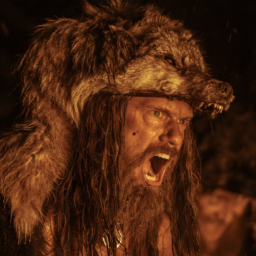
    The Northman looks and sounds like it cost $90 million to make. Robert Eggers is a master at his craft perfectly melding every element — particularly Jarin Blaschke’s cinematography — to create his Viking-era world. Where the movie goes south is in its narrative and characters. Beneath the twisting Scandinavian folklore is a simple and familiar revenge story that never gives us real reason to care. The movie lacks the emotional impact to become fully immersed. Still, Eggers is a masterful director and holds your attention even if the movie isn’t as narratively compelling as The Witch nor as visceral as The Lighthouse.

    Full review coming soon.

  • ‘Da 5 Bloods’ is Spike Lee’s best-acted joint yet | review

    ‘Da 5 Bloods’ is Spike Lee’s best-acted joint yet | review

    Da 5 Bloods follows a squad of Vietnam veterans who return to the country to find a buried treasure and their fallen comrade

    Quick cut: On its surface, Da 5 Bloods is an exhilirating adventure filled with twists, turns, and Spike Lee’s iconic style. However, it’s also a depth-filled character study that his heartbreakingly prescient about our present moment.

    Though Spike Lee has a penchant for cinematic flourishes—direct-to-camera monologues, splicing in archival footage and photographs, and, of course, his famous double dolly shot—he’s not one to let style overcome the substance of a piece. Such is the case of his latest film Da 5 Bloods, which was released on Netflix this month. And as with his Oscar-winning previous effort BlacKkKlansman, it couldn’t have come at a better time.

    The five “bloods” that the title refers to are Vietnam veterans Paul (Delroy Lindo), Otis (Clark Peters), Eddie (Norm Lewis), Melvin (Isiah Whitlock Jr.), and their fallen comrade Norman Earl “Stormin’ Norman” Holloway (Chadwick Boseman). During their stint in Vietnam, the squad was tasked with delivering a locker of gold bars to the Lahu people as a show of gratitude for their help fighting the Viet Cong. However, instead of delivering the bars as promised, the group conspires under Norm’s command to take the gold for themselves by burying it and retrieving it later.

    💌 Sign up for our weekly email newsletter with movie recommendations available to stream.


    ADVERTISEMENT


    In the present day, we learn that Norm was killed during the mission and a napalm strike of the area left them unable to locate the buried treasure. Now, with a lifetime behind them, the four surviving Bloods reunite to find the gold together. However, time—and society—has changed each of them. Not only that, their time in Vietnam still weighs heavily on their shoulders, especially Paul. 

    Lee’s greatest talent as a filmmaker is finding a way to remit thematic heftiness and deep character explorations while delivering a genuinely entertaining story with striking characters. Da 5 Bloods may be his greatest success in that aspect. As the squad, joined by Paul’s son David (Jonathan Majors), traverses the jungles of Vietnam and relive their past with the help of their local guide Vinh (Johnny Trí Nguyễn) and Otis’ old Vietnamese girlfriend Tiên (Lê Y Lan), insecurities from the past and present begin to haunt them. 

    In particular, Paul, who has become a devout Trump supporter—he unashamedly wears a “Make America Great Again” hat throughout the film—has become disillusioned. For him, Vietnam is still the enemy and the cause for all the pain in his life—including his PTSD and loss of his wife during childbirth. The squad’s return isn’t triumphant for him like it is for the other men.Da 5 Bloods, though packaged as a story of adventure—an actual treasure hunt—and one of friendship and nostalgia, is incredibly profound and prescient about the state of this country. Norman, portrayed as a Christ-like figure—Otis even says, “he was our Malcolm and our Martin”—delivers the film’s message.

    Da 5 Bloods Netflix
    DA 5 BLOODS (L to R) NORM LEWIS as EDDIE, CLARKE PETERS as OTIS, ISIAH WHITLOCK JR. as MELVIN and DELROY LINDO as PAUL in DA 5 BLOODS Cr. DAVID LEE/NETFLIX © 2020

    The treatment of Black people in Vietnam is nothing more than an amplification of the treatment of Black people in America. They’re underpaid, undervalued, and expected to subservient to their White commanders and the will of the country. The film even opens with a clip from Muhammad Ali: “My conscience won’t let me go shoot my brother … some poor hungry people living in the mud. Shoot them for what? They never called me a n—–. They never lynched me. They didn’t put no dogs on me.”

    Lindo’s performance as Paul—easily one of the best in a Spike Lee film since Denzel Washington’s Malcolm X—is heartbreaking to watch as it shows what could happen when an oppressed person is so traumatized that their only salvation is the thing oppressing them. The other Bloods find joy in the adventure, Paul only finds pain. 

    Da 5 Bloods is Lee’s most ambitious and impressive film to date. The sweeping cinematography by Newton Thomas Sigel effortlessly switches between the vast Vietnam landscape of the present day and past to contribute to the narrative. As does Terence Blanchard’s score, which is as epic as a war film requires, but still find nuances to help the characters along. Still, it’s Lee’s steady directing at the helm that makes Da 5 Bloods breezily enjoyable while finding moments to poke at your emotional vulnerabilities. 

    On its surface, Da 5 Bloods is a war epic about four Vietnam veterans hunting for treasure and finding their fallen comrade to bring him home. They do find that fallen comrade’s remains and Lindo’s monologue—laced with relief and regret—tells you everything you need to know about the film. Under the exciting veneer of this adventure, there’s pain at the hands of society and self. And that pain is still here today. Black Lives Mattered then and they matter now. 

    Da 5 Bloods is now streaming on Netflix.


    ADVERTISEMENT


    More movies, less problems


    Hey! I’m Karl. You can find me on Twitter and Letterboxd. I’m also a Tomatometer-approved critic.

    💌 Sign up for our weekly email newsletter with movie recommendations available to stream.


    ADVERTISEMENT

    💌 Sign up for our weekly email newsletter with movie recommendations available to stream.


    ADVERTISEMENT


  • 'The Rise of Skywalker' tries too hard to be a 'Star Wars' movie — review

    'The Rise of Skywalker' tries too hard to be a 'Star Wars' movie — review

    In the final installment of the sequel trilogy, J.J. Abrams wraps up the nine-episode Skywalker Saga as the Resistance faces the First Order one last time

    Quick review: A series of poor story and character decisions take away any emotional impact The Rise of Skywalker could have, which ends the Skywalker Saga on a sour note.

    There’s something very off about The Rise of Skywalker, the ninth and final film in the Skywalker Saga. It feels at equal times too big and too small, too overwrought and too emotionless, too fast and too slow. The movie, more than any other blockbuster this year and in the franchise, feels completely contrived. Like it was stitched together from disparate arguing ideas and landed on all of them and none of them at the same time.

    From the opening scroll, it’s already apparent that the movie is trying to do too much. I’ll spare you the specific plot details, but one I can reveal off the bat since it’s the first thing on the screen, is that Emporer Palpatine (Ian McDiarmid) is alive and planning to (surprise surprise) take over the entire galaxy with his massive fleet of star destroyers.

    Through a breezy montage, a perfect demonstration of how the movie is too fast in some parts and too slow in others, we learn that Kylo Ren (Adam Driver) has been looking for Palpatine to destroy any threat to his hold on the First Order. However, when he does find him, Palpatine promises him his entire fleet as long as Ren finds and kills Rey (Daisy Ridley). There, one plot thread set.

    The second involves our new central trio of Rey, Fin (John Boyega), and Poe (Oscar Isaac), with the help of C-3PO (Anthony Daniels), BB-8, and Chewbacca (Joonas Suotamo), chasing several items around the galaxy to find the hidden planet where Palpatine’s fleet is preparing to attack. A timeline of 16 hours is set, but unlike The Last Jedi, which made us feel the urgency of the time crunch, The Rise of Skywalker feels meandering.

    💌 Sign up for our weekly email newsletter with movie recommendations available to stream.


    ADVERTISEMENT

    The main problem is the script by director J.J. Abrams and Chris Terrio. It spends so much time setting new story directions, redefining characters and their relationships, and squeezing in an overstuffed plot that it doesn’t spend time being effective at telling a coherent story.

    You can talk about nostalgia and fan service all you want — there is a good way to do that — but at its core The Rise of Skywalker is flawed. There’s no way to dismiss it as “for the fans” or “critic-proof.” Avengers: Endgame was certainly for the fans, but managed to be a compelling movie at the same time by carefully structuring its script for maximum emotional payoff. All the moments of fan service here feel contrived and unearned.

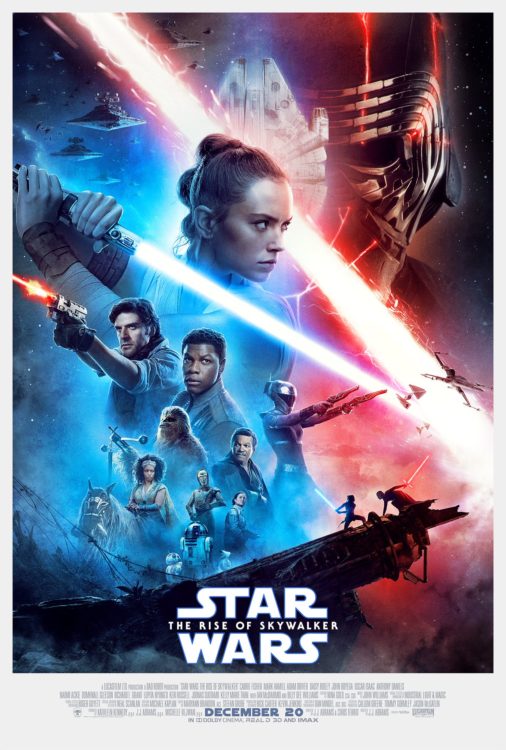
    Star Wars Episode IX: The Rise of Skywalker

    There is more than one twist — some that should have truly been shocking — but the movie is never able to land them effectively because the build-up just isn’t there. Rian Johnson beautifully sets up the stakes for the third movie, but Abrams clearly wanted to go a different direction and instead wasted his time pulling emotion out of thin air.

    If I sound overly critical it’s probably because I was really pulling for The Rise of Skywalker. I enjoy the Star Wars movies. I wanted to be satisfied at the end. But I couldn’t connect with anything. There’s a moment that should be as awe-inspiring as the Portals moment in Avengers: Endgame. Instead, it inspired a rolling groan from my audience. There was no build-up, no suspense, it just kind of happened. That’s the best way to describe the movie, it just happens. There’s nothing to experience and I want my star war to be an experience.

    Random thoughts ?

    • The late Carrie Fisher appears in the film as General Leia Organa through scenes she filmed for The Force Awakens that were composited in. The effect is a bit off-putting. It’s clear her dialogue doesn’t completely fit the context of the scene and comes off as clunky. That being said, it’s probably the best we’d get.
    • Kelly Marie Tran‘s Rose Tico was largely relegated to the background in this film, which is really upsetting following her breakout in The Last Jedi. The character deserved more. She was the heart of the film.
    • There’s a brief kiss between two women, which marks the first queer characters in the franchise. And while it’s far too brief, it’s better than other publicized gay moments in other blockbusters. I’ll just continue with my assumption that Poe is gay.