Category: Movies

  • Sundance 2022 Round-Up: Speak No Evil, Watcher, Dual

    Sundance 2022 Round-Up: Speak No Evil, Watcher, Dual

    The 2022 Sundance Film Festival is in full swing. Here is a review round-up of some of the thrillers we’ve seen so far.


    Speak No Evil
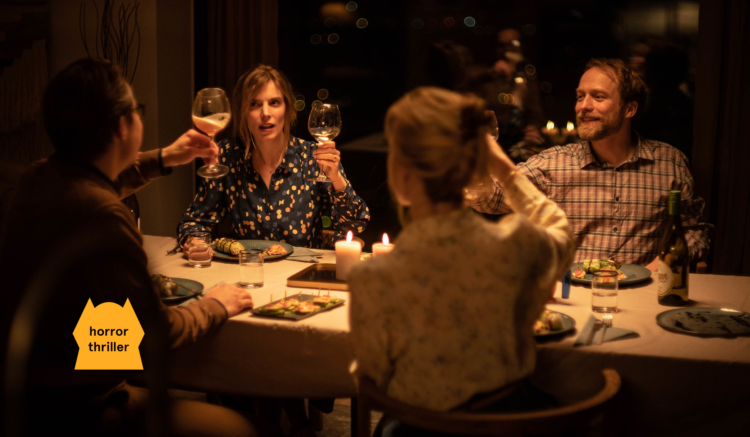
    A still from Speak No Evil, which premiered at the Sundance Film Festival.
    Sidsel Siem Koch and Morten Burian in Speak No Evil. Courtesy of the Sundance Institute.

    The Cabin in the Woods, one of my favorite horror movies of all time, explains that for the characters in a horror movie to be punished they have to choose their fate. They have to decide to ignore the creepy old man at the gas station. They have to decide to leave the marked trail. They have to decide to stay in the countryside house with the creepy family that they just met on holiday. That last one happens in Christian Tafdrup’s Danish horror Speak No Evil. Danish couple Louise (Sidsel Siem Koch) and Bjorn (Morten Burian) seal their fate by deciding not to leave when they had their chance. Granted, the couple certainly had so many red flags waved in their face that it’d put Murray Hill finance bros shame.

    After returning home from their Tuscan holiday, Louise and Bjorn are surprised to find an invitation from Dutch couple Patrick (Fedja van Huet) and Karin (Karina Smulders), who they met at the same resort, asking them to visit them at their countryside home. Though they don’t really have a desire to, the couple decides it would be rude to turn them down. When they arrive, though, a series of increasingly bizarre encounters put the couple on edge — blasting heavy metal while drunk driving, feeding Karin meat even though she’s mentioned she’s a vegetarian. Being the model guests they are, Louise and particularly Bjorn brush off these happenings. However, after a particularly troubling incident involving Louise and Bjorn’s daughter Agnes (Liva Forsberg) the couple is forced to confront their hosts to which Patrick responds, “No one’s forcing you to stay.”

    Much of Speak No Evil plays like the bleakest comedy of manners like Force Majeure. But director Christian Tafdrup makes it a point to remind you with the screeching score and uneasy tone that this is a horror movie. And when it makes that shift you are both expecting it and completely taken aback realizing that Funny Games might be a more apt comparison. For some, that shift will be too abrupt. For some, the character’s decision will be bordering on absurd. But that’s the point of the film: to make you uncomfortable. Tafdrup reminds you that sometimes a kindness isn’t always just a kindness. You’ve been warned.

    Speak No Evil was acquired by AMC networks’ Shudder streaming service. A release date hasn’t been announced.


    ADVERTISEMENT


    Watcher
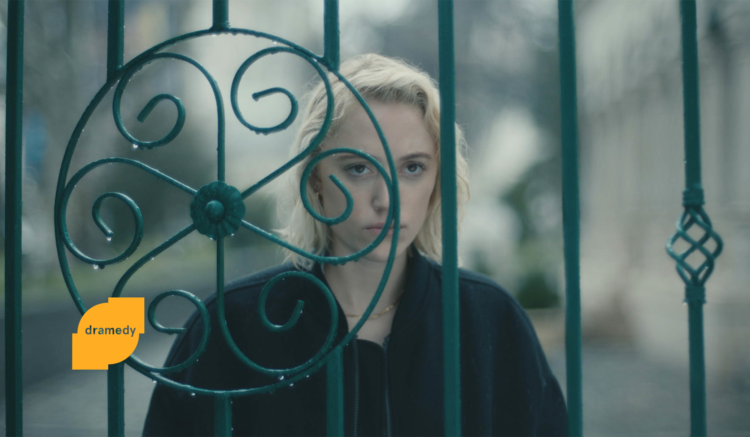
    Maika Monroe in Watcher. Courtesy of the Sundance Institute.
    Maika Monroe in Watcher. Courtesy of the Sundance Institute.

    Maika Monroe has been a bonafide scream queen since she broke out with roles in It Follows and The Guest. Her character-grounded approach to horror makes her the perfect audience surrogate for whatever story she’s in. In her return to those genre roots with Chloe Okuno‘s feature directorial debut Watcher she’s able to flex those muscles that made her so successful. This time as a recent American transplant in a familiar gaslit woman thriller set in Bucharest, Romania.

    Julia’s (Monroe) decision to accompany her husband Francis (Karl Glusman) across the globe for work colors much of the background of the movie as Julie, who doesn’t know the language, tries to find routine in her new life. However, that routine is thrown off when she glances out of the massive windows that frame the couple’s apartment and notices a shadow in one of the windows — watching. She’s already been shaking by learning of a recent string of murders in the neighborhood and begins to notice a strange man popping up wherever she goes. Of course, though he’s initially supportive Francis brushes it off as a mix of culture shock and an unfamiliar place.

    On the other hand, the movie goes to a very familiar place. Despite Okuno’s strong direction that effectively ratchets up the tension throughout the movie and makes good use of the city’s dour atmosphere and Monroe’s performance that subtly portrays a woman on the edge, Watcher never really elevates past its stereotypical thriller roots. You can see nearly every plot point from a mile away — even with its attempts to trick you more than once. Okuno crafted a well-made thriller, but from the second it ends nothing follows you home.

    Watcher premiered at the 2022 Sundance Film Festival. It is currently seeking U.S. distribution.


    ADVERTISEMENT


    Dual
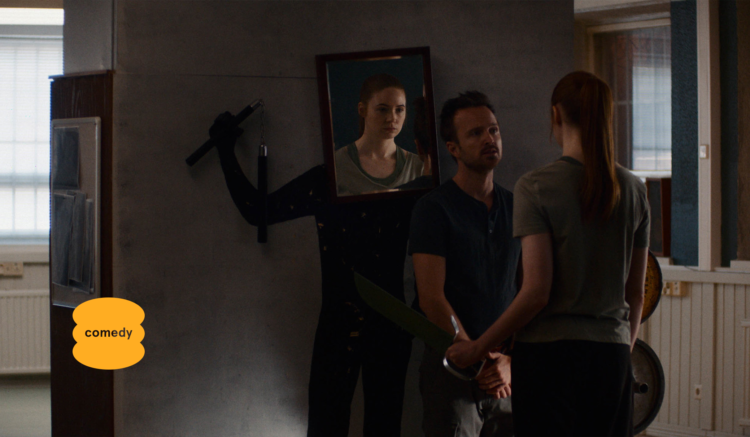
    Aaron Paul and Karen Gillan in Dual. Courtesy of Sundance Institute.
    Aaron Paul and Karen Gillan in Dual. Courtesy of Sundance Institute.

    Yorgos Lanthimos has made a career out of his unique brand of deadpan surrealism creating worlds where matter-of-factness is the norm and emotions never control decisions.


    ADVERTISEMENT


    More movies, less problems


    Hey! I’m Karl. You can find me on Twitter and Letterboxd. I’m also a Tomatometer-approved critic.

    💌 Sign up for our weekly email newsletter with movie recommendations available to stream.


    ADVERTISEMENT
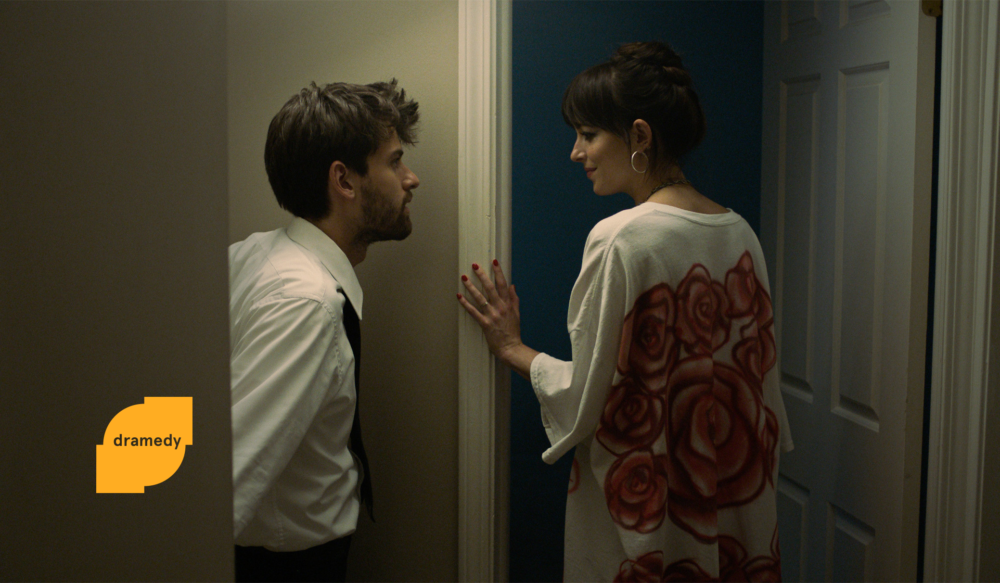

  • ‘Cha Cha Real Smooth’ is Gen Z’s The Graduate | movie review

    ‘Cha Cha Real Smooth’ is Gen Z’s The Graduate | movie review

    In Cha Cha Real Smooth, a recent college grad tries to find his purpose in life as he takes up a side hustle as a bar mitzvah party starter

    Cha Cha Real Smooth premiered at the 2022 Sundance Film Festival. It is currently seeking U.S. distribution.

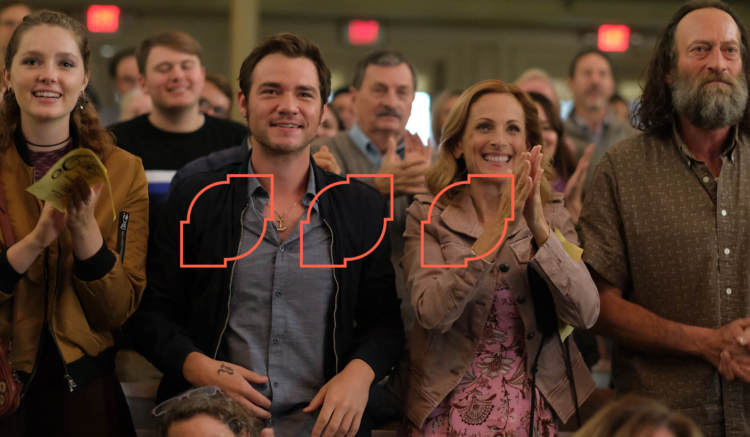
    The greatest coming-of-age movies — like Lady Bird and The Graduate — understand that although there is a central protagonist, they are not the main character. In the beginning, they believe they are the center of the universe but eventually learn there is more to their lives than what they see. That everyone surrounding them is the main character of their own lives. That’s what makes Cooper Raiff’s sophomore feature Cha Cha Real Smooth so effortlessly charming as a perfectly pitched dramedy. Although Andrew (Raiff) filters everyone else’s experience around him through his own, Raiff, as the writer-director of the film, gives color to everyone.

    Just like The Graduate, Andrew is newly graduated. His college girlfriend is off to Barcelona for her Albright Fellowship and he’s back in his hometown of Livingston, New Jersey working at “Meat Sticks” — where they sell meat… on sticks. He’s as aimless as they come. He doesn’t even have his childhood home to return to as his mother (Leslie Mann) has moved in with his stepfather (Brad Garrett) and has to sleep on the floor in his tween brother David’s (Evan Assante) room.

    However, his life finally finds some direction when he takes it upon himself to liven up a subdued bar mitzvah he’s accompanying his brother to. In particular, he hones in on young mother Domino (Dakota Johnson) and her daughter Lola (Vanessa Burghardt) who starts to break out of her shell when Andrew dances with her. It’s worth singling out Burghardt here, an autistic actress who’s playing an autistic character, whose performance rings nothing but sincere.


    ADVERTISEMENT


    Before long, he’s ambushed in the parking lot. “You are being swarmed by Jewish mothers who are recruiting you to be our motivational dancer,” says one of the mothers. For Andrew, it seems like quick money and something he genuinely enjoys. However, this isn’t just a bar mitzvah-set The Wedding Singer. Raiff focuses the movie on Andrew’s avoidance — of responsibility, of making decisions, of coming-of-age.

    For how quiet the story is, it says magnitudes about post-college aimlessness. Not just for recent graduates, though. What Cha Cha Real Smooth presupposes is that no one has truly “figured it out” as an adult. Domino, for instance, is facing down her marriage to lawyer Joseph (Looking’s Raúl Castillo) and confides her trepidation to Andrew. The wonder of the movie is that wherever you think this triangle goes, you’re probably wrong. Both Raiff and Johnson ooze with chemistry as two people set on different paths but completely empathetic to the other’s plights.

    There’s so much sweetness, witty humor, and swoon-worthy relationships (platonic and otherwise) in this movie. But despite a title and premise that errs towards comedy, Cha Cha Real Smooth is a drama that knows itself so well with Lola serving as the movie’s foil. “Sometimes I enjoy being in an empty room,” she tells Andrew, who has become her de facto babysitter. “Well, I’m jealous,” he responds, “I wish I could do that.” She almost doesn’t understand the answer. By the end of the movie, you’ll understand that she’s right.


    ADVERTISEMENT


    More movies, less problems


    Hey! I’m Karl. You can find me on Twitter and Letterboxd. I’m also a Tomatometer-approved critic.

    💌 Sign up for our weekly email newsletter with movie recommendations available to stream.


    ADVERTISEMENT


  • ‘Resurrection’ goes for the gut | movie review

    ‘Resurrection’ goes for the gut | movie review

    In Resurrection, a mother desperately tries to keep her past life from spilling into her present as an old figure walks back in to her life

    Resurrection premiered at the 2022 Sundance Film Festival. It is seeking U.S. distribution.

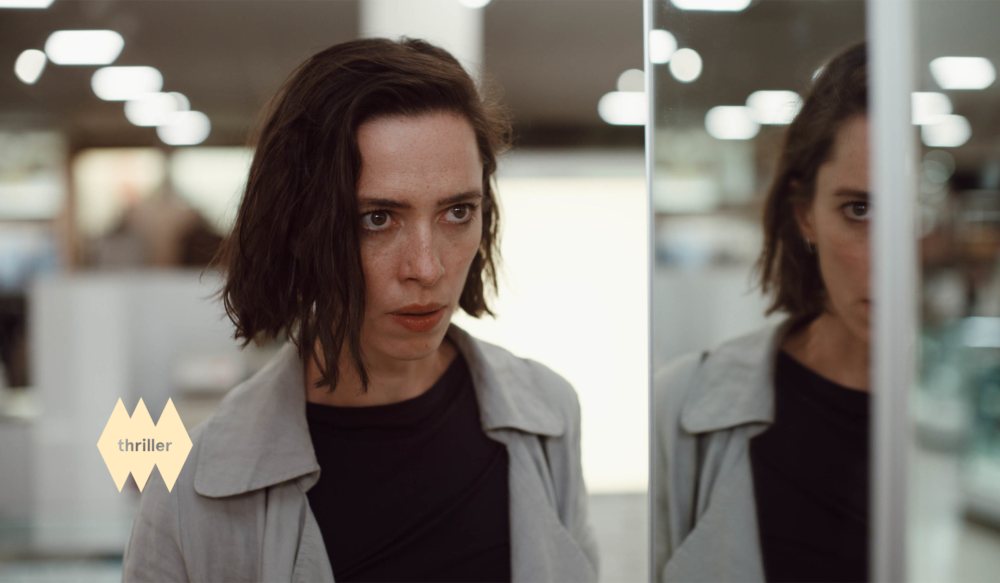
    Halfway through Resurrection, there’s a 10-minute scene where Margaret (Rebecca Hall) recounts a traumatic period of her life to a coworker. It’s done in close-up and in a single-take. The camera doesn’t move, and neither does Margaret. Memories spill out from her as a single tear falls down her face. There aren’t hysterics, it’s like suddenly, a pipe burst. Margaret, usually so controlled, has lost it for the first time.

    Her admission is so outlandish that it’s difficult to stomach at first. Her coworker Gwyn (Angela Wong Carbone) even asks if she’s messing with her. But when you sit with what she said you realize that it’s too detailed to be anything but real, and it justifies Margaret’s response when David (Tim Roth), a man from her past, comes roaring back into her life.


    ADVERTISEMENT


    Though it has the sheen of a gaslit woman thriller — Steven Soderbergh’s Unsane or Leigh Whannell’s The Invisible Mandirector Andrew Semans keeps much of the movie slight in comparison. There are scenes of a paranoid Margaret running through the streets convinced she’s being followed, and much of the horror is left to the imagination. Though an early image hints that this thriller is unafraid to tread fully into the dark waters of horror.

    Without spoiling the contents, because the plot is already so straightforward, Resurrection is about the psychological impacts of grooming and the accompanying Stockholm Syndrome that lingers well past the fact. Rebecca Hall’s performance will rattle you to the core as she physically reacts to her perfectly curated life beginning to crumble around her. And though this descent becomes repetitive, the movie’s surprisingly gruesome finale more than makes up for it.

    As Semans tries to dredge up some thematic weight around motherhood to tie the story together in a pretty bow, he nearly loses control of the movie. “I am a good mother,” Margaret says when she’s challenged. But Resurrection is at its best when it’s messy and unafraid to leave threads dangling. Ultimately, I’m not sure if it’s more than a well-made psychological thriller, but there are scenes that I know will stick with me. I feel that in the pit of my stomach (that’s a hint).


    ADVERTISEMENT


    More movies, less problems


    Hey! I’m Karl. You can find me on Twitter and Letterboxd. I’m also a Tomatometer-approved critic.

    💌 Sign up for our weekly email newsletter with movie recommendations available to stream.


    ADVERTISEMENT

  • ‘Master’ is a modern-day Giallo horror | Sundance review

    ‘Master’ is a modern-day Giallo horror | Sundance review

    Three Black women navigate the horrors — both real and supernatural — of working and attending a predominently white institution in Master

    Master is playing at the 2022 Sundance Film Festival. It will be released on Prime Video in March.

    The most horrifying scene in Master, the feature debut of director Mariama Diallo, takes place at a house party. There’s nothing quite supernatural about it, despite the core of the movie involving a legend centering on ghosts and witches. In the party scene, freshman Jasmine Moore (Zoe Renee) is having the time of her life as the song playing switches to Sheck Wes’ “Mo Bamba.” Around her, white faces illuminated in red begin to crowd around her and scream the lyrics without regard: “I be ballin’ like my n— Mo.” Except they don’t censor themselves. Diallo directs the scene with intense precision. The swirling camera blurs the faces around Jasmine until they look inhuman. It’s claustrophobic.

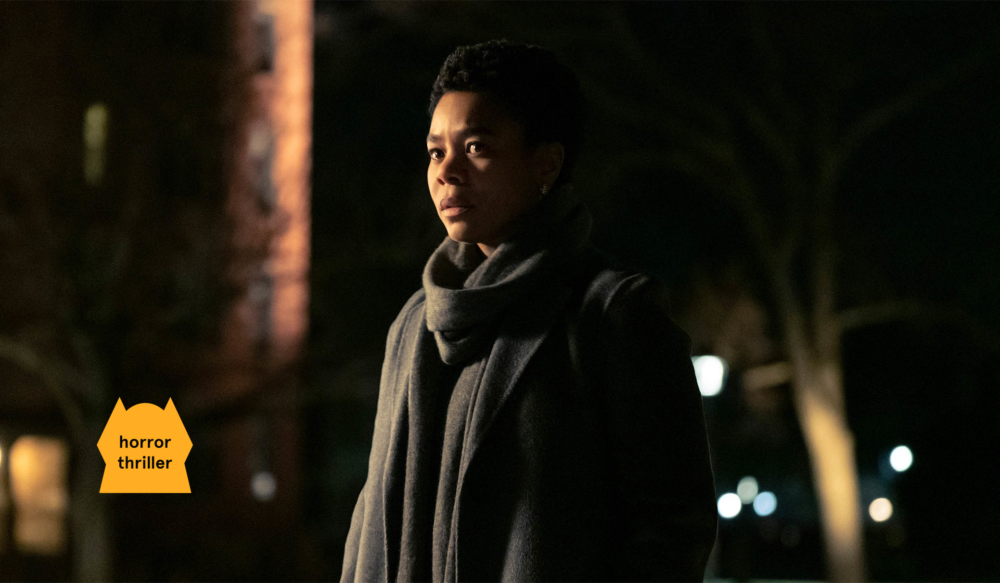
    That’s the overwhelming feeling throughout Master: an atmospheric sense of creeping dread that points to the supernatural haunts on the campus of Ancaster College. At the same time, the film works just as much to translate the very real feeling of three Black women as they navigate attending and working at a predominately white institution. Combining elements of Italian Giallo films — specifically Suspiria — and social horrors like His House, Diallo creates a type of haunted house movie that keeps you at arm’s length — until it doesn’t.


    ADVERTISEMENT


    Along with Jasmine, the movie follows the newly appointed House “Master,” or dean of students, Gail Bishop (Regina Hall) as she navigates the waters of leadership as the first Black person appointed to the role. Both women face microaggressions, and macroaggressions, in their day-to-day life. Jasmine, one of the few black students at the school, is asked to have her bag searched after it sets off an anti-shoplifting alarm. Gail, in a meeting with college leadership, is asked if she could be objective in determining whether Professor Liv Beckman (Amber Gray), a Black professor, should get tenure.

    Ancaster — a fictional college substitute for any Northeast liberal arts school — has its own share of mythology and lore, not uncommon for institutions of its kind. For Ancaster, it’s the story of Margaret Millett, a woman accused of being a witch and who was killed near school grounds. Legend has it that since then, the school has been cursed and she returns at night to claim the souls of students. Learning about this tale sets Jasmine on edge from the start, and it isn’t helped by the fact that a student killed herself in the very room she lives in.

    Diallo, taking a page from the shadowy film noir stylings of Giallo films, constructs the movie and school like a maze where the walls slowly close in on the characters. Jasmine, for reasons not entirely her own, never quite finds her footing, socially or academically. Gail, on the other hand, finds her path by potentially compromising her own identity. The dueling storylines have their strengths and keep the plot moving, though sometimes the lack of focus removes some of the effectiveness of the horror and story.


    ADVERTISEMENT


    Despite its assured direction, Master is not a perfect film. It falls into some of the trappings of a first-time director — showing instead of telling, uneven pacing and plotting — but manages to keep audiences engaged with horror imagery that sticks well past the end of the movie. And as well rendered as the supernatural sequences are — Jasmine’s nightmare encounters are sufficiently creepy — a scene with a seven-person panel consisting of five white men and women, an Asian man, and a Black woman, determining the worth of a Black professor, is just as unsettling.

    Gail, who is a face of resilience and determination throughout the movie, tells a defeated Jasmine, “it’s not a ghost, it’s not a witch, it’s America.” Diallo likens the very real experience of Black women in spaces built by and for white people to the oppressive weight of an urban legend like the one of the witch at Ancaster. These are the shadows you can’t shake, the itches you can’t scratch. These are the memories and ghosts that are always there and always weighing you down. The movie doesn’t give many solutions to this condition but instead offers the solution by portraying the problem for what it is: true horror.


    ADVERTISEMENT


    More movies, less problems


    Hey! I’m Karl. You can find me on Twitter and Letterboxd. I’m also a Tomatometer-approved critic.

    💌 Sign up for our weekly email newsletter with movie recommendations available to stream.


    ADVERTISEMENT



    ADVERTISEMENT


  • ‘When You Finish Saving The World’ | Sundance review

    ‘When You Finish Saving The World’ | Sundance review

    When You Finish Saving the World follows a mother and son pair who are, in their own ways, finding ways to leave their mark on the world

    When You Finish Saving the World is playing at the 2022 Sundance Film Festival.

    When You Finish Saving the World comes close to finding its footing in the final twenty minutes, which is typically when a movie reveals its design to deliver a message or lesson. Actor-turned-director Jesse Eisenberg would have succeeded in that emotional gut-punch had the prior 70 minutes been more nuanced in its skewering of white upper middle-class suburban progressives. Instead, we’re hit over the head with obvious artifacts and dialogue to hammer in the point to oblivion. They drive a smart car! They listen to classical music! They think white people shouldn’t play the blues!

    However, that is what makes it the perfect movie for Sundance. Audiences are typically more-forgiving and gravitate towards movies that have a message with a capital M. It’s no wonder the fest has become a bastion for actors to test their aptitude as writers and directors for the first time. First-time directors already have the tendency to over-direct and write. Actors who assume the director’s chair seem to make that mistake even more. It doesn’t help that Eisenberg also wrote the original story — released as an audiobook — and adapted it. Without someone to filter through all of the layers of this work, the movie becomes overwhelmed by its own sensibilities. 


    ADVERTISEMENT


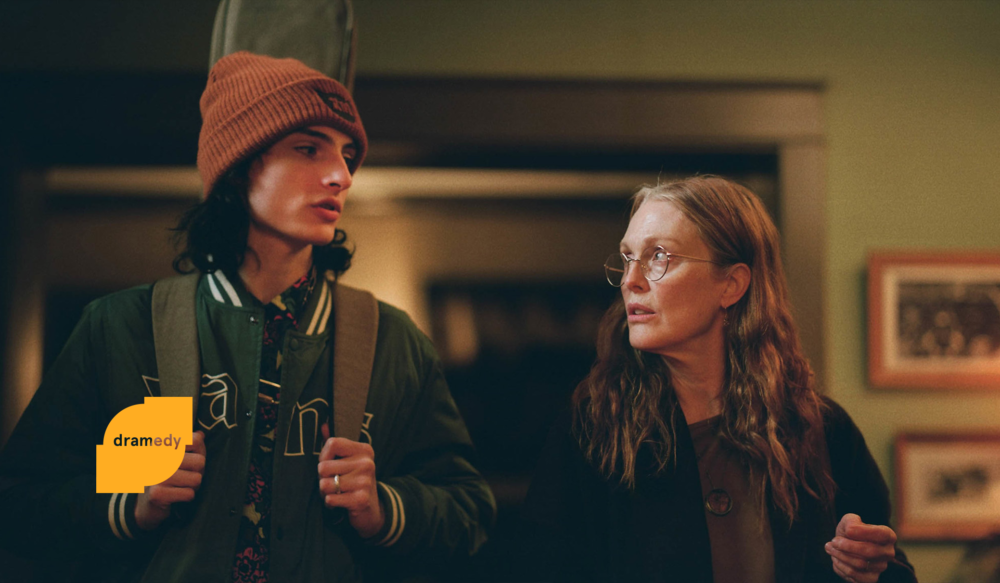
    Had When You Finish Saving the World either leaned more into its satire or had taken a more nuanced approach it might have succeeded– and there are flashes of success in both arenas. Evelyn (Julianne Moore) somberly assures Kyle (Billy Bryk), the son of a woman staying at the domestic abuse shelter she runs, that he’s not going to become his father. Hilariously, he responds, “why would I become him? I’m not worried about that.”

    Evelyn’s son Ziggy (Finn Wolfhard), on the other hand, tries to connect with his politically engaged crush Lila (Alisha Boe) by touting his international online presence. “I have 20 thousand followers and I think what they like about me are my passion and charisma,” he says, making a point to single out one of his Chinese viewers.

    Evelyn and Ziggy are both passionate about what they do, but also fundamentally misunderstand each other’s motivations — and their own. In theory, the movie’s central struggle is this mother-son dynamic and their inability to find value in the other’s mission. Evelyn is by the book, so much so that she sometimes comes off as disconnected. Ziggy is a free spirit and his songs, that exude mid-2000s garage emo pop-punk self-important sincerity, communicate a similar disconnect from reality.


    ADVERTISEMENT


    However, their screen time together is so limited that we’re unable to explore their connection to the depths we need to be interested as an audience. Their own storylines — Evelyn trying to “save” one of her charges and Ziggy trying to become “political” — feel so disparate that the movie becomes less than the sum of its parts.

    Eisenberg’s heart is in the right place. The movie has its moments where it feels like the biting indictment of the white savior narrative almost takes full form, but when it’s as shallow as its two leads it becomes the exact thing it’s trying to lambast. The movie is for people that have the resources to help and the desire to help, but lack the emotional stakes and inherent empathy it takes to be an actual ally. It’s like a person saying they’re an empath and asking a crying person if they’re sad. The idea is there. It’s a minor, but well-intentioned vision, and unfortunately, too singular of a viewpoint to be effective in its primary message – that of saving the world. 


    ADVERTISEMENT


    More movies, less problems


    Hey! I’m Karl. You can find me on Twitter and Letterboxd. I’m also a Tomatometer-approved critic.

    💌 Sign up for our weekly email newsletter with movie recommendations available to stream.


    ADVERTISEMENT

  • ‘Coda’ and how deaf culture sings | Sundance movie review

    ‘Coda’ and how deaf culture sings | Sundance movie review

    Coda follows the only hearing member of a culturally deaf family as she finds her voice as part of her school’s choir

    Coda starts Sundance 2021 off on a high note. While it doesn’t stray too far from its familiar coming-of-age dramedy plot, its keen observations of the hardships and joys of being deaf in a hearing world. It’s impossibly charming, funny, and filled with memorable characters.

    ▶︎ CODA is now streaming on Apple TV+

    Coda tells a story it feels like we’ve seen hundreds of times before — but trust me when I say you haven’t seen anything like it yet. Coda premiered in the U.S. dramatic competition section of the virtual 2021 Sundance Film Festival, the second film of writer and director Sian Heder to premiere at the fest, and will likely be one of the year’s success stories.

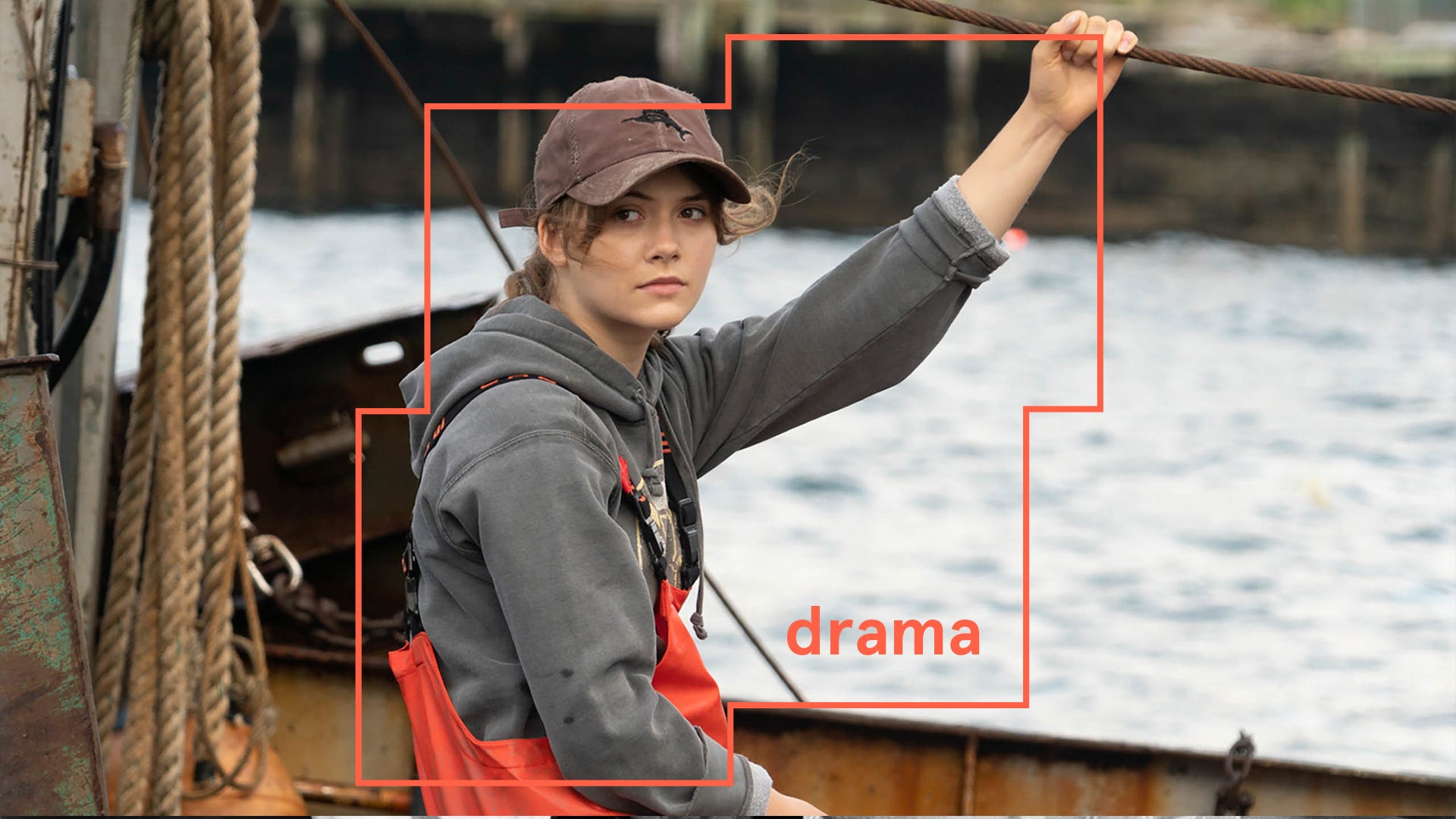
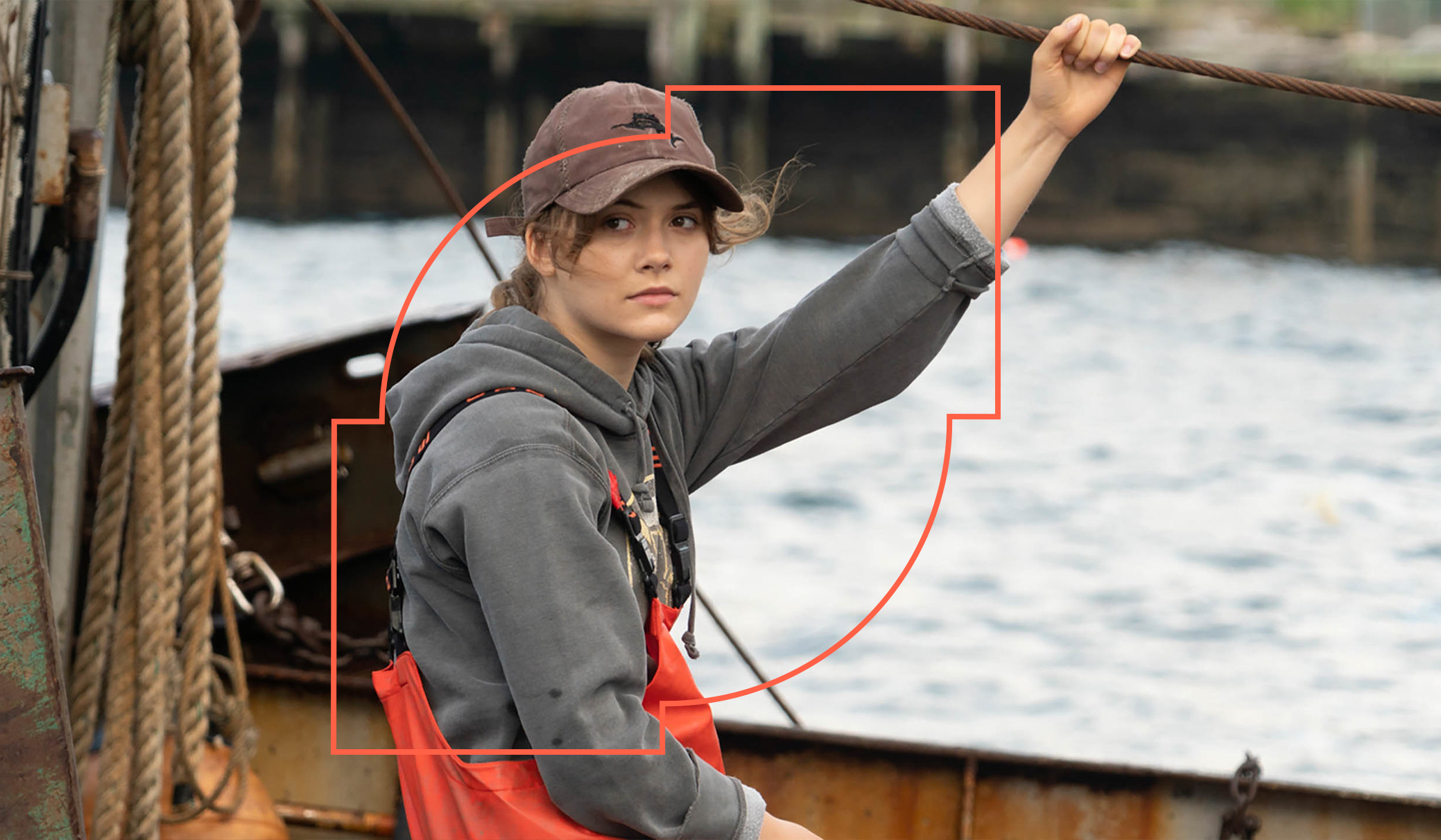
    You know the setup. Ruby (Emilia Jones — get to know this name), an angsty and picked-on teen, struggles her way through her senior year of high school. She is mostly ostracised from her classmates because her family is poor and runs a fishing business, however the fact that she’s the only hearing member of her deaf family also plays into the torment. 


    ADVERTISEMENT


    As you could imagine, she feels a weight of obligation to help her father Leo (Daniel Durant) and older brother Frank (Troy Kotsur) with the business, and her mother Jackie (Oscar winner Marlee Matlin) doesn’t help things either. However, she does it out of love for her family, which other than being culturally deaf are completely happy.

    Knowing her crush Miles (Sing Street’s Ferdia Walsh-Peelo) is joining the choir, Ruby makes a rash decision to also join. However, as we see in moments of privacy, Ruby can sing — like really sing. As the movie progresses, her choir teacher Bernardo Villalobos (Eugenio Derbez), offers to train her to audition for music school. Of course, though, she keeps it from her family for fear of disappointing them.

    You know the plot. You can tell me what you think is going to happen and I’ll probably tell you you’re right. However, there are moments where Coda breaks from the genre trappings to deliver one of the best musings on what it’s like to be deaf in a hearing world. 

    Coda follows the only hearing member of a culturally deaf family as she finds her voice as part of her school's choir
    A still from CODA by Siân Heder, an official selection of the U.S. Dramatic Competition at the 2021 Sundance Film Festival. Courtesy of Sundance Institute.

    When Ruby’s parents watch her perform for the first time, we hear the song for the first few moments — and then silence. We’re in her parents’ heads. We can’t hear what she sounds like, which is anxiety-inducing for them. However, they begin to look around. The gift of observation that those that are deaf have allowed them to see what the music is doing to the audience so that even though they can’t hear her they know that she has something.

    Coda benefits from its stellar and deep exploration of every character, each of whom just happens to be made of pure charm and delight. We get to spend a little time with each of them to understand exactly why they make the decisions they make, the struggles that they fight through — exploring the minutiae of being culturally deaf.

    Coda never strays to the melodrama. Every moment feels earned and grounded in something real thanks to the strong performances from the entire cast. However, if there is a breakout this year at Sundance, it is Emilia Jones. She pours with emotion at every point often slipping in and out of signing that is wracked with emotion. If Coda is about anything, it’s about the joys we find through adversity. And though that adversity might shape us, it doesn’t define us. A stunning wait to start the fest.


    ADVERTISEMENT


    More movies, less problems


    Hey! I’m Karl. You can find me on Twitter and Letterboxd. I’m also a Tomatometer-approved critic.

    💌 Sign up for our weekly email newsletter with movie recommendations available to stream.


    ADVERTISEMENT

    Chloé Zhao makes Nomadland‘s melancholic but hopeful story of nomads traversing the American West a stunningly complex character study of life on the margins of society.


    💌 Sign up for our weekly email newsletter with movie recommendations available to stream.


    ADVERTISEMENT

  • ‘Flee’ pushes the boundaries of documentary films | Sundance movie review

    ‘Flee’ pushes the boundaries of documentary films | Sundance movie review

    Flee follows an Afghan refugee’s journey with his family to find safety in Europe. Years later he recounts the story to a friend who documents the story through animation.

    Flee is a great argument for animation’s place in documentary filmmaking. Though we’ve seen refugee stories before, this one is specific and intimate. Filled with nuances about trauma, sexuality, and finding home. An emotional, visceral, and ultimately cathartic experience.

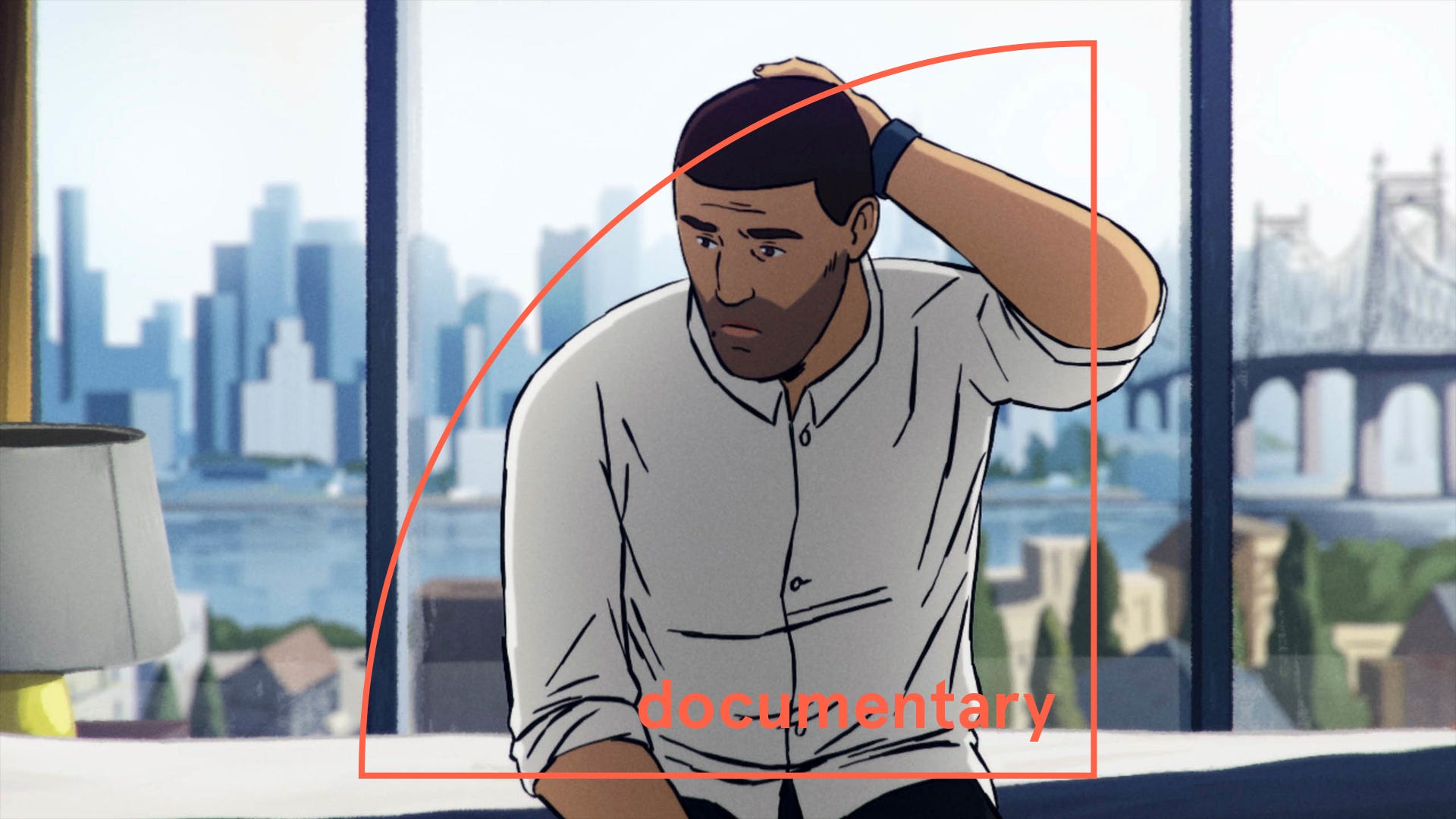
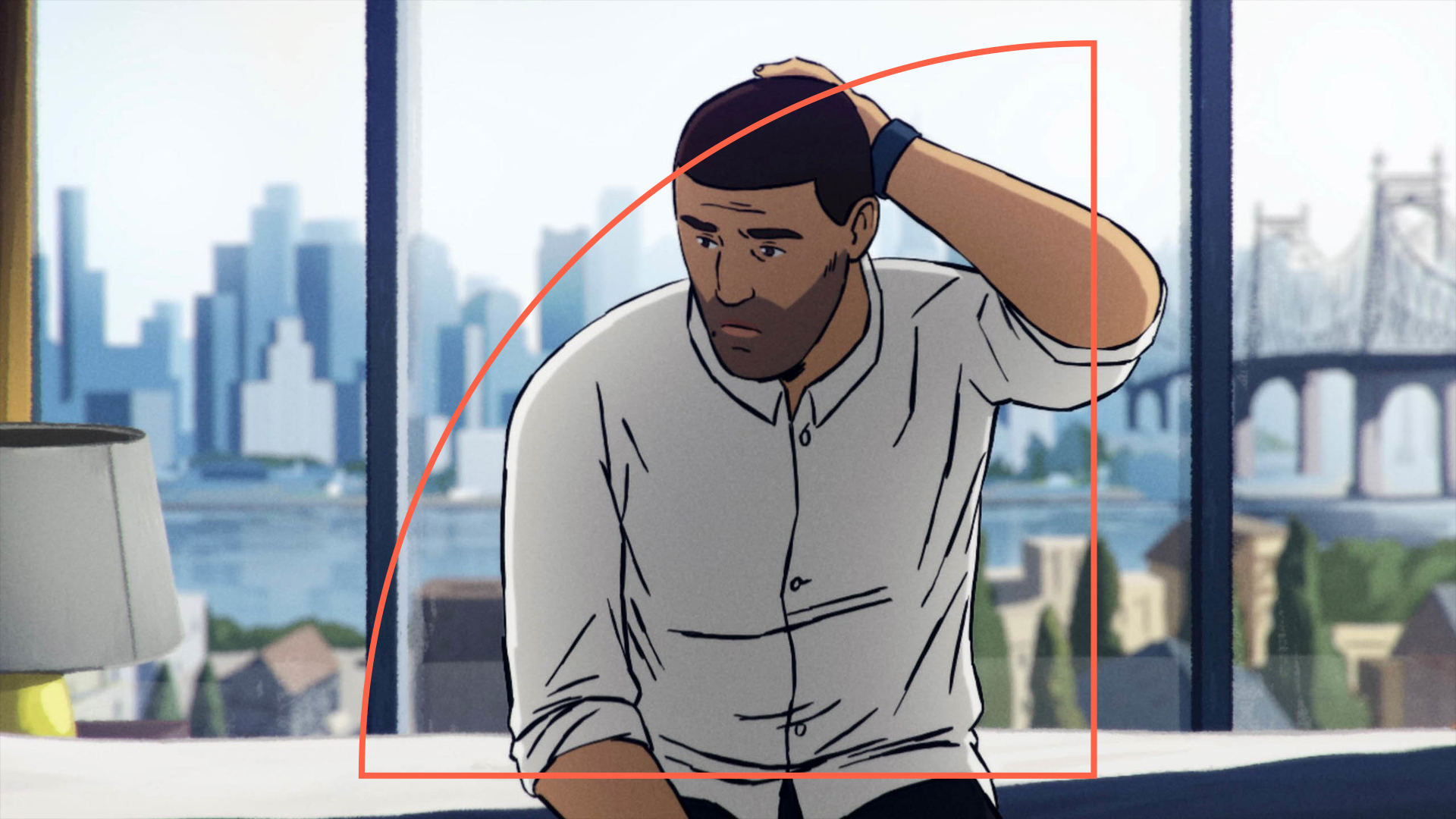
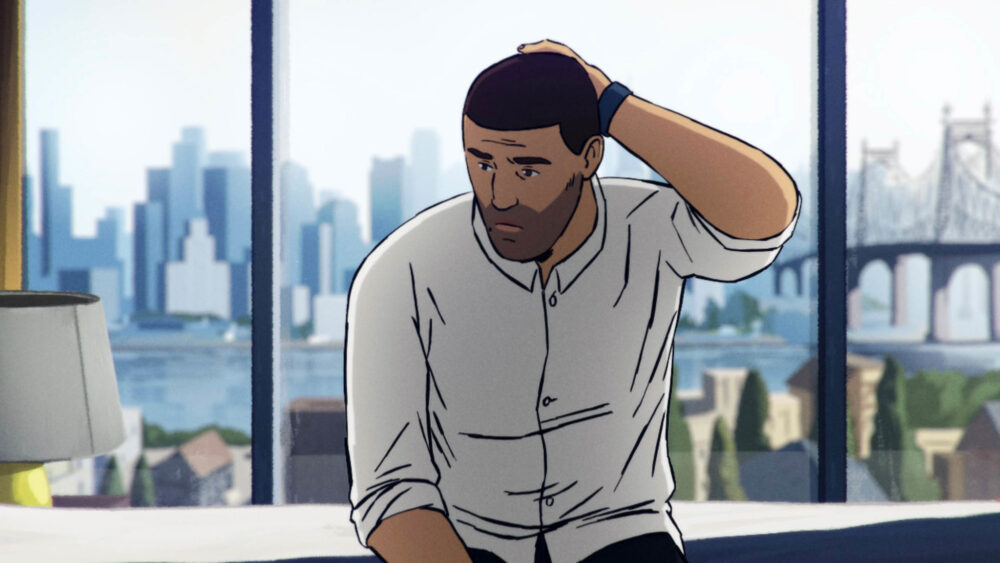
    At the start of Flee, which premiered in the World Documentary section of the 2021 Sundance Film Festival, we watch a man lie back in a bed. We see him from a bird’s eye view. He’s animated, but something about the animation tells us that this is drawn from life. Offscreen we hear director Jonas Poher Rasmussen ask the man, “what does the word ‘home’ mean to you?”

    At that, the man, Amin, begins to transport us back to 1984 Kabul, Afghanistan. As he describes the place and time, the rough charcoal sketches morph into vivid colors as we meet his family. He begins to talk about them — his mother, father, brother, and sisters. However, he quickly cuts off the interview saying, “it’s my past. I can’t run away from it. I don’t want to.” But he can’t continue, which Rasmussen understands.

    That’s because Rasmussen, we learn, is old school mates with Amin. He describes seeing him on the train. He describes him in great detail. Decades later they’re still friends and Rasmussen has taken interest in telling Amin’s story of fleeing Kabul as the Taliban took control of the city and his journey to eventually settle in Denmark. And the way Rasmussen tells it is the way any other person would learn about their friends’ past. Flee feels like a story that you lie back in a bed and listen to with the storyteller right next to you — this quite literally happens.

    This might be a good place to mention that the entire film is animated. That’s in large part to protect Amin’s privacy. At the same time, it allows us to see his memories, as fickle as they are like all memories, as he remembers them. Months later he sits back down to recount the story. And from there, Flee captures you and doesn’t let you go until it cuts to black. 

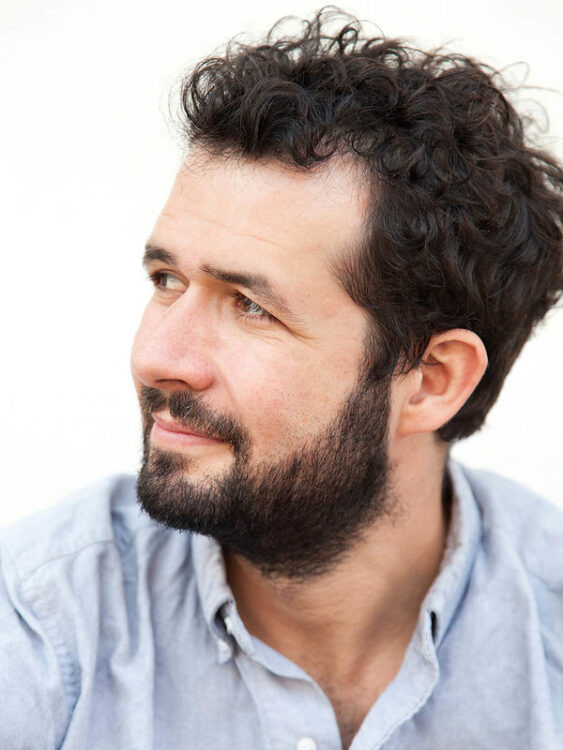
    Jonas Poher Rasmussen, director of Flee, an official selection of the World Cinema Documentary Competition at the 2021 Sundance Film Festival. Courtesy of Sundance Institute | photo by Yann Bean.

    There’s so much to unpack in Amin’s story, but I will leave that for you to uncover when you watch it. And I’m telling you now, watch it when it comes out — thankfully Neon has acquired the film for distribution (the first of the fest). Instead, I want to talk about what makes Flee so effective as a documentary. 

    Documentarians often find archival footage to piece together the story they’re trying to tell. They fill in the gaps with interviews or reenactments. Instead, Flee lets Amin tell the story. Rasmussen simply gives us a way to see it all unfold. Hearing Amin’s voice as it wavers, the animation often following his lead, makes the entire experience feel intimate. Like he’s telling it just to us. 

    Periodically, we’ll flip back to the present, which we also see in the same hand-drawn animation. It only heightens the intimacy. There are asides about how that past and trauma has shaped who Amin is now, especially his relationship with his partner Kasper, who hopes to move to the countryside with Amin. However, he can tell something is holding him back. 

    We learn through Amin’s story why he’s so hesitant to take the next step with Kasper. He doesn’t tell us, but we’re able to figure it out. In a gorgeous and poetic scene right before the end of the film, we watch Amin return home to Denmark in the present after a business trip. Kasper is off in the distance waiting for him in the busy airport. Amin stares from afar and says in voiceover, “even when you’re in a safe place, you’re on your guard.” Quickly, he adds, that maybe that’s something that needs to change. 

    Flee pushes the medium of documentary filmmaking forward by finding a way to get us to both sympathize and empathize with Amin’s feelings through our own experiences. It was almost a visceral experience. I experienced nothing close to the hardships Amin experienced as he tried to escape Afghanistan by way of Russia through human traffickers. However, the film’s intimate understanding of the story it was telling made it possible to find a way to apply his story to my own life. Even in a safe place, you’re on your guard. Maybe it is about time to change that.


    ADVERTISEMENT


    More movies, less problems


    Hey! I’m Karl. You can find me on Twitter and Letterboxd. I’m also a Tomatometer-approved critic.

    💌 Sign up for our weekly email newsletter with movie recommendations available to stream.


    ADVERTISEMENT


    💌 Sign up for our weekly email newsletter with movie recommendations available to stream.


    ADVERTISEMENT

  • ‘West Side Story’ is reborn better than before | movie review

    ‘West Side Story’ is reborn better than before | movie review

    West Side Story gets an update from Steven Spielberg with Rachel Ziegler and Ariana DeBose taking over the iconic roles of Anita and Maria in this classic musical

    Steven Spielberg remakes the 1961 film West Side Story with (mostly) new stars, new screenplay, and a fresh take on the classic. Featuring star is born performances by Ariana DeBose and Rachel Ziegler, this new version may even surpass the original.

    Steven Spielberg took on two daunting tasks with his version of West Side Story. First, as a remake of a movie many consider to be one of the best ever made — it also has ten Oscars to back it up. Second, as a movie musical. An art that many of tried and nearly just as many have failed at producing in our modern age (*head slowly turns to Dear Evan Hansen*). Yet somehow he succeeds on both fronts and simultaneously delivers his best movie in years. 

    The original 1961 film, which was co-directed by the director of the stage version Jerome Robbins, feels like it’s adapting a stage musical to the screen. The staging, even on the streets of New York, feels like musical staging in three dimensions. Spielberg has a grander vision for his new version. Rather than feeling tied to one “stage,” Spielberg allows numbers to cut and move and take up the entire world rather than just one small part of it. 


    ADVERTISEMENT


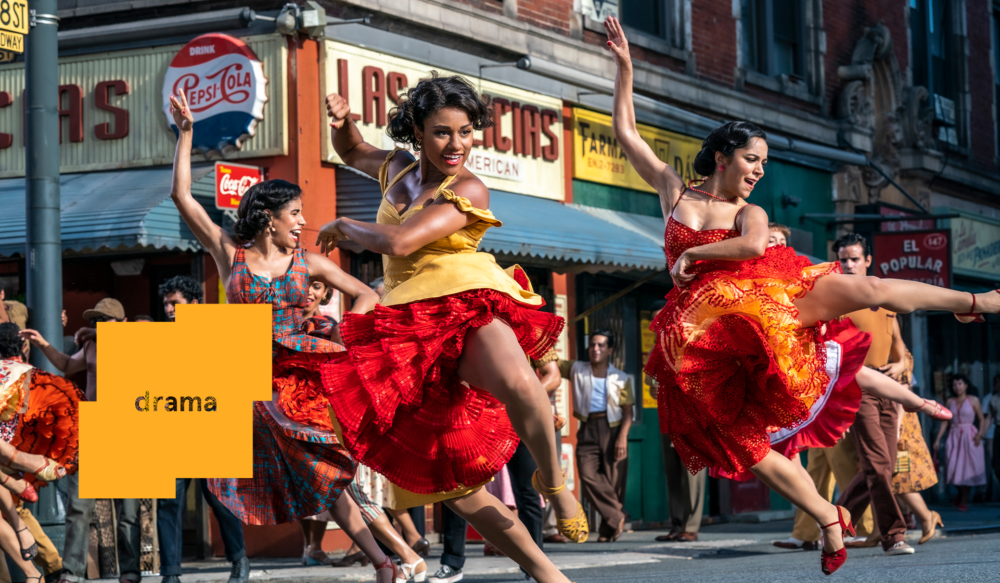
    A perfect example is the restaged “America,” inarguably the most iconic song and number. In the original, Anita, played by Rita Moreno who returns in a new role in this version, dances on the rooftop along with the Sharks and their girls in choreography that honors Robbins’ original vision. The camera is simply there to caption the action.

    In this new version, Anita takes to the streets. She weaves through the city, into traffic, through stores, surrounded by onlookers who are just as much a part of the number as the dancers. It’s a grand old Hollywood musical number elevated by the new cinematic language — the camera cuts and pans and stays ahead of the action as much as it follows it. It also helps that our new Anita Ariana DeBose delivers the number with as much, if not more, high-flying feisty energy as Moreno.

    And that goes for the film as a whole. While the 1961 version is clean and polished, Spielberg infuses the story which much-needed grit that is appropriate for 50s era New York. The new sensual and dark energy makes this tragedy all the more tragic while still maintaining the hyper-stylized magic needed of a musical.


    ADVERTISEMENT


    Spielberg uses moments of surrealism like the lights dimming when Maria and Tony lock eyes for the first time in a way that blurs movie and musical without completely alienating those who might be more musical-averse in the audience. However, that doesn’t mean he shies away from extravagant over-the-top musical numbers. His staging of “Office Krupke,” which always felt like a dead spot in the original, feels like an intricate Broadway staging.

    You’ll notice that I almost went through this entire review without talking about the leads of the story, but that’s because Maria and Tony have always been the least interesting part of West Side Story. However, Kushner’s screenplay recenters the story on Maria in a way that makes us buy the relationship. It helps that newcomer Rachel Ziegler gives a shining star is born performance despite her less-than-stellar costar. 

    West Side Story is a classic and depending on who you ask classics should not and cannot be touched. Spielberg and Kushner said, “hold my beer.” This revamped version proves that you can have reverence for your source material while updating with new cinematic sensibilities to create something that stands entirely on its own.


    ADVERTISEMENT


    More movies, less problems


    Hey! I’m Karl. You can find me on Twitter and Letterboxd. I’m also a Tomatometer-approved critic.

    💌 Sign up for our weekly email newsletter with movie recommendations available to stream.


    ADVERTISEMENT


    💌 Sign up for our weekly email newsletter with movie recommendations available to stream.


    ADVERTISEMENT


  • ‘Licorice Pizza’ is a 70s hangout romp | movie review

    ‘Licorice Pizza’ is a 70s hangout romp | movie review

    Paul Thomas Anderson’s Licorice Pizza, a coming-of-age comedy starring Alana Haim, follows two young people in the 70s trying to find their key to success

    Licorice Pizza is an irresistably charming comedy romp through the 70s through the eyes of two charismatic young people looking for an outlet for their energy.

    Without fail the second a Paul Thomas Anderson movie ends I’m filled with an odd sense of sadness. Sadness that I won’t be able to hang out with his characters anymore. That I won’t be able to live in their world anymore. And yes, I even felt it with There Will Be Blood

    However, his newest film Licorice Pizza has more in common with Boogie Nights than much of his recent work — both are set in the 70s and feature a comedic cast of characters. But even that comparison isn’t perfect. Even in his lighter movies PTA often finds darkness in our existence. Licorice Pizza, however, is almost completely made of joy.

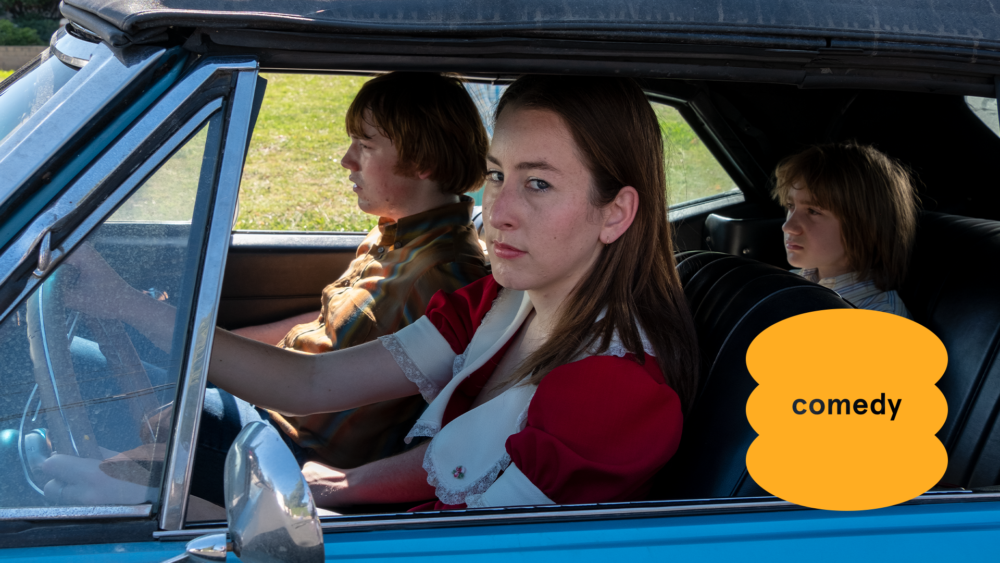
    When Gary Valentine (Cooper Hoffman) meets Alana Kane (Alana Haim, of the band Haim, in her film debut) it’s clear that they’ve each met their match. What Gary, who is a mature-seeming 15-year-old, and Alana, a lost 25-year-old, have in common is that they have too much energy and natural charisma without an outlet for it. 


    ADVERTISEMENT


    Throughout the movie, people seem inexplicably drawn to them. In one of the more ridiculous scenes in a film full of them, an actor (Sean Penn) invites Alana for drinks after an audition where he spews nonsense about the Korean war and attempts a motorcycle stunt from one of his old movies — with Alana in tow… kind of. He suavely cheeks, “you remind me of Grace.” Referring to his former co-star Grace Kelly.

    The rest of the movie is just a greatest hits reel of those scenes, each of which works on their own but especially as a study of two people experimenting with their lives until they find meaning. Plotless movies sometimes end up being a chore to get to, but this is Paul Thomas Anderson. He knows exactly what buttons to hit and when. 

    In recent years, PTA has been leaning into character studies about difficult men with complex plots that frankly challenge the viewer into sticking with it. Think The Master or Phantom Thread. So it’s a wonder that Licorice Pizza is simply a hangout movie made for an easy watching experience. 

    As Alana begins to find success in various places, the pure lunacy of each scene heightens. When Gary’s new scheme at success is selling water beds, Alana takes his note of being sexier on sales calls a little too literally. After purring into the phone and promising to come over to “personally install” the mattress she quips to Gary, “if you say you want it more sexy, I’ll make it f-cking horny.”


    ADVERTISEMENT


    Lines like that easily make this PTA’s funniest movie, perhaps even his first broad comedy. That makes it the perfect movie for his wife comedy legend Maya Rudolph to make her first appearance in. Even more fitting for her to welcome a comedy star in the making. 

    Alana Haim, who is making her film debut along with her sisters and bandmates Este and Danielle (and their parents), steals every single frame of the movie with her perfectly delivered one-liners — I haven’t laughed harder this year than when she screamed, “you’re a f-cking Jew!” — and her subtly expressive face that just oozes disappointment at Gary’s shenanigans.

    Like Quentin Tarantino’s Once Upon a Hollywood or Richard Linklater’s Everybody Wants Some, Licorice Pizza is about faithfully recreating its time period. Not just the aesthetic, but the mood. The word transportive is used too often, but it really feels like PTA picks you up and drops you into this world where you can revel in the delight of hanging out for two hours. In that simplicity, PTA has found greatness. 


    ADVERTISEMENT


    More movies, less problems


    Hey! I’m Karl. You can find me on Twitter and Letterboxd. I’m also a Tomatometer-approved critic.

    💌 Sign up for our weekly email newsletter with movie recommendations available to stream.


    ADVERTISEMENT


    💌 Sign up for our weekly email newsletter with movie recommendations available to stream.


    ADVERTISEMENT

  • ‘When I Consume You’ review | Brooklyn Horror Film Fest

    ‘When I Consume You’ review | Brooklyn Horror Film Fest

    Brooklyn Horror Film Festival’s When I Consume You follows a brother and sister living in Brooklyn who must face down an insidious evil stalking them

    When I Consume You is the exact kind of indie horror I love to watch. Deeply personal, smartly crafted together, and full of the entire cast and crew’s heart. 

    A poetic and meditative supernatural thriller that twists in horror elements to tell its profound narrative about second chances, family, and trauma.


    There’s a lot to admire about Perry Blackshear’s third feature When I Consume You, which premiered at the Sixth Annual Brooklyn Horror Film Festival, but nothing more than its sheer ambition. The Greenpoint, Brooklyn-set horror is a supernatural tale, action thriller, and family drama all wrapped into a polished arthouse package that is immersive and deeply felt. And although its ambition gets away from Blackshear at times, its heart — both figuratively and literally — is on display. 

    At the center of When I Consume You are Wilson (Evan Dumouchel) and Daphne (Libby Ewing), siblings who like all of us are in the process of figuring it all out. And as someone who has never lived more than a few blocks away from his sister in New York, this was particularly relatable for me. Daphne is a little further along in her journey than Wilson whose severe anxiety from their rocky childhood has prevented him from turning his janitorial job into something more. Daphne, on the other hand, has been able to turn her life around — until something stops her dead in her tracks.


    ADVERTISEMENT


    When I Consume You is a generational curse movie in the vein of Hereditary where real-life human trauma is brought into the supernatural. Blackshear doesn’t shy away from the movie’s genre elements — the movie opens with Daphne throwing up blood into the sink before pulling out a tooth — but instead of a horror movie with elements of a family drama, he steers this towards a family drama with horror elements. Which makes its second and third act twists land with great effect. 

    ⚠️ Slight spoilers ahead

    After getting to know Daphne and her deep relationship with Wilson, he discovers her dead in her apartment of an apparent overdose. However, after seeing a figure fleeing the scene with superhuman agility, he becomes certain that she was murdered and vows to find her killer. However, this isn’t the last we see of Daphne as she returns as a ghost to help Wilson track down her killer. In his quest, he encounters a cop (MacLeod Andrews) who is not what he seems and uncovers a deep family secret that explains the ghostly occurrences happening around him.


    ADVERTISEMENT


    There’s some narrative muddiness that makes the movie a little difficult to follow, though that’s also part of its charm. While the movie’s wavelength is sometimes hard to latch onto, its light hand when it comes to explaining its lore is appreciated. There’s a poetic quality to its rhythm that lands it squarely between arthouse and something broader.

    For a low-budget indie shot over three weeks on location in Greenpoint, as Blackshear pointed out in a post-screening Q&A, it is impressive how effective its action and horror elements are. He has full control of an atmosphere that is as melancholic and isolating as New York could be in the winter. Plus the trio of main performances from Dumouchel, Ewing, and Andrews are dynamic, well-realized, and lived-in. When I Consume You is the exact kind of indie horror I love to watch. Deeply personal, smartly crafted together, and full of the entire cast and crew’s heart. 


    ADVERTISEMENT


    More movies, less problems


    Hey! I’m Karl. You can find me on Twitter and Letterboxd. I’m also a Tomatometer-approved critic.

    💌 Sign up for our weekly email newsletter with movie recommendations available to stream.


    ADVERTISEMENT

    💌 Sign up for our weekly email newsletter with movie recommendations available to stream.


    ADVERTISEMENT


  • 2021 Sundance Film Festival Recap + the best films

    2021 Sundance Film Festival Recap + the best films

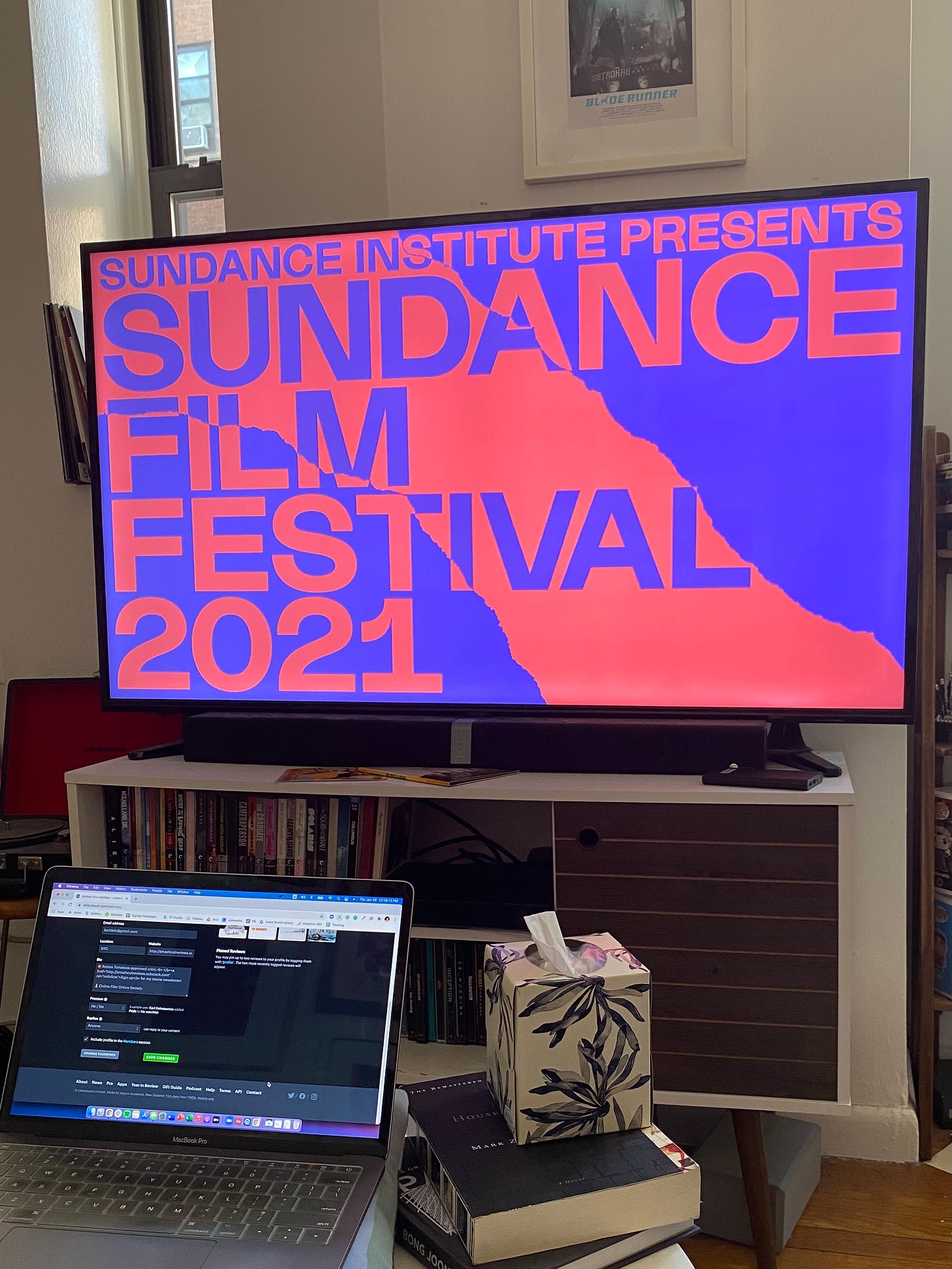
    The 2021 Sundance Film Festival went from the mountains of Park City, Utah to my living room. Here’s what the experience was like.

    This post about the 2021 Sundance Film Festival first appeared in my newsletter! Sign up here.

    I was fortunate enough to be invited back to cover the 2021 Sundance Film Festival, the first major fest of the year. 19 movies. 4 hours of sleep. 1 couch. Here’s how it went:

    Virtual Park City, UT (aka my living room)

    The experience

    Last year, I was on a snowy mountaintop in Park City, Utah lacking sleep, hungry from skipping meals, and battling minor altitude sickness as I trudged through snow and ice-covered sidewalks to watch movies that may never be seen by the public. I loved every minute of it.

    And while this year’s Sundance Film Festival was held virtually so that I could enjoy it from the comfort of my own couch, there was still a sense of anticipation largely thanks to clever work from the Sundance Institute to mimic the experience of the festival itself. 

    Part of the fun — and frustration — of any festival is taking bets on the right film to see. There were still screening blocks that forced you to pick between films and limited “seats” available for premieres. However, this time if you weren’t feeling a movie and wanted to start another you didn’t have to change theaters. It took two clicks.

    Each film was still started with a slightly awkward introduction from a programmer and the filmmaker before we were treated to a beautiful homage to the Indigenous people and the land where Sundance usually takes place. But missing were the interactions with the hoards of volunteers that often were the best part of the fest.

    However, what I did miss was the in-person aspect. Interacting with other critics and bloggers while waiting to get into the theater or finally finding a moment of peace to write in the corner of a hotel or the anticipation of maybe getting into a premiere if it had open space. My couch is still no Park City, especially when the buzzer from my food delivery can take you out of even the most engrossing film. 

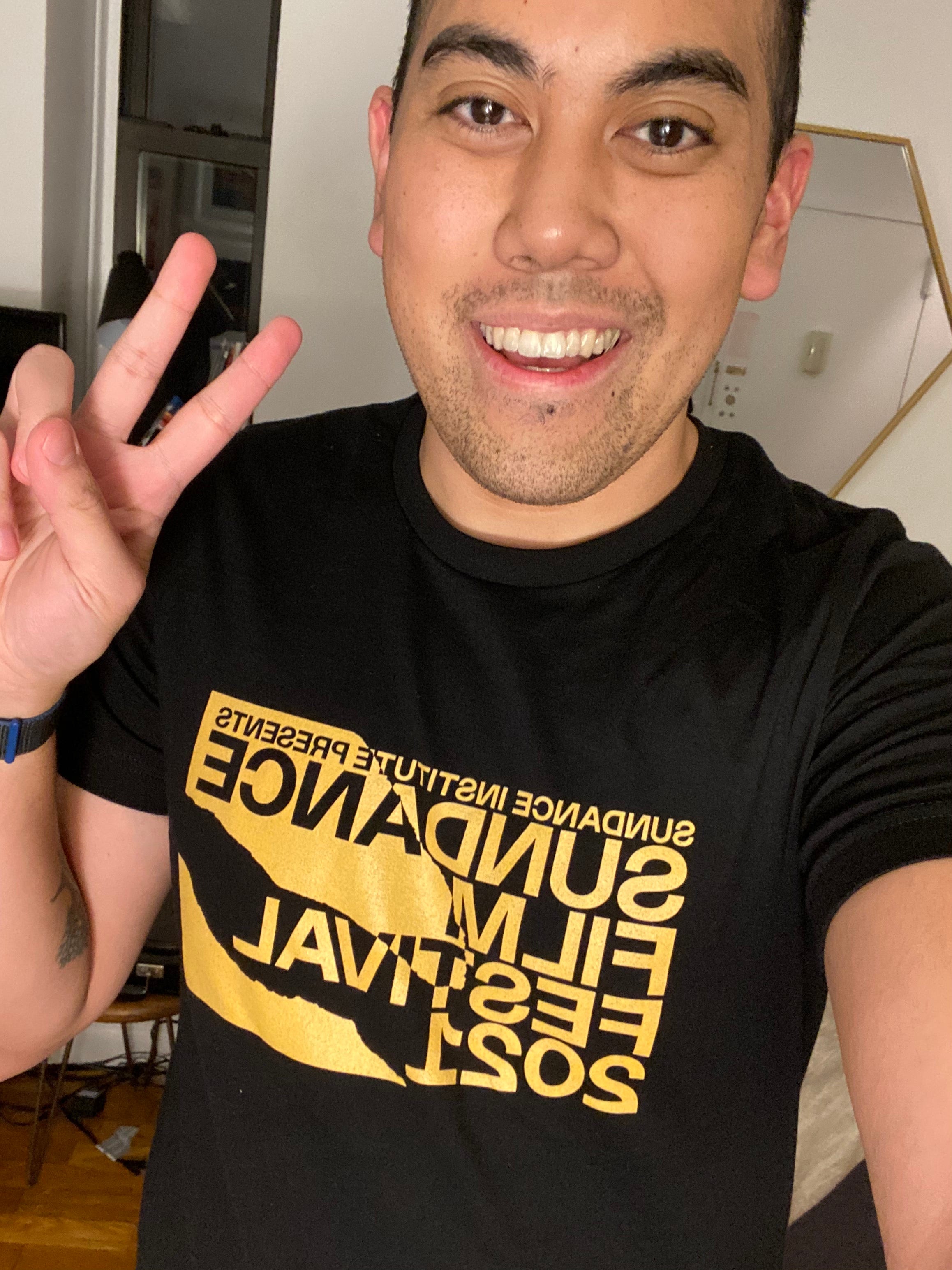
    New year, new fest, new shirt

    The films + acquisitions

    There were certainly less buzzy films at this year’s fest, which was a blessing and a curse. Coming into the festival the only large centerpiece film was Judas and the Black Messiah, which we’ll get to. Fewer films came in with distribution meaning more chances to be surprised — and disappointed.

    And even though there were more films available for acquisitions, there were few with one huge exception. Coda was acquired by Apple TV+, after a bidding war with Netflix and Amazon, for a record-breaking $25 million — it bested last year’s Palm Springs which broke the previous record with $22.5 million.

    Usual streaming players like Netflix, Amazon, and Hulu were largely absent while indie studio A24, perhaps the most successful studio when it comes to Sundance, didn’t show or acquire anything at the fest. Though Neon, hot on their tails as always, acquired three documentaries and premiered one film.

    For a handy list of all of this year’s acquisitions, check out Indiewire

    My favorite films

    Compared to last year, which may have just been my first-time glow, this year’s slate felt minor by comparison. I came away last year loving a few films, this year I loved a couple and admired a few. Surely there were fewer submissions and fewer studios willing to premiere a film when they’d be unable to show it in theaters, so the programming team did the best with what they had. Here were my favorites:

    Summer of Soul (…Or, When the Revolution Could Not Be Televised)

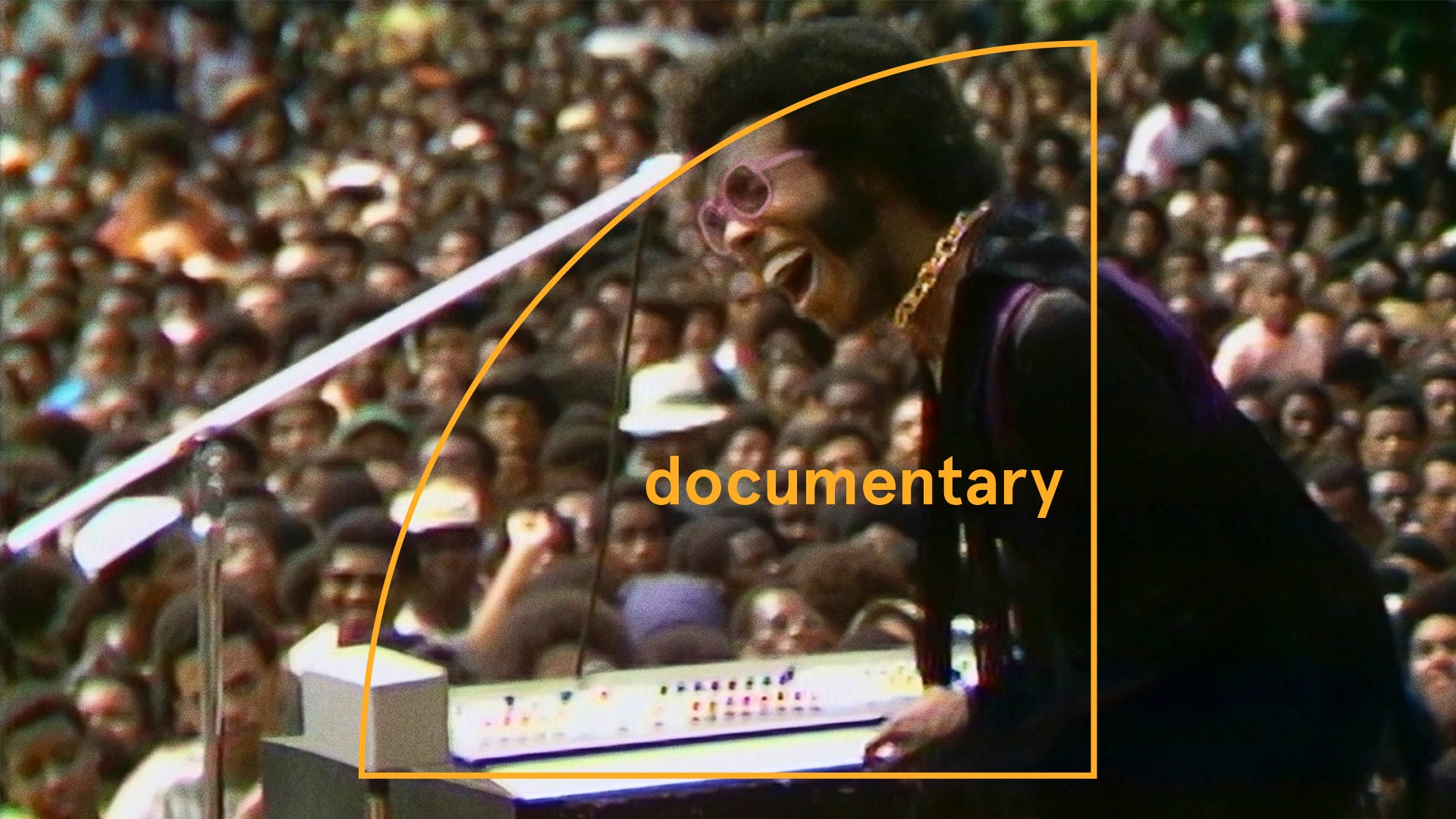
    My final film of the fest and the best. Questlove’s Summer of Soul (…Or, When the Revolution Could Not Be Televised) is an archived look at the often forgotten Harlem Cultural Festival, a celebration of Black music and culture in the summer of 1969. Though it was often overshadowed by Woodstock, the festival was a watershed moment for the Black community. The movie is presented as a concert doc, except it uses the rhythm of each performance to underscore segments about the political and social environment happening around it — the various assassinations of the 60s, the Black Panther Party, etc. It’s a stunning, joyful, but enlightening doc of Black joy.

    Where to watch it: The doc was acquired by Searchlight and Hulu for a record-breaking $12 million, the most for a documentary ever at a festival.

    Judas and the Black Messiah

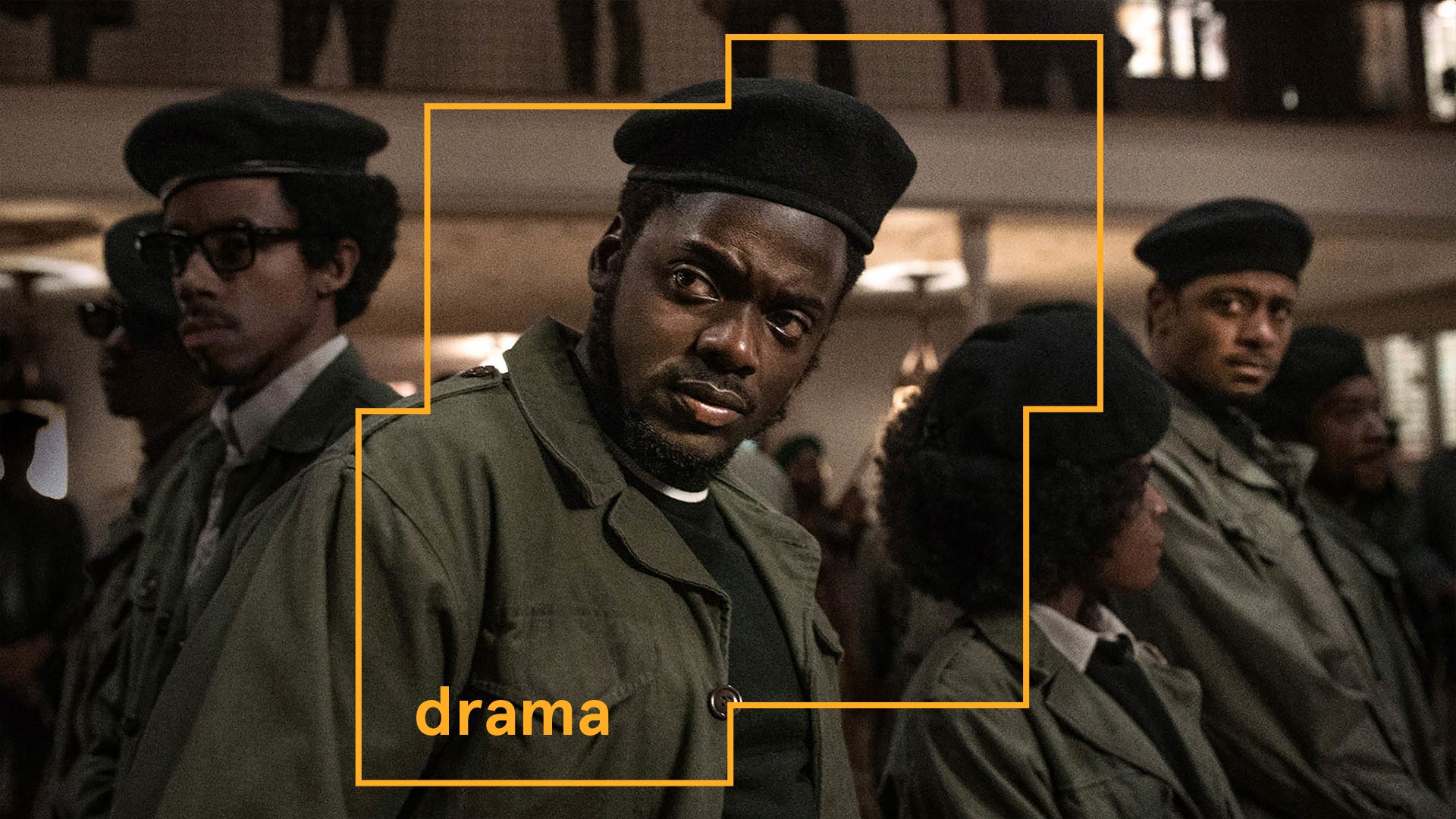
    I won’t scoop myself here. More on this film next week…

    Flee

    A still from Flee by Jonas Poher Rasmussen, an official selection of the World Cinema Documentary Competition at the 2021 Sundance Film Festival. Courtesy of Sundance Institute.

    Animation is an underutilized medium in documentary filmmaking, as Jonas Poher Rasmussen’s Flee clearly demonstrates. Rasmussen tells the story of his friend Amir — a pseudonym — about his life in Afghanistan, his escape to Russia as a refugee family during the Taliban’s occupation of Kabul, and how he found himself settled in Europe. To protect Amir’s identity, the film uses beautiful hand-drawn animation with bits of archival footage mixed in to give us an incredibly intimate look at Amir’s journey. However, what makes this documentary truly great is how it demonstrates how past trauma can affect your present life as Amir tries to move in with his boyfriend. [Full review]

    Where to watch it: The doc was acquired by Neon. They’re looking to release it this year.

    CODA

    Emilia Jones appears in CODA by Siân Heder, an official selection of the U.S. Dramatic Competition at the 2021 Sundance Film Festival. Courtesy of Sundance Institute.

    The first film that I enjoyed was the first one I saw: Sian Heder’s CODA. The film focuses on shy high schooler Ruby (breakout Emilia Jones), the only hearing member of a culturally deaf family consisting of Jackie (Oscar-winner Marlee Matlin), Frank (Troy Kotsur), and Leo (Daniel Durant), who joins the school choir to spend more time with her crush. However, after the choir director realizes her raw talent, he encourages her to apply to music school — forcing her to decide between staying with her family or following her dreams. It doesn’t break far out of the coming-of-age drama formula, but there are beautiful moments of direction that help you understand what it’s like to be deaf in a hearing world. [Full review]

    Where to watch it: CODA was acquired by Apple TV+ for a record-shattering $25 million. Expect to see it streaming on the platform for next year’s award season.

    Every movie I watched ranked

    1. Summer of Soul (…Or, When the Revolution Could Not Be Televised)
    2. Judas and the Black Messiah
    3. Flee
    4. Coda
    5. Mass
    6. In the Earth
    7. Passing
    8. On the Count of Three
    9. Coming Home in the Dark
    10. We’re All Going to the World’s Fair
    11. Marvelous and the Black Hole
    12. Together Together
    13. John and the Hole
    14. Land
    15. Prisoners of the Ghostland
    16. Censor
    17. Life in a Day 2020
    18. Eight for Silver 
    19. The Blazing World

    ADVERTISEMENT


    More movies, less problems


    Hey! I’m Karl. You can find me on Twitter and Letterboxd. I’m also a Tomatometer-approved critic.

    💌 Sign up for our weekly email newsletter with movie recommendations available to stream.


    ADVERTISEMENT

    Chloé Zhao makes Nomadland‘s melancholic but hopeful story of nomads traversing the American West a stunningly complex character study of life on the margins of society.


    💌 Sign up for our weekly email newsletter with movie recommendations available to stream.


    ADVERTISEMENT

  • Dear Evan Hansen, you owe us an apology | TIFF movie review

    Dear Evan Hansen, you owe us an apology | TIFF movie review

    Dear Evan Hansen follows a high school senior with a social anxiety disorder who suddenly finds himself as the hero of his town after a student commits suicide

    Undoubtedly one of the worst movie-musicals ever made. Overwrought and emotionless at the same time, insensitive towards trauma and mental illness, and out of touch with reality. Jail to everyone.


    Dear Evan Hansen, 

    Today was not a good day because I was subjected to watching you. 

    Sincerely,
    Me

    Usually I don’t like being mean about the films I don’t like. Also, I’m a firm believer that almost every film made with the best of intentions has some good you can derive from it. However, Dear Evan Hansen doesn’t sit right with me. At its root, it feels rotten. Like its intentions are misplaced or, given the benefit of the doubt, misunderstood. Director Stephen Chbosky, whose films The Perks of Being a Wallflower and Wonder I truly enjoy, was simply handed a bad project.


    ADVERTISEMENT


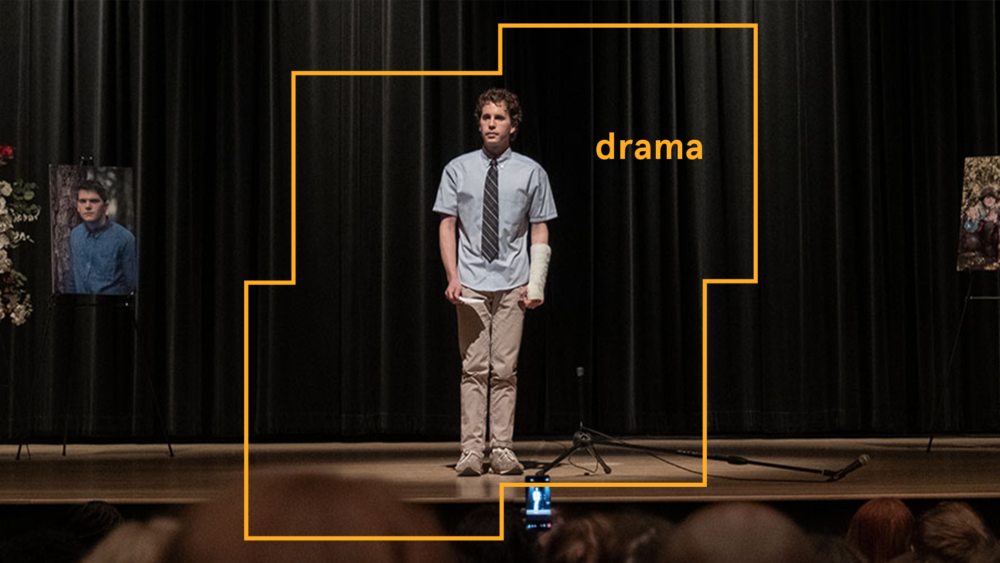
    The movie follows Evan Hansen (played by Ben Platt), your typical high school senior with a social anxiety disorder who is tasked by his therapist to write a letter to himself every day. After a misunderstanding causes him to become the hero of his town following the suicide of his classmate Connor (Colton Ryan), Evan must continually expand his web of lies and keep all he has gained from the fallout. 

    This includes lying to Connor’s family (Amy Adams and Danny Pino) about being friends with their son, dating Connor’s sister (Kaitlyn Dever), working with Alana (Amandla Stenberg) on an entire organization and fundraiser honoring him. The list goes on and on. No one is safe from his deceit. The fact that this is a musical is confounding because watching Evan spin lie after lie in songs like “For Forever” and, even more maliciously, fabricate evidence in “Sincerely, Me” almost makes light of the damage his actions are bound to cause.

    At this point, if you’re already asking yourself why this seemingly terrible human is the protagonist of the story then we are on the same page. The film, which is an adaptation of the Broadway musical of the same name featuring music by Oscar winners Benj Pasek and Justin Paul, was meant to “immortalize” 27-year-old Platt’s Tony-winning performance. However, Dear Evan Hansen seems to be a story that only worked in the thin period of time when it came out. It already feels dated — as does Platt’s hair.

    💌 Sign up for our weekly email newsletter with movie recommendations available to stream.


    ADVERTISEMENT



    ADVERTISEMENT


    Reportedly, changes were made in the adaptation to address some of the more polarizing issues with the story. If that’s the case, then I’d hate to see what was wrong with the musical. At its core, the musical is meant to preach that everyone is dealing with their own traumas whether it be depression, social anxiety, suicidal thoughts, insecurities, however it doesn’t take any time to actually explore the reality of those traumas. Instead, it’s a surface level assessment of them. Hollywood’s “glamourized” version where consequences don’t exist.

    Because of its purely uninformed and disingenuous portrayal of mental illness — and apparent disregard of therapy — the movie feels overwrought and emotionless at the same time. It mines melodrama with no actual basis for it. It feels like the characters are just pawns in this power grab for sympathy. And while there is some good acting here — Julianne Moore, Amandla Stenberg, and Kaitlyn Dever, in particular — the rest of the cast feels like they’re in a competition of who can ugly cry the most.

    Evan Hansen, whose actions throughout the film could only be described as monstrous, is meant to meet consequences at the end of the film and Connor is meant to be humanized. Instead, Evan’s behavior, which is harmful to the stigma around mental illness, is excused as a product of past trauma. Something the movie was supposedly supposed to fix. Or maybe, just maybe, this was a story we didn’t need to have told again.


    ADVERTISEMENT


    ADVERTISEMENT


    More movies, less problems


    Hey! I’m Karl. You can find me on Twitter and Letterboxd. I’m also a Tomatometer-approved critic.

    💌 Sign up for our weekly email newsletter with movie recommendations available to stream.


    ADVERTISEMENT

    💌 Sign up for our weekly email newsletter with movie recommendations available to stream.


    ADVERTISEMENT


  • TIFF 2021: Huda’s Salon, Encounter, & Dashcam | Review round-up

    TIFF 2021: Huda’s Salon, Encounter, & Dashcam | Review round-up

    The Toronto International Film Festival is in full swing. Here is a round up of quick reviews for thrillers playing the fest.

    Read all of my reviews, including full-length reviews, from the fest here!

    Huda's Salon
    Hany Abu-Assad’s Huda’s Salon. Courtesy of TIFF.

    Huda’s Salon

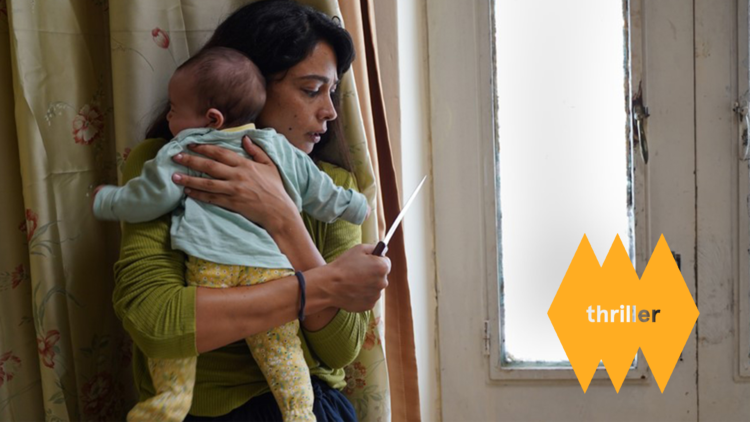
    As someone who both writes and consumes film criticism, there is nothing I hate more than hearing, “well, you just have to watch it.” However, there is so little I can divulge about the plot of Huda’s Salon, a new film by Palestinian director Hany Abu-Assad, without spoiling the fun that I have to tell you you just have to watch it. But I promise that you’ll thank me for my discretion 

    The opening scene plays out in a single long take as Huda (Manal Awad) does Reem’s (Maisa Abd Elhadi). The women discuss the latest gossip, complain about the men in their lives, and bond over the difficulty of motherhood. Then something happens. Something you don’t see coming and that will set off a cascading series of events that puts each of the characters in a pressure cooker that is just waiting to burst.

    Abu-Assad allows the story to speak for itself rather than making any specific statements about life under occupation. The pure anxiety of the film is enough to tell you what it’s like. The movie struggles with the dichotomy of living in a place where you’re damned if you do and damned if you don’t. Whether it’s being a patriot or being a martyr. It plays like a 70s espionage thriller with a Hitchcockian twist as the plot unravels.

    Perfectly crafted and shot from beginning to end and full of terrific performances, but particularly Maisa Abd Elhadi, Huda’s Salon had me holding my breath from beginning to end.


    ADVERTISEMENT


    A scene from the film Encounter.
    Michael Pearce’s Encounter, which premiered at the 2021 Toronto International Film Festival. Courtesy of TIFF.

    Encounter

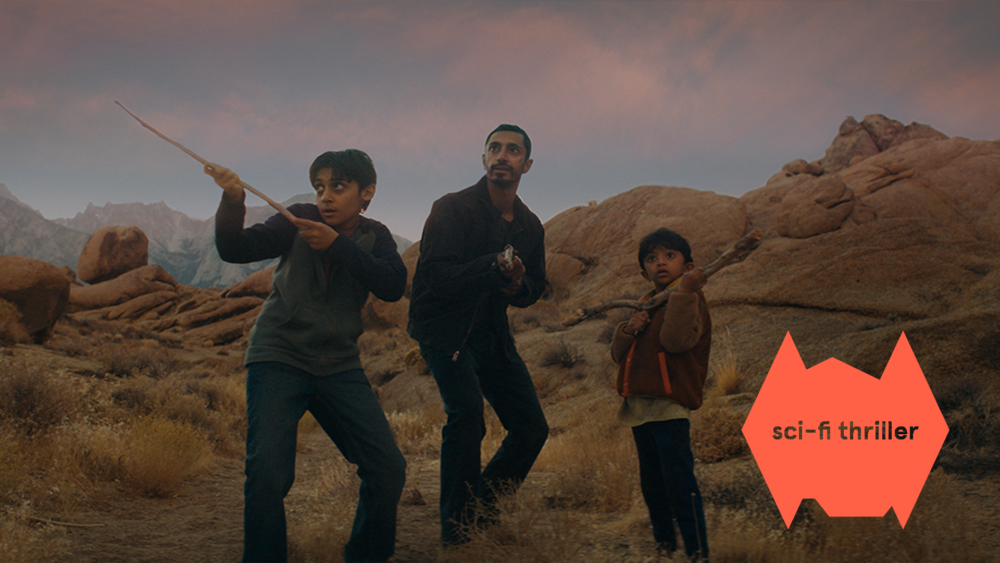
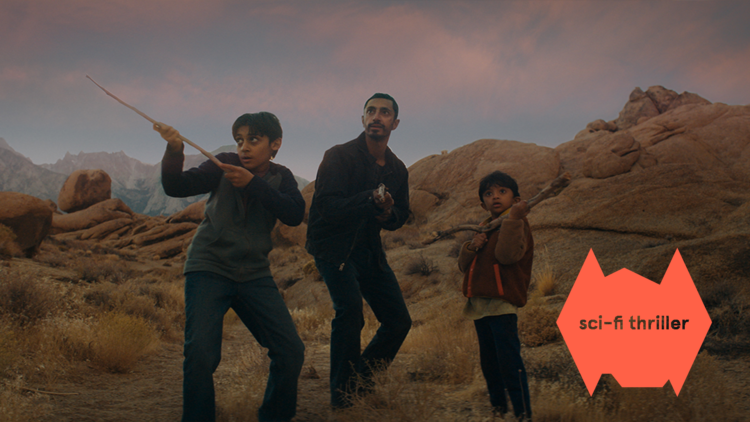
    Riz Ahmed, following his Oscar-nominated turn in Sound of Metal, proves again that he is one of the best actors of his generation in Michael Pearce’s Encounter. The sci-fi thriller follows Malik Khan (Ahmed), a marine veteran and father, who goes on a mission to rescue his sons after he becomes convinced that an alien invasion of bugs is controlling people leading them to become violent.

    The beauty of Encounter is that it doesn’t intend to trick you. It’s easy enough to solve exactly what is going before it reveals it to you. Instead, it’s more interested in Ahmed’s Malik and his struggle with PTSD and his relationship with his two sons (Aditya Geddada & Lucian-River Chauhan). With that storyline, the movie finds surprising emotional depths as the older of the two boys struggles with his perception of his father.

    However, the movie is formulaic and a subplot featuring Octavia Spencer as a parole officer takes a lot of steam out of the father/son relationship story that fuels the movie. It’s unfortunate considering Pearce’s direction is confident and systematically builds up tension around the mystery as different situations create cracks in Malik’s carefully structured world and the boys a reason to fear their father.

    There is value in the film once you wade through the predictable plot. If anything, come for another terrific Riz Ahmed performance.


    ADVERTISEMENT


    DASHCAM

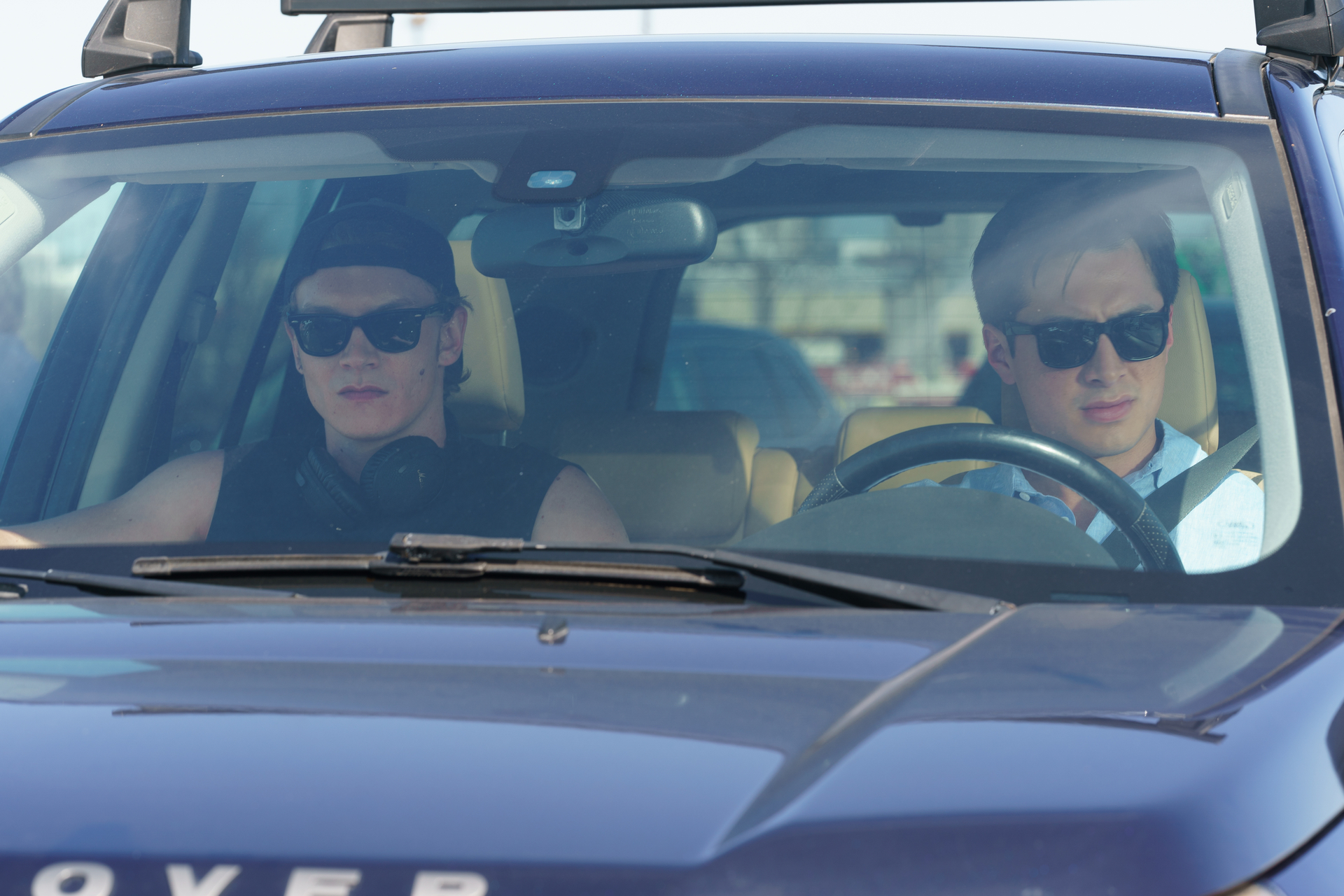
    A scene from DASHCAM
    Rob Savage’s DASHCAM, which premiered in the Midnight Madness section of the 2021 Toronto International Film Festival. Courtesy of TIFF.

    Director Rob Savage brought the world its first, and to date best, pandemic-era film with his computer screen horror Host. The brilliance of that film is that it took place where our world is currently taking place: on screens and on Zoom, more specifically. Though computer screen films aren’t new, Host is the first to feel like it didn’t have to stretch the medium to its absolute max to work – something that his new film DASHCAM has to do and more.

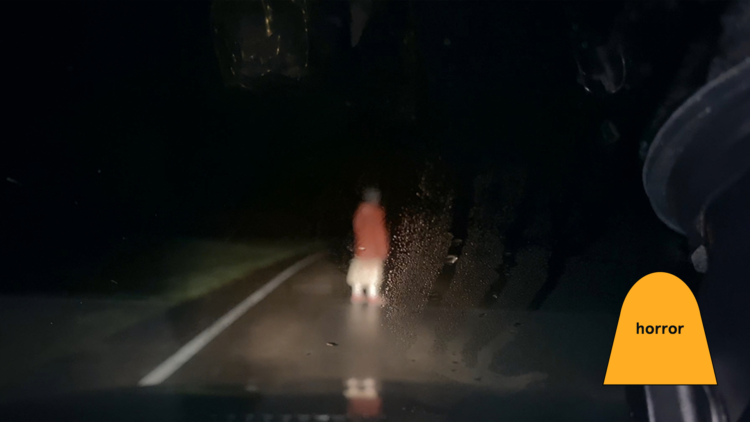
    Our protagonist — if you could call her that — is Annie Hardy a Los Angeles-based musician who is supporting herself during the pandemic by live-streaming from her car freestyling for tips. This is the medium through which we see the movie. Annie doesn’t hide her Covid skepticism or MAGA-supporting tendencies from her viewers, some of whom support her and some vehemently hate-watch her as we see from the live chat that remains in the corner of the frame for most of the film. Hardy, who is playing an over-the-top version of herself and hosts a show called “Band Car,” is crass, rude, and unafraid to voice her opposition to restrictions and etiquette around the pandemic.

    Looking to escape the “madness of America,” she hops a flight across the Atlantic to London where she intends to stay with her musician friend Stretch (Amar Chadha-Patel). He is none too happy about her presence, especially when she steals his car and ends up in an empty restaurant where she is asked to bring an elderly woman called Angela (Angela Enahoro) to another location. However, after defecating on herself and then attacking a woman who seems to be looking for her, it becomes clear that Angela may not be entirely human.

    From there, DASHCAM becomes a dizzying found footage horror with scenes reminiscent of The Blair Witch Project as Annie and Stretch try to stave off attacks by Angela and the woman after her. And while the horror and gore are repetitive — we have more than one fake-out death involving the same person — it at the very least delivers the kinds of thrills and chills that you’re looking for in this kind of movie. However, through it all, it feels like Annie seems to be trying out material for her Netflix standup special. Her brand of combative libertarianism slowly becomes more grating than funny and the film’s genre inventiveness wears off. As a subversion of the found-footage monster movie DASHCAM is rough around the edges, but works. Whenever it tries to be something more it makes me want to log off.


    ADVERTISEMENT


    More movies, less problems


    Hey! I’m Karl. You can find me on Twitter and Letterboxd. I’m also a Tomatometer-approved critic.

    💌 Sign up for our weekly email newsletter with movie recommendations available to stream.


    ADVERTISEMENT

    💌 Sign up for our weekly email newsletter with movie recommendations available to stream.


    ADVERTISEMENT


  • ‘Whether the Weather is Fine’ is Filipino cinema at its finest | TIFF movie review

    ‘Whether the Weather is Fine’ is Filipino cinema at its finest | TIFF movie review

    Filipino film Whether the Weather is Fine takes a quirky approach to its story of the aftermath of a Typhoon

    Carlos Francisco Manatad’s Whether the Weather is Fine will surprise you with its melancholic surrealist drama and absurdist comedy approach to a real-life disaster and capture you with its heart.

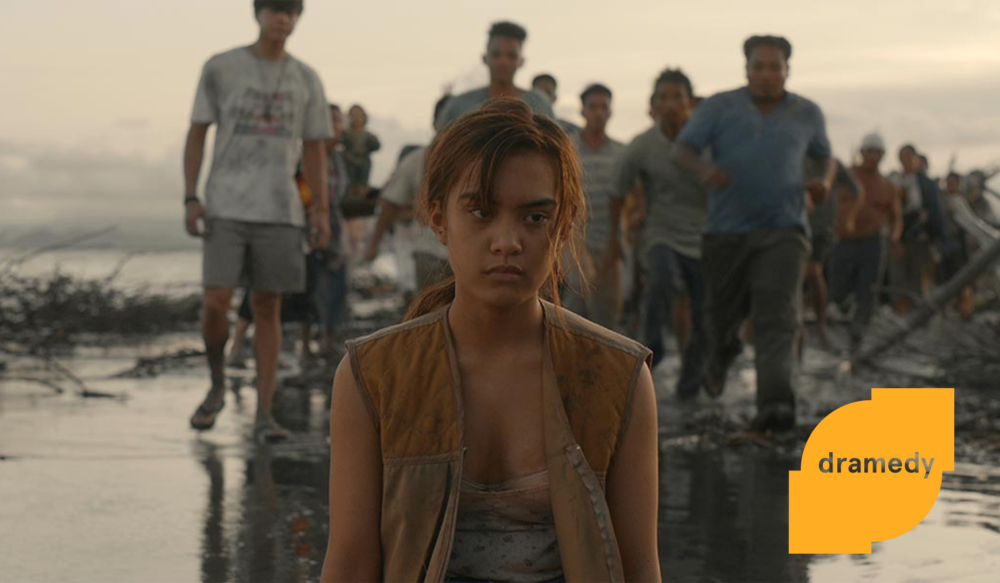
    Whether the Weather is Fine, which had its North American premiere at the 2021 Toronto International Film Festival, is perhaps the best indication that the Filipino film industry is alive and well. The film focuses on the City of Tacloban, Director Carlos Francisco Manatad’s hometown, amidst the aftermath of Typhoon Haiyan — it was one of the strongest tropical cyclones ever recorded and one of the deadliest. However, the first two shots of the film tell us that this isn’t going to be your standard disaster movie. 

    The first real shot of the movie is of a clear blue sky outlining the irony of beautiful weather following the destruction. The second shot introduces us to Miguel (Daniel Padilla doing terrific work), who inexplicably wakes up on the couch of a destroyed home. A few feet from him lies a corpse and from his pocket, he pulls out a fish. It’s that tongue-in-cheek tone that immediately sets Whether the Weather is Fine from any expectations you may have based on its premise. 


    ADVERTISEMENT


    Eventually, Miguel finds his girlfriend Andrea (Rans Rifol) and his mother Norma (Charo Santos-Concio) amongst the destruction. With an eerie loudspeaker warning of an incoming second storm, the trio decides it’s time to move on. How each of them accomplishes that differs.

    Manatad captures the dreamlike state victims of disaster find themselves in with magical realism. All senses are heightened. It’s like the world doesn’t entirely make sense. And that’s because it doesn’t — much like Joe Talbot’s terrific The Last Black Man in San Francisco. When something as life-altering as Typhoon Haiyan happens, what you once knew no longer applies.

    Through it all, the film maintains a darkly comedic tone as each of the characters tries to find what they’re looking for — escape, a purpose, forgiveness. The increasingly surreal and bleak scenes — helping a dog leading one character to become the messiah, an impromptu song and dance — become set-dressing to the engrossing journey each of the characters goes on. 

    However, it’s in the moments of hope that Whether the Weather is Fine comes together. There are two musical sequences that highlight what the film ultimately trying to say. There’s something about the Filipino spirit that is unbreakable. Something as a Filipino-American I’ve always tried to capture. Manatad tells us that through all the absurdity of life, sometimes all you need is an escape. And sometimes that escape is breaking out into song. 


    ADVERTISEMENT


    ADVERTISEMENT


    More movies, less problems


    Hey! I’m Karl. You can find me on Twitter and Letterboxd. I’m also a Tomatometer-approved critic.

    💌 Sign up for our weekly email newsletter with movie recommendations available to stream.


    ADVERTISEMENT


    💌 Sign up for our weekly email newsletter with movie recommendations available to stream.


    ADVERTISEMENT

  • ‘The Humans’ is the next great NYC drama | TIFF movie review

    ‘The Humans’ is the next great NYC drama | TIFF movie review

    The Humans takes place over a single night as a family gathers in a lower Manhattan apartment for Thanksgiving — and that’s a horror.

    The Humans is a terrifically acted New York City-set family drama that plays like a horror movie about existential dread and the figurative, and literal, claustrophobia of life… so the most East Coast movie I’ve ever seen. I want to watch it 100 times

    The Humans, along with Florian Zeller’s The Father, might be one of the most exciting play-to-movie adaptations for its pure embrace of the cinematic language. Throughout the film, which is set in a two-floor New York City apartment in Chinatown, the bulbs in each of the rooms progressively go out. The space the characters inhabit is literally shrinking and they’re forced to face the darkness — and each other. The tension builds until the final bulb finally burns out and all that they’re left to see is what’s in their heads — existential dread, worry, regret. So, basically, the most New York movie ever made. 

    If that sounds like horror to you, then you’re right. Though the premise of the film, which Stephen Karam adapted from his play of the same name, isn’t one that lends itself to the genre it very much is. And it oddly inhabits a new subgenre of family drama horror along with films like Krisha or the recent Shiva Baby. It makes sense, though. What is more horrifying than facing the truth in front of people that you’ve known your whole life. 


    ADVERTISEMENT


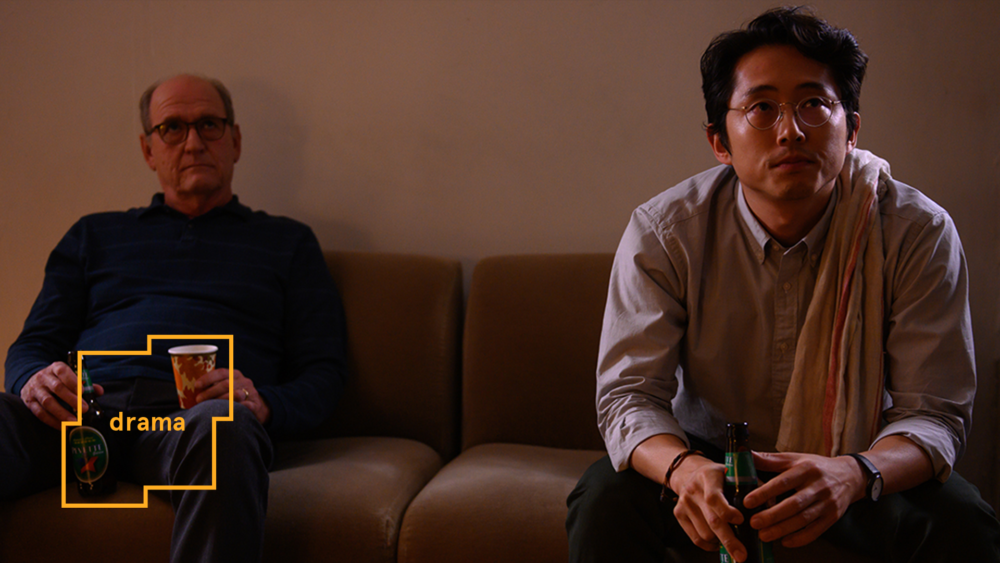
    Forgoing family tradition, the Blake family spends Thanksgiving in younger daughter Brigid (Beanie Feldstein) and her boyfriend Richard’s (Steven Yeun fresh off his Oscar nomination for Minari) new apartment in Lower Manhattan. For anyone who grew up outside New York — like yours truly (Jersey!) — and moved into the city, having your parents come to your apartment is a stressful experience.

    Yes, this is a family drama and quasi horror, but it’s also a dark comedy that hilariously understands the intricacies of the family dynamic. Mom talks about the latest odd death that she heard about on Facebook (“Mom, you don’t have to tell me every time a lesbian kills herself,” says Amy Schumer as eldest daughter Aimee), Dad walks around the apartment finding things to fix and chastises Brigid for not telling the super. All the while, their grandmother Momo (June Squibb), who suffers from dementia, babbles on.

    The camera lingers on the artifacts of New York City apartments that are so familiar — the odd water stains on the wall, clanking radiators, shoddy light fixtures. And of course, Brigid’s parents Deidre and Erik (Jayne Houdyshell and Richard Jenkins) notice every single detail. These artifacts are a part of the horror of the film. Like a hidden totem of the unspoken trauma occurring outside of the walls of the apartment. For people that live in the city, those things fade away. For everyone else, they’re all too apparent.

    💌 Sign up for our weekly email newsletter with movie recommendations available to stream.


    ADVERTISEMENT

    There are other horror tropes that Karam uses to make you uneasy about what’s happening in The Humans. The camera creeps from around corners and frames characters with plenty of negative space around them. He tracks characters walking down the narrow halls and sometimes even includes a jump scare. 

    When stage plays are adapted to film you can often tell. There’s a certain cadence to the dialogue that feels just next to normal. And typically directors focus too closely on the dialogue. The Humans does the exact opposite. Dialogue happens in the background just out of the frame. Conversations are happening around the characters. We’ll focus on one of them and slowly close in. We see their reactions — or lack thereof — to what is going on around them. 

    But why is The Humans a horror? Why not just make it a family drama? I haven’t said much about the plot yet, but that’s because there really isn’t one. Each of the members of the family is dealing with their own issues — Aimee is dealing with a breakup, Erik is worried about finances — and the relationship dynamics that existed way before the movie began — how many of us could be a little nicer to our moms. But real life can be horrifying in that way. There’s nothing more horrifying than facing your own failures and the existential dread of life.


    ADVERTISEMENT


    As the night trudges on, revelations are made, arguments are had, and, of course, there are moments of familial bliss. In particular, Richard’s attempt to assimilate into the family is particularly hilarious, as anyone that has brought a significant other home could attest to. The movie maintains this tone dancing around drama and dark comedy as it explores the intricacies of the family dynamic and of being alive. It’d make a perfect companion piece to fellow New York City-set dramedy The Daytrippers

    This is one of those films that I have difficulty talking about because the reason it works is so personal. You can pick out moments of relatability — both positive and negative — throughout the film and with every character. It’s an incredibly humane film that begs for empathy for its characters. You feel like you get to know them as well as your own family. If I could say one thing to convince you to watch this movie it is this: by the end, you’ll be sad you can’t hang out in that apartment anymore. 


    ADVERTISEMENT


    More movies, less problems


    Hey! I’m Karl. You can find me on Twitter and Letterboxd. I’m also a Tomatometer-approved critic.

    💌 Sign up for our weekly email newsletter with movie recommendations available to stream.


    ADVERTISEMENT

    💌 Sign up for our weekly email newsletter with movie recommendations available to stream.


    ADVERTISEMENT