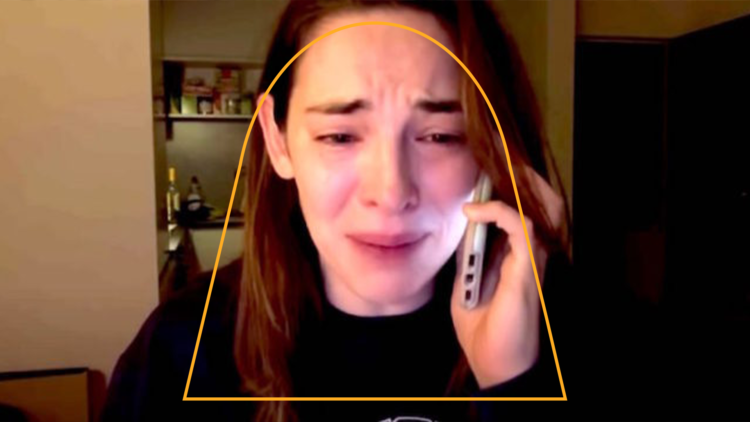
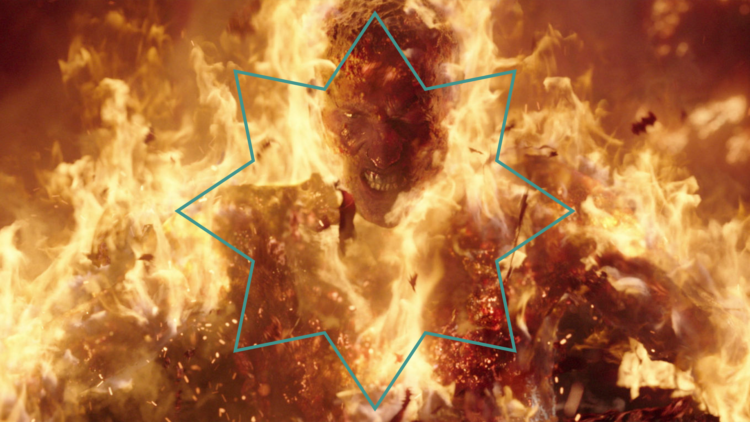
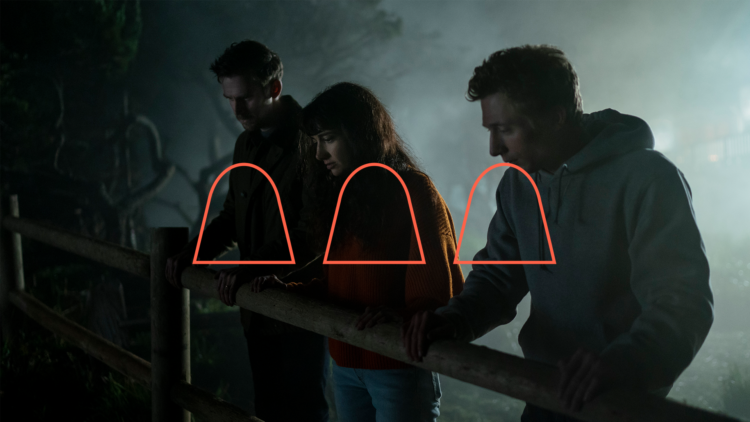
It Cuts Deep, a horror-comedy premiering at Nightstream Film Fest, follows a couple as insecurities and emotional baggage complicate their already strained relationship
It Cuts Deep almost loses its way as it explores a couple on the brink of collapse, however, it’s finale—though predictable—is exactly what you’re looking for.
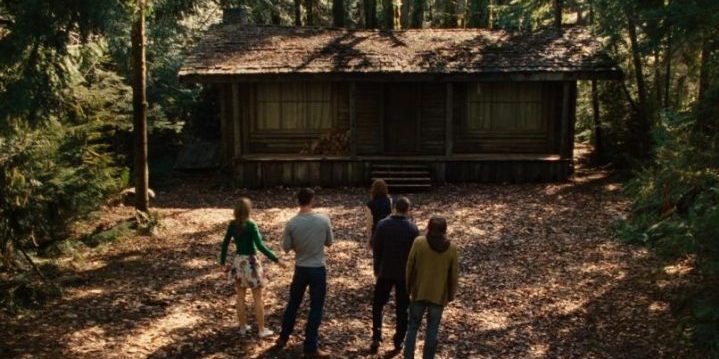
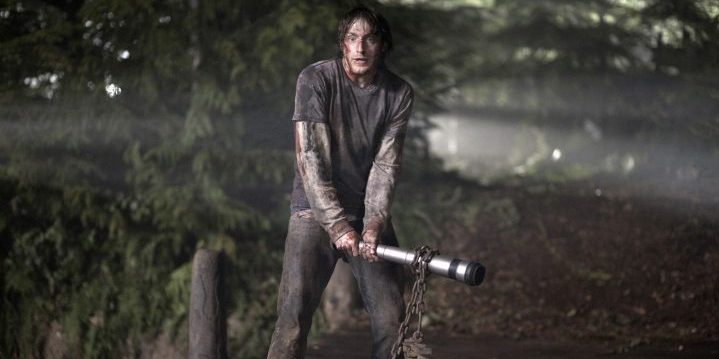
Nicholas Payne Santos’ It Cuts Deep, which is premiered at the Nightstream Film Festival this week, is a mumblecore relationship horror-comedy that’s success wildly hinges on your ability to empathize with the main couple, both Sam (Charles Gould) and Ashley (Quinn Jackson), and your willingness to wade through the movie’s murkiness to cut through to a delightfully familiar but satisfying ending.
The movie, which is built on several awkward but all too real conversations that many couples are familiar with, follows the main couple as they go to Sam’s childhood home to spend Christmas. As he’s returning to the town it’s clear that something there still haunts him and paranoia begins to set in. That doesn’t phase Ashley who’s bent on having a discussion about the future of their relationship.
ADVERTISEMENT
As the movie unravels we begin to understand the motivations of both of them, the insecurities driving them further apart and balancing that with the need to be close. All of that is complicated by Sam’s former best friend Nolan (John Anderson) who stirs the pot with his knowledge of Sam’s past.
At just 77 minutes, It Cuts Deep is nowhere near too long. However, I wish the balance of its time spent on misleading us was spent on the fallout of the movie’s predictable but nevertheless fun twist that allows Jackson to do some truly remarkable work. At times she evokes Marilyn Burns’ in The Texas Chainsaw Massacre, which again disappoints me that we didn’t get to see more of that part of the story play out.
Still, as a naughty little cut of mumblecore horror, It Cuts Deep hits a lot of the right notes—a lot of them familiar, not all of them perfect, but on a cold fall night, it’s somewhat of a breezy comfort to watch.
Desperate for money to help his ailing brother, a man takes a new job in a strange near-future version of the gig economy in Lapsis
Noah Hutton‘s strong direction and the world he builds that explores the new gig economy that has taken ahold of our everyday lives are interesting enough for Lapsis to overcome its uneven narrative.
Lapsis will be released by Film Movement in November 2020.
Lapsis—playing at the Nightstream Film Festival this week—and its satire of the gig economy that has taken ahold of our everyday lives is perhaps a bit too on the nose. However, director and screenwriter Noah Hutton‘s world-building makes the exploration of his “parallel near-present” endlessly engrossing.
Set in a world where the gig economy is also thriving, Lapsis follows perennial hustler Joe (Dean Imperial)—aptly named because he’s the epitome of an average Joe—whose less than legal methods of making money are just barely supporting the expensive treatments needed for his brother Jamie who suffers from the fictional chronic fatigue illness “omnia.”
ADVERTISEMENT
Around him, the world is changing and becoming more reliant on an opaque universal technology called quantam that connects and powers all devices—whether this is a play on 5G is unclear. However, the technology is reliant on a complex network of cables that connect various quantam boxes. And as advanced as the technology is, it needs humans to physically lay cable above ground to connect the boxes, which is what sprout an entirely new gig economy.
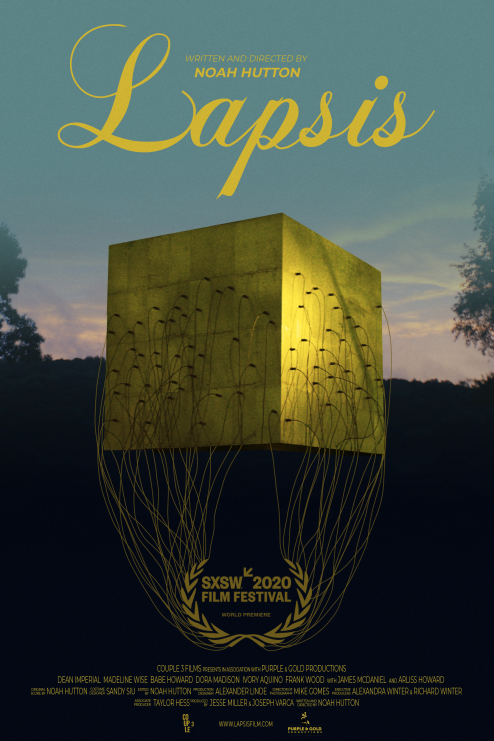
The poster for Noah Hutton’s Lapsis. Courtesy of the Nightstream Film Festival.
CBLR is one of the monopolistic ride-sharing-like companies that provide “cablers” the ability to pick up routes, upgrade their equipment, and get paid for making connections between quantum boxes. In an effort to pay for a new treatment for his brother, Joe signs up for the service through questionable channels since the procurement of a “medallion” is difficult to come by.
The “medallion” he receives once belonged to “Lapsis Beeftech,” a name that strikes strained reactions from the more experienced cablers that he encounters on his first route. Joe is clearly out of his league. With shoddy equipment, an electronic voice telling him when he’s authorize to take a break, and automated cable-laying machines that threaten to take over you route if you don’t work fast enough, it’s not the easiest way to make a buck. But you can make a lot of them if you play things right.
Lapsis, which comes on the heels of movies like Sorry to Bother You, takes aim at the downfalls of capitalism. And while its takedown could sometimes feel overwrought—especially in the awkwardly paced second half—the movie forces us to take a look at the marginalized people all around us that are so essential to making our everyday lives function—and all of their mistreatment at the hands of massive corporations.
ADVERTISEMENT
The movie’s plot doesn’t kick until about halfway through when Joe meets a fellow cabler named Anna (Madeline Wise) who clues him into the drawbacks of the gig—you have to work towards impossibly high goals to make money, then you have to spend that money on your own equipment to meet those impossibly high goals. She also hints to some mystery around the automated cable-laying robots and Joe’s “Lapsis Beeftech” screen name that is meant to give the movie some structure.
Instead, the second half is disappointingly tame based on the more than adept tension building up until that point. Still, Hutton’s world-building is reason enough to dive into Lapsis‘ interpretation of the world around us. If anything, it’ll give you pause the next time you get a food delivery or hop into an Uber.
In their fifth collaboration, Martin Scorsese and Robert De Niro explore the lengths one man will go to be given a chance in The King of Comedy
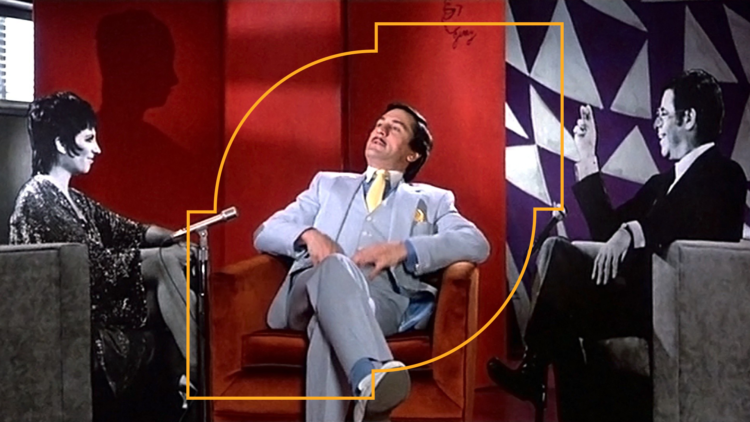
For a movie about a failed standup comedian, The King of Comedy difficult to watch. Rupert’s delusions of success are funny at first but then grow cringe-worthy — and then dangerous. But there’s a third act pivot that makes this one of my favorite Scorsese movies. It’s so subtle but brilliant. It changes our perception of the characters and their motivations and makes us question who we were rooting for all along
Chloé Zhao makesNomadland‘s melancholic but hopeful story of nomads traversing the American West a stunningly complex character study of life on the margins of society.
Since Todd Phillips’ forthcoming movie Jokerhas clear influences from Martin Scorsese’s The King of Comedy — it even features Robert De Niro in a role similar to Jerry Lewis’ in the movie — I’m taking a look back at the 1983 satirical black comedy.
I was ready to call Martin Scorsese’s The King of Comedy a great and underrated entry in his filmography, but I wasn’t ready to give it the masterpiece reevaluation that some critics have given it. Then, Jerry Langford (talk show legend Jerry Lewis playing a version of himself) stands in front of an electronics store with dozens of TVs tuned into Rupert Pupkin (Robert De Niro) performing a standup comedy set on Langford’s show.
ADVERTISEMENT
We never see Langford’s reaction to the set. We don’t need to. In that one sequence, Scorsese is changing our perception of what we watched in the preceding 90 minutes. I think this is what a lot of people get wrong about The King of Comedy. To me, it isn’t an indictment of celebrity or a cautionary tale about the tantalizing allure of fame. The way the ending is framed makes Pupkin an anti-hero — not dissimilar to Travis Bickle in Taxi Driver.
The brilliance of the movie comes from Scorsese’s decision to make Pupkin the villain for most of the story. We’re never truly on his side. We’re really on no one’s side, which is why it’s an almost unpleasant experience to watch. Roger Ebert even said:
It is frustrating to watch, unpleasant to remember, and, in its own way, quite effective.
— Roger Ebert
Robert De Niro in The King of Comedy. Credit: 20th Century Fox.
💌 Sign up for our weekly email newsletter with movie recommendations available to stream.
ADVERTISEMENT
But then, after all the awkwardness and cringe-worthy antics from Pupkin, we see him perform. At that moment — and the one with Langford in front of the electronics store — I understood that this isn’t a movie about celebrity or fame. It’s a movie about talent going unrecognized and the struggle of being a creative or performer.
The obsession with celebrity and fame is explored with Sandra Bernhard‘s character of Masha, who is portrayed — a bit problematically — as someone with a mental illness, which drives her to stalk Langford. And her character looked at through the lens of the film, she’s actually a foil to Pupkin. She has no reason to be in Langford’s life other than a selfish one. Pupkin, on the other hand, has a reason and purpose, but still isn’t afforded the same opportunity.
ADVERTISEMENT
Scorsese’s longtime editor Thelma Schoonmaker does some clever work here stitching together Pupkin’s delusional conversations and interviews with Langford, showing us both reality and what’s in Pupkin’s mind. And her masterful work doesn’t stop there. Every scene feels important and intentional. Not a single second is wasted on anything else but the developments and information we need to see — a rarity, unfortunately.
While Scorsese is a director that often likes to show his work on screen, this is one of his few movies that is driven by its screenplay. He lets the story speak for itself and shows restraint, which we haven’t seen from him in a while. It may never be the classic that Taxi Driver or Goodfellas is — this movie is slight in comparison — but The King of Comedy deserves a more respected place in the Scorsese canon.
Five years later, The Cabin in the Woods is looking more and more like a horror classic that is singular in its mission to revitalize the genre that we know and love.
Five years ago, the trajectory of the horror genre was forever changed with the release of the Joss Whedon and Drew Goddard film The Cabin in the Woods. Well, maybe not forever changed, but it sent a statement to the horror community that has certainly been heard.
Cabin is a loving hate letter to the horror genre. It simultaneously emulates — specifically the genre post-Evil Dead — and criticizes its new tropes by “explaining” its most outlandish aspects. The last movie to attempt this to success is Scream, which set off yet another wave of copycat movies. However, The Cabin in the Woods is one that won’t be easily copied, which is why it is and will stand as a new horror classic.
Drew Goddard and Joss Whedon wrote The Cabin in the Woodsin essentially a weekend as a response to a couple of failed projects and a glut of “torture porn” horror movies — popularized by the Saw series. In the Blu-ray commentary, they called the movie “something for us.” However, that “us” can also describe fans of the genre. This movie could only be born out of horror movie fanatics that are so well-versed in its history and tropes that it would take another horror movie fanatic to truly catch all the references. In that sense, The Cabin in the Woods is a gift to horror fans.
💌 Sign up for our weekly email newsletter with movie recommendations available to stream.
ADVERTISEMENT
The Cabin in the Woodsdoesn’t just subvert the genre tropes, it challenges the very fabric of the horror movie industry. The movie opens on Sitterson (Richard Jenkins) and Hadley (Bradley Whitford) speaking to Wendy Lin (Amy Acker) about several failed rituals around the globe. Goddard and Whedon’s decision to open with this scene was surprising but completely necessary to the success of the movie. Without it, we’d open to the next scene which shows the girl next door type Dana (Kristen Connolly) packing for a weekend at the eponymous cabin in the woods with her newly blonde friend Jules (Anna Hutchison) and her jock boyfriend Curt (Chris Hemsworth). Goddard creates the opening of almost every 2000s horror slasher so perfectly — right down to the score — that the audience would immediately be turned off by it. However, the opening scene in the facility coupled with the fact that the characters don’t exactly meet their stereotypical horror counterparts — Dana had an affair with a professor, Jules is pre-med, and Curt is at school on full academic scholarship — makes you realize that this is a horror movie like no other.
Goddard was careful to actually recreate the horror movie setup that he is looking to tear down — the other two friends joining them on the trip fill the roles of the comedic stoner Marty (Fran Kranz, who gives one of the best performances of 2012 in the film) and love interest Holden (Jesse Williams). The group even encounters a creepy old man at a seemingly abandoned gas station warning them of their impending doom. However, Goddard and Whedon use the scenes at the facility to explain those occurrences. It’s a subtle jab as to why every horror movie plays out the same.
By the time the film comes together — which is refreshingly gradual compared to the sudden “twist ending” that has also plagued the genre — you’ve already pieced together the clues and have come to an understanding about it. Simply put, The Cabin in the Woodsis one of the sharpest satires of our generation. It’s a meta-horror movie that simply laughs at the very movies it’s trying to perpetuate. More than that, there’s a clear sense of recognition. Any horror fan watching the movie can pick out the cliches and stereotypes. However, the movie quickly subverts those and replaces them with reference after reference to classic horror movies — some direct and some you have to dig through your brain to unlock. There are so many that you have to pause the movie several times to catch them all. But that’s why Cabin is so good. As much of a sharp criticism it is, it’s also a playground for horror fans to play in. After watching this movie a dozen or so times I am still discovering new references.
💌 Sign up for our weekly email newsletter with movie recommendations available to stream.
ADVERTISEMENT
But what does it mean? Satires often have a message to whatever they’re satirizing. So, what is the message to the horror genre? Well, the last few minutes of the movie quite efficiently lay that out there. The genre and its fans need a hard reset. We need to stop asking for more blood, more gore, and more sex when it comes to the genre. Instead, the movie begs for smarter characters, more interesting rules, and new stories to be told. Instead of the 33rd Halloween movie, Goddard and Whedon send out a plea for the next Scream or 28 Days Later. The genre needed a reinvention and, in my opinion, The Cabin in the Woodsstarted one.
Following Cabin we’ve seen an influx of original horror. Some can’t be attributed to the movie. The Conjuring is another movie that was on the forefront of the horror renaissance and part could be attributed to the fact that people that grew up with 80s horror now have the chance to make movies that they want to see. However, I also think that Cabin gave filmmakers the confidence to tackle more interesting stories. Between The Witch, It Follows, The Babadook, and Get Out, this decade has had its lion’s share of great horror. However, I’m always going to look fondly on The Cabin in the Woods for encapsulating the mood of the times and acting as a transition into the golden age of horror.
David Fincher’s 2008 film Zodiac has grown to be one of his best, if not one of the best cinematic offerings of the century.
Zodiac strikes the perfect balance between engrossing police procedural, atmospheric horror, and compelling character study to be one of the best movies of the century.
To fully appreciate Zodiac, you have to watch it more than once. On the first viewing, you should focus on the story, the plot, and the red herrings. The twisting tale of the Zodiac killer — a serial killer who tortured Northern California with his sick games for more than a decade — is one that is not easily unraveled. It’s a disorienting story. And director David Fincher understands that. He puts you into the headspace of the characters by playing with space and time.
They’re who you should focus on next. How do they grow throughout the story? Why do they make the decisions they make? It’s not always an easy question to answer. Lastly, look at how the film was put together. An entire semester of cinematography can be taught from this one movie. DP Harris Savides uses a neutral color palette that feels appropriate for the Bay Area setting, but somehow he finds empathy in the characters. Coupled with Angus Wall’s emotive editing, it immerses you in the world. However, it all goes back to the way Fincher mixes these elements. So, watch it a fourth time. Then you’ll understand why this is not only Fincher’s best film but one of the best movies of our generation.
The tale of the Zodiac killer was never one that would easily transfer to film. Despite the violence of the attacks, the publicity of them, and the rigor in which the investigation was handled, in reality, the breaks came slowly and there was never a clear progression when it came to the case. If anything, the most cinematic facet of the story was the multiple red herrings during the investigation. So, how did David Fincher and screenwriter James Vanderbilt fill out the nearly three-hour running time? While the story of the Zodiac was a huge part of the movie, as was the investigation — a large chunk feels like All the President’s Men or Heat — the main focus is how the investigation fundamentally changes the characters.
💌 Sign up for our weekly email newsletter with movie recommendations available to stream.
ADVERTISEMENT
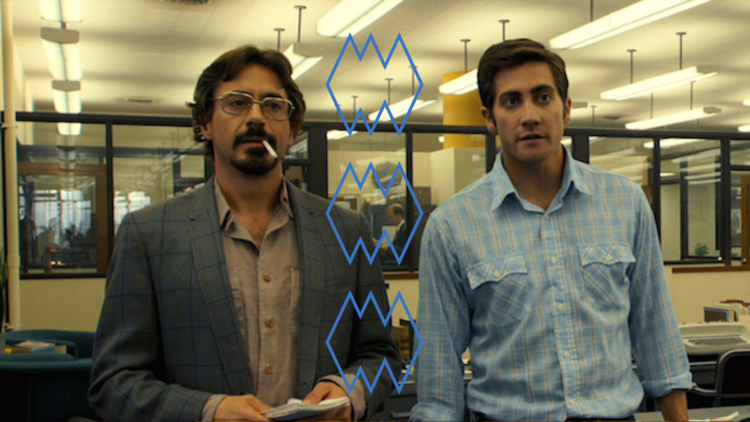
Robert Graysmith (Jake Gyllenhaal) frames the story as a San Francisco Chronicle cartoonist who is on the periphery of the Zodiac case when the newspaper receives a letter from the killer demanding that a puzzle is published in the paper. Eccentric journalist Paul Avery (Robert Downey Jr.) takes lead on the case for the Chronicle while SFPD Inspector David Toschy (Mark Ruffalo) takes hold of the police investigation.
The first half of the movie plays like a police procedural — take Heat or The French Connection — and newspaper drama — like All the President’s Men or the more recent Spotlight. It’s a thrilling whirlwind of facts and dead ends and terrifying attacks that increasingly adds to the sense of helplessness with the case. However, the second half becomes one man’s obsession — Robert Graysmith, specifically — with finding the truth. Not for any higher purpose. Simply because he craves the answer and eventually needs it.
Zodiacis a story that isn’t inherently cinematic. There isn’t a linear storyline. Essentially we follow information as it’s traded and moved from place to place, which is why Fincher makes the decision to bring it down to the character-level. A huge part of that is due to Savides’ near iconic cinematography. It’s kinetic at some points — the first Zodiac letter arriving at the Chronicle office for example. Other times, it’s emotive — Graysmith speaking with a potential suspect in his home is a masterclass in using camera movements to build tension. It’s the combination of the two that paces the movie in a way that makes it feel like there’s more action happening than there actually is.
Chloé Zhao makesNomadland‘s melancholic but hopeful story of nomads traversing the American West a stunningly complex character study of life on the margins of society.
Robert Downey Jr. and Jake Gyllenhaal in Zodiac. Courtesy of 20th Century.
That doesn’t mean that its set pieces aren’t thrilling. Those scenes demonstrate Fincher’s patience — it contributes to the nearly 3-hour running time without feeling unnecessary. Take the scene where the Zodiac attacks an unsuspecting couple lounging by a lake. The way it unfolds is slow and deliberate. Calculating, like the Zodiac himself. And unlike Seven, his other crime procedural, the scene is almost devoid of cinematic flair. The scene is scoreless and the cinematography is extremely objective. It’s unsettlingly emotionless — like the killer.
Robert Downey Jr. mixes his carefree attitude perfectly with genuine journalistic curiosity. As the character evolved during the film, Downey is able to maintain a ghost of the character’s previous life to heartbreaking effect. The same goes for Mark Ruffalo. In particular, his chemistry with Anthony Edwards is what makes his character and performance work. Chloe Sevigny also does great work in her limited screentime, which still has an impact.
However, the two performances really stand out. John Carroll Lynch — who does similar creepy work in The Invitation— sends chills down your spine with his enigmatic portrayal that becomes more sickening each moment he’s on the screen. Jake Gyllenhaal, on the other hand, is endearing, which is essential to the role and to the last half of the movie. As Graysmith falls further into his obsession with the Zodiac, it becomes easier to feel alienated by his character. Instead, you feel sympathetic for him. His hunger for the truth is infectious.
I think the acclaim for Zodiaconly increases from here. Ten years ago, the film was received rapturously. However, the weight of its cinematic importance has only begun to be appreciated. Even with more popular movies like Fight Club and Gone Girl, and more uniformly acclaimed movies like The Social Network and The Curious Case of Benjamin Button, I believe Zodiac is going to be the Fincher movie to be studied, remembered, and revered most highly. It proves that digital can be as cinematic as film and that long running times, lack of action, and information overload are just minutia when compared to the real goals of the film. Those goals are emotion, the visual language, and the power of cinema that we don’t often stop to appreciate.
A man attempts to bring his wife back from the dead with the help of his sister-in-law in An Unquiet Grave
Chloé Zhao makesNomadland‘s melancholic but hopeful story of nomads traversing the American West a stunningly complex character study of life on the margins of society.
A movie that feels like a campfire ghost story is oddly comforting. It’s the type of story that isn’t too complex but is told with a vigor that makes it so engrossing. Such is the case with Terence Krey’s new horror An Unquiet Grave, which premiered at the Nightstream Film Festival this weekend.
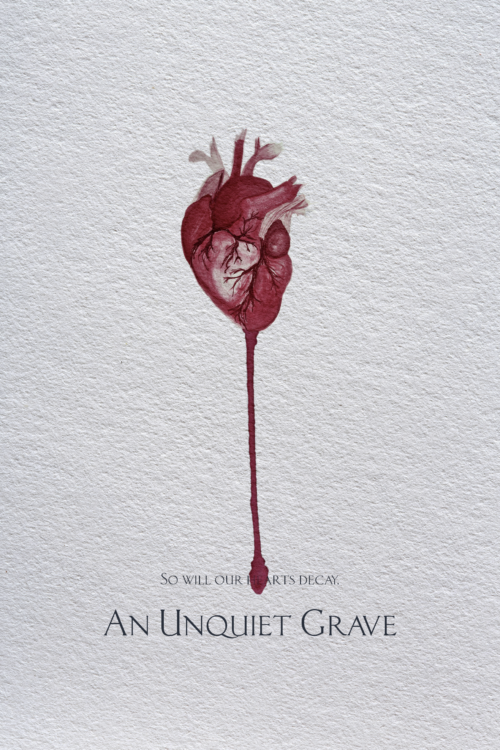
The poster for An Unquiet Grave. Courtesy of Nightstream Film Festival.
Following just two characters, An UnquietGrave tells the story of Jamie (Jacob A. Ware) a widower who lost his wife Julie a year ago in a car accident as he recruits his sister-in-law Ava (co-writer Christine Nyland), Julie’s twin, to bring her back to life through unexplained magic. And the beauty of the film is that is truly all there is to it. Krey and Nyland’s screenplay is lean but doesn’t skimp on a deeper character introspection.
As the movie progresses and we understand the true motivations behind Jamie’s desperate attempt to bring his wife back, we explore a moral quandary: to what lengths will we go to save the one’s we love.
An Unquiet Grave explores the psychology behind Jamie’s answer to that question and presents it as a creeping, slow burn horror that never quite connects to its terror potential but nonetheless finds a dread-filled atmosphere that feels like a cool night around a campfire.
? For more movie recommendations, sign up for our newsletter!
Apollo 11 assembles incredible unseen footage — from Earth and into space — of the mission to put man on the moon.
30-second review: It’s almost unbelievable that Apollo 11 ismade solely of archive footage. Every shot and camera move feels so intentional. It’s been 25 years since Hoop Dreams became the first and only documentary to be nominated for Best Film Editing at the Oscars. It looks like it’s time for another to join its ranks.
Apollo 11 has the ability to give you a sense of wonder about real life. It’s one of the best documentaries of the year (decade?) because it doesn’t feel like a documentary at all — it’s a bold and breathtaking exercise in storytelling.
★★★★★
If you thought the moon landing sequence in First Man was thrilling, then Apollo 11‘s very real footage is going to be sensational for you. In the completely uncut 4-minute shot, you can’t see more than the lunar surface getting closer and closer as a small line of text in the corner tells you how much fuel the Apollo Lunar Module called the Eagle has left and how far they are from the surface.
Matt Morton’s score, fit for a Hollywood thriller, pulses underneath while you hear Commander Neil Armstrong and Lunar Module Pilot Buzz Aldrin converse with Houston in technical jargon. You know how it ends up. The craft lands and Armstrong becomes the first man to set foot on our moon. It’s the masterful and daring filmmaking that makes it a breathtaking moment in cinema.
Apollo 11 is made of those moments. Even the simple ones where we’re sweeping a crowd of onlookers excited to watch the Apollo 11 rocket blast off into space are almost hard to comprehend. Documentary filmmaking like this relies on masterful curation and an understanding of the story you’re trying to tell. The fact that director and editor Todd Douglas Miller was able to find clips that gave off the exact emotion he was looking for is astonishing.
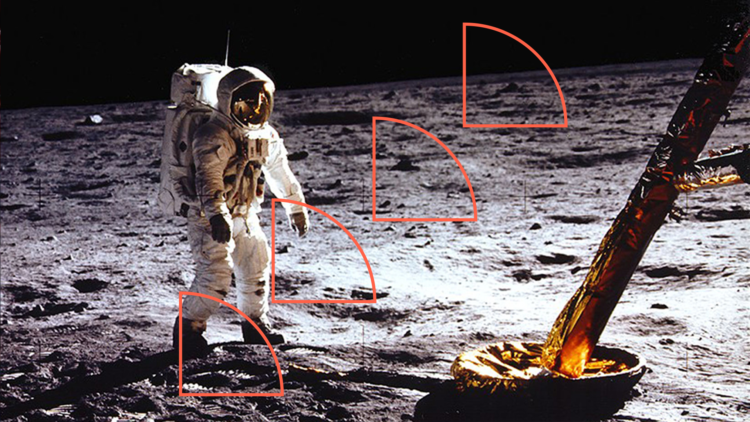
Photo by NASA/REX/Shutterstock (3683583c)
(Real lunar mission image) Buzz Aldrin stands beside Lunar Module strut and probe
Apollo 11 Moon landing mission – 1969
It’s so hard to make a clear narrative solely from archive footage. Usually, documentarians need to rely on interviews or voiceovers to fill in the gaps. In Apollo 11, there is none of that. Yet you’re never at a loss for what is happening — even when the jargon becomes too technical — and you’re always in tune to what the overwhelming emotion behind a scene is.
Even though it’s a subject we all know about — or at least think we do — the piece that we’re always missing is the emotion — it’s why First Man is so successful. Apollo 11 is brimming with empathy for everyone involved — the astronauts, mission control, and the public.
Sensational feels like the right word to use when explaining the feeling of watching this movie. Apollo 11 is as thrilling as any sci-fi and emotional as a sweeping drama. It’s an astonishing watch and one of the best movies of the year.
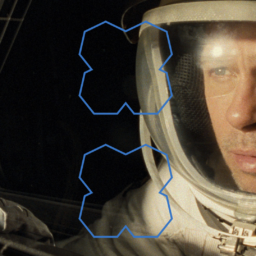
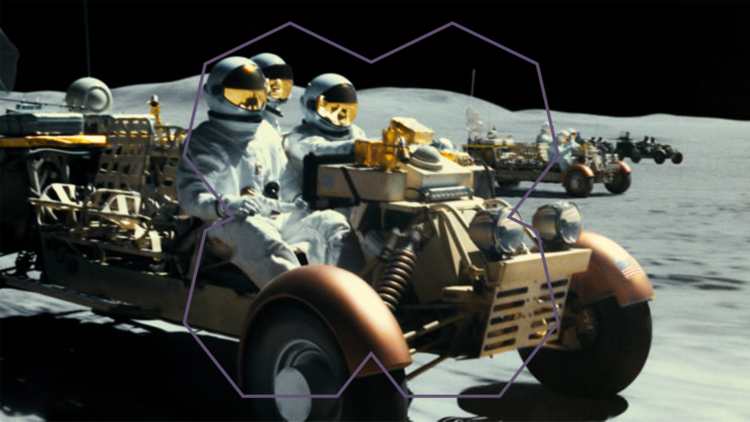
Ad Astra follows an astronaut as he goes on an interstellar mission to undo the effects of his father’s failed mission 30 years earlier.
Quick cut review:Ad Astra isn’t the thrilling space adventure it’s being marketed as — for good reason — and is instead a deepl moving meditation on emotional repression and the traumas that shape our lives.
★★★★
Science fiction is one of my favorite genres because the further you get from Earth and from what you know and understand to be true about our world, the more you have to grapple with your own humanity and the baggage that goes along with it. The best sci-fi movies understand that.
Arrivalis a meditation on grief. Interstellarexplores the limitations — or lack thereof — of human connection. Blade Runner questions the very fabric of our humanity. However, none of those movies are quite as idiosyncratic as James Gray’s magnificent Ad Astra. If anything, this film has more in common with Apocolypse Now or The Tree of Life than any other sci-fi movie we’ve seen since 2001: A Space Odyssey.
It’s the near future and space travel is as common as flying across the country — complete with overpriced snacks offered by the flight attendants. Major Roy McBride (Brad Pitt), a seasoned veteran of the United States Armed Forces branch operating in Space, has the remarkable ability to stay calm under the most stressful of circumstances. Not just calm, it’s noted that he never lets his heart rate rise above 80 BPM. When he’s thrown off an impossibly high structure jutting into space by an unexplained electrical pulse in the thrilling opening scene he never panics. Even as he tumbles to Earth disoriented and rained on with debris.
And as much as that’s an asset to his job, it’s a hindrance to most other parts of his life. His estranged wife Eve (Liv Tyler) — who we see in short flashes — cites his distance — both physical and emotional — as the main reason for their strained relationship. It’s fitting then that “ad astra” translates to “to the stars.” That’s where Roy finds his calm and where he escapes the milieu of life.
After that mission, he’s informed by his superiors that the electrical pulse that nearly killed him is one of many — and they’re getting worse. They believe that they’re being caused by a past mission called “The Lima Project,” which his father Clifford (Tommy Lee Jones) commanded twenty-six years prior with the goal of finding extraterrestrial life. However, the mission ended in failure and none of the crew, including Clifford, were never heard from again.
Though, for reasons unknown, Roy’s superiors believe that Clifford is still alive on the “Lima Project” base and may be able to stop the power surges before they destroy the entire solar system. However, the base has been unresponsive. So, they task Roy with venturing to the Moon and then Mars to relay a message to his father.
James Gray’s Ad Astra. Credit: Twentieth Century Fox.
Along the way, Roy encounters different situations and people — including his father’s old associate (Donald Sutherland) and the director of the Mars base (a terrific Ruth Negga) — that challenges his belief in emotional repression. The entire movie is essentially through Roy’s internal monologue, giving us an almost procedural view of each event — even when they’re as exciting as fighting moon pirates and laboratory baboons.
However, it makes sense because Roy is so confused, conflicted, and frightened by emotions — particularly his own — that he’s robotic in his perceptions and actions. At one point he says, “we’re here and then we’re gone.” It’s that nihilistic world view that puts him at odds with most people around him.
Admittedly, I watched Ad Astra at a particularly difficult time in my life where I’m dealing with the repercussions of being emotionally distant, which is why the movie was so impactful on me — as is the case with movies that are more meditations than narratives. I’ve always struggled to face the difficulties weighing me down, often opting to avoid them. If you don’t face them, you don’t have to be hurt by them.
What Ad Astra presupposes is to heal the hurt in your life you have to lean further into them and eventually through them, as hard as that is. In one of the most stunning sequences of the film, Roy is in the middle of a two-month journey from Mars to Neptune. As he tolls the days away around the ship, his voice-over repeats “I am alone, I am selfish,” two phrases I’m incredibly familiar with — especially when I finally give in to my feelings.
And as exciting as the movie gets, the plot is really a red herring to what Gray is truly trying to get at. There are well-choreographed action setpieces, scenes of pure terror and tension, however, it’s the moments when Roy has to deal with his own internal struggle that the movie makes the most sense. Actually, the movie almost makes no sense plotwise, but that’s not the point.
That will frustrate audiences. Especially since 20th Century Fox is marketing it as a movie closer to Gravity or The Martian. And if you separate the plot from the more meditative elements, you do have one of those movies. But Ad Astra has more on its mind. James Gray has more on his mind. And Pitt, better than he has been in years, understands that.
Grappling with your self is so difficult. It takes so much work to accept the things that shaped you — the people and events that made you who you are. The movie faces those things head-on. That’s why for me and Roy space travel is a form of therapy. For him, the act of getting further from Earth and closer to the source of his pain is a way to finally get over it. For me, it’s a guide of what to do to get better. In that way, Ad Astra is a wakeup call more than it is a movie.
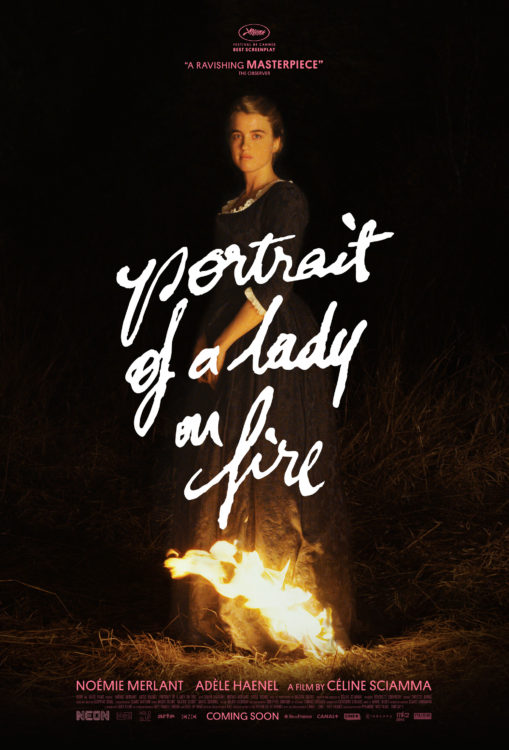
Portrait of a Lady on Fire is a quiet period drama that follows an artist as she attempts to paint her enigmatic subject in secret
Quick review: Quiet yet filled with intensity, Portrait of a Lady on Fire nails the physicality and emotions associated with mutual unspoken attraction — the glances, the awkwardness, the frustrations. It’s a slow burn — pun intended — as it builds the relationship between the protagonists, but the pay off is absolutely worth the wait.
★★★★★
There’s nothing like a film from an auteur that speaks to their own experiences. And while director Céline Sciamma‘s Portrait of a Lady on Fire is set in the late 18th century, it feels so modern in its approach and themes as she explores what’s familiar to her as a queer woman. She’s not tapping into specific experiences, but a feeling.
A young painter Marianne (Noémie Merlant) is taken aback when one of her students discovers one of her paintings called “Portrait of a Lady on Fire.” We focus on the painting. It’s dark with almost no detail distinguishable except for a woman turned away from us with her dress on fire at the hem. Then we smash cut to Marianne on a rickety boat crossing a crystal blue sea to a manor on an isolated island where she was summoned by a countess (Valeria Golino) to paint a portrait of her daughter, Héloïse (Adèle Haenel).
What the Countess didn’t reveal before her arrival is that Héloïse doesn’t know that Marianne is here to paint her portrait. Instead, she believes that she’s a companion hired to keep her company — and keep watch of her. You see, Héloïse is betrothed to her late sister’s ex-fiance. As the manor’s young maid Sophie explains, Héloïse’s sister is believed to have committed suicide by throwing herself off a cliff. Now, Héloïse refuses to pose for her wedding portrait as a sort of protest to the marriage.
What’s so interesting about Portrait of a Lady on Fire is that usually at this point of the plot synopsis I’d say, “and you know where the story goes from there.” And while it generally sticks to what you’d expect, the way it gets there is unlike any other auteur and pure Sciamma.
Chloé Zhao makesNomadland‘s melancholic but hopeful story of nomads traversing the American West a stunningly complex character study of life on the margins of society.
💌 Sign up for our weekly email newsletter with movie recommendations available to stream.
ADVERTISEMENT
The movie isn’t a grand romance of two women born in the wrong time and place finding each other. Instead, it’s about two women discovering and understanding each other. With that deep understanding comes desire. And the way Sciamma portrays that desire is with so much smoldering intimacy that it’s almost impossible to resist.
Instead of relying on words like Call Me by Your Name, Sciamma’s film is minimal in dialogue but ripe with physicality. The way that Marianne and Héloïse look at each other is as important as when they don’t look at each other. In particular, the way Marianne observes Héloïse for her painting is interesting because you can watch the gaze shift from one of artist looking at her subject to something more. It’s remarkable just how much she can communicate.
There’s no better example of this than the stunning final shot that lingers for longer than is comfortable and packs so much impact that it leaves you stunned when the movie cuts to black. As unassuming as it is, Portrait of a Lady on Fire is filled with those breathtaking moments that just remind you of the power of a clear vision.
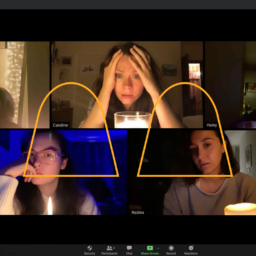
Host, billed as the first movie filmed and released during quarantine, follows a group of friends staging a Zoom seance with an uninvited guest
Quick cut: At just 57 minutes, Host is far from overly long. Although it certainly stretches its interesting premise to the max. Still, it achieves an anxiety-inducing atmosphere coupled with genuinely chilling horror setpieces that keeps you online.
Chloé Zhao makesNomadland‘s melancholic but hopeful story of nomads traversing the American West a stunningly complex character study of life on the margins of society.
★★★
Movies respond to things going on around us—whether cultural, societal or political. It was only a matter of time before the coronavirus pandemic, one of the largest cultural, societal and political events, of our time was captured on film. And while the pandemic has certainly been horrifying, it’s surprising that the first take on our new era is a horror film.
As we dive further into a tech-first world, the horror genre has grappled with how to tap into our inherent fear of the technology around us. In that vein, Host, a new techno horror movie streaming on Shudder, is the first movie to take place during these uncertain but certainly terrifying coronavirus times—and it’s only fitting that the entire film takes place on a Zoom video call.
In a setup familiar to many of us, Host centers on a group of friends during their weekly Zoom calls to keep in touch—and stay sane—during the pandemic. Also like many of us, they’re short of things to do to fill their time, which is why for this week’s call Haley (Haley Bishop) hires a Seylan (Seylan Baxter), a medium, to hold a seance during their call. As expected, it doesn’t go well.
💌 Sign up for our weekly email newsletter with movie recommendations available to stream.
ADVERTISEMENT
In 2015, Unfriended, at least in my opinion, became the first horror movie to properly capture the digital era of social media and the culture around it. That film, like Host, took place completely on a video call. However, its subversion of the horror genre—using tropes and characters from a slasher—fuels its plot more than the more straightforward ghost story of Host. Even thought its lean and mean 57 minute running time makes for a tight, entertaining spooky romp, I almost want more time to spend with the characters to truly care about them.
As the night trudges on, weird things happen to each of the participants as Seylan guides them through the motions of contacting the astral plane. However, they realize too late that the spirit communicating them is not friendly and may even be demonic. One by one, each of the participants, including Emma (Emma Louise Webb), Radina (Radina Drandova), Caroline (Caroline Ward), and Teddy (Edward Linard), is tormented in increasingly creative ways.
Haley Bishop in Host. Courtesy of Shudder.
Director Rob Savage leverages the natural horror in the things we already find terrifying—empty frames on Zoom, an open door behind a participant, the isolation of quarantine—and then intensifies it the kind of scares we expect from a ghost horror—and some we don’t. It’s increase from zero to one hundred is almost unbearable as the quiet tension ratchets up to full-on (surprisingly violent) terror.
Except for the fact that it takes place over Zoom and during the coronavirus pandemic, Host isn’t exactly something we haven’t seen before. But its pure creativity around using the things familiar to us for its scares is enough to appreciate it.
Project Power takes place in a world where an illegal drug gives its user superpowers for five minutes—three strangers team up to stop it
Quick cut: Project Power loses steam almost as quickly as the drug at the center of it. Though it’s visually dazzling, its paint-by-the-numbers plot is exacerbated by hamfisted political commentary and uninspired characters—even Jamie Foxx can’t muster up enough star power to save the day.
Chloé Zhao makesNomadland‘s melancholic but hopeful story of nomads traversing the American West a stunningly complex character study of life on the margins of society.
★★
Netflix’s strategy for its blockbusters has settled on reinvigorating genres lost to the poor economics of theatrical distribution. In particular, they’ve made strides to save the romantic comedy, broad comedy, and now, the modestly budgeted action. Last month, Gina Prince-Bythewood’s The Old Guard impressed me with its balance of story, character, and adept action that left me wanting more. The same can’t be said for Ariel Schulman and Henry Joost’s Project Power.
We’re immediately dropped into a near-future New Orleans with a cold open that teases a drug called “Power” that gives the user a unique superpower that only lasts for five minutes—still that’s more than enough time to cause much trouble. A mysterious distributor who we come to know as the drug’s creator Biggie (Rodrigo Santoro) gives a group of dealers access to the drug, including Newt (Colson Baker aka Machine Gun Kelly).
As the web of connections spirals out, we meet Robin (Dominique Fishback), Newt’s cousin, who helps him distribute the drug. One of her customers is Frank Shaver (Joseph Gordon-Levitt), an NOPD cop that gains the bulletproof skin when he takes the pill. After using the drug to thwart a bank robbery, Frank is put on leave, but not before his boss (Courtney B. Vance) gives him a tip about the drug’s origins.
That tip is Art (Jamie Foxx), an ex-soldier who faces off with Newt to find out exactly who Biggie is, which leads him to Robin. Once the trio finds themselves on the same side, they work together to find the drug’s origin. Or that’s what the movie is telling us at least.
💌 Sign up for our weekly email newsletter with movie recommendations available to stream.
ADVERTISEMENT
The story is muddled by a sloppy plot that is too disorganized and too simple to ever truly lose yourself in it. It feels as if there is so much to explore in the world it creates—different powers, the effect of the drug on the streets. However, instead of leaning into its fantasy elements, it finds itself lost in a completely formulaic police procedural that is so standard you can call each plot point before it happens.
Though I had a similar issue with Netflix’s The Old Guard, the movie was able to fill its plot void with characters that demanded attention and, more importantly, sympathy. Project Power instead boils its characters down to archetypes that feel stereotypical to the point of regression—the bereaved father doing anything to get his daughter back, a teen from a poor background dreaming of something more, the no-holds-barred cop who’ll do anything to get the job done.
Each of those archetypes could be forgive if, perhaps, the movie found some thematic value to their circumstances. Being set in New Orleans opens up the opportunity for interesting discussions on race and poverty in relation to Hurricane Katrina’s continues effects. While the movie does make mention of it, it almost feels ham fisted in as if to achieve some quota for political commentary rather than actually engaging with it.
There is so much potential in the premise and world of Project Power. And even if just one of the elements I mentioned—plot, character, theme—were successful it’d be the brainless but fun-to-watch blockbuster that Netflix was clearly looking to create. Instead, it just feels brainless. No amount of super-powered drug could save it.
The Rental follows two couples who get more than they bargain for when they Airbnb a beautiful oceanside house for the weekend
Quick cut: Dave Franco’s directorial debut isn’t a groundbreaking slow-burn thriller, but it is a competently made, supremely acted, and satisfyingly effective one.
Chloé Zhao makesNomadland‘s melancholic but hopeful story of nomads traversing the American West a stunningly complex character study of life on the margins of society.
★★★
Unlike many other feature debuts, especially those from actors turned directors, Dave Franco’s The Rental is surprisingly restrained. So often do directors feel as if they need to prove themselves with over-the-top stylistic decisions that often ring false. Instead, Franco pares down the slow-burn thriller—that starts off as a just as compelling relationship drama—to its raw elements and delivers a satisfyingly devilish good time.
Set in the idyllic northwest, The Rental, written by Franco and indie darling Joe Swanberg, quickly gives us deep insights to our main quartet. Brothers Charlie (Dan Stevens) and Josh (Jeremy Allen-White) are the classic polar opposite siblings. Charlie is a successful entrepreneur who is business partners with Josh’s girlfriend Mina (standout Sheila Vand). Both Josh and Charlie’s wife Michelle (Alison Brie) are acutely aware of Charlie and Mina’s chemistry, but largely ignore it. More on that later.
After arriving at their cliffside Airbnb, there is an orgy of signs that basically say “you are going to die.” A beautiful remote home with way too many windows, a mysterious locked door in the crawlspace, and, of course, a creepy host (Toby Huss) whose racist undertones (overtones?) give cause for concern.
💌 Sign up for our weekly email newsletter with movie recommendations available to stream.
ADVERTISEMENT
However, the vacationing couples have things in mind other than the odd occurrences. Charlie and Mina are celebrating some success with their startup and Michelle, who brings a bag of molly, is more focused on getting turnt than the obvious signs of flirtation in front of her.
Surprisingly, a large chunk of the movie is dedicated to fleshing out the characters and backstory. I’d even go as far as to say that the movie is really a relationship drama disguised as a thriller. The real tension at the start is whether or not Charlie and Mina’s chemistry goes further than at work and if Michelle and Josh are willing to notice it. Franco and Swanberg even dedicate more than one scene to the subject, which is why one drug-induced hot tub make-out session later is when the movie truly hits the fan.
Dan Stevens, Sheila Vand, and Jeremy Allen White in Dave Franco’s The Rental. Courtesy of IFC Films.
Even when the movie takes its turn to become a genre flick—I’d even go as far to say a full-blown horror—it maintains its anchoring in character. We don’t truly know what kind of movie The Rental is going to be until we’re already careening down a cliffside towards a horrific climax that is well worth the wait. Like Karyn Kusama’s brilliant The Invitation, Franco isn’t afraid to let us question what is truly going on for a beat too long. It adds to the suspense—and the fun.
For fear of saying to much, I’ll end with this: The Rental doesn’t break new ground. However, the well-trodden ground its playing in can still be fresh and effective. With stunning Hitchcockian cinematography by Christian Sprenger and an eerie atmospheric by Danny Bensi and Saunder Jurriaans, Franco’s directorial debut shows mighty promise with hidden horrors that feel like a hammer to the head.
In Anything for Jackson, a couple of elderly Satanists try to bring their grandson back from the dead and instead unleash horrifying spirits into their home
Quick cut:Anything for Jackson doesn’t take its premise of Satanists performing a reverse exorcism as far as it could go, however its complex protagonists make it a devilish delight of a film.
★★★
If I told you that Justin G Dyck, the director of Hallmark films such as Christmas Wedding Planner, Christmas with a View, and, my personal favorite, A Puppy for Christmas, would go on to make Anything for Jackson, a horror black comedy about satanists performing a reverse exorcism to bring their dead grandson back to life, well, I’d probably think you were possessed. However, Dyck did exactly that and the results are as far from Hallmark Christmas movie as you could get.
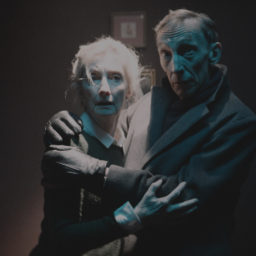
Anything for Jackson, a Canadian production that screened at the Nightstream Film Fest this week, opens with an elderly couple, Audrey (Sheila McCarthy) and Henry Walsh (Julian Richings) as they go about their morning routine. And all signs point to the couple being benign, gentle people. However, that is quickly dispelled when the pair rush out of their home and return restraining a pregnant woman who Audrey knocks out with a candlestick.
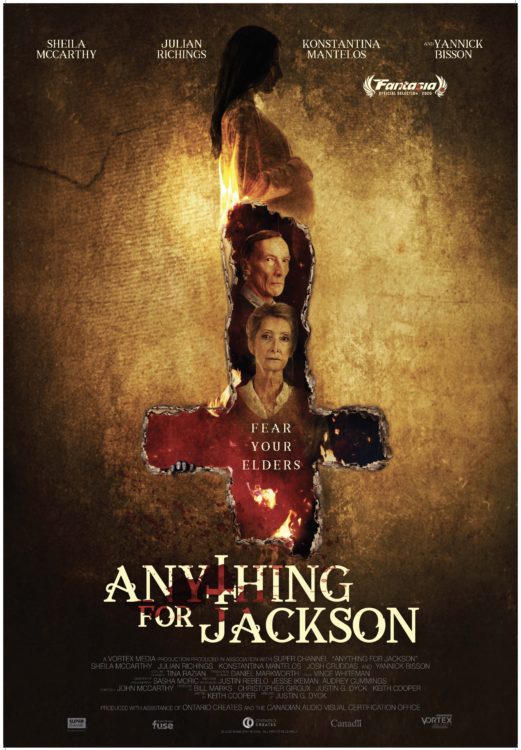
The post for Anything for Jackson. Courtesy of Vortex Words Pictures.
We later learn this woman’s name is Becker (Konstantina Mantelos), a patient of Henry’s, who the Walshs hope could help them bring back their deceased grandson Jackson—as Audrey reveals charmingly with a grandmother’s glow in a rehearsed speech that she wrote. You see, the Walshs are Satanists and have found an ancient book with a supposed ritual that would allow them to put Jackson’s soul into Becker’s unborn child.
Dyck portrays the couple as endearing and loving, a complete juxtaposition to the horrifying ritual they carry out and the demons they invoke. Still, in someway you root for them as much as you root for Becker. Anything for Jackson‘s greatest strength is it doesn’t let any of its characters fall into stereotypes. There’s complexity there. The Walsh’s motivations are driven by something human, even if what they’re doing is inhuman.
Dyck’s direction is polished, but it works for the pitch black comedic tone that he derives from the story. And while the horror doesn’t quite hit the way that you wish it did—though the creature design is admirable—the compelling story and well-carved out characters are more than enough reason to admire it.
? For more movie recommendations, sign up for our newsletter!
Joker is an example of the mental toll that the struggle to adequately perform emotional labor can have on a person who is already struggling.
In The Managed Heart: Commercialization of Human Feeling, by Arlie Russell Hochschild, (1983) Hochschild defines emotional labor in the following way:
“This labor requires one to induce or suppress feeling in order to sustain the outward countenance that produces the proper state of mind in others-in this case, the sense of being cared for in a convivial and safe place. This kind of labor calls for a coordination of mind and feeling, and it sometimes draws on a source of self that we honor as deep and integral to our individuality.”
(Hochschild, 7)
While this concept is strongly linked to gender (women are often expected to perform emotional labor in both professional and personal life) it is also a concept strongly linked to class — many of the careers most notable for their demands of emotional labor are working class and middle-class professions — nurses, bank tellers, social workers, and careers in hospitality and food service.
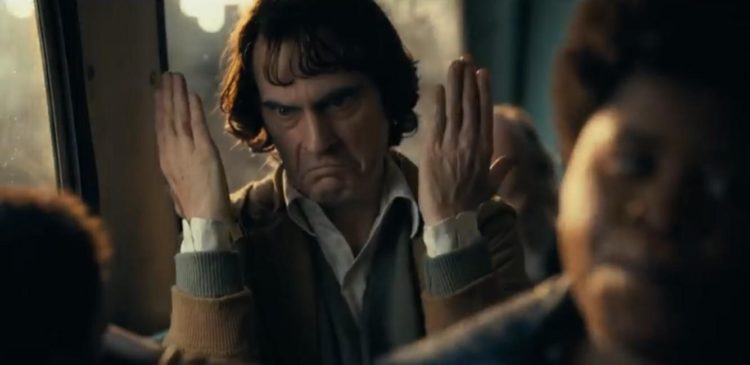
Joker is a film concerned with performance in a variety of spheres. For example, in its aesthetic and philosophical fixation on masks, dance, and stand-up comedy. It also explores the way a failure at emotional performance can have severe material and psychological ramifications for vulnerable members of society. One such person is Joker’s protagonist Arthur Fleck (Joaquin Phoenix), a man struggling with poverty, childhood trauma, and mental illness. “The worst part about having a mental illness is people expect you to behave as if you don’t,” Arthur writes in the diary he is instructed to keep by a social worker. The expectation of gleeful subservience (“Don’t forget to smile!”) is one not only required by Arthur’s job as a clown — to repress, to entertain, primarily in order to turn a profit for others — but also in his personal life as a person with a mental illness and obtrusive neurological disorder.
Joaquin Phoenix in Joker. Credit: Warner Bros. Pictures.
Arthur is a pleasant person for the early portions of the film. He is a diligent caretaker of his ailing mother (Frances Conroy), polite to those around him, and hardworking at his job. Despite his efforts to make those around him not only at ease but happy, Arthur is still left lonely, unheard, and rejected. He is described by his boss as simply “weird” and that he makes people uncomfortable. He is a plain, even unkempt dresser, sickly thin with poor posture, often feminine in his mannerisms, with a disorder that attracts negative attention; his inability to convincingly play the role of normative manhood and regulate his outward expression of emotion has a material effect on his social and financial mobility, leaving him trapped in abject poverty.
“For the flight attendant, the smiles are a part of her work, a part that requires her to coordinate self and feeling so that the work seems to be effortless. To show that the enjoyment takes effort is to do the job poorly.”
(Hochschild, 8)
Joker intertwines Arthur’s class and psychological state with a surprising level of emotional depth and social consciousness. Arthur doesn’t just have one bad day that makes him snap, he lives within a system that demands that his entire existence as a member of the working class involves assuring the comfort and entertainment of those around him. His repeated failure to live up to this task eventually causes him to give up the pursuit altogether.
Ancillary characters, predominantly the black employees of state-sponsored institutions, are also shown to have their emotional labor taken for granted. Social workers, an administrative clerk at Arkham Asylum (Brian Tyree Henry), and Sophie (Zazie Beetz), a single mother working as a bank teller, it is the job of these four characters in their professional and personal lives to constantly consider the feelings of those around them, even when they are rarely afforded the same courtesy by those of higher status.
Garbage piles up around the city of Gotham, Thomas Wayne (Brett Cullen) shows nothing but patronizing disdain for those in need, and these characters are expected to continue to perform their roles with a smile. When Gotham cuts social service funding for the office, Arthur’s social worker says that the city doesn’t care about people like him, and doesn’t care about people like her either. But the two must both put on a pleasant face, their happiness taken for granted as they are abandoned by the government systems that should be supporting them.
“The deferential behavior of servants and women-the encouraging smiles, the attentive listening, the appreciative laughter, the comments of affirmation, admiration, or concern-comes to seem normal, even built into personality rather than inherent in the kinds of exchange that low-status people commonly enter into.”
(Hochschild 84-85)
Arthur’s journey is in many ways an escape from a life of performing for others’ benefit, a process of committing himself to free expression for his own sake. He abandons self-consciousness and repression and learns to express his feelings fully, and violently. In the climax of the film, Arthur’s posture and voice have changed, he is vibrant in his dress and physically expressive, free from societal expectations of anonymity and subservience. It is horrific to see Arthur enact so much violence in the film’s final scenes, but there is also a sense of triumph in seeing a downtrodden, abused man free himself from the demands of others, to find cohesion between his internal self and external expression.
Notably, Arthur’s convulsive laughter is largely absent once he adopts the Joker persona in earnest; the manifestation of the innermost chaos which he was constantly struggling to stifle no longer plagues him. Unconcerned with economic class, social acceptance, or the care of others, escaped from the artifice of emotional labor, Arthur is at home in his body and mind, and is free to behave — horrifically, theatrically, truthfully, as his heart desires.
Parasite follows a poor but clever family’s attempt to climb up the social ladder by cozying up to a wealthy family.
One-sentence review:Parasite is unlike any movie that’s existed — at the same time funny, terrifying, thrilling, and relevant — and one of the best movies of the year.
The cast: Song Kang-ho, Lee Sun-kyun, Cho Yeo-jeong, Choi Woo-shik, Park So-dam
Where to watch Parasite: In theaters now.
It’s taken me a while to really crack how to talk about Parasite. There’s so much to unpack and so much I loved that it seemed nearly impossible to do without having a drawn-out, rambling mess. But then, director Bong Joon-ho did the work for me.
“I tried to express a sentiment specific to Korean culture, all the responses from different audiences were pretty much the same. Essentially we all live in the same country… called capitalism.”
I think what’s so interesting about that quote is that he explains that he didn’t intend to make a social satire that could be universally related to. He’s as surprised by the response to the movie as anyone else. Yet, Parasite feels like a movie that’s made for the masses. Still, at its core, it’s a bizarre, pitch-black arthouse comedy set in South Korea. Which is exactly why it’s one of the best movies of the year.
A plot better shrouded in mystery
I’m going to be careful in describing the plot to Parasite because part of the effectiveness is the surprise. Either way, you should go in mostly blind. Calling it one of the best movies of the year should be reason enough to see it. If you still need to be convinced, you’ve been warned.
Parasite revolves around two families. The Kim family, father Ki-taek (the great Song Kang-ho), mother Chung-sook (Jang Hye-jin), and kids Ki-woo (Choi Woo-shik) and Ki-jeong (Park So-dam), is just barely scraping by by folding pizza boxes for the local pizza joint and leeching off the WiFi of a nearby coffee shop.
The Kim Family (Woo-sik Choi, Kang-ho Song, Hye-jin Jang, So-dam Park) in Parasite. Courtesy of NEON CJ Entertainment.
So, when the particularly clever Ki-woo gets the chance to tutor Da-hye (Jung Ji-so), the daughter of wealthy tech exec Dong-ik and his high-strung wife Yeon-gyo (Cho Yeo-jeong), he hatches up a way to get his entire family in on his good fortune by lying and conniving their way into various roles working for the family.
The situation requires much grifting and maneuvering, which of course leads to some hilarious slapstick moments and incredible acts of criminal malice. But things take a turn. That turn is when Parasite goes from a crowd-pleasing criminal romp to a deeper take on the very fabric of our society. It’s a wonder that Joon-ho was able to craft something so complex, rich with meaning, and filled with wonderfully off-kilter characters and performances, while still being entertaining, thrilling, and, at parts, terrifying.
Constructing his greatest movie yet
Unlike his last two movies — Snowpiercerand Okja — Parasite very much takes place in our world. Perhaps a slightly heightened version of it, but ours nonetheless. Mixing that with his usual dark humor and oddly specific characters make for an experience like no other. It allows him to zig when we expect him to zag. Knowing each character’s true feelings and intentions is impossible, and that’s where he wants us.
Instead, he builds in clues everywhere else. In the dialogue, the production design (all the sets were built for the film), and the carefully crafted shots. Like all the best directors, no scene or camera movement or line is wasted. Everything matters. And that is the sign of a masterpiece.
Parasite is so indescribable that I’m having a tough time… well, describing it. Particularly what makes it a near-perfect film. But I always come back to that quote from Director Bong and how this is a universal story. The final sequence is a universal feeling. As wild as the ride is, it’s comforting knowing that in some way we’re all on the same page.