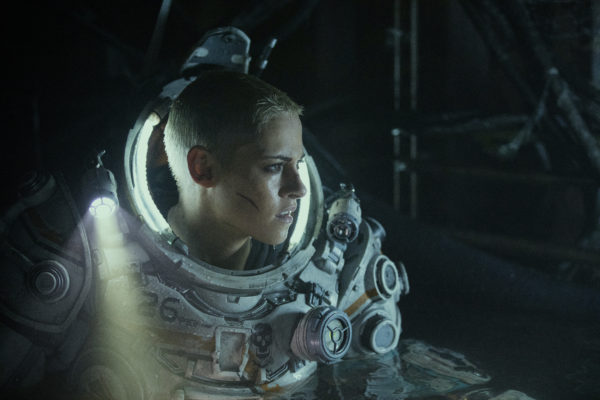
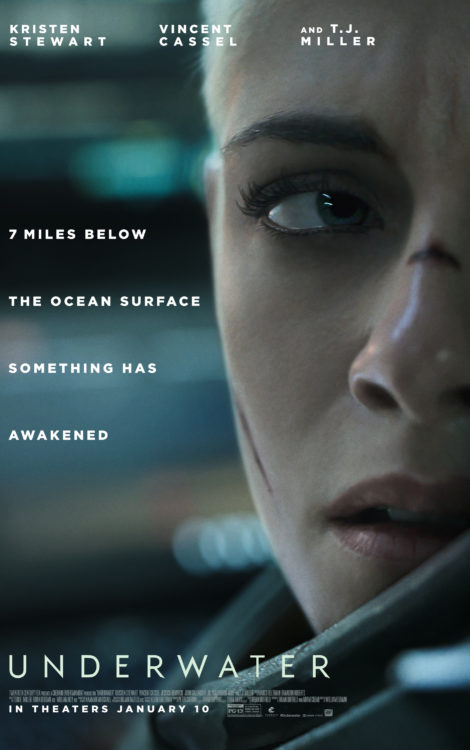
Underwater follows the crew members of a deep-sea drilling rig as their vessel begins to fail. However, the real danger is lurking in the darkness of the sea.
Quick review:Underwater is like if you took all the character development, world-building, and plot out of the original Alien and just left the horror bits — somehow it works.
We’ve seen Alien copycats before to varying degrees of success. From the great (The Descent) to the fine (Life) to the insulting (Inseminoid, anyone?). But at the very least, Underwater is keenly aware of its position. It’s an economical, mindless, Hollywood thrill ride. Exactly what you’d expect from a mid-January horror.
Just the shallow idea of a plot
From the very beginning of the movie, you know that they aren’t fooling around. Without any exposition or pretense, we hop straight into a deep-sea drilling operation in the Marianas Trench — aka the deepest part of the Earth’s oceans. Norah Price (a short-haired platinum blonde Kristen Stewart) is preparing for bed when the entire rig begins to fail and cave in around her. Narrowly escaping a painful death by crushing, she and Rodrigo (Mamoudou Athie) another crew member make their way to the escape pod bay discovering another crew member (played by someone that doesn’t deserve to be mentioned) and the captain of the vessel (Vincent Cassel). They meet up with Emily (Jessica Henwick) and Liam (John Gallagher Jr.) in the bridge to form a plan of escape.
Not much of the plan makes sense and neither does the environment, but the movie doesn’t dwell on it. At just 95 minutes, it doesn’t have time to spend on needless things like a plot. The crew descends further down to the ocean floor to find another escape pod bay. However, before they can make it there they encounter something (or somethings) otherworldly that make their journey even more dangerous than it already is.
What you see is what you get with Underwater. Honestly, it’s refreshing. The scares are cheap but effective. The tension is derived solely from the environment — setting something under the sea or space is an easy way to build suspense. And the characters are really only made charming by the cast. But it’s so satisfying. It’s an elevated B-movie if such a thing even exists.
💌 Sign up for our weekly email newsletter with movie recommendations available to stream.
ADVERTISEMENT
There really isn’t a moment to relax and take in the environment or get used to any space. However, the surprisingly effective production design is essential to the movie’s success. The tight dank corridors are endless and imperfect — filled with pipes and grates and wires like Alien. It’s the perfect setting for the story.
The same goes for the bulky pressurized suits that are the only barrier between the crew and agonizing death at the hands of the depths of the ocean. The unreliability adds to the stakes.
Stewart, even when phoning it in, has just the right level of movie star appeal to lock you into the screen. Cassel and Henwick also do great work with their limited screentime. However, you can’t read too far into anything with Underwater. By design, it’s shallow. It’s a theme park of a movie, as Martin Scorsese would put it, and it works for that very reason.
Random thoughts ?
John Gallagher Jr. is incredibly underrated and should be a huge star by now. This movie wastes him.
The creature design is terrific, but the twist is jawdropping. Plus, the movie uses them sparingly enough to keep them interesting.
The first and last shots of Stewart are pure Hollywood hero shots.
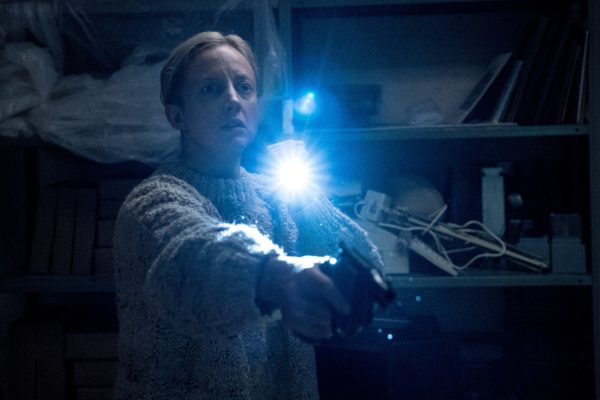
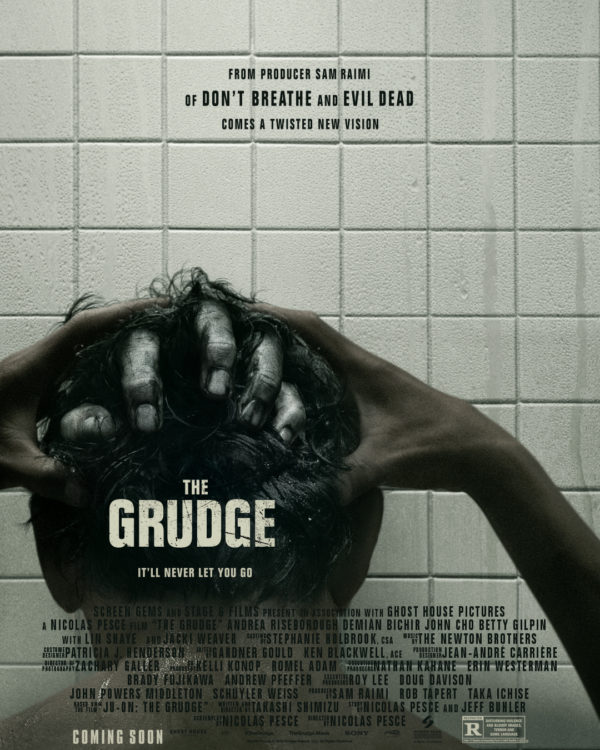
The Grudge is back for its third haunt as a Japanese curse haunts multiple families connected by one house.
Quick review:The Grudge is more horrifying than any horror movie — because it’s boring. The cheap scares and thin plot do nothing but… well, make you hold a grudge against it.
For the briefest of moments, I thought director Nicolas Pesce’s remake of The Grudge was going to be not terrible. I was sorely mistaken. Pesce directed the very solid and very disturbing Piercinglast year, which relied on a bleak tone and anxiety-inducing imagery to create a surprisingly effective horror. That, along with a strong cast, gave me hope that maybe he could make up for the dreadful — and not in a good way — 2004 American remake starring Sarah Michelle Geller. The opening moments proved to be all I needed to know otherwise.
Sticking to the script
Like the original 2002 Japanese version, Ju-On: The Grudge, and the 2004 American remake, this version of The Grudge is told as a non-linear narrative following various families who have encountered a vengeful spirit that is created when someone dies in the grip of extreme rage or sorrow. Anyone that crosses its path is killed and the curse is reborn to terrorize another unwitting victim.
At the center of the film is Detective Muldoon (Andrea Riseborough) and her partner Detective Goodman (Demian Bichir) who discover the decomposed body of Lorna Moody (Jacki Weaver) in her car in the middle of the woods. That leads them to other connected murders that have taken place of several the past few years involving real estate agents and expecting parents Peter and Nina (John Cho and Betty Gilpin), elderly couple William and Faith (horror legend Lin Shaye and William Sadler), and a young mother (Tara Westwood).
As the plot gets going, it’s interesting enough. Pesce seems to be attracted to slow burns and other than the confounding cold open, he sticks to that pace. By the time we’re introduced to John Cho and Betty Gilpin’s characters and storyline— two of the actors I was most excited to see — we’re already deep into the mystery. Their scenes are easily the most successful narratively and often have the best scares.
However, even those scares feel empty.
💌 Sign up for our weekly email newsletter with movie recommendations available to stream.
ADVERTISEMENT
What you don’t know won’t hurt you
For all the flaws with the screenplay, it isn’t the main reason for the movie’s ineffectiveness. The scares leave a lot to be desired. Japanese horror — or J-horror — relies on two things: atmosphere and imagery. The former is often melancholic and full of dread. The latter is what makes J-horror the most terrifying movies. They’re less focused on the shock and instead look to unnerve. The biggest issue with The Grudge is that every scare is a jumpscare with no build — yet, they’re all predictable.
It also relies on the tired trope of something happening behind the characters that they can’t see. Then they turn around and it’s gone. That trick is good for a scare maybe once. However, nearly every scare uses that setup. It’s almost as if they didn’t feel there weren’t enough moments of horror, so they used them to fill the gaps.
Horror works because fear is a universal emotion. By removing the anticipation of a scare, you almost lose all of its effectiveness. Add flat characters and a thin plot and The Grudge is yet another in a long line of failed horror reboots.
Random thoughts ?
The final shot — and entire conclusion — basically comes out of nowhere. It’s almost like they forgot to write an ending and just threw something in.
One of the first shots of the movie is of the ghost. Note for future filmmakers: Make us want to and be terrified to see your monster. That means making us wait.
None of The Grudge movies are particularly good. So, why do we keep making them?
The entire cast actually does great work — especially Andrea Riseborough, John Cho, and Betty Gilpin.
Greta Gerwig gives her take on Louisa May Alcott’s classic novel Little Women with a narrative twist and an all-star cast
Quick review: While Gerwig’s narrative risks don’t always payoff, Little Women thrives on a timeless story, great performances, and a strong beating heart.
There have been seven film adaptations of Louisa May Alcott’s classic novel Little Women with each one seemingly further modernizing the last take (Be Kind Rewind does a terrific breakdown of the four most notable versions). Of the modern auteurs working today, Greta Gerwig seemed like the perfect person to write and direct our generation’s version. And it’s clear in the film that she has so much admiration and respect for the novel. Like Rian Johnson’s take on Star Wars, that respect manifests itself as a loving subversion of the source material — a subversion that only someone with a deeper understanding of it could pull off successfully. And Gerwig almost nails it.
Retelling an old classic
So much of the brilliance of Gerwig’s Lady Birdcomes from the story’s tightly structured screenplay. In that movie, she plays with time. Opting to tell the story through short vignettes and montages rather than linger on any scene for too long. It’s a story choice that supports the central thesis of the film — that Lady Bird thinks she’s the main character of her own story, forgetting that she’s a supporting character in others’.
She carries over a similar structure to Little Women. Each scene from the present is cut in with a scene from the past — bringing the two halves of the novel together. Gerwig again doesn’t linger on any scene or storyline for too long — a detriment to the first half, which I’ll talk about later.
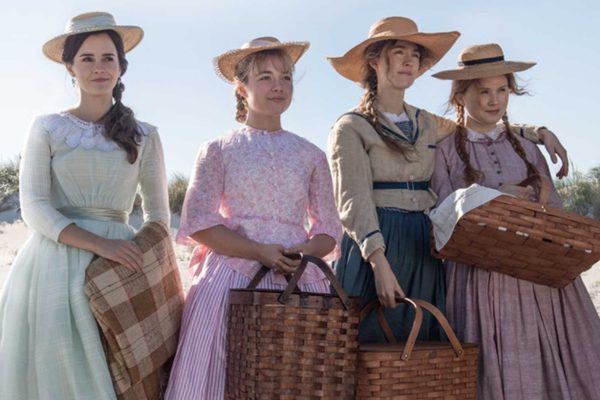
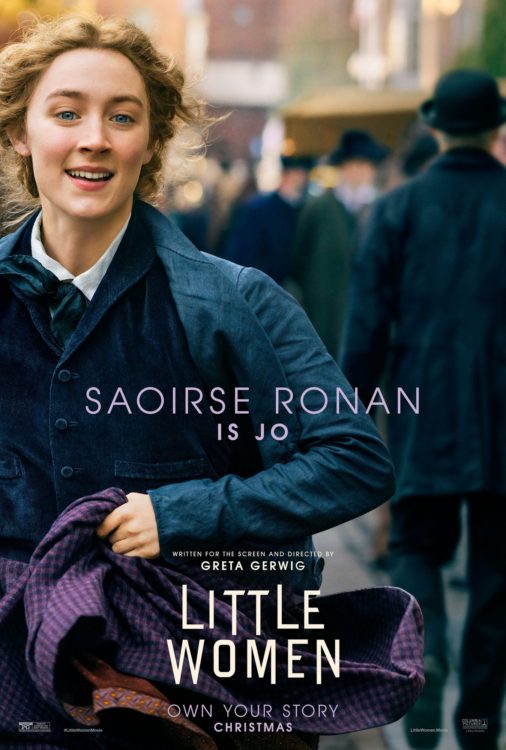
The movie follows Jo March (Saoirse Ronan following up her performance in Gerwig’s Lady Bird), a headstrong and fiercely independent writer making her way in the big city. Her younger sister Amy (a delightful Florence Pugh) is in Paris accompanied by her Aunt March (Meryl Streep) where she is studying painting. Meg, the oldest of the March sisters, is married with kids and still living in their Massachusetts hometown near their mother Marmie (Laura Dern). The youngest, Beth, has recently fallen ill, which brings Jo home and reckon with her past.
💌 Sign up for our weekly email newsletter with movie recommendations available to stream.
ADVERTISEMENT
Taking an emotional risk
By switching between past and present, Little Women almost becomes a memory play where we see the cause and effect of the events and decisions in the women’s lives simultaneously play out. In the past, we watch Jo flirt and fall in love with Laurie (Timothée Chalamet), the grandson of their wealthy neighbor (Chris Cooper). In the present scenes, we see that she doesn’t end up with Laurie and that he is in Europe where he runs into Amy. It’s a small change that has a large impact.
And while the structure itself helps set a melancholic tone and creates a more immediate emotional payoff, it also prevents us from getting to know the characters and see their relationships grow and change. It felt as if the emotional stakes were taken away from us. Or, at least, someone like me. Maybe if I’d been a fan of the book or previous adaptations — I didn’t watch the 1994 version before this one — I’d already have the emotional investment in the characters. Instead, I felt like I had to fill in the blanks and imagine what led each character to each specific moment.
Eventually, the rhythm of the movie made a bit more sense and after spending much of the first hour piecing together who the characters are and their relationships with each other, the second half felt so much easier and I started to see the fruits of Gerwig’s risk. Though, they came at a cost.
It’s a woman’s, woman’s, woman’s world
Gerwig is a perfect match for the material because, like Alcott, she subtly pushes against the boxes that society makes for women. The same goes for Ronan, who plays Jo with the same defiance that made her Lady Bird performance so terrific. However, pushing against that defiance is matters of the heart — towards her family and Laurie. It’s truly a millennial’s tale. How do you balance your ambition with the things that you want but can’t take along with you for the ride?
On the other end of things, Watson’s Meg is excited to fall into society’s ideal for womanhood. Somewhere in the middle, Pugh’s Amy wants both, driven partly from middle child syndrome. When the movie focuses on this quandary, it reaches its fullest potential. Though the relationship between the March sisters — the so-called little women — is the true heart.
March-ing to the beat of its own drum
Though the structure is the main reason I didn’t completely fall for Little Women, it was refreshing that it wasn’t a straight adaptation of the material. We need more directors and screenwriters to take the risk with existing IP. If we’re going to continue to get remake after reboot after remake, then at the very least we can have something slightly different. Something that marches to the beat of its own drum.
Little Women might be flawed, but it’s a movie with a timeless story that will embrace you. In the days since watching it, the story itself has grown on me and the characters have endeared themselves to me. It’s no wonder Hollywood is so attracted to telling it over and over again. I’m glad Gerwig got her shot. She cements herself as one of the most exciting storytellers working today.
The Last Jedi is easily the best-made Star Wars film as director Rian Johnson explores deeper and more complex themes than past films
Spoiler Alert! I’m not holding back on any plot points. Based on the box office though, it seems like everyone has watched the movie already.
30-second review: Admittedly, I was never a huge fan of the Star Wars franchise. I always appreciated its place as a corner of modern-day cinema and believe that The Empire Strikes Back is one of the greatest sci-fi movies of all time. But I’ve never been a fanboy. The Force Awakens was a fun space romp that was well made, but further highlighted my issues with the franchise. Issues that competing franchise Star Trek seemed to solve a long time ago (in a galaxy far, far away). However, Rian Johnson’s The Last Jedi doesn’t only give me a new hope for the franchise.
It raises the bar for blockbuster filmmaking the same way that Mad Max: Fury Road did a few years ago and Blade Runner 2049 did this year. The difference is that no matter what, any Star Wars movie is going to be seen. And it’s going to be seen by a lot of people. Whether or not Johnson considered this when crafting the narrative I don’t know, but he has moved the franchise forward in quality and perspective. Before continuing, I want to say thank you to Johnson and Kelly Marie Tran. For the first time in my life, I felt like an action hero.
Continuing in the spirit of the franchise, The Last Jedi picks up immediately after the events of The Force Awakens. Rey (Daisy Ridley continues to do great work) has found Luke (Mark Hamill) on an isolated island looking to bring him back to the waning resistance to help empower their forces and to further explore her newfound power with the force. Much of this sounds like The Empire Strikes Back retreaded, but Johnson constantly upends expectations in a way that constantly keeps you guessing.
Hamill has never been better as Luke (he was also great in Brigsby Bear this year). Refreshingly, he’s not the hero that he once was. Hamill famously was unsure about the direction of the character, but eventually came around. I understand why he was concerned. For years he was sold as the undisputed hero of the series, and in this film that is the legend that has persisted. But as the old adage goes, never meet your heroes.
The scenes between Rey and Luke don’t work as well as the rest of the film. However, the theme of the storyline is one that the series has never addressed: what does it mean to be a hero. Rey wants to be a hero, but Luke doesn’t quite believe them anymore. It’s incredibly mature storytelling for a series that has mostly kept its themes surface level.
The rest of the resistance is engaging in only what I could call a Mad Max-style chase with the First Order. The theme of what it means to be a hero carries on here, but it also points to a new direction for the series. Star Wars, in spite of its title, has never felt like a war movie. Last year’s Rogue One came close, but The Last Jedi is the first movie to completely feel like it completely embraced the title. The action sequences, which are beautifully directed, visually and structurally feel like war battle sequences.
However, I want to pay specific attention to the opening battle. This is the kind of battle that George Lucas would end the movie on. It’s a triumphant victory achieved in spectacular fashion. Instead, Johnson focuses on the losses of the battle. In particular, he focuses on one resistance fighter’s attempt to drop bombs on a First Order dreadnought. Her ultimate sacrifice is what drives the movie’s narrative. Not her specific sacrifice, but the reason she’s doing it. Johnson is a superb visual storyteller and he makes these scenes feel like they can stand alone. Of course, that emotional arc pays off in the form of Rose (Kelly Marie Tran, a revelation and breakout).
Fewer characters were introduced in this film, but of all the new characters in this trilogy, she may be one of the best. Not only does she have a backstory and a complex character arc, she’s an Asian woman. Diversity has never been Star Wars‘ strong suit, thought The Force Awakens did a great job in adding some to the cast, but Rose feels different. Of course, this is coming from someone who is Filipino-American. Still, I’ve never felt like I could be an action hero. However, her inclusion points to another improvement for the series. For the first time, each character feels complex and like they have to make decisions that have consequences.
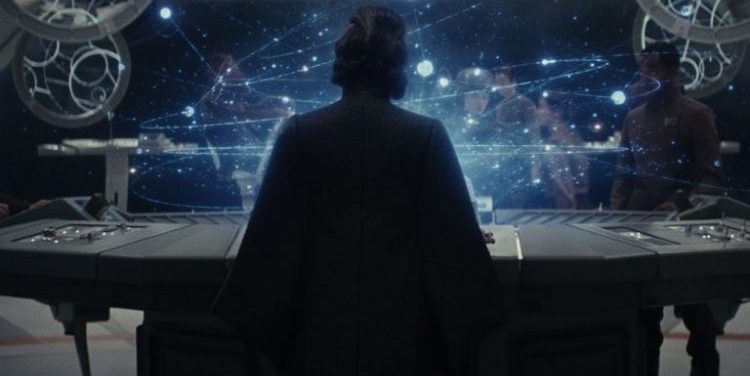
For the entire running time, the resistance has their backs against a wall, which adds stakes to the story. Something that the previous movies never had. The Last Jedi is easily the most consistently exciting film in the series. For fans of Battlestar Galactica, it is reminiscent of the series premiere where fleet must constantly evade their enemies through a series of jumps through hyperspace. Johnson’s direction of the sequences are sensational and the effects are among the strongest of the year. However, what is more interesting is General Leia (Carrie Fisher — she gives a performance that reminds us how far presence can get you in a scene) and her attempt to save what is left of the resistance. Poe (Oscar Isaac), who seems to be the new Han Solo, has the “shoot from the hip” attitude that got our heroes out of more than one sticky situation in the original trilogy. Instead, Johnson makes it a point to highlight the strategic side of the fight. At one point Leia becomes so angry at Poe taking the heroic path rather than the strategic one that she slaps him and delivers the soon-to-be iconic line, “get your head out of your cockpit.”
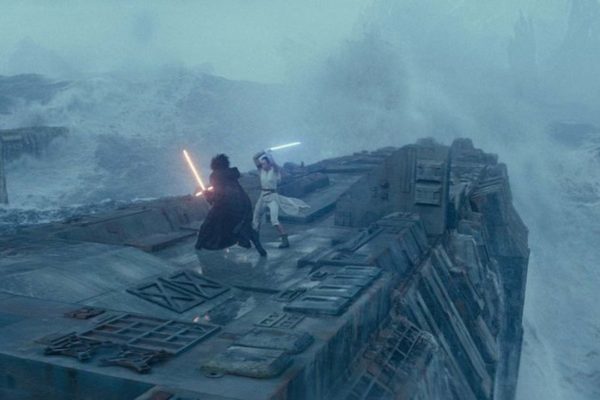
Thematically, the film explores what it means to be a hero through Poe and his contentious relationship with Admiral Holdo (Laura Dern, a standout). More interestingly, though, it also blurs the line between good and evil. As a space western, the Star Wars films have always felt like good vs. evil. The Last Jedi explores what it is to be good or evil as Rey and Kylo Ren (Adam Driver) become linked to each other through the force by Supreme Leader Snoke (Andy Serkis), which culminates in one of the best lightsaber battles in the series’ history.
Johnson elevates the design of the universe by showing us corners that we’ve never seen before. The casino that Rose and Finn (John Boyega) visit is a highlight. And in the final battle sequence, the salt planet serves as an incredible backdrop for the rebels’ last stand. It’s that kind of visual innovation that the series lacked in The Force Awakens, which just felt like more of the same, even if that same is delightful.
Coming from a background of appreciation rather than complete adoration, I never understood the undying love for the series. Well, The Last Jedi made me understand it. I felt emotional during the hero moments because I felt attached for the first time. Partially because I got to know them on a deeper level, but also because people of color and women got a chance to have those hero moments.
They truly saved the day. Will that anger some fans? Yes. But objectively, The Last Jedi is the best Star Wars movie to ever be released. That fact can’t be disputed. It may not be the Star Wars you remember, but change, in the end, is good. And to the fans that are unhappy about the changes or the diversity, I leave you with this: “we’re going to win this war not by fighting what we hate, but saving what we love.”
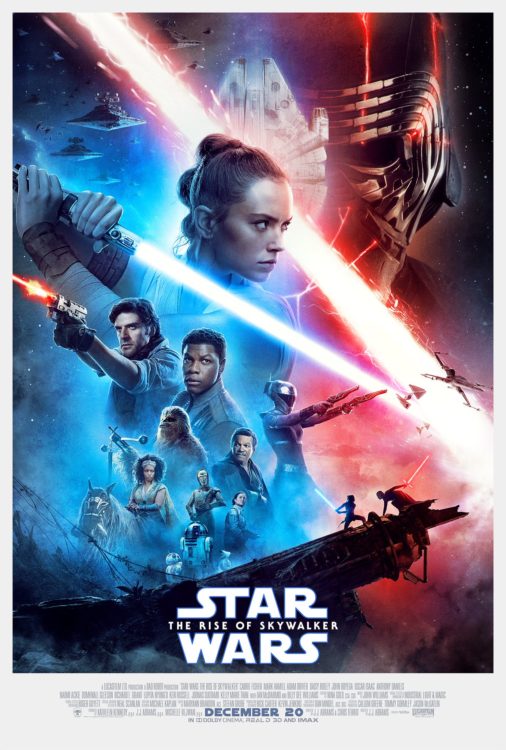
In the final installment of the sequel trilogy, J.J. Abrams wraps up the nine-episode Skywalker Saga as the Resistance faces the First Order one last time
Quick review: A series of poor story and character decisions take away any emotional impact The Rise of Skywalker could have, which ends the Skywalker Saga on a sour note.
There’s something very off about The Rise of Skywalker, the ninth and final film in the Skywalker Saga. It feels at equal times too big and too small, too overwrought and too emotionless, too fast and too slow. The movie, more than any other blockbuster this year and in the franchise, feels completely contrived. Like it was stitched together from disparate arguing ideas and landed on all of them and none of them at the same time.
From the opening scroll, it’s already apparent that the movie is trying to do too much. I’ll spare you the specific plot details, but one I can reveal off the bat since it’s the first thing on the screen, is that Emporer Palpatine (Ian McDiarmid) is alive and planning to (surprise surprise) take over the entire galaxy with his massive fleet of star destroyers.
Through a breezy montage, a perfect demonstration of how the movie is too fast in some parts and too slow in others, we learn that Kylo Ren (Adam Driver) has been looking for Palpatine to destroy any threat to his hold on the First Order. However, when he does find him, Palpatine promises him his entire fleet as long as Ren finds and kills Rey (Daisy Ridley). There, one plot thread set.
The second involves our new central trio of Rey, Fin (John Boyega), and Poe (Oscar Isaac), with the help of C-3PO (Anthony Daniels), BB-8, and Chewbacca (Joonas Suotamo), chasing several items around the galaxy to find the hidden planet where Palpatine’s fleet is preparing to attack. A timeline of 16 hours is set, but unlike The Last Jedi, which made us feel the urgency of the time crunch, The Rise of Skywalker feels meandering.
💌 Sign up for our weekly email newsletter with movie recommendations available to stream.
ADVERTISEMENT
The main problem is the script by director J.J. Abrams and Chris Terrio. It spends so much time setting new story directions, redefining characters and their relationships, and squeezing in an overstuffed plot that it doesn’t spend time being effective at telling a coherent story.
You can talk about nostalgia and fan service all you want — there is a good way to do that — but at its core The Rise of Skywalker is flawed. There’s no way to dismiss it as “for the fans” or “critic-proof.” Avengers: Endgamewas certainly for the fans, but managed to be a compelling movie at the same time by carefully structuring its script for maximum emotional payoff. All the moments of fan service here feel contrived and unearned.
There is more than one twist — some that should have truly been shocking — but the movie is never able to land them effectively because the build-up just isn’t there. Rian Johnson beautifully sets up the stakes for the third movie, but Abrams clearly wanted to go a different direction and instead wasted his time pulling emotion out of thin air.
If I sound overly critical it’s probably because I was really pulling for The Rise of Skywalker. I enjoy the Star Wars movies. I wanted to be satisfied at the end. But I couldn’t connect with anything. There’s a moment that should be as awe-inspiring as the Portals moment in Avengers: Endgame. Instead, it inspired a rolling groan from my audience. There was no build-up, no suspense, it just kind of happened. That’s the best way to describe the movie, it just happens. There’s nothing to experience and I want my star war to be an experience.
Random thoughts ?
The late Carrie Fisher appears in the film as General Leia Organa through scenes she filmed for The Force Awakens that were composited in. The effect is a bit off-putting. It’s clear her dialogue doesn’t completely fit the context of the scene and comes off as clunky. That being said, it’s probably the best we’d get.
Kelly Marie Tran‘s Rose Tico was largely relegated to the background in this film, which is really upsetting following her breakout in The Last Jedi. The character deserved more. She was the heart of the film.
There’s a brief kiss between two women, which marks the first queer characters in the franchise. And while it’s far too brief, it’s better than other publicized gay moments in other blockbusters. I’ll just continue with my assumption that Poe is gay.
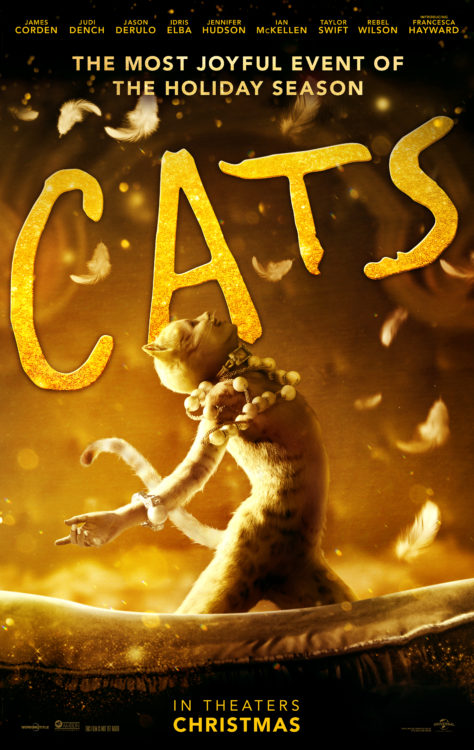
A tribe of cats gathers to decide who among them deserves to ascend to the Heaviside Layer and come back to a new life in this adaptation of Andrew Lloyd Webber’s musical
Quick review: At best, Cats is an interesting exercise in the boundaries of filmmaking. At the worst, which it treads closer to, it’s a disturbing, confusing, and misguided acid trip of a musical.
It’s truly confounding that a major Hollywood studio financed a movie adaptation of the stage musical Cats. Yes, it’s considered a classic. However, it received mixed reviews at best and since then its legacy has been questionable at best. I mean, other than “Memory” can you name another song? But what makes it truly baffling is that there’s not an obvious way to adapt it other than putting people in catsuits. But where there’s a will, there’s a way, I guess?
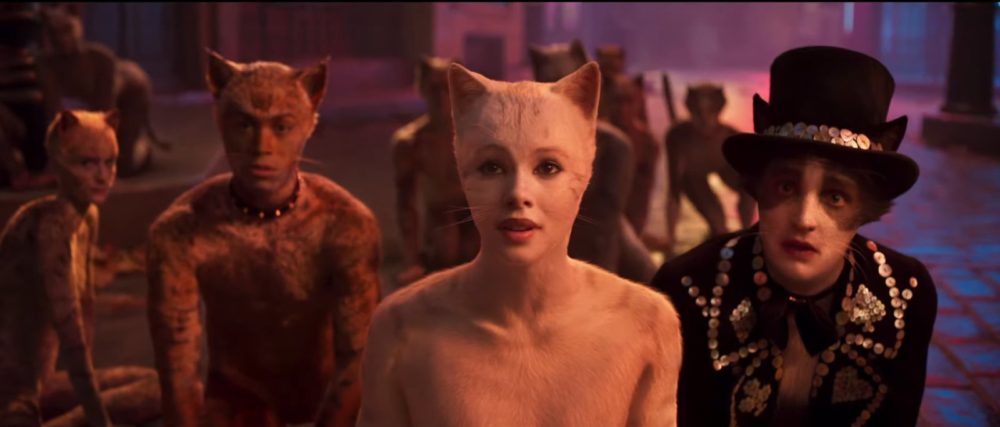
I’ll cut to the chase. Cats is more horrifying than you’d ever imagined. The highly publicized and poured over trailer doesn’t even do justice to just how off-putting the CGI — digital fur technology if you will — is to watch. It’s truly in the deepest trench of the uncanny valley. The biggest issue is that the very realistic fur clashes with the humanoid bodies, movements, and faces of the cast of cats. In some places, it works. Mr. Mistoffelees (Laurie Davidson giving one of the best performances in the film), the magic cat, comes off a little better as the cat features obscure his face at least a little. It can’t be said for the rest.
The reason I want to start my review here is that it overshadows anything good that you could derive from the movie. The musical numbers are audaciously staged and fascinating to watch. The visuals are like a trip on acid. And the cast, for all the wonkiness with the conceptualization of the cats, are going for it in every scene. However, it’s almost impossible to get past just how ridiculous everyone looks. Frankly, it’s distracting.
💌 Sign up for our weekly email newsletter with movie recommendations available to stream.
ADVERTISEMENT
It also doesn’t help that the movie doesn’t really have a plot — though, that’s carried over from the musical. Over the course of the film, we’re introduced to various cats through elaborate musical numbers that we through the eyes of Victoria (Francesca Hayward), a recently abandoned cat. We meet Munkustrap (Robbie Fairchild), the leader of the tribe, who explains that every year they gather for the Jellicle Ball where Old Deuteronomy (a wild-looking Judi Dench) chooses one cat to ascend to the Heaviside Layer.
Over the course of the night, we meet the overweight cat Bustopher Jones (James Corden), showcat Rum Tum Tugger (Jason Derulo), lazy housecat Jennyanydots (Rebel Wilson), Gus the Theatre Cat (Ian McKellan), and Grizabella (Jennifer Hudson), an old and mangy cat that was once known to be the most glamorous.
In the wings is Macavity (Idris Elba), a cat with mystical powers who is so bent on being the Jellicle choice that he’s systematically taking out his competition with the help of Bombalurina (Taylor Swift) — who performs the entertaining and truly mind-boggling number “Macavity: The Mystery Cat,” which finds her drugging the other cats with catnip. You can’t make this stuff up.
Drawing inspiration from musicals is a good trend, in my opinion. Creating a successful movie musical is difficult but having strong source material is a start. The fact of the matter is that Cats doesn’t have good source material to begin with.
All this being said, the whole movie is incredibly brave. I can say without a doubt that I have never seen anything quite like it. It’s overwhelming, confusing, and inarguably bad. But was I entertained? I sure was. I could not take my eyes off the screen. I’m going to take everyone I know to see it just so we can talk about which cat should be the Jellicle cat. I’m obsessed with the fact that it exists. A cult classic in the making.
Those People follows a twentysomething Upper East Sider who’s torn between pursuing his socialite best friend and a new romance with an older pianist
Quick review: Despite some first-time feature issues, Joey Kuhn’s Those People gives enough material to its talented lead Jonathan Gordan to introduce him as an exciting new talent.
When Those Peopleis good, it soars. It lives in those moments of humanity — a kiss on the street, a mother/son heart to heart — and revels in the relationship between its characters. Though it flirts with melodrama, Joey Kuhn’s debut feature tries to ground its character even if they live in the sky of Manhattan known as the Upper East Side.
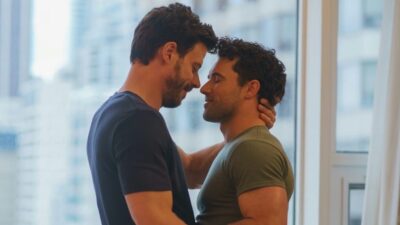
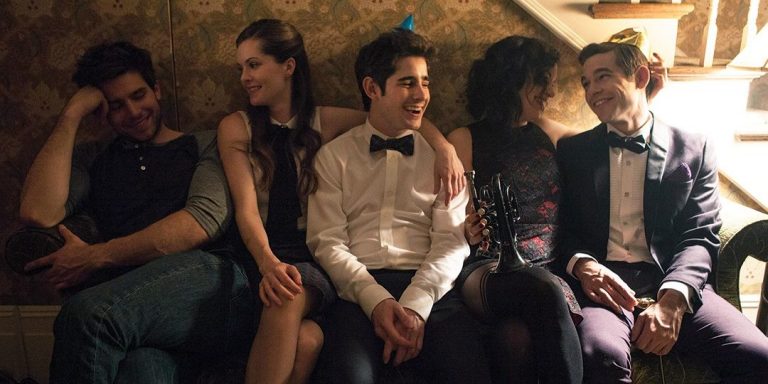
Toeing the line between the melodrama of Gossip Girl and the LGBT coming-of-age stories that have become a genre in itself, Those Peoplefollows Charlie (Jonathan Gordon), a 23-year-old painter who is the heart of his group of attractive friends living in New York. And while he’s the one that glues the group together, Sebastian (Jason Ralph) is the one gravitational pull. As the son of a Bernie Madoff type, he is dealing with a crisis of identity that drives much of the forward plot. Because of this, he unwittingly craves the attention of his friends with cries for help — excessive drinking, veiled suicidal thoughts. In particular, he needs support from Charlie, who has had a crush on him since they were younger.
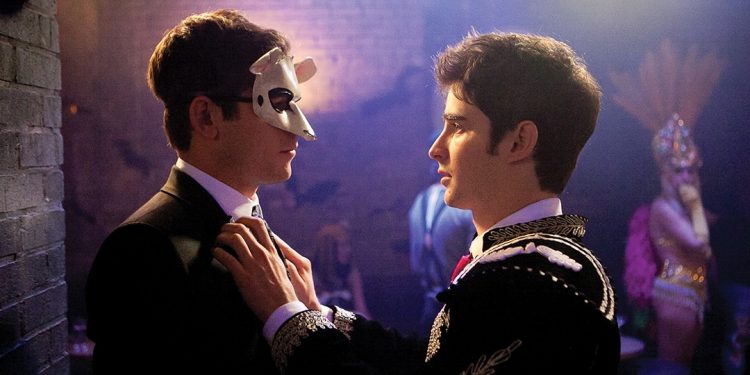
However, when Charlie begins dating older concert pianist (Haaz Sleiman), the group of friends begin to be tested as Sebastian moves closer to the brink and Charlie struggles with his own feelings for the two men. In a way, it feels like a Gatsby for the modern age. Unfortunately, it never quite reaches those heights. I was pleasantly surprised that the movie was able to move past its premise — which is unjustly boiled down to a love triangle — and into something more profound. Still, it never takes enough diversions from the predictable direction.
What it does have, though, is heart and charm. In those moments, the movie soars — an early scene when the group of friends comes together to celebrate Charlie’s birthday is a prime example. That’s partially thanks to the cast — supporting players Britt Lower, Meghann Fahy, and Chris Conroy do great work. But the only way Those Peopleworks is with Jonathan Gordon in the central role. He sells the character’s struggles not only in words but with mannerisms. He turns a character who did not have much depth written into the script into a fully-fledged and realized person.
Those Peoplenever quite becomes the movie that I wanted it to become after I realized that it wasn’t just about a love triangle. In the final moments, we find the group of friends at the center of the film standing together in the apartment that we were first introduced to them. It felt like the series finale of a TV show. However, it doesn’t feel like Kuhn earned that final scene or the climax for that matter. Sebastian says at one point, “you don’t just face our good sides. You stare right at our one eye and you find the beauty in it anyway.” That’s the movie I wanted. One about friendship and relationships and the confusion of love. We get that most of the time, but at others, it loses its way distracted by extraneous plot lines. However, what is on the screen is good enough to introduce us to an exciting new talent in Jonothan Gordan.
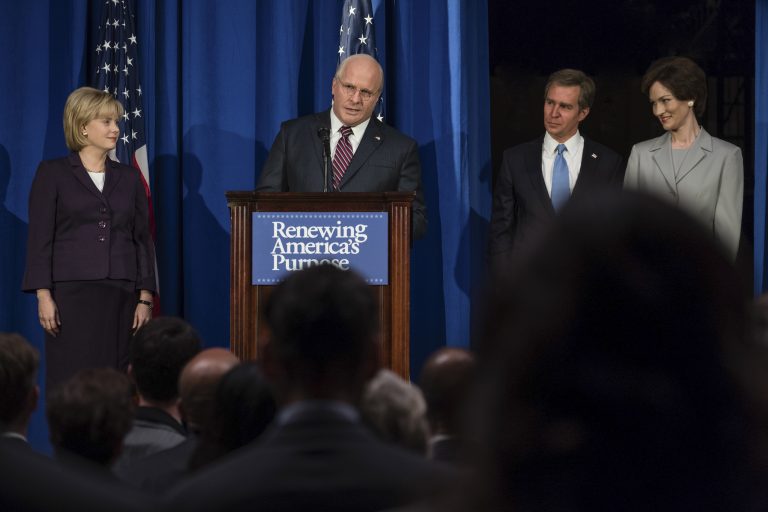
Vice follows Dick Cheney’s precipitous rise to power and his everlasting effect on American politics
Quick review: Vice tries to grapple with the second Bush’s years in office through Dick Cheney but ends up with nothing to show for its efforts.
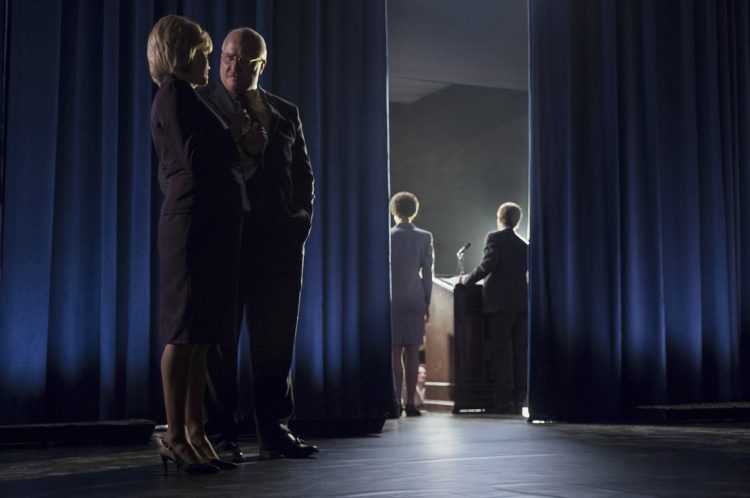
Vice ends with Dick Cheney (Christian Bale under a heavy amount of makeup) turning to the camera and saying, “You chose me. And I did what you asked.” Then the movie’s end credits are played over “America” from West Side Story. It’s an infuriating end to a movie that had its issues but wasn’t completely a miss until it let on that it had no idea what it was trying to say.
Sit through the end credits. Then witness the movie’s full-hearted reprehensible attempt at a BlacKkKlansmanstyle “but this is happening today” coda that is meant to tie the movie together.
💌 Sign up for our weekly email newsletter with movie recommendations available to stream.
ADVERTISEMENT
Never in cinematic history has a movie so stunningly tear itself apart in less than 30 seconds — the final 30 seconds, no less.
Dick Cheney changed the world when he came to power in the second Bush administration as the Vice President. Our current terrifying political environment didn’t start in 2016. It’s been this way for nearly two decades.
After a surprisingly typical biopic opening act that follows Cheney from his short time at Yale that ended with him dropping out to his stint blue collar worker that gets too drunk after his shift to an intern for Don Rumsfeld (Steve Carell) to the White House Chief of Staff to the Secretary of Defense under Bush senior to the Vice President to George W. Bush (Sam Rockwell following up his Oscar win for Three Billboards Outside Ebbing, Missouri).
What all these experiences have in common is that Cheney, driven by his Lady Macbeth-like wife Lynne (standout Amy Adams), is that he fails up. The section isn’t incredibly inspired.
The whole story is framed by a mysterious narrator (Jesse Plemons, who was a scene-stealer in Game Night earlier this year) who talks straight to the camera and has all the bells and whistles director Adam McKay used in his Oscar-winning The Big Short — hyperactive visual cut-ins, breaking the fourth wall, quick montages through history. It is a satire after all.
But about 40 minutes in, Vice makes a clear pivot to make Dick Cheney the clear villain of the story. But shouldn’t he always have been? Even after this pivot, though, the movie doesn’t always make clear its point-of-view. It tells us a lot about the Bush/Cheney years — the Florida recount, 9/11, the invasion of Iraq — but doesn’t give us any material or insights to grapple with what happened. Instead, it satirizes those actions.
The story of Dick Cheney is a hard one to make funny because the implications of his story are dead serious — something the movie tries to say in the final minutes. It doesn’t help either that Cheney becomes completely opaque in the second half. We never know why he’s doing anything. Neither does McKay.
“You chose me. And I did what you asked.” Adam McKay’s version of “you reap what you sow.” Even though Vice attempts to villainize Cheney, its final beats blame us — the citizens of this country. Not the system that puts men like Cheney in power. It blames us. But we didn’t choose you to tell this story, McKay. This isn’t what we asked for.
Bombshell tells the story of how the women of Fox News banded together to take down one of the most powerful predators in media
Quick review:Bombshell has a terrific performance by Charlize Theron as Megyn Kelly and an interesting story worth telling. However, the muddled tone, hollow characters, and awkward pacing make it a forgettable watch.
There’s been a trend in the film industry of tackling serious topics and difficult people — that’s being kind — with a heavy dose of comedy and satire. In particular, Adam McKay seems to have cracked the code with the 2008 financial crisis movie The Big Short — which is good — and the Dick Cheney biopic Vice — which is bad. Then there was Craig Gillespie’s Tonya Harding biopic I, Tonya. Other than a shared style, these three movies had tremendous Oscar success. Keep that in mind when watching Bombshell — a new movie by Jay Roach following the demise of Fox News CEO Roger Ailes at the hands of several women at the network.
Truthfully, it feels like Bombshell is the worst version of this kind of movie because it feels like the story doesn’t justify the style — characters talking to the camera, punchy graphics popping up on the screen. Though, maybe it does. The Big Short’s Oscar-winning screenwriter Charles Randolph penned the script, so maybe it’s Roach that went wrong with the equation. The uneven tone shows just how much control someone like McKay had over his movies.
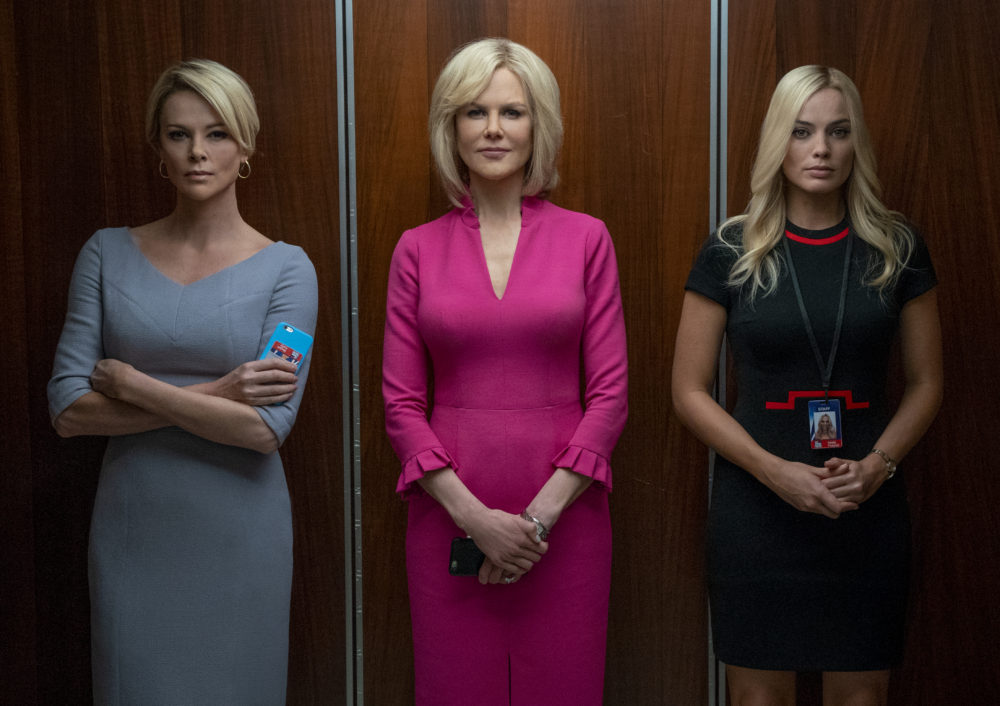
We follow three women working at Fox News. An eerily transformed Charlize Theron as Megyn Kelly, Nicole Kidman as Gretchen Carlson, and Margot Robbie as the fictional Kayla Pospisil — an upstart keen on greatness at the network. The movie starts with a promising look into the fallout following the first Republican Primary Debate in 2016 where she confronted Donald Trump about his long history of harassment of women and misogyny.
💌 Sign up for our weekly email newsletter with movie recommendations available to stream.
ADVERTISEMENT
After the brush-up, she gives us a to the camera tour of the Fox News offices where we learn about the setup of the organization. Ailes and the VPs that serve him are on the second floor while the owners of the network, the Murdochs, are on the eighth. While she’s dealing with harassment from angry Trump voters, the media, and even people within the network, Carlson is preparing for war.
After showing her lawyers a reel of misogynistic comments and moments on-air — she assures them that worse happened behind-the-scenes — she gets ready to be fired and subsequently sue Roger Ailes for sexual harassment. Meanwhile, Kayla, who was recently promoted to working on The O’Reilly Factor, maneuvers her way into meeting Ailes to be considered for on-air work explaining that Fox News is like a religion to her conservative family. However, during an uncomfortable meeting with Ailes, he asks her to slowly lift her dress as he “assesses” whether she’s fit to be in front of the camera.
Theron is pure electricity as Megyn Kelly — and it’s not just the makeup job like some recent Oscar winner. While the physical transformation helps, it’s the physicality that she imbues her with that makes it remarkable. There are subtle ways she captures Kelly — the way she carries herself, the cadence and deliberateness when she talks, her almost slow-motion movements. Without that central performance, the movie would fall apart.
The other woman are solid too. Kidman is a seasoned pro and does the best that she could with Carlson. However, the character is shamefully underwritten, which is a key problem with the movie. Because we split our time between Kelly, Carlson, and Kayla, we never get time to understand them outside of this particular situation. They’re reduced to vessels rather than actual people — maybe it’s because the actual people aren’t that great either. As for Robbie, she does great work, but her character feels like a construction for the story.
That shouldn’t detract from the message. It seems to have been made with good intentions. Powerful men can be stopped when we support victims and when victims support each other. However, I don’t think Roach was equipped to tell that story. Rather than one about the victims, he focused on the intrigue. Instead of coalescing around Carlson’s crusade and the other woman around her, he’s more interested in Kelly’s journey to speaking out, as well. The issue there is that that journey isn’t entirely compelling either.
There are more layers to Bombshell than I am equipped to go into. So, I’ll leave you with this. More than being bad, it’s forgettable. Other than the scenes where Theron is giving room to flex her characterization, the rest of the movie feels is awkwardly paced, unevenly toned, and, to be frank, a slog. For a movie called Bombshell, it really has no impact. The news might even be more interesting.
On his 80th birthday, Harlan Thrombey is found dead and sets off a classic whodunit where all the suspects have their knives out for each other
One-sentence review:Knives Out creates one of the great movie families with the ridiculous Thrombeys and puts them in a murder mystery that’s as compelling as it is relevant.
The cast: Ana de Armas, Daniel Craig, Chris Evans, Jamie Lee Curtis, Michael Shannon, Don Johnson, Toni Collette, Lakeith Stanfield, Katherine Langford, Jaeden Martell, Christopher Plummer
Though Ready or Notis a horror, Knives Out is a whodunit mystery, and Parasiteis… well, Parasite, they all center on a character (or characters) spending time around people in another class. In Knives Out, that character is Marta (Blade Runner 2049’s breakout Ana De Armas) and the people of another class is the Thrombey Family. And while the movie is packaged as a neat, tidy, and ridiculous sendup of the classic murder mystery, director and writer Rian Johnson has a lot more on his mind and the movie is all the better for it.
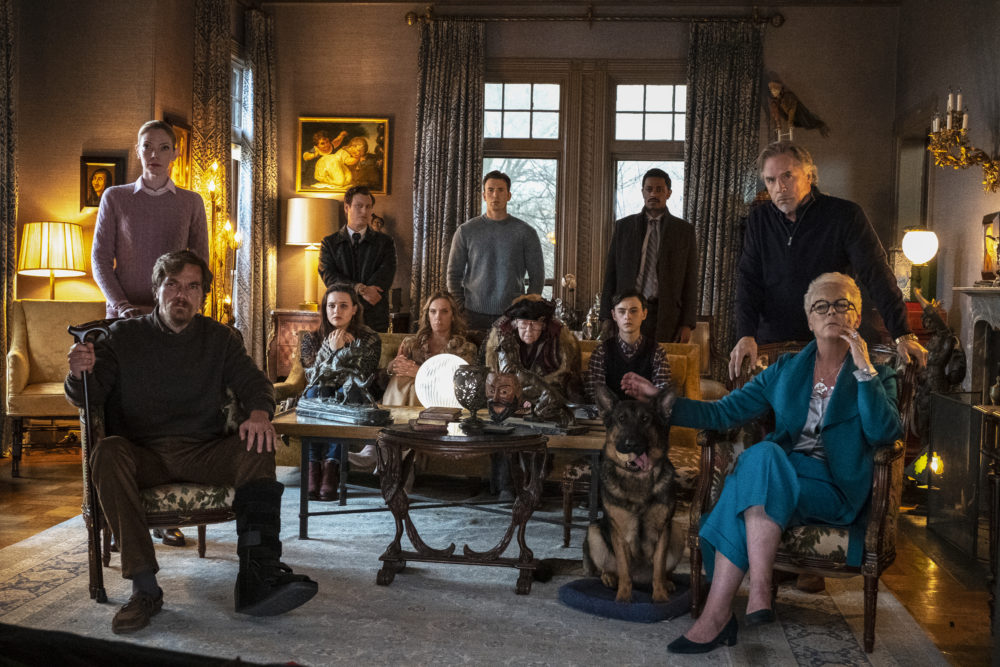
However, Johnson isn’t opaque about his point-of-view, the fun of the movie is that you know exactly what he’s talking about. You see, the Thrombeys are the kind of rich people that think they’re entitled to being rich. Something the recently passed patriarch and famed crime novelist Harlan Thrombey (Christopher Plummer) is keenly aware of. During the reading of his will you can tell what each character wants — his publishing business, the house, his money. However, Harlan’s untimely demise — which is initially ruled a suicide — means there’s more in the way of the Thrombeys and their money.
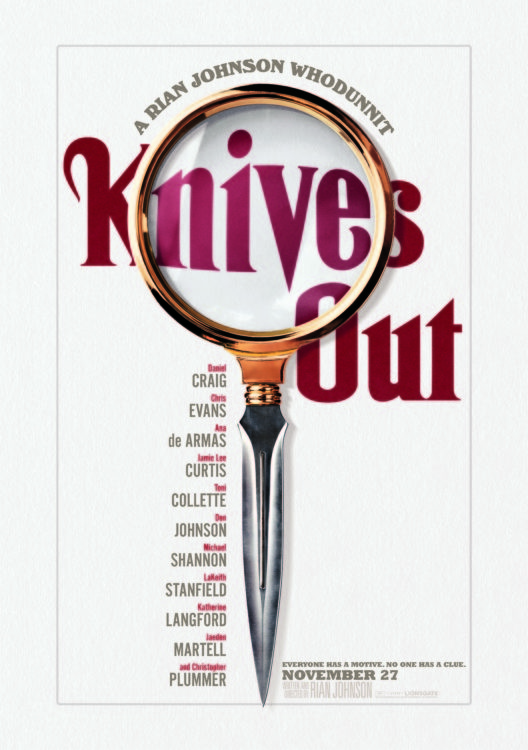
Knives Out poster. Credit: Lionsgate.
That’s because someone hired famed private investigator Benoit Blanc (Daniel Craig), a heavily southern Hercule Poirot-type that Harlan’s grandson Ransom (Chris Evans) refers to as “CSI: KFC,” to investigate whether Harlan’s death was truly a suicide. The suspects are largely his family. There’s his son Walt (Michael Shannon), who is bent on getting control of the publishing business so he can sell film rights to Netflix. Then there’s his daughter and Ransom’s mother Linda (Jamie Lee Curtis), a “self-made” business woman who just needed $1 million of daddy’s money to get her business off the ground — her husband Richard (Don Johnson) is being towed along. And best of all, there’s Joni (Toni Collette), a Gwyneth Paltrow-inspired lifecycle blogger who runs a website called Flam.
Each of them — and the people connected to them — has a reason for wanting Harlan dead. And at the center of it all is Marta. Blanc takes a shining to her because she has a very unique “superpower.” She cannot help but throw up violently when she tells a lie. He sees that as an asset. But like everyone in this movie, she has something to hide.
Leave it to Johnson, who managed to piece together one of the most compelling Star Wars movies with The Last Jedi, to construct a nearly perfect murder mystery. Despite the many twists and turns, all the pieces to solve the mystery are always there. He doesn’t insert any out of nowhere surprises. You can truly solve the puzzle. That doesn’t stop him from presenting it in an interesting way.
The first act is largely comprised of interviews with each family member who gives their account of the night in question — Harlan’s 80th birthday party. However, each of them twists the facts to make themselves look innocent. Hilariously, all their terrible sides are uncovered. In one of my favorite small details, each family member says a different country the Marta immigrated from despite them constantly saying she’s “part of the family.” In another, Richard praises Marta for immigrating “correctly.” As integrated she is into their lives, she’s still a class visitor.
It’s those small microaggressions that elevate Knives Out past its premise. Not that its premise isn’t already great. Like Get Out, Johnson is careful to make the movie work as a genre pic as well as a social commentary. It’s just what gives it that extra push past being crowd-pleasing popcorn fare. Admittedly, it’s great crowd-pleasing popcorn fare.
The mystery, the characters, and the humor are all spot on. Craig is a standout as is Evans, who plays Ransom as the typical New Englander heir who probably just bought a boat. Then there’s Collette who nails it with the line, “I read a Tweet about a New Yorker article about you,” referencing Blanc. If anything, I wish we spent more time with the Thrombeys. Though, Craig, de Armas, plus Lakeith Stanfield and Noah Segan as a pair of not-so-helpful detectives are certainly fun to watch.
As I’m thinking back to watching the movie there isn’t a singular moment that stands out — perhaps the stellar final shot. But I think that’s a testament to the sheer consistency of it all. The movie is built around character and story instead of just finding the next gag. It’s so refreshing and so effective. It’s easily one of the best times I had in a theater this year.
Black Christmas follows a group of sorority girls who come under attack just before winter break — they fight back.
Two-sentence review:Black Christmas has the subtlety of a fat man in a red suit with a beard slipping down your chimney. However, the well-directed horror sequences and spirit of the original in its DNA keep the slay bells ringing.
The 1974 Black Christmas, which director Sophia Takal’s film of the same name is based on, is one of my favorite movies of all time regardless of genre. Whether that helped me temper expectations or simply set some that are unattainable I don’t know. But to my merriment, Black Christmas is completely solid as far as remakes go.
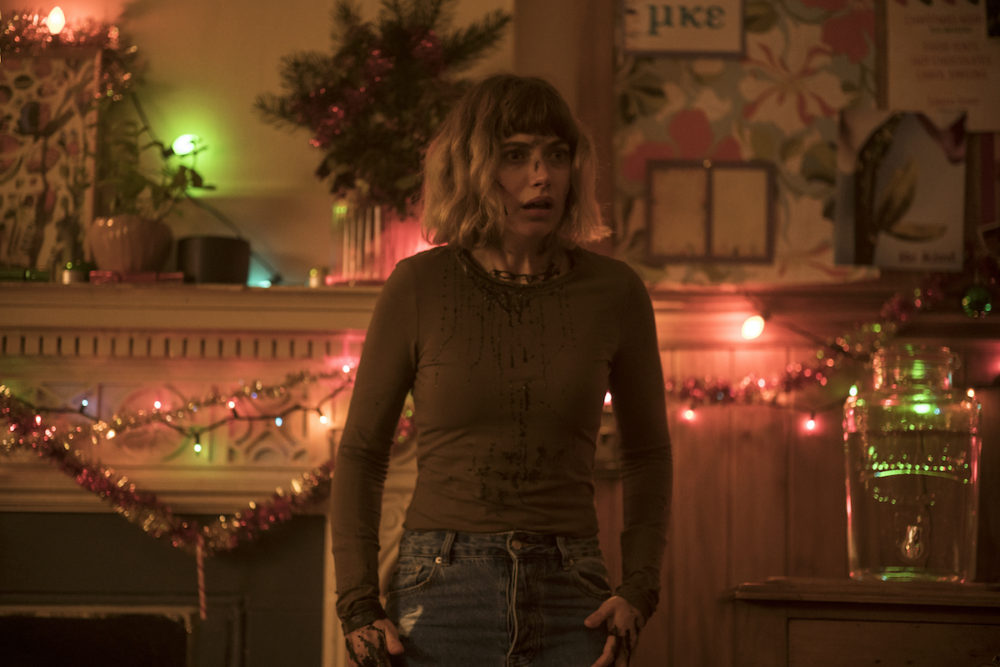
Moving the setting into modern day, the movie follows the last few sisters of a sorority at Hawthorne College who are left on the quiet campus before winter break. They’re “orphans” as one of the sisters jokes. At the start, we meet our protagonists as they’re preparing for a talent show at one of the college’s frats. It’s particularly painful for Riley (Imogen Poots) to attend as she was assaulted by a former member — of course, he got off without repercussion.
However, the girls — excuse me, women — have a trick up their sleeve. I won’t spoil the surprise.
💌 Sign up for our weekly email newsletter with movie recommendations available to stream.
ADVERTISEMENT
Later, the girls start receiving threatening texts — updating from the lewd phone calls in the original — that refer to some forthcoming punishment. In the meantime, sorority sisters are going missing and the campus police aren’t exactly quick to help out. So it’s up to Riley and her sisters Kris (Aleyse Shannon), Marty (Lily Donoghue), and Jesse (Brittany O’Grady) to figure it out.
It’s refreshing that this reboot, versus the truly dreadful 2006 attempt, is that it at least tries to maintain the spirit of the original, even if it moves away from the somber tone and atmospheric scares. Stylistically it even treads cinematically close to 70s horror with glorious medium and wide shots even in intimate moments — like we’re intruding.
Narratively, though, it diverts heavily — for better and worse. I wish we spent more time on the home invasion aspect as we do in the original. Takal knows how to direct a horror sequence. The framing and blocking of each scene builds maximum tension, so I wish we had more time to explore her talents. It’s really what holds the film together even when the screenplay goes off the rails.
The original is a feminist classic that rails against the fragility of masculinity and supports a woman’s right to choose. This version similarly sets its sights on masculinity — not all men, so calm down boys — but gets heavy-handed in its delivery. Lines like “I like beer” and “bow down, bitch” land with a thud and the antagonists are the kinds of sneering devils that you just roll your eyes at. I appreciate the sentiment nonetheless. It’s helped strongly by the fact that the movie almost preempts the criticism it’s bound to receive by saying that it knows it’s going to receive it. See? The fragility of masculinity.
Some other structural, character, and plot issues hold it back from being truly great, but to say it’s not enjoyable is just misrepresenting it. It’s a blast of a slasher with a message you can get behind.
Support the Girls is a charming and emotional day-in-the-life dramedy with another magnificent performance by Regina Hall.
Regina Hall is one of the best and most underrated actresses working today. From her perfectly timed one-liners in Scary Movie to her grounded and emotional performance at the core of Girls Trip she has been consistently great in so many projects. It’s time Hollywood took notice. And if there’s ever been a movie for them to look to, it’s her latest performance in Support the Girls.
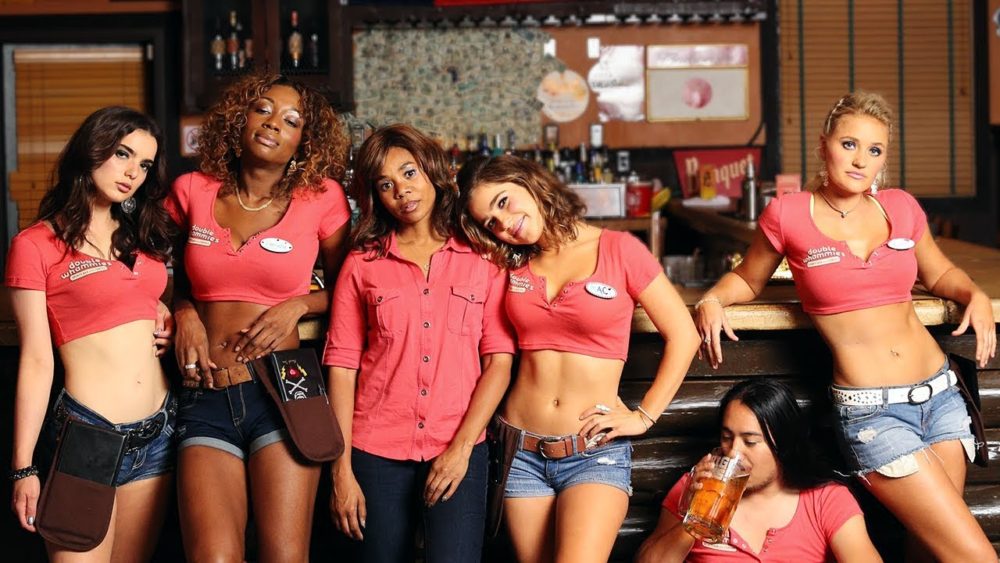
Hall plays Lisa, the manager of a Hooters-like bar and restaurant called Double Whammies where twentysomething waitresses wearing crop tops and Daisy Dukes serve beer and wings to less than subtle men. When we meet her, she’s in the middle of a crying spell in the parking lot before the lunchtime rush. There’s no context for why as we watch her try to get herself under control. It’s a perfect scene to display Hall’s talents as she somehow imbues some subtlety into the least subtle human emotional response. Eventually, one of the waitresses Maci (Haley Lu Richardson in yet another great performance after last year’s Columbusand Split) interrupts her and walks her into the restaurant. No questions asked.
It’s that kind of quiet realism that defines Support the Girls and most of the director and screenwriter Andrew Bujalski’s career. Noted as the “Godfather of Mumblecore”—a subgenre of indie film that focuses on naturalistic dialogue and performances over plot—Bujalski brings an incredibly specific style to seemingly mundane storylines. It’s what made Jim Jarmusch’s Paterson so compelling.
Shayna McHayle, Haley Lu Richardson, and AJ Michalka in Support the Girls.
We follow Lisa through her day as she troubleshoots the ever-growing list of problems she faces as the general manager of Double Whammies—a would-be robber stuck in the air vents, a waitress who gets a curious tattoo, an off-the-books car wash fundraiser, a misogynist owner (James LeGros) breathing down her neck, and on top of that the cable is out just when there is going to be a big boxing match. However, Lisa tackles each one with a smile and still has time to make sure every single waitress that works there feels safe.
However, there’s not much more to the plot than that. Along the way we meet a cast of characters that all bring different kinds of humor and charm to the movie. There’s Lisa’s right-hand woman Danyelle (Shayna McHayle giving a great debut performance) who delivers sharp one-liners and observations, butch lesbian regular Bobo (Lea Delaria) whose sharp respect for the girls sometimes gets her in trouble, and ditzy new hire Jennelle (Dylan Gelula) whose character could be summed up when she says, “I’m like a marketing major.”
Admittedly, I didn’t understand Support the Girlsfor much of the running time. It feels like scene after scene of nothing happening. However, the remarkable final 20 minutes pull the entire movie together. It was all on the screen. I was just looking in the wrong place. The movie lies in the faces of each of the characters, every one of whom carries the baggage of their days and lives with them. That’s why Regina Hall is so incredible in the lead role. From the first frame where we watch her crying in a car facing the day to the last as she closes one out, we know exactly what she is feeling.
Support the Girlsis—as deservedly corny as it sounds—about the power of sisterhood and the work that women put in every day to just survive. However, unlike other female empowerment movies, everything doesn’t work out for all of our characters. It’s just reality. As one character notes, you cry until you laugh and you laugh until you scream. If Support the Girls wants you to walk away with one thing it’s that it’s okay to do all those things. Life is frustrating. Just take it one day at a time.
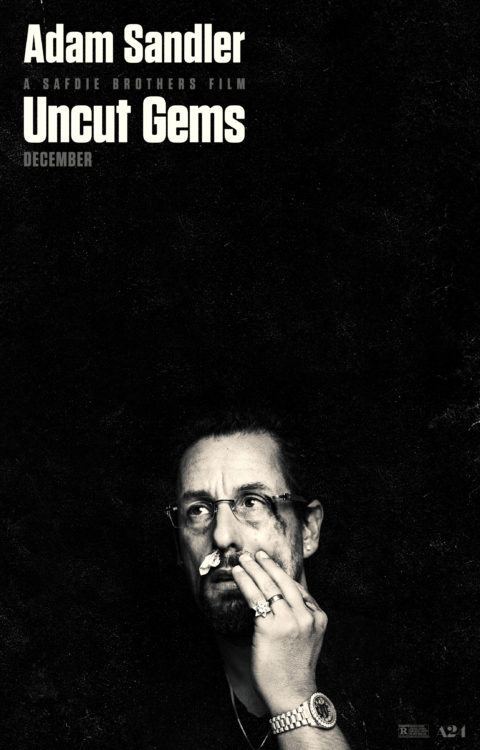
Adam Sandler goes dramatic as a diamond dealer hustling his way out of trouble in Uncut Gems
One-sentence review:Uncut Gems is a non-stop, heart-pounding adreneline rush of a crime movie — sometimes to a fault — with a career-best performance by Adam Sandler.
Josh and Benny Safdie — better known as the Safdie Brothers — have a penchant for movies that leave you little time to breathe. With Good Time, their best film and Robert Pattinson’s best performance to date, they created a bank heist that set off a chain of events that tumble into a cycle of close calls and cons all taking place in one night. It’s almost as if the Safdie’s created the narrative with the direction that anything that can go wrong will go wrong. Thankfully, they centered that movie on a character that thrives on situations that need to be navigated. It’s the reason it works so well.
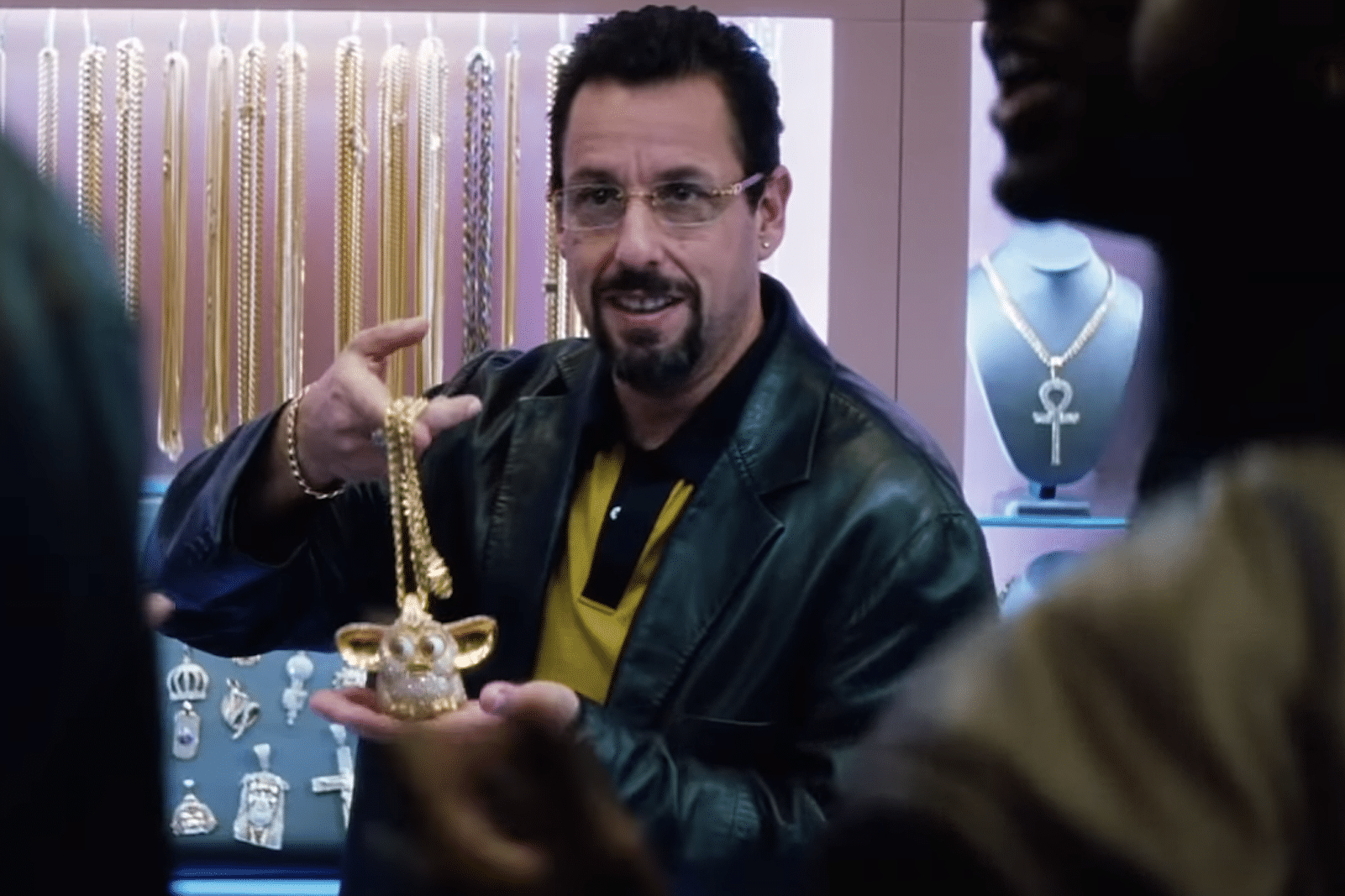
Similarly, they center their latest movie, Uncut Gems — which was the secret screening at this year’s New York Film Festival — on Adam Sandler’s singular Howard Ratner, a diamond-dealer with a heavy propensity to gamble. He’s the perfect character to study in the situation they put him in. Like Good Time, they pick a single direction for the narrative: Howard always makes the wrong decision.
A lot of that is due to his deep addiction to gambling, which has driven him into a deeper and deeper hole of debt, which he fills with more debt. He has a seemingly endless barrage of mobsters and bookies knocking on his door — including his brother-in-law (Eric Bogosian). So, when he gets the opportunity to use New York Knicks player Kevin Garnett’s championship ring as collateral for a loan, he takes it. You see, Garnett has become transfixed by a rare opal stone that Howard has recently acquired — he’s planning on selling it through an auction — and asks to take it as a good luck charm for a forthcoming game.
💌 Sign up for our weekly email newsletter with movie recommendations available to stream.
ADVERTISEMENT
However, when Garnett doesn’t return the gem, Howard must find a way to: get the gem back in time for the auction, get Garnett’s ring back, and find a way to pay his bookies all the while dodging debt collectors, dealing with his wife Dinah (the always fabulous Idina Menzel), and keeping his mistress Julia (Julia Fox giving a star is born performance) happy.
Uncut Gems traverses more time and a more complicated story than Good Time but maintains the same anxiety-inducing momentum. There’s not as much of a plot as there is a cyclical series of events, which makes it even more uncomfortable to watch — maybe even frustrating. Like Pattinson, Sandler plays Howard as a man you can almost root for. You admire his sheer will and motivation. But then he always ends up doing something that makes you shake your head.
It’s impressive just how much the Safdies are able to make you squirm without making you run out of the theater. The entire movie is a train wreck. Just one you can’t take your eyes off of. That’s a compliment. An apt description could be organized chaos.
As much as it seems like the movie is going off the rails, it’s clear that the Safdies are always in control. The frenetic editing, cosmic score by Daniel Lopatin, and truly remarkable sleazy performance by Sandler are designed to make you feel uneasy — it’s challenging to get through. However, its true brilliance lies in Howard’s characterization. He isn’t a sketch of a person. His actions have consequences. Not just on the events of the film, but the people around them. As much chaotic energy the Safdies often put into their films, they still take care to root it in something real and human. The action aside, that’s what makes Uncut Gems truly unnerving.
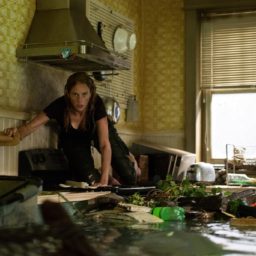
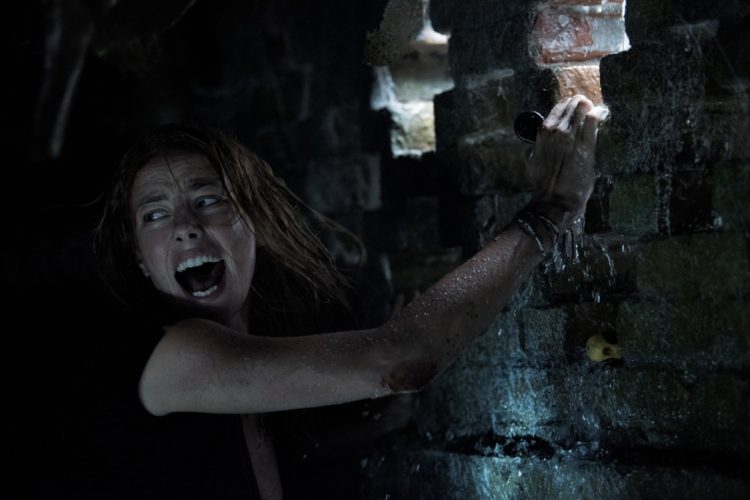
Crawl follows a college student as she attempts to rescue her father from a pack of aggressive alligators during a Category Five hurricane.
30-second review: Picture a movie where a father and daughter are trapped in a cramp Florida basement in the middle of a Category Five hurricane by alligators — and you have Crawl. It is exactly the brainless, thrilling, and often ridiculous B-movie that you’d expect — even if it is a bit overly serious.
It doesn’t do anything to differentiate itself from any other of the countless films with a similar premise — and that’s fine. It makes up for it with anxiety-inducing action scenes and a committed lead performance by Kaya Scodelario.
Where to watch Crawl: In theaters now.
Alligators. Are. Aggressive. Full review below ?
Take 2016’s The Shallowsand replace a secluded Mexican beach with a flooded Florida basement in the middle of a category 5 hurricane, the shark with a congregation of alligators — that’s the right term — and the seagull with an adorable dog named Sugar and you basically have Crawl.
It has one of the most recognizable movie premises, yet Crawl (mostly) succeeds because of the moments when it takes that premise — and all the familiar beats — and tackles them in an intelligent way.
The set up is swift and breezy. Haley Keller (played by a spirited Kaya Scodelario) is about to leave town as a category five hurricane is about to bear down on the Florida coast. However, after her sister voices concern that she hasn’t heard from their father (Barry Pepper), she redirects course to go find him.
In her childhood home — under escrow after her parents’ divorce, she follows a set of clues to the cramp, damp, and dark basement — a crawl space really — where her father unconscious and badly injured with a nasty bit on his shoulder and broken leg with an exposed bone. It’s during this scene that I realized Crawl was going to be different. It wasn’t afraid to slowly ratchet up the tension until it was nearly unbearable, instead of going for an easy scare.
Kaya Scodelario in Crawl. Credit: Paramount Pictures.
The crafty Haley smartly rolls her father onto a tarp to drag her father to safety, but just as she’s about to climb up the basement steps a massive — and particularly tenacious — alligator attacks the pair. Realizing she’s trapped, Haley and her father come up with different ways to escape from the slowly flooding basement with the lives — and limbs.
What makes Crawl particularly work is its setting and bleak atmosphere set by director Alexandre Aja (Piranha 3D). Instead of a bright and open beach or an open lake or the Amazon river, Crawl puts so much of its horror in its claustrophobic setting. There’s little room to move, little light, and its filling with water — what’s worse than that? Oh yeah, the alligators. And Aja puts that setting to work with ingenious ways to test the pair as they fight for survival.
The second part of the equation comes from Kaya Scodelario’s performance. Just like Blake Lively in The Shallows, she doesn’t phone it in or act like she’s in a B-movie. She goes at it with all she’s got physically, emotionally, and all the badassery of any great final girl. Plus, there’s just enough character development and relationship building between the two leads to make the movie compelling, but not too heavy.
Though the movie certainly comes close to overstaying its welcome over its 87 minutes, it’s hard not to be entertained and completely terrified by it. It’s not the most original movie, but in a summer where every blockbuster is a remake or sequel, it’s refreshing to have a (nearly) brainless but well put together one to entertain audiences. I wish it took itself a little less seriously — and had more lines like “Apex predator all day” — but with Crawl what you see is what you get, and that’s perfect.
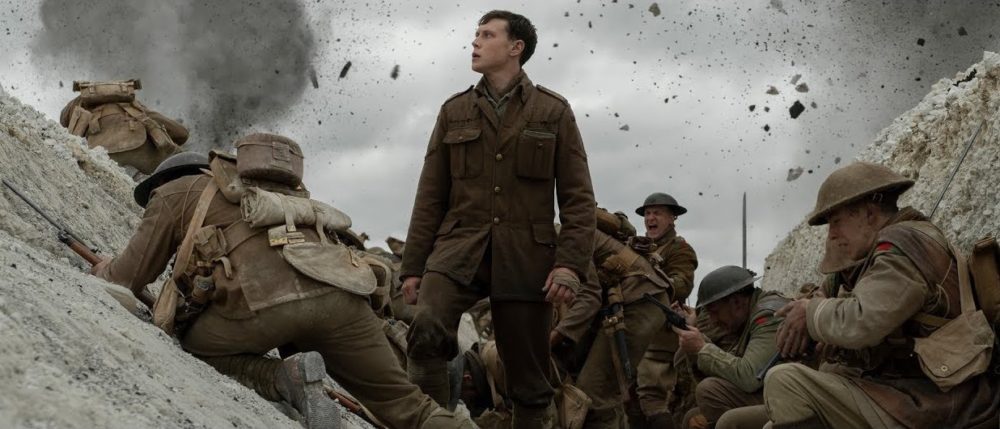
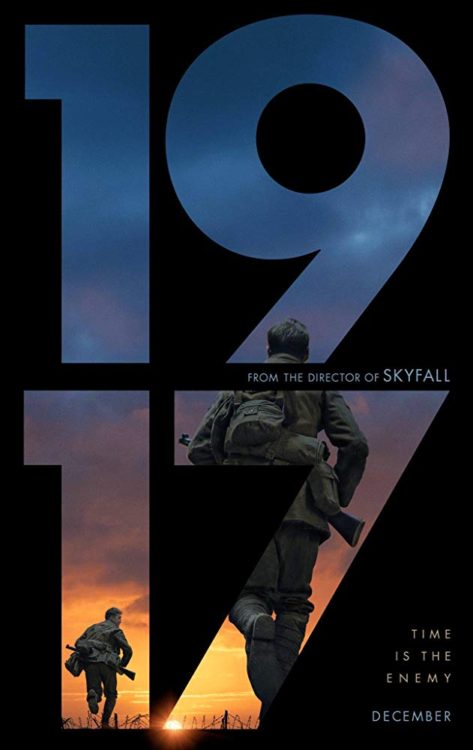
Presented in one unbroken shot, 1917 follows two young soldiers as they embark on an impossible mission to warn a battalion of an impending ambush.
One-sentence review:1917 is not only a technical feat, it’s also an anxiety-inducing war thriller that manages to differentiate itself from anything that’s come before it.
There’s a scene in 1917 where Lance Corporal Scofield (George MacKay giving an Oscar-worth performance), after encountering yet another brush with death, sinks to his knees and cries. I wanted to do the same thing multiple times while watching this movie. The greatest war movies should make it feel like you just went through battle — 1917 makes you feel like you went through an entire tour.
Set during the height of the First World War, 1917 follows two young British soldiers — Schofield and Blake (Dean-Charles Chapman) — who are sent on a seemingly impossible mission to cross enemy territory and deliver a warning of an impending ambush in the coming day. To add to the stakes, Blake’s older brother is part of the battalion in danger.
A lot of the buzz around 1917 comes from the decision to present it as one continuous shot — like Best Picture winner Birdman. Other recent Oscar movies have presented long takes like La La Landand Gravity, which is probably the more apt comparison to this movie. Without any cuts, there isn’t anything to break the tension. It almost has more in common with a horror movie than it does a war movie. It’s overwhelming.
And while it can sometimes come off as a gimmick, 1917 is largely successful in the same way that Children of Men’s long takes are successful. Director Sam Mendes — who co-wrote the script with Krysty Wilson-Cairns — uses the technique to build suspense and anchor you in the moment with the characters. There’s rarely a shot, if any, where you’re not looking at a character or seeing something from their perspective.
It’s especially effective as Blake and Scofield navigate the endless trenches — both on their side and the Germans. As their environment changes, from the trenches to the open countryside to a deserted village, so do the challenges involved in capturing the action. The sheer impressiveness of the feat is enough to keep you engaged. The production design by Dennis Gassner is almost unbelievable as we trek through what feels like miles of endless war zone.
Natural comparisons will be made to Christopher Nolan’s Dunkirk. And while they are similar in that they are action-forward war movies, 1917 isn’t as interested in the story as it is the human condition. What does it feel like to feel untethered from the world? From who you are? From time? There are small moments that point to this. In one, a character, after narrowly escaping death in a mine shaft, pulls a tin out of his pocket, looks at it for a moment, and then puts it back. Eventually we’ll see what’s in the tin, but what’s more important is the character trying to ground himself in something “real.”
Mendes plays with time in subtle ways that are as beautiful as they are disorienting — that’s where 1917 really soars. It’s almost reminiscent of French impressionistic films. Coupled with legend Roger Deakins’ dreamy cinematography — he’s on track to win his second Oscar — and Thomas Newman’s emotional orchestral score, Mendes has created the technical achievement of the year.
As I was thinking about how to wrap up this review, one question kept gnawing at me: why does 1917 matter? We’ve seen endless carbon copies of this same story, so why pay attention to this one? Yes, it’s a technical achievement and that should be reason enough. However, I think it’s truly a gamechanger. It proves that there isn’t one way to tell a story and that the boundaries of filmmaking are yet to be met.