Category: Movies

  • ‘Dìdi’ is a love letter to an Asian-American childhood | movie review

    ‘Dìdi’ is a love letter to an Asian-American childhood | movie review

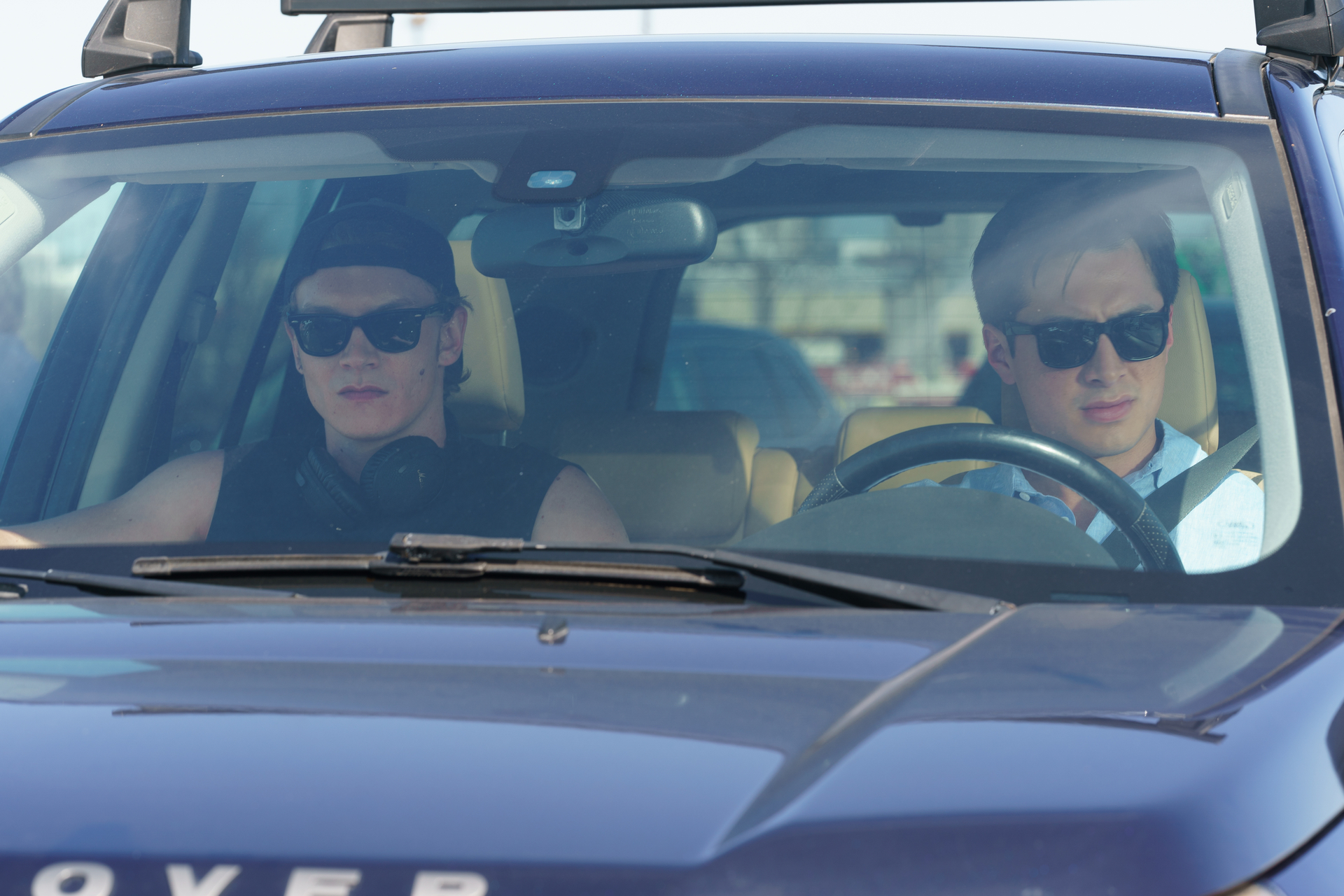
    Dìdi is an autobiographical romp through the life of a shy 13-year-old Taiwanese-American as he tries to find his place in the summer before high school.


    As a second generation Asian-American, watching Dìdi, Taiwanese-American director Sean Wang’s own ode to his childhood, was an entertaining, affirming, slightly cringy, but healing experience. Wang takes threads about boyhood and the Asian-American diaspora and the American dream and race and releases them. Not to remove them from his narrative, but to feel at peace. I’m not sure whether the story of Dìdi is something Wang experienced first hand or is simply a way to work through his own generational traumas, but what he did was heal mine just a bit. If anything, just to be known and seen for 90 minutes.

    Dìdi is streaming on Prime Video.

    There’s been a spate of 90s and 2000s-set coming-of-age dramedies in recent years, a result of millennial filmmakers being old enough to tell the stories of their childhoods. There’s Greta Gerwig’s Sacramento love letter Lady Bird and Jonah Hill’s slacker skater romp Mid90s or Kelly Fremont Craig’s meditation of teenage girlhood The Edge of Seventeen and Bo Burnham’s anxious pseudo-horror Eighth Grade. But I’ve never seen myself reflected back by any of those movies. Sometimes, I’d see shadows of myself in the awkwardness of adolescence, but never something that made me feel known and seen. That’s why as a second generation Asian-American watching Dìdi, Taiwanese-American director Sean Wang’s own ode to his childhood, was an entertaining, affirming, slightly cringy, but healing experience.


    ADVERTISEMENT


    Wang too seems to be healing through the story. It is a semi-autobiographical look at his childhood growing up in the suburbs of the Bay Area.

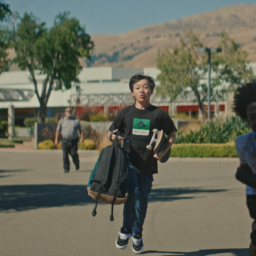
    The fictionalized version of himself Chris (Izaac Wang)—dìdi is a Chinese term for “little brother”—is a shy, acne-suffering 13-year-old facing down the summer before his first year of high school. He and his older sister Vivan (Shirley Chen) lob verbal insults at each other like grenades while he has a gentler touch with his grandmother (Chang Li Hua), his father’s mother, who he films with his camcorder and assures her she’s beautiful.

    While Chris is quiet compared to his friends Fahad (Raul Dial) and Jimmy (Aaron Chang), it doesn’t stop him from chasing what he believes to be the ideal life. Whether it’s trying (and mostly failing) to impress his crush Madi (Mahaela Park) or becoming friends with a group of cool skaters that he offers to film videos for. The way Wang recreates the late-2000s is impressive as he finds ways to seamlessly incorporate the online world into real life. Entire plot moments happen online and decisions made in the virtual space affect what is happening in the real world. Like when Chris takes a look at one of his friend’s top eight on MySpace and finds his name missing or when instead of admitting to his crush he was embarrassed by something over AOL Instant Messenger he blocks her or how a simple comment on a Facebook photo can send you into a spiral. The impact of doing (or not doing) something online has as much impact as in the physical world. Dìdi captures the anxiety around that with painful relatability. 


    ADVERTISEMENT


    As we watch Chris hang out with friends (who he often questions the loyalty of), go to parties (he’s not sure he’s wanted at), and try different versions of himself to fit in, we also get insight into his insecurities. While many coming-of-age movies lean into the stupidity-driven debauchery of youth, Dìdi presupposes that all of that bravado is an act to feel like you belong or are cool or are simply normal. It’s how the movie is inseparably tied to its Asian identity. Chris tries to separate himself from his identity perceiving it as something to be ashamed of. At one point, he even lies that he is half-white. Wang never dwells on those details for long, rather letting their impact linger. That theme is what drives so much of the movie’s story even in its comfortable plotlessness.

    However, like many movies in the subgenre, Dìdi is all about his mother.

    They have a contentious relationship like any parent and their teen. He sees her as unable to understand him and any attempt to as suffocating. When she pushes him to enroll in an SAT course, he sees it as a slight against his intelligence. When she asks him about a video he’s watching on YouTube, he diminishes her curiosity as manipulative.  


    ADVERTISEMENT


    However, we also get to see shades of the life that Chungsing Wang (Joan Chen, best known as Josie Packard in Twin Peaks) leads in the periphery of Chris’s story. She struggles against constant criticism from her mother-in-law who accuses her of letting the household fall into disarray while her husband and Chris’s father is away for work. We get insight into her dream deferred to be an artist—she shows Chris one of her paintings she wanted to submit in a competition which he so eloquently calls “ugly as shit”. 

    It all comes to a head in a scene between the two that feels like it tears into years of generational trauma—and dispels it.

    With maternal warmth but steadfast female strength, Joan Chen delivers the movie’s thesis—and catharsis. It’s an argument for her to receive her first Oscar nomination. The surprisingly simple scene delivers on the promise of all the movie’s threads about boyhood and the Asian-American diaspora and the American dream and race and releases them. Not to remove them from his narrative, but to feel at peace. I’m not sure whether the story of Dìdi is something Wang experienced first hand or is simply a way to work through his own generational traumas, but what he did was heal mine just a bit. If anything, just to be known and seen for 90 minutes.


    ADVERTISEMENT


    More movies, less problems


    Hey! I’m Karl. You can find me on Twitter and Letterboxd. I’m also a Tomatometer-approved critic.

    💌 Sign up for our weekly email newsletter with movie recommendations available to stream.


    ADVERTISEMENT

  • Romantic sci-fi thriller ‘The Gorge’ hits its mark | movie reivew

    Romantic sci-fi thriller ‘The Gorge’ hits its mark | movie reivew

    Two snipers tasked with guarding the mysterious of an inexplicable gorge find themselves following in love from thousands of feet away.

    The Gorge is a wild, genre-blending ride that somehow makes high-concept sci-fi, survival horror, and romance all work together. Miles Teller and Anya Taylor-Joy bring irresistible chemistry to this “love story with sniper rifles,” as two lonely souls bond over long-range messages while defending against terrifying, nature-infused zombies. Packed with thrilling action, heartfelt moments, and unexpected humor, it’s an offbeat but utterly charming adventure. If you’re up for something unique, take the leap.

    The Gorge is now streaming on Apple TV+.

    Yes, The Gorge is about a mysterious, gigantic crevasse guarded by multiple countries that, as one character puts it, “is the door to hell, and we’re standing at the gate.” And yet, it is one of the most romantic movies of the year. There isn’t an easy label to slap on director Scott Derrickson’s latest film, which is streaming on Apple TV+ starting (appropriately) on Valentine’s Day. It dips into high-concept science fiction, survival thriller, creature horror, and, yes, romance. Somehow, it never feels like it’s shortchanging any of those genres. It is basically a Hallmark romance… just with tree-like zombies that crawl out of a giant hole in the ground.


    ADVERTISEMENT


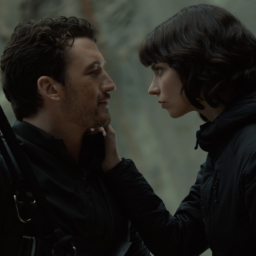
    Sitting on either side of the steep canyon walls of the eponymous gorge—a giant gash in the Earth nestled in a snowy mountain range—are two watchtowers. In the west tower sits Levi (Miles Teller), a former U.S. Marine sniper suffering from PTSD and feeling all the lonelier because of it. In the east is Drasa (Anya Taylor-Joy), a mysterious Lithuanian contract killer who finds herself at the gorge after the death of her father. Their predecessors lay out the rules for their one-year rotation: check in with command once a month, always watch the gorg and no contact with the other watchtower. Their job? To keep whatever is in the gorge inside the gorge.

    However, after months, Drasa finally fires her gun to get Levi’s attention and holds up a sign that simply reads, “What is your name?” that he sees through the long-range scope mounted on the balcony. Levi, ever the rule-following Boy Scout, hesitates to break protocol, but Drasa ropes him in by revealing it’s her birthday. Their “meet-cute” conversation—which includes negging about dancing, a sniping contest, and a birthday toast from Levi—is as delightfully cheesy as if they had accidentally grabbed the same coffee order at a café. But the spell shatters when they finally see what they’ve been guarding against.


    ADVERTISEMENT


    As wall-climbing zombies that look like humans merged with nature emerge from the shadows, the pair fight for their lives with sniper rifles, land mines, and giant mounted machine guns. You know, the romantic stuff. It’s also the kind of rip-roaring action-horror scene that’s impossible not to be engrossed by—especially when Drasa holds up a sign that says, “Best birthday ever,” finally getting Levi to chuckle. And so begins a Taylor Swift “You Belong With Me” romance, as the two communicate via their signs. It’s like any rom-com montage: they learn about each other’s lives, play chess, and comfort each other during the long, dark nights. The only difference? They’re doing it from opposite sides of a gorge, thousands of feet apart.

    The romance between Levi and Drasa could have come off as corny if not for their specific circumstance. But that’s what makes The Gorge such a surprising delight. Its mishmash of genres and tones somehow breathes new life into each one. When Levi eventually makes a makeshift grappling-hook gun out of a rocket launcher to zipline to Drasa’s side—because if he wanted to, he would—he effortlessly lets slip, “I’ve been staring at the gorge every day for the last six months, and I’ve got to say, the view is much better over here.” Swoon. It helps, too, that Teller plays the romantic leading man so well. And it’s easy when you have someone as effortlessly charismatic as Taylor-Joy to play off of.


    ADVERTISEMENT


    Eventually, The Gorge shifts into Lovecraftian action-horror, packed with fight sequences featuring nightmarish creatures straight out of Annihilation or Kong: Skull Island. It’s like watching the most exciting first-person shooter ever made. Zach Dean’s screenplay gives you just enough exposition to feel the stakes of the story without slowing the pace. It’s sparse, perhaps, but never less effective because of it. On paper, it shouldn’t work—and for some, it may very well not. It’s a delicate formula that, with the wrong balance, could have easily gone awry. However, if you allow yourself to be charmed by it, you’ll find yourself grinning from ear to ear at every new moment between Levi and Drasa—while the action gets your blood pumping. Take the leap.


    ADVERTISEMENT


    More movies, less problems


    Hey! I’m Karl. You can find me on Twitter and Letterboxd. I’m also a Tomatometer-approved critic.

    💌 Sign up for our weekly email newsletter with movie recommendations available to stream.


    ADVERTISEMENT

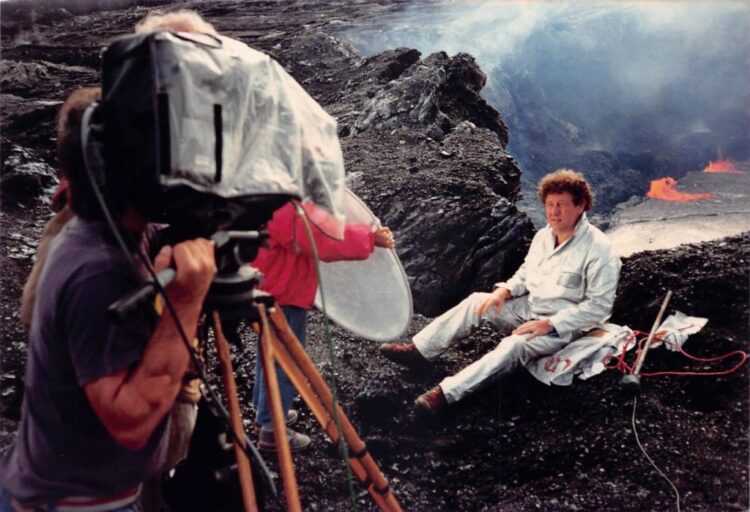
  • A Love Note to Fire of Love

    A Love Note to Fire of Love

    Fire of Love is not just a documentary. It’s a love story.

    Love Notes is a feature where a writer talks about why they love a movie, how it makes them feel or how it changed their life.

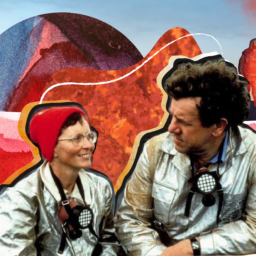
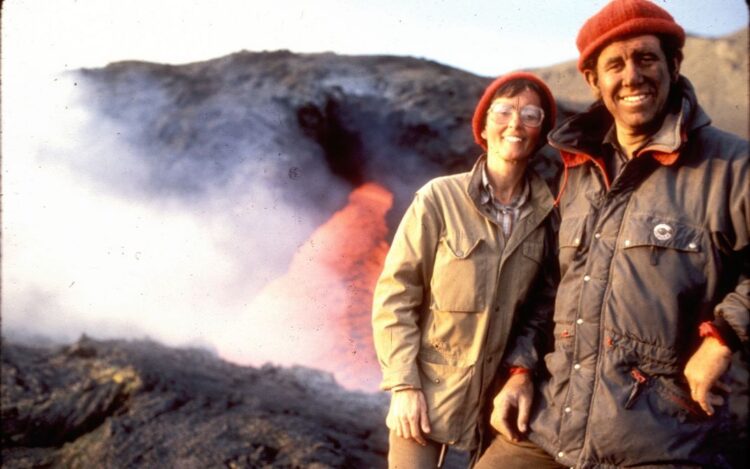
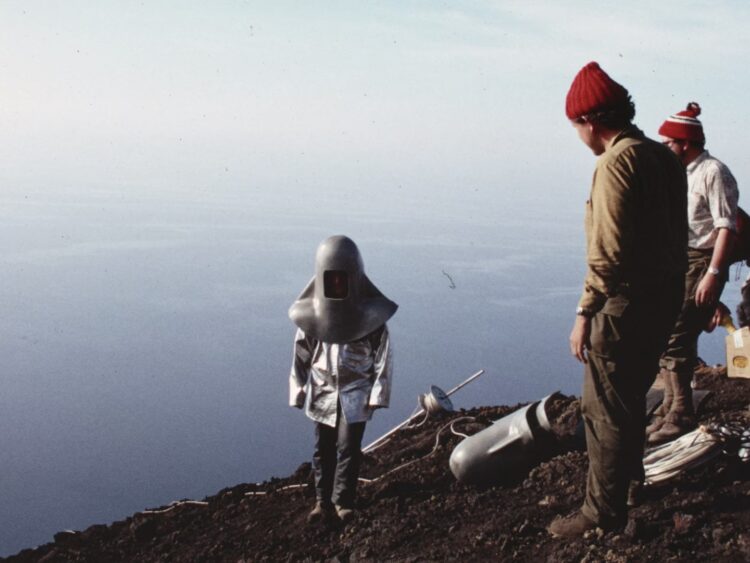
    Fire of Love is less a love story between Katia and Maurice Krafft—which is, yes, very much the primary theme of Sara Dosa’s 2022 documentary that chronicles their lives as intrepid adventurers and daredevil volcanologists—and no, the love story isn’t with the volcanoes they research, though they definitely do love them. Their obsession consumes their entire lives—both figuratively and literally—as (spoiler) their lives reach their end at the site of a volcanic eruption.


    ADVERTISEMENT


    There’s a moment in the film, mostly composed of illustrations and the Kraffts’ own archival footage, that shows Katia and Maurice’s perfectly chosen red beanies adorning their sunburnt faces as they trek up the side of an active volcano, and I realized—this is a love story to us. They aren’t just volcanologists; they’re artists, perfectly aware of their image in spite of their insane human feats in the pursuit of scientific research. To be a scientist and an artist doesn’t necessarily have to be mutually exclusive—if anything, I think their mission was intricately aligned with what they wanted to express: a sheer love for this planet that most of us struggle to understand, and many have a hard time simply appreciating.

    They dedicated their lives to getting as close as humanly possible to an unexplainable force, in an effort to capture its beauty and terror—for us, for you and me—so we begin to love this planet again, or for the first time. So we go beyond our comfort zones and explore a little further each day. So we push the boundaries of what we know about our beautiful world so that we can conserve it, learn from it, and care for it in our role as guardians.

    With every perfectly composed shot in this documentary, underscored by Miranda July’s poetic narration, you feel the care they had for their field and for each other—using photos and film as a way to capture the magnificent things they experienced with the rest of the world. They shared a love of storytelling and a love of our shared humanity in the face of something beyond comprehension.


    ADVERTISEMENT


    “Look at how small we humans are against this volcanic force. The only thing that will remain of our passage is that we can write, tell stories, and film,” Maurice says toward the end of the film, and he’s right. This footage is what remains of their life’s work and passion.

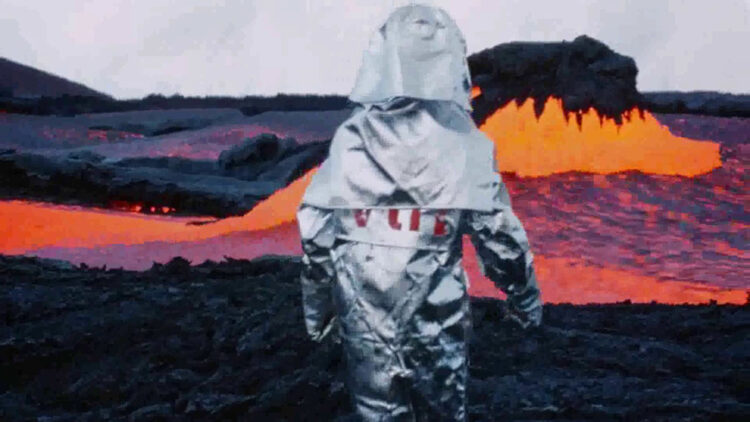
    With every breathtaking, impossible shot—as the vibrant reds and oranges of the magma bleed through the frame, or the gray smoke distorts and envelops the landscape—there is love: in the supernatural scenes they are witnessing, in the sheer effort and bravery it took to document it all, in the companionship Katia and Maurice shared, side by side as they stood at the edge of the abyss. And then there is love for us—the unknown viewers and curious humans they hoped to connect with, to share the thing they loved more than anything else. Like a volcano erupts and changes everything in its wake, there is love in all that they created and all that they left behind.


    ADVERTISEMENT


    More movies, less problems


    💌 Sign up for our weekly email newsletter with movie recommendations available to stream.


    ADVERTISEMENT

  • ‘Love Hurts’ is mostly hurt | movie review

    ‘Love Hurts’ is mostly hurt | movie review

    Love Hurts follows assassin-turned-realtor is pulled back into his old world of crime when his would-be final target resurfaces.

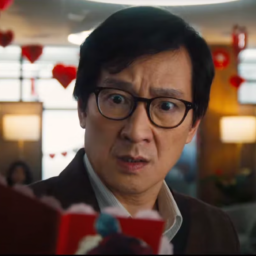
    If you’re here for killer fight scenes and Ke Huy Quan’s charm, Love Hurts delivers—but don’t expect much else. The action, choreographed by stuntman-turned-director Jonathan Eusebio, is thrilling, with standout brawls featuring Marshawn Lynch and Mustafa Shakir. But the messy plot and stitched-together gags make this John Wick-inspired action-comedy more frustrating than fun. If you can endure the chaos, the fights are worth the watch—just don’t say they didn’t warn you… love does hurt.

    Love Hurts is in theaters now.

    Ever since John Wick punched, sliced and shot his way through scores of baddies to avenge his dog, its universe of spiritual successors of fast-paced, bare-knuckled, ultra-violent action flicks has expanded under producer David Leitch. Love Hurts, the latest entry in the quasi-genre, attempts to take a more comedic approach as assassin-turned-realtor Marvin Gable (Ke Huy Quan) is yanked back into his underground world of crime when one of his would-be targets Rose (Ariana DeBose) resurfaces to take down Marvin’s brother crime boss Knuckles (Daniel Wu). Quan, in many ways, is the ideal star coming off winning an Oscar for another action-comedy Everything Everywhere All At Once that mixes highly choreographed fighting sequences with a cast of oddball characters.

    However, where Everything Everywhere felt like love, Love Hurts just hurts.

    On a positive note, Quan makes a charming lead, especially when playing amiable star realtor of his company intent on being the best he can be, which is affirmed when his boss and friend Cliff (reuniting Quan with his Goonies co-star Sean Astin) presents him with the Realtor of the Year award. However, he effortlessly switches into action star mode as the movie heats up when Knuckes begins sending goons to capture his brother as a way to get to Rose.

    The action is as impressive as any of John Wick movie its subsequent sequels and knock-offs. It’s unsurprising that director Jonathan Eusebio began as a stuntman. The fight sequences are when the movie shows the most personality, especially in one between Marvin and Knuckles’ henchmen King (a marvelous Marshawn Lynch) and Otis (André Eriksen). In a hilarious bit, Marvin smashes king into a refrigerator before the camera is left inside for it to only reopen when the men stuff Marvin into it. There are also stunning sequences involving assassin and aspiring poet The Raven (Mustafa Shakir) whose violence is offset by his feeling poetry. It’s in those scenes that Love Hurts finds its balance between action and comedy. The fights are fast, bloody and damn entertaining. The rest of it… not so much.

    The convoluted plot, barely held together even for its short 83 minute runtime, makes no attempts at letting you get lost in the potential delights of its world nor make much sense at all. Bits and gags feel stitched together in a Frankenstein-like edit that feels both overstuffed and way too thin. It’s unfortunate because there are moments, especially a simmering romance between The Raven and Marvin’s assistant Ashley (Lio Tipton), that conjures up some chuckles or show signs of life. But overall it’s a painful mess. I guess they did warn us in the title.


    ADVERTISEMENT


    More movies, less problems


    Hey! I’m Karl. You can find me on Twitter and Letterboxd. I’m also a Tomatometer-approved critic.

    💌 Sign up for our weekly email newsletter with movie recommendations available to stream.


    ADVERTISEMENT

  • ‘Presence’ is a ghost story like no other | movie review

    ‘Presence’ is a ghost story like no other | movie review

    Unfolding from the perspective of a ghost haunting their house, a family deals with family tensions in Presence.

    This review was originally published out of the 2024 Toronto International Film Festival.

    If you think you’ve seen every haunted house movie, Presence is here to prove you wrong. Steven Soderbergh ditches the usual ghost story formula by letting us see everything from the spirit’s perspective—turning voyeurism into an eerie, strangely emotional experience. With family drama, supernatural chills, and a sharp, unsettling look at loneliness, this is more than just a spooky flick. At 85 minutes, it’s a quick, haunting watch that lingers long after the credits roll.

    Presence is in theaters now.

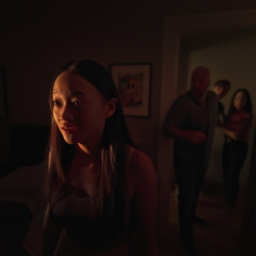
    In many ways, director Steven Soderbergh’s Presence is a classic haunted house movie. An idyllic family moves into their dream home in the suburbs, only for it to turn into a nightmare when daughter Chloe (Callina Liang) begins to notice something is amiss inside the house. It starts small. She notices a notebook she thought she had placed on her desk now resting on her bed. A disembodied breath on her neck that she explains away with the classic, “It was the wind.” There are haunts, frustrating skepticism, psychic mediums—the works.

    However, this is no normal ghost story. Like many of our ghosts, the specter lurks in Chloe’s closet. We know this because we watch the movie unfold from its point of view.


    ADVERTISEMENT


    There’s an uneasy feeling as we sweep through the empty house, visiting room after room, before the family enters for the first time with their real estate agent (a punchy cameo from Julia Fox). The sensation of taking the role of an unseen voyeur into this family’s life feels creepy—like the infamous opening shot from Michael Myers’s perspective in Halloween—especially when the specter dares to approach one of the family members. While most of them are unaware, Chloe senses something immediately. From there, still viewing the story through the ghost’s eyes, we get glimpses into the family’s lives.

    There’s headstrong, controlling matriarch Rebecca (Lucy Liu), who makes her preference for her athlete son Tyler (Eddy Maday) painfully evident—“I’ve never felt more connected to another human,” she says, to which he replies, “What about Chloe?” On the other hand, warm, caring patriarch Chris (Chris Sullivan) is more empathetic to Chloe’s plights. While she assumes the role of the typical black-sheep teenager in a ghost story, we learn it’s not without reason—her friend Nadia recently died of an apparent overdose. The ghost watches as these family tensions unfold. After a while, it begins to feel like the phantom itself has emotions—as Chloe’s relationship with her mother sours, she fights with her brother, and she catches the eye of her brother’s friend and the school’s popular boy, Ryan (West Mulholland).


    ADVERTISEMENT


    Presence hits other familiar beats of the ghost story—like the family’s general skepticism when Chloe insists a ghost is haunting her room—before a dramatic moment finally forces them to believe her. But knowing the reason behind those supernatural moments makes them feel new, as if you’ve never seen them in another movie before. In a way, the film feels somewhat plotless and meanderingbut in a surprisingly comforting way, like you’re simply drifting through this family’s life.

    At its core, however, Presence is a family melodrama—filled with biting infighting, teenage and marital angst, and a few, perhaps improbable, twists. However, shifting our perspective to that of the ghost—and therefore limiting us to bits and pieces of the story—smooths out the narrative’s jagged edges. Instead, it leaves us to contemplate some of the film’s more profound lines of dialogue, like when Chris asks Rebecca, “You ever notice how your advice always corresponds with us doing nothing?”

    For some, Presence will just be another experimental work from Soderbergh in his post-“retirement” era. However, there’s something more profound beneath its cinematic tricks. There’s a quiet melancholy, comforting in its relatability. Its portrayal of loneliness and isolation—so easily felt in life, even when you’re not alone—strikes a chord. And perhaps most telling is that, by the end of its breezy 85-minute runtime, you might just find yourself missing being someone’s ghost in a dark corner of their closet.


    ADVERTISEMENT


    More movies, less problems


    Hey! I’m Karl. You can find me on Twitter and Letterboxd. I’m also a Tomatometer-approved critic.

    💌 Sign up for our weekly email newsletter with movie recommendations available to stream.


    ADVERTISEMENT

  • Florence Pugh and Andrew Garfield charm and fall in love in We Live In Time | TIFF 2024

    Florence Pugh and Andrew Garfield charm and fall in love in We Live In Time | TIFF 2024

    TIFF 2024 | Moving back and forth in their history, We Live In Time follows a couple through the ups and downs of life.

    Headlined by charming-than-ever performances by Florence Pugh and Andrew Garfield, We Live In Time is a surprisingly entertaining and funny rom-dramedy that is elevated by a smart non-linear structure and kinetic pace. It’ll warm your heart before tearing it into pieces.

    We Live In Time premiered at the 2024 Toronto International FIlm Festival. A24 will release the film on October 11.

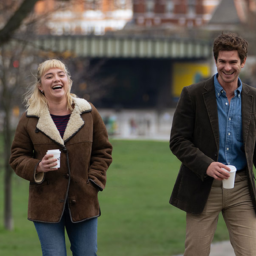
    From their fateful meet cute (if you can consider near vehicular manslaughter one) to the birth of their child to a devastating diagnosis, We Live In Time floats back and forth through time to tell the story of Almut (Florence Pugh) and Tobias’s (Andrew Garfield) relationship. It’s a familiar story. Boy meets girl, boy falls for girl, boy and girl have ups and downs, then something threatens to tear them apart. You can, with some certainty, predict every story beat from start to finish.


    ADVERTISEMENT


    But two things set We Live in Time apart. The non-linear narrative, moved with swift pace thanks to John Crowley’s deft direction and Bryce Dessner’s twinkling score, tells you the ending before showing the journey. It lets you fall into step with the emotion of the story rather than the specifics of it. Second, the charisma and chemistry of Pugh and Garfield are impossible to resist and give Almut and Tobias so much lived-in life and voracity.

    As the movie unravels their pasts, we deepen our understanding of their decisions leaving us with an empathetic portrait of all stages of a relationship and what happens when you merge individuals with their separate ideologies, traumas and hopes into one. And while that might sound heavy, We Live In Time never feels overwrought. The emotions are real, but treated as simply a part of life rather than a plot point. Something that holds weight but because time marches on needs to fade away.


    ADVERTISEMENT


    Almut, a chef at the top of her game who at one point says she couldn’t imagine having a child, and Tobias, a corporate drone with a romantic heart and aspirations for family navigate the trickiness with cheer and humor. British playwright Nick Payne, who penned the screenplay, presupposes that life’s big struggles are best defeated with life’s little joys. In one of the best sequences, type A Tobias is tasked with helping Almut deliver their first child in a gas station bathroom. A trauma that is made better by their ability to laugh through life’s pains. It makes watching them go through it all the more enjoyable. 

    Follow the rest of our coverage of the festival here.


    ADVERTISEMENT


    More movies, less problems


    Hey! I’m Karl. You can find me on Twitter and Letterboxd. I’m also a Tomatometer-approved critic.

    💌 Sign up for our weekly email newsletter with movie recommendations available to stream.


    ADVERTISEMENT

  • ‘Wicked’ defies expectations, a fearless movie-musical | movie review

    ‘Wicked’ defies expectations, a fearless movie-musical | movie review

    Wicked, the long-awaited adaptation of the smash Broadway musical, finally flies its way into theaters

    Wicked is a bold, vibrant movie-musical that celebrates its Broadway roots with expansive musical numbers and captivating performances. Director Jon M. Chu’s adaptation embraces the magic of the original, expanding the world and deepening the characters. With stunning chemistry between Ariana Grande and Cynthia Erivo, this film is a must-see for musical fans.

    Wicked is in theaters on Nov 22.

    In recent years, there’s been a troubling trend of studios shying away from marketing their movie-musicals as… well, musicals. The Mean Girls remake famously didn’t show any songs in its trailer (and some audience members were shocked when the characters started singing), and director Todd Phillips humorously insisted his movie Joker: Folie à Deux wasn’t a musical. When asked to describe it he basically defined what a musical is. That’s why director Jon M. Chu’s adaptation of the Broadway hit Wicked (sometimes subtitled The Untold Story of the Witches of Oz) is such a refreshing and magical experience. With expansive, dynamic musical numbers that fill the screen, a fast-paced rhythm, and larger-than-life characters, Wicked is proudly and unapologetically a musical.


    ADVERTISEMENT


    Full disclosure: I didn’t grow up with a deep love for Wicked. In fact, I was actively not a fan (I was more of an Avenue Q person during the great Broadway war of 2004). Maybe there was some personal bias there, but I’ve always felt that Stephen Schwartz’s iconic score and the dazzling production were overshadowed by a plot-heavy story, uneven pacing, and underdeveloped characters. That’s why, despite the backlash from some fans, I actually thought splitting the movie into two parts—keeping the two acts of the stage musical separate—was a smart choice. And I’m happy to say, I was right.

    One of the smartest decisions in Wicked’s adaptation is knowing where to expand the story. Sticking mostly to the first act of the musical, the film opens with Glinda the Good (Ariana Grande) announcing to the citizens of Munchkinland that the Wicked Witch of the West is dead. The townspeople rejoice, dancing and tearing down wanted posters of the green-skinned witch, even burning a wicker statue of her ominous figure. From the very beginning, Chu’s grand and vibrant direction is on full display, with dancers filling every corner of the set (and yes, it’s a real set, not CGI!). Christopher Scott’s choreography matches the large-scale action, adding drama and flair. While the design clearly nods to The Wizard of Oz, it takes creative liberties, modernizing and expanding the world.


    ADVERTISEMENT


    The plot quickly jumps to a flashback of Glinda’s first day at Shiz University, when she was known as Galinda Upland. She’s eager to impress the headmistress, Madame Morrible (Michelle Yeoh), and learn sorcery. But things take an unexpected turn when the green-skinned Elphaba (Cynthia Erivo)—who will later become the Wicked Witch—accidentally unleashes her powers while protecting her wheelchair-user sister, Nessarose (Marissa Bode). Morrible, impressed by Elphaba’s abilities, invites her to study sorcery, which sparks a rivalry with Galinda. This rivalry sets the stage for a story of self-discovery, friendship, and unexpected bonds.

    In a lesser movie-musical, certain moments, like Elphaba’s backstory, might have been relegated to just dialogue. But in Chu’s hands, even these moments maintain the talk-singing style of the stage production, keeping the story flowing with rhythm and energy. The screenplay by Winnie Holzman and Dana Fox takes its time, fleshing out the world and its characters. The students at Shiz, for example, become characters in their own right, thanks in part to Galinda’s hilarious minions (played by Bowen Yang and Bronwyn James). The expanded focus on Ozian history, including talking animals, gives the story a deeper sense of lived-in complexity.


    ADVERTISEMENT


    But what really sets Wicked apart is how the film brings its most iconic musical moments to life on a grand cinematic scale. Take Fiyero (a charming Jonathan Bailey), who performs the joyful and rebellious “Dancing Through Life” in a Shiz University library that’s been transformed into a spectacular set. Bailey and his dancers glide, twirl, and leap across bookshelves in a thrilling, acrobatic performance that feels both theatrical and cinematic.

    At its heart, though, Wicked is a story about two young women who find friendship in each other. Erivo’s Elphaba, ostracized and defiant in the face of bullying, delivers her first major song, “The Wizard and I,” with a stunning vocal performance that conveys both her strength and vulnerability. Her portrayal adds layers to the character, making her feel even more complex than in the stage version.

    On the other hand, Grande’s portrayal of Glinda is effortlessly comedic, capturing the character’s ditzy, privileged, and slightly bratty nature. At times, she completely steals the scene, nailing the character’s comedic timing and delivery. Her performance during “Popular” is pure musical theater golden camp—her take on the iconic scene feels fresh, like it’s always been meant to be performed that way. It’s an Oscar-worthy turn.


    ADVERTISEMENT


    But it’s the chemistry between Erivo and Grande that makes Wicked* soar. Their dynamic is electric, and their energy together makes it easy to believe in their growing bond, even as they face adversity. As the two of them venture to the Emerald City to meet the Wizard (Jeff Goldblum), their connection feels real, and the final half-hour of the film—culminating in the iconic “Defying Gravity” number—is breathtaking. With thrilling action, musical perfection, and two watershed performances, it’s a moment that encapsulates everything that makes Wicked so special.

    Will Wicked have mainstream appeal? That’s yet to be determined. However, its fearless approach to adapting a Broadway musical for the screen will have fans and skeptics leaping to their feet. It captures the raw feeling of watching live theater. The kind of live theater that makes your heart skip a beat and makes you stare in wonder at the sheer talent and audacity. Then again, that’s what it takes to defy gravity.


    ADVERTISEMENT


    More movies, less problems


    Hey! I’m Karl. You can find me on Twitter and Letterboxd. I’m also a Tomatometer-approved critic.

    💌 Sign up for our weekly email newsletter with movie recommendations available to stream.


    ADVERTISEMENT

  • Three Great International Movies at NYFF 2024

    Three Great International Movies at NYFF 2024

    The 2024 edition of the New York Film Festival continues to offer the best of cinema from around the world. Here are some of our favorites so far.

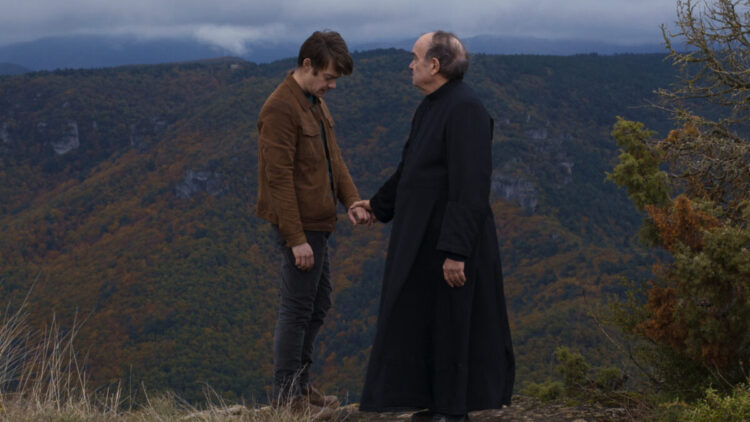
    ‘Misericordia’

    A scene from Misericordia. Courtesy of NYFF.

    It seems the concept of a chaotic bisexual crosses cultural boundaries. French director Alain Guiraudie, best known for 2013’s erotic thriller Stranger by the Lake, returns with another sexy, sharp and darkly comedic exploration of lust and desire with a raucous romp through the French mountainside. When Jérémie (Félix Kysyl) returns to his small hometown to attend the funeral of his former boss, it causes quite a stir among the small population. Not least of all Vincent (Jean-Baptiste Durand), the macho-posturing son of the recently departed, who seems to detest the very presence of Jérémie. His interactions with the townsfolk only intensifies the embers of resentment before an everything is set aflame.

    While Misericordia starts as a quiet, slow-burn drama, a moment of violence quickly shifts into a crime thriller laced with a hilarious, nearly slapstick comedy of errors that is only intensified by the fact that we don’t truly know anything about any of the characters’ motivations. Is Jérémie intentionally trying to wreak havoc on the town? Is he simply bored? Repressed? Who deserves what? Those questions are, for the most part, left unanswered. Or perhaps the answer is simple: desire makes us fools.

    ‘No Other Land’

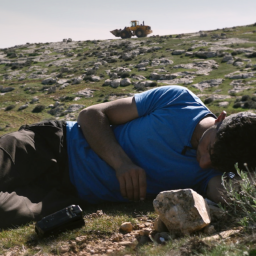
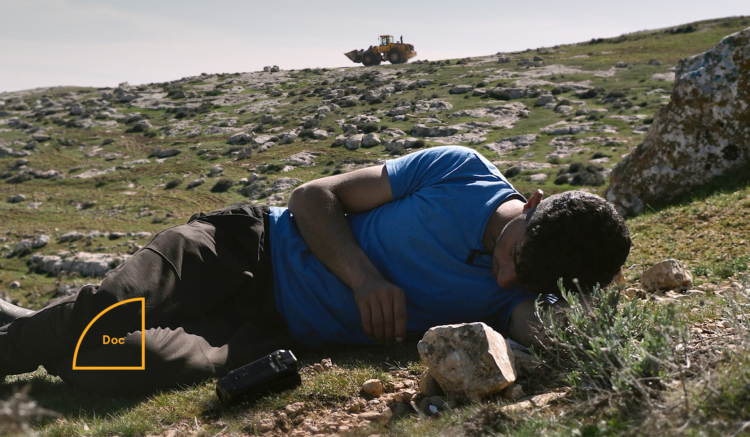
    A scene from No Other Land. Courtesy of NYFF.
    A scene from No Other Land. Courtesy of NYFF.

    “We have no other land.” That’s what a mother cries as she wants helplessly as Israeli soldiers protect a bulldozer as it rips into her home in the West Bank, the center of the Israel-Palestine conflict at the time. Her daughter sits in the sand nearby. Her expression is conflicted. There’s confusion and fear but mostly it feels that the camera captures her innocence. The cameraman is Basel Adra, a Palestinian lawyer, journalist and activist from Masafer Yatta. That’s where he films the destruction of the only land that he has called his home.

    Over and over we watch these scenes play. One time it’s a school demolished. In another, a farm where chickens are trapped under the rubble. But then, we watch as a group sits around a fire just talking about their day. Perhaps about the destruction, perhaps not. A reminder that this is everyday life. The wonder of No Other Land isn’t just the urgency of its story but how true its perspective feels. In an impactful would-be final scene, Basel and Yuval sit outside late at night when Yuval chides, “when are we gonna get married?” The pair joke about it before a solemness falls over them. “Maybe one day” is their answer. No Other Land is a movie of hope in a seemingly hopeless situation. A testament to the human spirit, the power of activism and friendship. It doesn’t supply any answers. But maybe it’s an answer itself. 

    ‘On Becoming a Guinea Fowl’

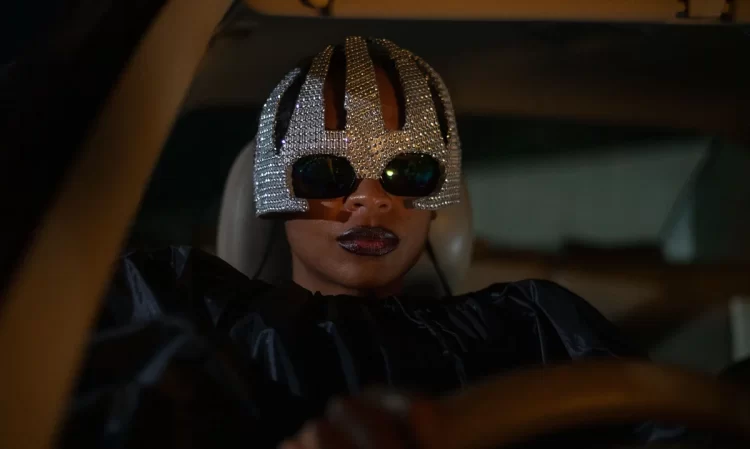
    It takes a village to raise a child… it also takes one to traumatize one. At the center of director-writer Rungano Nyoni follow-up to her debut feature I Am Not A Witch is the concept of family—and the challenges and strife they can cause. When we meet Shula (Susan Chardy) she’s driving down a dark backwoods road dressed in Missy Elliott cosplay as she comes across the body of her uncle in the road. Her reaction is stoic. Unbothered. Like she regularly comes across a dead body. It is the perfect introduction to the slightly surrealistic world that On Becoming a Guinea Fowl takes place in and the small slice of Zambia it shows.

    As her family gathers to prepare for the funeral, a vivid portrait of a family and its interlocking webs and branches emerges. That portrait is as darkly comedic as it is poignant and at deeply upsetting in the way that it captures the complicated nuances of family. For some, it’ll be a reflection, especially those who come from cultures where extended family is put at the forefront. The story, at times opaque, drawing on mysticism, and others wrought in excruciating detail, twists itself into an emotional revelation of its true intent. A stunning sophomore feature.

    All these films are currently playing at the 2024 New York Film Festival. For more information about screening times, click here.


    ADVERTISEMENT


    More movies, less problems


    Hey! I’m Karl. You can find me on Twitter and Letterboxd. I’m also a Tomatometer-approved critic.

    💌 Sign up for our weekly email newsletter with movie recommendations available to stream.


    ADVERTISEMENT

  • No Other Land is the most important documentary of our time | movie review

    No Other Land is the most important documentary of our time | movie review

    NYFF 2024 | No Other Land follows a Palestinian activist as he documents the destruction of his community in the Israeli-occupied West Bank

    “We have no other land.” That’s what a mother cries as she wants helplessly as Israeli soldiers protect a bulldozer as it rips into her home in the West Bank, the center of the Israel-Palestine conflict at the time. Her daughter sits in the sand nearby. Her expression is conflicted. There’s confusion and fear but mostly it feels that the camera captures her innocence. The cameraman is Basel Adra, a Palestinian lawyer, journalist and activist from Masafer Yatta. That’s where he films the destruction of the only land that he has called his home.


    ADVERTISEMENT


    Filmed between 2019 and October 2023, No Other Land is as much a documentary and piece of reporting as it is a personal diary of Basel’s experience of the Israeli occupation of the West Bank. At the start of the documentary, he’d already been documenting and posting his videos online for nearly a decade. You wouldn’t know by the way he springs into action whenever he gets a call that another village in the rural region is being demolished by Israeli military forces. When he questions the soldiers, he gets the same answer: that they are illegally housed in a military training area. 

    It’s a pattern we watch several times through both Basel’s camera and the camera of his Israeli co-directors Rachel Szor and Yuval Abraham and Palestinian photographer Hamdan Ballal. Yet somehow, it doesn’t become easier to stomach it each time. That’s due to its seemingly unstoppable repetition and the filmmaker’s focus on the people being displaced. Their cries coming from such a gutterall human place that even the sound of it is enough to send chills through your body. Even then, the documentary is adorned save for a few voiceovers from Basel offering his own personal experiences of the occupation through childhood and recent years. They allow the annihilation to speak for itself.


    ADVERTISEMENT


    Through the years, however, the scenes of violence are intercut with moments of pseudo-normalcy and peace among the people of Masafer Yatta. In one throughline, we follow a displaced family settling into a cave, the only place they’ve found that they’re able to live in some sort of peace—they aren’t allowed to leave the West Bank even though Israelis are free to move across the border. The family is Harun Abu Aram’s, an activist who we see shot during one eviction. For years, we watch his mother care for him in the “dirty cave” while begging whoever will listen to allow him access to a clean place to heal. However, those devastating scenes are balanced with her young granddaughter watching a show on a TV precariously mounted to the wall of the cave or asking to play a game on her grandmother’s iPhone. Somehow, these flashes of normalcy make it all the more difficult to watch. 

    Over and over we watch these scenes play. One time it’s a school demolished. In another, a farm where chickens are trapped under the rubble. But then, we watch as a group sits around a fire just talking about their day. Perhaps about the destruction, perhaps not. A reminder that this is everyday life. The wonder of No Other Land isn’t just the urgency of its story but how true its perspective feels. In an impactful would-be final scene, Basel and Yuval sit outside late at night when Yuval chides, “when are we gonna get married?” The pair joke about it before a solemness falls over them. “Maybe one day” is their answer. No Other Land is a movie of hope in a seemingly hopeless situation. A testament to the human spirit, the power of activism and friendship. It doesn’t supply any answers. But maybe it’s an answer itself.


    ADVERTISEMENT


    More movies, less problems


    Hey! I’m Karl. You can find me on Twitter and Letterboxd. I’m also a Tomatometer-approved critic.

    💌 Sign up for our weekly email newsletter with movie recommendations available to stream.


    ADVERTISEMENT

  • Surreal dramedy The Life of Chuck ponders life and death | TIFF 2024

    Surreal dramedy The Life of Chuck ponders life and death | TIFF 2024

    TIFF 2024 | The Life of Chuck follows an enigmatic man starting as a surrealist meditation on existential dread and ending as a life-affirming portrait of youth.

    The Life of Chuck is a dramedy that ponders existential dread through surreal comedy (and a dance number!). A philosophical pondering of the moments that add up to a life set against the temporariness of it all. Airy, abstract but entertaining, it may be polarizing but will deeply move many.

    The Life of Chuck premiered at the 2024 Toronto International Film Festival. It is seeking distribution.


    At the beginning of The Life of Chuck we learn California has sunk into the sea, Florida is underwater and the internet has gone out (maybe for good). But somehow the most inexplicable occurrence in the small town where teacher Marty Anderson (Chiwetel Ejiofor) lives is a billboard that’s seemingly appeared out of thin air with the words “Charles Krantz. 39 great years. Thanks Chuck!” scrawled across it and the photo of a clean cut bespectacled man behind a desk. It begs the question from the townsfolk: who the hell is Chuck?


    ADVERTISEMENT


    Unfolding in three distinct acts, The Life of Chuck is a time and universe hopping story about, well, the life of Chuck based on a short story in Stephen King’s novella collection If It Bleeds. However, in the first act—labeled as “Act 3”—we have no clue who he is. As the world around Marty slowly falls more and more into disarray, he remarks that both marriages and divorces are up. It’s partially what spurs his ex-wife Felicia (Karen Gillan) to call him up amidst the quiet chaos of the end of the world. They talk about whether more people are getting married or divorced in the face of their demise and how in the concept of the Cosmic Calendar by Carl Sagan that explained if the existence of the universe were conceptualized as a single year, humans would occupy just the last few minutes of December 31st.

    It’s the kind of existential pondering that the movie itself tussles with. What does it mean to exist? Does it matter when we occupy so little space and time? Why do advertisements thanking Chuck keep popping up? As the final moments of the world approach, and Marty and Felicia find comfort in each other, images of Chuck begin to appear in the window of every house on the street. Marty jokes that it’s the world’s final meme before blinking out completely and we careen into “Act 2.”


    ADVERTISEMENT


    When we finally meet Chuck (Tom Hiddleston), underscored by narration by Nick Offerman, he’s much more human than his larger-than-life portrayal in the first act. In fact, he’s the most human thing imaginable: an accountant. We also meet a busking street drummer (Taylor Gordon), who we learn recently dropped out of Julliard, as she sets up for the day playing at an outdoor mall and a young woman crying over a break-up (Annalise Basso). The trio all cross paths in front of where the drummer set up her kit for the day. Instead of walking past, Chuck starts to dance. 

    It’s one of those moments that feels like movie magic. The kind that puts a knot in your chest. Not because you understand the feeling, but because you don’t.

    The third part of the movie, labeled “Act 1,” brings us back to Chuck’s childhood. It pulls together all the threads of the story that have remained loose and unpacks the enigma that is chuck. From school dances to early losses to days living with his kooky grandfather (Mark Hamill). While the magical surrealism of the first two acts carries over in some ways, the story becomes grounded in something real. If Chuck was a mysterious otherworldly figure in act three and an enigmatic human in act two, then he’s simply Chuck (played by young actors Benjamin Pajak, Cody Flanagan and Jacob Tremblay) in act three.


    ADVERTISEMENT


    We follow him as he navigates loss, grief and, of course, the horrors of middle school as he discovers who he is. Where the first two acts were abstract and airy meditations, this one feels more trite—for better and worse. While the earnest lessons are admirable, I longed for the most obtuse meditation from the start of the movie that felts more like Charlie Kaufman (Eternal Sunshine of the Spotless Mind and I’m Thinking of Ending Things) or David Lynch (Mulholland Drive). Your mileage with where the story go will vary. But watching Chuck navigate the highs and lows of childhood is admittedly charming.

    The Life of Chuck is about how all the little moments where our lives intersect or divert or run parallel to others eventually lead to, in the case of Chuck, thirty-nine great years. It’s not the big moments or notable accomplishments, it’s the way your mom danced while making breakfast or that drummer you heard on a business trip or one of your grandfather’s ramblings. While it never feels quite as big as it should, that just might be Stephen King and Mike Flanagan’s point. 


    ADVERTISEMENT


    More movies, less problems


    Hey! I’m Karl. You can find me on Twitter and Letterboxd. I’m also a Tomatometer-approved critic.

    💌 Sign up for our weekly email newsletter with movie recommendations available to stream.


    ADVERTISEMENT


  • Diabolically fun horror Heretic will make you believe | TIFF 2024

    Diabolically fun horror Heretic will make you believe | TIFF 2024

    TIFF 2024 | A pair of young Mormon missionaries find themselves at the center of a sinister plot when they knock on the wrong door in Heretic.

    With a devilishly sinister Hugh Grant paired off against stars-on-the-rise Sophie Thatcher and Chloe East as a pair of Mormon missionaries who knocked on the wrong door, Heretic is a frenetic and imminently watchable horror-thriller that keeps you locked in from beginning to end. One of the best horror movies of the year. Pie, anyone?

    Heretic premiered at the 2024 Toronto International Film Festival. A24 will release the movie on November 15.

    I checked my watch after what I thought was about twenty minutes into Heretic and was shocked to see it had been an hour into its premiere at the 2024 Toronto International Film Festival. I suppose time flies when you’re watching a raving heretic played by a devilishly sinister Hugh Grant wax about religious philosophy complete with visual and auditory aids—including a hilarious comparison between different editions of Monopoly and the song “The Air That I Breathe” by The Hollies—will have that effect. But that’s not the only trick writer-directors Scott Beck and Bryan Woods have up their sleeves.


    ADVERTISEMENT


    Mormon missionaries Sister Barnes (Sophie Thatcher), a seasoned albeit jaded veteran, and Sister Paxton (Chloe East), a plucky believer eager to notch her first baptism, are wrapping up their day of peddling the Book of Mormon to the people of a small mountain town. Their mission takes them to the doorstep of Mr. Reed (Grant), an older British man in a quaint cottage against a hillside. The girls are immediately put at ease by his endearing demeanor—he’s wearing a patterned sweater!—and willingness to talk about The Church of Jesus Christ of Latter Day Saints. Though there’s a rule they can’t be in a room alone without a woman present, he assures them his wife is baking up a blueberry pie in the kitchen.

    Beck and Woods move the film along with a steady slow-burn pace as the conversation starts off innocently enough. Mr. Reed shows genuine interest in their beliefs—and seemingly already knows more about the religion than initially letting on. While the home is dark and claustrophobic, with shadowy corners and a suspiciously long and dark corridor leading to the kitchen where the alleged Mrs. Reed is slaving over a hot oven—not to mention the passing comment about metal in the walls and a timer that switches off the lights at regular intervals. The girls are simply eager that someone is so interested in what they truly believe.


    ADVERTISEMENT


    Of course, though, things aren’t quite as easy as… well, pie. Mr. Reed begins to challenge some of the beliefs of Sisters Barnes and Paxton before asking increasingly probing questions like about the scar on Sister Barnes’s arm and their beliefs on the outdated tradition of polygamy. Thatcher and East are sensational as the girls’s slow seeds of suspicion that turn into full blown panic as they realize the front door is locked and the candle placed on the table in front of them is blueberry pie scented.

    The fun of Heretic is that Beck and Woods give you all the pieces to see where the story is going, like a love letter to horror fans. However, it never feels like you’re spoiled. The increasingly frenetic energy of the movie—and Grant’s easy diabolical villain energy—is so enjoyable that you’re giddy with each reveal. As the movie careens into its second act, the name of the game is changed and Grant goes from Paddington to Bond villain as he explains the reason behind his capture of the girls—a reasoning that involves a crash course in the history of religious, a copyright dispute over Radiohead’s “Creep” and Jar Jar Binks. Yet it all makes sense.


    ADVERTISEMENT


    Perhaps Heretic isn’t quite profound enough for anyone to change their mind about religion, but the way the utilize the debate is nothing short of miraculous. As a sadistic game of “choose the right door to exit” brings us to the full-on horror third act, the movie continues to tighten its grip. With an oppressive atmosphere aided by smart sound design and increasingly committed performances by East and Thatcher, it’s impossible to pull yourself out of the world.


    ADVERTISEMENT


    More movies, less problems


    Hey! I’m Karl. You can find me on Twitter and Letterboxd. I’m also a Tomatometer-approved critic.

    💌 Sign up for our weekly email newsletter with movie recommendations available to stream.


    ADVERTISEMENT

  • Anora gives Mikey Madison her star-is-born moment | Cannes review

    Anora gives Mikey Madison her star-is-born moment | Cannes review

    When escort Anora meets the son of a Russian oligarch it seems like a too-good-to-be-true Cinderella story—and it is.

    Anora starts as a kinetic gallivanting-through-New York romp before giving way to a deeply empathetic portrait of a woman on the fringe. With a star-is-born performance by Mikey Madison and an imminently refreshing direction by Sean Baker that toes a tonal line between comedy and drama, Anora is the best of the year.


    ❖ Best of 2024

    Anora premiered in competition at the 2024 Cannes Film Festival. Neon will distribute.

    After all the roaring debauchery and chaotic slapstick-like comedy in this grittier and meaner sendup of Pretty Woman, the final scenes of Anora are surprisingly quiet. Just two characters occupying the same space saying anything but addressing the tension occupying the room around them—and after the night they had that’s understandable. Then, finally, something breaks and we’re left stunned not because of the shock but because of the catharsis. 


    ADVERTISEMENT


    That’s often how auteur Sean Baker’s films end. After moments of joy and sadness and laughs and pain he allows us, and his characters, one final exhale. If the first two hours of Anora’s surprisingly robust 140-minute runtime—surprising because it goes by in a flash—make it a great movie, then the final ten minutes—the exhale—make it the best movie of the year. Even more, it is a masterpiece.

    That’s a word that has been thrown around haphazardly, but in the case of Baker it is most apt. After four films that each seemed to build in quality and assuredness, Anora feels like the culmination. It is a perfection of the darkly comedic exploration of human pathos he’s been building his entire career. 

    Baker’s fascination has always lied with people on the fringes of society particularly exploring the dignity of sex work—Tangerine and Red Rocket, specifically. Here we follow Anora (Mikey Madison), who insists on being called Ani, an exotic dancer at a high-end strip club in midtown Manhattan—her thick Queens accent made me feel like I was back home even while sitting in the premiere screening at the 2024 Cannes Film Festival where the movie is competing for the Palme d’Or. Her flirtatious attitude mixed with an admirable tenacity reminded me of Maris Tomei’s Oscar-winning performance in My Cousin Vinny (if you know you know).


    ADVERTISEMENT


    As she hustles from patron to patron giving a lap dance here and flirty banter there, one thing is certain, she is good at her job. So good that her boss pulls her for a special assignment looking after the young son of a Russian oligarch called Ivan (Mark Eidelstein)—when asked about his father he simply says, “Google him.” It doesn’t hurt that Ani can speak Russian, though she prefers to respond in English. Whether it’s because she doesn’t think her Russian is strong enough or some other reason isn’t immediately apparent, like many things about her.

    After a particularly salacious private room session, Ivan invites Ani to his Brighton Beach mansion for more time together—off the clock but still paid. In the dark neon lighting of the club, Ivan came off like a man. However, in the bright sunlight of the window-lined mansion, he looks every bit as much as the kid he is. Eidelstein, with a tall and lanky frame and a spate of black curls that evokes a Timothée Chalamet-Troye Sivan hybrid, plays Ivan with a perfectly measured dweebish physicality that tells you exactly who he is: a spoiled rich kid that was never asked to grow up—and doesn’t want to. His broken English mixed with Russian is essentially a mix of “fuck yeah” and requests for more alcohol.

    That’s juxtaposed against Anora’s easy self-assuredness cut with a Queens attitude. Even though she’s just two years older than him, it’s clear that circumstances have helped toughen her to the world. Their interactions have the flow and charm of the best romantic comedies, even if most of it is just posturing. Ivan offers Ani $10k to be his “girlfriend” for a week. She promptly asks for $15k, which he agrees to (though he quickly chides he would’ve given her $30k). After the raucous week and particularly eye-opening sex scene where Ani teaches Ivan the pleasure of restraint, the pair marry in a kitschy Vegas wedding. 


    ADVERTISEMENT


    The movie’s first hour is a kinetic gallivanting-through-New York romp. The pair hops from Ivan’s mansion to Coney Island to Vegas with an irresistible fast-paced tempo driven by Madison and Eidelstein’s charming performances. You could live in the movie’s world for hours, but when Bake switches up the tempo it is also a welcome shift. 

    When Ivan’s parents find out about the pair’s nuptials, they sick no-nonsense Toros (Karren Karagulian) and his cronies snarky oft-injured Garnick (Vache Tovmaysa) and sensitive Igor (Yura Borisov) on the couple.  The momentum never ceases, but the subversive romantic comedy transforms into a quasi-chase thriller mixed with a dark slapstick comedy (think Home Alone) that is as delightful as the first part in its unique way. Like when Ani breaks Garnick’s nose and is promptly tied up with a telephone wire by Igor, Toros walks in and questions, “Why did you tie her up?” “She’s dangerous,” Garnick quips. 


    ADVERTISEMENT


    The madcap energy draws comparisons to The Safdie Brother’s Good Time or Uncut Gems. Even if the story has grit and bleakness, the series of unfortunate events is devilishly enjoyable to watch unfold. Part of that is because of Baker’s direction that toes a tonal line between comedy and drama that is imminently refreshing. The other is Madison’s performance, which feels like a Hollywood star being born before out eyes. Her charisma holds your attention for every frame she is on screen while her voracity converts you into a fanatic.

    But let’s return to the final scenes of Anora, which elevate the film to a masterpiece. Reflecting on the entire movie in the context of these surprising final moments adds a layer of complexity that makes every element even more impressive, especially the performances of Madison and Borisov. While melancholy is woven into the fabric of all of Baker’s films, in Anora, he conceals it until the end, revealing its presence only then. This artistic sleight of hand makes Anora one of the year’s best films and guarantees you won’t forget Mikey Madison’s unforgettable star turn.


    ADVERTISEMENT


    More movies, less problems


    Hey! I’m Karl. You can find me on Twitter and Letterboxd. I’m also a Tomatometer-approved critic.

    💌 Sign up for our weekly email newsletter with movie recommendations available to stream.


    ADVERTISEMENT

  • Strange Darling, a thriller to die for | movie review

    Strange Darling, a thriller to die for | movie review

    While it begins as a cat-and-mouse thriller, Strange Darling evolves (and genre-bends) into a psychological quasi-horror that keeps you guessing.

    Strange Darling is frenetic maximalist romp that murders your expectations at every turn. With its saturated cinematography bringing a mad technicolor world to life and crisp near-deafening sound underlined by Craig DeLeon‘s discordant bass guitar score rattling, it feels like you’re on the fury road—and you might as well be. A pitch-black devilishly entertaining homage to 70s exploitation thrillers that will have you begging for more.

    Strange Darling is in theaters now.

    The title card for Strange Darling splashes onto the screen paired with the subtitle “a thriller in six chapters” before cheekily jumping to chapter 3. From that moment on director J.T. Toller keeps you guessing as he grabs you by your collar and takes you on a frenetic maximalist romp. When you think it is going to zig, it zags. When you think it’s going to jump, it soars. The opening chapters of the movie, shot in glorious 35mm by Giovanni Rabisi, are an assault on the senses. With saturated cinematography bringing a mad technicolor world to life and crisp near-deafening sound underlined by Craig DeLeon‘s discordant bass guitar score thrumming it feels like you’re on the fury road—and you might as well be.


    ADVERTISEMENT


    While the opening credits roll, our protagonist simply known as The Lady (Willa Fitzgerald) runs across a field. Her blond hair is flattened by sweat, a bloody bandage covers her ear and she looks like she’s seen the devil himself. That’s apt considering her pursuer is billed as The Devil (Kyle Gallner). Chapter 3 starts with a title card that tells us that the movie is a dramatization of the final string of murders of an infamous serial killer stalking rural America. Every detail of Strange Darling down to the film grain evokes a 70s exploitation thriller—think Quentin Tarantino’s own homages like Reservoir Dogs and Pulp Fiction—complete with all its glorious bloody violence and action. It isn’t until we see a vape and cell phone that we feel like it’s within our timeline.

    Gallner’s silent, motivated and precise characterization gives his character a mystical patina. Not unlike the iconic supernatural inhuman slasher villains of the time period—Michael Myers, eat your heart out. On the other end of his silver shotgun is Fitzgerald’s classic-in-the-making scream queen performance that has you genuinely terrified for her. The cat-and-mouse sequence that lasts just ten minutes, but feels like a lifetime, has everything from a car chase and crash, game of hide-and-seek in the woods and a horrifying wound sterilization. The tension is nearly unbearable.


    ADVERTISEMENT


    That carries into chapter five that brings the chase into a mountain house before smashing back to chapter one. With each subsequent chapter, Toller gives you just enough information to change the field of play—because at its core Strange Darling is about two people at play with each other even if it is a sadistic game. To talk about Strange Darling without ruining its devilish entertaining magic would be a fool’s errand. But know, that nothing is as it seems—even the movie. With shades of an erotic thriller, slasher, crime caper and even satirical comedy, there truly isn’t a way to pin it down other than watching it.


    ADVERTISEMENT


    More movies, less problems


    Hey! I’m Karl. You can find me on Twitter and Letterboxd. I’m also a Tomatometer-approved critic.

    💌 Sign up for our weekly email newsletter with movie recommendations available to stream.


    ADVERTISEMENT

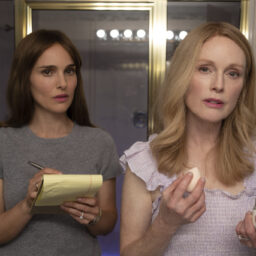
  • Natalie Portman and Julianne spar in high camp melodrama ‘May December’ | review and analysis

    Natalie Portman and Julianne spar in high camp melodrama ‘May December’ | review and analysis

    NYFF 2023 | May December follows an actress (Natalie Portman) as she prepares to play a notorious tabloid figure (Julianne Moore) by shadowing her dredging up old wounds

    May December begins with Julianne Moore dramatically opening a refrigerator door, while a dissonant chord strums and the camera locks into a closeup, and deadpan delivers the line, “I don’t think we’re going to have enough hot dogs.” While it is a high camp melodrama filled with a cast of near-absurd characters, at its heart it’s a complex exploration of trauma, exploitation, and how all “grown-ups” are just children pretending to be adults. With Oscar winners Julianne Moore and Natalie Portman squaring off as dueling narcissists and Charles Melton giving a star-is-born performance, May December is one of the year’s best.

    May December had its North American premiere at the 2023 New York Film Festival.

    Right before the title card for director Todd Haynes‘ new film May December smash cuts onto the screen, Gracie Atherton-Yoo (Julianne Moore) swings open a refrigerator door. As the camera closes in on her face and a dissonant chord strums, she dramatically delivers the line, “I don’t think we’re going to have enough hot dogs.” From then on, it’s impossible not to be transfixed by the high camp of this melodrama.

    And there’s so much devilishly delightful sparing between Gracie and actress Elizabeth Berry (Natalie Portman), who visits Gracie’s Georgia home to prepare to play her in an upcoming movie, that it’s surprising when the movie hits you with a flurry of complex emotions. Screenwriter Samy Burch, who marked her first appearance on the promotional circuit at the 2023 New York Film Festival, said of her screenplay, “I really like the tonal mix of humor and real, genuine sadness and heartbreak.” It’s that exact melange of the darkly comedic melodrama and the deeply felt character study that make May December a satisfying — and deeply odd — romp.


    ADVERTISEMENT


    The reason Gracie’s life warrants a movie is her notorious highly-publicized tabloid romance with her now husband Joe (Charles Melton) that swept the nation in the 90s. You see, Gracie and Joe started dating when she was 36-years-old and he was just thirteen-years-old. Twenty years later, the pair still receive their fair of attention — often of the fecal variety — as they live a quiet existence in their Savannah, Georgia seaside home. That is, until Elizabeth arrives.

    Portman plays Elizabeth, who from what we can gather is best-known for her performance on a Grey’s Anatomy-type show, with a satirical edge — perhaps chiding her own star persona (or at the very least her iconic accent from her performance in Jackie). She probes Gracie’s life like a psychologist analyzing her patient or a serial killer their prey. She observes her mannerisms, dissects every decision she makes, even copies her makeup routine in a scene that edges on Persona-esque horror — a clear inspiration.

    As she observes more people in Gracie’s orbit, we uncover the ripple effects of her crimes that she went to prison for as we see in hilariously accurate tabloid covers (“Pregnant in Prison!”). Her ex-husband Tom (D.W. Moffat) swears he’s over all of it before snapping as he starts to recall the incident, Gracie and Tom’s son Georgie (Cory Michael Smith) — yup, his name is Georgie — is a man-child who is the diva lead singer of a band that performs at a local pub, meanwhile the current manager of the pet shop where Gracie and Joe first met milks the publicity for everything it’s worth — even keeping a laminated copy of a newspaper article about the incident on the counter.


    ADVERTISEMENT


    The cast of characters border on absurd almost becoming caricature, but Haynes keeps the film grounded in some reality despite the camp hijinks. However, Elizabeth isn’t some innocent voyeur. When she finds herself in the notorious storeroom where Gracie and Joe’s first sexual encounter took place she acts it out so convincingly you can’t tell whether she’s actually pleasuring herself. We’re always kept a distance from her true intentions, but at the very least we can infer that she’s not as afraid of exploiting the family for her own work as she says she is.

    However, Gracie isn’t as forthcoming with the truth as she thinks she is either. She’s almost dismissive of her past. “Everyone’s got skeletons in their closet,” she says as if she’s referring to a spat of unpaid parking tickets. Both women are unwilling to cede their true selves to the other. Burch’s screenplay doesn’t shy away from making Gracie and Elizabeth irredeemable. Something we don’t often get to see.

    And while there is legitimate fun to be had with the passive-aggressive meeting of two different breeds of narcissist, at the heart of May December is a sensitive character study of a man who was both asked to grow up too fast and not afforded the opportunity to. Melton, in a star-making Oscar-worthy performance, portrays Joe with a depth that makes you so sympathetic to his plight that it almost feels like whiplash compared to melodrama. While he starts off as the capable father or doting husband, when he begins interacting with Elizabeth — she herself is 36-years-old, the age that he met Gracie — we watch his body language revert to the 13-year-old boy in that pet store storage room.


    ADVERTISEMENT


    With hunched shoulders, his hands in his pockets, and mumbled replies, we see that through all these years Joe has just been putting on the air of an adult. In one of the most heartbreaking scenes, he smokes weed for the first time ever — surprising for a man in his late 30s — with his college-bound son (Gabriel Chung) and through sobs tells him of his hopes that he will live a happy life: “I don’t know if we’re connecting, or if I’m creating a bad memory for you.” In the subtext, he hopes that he won’t suffer the same traumas that he himself had to endure. It’s that incisive insight that makes the movie as compelling as it is entertaining.

    On the surface, May December shouldn’t work with its contrasting tones of dark comedy mixed with near-parody satirical elements and sentimental dramatics with complex human condition. However, it manages to find balance in way that allows you to enjoy it without letting you get too comfortable with the sensitive situation.

    In a climactic scene, Elizabeth tells a despondent Joe, “this is what grown-ups do.” However, what Burch’s screenplay presupposes is that the concept of a “grown-up” doesn’t actually exist. Regardless of age, people are not much more than their child-self reacting to the things in their present filtered through their past. Every character in the movie has been stunted in their coming-of-age in some way — perhaps because you never stop coming of age. We watch in real-time as Gracie tears into her own children with the gusto of Faye Dunaway in Mommie Dearest — perhaps its generational trauma or maybe she’s just a sociopath — meanwhile Joe is trying everything in his power to not let them suffer the same fate.

    The beauty of May December is that it doesn’t give its characters a melodramatic ending — again, keeping one step in the real-world. Dare I say, the movie comes to a close with some hope. Still, we’re treated to one last flash of glorious camp that sets it as one of the year’s best.


    ADVERTISEMENT


    More movies, less problems


    Hey! I’m Karl. You can find me on Twitter and Letterboxd. I’m also a Tomatometer-approved critic.

    💌 Sign up for our weekly email newsletter with movie recommendations available to stream.


    ADVERTISEMENT

  • Evil Does Not Exist: An eco-thriller with hidden horrors | review and analysis

    Evil Does Not Exist: An eco-thriller with hidden horrors | review and analysis

    NYFF 2023 | A small town tucked in the mountains of Japan has to decide whether or not to allow a company to build a new luxury campsite in Evil Does Not Exist

    With a tense atmosphere underscoring the smart but human-level eco-drama, Evil Does Not Exist works exceedingly well as an engrossing but surprisingly entertaining climate allegory.

    Evil Does Not Exist is playing at the 2023 New York Film Festival.

    Japanese director Ryusuke Hamaguchi is unafraid to include silences in his movies. Not just a lack of dialogue but those lapses in conversations. Like when you’re in a car and you and the passenger find a comfortable silence as you watch the world fly by around you. It was a feature in his U.S. breakout Drive My Car, which earned him nominations for Best Picture and Best Director, and now in his follow-up Evil Does Not Exist. But the way in which he deploys those silences are different. Where Drive My Car found longing and grief in meditative moments, Evil Does Not Exist finds dread. Often while characters speak during long car rides through the Japanese mountainside, the camera will face out the rear windshield. Like something is chasing the characters. Sometimes the camera will navigate the eerie quiet of the snow-covered Japanese forest as Eiko Ishibashi’s sometimes jazzy, sometimes orchestral, sometimes guttural and discordant score plays underneath.


    ADVERTISEMENT


    It’s foreboding, especially for a movie that on its surface doesn’t seem to be about any horrors. The picturesque mountain village of Mizubiki is a tight-knit community. “Odd job man” Tatsumi (Hitoshi Omika) lives a peaceful existence in his forest cabin with his daughter Hana (Ryo Nishikawa). His riveting daily routine involves wood chopping, water collecting (from a stream, of course), and deer hunting. All usually with a cigarette hanging out of his mouth. However, his, and the town, are confronted with usurpers from the outside world when a company presents a plan to build a glamping camp on the outskirts of the town. 

    In a tense (and darkly hilarious) town hall meeting, the company representatives Takahashi (Ryuji Kosaka) and Mayuzumi (Ayaka Shibutani) present the plan to a less than enthusiastic crowd. It’s like watching a film festival Q&A for a movie no one liked (if you know you know). There are those flashes of bleak humor that make Evil Does Not Exist surprisingly entertaining amidst the drama. The townsfolk are wary of the plan. Especially Tatsumi who specifically cites the danger of contamination to the village’s water supply. Of course, rather than listening to their concerns, the powers-that-be at the company push Takahashi and Mayuzumi to convince (and bribe) the citizens. Thus setting off a slow-burn corporate eco-thriller that never quite shows you its hand, until it does.


    ADVERTISEMENT


    Hamaguchi practices incredible patience with his storytelling allowing each piece of the puzzle to fall into place. Whether it’s a story piece or a character one. While there’s a central plot, the real interest of Evil Does Not Exist is within its people. There’s Tatsumi, a steadfast father both to Hana and figuratively to the village, Takahashi and Mayuzumi, initially seen as corporate drones who we begin to learn more about, Sachi (Hazuki Kikuchi) and Kazuo (Hiroyuki Miura), the owners of the town’s single restaurant. As each of them move around each other, we learn not just about their character but also how they interact with a changing world around them.

    At just shy of two hours, it is nowhere near the epic scale of Drive My Car. The story feels smaller, more insular, and, in the end, more allegorical. But when its stunning and thrilling final scenes play out, you understand exactly where Hamaguchi’s mind is. It’s with the Earth. It’s with the people that inhabit it. And it’s with the way that we destroy it. Without feeling preachy or overwrought, he makes a swift and compelling case for care. Both for each other and the place we call home.


    ADVERTISEMENT


    More movies, less problems


    Hey! I’m Karl. You can find me on Twitter and Letterboxd. I’m also a Tomatometer-approved critic.

    💌 Sign up for our weekly email newsletter with movie recommendations available to stream.


    ADVERTISEMENT