
Category: Movies

  • ‘If Beale Street Could Talk’ review — An intimate and political love story

    ‘If Beale Street Could Talk’ review — An intimate and political love story

    If Beale Street Could Talk is gorgeous, powerful, stunningly crafted, and another masterpiece from Barry Jenkins.

    If Beale Street Could Talk is a love story at its core the same way that Moonlight, director Barry Jenkins’ last film, is. It makes sense considering Jenkins excels at everything you need to make a good romance. He nails communicating intimacy on screen, often using delicious close-ups of faces and people touching.

    And like Moonlight, If Beale Street Could Talk is cast against a melancholic theme that tests the relationship. In Moonlight, the main character fights against his own identity and the circumstances of his coming-of-age as a queer black man. In If Beale Street Could Talk, the challenges are more tangible. 

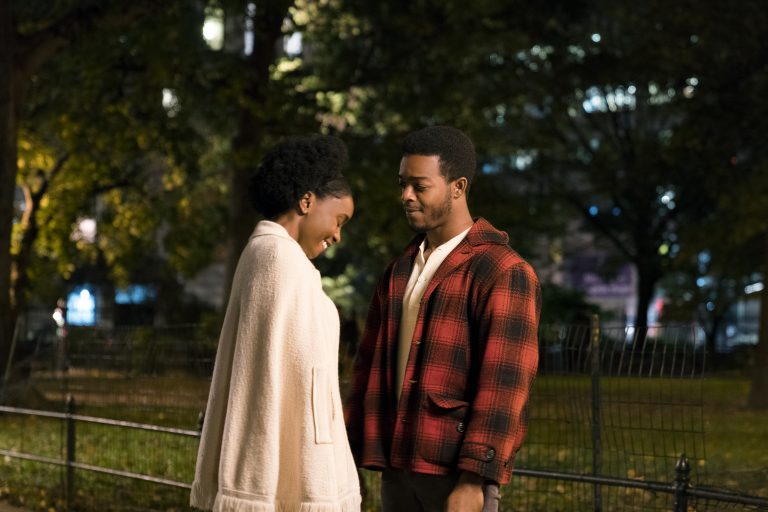
    The main couple, sweet perfume counter clerk Tish (Kiki Layne) and swoon-worthy woodworker Fonny (Stephan James), have known each other since childhood. Through Tish’s gentle voiceover we learn about their love story and how it developed from friendship to something more. However, Fonny is in trouble. 

    He is accused by a white cop (an extremely creepy Ed Skrein) of raping a Puerto Rican woman named Victoria Rogers (Emily Rios). With only Tish and an old friend Daniel (Brian Tyree Henry in a masterful one scene performance) with a criminal record as his alibi, Tish must work to free him.

    It wasn’t always easy for the couple as the movie shows — it’s structured as a series of vignettes from their relationship sprinkled between moments from the present, which is 1970s Harlem.
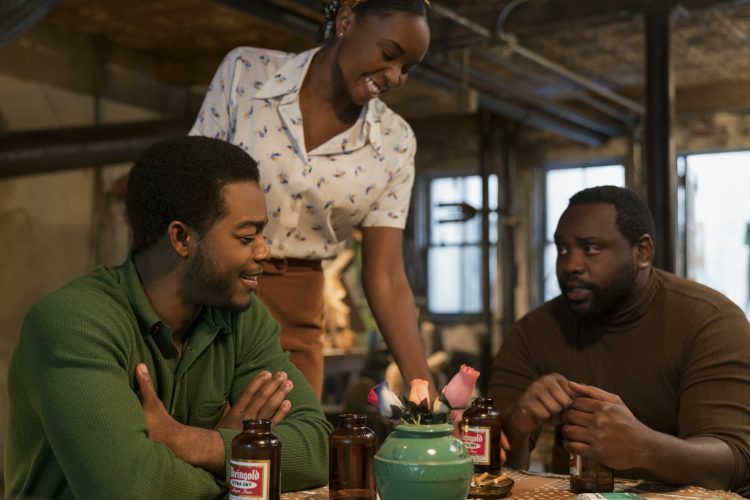
    If Beale Street Could Talk
    Stephan James as Fonny, KiKi Layne as Tish, and Brian Tyree Henry as Daniel Carty star in Barry Jenkins’ IF BEALE STREET COULD TALK, an Annapurna Pictures release.

    The first 30 minutes are dedicated to Tish trying to tell her family that she and Fonny are expecting a child. Her mother Sharon (Regina King) is warm and supportive. And after an initial shock, so are her father Joseph (Coleman Domingo) and sister Ernestine (Teyonah Parris). But, she is also tasked with telling Fonny’s deeply religious mother (Aunjanue Ellis).

    That first scene is a masterful practice in acting and staging supported by Jenkins’ generous screenplay — based off of James Baldwin’s novel of the same name. It all feels like a stage play with actors navigating the space in relation to each other and changing positions as the power in the scene ebbs and flows. 

    If Jenkins is best at anything it’s his ability to communicate emotion and power without words. In another scene, Fonny and Tish prepare to have sex for the first time. The music in the background drops out to make way for the sound of rain as we watch their bodies intertwine. It’s a powerful and emotional scene dripping with intimacy.

    Moonlight grappled with the themes of care — for oneself and others — and love. Often that care and love were represented by a safe space. If Beale Street Could Talk deals with that same idea. What is a safe space for a black person? Well, the movie answers that with its opening quote:

    “Every black person born in America was born on Beale Street, born in the black neighborhood of some American city, whether in Jackson, Mississippi or in Harlem, New York. Beale Street is our legacy.”

    James Baldwin

    What is so heartbreaking about If Beale Street Could Talk is that it presupposes that those safe spaces are almost impossible to find in America.
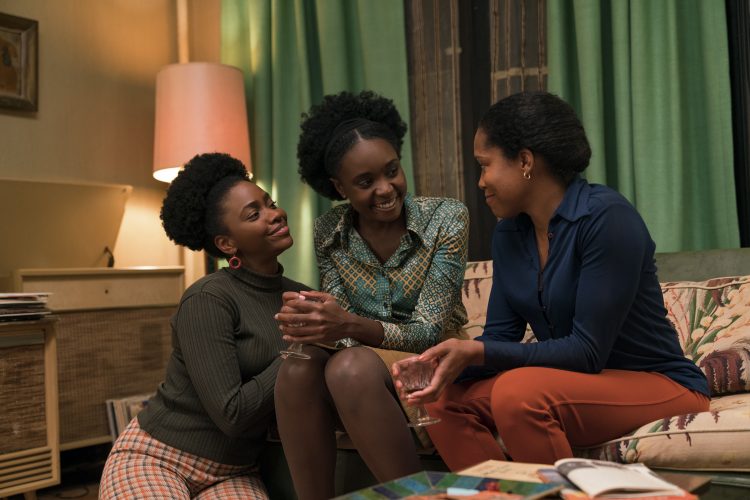
    If Beale Street Could Talk
    (l to r.) Teyonah Parris as Ernestine, KiKi Layne as Tish, and Regina King as Sharon star in Barry Jenkins’ IF BEALE STREET COULD TALK, an Annapurna Pictures release.

    There are pockets where it exists — a grocery store where an elderly woman defends Tish and Fonny from a racist cop or an old warehouse where the Jewish landlord (Dave Franco) is willing to rent to the couple — but largely those places are vanishing. Fonny and Tish’s story acts as the conduit to explore that theme and their love story is what makes that exploration so effective.

    The film is pieced together like a memory — it’s edited by Joi McMillon and Nat Sanders, the Oscar-nominated editors of Moonlight — and Nicholas Britell’s score — also a collaborator on Moonlight — is a melancholic piece with notes of hope and yearning — the best score of the year. All those elements come together to create a masterwork of mood.

    Like his last film, Jenkins and casting director Cindy Tolan pieced together a flawless group of actors. Kiki Layne and Stephen James are both marvelous discoveries who possess so much chemistry with each other that it’s nearly impossible to resist falling for them as a couple.

    However, it’s the supporting cast that standout. Particularly, Coleman Domingo is a strong but sentimental steady hand, and Regina King — worthy of an Oscar — has a show-stopping segment set in Puerto Rico that cements her performance as one of the best of the year.

    If Beale Street Could Talk has so many moving parts that make it work. However, the core of its success is the main couple’s story. Not just the story to get Fonny freed but their love story — a beautiful black love story that we should be seeing more of. Gorgeous, powerful, and stunningly crafted, If Beale Street Could Talk is another masterpiece from Barry Jenkins.

    If Beale Street Could Talk will be in theaters on December 14th.

    Karl’s rating:

  • ‘Blinded by the Light’ review — Saved by Springsteen

    ‘Blinded by the Light’ review — Saved by Springsteen

    Blinded by the Light follows a teen growing up in 1980s Britain as he discovers who he is through the music of Bruce Springstein

    30-second review: Blinded by the Light has a lot on its mind — for better and worse. Thanks to some inventive musical staging of Bruce Springsteen’s greatest hits like “Dancing in the Dark” and “Born to Run,” director Gurinder Chadha delivers a crowd-pleasing and uplifting musical romp. However, that’s just half the movie. The other half is a raw and heartbreaking look at 1980s Britain under Margaret Thatcher complete with high unemployment and the rise of white supremacy. Sound familiar?

    It’s clear Chadha wanted to explore more than what’s on the surface of the story, and it’s refreshing that a mainstream crowd-pleaser has deeper themes. However, it also feels like there are two movies — the lighthearted and terminally delightful comedy and realistic present-day allegory — battling for the spotlight, which ends up being detrimental to both parts.

    Where to watch Blinded by the Light: Now playing in theaters.

    Full review below ?

    There’s a lot to admire about Blinded by the Light — its ambition chief among them. Just like Javed (Viveik Kalra), the British-Pakistani teen with dreams outside of his small English town, the movie has a lot on its mind.

    It’s 1987 Britain. Thatcher is Prime Minister, the white supremacist group National Front marches in the streets, and the number of jobs is dwindling by the day. Sound familiar? Like many of the feel-good, crowd-pleasing movies before it, Blinded by the Light tackles issues facing our society today through the lens of its character’s lives. To its credit, it avoids being terminally delightful and isn’t afraid to face them head-on.

    And while all these terrible things are happening around him, all Javed can think about is how to get out of his small town and out from under the thumb of his strict, traditional Pakistani father Malik (Kulvinder Ghir). Javed has dreams of becoming a writer. His nose is constantly buried in his journal writing about his day or poems or lyrics for his friend Matt’s (Dean-Charles Chapman) band.

    However, it isn’t until a chance encounter with Roops (Aaron Phagura), the only other South Asian student at the school, that all his musings click. That’s because Roops introduces him to “The Boss” himself — Bruce Springsteen. All the frustrations, thoughts and dreams that Javed has been confused by are encapsulated in Springsteen’s lyrics — and it’s freeing.

    One night when he’s feeling particularly down and throws away all his writing, he pops in a cassette and listens to “Dancing in the Dark.” The lyrics literally swirl around his head and are projected on walls as he twirls around finally feeling seen for the first time in his life. It’s that kind of innovative and impressionistic filmmaking by director Gurinder Chadha (Bend it Like Beckham) that make Blinded by the Light a joy to watch.

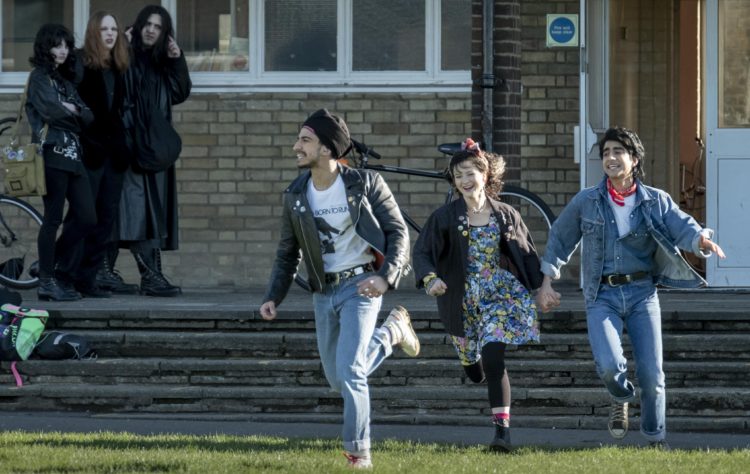
    Kulvinder Ghir, Nell Williams, and Viveik Kalra in Blinded by the Light. Credit: Nick Wall/Warner Bros. Entertainment Inc.

    Inspired and motivated, the usually shy and introverted Javed begins to do things he never thought he’d be able to like demanding to have his work considered for the school paper, showing his writing to his English teacher (Hayley Atwell), and asking out his crush Eliza (Nell Williams). Just as you’d expect, things start going his way as he continues to dive further into Springsteen’s work and evokes him in any way he can — the clothes, the hair, the attitude.

    But the movie doesn’t stop there.

    Javed’s journey is anything but smooth. He’s antagonized daily by white supremacists telling him to leave the country. His father discounts his desire to be a writer and regularly admonishes his love of Springsteen and both British and American culture. All the while, his sister is arranged to be married and his mother Noor (Meera Ganatra doing great work) is working day and night to support the family when Malik is laid off from his factory job.

    Both halves — the lighthearted musical crowdpleaser and the dramatic present-day allegory — are successful in their own right. It’s when the two parts are combined that the movie loses some of its sheen. That’s because it tries to put together two tones that don’t work. There’s an inherent corniness to Javed’s journey. You’ve seen it all before — and that’s fine. But the very real conflicts brought about by the world they’re living in make it all seem trite. Maybe that’s being cynical. I really admire what the movie is trying to do, but it isn’t entirely successful.

    Though, there’s still a lot to enjoy about it. Kalra’s performance as Javed is filled with charisma and charm. It’s impossible to turn away from the screen when he’s on it. And the musical numbers are hard to resist. Then again, most of Springsteen’s songs are hard to resist. And the story of the son of immigrants caught between two cultures is so rich — and explored extremely well in this year’s The Farewell. It’s just a matter of the movie being less than the sum of its parts.


    ADVERTISEMENT


    More movies, less problems


    Hey! I’m Karl. You can find me on Twitter and Letterboxd. I’m also a Tomatometer-approved critic.

    💌 Sign up for our weekly email newsletter with movie recommendations available to stream.


    ADVERTISEMENT


  • ‘Good Boys’ mini-review — Good boys doing bad things

    ‘Good Boys’ mini-review — Good boys doing bad things

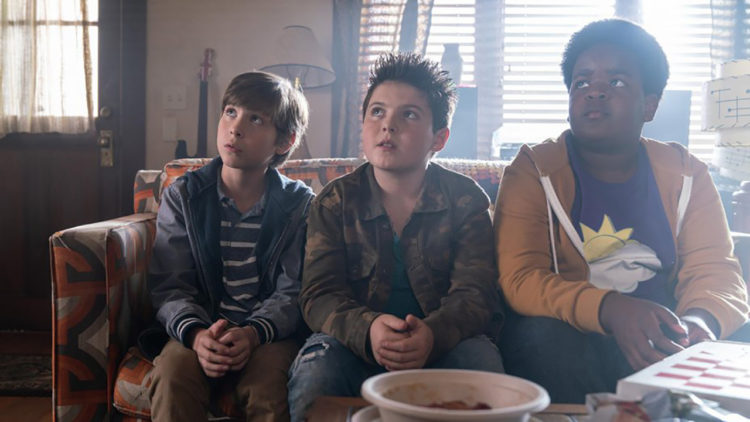
    Three tween boys ditch school and go on an adventure that involves drones, drugs, and a suspicious number of sex toys in Good Boys.

    90-second review: If movies like Superbad and Booksmart prove anything, it’s that watching uncool teens try to be cool is a comedy gold mine. Good Boys mines the same tropes for humor — the entire plot revolves around the main trio doing anything and everything to make it to their first spin-the-bottle kissing party. However, there’s also the added layer that they’re tweens and they still don’t understand how many things in the world work.

    One of those things is how to kiss. Then even look up “porn” in an attempt to learn and are hilariously horrified to learn that it doesn’t just involve kissing. So, Max (Jacob Tremblay who gave one of the best child performances in history in Room) comes up with a plan to use his father’s beloved drone to spy on his high schooler neighbor Hannah (Molly Gordon) — “she’s nymphomaniac, someone who has sex on land and sea,” he says — and hopefully, learn how to kiss. However, when Hannah and her friend Lilly (Midori Francis) capture the drone, hijinks ensue as the boys try to get it back, which involves a too-realistic sex doll, molly, a brawl in a frat house and more gags than you can keep track of

    However, the movie isn’t ridiculous. A lot of why it works is the incredibly low stakes of it all. However, for Max, who is determined to finally kiss his crush, Thor (Brady Noon), who wants to prove he’s cool by drinking a beer in front of the popular kids, and Lucas (Keith L. Williams — a standout), who simply doesn’t want to get in trouble, the stakes seem life or death.

    And even though each member of the “bean bag boys” — what the three eponymous good boys call their friend group — is given one characteristic and goal to run with for the whole movie, it works because the three young actors are so good at portraying each of those small struggles as something huge.

    It’s refreshing too that the humor, while crude, is never offensive or gross. Good Boys, like Booksmart this year, proves that a raunchy comedy can also be smart and thoughtful — there’s an underlying thread around whether the beanbag boys should be friends in the first place. And while this movie doesn’t quite reach greatness, it never has a moment where it’s not funny or entertaining. 

    Where to watch Good Boys: Now playing in theaters.


    ADVERTISEMENT


    More movies, less problems


    Hey! I’m Karl. You can find me on Twitter and Letterboxd. I’m also a Tomatometer-approved critic.

    💌 Sign up for our weekly email newsletter with movie recommendations available to stream.


    ADVERTISEMENT


    Good Boys
    Jacob Tremblay, Brady Noon, and Keith L. Williams in Good Boys. Credit: Universal Pictures.
  • ‘Luce’ movie review — An American (dream) crime story

    ‘Luce’ movie review — An American (dream) crime story

    Luce follows a mystery surrounding a small town’s golden child and him and his parents’ run-in with a teacher bent on his demise. 

    30-second review: Luce is so successful because its story has a clear message and point-of-view it wants to communicate, but director Julius Onah presents it in a completely fresh and original way. Though at its core it’s an emotional family drama, it plays more like a psychological thriller — and sometimes horror. 

    Its twisting plot sometimes gets in the way of its social commentary, but overall Luce is an unpredictable and extremely entertaining exploration of the morals that we built our country on. Plus, Kelvin Harrison Jr. gives an Oscar-worthy performance — he’s a star on the rise.

    Where to watch Luce: Now playing in theaters. 

    Full review below ?

    You’re going to need to suspend disbelief a bit when watching Luce. Not because the world it takes place is any different than ours — it is our world and country — and not because the story is that ludicrous. It’s just clear that the story and characters are designed to deliver a message. An extremely timely message in our polarized political moment. And while many movies have dealt with the strained race relations in our country, Luce is more complex.

    Luce (Kelvin Harrison Jr. following up his breakout in It Comes at Night) is the perfect American success story at his high school in the picturesque suburbs of Arlington, Virginia. Not only is he the captain of the track team, the valedictorian of his class, and star of the debate team, it seems that almost everyone in the school adores him — administrators, teachers, and students alike.

    However, it wasn’t always easy for Luce. We learn that he was adopted from war-torn country Eritrea by white parents Amy (Naomi Watts) and Peter (Tim Roth) Edgar who had the tough rehabilitating the former child soldier. And though they often refer to how rough his childhood and upbringing was, they look at him with pride over his accomplishments.

    There is one person that doesn’t completely buy Luce’s charisma and agreeable demeanor — and trust me when I say Harrison makes you fall for Luce. His American History teacher Harriet Wilson (Octavia Spencer doing her best work in years) is wary of him, especially after reading an essay where he defends African writer Frantz Fanon and his call to combat colonization with violence. To make matters worse, Ms. Wilson searches Luce’s locker and finds a brown bag filled with powerful fireworks. 

    She takes them to Amy who has to decide whether to confront her son or hide that she knows about their existence in the first place. She decides to hide them in a cabinet in their kitchen and hold a confrontation for another time — or never. However, in the twisting narrative of the film, the fireworks are quickly discovered by Luce, which sets off a chain of confrontations and deceptions and moral quandaries ranging in themes from tokenism, race, class, sexuality, nature versus nurture, and even more.   

    Luce movie
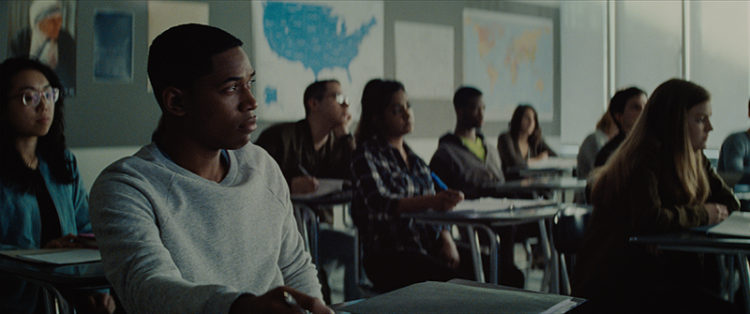
    Kelvin Harrison Jr. in Luce. Credit: NEON.

    Luce operates on multiple levels at once. At the center, there is this central mystery around Luce. How genuine and harmless is he? Is he predisposed to violence because of his background? Did he know about the fireworks? But the discourse runs so much deeper than that. Every character is dealing with some struggle that tests the very fabric of our society. If it sounds dramatic, it is. But it’s never overwrought or sentimental. 

    Though it may seem a bit heavy-handed with its themes and message, that’s the point. The movie is designed to make you question the characters and your loyalty to them. In one magnificent scene, Luce indirectly confronts Ms. Wilson with his knowledge of the fireworks and their discovery. Harrison — who is truly brilliant and Oscar-worthy — makes you question Luce’s motivations by making his delivery both sincere, but with a sinister tinge that is genuinely terrifying. With a few changes in the plot, Luce could easily have been a horror movie. 

    That’s the brilliance of Julius Onah’s direction. He doesn’t allow the movie to be constrained by any one genre as he switches perspectives between Amy, Luce, and Ms. Wilson. Even more, he gives Watts, Harrison, and Spencer room to dive into each of their characters to the point that each feels so lived in, even when the plot gets more convoluted and staged — it is based on a play after all.

    I can’t understate how thrilling it is to watch Luce. You’re kept guessing at every moment. In one scene late in the movie, a character for one second breaks their usual demeanor for a split second in a way that is both endearing and completely terrifying. There are more of those moments throughout. Moments where you don’t know whether to laugh or cringe. If I was watching this on stage, I would applaud. Luce is made of those brilliant moments. Be ready for a ride. 


    ADVERTISEMENT


    More movies, less problems


    Hey! I’m Karl. You can find me on Twitter and Letterboxd. I’m also a Tomatometer-approved critic.

    💌 Sign up for our weekly email newsletter with movie recommendations available to stream.


    ADVERTISEMENT


  • ‘The Perfection’ review — Cello from the other side

    ‘The Perfection’ review — Cello from the other side

    The Perfection follows two students of a renowned music academy whose first encounter leads to sinister results.

    30-second review: The Perfection‘s first half portends a sharp and tense psychological thriller with two committed performances by Allison Williams and Logan Browning as the former and current star students of a prestigious music academy respectively. But one poorly executed twist followed by another takes away any goodwill the movie builds in its genuinely well-constructed setup.

    While the rest of the movie could be an entertaining and campy descent into madness, its reliance on several plot and character reversal makes it more tiring than enjoyable. It’s unfortunate because there’s some real craft on display and the two leads give committed performances.

    Where to watch The Perfection: Now streaming on Netflix.

    Full review below ?

    The best psychological thrillers make you want more and then don’t give it to you — at least until they earn it and you’re begging for it. Look at Karyn Kusama’s masterful The Invitation, which spends almost its entire running time subtly changing your perception of its true nature before letting you have it.

    And The Perfection does that for a time — but then it continues. The first 45 minutes are a campy descent into chaos as a former child prodigy Charlotte Willmore (Allison Williams) reunites with her mentor Anton Bachoff (Steven Weber) in Shanghai to help him pick his next star pupil.

    Years earlier, Charlotte was that star pupil before being forced to drop out of the Bachoff Academy of Music — where she was studying cello — to care for her ailing mother. With her mother now passed, she’s looking to be back in the fold. In Shanghai, where three young girls are in the final round of the competition, Charlotte meets Bachoff’s current star Lizzie (Logan Browning).

    Lizzie has fame, fortune, and even a giant billboard where she’s endorsing vodka — because that’s what cellists do — and Charlotte isn’t quiet about her adoration for her. However, in a subversion of expectations, Lizzie is just as much a fan of Charlotte — she even flirts with her as they judge the competition.

    The Perfection
    Logan Browning and Allison Williams in The Perfection. Credit: Netflix.

    The pair, at the behest of Anton, play a duet together shot and cut with the same attraction and intensity the pair seem to share. As the duet crescendos — both Browning and Williams learned how to play the cello for the movie — scenes of the pair drinking and dancing are cut in before they sleep together in a drunken haze. The next morning, they’re all smiles. Although, Lizzie has a bad hangover that Charlotte suggests clearing it with ibuprofen and hair of the dog.

    Lizzie invites Charlotte on her off-the-beaten-path journey into the rural western part of the country — she accepts. However, after boarding the bus, Lizzie’s sickness turns from a bad hangover to something worse. Is it the mysterious stomach flu that has been going around? Was she poisoned? Was she cursed? Truthfully, the movie had me gripped.

    The scenes aboard the bus are filled with tension as Lizzie becomes violently ill and desperate for reprieve. Director Richard Shepard does a terrific job of masking the true intentions of the characters and makes the scenes as disorienting as Lizzie feels. Williams and, in particular, Browning are terrific and incredibly believable as two young women feeling alone and terrified in a foreign country without access to any help. And then all that tension is deflated in one decision.

    The movie literally rewinds itself and replays to fill in the gaps. The places where you were left guessing now leave no room for interpretation and the second half continues this trend. As the twists and turns get even more egregious the movie just becomes a chore to watch. It’s unfortunate because the final beat is actually chilling and portends what could have been. A lighter touch would have been welcome.

    As Sheila O’Malley pointed out in her review, The Perfection brings up an interesting conversation about spoilers — and also that this movie should have a strong trigger warning for sexual abuse and rape. For me, I think that you should be able to review and recommend — or not recommend — a movie without having to reveal any spoilers. However, when a movie, like The Perfection, relies too heavily on its twists and turns that you can’t properly critique it, then it’s probably not a good movie.


    ADVERTISEMENT


    More movies, less problems


    Hey! I’m Karl. You can find me on Twitter and Letterboxd. I’m also a Tomatometer-approved critic.

    💌 Sign up for our weekly email newsletter with movie recommendations available to stream.


    ADVERTISEMENT


  • ‘Rocketman’ mini-review — The bitch is back

    ‘Rocketman’ mini-review — The bitch is back

    Rocketman follows the meteoric launch and the explosive fall of one of music’s most iconic artists, Elton John.

    90-second review: Let’s get the Bohemian Rhapsody comparison out of the way early. Rocketman is the better film. Not only is it competently made, it’s not just a paint-by-the-numbers biopic that plugs in the right plot points in at the right time — for the most part.

    Director Dexter Fletcher, who was brought in to save Rhapsody after he who should not be named was fired, had a clear creative vision for Rocketman that was worthy of its theatrical subject. Much of the movie plays like a musical with fully choreographed numbers, duets, and 11 o’clock soliloquies — the “Crocodile Rock” and “Rocket Man” sequences are standouts. Making this choice differentiates the movie from the typical biopic about a musician.

    Taron Egerton evokes Elton John without feeling like he’s doing an impression. His performance and voice are remarkable. Jamie Bell also does great work as Bernie Taupin, John’s longtime friend and musical collaborator. But the character also uncovers one of the biggest problems in Rocketman.

    While the movie goes to great lengths to not just hit plot point after plot point in Elton John’s life, it also spends too much time on his long struggle with drug and alcohol addiction rather than looking at how it affected the people around him. There are moments when we dig a little deeper into his relationship with Taupin, which are some of the strongest scenes in the movie, but they’re few and far between.

    Overall, Rocketman is a worthy portrayal of the life of one of our greatest living musical artists and gives Egerton an incredible spotlight role in his career. Pay attention, he’s going to win an Oscar one day.

    Where to watch Rocketman: Available to buy or rent on Prime Video.


    ADVERTISEMENT


    More movies, less problems


    Hey! I’m Karl. You can find me on Twitter and Letterboxd. I’m also a Tomatometer-approved critic.

    💌 Sign up for our weekly email newsletter with movie recommendations available to stream.


    ADVERTISEMENT


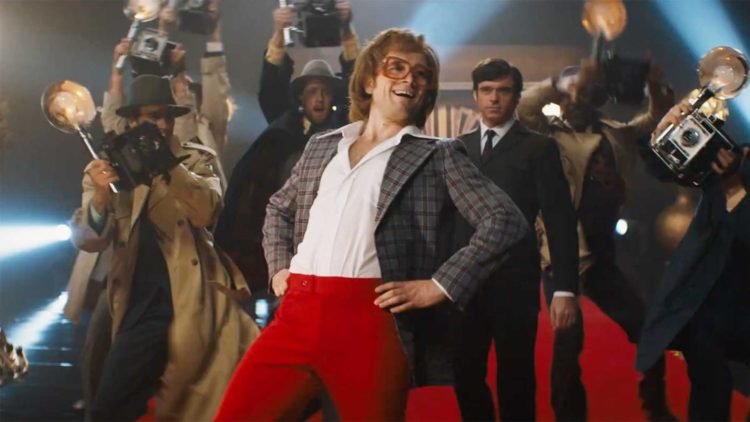
    Taron Egerton and Richard Madden in ROCKETMAN. Credit: Paramount Pictures
  • ‘Scary Stories to Tell in the Dark’ review — Nightmares brought to life

    ‘Scary Stories to Tell in the Dark’ review — Nightmares brought to life

    In the late 1960s, a group of teens finds a book that brings their nightmares to life in Scary Stories to Tell in the Dark, based on the book series of the same name.

    30-second review: Scary Stories to Tell in the Dark has the creature design that made producer Guillermo Del Toro‘s career such a success. Each one is nightmarish in their own right and are the real stars of the movie. It also helps that director André Øvredal knows how to direct a horror sequence filled with dread and tension.

    However, the movie spends way too much time unnecessarily fleshing out the period and its characters. A little character development never hurt anybody, but when it’s at the expense of the real goal of your movie — the scares — then you have a problem. The stories were brought to life with the same energy that made the book series they’re based on so iconic. The movie just needed a better frame for them.

    Where to watch Scary Stories to Play in the Dark: Now playing in theaters.

    Full review below ?

    There’s something so comfortable about the early scenes in Scary Stories to Tell in the Dark. Beginning on Halloween in 1968 in the small town of Mill Valley, Pennsylvania, the movie is quick to set a spooky atmosphere as the town prepares for the night. But in that atmosphere is the feeling of Halloween season. The same feeling that movies like Hocus Pocus or The Nightmare Before Christmas give off. You can almost feel the crisp fall air. Breathe that calm in. It doesn’t last long.

    We meet three friends — horror aficionado Stella (Zoe Colletti), buttoned-up rule follower Auggie (Gabriel Rush), and the clown of the group Chuck (Austin Zajur) — getting ready for Halloween night. They hatch a plan to get revenge on school bully Tommy Milner (Austin Abrams) that works but sets Tommy’s sights on revenge.

    The trio runs to a drive-in playing Night of the Living Dead and takes refuge in the car of a mysterious drifter named Ramón (Michael Garza). To thank him for saving them, they take him to a house where they tell him about the local legend Sarah Bellows. The Bellows family, who founded the town and owned the town’s mill, locked Sarah away in a secret room, neglecting her. There, she spent her days spinning up scary stories (to tell in the dark) filled with ghouls and monsters.

    After another encounter with Tommy, the four teens, along with Chuck’s sister Ruth (Natalie Ganzhorn) leave the house. However, Stella makes the fatal mistake most horror movie characters make — she takes Sarah’s book of scary stories with her. This decision awakens Sarah’s spirit, who in turn sends a barrage of nightmarish creatures to kill each of the teens one by one — writing their fate into the book (in blood). Turning into Final Destination with Guillermo Del Toro-esque monsters — he also produced the film — Scary Stories to Tell in the Dark is almost exactly what you hope it would be, but gets distracted.

    Scary Stories to Tell in the Dark
    Natalie Ganzhorn in Scary Stories to Tell in the Dark. Credit: CBS Films/Lionsgate.

    There is so much good to be found in the movie. First of all, the creature designs — directly inspired by Stephen Gammell’s iconic illustrations for the book series — are appropriately grotesque and disturbing. Even just an image of some of them is enough to inspire chills — particularly the scarecrow Harold and the Jangly Man. Plus, director André Øvredal proves yet again after his chilling English-language debut The Autopsy of Jane Doe that he knows how to direct a terrifying and tense horror setpiece.

    However, like that movie, Scary Stories to Tell in the Dark gets so caught up in its plot that the scares end up feeling like an afterthought and lose their effectiveness. Each of the stories that are adapted in the movie has enough creeps on their own to work for a moment, but screenwriters Dan and Kevin Hageman try so hard to flesh out the world and characters that they lose sight of the actual goal of the movie — to be scary.

    The movie spends a lot of time establishing itself in the time period — there are mentions of the impending presidential election between Richard Nixon and Hubert Humphry and the Vietnam War — and fleshing out the characters. However, neither of those things add anything to the movie. Hearing about Stella’s mother leaving or Ramón’s secret past are just distractions, even if Colletti and Garza do well with the material.

    I almost wish that the movie just kept the anthology nature of the short stories and had each of them as standalone chapters. At least then we’d have consistent scares throughout to latch onto instead of having filler padding the running time. That’s not to say the movie is unentertaining. It has its moments. Maybe it’ll more effective as a Halloween movie to play in the background rather than a horror to appreciate.


    ADVERTISEMENT


    More movies, less problems


    Hey! I’m Karl. You can find me on Twitter and Letterboxd. I’m also a Tomatometer-approved critic.

    💌 Sign up for our weekly email newsletter with movie recommendations available to stream.


    ADVERTISEMENT


  • ‘Midsommar’ movie review — Break up with your boyfriend, I’m scared

    ‘Midsommar’ movie review — Break up with your boyfriend, I’m scared

    Midsommar is a Swedish folk nightmare for a couple and their group of friends caught in the middle of a sinister summer ritual

    30-second review: All the tools that Ari Aster used in his directorial debut Hereditary — a film I adore — are on display in Midsommar. It’s impeccably shot and directed with the same unflinching intensity and confidence. However, his sophomore effort lacks two things that prevent it from taking off: a compelling plot and an understanding of its core themes. Still, the movie has all the creeps and disturbing imagery you’d expect — plus an incredible sense of humor.

    Where to watch Midsommar: Playing now in wide release. You can watch Hereditary on Amazon Prime.

    Drink the Kool-Aid. Full review below ?


    I hope Ari Aster is okay. Based on the movies he’s put out so far, he has some things he’s working through. No offense to him, but all the better for us. His directorial debut Hereditary is a modern horror masterpiece that both perfected and upended everything we know about the horror genre. The brilliance of that film comes from its central plot and themes. Strip away the absolutely disturbing and terrifying horror elements and you’re left with a kitchen sink family drama.

    That expectation colors a lot my experience with Midsommar, his sun-drenched and beautifully saturated follow-up that is every bit as disturbing as his first film. And in the opening act, it’s clear that Aster had a perspective. We meet Dani (star on the rise Florence Pugh) mid-crisis. She’s received cryptic emails from her sister — who has a bipolar disorder — that make her think she might harm herself. She calls her boyfriend Christian (Sing Street and Detroit’s Jack Reynor) for support, however, he seems more occupied with his friends.

    Aster wrote the film after a bad breakup, which is clear considering the central couple in the film is struggling with co-dependency issues. And while Christian is ready to pull the plug on the relationship, the revelation that Dani’s sister indeed committed suicide and took her parents along with her — in a stunningly captured but disturbing sequence — keeps the couple together. 

    Midsommar
    William Jackson Harper, Vilhelm Blomgren, Florence Pugh, Will Poulter, and Jack Reynor in Ari Aster’s Midsommar. Credit: A24.

    Sometime later, Christian’s Swedish friend Pelle (Vilhelm Blomgren) invites him and their two other graduate school classmates Josh (William Jackson Harper) and Mark (Will Poulter) to attend a midsummer celebration at Pelle’s home village in northern Sweden. Dani is upset that Christian kept the trip from her, so, out of guilt, he invites her along. 

    I don’t need to tell you that things aren’t quite as they seem. Though the villagers are welcoming, they all don cultish garb embroidered with flowers and the commune is just a group of disparate buildings that all seem to serve some ritualistic purpose. The film focuses mostly on the different odd and increasingly upsetting rituals involved in the nine-day celebration that continue to hint to the group that things are not right. 

    And Aster’s so assured in the way he captures these horrific moments. 

    He’s patient with his atmosphere-building and isn’t afraid to sacrifice a big scare for the sake of a slow, unsettling one. In particular, the imagery remains the most off-putting. Without moving the camera he can create dread. However, the film lacks a narrative structure like Hereditary to make those moments add up to anything really. Even the development of the central couple and their troubles are set aside for the pageantry of the rituals — a beautiful as they are, they become repetitive. 

    Midsommar
    Ari Aster’s Midsommar. Credit: A24

    That’s not to say the movie drags. Even at 147 minutes, the movie moves surprisingly fast. That’s thanks to the unexpected humor, much of it delivered by Poulter, that will make you laugh along with the queasiness the horror elements will bring you. Still, though I didn’t regret the time, the movie ends a bit abruptly and without much satisfaction. 

    There’s not much to add because not much happens. There’s a build up and then the ending. There is a shocking moment in the middle of the film — and plenty more later — but as disturbing as it is, nothing really surprises you like Hereditary. That film keeps you guessing until the final moments. Midsommar lets you know what it is pretty early and tries to use that to its advantage to not much avail. 

    The movie comes close to finding the path to success, which involves a refocusing on the central couple instead of the well-constructed, but pointless moments of horror. Either way, it still proves Aster is a masterful horror director that has so much potential in him, he just didn’t access it this time.


    ADVERTISEMENT


    More movies, less problems


    Hey! I’m Karl. You can find me on Twitter and Letterboxd. I’m also a Tomatometer-approved critic.

    💌 Sign up for our weekly email newsletter with movie recommendations available to stream.


    ADVERTISEMENT


  • ‘The Lion King’ mini-review — Richard Attenborough is shook

    ‘The Lion King’ mini-review — Richard Attenborough is shook

    The Lion King reimagines the 1994 classic animated film of the same name in “live-action” with Donald Glover, Beyoncé, and James Earl Jones.

    90-second review: For a remake to be successful it has to have a reason for existing. And having the technology to make photorealistic animals and environments is almost reason enough for a remake of The Lion King to exist. However, instead of using the technology to tell a story, director Jon Favreau lets the technology dictate what he did. The result is less than inspiring.

    Because the movie is essentially a shot for shot remake, making it “live-action” had to add something to it, which it doesn’t. The times that it works is when the movement of the characters feel cartoonish — particularly the scenes with Timon (Billy Eichner) and Pumba (Seth Rogen), which are the highlight of the film. It also helps that those scenes divert from the source material. Something that needed to happen way more. The actors recorded together, which allowed the dialogue to feel fresh and natural.

    On the other hand, many of the scenes involving adult Simba (Donald Glover) and adult Nala (Beyoncé) fall completely fat without that same chemistry and dynamic style. Instead, they feel manufactured. Just look at “Can You Feel the Love Tonight?” which ironically takes place in the daytime. It plays more like the background of a karaoke video than a pivotal emotional moment in the film.

    The movie is nowhere the disaster that some have made it out to be. The photorealism largely doesn’t work and at times — like the stampede scene — is a hinderence. That still doesn’t stop it from having its moments. “Hakuna Matata” and “The Circle of Life” have as much impact as the original, but is that a reason for existing? The answer is a resounding no.

    Where to watch The Lion King: In theaters now.


    ADVERTISEMENT


    More movies, less problems


    Hey! I’m Karl. You can find me on Twitter and Letterboxd. I’m also a Tomatometer-approved critic.

    💌 Sign up for our weekly email newsletter with movie recommendations available to stream.


    ADVERTISEMENT


    JD McCrary as Young Simba, Billy Eichner as Timon, and Seth Rogan as Pumba in THE LION KING. Credit: Disney Studios
  • ‘Avengers: Endgame’ is a fitting end to the MCU — movie review

    ‘Avengers: Endgame’ is a fitting end to the MCU — movie review

    Avengers: Endgame is an epic, emotional, spectacle-driven farewell to the Marvel Cinematic Universe as we know it — and it’s perfect in every way. 

    30-second review: Avengers: Endgame is an epic, emotional, spectacle-driven farewell to the Marvel Cinematic Universe as we know it. And the fact that it is so clearly an end is part of the reason it’s so successful. There are many callbacks and moments of familiarity that will make fans cheer, but they don’t feel pandering. Screenwriters Christopher Markus and Steven McFeely took care to earn every one of the moments and often having them based in character.

    It also helps that the movie’s structure is that of an epic balancing multiple story threads and arcs without feeling overstuffed. And it all culminates in a satisfying, glorious end that reminds us why seeing movies with a crowd is so powerful. The MCU is an incredible feat and Avengers: Endgame is the perfect capper to it.

    Where to watch Avengers: Endgame: Available to buy or rent on Amazon.

    Whatever it takes. Full review below ?


    Don’t get it wrong, Avengers: Endgame is the end of the Marvel Cinematic Universe. Yes, these movies will continue. But this is a series finale. And like any good series finale, it’s filled with moments of joy — and fan service (more on that later) — sadness, nostalgia, and, most importantly, a vision for the future. Whatever comes next is something new — and that’s the way it should be.

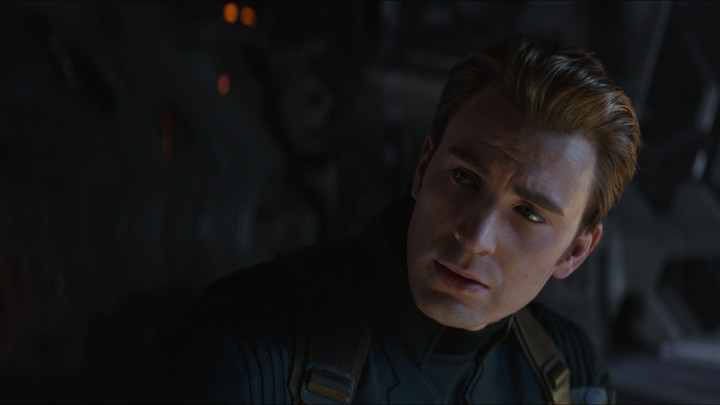
    To the credit of MCU mastermind Kevin Feige and directors Joe and Anthony Russo, this movie is proof that every movie, every moment, and every character along the way mattered. Endgame is a celebration of the journey and the six heroes that began it all — Tony Stark/Iron Man (Robert Downey Jr.), Steve Rogers/Captain America (Chris Evans), Thor (Chris Hemsworth), Natasha Romanoff/Black Widow (Scarlett Johannson), Clive Barton/Hawkeye (Jeremy Renner), and Bruce Banner/The Hulk (Mark Ruffalo). It’s their finale — and what an emotional, surprising, and exciting curtain call it is.

    It’s difficult to talk about Endgame without spoiling any plot details — and yes, avoid spoilers at all costs. I’ll be vague here. Because even if you think you know what’s going to happen, you don’t. We begin about a month after Thanos (Josh Brolin) wiped out half the population of the universe using the six Infinity Stones and the Avengers are at a loss.

    Even though Endgame clocks in at just over 3 hours, it doesn’t drag. Though the first act spends a lot of time with the characters working through their defeat. They have always been the world’s hope. Now, they’re the ones in need of some hope.

    It’s the raw moments with these characters that I missed in Infinity War. That movie had the difficult job of setting up the stakes for this movie and it did that successfully. But what makes the MCU so impressive is its willingness to slow the action down for the sake of character development. So much of Endgame is spent delivering payoffs and callbacks for fans. A large chunk of the movie is a clever and entertaining trip down memory lane. That doesn’t mean that it doesn’t earn the emotional payoffs for its characters — particularly the original six Avengers.

    Eventually, the story shifts to a Hail Mary attempt at reversing the effects of Thanos’ snap that is so ridiculous that it might just work. And the screenplay penned by Christopher Markus and Stephen McFeely keeps things moving. I’ve always praised the original Avengers movie for its brilliant story structure, Endgame is similarly well-paced and focused. It builds to a brilliant final act that can only be described as Earth-shattering. It’s not an exaggeration to say I was physically shaking.

    But that’s what these movies do so well. They get you laughing when they want you to laugh, crying when they want you to cry, cheering when they want you to cheer. If the Russo’s specifically are to be credited with anything it’s that they get you to do those things without feeling like you’ve been manipulated.

    Some of the praise for that has to be given to the performances as well. Chris Evans gives the best performance of his decade-long turn as Captain America while Robert Downey Jr. absolutely nails every emotional beat of Tony’s storyline. On the other hand, Chris Hemsworth and Mark Ruffalo hold down the comedic end. It’s a well-oiled machine that chugs to its incredibly satisfying conclusion.

    Which is good, since this is the end. The MCU will go on, but this is a bittersweet finale this 22-movie run. Storylines come to a end — all well-earned — and characters leave — some die, some move forward to uncertain futures, some stay right where they are. Still, they’re all changed. Every single character is different from when they were first introduced and that’s why no franchise has been able to do what the Marvel Cinematic Universe has been able to do.

    Endgame is a farewell. An epic, emotionally draining, spectacle-driven farewell. And yet, things are just getting started.


    ADVERTISEMENT


    More movies, less problems


    Hey! I’m Karl. You can find me on Twitter and Letterboxd. I’m also a Tomatometer-approved critic.

    💌 Sign up for our weekly email newsletter with movie recommendations available to stream.


    ADVERTISEMENT


  • ‘Searching’ review — A thriller for the digital age

    ‘Searching’ review — A thriller for the digital age

    John Cho shines in Searching, an engaging and suspenseful thriller that takes place completely on a computer screen

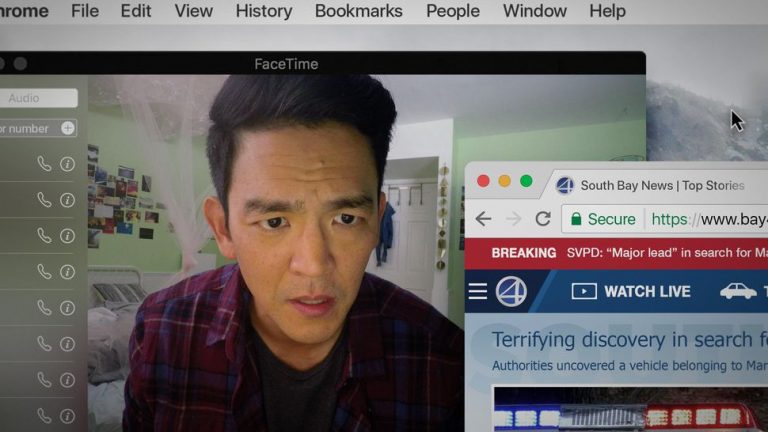
    Searching begins with a very familiar landscape with rolling hills, a blue sky speckled with clouds, and mountains in the distance. This vista is the desktop of a computer. That’s where the entire running time of Searching, like the film Unfriended before it, takes place.

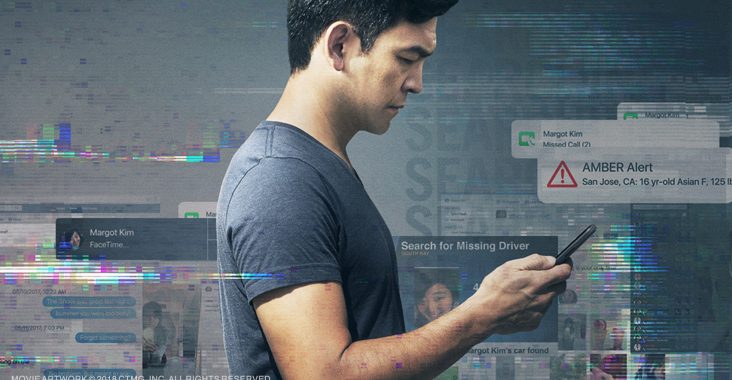
    For the most part, it takes place on the computer screen of widower David Kim (John Cho), a father who frantically searches for his daughter by piecing together her real-world life by learning about her digital life. While the way the movie is presented might feel like a gimmick—and the tactic has been used as a gimmick in the past—Searching quickly undoes any skepticism you’d have by using it in increasingly innovative ways.

    However, the plot isn’t something we haven’t seen before. Through a breezy montage at the beginning of the film that brilliantly walks us through Margot’s (Michelle La), David’s daughter, childhood from kindergarten to high school. Along the way, through home videos uploaded onto YouTube, calendar events, and emails we learn the story of how Margot’s mother Pam (Sarah Sohn) succumbs to cancer. So much of our lives are spent online. It seems like a fitting way to throw us into the narrative.

    We skip forward some years since Pam has passed, something that still weighs heavily on David and Margot. Much of the film is told through texts and FaceTime calls between characters, which is how the center of the plot gets moving. We see the familiar multi-colored tentacles of a Mac screensaver fill the screen. Soon, a call from Margot pops up. Then another. Then a FaceTime call that activates the camera and shows David fast asleep.

    The next day, he’s oblivious to his daughter’s disappearance. However, like any parent that hasn’t had contact with their child for a few hours—he sends her countless texts, the familiar “hello” and “are you alright?” that we always get from our parents even as adults—he begins to worry.

    John Cho in Searching

    From there, he goes on a digital journey from Facebook to YouCast to Venmo to try and find his daughter and piece together her mysterious life. Along the way, Detective Rosemary Vick (Debra Messing) becomes attached to the case and works with David to unravel the mystery.

    At one point, David goes onto Margot’s Facebook—he recovers her password by hacking his way onto her email in a way that I’m sure almost all of us have experienced—and makes his way through her friends list calling and texting every person to figure out where she’s been and what she’s doing. All of David’s actions on his computer screen are things that we’re all familiar with. It’s one of the main reasons that the movie feels so realistic, at least at the beginning.

    Searching is beautifully stitched together Nick Johnson and Will Merrick who balance the narrative with subtle hints to the horror that the internet can bring. Specifically, we journey through YouTube comments and Reddit threads as the public catches on to the case.

    At one point, a girl that admits to David that she wasn’t friends with Margot posts a tearful video mourning the loss of her “best friend.” The film dissects society’s response to a crisis, both good and bad. It feels all too real.

    The movie’s greatest asset is how grounded it feels. During the first half of the film, it truly feels like we’re intruding on character’s lives. However, unlike Unfriended, the format can’t sustain the narrative the movie is trying to tell.

    Workarounds for the limitations of the format like surveillance cameras and live streams feel bulky in the otherwise lean plot. Even more, the film’s finale, while pleasing to some, knocks some of the air out of the film. However, Searching feels like another step further in capturing the digital age. And John Cho—always a steady hand in Star Trek and off a career-high performance in Columbus—shines as an equally hopeful and hopeless Daniel.

    Searching is available to buy or rent on Amazon!

    Karl’s rating:

  • ‘Suspiria’ (2018) review — Upsetting, diabolical, and better than the original

    ‘Suspiria’ (2018) review — Upsetting, diabolical, and better than the original

    Suspiria, a remake of the 1977 classic, gets an upgrade in plot and horror.

    30-second review: Suspiria doesn’t feel at all tamped down by the 1977 original Dario Argento film. If anything, it feels more like it is inspired by it rather than remaking it. However, that’s what director Luca Guadagnino—his last film was the Oscar-winning Call Me By Your Name—intended when tackling the project.

    And while his last film was a quiet tender romance, Suspiria is anything but. It’s dark, tense, and oozes of evil. It replaces the neon-splashed open halls of Argento’s film with dark shadowy corridors that feel like they’re constantly closing in.

    Where the original had a paper-thin plot that nearly derails the whole movie, the updated version uses the same premise, but does away with having the mystery of the dance as the main plot driver and replaces it with something more story-focused. 

    Where to watch Suspiria: Streaming on Prime Video.

    Full review below ?

    However, we still begin with Susie Bannion (Dakota Johnson hot off her performance in Bad Times at the El Royale), a somewhat naive American girl chasing her childhood dream of being a dancer with a prestigious German dance academy. Unbeknownst to Susie, though, the entire staff of women is actually a coven of witches—don’t worry, this version of the film establishes this almost immediately.

    Susie quickly catches the eye of lead choreographer Madame Blanc (Tilda Swinton) who is taken with her natural talent and seems to have insidious intentions for the young pupil. When Patricia (Chloë Grace Moretz), the lead of the piece the company is working on, goes missing—assumed to have joined a guerrilla group during the “German Autumn” rebellion—Susie volunteers to fill the role.

    Suspiria
    Mia Goth as Sara and Dakota Johnson as Susie star in Suspiria

    Another student and friend of Patricia, Olga (Elena Fokina), is horrified that none of the women who run the dance academy or students seem to think there’s more to Patricia’s disappearance and lashes out at Blanc before storming out. However, before she is able to leave the building, she suddenly finds herself trapped in a room completely covered by mirrors.

    Before giving her the part—one that Susie knows well from watching the company perform in New York—Madame Blanc wants to see her perform it without music. What follows is one of the most disturbing horror setpieces I’ve seen in years—save for a couple in this year’s Hereditary—as Olga still trapped in the mirrored room is contorted and torn apart from the inside out with every move that Susie takes until she is twisted and crunched together into a mess of limbs.

    It’s upsetting, sadistic, but oddly beautiful.

    All the while, Patricia’s psychotherapist Dr. Josef Klemperer (also Tilda Swinton in terrific old-age makeup) is investigating what really happened to Patricia, whose rantings in her journal show that she knew about the coven and a powerful trio of witches called The Three Mothers whom the coven worship.

    Like any good horror movie, Guadagnino uses sound, frenetic editing, and his Call Me By Your Name collaborator Sayombhu Mukdeeprom’s atmospheric cinematography to create tension.

    Dakota Johnson stars as Susie in Suspiria. Image Courtesy of Amazon Studios.

    As the company’s performance quickly approaches, Susie’s friend and fellow dancer Sara begins to have suspicions similar to Patricia and eventually connects with Dr. Klemperer to help validate them.

    Sara becomes a much-needed center to the story since Susie becomes consumed by the performance and work and ultimately disconnected from the story, similarly to the original. If there’s any pinpoint-able problem with Suspiria it’s that there’s not really an emotional protagonist and Swinton, as talented as she is, has trouble translating emotion as Dr. Klemperer—she’s fantastic as Madame Blanc.

    David Kajganich’s screenplay has to be given credit for at least adding some texture to most of the characters and story and adding some much-needed background before the story, but the lack of focus on a particular story strain becomes a detriment. 

    However, when you see the ending—and I highly recommend you watch the movie unspoiled for this very reason—it all ties together and the movie becomes better because of it. Like all the horror in the movie, it’s creepy and unsettling but realized with a flair that only an auteur like Guadagnino could pull off. 

    Suspiria‘s horror set-pieces are reason enough to tackle the over-stuffed runtime and it ultimately is better—and more diabolical—than the original.

  • ‘You Were Never Really Here’ review — A crime thriller masterpiece

    ‘You Were Never Really Here’ review — A crime thriller masterpiece

    You Were Never Really Here is a hypnotic and thrilling crime drama that doesn’t let you go until the credits begin to roll. 

    A third of the way through the breezy 90-minute running time of You Were Never Really Here, essentially director Lynne Ramsey’s arthouse version of Taken, Joe (Joaquin Phoenix) lays down next to a hitman he has just shot. As “I’ve Never Been To Me” plays in the background, the two men lay side by side. The hitman extends his hand to Joe and they lay on the floor singing along.

    It’s an odd moment of humanity in a movie filled with inhuman behavior and something you’d never see in another crime thriller. Ramsey, who broke out in 2011 with We Need to Talk About Kevin, isn’t interested in the violence aspect of the story, though there is plenty of it. Instead, she focuses on the characters and specifically Joe’s internalized struggle with his past. 

    The plot is quite simple, unlike movies with similar premises. Joe is a hired gun who tracks down kidnapped children. His handler John McCleary (John Doman) delivers him a new job to track down the kidnapped daughter (Ekaterina Samsonov) of a New York State Senator.

    However, the job quickly spirals out of control. That’s really all there is to it. But Ramsey doesn’t let a single minute go wasted. It’s tense from beginning to end, save for a few tender scenes with Joe’s mother (a great Judith Roberts).

    You Were Never Really Here
    Joaquin Phoenix plays Joe, a hired gun, in Lynne Ramsey’s You Were Never Really Here.

    There are a lot of scenes of violence, but Ramsey doesn’t glorify it. In one of the most stunning sequences, Ramsey tracks Joe through a house via surveillance cameras after he takes down guard after guard. It’s brutal, but not over-the-top as the camera gives us a detached view from it.

    As we cycle through various views from the cameras, we hear the croon of “I Wouldn’t Dream of It” through the halls. The sound design is impeccable with both diegetic and non-diegetic sounds. Much of what we see is internalized within Joe, but at moments the line is blurred.

    Phoenix has never been better. Joe is haunted by the moments in his past that we only see in brief flashes—him as a child hiding in the closet, his mother cowering under a table. The violence of his past invades the violence that he is committing in the present. However, the violence of his present is justified. At least, that’s how he gets through it. Without much goading, we are instantly endeared to Joe and his struggles despite his haggard appearance and hulking form.

    You Were Never Really Here doesn’t write a new song, but Lynne Ramsey performs it beautifully. Jonny Greenwood, after composing one of the best scores of the century for Phantom Thread, goes for a more fragmented approach here to great effect.

    It’s an art piece through and through, but also riveting and thrilling throughout. The second it ended I wanted to start watching it again and dissect every movement, every beat, and every sound. You will be mesmerized by it.

    You Were Never Really Here is now streaming on Prime Video. It is also rent and buy on Amazon.

  • ‘Halloween’ (2018) review — Michael Myers is back after 40 years

    ‘Halloween’ (2018) review — Michael Myers is back after 40 years

    Halloween (2018) is a product of the original film it’s following up and the long-changed slasher genre that it spawned.

    Where to watch Halloween (2018): Streaming on HBO platforms. Available to buy or rent on Prime Video.

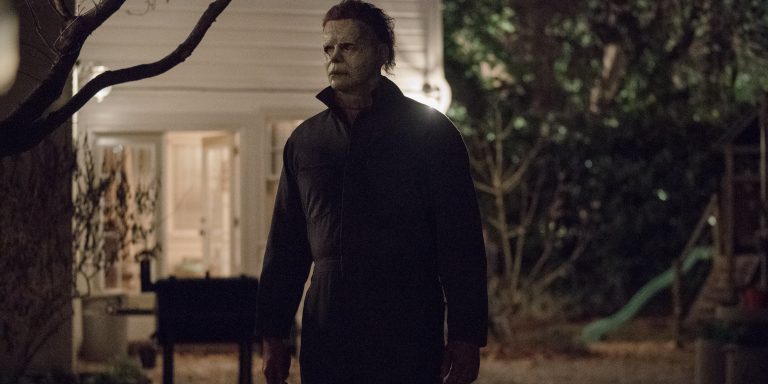
    Halloween (2018) is the eleventh entry in the long-running franchise that stemmed from John Carpenter’s 1978 film of the same name. However, this iteration ignores all of the other sequels to the film including the ones that had the mythology that ultimate final girl Laurie Strode (Jamie Lee Curtis) is The Shape’s (aka Michael Meyers) sister. However, since breaking ground for the horror genre four decades ago, the slasher subgenre has changed as well—most of that is due to the original Halloween. And those changes show in this version. 

    However, to truly talk about the merits of David Gordon Green’s Halloween, we have to talk about what made Carpenter’s original such a classic. Dr. Sam Loomis—Donald Pleasance played the iconic character in five of the franchise’s installments—always referred to Michael Myers as “the evil.” And that’s what Michael was in that film. He was a mythical force of pure evil. That’s the most terrifying thing about him. He doesn’t have motivations or emotions or attachments. He simply kills. However, he doesn’t actually kill that many people in the film—just five. And the first main character isn’t killed until 54 minutes into the movie. The real horror came from the dread leading up to those murders.

    The same cannot be said for the 2018 sequel. Both Carpenter and Green are great visual storytellers. Green displayed that stunningly in his 2017 film Stronger. While there is artfulness in the construction of the kills on screen just like the original, this film is truly the product of years and years of blood and guts infecting our slashers. Truly, Halloween (2018) is tamer than the slashers of the 2000s, but it feels out of place in a story that is more profound than most of those movies. 

    Halloween
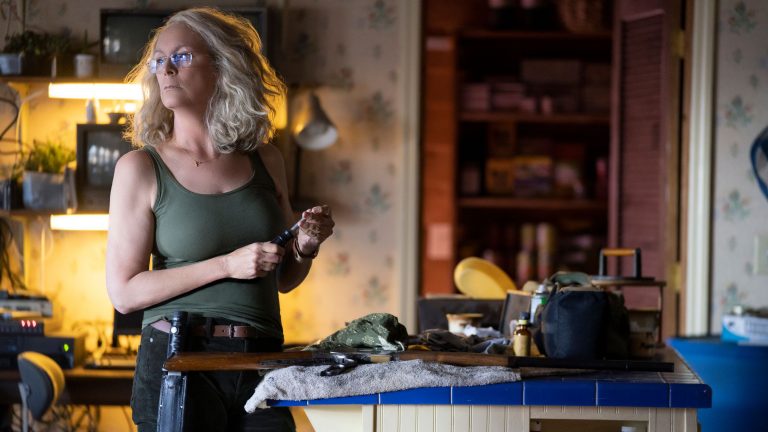
    Jamie Lee Curtis in David Gordon Green’s Halloween (2018). Credit: Blumhouse.

    Forty years after Michael Myers’ return to Haddonfield, he is confined to a mental institution not talking or interacting with anyone. Conversely, his would-be victim Laurie Strode is confined to her home—fortified might be a better word—with guns, steel doors, and other equipment in preparation for Michael’s return. Her daughter Karen (Judy Greer), a psychiatrist, is concerned with her mother’s mental state and has distanced herself from her. This film deals with Laurie’s trauma following the events of the original. She is broken and paranoid but motivated to take back the life that Michael took away from her. She’s no longer the plucky high-schooler who’s worried that she forgot her chemistry book. She’s a warrior. 

    Eventually, as fate has it, the bus transporting Michael to a new facility crashes and he escapes bringing terror back to Haddonfield. However, his spree includes characters that are clearly there to up the body count, even if their kills are interestingly staged and captures. Still, it feels like it’s done to excess. Michael’s rampage leads him to Laurie’s well-fortified home where she, her daughter, and granddaughter Allyson (Andi Matichak), who Michael has also been stalking, are hiding out. The final 20 minutes are staggering as the three women and Michael play a game of cat and mouse. Thematically, it ties in well to Laurie’s empowerment over the man who assaulted her and brought her so much pain. It would be more profound if the film didn’t try so hard to make you understand that theme. 

    Jamie Lee Curtis likened the storyline to the Me Too movement. At one point, a character even says “time’s up,” the name of the fund run by Hollywood actresses to help pay the legal fees of victims of sexual assault. This incarnation of Halloween isn’t about victims. It’s about victims winning back their peace of mind. The final 20 minutes, packed with glorious uses of light and shadow that harken back to the original, do well to tie that theme together. If only the rest of the movie did. The excess of gore and violence, the unnecessary side characters, and the needlessly twisting plot prevent it from reaching it’s full potential. If anything, fans of the original will find solace in the many callbacks and especially John Carpenter’s synth-infused score that rivals his original. 

  • ‘A Simple Favor’ review — A deliciously twisted mystery

    ‘A Simple Favor’ review — A deliciously twisted mystery

    A Simple Favor is a darkly funny and campy mystery thriller anchored by stellar performances by Blake Lively and Anna Kendrick.

    30-second review: So much of the plot of a simple favor is melodramatic and ironically plays off like an episode of a CW primetime soap opera. But it works. That’s thanks to director Paul Feig‘s incredible sense of tone. He knows when the movie needs to be a melodrama and when it needs to be a comedy and when it needs to be a mystery. Finding that right balance makes A Simple Favor a pure delight to watch.

    However, it would be nowhere near as successful as it is if it wasn’t for an awkwardly charming lead performance by Anna Kendrick and a stellar, career-high turn from Blake Lively playing a compelling and deliciously campy character.

    Where to watch A Simple Favor: Available to buy or rent on Prime Video.

    Director Paul Feig has been on a roll with female-fronted broad comedies with critical and commercial hits Bridesmaids, The Heat, Spy, and Ghostbuster coming one after the other. And while all of those movies share the same general tone—elevated, raunchy broad comedy with emotional elements—he takes a crack at a truly genre-bending story in the deliciously campy mystery A Simple Favor, which is based on the novel by Darcey Bell and adapted by Jessica Sharzer.

    In the film, Feig is challenged with balancing a Gone Girl style mystery with a satirical suburban melodrama a la The Stepford Wives with a hint of the broad comedy he has become famous for. And while he’s mostly successful in his execution, the true stars of the movie are Anna Kendrick and Blake Lively giving the best performances of their careers. 

    Kendrick plays Stephanie, a widowed full-time single mother and part-time mommy blogger who is every bit the endearingly awkward, always upbeat person we’ve come to expect Kendrick to play. And while many may have become tired of her adorkable charm defined by spitfire lines delivered in stream of consciousness style, it certainly is effective here. Though she’s certainly a super mom to her son Miles (Joshua Santine), the other parents at the school don’t easily take to her over-achiever status, which is why they’re surprised when she becomes friend with full-time working mom Emily (Lively).

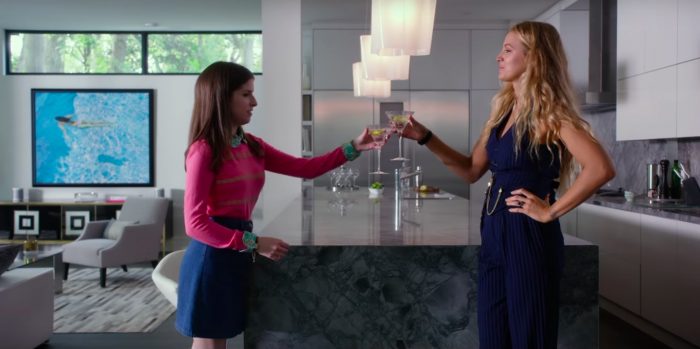
    Emily is an enigma. She seems to have it all. A high-profile job in the city, a beautiful house in the suburbs, stunning closet—she rocks chic three-piece suits paired with equally stunning Louboutin’s throughout the film—and a devilishly handsome husband, Sean (Henry Golding). However, there’s a darkness to her hidden by her effortless attitude towards life. Still, Stephanie is roped into her life blinded with intrigue—and an afternoon martini quickly loosens her up to the idea of friendship. And that intrigue only increases when Emily goes missing. 

    A Simple favor
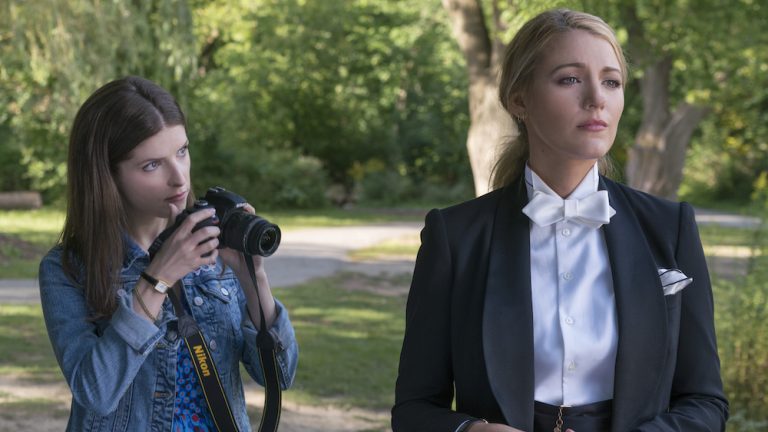
    Anna Kendrick and Blake Lively in A SIMPLE FAVOR. Credit: Lionsgate.

    One day, Emily asks Stephanie for the eponymous simple favor, which is looking after her son Nicky (Ian Ho) while she deals with a work crisis. With Sean in London visiting his mother, Stephanie, always eager to help out, accepts. But Emily never returns to pick up Nicky. From there, the story unfolds while Stephanie tries to figure out what happened to her recently acquired best friend. Along the way, she deals with a suspicious detective (Bashir Salahuddin, great here) convinced there’s more to the case than meets the eye, Emily’s boss Dennis (Rupert Friend), and a punk artist from Emily’s past (Linda Cardinelli). 

    A Simple Favor has more twists, turns, and shocks than a soap opera and Feig tackles them all with a self-aware campy flair that makes every stinging quip and ridiculous moment land. And although the movie has trouble navigating its own plot towards the end, Feig has a stellar cast to anchor it. After charming us earlier this summer in Crazy Rich Asians, Golding more than holds his own as a doting, though worn down, husband and father to Emily and Nicky. His character’s slow deterioration during the film is shown all over his face, but he still retains that movie star glow. He has a career ahead of him.

    Still, it’s Anna Kendrick’s quick-fire charm and Blake Lively’s seductively sinister barbs that make A Simple Favor so incredibly fun to watch unfold. Even as the plot becomes convoluted—sometimes to excess—it’s still the kind of consciously ridiculous suburban satire that is going to please any audience it plays to. A Simple Favor is a mess in the best way possible. The only thing that would make it better is if you watched it with a gin martini with a twist of lemon in hand.


    ADVERTISEMENT


    More movies, less problems


    Hey! I’m Karl. You can find me on Twitter and Letterboxd. I’m also a Tomatometer-approved critic.

    💌 Sign up for our weekly email newsletter with movie recommendations available to stream.


    ADVERTISEMENT